
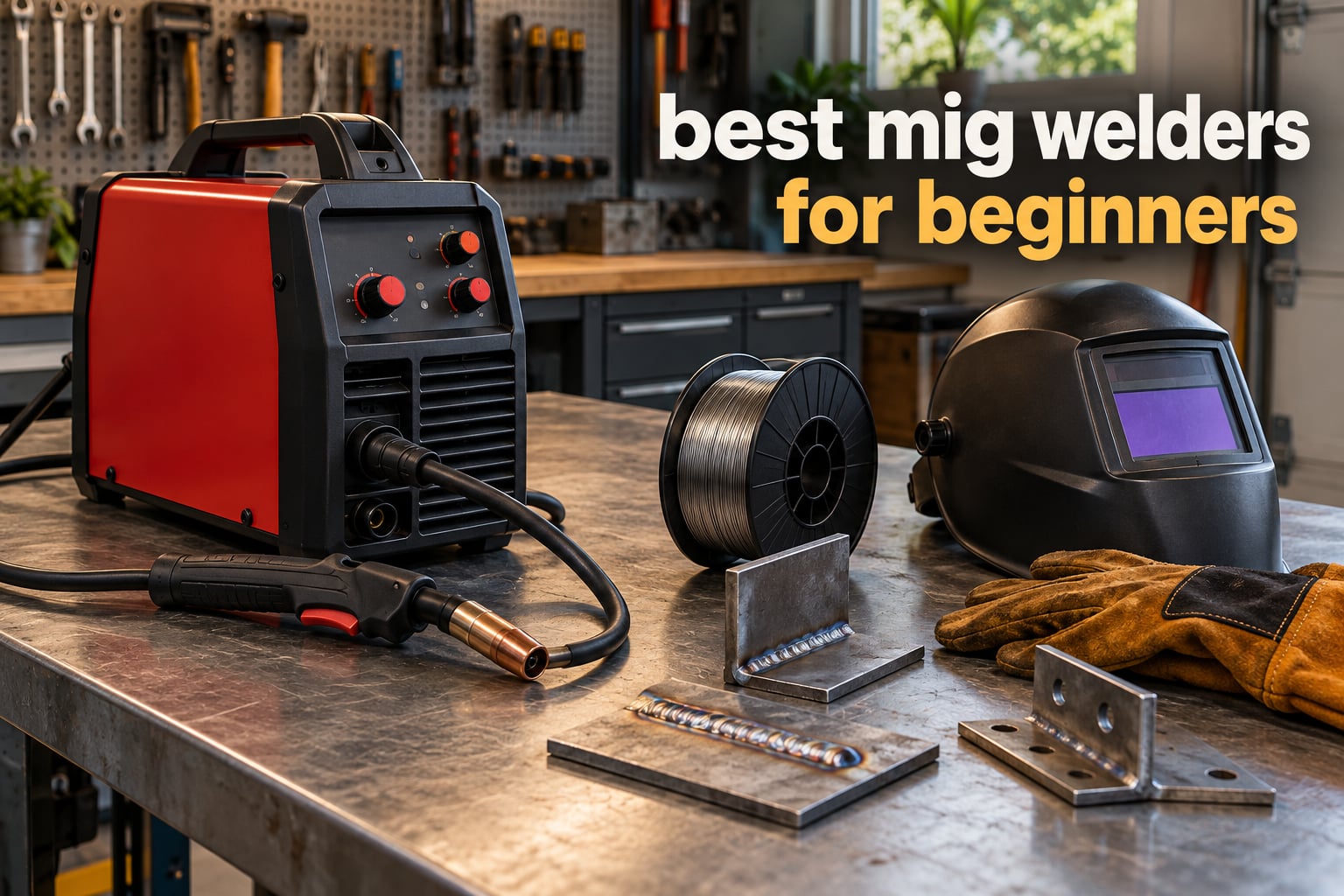
A first welder is one of the easiest purchases to get wrong, because the machines all look identical from across the shop and the differences only show up on your third project. The best MIG welders for beginners are not the biggest or the most expensive ones. They are the machines that start every time, feed wire without snagging, run on the outlet you already have, and give you enough amperage for the steel a beginner actually touches.
Three variables decide almost everything. First, power: 110V machines plug into a standard household wall, while 220V machines need a dedicated circuit. Second, shielding: gas MIG makes the cleanest beads but needs a cylinder, and gasless flux core needs nothing but the wire. Third, output: below about 130 amps you are limited to roughly 3/32 inch steel, and around 140 to 160 amps you open up 1/4 inch work. Get those three right and the machine choices narrow fast.
We spent weeks with these twelve units, reading owner reports, comparing output claims against what people actually welded, and checking what happens after the first year of use. The list below runs from the highest-rated, most-reviewed machine on the market down to the smallest starter kits, and every entry lists the reasons to skip it as clearly as the reasons to buy it. If your garage work is mostly fastening and fitting rather than metalwork, our beginner impact driver picks cover the other half of a first workshop.
Table of Contents
Top 3 MIG Welder Picks for Beginners in 2026
Three machines stand clearly above the rest. The Forney wins on proven reliability and owner feedback volume, the ARCCAPTAIN wins on output per dollar of machine, and the YESWELDER 160A wins if you can plug into 220V even occasionally.
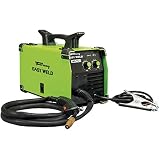
Forney Easy Weld 140 FC-I
- 140A on 120V
- welds 1/4 in mild steel
- Gasless flux core
- no cylinder needed
- 19 lb all-metal case
- 8 ft gun and clamp
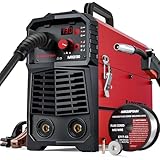
ARCCAPTAIN 130A
- 130A on 110V gasless flux core
- Synergic auto-setting
- Works 030 035 and 040 wire
- Two-year manufacturer warranty
- 11.79 lb with strap

YESWELDER 160A
- 160A with 110V/220V dual voltage
- Gas MIG and flux core
- Handles 2 lb and 10 lb spools
- 19.4 lb with carry handle
All 12 Beginner MIG Welders at a Glance
Every machine below runs on 110V household power as standard, and eight of them also accept 220V for heavier work later. Output figures are the manufacturer’s maximum on the lower voltage setting unless stated otherwise.
| Product | Specs | Action |
|---|---|---|
| Forney Easy Weld 140 FC-I |
|
Check Latest Price |
 YESWELDER 135A FLUX-135PRO YESWELDER 135A FLUX-135PRO |
|
Check Latest Price |
| ARCCAPTAIN 130A |
|
Check Latest Price |
| YESWELDER 160A |
|
Check Latest Price |
 AZZUNO MIG 130F AZZUNO MIG 130F |
|
Check Latest Price |
 GZ GUOZHI MIG 140 GZ GUOZHI MIG 140 |
|
Check Latest Price |
 HITBOX 200A HBM1200 HITBOX 200A HBM1200 |
|
Check Latest Price |
 bestarc MIG145 9GEN bestarc MIG145 9GEN |
|
Check Latest Price |
 BILT HARD 135A BILT HARD 135A |
|
Check Latest Price |
 BESTMIG 135A BESTMIG 135A |
|
Check Latest Price |
 ANDELI 135A Pulse ANDELI 135A Pulse |
|
Check Latest Price |
 Cyclone 140E Cyclone 140E |
|
Check Latest Price |
Help Me Choose: Three Questions Before You Buy
Answer these three questions and you can skip straight to the right section. Nearly every wrong first-weld purchase traces back to a buyer who had not decided any of them.
1. What power do you actually have?
If you have access to a 20 amp household circuit and nothing else, a 110V machine is your only realistic option. A 220V welder needs a dedicated 30 amp circuit, which in many homes means an electrician and a new breaker, so if you are not certain that circuit exists, do not plan around it.
The compromise most beginners should take is a dual-voltage machine. It runs on 110V while you learn, then unlocks higher output when you install the 220V circuit later. Three picks here do that: the YESWELDER 160A, the bestarc MIG145 9GEN, and the HITBOX 200A.
2. Gas or gasless?
Gas MIG with a mix of argon and CO2 gives the cleanest, quietest bead and is the only way to weld aluminum. It also means a cylinder, a regulator, storage space, and refills. Gasless flux core welds outdoors with nothing but the machine and the wire, at the cost of more spatter and rougher beads that need grinding.
For your first year, gasless is usually the right call. The forum consensus we found is consistent on this: welders who only plan a handful of garage projects avoid machines that force them to buy and store a gas cylinder. Move to gas MIG when you start caring how the metal looks.
3. How thick is the thickest metal you plan to touch?
Match the machine to the job, not the marketing. A 130A unit handles 16 gauge through about 3/16 inch and will struggle beyond that. A 140A machine reaches 1/4 inch mild steel. Anything thicker than 1/4 inch needs a machine that runs 220V at full output, and most beginners never get there.
Most first projects are thinner than people assume: gate hinges, fence rails, mower deck brackets, shelf brackets, exhaust hangers, and automotive body panels. The one common exception is structural steel for a gate frame, which is where the 140A and 160A machines earn their price.
1. Forney Easy Weld 140 FC-I – The Best All-Round Beginner MIG Welder
FORNEY Easy Weld 140 Amp 120-Volt Flux-Cored Wire Feed Welder (No Gas Needed)
140A output on 120V, welds 1/4 in mild steel
0.030 in flux core, no gas needed
19 lb all-metal case
Pros
- Infinite voltage and wire feed speed control
- Welds mild steel up to 1/4 inch thick
- No shielding gas required so it works outdoors
- Takes both 2 lb and 10 lb wire spools
- Lightweight all-metal body at 19 pounds
Cons
- Flux core only
- so no gas MIG or aluminum
- Included gun and clamp are basic
- AC power source
More than 3,300 owners have rated this machine, and that volume matters more than any spec sheet. A welder with a large installed base has proven drive rollers, proven wire tension behavior, and a parts supply that will still exist in five years. The 4.6 average comes with 79 percent of buyers at five stars, which is the healthiest distribution in this group.
The 140 amps of output is the headline. On 120V it welds mild steel up to 1/4 inch, which covers gate frames, heavier brackets, and structural work that most 130A machines refuse. It handles both 2 lb and 10 lb spools of 0.030 in flux core wire, so you are not reloading every twenty minutes once you get past practice pieces.
What we like most is the control layout. Infinite voltage and wire feed adjustment means you are not stepping through tapped settings hunting for the right combination, which is exactly what makes budget machines frustrating to learn on. The 19-pound all-metal case also survives being moved around a garage in a way lighter plastic bodies do not.
It runs on a standard 20 amp breaker through the included 20A to 15A adapter, so no electrical work is needed. The kit includes an 8 foot MIG gun and an 8 foot ground clamp, which is the right starting length, though owners wanting more reach commonly replace the gun.
What you get that other machines skip
The 10 lb spool capacity is the detail that separates this from the crowd. Most 110V units in this list are locked to a 2 lb spool, and a beginner welding a gate for two hours runs out halfway through. Being able to load a full roll removes one of the most common mid-project interruptions.
There is also a 12 month manufacturer warranty and a cord length of 6 feet on the machine itself, with the longer leads included in the box. For a first machine with a documented service life, this is the combination we would buy without hesitating.
Where it falls short
This is a flux core only machine. There is no shielding gas mode, which means no aluminum, and no way to make the clean bead that gas MIG produces. If you know you will be working on aluminum or stainless within the year, look at a multi-process unit instead.
Be aware that it is listed as an AC power source, which is a point worth confirming for your wire choice. Budget and mid-range AC-output machines can run self-shielded flux core wire perfectly well, but the drive setup and wire type do interact, so check the manual for your specific wire.
2. YESWELDER 135A FLUX-135PRO – Best for Thin Sheet Metal and Auto Body
YESWELDER 135A MIG Welder, 110V Flux Core Gasless MIG/Lift TIG/Stick 3-in-1
135A on 110V, mild steel to 3/32 inch
Synergic control with 3V micro-adjust
Weighs 11.4 lb with carry handle
Pros
- Synergic control reduces burn-through on thin panels
- Oversized LED display shows live current in sunlight
- Only 11.4 lb with a carry handle
- Includes both 030 and 035 E71T-GS flux core wire
Cons
- 135A output caps material at about 3/32 inch
- Lift TIG needs a separately purchased torch
- Listed as an AC power source
This is the best-selling machine in the MIG welding equipment category, with close to 3,000 reviews behind it. That is not a marketing claim, it is the sales rank it holds, and it tells you the machine has been through a huge number of first-time owners who were learning on it at the same time.
The synergic control is the feature that matters for a beginner. Rather than setting voltage and wire feed speed separately, the machine matches them and gives you a plus or minus 3 volt trim. On thin automotive panel this is the difference between a bead that sits on the surface and one that melts a hole through it.
The oversized LED display shows real-time current, which owners consistently single out because most budget machines use a small indicator you cannot read with a helmet down. At 11.4 pounds with a carry handle, this is one of the easiest machines here to move to a driveway or a fence post for outdoor repairs.
The box includes 1 lb each of 0.030 in and 0.035 in E71T-GS flux core wire, an electrode holder, a ground clamp, and the MIG torch. Over-current, overload, and overheat protection are all built in, which matters on a 110V circuit where a stalled machine can trip your breaker.
Why thin-gauge work is its sweet spot
At 135 amps the machine is rated for mild steel up to 3/32 inch, which is roughly 2.5 mm. That is exactly the range of body panel, appliance sheet, and light brackets that first-time welders tend to have on the bench. Combined with the synergic setting, it is forgiving on thin material in a way higher-output machines are not.
Owners report that the synergic mode is what lets them get a passable bead within a few minutes of unboxing. The three-volt trim is enough to stop burn-through once you understand which direction to turn it, without needing to reason about volts per amp.
Where it falls short
Once you pass 3/32 inch, this machine is done. Frame stock, angle iron, and thicker automotive brackets are beyond it, and forcing it produces a wide, cold bead that will not fuse properly. If you weld a gate, budget for a bigger machine from the start.
The Lift TIG mode is advertised but the torch is not included, so add that cost before counting on TIG work. Stick mode is present and useful for repairs and cleanup, but the 135A ceiling applies there too.
3. ARCCAPTAIN 130A – Best Value for a First Machine
ARCCAPTAIN 130A Flux Core Welder MIG Welder 110V Gasless MIG Stick Lift TIG
130A on 110V gasless flux core
Synergic control matches wire diameter
2 year manufacturer warranty
Pros
- Synergic auto-matching is genuinely approachable for new welders
- Complete kit with 2 lb of wire and consumables
- Light at 11.79 lb with handle or shoulder strap
- Two-year manufacturer warranty
- Works with 030 035 and 040 wire
Cons
- 130A output limits heavy-gauge work
- Lift TIG torch sold separately
- MIG torch is not in the listed box contents
The ARCCAPTAIN holds the number two sales position in its category with a 4.6 rating across more than 1,800 reviews, and 80 percent of those buyers gave it five stars. For a machine aimed squarely at first-time welders, that is an unusually clean result and it is why we call it the best value on this list.
Its synergic control matches current and wire feed speed to the wire diameter you select, so you pick 0.030 in and press start rather than tuning two dials against each other. Add adjustable current and a 10-speed wire feed control, and a new welder gets a real bead without a week of reading.
Wire compatibility is a genuine strength. It handles 0.030 in, 0.035 in, and 0.040 in flux core, and the 0.040 in option is a real advantage for thicker plate. Most competitors at this level lock you to two diameters, which is a small thing until you run out of wire for a specific job.
The three modes are gasless flux core MIG, Lift TIG, and MMA stick. The welder is listed at 11.79 pounds and can be carried by its handle or a shoulder strap, and the wide 90V input range is handled by over-current, overload, and overheat protection across all three processes.
What you actually receive in the box
Owner feedback emphasizes the completeness of the kit. It ships with a MIG torch, a ground clamp, an electrode holder, 2 lb of flux core wire, contact tips, a wire brush, and a chipping hammer. That is everything needed to load wire, clamp a workpiece, and strike an arc the same afternoon.
The two-year manufacturer warranty is the longest written warranty in this group, and that matters more than the length suggests for a first purchase. If a machine fails in year two, you have somewhere to send it that is not a forum thread asking whether anyone else has seen this problem.
Where it falls short
130 amps is the same ceiling as the smaller machines, so 1/4 inch work is out of reach. This is a machine for brackets, frames up to 3/16 inch, and general repair rather than structural steel.
Note that the listed included components mention only the welder itself, so treat the torch and consumables as something to confirm on arrival. The Lift TIG torch is sold separately in any case. Our beginner wood router guide covers the other common garage upgrade people pair with a welder like this one.
4. YESWELDER 160A – Best Premium Upgrade You Can Grow Into
YESWELDER 160A MIG Welder, 110V/220V MIG/Flux Core/Lift TIG/Stick
160A output with 110V/220V dual voltage
Flux core MIG, gas MIG, stick, Lift TIG
19.4 lb with LED display
Pros
- Dual 110V/220V lets you start small and step up
- 160A handles 1/8 and 3/16 steel comfortably
- Synergic mode gets you close fast then manual trim
- Runs smoothly on a 30 amp breaker
- Long-term owners report years of shop use
Cons
- Synergic mode runs very hot above 1/8 inch
- Display washes out in direct sunlight
- Some units arrive with the drive polarity lead unconnected
- Weak stick performance with 6010 rods
This is the machine we would tell a beginner to buy if they will still be welding in five years. Experienced owners describe it as the sweet spot between a 125A hobby unit and a 200A shop machine, and the 4.5 rating across 910 reviews reflects a machine that does real work rather than one that is only adequate.
It is 4-in-1: flux core MIG, gas MIG, stick, and Lift TIG. Being able to run solid wire with shielding gas is the feature that changes your options most, because gas MIG is the path to clean beads and eventually aluminum. The Lift TIG torch is sold separately, which is standard across this category.
The 160A output handles 1/8 in and 3/16 in steel comfortably and occasionally 1/4 in, and it works with 2 lb and 10 lb spools of 0.030 in and 0.035 in solid or flux core wire. Dual voltage is automatic, so the machine detects what it is plugged into rather than requiring a manual switch.
Voltage fluctuation compensation keeps the arc stable when a household circuit dips, and over-current, overload, and overheat protection cover the rest. At 19.4 lb it is still portable, and it runs smoothly on a 30 amp breaker at the higher setting.
The learning path it supports
Starting on 110V in flux core and moving to 220V gas MIG is a natural progression, and this machine lets you do both with the same body. The synergic mode gets you into the ballpark quickly, then manual voltage and wire feed control lets you refine once you understand what you are changing.
It also runs 6010, 6011, 6013, and 7018 rods in stick mode, so you have a second process for repairs and for thin material where MIG is not ideal. That flexibility means you are not buying a second machine when your skills outgrow your first project list.
Where it falls short
The synergic preset runs very hot on anything thicker than 1/8 inch, which is a common source of frustration in the first month. Be ready to manually turn the wire feed down after selecting synergic mode, and do not read a burned-through first pass as a bad machine.
There are also two smaller build issues worth knowing. The display washes out in direct sunlight and the button text is small, which is annoying for outdoor work. Some units have arrived with the wire drive polarity lead not connected, causing no arc at all, so check that on day one and return it immediately if needed.
5. AZZUNO MIG 130F – Best Budget Pick for Light Duty Work
AZZUNO MIG Welder,Flux Core Welder Machine 110V 130Amp, Gasless MIG Welding Machine IGBT Inverter Welder Portable Wire Feed Welder (110V)
130A gasless flux core with synergic control
Weighs 8.6 lb, welds to 3.0 mm plate
Includes 1 lb of 030 in wire and torch
Pros
- Very low cost for a functioning synergic flux core welder
- Weighs only 8.6 lb and fits under a truck
- Experienced users report good beads on 3/16 steel
- Runs on a modest generator without overload
- Anti-stick feature delays the arc until proper distance
Cons
- Included accessories are weak and usually replaced
- Flux core means unavoidable spatter
- Underpowered for thick material
- Only a 1 year warranty
At 8.6 pounds this is the lightest machine we tested, and experienced hobby welders repeatedly report that it performs better than pricier 120V machines on light work. The 4.5 rating from 890 reviews is a good score for the entry tier, and the one note that appears in almost every review is about the accessories rather than the welder.
Forum accounts describe the AZZUNO MIG-135L finishing a mower deck bracket repair as a first welding project, and that is a fair description of the ceiling here. Mower deck brackets, shelf brackets, gate latches, and hangers are all within reach. Structural frames are not.
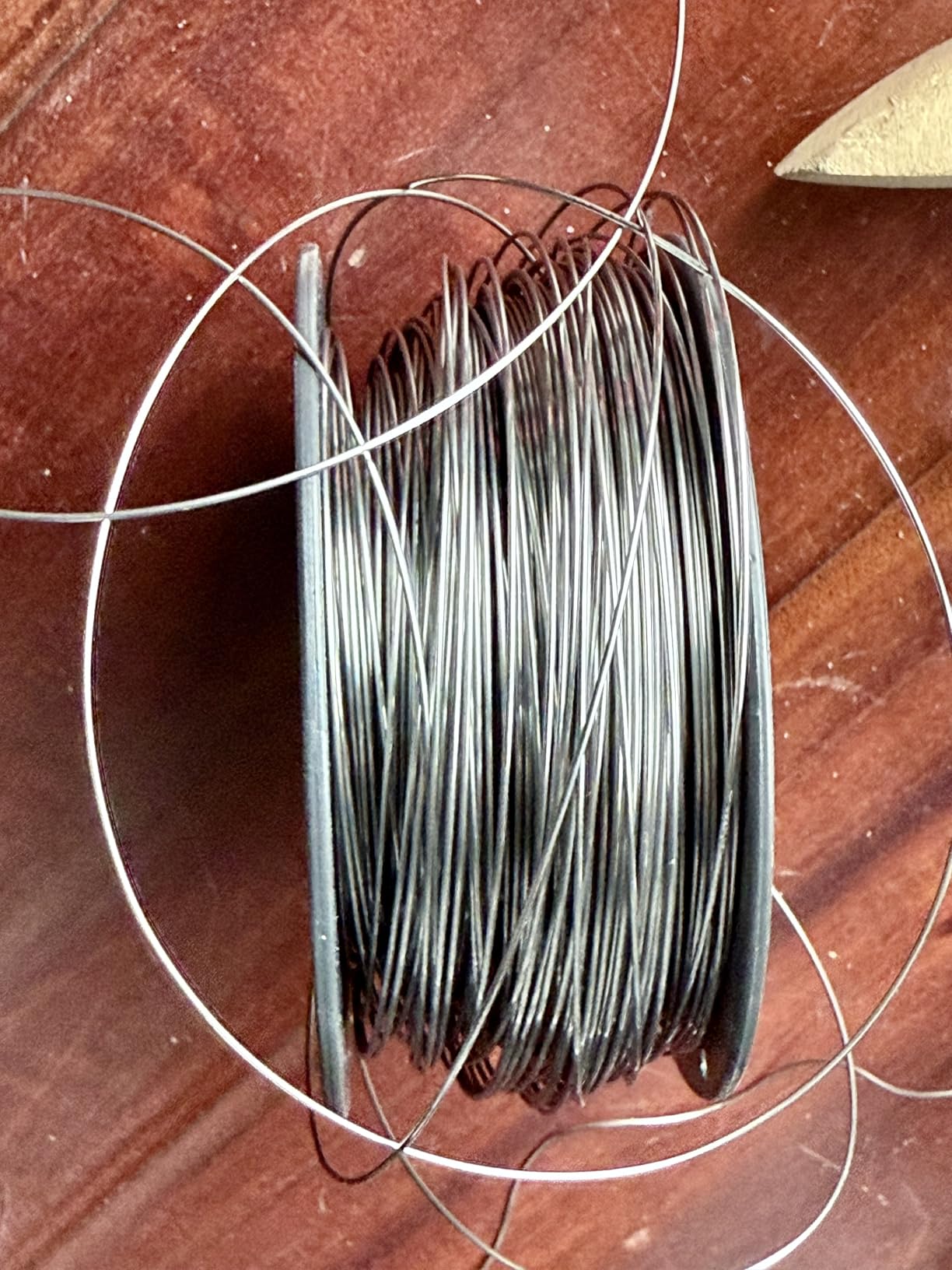
The IGBT inverter design draws little power, and the synergic control with a voltage knob and a wire speed knob makes setup fast. It welds mild steel up to 3.0 mm plate, handles 2.2 lb rolls of wire, and includes overload and overheating protection so a stalled weld will not kill the machine.
That low power draw has a practical benefit owners point out: it runs on a modest generator without overloading. If you weld away from a house or a shop, that matters more than the weight does.
What the money actually buys
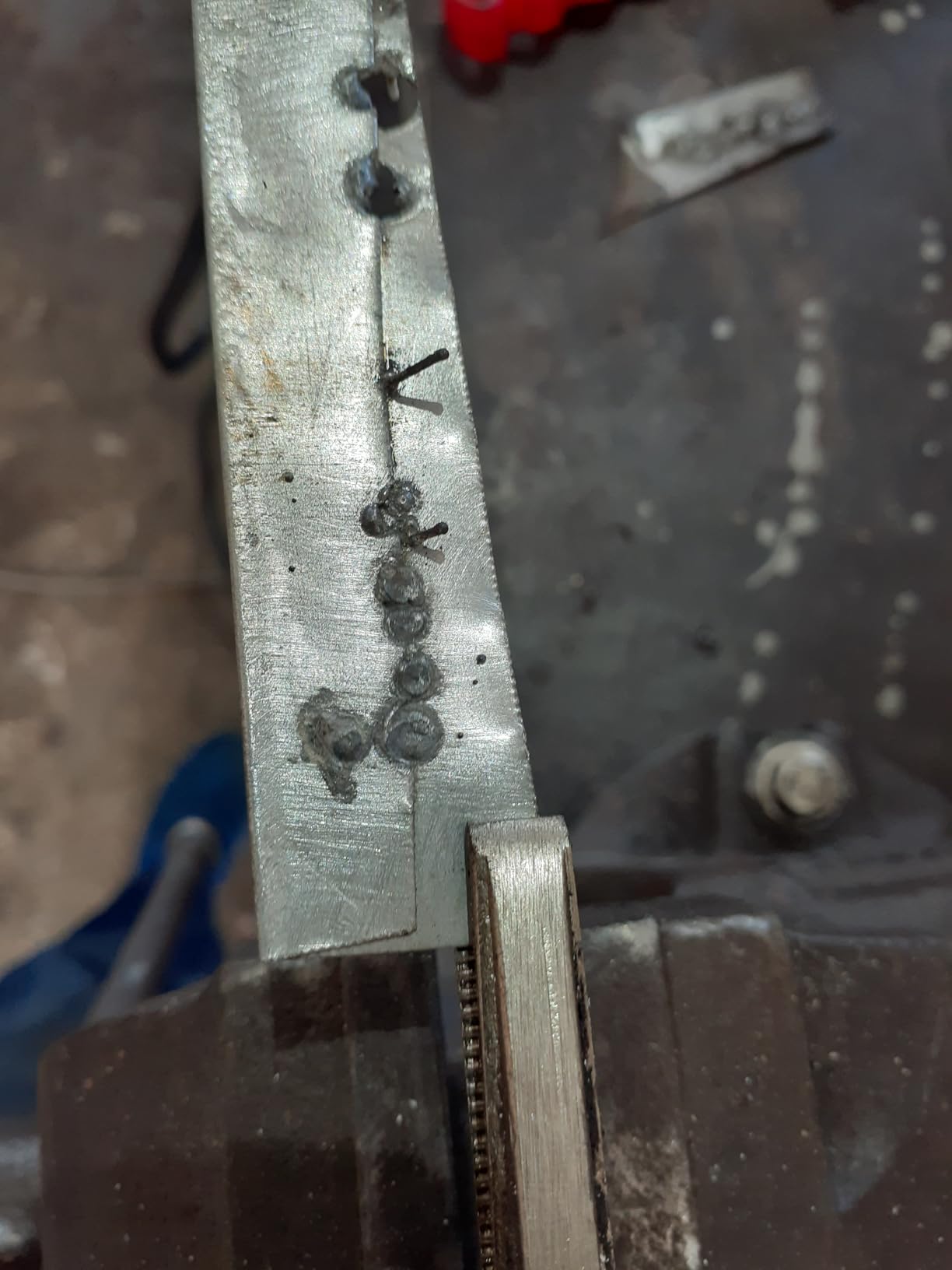
The machine itself is the good part. The included MIG torch, ground clamp, contact tips, 1 lb of 0.030 in flux core wire, brush, and hammer are the weak part, and the near-universal owner advice is to replace the ground clamp and the gun soon after purchase. Budget for that rather than feeling let down on day one.
Flux core is the only process, so the spatter is unavoidable and a chipping hammer and wire brush are genuinely required rather than optional. The anti-stick safety feature, which prevents the arc from striking until the torch is at the right distance, helps a beginner learn gun angle without a nasty surprise.
Where it falls short
The warranty is one year against the two years offered by the ARCCAPTAIN, and packaging quality is a reported weak point that can leave the power cord grommet damaged on arrival. Inspect the machine before you plug it in.
At 130 amps and 3.0 mm plate capacity, this is a light-duty machine. It is a sensible first welder for a small apartment garage with a few projects a year, and a frustrating one if you plan to build anything with 1/4 inch plate.
6. GZ GUOZHI MIG 140 – Built for Cold Weather Outdoor Repairs
GZ GUOZHI 140A MIG Welder,3-in-1 MIG Welder with FLUX MIG/ARC/Lift TIG Multi-Process,110V Welding Machine,110V Flux Core Welder with Welding Gun(black)
140A on 110V with 90V-140V tolerance
3-in-1 FLUX MIG, ARC and Lift TIG
Operates down to -15 C
Pros
- Synergic mode gets a first-time welder a solid bead quickly
- Compact enough for outdoor and field work with a strap
- Customer service replaced a defective unit immediately
- Lays good 035 flux core welds for the price
- Resists voltage fluctuation across a 90V-140V range
Cons
- Paint peels and surface rust develops underneath
- Contact tips wear quickly
- Cannot burn 7018 rods at 3/8 inch
- MIG torch is not easily removable
This machine has the lowest rating in the group at 4.3, and the 8 percent one-star share tells you why. It still welds adequately, and the wide voltage design and cold-weather rating are genuine advantages that no other machine here claims.
Operating down to -15 degrees Celsius is the headline feature. If you weld fence posts, gates, or farm equipment in a northern winter, most consumer welders are running near their limit and you will get an unstable arc. This one is specified for it.
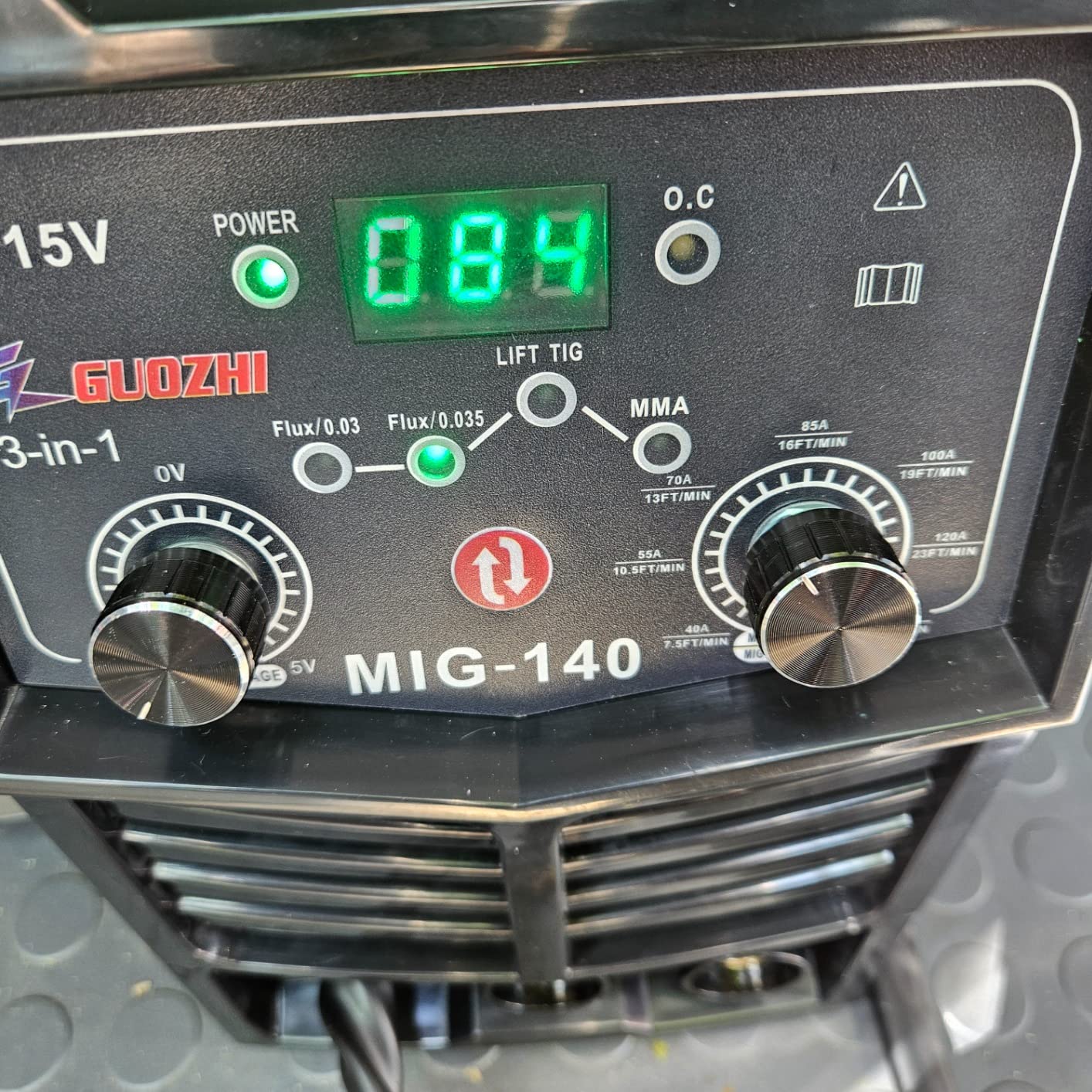
The 90V to 140V wide voltage design resists fluctuation, which matters on a long extension cord or a marginal household circuit. Overheat, overcurrent, overvoltage, and overload protection are all present, and the control panel offers synergic operation with a manual override.
It accepts 2 lb flux core spools in 0.030 in and 0.035 in, and offers stick mode with rods under 1/8 inch. Stainless requires a separately purchased lift TIG torch. At 14.1 lb it is light enough to work outdoors with a shoulder strap.
When the specification outruns the rating
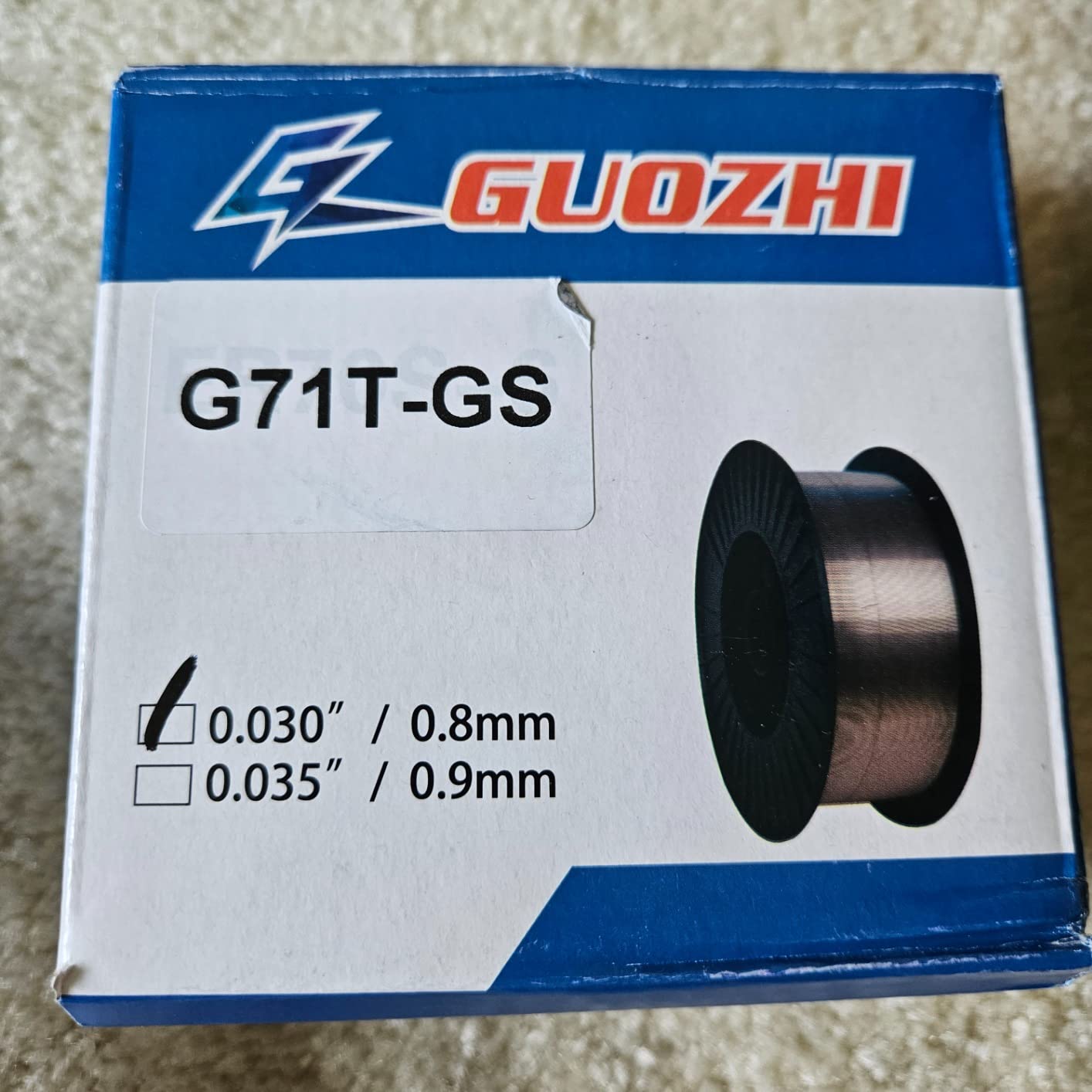
The spec sheet is impressive: multi-process, wide voltage tolerance, cold-weather rated, four layers of protection. The build quality is where the rating drops. Owners repeatedly report that the paint peels and that surface rust develops underneath, and that the included contact tips wear quickly enough to replace early.
On the positive side, customer support has been reported as responsive, including replacing a defective unit quickly. That is a meaningful offset for a machine with a lower polish, because the failure mode is a bad machine rather than a bad weld.
Where it falls short
It cannot burn 7018 rods at 3/8 inch, so heavy structural work is out. The MIG torch is not easily removable and the power cord is fixed, which limits how you route leads in a tight workshop.
Packing is inconsistent, with reports of bent ground clamps and dented handles on arrival. If the enclosure arrives scratched, that is your signal to return it rather than accept it. At 4.3 stars it is the weakest-rated pick here, and we include it for the cold-weather niche rather than as a general recommendation.
7. HITBOX 200A HBM1200 – Best for Field Repairs and Truck Bed Work
HITBOX 200A MIG Welder, 110V/220V Flux Core MIG/Lift TIG/Stick 3-in-1
Up to 200A output on 110V and 220V
Weighs 8.6 lb in a metal housing
Welds mild steel up to 4.0 mm
Pros
- Very light and compact for a high output machine
- 110V flux core welding with clean welds and little spatter
- Quiet operation for its size
- Readable display and dials
- Users report it outperforms a comparable Harbor Flux 125
Cons
- Measured output runs below the displayed amperage
- Stick mode struggles to hold an arc with common rods
- No hot start feature
- Ground clamp warps quickly
- Limited after-sales support
Eight and a half pounds with a claim of up to 200 amps sounds like the best of both worlds, and for flux core work on thin and medium steel it largely delivers. The 4.4 rating from 824 reviews reflects a machine that is unusually good at the thing it does and honest about its limits.
It runs gasless flux core MIG, stick, and Lift TIG, on 110V or 220V, with 0.030 in and 0.035 in wire and mild steel up to 4.0 mm. The IGBT inverter and synergic control handling of voltage and wire feed speed make setup simple at either voltage.
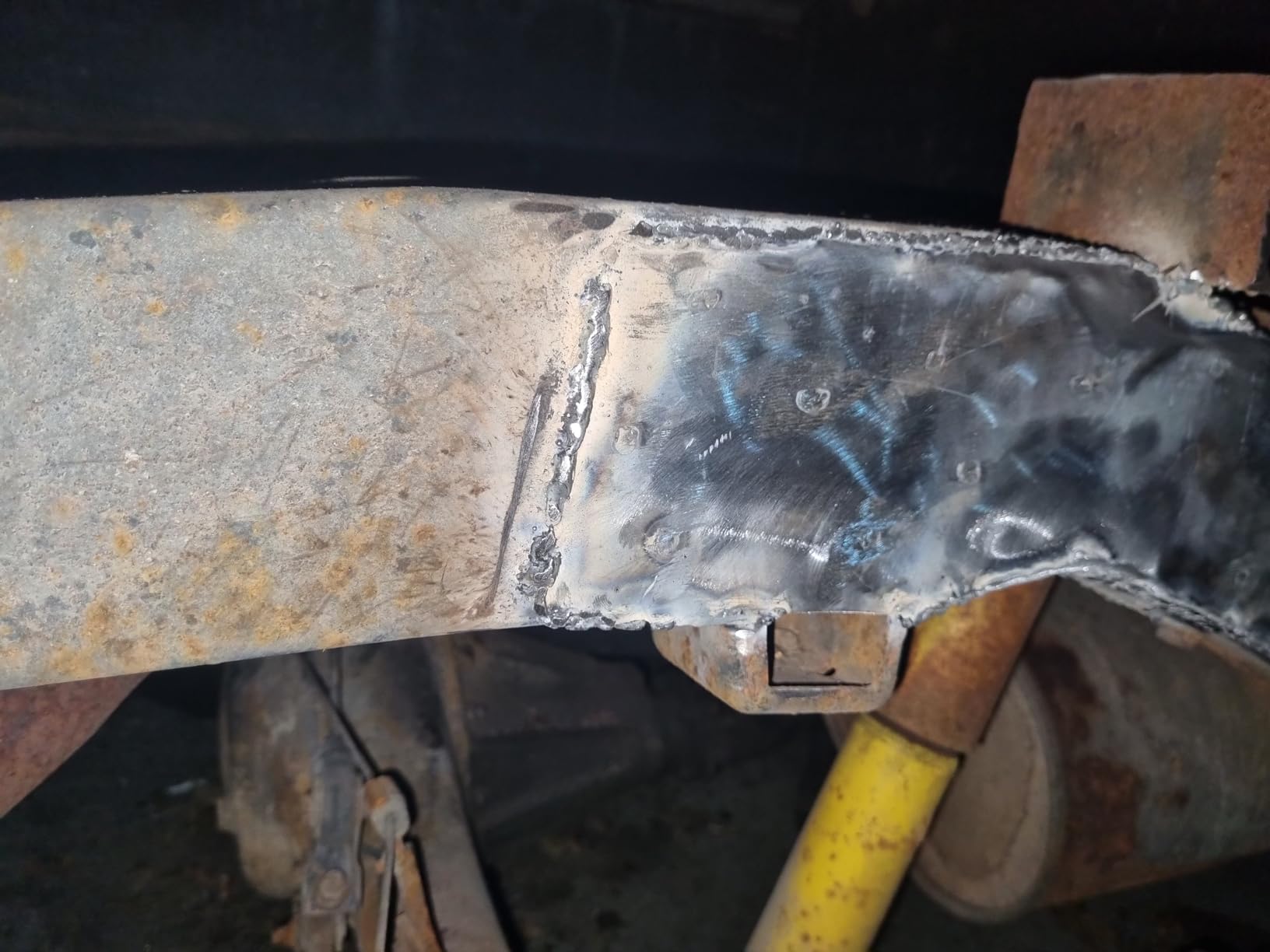
Owners highlight how quiet it runs for its size and how clean the 110V flux core welds come out, with noticeably little spatter for a gasless process. It is a metal housing with a carry handle, so it takes more abuse in a truck bed than a plastic-cased machine would.
One useful owner comparison comes up repeatedly: users report that it outperforms a comparable Harbor Flux 125. That is worth weighing when you compare the budget tier, because the Harbor Freight machines are frequently recommended by name in beginner forums without that kind of testing.
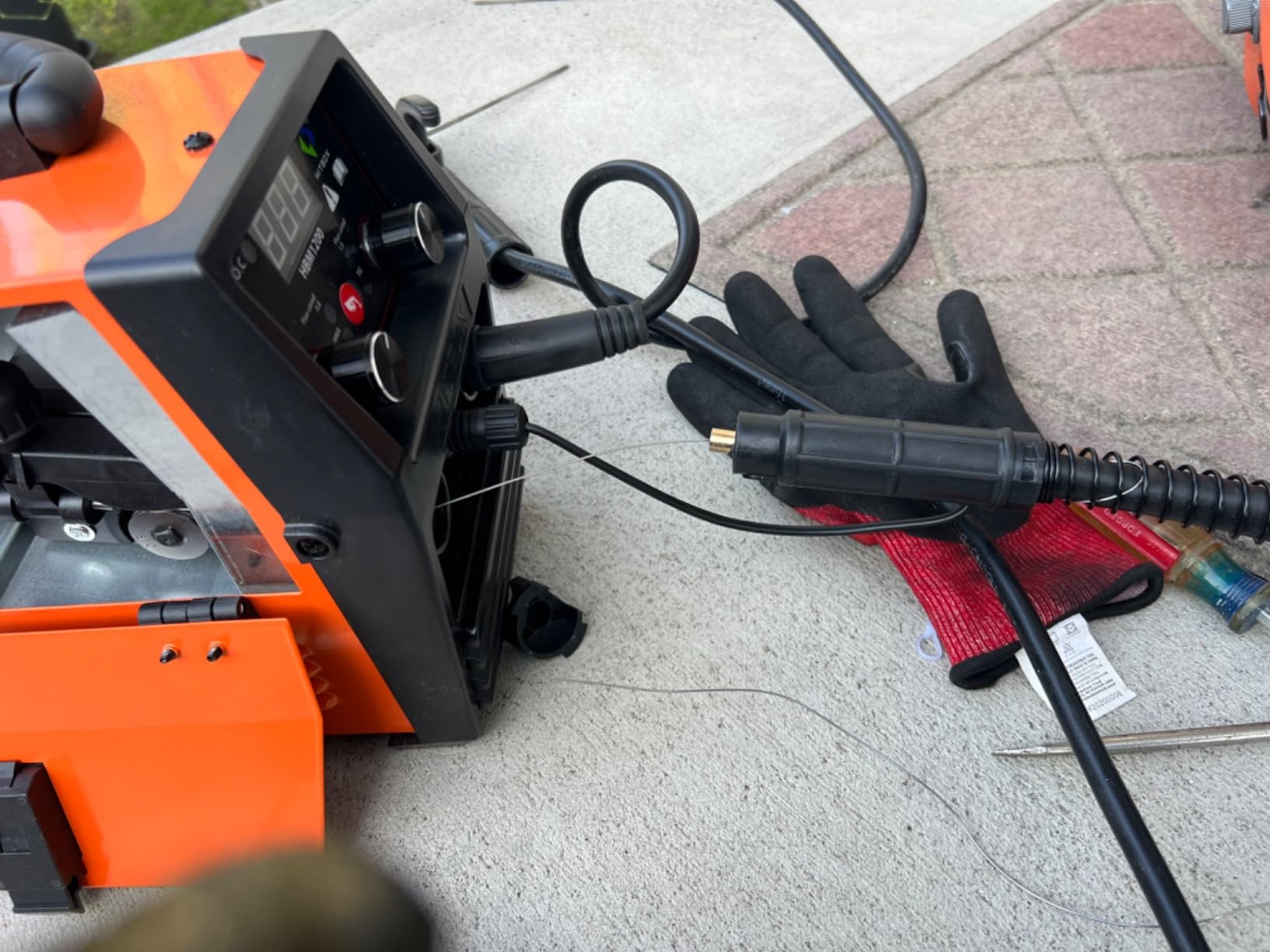
Output reality versus the display
The most substantive complaint in the reviews is that measured output runs 20 to 30 percent below the displayed amperage. In practice this means a 200A setting behaves closer to 140 to 160A, which is still a useful machine, but you should not plan around the headline number for heavy plate.
The spool capacity is 2 lb only, so on a long job you will be changing wire. The kit does include a torch, ground clamp, electrode holder, 2 lb of 0.035 in wire, contact tips, brush, and hammer, which is more than most machines at this tier provide.
Where it falls short
Stick mode is the weak process. Owners report trouble holding an arc with 6010, 6011, 1/8 in, and 7018 3/32 in rods, and there is no hot start feature to help. Treat the stick function as an emergency backup rather than a real process.
The ground clamp warps quickly from the soft metal base, the instructions are hard to follow, and after-sales support is limited. Instructions matter a lot on a machine with this few obvious settings, so read the manual before your first session rather than during it.
8. bestarc MIG145 9GEN – Best Multi-Process Machine for Sheet Metal and Aluminum
Bestarc 145A MIG Welder, Flux Core/Gas MIG Stick Lift TIG Welding, 110/220V
145A with automatic 110V and 220V detection
Gas MIG and gasless flux core plus Lift TIG and stick
13.7 lb with shoulder strap
Pros
- Auto dual-voltage detection works well for RV and mobile use
- Synergic settings make it genuinely easy for a first-time welder
- Large LED display is clear and helpful
- Good ground clamp and heavier copper clad cable
- Runs both solid and flux core wire
- Later production includes knurled drive rolls
Cons
- Early units had v-groove drive rolls only that hurt flux core
- Early units had a 5.5 ft gun lead that was too short
- Spool holder spring tension is not adjustable
- Gas regulator not included
The bestarc is 4-in-1 with real gas MIG, which puts it in a different class from the flux core only machines. Gas MIG is the route to clean beads on mild steel, stainless, and with the right setup, aluminum. At a 4.6 rating from 680 reviews it is also one of the best-scoring machines here.
Automatic 110V and 220V input detection is shown on the front panel, so you do not have to guess what it is set to. That removes a genuine beginner failure mode, where a machine left on the wrong voltage simply refuses to strike an arc.
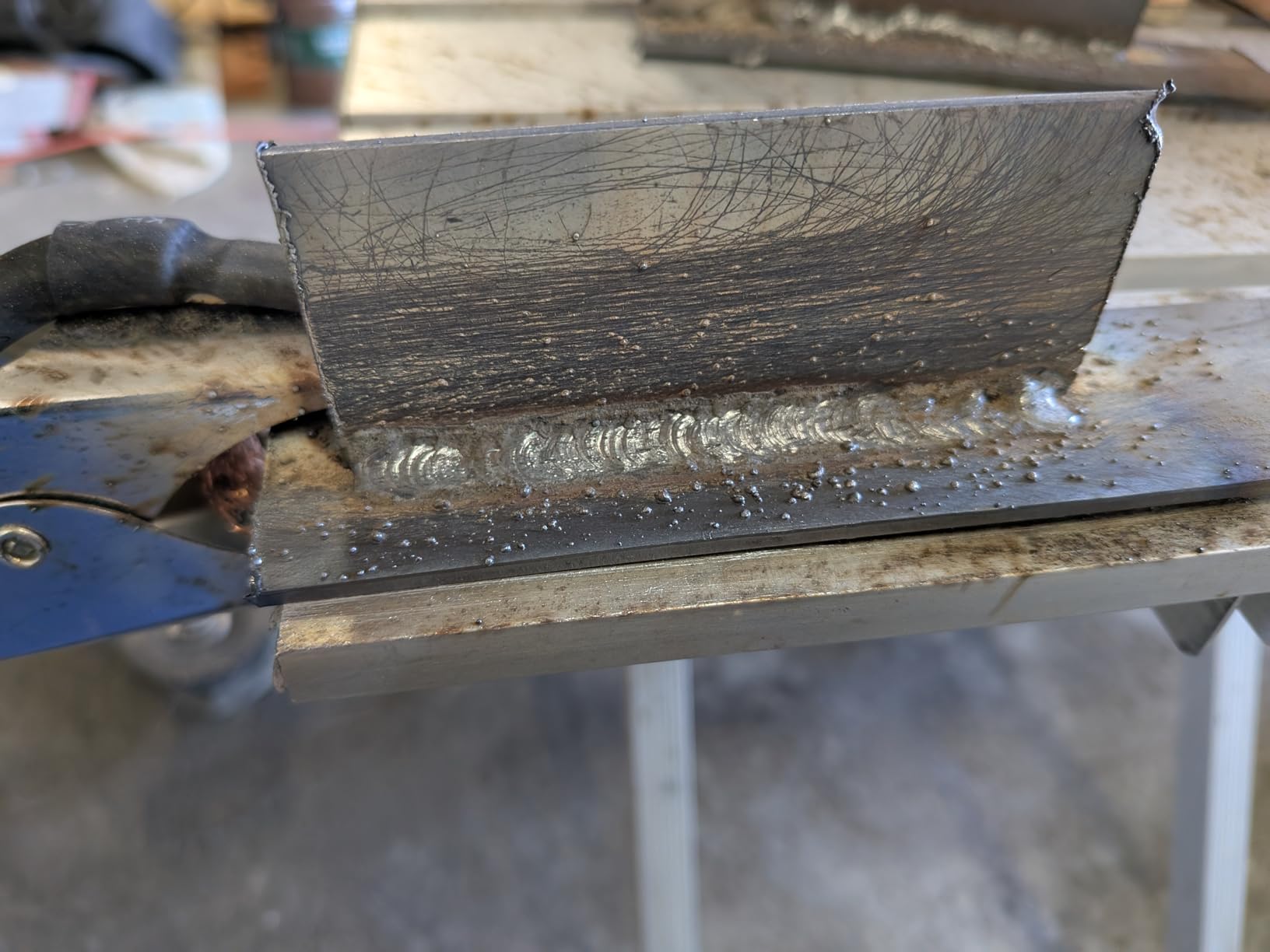
Wire compatibility is broad: E71T-GS flux core and ER70S-6 solid wire in 0.030 in, 0.035 in, and 0.040 in. The synergic control adds minus 3V to plus 3V fine trim, which is enough control to tame the default on thinner material without going fully manual.
The build details are better than the price tier suggests. Owners single out the ground clamp quality and heavier 16 sq mm copper clad cable, and at 13.7 lb it ships with a shoulder strap. Voltage fluctuation compensation handles marginal household circuits.
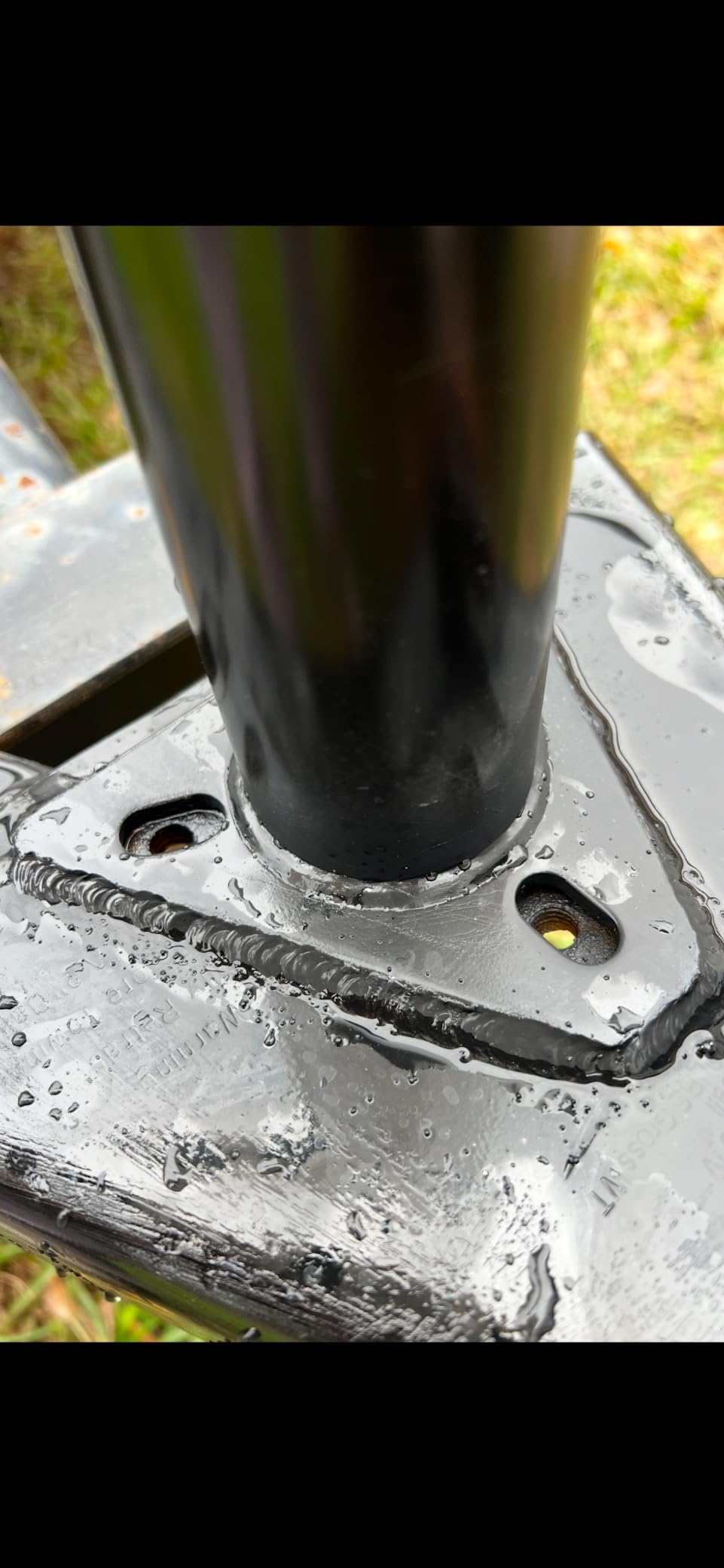
Production changes worth knowing about
This machine has a documented upgrade history, which is unusual and worth reading before you buy. Early units shipped with v-groove drive rolls only, which hurt flux core arc stability, and with a 5.5 foot gun lead too short to reach work at some angles. Later production runs include knurled drive rolls and a longer torch lead.
One long-term reviewer with production MIG and stick background moved from four stars to five after bestarc shipped those upgrades, describing it as a five-star brand with a machine that needed those fixes. If you buy one, confirm you have the knurled rolls and the longer lead.
Where it falls short
The spool holder spring tension is not adjustable and can be set too tight, which shows up as wire drag or a spool that will not unwind freely. The manual also does not explain the difference between pressing the rotary knob for wire feed versus voltage ratio, which is exactly the kind of detail a first welder needs.
Bundled wire spools are low value, so buy your own. The included push-on nozzle is not a flux core nozzle, and a gas regulator is not included, both of which you will need for the gas MIG mode to work as advertised.
9. BILT HARD 135A – Best for Spot Welding, Tack Work, and Stick Repair
BILT HARD 135A 3-in-1 IGBT Inverter Welder, 110V Flux Core MIG/Lift TIG/Stick Welding Machine with Synergic Control, LED Display, 2T/4T/SPOT Modes & Full Kit (Solar Helmet)
135A IGBT inverter on 110V
2T, 4T and spot trigger modes
LED display plus solar helmet in the kit
Pros
- LED screen with menu-driven settings at this price
- Helmet assembly instructions are clear
- Manual clearly explains power needs per process
- Handles MIG and stick with good arc stability
- Roughly car-battery sized and easy to carry
Cons
- Some machines arrive without the 2 lb wire spool
- Spool spindle too short for the supplied wingnut
- Default settings are too hot and wire speed too fast
- Duty cycle is limiting on long tasks
The 2T, 4T, and spot trigger modes are the reason to look at this machine. Spot mode lets you tack a bracket into position before committing to a full bead, which is the single biggest help a new welder can get on assembly work, and few machines in this price band offer it.
Burn-back and inductance controls for MIG plus hot start, arc force, and VRD modes for stick are exposed on the panel, and the LED display tracks real-time voltage, current, and wire speed. Error codes E1 for overcurrent and E2 for overheat trigger an automatic shutdown with a one to two minute fan cooldown.
The kit is unusually complete for the money: a solar auto-darkening helmet, a 6.6 foot MIG gun, a 10 foot ground clamp, 2 lb of flux core wire, a spare 0.035 in contact tip, a brush, and a hammer. Owners report the helmet instructions take about five minutes and the manual clearly explains the power requirements for TIG, MIG, and stick separately.
At 135 amps it handles 1/8 inch material, and the IGBT inverter design is specified for standard 110V outlets. Owners describe it as roughly car-battery sized, which makes it easy to move between the bench and a project outside.
Trigger modes and what they do for you
2T means the gun fires only while you squeeze the trigger. 4T is a semi-automatic mode, which on a MIG gun sets up continuous feed without holding the button down. Spot mode fires a timed weld and stops, so you can place a series of small tacks to hold a piece in position, back-step, and fill in the joints.
For a beginner doing brackets and frames, that combination removes the most common early frustration: burning through a piece while trying to hold it still. The menu-driven LED settings are unusual at this level and owners consistently praise them.
Where it falls short
Box packing gaps are the recurring complaint. Some machines arrive without the 2 lb wire spool, and the spool spindle is too short to engage the supplied wingnut, which needs a quick hardware store fix. The included stick electrode clamp jaws have looked used and burned to some buyers.
Default settings run too hot with the default wire speed too fast, so plan to turn both down before your first pass. The helmet darkness knob rotates too easily and drifts, the included hammer and brush are low quality, gloves are stiff, and the duty cycle becomes limiting on long welding tasks.
10. BESTMIG 135A – Best Starter Kit with Helmet and Gloves Included
BESTMIG 135A MIG Welder – 3-in-1 Flux Core Welder, MIG/Lift TIG/Stick Welding Machine – Portable IGBT Inverter – 110V with Welding Helmets and Gloves (Red Black, MIG 135A Welder)
135A true current on 110V
Handles material up to 1/8 inch thick
Weighs 10.71 lb with full-colour LED display
Pros
- Bundles an auto-darkening helmet and leather gloves
- Full-colour LED display with real-time monitoring
- Compact and easy to carry
- Simple load-wire and plug-in startup suits beginners
Cons
- TIG torch not included despite Lift TIG mode
- One machine arrived with a flux core cable that did not fit
- Some units missing advertised accessories
- Included plugs are not UK compatible
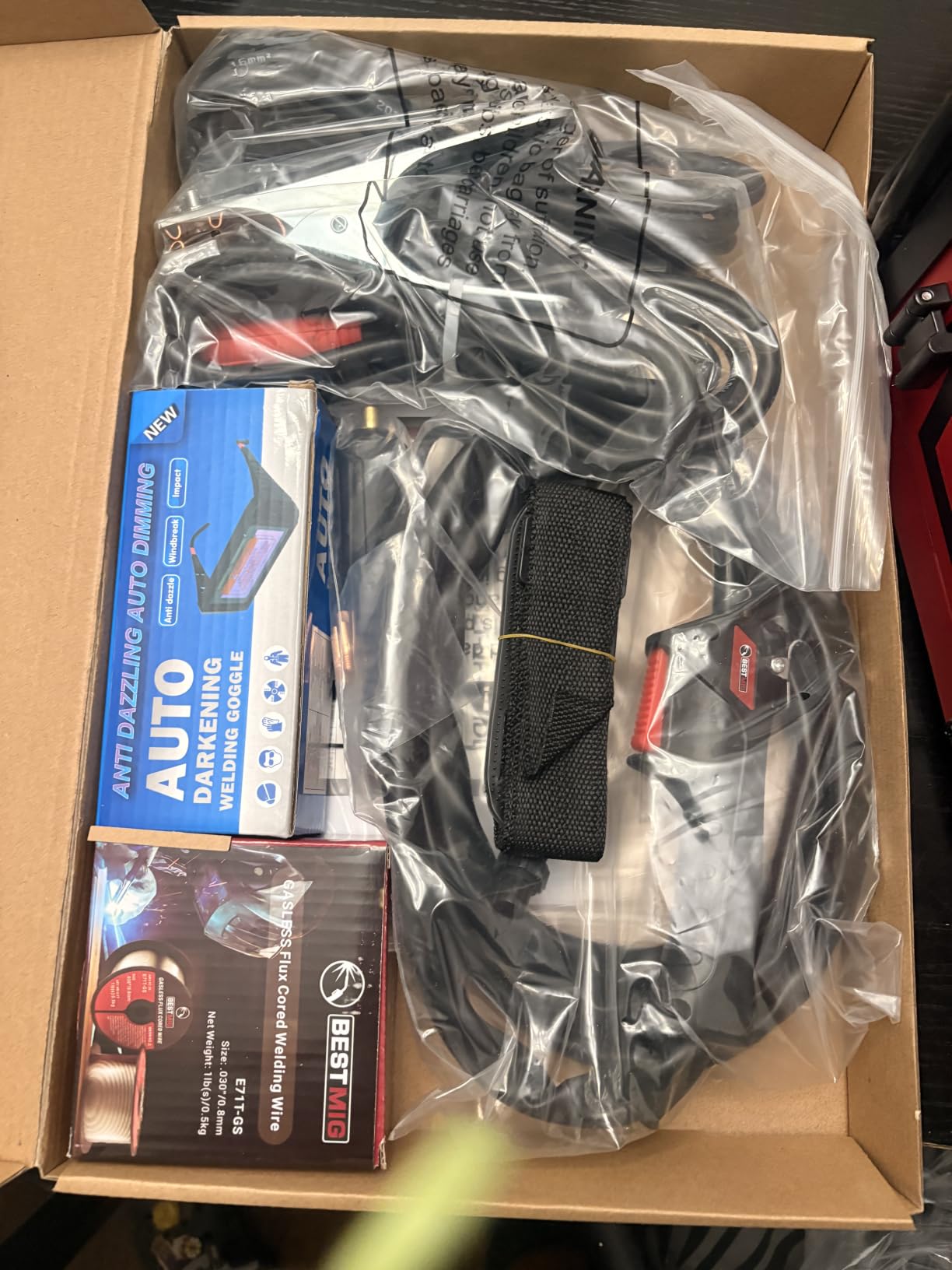
Safety gear is the item most beginners skip and most regret skipping, and this machine bundles an auto-darkening welding helmet, welding glasses, and a pair of leather gloves in the box. At a 4.6 rating from 442 reviews, the complaints are about incomplete boxes rather than weld quality.
The stated 135 amps is described as true current output, handling material up to 1/8 inch thick. That is a meaningful step up from the 3/32 inch ceiling of the 135A flux core machines above it, and it covers the structural bracket work many beginners start with.
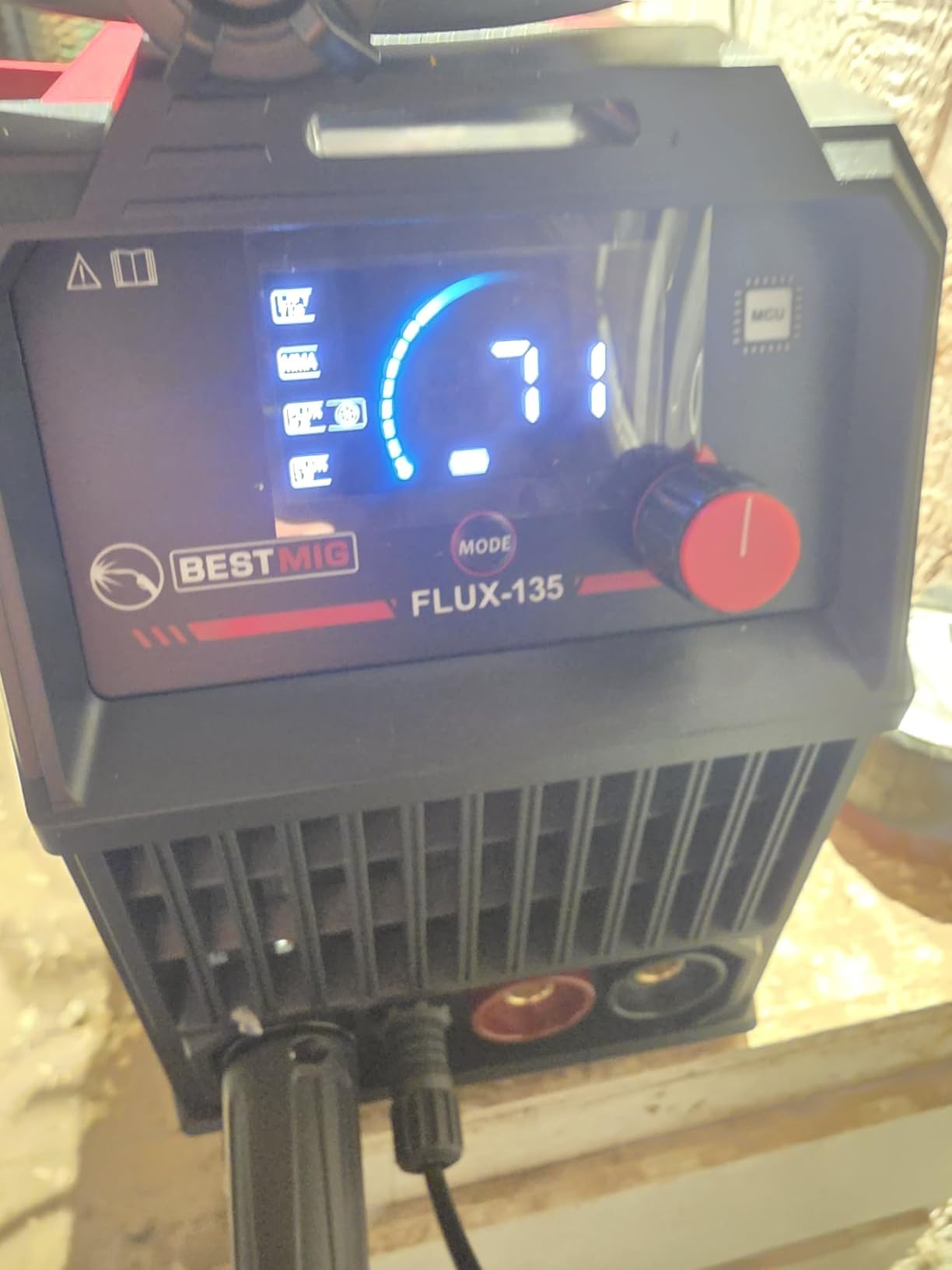
Digital technology auto-adjusts parameters based on the current setting, so the machine does the synergic matching for you, and the full-colour LED display shows wire feed, voltage, and speed adjustments in real time. Wire compatibility runs from 0.030 in to 0.040 in gasless flux core.
At 10.71 pounds with a listed footprint of 14.8 by 9.8 by 6.6 inches, it is compact enough for a small workbench. The listed power source is AC and DC, which is the combination you want for reliable flux core performance.
Why the bundled gear matters more than the machine
You cannot weld without eye protection, and a helmet is the one safety item that is genuinely difficult to improvise around. Having a solar auto-darkening helmet and gloves in the box removes the excuse to skip them, and it removes a follow-up purchase that almost every new welder ends up making anyway.
The startup path suits a first-timer too: load the wire, connect the gun, plug it in, and start. Owners describe that sequence as uncomplicated, which matters when the alternative is reading a dense manual before your first bead.
Where it falls short
Incomplete boxes are the real issue. One machine arrived with a flux core cable that did not fit the machine, and some units ship without the advertised accessories. Inspect everything against the packing list on arrival, and do not assume a missing torch is normal.
The Lift TIG mode requires a separately purchased torch, the included plugs are not UK compatible, and the small review base of 442 gives less long-term data than the higher-ranked machines. The three modes are MIG, Lift TIG, and stick, so gas MIG with solid wire is not part of this package.
11. ANDELI 135A Pulse – Best for Smoother Beads and Thin Material Control
ANDELI 110V/220V MIG Welder 135A ,PULSE Flux Core/Lift TIG/Stick 4-in-1
135A on 110V and 220V with pulse flux core
Welds up to 5.0 mm, adjustable inductance
9.04 lb with 4.1 inch LED display
Pros
- Very light at just over 9 lb with dual voltage
- Adjustable inductance tunes arc stability and spatter
- 4.1 inch display readable with the helmet down
- Detachable 9 ft stinger and 6 ft ground lead are easy to upgrade
- Gloves included actually fit large hands
Cons
- Included welding helmet is poor quality
- Lift TIG torch sold separately
- Only accepts 2 lb wire spools
- Some machines ship without the pulse function
Pulse flux core is the feature that separates this from every other 135A on the list. Pulsed current alternates between a high and low value many times a second, which drops the heat into the puddle in controlled bursts and produces a finer, more uniform bead with less burn-through risk on thinner material.
At a 4.5 rating across 381 reviews, the most detailed owner account in this set comes from someone with decades of industrial experience comparing it against a Titanium 125. They highlighted the detachable, upgradable cables and adjustable inductance as real advantages, and recommended replacing the helmet.
Adjustable inductance is the second control worth learning. It changes how the arc behaves as the wire moves through the puddle, and dialling it up reduces spatter on positional work. Few machines in this class expose that setting, and it is genuinely useful while you are still learning to hold a consistent gun angle.
Output is 135 amps welding up to 5.0 mm, which is 3/16 inch, on 110V or 220V with 0.030 in, 0.035 in, and 0.040 in wire support. The 4.1 inch LED display has a protective cover and stays readable without lifting your helmet, and 2T and 4T trigger selection is included.
Cables you can actually replace
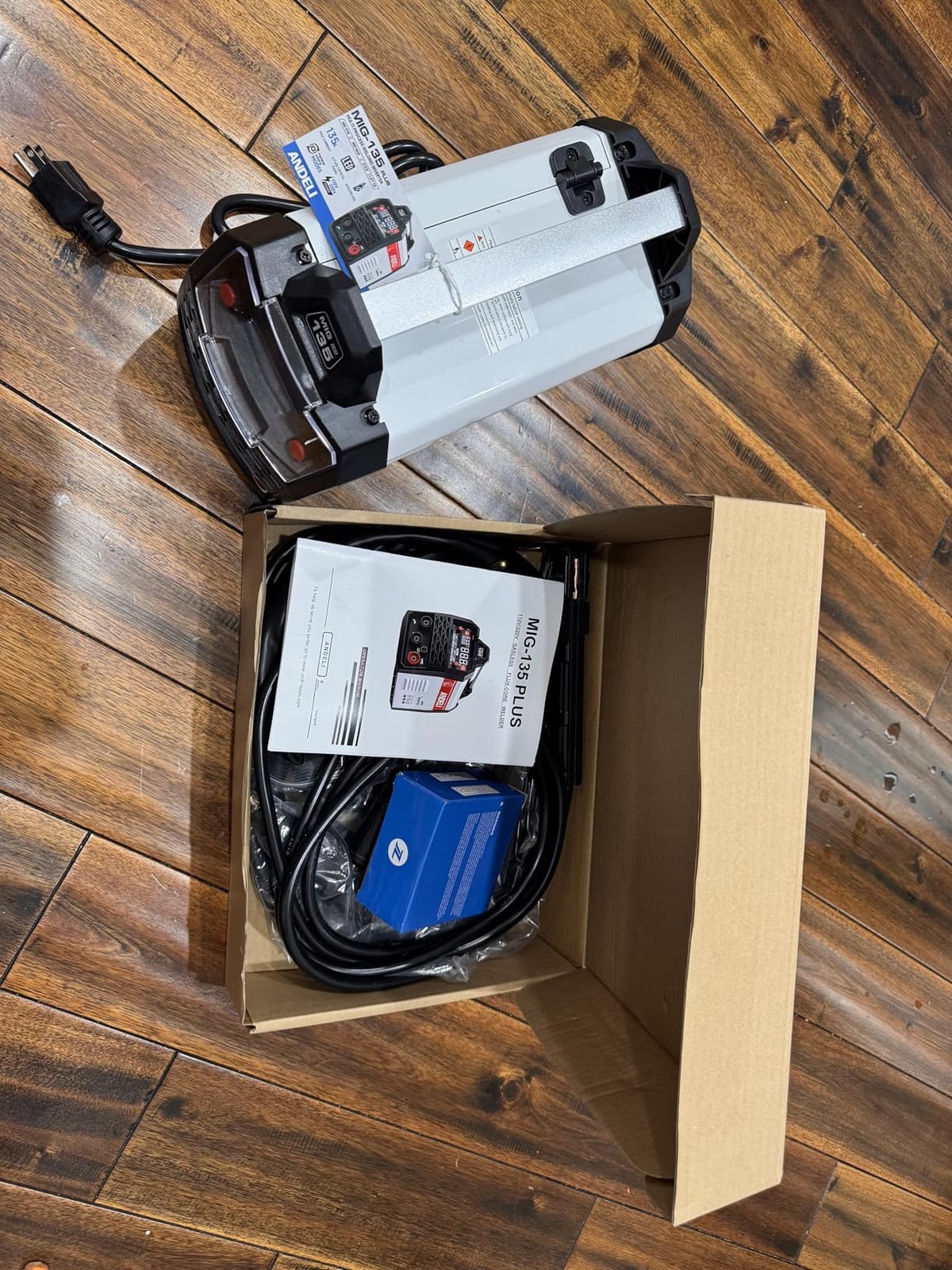
Budget machines frequently have leads soldered permanently into the body, which means a damaged cable ends the machine’s life. This one has a detachable 9 ft stinger and a 6 ft ground lead, and owners note both are straightforward to swap for heavier cable. The detachable ground clamp is itself an upgrade over comparable machines.
That design decision matters more than it looks. A ground clamp is one of the most common failure points, and a cheap stamped one that bends or loses spring tension is a nuisance you would otherwise live with. Being able to spend a few dollars on a better clamp here is a genuine advantage.
Where it falls short
The included welding helmet is poor quality and is worth replacing, and the Lift TIG torch is sold separately. Only 2 lb wire spools are accepted, so plan for more frequent changes on a long job.
Two warnings. Some units ship without the pulse function that appears in promotional video, so confirm pulse works before you rely on it. Also, the synergic wire feed readout is displayed in amps rather than inches per minute, which confuses US users expecting a linear wire speed. A few owners also report units overheating and a non-functional reset button on a returned machine.
12. Cyclone 140E – Best Spool Gun Ready Machine for Growing Into Aluminum
Cyclone 140E MIG Welder – 140 Amp Flux Core Welding Machine | 110V Portable Welder for Home & DIY Projects
140A at 135A/21V on a 35 percent duty cycle
IGBT inverter with stepless control
Spool gun ready, 4 in and 8 in spools
Pros
- Stepless wire speed and voltage adjustment is rare at this level
- Solid metal drive rollers and feed mechanism
- Preset thickness options speed up first-time setup
- Accepts 4 in and 8 in spools with 023 to 035 wire
- Spool gun ready with a Tweco style gun
Cons
- Ground clamp is weak stamped steel with a short lead
- Included roller is for solid wire
- Customer support and forum registration unresponsive
- No welding wire included
The Cyclone 140E is the most expensive machine in this group and has by far the smallest review base at 113, but the reason to include it is specific. It is the only spool gun ready machine here, and a spool gun is the standard route to welding aluminum in a home shop with a 2 lb spool gun rather than a full size spool.
Output is 140 amps, rated at 135A and 21V on a 35 percent duty cycle. The IGBT inverter platform uses a cast alloy drive roller, and both wire speed and voltage are stepless, meaning there are no tapped settings to step through.
That stepless control is the quiet advantage. On machines with stepped settings you either waste time finding the right combination or you accept a compromise. A continuous range means you can match any wire diameter from 0.023 in to 0.035 in without a setting chart.
It accepts 4 inch and 8 inch wire spools, which is far more than the 2 lb spools that most 110V machines in this list are limited to, and it is sold as a combo set. Owners report the Euro connectors stay firmly attached during use, which is a small reliability point that pays off over years.
What spool gun readiness actually buys
Aluminum cannot be flux core welded, because there is no self-shielded flux that will protect aluminum from oxidation. A spool gun feeds aluminum wire from a small remote spool, which is how a 140A-class machine handles a material that otherwise needs far more machine. The gun is a Tweco style fitting, so compatible aftermarket guns exist.
For a beginner who is not sure they will weld aluminum, this is future-proofing rather than a need. For someone who already knows they will, it removes the usual compromise of buying a machine large enough for aluminum but too large to move. Owners also report it outperforms a Hobart 140, and the machine is capable of 1/4 inch work if you stay within its limits.
Where it falls short
The included ground clamp is weak stamped steel with a weak spring and a short lead, and it is the accessory most often replaced. The bundled drive roller is for solid wire rather than flux core, so a flux core roller is a must-buy if you plan to run self-shielded wire. No welding wire is included at all.
The clearest caution is support. Owners report customer support and forum registration being unresponsive, and with only 113 reviews there is little community troubleshooting to fall back on. The included mask, wire brush, and slag hammer are cheap, and there is no quick-start settings guide on the door. Instructions out of the box are clear, which partly offsets this.
How to Choose a Beginner MIG Welder: 7 Things That Matter
Output on the box tells you very little about how a machine will treat you. These are the factors that actually separate a welder you will enjoy from one you will avoid.
1. 110V versus 220V
A 110V welder caps out around 140 to 160 amps, and a 220V welder can push 200 amps and beyond. That translates directly to material thickness: 110V machines handle roughly 16 gauge through 1/4 inch, while 220V opens up 3/8 inch and 1/2 inch structural work.
The electricity side matters as much as the machine. A 110V welder needs a 20 amp household circuit and a properly rated extension cord, ideally 10 gauge or heavier and as short as possible. Signs that a circuit is being starved include the display flickering, the fan cycling on and off mid-weld, and an arc that will not strike despite correct settings. A dedicated 30 amp circuit for 220V avoids all of it.
Our recommendation is to buy 110V unless you already have a 220V circuit, and to choose a dual-voltage machine if you might add one later. Do not plan to buy a 220V machine on the assumption that you will install the circuit, because that project can cost more than the welder.
2. Gas MIG versus gasless flux core
These two are constantly confused, so here is the clean version. Gas MIG uses a continuous solid wire and a shielding gas, usually a mix of argon and CO2, to keep air away from the molten puddle. Flux core uses a wire with flux inside it that does the shielding, so no gas is needed.
Gas MIG gives a cleaner, quieter, more controllable bead and is the only realistic way to weld aluminum and stainless. Flux core gives you spatter, a rougher bead that needs grinding, and visible smoke, but it works anywhere with no cylinder to buy, store, or refill. Most forum threads we reviewed end up recommending flux core first for exactly that reason, with gas MIG as the second step once the bead quality starts to matter.
There is one more technical detail worth knowing. Some very cheap imports run AC output only, and many common self-shielded wires are designed around DC. This is a reported complaint among budget welder buyers, and it is worth asking about before you buy the cheapest machine available.
3. Amps and material thickness
The rule of thumb most shops use is roughly 1 amp per 0.001 inch of steel thickness. That gives you a quick sanity check against the machine’s claims and, more importantly, against your own project list.
- 16 to 20 gauge sheet metal: 70 to 120 amps, which is 110V territory and the hardest part of MIG welding for a beginner
- 3/16 inch plate: about 150 amps, requiring a 130A to 140A machine at minimum
- 1/4 inch plate: about 250 amps theoretical, but flux core at 140 amps will make a pass that fills a gap rather than a structural joint
- 3/8 inch and above: 220V territory, outside most first machines
For most beginners, 130 to 140 amps is the sweet spot because the typical first project is a gate hinge, a shelf bracket, or a mower deck repair. The AZZUNO has been reported on welding forums as finishing a mower deck bracket as a first project, which is a fair description of that class.
4. Duty cycle, explained properly
Duty cycle is the percentage of a 10 minute cycle that you can weld at the rated amperage. A 20 percent rating means 2 minutes on and 8 minutes off; a 35 percent rating means 3.5 minutes on. The number is usually printed next to the output rating, and it is the specification most often ignored.
A low duty cycle is not a dealbreaker for a beginner. Most first projects involve short welds with plenty of positioning time, which is exactly the pattern a 20 to 35 percent rating supports. It becomes painful during a long gate frame or a fabrication run, which is when the cooling fan noise and the error code appear.
5. Wire diameter
Two diameters cover almost all beginner work. 0.030 in flux core is the standard for a 130A to 140A machine and is what most of these welders ship designed for. 0.035 in runs cooler at a given feed speed, which makes it easier on thin material, and it feeds better on machines with weaker drive systems. A 2 lb spool is the usual starting size.
Several machines here accept 0.040 in as well, which only matters for thicker plate, and a few are limited to 2 lb spools with no option for the larger rolls. If you plan to weld for a few hours at a time, spool capacity is worth more than most other secondary features.
6. Brand, parts, and the Harbor Freight question
Are Harbor Freight MIG welders any good? The honest answer is that some of them are competent machines, and the risk is not welding quality but support. Reviewers here note one owner reporting their HITBOX outperforms a comparable Harbor Flux 125, which tells you the tier is variable rather than uniformly bad.
What separates the brands in this list is access to consumables and parts. A machine from an established brand has drive rollers, contact tips, nozzles, and gun parts available from multiple sources, and consumables are interchangeable across models in the same family. A no-name import may need a direct order and a wait, and a missing drive roller can stop your project for a week.
Other well-regarded beginner names worth knowing, even though they are not in this lineup, include the Lincoln Electric Handy MIG, described on GreenTractorTalk forums as a solid beginner machine that stays capable as skills grow, and the Eastwood 135, described in forum threads as a Lincoln-style design that served budget buyers well. Experienced first-time welders on r/metalworking consistently point toward the Millermatic 211 PRO and the ESAB 210 EMP PRO as first rigs, which tells you where a lot of the long-term hobby market sits.
7. Weight, spool gun, and the upgrade path
Weight matters more than expected. The lightest machines here are around 8.6 to 9 lb, the middle of the range is 11 to 14 lb, and the Cyclone is 25 lb. A 25 lb machine is a garage welder, not a truck bed welder, and if you work outdoors or on a farm that difference is decisive.
The spool gun question is about aluminum. Only the Cyclone 140E here is spool gun ready, and since aluminum cannot be flux core welded, that readiness is what would let a beginner add aluminum later without replacing the machine. If aluminum is on your project list now, start with gas MIG and a solid wire machine instead.
Think about the upgrade path as a sequence rather than a jump. Start flux core, add gas MIG when the bead quality starts to matter, add TIG when you want to weld thin stainless or repair a stainless exhaust, and move to 220V when you start welding structural plate. The r/projectcar community consensus cited in search results for this category centres on machines that handle 3/16 inch steel reliably, which is the natural first upgrade target. If you are kitting out the rest of the workshop at the same time, our beginner kettlebell set picks cover the other half of a first home gym.
Safety Gear and Your First Weld Setup
A beginner setup is not just the machine. The gear below is the minimum, and several machines in this list bundle part of it, which is one reason the all-in-one kits are worth considering.
Safety gear checklist
- An auto-darkening welding helmet with a solar or battery power source, shade 10 or 11 for thin material and shade 13 for 1/4 inch steel
- Welding gloves, cotton lined for heat, and a leather apron or jacket
- A respirator rated for welding fume, particularly if you plan to run flux core, which produces more particulate than gas MIG
- Safety glasses or goggles under the helmet, and ear protection for grinding
- Fire-resistant clothing, closed shoes, and a clear area with no flammable material within reach of the arc
- A chipping hammer and wire brush for flux core cleanup, plus a grinder for finishing spatter
Ventilation matters as much as protective gear. A garage door open and a fan pointed out of the room is the bare minimum, and the reason flux core produces more fume than gas MIG is that the flux itself is vaporizing as part of the process.
Setting up your first weld in six steps
Set up the machine before you start rather than during the first attempt. Load the wire so it reaches the drive roller without tension, connect the ground clamp directly to the workpiece rather than to a table edge, fit the correct nozzle for your process, and confirm the trigger mode matches how you want the gun to fire.
Grounding is the step beginners skip and then blame the machine. A clamp on a paint-coated or greasy surface causes an unstable arc, so clean the contact point to bare metal first. If the ground lead is too short to reach the piece comfortably, replace it with heavier cable rather than stretching.
Start on scrap of the same thickness as your real project, not on the project itself. Set the machine to synergic mode, select the wire diameter, and let the machine pick the voltage and feed speed. Then make a short 2 inch pass and look at the bead: a flat, slightly rippled bead that you can break with a hammer is penetration, and a round bead sitting on top of the metal with no fusion is not.
Clean between passes with the wire brush. This matters more for flux core than for gas MIG because spatter builds up and disrupts the next pass. Expect spatter for the first several sessions regardless of settings, and do not conclude the machine is faulty.
Frequently Asked Questions
Are MIG welders good for beginners?
Yes. MIG is usually the easiest welding process to learn because the machine feeds the wire automatically and you only control gun speed, travel speed, and the voltage trim. The same controls stay the same whether you are on a 130 amp or 160 amp machine, so skills transfer directly. Flux core gasless mode removes the gas and tuning variables entirely, which is why most beginners start there.
What type of welder should I buy as a beginner?
A 130 amp to 140 amp flux core machine running on 110V handles most first projects, which are gate hinges, brackets, and light automotive work. Choose dual voltage if you may add a 220V circuit, and choose a multi-process unit if you want gas MIG, stick, or TIG capability later. Avoid machines with no parts support and no replacement consumables available.
Are Harbor Freight MIG welders any good?
Some of them weld adequately, and the risk is support rather than weld quality. Reviewers in this group report a comparable Harbor Flux 125 being outperformed by a cheaper machine, which shows the budget tier is variable. The practical test is whether drive rollers, contact tips, nozzles, and guns are available without a direct order, and whether an included ground clamp is solid metal.
What is the best flux core welder for a beginner?
The Forney Easy Weld 140 FC-I is the pick for most beginners: 140 amps of output, infinite voltage and wire feed control, 19 pound all-metal body, and the ability to run 2 lb or 10 lb spools. It is rated for mild steel up to 1/4 inch and has the largest owner base of any machine in this group. The ARCCAPTAIN 130A is the lower-cost alternative with a two-year warranty.
Can you MIG weld with 110V?
Yes, and most beginner welders only ever use 110V. A 110V machine typically caps around 140 to 160 amps, which covers 16 gauge through 1/4 inch mild steel. Use a 20 amp household circuit with a 10 gauge extension cord kept short. If the display flickers or the fan cycles mid-weld, the circuit is being starved rather than the machine being faulty.
The Best MIG Welder for Beginners in 2026, Final Word
Buy the Forney Easy Weld 140 FC-I if you want one decision made for you. It has the largest owner base in this group, 140 amps of real output on a standard household circuit, infinite control, and 1/4 inch capability, and it needs no gas cylinder. That combination is what a first welder actually needs.
Buy the ARCCAPTAIN 130A instead if you want the most machine for the least money and a two-year warranty to back it. Buy the YESWELDER 160A if you can reach a 220V circuit, because gas MIG and 160 amps open up projects nothing else here can do. Buy the bestarc MIG145 9GEN if clean beads on aluminum matter to you, and the BILT HARD 135A if you want spot mode and a helmet in the box.
Whichever you pick, start with scrap of the same thickness as your real project, keep the ground clamp on clean bare metal, and expect spatter for the first few sessions. Among the best MIG welders for beginners, the machine matters less than the twenty minutes you spend setting it up properly before the first bead.