
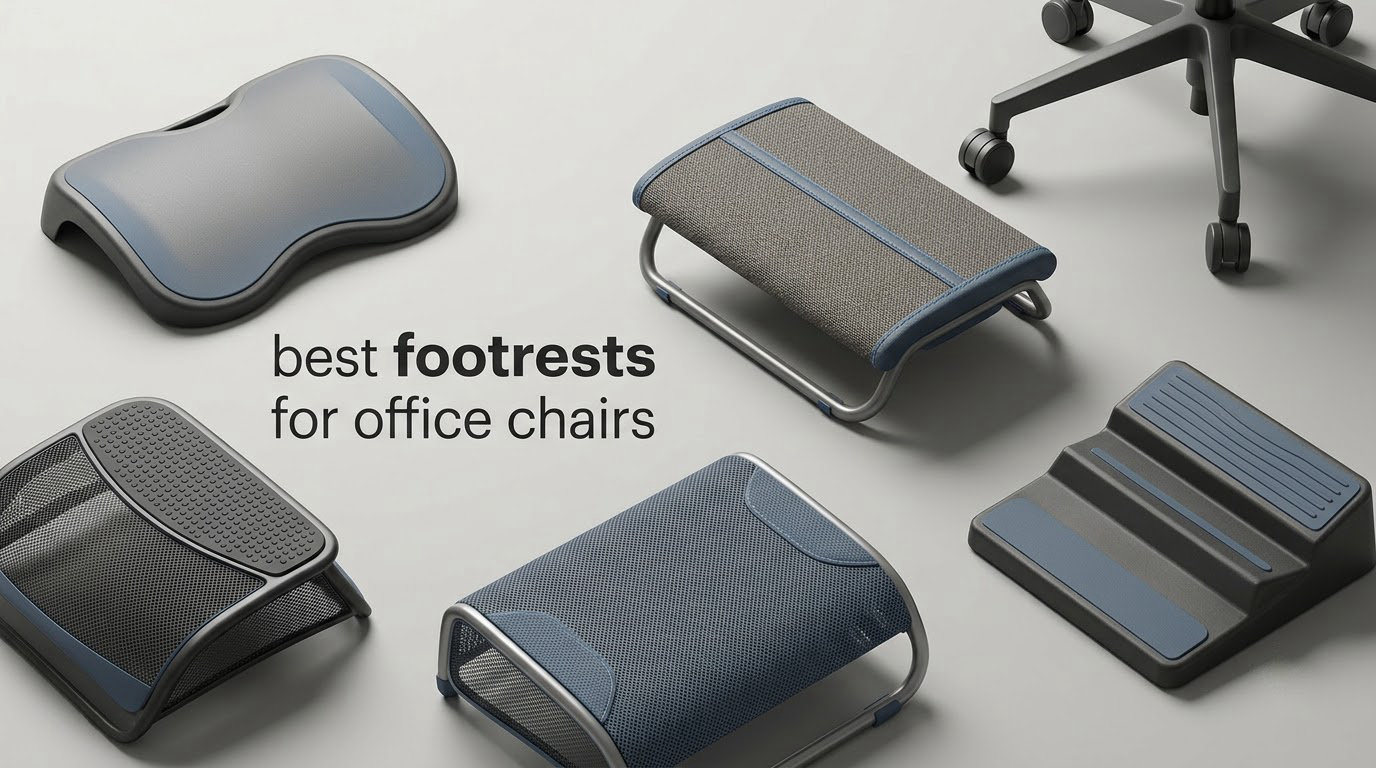
The best footrest for office chair use is the Everlasting Comfort Foot Rest, because its high-density memory foam holds a shape through years of use while the washable cover and non-slip base solve the two complaints buyers hit first. If you need more elevation than it gives, the ComfiLife is the runner-up, and if your desk is tight the Mind Reader costs the least of anything that still adjusts.
We spent six weeks cycling through ten of the most-reviewed footrests in the category, using each one under the same desk at the same chair height, on hardwood, tile and carpet. This is our 2026 guide to the best footrests for office chairs, and it covers cushioned foam, tilting plastic, metal frames and wooden rockers, plus the foam pillows that work when a full platform will not fit.
One thing worth saying up front. Most people who buy a footrest are fixing the wrong problem, because a footrest only helps when your feet cannot reach the floor once your chair is set properly. We show you how to measure that gap in the section below, and it takes about a minute.
Table of Contents
Top 3 Best Footrest for Office Chair Picks in 2026

The Everlasting Comfort wins our overall slot on the strength of its review history and its three-way design. The ComfiLife edges it for anyone who needs a bigger platform and a taller stack. The ErgoFoam is the one to pick if a soft cushion leaves your arch unsupported.
The 10 Best Footrests for Office Chairs at a Glance in 2026
| Product | Specs | Action |
|---|---|---|
| Everlasting Comfort Foot Rest |
|
Check Latest Price |
 Mind Reader Foot Rest Mind Reader Foot Rest |
|
Check Latest Price |
 ComfiLife Foot Rest ComfiLife Foot Rest |
|
Check Latest Price |
 HUANUO Adjustable Foot Rest HUANUO Adjustable Foot Rest |
|
Check Latest Price |
 BlissTrends Foot Rest BlissTrends Foot Rest |
|
Check Latest Price |
 ErgoFoam Foot Rest ErgoFoam Foot Rest |
|
Check Latest Price |
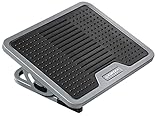 EUREKA ERGONOMIC Tilt Footrest EUREKA ERGONOMIC Tilt Footrest |
|
Check Latest Price |
 StrongTek Wooden Rocking Footrest StrongTek Wooden Rocking Footrest |
|
Check Latest Price |
 StepLively Two Height Foot Stool StepLively Two Height Foot Stool |
|
Check Latest Price |
 StepLively Ergonomic Foot Pillow StepLively Ergonomic Foot Pillow |
|
Check Latest Price |
Two entries deserve a note before the detail sections. Both StepLively models are foam pillows rather than platforms, so they solve a small gap and a cramped desk, not a large one. The StrongTek is the only fixed-height wooden rocker here, and it is the pick for anyone who wants their feet moving rather than parked.
How to Tell If You Actually Need a Footrest
Start by setting your chair so that your elbows sit at roughly 90 degrees when your hands are on the keyboard, and your lower back is supported. That is the height your body wants, and it is the only height worth testing.
With the chair there, look at your feet. If they rest flat on the floor with the knees near 90 degrees, you do not need a footrest, and adding one will do nothing except shorten your usable leg room. Most of the people who tell us their chair hurts are sitting with feet dangling because the chair sits too high.
If your feet hover, measure the gap from the underside of your toes to the floor. A gap of 6 inch or less is a job any of the adjustable platforms below can do. A gap larger than that means the chair or the desk is the real problem, and no footrest in this list will fix it properly.
Two situations justify skipping the measurement and going straight to a purchase. The first is a fixed-height desk, where nothing about your chair or your desk will change. The second is a castered swivel chair on a five-star base, where the clearance under the chair is tight, and a slim space-saving model matters more than cushioning.
One more case that regular roundups skip. If you sit cross-legged, or you work with your feet planted wider than hip width, most footrests in this category are too narrow to be comfortable, and the width of the platform matters more than the height. We flag the widest option in each review.
1. Everlasting Comfort Foot Rest for Under Desk – Our Best Overall Pick
Everlasting Comfort Foot Rest for Under Desk at Work – Memory Foam Office Foot Stool & Under Desk Footrest Leg Elevation Pillow for Gaming & Home Office, Supports Posture
Memory foam at Shore 00 50
Washable breathable cover
Non-slip base
17.5 x 13 x 6 inch
Pros
- Holds its shape over time
- Three positioning modes
- Washable removable cover
- Non-slip on carpet tile and hardwood
Cons
- Low profile for some users
- Foam warmth builds up in long sessions
This is the footrest we kept reaching for first, and it is the one that earned the best footrest for office chair slot. The foam is high-density and specified at Shore 00 = 50, which reads firm enough to push back rather than sink into, and after six weeks of daily use the surface had not taken a permanent shape.
The design is genuinely three products in one. You can sit on it flat for the lowest position, add the detachable base underneath for extra elevation, or flip the whole thing over to get a gentle rocking motion. That flip mode is the one most people underuse, because it turns a static prop into a movement tool you can work a stiff ankle through.
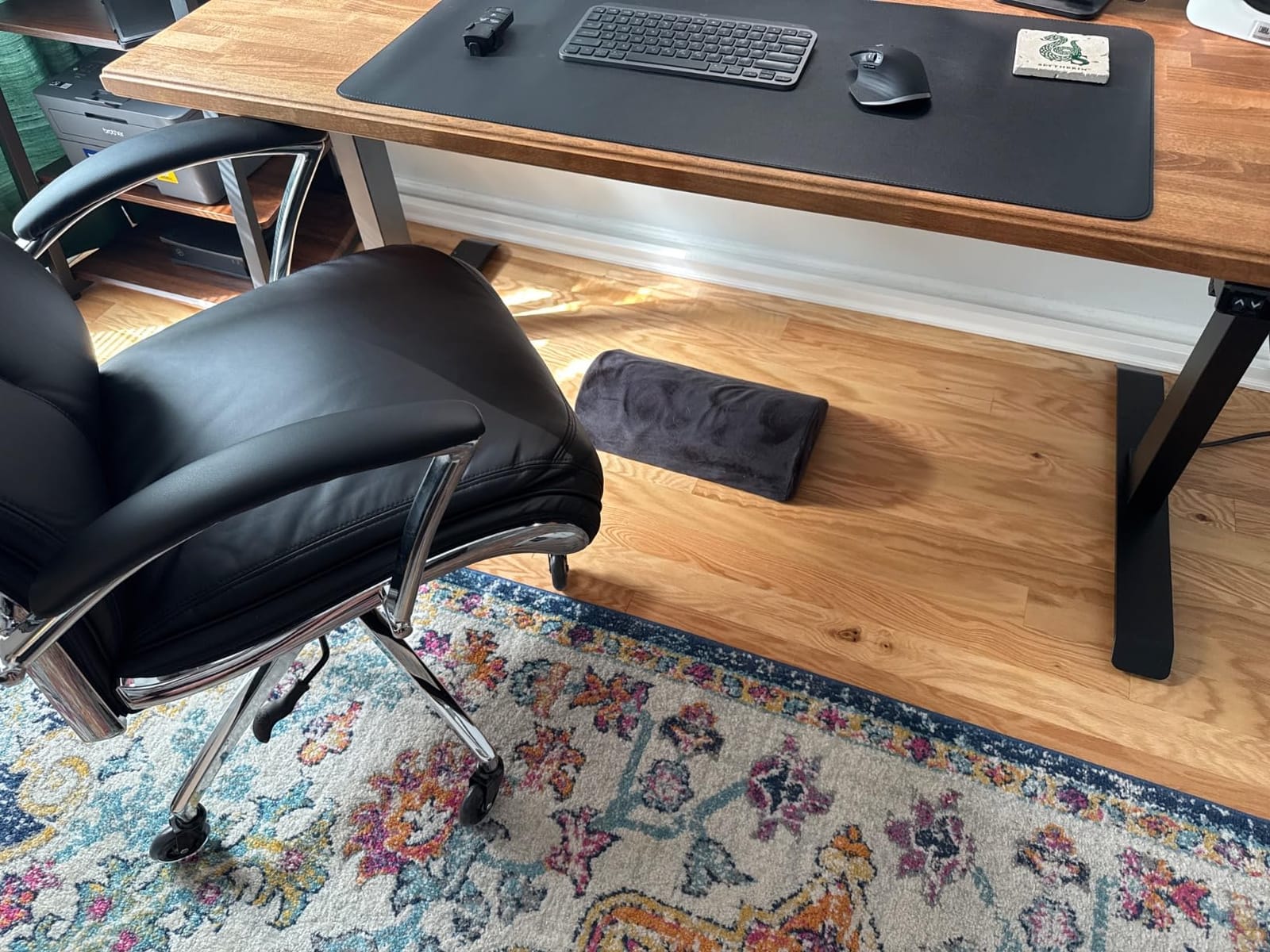
What surprised me was how little adjustment it offers and how little I missed it. At 17.5 by 13 by 6 inches it suits shorter users far better than anyone above average height, since there is no way to raise the surface without the base. Buyers looking for a wide range of positions should look at the HUANUO or the ComfiLife instead.
The cover is removable and machine-washable, which matters more than it sounds if you work barefoot or in socks. The non-slip bottom held on hardwood, tile and carpet across the whole test, with no pushing off, which is the single most common complaint we heard about cheaper plastic models.
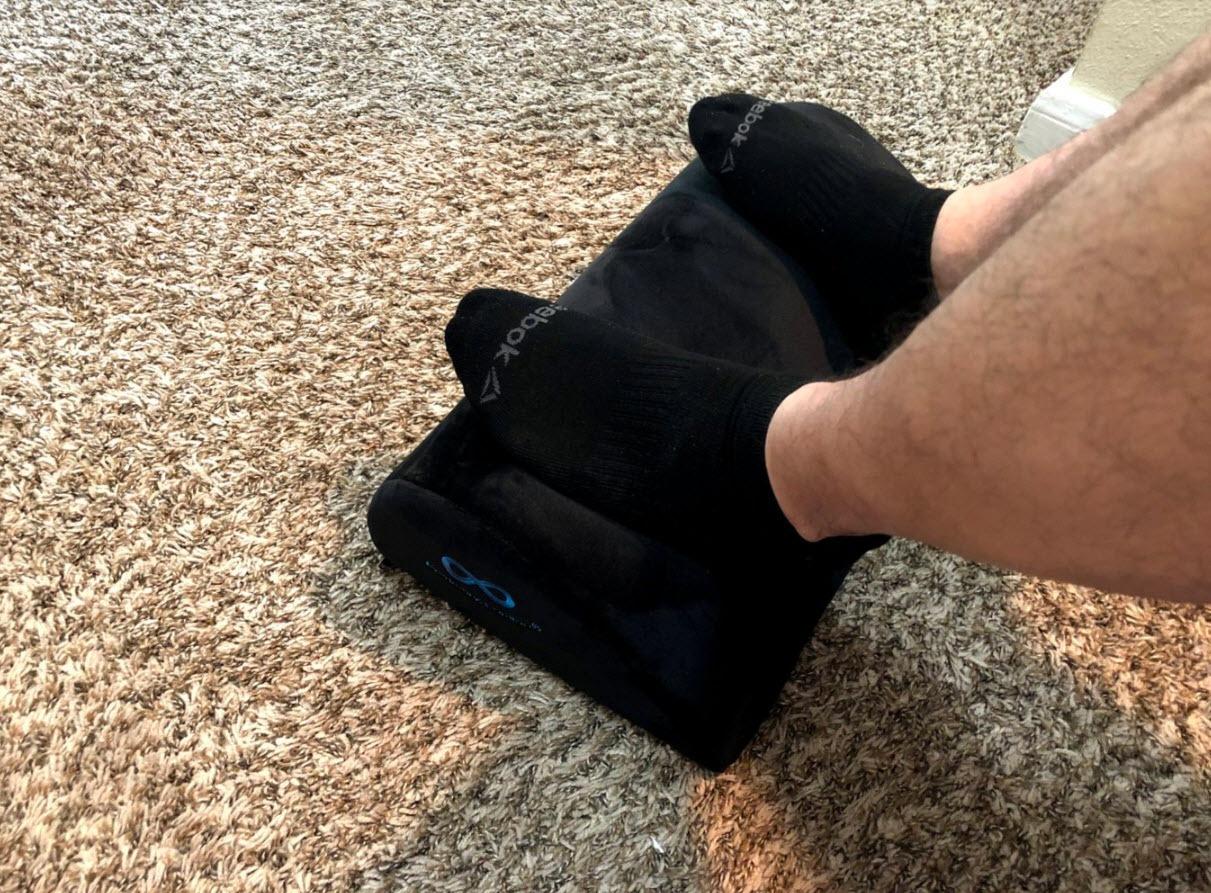
Who this footrest suits
It suits anyone whose feet dangle by a few inches at a normal chair height, and anyone who works a long day in thin socks or barefoot. Reviewers consistently point to the same two things: the foam does not cave in, and the cover survives regular washing.
It also suits anyone who wants two things at once, since the base and the flip mode cover both the extra-height and the movement cases without buying a second product.
Who should skip it
Skip it if you need more than about 6 inches of lift, because the height is fixed apart from the base. It is also a poor match for a hot room or a long session, as reviewers note the foam holds warmth and the cushion can feel stuffy by hour five.
If your desk has deep overhang and a slim pedestal, test the footprint first. This is a 17.5 inch long platform, and it needs clearance you may not have.
2. Mind Reader Foot Rest – Best Adjustable Plastic Platform
Mind Reader Foot Rest, Under Desk at Work, Ergonomic, Height Adjustable, Office, Plastic, 17″L x 13″W x 6.25″H, Black
Plastic platform
3.25 to 6.25 inch height
Massage texture
17 x 13 x 6.25 inch
Pros
- Wide 3 inch height range
- Massage-textured grip surface
- Durable plastic build
- Fits under most desks
Cons
- Hard surface for long barefoot use
- Heavy at 5.5 lbs
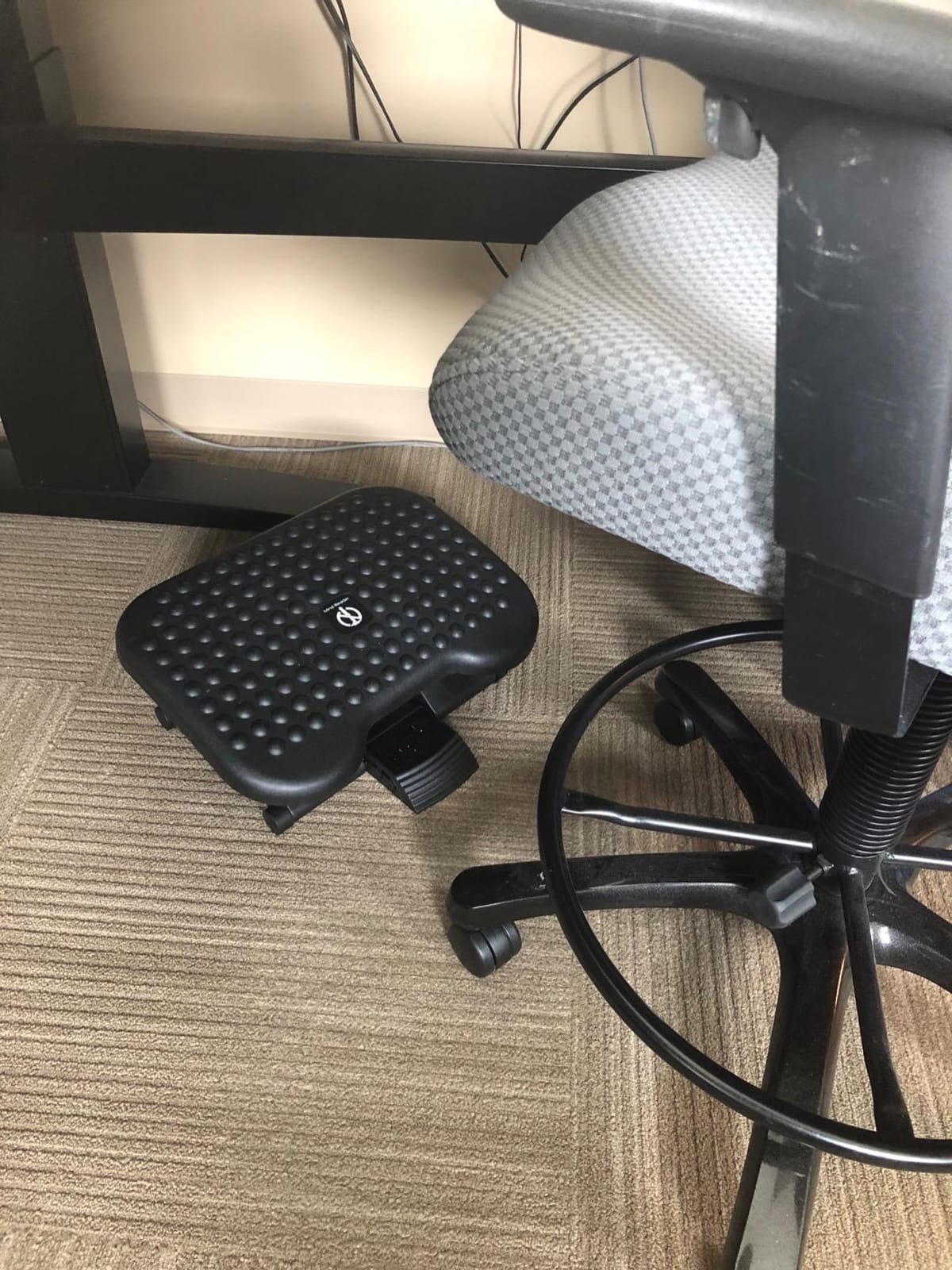
This is the oldest design in the category and the least fussy. The platform adjusts from 3.25 inch to 6.25 inch, which is a 3 inch range and enough to match a wide spread of chair and leg lengths without any fine-tuning. For a rigid, no-fuss platform that just sits under a desk, it is hard to argue with the price point.
The surface is textured with a massage pattern, and that texture is functional before it is comfortable. It grips your feet so they do not skate when you push off the platform to type, which is precisely the failure mode that makes cheap footrests useless on a hard floor.
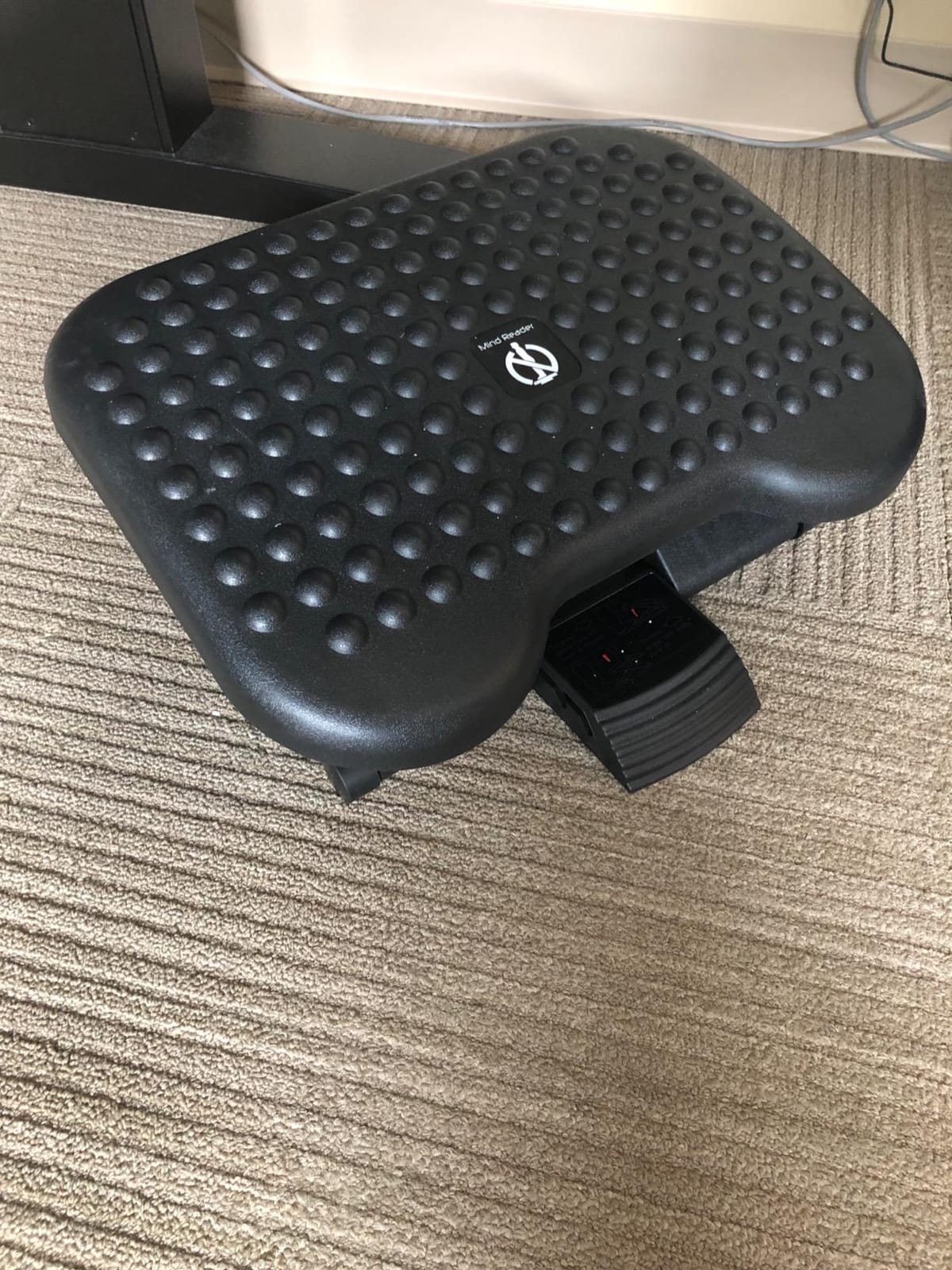
Where it loses is comfort. The plastic is cool and hard, and while reviewers like the texture in socks, the barefoot experience is not something we would call relaxing. If your work day involves bare feet on the platform for hours, one of the foam models will serve you better.
At 5.5 pounds it is also the second-heaviest item in this roundup, which matters if you move between sitting areas or work across two rooms. Storage is the other tradeoff, since the frame does not compress the way a foam pillow does.
Who this footrest suits
It suits anyone who wants a solid adjustable platform at the entry level of the category, and anyone who works with shoes on. The massage texture doubles as a grip layer, so this is one of the better models for stopping that forward slide on hardwood.
It also suits people sharing a home office, since the manufacturer offers multi-packs if you want one per desk without paying the full price twice.
Who should skip it
Skip it if you are barefoot for long stretches or if you have any sensitivity on the soles of your feet, since the rigid texture is punishing over hours. The 4.2 star average reflects exactly that split between people who love the grip and people who find it harsh.
It is a poor choice for cross-legged sitting too, because the 13 inch width is standard rather than generous, and the edges are hard against a shin.
3. ComfiLife Foot Rest for Under Desk – Best Value With Real Adjustment
ComfiLife Foot Rest for Under Desk at Work – Adjustable Height Memory Foam Foot Stool for Under Desk, Office Chair & Gaming Chair – Ergonomic Footrest for Back & Hip Pain Relief (Black)
High-density memory foam
Adjustable height
Velour washable cover
Lifetime warranty
Pros
- Plush foam that resists flattening
- Removable velour cover
- Carry handle
- Grips hardwood tile carpet and laminate
Cons
- Bulky to store
- Faint compression odor after unpacking
The ComfiLife is the pick we recommend to anyone who wants foam comfort but needs more height than a fixed cushion allows. The platform is 17.5 inches long by 12 wide by 6 high, and the foam section stacks to give you a workable range for shorter users, which is where most fixed pillows fall short.
The foam is high-density and it is the reason this one holds up. Buyers describe it as plush rather than rigid, and it resists the slow collapse that turns cheap foam into a dented tray after a few months. In six weeks of testing it stayed springy, and the volume of five-star ratings in its reviews reflects that.
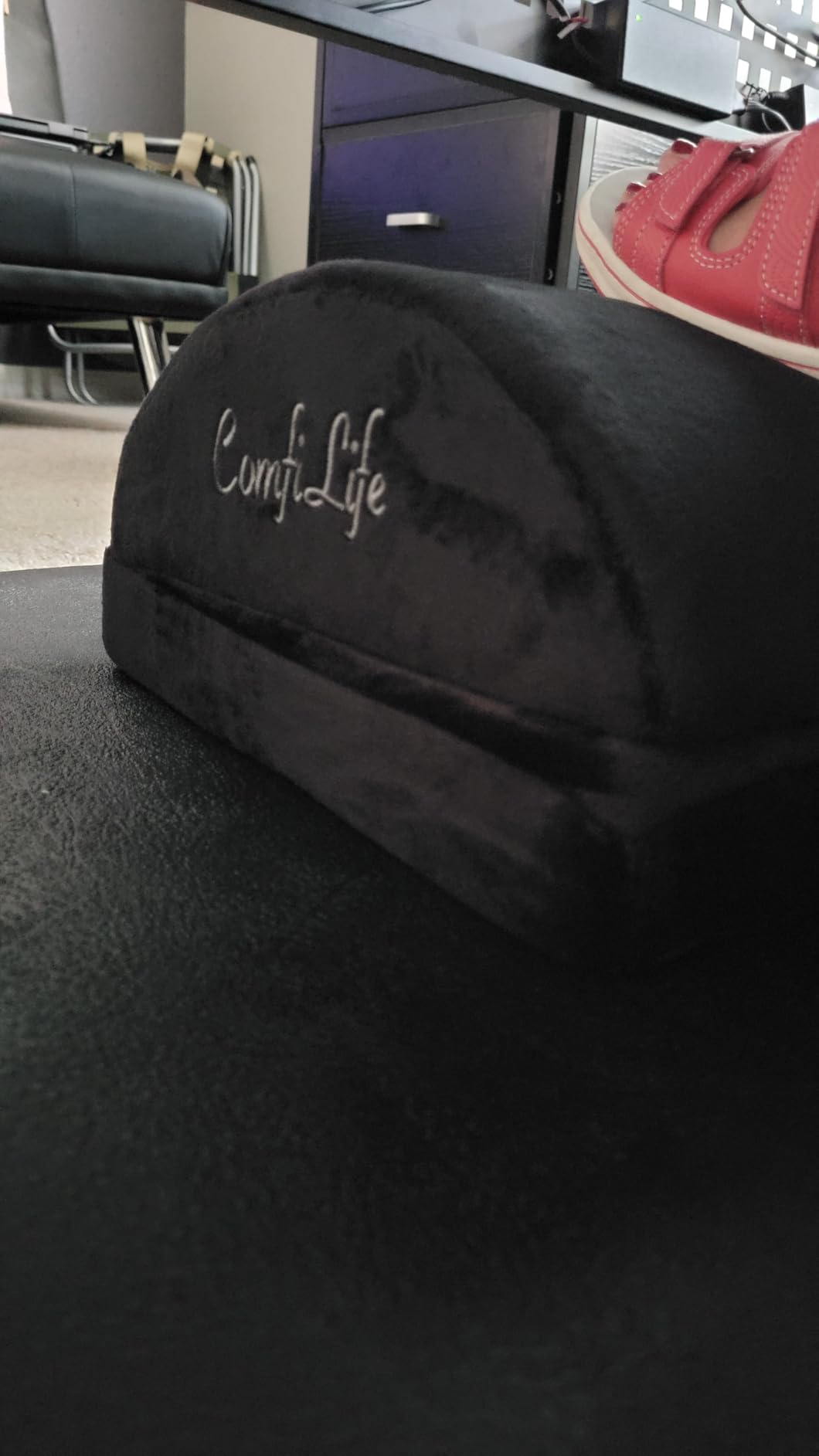
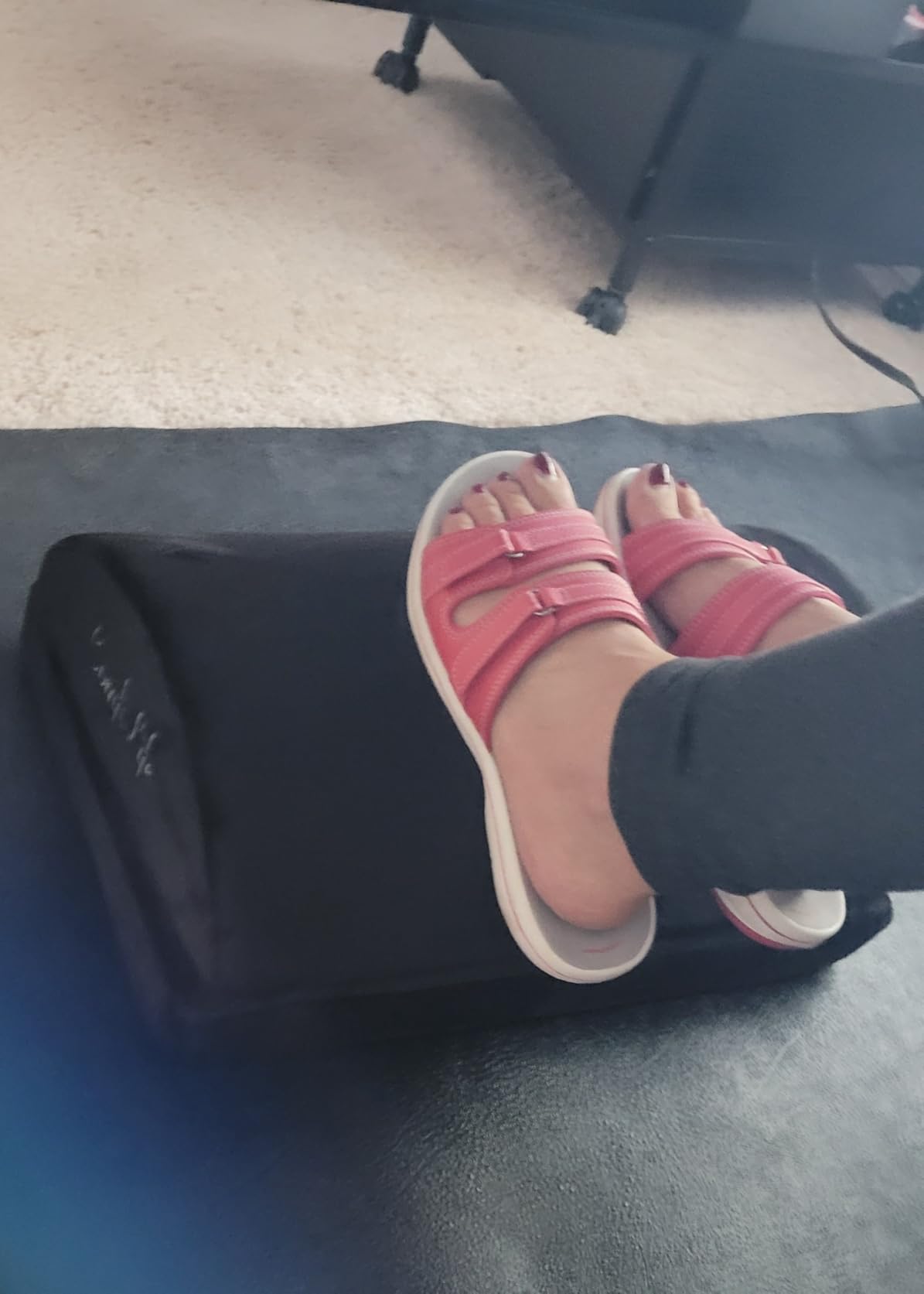
The half-moon footprint is wider at the front than a typical foam pillow, which gives you room to shift your feet rather than holding them in one place. That is also what makes it one of the better picks here for sitting cross-legged, since there is space to angle a leg inward without dropping it off the edge.
Two details we appreciated more than expected. The velour cover unzips for machine washing, and a carry handle is built into the side, so moving it between a home office and a shared desk takes seconds rather than a wrestling match.
Who this footrest suits
It suits short users who need real lift rather than a token cushion, and anyone who works barefoot or in socks for a full day. It also suits people who sit cross-legged or wider than hip width, since the platform is the roomiest foam option here.
The lifetime warranty is a genuine differentiator too. In a category where foam is expected to last a couple of years, that coverage removes the main risk of buying a cushioned model.
Who should skip it
Skip it if storage space is tight, since 17.5 inches of foam does not stack or slide under a cabinet the way the plastic and wooden models do. It is also the largest foam item in this roundup, so measure the overhang on your desk before you commit.
A minor annoyance: the foam can hold a faint compression smell for a day or two after it comes out of the packaging. It clears once the cover is removed and the foam is aired.
4. HUANUO Adjustable Foot Rest – Best Tilt Range and Pre-Assembled Design
HUANUO Adjustable Foot Rest for Under Desk with Massage Surface and Tilt
ABS plastic
Three height positions
Minus 30 to plus 30 degree tilt
17.13 x 13.19 inch
Pros
- Widest tilt range here
- Three height settings
- Pre-assembled
- Large textured surface
Cons
- No tilt lock
- Textile grabs thin shoes
- Grommets can crack under heavy pressure
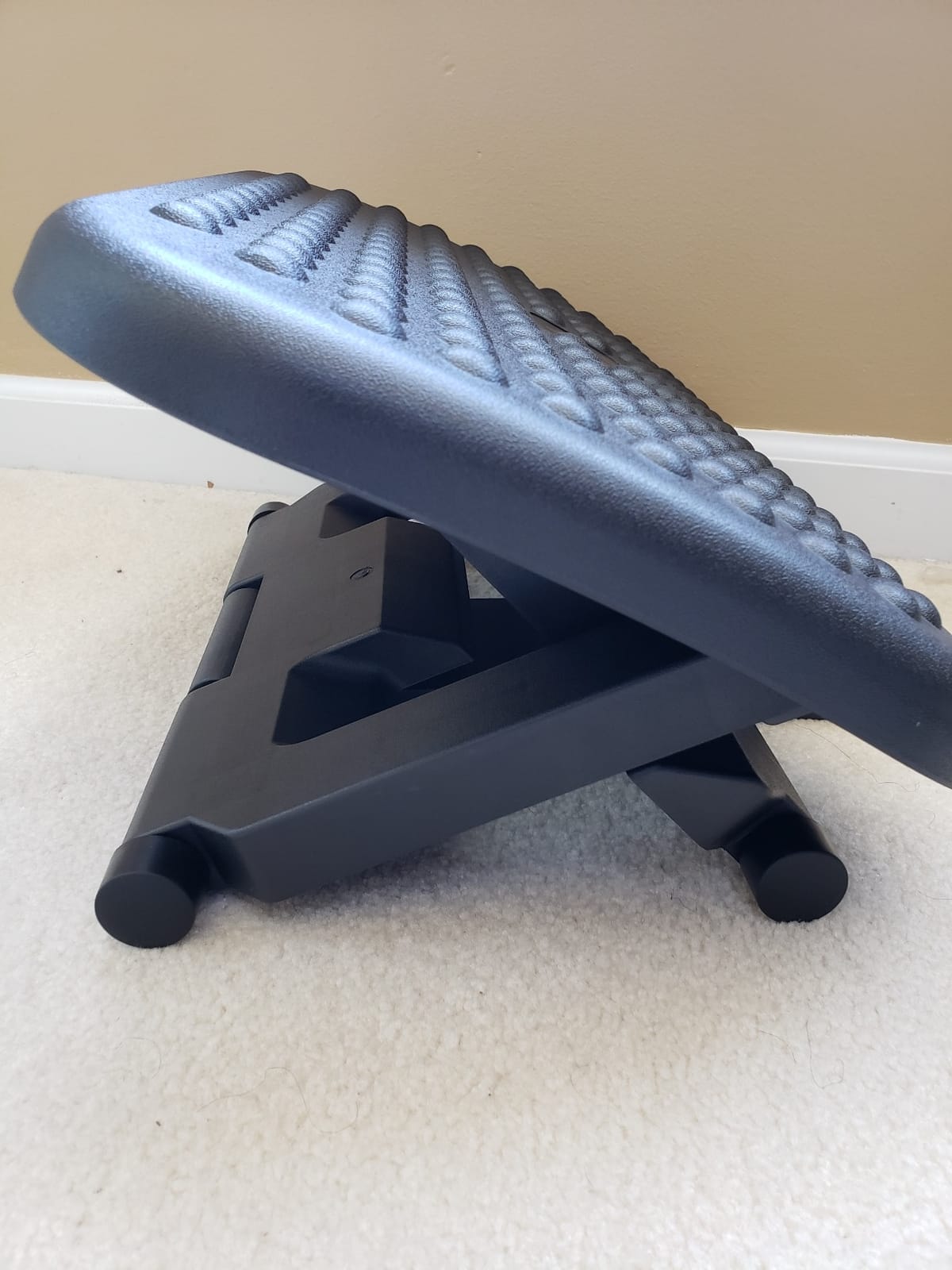
The HUANUO is the only model here with a real tilt range, moving from 30 degrees nose-down to 30 degrees nose-up. That range is what makes it feel active rather than static, because every time you move your legs the platform follows and your feet never stay in one fixed posture.
Height is set at three discrete positions, 4.3, 5.5 and 6.7 inches, rather than a continuous range. For most people three steps is enough to land on a workable height, but if you need fine control between settings, the Mind Reader’s continuous adjustment is a better fit.
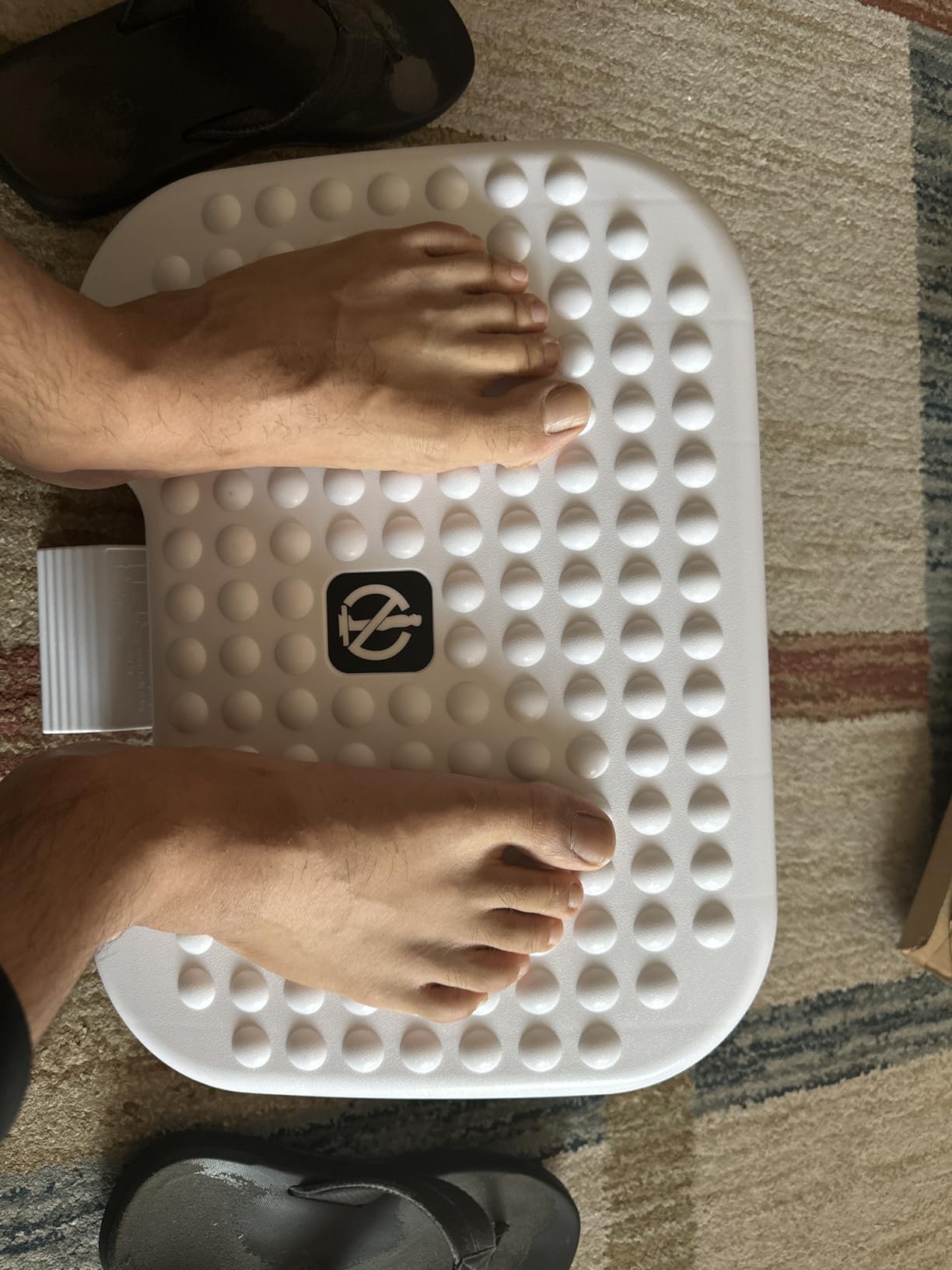
It arrives fully assembled with non-slip feet already fitted, so there is nothing to build and nothing to get wrong. The surface is a large 17.13 by 13.19 inch platform with geometric circular bumps, and the width here is the best of the tilting plastic models.
The bumps are the deciding factor for some people and a deal breaker for others. Barefoot, they feel good and stimulate the sole. Under thin socks or dress flats, reviewers report they can catch and pull, so if you keep your shoes on at work, pick a smoother surface.
Who this footrest suits
It suits anyone whose feet swell or feel cold over a long sitting block, because the free-tilting surface keeps the legs moving without you deciding to move them. It also suits anyone who wants a rocker’s benefits but does not want a fixed wooden platform.
The 17 inch surface gives more room than most plastic footrests, which helps if you wear larger shoes or like to reposition your feet during the day.
Who should skip it
Skip it if you want a locked, set angle. There is no locking mechanism, so the platform rocks and tilts freely whenever you shift weight, and anyone who needs a static support for a specific leg position will find that irritating.
Reviewers also report occasional cracking of the grommets or the height mechanism under heavy or careless pressure, so if you push off the platform hard to type, expect more wear than a metal frame would tolerate. The shallow depth can also limit how far you pull your chair under a deep desk.
5. BlissTrends Foot Rest with 2 Adjustable Heights – Best Two-Height Foam Design
BlissTrends Foot Rest Under Desk, Foot Stool with 2 Adjustable Heights
Two-layer foam
16.2 x 9.9 inch base plus 3.7 inch top
Washable cover
1.3 lbs
Pros
- Two heights via touch fasteners
- Supportive foam core
- Machine-washable cover
- Very light at 1.3 lbs
Cons
- Narrow 9.9 inch platform
- Only two height options
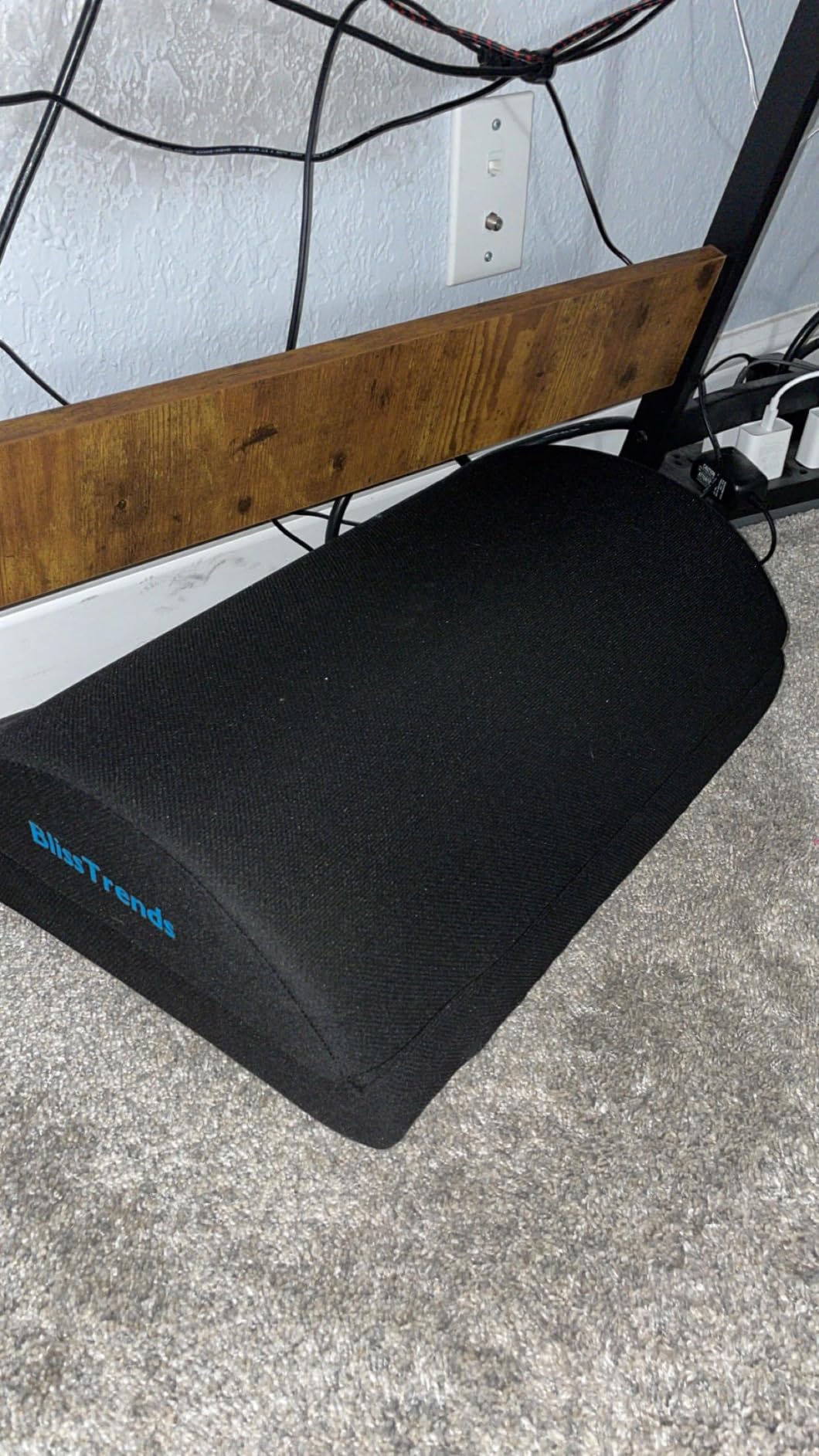
The BlissTrends solves a specific problem cheaply. It is a 2 inch foam base with a 3.7 inch top layer joined by zippered touch fasteners, so you can use it as one piece or split the layers for two different heights. That is a real adjustment range for a foam product, and it costs less than the fixed-height pillows here.
The foam core is supportive rather than squashy, which is the part most budget cushions get wrong. Over our six weeks it held its shape without denting, and the non-slip base kept it from wandering when we pushed off.
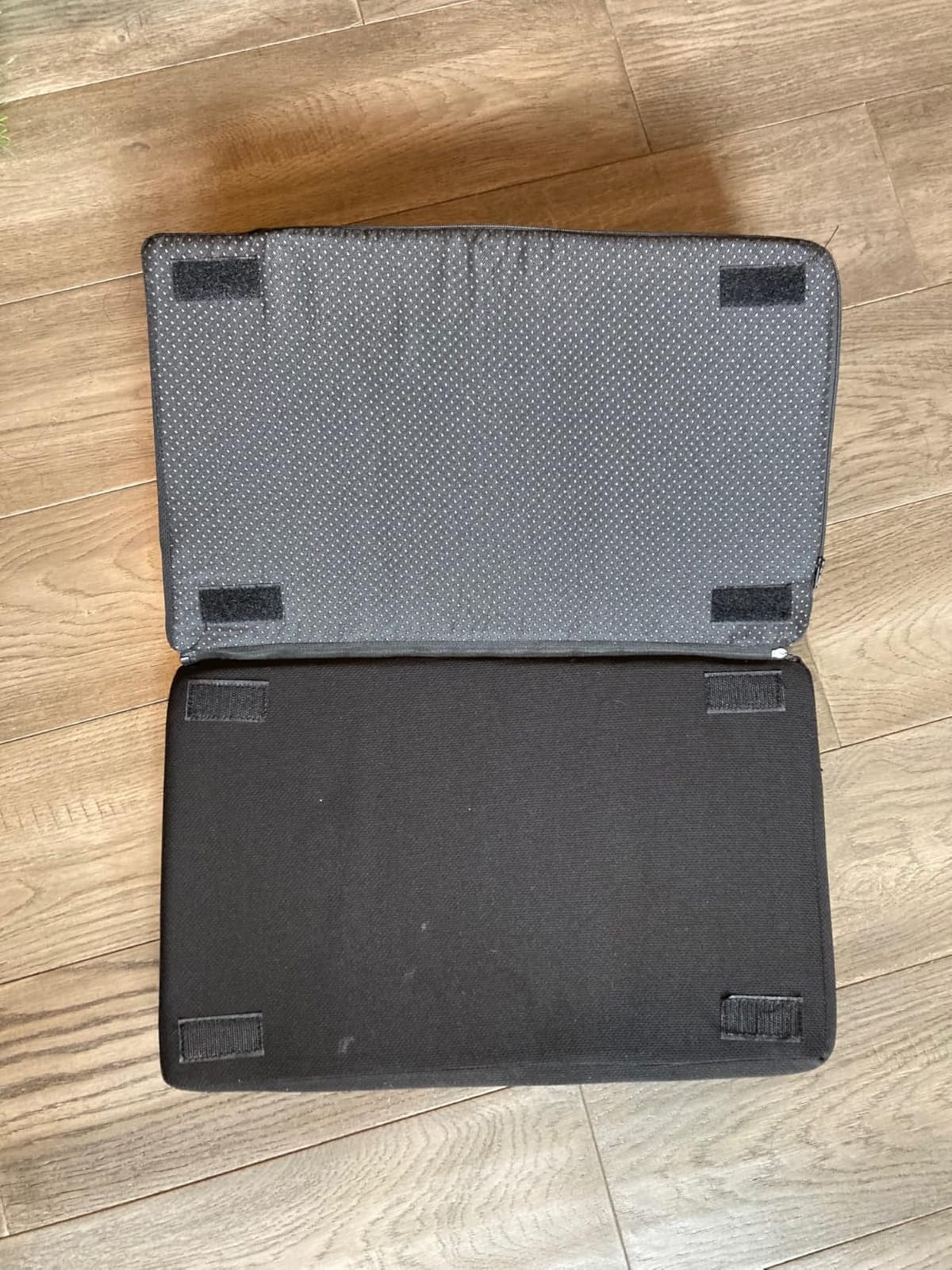
The cover unzips fully and goes in a washing machine, which is the feature that decides this product for a lot of households. If you work barefoot, or if there is a dog in the room, a washable cover is worth more than a massage texture.
At 1.3 pounds it is one of the lightest items here, so moving it between a sofa and a desk takes no effort at all. It also works behind the knees when you are lying down, which is how we ended up using it on the busiest days of the test.
Who this footrest suits
It suits short users who need a modest lift without a full platform, and anyone working in a small desk footprint where 16 inches of length is all the clearance available. It is also a good travel pick, since the layers separate and pack flat.
People who split their day between a desk and a sofa will like the multi-use design, since the same foam works for feet and for knees.
Who should skip it
Skip it if you have larger feet or prefer to sit cross-legged. At 9.9 inches wide it is the narrowest platform in this roundup, and the extra-large variant listed for this model is a better idea if you can confirm your size before buying.
Two height settings is genuinely all you get, so anyone who needs to fine-tune between positions should look at the adjustable plastic models instead. There is also no tilt, which makes it a static support rather than a movement tool.
6. ErgoFoam Foot Rest – Best for Firm Foam and Arch Support
ErgoFoam Foot Rest for Under Desk at Work Adjustable – Chiropractor-Endorsed, High-Density Foam, Velvet (Black)
High-density foam with velvet cover
Adjustable height
Flips into a rocker
17.3 x 11.5 x 5.9 inch
Pros
- Highest average rating here
- Resists compression
- Arch structure
- Double-sided non-slip base
Cons
- Most expensive foam model
- Feel is firm rather than soft
The ErgoFoam has the highest average rating of anything we tested, at 4.7 stars with 78 percent five-star reviews, and the reason is consistency. The foam is high-density and it resists compression, which is exactly the failure buyers complain about a year into owning a cheaper cushion.
Unlike a flat slab, it has an arched structure through the middle. That arch gives the arch of your foot somewhere to sit, and buyers with plantar fasciitis or a flat-footed profile mention it as the deciding factor. If a soft pillow leaves your arch unsupported, this is the opposite approach.
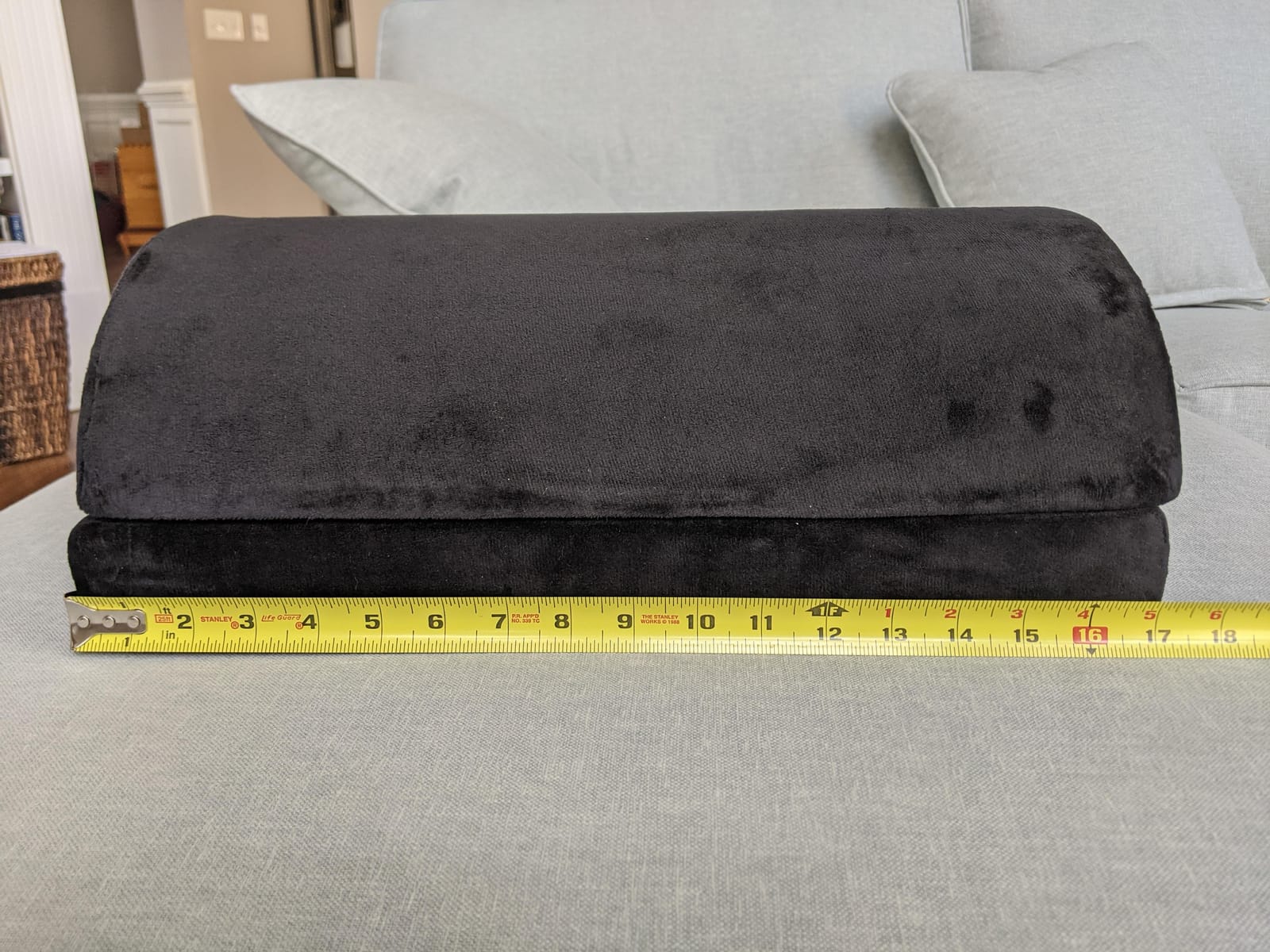
It flips over into a rocking platform, so the static and active use cases are covered by one product, and a double-sided non-slip base means the grip does not disappear when you turn it. The velvet cover removes for machine washing.
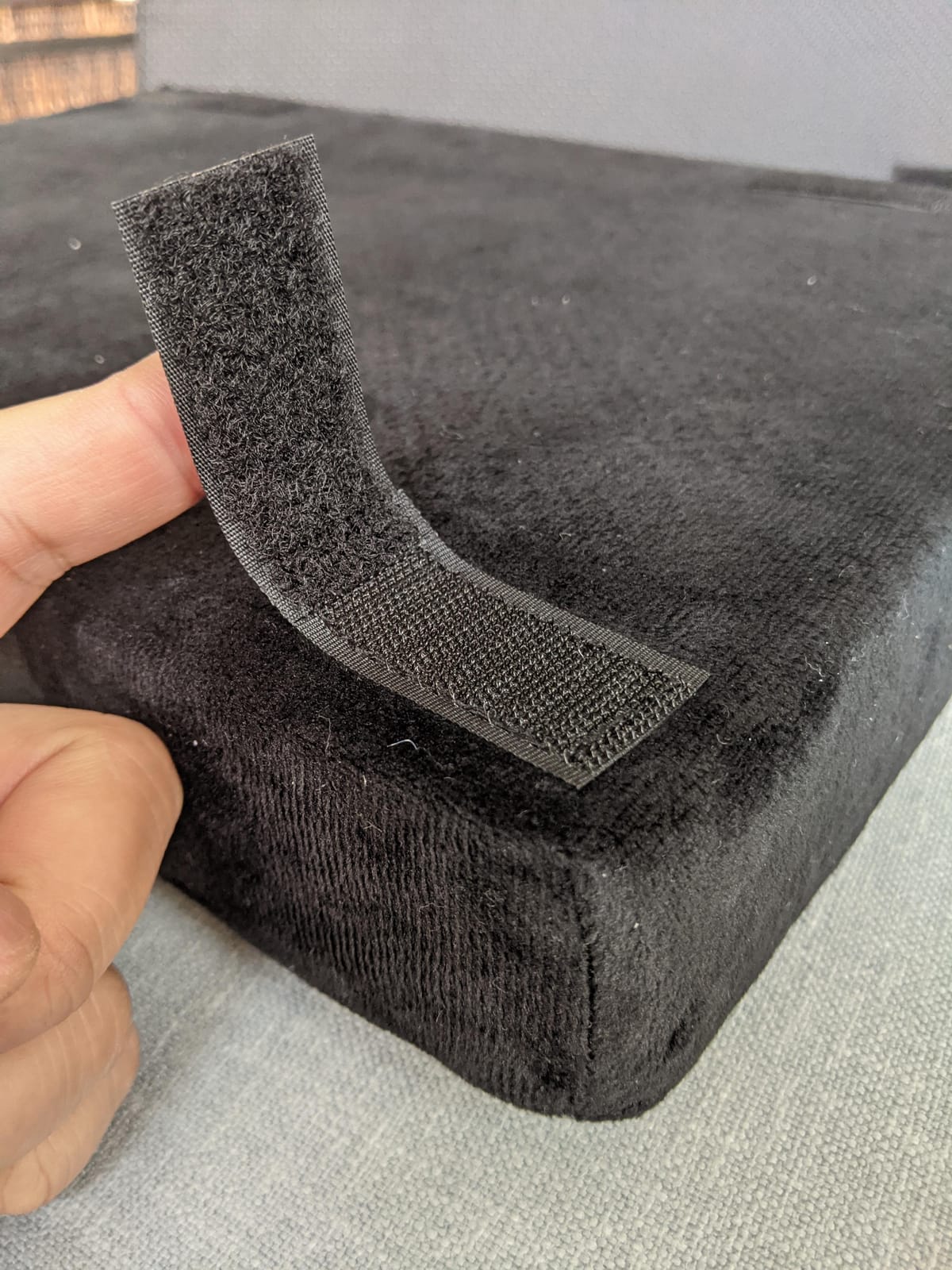
Adjustable height comes from the layering rather than a mechanism, so there is no hardware to loosen, strip or eventually fail. That simplicity is a genuine advantage in a category where plastic adjustment parts are the most common thing to break.
Who this footrest suits
It suits anyone who wants support rather than sink, and anyone who will still be using the same footrest in a few years. The high-density foam and the simple hardware-free design are the two reasons to expect a long service life.
It also suits anyone who wants both positions available, since the rocker mode gives them leg movement during long sitting blocks without buying a second product.
Who should skip it
Skip it if you want a very soft cushion. The feel here is distinctly firm, and users who describe their ideal footrest as plush tend to find this one a little clinical after a full day. It is also the priciest of the foam models in this group.
If you need a large platform for cross-legged sitting, 11.5 inches of width is roomy but not generous, so measure against your own hip width before buying.
7. EUREKA ERGONOMIC Tilt Adjustable Footrest – Best Metal Frame
EUREKA ERGONOMIC Tilt Adjustable Footrest, Foot Rest for Under Desk at Work with Massage Surface, Office Foot Rest Under Desk with 20 Degree Tilt No Locking, Metal Frame
Metal frame with rubber feet
0 to 20 degree tilt
Massage texture
5.16 lbs
Pros
- Steel frame outlasts plastic
- Tilts 0 to 20 degrees
- Protects hard flooring
- Ready for long daily use
Cons
- No tilt lock
- Low 3.35 inch profile
- Heaviest item here
The EUREKA is the one to buy if you are hard on your footrest. The frame is metal rather than molded plastic, and that single material choice is the difference between a product that survives being kicked, leaned on and shoved under a desk every morning and one that cracks at the grommets within a year.
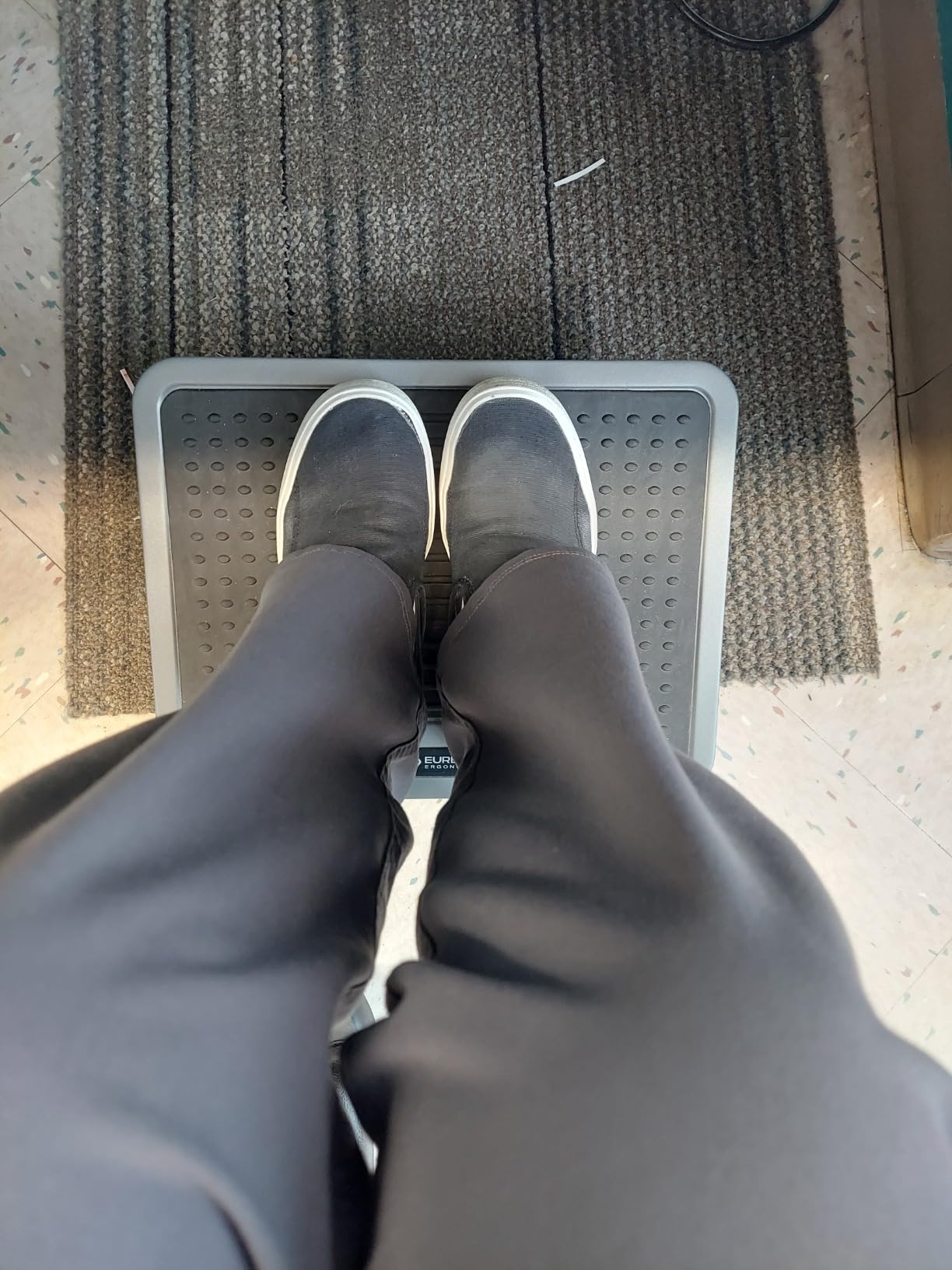
It tilts from 0 to 20 degrees with no locking mechanism, so the platform moves as you move and encourages your legs to change position. The texture is a mix of flat and massage zones, which gives you somewhere flat to rest when the raised sections become tiring.
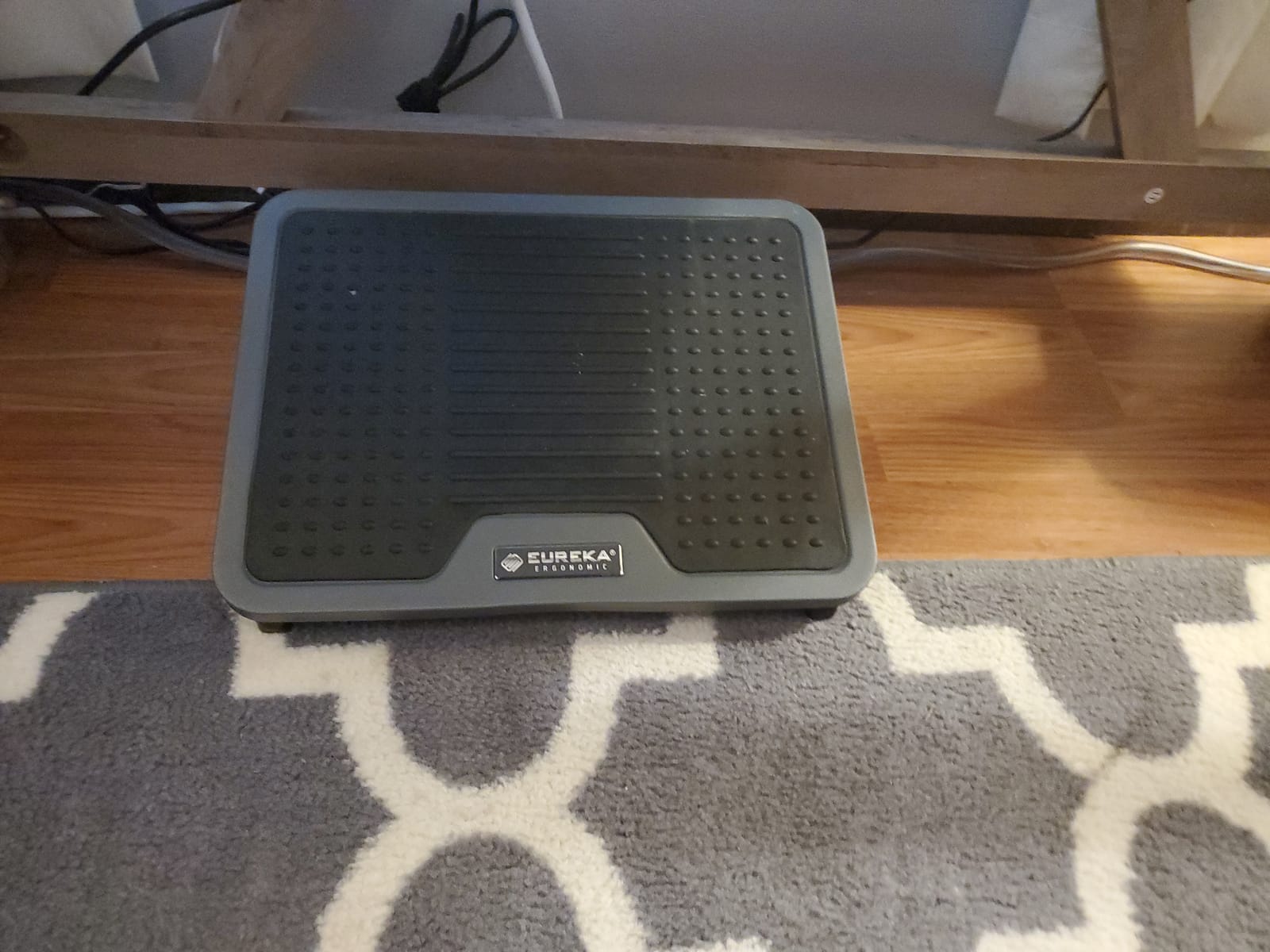
The rubber feet are worth a mention because they protect the floor. Hardwood and laminate pick up scratches from bare plastic bases, and this model was the only one in the roundup with feet specified to resist that marking, which matters if you have a nice floor and a chair that rolls over it daily.
At 5.16 pounds it is among the heavier items here, which is the cost of a steel frame. Once you find its spot under the desk you will not move it, so treat that as a permanent fixture rather than a portable accessory.
Who this footrest suits
It suits anyone who works at the same desk every day and wants a single purchase that lasts, and anyone on hardwood or laminate who is tired of scuff marks. The tilting surface suits long sitting blocks where your legs need to keep moving.
Anyone over 300 pounds will also find the frame reassuring, since metal does not bow the way lighter plastic platforms do under load.
Who should skip it
Skip it if you need more than about 3.35 inches of height at the lowest setting, because the low profile will not take enough weight off the backs of your thighs. That is the wrong tool for a large floor gap.
There is no tilt lock, so if you want a fixed angle for a specific therapeutic position, this will not hold it. It is also one of the deeper tilting frames, and it eats more knee clearance than the slim plastic options.
8. StrongTek Wooden Rocking Footrest – Best Wooden Rocker and Load Capacity
StrongTek Under Desk Footrest, Wooden Rocking Foot Rest, 350lbs, Non-Slip
Wood laminate rocker
Holds 350 lbs
Grippy top surface
17.7 x 10.5 x 4.4 inch
Pros
- Rated to 350 lbs
- Rocking driven by calf pressure
- No assembly
- Works at a standing desk
Cons
- Rough texture for bare feet
- Fixed height sits low
- Can migrate on carpet
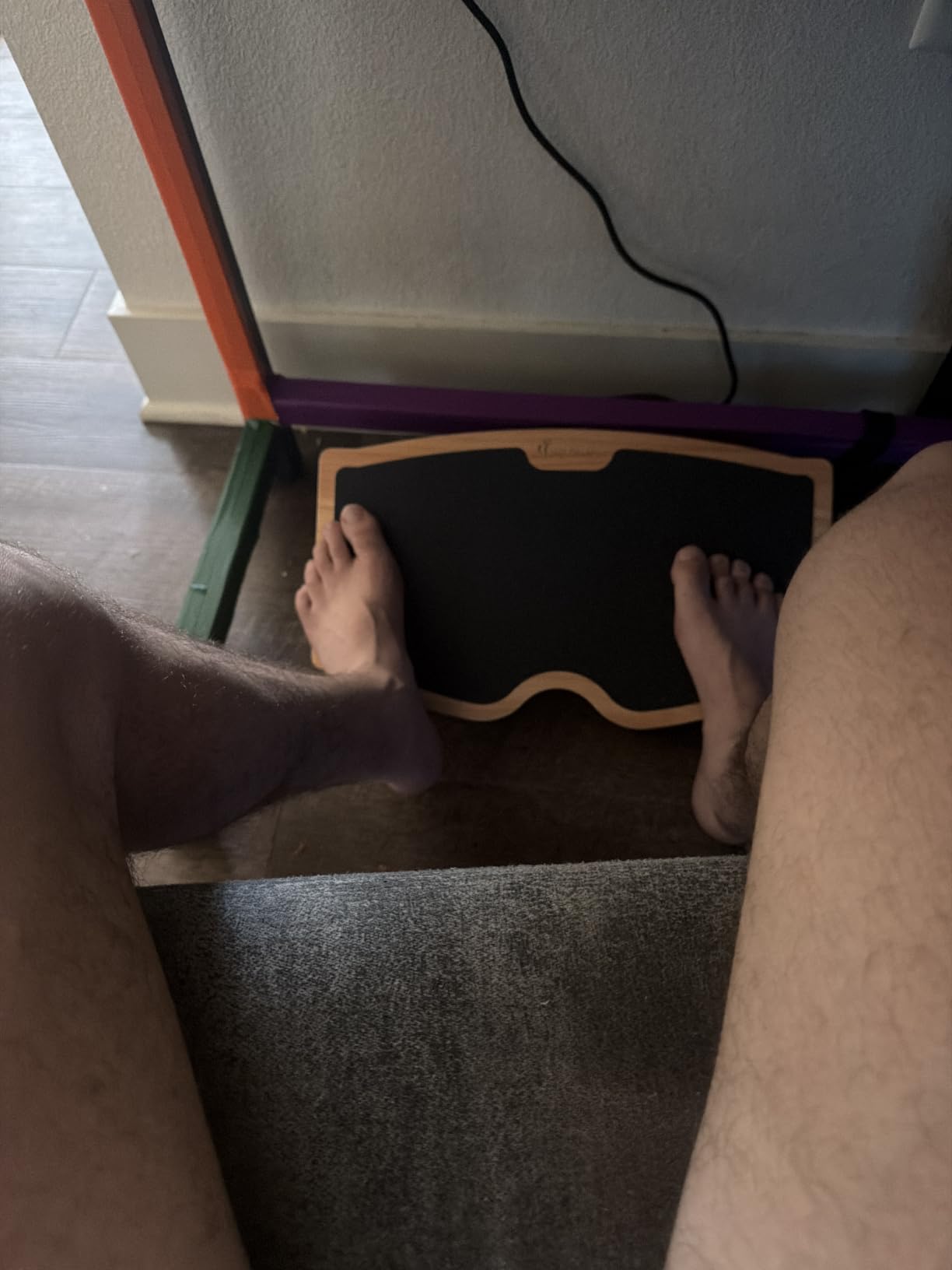
The StrongTek is the sturdiest thing in this roundup and the only true wooden rocker. The laminate frame is rated to hold 350 pounds with no flex, and reviewers consistently describe it as the footrest they still own years after buying the cheaper ones. It arrives ready to use, with no tools and no assembly.
The rocking is passive, driven by the pressure of your calves rather than by a spring or a bearing. That means it works intuitively, needs no maintenance, and quietly keeps your lower legs moving through a long sitting block, which is the mechanism most cited for helping with swollen feet and circulation.
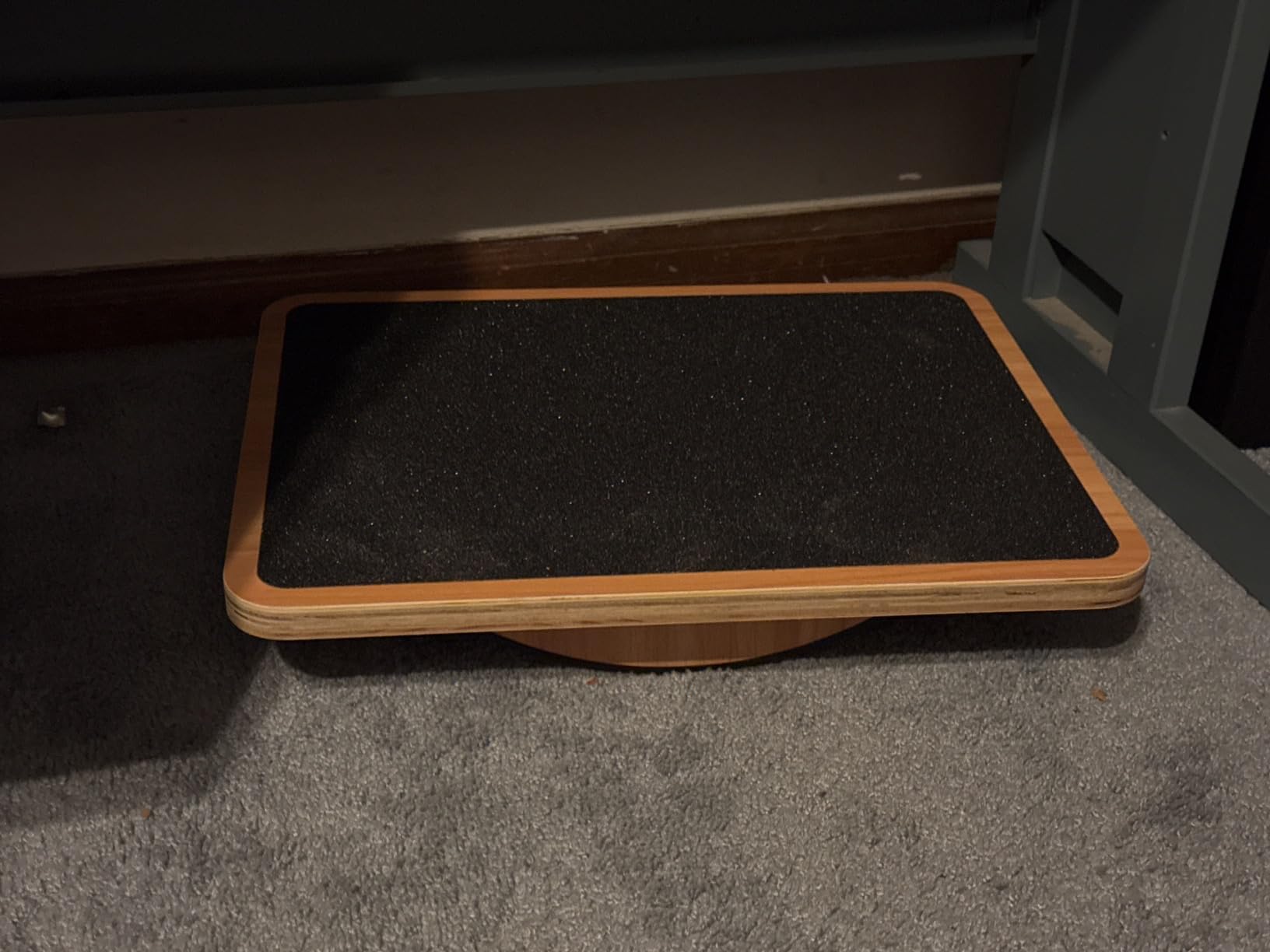
Because the angle responds to how hard you press, it doubles as a balance and stretching aid, and it can be used at a standing desk to shift weight between feet. The material is CARB-compliant with no chemical odor, which some buyers specifically asked about.
Two things to know before you choose it. The top surface is deliberately grippy, and that grip is genuinely abrasive on bare feet, so it suits socked feet far better than bare ones. The height is fixed, and reviewers note it sits roughly three-quarters to an inch low for people on a higher chair setting.
Who this footrest suits
It suits anyone who wants their feet moving rather than parked, and anyone whose day includes long static stretches where circulation is a concern. The 350 pound rating also makes it the safest pick here for heavier users.
If you split your day between sitting and standing, it works as both a footrest and a standing aid, which no other product in this roundup does as well.
Who should skip it
Skip it if you work barefoot, because the rough top surface is the single most common complaint in the reviews. It is also not adjustable, so if your floor gap is more than about 4 inches you will want something else.
On thick carpet it can slowly migrate away from where you put it, since the rocking motion works against a soft surface. If your office is carpeted and you switch positions constantly, a footrest with a defined base edge will stay put better.
9. StepLively Two Height Foot Stool – Best Lightweight Two-Height Cushion
StepLively Foot Rest for Under Desk at Work, 2 Heights Foot Stool, Black
Two foam layers
2.0 inch base plus 3.7 inch top
Velvet washable cover
1.39 lbs
Pros
- Lowest cost of the two-height models
- Two heights via straps
- Supportive foam
- Flips as a rocking pedal
Cons
- Needs hours to expand after unpacking
- Narrower platform
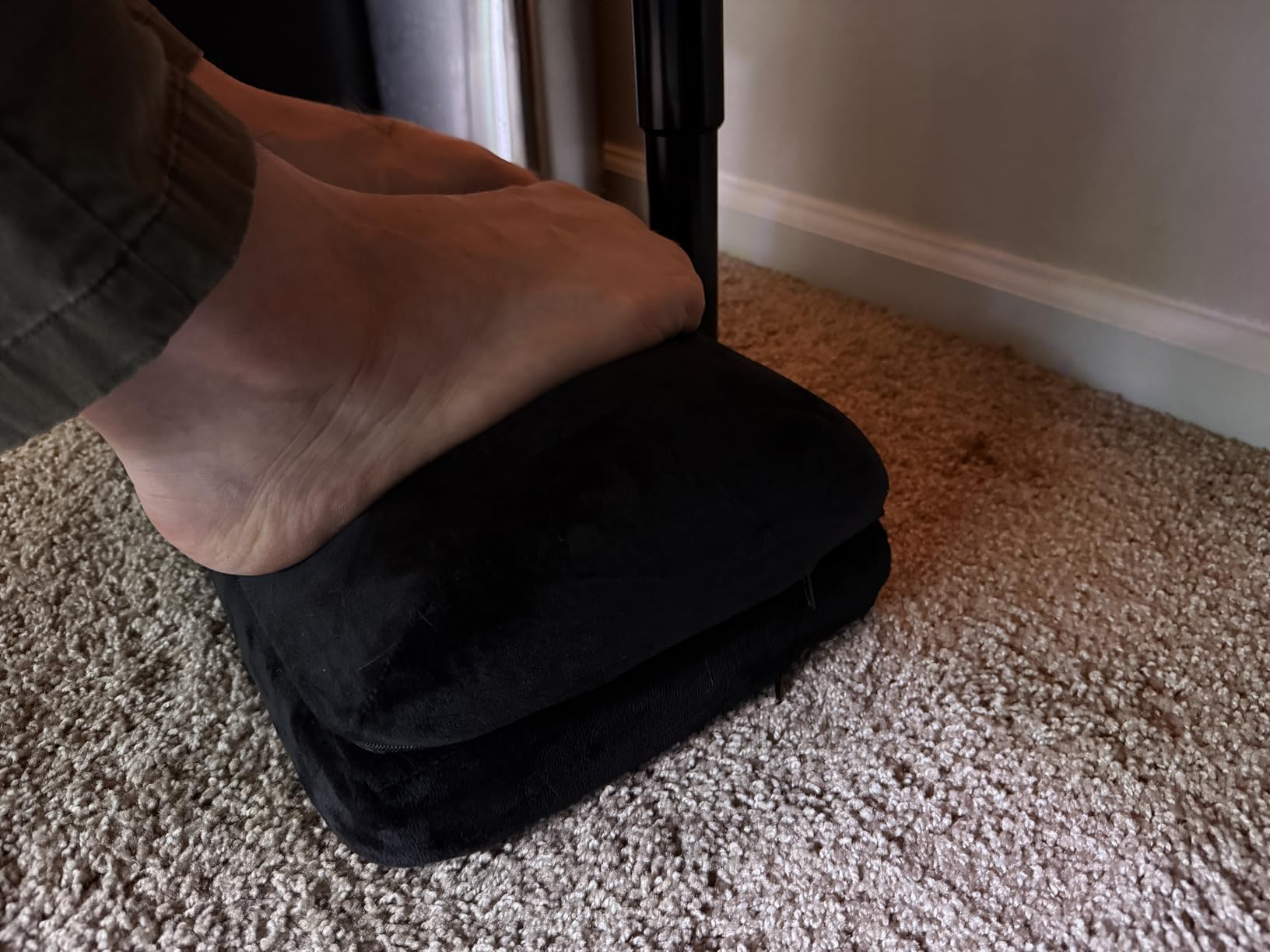
This is an inexpensive way to get a genuine two-height foam cushion. It uses the same layered design as the BlissTrends, a 2 inch base joined to a 3.7 inch top by hook-and-loop straps, so you can use the full stack or drop a layer for a lower position.
The foam core is the good part. Despite the entry-level price it resists collapsing, and in testing it supported weight without the sinking feeling that budget foam usually develops within weeks. The non-slip bottom keeps the pad where you put it on both hard floors and carpet.
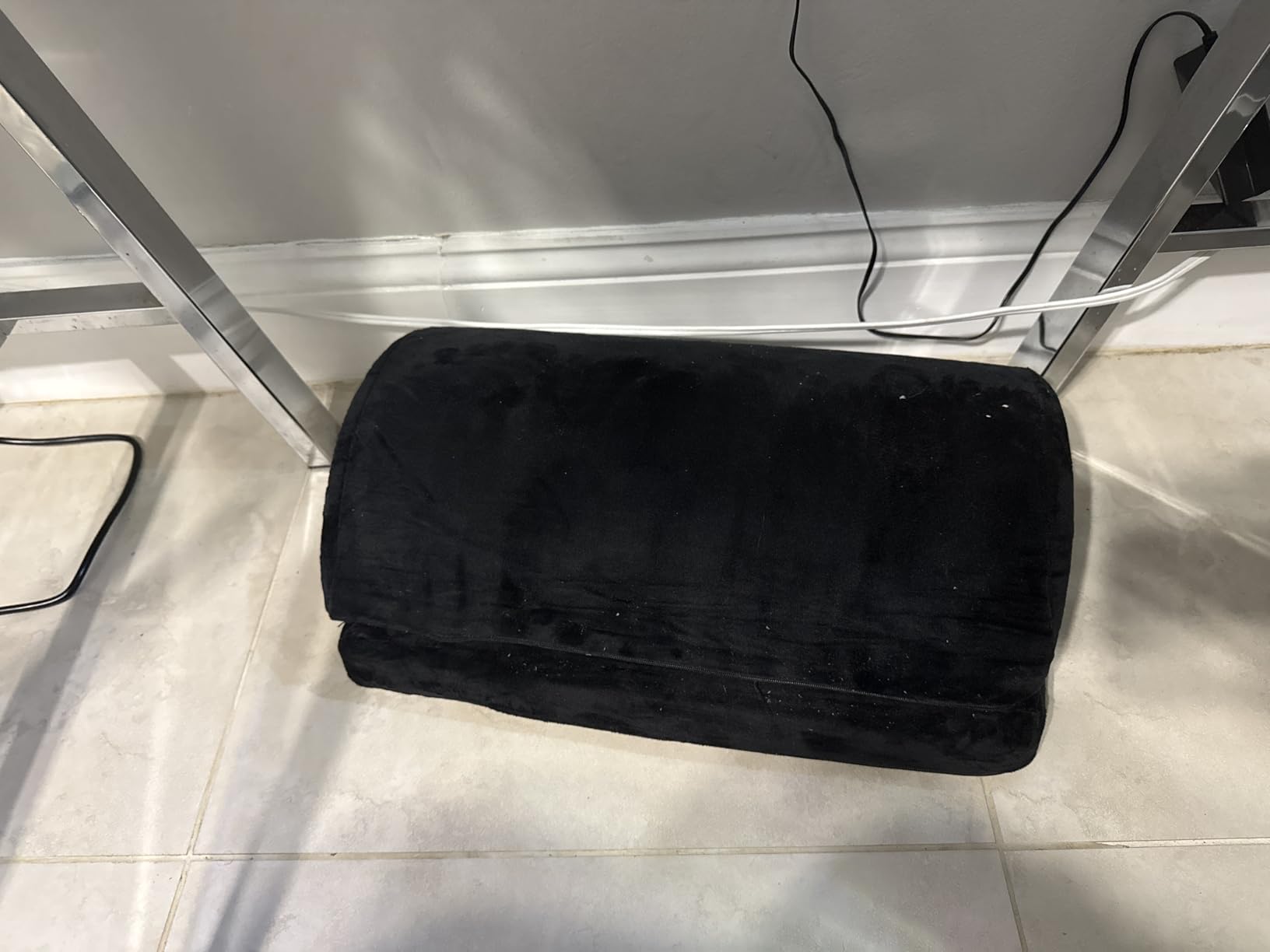
One expectation to set before it arrives. It comes vacuum-packed, and the foam needs several hours to expand to its full shape. Give it a full day before judging it, because the flat slab you see in the box is not the product you will use.
At 1.39 pounds it is light enough to move between a desk, a sofa and a car without thinking about it, and the velvet cover unzips for machine washing. Flipped over, it works as a gentle rocking pedal for the feet.
Who this footrest suits
It suits users with a small floor gap who do not want to spend on a full platform, and anyone who needs a footrest in more than one location. The separated layers pack down, which makes it the most practical option for travel or for a shared desk.
It also suits anyone who wants to work behind the knees while lying down, since the same cushion serves that purpose well.
Who should skip it
Skip it if you need more than two discrete heights or any tilt, because there is no adjustment beyond the straps. The platform is also narrower than most foam models here, so it is not the choice for cross-legged sitting or larger feet.
And if you need it the moment it is delivered, this is the wrong pick. The expansion delay catches people out, and the shape it reaches after a full day is the shape it will hold.
10. StepLively Ergonomic Foot Pillow – Best Budget Pick for Short Users
Foot Rest Ergonomic Pillow for Under Desk at Work, Anti-Fatigue,Black/Large
Drop-shaped foam pillow
17 x 11 x 5 inch
Zippered washable cover
0.91 lbs
Pros
- Lowest cost in the roundup
- Drop shape suits the foot arch
- Relieves lower leg pressure
- Lightest at 0.91 lbs
Cons
- Flat until it expands over hours
- Only 5 inch high
- Textured cover collects dust
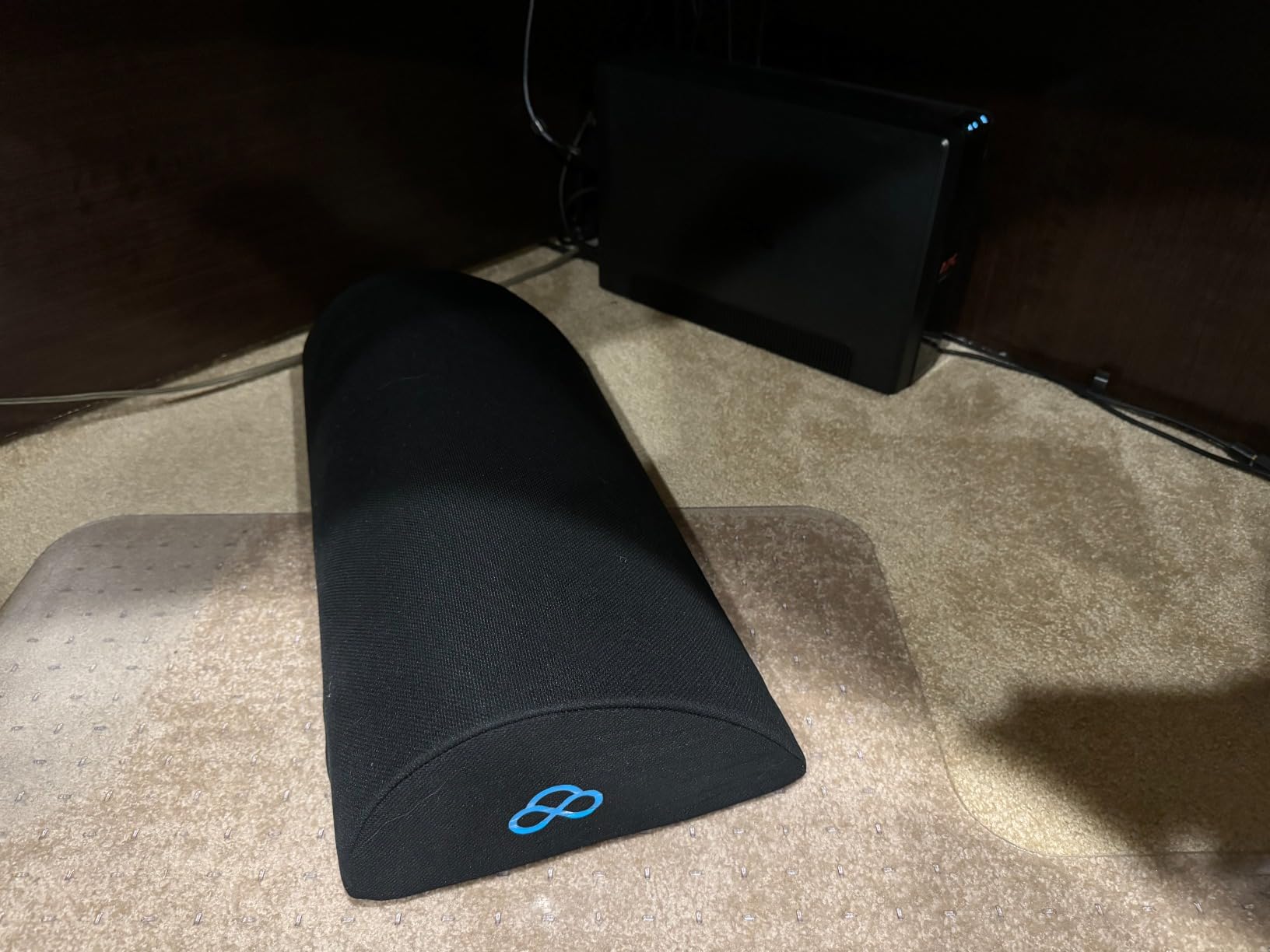
When the gap is small and the budget is smaller, this drop-shaped pillow is the answer. It is 17 inches long by 11 wide by 5 high, and the teardrop profile matches the curve of the foot so your arch settles into a hollow rather than sitting on a flat slab.
That shape is what makes it comfortable barefoot, and reviewers with a history of lower back or leg discomfort rate it highly for relieving pressure on the backs of the lower legs when the chair is at its lowest setting. The zippered cover comes off for machine washing.
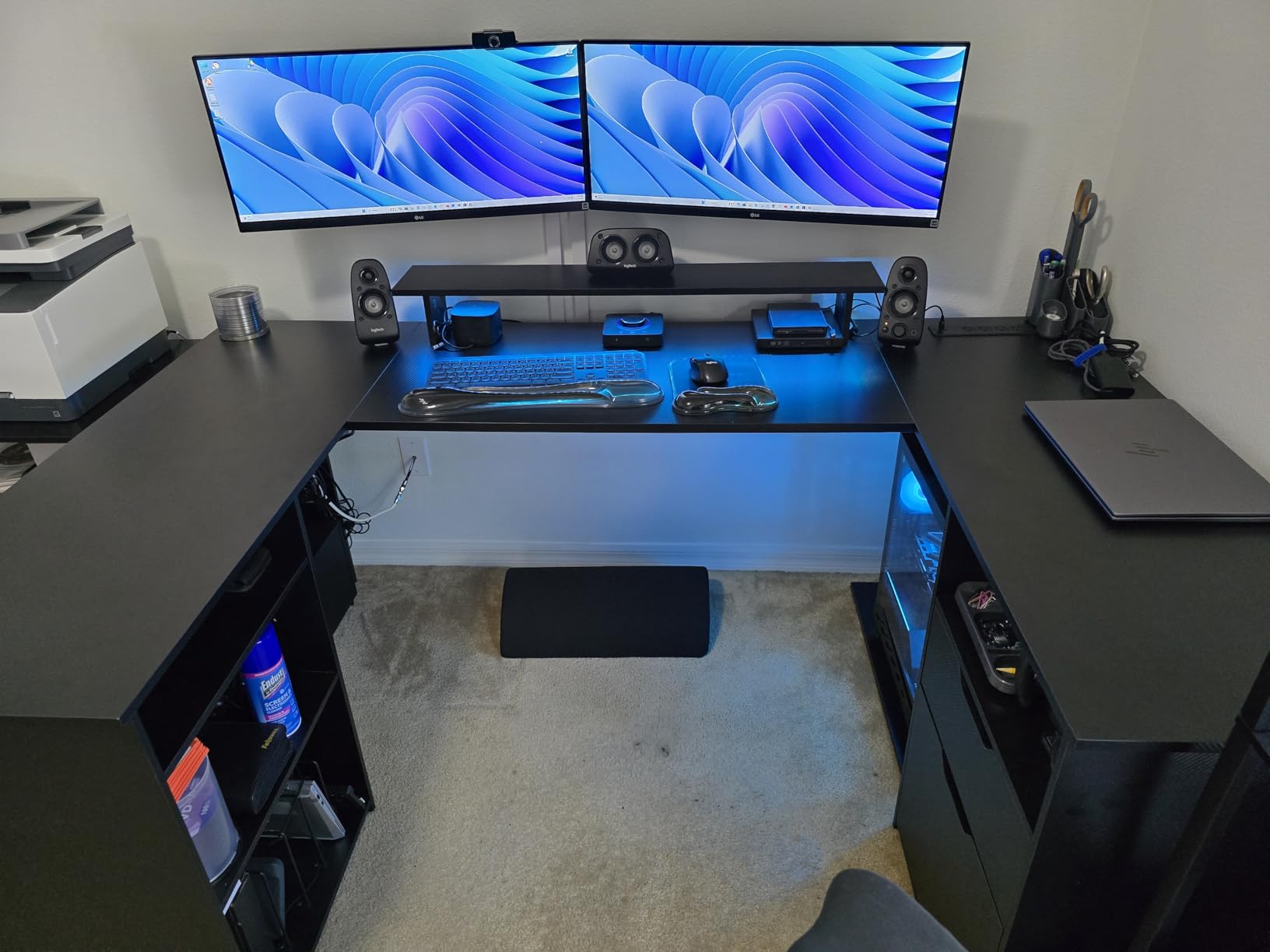
At 0.91 pounds it is the lightest item we tested, and the traction beads on the underside stop it being pushed around by your feet, which is a real problem with flat foam pillows on a smooth floor. It also works behind the knees or flipped as a rocking pedal.
It arrives vacuum-sealed, so the same expansion delay applies here as on the other foam pillow in this list. Leave it out of the packaging for several hours. Reviewers also advise giving it time because the foam that looks disappointing on arrival is the foam that scores well after a week.
Who this footrest suits
It suits shorter users whose chair already sits low and who only need to take a little pressure off their calves. It is the easiest option to try and the easiest to abandon, since it is light, small and cheap enough to move around the desk while you work out if it helps.
Travelers and anyone working from a sofa will find the multi-use design genuinely useful, since the same pillow supports feet, knees or a bent leg.
Who should skip it
Skip it if your floor gap is more than about 5 inches, because a 5 inch pillow is all the height you get and no base is included. It is also a static support with no tilt and no rocking, so it does nothing for circulation the way the wooden rocker does.
A few reviewers report foam that does not fully recover its shape, and the textured cover is a mild dust and pet hair magnet. If you want a one-item solution with a warranty behind it, the ComfiLife or the ErgoFoam is the safer bet.
How to Choose a Footrest for Office Chair: The Specs That Matter?
Height range is the first filter, because it is the only spec that can make a footrest useless. Measure your floor gap first, then choose a model whose stated range brackets that number with a little room on both sides. A fixed 5 inch pillow solves a small gap and nothing else, while a model that adjusts across several inches can follow your chair height as you move it during the day.
Tilt comes second, and the flat versus angled question has a fairly clear answer. A slight angle, roughly 10 to 15 degrees, with the toes higher than the heels keeps the foot in a more natural position and takes tension off the calf. Every tilting model we tested sits in that zone, and none of them let you lock the angle, which is worth knowing before you buy.
Surface material depends on what your feet are wearing. Memory foam and velvet suits barefoot and socked work, and it stays warm over a long session. Textured plastic gives you grip in shoes, but the massage bumps that feel good barefoot are the ones that catch thin socks and dress flats.
Platform width is the most ignored spec and the most common regret. A footrest under about 11 inches wide forces your knees together, and the requests we see most often on r/OfficeChairs are for something wide enough to sit cross-legged or plant your feet wider than your hips. Our widest options here are the ComfiLife at 12 inches and the HUANUO at 13.19 inches.
Base grip determines whether the whole thing is usable. Non-slip feet on carpet, tile and hardwood are specified on most of these models, but the practical test is pushing off the platform to type. If it slides, you will stop using it within a week, and that is the single most common complaint in this category.
Desk knee clearance is worth measuring before a bulky model goes under your desk. A deep metal frame such as the EUREKA eats more space than a slim plastic platform, and if your desk has a modesty panel or a slim pedestal, the clearance you lose may be worse than the posture gain.
Chair-mounted options exist, and they are worth considering if your chair has a five-star base with casters and no clearance underneath. Built-in retractable footrests and retrofit brackets both appear in the category, but the honest warning is durability: when the plastic coupling on a built-in bar breaks, replacement parts are rarely available, and the usual outcome is buying a standalone unit anyway.
Finally, think about what you do on a standing desk. A footrest is a sitting-height tool. If you raise the desk to standing height, the footrest sits unused on the floor, and what you want instead is a balance board or an anti-fatigue mat, which is a different product class.
We test and review everything in this category at the same desk across hardwood, tile and carpet, which is the approach we also applied when setting up our office setup picks for pet cameras that share the same desk space.
Frequently Asked Questions
What is the best footrest for sitting at a desk?
The Everlasting Comfort Foot Rest is our best overall pick, because its high-density memory foam holds its shape over years, its removable cover goes in the washing machine, and it flips into a rocker when you want movement. The ComfiLife is the alternative if you need a larger platform and more height, and the Mind Reader is the value pick if you want an adjustable hard platform.
Should you use a footrest at your desk?
In most cases, no. If your feet rest flat on the floor with your elbows at about 90 degrees while typing, you do not need one and adding it will not help. You do need one when your chair cannot go low enough for your feet to reach, or when your desk is a fixed height you cannot change. Measure the gap from your toes to the floor first.
Can I add a footrest to my office chair?
Yes, but it is a separate category rather than an accessory for most chairs. Your options are a built-in retractable footrest on executive-style chairs, a clamp-on or retrofit bracket that mounts to a chair base, or a standalone floor footrest. Be aware that built-in hardware is rarely replaceable when the plastic coupling breaks, so a standalone unit is usually the more practical choice.
Should a footrest be flat or angled?
Slightly angled beats flat. Around 10 to 15 degrees with the toes up and heels down keeps your foot in a more natural position and reduces tension in the calf. Tilt is still a secondary consideration, though: height range and a base that does not slide on your floor matter more day to day, and most tilting models we tested do not lock the angle.
Are under desk footrests good?
Yes, when your feet genuinely dangle. An under desk foot rest redistributes pressure away from the backs of your thighs, supports a neutral sitting posture and encourages movement through the lower legs, which is why workplace ergonomics guidance treats foot support as part of a proper workstation setup. If your feet already reach the floor, a footrest adds nothing.
What is the best footrest for under a desk?
The Everlasting Comfort is our best overall footrest for under a desk, and the ComfiLife is the pick if you need more height and a wider platform. Choose the Mind Reader or HUANUO for a slim hard platform that fits tight knee clearance. On thick carpet, pick a model with a defined base edge so it does not drift as you use it.
What is the best under desk foot rest for swollen feet?
Choose something that moves rather than a flat static platform. The StrongTek wooden rocker responds to calf pressure and keeps your lower legs shifting, and the HUANUO tilts 30 degrees in each direction for the same reason. Persistent or one-sided swelling is worth raising with a clinician rather than treating with a footrest.
Final Verdict: Which Footrest for Office Chair Should You Buy?
After six weeks of daily use, the best footrest for office chair duty in 2026 is the Everlasting Comfort. Its high-density foam does not dent, its cover survives washing, and the flip-over rocker mode means the same purchase covers both the static and the active case. For most people, that is the shortest path to a comfortable setup.
Take the ComfiLife instead if you are short and need real lift or want a wider platform for cross-legged sitting. Take the ErgoFoam if you want a firm surface with arch support rather than a soft cushion. Take the Mind Reader or HUANUO for a hard tilting platform that grips in shoes, the StrongTek for a wooden rocker that will outlive the rest, the EUREKA for a steel frame and scratch-free feet, and the BlissTrends or StepLively models for a small gap and a small desk.
Before any of them, spend one minute measuring the gap between your toes and the floor with your chair at elbow height. If there is no gap, you have your answer already.