
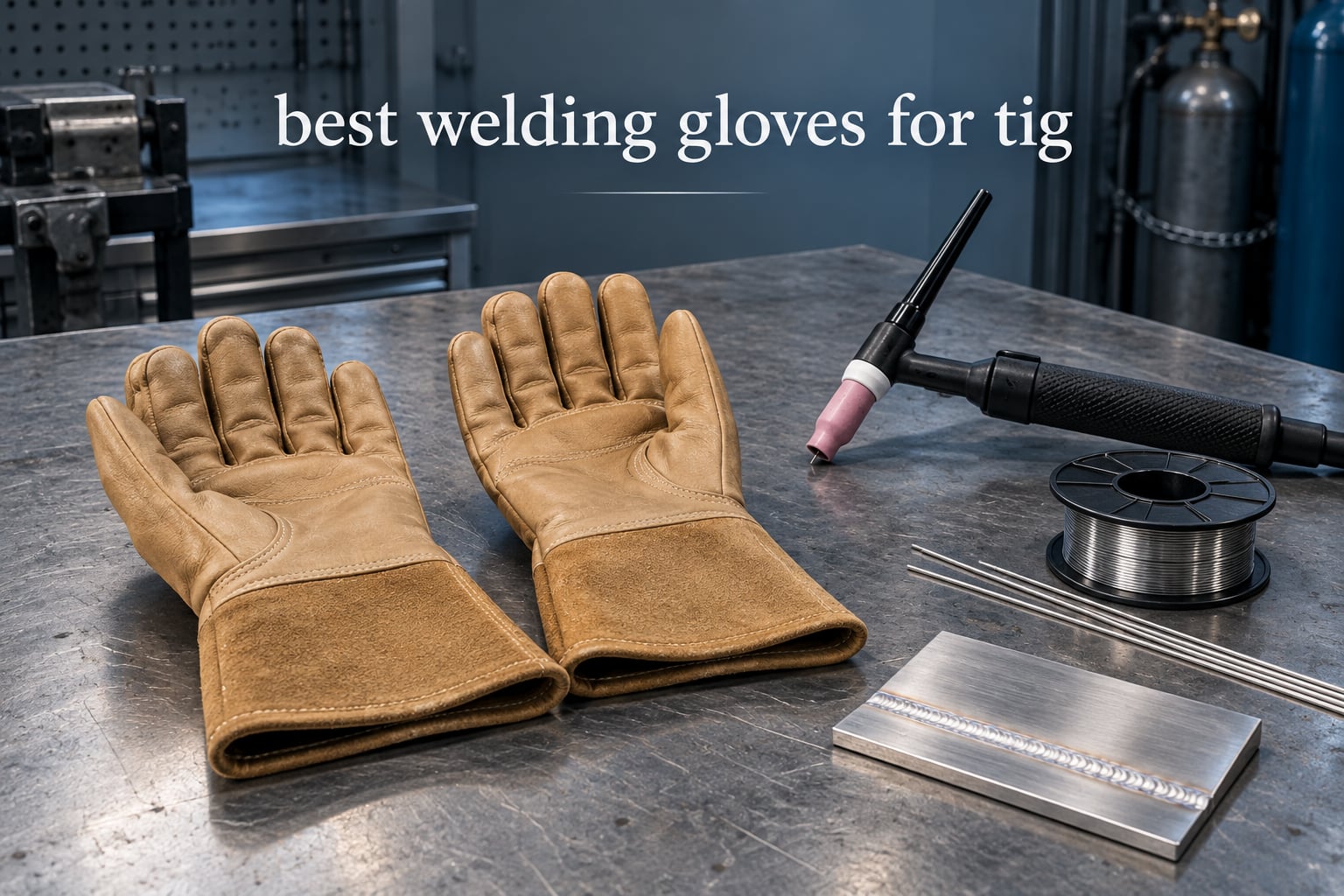
TIG welding punishes gloves that are built for anything else. The process asks you to hold a torch in one hand and feed filler rod with the other, so a thick, heavily lined stick glove dulls exactly the fingertip feedback you need to lay a clean bead. After working through a full lineup of goat grain, kidskin and cowhide options, the best welding gloves for TIG come down to three things: soft unlined leather, a short flexible cuff, and stitching that will not let go when a hot coupon lands on your knuckle.
That is what this guide breaks down. We compared 12 TIG-focused gloves across leather type, cuff length, thumb construction, heat rating and sizing range, then sorted out which ones suit bench hobby work, daily production welding, thin wall tube, and aluminum. No filler, no invented specs. Every number here comes straight from the manufacturer listing or the buyer feedback behind it.
If you have been searching for the best welding gloves for TIG and got buried under MIG and stick lists, you are in the right place. We also cover the supporting hand heat problem nobody else talks about, realistic lifespan expectations, and when a budget pair is genuinely enough.
Two earlier guides on glove fit and dexterity may help if you are shopping outside welding: our best cat grooming gloves and our reptile handling gloves picks. Both are close-fitting leather or synthetics, and the same sizing logic applies when a glove has to be thin enough to feel through.
Table of Contents
Top 3 Picks for TIG Welding in 2026

Tillman 1338 Goatskin TIG…
- Pearl top grain goatskin
- Glide patch
- Reinforced thumb
- Kevlar sewn

Lincoln Electric K2981 TIG…
- Three-part sewn fingers
- Kevlar thread
- Reinforced thumb
- 4 inch cuff
IRONCAT 6141 Kidskin TIG…
- Top grain kidskin
- ANSI heat level 3
- Extended cuff
- Kevlar stitching
The Best Welding Gloves for TIG in 2026 at a Glance
Every glove below is unlined or lightly lined, short cuffed, and built for filler rod control rather than slag hammer work. The leather and rating columns are the fastest way to narrow the field.
| Product | Specs | Action |
|---|---|---|
| Tillman 1338 Top Grain Goatskin TIG Gloves |
|
Check Latest Price |
| Lincoln Electric K2981 Grain Leather TIG Gloves |
|
Check Latest Price |
 Tillman 1488L TrueFit Goatskin and Kevlar TIG Gloves Tillman 1488L TrueFit Goatskin and Kevlar TIG Gloves |
|
Check Latest Price |
 Defiant Metal Premium Goatskin TIG Gloves Defiant Metal Premium Goatskin TIG Gloves |
|
Check Latest Price |
| IRONCAT 6141 Kidskin TIG Gloves |
|
Check Latest Price |
 YESWELDER Premium Goatskin TIG Gloves YESWELDER Premium Goatskin TIG Gloves |
|
Check Latest Price |
 Caiman 1540-5 Goat Grain TIG Gloves Caiman 1540-5 Goat Grain TIG Gloves |
|
Check Latest Price |
 Caiman 1600-4 Unlined Goat Grain TIG Gloves Caiman 1600-4 Unlined Goat Grain TIG Gloves |
|
Check Latest Price |
 ARCCAPTAIN Goatskin TIG Gloves 14 Inch Sleeve ARCCAPTAIN Goatskin TIG Gloves 14 Inch Sleeve |
|
Check Latest Price |
 Revco T50 Ultimate TIG Welding Glove Revco T50 Ultimate TIG Welding Glove |
|
Check Latest Price |
 TOOLIOM 14 Inch Wing Thumb TIG Gloves TOOLIOM 14 Inch Wing Thumb TIG Gloves |
|
Check Latest Price |
 J. J. Keller SAFEGEAR Split Cowhide TIG Gloves J. J. Keller SAFEGEAR Split Cowhide TIG Gloves |
|
Check Latest Price |
Why TIG Gloves Are Different from MIG and Stick Gloves
Stick and MIG gloves are designed around spatter, slag and sustained radiant heat. They are heavy, lined and often have gauntlet cuffs, which is exactly wrong for TIG. Welders on welding forums describe the shift plainly: a stick glove turns filler rod into a guessing game because you cannot feel the wire touch the puddle.
TIG heat is different too. The arc is shielded by argon, so radiant heat is lower than open-arc work, and the danger shifts to a small, intense point of contact when you touch the filler rod or brush a hot bead. That favors thin leather that blocks UV and radiant heat while still transmitting touch, and it explains why every glove in this guide is unlined or lightly lined.
The second difference is the cuff. A 4 inch cuff protects the wrist from spatter and UV without bunching up when you rotate the rod. An 8 inch gauntlet gets in the way of the hand position used on thin wall tube and pipe. A 14 inch sleeve makes sense for overhead work and gets in the way of bench work, which is why we list it as its own category rather than a feature.
The third difference is wear pattern. The filler rod hand drags rod across the palm constantly, so a glide patch or drag patch is not a luxury feature on a TIG glove. It is the part that decides whether you get eight months or eight weeks.
1. Tillman 1338 Top Grain Goatskin TIG Gloves – Best Overall
Tillman unisex adult Tig Welding Gloves R3SC34122981, White, X-Large Pack of 1 US
Pearl top grain goatskin
4 inch cuff
Kevlar sewn
Reinforced thumb
Pros
- Soft pliable goatskin that never feels stiff
- Excellent filler rod feel and torch control
- Reinforced thumb and Kevlar seams
- Stays comfortable all day without heat build-up
Cons
- Thin leather suits lower heat work only
- Fingers stiffen and wear through with heavy daily use
- X-Large can run snug on very large hands
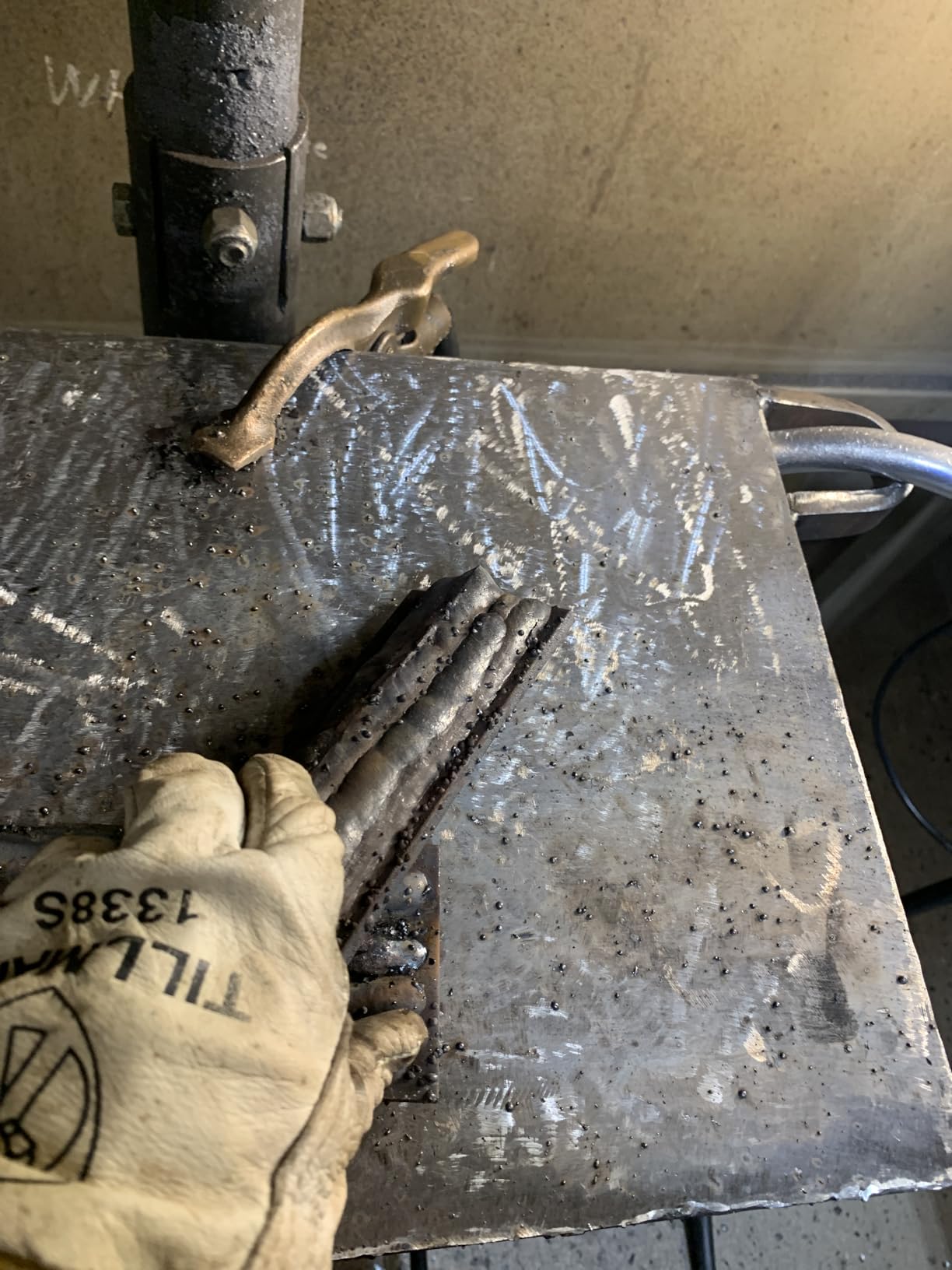
The Tillman 1338 is the glove we kept reaching for. Pearl top grain goatskin gives a soft, non-stiff hand that feeds 3/32 rod by feel from the first bead, and the 4 inch cuff is exactly the length you want for a short TIG glove. At 4.7 stars across more than 1700 reviews, this is the highest combined rating and review count in the group.
The glide patch is the detail that matters more than the marketing suggests. It is a smooth panel on the side of the hand that takes the abrasion of dragging the gun and the rod, and buyers consistently say it is where the glove stays intact longest. The reinforced thumb takes the second most common failure point.
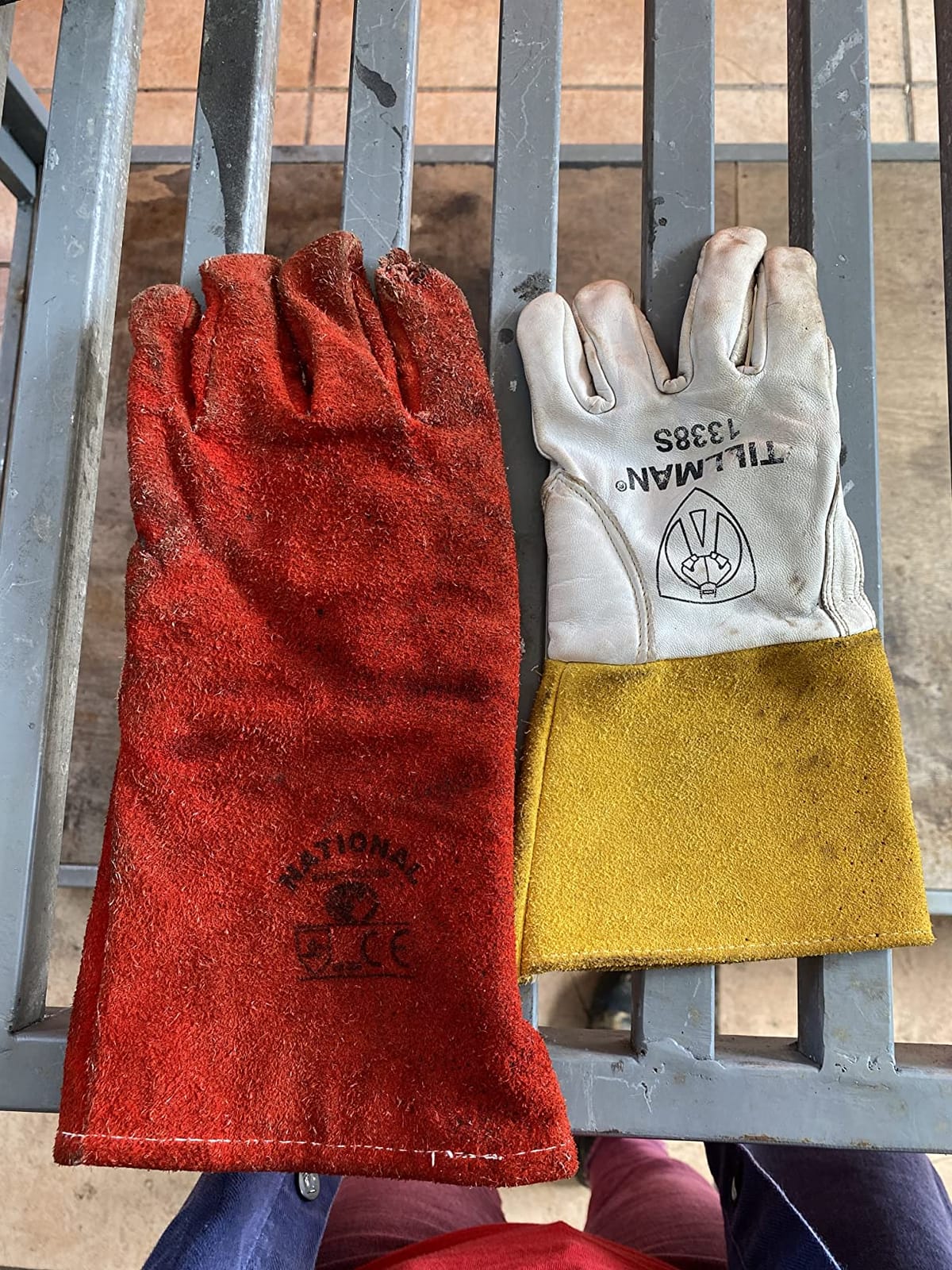
What you give up is heat margin. The leather is thin, which is precisely why the feel is good, and that means this is not the pair to grab for MIG spatter, stick slag or handling freshly ground hot steel. Several long-term users report fingers stiffening and thinning after a few months of heavy use.
Sizing is the other watch point. The fit is otherwise true, but the X-Large can feel snug on genuinely large hands, so check your glove size before committing if you are between sizes.
Who the Tillman 1338 suits best
This is the glove for a hobbyist learning TIG, a fabricator doing mixed bench work, and anyone whose priority is feeling the rod and controlling the puddle. Unlined construction means heat escapes, so it stays comfortable in long sessions better than a sock-lined glove.
It is also the safest first purchase, because mistakes with cold hands are mistakes you cannot make. Buy a second pair as your rotation spare, since thin goatskin will not survive a full rotation alone.
Who should skip the Tillman 1338
If your work involves heavy spatter, grinding sparks or picking up hot coupons, step up to a heavier goat grain glove with a split cowhide cuff. Welders who push these thin gloves through shop work report finger wear long before the seams fail.
Very large hands should also look at a model with a wider size range, since the X-Large here is described as snug by some buyers.
2. Lincoln Electric K2981 Grain Leather TIG Gloves – Best for Daily Shop Work
Lincoln Electric Grain Leather TIG Welding Gloves | High Dexterity | Large | K2981-L, White, Black
Soft grain leather
Three-part sewn fingers
Kevlar thread
4 inch cuff
Pros
- Three-part fingers give outstanding dexterity
- Blocks most TIG heat while staying flexible
- Outlasts generic gloves in daily shop use
- Reinforced thumb holds up to handling
Cons
- Can feel warm inside during long high-amp sessions
- Not meant for stick work or handling hot metal
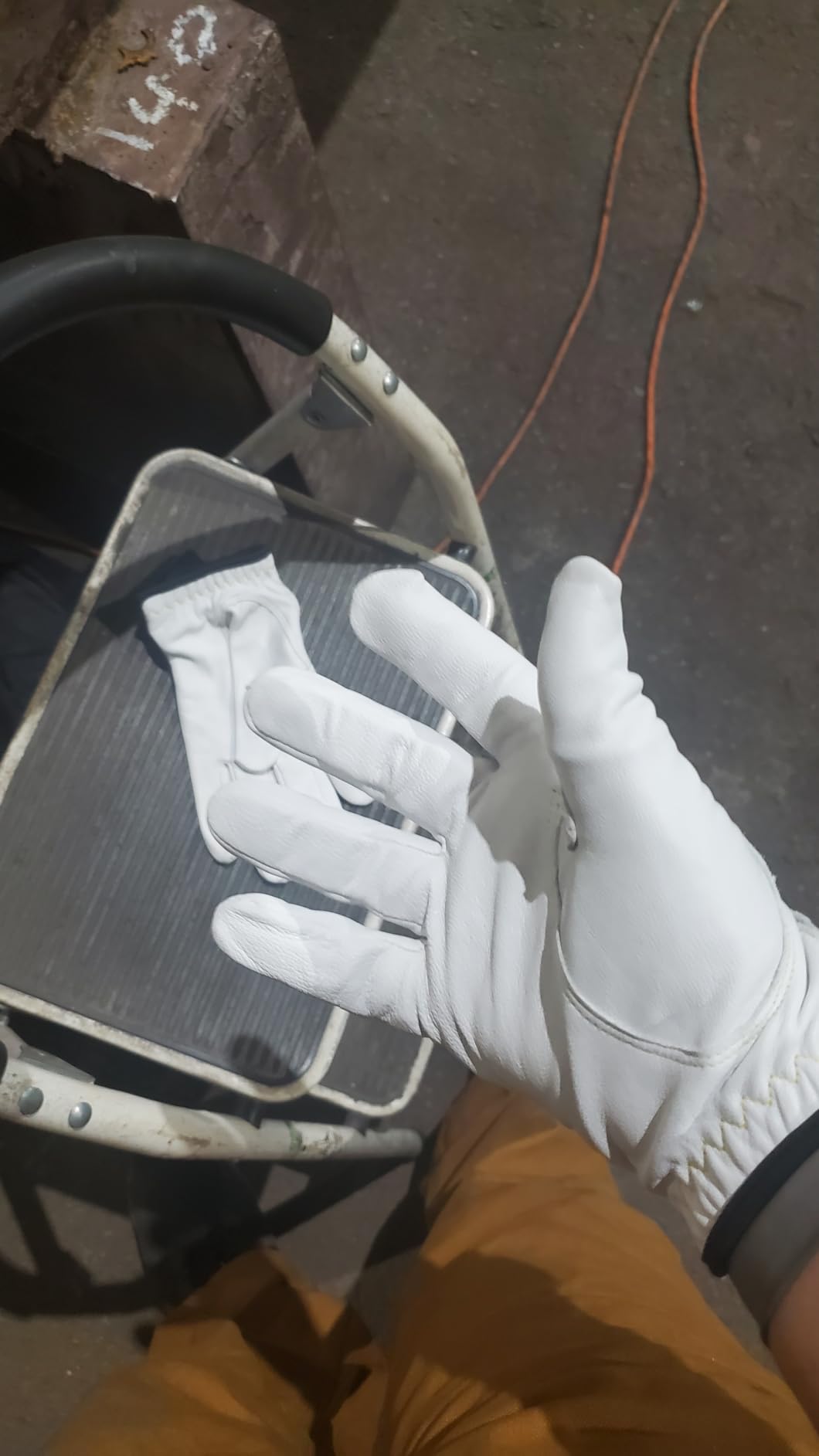
The Lincoln Electric K2981 has been a professional shop standard for close to a decade, and the review history shows why. It pairs soft, lightweight grain leather with three-part sewn fingers, which is the most deliberate finger construction in this roundup. More sewn panels across each finger means the glove bends at the knuckle rather than across a single flat sheet.
Every seam is stitched with high-strength Kevlar thread, and the reinforced leather thumb is where the reinforcement belongs. For a production welder feeding rod all day, that combination is what separates a glove that lasts from one that quits in a quarter.
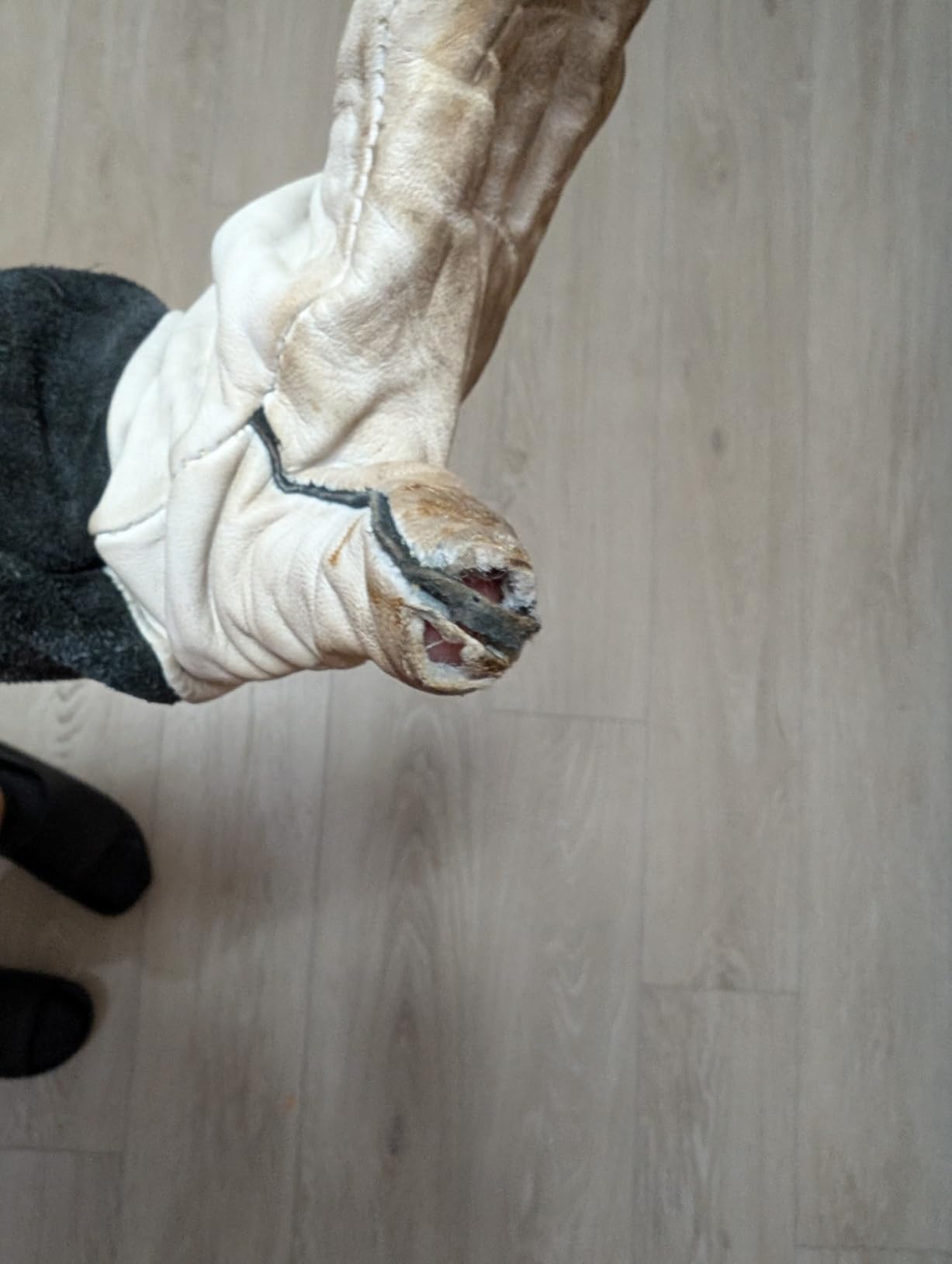
At 4.6 stars over 1700 reviews, the feedback pattern is consistent: excellent feel, solid heat blocking for TIG scale, and noticeably longer life than cheaper generic gloves in daily use. The one recurring complaint is heat build-up during long, high-amp sessions, which is a fair trade for a glove that will not give up on you.
Sizing runs M through XL, so most adult hands are covered. Check your usual size against the cuff before ordering if you are at the edges.
Why production welders keep coming back to the K2981
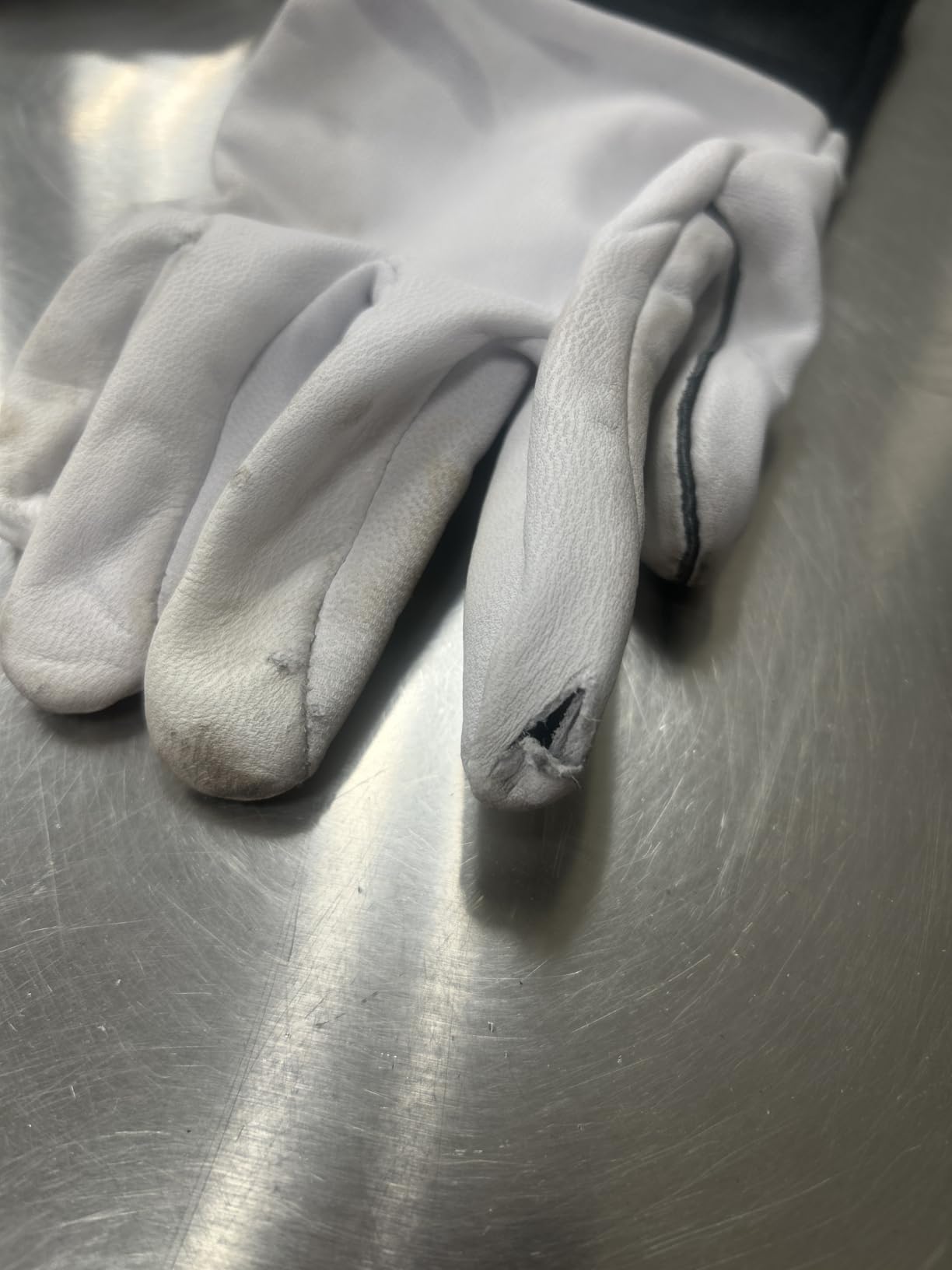
Durability per dollar is the argument. Buyers comparing it to cheap unlined gloves report that the K2981 outlasts them in daily shop use, and the reinforced thumb survives the material handling that usually kills a TIG glove first. The four inch leather cuff is a nice bonus for spatter and flame exposure.
It also stays flexible. Cowhide tends to stiffen with repeated heat cycles, and grain leather does not, so this keeps behaving like a glove rather than a shell after months of work.
Where the K2981 falls short
It is a TIG glove and it says so. Do not use it for stick or SMAW work, and do not pick up hot metal with the bare leather, because neither is what the construction is designed for. If you weld both stick and TIG, budget for two pairs.
If you run very high amperage for long stretches, the unlined build will warm up. That is a comfort limit, not a safety limit, but it is the reason the fleece-lined Revco exists.
3. Tillman 1488L TrueFit Goatskin and Kevlar TIG Gloves – Best True-to-Size Fit
John Tillman and Co Large 11″ Pearl and Black Top Grain Goatskin and Dupont Kevlar Unlined TrueFit TIG Welders Gloves with Short Cuff and Kevlar Thread Locking Stitch (Bulk)
Top grain goatskin and Kevlar
Kevlar locking stitch
Unlined
Keystone thumb
Pros
- Fits true to size with a palm suited to TIG
- Premium goatskin feel for filler rod work
- Kevlar stretch inserts add flexibility
- Elastic cuff keeps the glove secure
Cons
- Bulk pack listing can be confusing on quantity
- Costs more than other goatskin TIG gloves
Fit is the word that comes up most in the feedback for the Tillman 1488L. This glove runs true to size in a way that budget TIG gloves rarely do, and the palm is cut and shaped for TIG positioning specifically. If you have bought gloves that feel like a slightly wrong mitten, this is the answer to that.
Construction is premium: top grain goatskin combined with Kevlar, a Kevlar thread locking stitch, cut and sewn throughout, and Kevlar stretch inserts at the stress points. The stretch inserts are what let the glove flex without bunching at the knuckles.
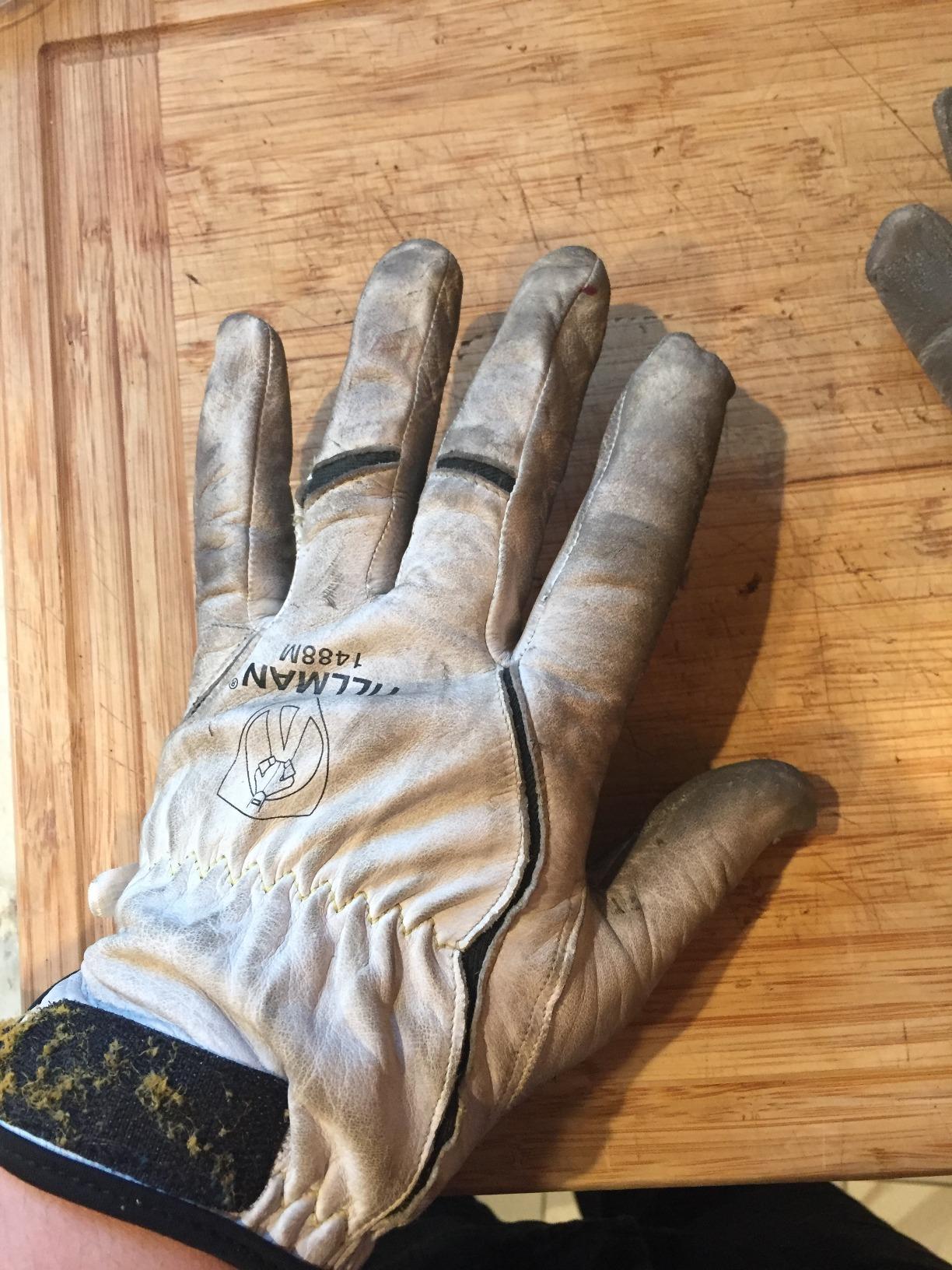
The keystone thumb is the right choice for TIG, since it keeps the thumb aligned with the fingers when you are pushing the rod forward. The glove is unlined, so you get maximum tactile feel, and the elastic cuff keeps it from sliding when your hands get damp.
Two things to know before ordering. This listing is a bulk format, and some buyers report confusion about how many pairs are in the pack, so read the pack quantity carefully. It also sits above the price of ordinary goatskin TIG gloves, which you can justify on fit and seam strength, but not on leather alone.
Where TrueFit construction earns its price
Cut and sewn construction with a locking stitch is slower and more expensive than a glued or plain-lock seam, and it shows when the glove takes abuse. The Kevlar stretch inserts also add comfort in a way that a plain unlined glove cannot, particularly across the back of the hand during long stretches.
For anyone who has fought with sizing, this is the pair to try first. A glove that fits correctly is worth more than a marginally better leather that you cannot feel through.
Who should look elsewhere
Buyers wanting maximum heat protection will find the unlined construction offers less margin than lined models. The bulk listing format is also a poor fit if you only want one pair to try, so pick this one deliberately rather than as a casual add-on.
If heat is your main concern rather than fit, look at the goatskin models with an extended cowhide cuff further down.
4. Defiant Metal Premium Goatskin TIG Gloves – Best Size Range
Defiant Metal TIG Welding Gloves – Premium Black Goatskin Leather (Medium)
Premium goatskin hand
Brown cow skin cuff
Size range XS to 2XL
Pros
- Soft goatskin with good torch tactile feedback
- Size range covers XS through 2XL
- Double layered palms resist heat and wear
- Responsive replacement service
Cons
- Slightly thicker than ideal for pure dexterity
- A minority report thumb seam wear
- Size labeling can vary from what arrives
The Defiant Metal gloves solve a problem most of this category ignores: fit for people who do not fit standard sizes. The range runs from XS to 2XL, which makes this one of the few picks here we would confidently recommend to a welder with small hands, or to someone with very large hands who normally gives up on TIG gloves entirely.
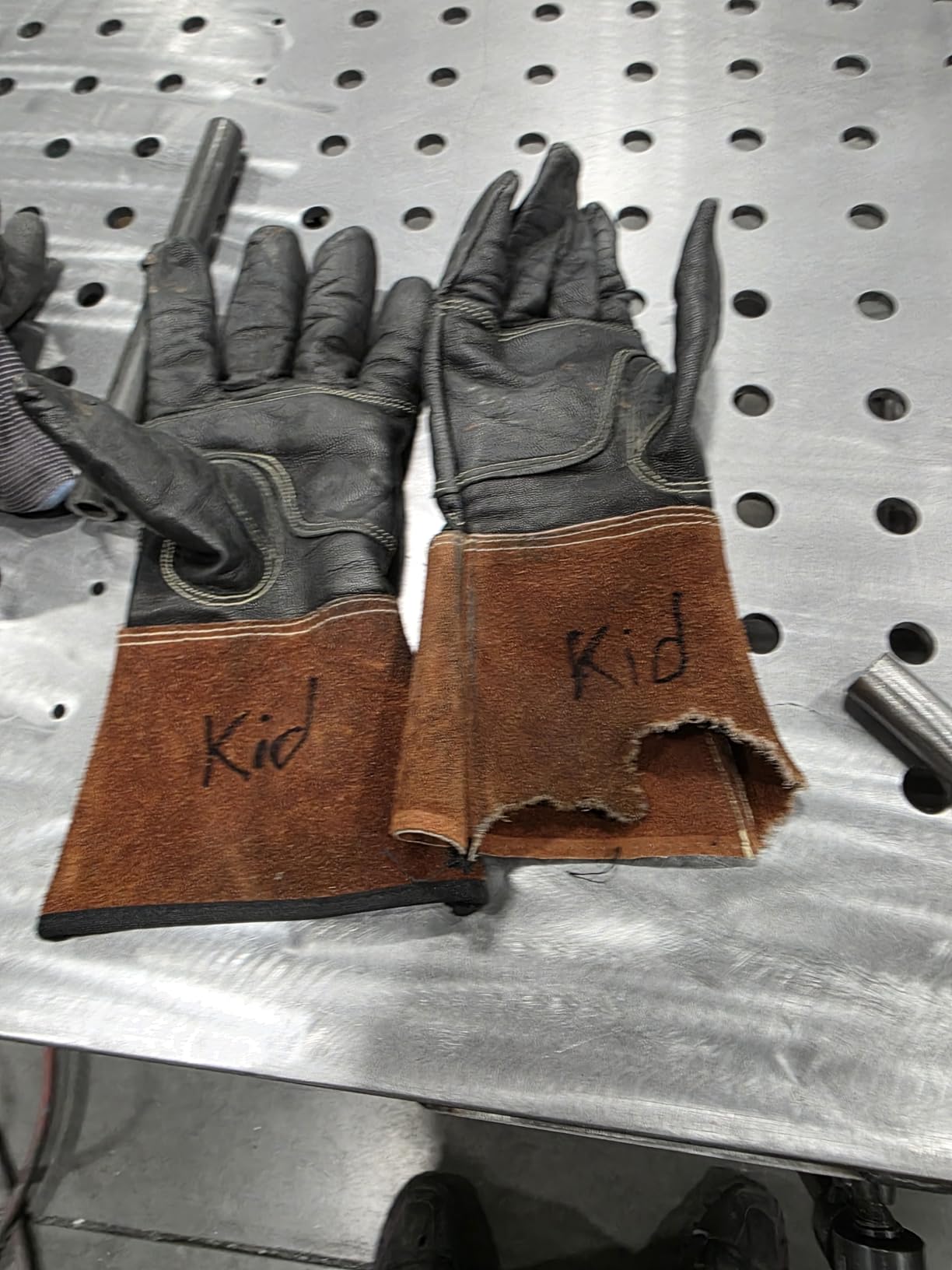
The leather is premium goatskin with a brown cow skin cuff, double row stitching, and double layered palms and wrists. The doubling is not dexterity-killing despite the added material, and at 4.6 stars across more than 900 reviews the tactile feedback on the torch is consistently praised.
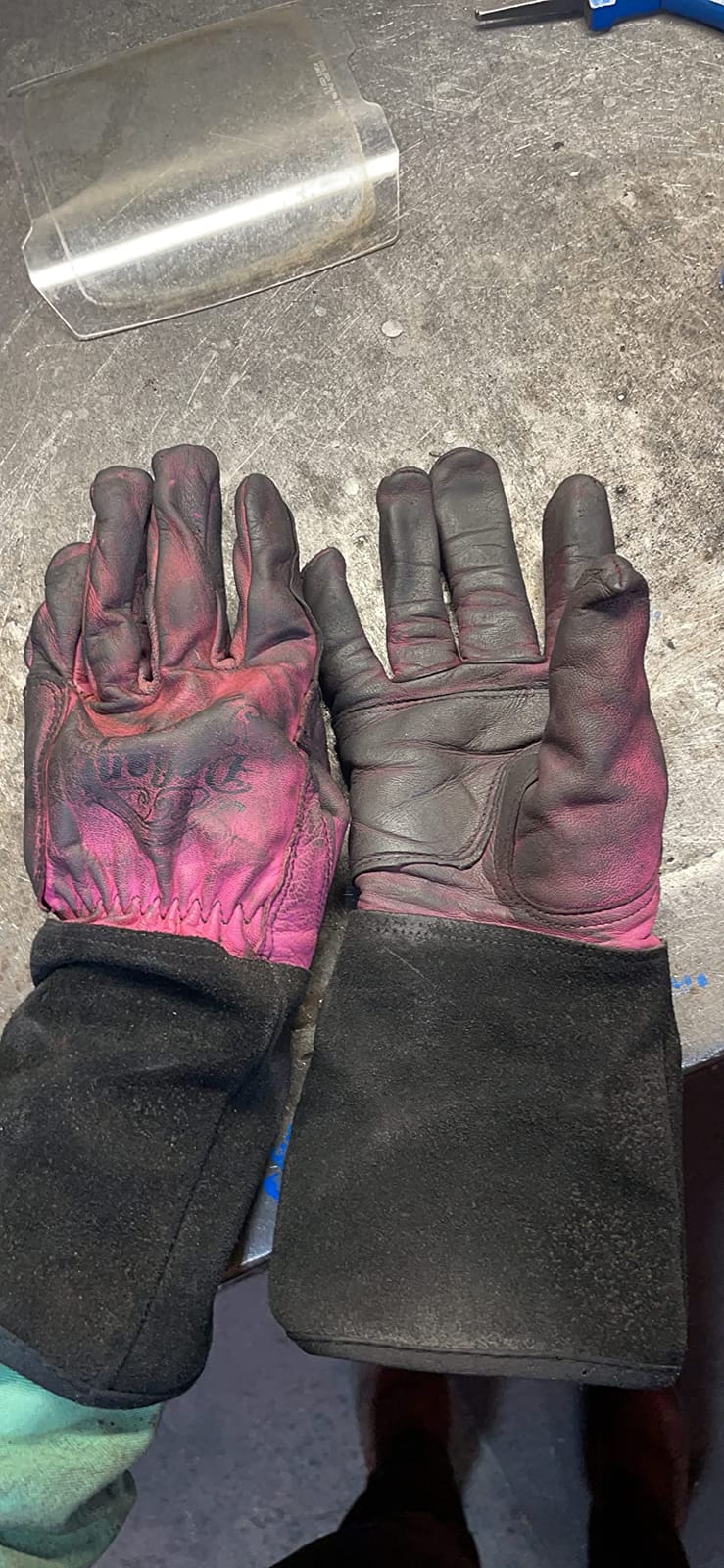
Customer support is a genuine point in this glove’s favour. Buyers who reported issues describe replacement pairs being sent quickly, which is worth more than a small leather upgrade when a seam fails early in a project.
The two things to weigh are thickness and labeling. Some reviewers find these a touch thicker than a pure TIG glove needs, and a minority report thumb seam wear after heavy use. A few also note that size labeling can be inconsistent with what arrives, so verify the fit as soon as the box opens.
Why small hand fit deserves its own recommendation
For a smaller hand, an oversized TIG glove is worse than no glove at all, because the extra material blocks the rod from sitting correctly between the fingers. A glove that is too large is the single most common reason welders give up on fine TIG work, and it is a fit problem, not a skill problem.
The XS end of this range is the practical fix. Combined with the reinforced thumb and doubled palm, it also holds up for welders who do heavier fabrication between TIG projects.
When a thicker hand is the wrong choice
Buyers chasing the absolute thinnest possible feel for artistic work or very thin material may find the double layering is more than they need. The unlined kidskin and single layer goat grain options are lighter in the hand.
Be careful with size labeling. Confirm the measurements on arrival and keep the packaging, because the sizing consistency complaint is specific enough that it is worth checking immediately.
5. IRONCAT 6141 Kidskin TIG Gloves – Best Budget Choice
IRONCAT 6141 Kidskin TIG Welding Gloves – Large, Kevlar Thread Welding Gloves with 4 in. Gold Cuff, Straight Thumb, Pearl, Natural
Top grain kidskin
ANSI heat level 3
Kevlar stitching
Extended cuff
Pros
- Excellent dexterity from thin top grain kidskin
- Soft hand makes filler rod handling easy
- Holds stitching well and runs true to size
- Affordable entry into proper TIG gloves
Cons
- Very thin leather limits hot work protection
- Pearl white color shows dirt quickly
- Inner fur can feel sticky with sweaty hands
- Wide gauntlet cuff can admit debris
The IRONCAT 6141 delivers the best feel per dollar in this roundup, and it is the only glove here carrying a stated ANSI heat level of 3 with impact level 2. Thin top grain kidskin is the most tactile material you can put on a hand, and buyers consistently describe the soft hand section as making rod handling easy.
Kevlar stitching through the seams means sparks will not simply chew through the thread on a glove this thin, and the extended cuff shields the hand and lower arm from burns. For a hobbyist building a small shop on a tight budget, that is a genuinely strong combination.
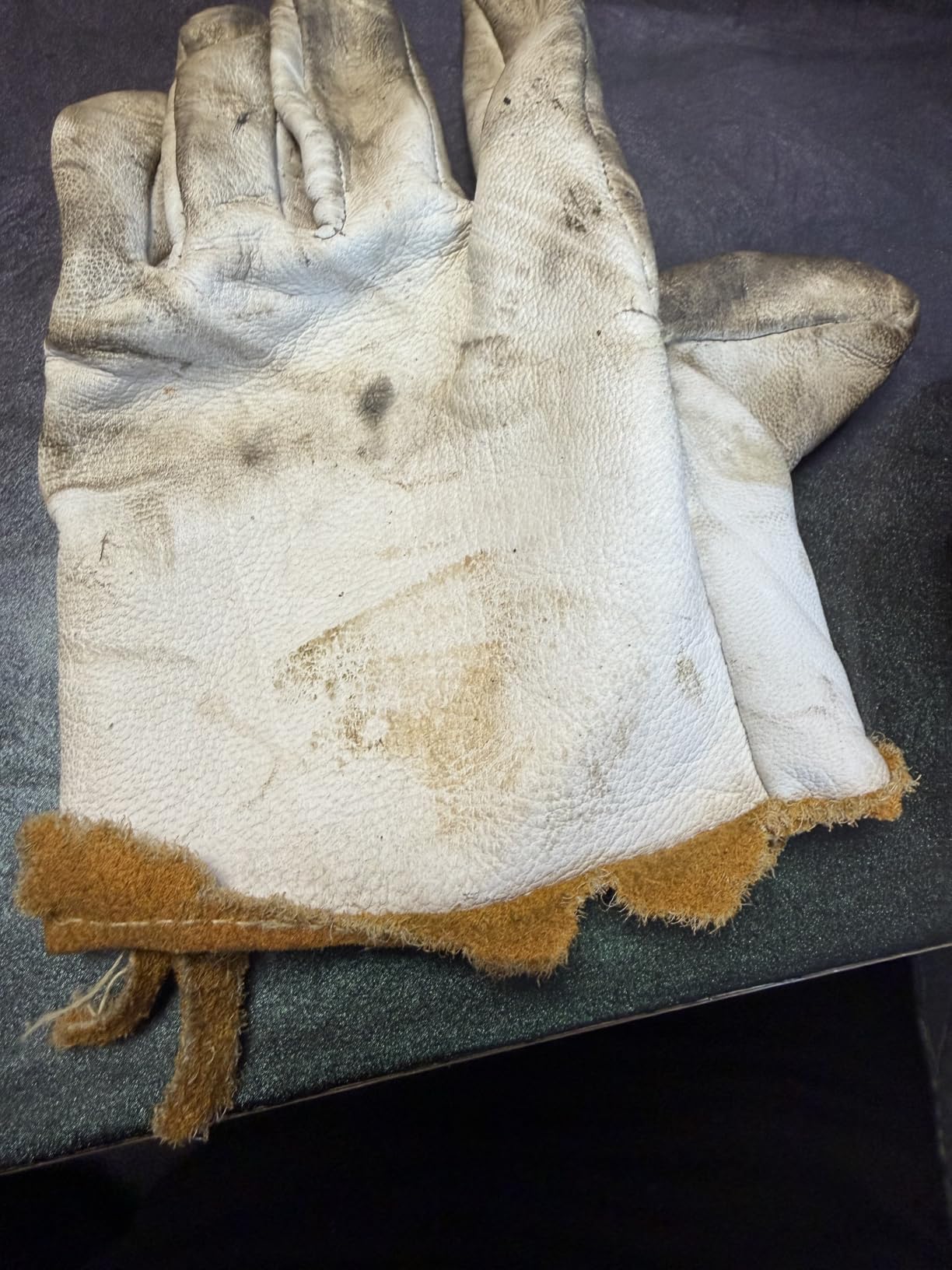
Where it gives ground is heat. The leather is very thin, and reviewers are honest that it wears through quickly on rough tasks and offers limited protection for heavy or hot work. The pearl white color dirties fast, the inner fur can be sticky against sweaty hands, and the wide gauntlet cuff can let shop debris in.
It is also listed at a large size, so check the sizing against your hand before ordering. The hand section runs true to size, but the cuff is cut generously.
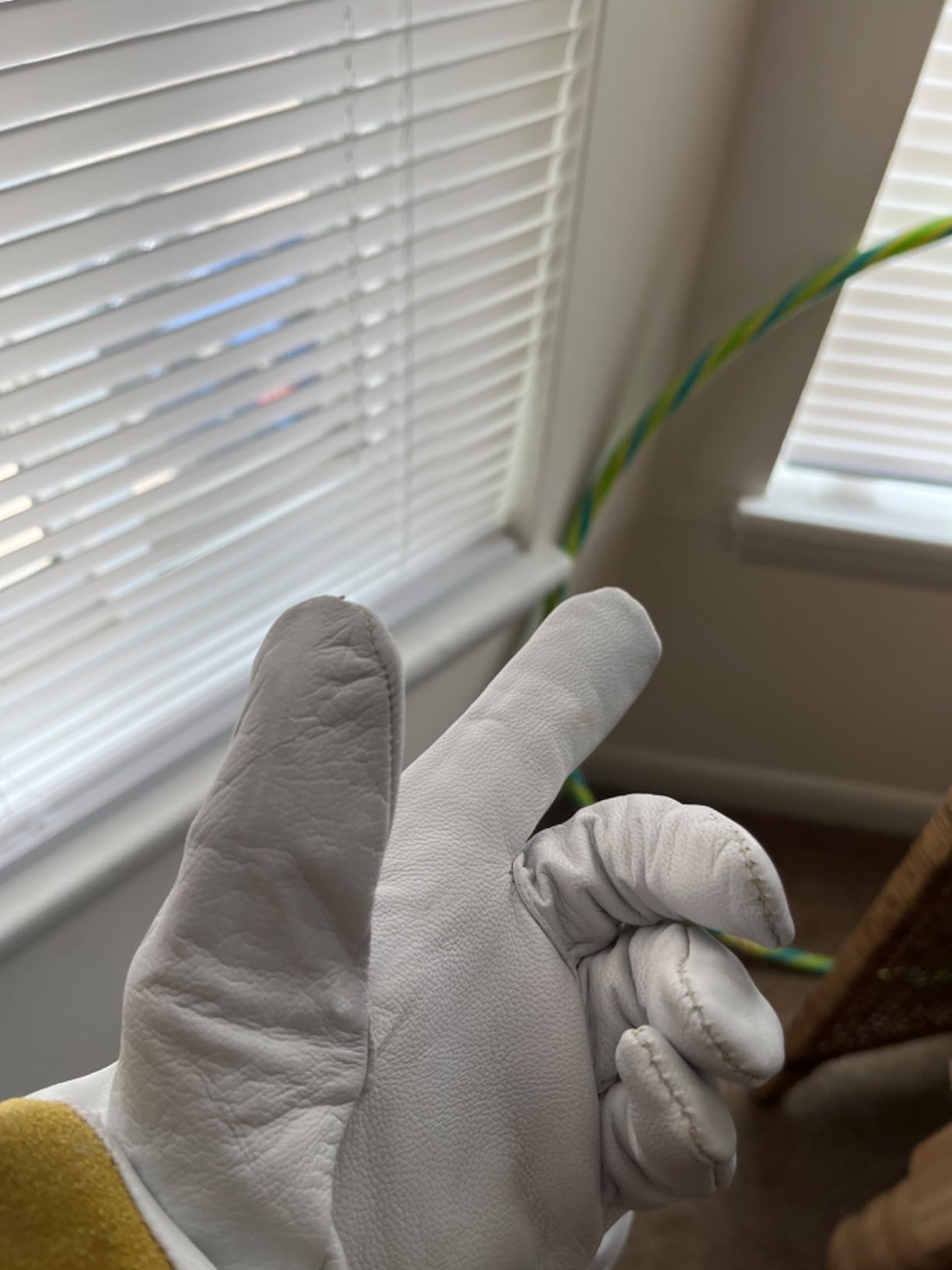
Who the kidskin glove genuinely serves
Anyone doing clean TIG work on thin wall tubing, artistic projects or entry level practice will find this the most responsive glove we tested. Kidskin gives finer feedback than goatskin, and the light weight means less hand fatigue when the filler rod work runs long.
It also makes a fine rotation partner. Keep the kidskin pair for clean precision TIG and a heavier goat grain pair for fabrication days, and you will stop stretching one glove across two very different jobs.
When to step up from the budget pair
Replace it once you start handling hot coupons, grinding in the same session, or welding all day. The failure mode is not a dangerous tear, it is gradual thinning at the fingertips, and you will feel the loss of control before you see the hole.
If you are in a hot shop, sweat is also a real factor. A slightly thicker goat grain glove handles damp hands better than the kidskin fur.
6. YESWELDER Premium Goatskin TIG Gloves – Best for Hot Piece Handling
YESWELDER Premium Goatskin TIG Welding Gloves
Top grain goatskin
932 degree contact rating
Sweat absorbing cotton liner
Pros
- Soft thin goatskin keeps fingertip sensitivity high
- Stated 932 degree contact temperature rating
- Reinforced palm and fingertips for abrasion
- Grease and dirt wipe off easily
Cons
- Thin leather wears through fast on grinding
- Finger seams can split in fab shop use
- Runs slightly tight for some hands
- Right hand orientation only
The YESWELDER gloves carry the highest stated contact temperature rating in this group at 932 degrees Fahrenheit, and that number is what separates them from the other unlined goat grain options. If you regularly handle hot coupons or recently welded parts while grinding and fitting, that rating is the reason to look here first.
Underneath the rating, it is still a proper TIG glove. The goatskin is soft and thin enough to keep fingertip sensitivity high, the index finger is seamless and the keystone thumb is the correct geometry for rod control. Reinforced palm and fingertips add cut and tear resistance where thin TIG gloves usually fail.
Comfort details are good too. A cotton lining and a stated ergonomic fit reduce hand fatigue on long shifts, and the leather wipes clean easily, which matters in a fab shop. The true-to-size fit is confirmed by most buyers, with a minority finding it slightly tight.
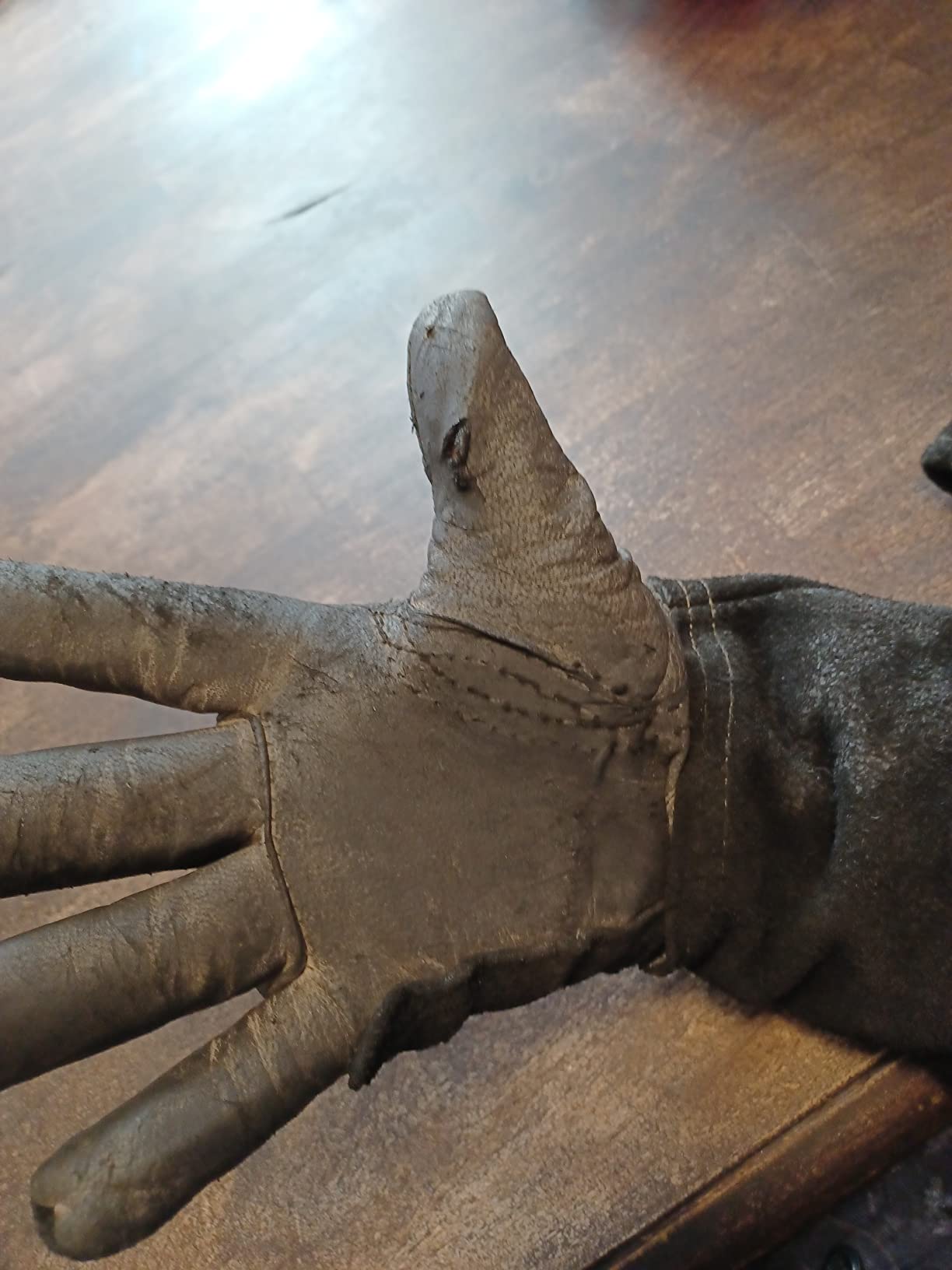
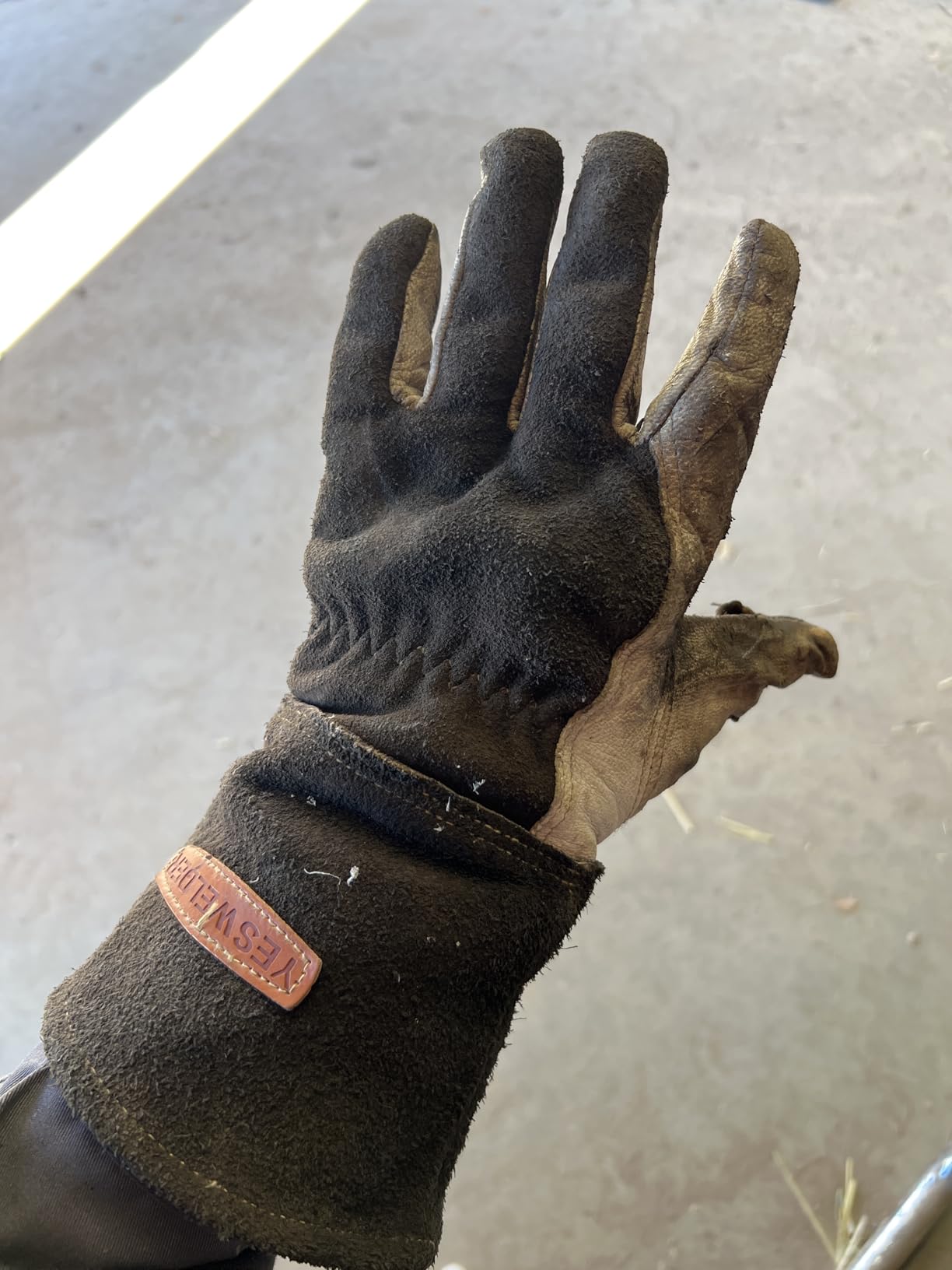
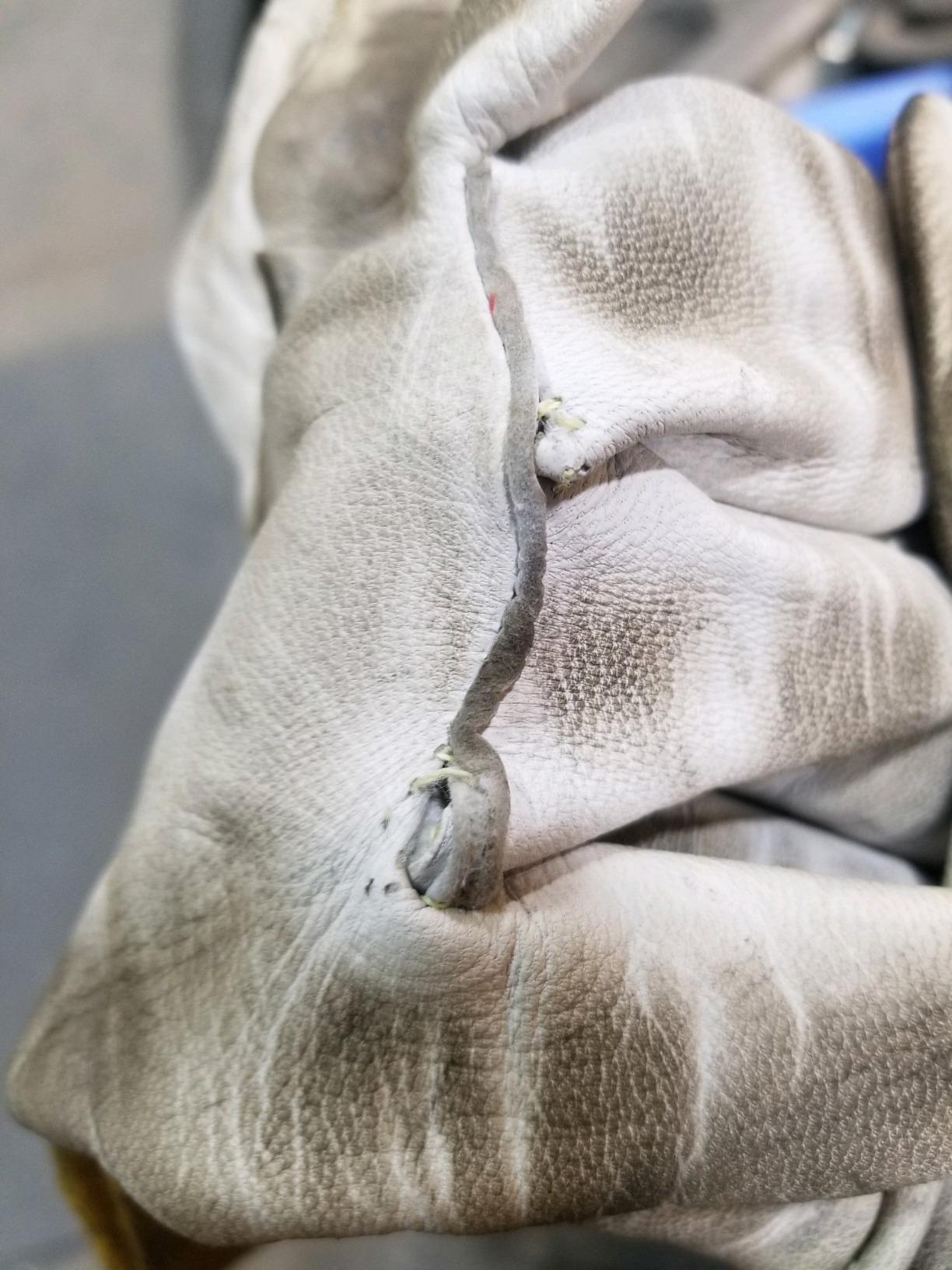
Durability is the honest weakness. Buyers report thin leather wearing through quickly on grinding or material handling, and finger seams splitting after a few weeks of fab shop use. A few also mention one glove arriving with mismatched leather, so inspect the pair on arrival.
What the temperature rating really tells you
A contact temperature rating describes sustained contact with a hot surface, not radiant heat from a distance, and it is not a licence to grab anything. But it is a meaningful difference when you are handling cut-off steel that has cooled for a minute, which is a regular part of fitting and grinding work.
For pure arc work, the rating matters far less than the leather feel. For the supporting hand that has to steady a hot piece while you dress it, it is the number that matters.
Where these gloves fall down
Fab shop welding grinds the fingertips away. If your process is dominated by grinding, a reinforced goat grain glove with a double palm will survive longer, and you should treat this pair as the precision glove in a rotation instead of the only glove.
Check fit carefully if you have wide hands, and confirm both gloves are cut from matching leather when the pair arrives.
7. Caiman 1540-5 Goat Grain TIG Gloves – Best for Multi-Task Welding
Caiman Premium Goat Grain TIG/Multi-Task Welding Gloves, Split Cowhide Back, 4-Inch Extended Cuff, White/Gold, Large (1540-5)
Goat grain palm and back
Split cowhide back
Kontour wrist
Pros
- Soft goat grain palm for TIG feel and control
- Kontour wrist stays secure and reduces slippage
- Shaped like a real hand rather than a flat mitten
- Stays flexible over months without shrinking
Cons
- Runs small and sizing up is often needed
- Thumb and index fingertips wear through
- Not designed for heavy stick welding
- Dye can bleed slightly when new
The Caiman 1540-5 is shaped like a hand. That sounds cosmetic until you notice how many welding gloves are essentially flat sheets with finger slots, and how much control that costs you. Buyers consistently single out the realistic hand shape, and the pre-curved fingers follow from it.
The Kontour wrist design is the other signature feature. It conforms to the hand and stays secure through long sessions without slippage, which matters when the rod hand needs to stay in position. The palm is premium top grain goatskin with a gold split cowhide back, and a combination palm reinforcement and drag patch protects the two highest wear zones.
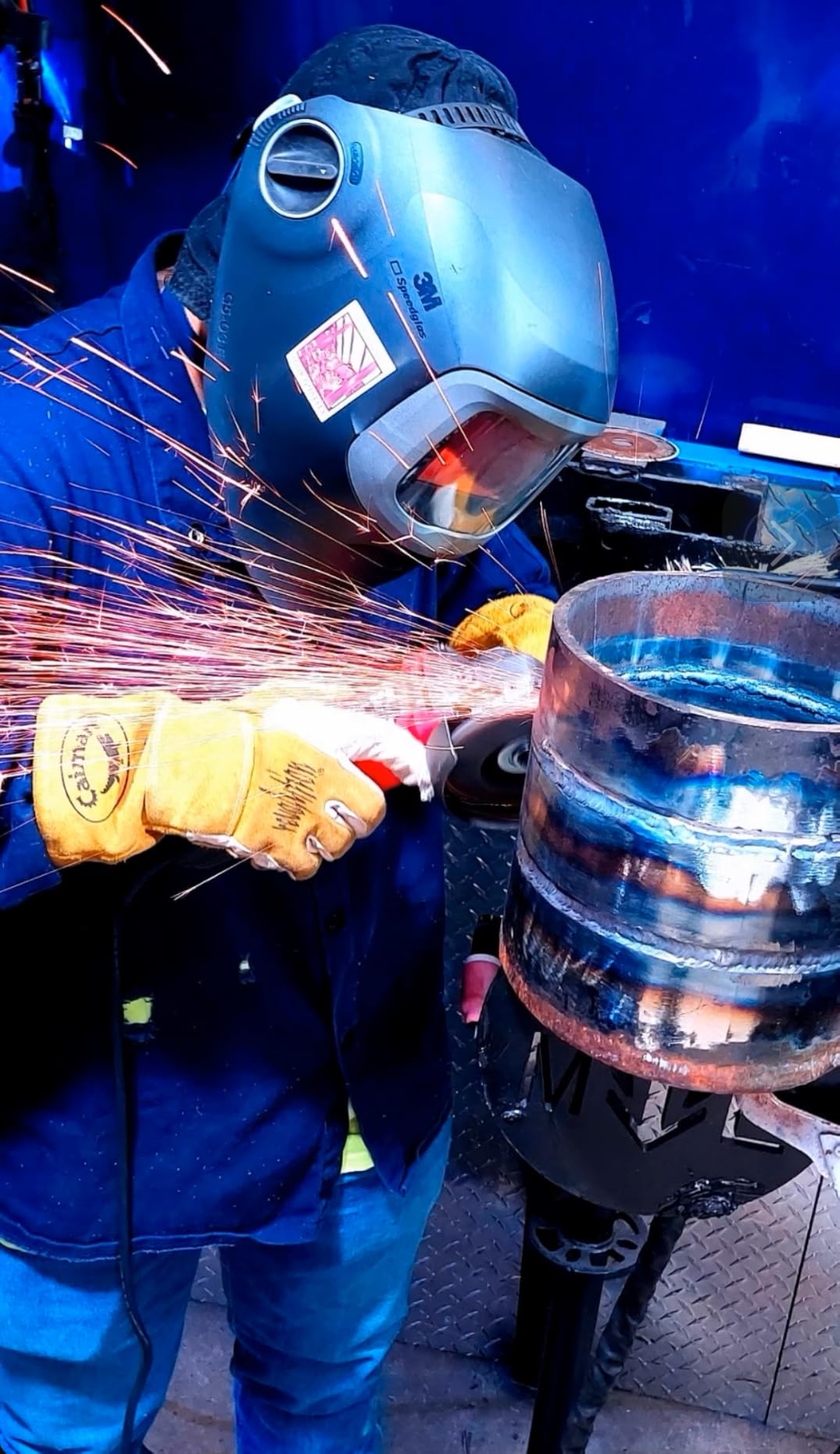
At more than 1400 reviews, one of the strongest durability claims in the group is that the gloves hold their flexibility over months of regular use without shrinking, and that is a cowhide problem solved by a goatskin palm.
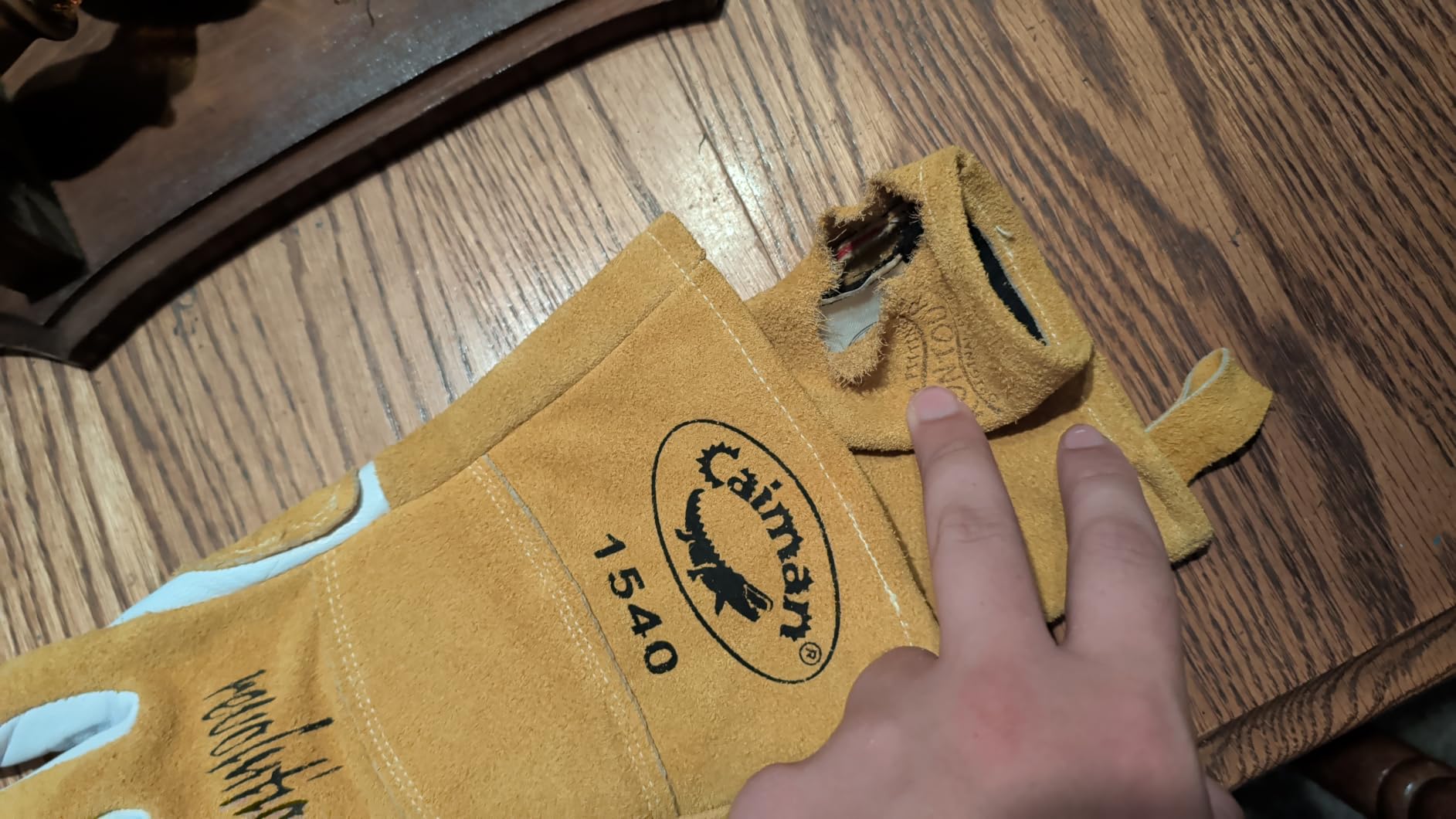
The catch is sizing. These run small and most buyers size up. Finger tips, particularly the thumb and index, wear through with use, they are not built for heavy stick welding, and a small amount of dye can bleed onto skin when the gloves are new, so wash them once before the first session.
When one glove has to cover several processes
Shop welders who move between TIG, fitting and light fabrication will get the most out of this pair. The split cowhide back handles abrasion and dirt that would destroy a full goatskin glove, while the palm stays soft and tactile where the rod needs to be felt.
Its stated contact rating of 392 degrees sits well below the YESWELDER, so treat it as a work glove rather than a hot piece handler.
When it is the wrong pick
Anyone who cannot size up should skip it, because a small TIG glove is genuinely frustrating. If you weld stick regularly, or if your work is constant hot metal handling, this is not the glove, and no amount of dexterity compensates for inadequate heat protection.
The initial dye bleed is worth handling early. A wash before first wear prevents it staining your skin and your work.
8. Caiman 1600-4 Unlined Goat Grain TIG Gloves – Best Soft Leather Feel
Caiman Premium Goat Grain TIG Welding Gloves, 4-Inch Gold Extended Cuff, Unlined, White/Gold, Medium (1600-4)
Unlined top grain goatskin
4 inch gold split cowhide cuff
Kevlar seams
Pros
- Ultra-soft unlined goatskin for tactile sensitivity
- Slightly thicker leather than most TIG models
- Gold split cowhide cuff resists heat and abrasion
- Fits true to size
Cons
- Lower temperature rating than heavy duty gloves
- White palm shows dirt and spatter easily
- Built for TIG rather than heavy stick work
The Caiman 1600-4 is the simplest expression of what a TIG glove should be: soft unlined goatskin through the hand, a four inch gold split cowhide cuff, and Kevlar thread seams. The leather is described as slightly thicker than other Caiman TIG models, which is a deliberate trade toward durability without losing feel.
Unlined construction gives the best tactile sensitivity in the range, and the cuff does the heavy lifting for heat and abrasion. It carries an ANSI heat level 2 rating, which is a measured rather than marketing claim, and the sizes run M through XL with a fit most buyers confirm runs true.
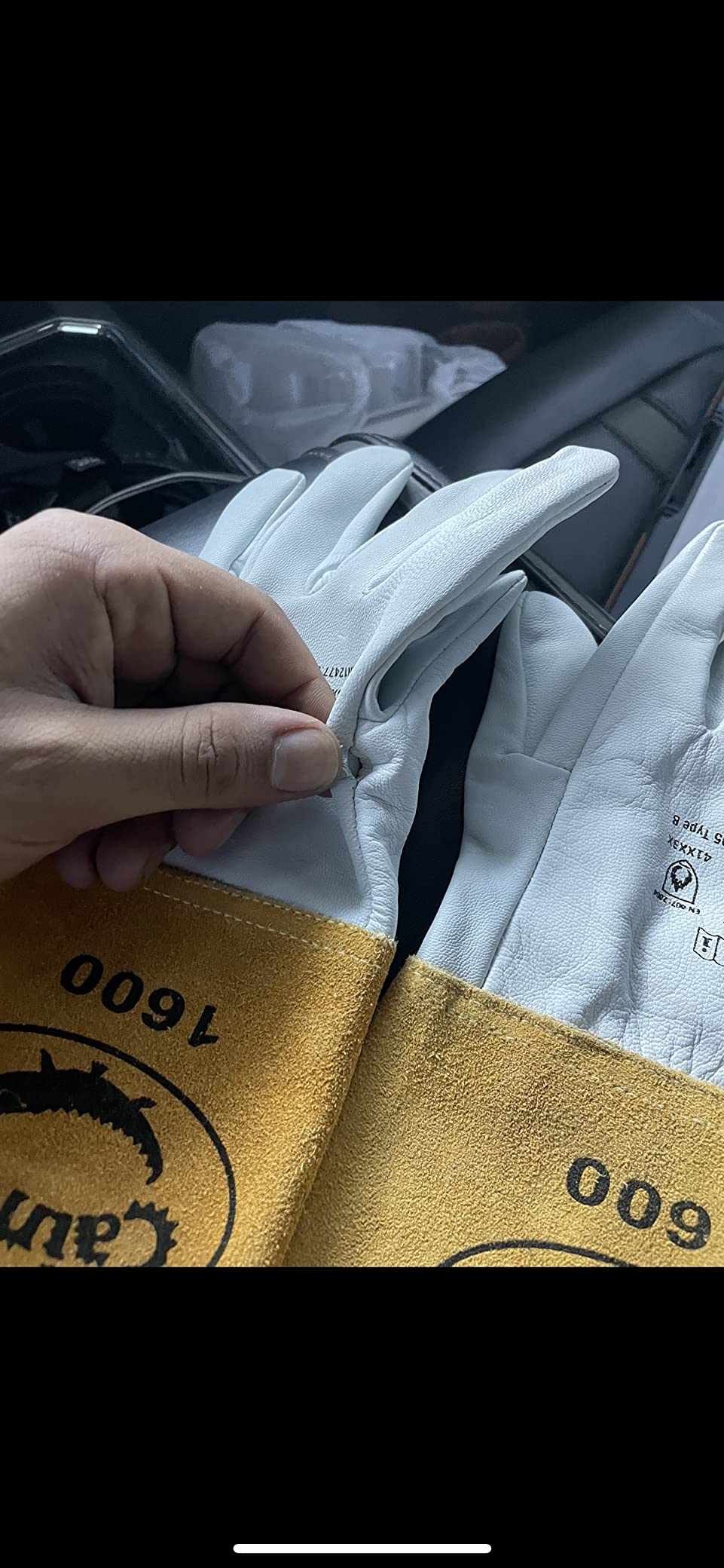
With more than 1300 reviews at 4.5 stars, the feedback is steady and specific: soft feel, true sizing, and a palm that stays pliable. The recurring negatives are practical ones. A white palm shows dirt and spatter quickly, which matters if you care about seeing the weld, and the heat rating is modest.
That lower rating is not a flaw, it is the specification. This is a glove for TIG scale work, and treating it as a general shop glove is where people get disappointed.
Why the unlined build matters more than most people expect
Every layer between your skin and the rod dulls feedback. Unlined means the leather is the only thing transmitting the touch of a 3/32 rod against the puddle, which is the difference between feeding consistently and hunting. That is the whole reason this category exists separately from MIG gloves.
The cuff is where heat actually reaches you on a TIG job, and a gold split cowhide cuff is a sensible way to buy protection without adding bulk at the fingers.
Where this glove is not the answer
Do not use it for stick welding, and do not use it to pick up hot metal. If you need a glove that can do both TIG and fabrication, the multi-task Caiman above is the more sensible purchase at a similar weight.
Buy darker gloves if spatter visibility matters, and plan on a cleaning habit. Light leather shows everything.
9. ARCCAPTAIN Goatskin TIG Gloves with 14 Inch Sleeve – Best Forearm Coverage
ARCCAPTAIN TIG Welding Gloves, Premium Grain Goatskin Leather
Goatskin hand with cowhide cuff
14 inch extra long sleeve
Sweat absorbing lining
Pros
- 14 inch sleeve shields forearms from sparks and spatter
- Lightweight soft goatskin keeps good dexterity
- Sweat absorbing lining for all day comfort
- Extra leather at thumb and finger crotch
Cons
- Long term users report inner seams unravelling within weeks
- Finger length may not suit every hand shape
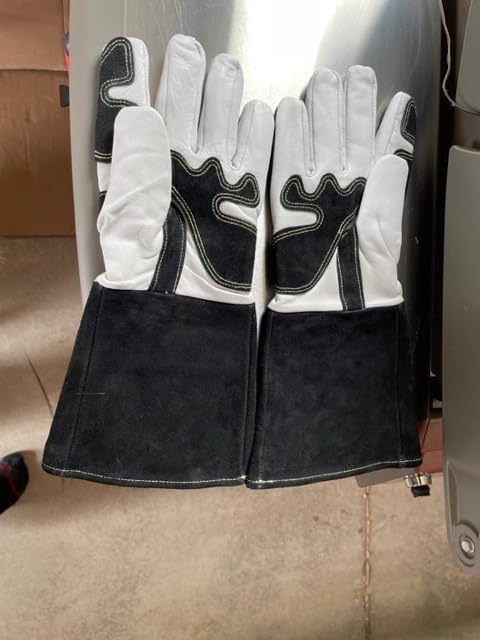
Overhead and out of position welding burns the forearm before the hand, and the ARCCAPTAIN gloves are built for exactly that case. The 14 inch extra long sleeve and oversized cuff cover the arm from fingers to well above the elbow line, which is the coverage welders on forums ask for and rarely find on a TIG glove.
Underneath the sleeve, the hand is high dexterity soft lightweight goatskin with a cowhide leather cuff, an elastic back-of-hand panel and a sweat absorbing lining. Buyers describe it as comfortable for all day wear, and the fit is reported as accurate and suited to larger hands.
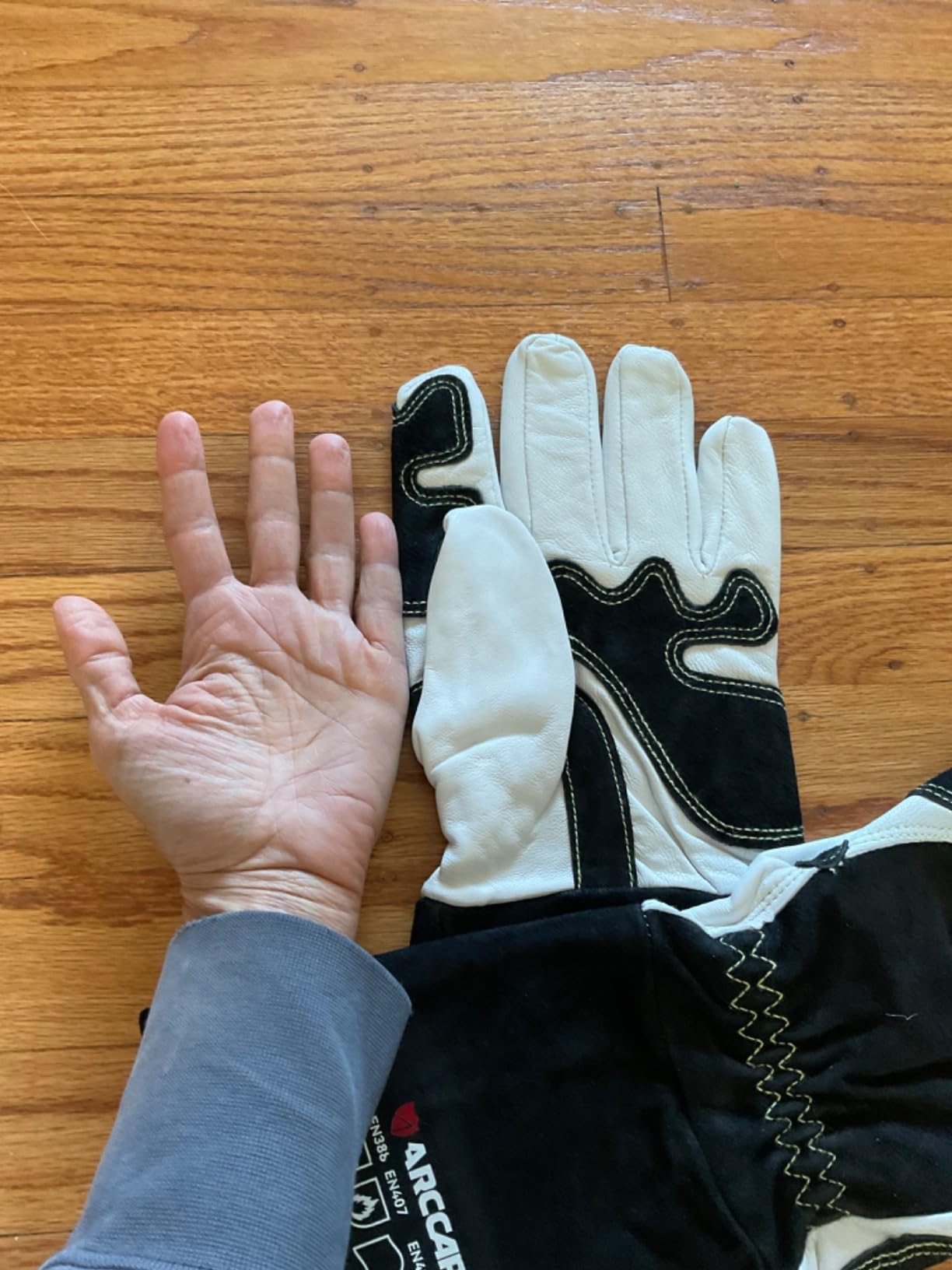
Beyond TIG, buyers note good heat resistance for stick and MIG use, which makes this a genuine multi process glove. Reinforced stitching plus extra leather at the thumb and finger crotch targets exactly the two areas that fail first on a long sleeve design.
The clear weakness is seam durability over time. Some long-term users report inner seams tearing and unravelling within weeks, and finger length does not suit every hand shape. Check the reach against your hand before a long job.
When forearm coverage is the deciding factor
Any job where sparks, spatter or radiant heat reach your arms, such as overhead work, structural fit-up or pipe welding in a tight position, makes sleeve length a safety feature rather than a comfort one. Nothing else in this roundup covers the forearm to that degree while staying light.
It also pairs naturally with a welding sleeve. The glove covers the hand and lower arm, and a flame resistant sleeve continues the coverage upward without bunching at the wrist.
When 14 inches is too much glove
For bench TIG, this design is heavier in the hand than a 4 inch cuff, and the extra material can get in the way of fine rod feeding. If your work is entirely bench and tube work, a short cuff is the better tool.
On the seam reports, we would run this as part of a rotation rather than a single permanent pair, which spreads the abrasion that unravels the inner stitching.
10. Revco T50 Ultimate TIG Welding Glove – Best Cool Comfort
Revco REVCO – T50 – Large”The Ultimate Tig Welding Glove”, Large,Black
Premium grain goatskin
Flame resistant fleece lining
Drag patch
Pros
- Excellent dexterity
- users can pick up fine wire by feel
- Breathable top keeps hands cool on long welds
- Drag patch and Kevlar stitching add life
Cons
- Fleece sections give less protection than full leather
- Heat resistance is moderate
- Not for continuous high amperage shop welding
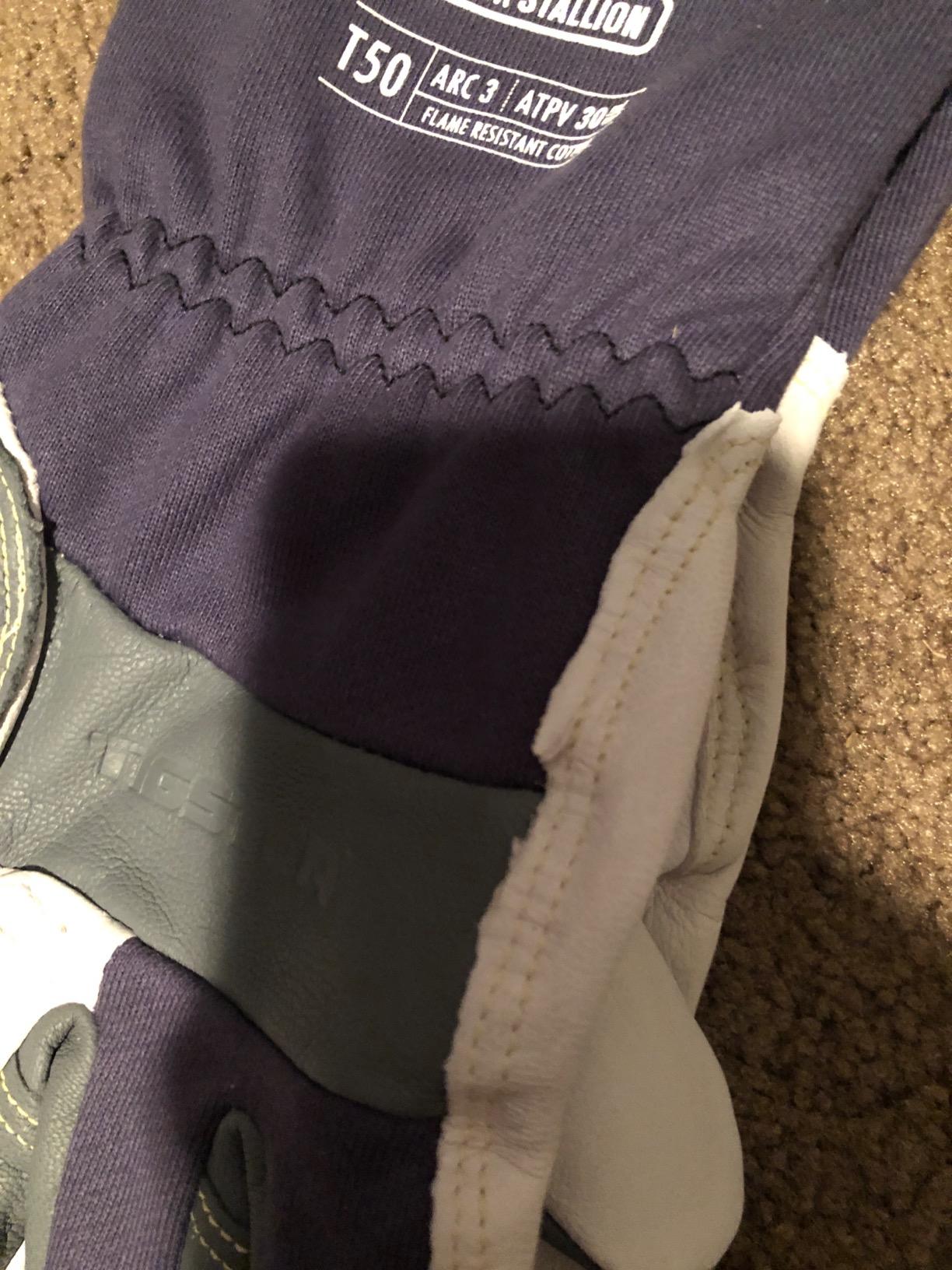
The Revco T50 solves a different problem: heat inside the glove. When you are welding all day, an unlined goatskin hand can still get uncomfortably warm from stored heat. A flame resistant fleece lining with flame resistant cotton on top moves that heat out, and buyers describe the top as breathable and cooling during long welds.
Dexterity barely suffers. Buyers report being able to pick up fine wire by feel, and the premium grain goatskin hand plus keystone thumb keeps the rod control you would expect from a dedicated TIG glove. The padded side doubles as a drag patch for rod draggers.
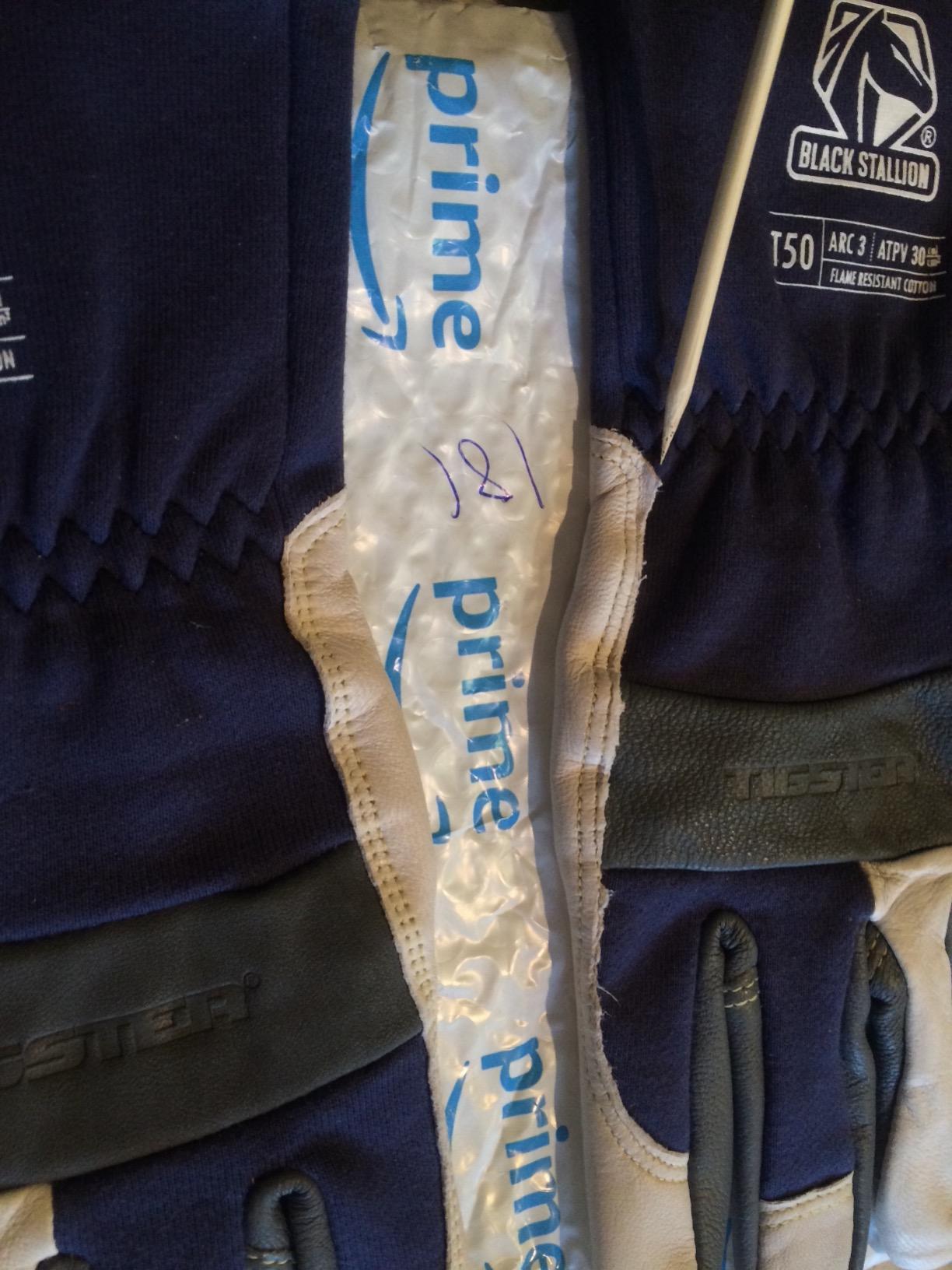
At 4.6 stars, the fit and comfort feedback is strong, and the reinforced construction with Kevlar stitching is widely described as thick and durable. Hand washing is the stated care method.
The trade-off is protection, and it is a real one. The fleece and fabric sections offer less heat protection than full leather, heat resistance is moderate, and this is not a glove for continuous high amperage shop welding. Know your amperage before you choose comfort over protection.
Who should accept a lined glove for comfort
Production welders doing long shifts in a warm shop, and anyone whose hands sweat enough to lose grip, are the people this glove is built for. A little insulation that moves heat away is often worth more than maximum theoretical heat blocking on a low amperage job.
It is also the sensible choice for full days of thin material TIG work, where the heat load per bead is low but the duration is long.
Who needs full leather instead
If you run higher amperage, handle hot pieces, or work in a hot environment where radiant heat is the limiting factor, the fabric sections are the wrong trade. Choose a full leather glove with a split cowhide cuff and accept the warmth.
For most people, the right answer is a rotation: lined comfort gloves for long production days, unlined leather for precision work.
11. TOOLIOM 14 Inch Wing Thumb TIG Gloves – Best Rod Control on a Budget
TOOLIOM Goatskin TIG Welding Gloves with Flexible Wing Thumb, Medium
Goatskin palm
14 inch length
Seamless index finger
Wing thumb
Pros
- Seamless index finger and wing thumb give precise rod control
- 14 inch coverage protects forearms
- Soft cotton lining wicks sweat
- Reinforced finger crotch resists blowouts
Cons
- Bulky 14 inch length feels cumbersome for fine TIG work
- White leather shows staining quickly
The TOOLIOM gloves take a different approach to thumb construction. A wing thumb sits in line with the fingers rather than angled away from them, which some welders prefer for feeding rod in a straight push. Combined with a seamless index finger, buyers report very good filler rod control.
Coverage is the other selling point. At 14 inches long with a top grain goatskin palm and a genuine cowhide split leather cuff, these protect the hand and forearm from sparks and spatter in a way most short cuff TIG gloves cannot.
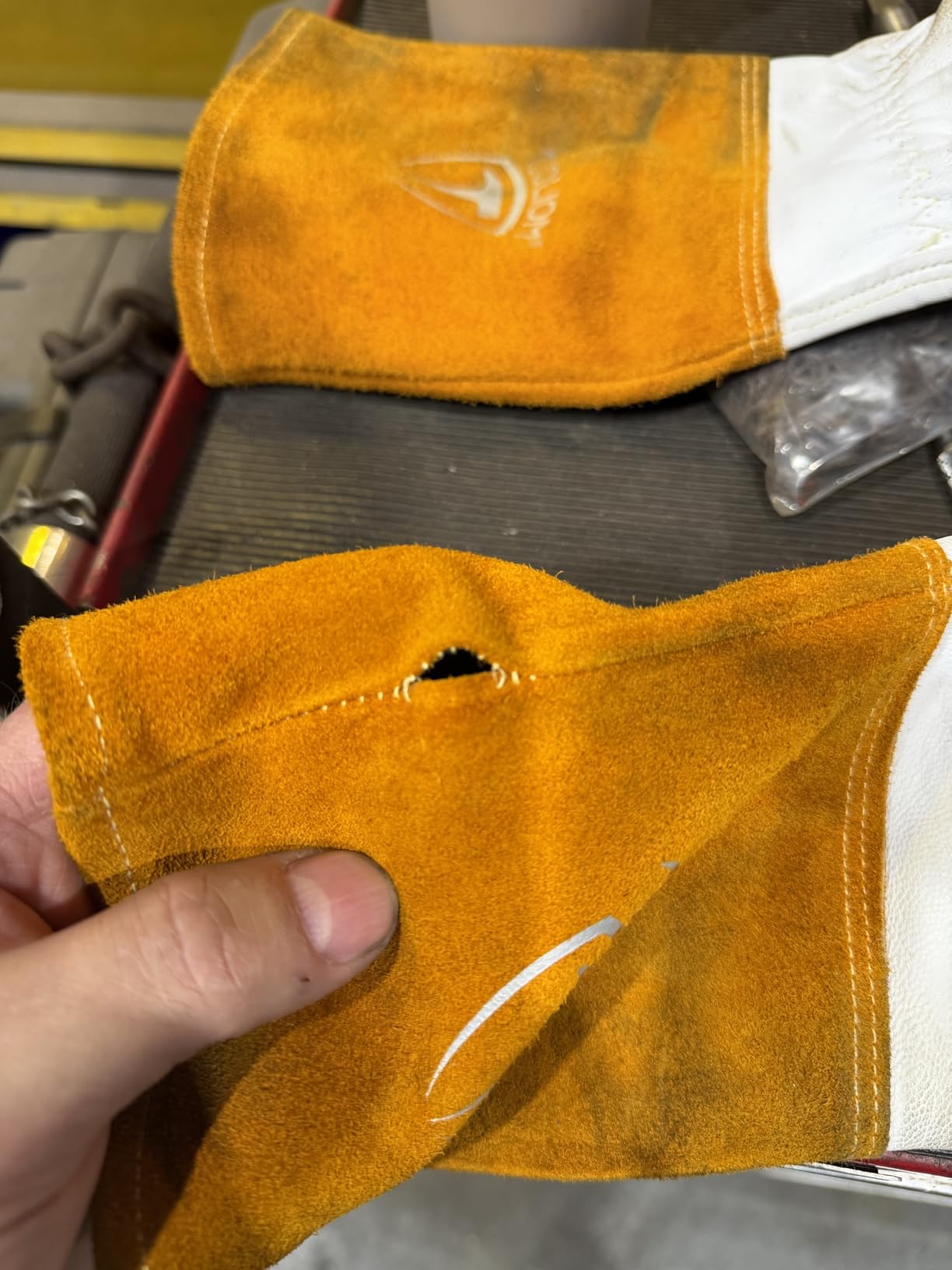
The soft cotton lining wicks sweat for long shifts, and the reinforced finger crotch resists the blowouts that normally appear first on a heavily used glove. Fitted sizing in M, L and XL keeps the coverage without the loose hand feel of some gauntlet designs.
The honest drawback is bulk. At 14 inches, some users find it cumbersome for fine TIG work where a short cuff is easier to move. The white leather also shows staining quickly, which is a recurring complaint on nearly every light coloured glove here.
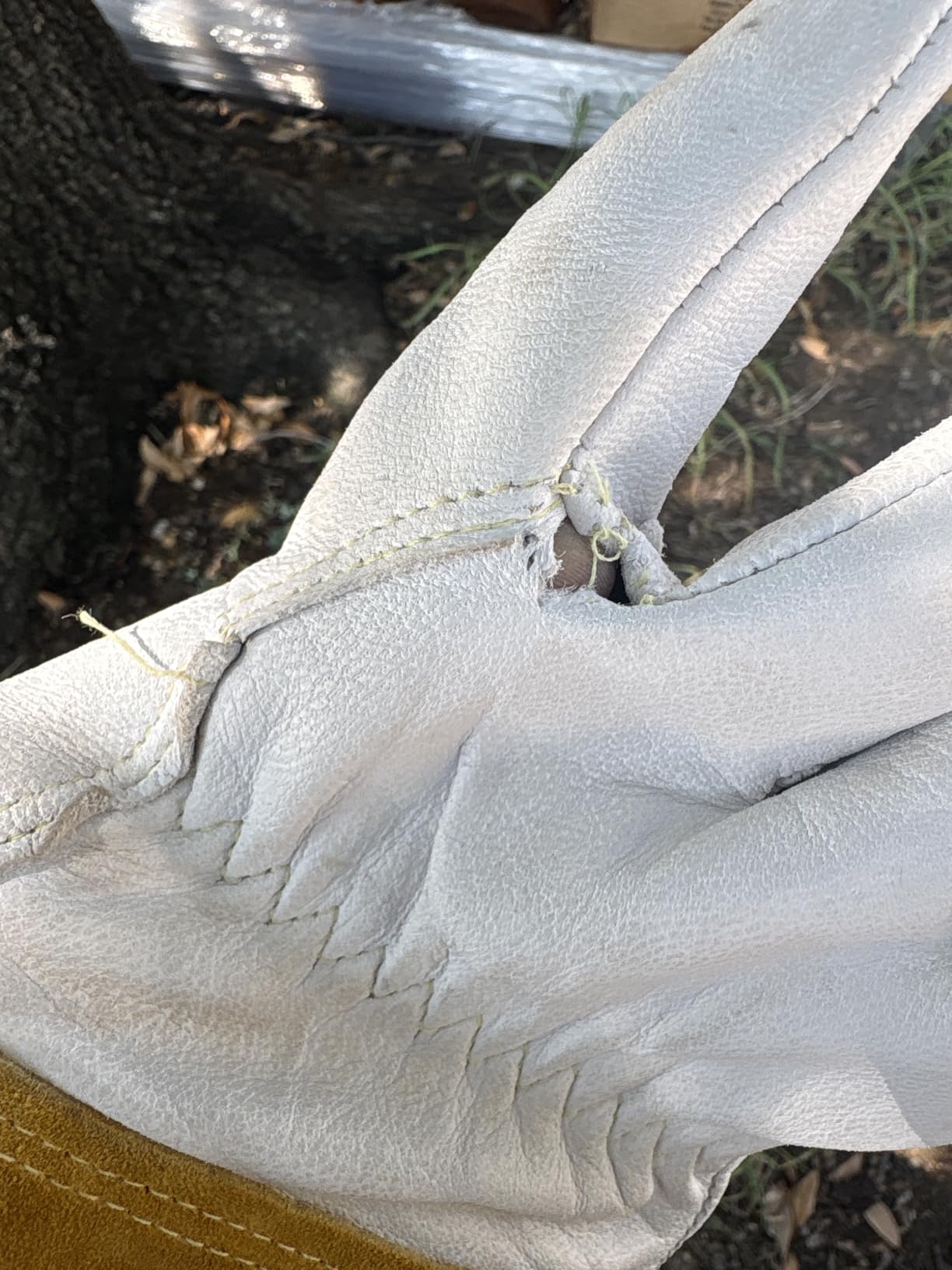
Choosing between a wing thumb and a keystone thumb
Neither is better in the abstract. A wing thumb lines the thumb up with the fingers, which suits a straight push feeding motion. A keystone thumb angles the thumb away, which suits a torch-and-rod position where the thumb needs clearance. Try both if you can, because the difference is a preference your hand tells you in ten minutes.
For the seamless index finger, the benefit is concrete. No seam across the inside of the finger that the rod can catch on, which is why it appears on the models designed for the finest work.
When the extra length is not worth it
If your work is bench TIG, thin wall tube or anything where you need a very close hand feel, the 14 inch length is dead weight at the wrist. Choose a short cuff and get forearm protection from a welding sleeve instead, which is cheaper and cooler.
Also consider the color. White leather will show every bit of spatter within a week of shop work.
12. J. J. Keller SAFEGEAR Split Cowhide TIG Gloves – Best EN 388 Certified Set
SAFEGEAR Large Cowhide Leather Welding Gloves, 2 Pack
Split cowhide
EN 388 3131 certified
4 inch safety cuff
Two pair pack
Pros
- EN 388 3131 certified for cuts abrasions tears and punctures
- Solid Kevlar lock stitching and durable leather
- Two pair pack suits regular shop rotation
- Sizes S to XXL
Cons
- Bulkier than goatskin so less fine dexterity
- Not ideal for heavy welding or very hot work
- One isolated report of dry-rotted leather
The SAFEGEAR gloves are the only pair here with a published mechanical certification: EN 388 3131, covering cuts, abrasions, tears and punctures. If your work environment requires documented protective equipment standards, that number is the entire argument, and it is not a marketing label.
Build quality matches the paperwork. Kevlar lock stitching, a 4 inch tan split cowhide safety cuff, a wing thumb and a seamless forefinger add up to a glove that is well made for the price. The pack of two pairs is genuinely useful, because a rotation is the simplest way to double glove life.
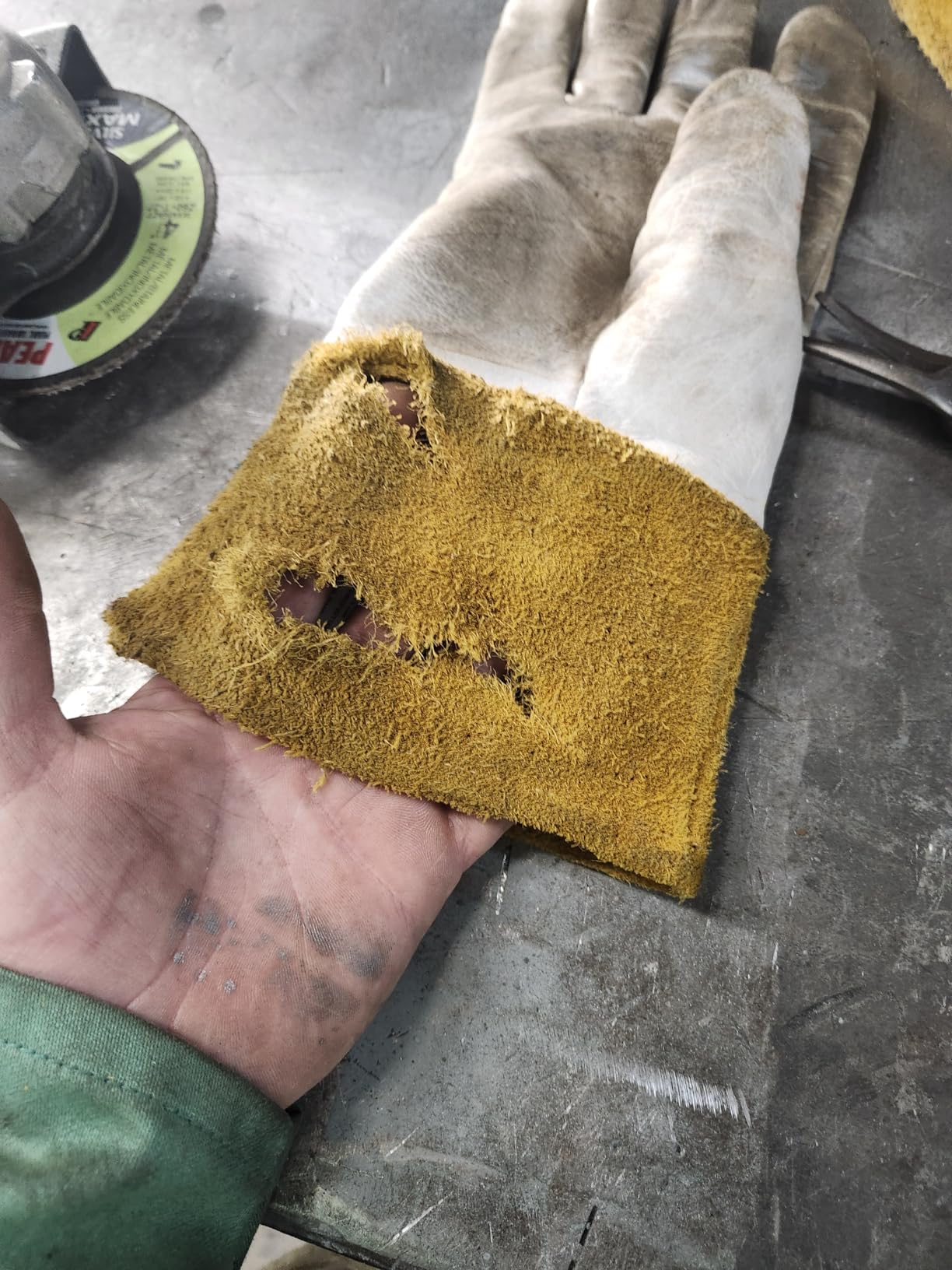
Sizes run S through XXL, which covers both ends of the fit problem in one purchase. Buyers report good finger movement and control for TIG and oxy acetylene work, and the wide size range is called out specifically as a plus.
Cowhide is bulkier than goatskin, so fine tactile feedback is reduced, and reviewers say plainly that this is not the glove for heavy welding or very hot work. One isolated report mentions dry-rotted leather in a pack, so inspect both pairs when they arrive.
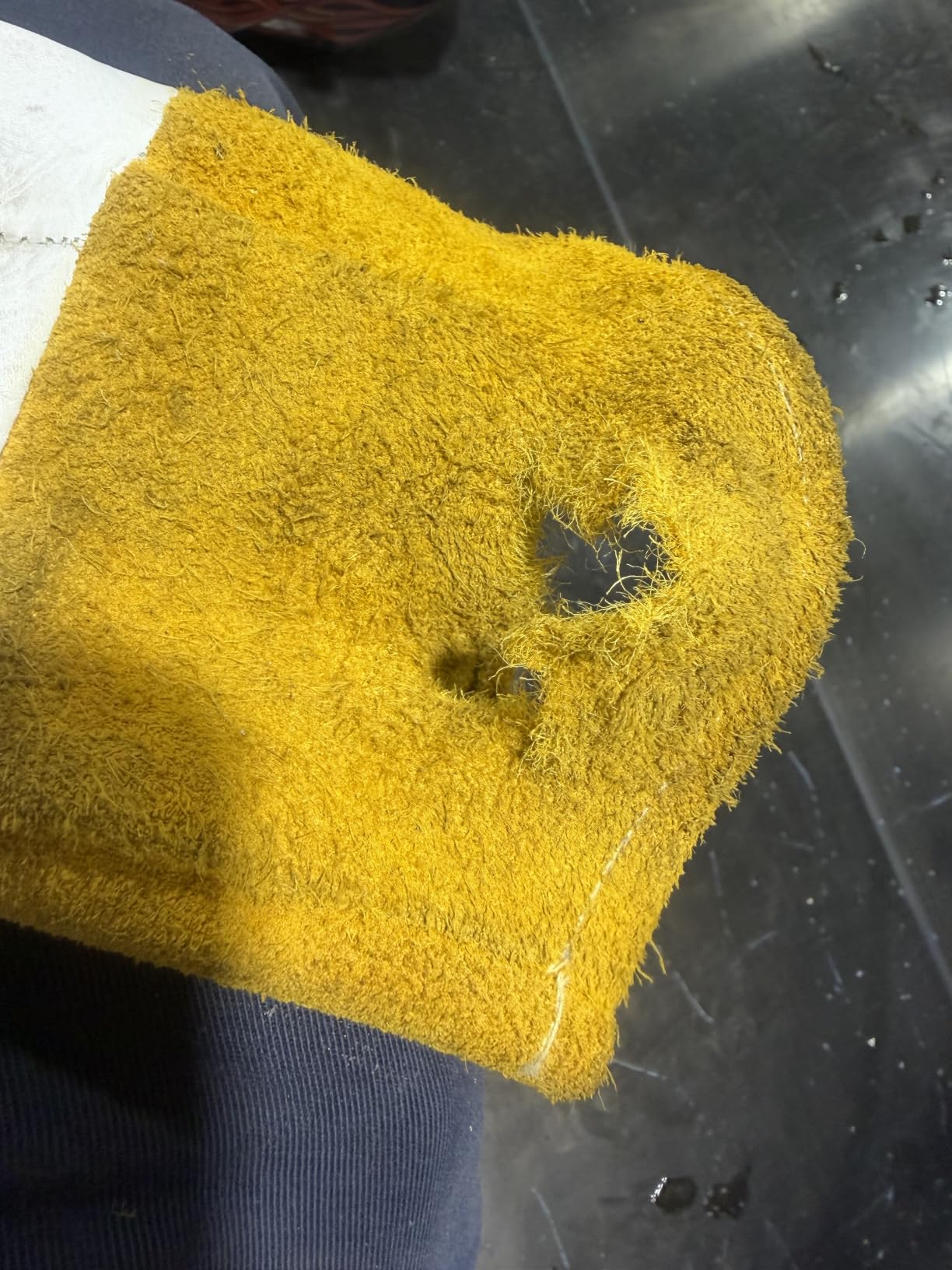
What EN 388 actually certifies
EN 388 is a mechanical risk rating, not a heat rating. The 3131 code reads as three for abrasion resistance, one for cut resistance, three for tear resistance and one for puncture resistance. It tells you how the glove handles snags, edges and rough stock, which is exactly the failure mode of a split cowhide glove.
It tells you nothing about heat. For TIG heat, look instead at the heat level marking on the glove itself, such as the ANSI heat level 2 and 3 markings on the unlined goat grain and kidskin gloves in this roundup.
When this is the right buy
Choose the SAFEGEAR set if you need documented certification, if you work TIG and oxy acetylene, or if you want two pairs so you can always hand a fresh glove to a new starter. The extra pair also means a damaged glove does not end your work week.
If your priority is pure control rather than paperwork, a goat grain glove gives finer feel. This is the durability and documentation pick.
Goatskin, Kidskin or Cowhide: Which Leather for TIG Welding
Goatskin is the default answer because it balances everything. It is soft enough for good filler rod feel, thin enough to stay unlined, and tough enough to survive months of abrasion. Every goat grain glove in this roundup is unlined or lightly lined, and none of them feel like a thick work glove.
Kidskin is thinner and softer still. It delivers the most tactile feedback of any material listed here, which is why the budget kidskin glove is a favorite for thin wall tube and artistic work. The trade is heat margin and lifespan, and the leather tends to wear at the fingertips before anything else fails.
Split cowhide is the durable option. It resists abrasion, heat and dirt far better than goat grain, which is why it shows up on cuffs and backs, and why the certified glove in this list is cowhide throughout. On a full cowhide hand you will feel the workpiece through the glove, and that is the trade for a longer service life.
Deerskin and elkskin appear in the wider market but neither made this shortlist, so we have left them out rather than recommend on reputation. What matters is grain versus split, and top grain versus split leather on the inside face. Top grain is the smooth, hair side surface, and it is what you want in the palm. Split leather is the flesh side, tougher and more heat resistant, which is why it belongs on the back and cuff.
Heat Ratings, EN 12477 and the Standards That Matter for TIG
Two standards matter for welding gloves and they measure different things. EN 12477 covers welding gloves specifically and splits them into Type A, which is for all welding processes, and Type B, which is for processes with lower heat exposure such as TIG. Most TIG gloves on the market are sold to the Type B profile, and many listings simply do not state a standard at all.
ANSI and ISEA 105 gives a heat level from 1 to 3 for contact heat and an impact level. In this roundup, the kidskin glove is listed at heat level 3 with impact level 2, and the unlined Caiman goat grain glove is listed at heat level 2. The goatskin glove with the 932 degree rating states a contact temperature rather than an ANSI level.
Radiant heat is a different exposure again. A welder working close to a large hot assembly takes more radiant heat than someone touching a small coupon, and no glove label fully covers that. Extended cuffs, sleeve length and welding sleeves do more for radiant heat than any palm material.
One clarification worth making, because listings blur it constantly: EN 388 cut levels do not apply to heat, and a high abrasion rating does not mean a glove is safe on hot metal. Read the heat number specifically, and read the process it was tested for.
How to Choose the Best Welding Gloves for TIG: A 7 Step Buying Guide
1. Start with the leather and lining. For TIG, choose unlined or lightly lined soft grain leather, either goat grain or kidskin. A sock-lined or fleece-lined glove trades away the fingertip feedback that makes the process work, unless your main problem is heat inside the glove over long shifts.
2. Pick your cuff length by position. A 4 inch cuff is the standard for bench and tube work. An extended cuff of roughly 8 to 14 inches suits out of position, pipe and overhead welding. Longer is not safer at the bench, it is just bulkier.
3. Check the thumb and finger construction. A keystone thumb angles away from the fingers and suits a torch-and-rod position. A wing thumb lines up with the fingers and suits a straight push. A seamless index finger removes the seam that filler rod can catch on, and three-part sewn fingers give finer bending at the knuckles.
4. Look for reinforcement where it counts. A glide patch or drag patch on the side of the hand, plus a reinforced thumb and reinforced finger crotch, covers the three zones that actually wear out. Kevlar stitching matters as much as the leather, because a seam that lets go ends the glove’s life instantly.
5. Size before you commit. Measure across the knuckles of your working hand and compare it to the size chart, and size up if you are between sizes on a model that runs small. For small hands, look for an XS or S option specifically, since most of the category starts at medium. Oversized gloves are the main reason welders quit TIG, and small gloves that pinch are almost as bad.
6. Match the heat rating to your amperage. Low amperage work on thin material needs very little. Higher amperage, larger stock and hot piece handling need a stated contact rating or an ANSI heat level, and for the hottest contact, a split cowhide cuff. If you also weld stick, buy a separate stick glove rather than stretching one pair across both.
7. Plan for a rotation from day one. Buy two pairs in the same model. Gloves dry out, stiffen and thin unevenly, and alternating pairs gives each one a day to recover, which is the simplest way to extend total life. A two pair pack covers this immediately.
A word on supporting hand heat, because it is the most common complaint we saw and it has a simple answer. The non torch hand absorbs radiant heat from the arc and conductive heat when it steadies the workpiece, and no glove fully solves it. What helps is a longer cuff, a split cowhide or aluminized back, a welding sleeve, and lowering your amperage where the joint allows. If the heat is a daily problem, that combination of glove and sleeve is worth more than any single premium glove.
Care, Rotation and When to Replace Your TIG Gloves
Set realistic expectations on lifespan. A hobbyist welding a few hours a week will usually get well over a year from a quality goat grain glove. Daily production TIG is closer to a six month cycle for premium leather and three to four months for the thinnest budget leather. Heavy stick and grinding work shortens any TIG glove dramatically, because the abrasion is from the material, not the arc.
Care basics are simple. Brush off spatter and grinding dust, wash with soap and water and let the glove dry fully before storing, since trapped moisture and the salt in sweat are what break down leather and thread. Wash new light coloured gloves once before the first session to manage dye transfer.
Replace a glove when the palm thins to the point you can feel heat through it, when seams start fraying, when the fingertips lose their shape, or when the cuff no longer closes the gap at your wrist. Those are the failure points that matter, and by the time a hole appears you have already lost control.
Frequently Asked Questions
What are the best hand gloves for TIG welding?
The best welding gloves for TIG are unlined or lightly lined soft grain leather gloves with a short 4 inch cuff. Our top three are the Tillman 1338 pearl top grain goatskin glove for the best overall feel, the Lincoln Electric K2981 for daily shop durability, and the IRONCAT 6141 kidskin glove as the best budget option. All three use Kevlar stitching, and all three keep fingertip feedback high enough to feed filler rod by feel.
Should you wear gloves when TIG welding?
Yes, you should wear gloves for TIG welding. The arc produces intense UV radiation that burns exposed skin, and the filler rod and hot workpieces conduct heat. A glove rated for TIG also blocks spatter and radiant heat. The glove should be thin enough that you can feel the filler rod touching the puddle, which is why dedicated TIG gloves are lighter than MIG or stick gloves.
What PPE do you need for TIG welding?
Beyond gloves, a welder doing TIG needs a welding helmet with the correct shade lens, flame resistant clothing, safety glasses or a face shield underneath the helmet, leather boots, and hearing protection. Add a welding sleeve for forearm protection on out of position work, and confirm your ventilation is adequate, since TIG on stainless or aluminium releases fume that a helmet filter alone will not clear.
Who makes the best TIG welding gloves?
Tillman and Lincoln Electric are the two names welders name most often in forums, and both appear in this roundup with high ratings and large review counts. Caiman is strong on glove shaping and cuff design, YESWELDER for a high stated contact temperature rating, Revco for lined all day comfort, and ARCCAPTAIN for forearm coverage. The best choice depends on your process and amperage rather than the brand alone.
How hot can welding gloves handle?
It depends on the glove and the rating type. A contact temperature rating describes sustained contact with a hot surface, and the highest stated rating in this roundup is 932 degrees Fahrenheit. ANSI and ISEA 105 heat levels run from 1 to 3, and the gloves here are listed at levels 2 and 3. Radiant heat is a separate exposure that extended cuffs and sleeves help manage.
What are the most comfortable gloves for TIG welding?
Comfort in TIG comes down to thin soft leather and breathability. Unlined top grain goat grain is the most comfortable over long sessions for most welders, and kidskin is the thinnest option. If your hands get hot inside the glove, the Revco T50 with flame resistant fleece lining is built for cooling over long shifts, though it gives up some heat protection in exchange.
What leather is best for TIG welding gloves?
Top grain goatskin is the best all round leather for TIG gloves because it is soft, thin and abrasion resistant. Kidskin is thinner and gives finer feel for thin material, at the cost of heat margin and lifespan. Split cowhide is the most durable and heat resistant, but it is bulkier and better suited to a cuff or the back of the hand than to a palm that needs to feel the rod.
Can you use TIG gloves for MIG welding?
You can, but it is a compromise. MIG produces more spatter and radiant heat than TIG, so a thin TIG glove offers less protection over long MIG sessions. It works for occasional light MIG work, but if MIG is a regular part of your job, use a dedicated MIG glove with a heavier palm and a longer cuff rather than wearing out your TIG glove faster.
Final Verdict on the Best Welding Gloves for TIG
After working through twelve options, the best welding gloves for TIG in 2026 come down to a short list. The Tillman 1338 takes the top spot for overall feel, with pearl top grain goatskin, a glide patch and the highest combined rating and review count here. The Lincoln Electric K2981 is the pick for anyone welding daily, and the IRONCAT 6141 kidskin glove proves you can get real TIG feel without a large spend.
Match the glove to the job rather than the badge. Short cuff and unlined for bench precision, split cowhide cuff or extended sleeve for out of position work, lined fleece if heat inside the glove is your problem, and XS sizing if small hands are. Buy two pairs and rotate them, and check our other glove picks for comparison.