
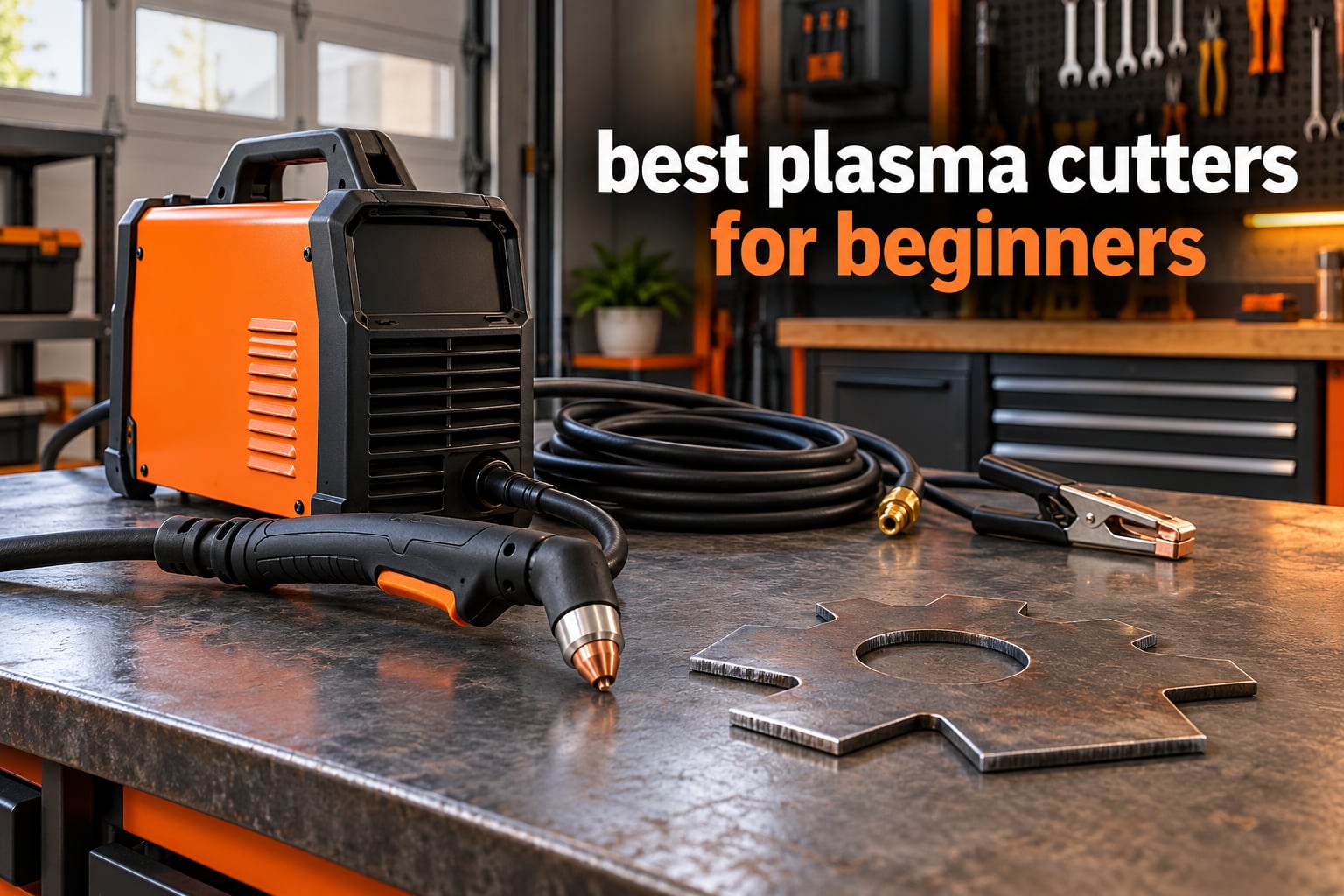
A plasma cutter turns compressed air into a stream of ionized gas hot enough to melt through steel, aluminum, stainless and copper, then blows the molten metal away as a narrow kerf. For a beginner, that means clean shapes in sheet metal on day one and the ability to pull a cut line through plate once you learn the machine.
Many first-time buyers land in the same place: a 50 to 60 amp machine, dual voltage so it can run off a standard household outlet, and a pilot arc torch that starts without touching the metal. I spent weeks reading owner feedback, and the pattern is consistent: the machines that frustrate beginners are rarely the weakest ones. They are the ones with a vague air fitting, a manual that explains nothing, and a duty cycle nobody mentioned before the sale.
This roundup covers ten plasma cutters that a first-time owner can realistically learn on, from a 60A machine with a blow-back torch down to a light 50A unit you can carry with one hand. Every entry below lists verified specs, the complaints that keep showing up in reviews, and the kind of work each machine suits. I also added a buying guide, a troubleshooting section and a project ladder so you can match the machine to what you actually plan to cut.
One thing to set expectations early: a plasma cutter is not a standalone purchase. Air comes from a compressor, the torch wears consumables, and the cut quality depends more on air quality and technique than on the wattage on the box.
Table of Contents
Top 3 Best Plasma Cutter Picks for Beginners in 2026
These three cover the realistic beginner scenarios: an all-round first machine, a feature-rich option with app control, and a step-up unit for sustained plate work.


Best Plasma Cutters for Beginners in 2026: Quick Overview
All ten machines sit in the beginner-accessible class: 50A to 60A output, 110V or automatic dual voltage, and torch designs that work with common consumables. Differences show up in ignition method, air monitoring, duty cycle and warranty length.
| Product | Specs | Action |
|---|---|---|
| PrimeWeld CUT50D |
|
Check Latest Price |
| ARCCAPTAIN CUT55 Pro |
|
Check Latest Price |
| PrimeWeld CUT60 |
|
Check Latest Price |
 LOTOS LTP5505D LOTOS LTP5505D |
|
Check Latest Price |
 SILATU STC550P SILATU STC550P |
|
Check Latest Price |
 LOTOS CT520D LOTOS CT520D |
|
Check Latest Price |
 YESWELDER CUT-65DS YESWELDER CUT-65DS |
|
Check Latest Price |
 TOOLIOM CUT-50 PRO TOOLIOM CUT-50 PRO |
|
Check Latest Price |
 GZ GUOZHI CUT-50 GZ GUOZHI CUT-50 |
|
Check Latest Price |
 Reboot RBC6000D Reboot RBC6000D |
|
Check Latest Price |
1. PrimeWeld CUT50D: Best All-Round Plasma Cutter for Beginners
PrimeWeld 50A Air Inverter Plasma Cutter, Portable Plasma Cutting Machine, Premium and Rugged Plasma Cutter Kit, Automatic Dual Voltage 110V/220V AC with Plasma Torch, 1/2″ Clean Cut, CUT50D
50A air inverter
1/2 inch clean cut
Automatic 110V/220V
AG60 torch
Pros
- 4.7 average across 668 reviews with an 80 percent five-star share
- 1/2 inch clean cut on a 50A machine
- Pre-installed air filter regulator and brass quick connect
- Responsive warranty service with a prepaid return label
Cons
- Instruction manual is widely criticized as unhelpful
- Some early production runs had internal and external air fitting leaks
- Included air quick disconnect can leak out of the box
The CUT50D is the machine I keep coming back to for a first purchase. It sits in the mainstream price tier for a 50 amp dual-voltage inverter, and it carries a 4.7 average across 668 reviews, with roughly 80 percent of those reviews at five stars. That consistency matters more than any single spec.
Output is 50 amps from an air inverter power source with a stated 1/2 inch clean cut. Owners report 1/8 inch steel coming off a 120V outlet cleanly and 1/2 inch plate being handled without drama once the machine is on 220V. The AG60 torch is the standard non-touch pilot arc design used across this whole category, so replacement consumables are easy to find.
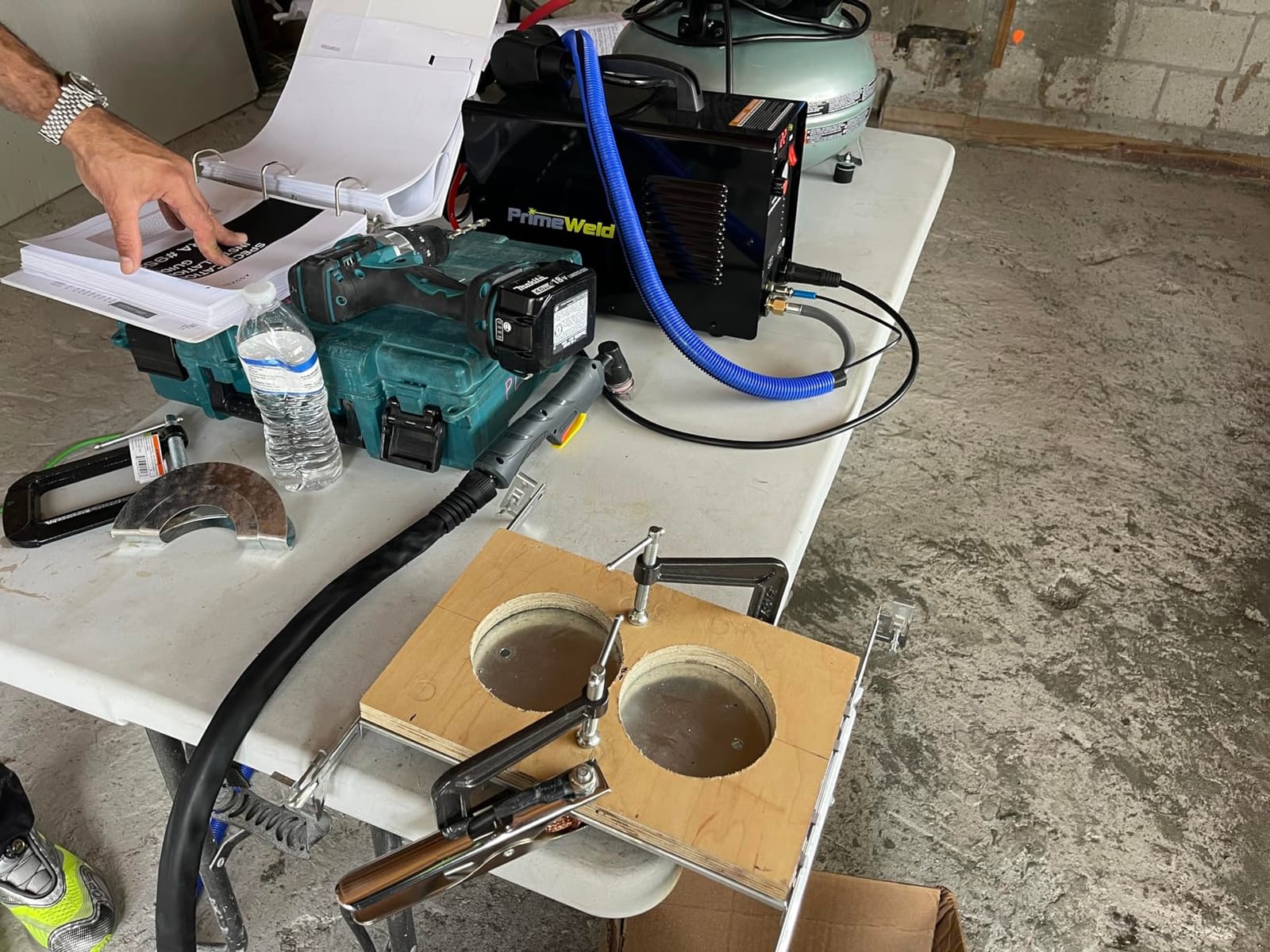
Two details separate this from cheaper boxes. The rear air filter and regulator arrive pre-installed with a brass quick connect already fitted, and the 220V power cord comes with an adapter in the box. You are not hunting for fittings the day it shows up. Newer production runs also include a trigger guard on the torch, which is a small safety upgrade older units lack.
Customer photos show a compact bench machine with a cable run long enough to reach across a worktable, and the accessory bundle includes plenty of air hose, fasteners and extra tips. That matters for beginners because a short hose is the first thing that limits where you can set the machine up.
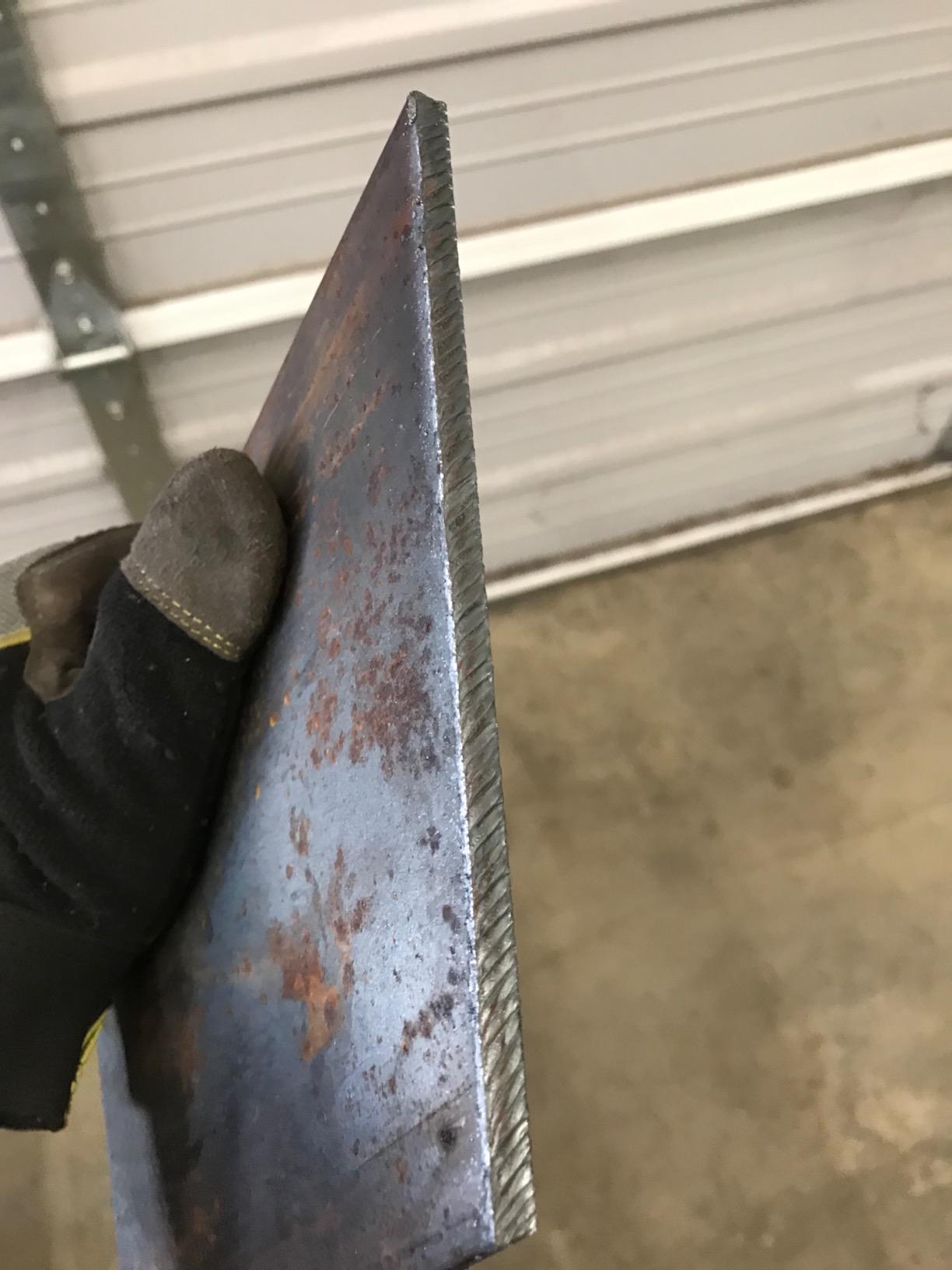
What you get for the outlay
At this class, the practical comparison is against other 50A dual-voltage machines with the same AG60 torch. What you are paying for is the power source quality, the pre-plumbed air path, and a support line that answers. Reviewers repeatedly describe PrimeWeld service as responsive, including warranty repairs where a prepaid return label was provided.
Where new owners get stuck
The manual is the weak point and it is a common theme in the reviews. Air pressure settings, amperage for material thickness and post-flow timing are learned from owner walkthroughs instead of documentation.
Early production runs also produced air fitting leaks, both internal and external, and the supplied quick disconnect could leak from the factory. Owners report that later runs resolved these, so check your fittings with soapy water during the first week.
2. ARCCAPTAIN CUT55 Pro: Best for App-Controlled Cutting Settings
ARCCAPTAIN iControl CUT55 Pro Plasma Cutter Machine, 55Amp, 120V/240V
55A MCU inverter
12mm quality cut, 20mm max
Bluetooth app control
Three-year warranty
Pros
- App control saves and adjusts settings from up to 10 meters away
- Three-year warranty matches the longest coverage offered here
- Pre-installed air regulator and filter
- High-frequency pilot arc starts through rust
- paint and dirt
Cons
- App-only adjustments require a phone and Bluetooth
- 19.46 lb body is mid-weight for this class
- Still requires a separate air compressor
The CUT55 Pro is the one machine in this roundup where a smartphone is a real feature rather than a gimmick. You set amperage and post-flow from an app up to 10 meters away, then save the settings you like. For a beginner, that turns guesswork into a repeatable process, and several owners say it is the reason the machine feels easy to learn.
Under the hood it is a 55A MCU-controlled inverter with full digital control of current and voltage. Rated output is a 12 mm quality cut and 20 mm maximum cut. The high-frequency non-touch pilot arc starts through rust, paint and dirt without you touching the material, which is useful when you are cutting a car floor pan you cannot clean first.
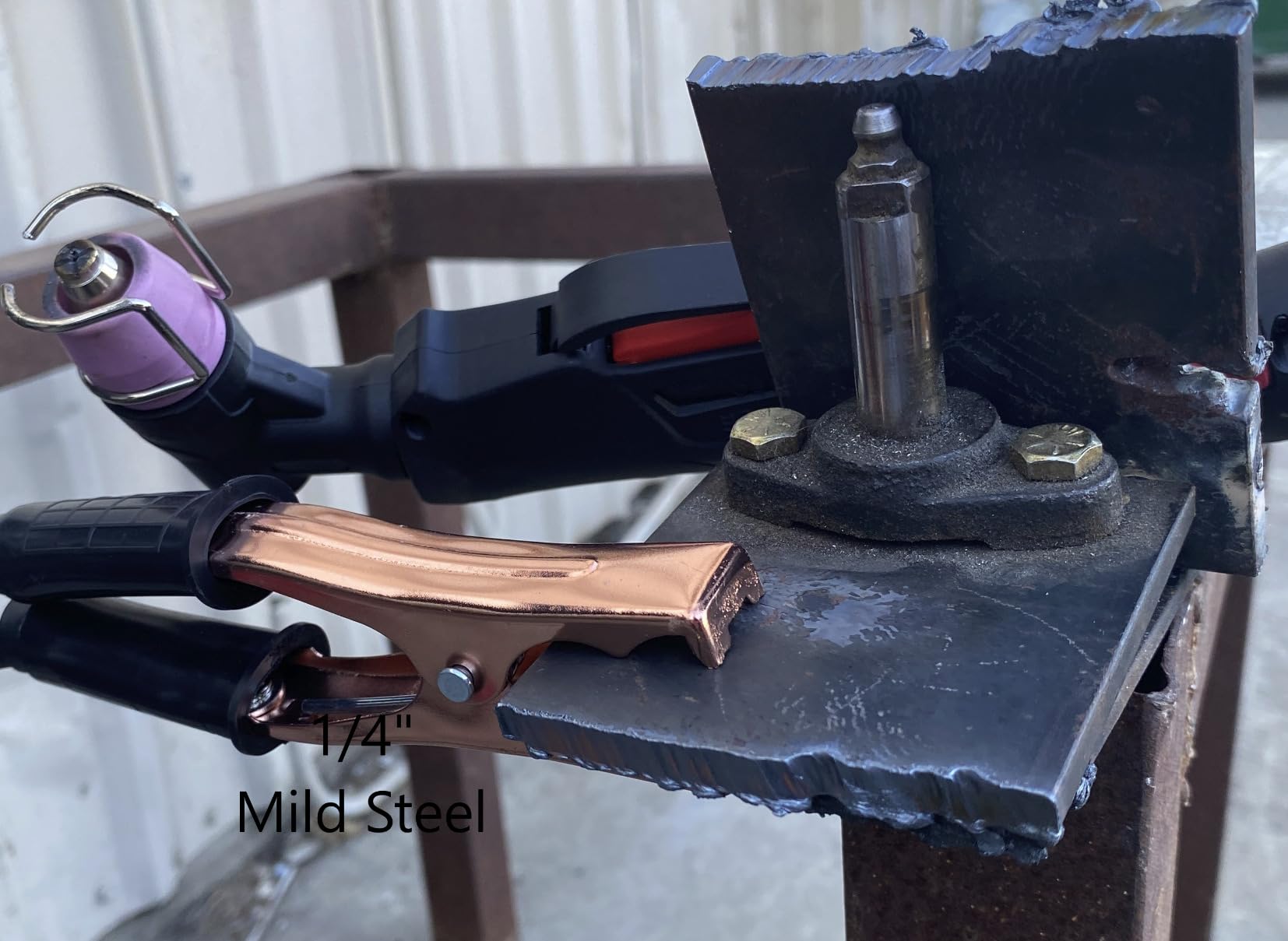
Post-flow is scaled automatically by current, running 5 to 10 seconds depending on output, and you get 2T and 4T trigger modes so long cuts do not require holding the trigger. The cooling fan is demand-driven, which the manufacturer claims cuts noise by 50 percent, and the unit carries ANSI certification with overcurrent, overvoltage, overload and overheat protection.
User photos show a full-size floor-stand style machine with a 10 foot AG60 torch, 10 foot air hose, 10 foot earth clamp and a 120/240V adapter in the box, and the category rank is strong for a unit that has only been available since September 2024.
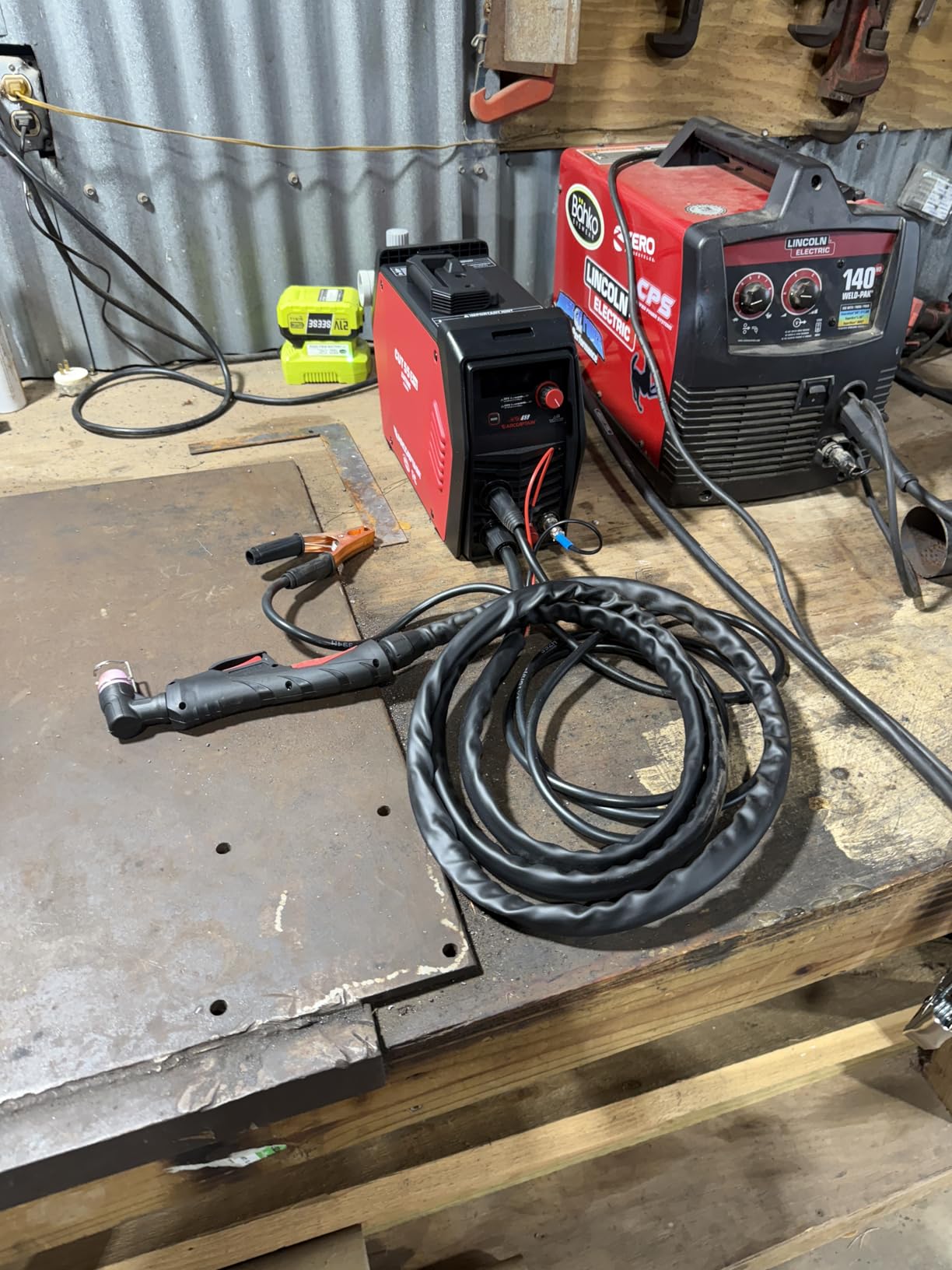
Why the app genuinely helps a beginner
New plasma cutters tend to be set once and forgotten, and that is exactly how people end up with burnt holes or dross. Saving a proven setting for 1/8 inch mild steel and recalling it next month removes the biggest source of early frustration. Owners also point out the pre-installed regulator gets a new user cutting in about a minute, which matters on a first visit.
Where it is the wrong choice
If you do not want to depend on a phone and Bluetooth connection, this becomes a liability instead of a feature. At 19.46 pounds it is also heavier than the light 12 pound machines in this group, and the pre-installed regulator filters air but does not supply it. You still need a compressor. The three-year warranty is among the best coverage here, which partly offsets the app learning curve.
3. PrimeWeld CUT60: Best for Sustained Plate Work
PRIMEWELD CUT60 60Amp Non-Touch Pilot Arc PT60 Torch Plasma Cutter 110V/220V Dual Voltage 3 Year Warranty
60A continuous output
PT60 blow-back torch
60 percent duty cycle
Three-year warranty
Pros
- Highest average rating in the roundup at 4.8 with an 86 percent five-star share
- Continuous pilot arc cuts expanded
- rusted and painted metal
- 60 percent duty cycle at full 60 amps suits sustained work
- PT60 blow-back torch is the premium-feeling component on this machine
Cons
- Costs more than double the next tier down in this roundup
- Overkill for a first project in thin sheet metal
The CUT60 is the step-up option, and it posts the highest average rating of any machine here at 4.8 across 486 reviews, with an 86 percent five-star share. Owners single it out for the three-year warranty and USA-based support, the same two things they praise about the smaller CUT50D.
Output is a continuous 60 amps with a stated 60 percent duty cycle at full rating, so it can hold a cut in thicker material without tripping thermal protection. The torch is a PT60 blow-back design with a Euro central connection, a heavier build than the AG60 torch used on most budget machines, and consumables for it cost more but last longer on sustained work.
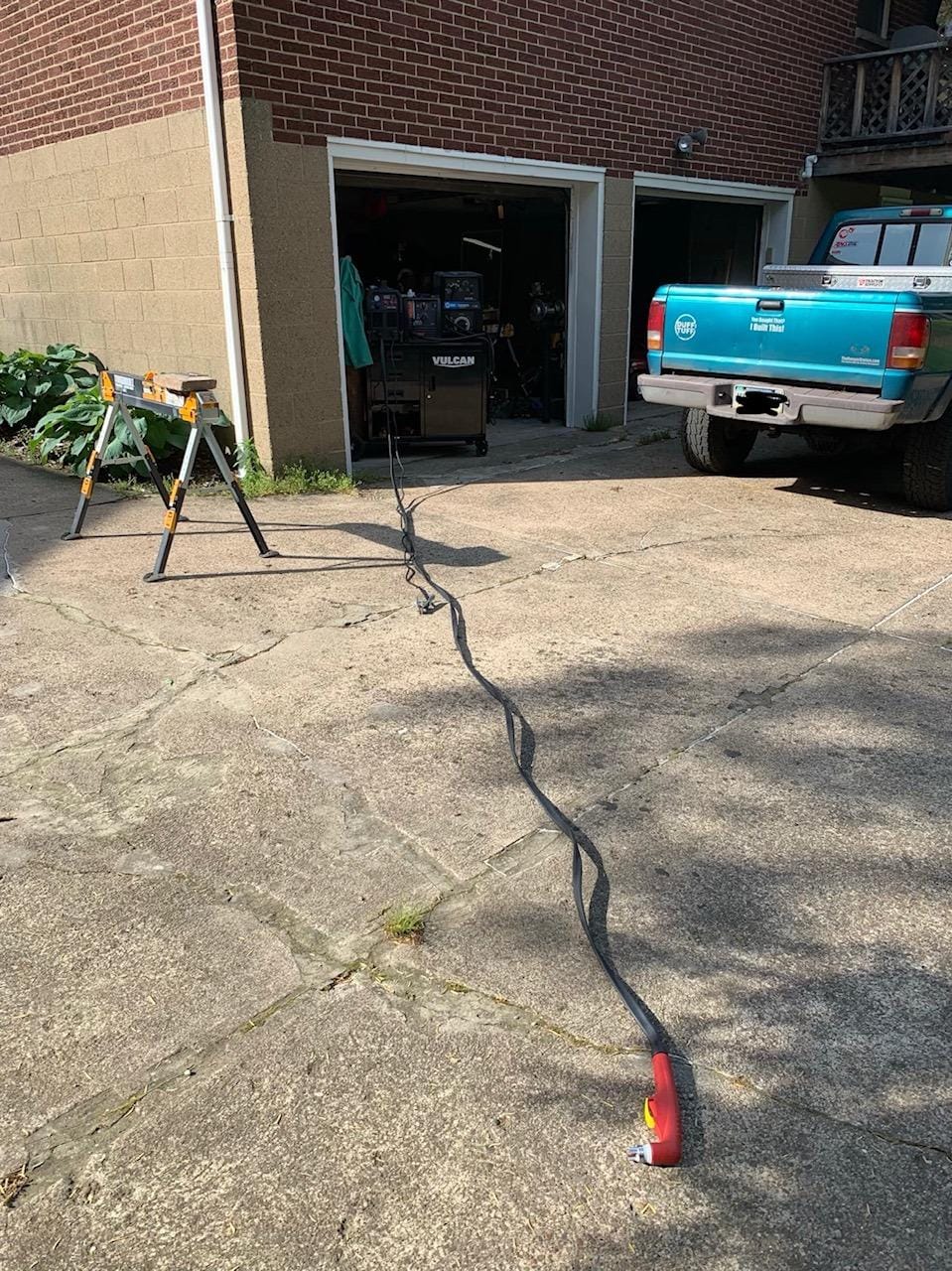
Blow-back pilot arc technology means the pilot arc ignites through air inside the torch, which starts reliably on expanded metal, rusted plate and painted surfaces. It runs on 110V or 220V with an adapter included, so a garage with only household outlets is not a blocker. The footprint is 20 by 11 by 19 inches, which is a shop machine rather than a carry-it-to-the-yard machine.
Customer photos show a well-finished unit with a proper torch lead and a clean panel layout. Several owners frame it as a buy-once machine rather than a first cutter, which tells you where it sits relative to the rest of this list.
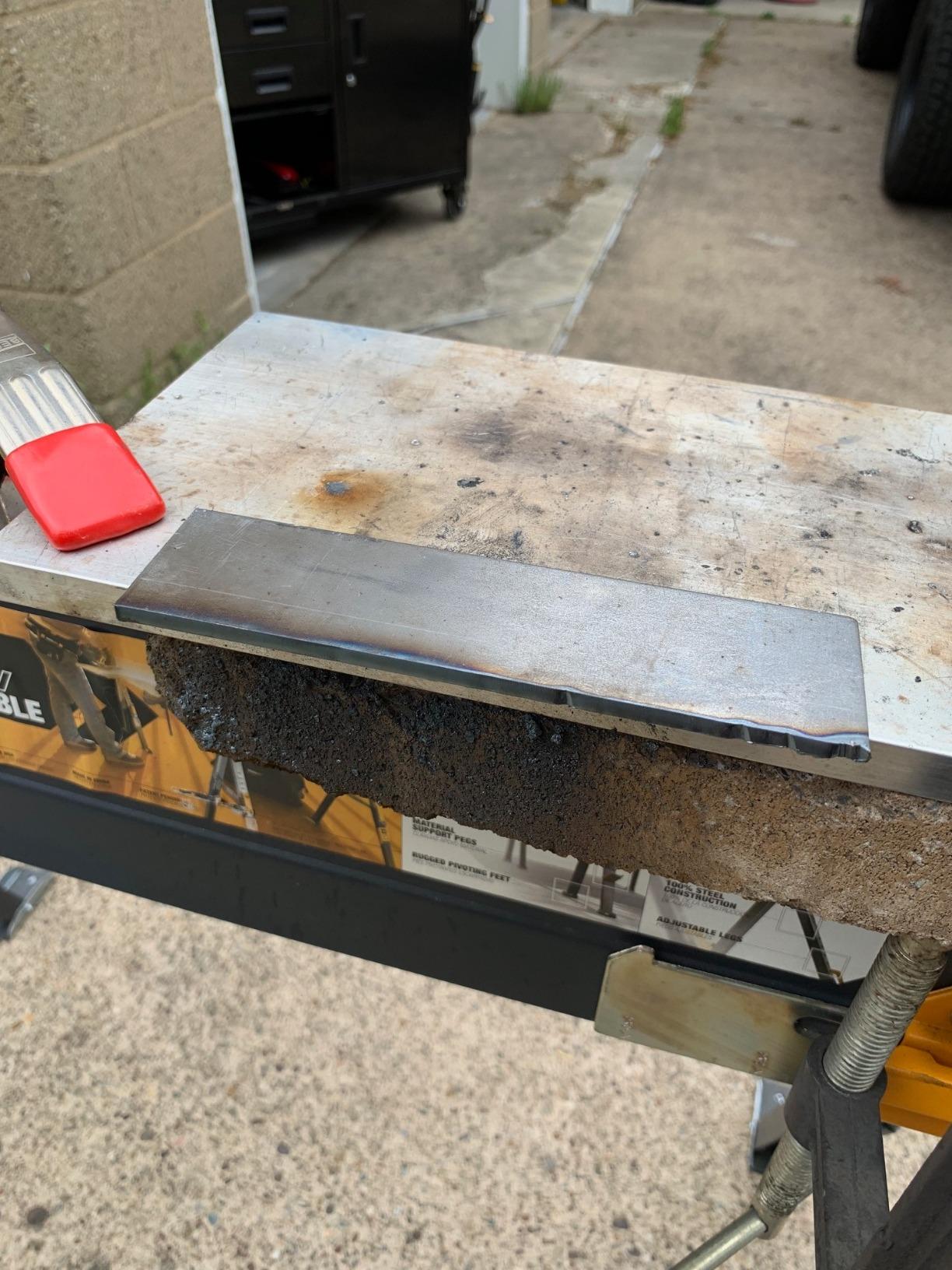
Who should step up to this
If your work involves repeated cuts in 3/8 inch or 1/2 inch structural plate, a trailer frame or thick farm equipment, the extra amperage and the 60 percent duty cycle pay for themselves in less heat-related frustration. The PT60 torch also handles expanded metal and mesh better than an AG60 because of its larger orifice range.
Why a beginner might skip it
The cost is more than double the next tier down, and a lot of beginners buy a machine far beyond their first project. If your plan is sheet metal art, brackets and light plate, the CUT50D does the same job for the first year. Buy this one when you are already cutting thick material regularly and know you will not outgrow it.
4. LOTOS LTP5505D: Best for Rusty and Painted Metal
LOTOS LTP5505D 55A Pilot Arc Plasma Cutter with Rust Removal Mode
55A inverter with rust removal mode
Non-touch pilot arc
5/8 inch clean cut
Automatic 110V/220V
Pros
- Cuts cleanly through 1/4 inch and 1/2 inch steel with minimal dross
- Pilot arc and rust removal mode cut through coatings without grinding
- Front air regulator with pre-fitted NPT 1/4 in Type-D plug
- 16 pound weight is easy to move around a shop
Cons
- Ground clamp lead is shorter than the torch lead and can pop loose
- Air fittings and included hose may need extra tape or quick connects
- Manual is minimal so settings must be learned elsewhere
The LTP5505D has been available since May 2011 and still carries 2400 reviews at 4.4. That long history is useful: consumable availability is proven, and problems with this design have been discussed in public for years.
It is a 55A inverter with a dedicated rust removal mode, which raises current and arc time to burn through surface scale before you make the actual cut. Combined with non-touch pilot arc ignition, that is the pairing you want when the material still has paint on it. Rated clean cut is 5/8 inch, and the machine cuts stainless, alloy steel, mild carbon steel, copper and aluminum.
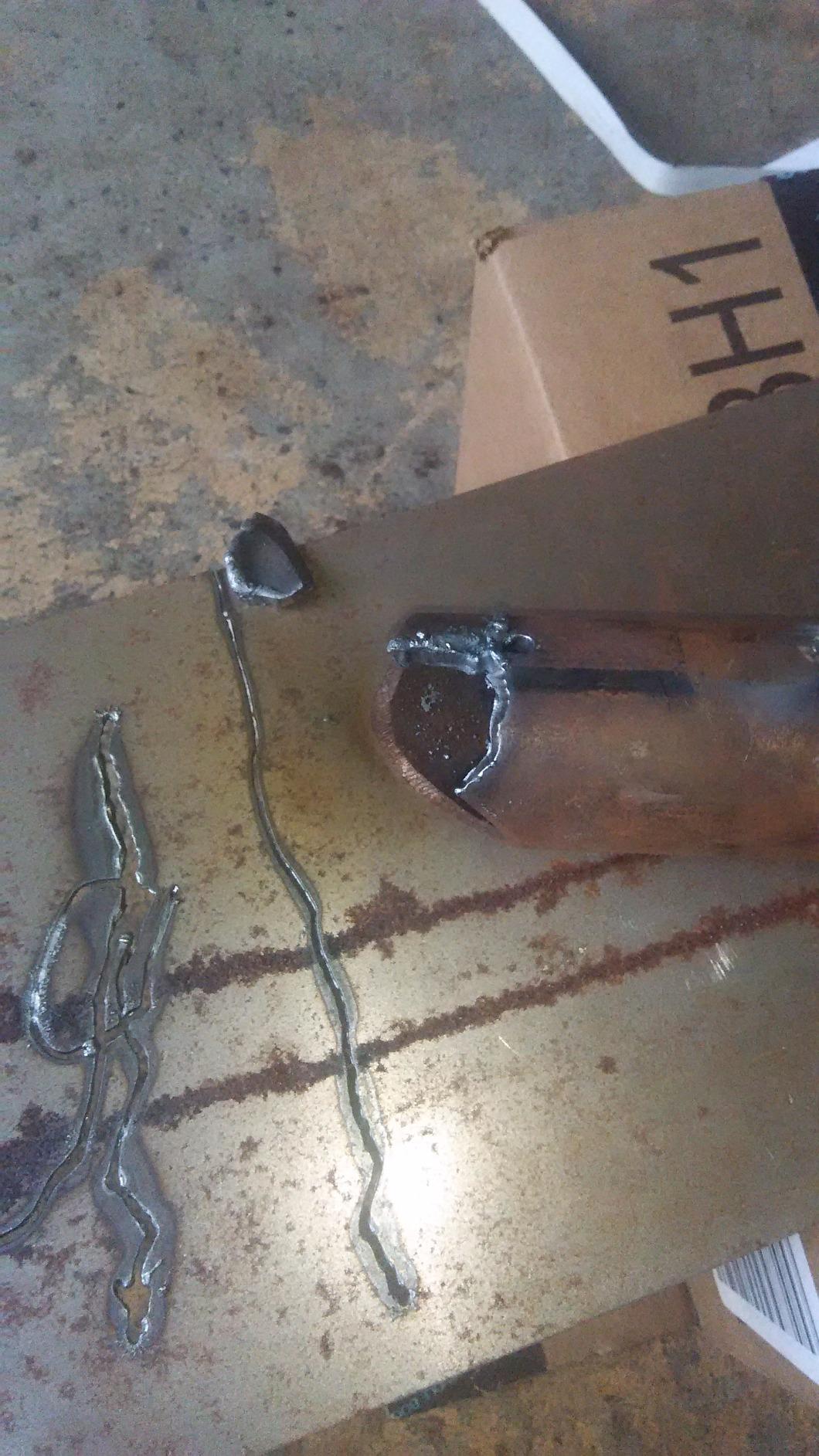
Voltage switching is automatic across 110V and 220V, and the front-mounted air regulator comes with a pre-fitted NPT 1/4 inch Type-D plug, so air connection is a single fitting. The 16 pound body and 10 by 10 by 10 inch footprint make it easy to move between a bench and a driveway job.
Owner photos show a compact machine with a short torch lead and a modest cable bundle, which is the main ergonomic complaint. The 16 pound weight is the trade: you carry it easily, but you are not carrying a large air supply with it.
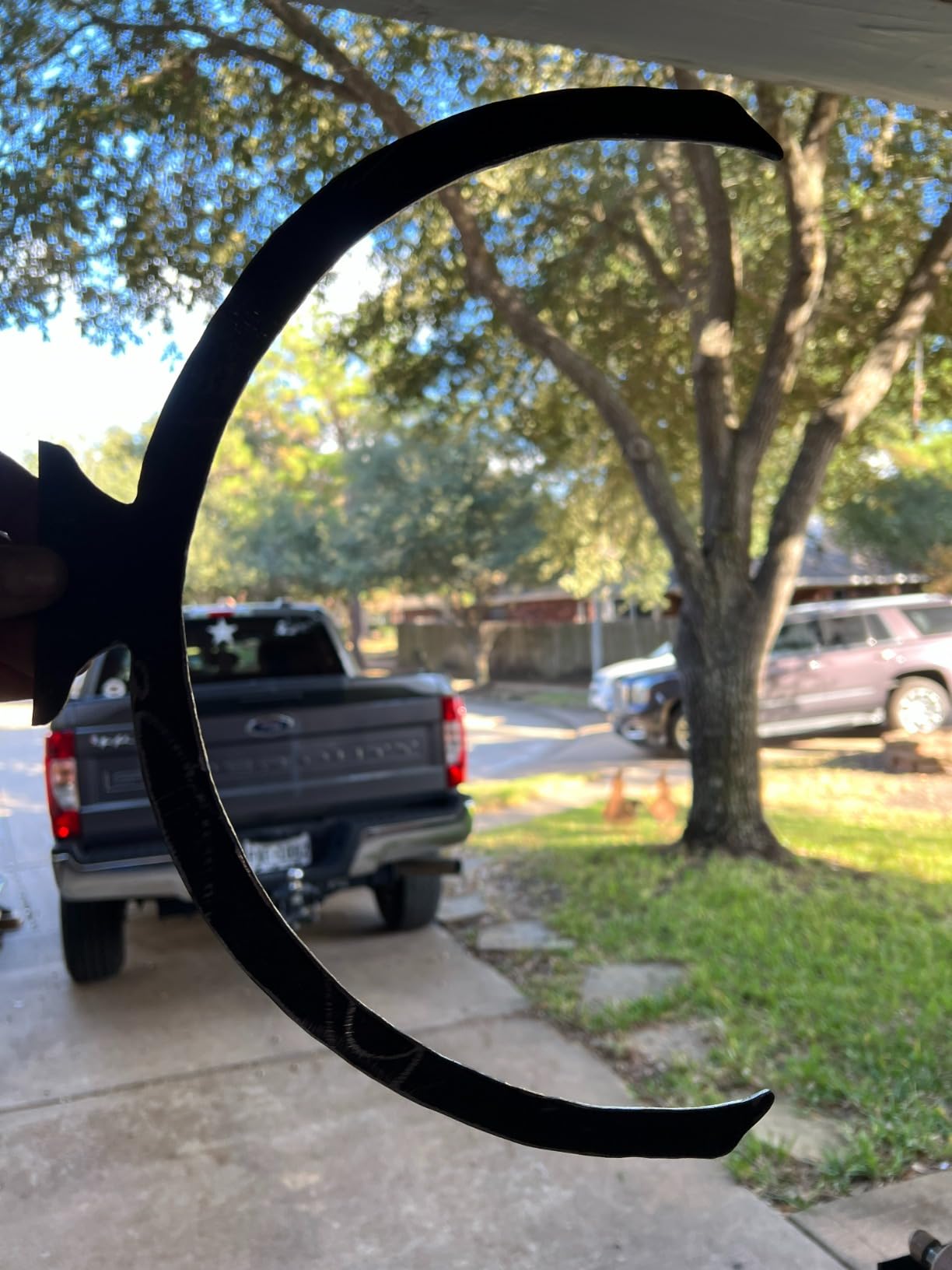
Where the pilot arc earns its keep
Owners consistently report clean cuts through 1/8 inch to 1/2 inch steel and rusted material with minimal dross. Starting the arc on a dirty surface without touching the workpiece removes a common beginner failure point, where a torch fails to strike on painted or scaled metal and the user assumes the machine is faulty.
The friction points to plan around
The ground clamp lead is noticeably shorter than the torch lead, and that mismatch is a repeated complaint because the clamp can pull loose during a cut. Air fittings and the included hose sometimes need extra tape or better quick connects before they stop leaking. The manual is minimal, so budget time to learn air pressure and heat settings from owner walkthroughs, and expect consumables to go through faster on heavy gouging work.
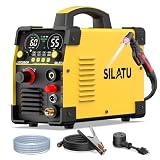
5. SILATU STC550P: Best for Mesh and Expanded Metal
SILATU 55A Plasma Cutter, Non-Touch Pilot Arc, 110V/220V, 2/3″ Max Cut
55A IGBT inverter
2/3 inch maximum cut at 220V
Adjustable pilot arc time
12.57 lb chassis
Pros
- Adjustable pilot arc duration is useful for expanded metal and mesh
- Weighs 12.57 lb with a compact footprint
- Digital display reports live air pressure to help new users
- PT post-time adjustable 3 to 15 seconds plus 2T/4T
Cons
- Air compressor must be purchased separately
- Included air hose is only 3.3 feet
- Smaller review base than the established sellers in this group
The STC550P is a low-cost 55A machine with a control many beginners underestimate: adjustable pilot arc duration. Shorten the pilot time for expanded metal or mesh so the arc does not blow through the gaps, lengthen it for solid metal. That single adjustment is often the difference between a clean profile and a ragged one on expanded metal.
Output is a 55A IGBT inverter rated for a recommended maximum cut of 1/2 inch at 40A and 60 PSI on 110V, rising to 2/3 inch at 55A and 70 PSI on 220V. Duty cycle is 60 percent. The rear-mounted air filter has a quick-connect 1/4 NPT fitting, and the display shows live air pressure, which removes one of the usual reasons a first cut looks bad.
Post-flow time is adjustable from 3 to 15 seconds with 2T and 4T modes, so you can protect a thin consumable on short taps and cool the tip properly on a long kerf. Output ranges from 15 to 40 amps on 110V and 15 to 55 amps on 220V, which gives real control over heat input on thinner material.
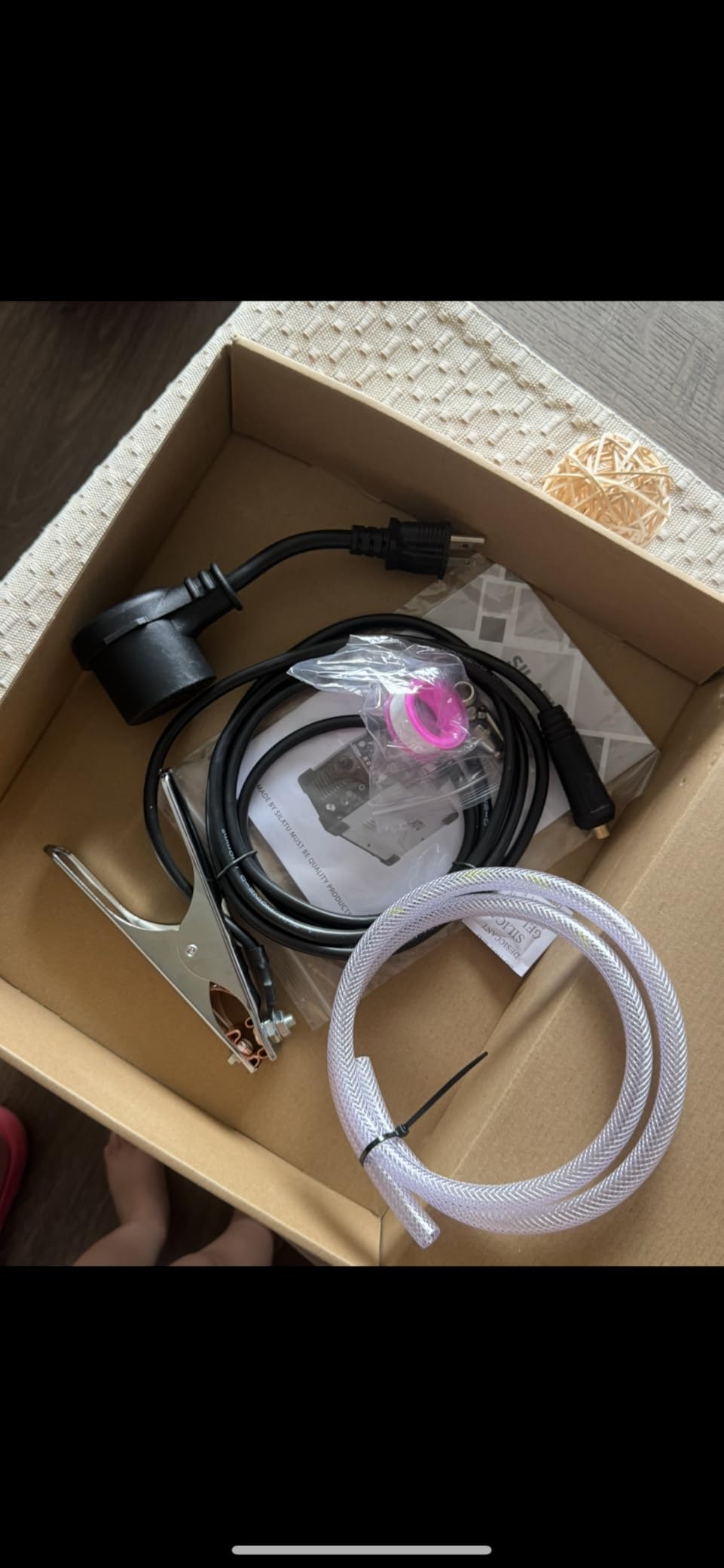
The box includes a 10 foot AG60P torch, a 10 foot earth clamp, a 110V/220V adapter, a user manual and a 3.3 foot air hose. That short hose is the practical limitation, and owner photos show why: you are going to want a longer one between the compressor and the machine.
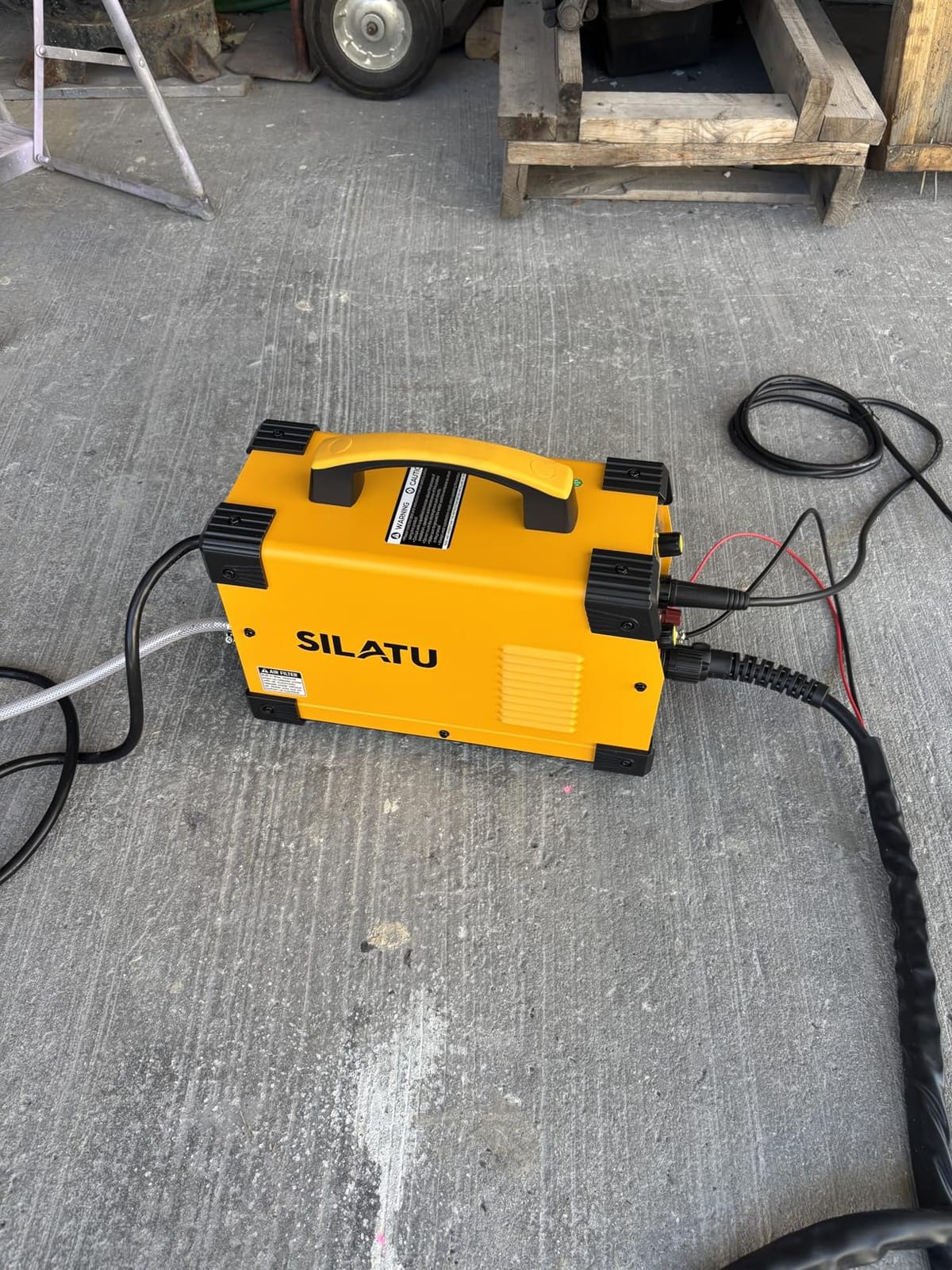
Why the pilot arc adjustment matters
Most torches in this class run a fixed pilot time tuned for solid plate. On mesh, that fixed setting is either too weak to punch through each intersection or so strong it blows the shape apart. Being able to dial it back means one machine covers a job that would otherwise need a separate torch. The live air pressure readout also means you can set pressure once and know it has not drifted.
What you need to add before the first cut
Three things. A compressor, a longer air hose, and a proper ground connection. The 3.3 foot hose is the item owners flag first, and a new brand with a smaller review base than the established sellers is worth factoring into how you handle support questions. For mesh, expanded metal and portability, though, it is hard to match this feature set at this weight.
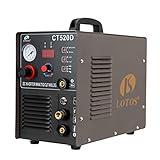
6. LOTOS CT520D: Best 3-in-1 Combo for a New Shop
LOTOS CT520D 50 AMP Air Plasma Cutter, 200 AMP Tig and Stick/MMA/ARC Welder 3 in 1 Combo Welding Machine, 5/8 Inch Clean Cut, Brown
50A plasma section
200A DC TIG
200A stick/MMA
5/8 inch clean cut
Pros
- Three processes in one box replaces a separate TIG and stick machine
- Plasma section rated at 5/8 inch clean cut and 3/4 inch severance
- Torches
- electrode holder
- ground clamp
- regulator and consumables included
- Pre-installed air plug and filter regulator for one-minute setup
Cons
- 33.1 pounds makes it the heaviest machine in this roundup
- TIG foot pedal and argon regulator must be bought separately
- Multi-function controls are harder for a first-time user to navigate
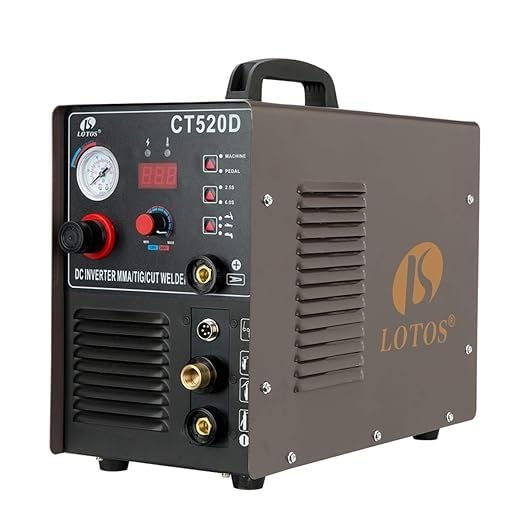
The CT520D answers a different question. Instead of the best plasma cutter, it is the best way to equip an empty shop when you also need to TIG or stick weld. It combines a 50A plasma section with a 15 to 200A DC TIG welder and a 15 to 200A DC stick/MMA welder in one case, and it has been around since May 2011 with 479 reviews at 4.4.
It is a 50A unit with a 5/8 inch clean cut and a 3/4 inch severance rating. An upgraded power board is claimed to deliver 25 percent more cutting power than a standard 50A unit, and owners rate the plasma section as comparable to dedicated 50A machines. TIG uses a high frequency arc start hand torch, and stick has adjustable hot striking arc current.
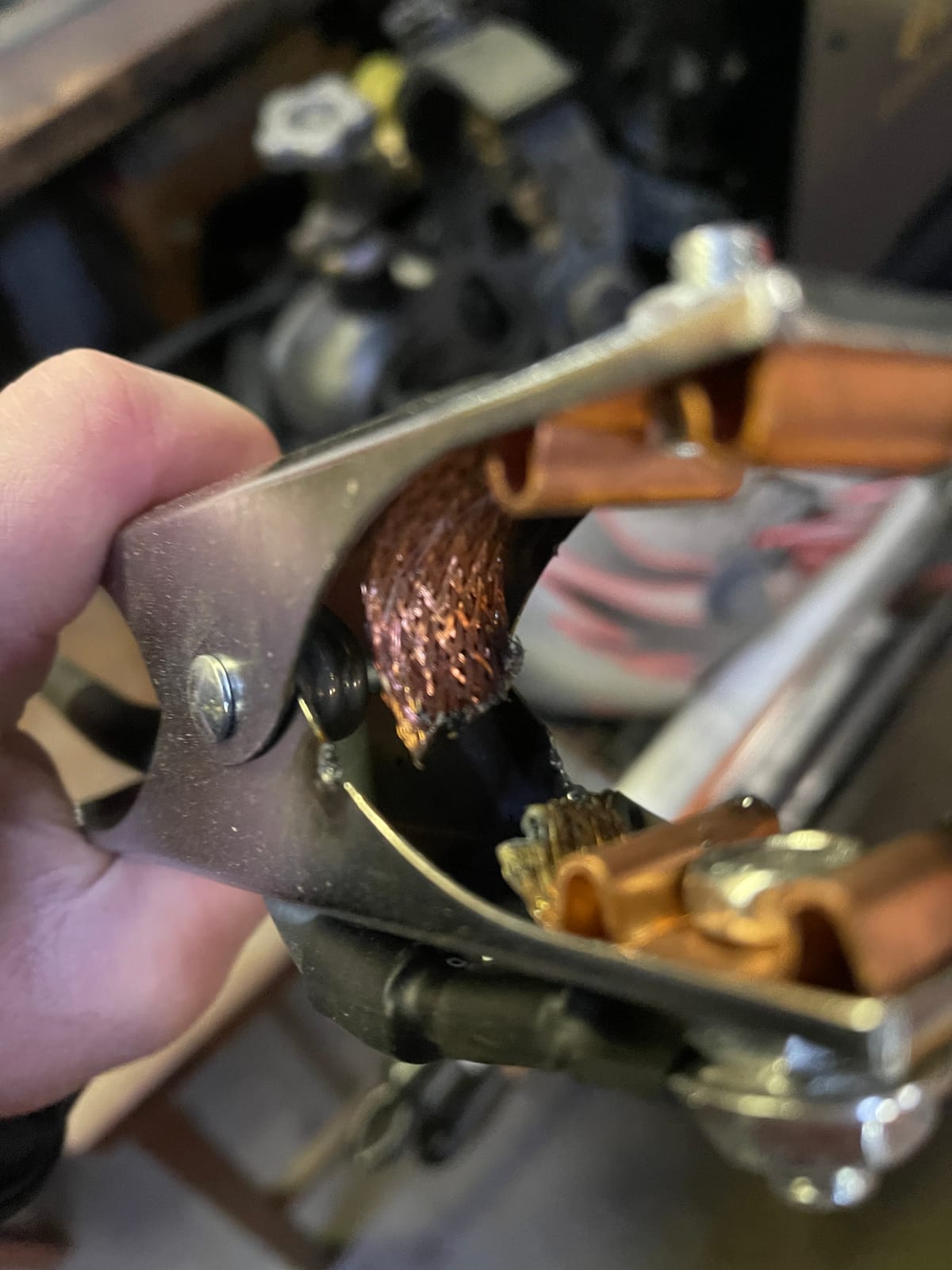
Setup is fast because the NPT 1/4 inch Type-D air plug and the filter regulator are pre-installed, which owners describe as a one-minute process. The accessory package includes torches, an electrode holder, a ground clamp, the regulator and consumables, so the only real add-on cost is argon hardware for TIG.
Customer photos show a single box with two lead ports and a chunky handle, and the 17 by 8 by 11 inch body is fine on a bench. At 33.1 pounds it is the heaviest machine in this roundup by a wide margin, and that is not a spec you ignore if you planned to load it into a truck regularly.
When the combo maths works
If you were going to buy a plasma cutter and a stick welder anyway, this is a genuine saving, and the plasma section is not a compromised afterthought. Owners focus on getting three processes out of one box and rate the plasma half favorably for the money. The combination value is the dominant theme across the reviews.
Why a first-time buyer may skip it
Multi-function units are harder to navigate when you are learning, because the panel now serves three processes. The foot pedal and argon regulator are extra purchases before TIG works properly, 33.1 pounds is real weight, and it is the heaviest unit here by a wide margin. If your plan is plasma cutting only, a dedicated single-purpose machine that is far lighter is a better first machine.
7. YESWELDER CUT-65DS: Best for Low-Interference Ignition
YESWELDER 60A Non-HF Plasma Cutter, Non-Torch Pilot Arc, 110/220V
Non-HF blow-back start
60A output
IPT40 pilot arc torch
Digital error codes
Pros
- Non-HF blow-back start suits shops with bystanders and other electronics
- 60A output with a 63/64 inch maximum cut rating at 220V
- Digital display with error codes speeds up troubleshooting
- 2T and 4T modes reduce trigger fatigue on long cuts
Cons
- Only a one-year warranty
- Non-HF start means no high-frequency ignition to fall back on
- Needs a compressor and a proper ground clamp to reach rated output
Most machines in this category use high frequency to strike the pilot arc, and high frequency start can interfere with nearby electronics and with anyone wearing a pacemaker. The CUT-65DS uses non-high-frequency blow-back start instead, which produces the arc through air flow inside the torch. Users on the CNC and metalworking forums treat that as the main reason to pick this machine over a similar 60A unit.
Output is 60 amps, with an ideal cut of 5/16 inch at 110V rising to 5/8 inch at 220V, and a maximum cut of 1/2 inch at 110V and 63/64 inch at 220V. That 63/64 inch maximum is a larger headline figure than the other machines here, though real-world clean capacity sits well below it.
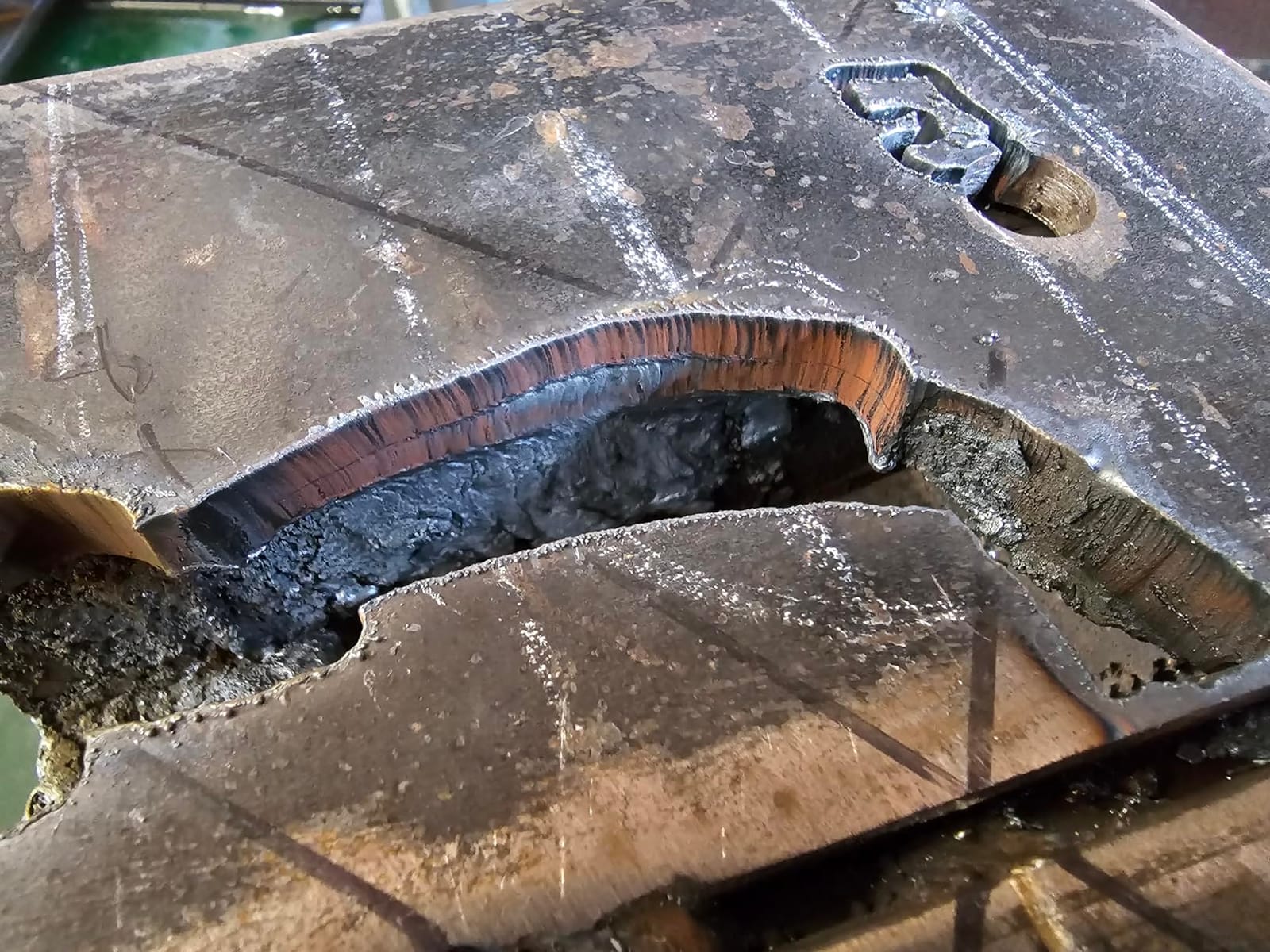
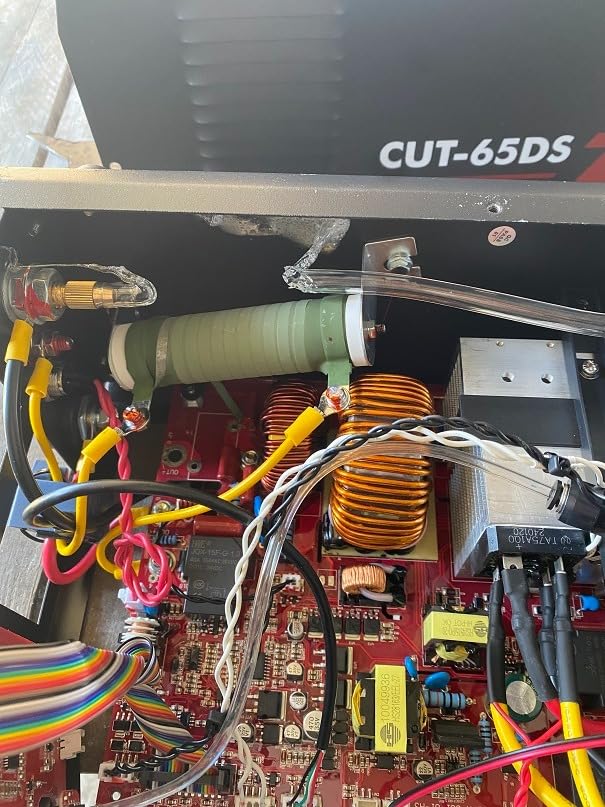
The torch is an IPT40 non-touch pilot arc model, and the panel is an MCU digital control with error code display, which is genuinely helpful when something goes wrong on your first week of ownership. Post-time is adjustable from 5 to 20 seconds, and 2T and 4T modes are available. Inverter capacity is 625 VA with a peak output of 9840 watts on a 65 Hz square wave.
Build details are good: IP21 water ingress rating, ETL certification, and overload and overheat protection. The box includes the cutter, earth leakage protection, an air filter regulator, air hose, ground clamp, power adapter, plasma torch and manual, plus a built-in rear air filter.
When non-HF start is the right call
If your shop has a CNC controller, a computer or sensitive electronics near the cutting area, high frequency ignition is a known source of interference. Blow-back start sidesteps that. It is also a sensible pick in a shared workspace where a bystander might be standing close to the torch lead.
What you give up
The warranty is one year, the shortest meaningful coverage in this group, and the alternative ignition method has its own failure points.
The machine also needs a compressor and a ground clamp of decent quality to hit its rated output, so a cheap ground return can make it look worse than it is. The 63/64 inch maximum cut figure is a test number rather than a production number, so plan on the 5/8 inch clean figure instead.
8. TOOLIOM CUT-50 PRO: Best for Monitored Cut Parameters
TOOLIOM 50A Non-Touch Pilot Arc Plasma Cutter, Dual Voltage 110/220V
20-50A output
AG60 pilot arc torch
Digital pressure, voltage and current
Post-flow cooling
Pros
- Entry-level option with dual 110V and 220V flexibility
- Digital display shows air pressure
- voltage and current in real time
- Non-touch pilot arc reduces electrode burn and extends consumable life
- Easy to move between outlets
Cons
- Lowest average rating in this group at 4.1 with a 12 percent one-star share
- 110V cut capacity is well below the advertised 220V figures
- Listed weights conflict so real unit weight is unclear
The CUT-50 PRO is a straightforward 50A machine whose selling point is visibility. The large digital display reports air pressure, voltage and current while you cut, so instead of guessing whether the arc is starved of air you can read it. For a beginner, that is a bigger practical advantage than an extra welding process.
Output adjusts from 20 to 50 amps, with a clean cut of 1/4 inch at 110V and 5/8 inch at 220V. Maximum capacity is 1/2 inch at 110V and 3/4 inch at 220V. The torch is an AG60 non-touch pilot arc design, and post-flow cooling is fitted so the tip gets cooled after you release the trigger.
Air demand is listed at a maximum of 50 PSI on 110V and 65 PSI on 220V, so the pressure requirement tracks the output setting. Connection is described as tool-free on the 110V/220V side, which removes one step when you move between circuits. The machine uses a DC power source and the listing is dated August 2020, so the design is proven rather than experimental.
Owner photos show a standard grey inverter box with a conventional control panel and a modest lead bundle. There are 868 reviews at a 4.1 average, which places it mid-pack on review volume and near the bottom on score.
What the display actually solves
Most cut-quality problems on a new plasma cutter trace back to air pressure or amperage set too high. A live readout turns that from trial and error into a dial setting you can repeat. Combined with post-flow cooling, it also means you are less likely to burn through a consumable on your first afternoon.
Where the rating reflects reality
The 4.1 average comes with a 12 percent one-star share, which is a heavier reliability tail than the machines around it. Buyers generally treat it as a low-cost first cutter that performs adequately on thin to medium mild steel. The 110V cut capacity is also well below the advertised 220V numbers, and the listing weights conflict with the product page, so treat the published weight as approximate.
9. GZ GUOZHI CUT-50: Most Versatile for Thin and Medium Steel
GZ GUOZHI Plasma Cutter, 50 Amp Air Inverter Plasma Cut, 110V/220V Dual Voltage Digital Display IGBT Inverter Plasma Cutting Machine with 2T/4T/TEST Function
IGBT inverter
60 percent duty cycle
2T/4T/TEST functions
Pilot arc start
Pros
- Entry-level dual-voltage machine in this class
- High-frequency pilot arc starts on painted
- rusty and rough surfaces
- Compact enough to use in tight spaces
- 2T/4T/TEST functions give automatic cut control
Cons
- 12 percent one-star share points to a meaningful reliability tail
- Only a one-year manufacturer warranty
- Published weights conflict between the feature list and the spec table
The CUT-50 sits at the entry level for dual-voltage pilot arc machines, and for a beginner working mostly on thin and medium mild steel it does the job. It is a 50A IGBT inverter with a stated 60 percent duty cycle, and it reached 4.2 across 251 reviews.
Rated output is a recommended maximum cut of 1/4 inch at 35 amps, 110V and 50 PSI, rising to 3/4 inch at 50 amps, 220V and 65 PSI. The high frequency pilot arc start is designed to punch through rough, painted and rusty surfaces, and the 2T, 4T and TEST functions handle cut length control so you can set a fixed kerf and walk away.
Overheating and overcurrent protection are fitted, and the unit is rated to operate down to minus 20 degrees, which is a rare claim in this class. A 1/4 inch industrial D-type plug is included, so the air line connects without buying an external regulator first. The box carries a 220V to 100V adapter, a cutting gun head, an earth clamp and a basic user manual.
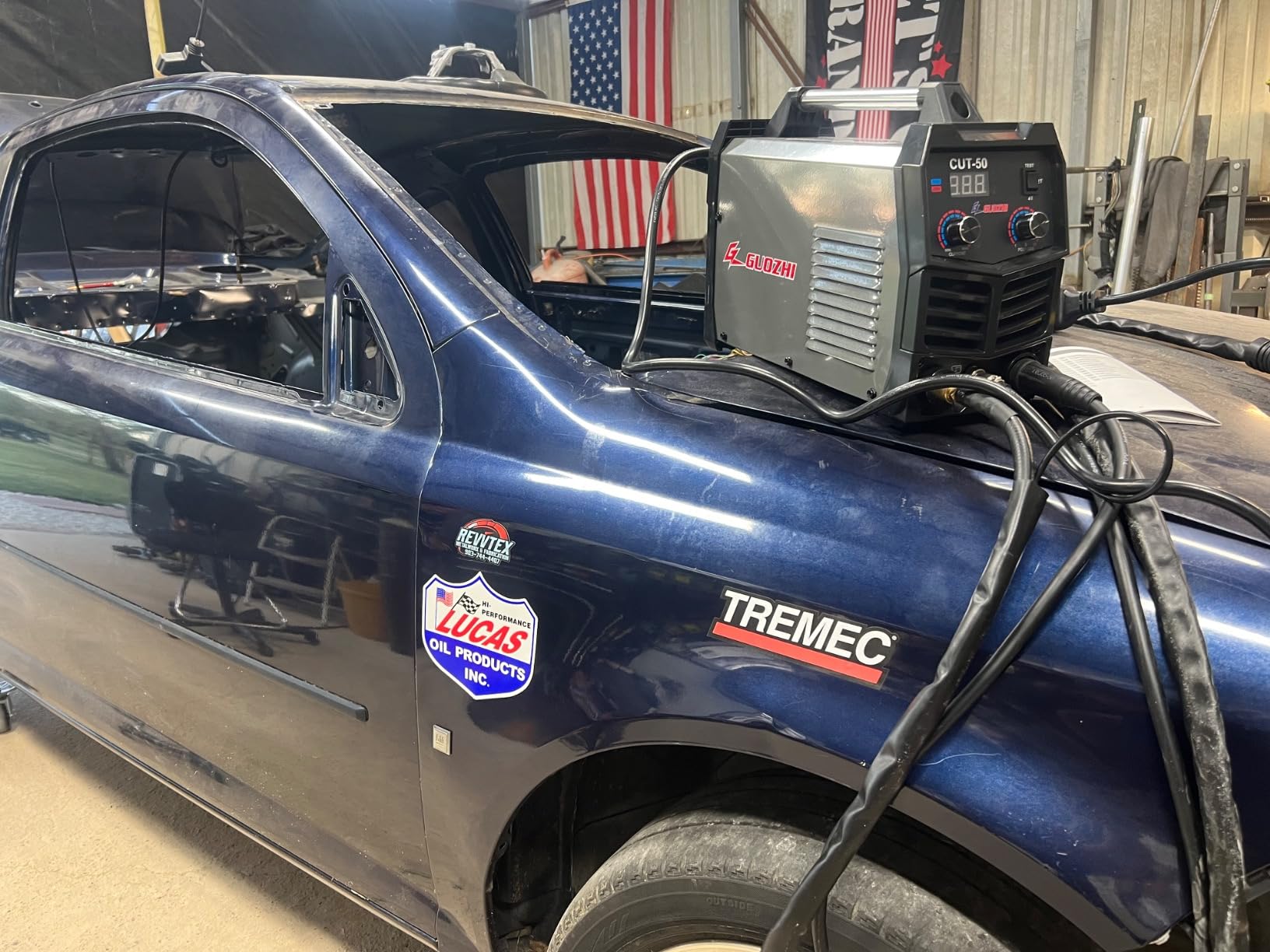
Owner photos show a compact machine at around 17.5 by 13 by 8 inches, small enough to sit on a shelf between projects. The 60 percent duty cycle means it can run a long cut but needs a rest before the next one at full output.
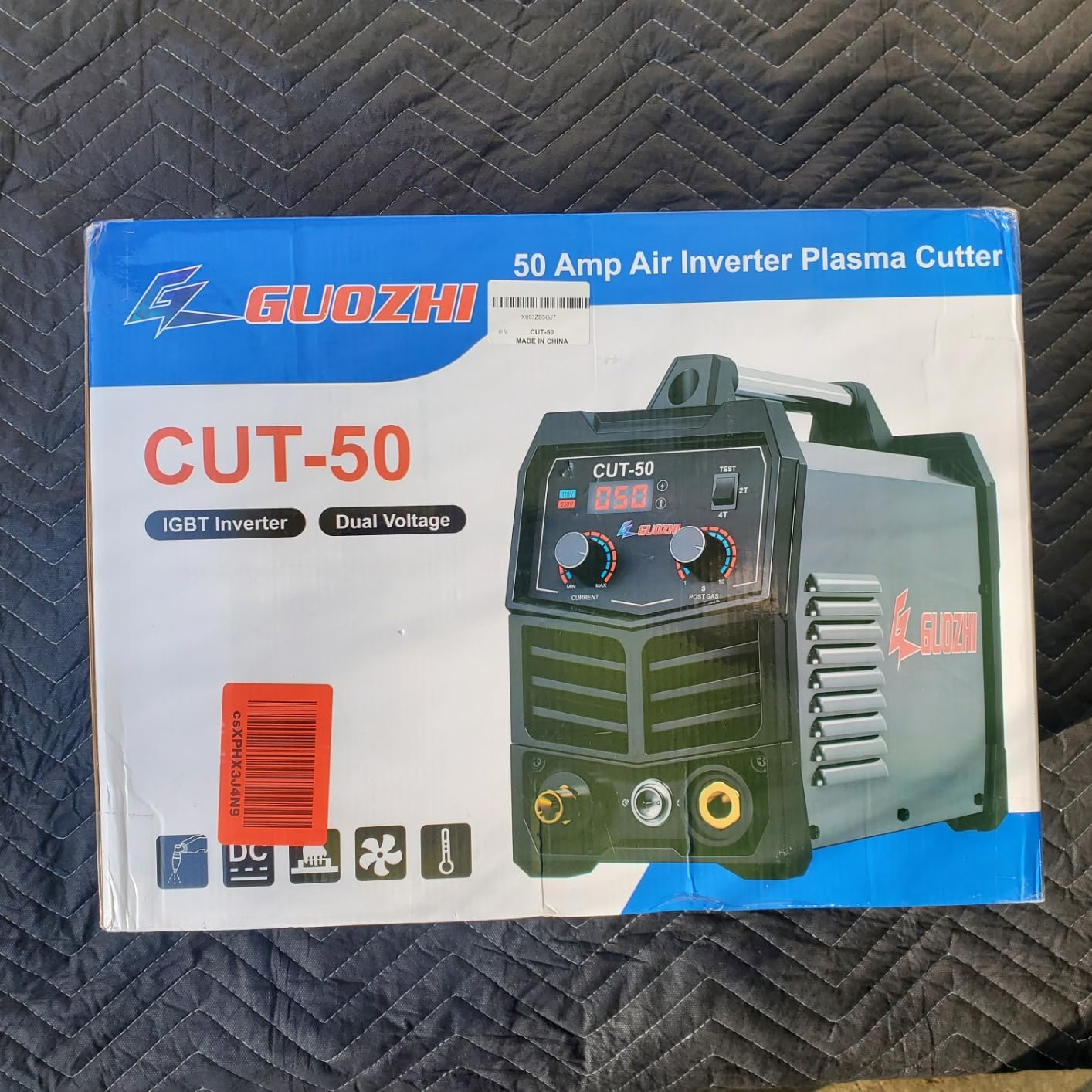
What you get at the entry level
Dual voltage, pilot arc ignition, a D-type air plug and 2T/4T/TEST cut control in a single box. Owners treat it as a budget unit that handles thin and medium mild steel adequately once air pressure is set correctly, and the cold-weather rating is a genuine bonus if you work outside in winter.
Where the money was saved
The 4.2 average is dragged down by a one-star share heavier than the group average, and the warranty is a single year. The published weights conflict between the feature copy and the spec table, so do not plan your carrying strategy around a stated figure. Documentation is limited to a basic manual, which means the same self-teaching approach the whole category requires.
10. Reboot RBC6000D: Best for Lightweight Portability
Reboot 60A Plasma Cutter Dual Voltage 120V/240V, 1/2″ Clean Cut IGBT Inverter, Portable Metal Cutting Machine with Torch & Tips – RBC6000D 2025 Upgraded (Pre-Installed Air Regulator)
60A IGBT inverter
120V/240V auto detection
8.69 lb chassis
PT31 touch-arc torch
Pros
- 8.69 lb chassis is easy to carry and store
- Controls aimed at new users with amperage and PSI guidance
- Pre-installed air regulator removes a setup step
- PT31 touch-arc torch with extra tips
Cons
- Touch-arc torch needs contact with the metal to start
- 120V operation trips breakers above roughly 18A on the dial
- Some machines reported failing after very light use
The RBC6000D is the machine to buy if carrying the cutter to the job is part of your routine. At 8.69 pounds it is the lightest machine here, and the 11.73 by 4.37 by 8.86 inch chassis stores in a corner without dominating the bench. The updated model arrives with the air regulator pre-installed, which owners cite as saving setup time.
Output is a 60A IGBT inverter with automatic voltage detection, running 10 to 35 amps on 120V and 30 to 60 amps on 240V. It cuts 1/2 inch steel at 120V and 35 amps and 5/8 inch at 240V and 60 amps. Air guidance is 70 to 75 PSI, and the stated compressor requirement is 90 PSI at 60 L/min or better.
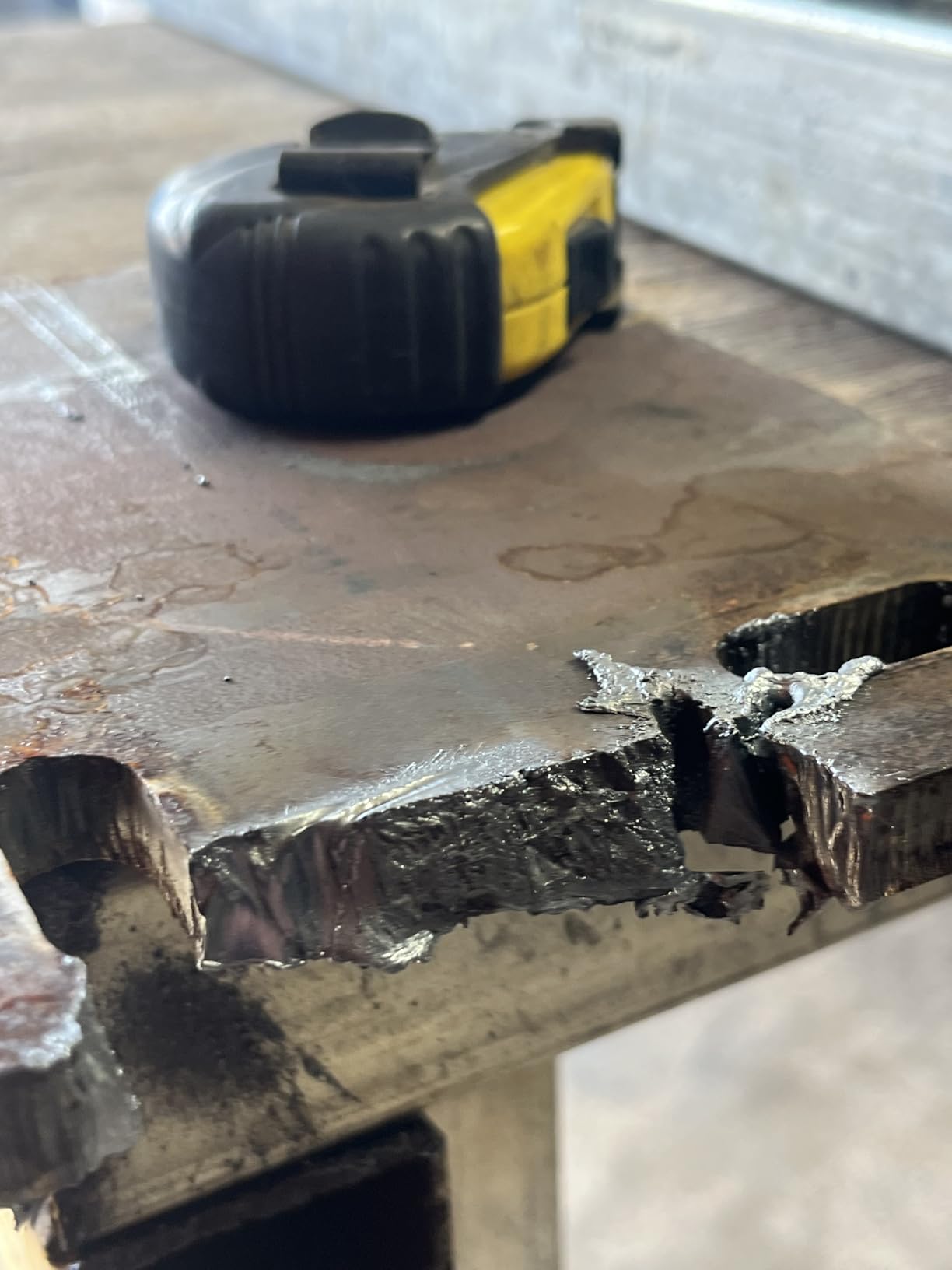
Two specifications matter before you buy it. The torch is a PT31 touch-arc style, so the tip touches the metal to strike the arc, and the breaker requirement is a 50A circuit at 120V and 40A at 240V.
Owners report that 120V operation trips breakers above roughly 18A on the dial, so the usable amperage band on a household outlet is narrower than the headline 60 amps.
The package includes the machine, a PT31 torch with extra tips, an earth ground clamp, an English manual and a one-year warranty. Customer photos show a small rectangular unit with a short lead set, consistent with a machine designed to be moved rather than installed.
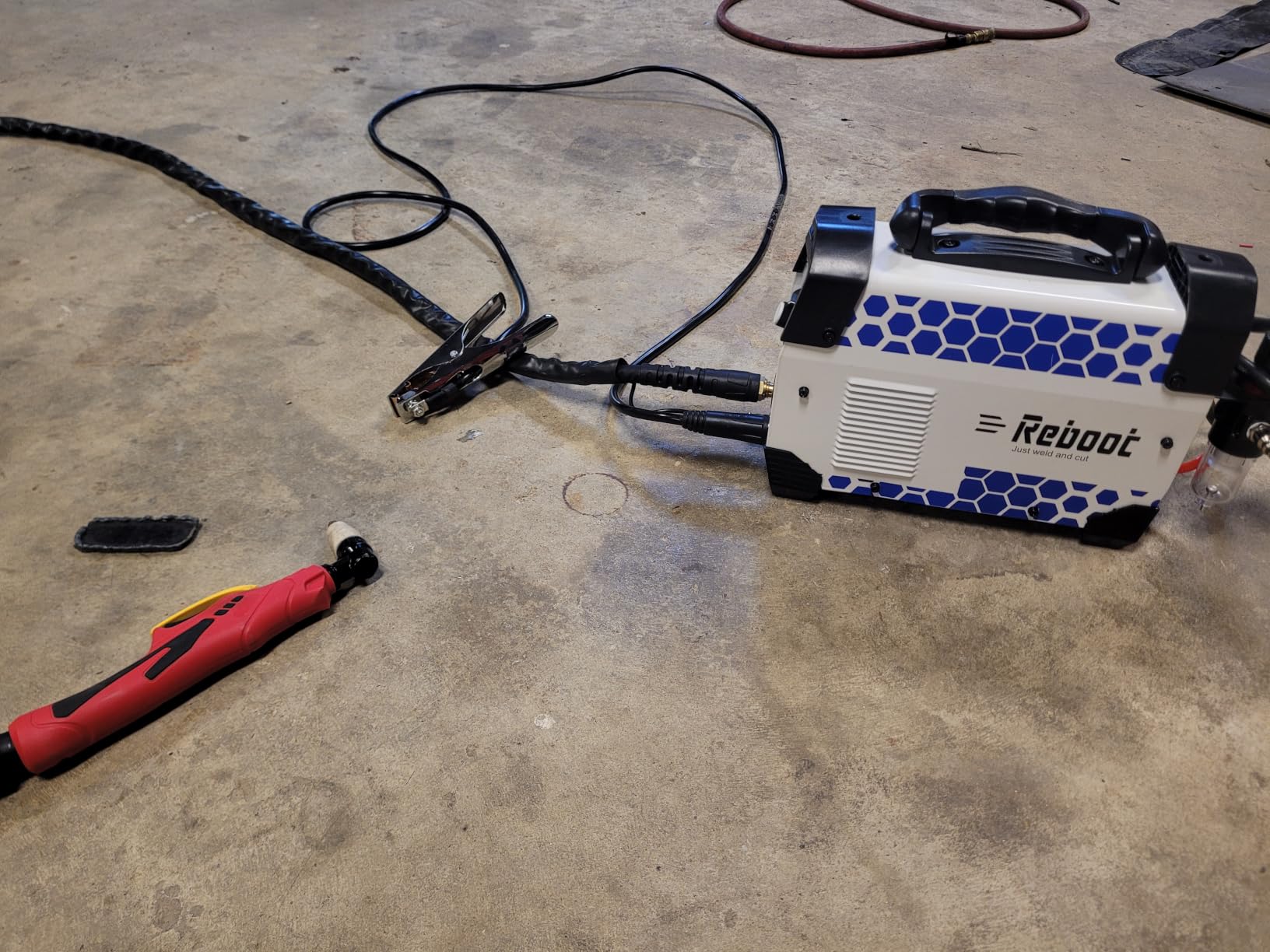
Why the weight matters more than the amps
Amps describe what the machine can cut. Weight describes whether you will still want to use it after the third job of the day. A PT31 torch also uses the cheapest and most widely stocked consumables in the hobby, which keeps running costs down if you are cutting thin material regularly.
The trade-offs to accept
Touch-arc ignition means you have to land the nozzle on the workpiece, and on rusty or painted metal that is exactly the situation where pilot arc helps most. Reviews also split sharply on reliability, with a meaningful group reporting early failures, and warranty service requires the buyer to pay return transport costs on machines older than two months. If your work is dirty metal in place rather than clean material on a table, choose a pilot arc machine instead.
How to Choose a Plasma Cutter as a Beginner?
The specs on a plasma cutter box tell you what it can do in a lab. These seven factors tell you whether it will suit your garage, your compressor and your skill level.
Amperage and cut capacity
Output current is the simplest number to compare, and for beginners it maps almost directly to material thickness. A 50A machine handles 1/4 inch mild steel comfortably as a clean cut and can push to 1/2 inch for a production cut. A 60A machine adds headroom for 1/2 inch plate and structural shapes, which is the difference between a machine you grow into and one you outgrow in a year.
Read the rated clean cut figure rather than the maximum cut figure. Clean cut is where you get a usable edge with minimal grinding, and manufacturers quote maximum capacity as a number you will see once in a testing lab, not once per project. For a first machine, 1/2 inch clean cut is the practical target.
Pilot arc versus contact start
A contact start, or touch arc, torch needs the nozzle to touch the metal before the arc strikes. A pilot arc torch fires a small non-touching arc through the air first and then transfers to the workpiece, so you can start on painted, rusty or dirty metal without cleaning it.
For a beginner, pilot arc is worth paying for. It removes a common early failure, which is an arc that will not strike because the surface is scaled. The one caveat is ignition type. Some pilot arc machines use a high frequency start, which can interfere with nearby electronics, so a non-HF blow-back design is the safer pick in a shared shop. If you also cut in the yard rather than only on a bench, and you value tools you can carry to the job, the trade-off between the two ignition styles and machine weight is worth reading through with the roundup above.
110V versus 220V
Most garages start with household outlets only, which is why automatic dual voltage is close to mandatory for a beginner. Every machine in this roundup detects 110V and 220V automatically rather than requiring a manual switch. That is not a minor feature, because a unit that needs rewiring before it will run is a unit you will not use for your first project.
Understand the trade honestly. On 110V the current is roughly half what the same machine delivers on 220V, so a machine rated at 5/8 inch clean cut on 220V typically manages 1/4 inch to 5/16 inch on a household circuit. That is fine for sheet metal and light plate. It is not fine for 1/2 inch structural work, and several owners here report breaker trips when they pushed a 120V machine past its comfortable amperage band.
Air compressor size and air quality
Plasma cutting needs compressed air, and it needs clean, dry air. A 6-gallon pancake compressor is adequate for occasional thin sheet cuts with pauses between them. Sustained cutting, extended plate work or anything that keeps the arc lit for minutes needs a 20 to 30 gallon tank so the pressure does not sag as the compressor cycles.
Air pressure matters as much as volume. Values in this roundup range from 50 PSI at low 110V output up to 75 PSI on 240V machines. Set the regulator to the pressure the machine asks for, and add a water separator and an inline filter between the compressor and the cutter. Moisture in the plasma column is a direct cause of a sputtering, mis-striking arc and shortened consumable life, and it is the cheapest problem to fix.
Duty cycle
Duty cycle is the percentage of time the machine can cut at a stated output over a 10-minute period. A 60 percent rating at 60 amps means full output for 6 minutes, then a rest. Underrun your rating and the machine runs indefinitely. Exceed it and thermal protection cuts in, usually mid-cut.
For a beginner, 60 percent is the sweet spot. It covers nearly all hobby work with room for the occasional longer cut, and none of the machines here leave that class to chase a higher number. Higher claims at lower output are marketing more than engineering, so read the amperage next to the duty figure rather than the duty figure alone.
Torch type and consumables
The AG60 non-touch pilot arc torch and the PT31 touch-arc torch dominate this category, which is good news for running costs. Consumables for both turn up at any welding supply counter and cost little to replace. The PT60 blow-back torch found on the step-up machines uses larger orifices and costs more, but wears much longer on sustained thick-plate work.
Check whether the consumable design is standard. Machines with proprietary torch layouts can leave you hunting for parts once the initial set wears out, and that is a common long-term frustration owners report in this category. Buying an extra set of consumables on day one is cheaper than an emergency order later.
Warranty length and brand support
Warranty length is the clearest quality signal across these ten machines, because manufacturers price the risk they carry in support. Two machines in this roundup offer three years. Several offer one. A three-year warranty on a piece of electrical equipment with a torch, a power supply and internal relays is a meaningful signal about component quality.
USA-based support is the other signal worth weighting. Owners describe PrimeWeld’s warranty service, including repairs covered with a prepaid return label, as a reason they recommend the brand to beginners. A machine with a longer warranty and a support line that answers is a better first purchase than a cheaper machine you will troubleshoot alone.
Common Beginner Mistakes to Avoid
Setting amperage too high on the first try
The instinct is to turn the dial up to cut faster. Excess amperage melts the metal faster than the air column can clear it, which produces dross on the underside and a cut edge that needs grinding. Start at the lower end of the recommended range for your material and raise it only if the cut is slow.
Ignoring air pressure until the cut goes bad
Low or wet air causes a sputtering arc, an unstable strike and rapid consumable wear. Set pressure before your first cut, check it again after a few minutes of continuous work, and install a water separator if you do not already have one. Machines with live pressure readouts on the display make this trivial, which is part of why they suit first-time users.
Starting with a dirty ground clamp
A poor ground return is a common hidden cause of erratic cutting. Clean the clamp face, make sure it is bare metal rather than paint or rust, and attach it to the workpiece itself or as close to it as the job allows. Several owners in this roundup specifically report clamps popping loose, which is a grounding problem before it is a machine problem.
Running a 120V machine above its breaker limit
Plugging a 50A machine into a household outlet and winding the amperage dial past what the circuit can deliver causes trips and, over time, stress on shared wiring. Respect the amperage band that the machine publishes for 120V operation. If you want full output, a 220V circuit is the fix, and a machine with automatic dual voltage makes the switch painless.
Rushing past consumable replacement
A worn electrode and tip cause a wandering, arcing cut and accelerate damage to the nozzle. When the arc starts to look fuzzy or the cut edge develops a pattern of divots, stop and swap the set rather than adjusting settings. Budget for a few consumable sets in your first year regardless of machine.
Skipping the safety gear
A plasma cutter throws sparks, ultraviolet light, hot spatter and molten metal in every direction. Minimum protection is a welding helmet with the correct shade lens, cut-resistant gloves, leather or canvas clothing, safety footwear with metatarsal protection, and a face shield when grinding or gouging. A welding helmet is a separate purchase from a plasma cutter in most cases, and it is not optional.
Beginner Project Progression for Plasma Cutters
Owners consistently describe the same learning curve. Work outward from thin material, and let each stage teach you one variable at a time.
Stage one: flat sheet metal shapes
Start with 1/8 inch or 14 gauge mild steel and cut simple geometric shapes. The goal here is not the shape, it is learning your air pressure, your amperage and the feel of a 2T versus 4T cut. Keep amperage at the low end of the range and let the machine do the work.
Stage two: rusty and painted stock
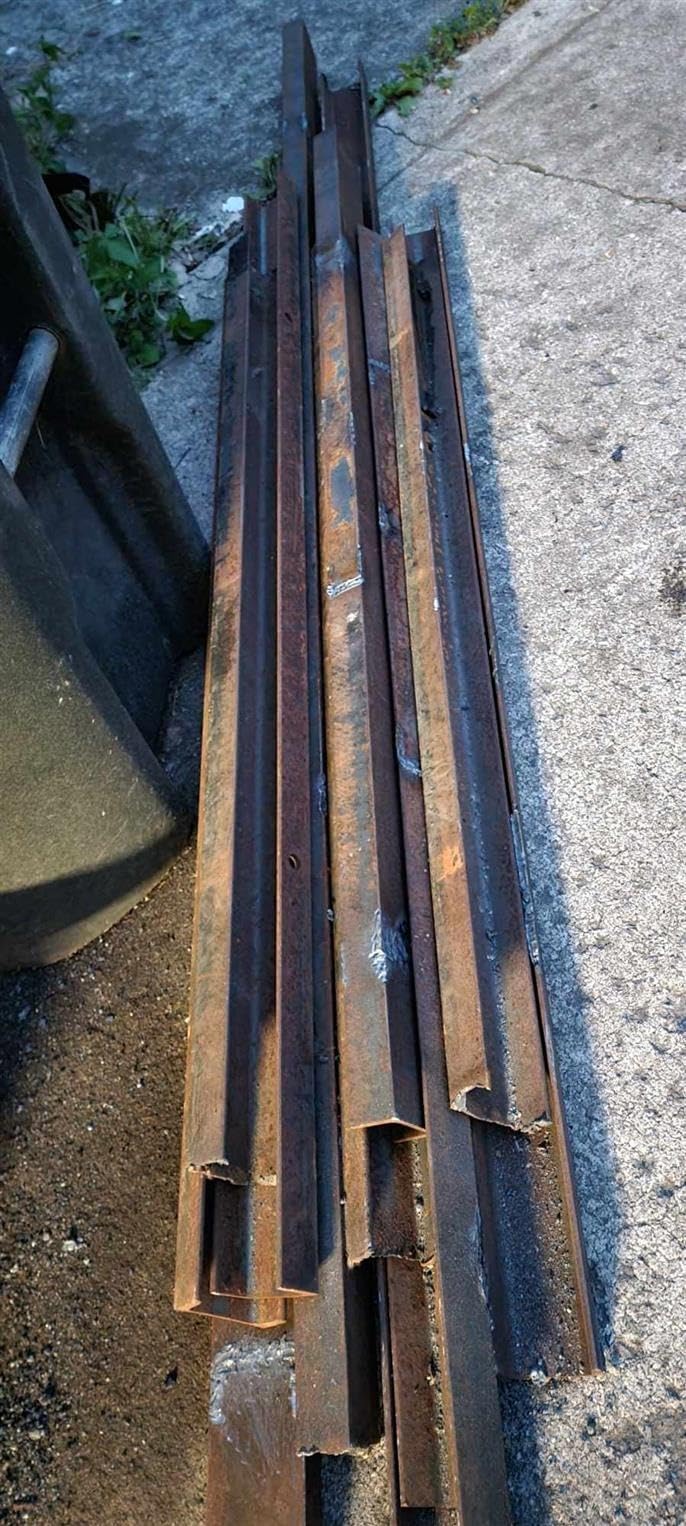
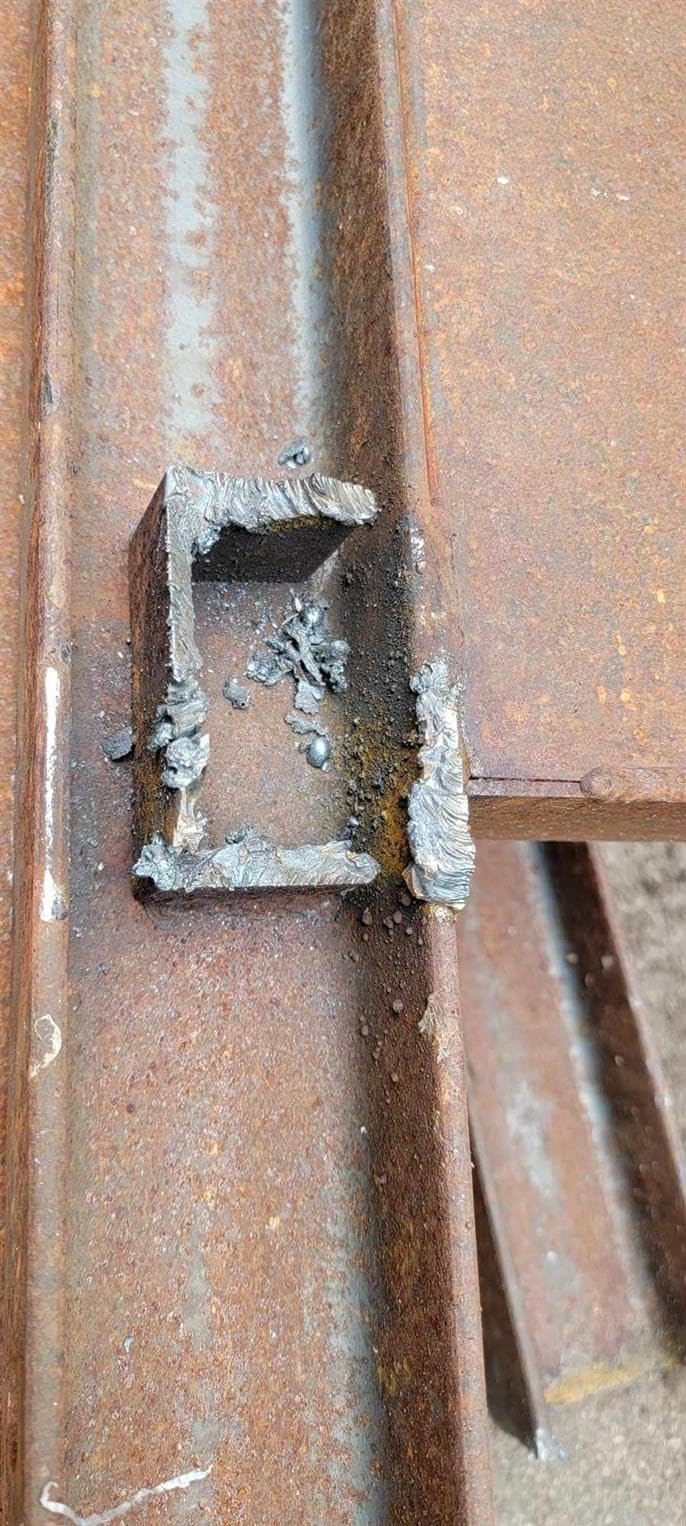
This is where pilot arc pays for itself. Take a piece of salvaged angle iron or an old bracket and cut it with the rust removal mode or a longer pilot time. You will learn to trust the arc without grinding the surface clean first, which is the habit that matters on real repair work.
Stage three: brackets and gussets
Cut 1/4 inch plate for a trailer bracket, a shelf support or a repair patch. This is where ground clamp placement and cut speed start to matter, and where dross from too much amperage shows up clearly. Practice the technique on scrap of the same thickness first.
Stage four: expanded metal and mesh
Move to screening or expanded metal only after you are comfortable on solid plate. Use the adjustable pilot arc duration on the SILATU if you have it, or set a short pilot time on your machine. This is the stage a lot of first-time owners get stuck on, and the easiest one to skip until later.
Stage five: structural plate and gouging
Cutting 1/2 inch plate and gouging out weld joints is full-time work for a 60A machine. If you reach this stage regularly, a higher output machine with a 60 percent duty cycle at full current and a blow-back torch is the right upgrade rather than a bigger budget machine in the same class. Take on heavy plate projects with the machine that is sized for them.
Once you have cut your first few projects, the same fundamentals apply whether you are building shop equipment or something like a custom metal sign. Once you are cutting regularly, the companion tools in the garage start to matter too, and our guide to the best wood routers for beginners covers the other half of many small workshop projects.
Frequently Asked Questions
What is the best plasma cutter for a beginner?
For most first-time buyers, a 50A machine with automatic 110V/220V dual voltage, a non-touch pilot arc torch and a pre-installed air filter regulator is the right first machine. In this roundup the PrimeWeld CUT50D is the strongest all-round choice, with the ARCCAPTAIN CUT55 Pro as the feature-rich alternative.
How many amps is a good plasma cutter?
For a beginner working in a home garage, 50 amps is the practical sweet spot. It gives a 1/4 inch clean cut on mild steel and reaches 1/2 inch when you need to push it. Step up to 60 amps when your work is regularly in 1/2 inch plate or structural shapes, and stay at 50 amps if your projects are mostly sheet metal.
Are cheap plasma cutters any good?
Yes, for thin and medium mild steel, and the gap to premium machines is narrower than the price difference suggests. Budget machines share the same AG60 and PT31 torch consumables as more expensive units. What you give up is component quality, warranty length, documentation and the air pressure monitoring that makes setup easier.
What PSI should I run my plasma cutter at?
Match the machine. Requirements in this roundup range from 50 PSI on low 110V output up to 75 PSI on 240V machines, so check the specification for your amperage setting rather than guessing. Use a water separator and inline filter to keep the air dry, because moisture in the plasma column causes a sputtering arc and rapid consumable wear.
Do I need 220V for a plasma cutter?
No, but you will get about half the output current on a 110V circuit. A machine rated at 5/8 inch clean cut on 220V typically manages 1/4 inch to 5/16 inch on household power. Choose automatic dual voltage so you can start on 110V and move up later without rewiring anything.
What air compressor do I need for a plasma cutter?
A 6-gallon pancake compressor is enough for occasional thin sheet cuts with pauses between them. For sustained cutting or plate work, use a 20 to 30 gallon tank so pressure does not sag as the compressor cycles. The spec sheets here call for 60 to 90 PSI and around 60 L/min or better of airflow.
Are Harbor Freight plasma cutters any good?
The brand is not represented in this roundup because we only cover machines with verified specifications and review data on file. The general principle still applies: compare the warranty length, check whether the air filter regulator is pre-installed, check consumable availability before buying any entry-level machine. Two machines in this roundup back their machines with three-year warranties.
What are the best cutting tips for plasma cutters?
Match the tip to the torch, not to the brand. AG60 and PT31 torches use electrode, tip and swirl ring sets you can pick up from a welding supply counter at low cost. A PT60 blow-back torch uses larger orifices for thicker material and lasts longer on sustained work. Buy a spare set on day one, and replace the set when the arc starts to wander rather than adjusting settings.
Final Verdict: Which Plasma Cutter Should You Buy First?
The PrimeWeld CUT50D is the best plasma cutter for beginners in this roundup. It pairs a 1/2 inch clean cut with automatic 110V/220V switching, arrives with the air filter regulator already installed, and carries a 4.7 average across 668 reviews, backed by responsive warranty service.
If you want app-controlled settings and the longest warranty offered here, the ARCCAPTAIN CUT55 Pro is the alternative. If your work is already in thick plate and you want the machine to last, the PrimeWeld CUT60 is the step up. For dirty, rusty material on a tighter budget, the LOTOS LTP5505D does the job with a long-proven design, and for the lightest machine you can carry to the job, the Reboot RBC6000D is 8.69 pounds of IGBT inverter.
Whichever you pick, budget for a compressor, a water separator, a good ground clamp and a spare set of consumables. Those four items decide whether your first month is productive or frustrating. If you are also stocking out the rest of the workshop, our picks for the best bolt cutters for heavy duty use cover the other job that always turns up alongside metal cutting.