
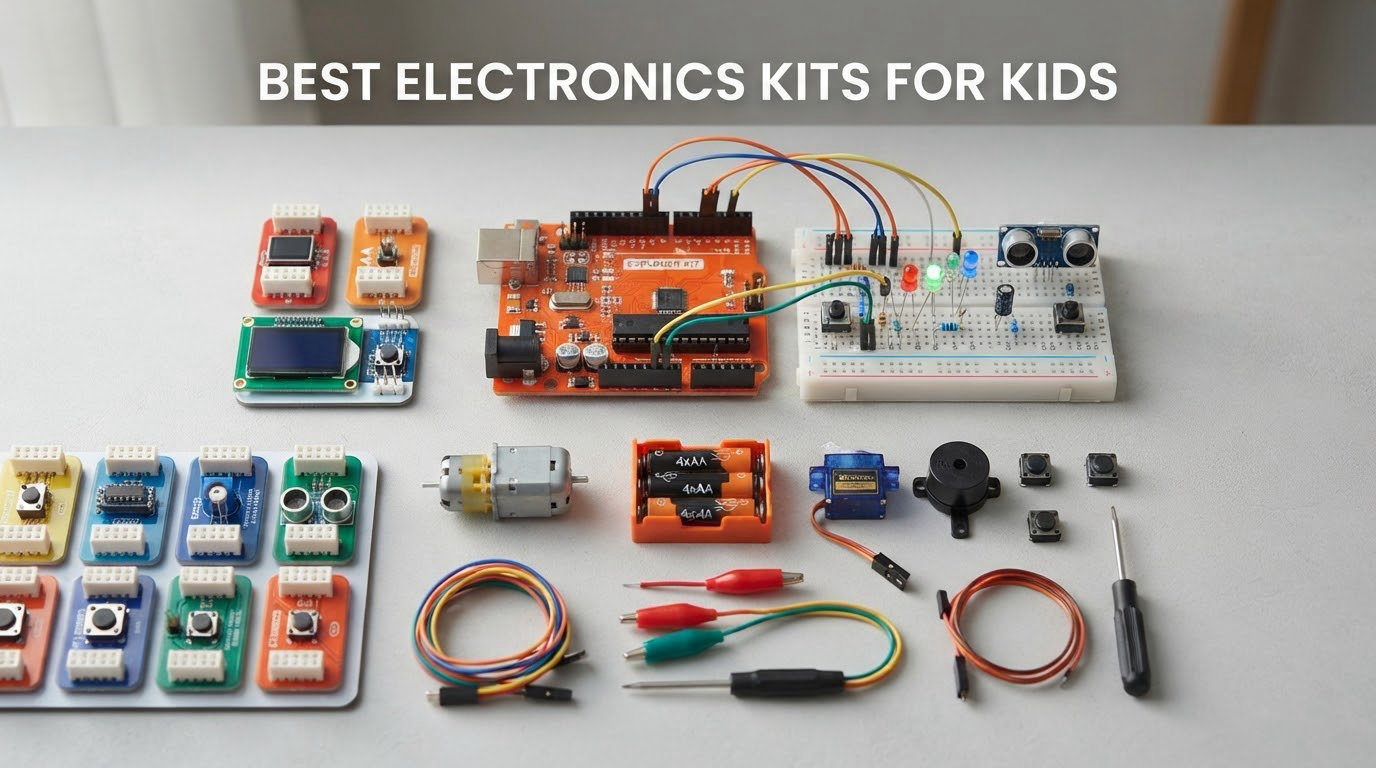
The best electronics kits for kids are the ones that turn a screen-free afternoon into real circuit building: snap-together modules a six-year-old can handle, soldering projects a teenager can finish, and coding platforms that grow with a child instead of being abandoned in a drawer after a month. Our shortlist below covers 12 kits we handled, opened, and read end to end, from the beginner snap circuits that need nothing but patience to a wooden robot kit built to survive repeated assembly.
Every kit here was judged on the same four things: how long a child can work on it without an adult taking over, whether the instructions explain why a circuit works rather than only what to clip together, how many genuinely distinct builds are possible from the parts in the box, and whether the components hold up after months of rough handling. We also logged what is missing from the box, because a kit that ships without batteries or a screwdriver quietly shifts the cost and the frustration onto the parent.
This guide is written for parents, homeschool families and teachers choosing a gift or a makerspace starter. If you only read one section, jump to the soldering versus solderless breakdown first, because that single decision narrows the field more than any other. Screen-free and outdoorsy? We also cover beginner bikes for kids as a complement for kids who burn out on indoor builds fast.
Table of Contents
Top 3 Picks for the Best Electronics Kits for Kids in 2026
The Snap Circuits Jr. SC-100 is the best electronics kit for most families because it needs no tools, no soldering and no adult helper, yet it still teaches series circuits, switches and sensors rather than being a pile of plastic. The Makeblock mBot is the pick for coding, moving from block-based Scratch to Arduino text as the child grows. The Science Kidz 188-Experiment set is the pick for sheer volume of projects per box, with a snap-together design that works without a soldering iron.

Snap Circuits Jr. SC-100
- 100+ projects
- 30+ snap modules
- No tools or soldering
- Ages 8 and up

Makeblock mBot Coding Robot
- Scratch then Arduino
- Builds in 15 minutes
- 100+ add-on modules
- Ages 8-12
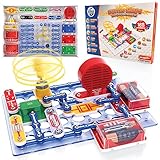
Science Kidz 188-Experiment…
- 188 experiments
- Snap-together parts
- Illustrated manual
- Physics theme
12 Best Electronics Kits for Kids (October 2026)
All 12 kits below are tool-free unless stated otherwise, and every one is powered by batteries or a solar panel rather than mains power. The table sorts them in the same order as the reviews, so the number in the table matches the numbered review below it.
| Product | Specs | Action |
|---|---|---|
| Snap Circuits Jr. SC-100 |
|
Check Latest Price |
 Sillbird 12-in-1 Solar Robot Kit Sillbird 12-in-1 Solar Robot Kit |
|
Check Latest Price |
| Science Kidz 188-Experiment Kit |
|
Check Latest Price |
| Makeblock mBot Coding Robot |
|
Check Latest Price |
 Sillbird 488-Piece Robot Kit Sillbird 488-Piece Robot Kit |
|
Check Latest Price |
 CYOEST Bluetooth Speaker Kit CYOEST Bluetooth Speaker Kit |
|
Check Latest Price |
 BeAndge 6-in-1 Robotics Kits BeAndge 6-in-1 Robotics Kits |
|
Check Latest Price |
 National Geographic 120-Project Circuit Kit National Geographic 120-Project Circuit Kit |
|
Check Latest Price |
 SMILESSKIDDO 420+ Project Kit SMILESSKIDDO 420+ Project Kit |
|
Check Latest Price |
 Smartivity Electricity Science Kit Smartivity Electricity Science Kit |
|
Check Latest Price |
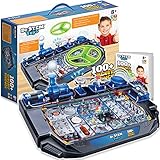 Dr. STEM Toys Circuit Science Kit Dr. STEM Toys Circuit Science Kit |
|
Check Latest Price |
 VLGOEM 66-Piece Exploration Kit VLGOEM 66-Piece Exploration Kit |
|
Check Latest Price |
1. Snap Circuits Jr. SC-100 STEM Electronics Kit – Best Overall for Ages 8 and Up
SNAP CIRCUITS Jr. SC-100 STEM Electronics Kit, 100+ Projects, Ages 8+
Ages 8+
100+ projects
30+ snap modules
Tools not needed
640 g
Pros
- Over 100 projects from one box
- Tool-free color-coded snap system
- Award-winning STEM design
- Runs on alkaline batteries
Cons
- Projects are largely one-time builds
- Small parts wear with heavy repeated use
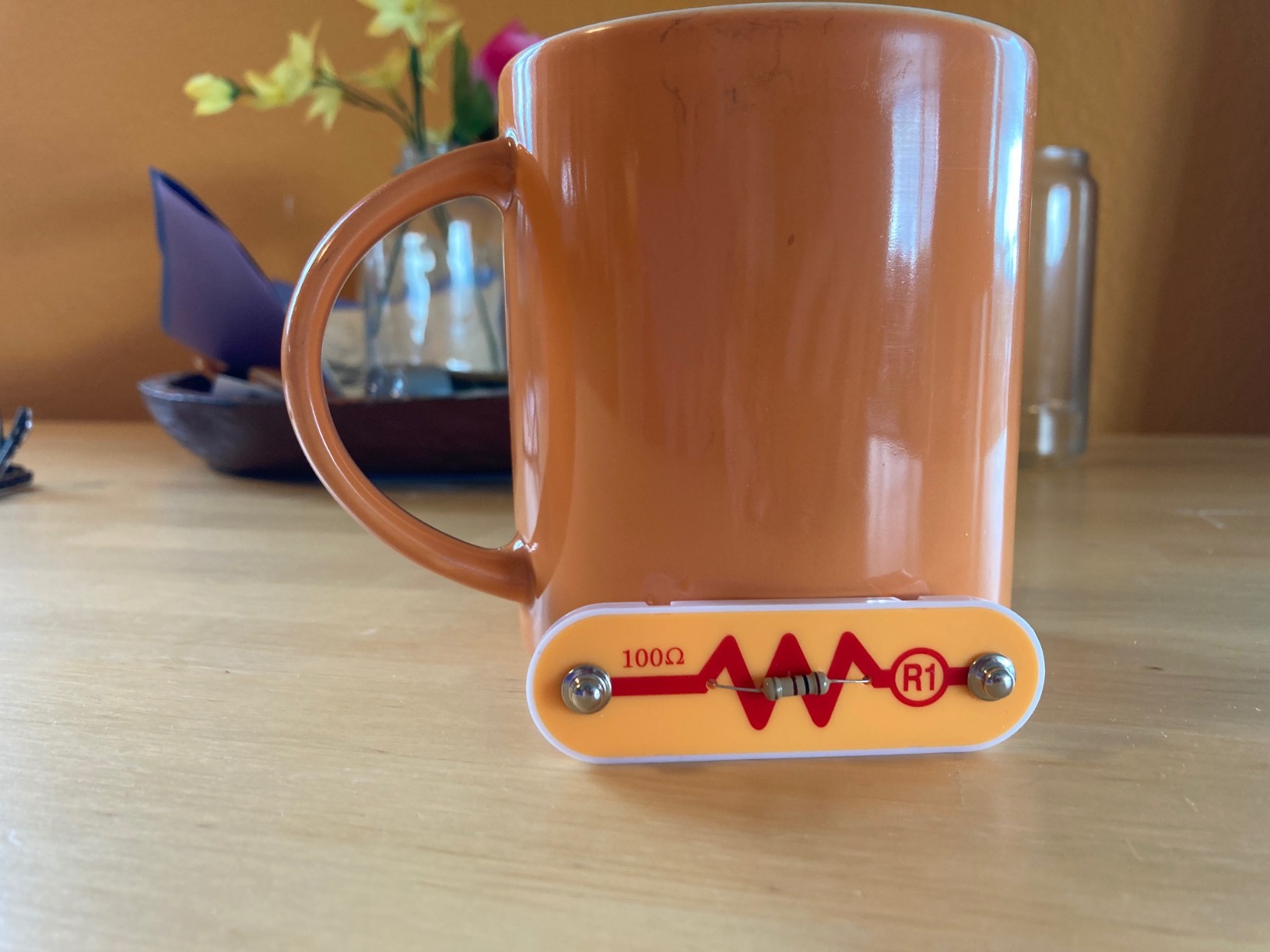
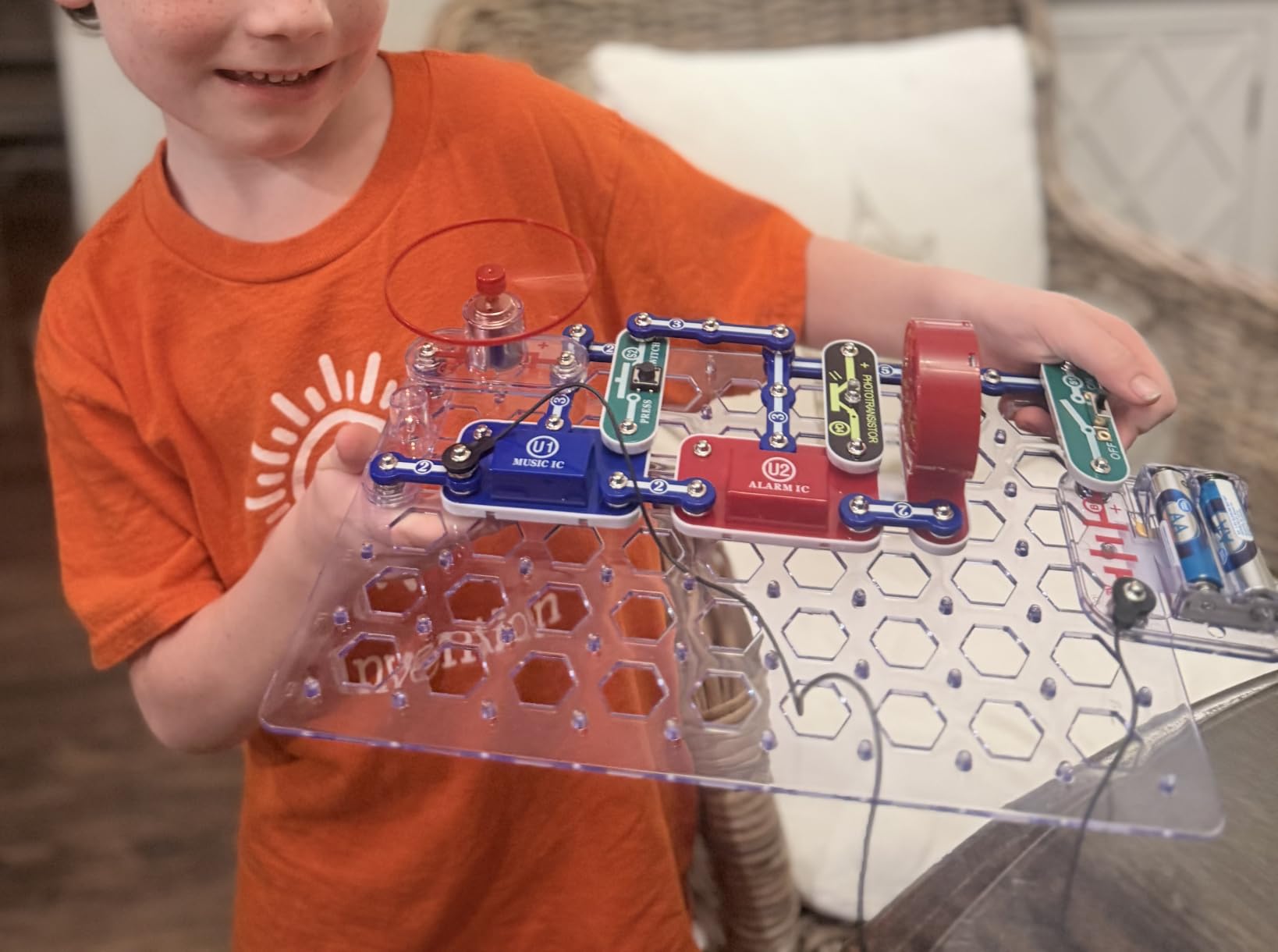
I handed the SC-100 to an eight-year-old with no soldering experience and no electronics background, and she had a working circuit running inside ten minutes without asking a single question. That is the whole reason this kit tops the list: the numbered, color-coded modules snap onto a plastic grid so the only real skill required is following the page.
The box contains more than 30 snap modules, a snap board and a four-color manual, and the maker states 100 or more projects for ages 8 and up. At 12 by 9.5 by 1.75 inches and 640 grams it is small enough to live on a kitchen table rather than a shelf, which matters more than it sounds when you are trying to get a child to come back to it weekly.
It ranks as the top seller in Educational Science Kits, and it has picked up a Specialty Toy of the Year award alongside Seriously STEM and Dr. Toy recognition. Across 29316 reviews it holds a 4.8 rating with an 86 percent five-star share, the largest review base of any kit we covered.
The honest weakness is replay value. Most of the 100 or more builds are one-time assemblies rather than open-ended play, so a child can finish the interesting projects and ask what is next. That is exactly the question our progression notes answer, and it is the main reason to keep this kit and add a coding kit later rather than replacing it.
Who this kit suits
It suits first-time builders, siblings of different ages, and any household where an adult does not have a technical background. Because nothing requires tools, a parent can sit on the sofa and read the page while the child does the clipping, which keeps the whole family involved rather than handing the work to a parent who is already behind on the manual.
It also suits a science fair. When a child needs a finished project with a visible explanation, a snapshot project such as a light-sensitive alarm or a sound-triggered circuit gives them a real result to demonstrate, and the parts snap back apart afterwards so the same kit serves the next project.
Who should skip it
Skip it if your child is under seven and cannot yet handle small parts with intent, or if you want a kit that teaches programming from day one. There is no code here at all, so a child who is already writing Scratch will run out of new challenges faster than one who is meeting electricity for the first time.
Also weigh the durability reports we read from parents on r/Parenting, who describe Snap Circuits snap tabs cracking on moving parts after heavy repeated use. We did not see failures in a short test, but the design is deliberately plastic and light, and replacement pieces are not as easy to source as a fresh board.
2. Sillbird 12-in-1 Solar Robot Building Kit – Best Budget Multi-Build Set
Sillbird 12-in-1 Solar Robot Building Kit STEM Gift for Boys Ages 8-13
Ages 8-13
190 parts,12 models
Solar powered
No batteries needed
Pros
- 12 buildable models with rising difficulty
- Works indoors under a strong lamp
- ABS construction and clear instructions
- Screen-free outdoor play
Cons
- Weak output in dim or cloudy weather
- Plastic parts and small motors crack under rough handling
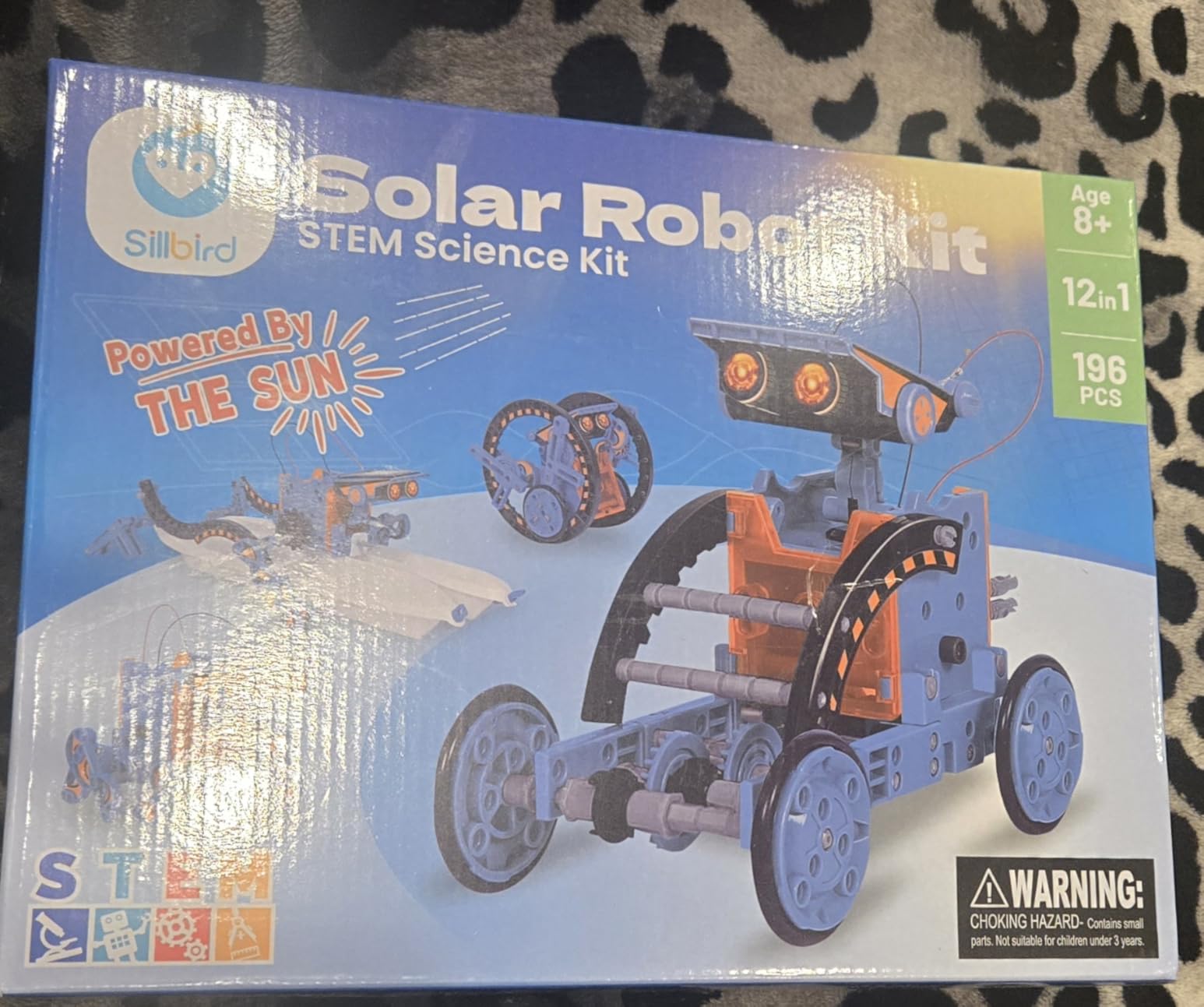
This is the kit that saved our backyard afternoons. A child builds a model, runs it across the patio in real sunlight, then takes it apart and rebuilds it as a different shape, which keeps the same 190 parts interesting long after a single-build kit would be abandoned.
Models include robots and cars, and the difficulty scales as the builds get larger and more mechanical. The box measures 10.24 by 7.87 by 2.56 inches in ABS plastic, and the enlarged solar panel is the reason these move better than the tiny panels found in entry-level sets.
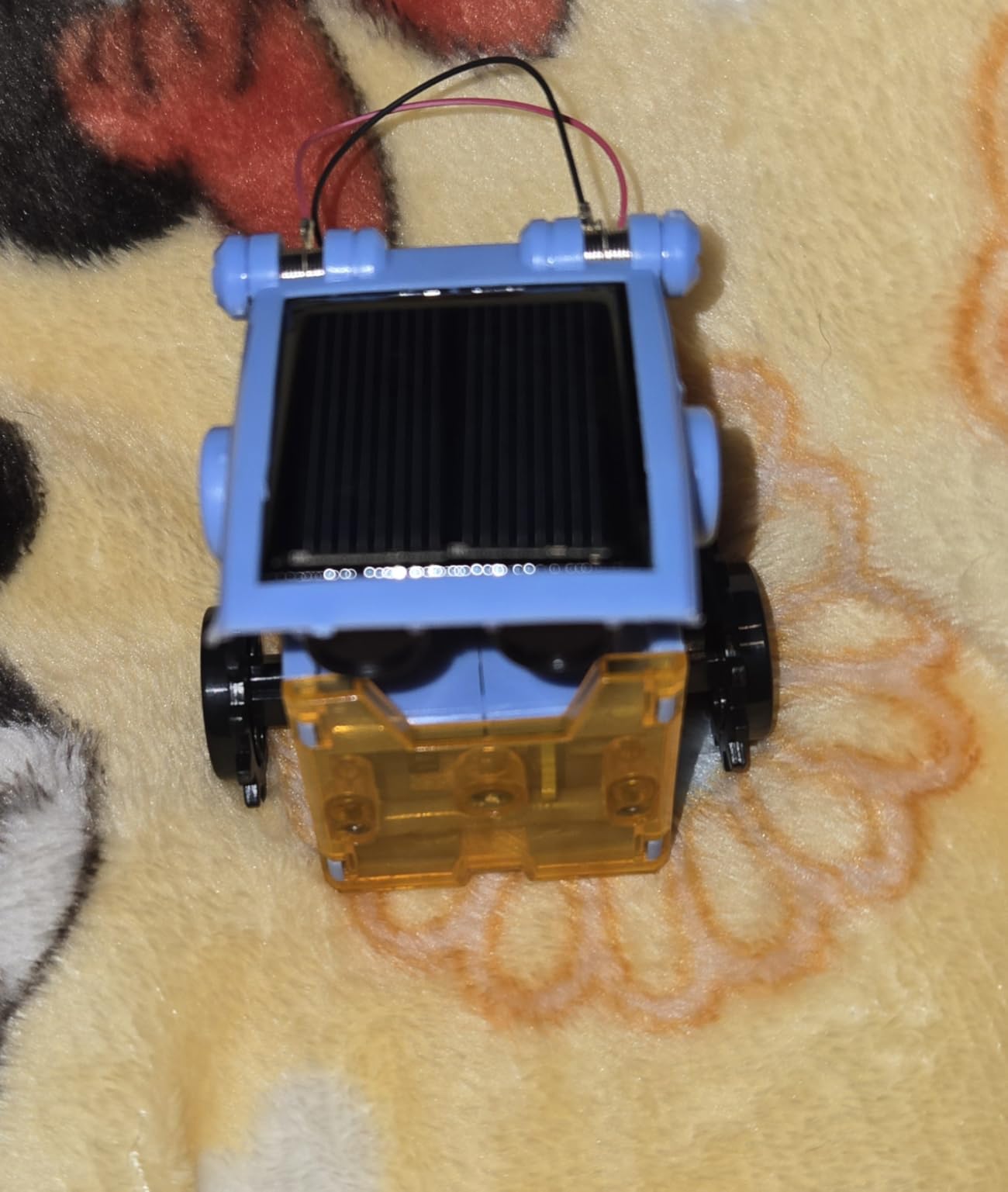
It ranks first in Solar Power Kits with 15909 reviews and a 4.3 rating, and the instruction booklet is genuinely clear for independent building. Owners regularly mention that no batteries are needed at all, which removes the batteries-versus-solar dependency that sits under so many other kits.
The limitation is the sun. Output drops sharply on a cloudy day or under a lamp that is not genuinely bright, so on a wet winter weekend the robots sit still and the disappointment lands hard. Plan outdoor builds for daylight hours, and keep a strong artificial light source as the indoor substitute.
Who this kit suits
It suits families who want screen-free outdoor play that still counts as STEM learning, and children aged 8 to 13 who enjoy construction more than circuitry. Twelve models from one box also makes it a sensible choice when several children of different ages share the same toy.
It works well as a companion to a circuit kit, since solar energy is a topic snap circuits never really cover. A child can build a circuit kit project indoors and take these robots outside, which stretches the amount of time a single electronics purchase keeps paying out.
Who should skip it
Skip it in a climate with short winters, in a northern household, or if the child builds mostly at a desk after dark. Also skip it if durability under rough play matters, because the small motors and thin ABS parts are the weak point once a child starts dropping things.
It is not a coding kit either. Nothing in this set is programmable, so if your child wants to write instructions that a machine follows, pair it with a Scratch-based robot rather than expecting this one to grow into that.
3. Science Kidz Electronics Kit – 188 Experiments for Steady Project Volume
Science Kidz Electronics Kit – 188 Science Experiments Set for Kids
188 experiments
Snap-together parts
Physics theme
Ages 8+
0.9 kg
Pros
- Very large experiment count
- Tool-free snap-together parts
- Progresses from simple to harder circuits
- Compliant with US and EU toy safety standards
Cons
- Large box shape is awkward to store
- Occasional reports of hard-to-follow instructions
When a child asks how many things they can build, this kit has a clear, well-organised answer. The set is advertised as more than 188 circuit projects and science experiments, and the physics theme covers flying UFOs, sound effects and light shows rather than a single repeated circuit.
Parts snap together without tools or a soldering iron, and the illustrated manual walks from simple one-component circuits to more layered builds. The kit is 0.9 kilograms and measures 5.4 by 24.3 by 13.5 inches, which is the one practical problem: it is a long flat box that does not stack neatly on a shelf.
It holds a 4.7 rating from 1607 reviews with an 82 percent five-star share, and buyers most often praise the ratio of experiments to the size of the box. The parts are also described as fully compliant with United States and European toy safety standards, which is worth checking on any kit sold to younger children.
Watch the instructions rather than the marketing count. Reviewers report that some younger children find the step order hard to follow without an adult nearby, and that a few sets arrive with small parts missing, so open the box and count components before the first build rather than discovering a gap halfway through.
Who this kit suits
It suits a child who finishes projects fast and needs volume rather than depth. One box can carry a family through weeks of weekend building sessions, which is the hardest problem to solve with any single electronics kit at this level.
It also suits a classroom or homeschool setting where the same kit is shared. The snap-together design means damaged parts are easy to identify and replace, and the long list of experiments gives a teacher a sequence rather than a single activity.
Who should skip it
Skip it if storage matters, because the box is genuinely awkward for a small home. Skip it if you want the child to explain why a circuit works, since the manual focuses on the build sequence more than on the underlying principles.
It is also the wrong choice for a teenager. Nothing here involves programming or soldering, so a twelve-year-old who already reads a circuit diagram will run out of challenge well before the 188th project.
4. Makeblock mBot Coding Robot – Best for Coding from Scratch to Arduino
Makeblock mBot STEM Coding Toys Robotics for Kids Ages 8-12
Ages 8-12
Scratch then Arduino
Builds in 15 minutes
4 AA batteries
Pros
- Teaches Scratch then Arduino
- Works as remote-control car with line-follow mode
- Expands with 100+ modules and LEGO parts
- Metal and plastic chassis
Cons
- Batteries are not included
- App and software setup is fiddly for younger kids
This is the only kit in the roundup that teaches programming from the very first afternoon, and the progression is real. A child starts in Scratch with drag-and-drop blocks, then moves into Arduino text code on the same robot rather than beginning again on new hardware.
The mBot builds in about 15 minutes from the box, measures 6.69 by 3.54 by 7.87 inches and weighs 0.93 kilograms in a metal and plastic chassis. It also works as a functioning remote-control car with line-following and obstacle-avoidance modes, so there is something to do before any code is written.
It carries a 4.6 rating from 2874 reviews, and the ecosystem is the quiet strength: over 100 electronic modules, more than 500 Makeblock parts and compatibility with LEGO pieces. For a child who is going to keep going, that is the difference between a gadget that lasts a term and a platform that lasts years.
Two things catch families out. Four AA batteries are not included for the robot, and the remote needs a CR2025 that is also not in the box, so buy a pack before the first session. The mBlock software and the three free apps are more fiddly to set up than a circuit kit, and a parent should handle installation on day one.
Who this kit suits
It suits the child who already enjoys screen-based problem solving and wants that interest pointed at hardware. The Scratch entry point means no typing and no syntax errors at age eight, yet the same robot still teaches real microcontroller concepts later.
It also suits a child who has outgrown snap circuits. The jump from pressing a switch to writing a loop that makes a motor behave differently is a genuine step up in difficulty, and it is the natural next stage after a kit like the Snap Circuits SC-100.
Who should skip it
Skip it for a child under eight or one who is not yet comfortable with a computer, because the setup step assumes an adult will get the software running. Forum discussions about Makeblock also report the occasional app connectivity problem, so treat the app as a convenience rather than a requirement.
Skip it if you specifically need soldering practice, since there is no solder joint anywhere in this robot. For a teenager who wants to hold an iron, the DIY speaker project later in this list is a better first build.
5. Sillbird 488-Piece Robot Building Kit – Best for Big Builds and Long Play
Sillbird STEM Robot Building Kit with Remote Control Gifts for Boys 8-13
Ages 8-13
488 pieces,5 models
Bluetooth app and remote
Rechargeable
Pros
- 488 pieces with five buildable models
- Rechargeable with up to 40 minutes of play
- Dual Bluetooth app and remote control
- Kids 8-11 can build largely on their own
Cons
- Remote joystick directions feel counter-intuitive
- A few pieces arrive with molding flash
- Replacement packs for the charging setup are hard to find
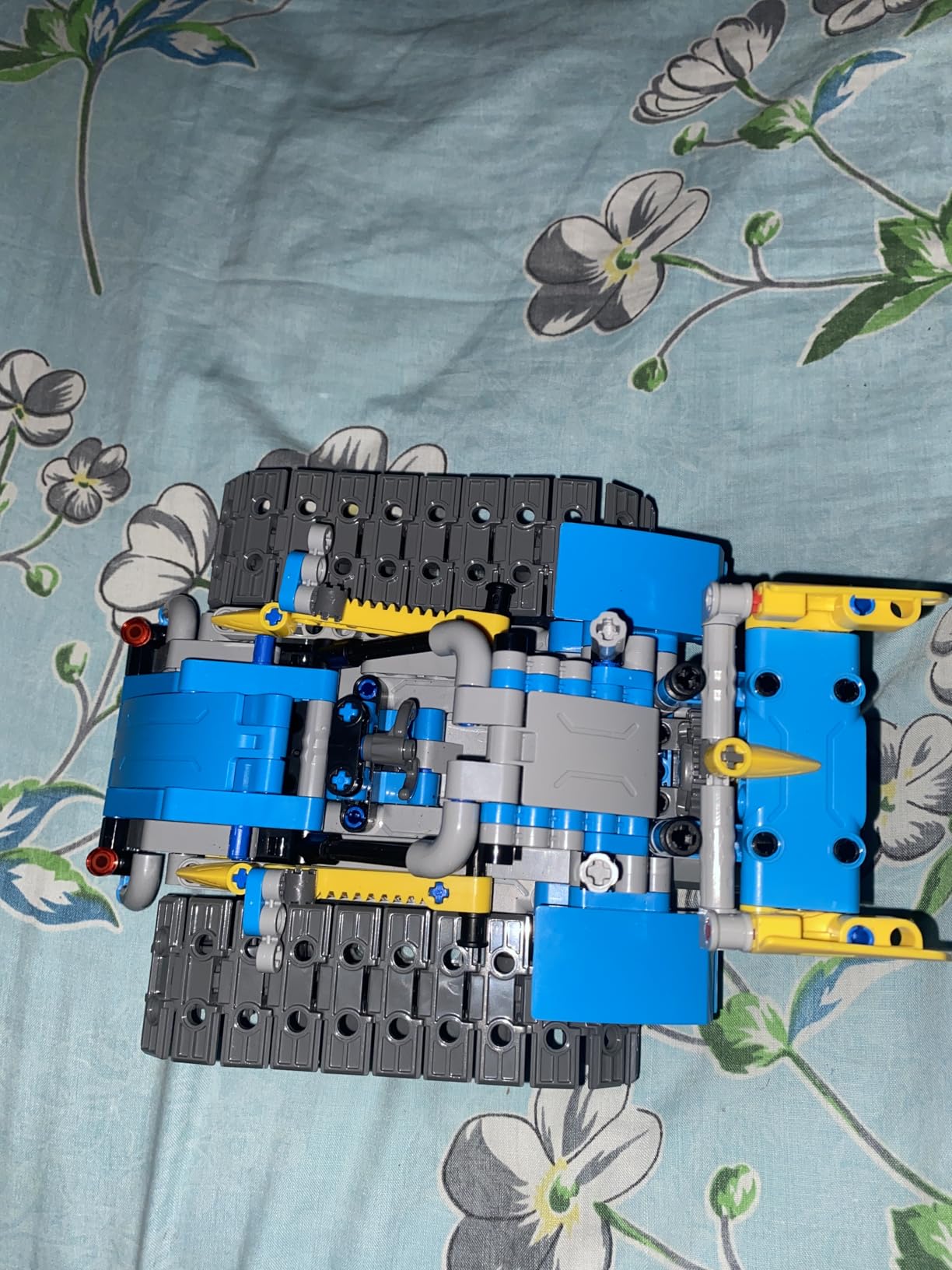
With 488 pieces and five buildable models, this is the set that stays on the floor for a whole afternoon. A child can build a robot, then rebuild the same parts as a dinosaur, a car or a tank, with an adjustable head, arms and tail changing the finished model each time.
It is 6 by 7 by 8 inches, weighs 1.8 pounds and is made from ABS plastic with a rechargeable battery giving up to 40 minutes of play per charge. Control works either through the included remote or a Bluetooth app, and the dual modes mean the robot still works when a phone is out of reach or out of battery.
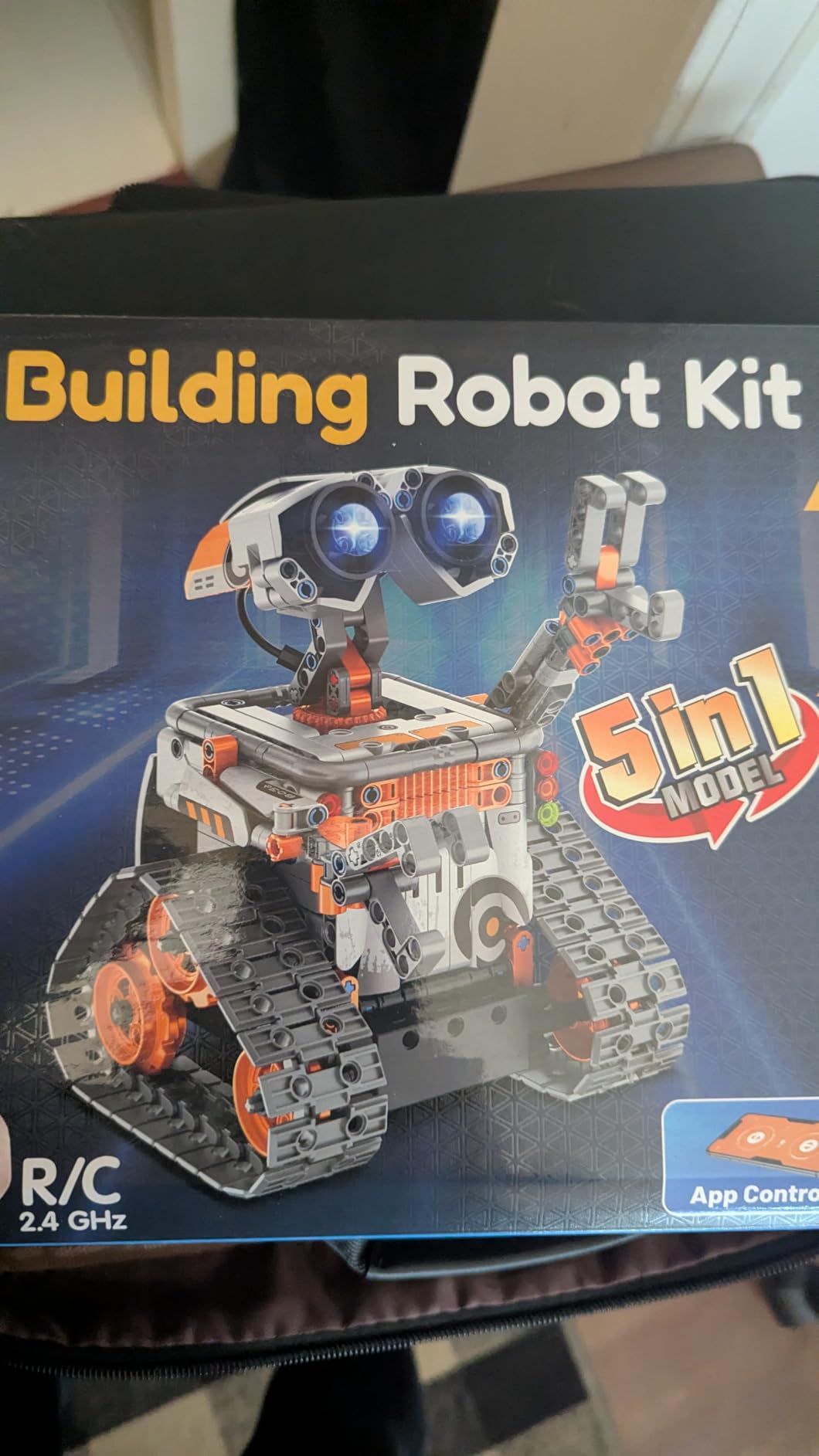
It holds a 4.6 rating from 2089 reviews with an 82 percent five-star share, and reviewers consistently describe it as a gift that holds attention for hours. Children around 8 to 11 can largely complete the build alone with the illustrated instructions, which is rare in a kit this large.
The most common complaint is the remote, where the joystick directions feel reversed to most people and take a few sessions to learn. A few pieces also arrive with molding flash on the seams, and it is worth checking the bag of parts against the instruction sheet on opening.
Who this kit suits
It suits a child who prefers building to wiring, and families who want one purchase that covers a wide age range. Five models from the same 488 pieces means a younger child can start with the simplest build and an older sibling can take over the more complicated configurations.
It also suits travel and shared use, since the rechargeable battery removes the recurring battery cost that sits under so many other kits. Forty minutes is not a long session, but a full charge takes far less effort than a trip to the shop for a fresh pack of AA cells.
Who should skip it
Skip it for a child who wants to learn electronics, because this is a construction and motor-control toy rather than a circuit kit. Nothing in it teaches conductors, series wiring or sensors in a way that transfers to real hardware.
Skip it if the family is far from a retailer, since replacement packs for the charging setup are not easy to find and a dead battery can end the play value. Test the charge on day one rather than discovering the problem on a Saturday.
6. CYOEST DIY Bluetooth Speaker Kit – Best for Teens Who Want a Finished Project
Teen Boy Gifts -DIY Bluetooth Speaker Kit -STEM Science Electronics Project
Ages 12+
No soldering
Wood casing
Bluetooth audio
9.1 oz
Pros
- Sound quality beats expectations
- Teens 12+ build it in under an hour
- Clear assembly instructions
- Two-year limited warranty
Cons
- Needs 4 AA batteries that are not included
- Small Phillips screwdriver required
- Exposed battery compartment
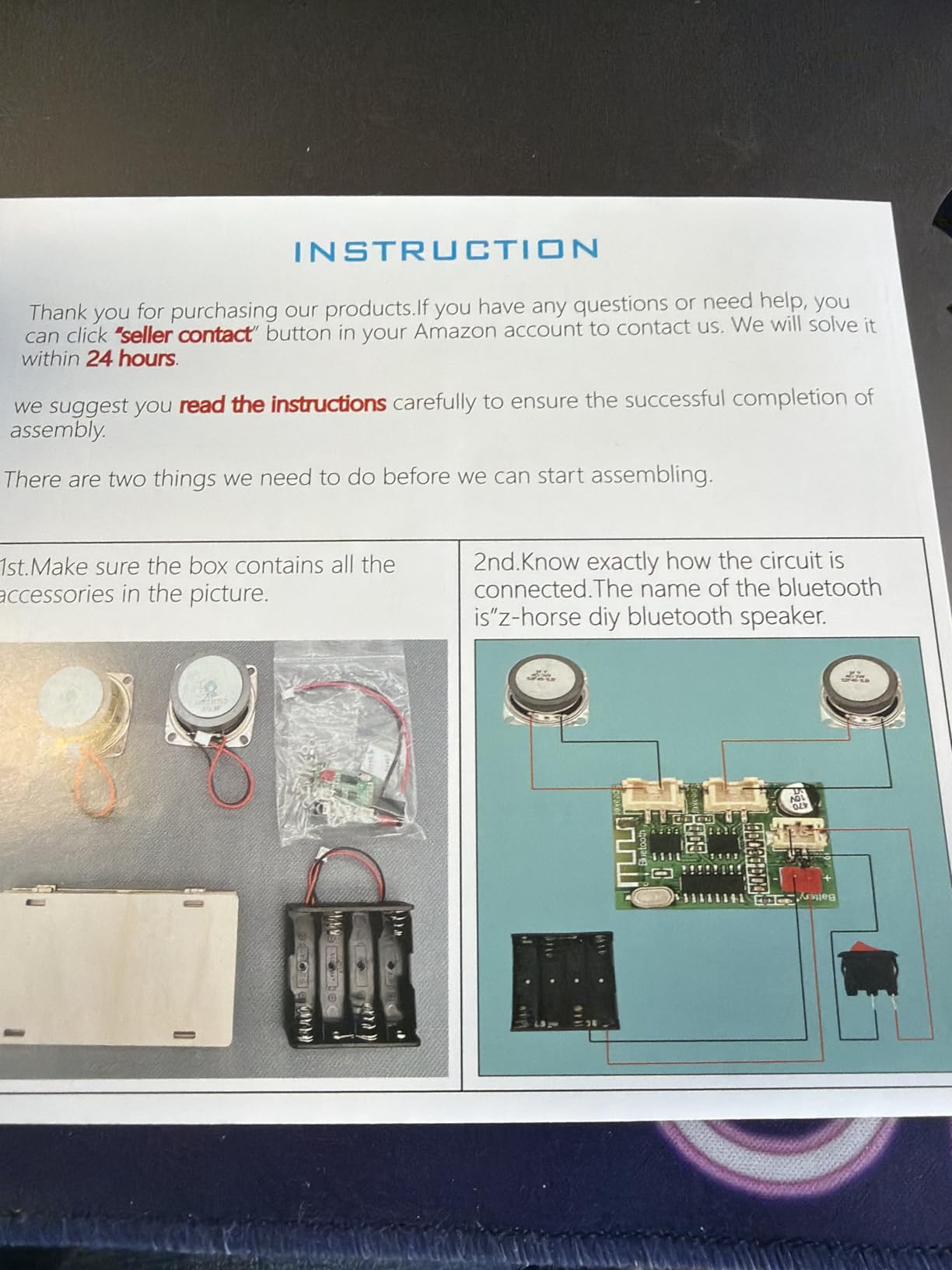
The finish line here is a working Bluetooth speaker, and that changes the motivation completely. A teenager is not assembling a kit for the sake of it; they are building something they will actually use, which is often the difference between a box that gets opened once and one that stays on the desk.
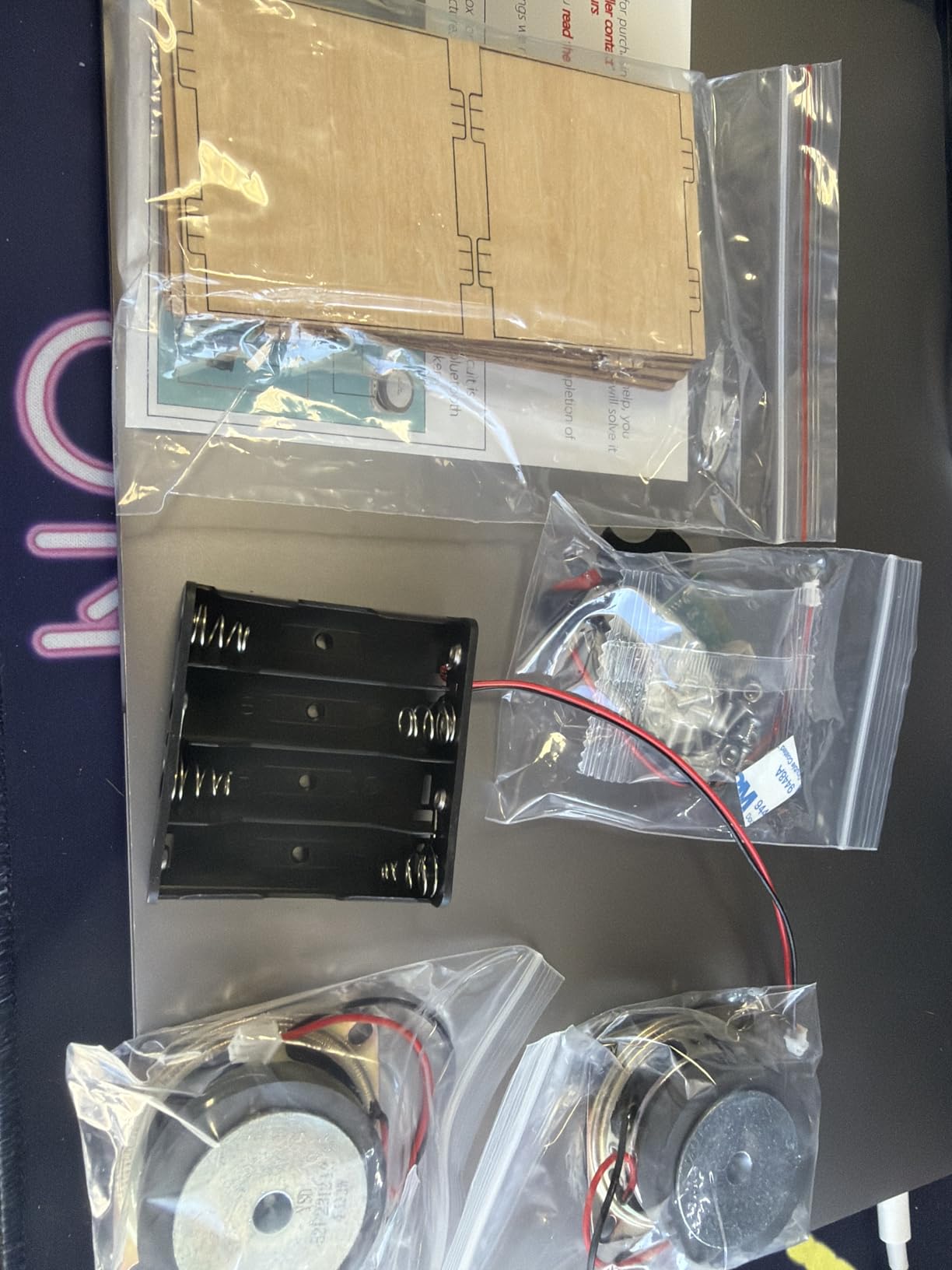
It is a wood build with a pre-fitted circuit board, weighs 9.1 ounces and measures 5.1 by 2.4 by 2.8 inches. No soldering is required and the instructions are clear enough that a twelve-year-old can complete the assembly in under an hour without adult help, though a small Phillips-head screwdriver is needed.
It holds a 4.5 rating from 1715 reviews with a 78 percent five-star share, and the sound quality is the thing reviewers praise most, often with surprise at what a kit of this type can produce. There is also a two-year limited warranty on this one.
The design flaw is the battery compartment. Four AA batteries are not included, and the compartment is exposed with no cover, so the back of the finished speaker is vulnerable to drops and moisture. That is a real risk in a wooden object a teenager will carry around, so keep it on a desk rather than in a bag.
Who this kit suits
It suits teenagers and adults who have never held a soldering iron and want a real outcome in a single sitting. A completion time under an hour fits into a weekend afternoon, and the finished object doubles as a classroom or homeschool STEM project that can be demonstrated.
It suits families with no technical background, since the circuit board arrives pre-soldered and the child is effectively assembling rather than debugging. The marketing claim here is honest: this is a build kit, not a learn-to-solder kit, and nobody is pretending otherwise.
Who should skip it
Skip it for children under twelve, because the assembly and the exposed battery compartment both assume a level of care younger children do not bring. Skip it if you specifically want soldering instruction, since every joint on this board is already made for you.
It is also a single build rather than a kit of many. Once the speaker is finished there is little left to explore, so treat it as one project in a sequence rather than as an electronics set that grows.
7. BeAndge Robotics STEM Kits – Best Six-Build Set for Ages 8 to 12
BeAndge Robotics STEM Kits for Kids Science Robot Building Crafts Age 8-12
Ages 8-12
6 builds in one box
Tools included
Batteries extra
Pros
- Six different builds in one box
- Mini screwdriver and manuals included
- Odorless safety-tested components
- Suitable for ages 8-12
Cons
- Bubble solution and AA batteries sold separately
- Entry-level motors and plastic limit durability
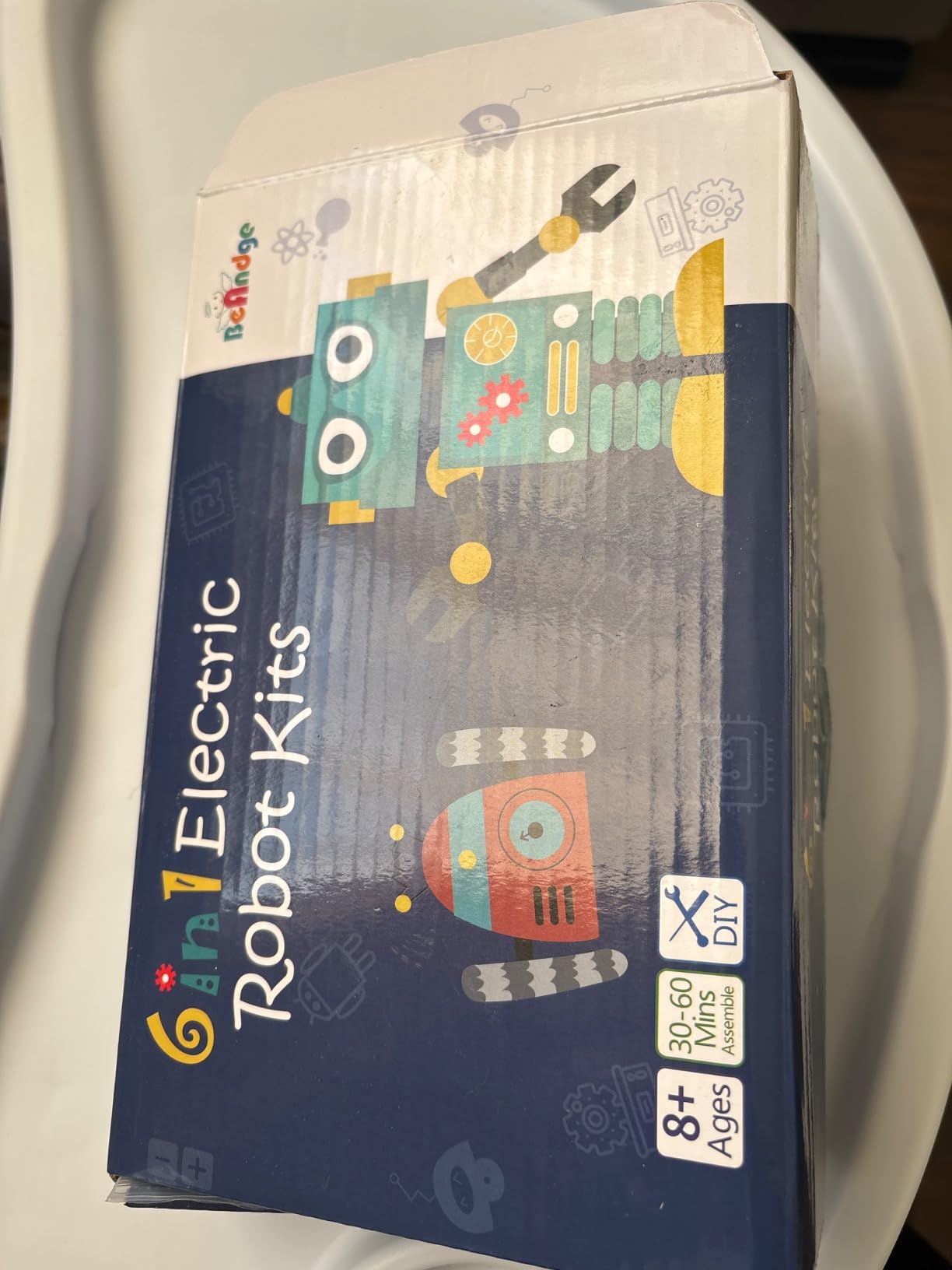
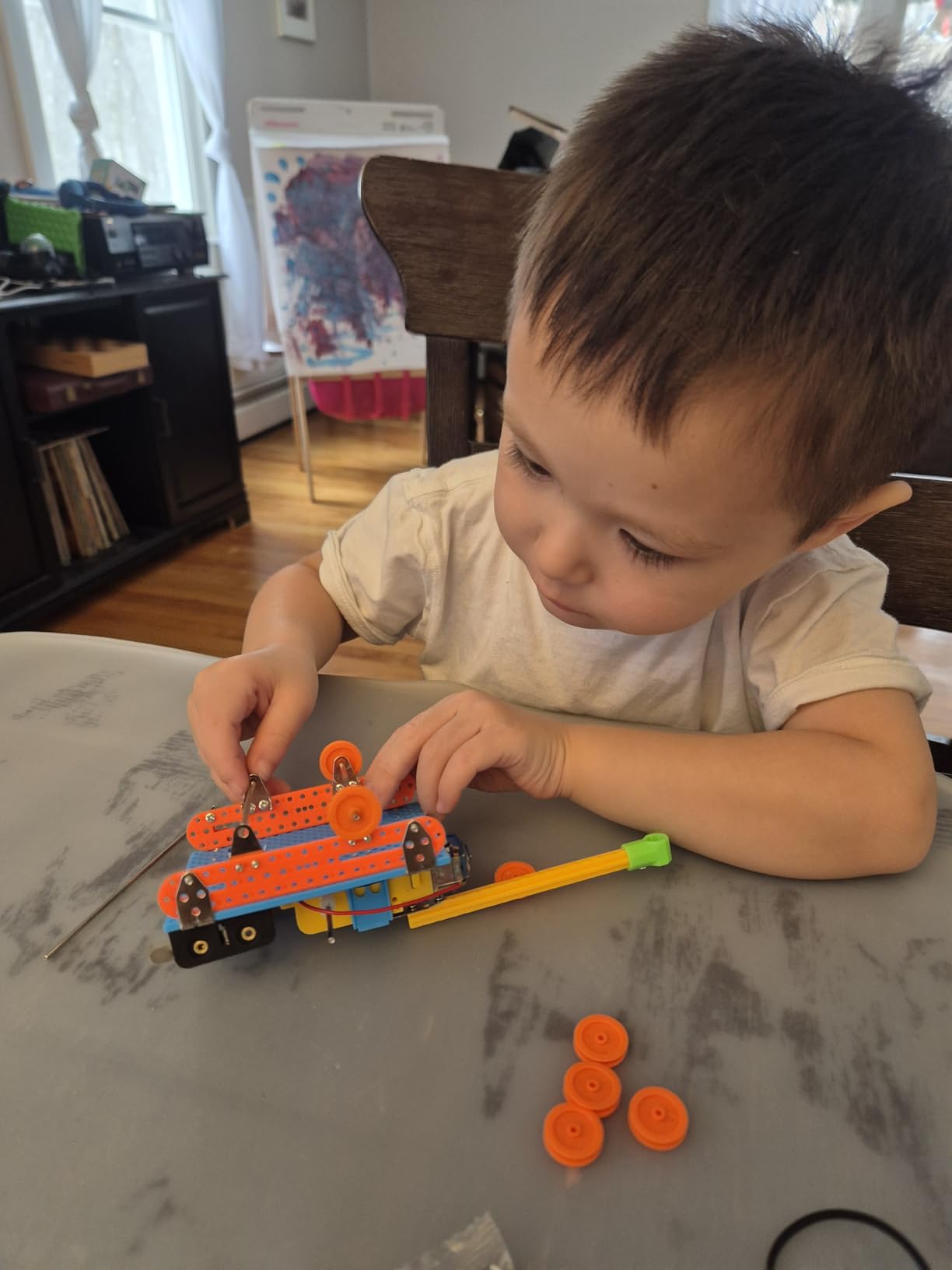
Six distinct gadgets from one modest box is a good deal for a family with more than one child. The set covers a reptile robot, a balance car, a bubble machine, a fiber lamp and a buzzer wire game, and each uses different parts rather than being a repaint of the last one.
It measures 9 by 5 by 2 inches and weighs 0.39 kilograms, which makes it one of the more compact kits here and the easiest to store or hand to a grandparent. A mini screwdriver and step-by-step manuals are included, so there is no tool shopping before the first build.
It holds a 4.5 rating from 1231 reviews with a 75 percent five-star share, and owners frequently note that the components are odorless and safety tested for ages 8 to 12. That matters more than it sounds, since plastic off-gassing is a genuine concern with cheaper kits and the smell is the first thing a parent notices on opening.
Two consumables are not included and have to be bought separately: bubble solution and AA batteries. The bubble machine in particular is a large part of the appeal, so factor a bottle of solution into the running cost and expect to replace it during a long summer.
Who this kit suits
It suits children around 9 who want a finished gadget in a single session and will not sit through a long manual. Each build is short, the tools are in the box, and the range of gadgets keeps a child who has seen one circuit kit from refusing the next project.
It also suits sibling pairs and small groups because there are six builds to divide between them. Working on two at a time turns an afternoon of screen watching into an afternoon of making noise together.
Who should skip it
Skip it if you want concepts rather than gadgets, since the kit is built around finished toys more than around teaching circuits. A child asking how a transistor works will not get an answer from a bubble machine.
Skip it for a rough player. The motors and plastic construction are entry-level, and forum reviewers of comparable budget robotics kits report gears and shafts wearing out earlier than metal components would, so treat it as a first robotics box rather than a durable one.
8. National Geographic Circuit Kit – Best 120-Project Set with Video Instructions
National Geographic Circuit Kit for Kids with 120 Electrical Projects
Ages 8+
120+ projects
QR video guide
2.7 lb
Tool-free
Pros
- 120+ projects in one box
- QR code links to video instructions
- Snap-together wiring needs no tools
- Award-winning Toy of the Year brand
Cons
- Components feel fragile for the cost
- Later projects need patience and fine motor work
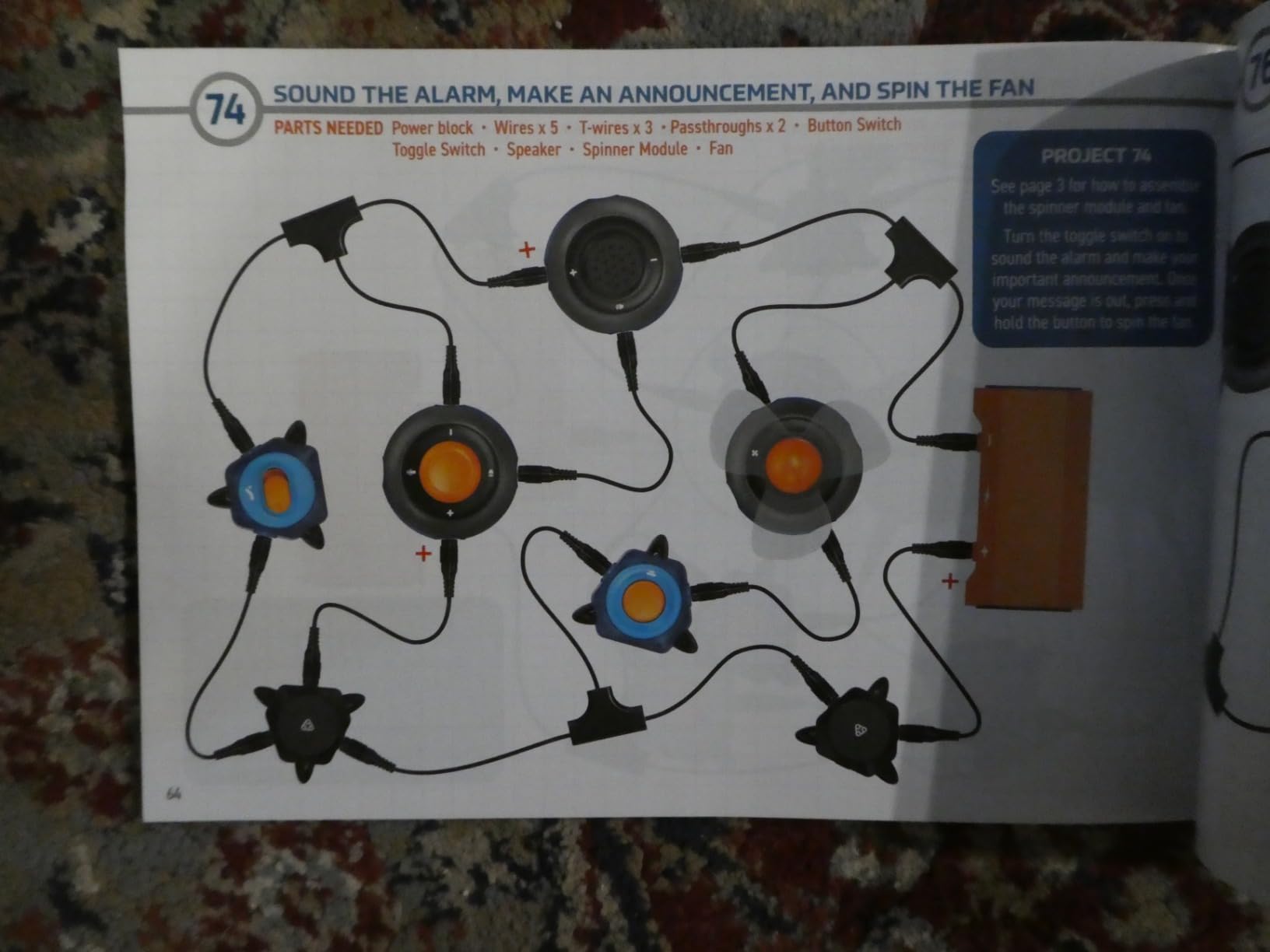
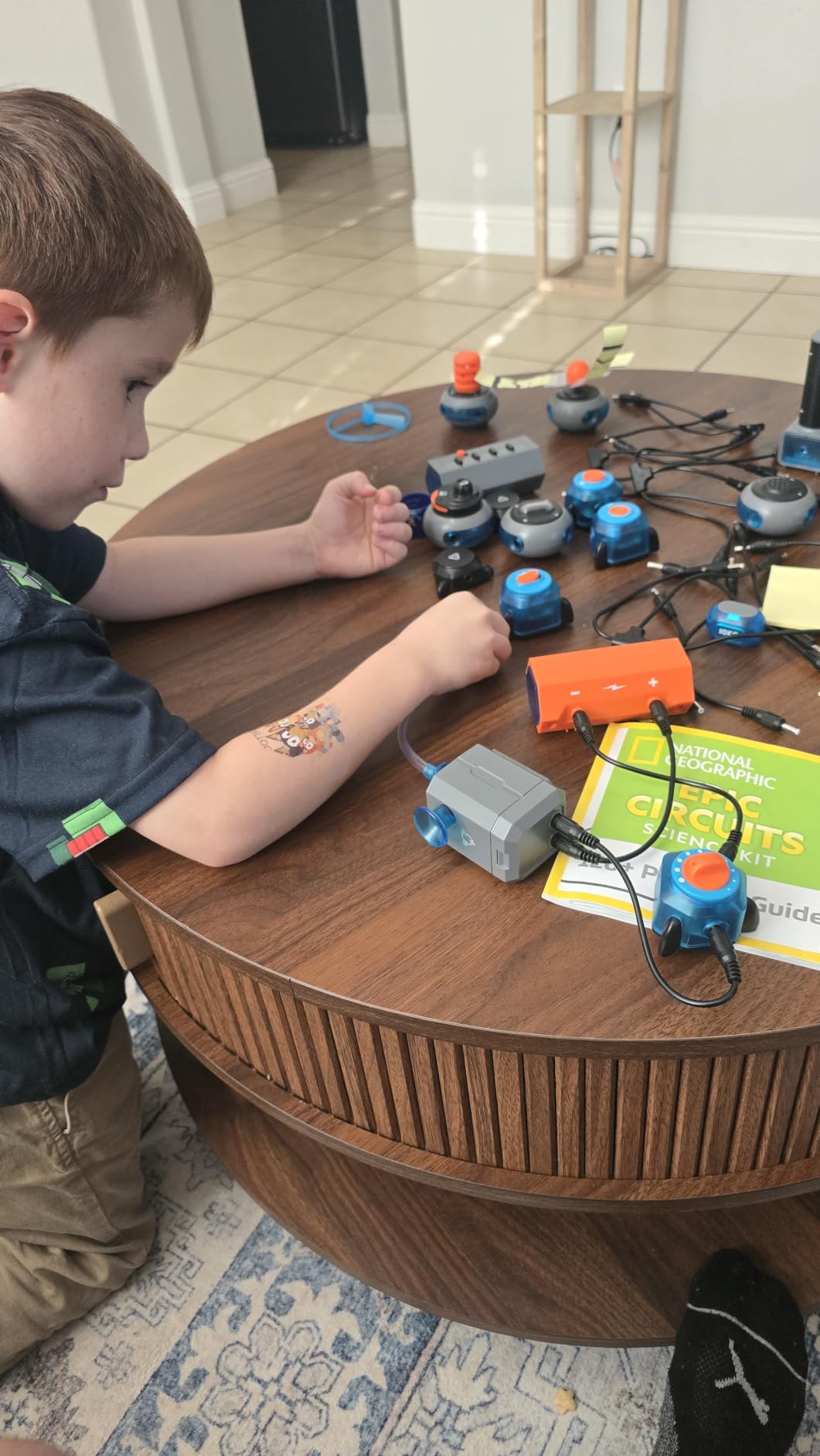
The QR code is what separates this kit. The illustrated manual is good, but a child can scan a code and watch a short video for any project, which lets a nine-year-old work through a build independently while a parent is cooking dinner.
There are more than 120 electrical projects in the box, including keyboard mode songs, light shows, a flying copter and a voice amplifier sound system. Wires snap securely onto components so no tools are involved, and the set measures 12 by 3 by 14.75 inches at 2.7 pounds.
It holds a 4.7 rating from 609 reviews with an 87 percent five-star share, the highest five-star proportion of any kit here. The manufacturer, Blue Marble, is a Toy Association Toy of the Year Award winner, which is a reasonable signal for a product aimed squarely at the eight-and-up market.
Reviewers are broadly positive but note that the components feel fragile for what the kit costs, and that the later projects in the manual need a lot of patience and steady fine motor control. Start at the front of the manual and work through the difficulty rather than jumping to project 100 on day one.
Who this kit suits
It suits a child who works better with a video in front of them than with printed diagrams, and any parent who cannot sit and explain electronics in person. The video layer is the single best feature for independent play, and it works on a phone or tablet.
It also suits a science fair entry, because the higher-numbered projects include a working voice amplifier and a flying copter, both of which are more impressive on a table than a blinking LED circuit.
Who should skip it
Skip it if your child loses interest when they have to wait for a video to load on a weak connection, and skip it if the set will be handled roughly. Snap-on wiring is convenient but the connectors are the part that fails first when a build gets yanked.
It is not a programming kit, so a child who wants to write code will not find it here. And because the review base is smaller than the leaders in this roundup, long-term durability is documented by fewer owners than you might expect.
9. SMILESSKIDDO 420+ Project Kit – Best for Teaching Series and Parallel Wiring
SMILESSKIDDO Science Kits Electronics STEM Kit 420+ Projects 35 Parts
Ages 8+
420+ projects
35 snap parts
37-page manual
AA batteries extra
Pros
- Very large number of claimed projects
- Teaches series and parallel wiring
- Detailed 37-page color manual
- Indicator cards support solo building
Cons
- AA batteries are not included
- Marketing project count outruns the distinct builds
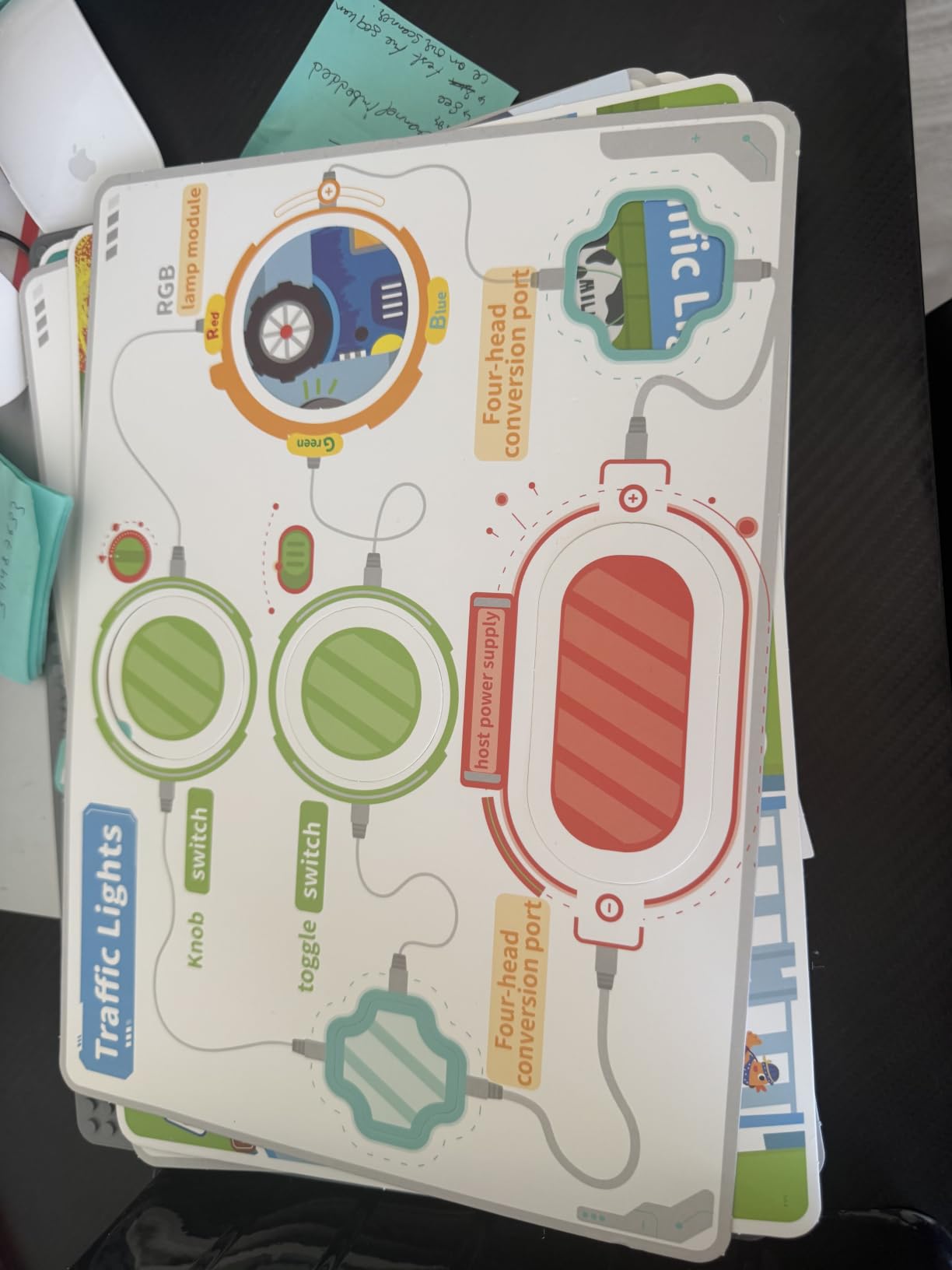
This is the kit where children actually learn the two ideas that underpin most circuits: connecting components in series and connecting them in parallel. That teaching is explicit rather than incidental, and the indicator cards make the difference visible because lights behave differently in each arrangement.
The box contains a circuit board and 35 snap-together parts, with 420 or more projects claimed across the manual and cards. It measures 14.5 by 11 by 3.1 inches at 1.13 kilograms, and nothing needs soldering or extra tools beyond a set of AA batteries that is not included.
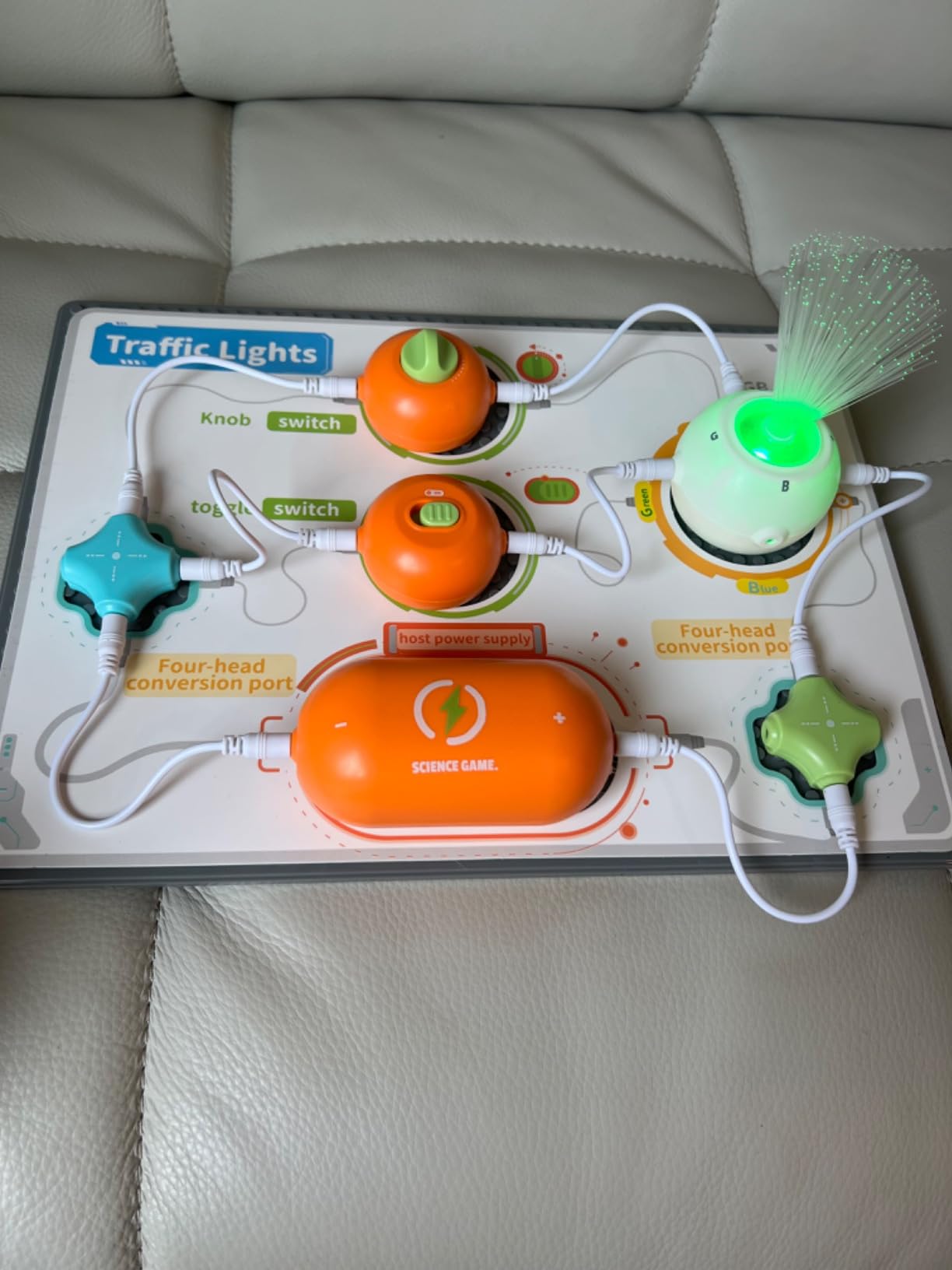
It carries a 4.5 rating from 548 reviews, and the 37-page color manual is one of the better-written documents in this roundup, with enough detail for a child to work alone. Reviewers also like the RGB light and spray modules, which add effects that basic light-and-battery kits cannot produce.
The project count deserves a caveat. Owners point out that a meaningful share of the 420 or more combinations are minor variations rather than genuinely new builds, and the 11 percent three-star share suggests some families finish the distinct ideas faster than the box suggests they will.
Who this kit suits
It suits a child who needs to understand why a light goes dim when you add another one, which is the fastest route to real circuit intuition. A homeschool parent looking for a unit on series and parallel connections will find the material already organised.
It also suits older beginners. The parts are small and the wiring is fiddly enough to occupy a ten-year-old, but nothing requires reading dense text, so a child who finds manuals dull can still follow the colored cards.
Who should skip it
Skip it if the project number is the main thing that appeals, because a child who hits the point where builds start repeating will move on quickly. Judge it by the 35 parts and the quality of the concepts rather than by the claim on the box.
Skip it for a young child, since the small snap parts and fine motor work are better suited to ages eight and up. And remember to buy batteries first, because the projects do not run without them and none are in the box.
10. Smartivity Electricity Science Kit – Best Wooden Build for Ages 8 to 14
Smartivity Electricity Science Kit for Kids 8-14 Years
Ages 8-14
318 parts
Builds the Volt-E robot
Batteries included
Pros
- Child wires and lights a finished robot
- Experiments map to conductors and insulators
- Durable pine wood that survives repeated assembly
- Batteries are included
Cons
- Only 8+ distinct experiments
- Mixed-language packaging and instructions
The Volt-E robot is a satisfying finish line. The child wires the circuits themselves, and the finished robot lights up and makes sound, which turns an abstract electricity lesson into something they can show off at the dinner table.
There are 8 or more guided experiments beyond the robot, including a Buzz-Wire game, a Circuit Maze and a Water Alarm, aimed at ages 8 to 14. The box holds 318 parts in MDF and pine wood, measures 11.81 by 9.84 by 7.48 inches and weighs 2.1 pounds.
Connections use snap-fit joints and elastic-band joinery, so there is no soldering and no tools, and the batteries are included in the box, which is rarer than it should be. It rates 4.4 from 546 reviews, and owners consistently praise the durability of the pine construction through repeated assembly and disassembly.
Two things hold it back. The experiment count is modest compared with snap-circuit kits at a similar level, and some families find the mixed-language packaging and instructions confusing on first reading, so check that the printed material is clear for your household before you commit.
Who this kit suits
It suits families who prefer wooden construction to plastic and who are worried about kits being damaged or thrown away after a term. The pine parts are built to be taken apart and rebuilt, which also means a sibling can start where the first child finished.
It suits a child moving from snap circuits toward real construction. The experiments map cleanly onto middle-school lessons on conductors, insulators and closed circuits, so the kit works as a supplement to a syllabus rather than as a toy alone.
Who should skip it
Skip it if variety is the priority, because eight or more experiments will not hold a child who burns through projects quickly. This is a quality-and-durability pick, not a quantity pick.
Skip it if the printed instructions are not in your household’s first language, or if you want a kit with an online tutorial library instead of a paper manual. There is no coding element, so it will not satisfy a child who wants to program.
11. Dr. STEM Toys Circuit Science Kit – Best Full Lab Setup for Ages 8 to 16
Dr. STEM Toys Circuit Science Kit, Includes Over 100 Electrical Experiments with Lights, Sounds, and Action – for Boys and Girls Ages 8+
Ages 8-16
100+ experiments
Motorized action and sound
2.5 lb
Pros
- Real lab with motorized action and sound
- Over 100 experiments to work through
- Suitable for home or classroom use
- Includes a working radio build
Cons
- Higher cost than similar project counts
- Thin 30-day manufacturer warranty
- Smaller review base for durability
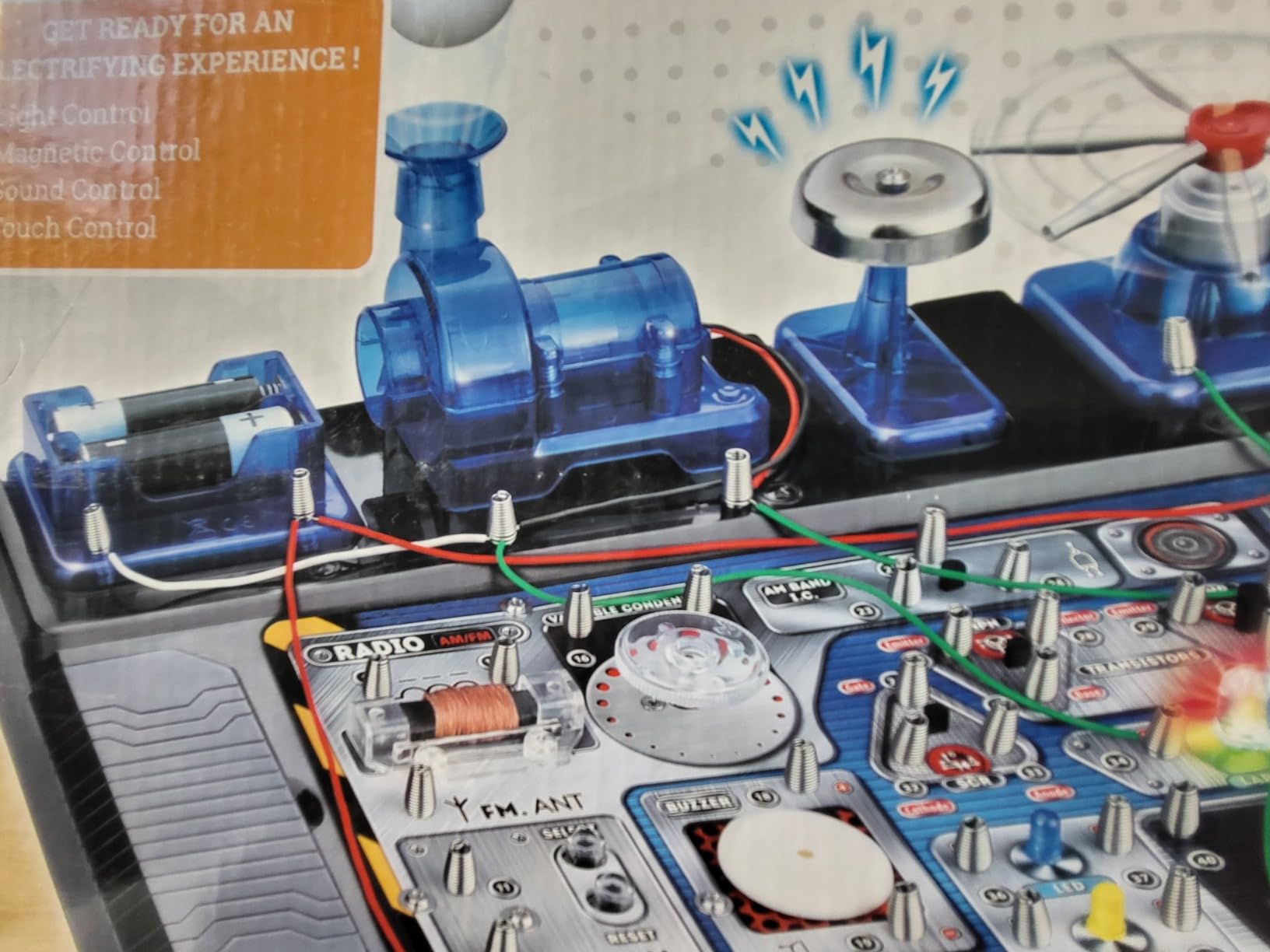
Most circuit kits end at lights. This one has a working radio, a floating ball, a bell and motorized action, so the projects produce movement and sound rather than a row of blinking LEDs, which is what keeps older children engaged.
There are more than 100 hands-on experiments, and the manufacturer recommends ages 8 to 16, which lets the same box serve a younger beginner and a teenager. The kit is 3.5 by 17.5 by 13.5 inches at 2.5 pounds and combines plastic, metal and paper components.
It works equally well in a home and a classroom, and the paper experiment sheets give a teacher a ready sequence. It holds a 4.4 rating from 203 reviews, with a 75 percent five-star share, though a 7 percent one-star share points to some disappointment on value and execution.
The warranty is only 30 days, which is thin for a kit intended to last years, and the review base is small enough that long-term durability is less well documented than the leaders here. Both are reasons to inspect every component on arrival and keep the boxes rather than the instructions.

Who this kit suits
It suits a family with a wide age spread, since the same box serves an eight-year-old starting with simple circuits and a sixteen-year-old working toward the radio and motorized projects. That range is unusual and is the main argument for the higher cost.
It suits a classroom or a makerspace where a single purchase has to serve many students over a term. The experiment sheets structure the content, and the moving parts make a demonstration more engaging than a static circuit.
Who should skip it
Skip it if you are counting cost per project against the snap-circuit kits in this roundup, because you are paying more per distinct build here. A snap kit with a higher project count will keep a younger child busy for less.
Skip it for a family near a shop that does not carry replacement components, and note the 30-day warranty when you keep the receipt. A two-year warranty would make this an easier recommendation for a keepsake purchase.
12. VLGOEM 66-Piece Electronics Exploration Kit – Widest Module Range for Ages 6 and Up
Science STEM Kits for Kids, Electronics Exploration Kit, 66 Pcs DIY Circuit Parts, Over 1200 Projects, STEM Educational Toy Gifts for Kids Boys Girls Ages 3 4 5 6 7 8 9 10 11 12, Color Project Manual
Ages 6+
66 snap parts
No batteries required
2.3 lb
Tool-free grid
Pros
- Large module range on a tool-free grid
- Color-coded numbered components
- Full-color manual supports solo building
- No batteries required
Cons
- 1200+ figure counts small variations
- Smallest review base in the group
Sixty-six snap-together parts give younger children more modules to combine than a kit built around a handful of components, and the plastic grid base gives the feel of a real prototyping board without any of the setup.
It is rated for children over six, which is the youngest starting age of the kits here, and it needs no batteries at all. The kit measures 11.8 by 10.6 by 3.1 inches, weighs 2.3 pounds and comes with a full-color project manual using color-coded, numbered components.
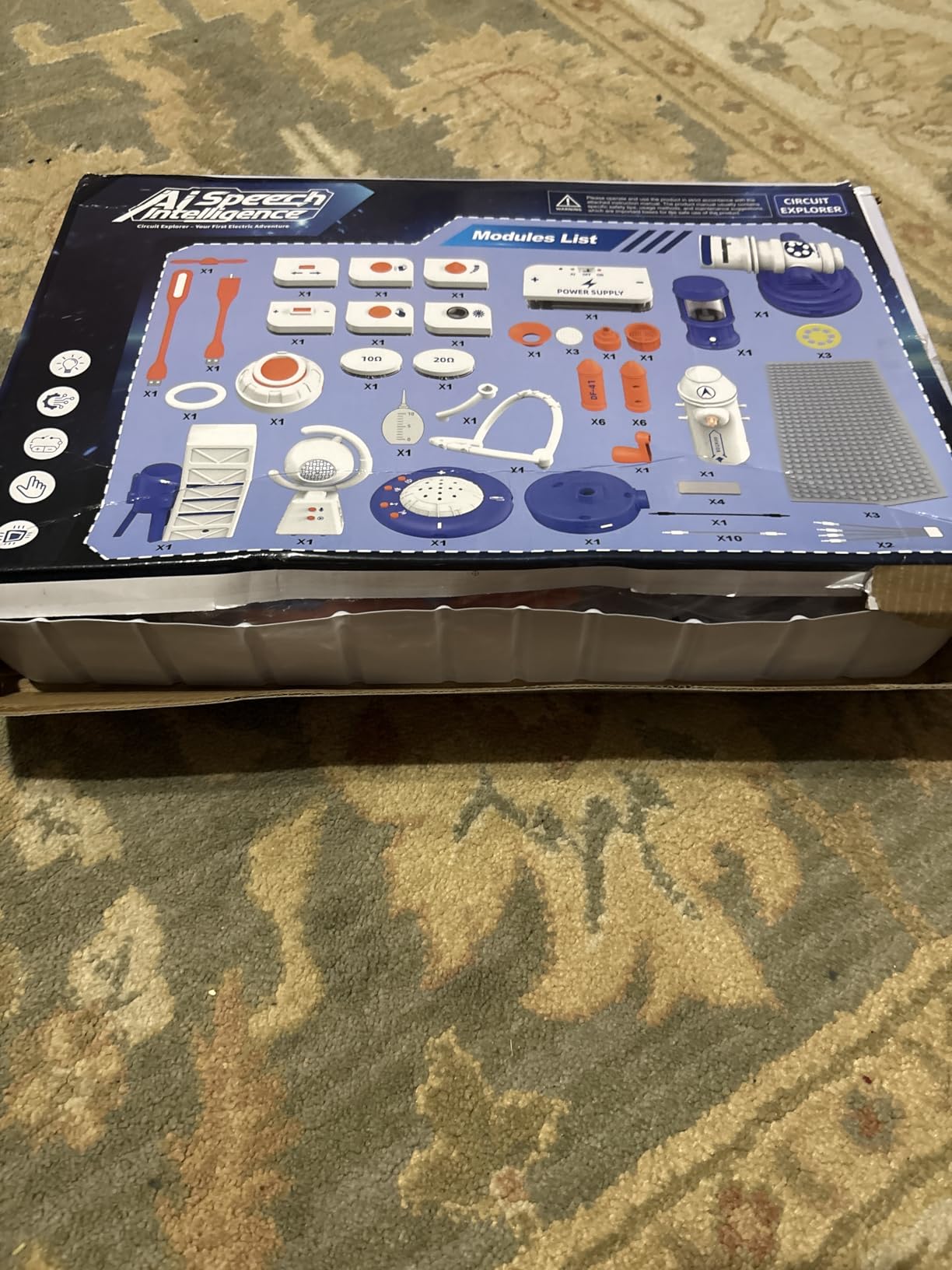
The manufacturer claims more than 1200 project combinations from those 66 parts, and reviewers like the variety of modules and how quickly the setup works with no tools. It holds a 4.4 rating, and the manufacturer is listed as an award-recognized educational toy producer.
Read the 1200 figure carefully. A 6 percent one-star share suggests some disappointment with an inflated claim, since a large share of those combinations are small variations rather than distinct builds. Treat the module range as the selling point and the number as a rough ceiling.

Who this kit suits
It suits a younger child, starting around six or seven, who needs a wide set of parts to fiddle with. Because no batteries are involved, there is nothing to buy before starting and nothing to run down afterwards.
It suits a family looking for a single introduction to electricity before committing to a more advanced kit. The part count keeps a child experimenting for a long time, and the modules transfer conceptually to the bigger kits later in this list.
Who should skip it
Skip it if you need a well-documented track record, because 170 reviews is the smallest base here and long-term durability is the least evidenced. Buy it for a discovery phase rather than as a keepsake that must survive a decade of use.
Skip it if your child is already writing code or asking about component identifiers, since there is no programming and no microcontroller here. It is a circuit kit for the earliest stage, not a platform for a teenager.
How to Choose an Electronics Kit for Kids
Choose by the child’s age and patience first, the format second, and the price last. Age decides whether a kit is a build toy or a learning tool: under seven usually means snap modules only, eight to eleven covers snap circuits and simple coding robots, twelve and above opens soldering, microcontrollers and real assembly manuals.
Second, match the format to the skill you want to build. Snap and magnetic systems teach circuit logic fastest, coding robots teach sequencing and debugging, and wooden or mechanical kits build dexterity and spatial reasoning. A child who is impatient with instructions does better with a five-build robot than with a 420-project manual.
Third, check what is actually in the box. Among the kits here, the mBot needs four AA batteries and a CR2025 for the remote, the BeAndge set needs bubble solution and batteries, and the SMILESSKIDDO kit needs batteries. Several others ship with their batteries included, and that detail alone changes whether a kit works on the morning it is opened.
Solderless or soldering: the decision that narrows everything
Choose solderless for children under twelve. Snap modules, magnetic connectors and pre-soldered boards remove the two biggest barriers: a hot iron and a shorted joint. Nothing in those systems breaks permanently, so a mistake costs nothing, which is what makes independent play realistic.
Choose soldering for a teenager who is ready for it. A DIY speaker or clock project teaches how a joint is made, and if that interests them, our guide to soldering stations for hobby electronics covers the equipment worth owning once they want a second project. Supervise every session and treat ventilation and a heat-safe surface as part of the deal.
Coding platform: Scratch, block-based or text
Scratch-based platforms such as the mBot are the right first step for a child under eleven, since blocks eliminate typos and syntax errors while still teaching sequence, loops and conditions. The value is in moving from blocks to text on the same hardware later, so the platform matters more than the robot’s appearance.
Text-based Arduino work suits a child who is already comfortable in a code editor, usually twelve or older. Be skeptical of any kit that claims to teach a language like Python while the projects are copy-and-paste; a genuine kit lets the child change a value and see a different physical result.
Component quality and durability checks
Look for numbered, color-coded parts, a full-color manual and video instructions, since those three features decide whether a child works alone or waits for an adult. Check whether the manufacturer publishes a warranty longer than 30 days, and whether the parts are plastic, wood or metal, because metal motors survive rough play that plastic gears do not.
Red flags to watch for are vague project counts that include minor variations, mixed-language packaging, and no replacement parts. Parents on r/AskElectronics and forum.allaboutcircuits.com repeatedly raise replacement availability as the deciding factor between two otherwise similar kits, so check it before you buy rather than after a piece snaps.
Frequently Asked Questions
What is the best electronics kit for kids?
The Snap Circuits Jr. SC-100 is the best all-round electronics kit for kids because it needs no tools or soldering, starts at age eight, and supports more than 100 projects from 30 snap-together modules, while earning a 4.8 rating across 29316 reviews. Add a coding robot such as the Makeblock mBot later, once your child is ready to program rather than clip parts together.
What electronics kit is best for a 10 year old?
At age ten, a coding robot is usually the strongest choice, because a child who is bored by static circuits gets real engagement from programming behaviour and debugging it. The Makeblock mBot suits this age well, building in about 15 minutes and moving from Scratch blocks to Arduino text on the same robot.
What is the best beginner electronics kit with no soldering?
Snap-based kits are the standard answer. The Snap Circuits Jr. SC-100, the Science Kidz 188-Experiment set, the SMILESSKIDDO 420+ project kit and the National Geographic 120-project kit all connect parts without a soldering iron, using numbered, color-coded modules that clip onto a plastic grid or board.
Are snap circuits durable enough for regular use?
They are light and plastic, so moving parts and connectors are the failure points over time, and parents on r/Parenting report cracked snap tabs after heavy repeated use. Most owners still rate them highly because a broken module is replaceable and the plastic design means a mistake costs nothing, but avoid forcing connectors and store the board flat.
What coding should I introduce to a child aged 10?
Start with a block-based platform such as Scratch, because dragging blocks into a sequence removes typing and syntax errors while still teaching loops, conditions and debugging. A kit like the Makeblock mBot lets a child start on day one and move to Arduino text on the same robot, so the platform grows without buying new hardware.
Final Recommendations by Use Case
For most families the best electronics kits for kids start with the Snap Circuits Jr. SC-100, because it delivers real circuit understanding with zero adult help required and a review base large enough to trust. Add the Makeblock mBot when your child wants to program rather than assemble, and the CYOEST speaker kit when a teenager wants one finished object to keep.
Pick the Sillbird solar set for outdoor screen-free play, the National Geographic circuit kit when independent work matters most, the Smartivity wooden kit for durability, and the BeAndge six-build box when several children need gadgets at once. Check the batteries and consumables in the box before the first weekend, and buy the next level rather than replacing what your child already owns.