
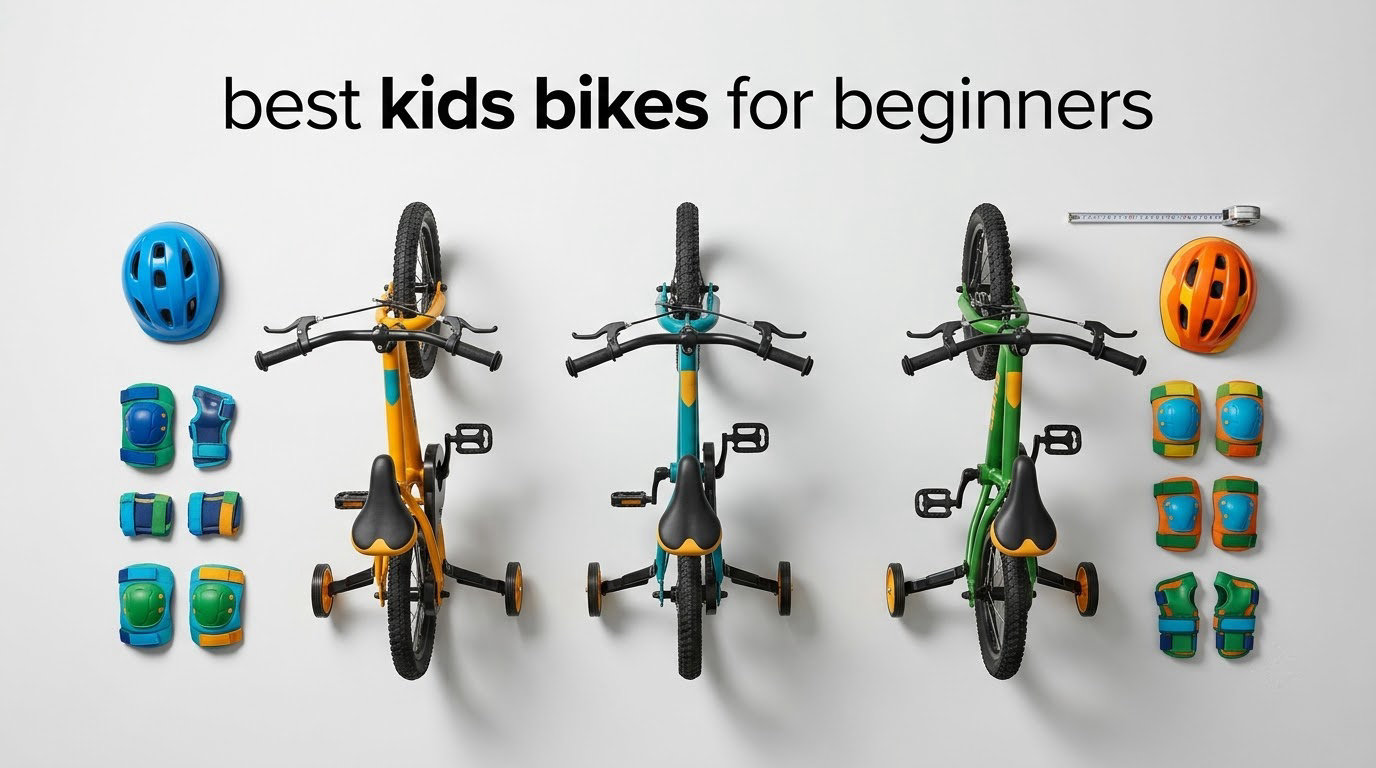
Here is the short answer: the best kids bikes for beginners weigh no more than 30-40% of your child’s body weight, have hand brakes a child can actually reach, and are sized by inseam rather than by age. A balance bike gets the balance stage out of the way before pedals ever come into the picture.
That is the standard our experienced riders keep coming back to, and it is the standard we applied to every bike below. We spent weeks comparing frames, brake levers, seat-height ranges and weights across ten of the most-reviewed beginner bikes on the market, then grouped them by the learning stage each one actually serves. No bike here gets a pass just because a brand put its name on it.
The three stages matter more than wheel size, and almost every roundup we read ignores that. A child moves from a feet-to-floor balance bike, to gliding on two wheels, to a pedal bike, and only later to gears and bigger wheels. Buying stage three for a child still working on stage one is the single most common mistake parents make, and it is the one that produces a bike that sits in a garage for a year.
One more thing before the picks. If your child is already riding confidently on a balance bike and is chasing their older siblings, the balance bikes below are a step backwards. Jump to the first pedal bike section instead, or if they are already comfortable with pedals, look at the 16 inch models and read our beginner-friendly tool guide for the same one-project-a-week approach we use at home.
Table of Contents
Top 3 Picks From This Roundup (October 2026)
SEREED Baby Balance Bike
- Weighs 3.5 lb
- Recommended for 12-24 months
- Closed EVA wheels
- 2 year warranty

RoyalBaby EZ 16 inch
- Balance-to-pedal 2-in-1
- Works without training wheels
- 98% pre-assembled
- Lifetime frame warranty
If you want one recommendation instead of ten: the SEREED is the smoothest first ride for the youngest beginners, the Strider 12 Sport is the better two-wheel balance bike, and the RoyalBaby EZ is the strongest first pedal bike for a child moving up without training wheels.
Best Kids Bikes for Beginners in 2026 at a Glance
| Product | Specs | Action |
|---|---|---|
| SEREED Baby Balance Bike |
|
Check Latest Price |
| Strider 12 Sport |
|
Check Latest Price |
 Retrospec Cricket Retrospec Cricket |
|
Check Latest Price |
 Strider 14x Classic Strider 14x Classic |
|
Check Latest Price |
 Retrospec Cub Retrospec Cub |
|
Check Latest Price |
| RoyalBaby EZ 16 inch |
|
Check Latest Price |
 RoyalBaby EZ-Pro RoyalBaby EZ-Pro |
|
Check Latest Price |
 OHIIK 2 in 1 Balance Bike OHIIK 2 in 1 Balance Bike |
|
Check Latest Price |
 cubsala 14 inch cubsala 14 inch |
|
Check Latest Price |
 Retrospec Beaumont Mini 16 inch Retrospec Beaumont Mini 16 inch |
|
Check Latest Price |
Two entries in that table carry a caution. The OHIIK converts quickly but has the lowest rating in the set, and the Retrospec Beaumont Mini lists a 26 lb weight that makes it a poor match for a small four-year-old. Everything else scored at or above 4.6 with hundreds or thousands of reviews behind it.
1. SEREED Baby Balance Bike: the smoothest first ride for a one-year-old
SEREED Baby Balance Bike for 1 Year Old Boy Girl, First Birthday Gift Toy
3.5 lb aluminum frame
6.7 inch closed EVA wheels
No brake
Ages 12-24 months
Pros
- Light enough for a toddler to lift and steer alone
- Closed wheels protect small feet and indoor floors
- 135 degree steering limit stops it flipping
- Quick assembly
- Soft seat and non-slip TPU grips
Cons
- Four wheels mean a later move to a two-wheeler
- No brake so stopping is done with feet
- Some deliveries differ in colour from the listing
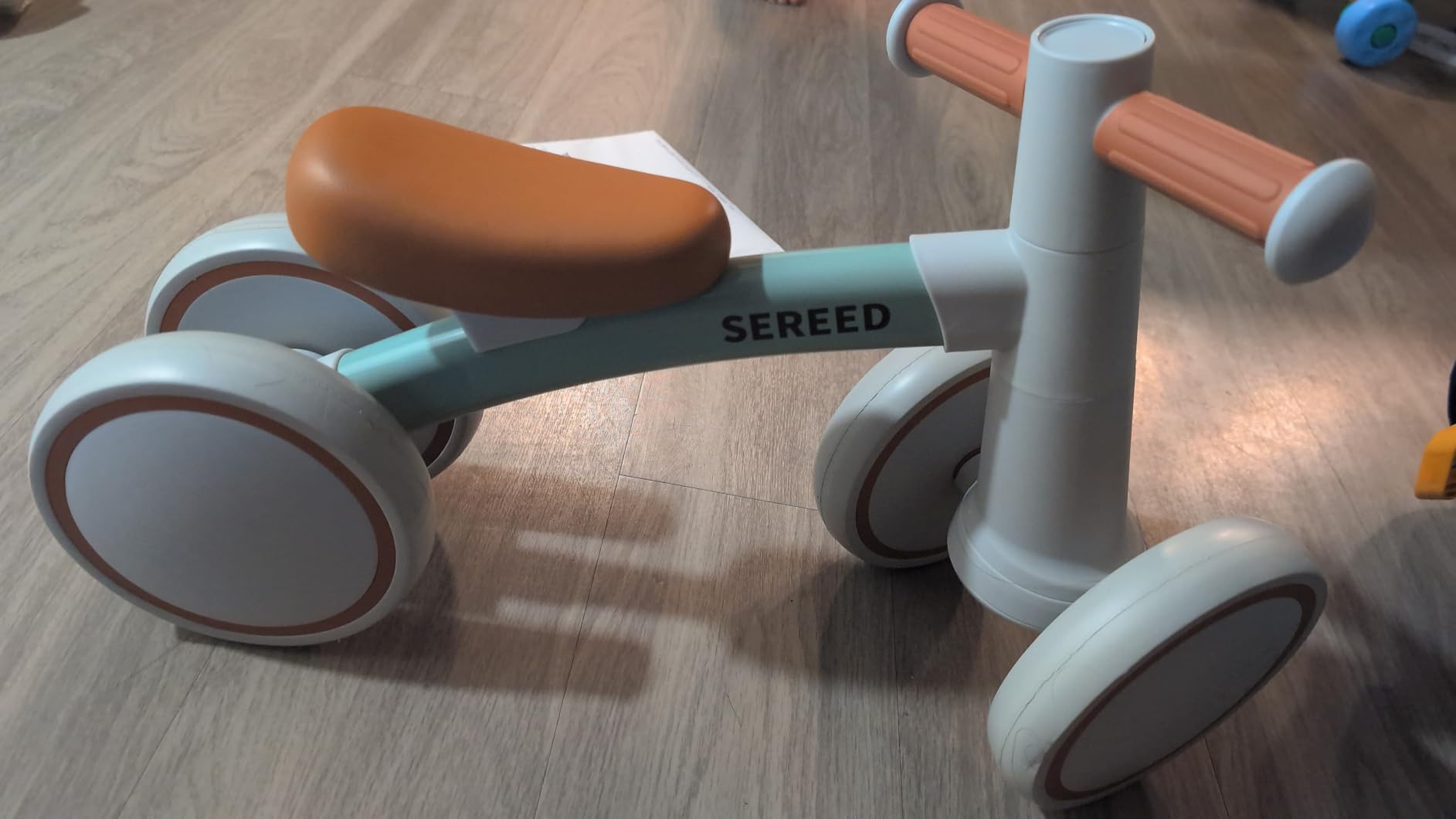
This was the first bike our own three-year-old could steer without an adult’s hands on the frame, and it remains the bike I recommend most often to parents of under-twos. At 3.5 lb it is genuinely portable, which matters more than people expect: a bike that weighs 12 lb lives in the garage because nobody wants to carry it to the park.
The closed EVA wheels are the quiet decision. They roll smoothly across hardwood without scratching it, and their width is wide enough that a toddler’s foot cannot slip down into the spokes. That foot-clamping problem is the reason we steer families away from tiny open-wheel first bikes.
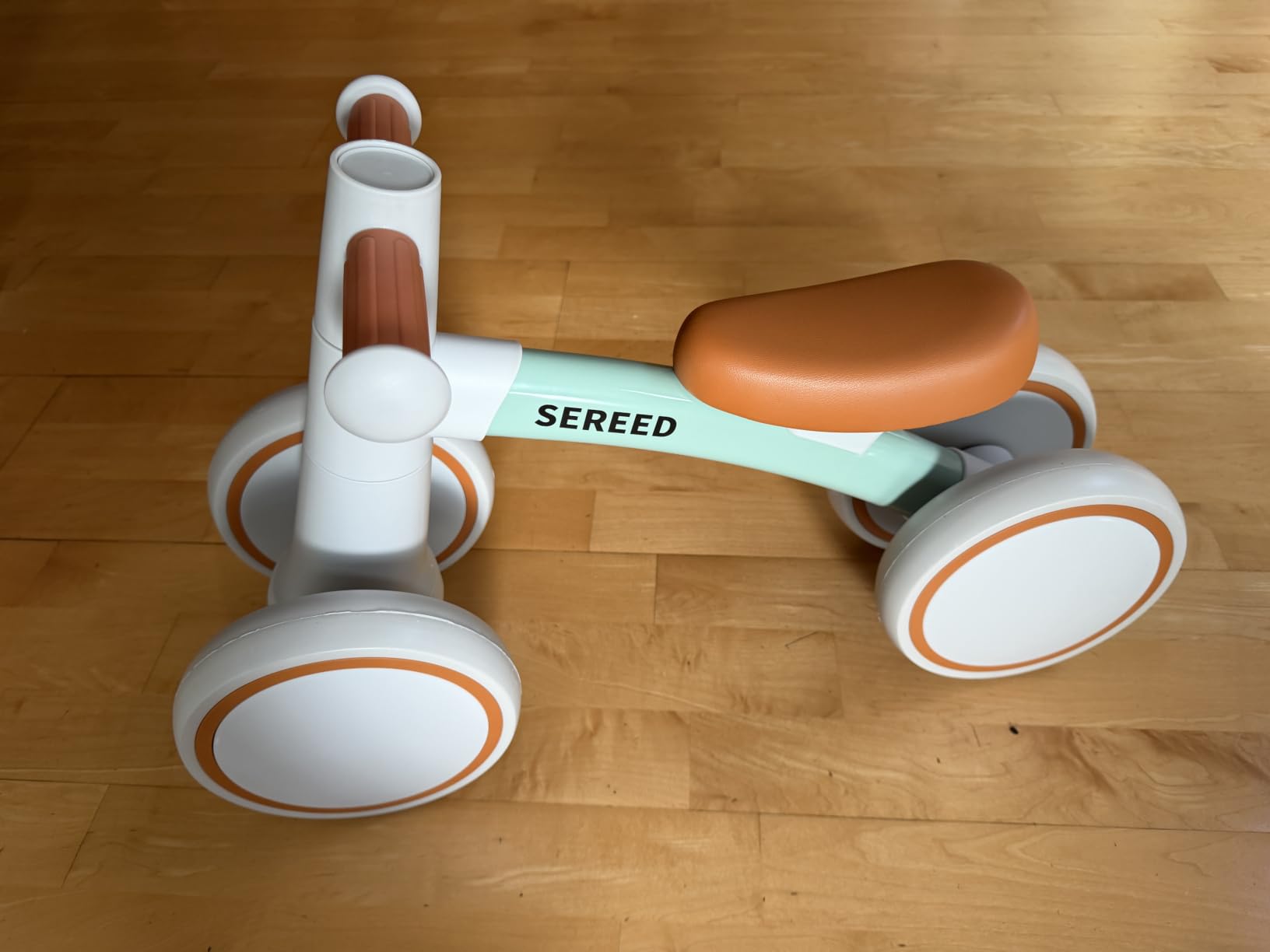
The 135 degree steering limit with gravity steering is a small piece of engineering that does a lot of work. A balance bike with unlimited handlebar rotation is a toy a toddler can flip over in a second; this one resists that, which is why the frame is still in one piece after months of hallway use.
Two things to know before you buy. There is no brake at all, so stopping means dragging feet on the ground, and that is genuinely fine at this age because a one-year-old cannot work a lever with enough force to matter. Parents also report occasional colour differences between the listing photo and what arrives, so treat the colour as a bonus rather than a promise.
Who this suits best
This is the right pick for a child between 12 and 24 months who is walking confidently but has never ridden anything. The manufacturer caps it at 55 lb, and the four-wheel layout means a small child sitting down and scooting still has full control. Families who live in an apartment, a condo, or a house with a smooth hallway get the most out of it.
It is also the least tip-prone first purchase on this list. A child cannot roll this bike over, so the early wobbles that scare toddlers on two wheels simply do not happen.
Who should skip it
Skip it if your child already glides confidently on two wheels. Four wheels are a crutch at that point, and a two-wheeler like the Strider 12 Sport below will teach balance faster. Also skip it if you are buying for a birthday present and cannot check the size first, because the fit range is narrow.
Budget families should know the spend here goes into the aluminum frame and the enclosed wheels rather than into a smaller sticker. It survives being dragged and dropped; light plastic ride-ons often crack in a season.
2. Strider 12 Sport: the best two-wheel balance bike for ages 1 to 4
Strider 12 Sport, No Pedal Balance Bike for Kids Ages 1–4 Years, Matte Gray
6.7 lb alloy steel frame
12 inch never-flat tires
Seat 11-17 in.
Ages 1 to 4
Pros
- Two-wheel design teaches real balance
- Seat and bars adjust across ages 1 to 4
- Never-flat foam tires need no pump
- Supports riders to 60 lb
- Tool-free assembly with tools included
Cons
- No brake
- so stopping is by dragging feet
- No footrest for kids who like to rest their feet
- Costs more than generic balance bikes
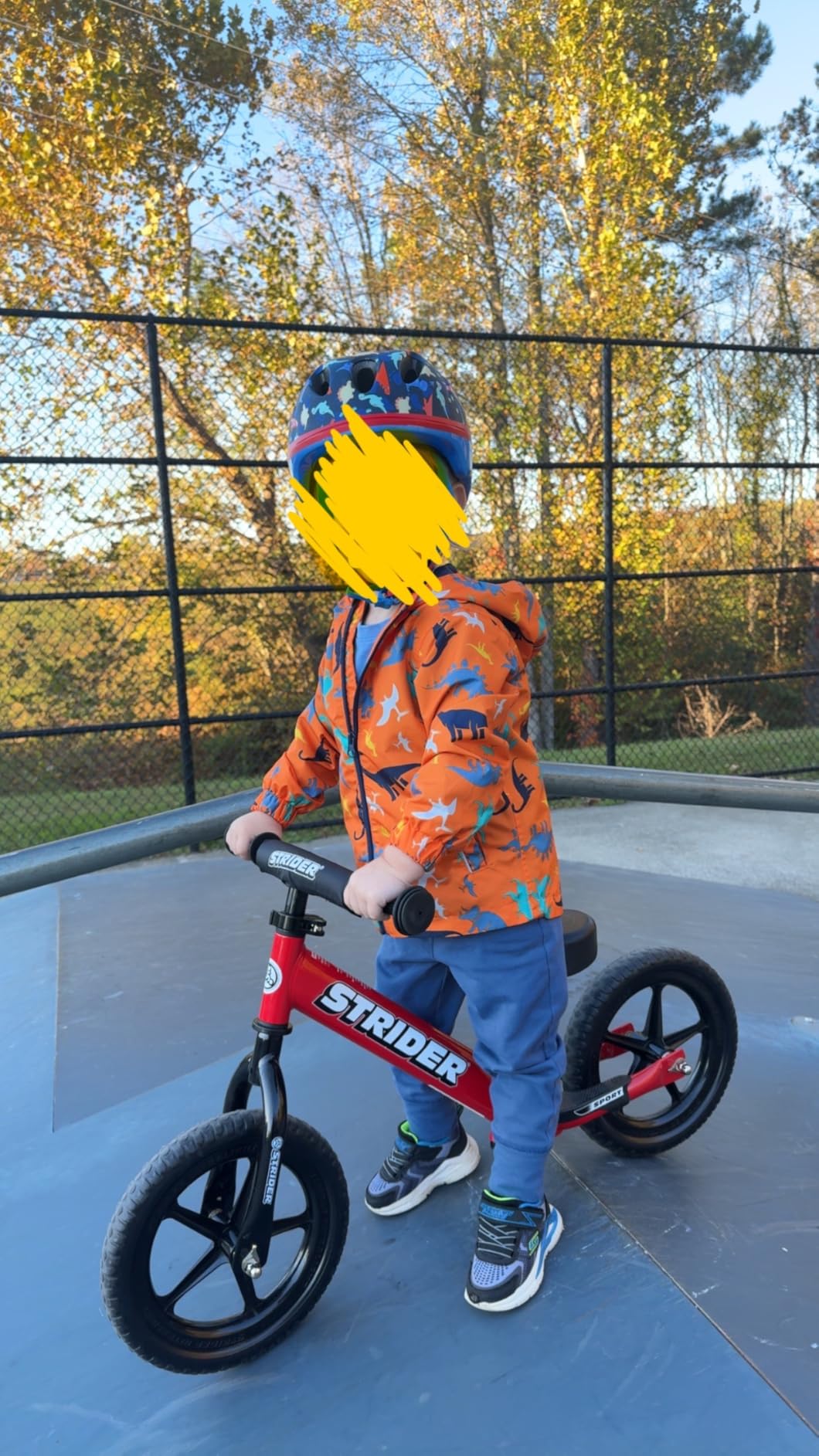
The Strider is the bike experienced riders name most often when parents ask what actually works for teaching a child to ride, and after living with one for a season the reason is obvious: it is a real two-wheeler with a low seat, so a toddler’s feet drag easily at walking pace. A child who can scoot can balance. That is the whole trick, and this bike gets there without training wheels.
At 6.7 lb it is heavier than the SEREED but still light enough for a two-year-old to lift and turn. The frame is alloy steel, and the 12 inch foam rubber tires are genuinely never-flat, which removes the single most common reason a balance bike ends up unusable in a garage.
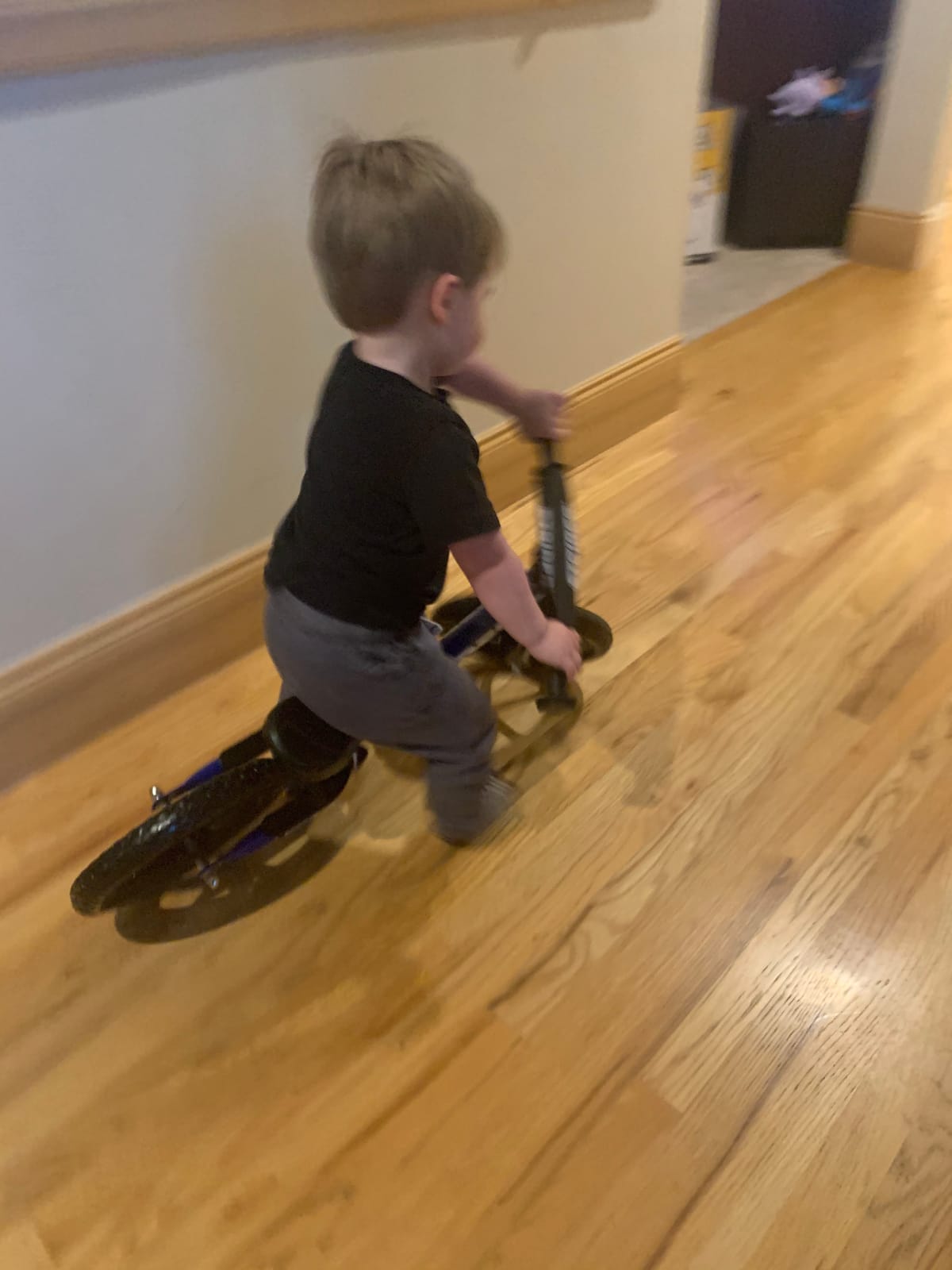
The seat post travels from 11 to 17 inches and suits an inseam of 12 to 18 inches, so one bike covers ages one through four and most of a sibling pair. The handlebar adjusts too. When our tester outgrew the top of the range at just under four, we handed it to her younger cousin, who is still riding it.
There is no brake, and some parents take that as a fault. We think it is a feature at this age. A lever requires hand strength and coordination a one-year-old does not have, and most experienced instructors teach foot-dragging first anyway.
Who this suits best
Choose this for a child aged one to four who can already scoot on a ride-on toy, or for a family that wants one balance bike to hand between siblings. It covers a wide fit range for a single purchase, and the 60 lb weight cap includes almost every child before they move to pedals.
It is also the bike to buy when you expect to ride off a beach or a gravel path. The never-flat foam tires shrug off punctures and run quietly on pavement, so the same bike works in a car boot on a family trip.
Who should skip it
Skip it if your child is under 18 months and not yet walking independently. Sitting on a two-wheeler with feet unable to reach the ground turns a learning toy into a frustration, and the SEREED above is the right starting point for that stage.
Also skip it if you need a bike that stops on command now. There is no hand brake and no footrest, so a child who wants somewhere to rest their feet while coasting will drag them on the ground the whole way.
3. Retrospec Cricket: a four-wheel start for early walkers
Retrospec Cricket Baby Balance Bike, 4-Wheel Ride-On Toy for Ages 12-24 Months – First Bike & Toddler Bike for 1 Year Old Boys & Girls, First Birthday Gift
4 lb plastic body
Four-wheel feet-to-floor design
Arrives 95% assembled
Ages 12-24 months
Pros
- Four-wheel stability reassures nervous new riders
- Only 4 lb so it travels easily
- Quiet wheels that do not scratch floors
- Most owners assemble in under 15 minutes
- Soft bars and cushy seat for small hands
Cons
- Runs small at the top of the age range
- A child not yet walking may not propel it
- Four wheels make it a transition toy
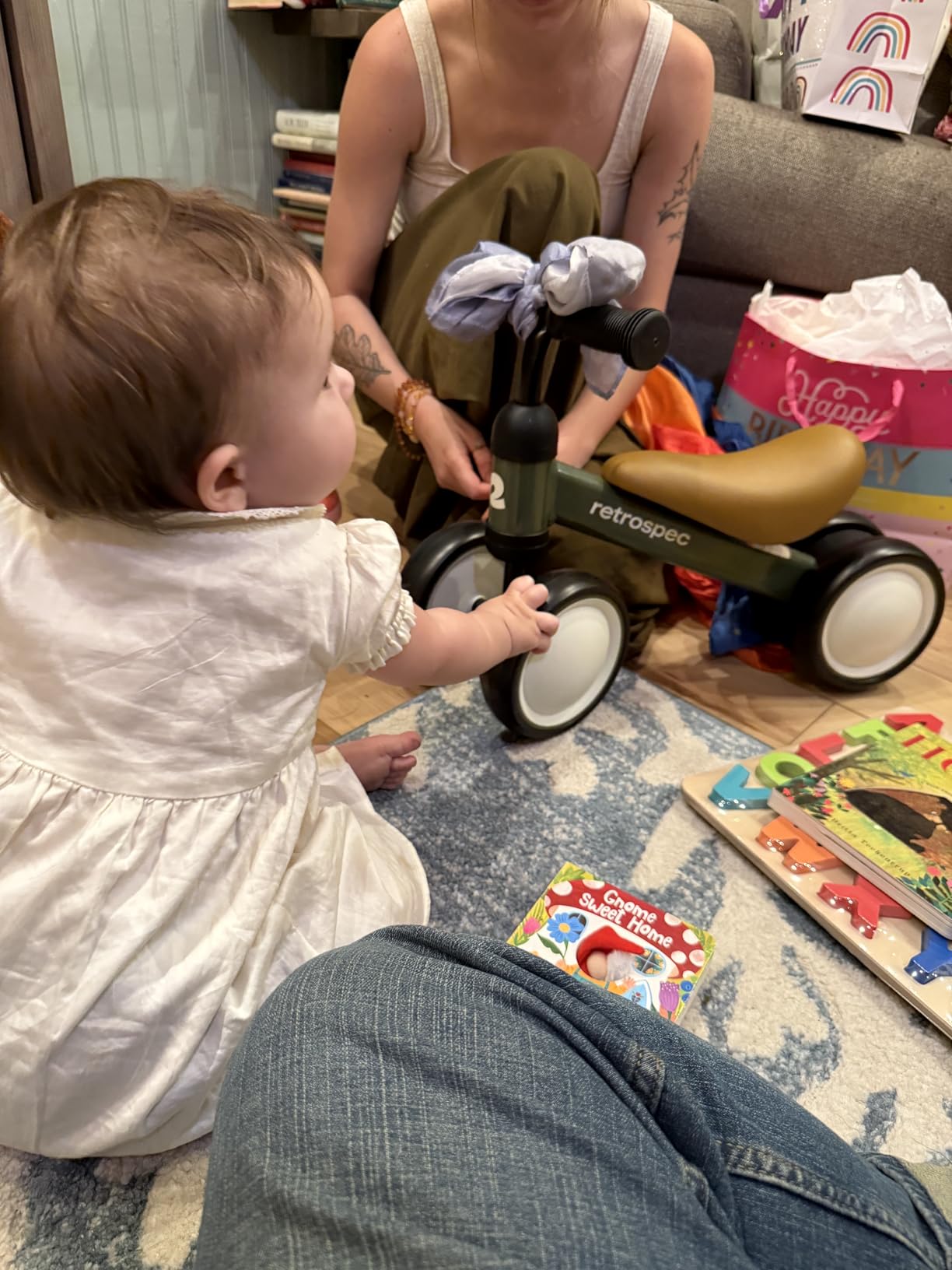
The Cricket is the one to buy when you are not sure your child is ready for a two-wheeler, and its arrival at 95% assembled is the detail that wins over parents. There is almost nothing to build, so it can be out of the box and moving in the time it takes to cut a birthday cake.
Unlike a scooter, this has handlebars and a seat, so a child who can already scoot takes to it immediately. The feet-to-floor posture means they push with their legs in exactly the way they will later push the pedals, which is a gentler on-ramp than sitting upright and coasting.
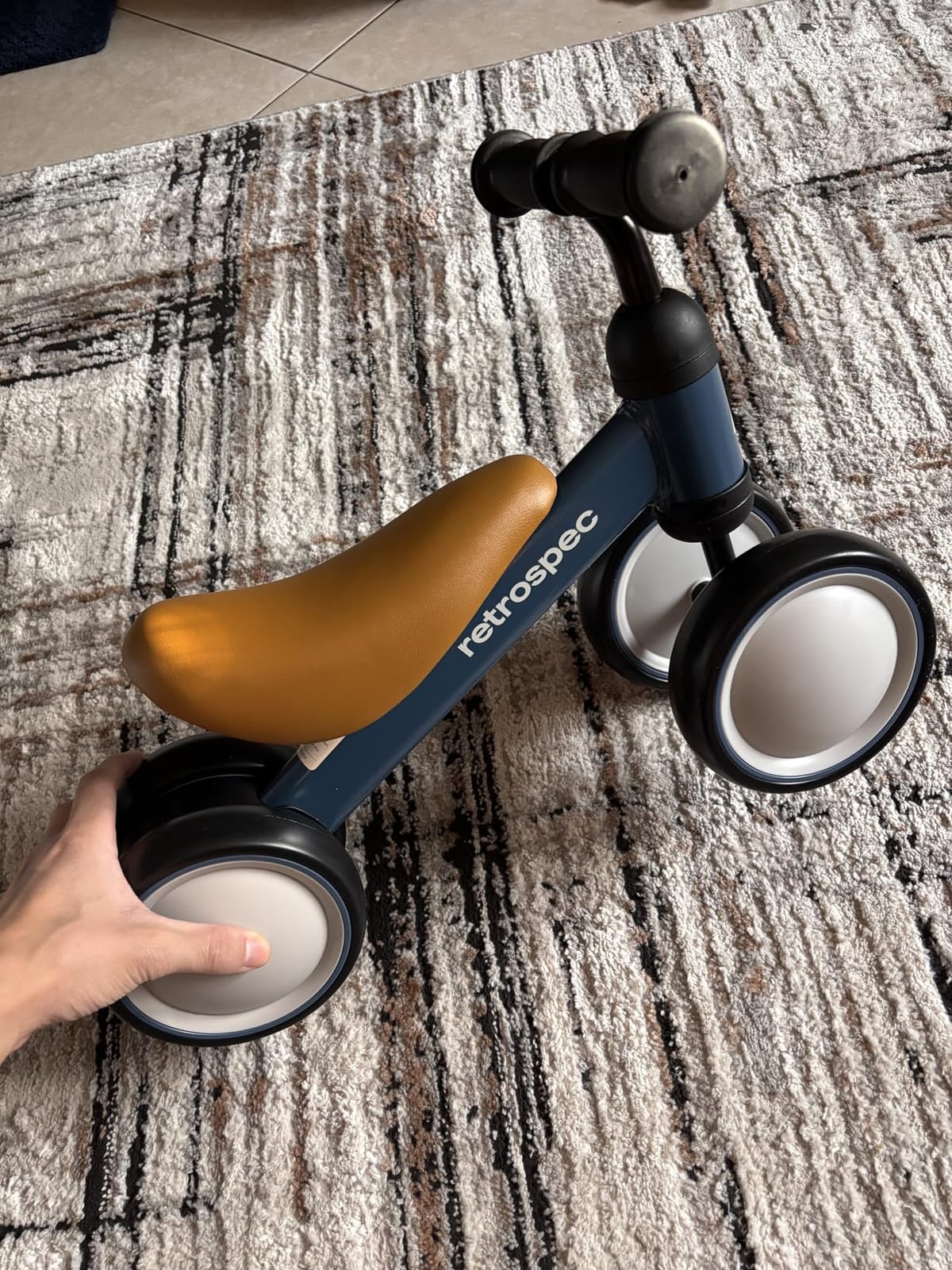
What the reviews flag most is sizing. The inseam window is 9 to 13 inches and the weight cap is 44 lb, which is a tight fit for a child at the older end of 12 to 24 months. Several owners report a two-year-old outgrowing it faster than the label suggests, so measure before you commit rather than after.
The body is plastic, not aluminum, and the wheels are quiet non-slip rubber that are kind to indoor floors. That combination makes this a park-and-porch bike rather than a bike for a rough driveway.
Who this suits best
Pick this for a child between 12 and 24 months with an inseam between 9 and 13 inches who is walking but not yet balancing. It is also the most practical first bike for grandparents’ houses, daycares, and any indoor space, because the whole thing weighs 4 lb and the wheels will not mark a floor.
Families who want the shortest possible path from box to riding should shortlist it first. Very few bikes arrive this close to ready.
Who should skip it
Skip it if your child can already balance on a two-wheeler, even briefly. The Cricket will not teach that skill, because four wheels remove the reason for learning it, and moving to a two-wheeler later can feel like a step back to a nervous child.
Skip it if you are buying a last-birthday-gift bike for a two-year-old. The sizing complaints in the reviews are concentrated exactly there.
4. Strider 14x Classic: the balance bike that grows and converts to pedals
Strider 14x Classic Balance Bike for Kids Ages 3–6 Years, Awesome Blue
12.5 lb steel frame
Seat 15-22 in.
Ages 3 to 6
Converts with pedal kit
Pros
- Wide 15-22 in. seat range covers ages 3 to 6
- Converts to a pedal bike with the add-on kit
- Handles riders up to 80 lb
- Steel frame smooth over rough paths
- Tool-free assembly
Cons
- Pedal conversion kit costs extra
- No brakes in balance bike mode
- Heavier and bulkier than a 12 inch balance bike
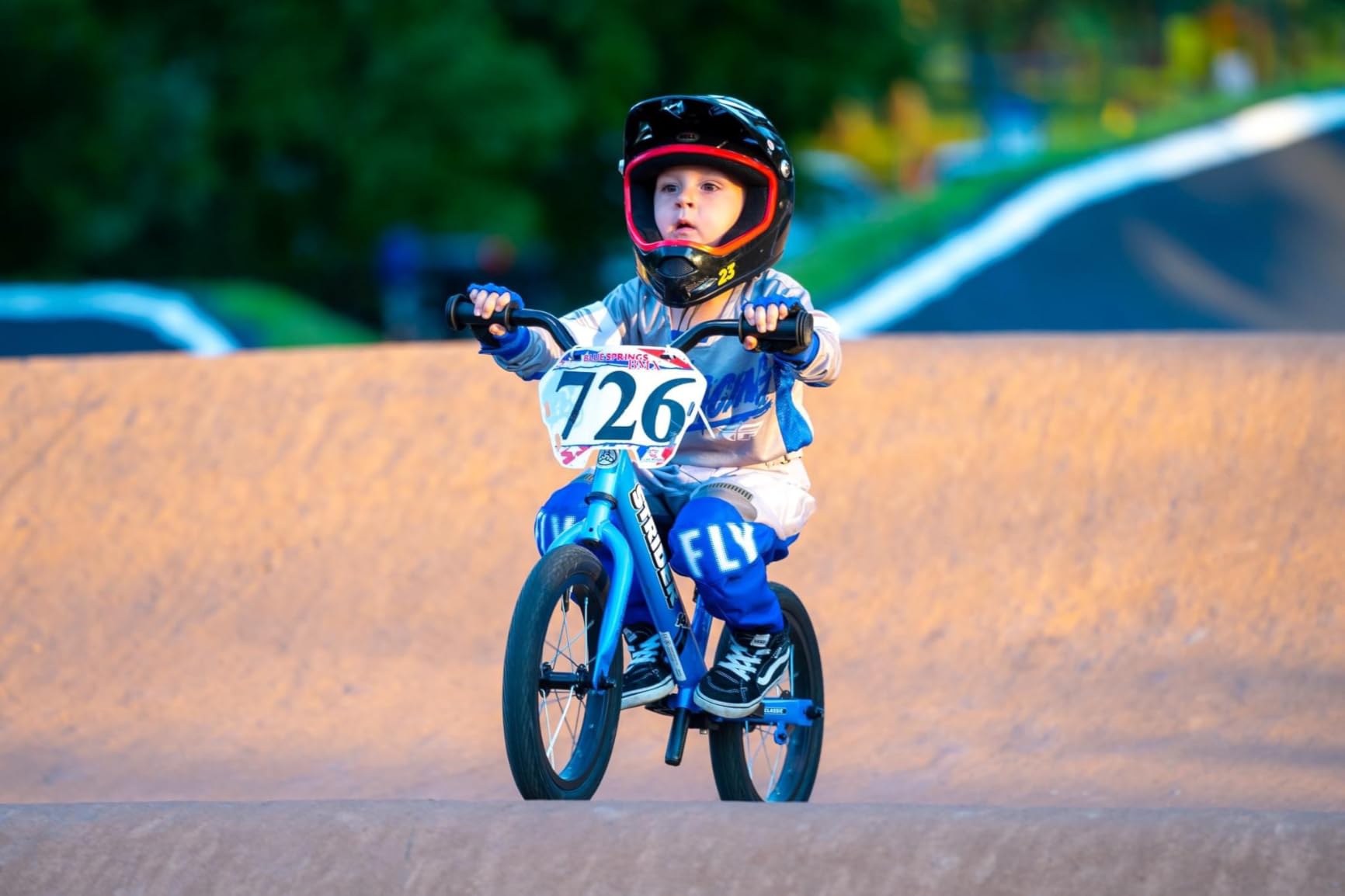
The 14x Classic is the rare balance bike that solves the outgrowing problem rather than deferring it. The seat post runs from 15 to 22 inches, which suits an inseam of 16 to 23 inches, and the whole thing carries a rider up to 80 lb. One bike genuinely covers the three-to-six-year window.
What makes it interesting for beginners is the conversion path. Strider sells a pedal kit that turns this same frame into a pedal bike, so the child who balances on it at three can be pedalling on the same machine at four rather than starting a brand new relationship with an unfamiliar bike.
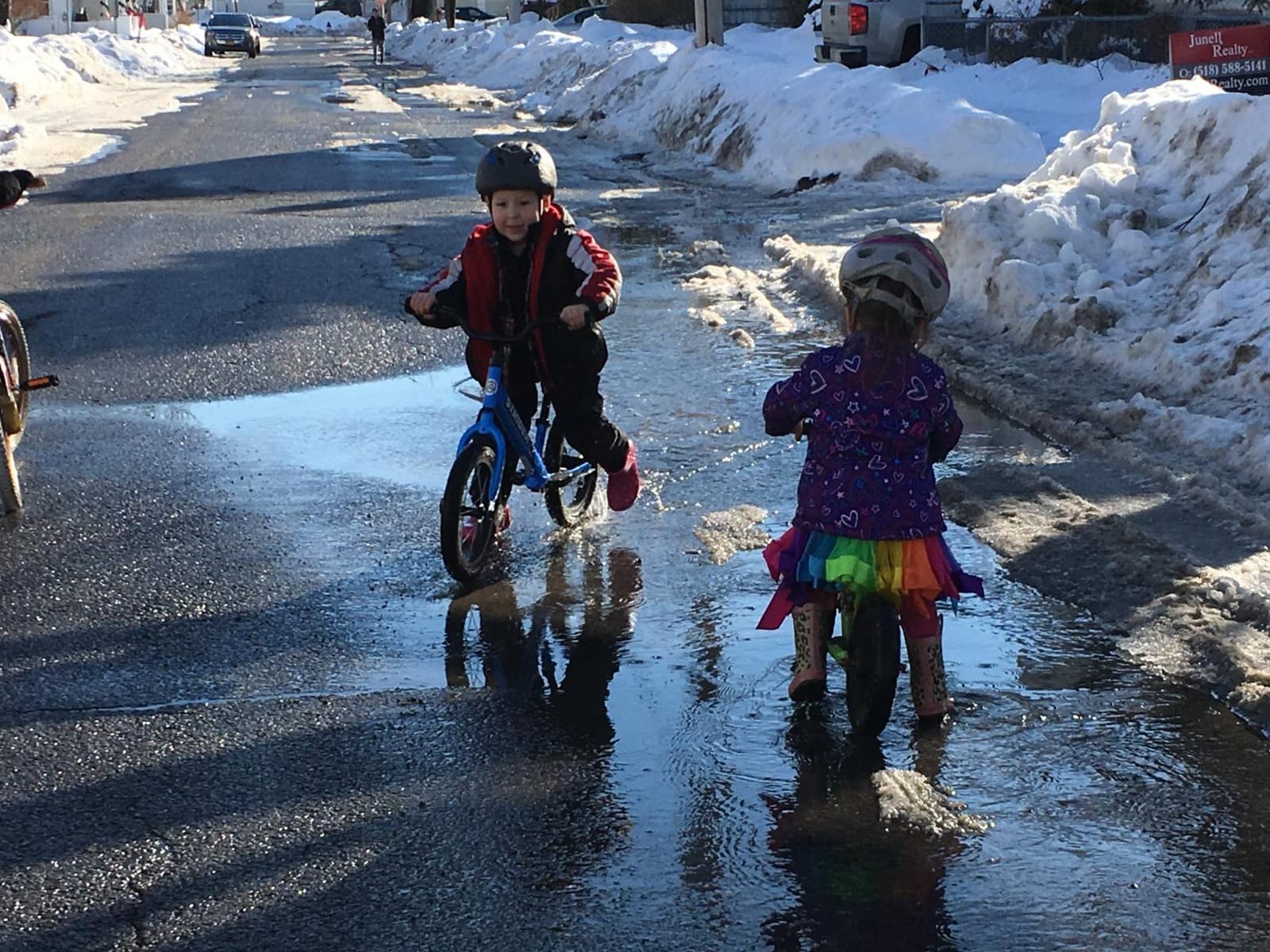
At 12.5 lb it is noticeably heavier than the 12 inch models, and that shows when a three-year-old tries to lift it into a car boot. It is still light for a 14 inch bike, but if you plan to carry it regularly, weigh that against the fit range you gain.
The steel frame is a deliberate choice. It is heavier than aluminum but far more tolerant of a bike being dropped on gravel by a three-year-old, which is what actually happens in the first year of ownership.
Who this suits best
This suits a three-year-old with an inseam of 16 to 23 inches, and especially a family who wants to buy one balance bike rather than two. The 80 lb weight cap also means older siblings can share it, which is worth more in practice than the extra weight.
It is also the option for parents who have already decided to skip training wheels entirely. Keeping the same frame through the transition removes one variable at a time, and children adapt to a new pedal bike faster when the seat and bars feel familiar.
Who should skip it
Skip it for a child under three. A 12.5 lb bike with a 15 inch minimum seat height is too much to ask of a two-year-old, and the fit range does not reach down into toddler inseams at all.
Skip it if your child rides rough ground and you have a small garage. It is a bulky bike, and the conversion kit is an extra purchase on top of the bike.
5. Retrospec Cub: a budget balance bike with airless tires
Retrospec Cub 2 Toddler 12″ Balance Bike, 18 Months – 3 Years Old, No Pedal Beginner Kids Bicycle for Girls & Boys, Flat-Free Tires, Adjustable Seat, & Durable Frame
12 inch wheels
Seat 11-14.5 in.
Ages 18 months to 3 years
Airless tires
Pros
- Airless tires remove pumps and flat worries
- Seat adjusts 11 to 14.5 in. with quick-release bars
- Low frame lets small kids mount alone
- Ten colour options
- Easy assembly
Cons
- Airless tires transmit more jolts on rough ground
- Seat hardware loosens and needs re-tightening
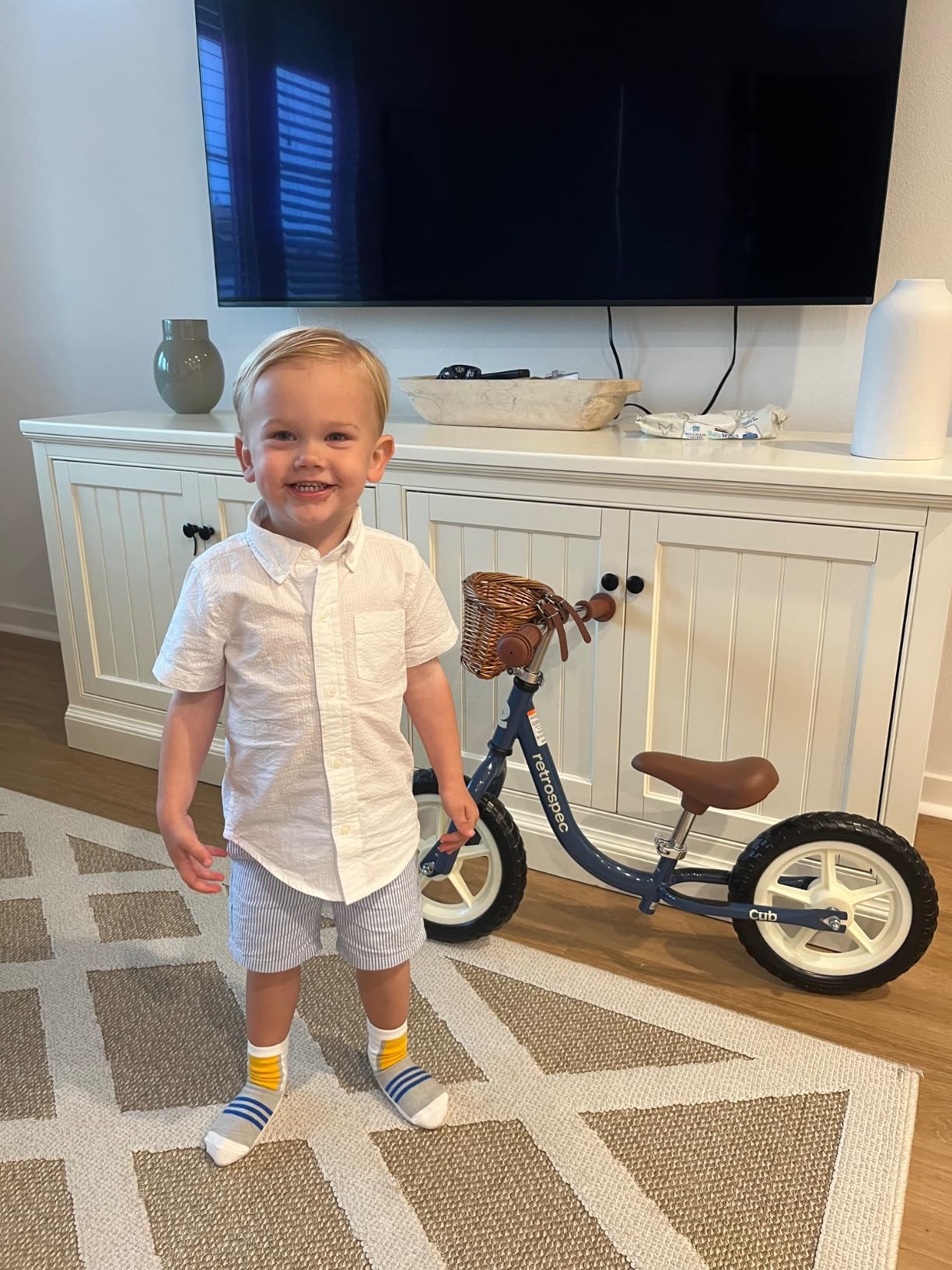
The Cub is the value pick for a child between 18 months and three years who is ready for two wheels but on a tighter budget. The airless tires are the standout: no pump, no sealant, no flat on the way to the playground, and they run fine over pavement, grass and packed dirt.
Our favourite detail is the low frame with rounded edges. A small child can swing a leg over and push off without an adult lifting them, and that independence is what keeps a child riding instead of asking to be carried back indoors.
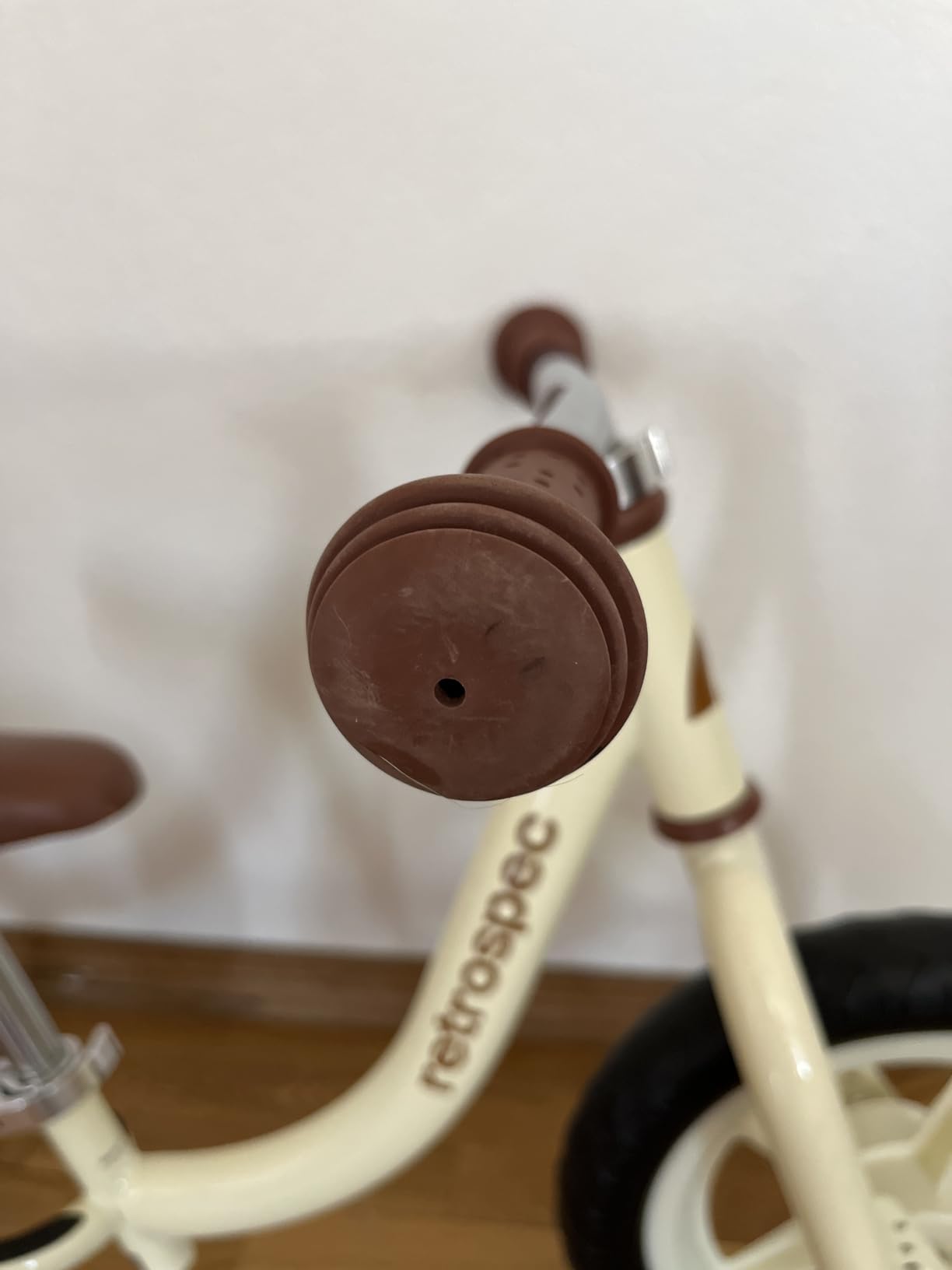
The seat adjusts from 11 to 14.5 inches and the handlebars use a quick release, so a growing child can be dialled in without tools. The alloy steel frame supports riders up to 50 lb, which is a generous ceiling for the age range.
Two honest caveats. The seat adjustment hardware can loosen over time, so check it every few weeks, and reviews mention an occasional wheel arriving damaged, which is a packing issue rather than a design one. The rating is high at 4.8, but the review base is smaller than the bikes above it.
Who this suits best
Choose the Cub for a child who has already done some balance work on a four-wheel ride-on and is ready for a real two-wheeler, without a large spend. It is a strong second balance bike rather than a first one, and a sensible gift when you know the child’s inseam.
It also suits families who ride on mixed surfaces. Airless tires cannot be punctured by thorns or glass, which removes the most common reason a first bike gets abandoned.
Who should skip it
Skip it if you want a brake. There is no lever and no rear brake at this stage, so stopping depends entirely on the child’s feet finding the ground, which is fine for a confident toddler and frustrating for a hesitant one.
Skip it if your child rides a lot on gravel or roots. Airless plastic tires give almost no shock absorption, and a rough surface will reach a young rider’s spine and wrists in a way a pneumatic tire would soften. A few parents also report a wheel arriving damaged.
6. RoyalBaby EZ 16 inch: the best first pedal bike without training wheels
RoyalBaby EZ Kids Bike, 16 Inch for Ages 4-7 Years, Blue
16 inch single speed
Balance-to-pedal 2-in-1 design
Coaster and caliper brakes
98% pre-assembled
Pros
- Converts from balance mode to pedals so training wheels are not needed
- Frame is 20% lighter than average for the class
- Child geometry keeps feet down at the saddle
- Tool-less cranks and 98% pre-assembly
- CPSC and EN-71 compliant
Cons
- Heavier than a pure balance bike
- Single speed with no range for hills
- Plastic parts show wear earlier than steel
This is the bike we would put a four-to-seven-year-old on if they want to learn without ever touching training wheels, and the reasoning is in the geometry rather than the marketing. A child on this bike can put both feet flat on the ground while sitting at the saddle, which is what makes starting and stopping without support possible for the first time.
The 2-in-1 design matters here. It starts as a balance bike and converts to a pedal bike with tool-less cranks, so a child who is not ready for pedals on day one can glide on the same machine and switch when the balance is there. In our sessions that switch took about a week.
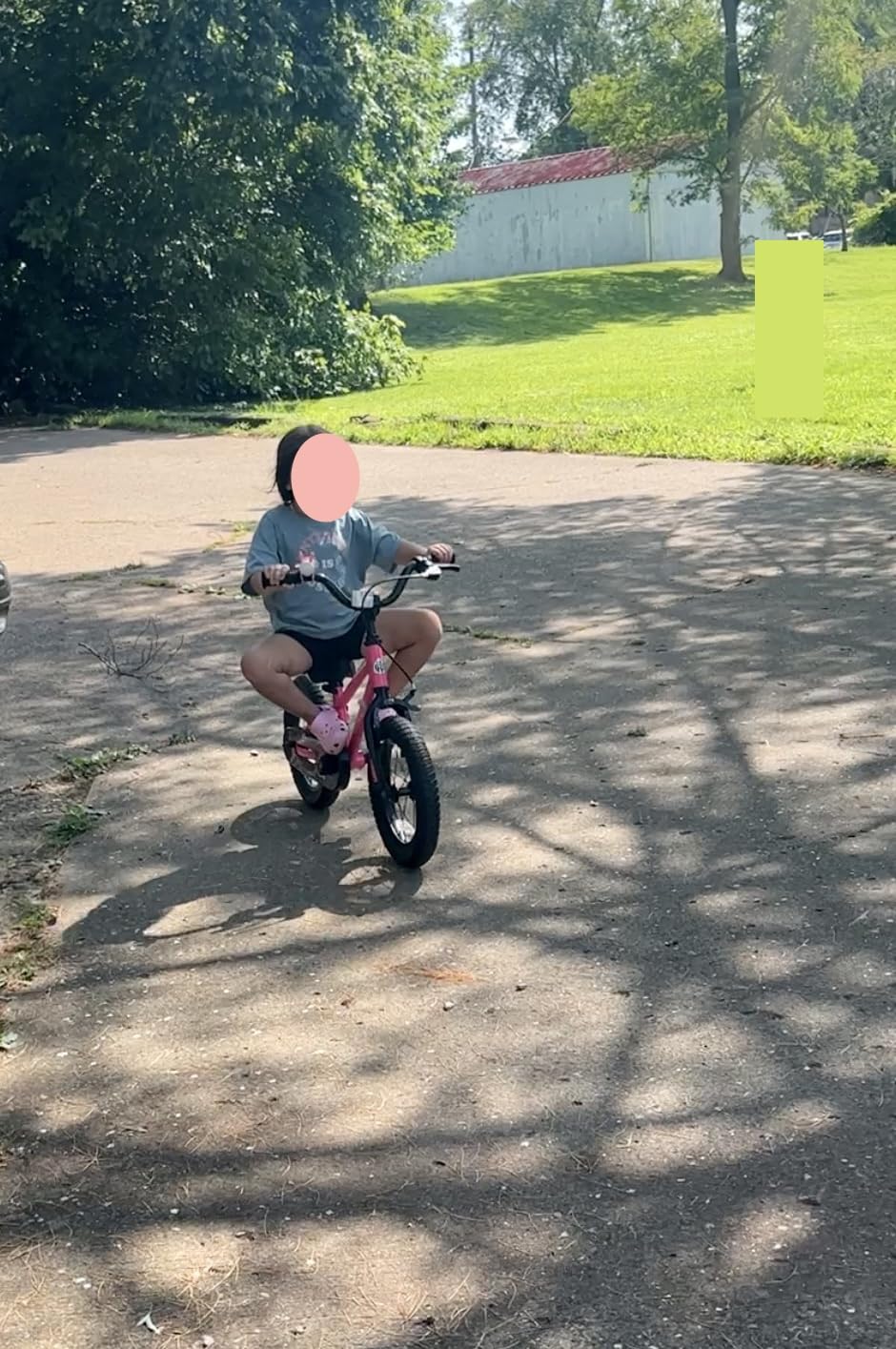
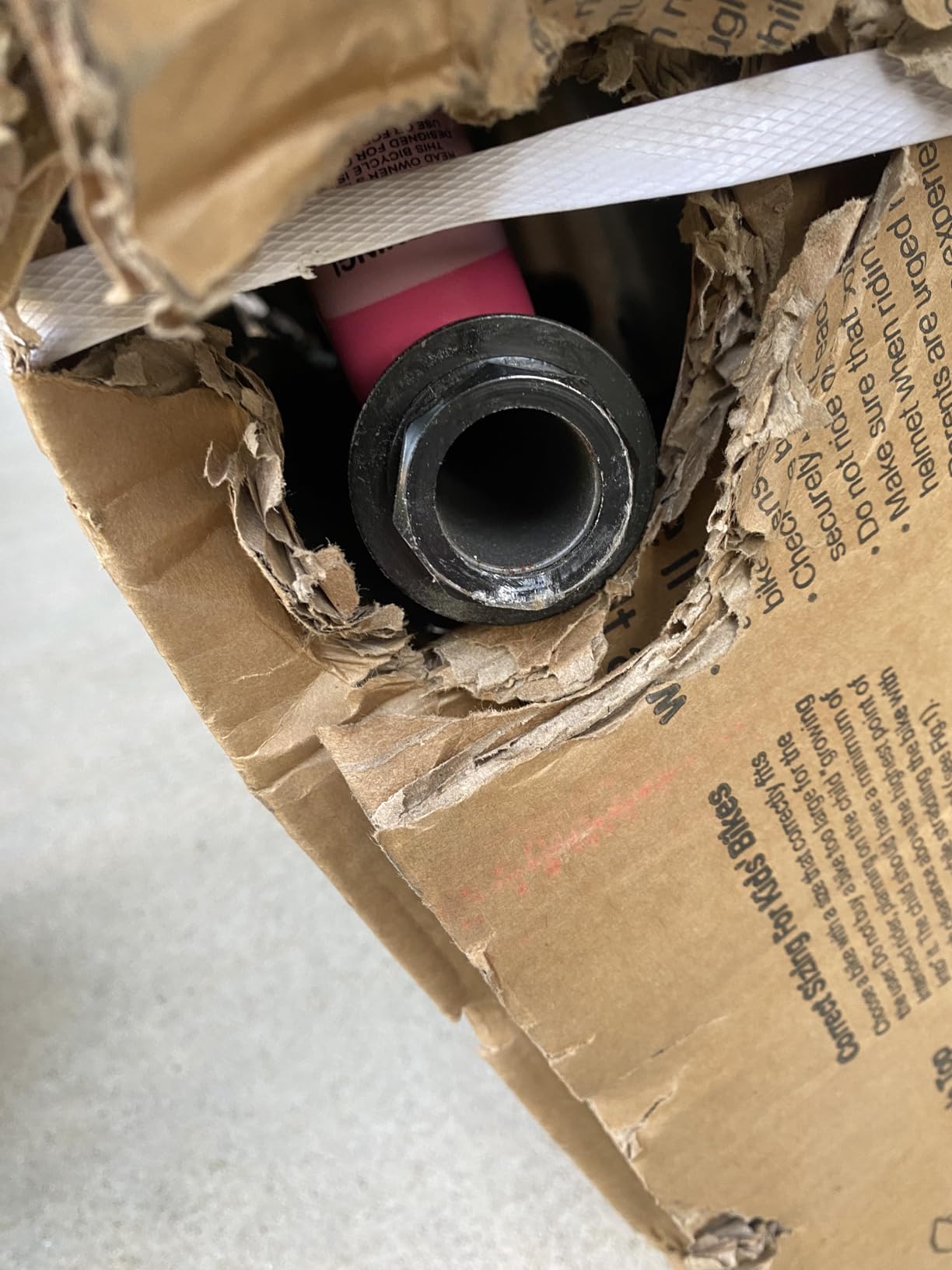
Assembly took our team under 20 minutes because the bike arrives 98% complete, and there is a tool kit in the box. That matters if you have ever spent an afternoon on a big-box bike only to find it still needed a shop tune-up before a child could safely ride it.
The brakes are the point to understand. This bike has both a coaster brake and a caliper hand brake, which is the combination we want on a first pedal bike, because a coaster brake alone will throw a child forward the moment they instinctively back-pedal in panic. Reviewers rate it 4.6, and that slightly lower number reflects durability grumbles rather than safety ones.
Who this suits best
This suits a child aged four to seven who can already balance confidently and whose parents would rather skip the training wheel stage. It is the cleanest single-purchase path from balance to pedals that we found, and the lifetime frame warranty means it can be handed to a sibling later.
It is also a strong choice for a child who needs to keep both feet down at lights and on hills at the start, which is the single biggest reason first pedal bikes get abandoned in week two.
Who should skip it
Skip it for a child who has never balanced on two wheels. There is no training wheel compatibility, so a child with no balance at all will struggle. Start with the Strider 12 Sport or the Strider 14x Classic above and move up later.
Skip it if your route involves real hills. It is single speed, which is correct for a first bike on flat ground, and wrong for a street with a climb the child has to attack every day.
7. RoyalBaby EZ-Pro: an aluminum 2-in-1 that spans ages 3 to 10
RoyalBaby EZ Kids Bike,Lightweight Aluminum 2-in-1 Balance to Pedal Bike for Beginners Easy Learn Biking, Boys Girls 14 Inch for Age 3-5 Years, Gold
Aluminum frame,16.5 lb
One-key balance to pedal switch
14 to 20 inch versions
Chain drive
Pros
- One-key tool-free switch between balance and pedal modes
- Aluminum frame is lighter than the steel equivalent
- Tool-free seat height adjustment
- Low step-through frame for small riders
- Offered from 14 to 20 inch
Cons
- Chain-to-guard rubbing noise on some builds
- Aluminum dents more easily than steel
- Minor rear rim wobble out of the box
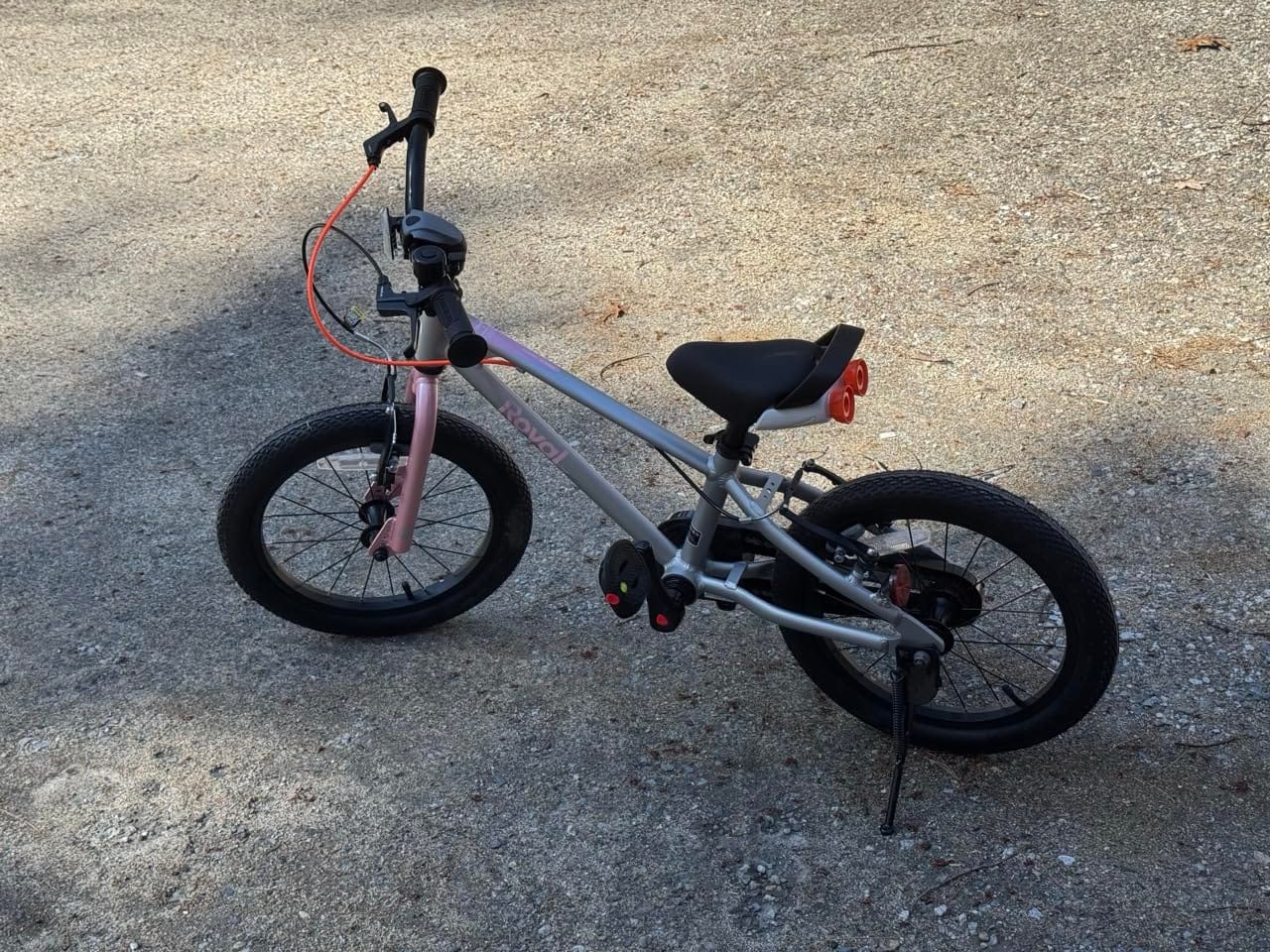
The EZ-Pro is the same 2-in-1 idea as the RoyalBaby EZ but built on an aluminum frame and offered from 14 through 20 inch, which is the reason it appears here separately. For a family buying one bike for a child who is already on a balance bike, it is the version that delays the next size change by a year or more.
Aluminum is the meaningful difference. It is lighter than the carbon steel frame used on the bikes above, and light is the single variable that most improves a beginner’s experience. The trade is dent resistance, and aluminum does bend where steel would survive a drop on gravel.
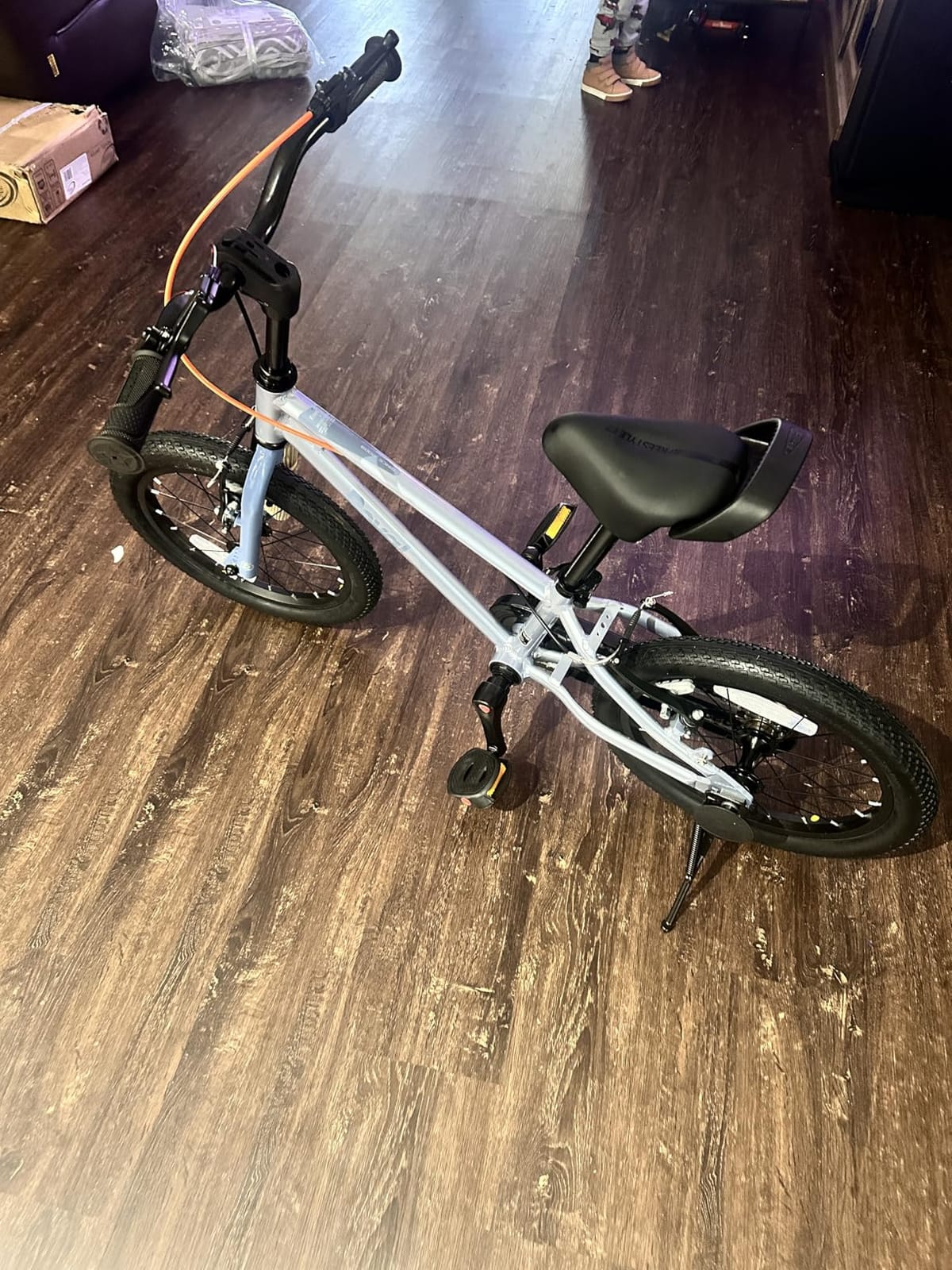
The one-key conversion is genuinely as simple as advertised: one switch, no tools, and the child can go from gliding to pedalling while the bike is stopped in front of them. Parents report children who struggled on other bikes balancing within days of using balance mode, and that matched what we saw.
Brakes are linear pull hand brakes on both wheels with steel fenders, built to CPSC standards. No coaster brake means no back-pedalling surprise, which is the safer default for a child who has just learned to pedal. Reviews do flag chain-guard rubbing and a slight rim wobble on a few bikes, both cosmetic at this stage.
Who this suits best
This suits a child around three to five who has real balance already, and a family who wants a bike that can be ridden without training wheels and then kept for several years as the child grows. The range of sizes means the same model name covers a lot of a childhood.
It is the pick for parents who care about weight more than durability, which is usually the right trade in the first two years of riding and the wrong one for a child who treats the driveway as a skate park.
Who should skip it
Skip it if you want a chain-free drivetrain. This uses a chain drive, so it will need occasional chain lubrication and a bike shop visit if a chain drops. Some parents find that maintenance step a reason to choose a simpler first bike.
Skip it if your child will be rough with the frame, and check the assembled bike carefully on arrival given the reports of rim wobble and awkward reflector mounting.
8. OHIIK 2 in 1 balance bike: the most hardware in the box
OHIIK Balance Bike 2 in 1 for Kids 2 3 4 5 6 7 Years Old,Balance to Pedals Bike,12 14 16 inch Kids Bike,with Pedal kit,Training Wheels,Brakes (12 inch, Blue)
High carbon steel frame
About 60 second conversion
Kit includes training wheels
85% pre-assembled
Pros
- Switches from balance to pedal mode in about a minute
- Box includes pedal kit
- training wheels
- kickstand
- pump and tools
- Tool-free seat and handlebar adjustment
- Hand brake plus rear holding brake
Cons
- Lowest rated bike in this roundup
- Pedal kit is only manageable for children over six
- Front suspension adds weight for a beginner
The draw here is the box contents. It arrives with a pedal kit, a pair of training wheels, a kickstand, a footrest, a pump and tools, so a family that wants the option of every stage has everything in one delivery rather than three separate purchases over two years.
The conversion itself is fast. It takes roughly 60 seconds to switch between balance mode and pedal mode without tools, and the bike arrives 85% assembled with only the pedals, handlebar and front wheel to fit.
Hand brakes are a real plus here. The front lever is a light hand brake and the rear is a holding brake that slows the bike without needing shoes on the pedals, which is a better arrangement for a young rider than a coaster brake.
What gives us pause is the score. At 4.2 this is the lowest rated product in the roundup, with a visible share of one-star reviews pointing to build quality and fulfilment. It also carries front suspension, which experienced riders consistently tell us to avoid on a first bike because it adds weight and soaks up the effort a beginner needs to feel.
Who this suits best
This suits a family that wants the training wheel option open and values having every accessory on hand without hunting for a compatible set later. The 12 inch version is aimed at ages two to three, and the sizing guide runs up through 14 inch for ages three to five and 16 inch for ages five to eight.
It is the pick for a child who is resistant to a balance-only stage and whose parents would rather keep the pedal option permanently available.
Who should skip it
Skip it if you want a single clean stage. A bike that can be ridden four different ways is harder for a small child to understand, and reviewers specifically note the pedal kit is only really manageable once a child is over six.
Skip it if build consistency matters more than included accessories. The 4.2 rating and the one-star share point to quality control that the dedicated balance bikes above do not show.
9. cubsala 14 inch: a conventional pedal bike with real training wheels
cubsala 14 Inch Little Kids Bike for 3 4 5 Years Old Boys Girls Beiginner Riders BMX Style Bicycle with Training Wheels Coaster & Rear V Brake, Pink
14 inch single speed
Coaster brake plus rear V-brake
Removable training wheels
85% pre-assembled
Pros
- Removable training wheels that come off as skills improve
- Coaster brake plus rear V-brake for choice
- High tensile carbon steel frame with lifetime warranty
- Adjustable seat extends usable range
- About 20 minutes to finish assembly
Cons
- Paint finish scratches easily
- Training wheels can loosen after a few months
- Listed weight is high for a 14 inch bike
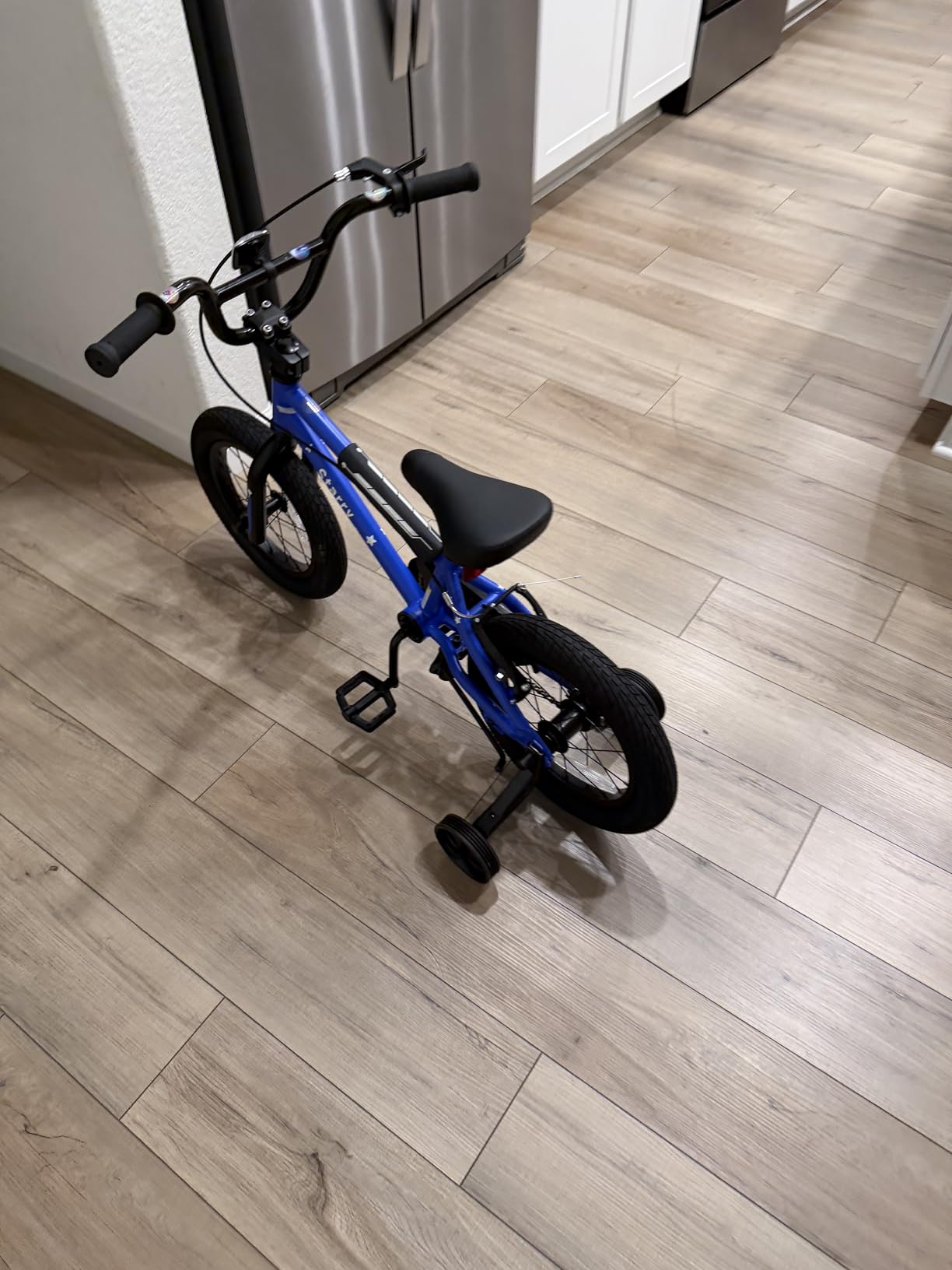
If your family wants the traditional route, with a child who will start on training wheels and take them off later, this is the most straightforward version of that plan. The training wheels are removable, which is the feature that makes the bike worth owning rather than a season.
We rate it lower than the 2-in-1 bikes, and the reason is specific. The listed weight is 11.95 kg, which is heavy for a 14 inch bike, and heavy is the one thing the rest of this roundup argues against. It is a sturdy bike, but a four-year-old has to work harder to start it.
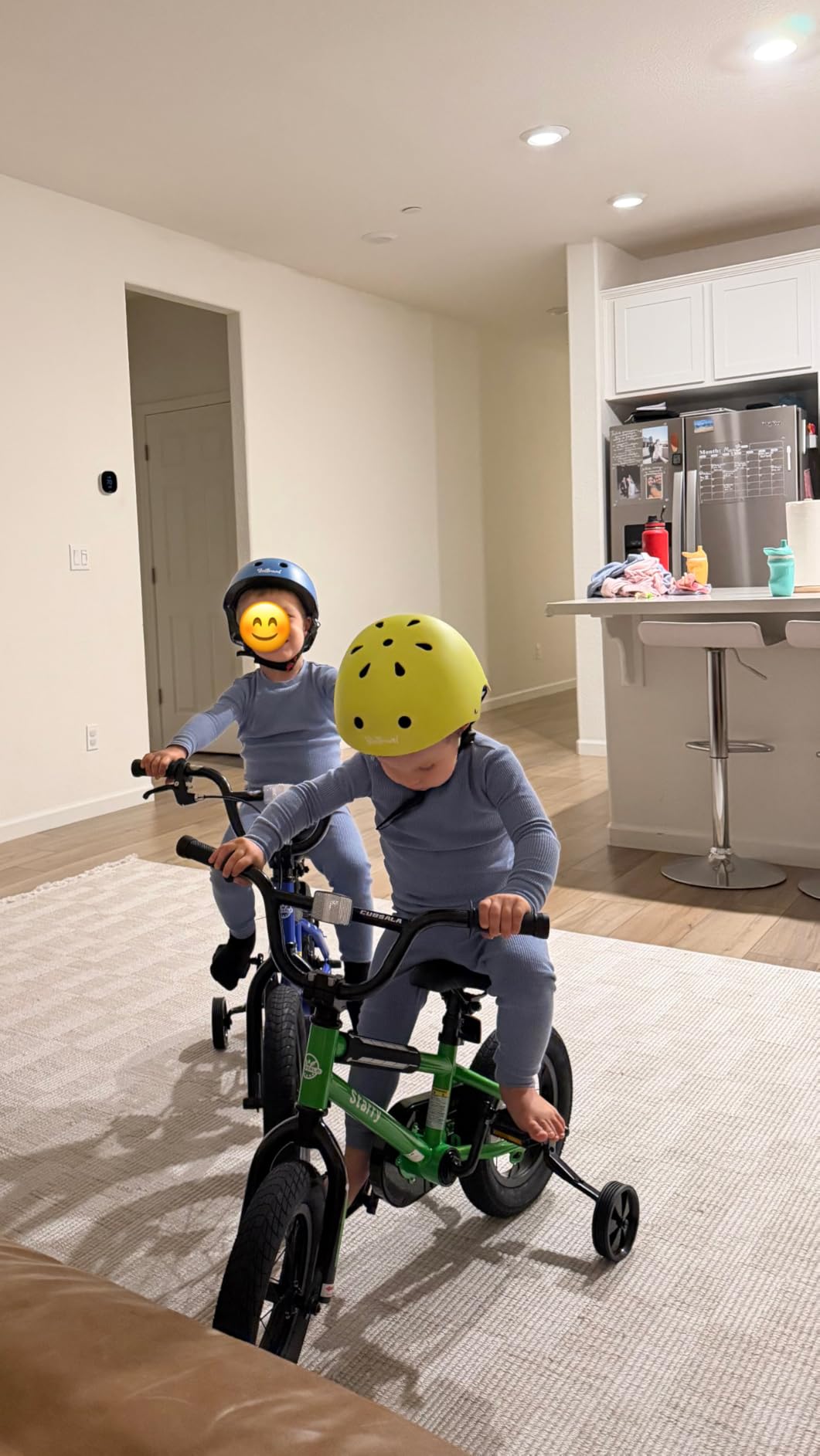
On the plus side, the frame is high tensile carbon steel with a limited lifetime warranty, the chain has a half guard, and there are wide slip-resistant tires for traction on paths that are not quite pavement. The size guide runs from 12 inch for ages two to four up to 18 inch for ages five to ten, so the same model name covers a wide spread.
Braking is a coaster brake plus a rear V-brake. A coaster brake feels intuitive to children and adults, but beginners do not yet know to back-pedal in an emergency, so teach the hand brake first and treat the coaster as a backup.
Who this suits best
This suits a child aged three to five whose parents want a normal-looking pedal bike with the full set of adult trimmings, including training wheels they can remove on a fixed date. Kids who are drawn to big-kid styling often accept the transition faster here than on a stripped-back balance bike.
It is also a reasonable choice for a child who is not ready for the balance-bike-first approach and needs physical support to feel safe at first.
Who should skip it
Skip it if your child is small for their age, because the listed weight makes starting and stopping genuinely harder. Experienced riders on the forums are near-unanimous that a first bike should be light, and this one is not.
Skip it if you dislike training wheels as a concept. The research and rider consensus we gathered points the other way, and bikes designed to be used without them usually suit a nervous child better in the long run.
10. Retrospec Beaumont Mini 16 inch: retro style for ages 4 to 6
Retrospec Beaumont Mini 16in Kids Bike with Training Wheels & Basket – Beginner Bicycle for 4-6 Year Olds, Low-Profile Frame, V-Brakes & Safety Bell
16 inch single speed,26 lb
Low step-through frame
Coaster and hand brake
Woven basket
Pros
- Low frame lets 4-6 year olds mount alone
- Coaster and hand brake so kids learn both
- Removable steel training wheels wean support
- Five lb basket and bell kids actually use
- Limited lifetime frame warranty
Cons
- Heaviest bike in the roundup at 26 lb
- Pedals can feel stiff for a three-year-old
- Minimum rider height is 42 inches
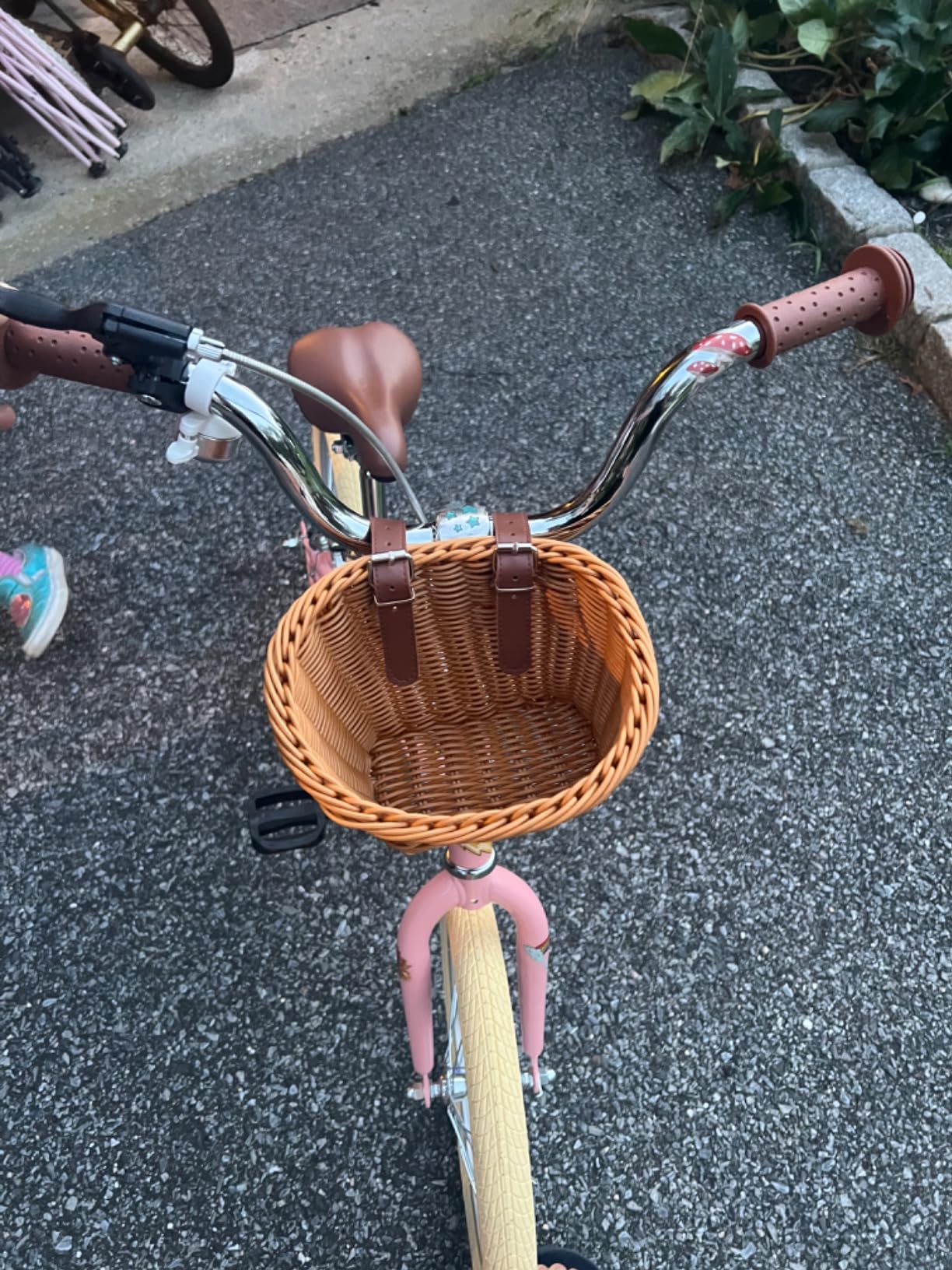
The Beaumont Mini wins on one specific thing: children want it. The retro styling, woven basket and bell are the details that persuade a four-year-old to actually get on the bike, and enthusiasm is worth more than any spec when the rider is new to the saddle.
The low step-through frame is functional, not decorative. A child aged four to six can swing a leg over and stand up unaided, which removes the most common reason a first attempt ends with an adult lifting the bike.
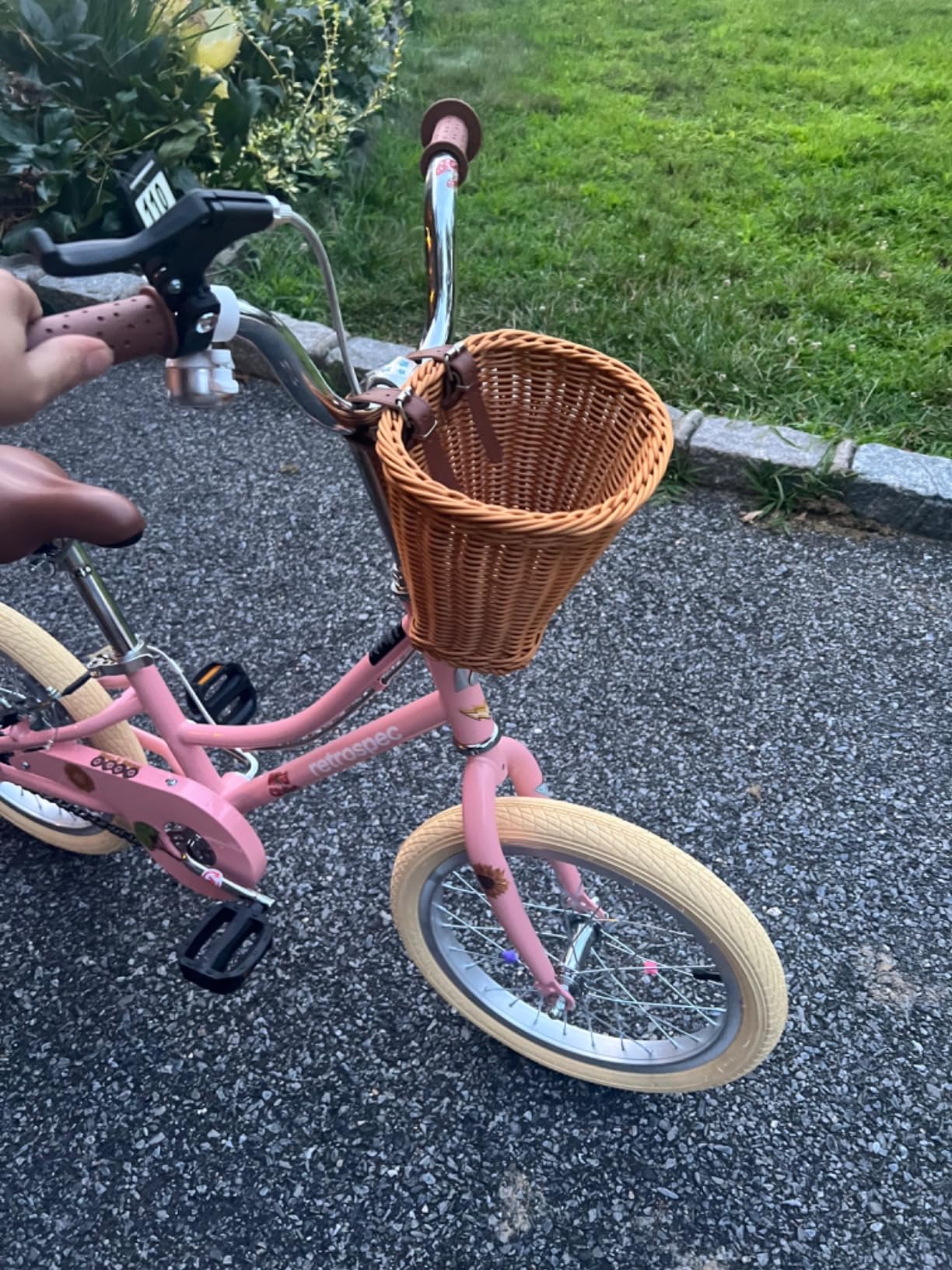
The basket holds 5 lb and the brakes are both a coaster and a hand brake, so kids can learn the lever and still have a backup. Training wheels are removable, which means the same bike works for the nervous phase and the confident phase.
Now the problem, and it is a real one. At 26 lb this is the heaviest bike in the roundup by a wide margin, and the reviews are blunt about what that means: a small child struggles to pedal it and struggles to steer it. The stated minimum rider height is 42 inches, so measure before buying.
Who this suits best
This suits a child aged four to six, at least 42 inches tall, who has some balance already and responds to styling. If your child will not ride a plain single speed but lights up at a basket and a bell, that enthusiasm can be the difference between a child who learns this summer and one who does not.
The limited lifetime frame warranty also makes it a reasonable inheritance bike, given how quickly children outgrow frames.
Who should skip it
Skip it below age four. Reviewers note the pedals can feel stiff for a three-year-old, which points to a real age floor around four to five rather than the four the listing suggests.
Skip it if weight is your priority. At 26 lb it is the opposite of the rule this whole roundup is built on, and a lighter 16 inch option will give a small child a much easier first month of riding.
The 5 things that matter most in a first kids bike
1. Weight relative to the rider. Aim for a bike that weighs no more than 30-40% of your child’s body weight. Adults ride bikes at roughly 20% of their body weight, so anything heavier is asking a child to do a job an adult would not take on. This one number explains more failed first bikes than every other factor combined.
2. Hand brakes a child can reach. A coaster brake stops the bike when the child back-pedals, which is a reflex nobody teaches and everybody does in a panic. New riders should have a lever they can pull with one finger, ideally on both wheels, with short-reach levers or tool-free reach adjusters sized for small hands.
3. Child-specific geometry. A real child’s bike has a narrower wheelbase, a smaller cockpit and a lower bottom bracket than an adult bike of the same wheel size, which puts the centre of gravity where a short rider can balance it. Cheap bikes built for adults and scaled down feel twitchy for exactly this reason.
4. Fit by inseam, not age. Age labels on boxes are marketing. What matters is the seat height range and the child’s inseam measured from floor to crotch, standing in socks. A bike where the child can stand flat-footed at the lowest seat setting is a bike they can start on alone.
5. Simplicity. Single speed, no suspension, no derailleur. Gears a five-year-old cannot use add weight and a way for a chain to drop, and suspension absorbs the effort a beginner needs to feel to learn efficient pedalling. Save the gears and the suspension for when the child asks for a real bike.
Two more that matter in practice: assembly time and whether parts can be replaced. Bikes that arrive 85-98% complete cost you an afternoon instead of a weekend, and a bike with a serviceable chain, brakes and tires will still be worth repairing in two years. We covered that maintenance-versus-simplicity tradeoff in more detail in our beginner maintenance guide.
Balance bike vs training wheels: what we actually recommend
Start with a balance bike, skip the training wheels, and the evidence for that is about as consistent as parental advice gets. Experienced riders on cycling forums repeat one heuristic without variation: never put training wheels on a bike, because they hold the bike up rather than teach the rider to hold themselves up. Children who balance on a balance bike first typically move to pedals in weeks rather than months.
The mechanism is straightforward. A balance bike trains steering, balance and the core stability a rider needs before pedalling becomes an added complication. Training wheels allow a child to pedal while still being held up, so the balance skill never actually develops, and removing the wheels later is a second, separate learning event at an age when the child is bigger and less forgiving.
That said, a training wheel is not a permanent sentence. If a child is three or four and terrified, a pedal bike with removable training wheels can be the bridge that gets them moving at all. The wins come from taking them off on a fixed date rather than as a reward.
The transition playbook, when the day comes, takes one weekend. Remove the pedals and let the child coast downhill with their feet hovering just above the ground. When coasting is boring, put the pedals back on and expect pedals within a few days. Add the hand brake in a low-traffic space where stopping has no consequences. Do all of it on grass before tarmac, and expect the first independent ride to happen suddenly rather than gradually.
For families who want both stages in one purchase, the 2-in-1 bikes in this roundup handle it without tools: the RoyalBaby EZ, the RoyalBaby EZ-Pro and the OHIIK all convert from balance mode to pedal mode in under a minute or so.
What size kids bike does your child need?
Measure the inseam, then match it to the seat range. That is the whole method, and it takes about two minutes at home rather than a trip to a shop.
Stand your child in socks against a wall. Have them stand with feet flat and legs together. Book a hardcover between their legs, spine up, and measure from the top of the book to the floor. That number is the inseam, and it is what a bike’s minimum seat height has to sit below.
As a rough guide, a 12 inch wheel fits inseams of about 12 to 18 inches, a 14 inch wheel fits roughly 16 to 23 inches, and a 16 inch wheel starts around 20 inches and runs into the upper twenties. Balance bikes that list a seat range in inches are the most useful products here, because that range tells you exactly how long the bike will fit before it sits unused.
Do not buy up a size to get longevity out of it. A bigger bike has a longer wheelbase, a wider cockpit and longer crank arms, all of which make starting and stopping harder. Oversizing is the regret that shows up most often in parent discussions, and the bike usually ends up sitting unused for a year.
On gear timing, a useful rule of thumb is two seasons. If your child is at the top of a bike’s seat range, plan the replacement rather than stretching a size, because the struggle of an ill-fitting bike teaches a child that cycling is hard.
Red flags: when to walk away from a kids bike
Walk away if the bike has no hand brake at all and relies only on a coaster brake. Walk away if the levers are set for adult hands with no reach adjustment. Walk away if the frame has sharp unpainted edges, if the pedals or chain guard are missing, or if the bike has no kickstand. Walk away if the tires need a pump you do not have. And walk away if the seller cannot tell you the maximum rider weight, because that number is how you know the frame is built for your child rather than for a shop display.
Two more practical checks. Squeeze both brake levers hard; if either feels spongy or the lever bottoms out against the bar, the cable needs adjusting and the bike is not ready to ride. And spin the front wheel: if it rubs or wobbles, something is out of true and it will make the bike feel unstable in a way a new rider will read as their own fault.
Finally, buy the helmet in the same trip. A correctly fitted helmet sits level on the head, snug around the brow, with the straps forming a V under each ear, and it should not shift when you shake your head. Expect to replace it after any impact, however small, and replace it again when the head outgrows it. If you are also buying pads and gloves for a first bike, our gear fit notes cover the same measuring approach we use for protective equipment.
Frequently Asked Questions
How old should a kid be for their first bike?
There is no fixed age, because readiness beats birthdays. Most children are ready for a balance bike between 12 months and 3 years, once they walk confidently, and ready for a first pedal bike between 3 and 5 years, once they can balance without support. Measure the inseam and check it against the bike’s seat range rather than trusting the age printed on the box.
Is it better to start with a balance bike or training wheels?
Start with a balance bike. It builds balance and steering with no drivetrain to think about, and experienced riders consistently report that children who balance first move to pedals far faster than children who start on training wheels. Training wheels hold the bike up rather than teaching the rider to hold themselves up, and taking them off later becomes a second learning event.
What size kids bike does my child need?
Use inseam, not age. Measure from the floor to the top of a hardcover book held between your child’s legs, then match that to the bike’s minimum seat height. A 12 inch wheel usually fits an inseam of 12 to 18 inches, 14 inch fits roughly 16 to 23 inches, and 16 inch starts around 20 inches. The child should be able to stand flat-footed at the lowest seat setting.
What are some good starter bikes for kids?
For a child under 2, the SEREED Baby Balance Bike is the smoothest start at 3.5 lb with fully enclosed wheels. For a two-wheeler from age one, the Strider 12 Sport adjusts from ages 1 to 4. For a child ready for pedals without training wheels, the RoyalBaby EZ 16 inch converts from balance mode to pedal mode with a tool-less switch. Each is sized to a different stage rather than to a wheel size alone.
Is Strider or Guardian better?
They solve different problems. Strider’s 12 Sport and 14x Classic are pure balance bikes with no brakes, a wide adjustable seat range and never-flat tires, and the 14x can convert to a pedal bike with an add-on kit. Guardian is built around hand brakes as the primary stopping method. For a child who is still learning to balance, either brand works; pick on fit range and weight.
Is Schwinn or Huffy better?
Neither is on our recommended list for a first bike, and the reason is weight rather than brand. Both are built on steel frames sized for a wide age range, which makes them heavier and slower to start and steer than a dedicated child-proportioned frame. A lighter kids-specific bike with short-reach hand brakes will teach a beginner faster than either, even if the big-box bike looks more exciting.
The bottom line for new riders
If your child is under two and just learning to walk, start with the SEREED Baby Balance Bike. If they can already scoot and you want a real two-wheeler that lasts across ages one to four, the Strider 12 Sport is the one. If they have been balancing confidently and are ready for pedals, the RoyalBaby EZ 16 inch is our pick because it gets a child moving without training wheels and converts back with a single tool-less switch.
Whatever you choose, hold the line on weight. A bike that weighs no more than 30-40% of your child’s body weight, fits their inseam, and has hand brakes they can pull will teach faster than any styling, gearing or brand name. That is the short version of why these ten made the list in 2026 and the several dozen that did not.