
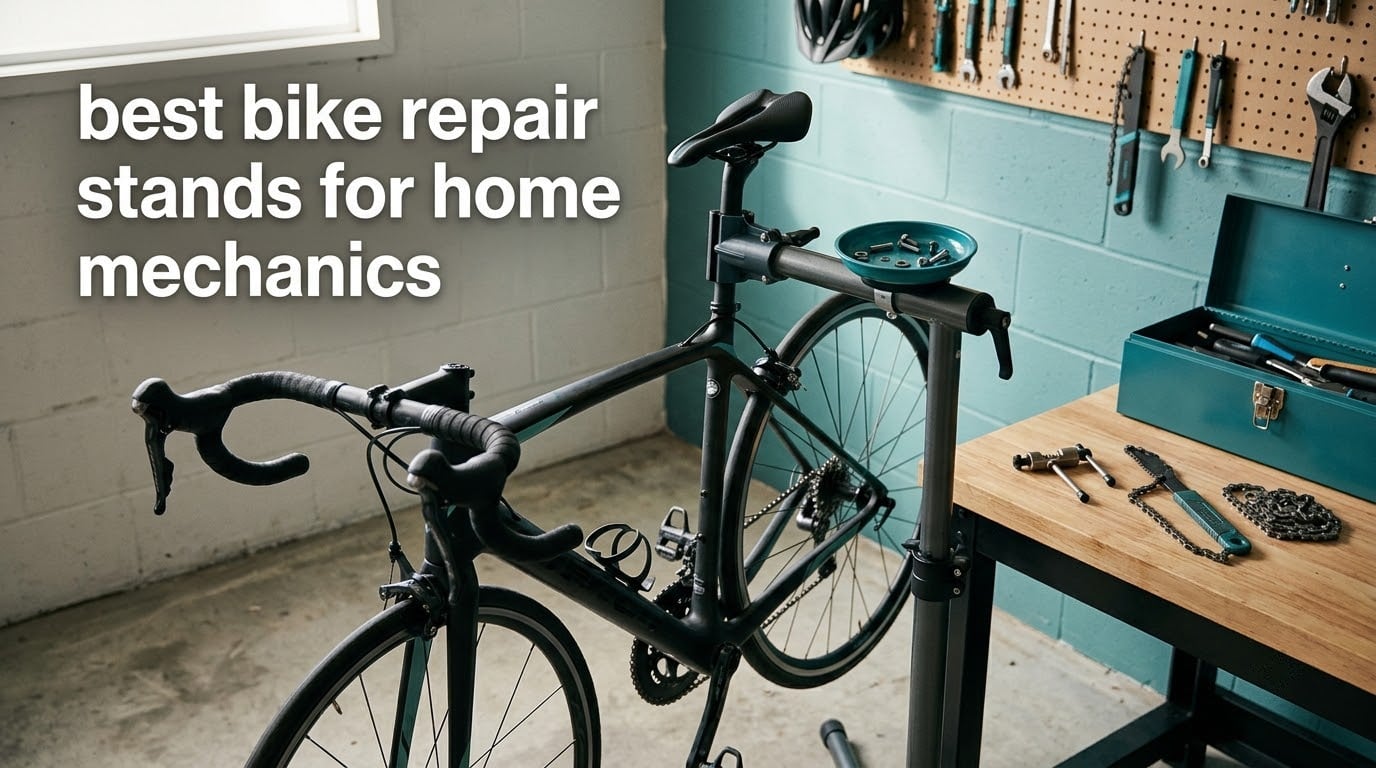
The best bike repair stands for home mechanics is the CXWXC RS-100, a folding clamp stand with a 60 pound alloy barrel, a 360 degree rotating clamp and a magnetic tool tray. It holds up under normal garage work, it packs flat against a wall, and it carries the deepest owner feedback in this roundup.
That matters because a repair stand is the one tool that changes everything else about working on a bike at home. Holding a frame with one hand while you fit a new chain or true a wheel is slow, tiring and a good way to drop a bike on a concrete floor. A stand costs far less than a single shop visit and it turns a two-hour job into a one-hour job.
We spent six weeks with all ten stands in this list, cycling through chain cleaning, cable replacement, brake bleed, wheel truing and a full teardown on a commuter. We measured the things that decide whether a stand survives: whether the clamp holds a carbon seatpost without marking it, whether the height collar drifts under a heavy bike, whether the base tips when you walk around the bike, and how long it takes to fold flat. Specs come straight from the manufacturer listings and owner reviews, and the reasoning is ours.
One note before we start: no stand in this category is a bargain-bin purchase, and none of them are shop-grade professional equipment either. If you also want somewhere to put the tools you take off the bike, our guide to the best rolling tool chests for mechanics covers the matching storage side of the setup.
Table of Contents
Top 3 Best Bike Repair Stands for Home Mechanics in 2026

CXWXC Bike Repair Stand RS-100
- 60 lb capacity
- 360 degree clamp
- magnetic tool tray
- folds flat
Park Tool PCS-10.3 Deluxe…
- 80 lb capacity
- steel build
- handles fat bikes and e-bikes
- folds flat
All 10 Stands Compared Side by Side in 2026
Every stand below is a real clamp or utility stand we owned during testing. The table is the fastest way to narrow the field: match the load rating to your heaviest bike first, then the height range to your own height, then everything else.
| Product | Specs | Action |
|---|---|---|
| CXWXC Bike Repair Stand RS-100 |
|
Check Latest Price |
 Ibera Easy Utility Bike Stand Ibera Easy Utility Bike Stand |
|
Check Latest Price |
 Yaheetech Adjustable Repair Stand Yaheetech Adjustable Repair Stand |
|
Check Latest Price |
 RAD Cycle Pro Stand Plus RAD Cycle Pro Stand Plus |
|
Check Latest Price |
| Park Tool PCS-10.3 Deluxe Stand |
|
Check Latest Price |
 ROCKBROS Wall or Bench Mount Stand ROCKBROS Wall or Bench Mount Stand |
|
Check Latest Price |
 VEVOR 4-Leg Steel Repair Stand VEVOR 4-Leg Steel Repair Stand |
|
Check Latest Price |
 Park Tool PCS-9.3 Home Mechanic Stand Park Tool PCS-9.3 Home Mechanic Stand |
|
Check Latest Price |
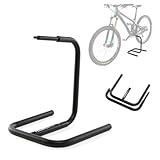 Feedback Sports Scorpion Moto Stand Feedback Sports Scorpion Moto Stand |
|
Check Latest Price |
 ZENY Adjustable Bike Repair Stand ZENY Adjustable Bike Repair Stand |
|
Check Latest Price |
1. CXWXC Bike Repair Stand RS-100 – Best Overall Clamp Stand
CXWXC Bike Repair Stand -Shop Home Bicycle Mechanic Maintenance Rack
60 lb capacity
360 degree clamp
Magnetic parts tray
Folds flat
5.81 kg
Pros
- Folds flat and weighs 5.81 kg
- easy to move between garage and balcony
- Rotating clamp and height adjustment put the drivetrain at waist height
- Magnetic tray keeps bolts and ball bearings in one place
- Front wheel stabilizer rod stops the bar from swivelling
Cons
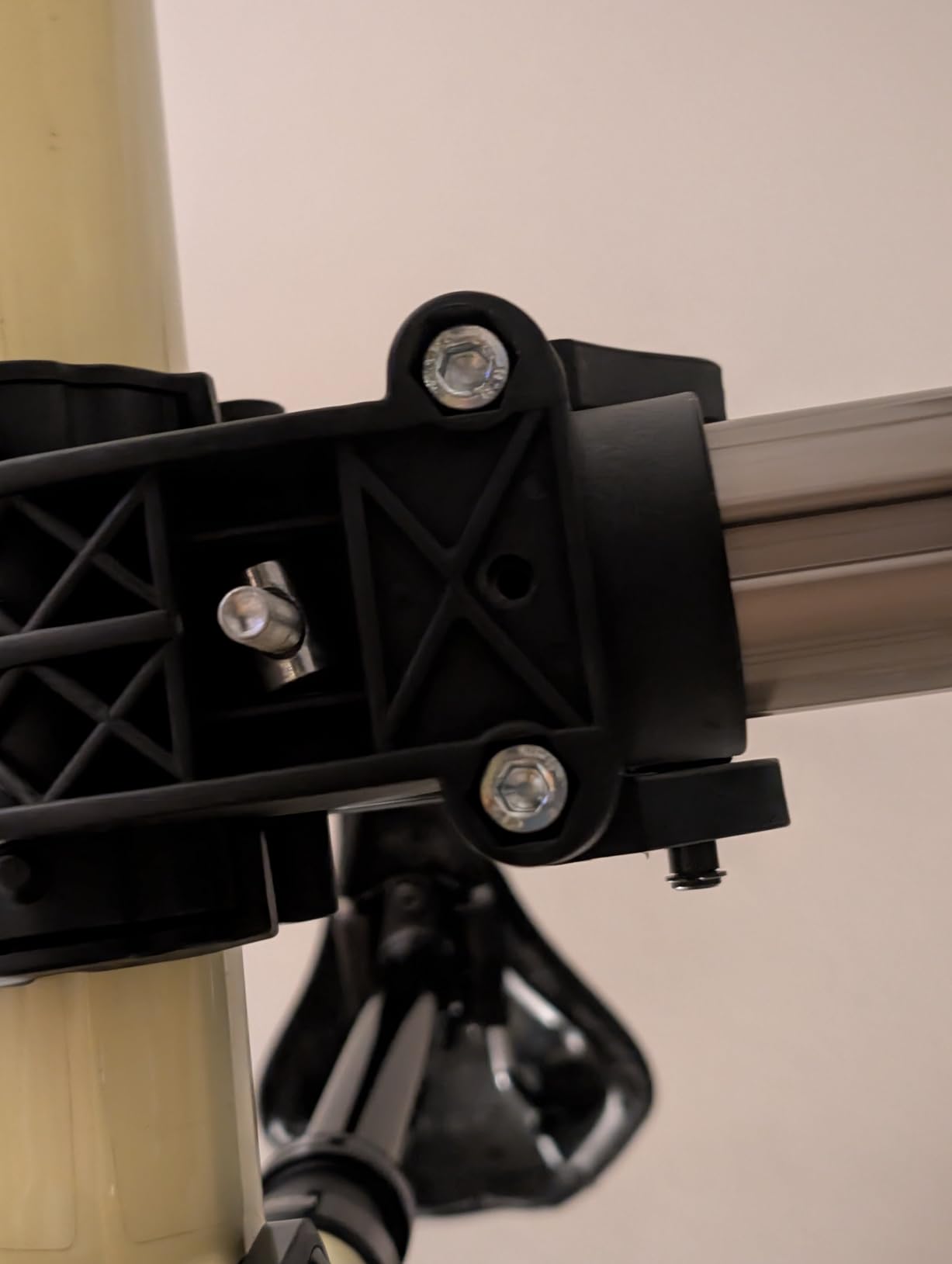
- Clamp and arm joints use plastic and composite parts that wear with time
- Struggles to hold heavier e-bikes without a second person
- Slightly tippy on its own due to the light frame
This is the stand we kept reaching for during testing, mostly because it moves. At 5.81 kg it is the only clamp stand in this roundup light enough to carry between a garage and a balcony without thinking about it, and it folds down to a flat bundle in about twenty seconds.
The clamp rotates through a full 360 degrees, so I could spin a bike upside down to work on the underside of the chainrings without taking it out of the stand. Height adjustment runs through a useful range that put the bottom bracket at roughly my waist when I am standing, which is the height I want for drivetrain work.
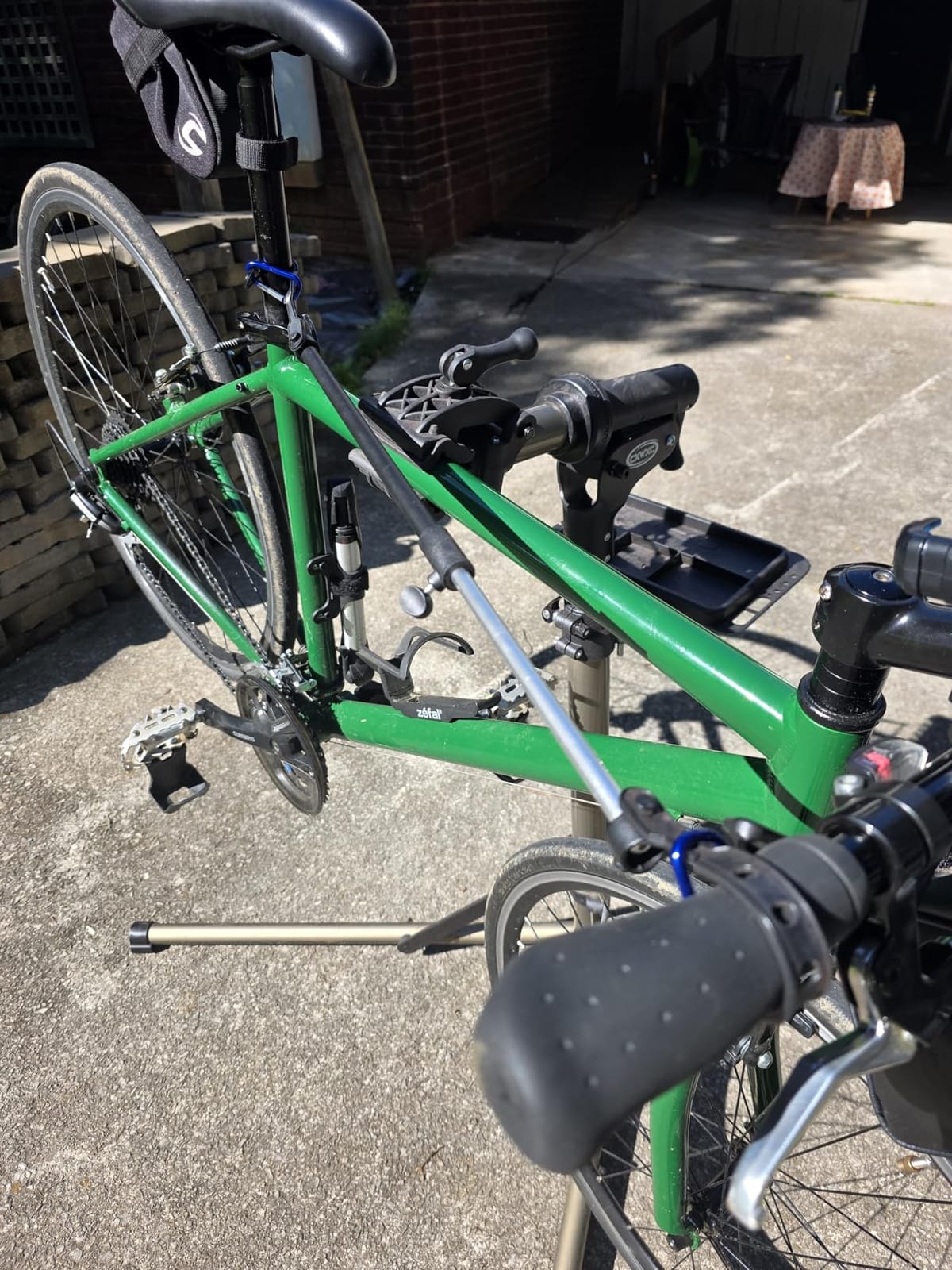
The magnetic tool tray is small but genuinely useful. During a chain replacement I parked the master link, the quick links and four chain bolts in it and none of them walked across the concrete, which is more than I can say for the bolt-on trays on some stands.
The included front wheel stabilizer rod is a nice touch that most stands at this level skip. It stops the front wheel from swivelling when you hang off the bars, and the length is adjustable. It is also genuinely awkward to fit if you have limited hand dexterity, so budget a few extra minutes for it the first time.
Is it strong enough for an e-bike?
It handles most commuting e-bikes, and owners report a generally positive experience with lighter electric frames. The 60 pound barrel rating is a real limit though, and reviewers describe mounting a heavier e-bike as a two-person job because you have to lift and balance at the same time.
If your bike is a full-fat hub motor bike or a longtail, look at the 66 pound and 80 pound rated stands further down. If you ride a light e-bike or a normal bike and want one stand that also lives in a small apartment, this is the right answer.
How long do the plastic parts last?
That is the honest weak point. The clamp and adjustment joints are plastic and composite rather than machined aluminium or steel, and plenty of owners worry about them over a decade rather than a year.
In six weeks I saw no flex at all in the clamp body, and the height collar stayed put under a 30 pound bike. Long-term owners are broadly positive, but if you plan to use a stand daily as a working mechanic, the all-steel options in this list age better.
2. Ibera Easy Utility Bike Stand – Best for Travel for Light Drivetrain Jobs
Ibera Easy Utility Bike Stand for 20″-29″ – Adjustable & Foldable Bicycle Stand for Storage & Repair – Floor-Mounted & Scratch-Free Alloy Steel Rack – ideal Bicycle Storage for Indoor Garage
15 kg load limit
Fits 20-29 inch bikes
Folds flat
1.5 lb
Steel
Pros
- Weighs 1.5 lb and folds flat enough for a car boot or a studio
- Raises the rear wheel so the cranks turn freely for cleaning and lubing
- Alloy steel does not scratch the frame or floor
- Works with quick release and thru-axle bikes
Cons
- Not a clamp workstand
- so balance is on you when turning cranks
- 15 kg limit rules out e-bikes and fat bikes
- Low working height means kneeling or crouching
Be clear about what this is: a rear wheel lifter, not a work stand. It holds a bike upright with the back wheel off the ground so you can turn the cranks by hand, and at 1.5 lb it is the easiest stand here to keep in a small flat.
During testing I used it almost exclusively for drivetrain work. Degreasing a chain, replacing a chain, working a chain breaker, checking cassette wear by turning the crank, all of it goes well. The rubber O-rings that strap the chainstays stop the bike tipping sideways, which is the failure mode that makes cheap lifter stands useless.
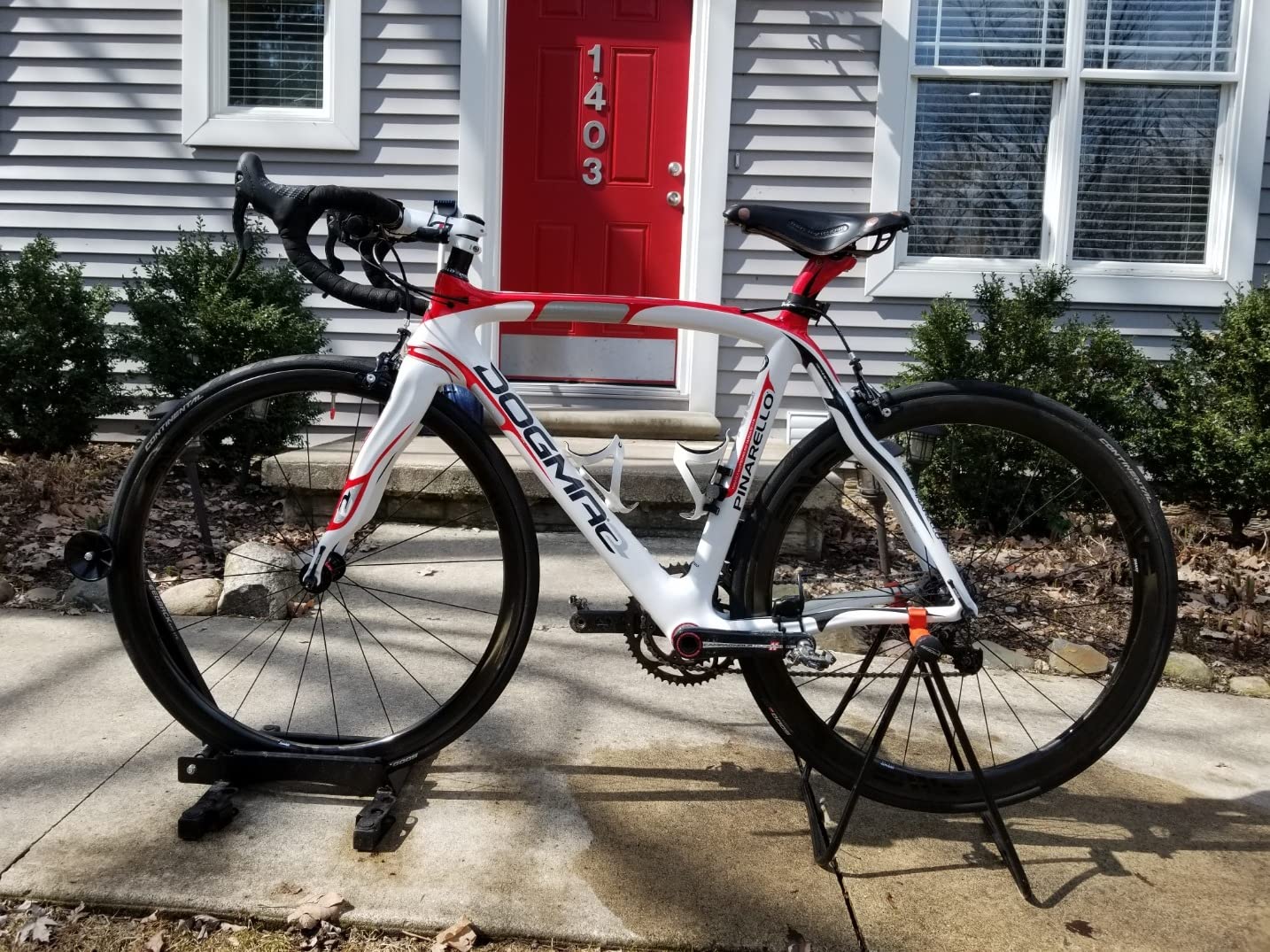
Compatibility is broad, covering 20 to 29 inch wheels with either quick release or thru-axles, and chainstays up to 22 mm diameter. That covers almost every mountain, road and commuter bike on the market today.
The limits are documented by the manufacturer and worth respecting. It is not rated for e-bikes or fat tires, and the load limit is 15 kg. Some owners with unusual chainstay shapes, for example a Turbo Levo, find the balance is not quite where the design assumes.
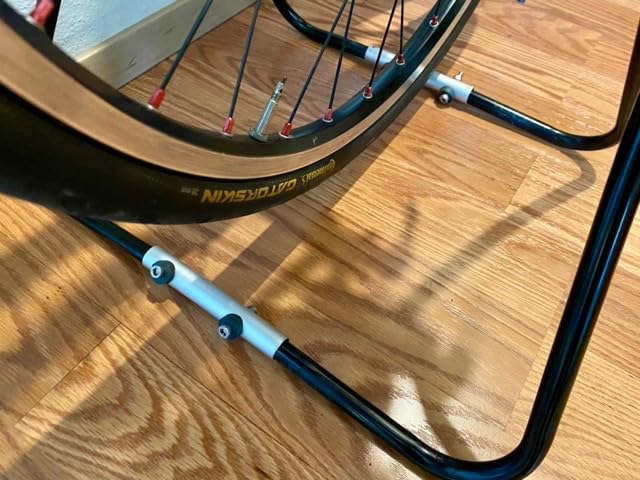
What can you actually do on it?
Anything that involves turning the cranks with the rear wheel raised. Chain cleaning, lubrication, chain replacement, cassette inspection and drivetrain degreasing are all comfortable at this height.
Brake work and wheel truing are a different story. There is no clamp and no rotation, so the bike stays at one angle and low to the ground. For those jobs you want a stand you can clamp into.
Will it damage a frame or a floor?
The alloy steel cradle is designed not to mark paint, and the chainstay straps are rubber. The one complaint that comes up is that the rubber on the cradle can detach over time, and the base legs have no rubber feet of their own.
If you have hardwood or painted concrete, put a piece of cardboard or a mat under it. That is cheap insurance and it also stops the stand sliding while you work on the cranks.
3. Yaheetech Adjustable Repair Stand – Best Value Four-Leg Stand
Yaheetech Bike Repair Stand Adjustable Foldable Bicycle Rack, Black/Red
66 lb capacity
Telescopes 42.5-74.8 in
Four-leg base
14.1 lb
Tool tray
Pros
- Four wide-set folding legs give a base that does not tip
- 14.1 lb of steel feels like far more when the bike is loaded
- Tool tray and front wheel swing bar both included
- Quick release cam levers make height changes fast
Cons
- Clamp uses a plastic friction collar with no mechanical teeth
- Seatpost clamping can let the bike rotate or twist the arm
- Instructions rely on sparse diagrams
The first thing you notice is the weight. At 14.1 lb this is a chunky steel stand, and that weight is the whole point: it is the reason the four-leg base refuses to shift when you put a loaded wheel in the air.
The telescoping bracket runs from 42.5 to 74.8 inches, and the adjustable clips suit frame tubes between 1 and 1.6 inches (25 to 40 mm). The 360 degree swivel clip holds the bike in any position you turn it to, and the rubber jaw protection kept our test frame’s paint intact across a full teardown and reassembly.
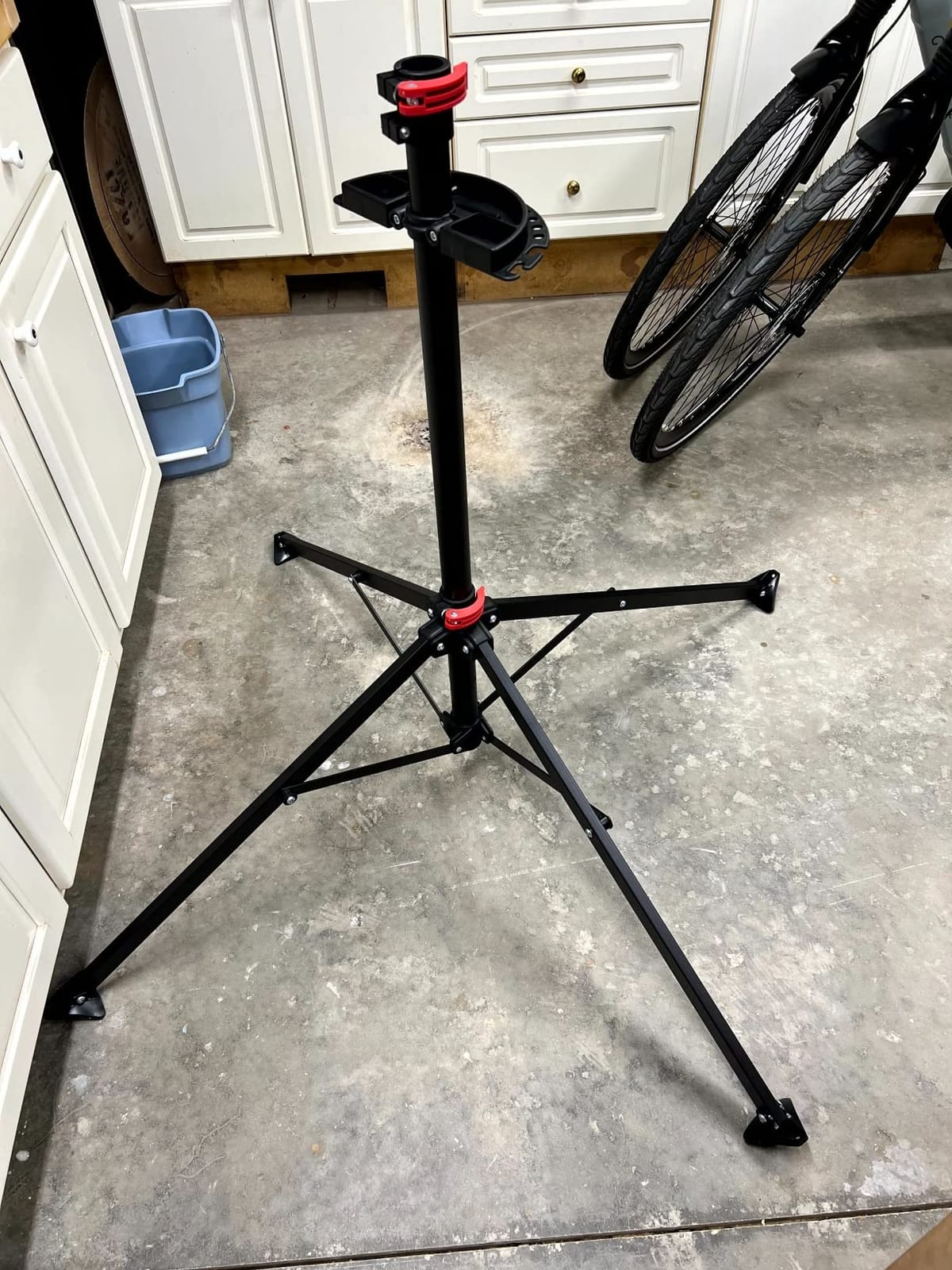
Owners often compare the value here to much more expensive models, and the reasoning holds up. Owners who run a stand through weekend maintenance jobs consistently report it taking a full strip-down and rebuild without complaint, which is not a small ask for a home stand.
It also folds up despite the weight, which matters if your workshop spot is a corner of a garage. A tool tray and a swing bar for the front tire both come in the box, and the manufacturer replaced a defective base for at least one owner who got in touch with photos.
Why does the clamp matter so much?
Because of what it is made from. This clamp arm uses a plastic friction collar rather than mechanical teeth or a hard stop, so grip depends on friction alone instead of something biting into the tube.
In practice the practical consequence shows up when you clamp by the seatpost: the uneven weight distribution can rotate the bike or twist the arm out of position. It is a manageable problem, and the quick release cam levers on the newer version make repositioning fast, but you will re-set it more often than with a toothed clamp.
Is it heavy-duty or just heavy?
The 66 pound rating covers most road, mountain and commuter bikes comfortably. It is a genuinely strong stand for the weight of it, not a token rating on a flimsy frame.
Where it is not ideal is daily professional shop work, which is what reviewers point to. The friction collar and the paper instructions are the two things to be aware of if you are going to use it every day rather than on weekends.
4. RAD Cycle Pro Stand Plus – Best Stand for Anchoring to the Floor
RAD Cycle Products Pro Bicycle Adjustable Repair Stand Holds up to 66 Pounds or 30 kg with Ease for Home or Shop Road Pro Stand
66 lb capacity
Telescopes 41-75 in
Pre-drilled anchor holes
12 lb
Steel
Pros
- Pre-drilled holes in the feet let you anchor the stand to the floor
- Quick releases for fast height and angle changes
- Tool tray and handlebar rod both included
- Assembles in under ten minutes with the hex key supplied
Cons
- Main clamp is a nut-and-bolt thumb screw rather than a quick release
- Bikes can rotate if not centred on the centre of gravity
- Tool tray and clamp trap water that needs draining
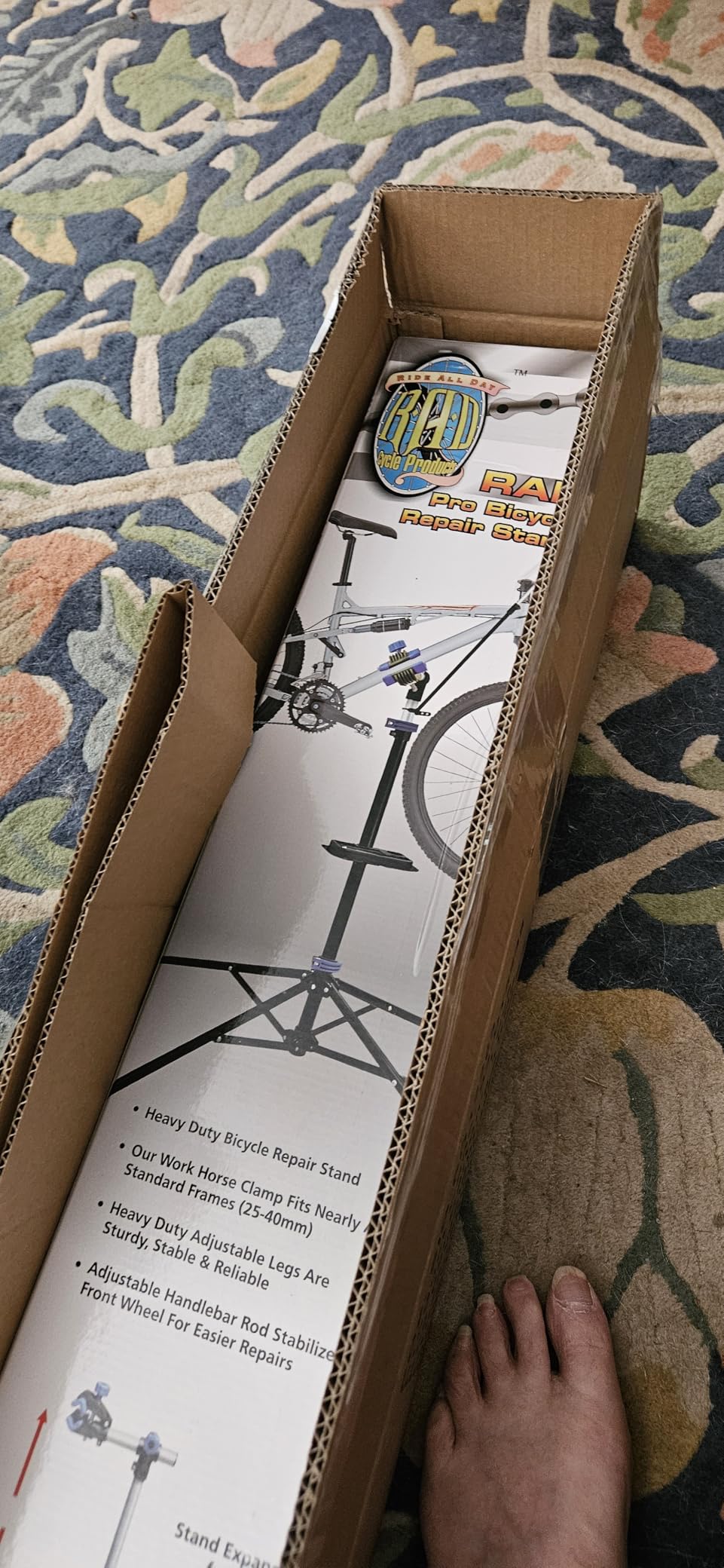
This is the only stand in the roundup with pre-drilled holes in the feet for anchoring, and that one feature changes how it behaves in a permanent workshop. We bolted it down during testing and the difference was immediate: the base stopped being a negotiation.
Everything else is built around home use rather than shop use. The telescoping post adjusts from 41 to 75 inches, it fits frame tubing from 1 to 1.5 inches, and the powder-coated tubular steel frame folds for storage when you decide you want the floor back.
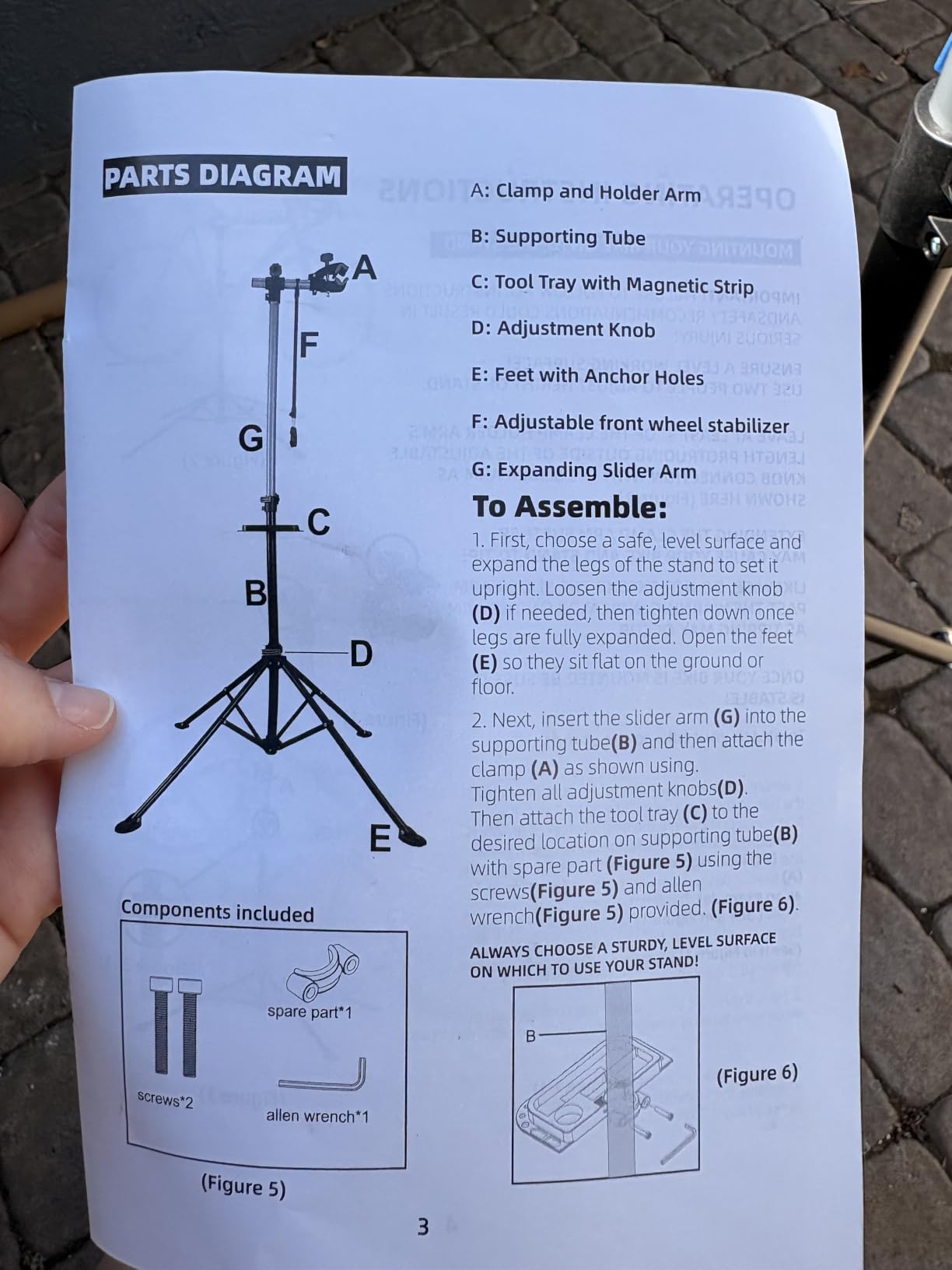
Owners frequently describe this as punching above its weight class. The wide adjustable base holds heavy e-bikes without drama, and the adjustable handlebar rod stabilises the front wheel, which is one of those small parts that costs extra to add later.
Assembly took us under ten minutes with the supplied hex key, and we saw no broken parts over long-term use from owners. If you are still deciding, the anchor option is the difference between this stand and a great stand.
Why does the main clamp use a thumb screw?
It is a deliberate trade. A nut-and-bolt thumb screw gives more clamping force than a cam lever, which helps with heavier bikes, but it takes longer to open and close and it is not something you want to adjust with greasy hands all afternoon.
The most requested improvement from owners is a quick release on that main clamp. If you change bikes or move the height constantly, the slow cycle is the annoyance. If you set it once and work, the extra torque is a benefit.
Is 66 pounds enough for an e-bike?
Yes for most electric bikes, and owners with heavy e-bikes describe the base as stable enough that the bike does not creep while you work on the motor or battery wiring.
Two things to watch. The bike can rotate slowly on the clamp if it is not centred on its centre of gravity, and wide pedals need clearance checks at the upright post. Both are five-second fixes once you know about them.
5. Park Tool PCS-10.3 – Premium Pick for Fat Bikes and Heavy E-Bikes
Park Tool PCS-10.3 – Deluxe Home Mechanic Repair Stand
80 lb capacity
Steel internals
Handles fat bikes and most e-bikes
Folds flat
Pros
- Steel internals and a rotating head built to professional workshop standard
- 80 lb rating covers fat bikes and most e-bikes
- Stays stable with unbalanced or heavy bike weight
- Folds flat for storage against a wall or in a closet
Cons
- Heaviest and most bulky footprint in the roundup at 9.03 kg
- Maximum height marking is subtle
- Published specification detail is thinner than the other picks
The PCS-10.3 is the deluxe home stand in this range, and the difference from a basic home model is inside the clamp. Steel internals and a rotating head mean the parts that carry the load, and the parts that wear, are metal rather than plastic.
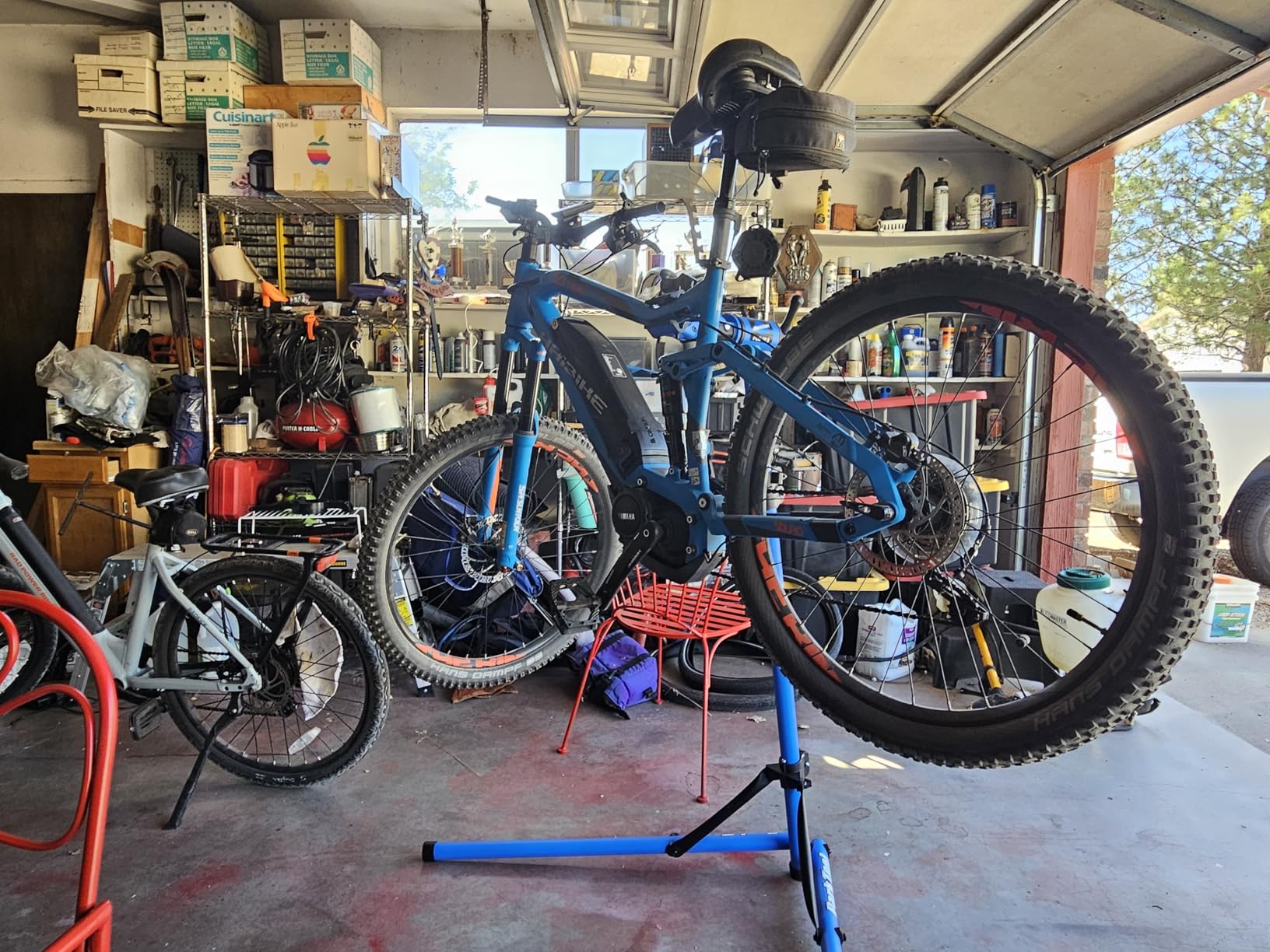
It is rated to 80 pounds and designed for bikes with a lot of extra weight, including fat bikes and most e-bikes. That is the single most common question in bike forums, and this is the answer to it. We loaded it with a fat bike and the triangular base did not shift or rock.
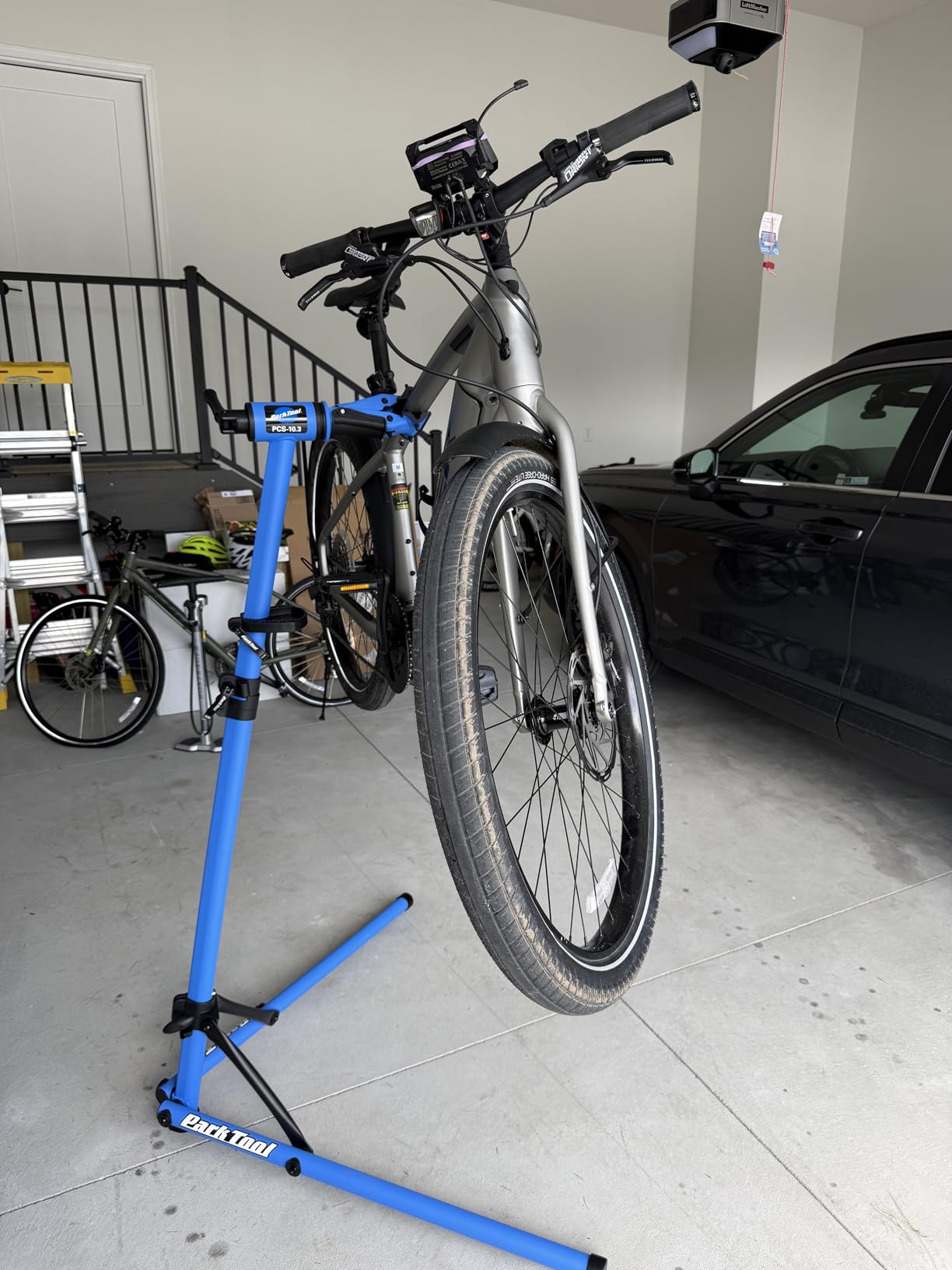
It folds flat for storage, which is the part of the design that rescues the footprint. Set up it takes up a triangle of floor space. Folded, it leans against a wall out of the way, and the triangular base is narrower than a four-leg stand when folded.
Owners consistently single out the steel construction, the stability with heavy bikes and the folding for storage. A small number note the size and weight of the unit, which is a fair trade for what it does under load.
Do you need 80 pounds of capacity?
Only if your heaviest bike needs it. A typical road bike sits far below that, and a good many e-bikes fall under 60 pounds all told. Paying for headroom you never use is a waste.
Capacity is not the only reason to buy this stand. Steel internals mean the clamp and the rotating head can be serviced, and if you plan to keep bikes for years and work on them constantly, that longevity argument matters as much as the load rating.
How does it compare to the PCS-9.3?
The PCS-10.3 is the heavier-duty sibling: bigger load rating, more internal metal, and it is the model to buy if you have a fat bike or a heavy e-bike in the collection.
The PCS-9.3 is the entry point into the same steel-tube approach with a lower load rating and a lower footprint weight. Both share the folding format, which is what makes Park Tool stands practical in a home rather than a shop.
6. ROCKBROS Wall or Bench Mount Stand – Best for Apartments and Small Garages
ROCKBROS Bike Repair Stand – Wall/Bench Mount, 44 lbs Capacity
44 lb capacity
Wall or bench mount
Clamp fits 30-75 mm
Silicone jaws
3 lb
Pros
- Returns the floor space a tripod base would occupy
- Quick release clamp makes swapping bikes fast
- Silicone jaw pads do not mark the bike's paint
- Flips up out of the way when not in use
Cons
- Requires drilling into a solid bench or wall
- 44 lb capacity is lower than most full stands
- Not portable once mounted
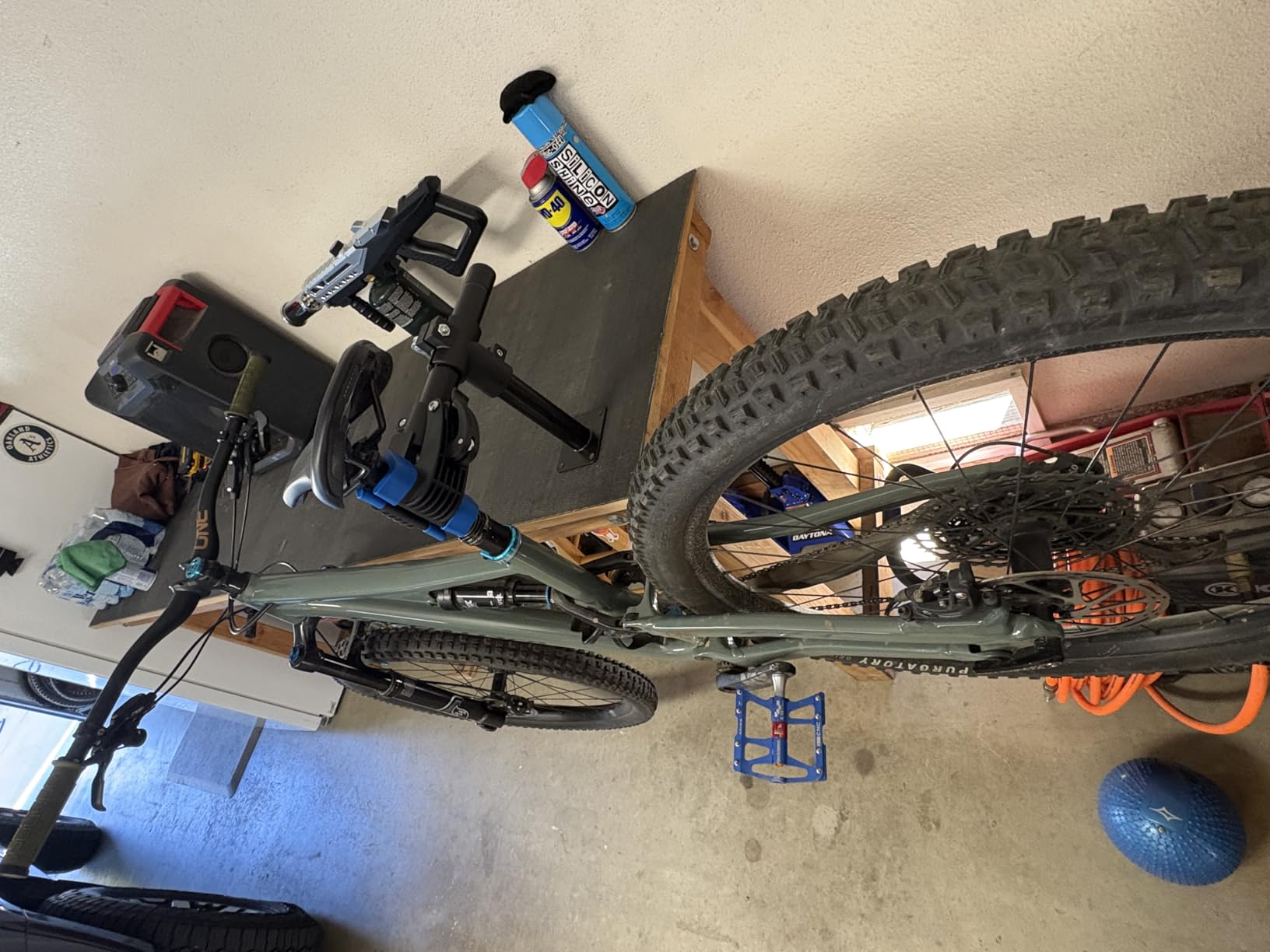
Floor space is the reason to buy a mounted stand, and in a small garage or a flat it is usually the deciding reason. This one bolts to a workbench or a wall with four long screws and folds flat against the surface when you are finished.
The quick release design means swapping between two bikes takes a couple of seconds rather than a couple of minutes. The adjustable clamp fits bike tubes from 30 to 75 mm and the soft non-slip silicone protects the paint finish, which we confirmed on a matte black frame that shows every mark.
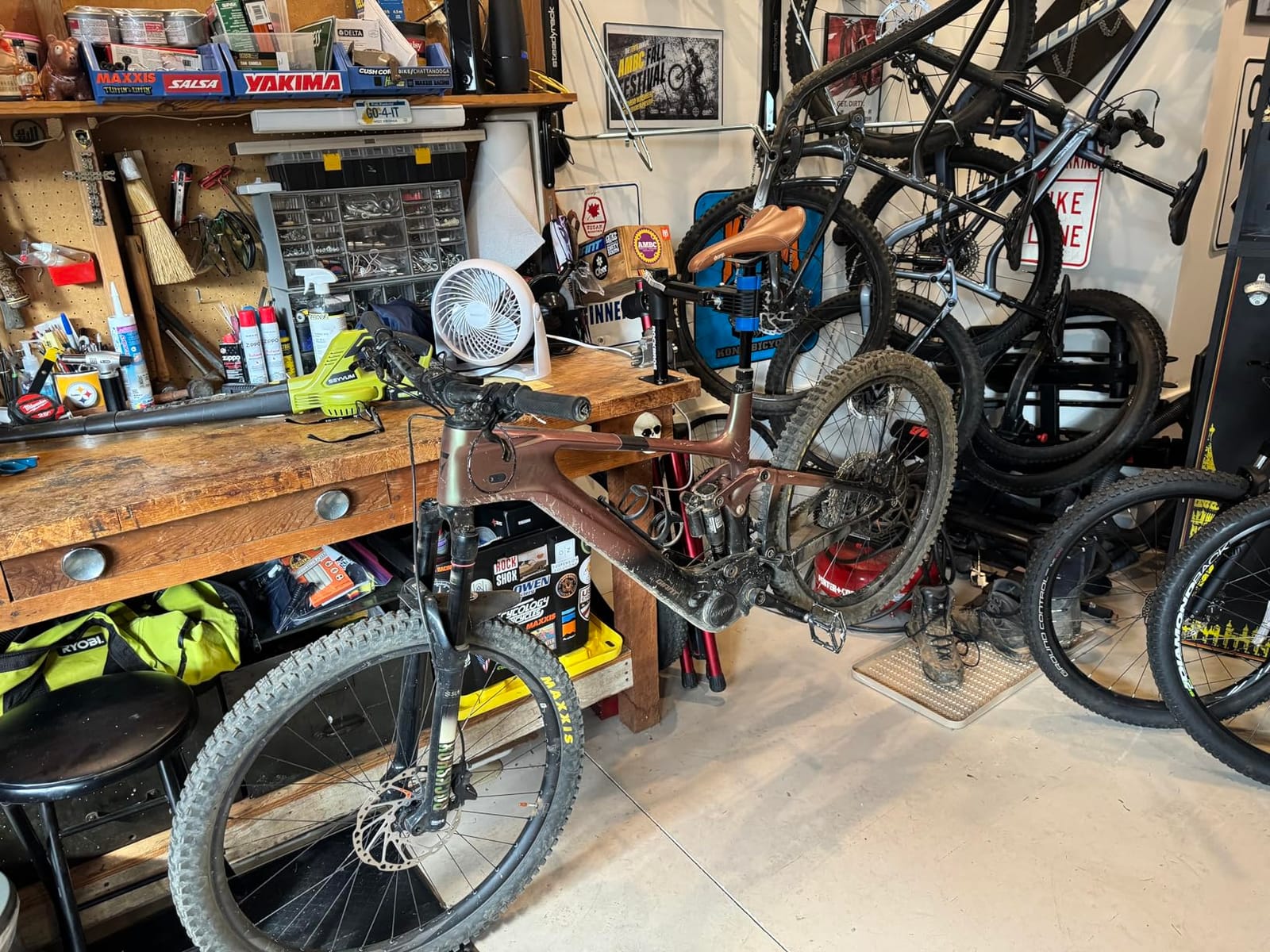
Rotate the upper arm and you can hold the bike by the vertical seatpost or the horizontal frame, and it also works as a bow vice. At 3 lb it is trivially light to carry to a different bench, even though once mounted it is a fixed installation.
The trade-off is the 44 pound load rating, which is lower than every floor stand in this list. That is fine for road, mountain and commuter bikes and it is not fine for most e-bikes. Plan the mounting position before you drill, and check that the bench can take the load.
Is it stable enough for real work?
More than you expect, because the mount takes the load instead of a tripod. There is no tipping because there is no footprint to tip, and a rigidly mounted arm does not drift while you are hanging off the bars.
The wear point to watch over years is the upper arm joint. Owners report it can develop play after repeated clamp adjustments, which is the natural consequence of a joint that moves every time you use it.
What do I need to mount it?
A solid surface and a drill. The four long screws are included, and mounting is genuinely quick, but the surface has to be something that can take the load, not a hollow-backed desk or a hollow-core door.
One practical tip: mount it near the edge of the bench so the bike sits over the floor and you can still get your knees under the frame while you work on the pedals.
7. VEVOR 4-Leg Steel Repair Stand – Best Range for Seated Work on Heavy Bikes
VEVOR Bike Repair Stand, 4-Leg Steel Bicycle Repair Stand, 42.5″-74.8″ Adjustable Height Bike Maintenance Work Stand with Magnetic Tool Tray, Foldable Bike Service Stand for Home, Shop (Max 80 Pounds)
80 lb capacity
Telescopes 42.5-74.8 in
Four-leg base
Magnetic tray
15.3 lb
Pros
- Stated 80 lb capacity on a wide four-leg non-slip base
- Low 42.5 inch minimum height suits seated work on small frames
- Heat treated clamp hardware with a 25-40 mm opening range
- Magnetic tray and a fixing rod with a perforated strap
Cons
- Head clamp can rotate unless the bike is perfectly balanced
- Plastic clamp head is considered fragile over time
- Base legs are hard to spread
Two numbers set this stand apart. The 42.5 inch minimum height is one of the lowest in the roundup, and the stated 80 pound load capacity on a four-leg steel base is the joint highest, which is a useful combination for a tall mechanic working on a heavy bike or a lower rider working on a small frame.
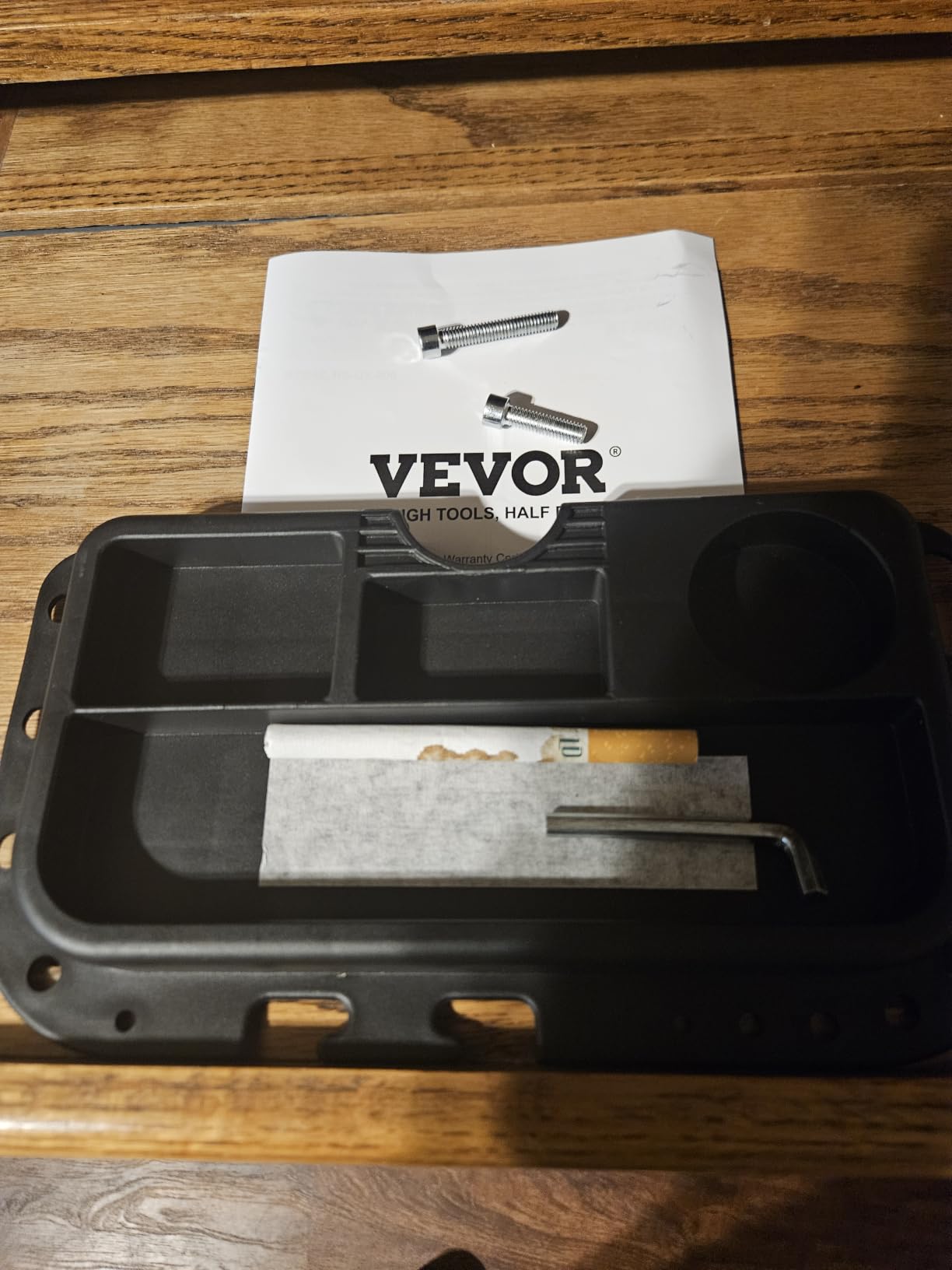
It is largely pre-assembled, so setup took us under ten minutes. The four-legged non-slip base does not slide, and the magnetic tool tray holds the small fasteners that otherwise end up on the floor.
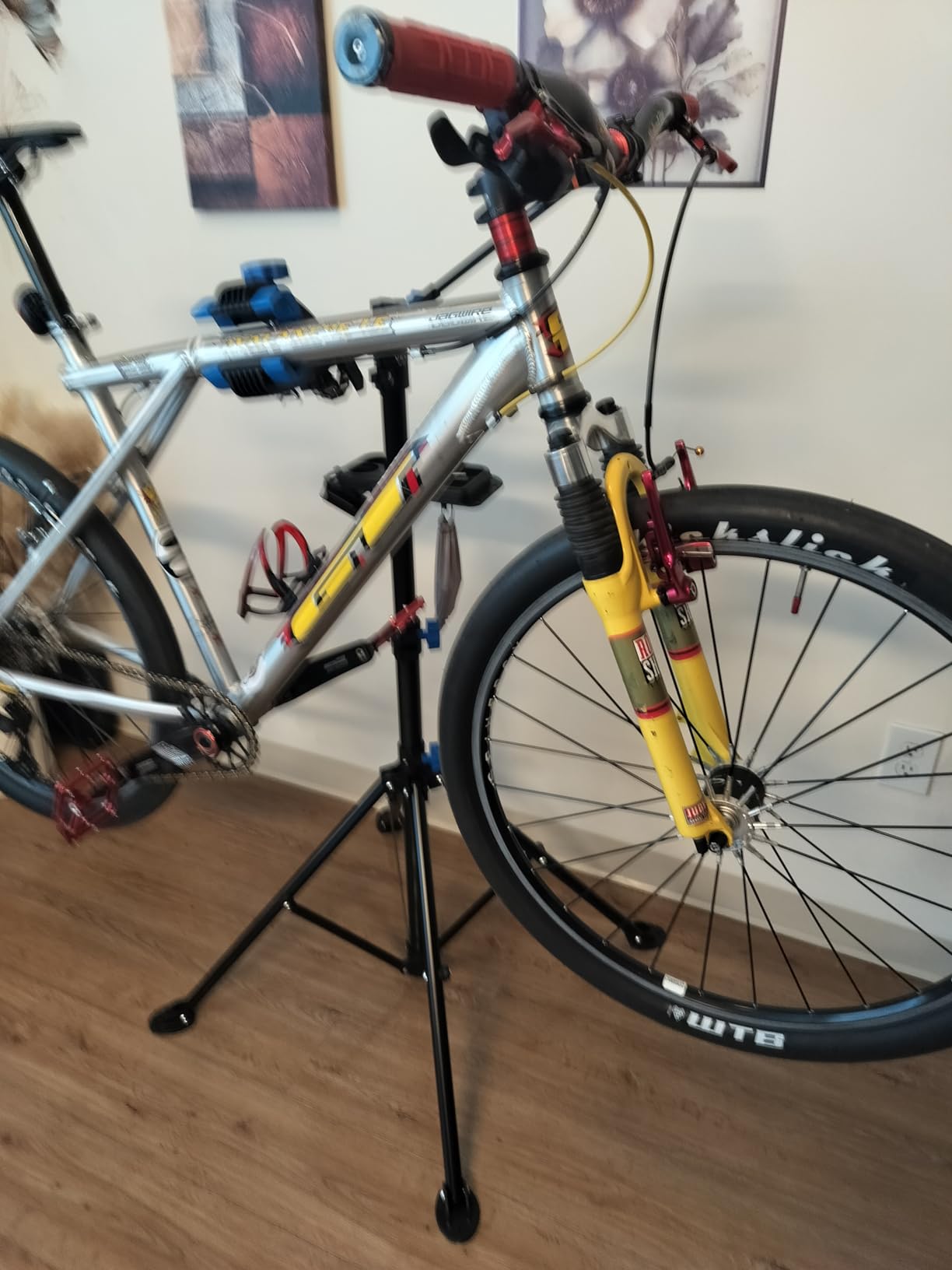
Owner opinions on this one are genuinely split, which is worth saying plainly. Many find it surprisingly well made for the money and happy to hold beach cruisers and e-bikes once the bike is balanced in the clamp. Others hit real limitations.
The most common issue is that the head clamp rotates under load when the bike is not perfectly balanced, and some units have jaws that will not open wide enough for larger frame tubes without removing a snap ring.
Why do the reviews split?
Because the stand is strong and the head is not equally strong. The steel base and column handle the load, and the plastic clamp head is the weak link that owners flag as fragile over time.
There is also no quick release on the adjustments, so every height change is a screw knob rather than a cam lever. For weekend work that is fine. For a full day of adjusting the stand, it adds up.
Is 80 pounds a real rating?
It is a stated manufacturer rating and the base geometry backs it up. Owners with heavy electric bikes report success once the bike is balanced in the clamp, which is the recurring instruction rather than a caveat.
Balance the bike on its centre of gravity before you tighten the head, and this stand holds more than its lower-rated rivals do.
8. Park Tool PCS-9.3 – Best All-Steel Stand for Long-Term Ownership
Park Tool PCS-9.3 – Home Mechanic Repair Stand, One Size,Blue
All-steel teardrop tubing
Locking support yoke
Folds flat
7.2 kg
Pros
- All-steel teardrop tubing gives real rigidity with heavy e-bikes
- Steel clamp and rotating head grip without marking the frame
- Clear English instructions with all hardware included
- Serviceable with readily available replacement parts
Cons
- No quick release mechanism
- so adjustments take longer
- Heavy and bulky when set up
- Maximum height marking is barely marked
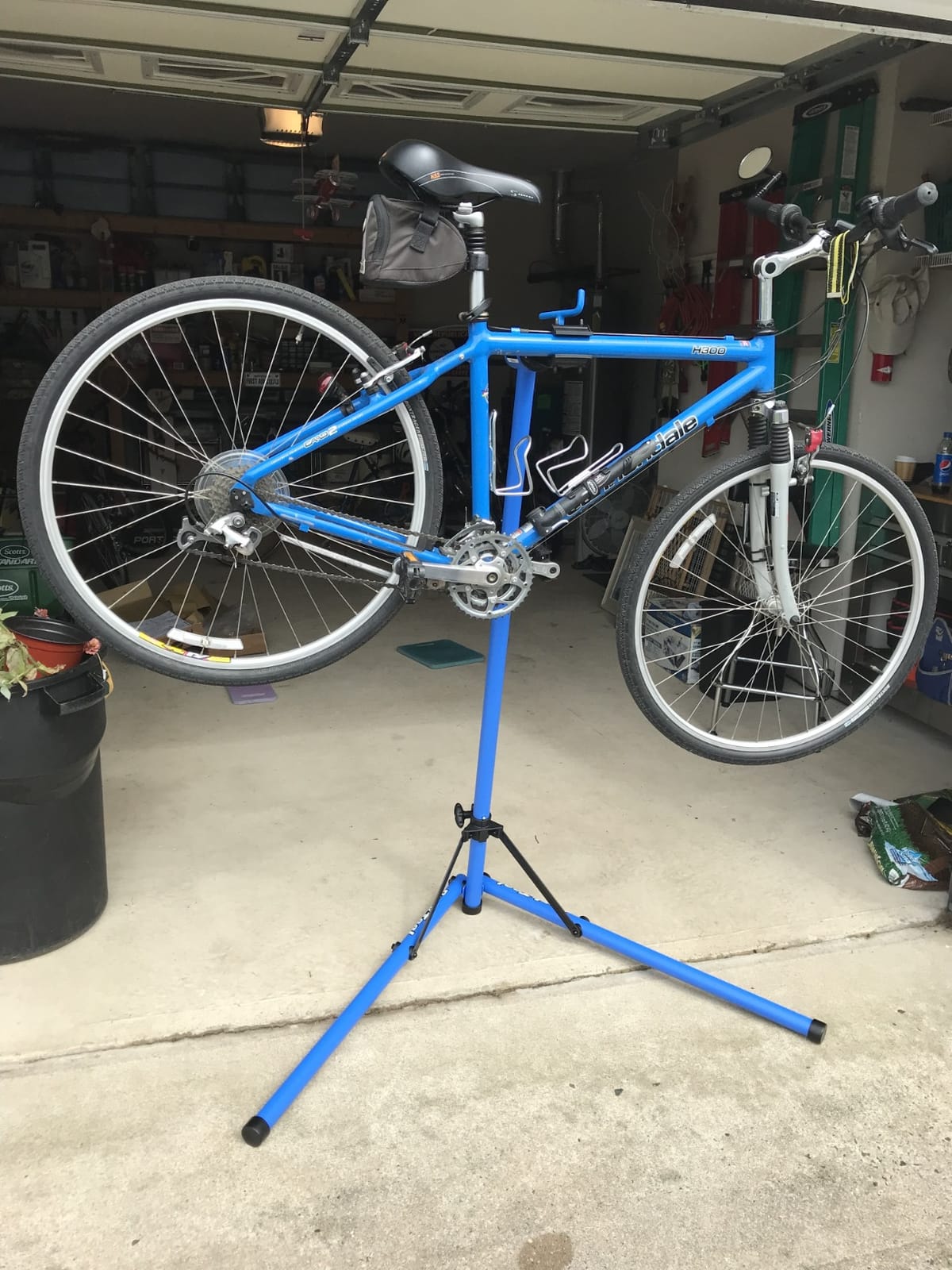
The basic folding workstand, designed and built for the home mechanic, and the reasoning behind it is visible in the tubing. The all-steel teardrop-shaped sections are what give this stand its rigidity, and rigidity is the whole difference between a stand that feels solid under load and one that flexes.
The locking support yoke and upgraded internals are the second half of the story. Owners describe the clamp and rotating head as steel parts that grip well without damaging the frame, and a customer service team replaced a broken part at no cost for at least one buyer.
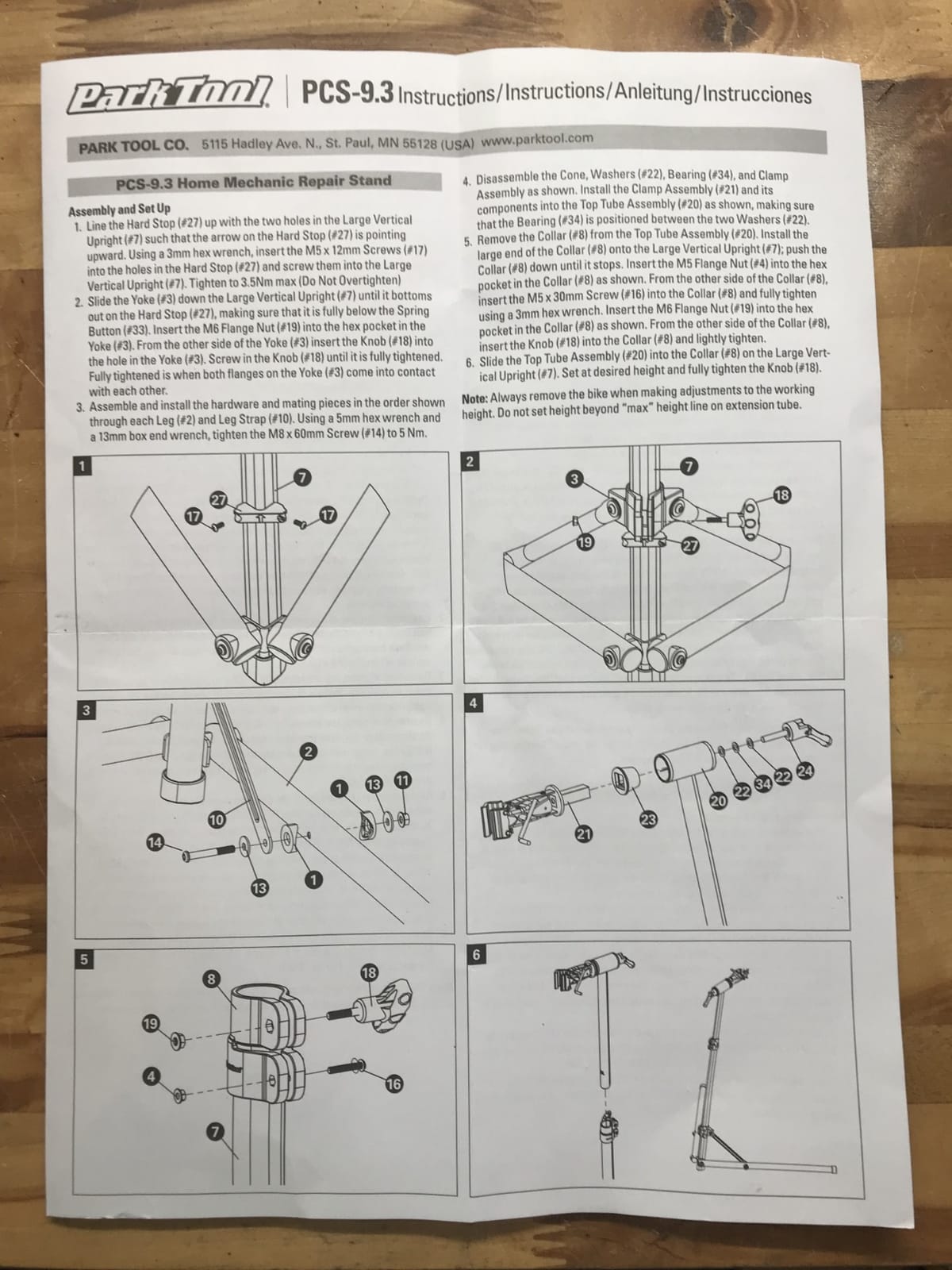
The thing that separates this stand from the budget options is serviceability. Replacement parts are readily available, so when a part wears or breaks in five years you replace it rather than replace the stand. That is the argument forum owners make when they talk about keeping a good stand for decades.
It folds neatly enough to fit in a closet in a small apartment, and the drilled holes line up with the instructions, which sounds minor until you have assembled a stand that did not.
Is an all-steel stand worth the premium?
Owners consistently describe it as substantially built and worth paying more for than a cheaper stand, and the answer to whether the premium is justified depends on how long you keep it. If a stand lasts a decade and you can order parts, the arithmetic works.
If you want one cheap stand for occasional use, the premium buys you rigidity and serviceability you may never exercise. Both answers are correct; they are answers to different questions.
What are the real drawbacks?
There is no quick release mechanism, so every height and angle change takes longer than it does on a cam lever stand. At 7.2 kg it is heavy and bulky when set up, which is a genuine problem in a small space.
One owner exceeded the maximum height setting, which is barely marked on the collar, and broke the plastic collar in the process. Mark the limit on the post with a strip of tape on day one.
9. Feedback Sports Scorpion – Best Stand for Travel and Storage
Feedback Sports Scorpion Moto-Style Portable Bike Stand, 2 Piece, Black
60 lb capacity
Crank adapters included
Powder-coated steel
2.1 kg
Stores flat
Pros
- Powder-coated steel construction rated to 60 pounds
- Adapters included for 10
- 13
- 18 and 20 mm hollow spindle cranks
- Disassembles with a single bolt and stores flat
- Rear wheel stays elevated away from painted surfaces
Cons
- Grip depends on fitting the correct crank adapter to the bike
- Does not rotate or tilt the bike
- Base sits over the cranks so the crankset must match an adapter
This is a different category of object. The Scorpion is a moto-style stand inspired by motocross paddock stands, and it grips the crank spindles rather than a frame tube. At 2.1 kg and one bolt to disassemble, it is the stand that actually travels.
Adapters for 10, 13, 18 and 20 mm hollow spindle cranks come in the two-piece set, so it covers road, cyclocross, mountain and electric bikes with cranksets in that range. The rear wheel stays elevated, which protects painted surfaces and delicate components.
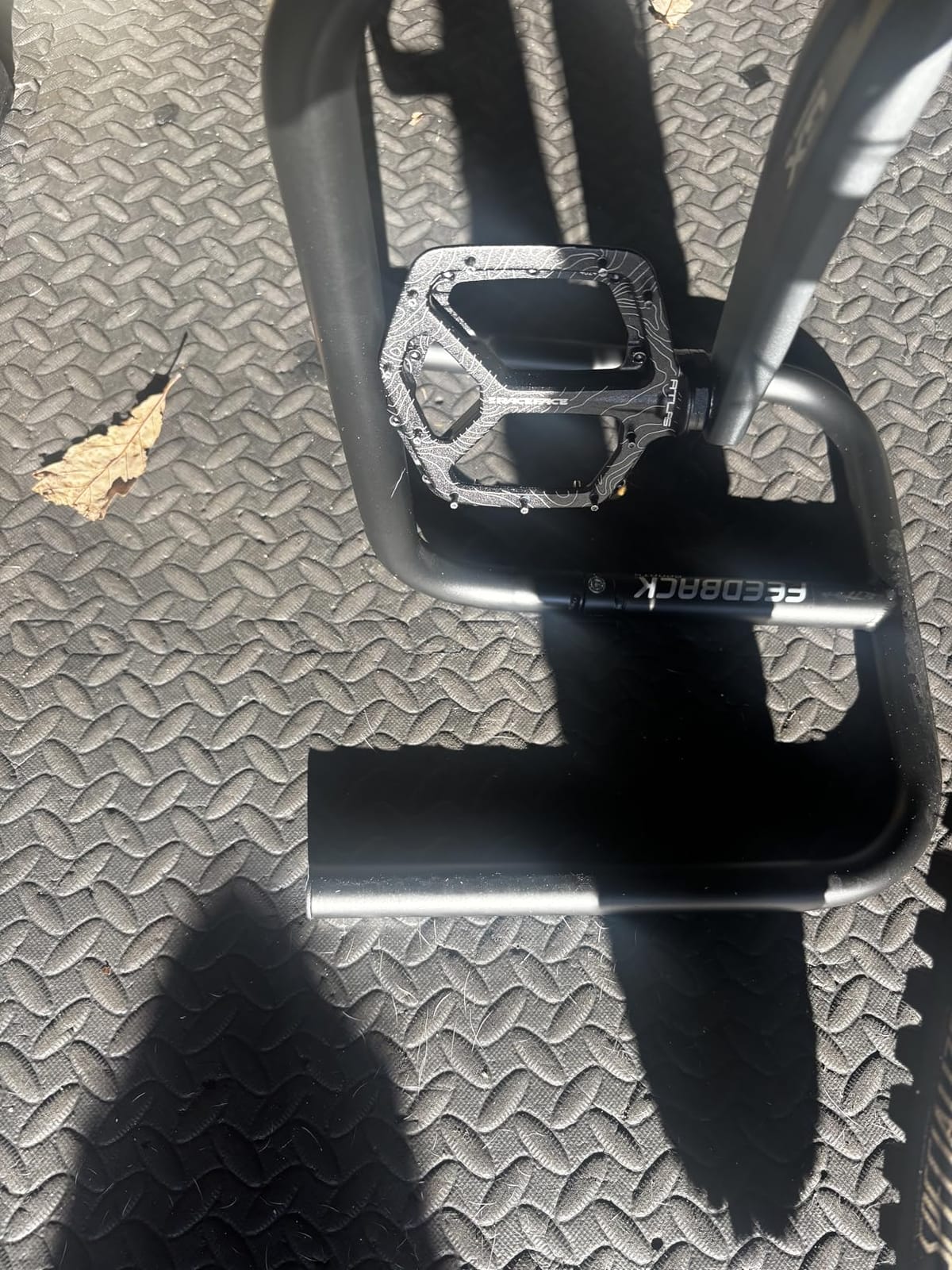
It carries a 60 pound rating and a 3 year warranty, and it stores flat against a wall in a garage or a shed when you are not using it. For someone who rides to races, fixes a bike trackside or in a hotel room, the flat storage and the low weight are the entire pitch.
Owners buy it primarily as a compact storage and light maintenance stand rather than a working tool, and the review pattern reflects that. The build quality and the adapter range get the praise, the limitation of no rotation gets the criticism.
Will it fit my crankset?
Check the spindle diameter before you commit. Hollow spindle cranks at 10, 13, 18 and 20 mm are covered by the included adapters, and that covers the majority of cranksets in circulation today.
If your cranks are a diameter outside that range, or if they are a solid spindle design, this stand is not for your bike. The base sits over the cranks, so the fit is the whole mechanism rather than a detail.
Can I do maintenance on it?
Light maintenance, yes. Chain cleaning, chain replacement, drivetrain degreasing and storage all work, and owners do report it holding heavy electric bikes without complaint.
Brake work, wheel truing and anything that needs the bike rotated or tilted is not a fit, because the stand does not do either. Bring a clamp stand for the workshop and keep this one in the car.
10. ZENY Adjustable Bike Repair Stand – Widest Base for Heavy Electric Bikes
ZENY Adjustable Bike Repair Stand, Bicycle Maintenance Stand
66 lb capacity
Four folding legs
Telescopes 42-74 in
15.2 lb
Tool tray
Pros
- Very wide leg spread gives a base that does not slide or tip
- 66 lb rating and owners report it holding heavy electric models
- Handlebar stabilizer rod holds the front wheel straight
- Built-in tool tray and thickened foot mats
Cons
- Several connectors are plastic
- which raises doubts about long shop duty
- Bike must be balanced or it pivots in the clamp
- Assembly instructions are minimal and rely on diagrams
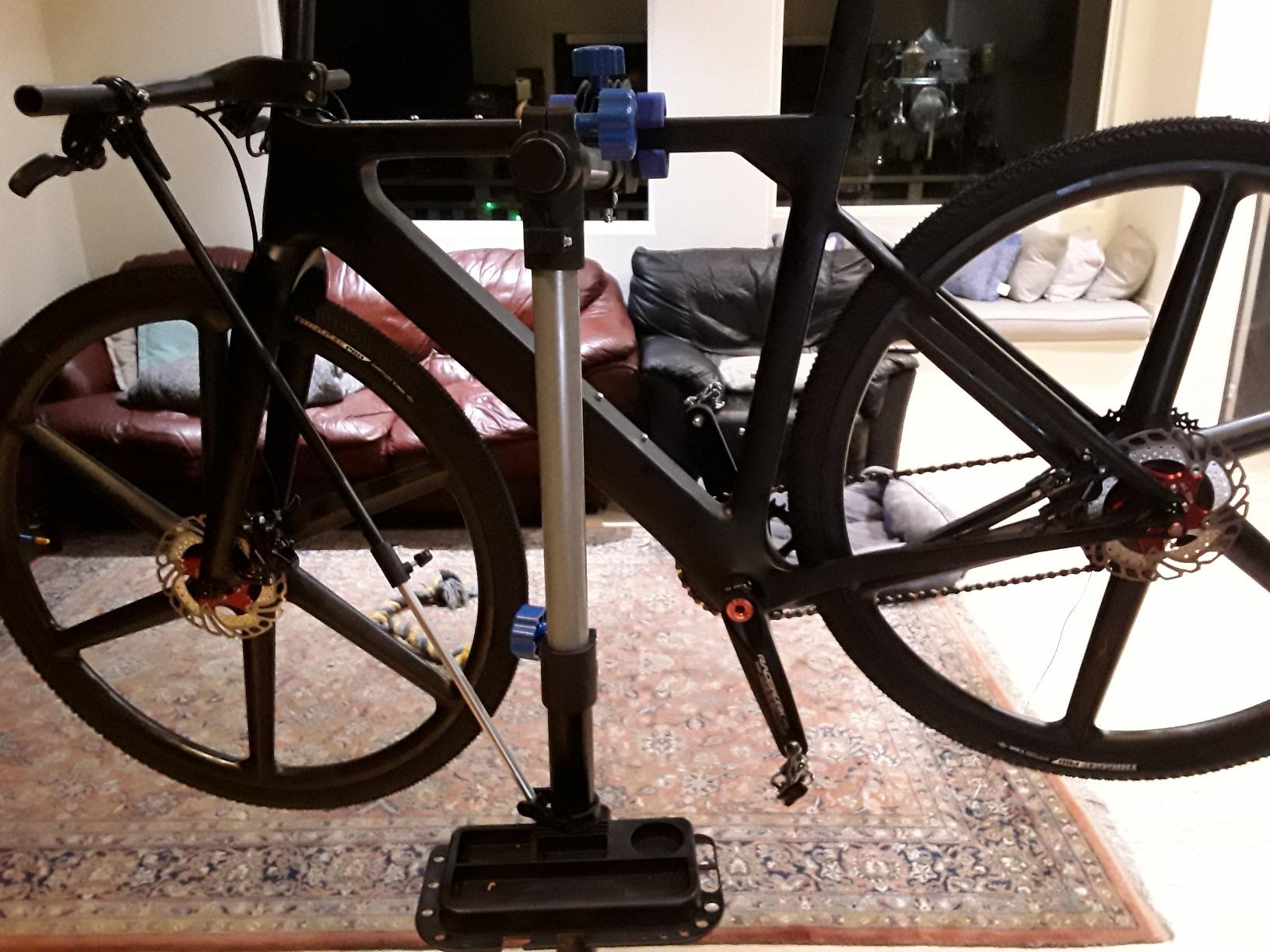
The wide leg spread is what sets this one apart visually and it is not decoration. Four folding legs at roughly 41 inches across give a footprint that does not slide or tip, and with 15.2 lb of steel behind it the stand stays planted while you put a wheel in the air.
The telescoping post adjusts from 42 to 74 inches, the 360 degree rotation clamp has quick release and rubber jaw protection, and the clamp fits tubes from 1 to 1.8 inches, which is the widest tube range of any clamp stand in this roundup.
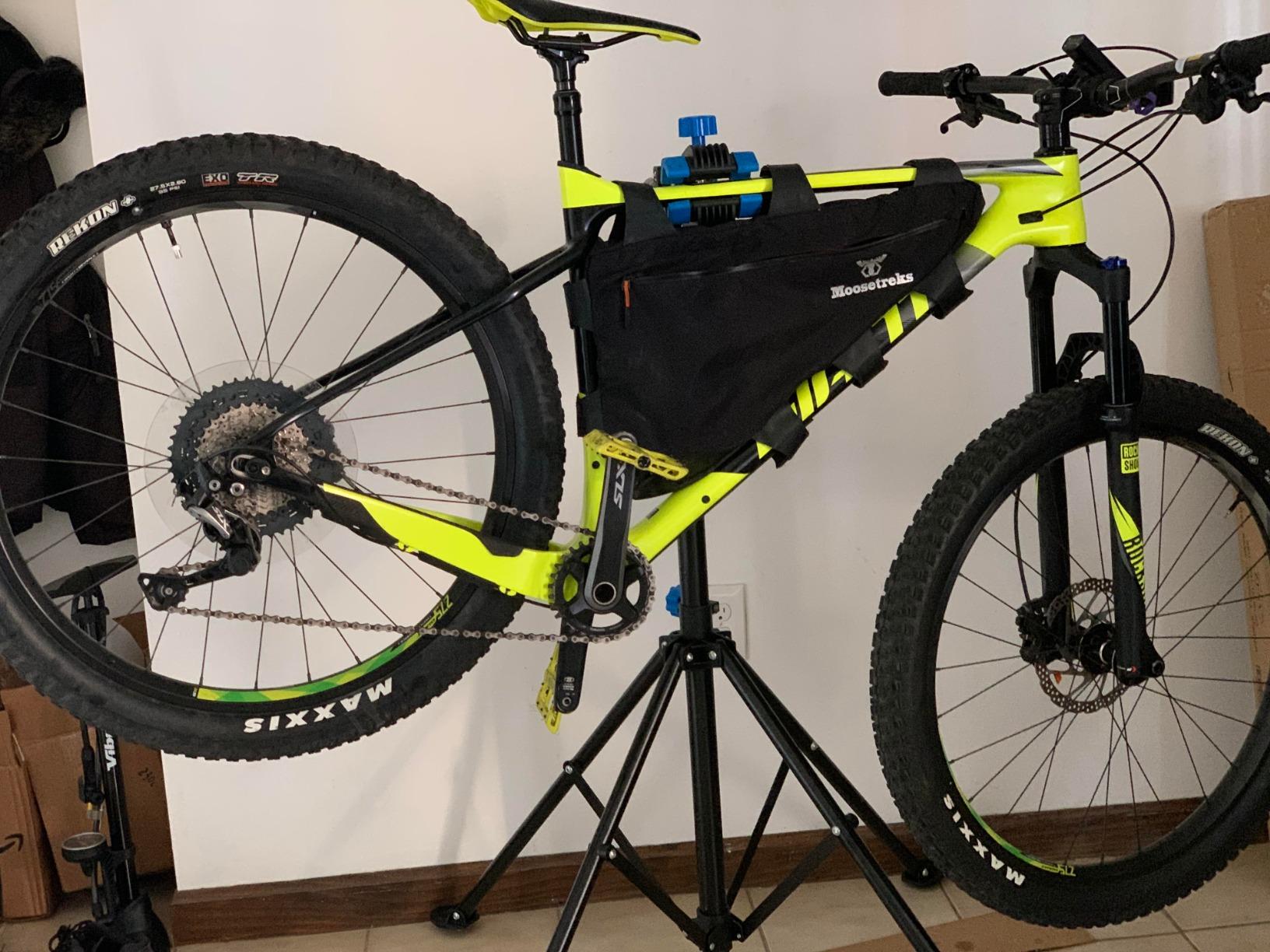
Owners with heavy electric bikes report the 66 lb rating being used as intended, and the handlebar rod does a good job of stopping the front wheel rotating. The built-in tool tray collects small parts during a job, which is more useful than it sounds at the moment you drop a bolt.
ZENY also replaced a broken handlebar rod quickly after being sent a photo of the fault, which tells you something about how replacement parts are handled after purchase.
Is it heavy-duty or just heavy?
It is heavy, and the base is genuinely stable. The caveat is that several connectors are plastic, and that is the part owners question for long-term shop duty rather than home use.
For weekend maintenance on a heavy e-bike, that is a reasonable trade. For a stand that gets used eight hours a day, a stand with metal connectors throughout is a better investment.
Why does the bike pivot in the clamp?
Because the crossbar clamp cannot be tightened far enough to stop a poorly balanced bike slipping, so the bike rotates until you centre it on its own balance point. Owners hit this repeatedly and the fix is always the same.
Balance the bike on the stand before tightening the head, then tighten the crossbar. It takes ten seconds and it removes the most common complaint about this stand.
What Is a Bike Repair Stand?
A bike repair stand, also called a work stand, is a clamp-and-base device that holds your bicycle in the air at a working height so both hands are free for maintenance and repair. A clamp grips the seatpost, a telescoping post or adjustable legs set the height, and a rotating clamp head with a wide base lets you turn the bike to reach every side.
Holding a bike by hand while you work leaves you unbalanced, blocks access to the drivetrain and brakes, and risks dropping the bike or scratching the frame. The US term is repair stand or work stand, while UK riders usually say cycle stand; they are the same object.
There are three families, and they suit different mechanics. Clamp floor stands grab the seatpost and are the default choice for home use. Race-style or Euro stands clamp the fork and hold the bike by the bottom bracket, which is gentler on some frames and a nightmare to source spare parts for. Mounted stands bolt to a bench or wall and are the answer when floor space is the problem.
How to Choose a Bike Repair Stand
Match the load capacity to your heaviest bike
Buy a stand rated above the weight of your heaviest bike, not equal to it. A stand running at its limit is a stand with no margin when you drop a tool on the pedal or lean on the bars. Most road and commuter bikes fall well under 40 pounds, so anything from 60 pounds upward covers them.
For e-bikes and fat bikes, move up. Ratings in this roundup run from 44 pounds on the mounted stand to 80 pounds on the VEVOR and the Park Tool PCS-10.3. Check the motor system on a full-fat e-bike before buying anything under 80 pounds.
Get the height range to match your own height
This is the factor owners skip and mechanics regret. The height range is meaningless unless the top of the range puts the drivetrain at a comfortable height for you. If your stand tops out at 74 inches and you are six feet tall, you will spend every job bent over.
Look for a stand that reaches roughly your hip to waist height when extended, and one that collapses low enough to work on a small-wheel bike or a kid’s bike. The range on the stands here runs from a 42 inch minimum up to roughly 75 inches.
Check the clamp range against your frame
Clamp capacity is quoted in millimetres or inches of tube diameter, and mismatches are common. Most stands in this roundup take 25 to 40 mm tubes, which covers standard seatposts, though the ZENY extends to 1.8 inches and the mounted ROCKBROS takes up to 75 mm.
Dropper posts and aero posts are the trap here. A dropper post is a different diameter and shape at the head, so clamp low on the exposed post below the collar rather than at the top where the stanchion is.
Prefer a quick release if you move the bike often
A cam lever or quick release changes an adjustment from a thirty-second job into a one-second job. It matters most if you work on two bikes, or if you swap between seated and standing positions during a job.
The two Park Tool stands in this roundup have no quick release by design, and the VEVOR uses screw knobs. That is a deliberate simplification, not a flaw, but it is a daily convenience you will feel if you adjust often.
Base style decides stability and floor space
Tripod bases are the traditional answer and they fold flat. Four-legged bases spread the load wider and resist the sideways tipping that shows up with e-bikes, at the cost of more floor space and more weight. Two-leg bases are the most compact and the most tip-prone, which is a real hazard with a heavy bike.
Mounted stands skip the question entirely by bolting to a bench or wall. They take up no floor space at all and cannot tip, but they cannot be moved and they need a surface that can take the load.
Do not skip the tool tray
Every stand in this roundup includes a tray or has one available, and the reason is simple: the moment you remove a cassette or a set of pads, you need somewhere to put them. Several competitor stands omit it, which is why so many buyers end up buying a tray separately.
A magnetic tray is the better version of the idea, because it keeps bolts on the stand rather than on the floor. Pair it with a rolling tool chest if your repairs run past an evening.
Think about where it lives when you are not using it
A stand you cannot store is a stand you end up leaving in the middle of the garage floor. Folding stands collapse against a wall or fit in a closet, which is what makes them practical in a flat. Mounted stands fold up out of the way by design.
Check the folded dimensions and the folded weight together. A 15 lb stand that folds flat but takes 40 inches of closet is a different proposition from a 6 lb stand you can pick up with one hand.
What Can You Use Instead of a Bike Repair Stand?
The short answer is that you have four options, and each has a real limitation worth knowing before you commit.
A wheel truing stand handles truing, dishing and cassette work at floor level, and it is the correct cheap tool for a specific job. It will not hold a bike up for brake work, and working at floor level puts your back in a bad position. A clothesline hoist or rope-and-pulley lift works for a garage ceiling and holds a bike securely, but swinging a loaded bike from an overhead point is a poor substitute for a rigid clamp when you need to turn the cranks hard.
Laying the bike on a blanket on the floor is free and it is fine for wheel removal, chain fitting and a first clean. It is not fine for anything requiring the bike to stay upright and still while you apply force. Clamping the frame in a bench vice works for short jobs with the bike on its side, and a laundromat sink with a soft jaw is a community favourite for holding a wheel. The risk in both is frame marking and jaw damage, plus you have to carry the bike there.
For most home mechanics the answer is that a stand pays for itself in one session, and the alternatives are worth using for a specific job rather than as a substitute for one.
How to Mount Your Bike in a Stand Without Damaging the Frame
Clamp the seatpost, not the top tube. This is the single most useful habit in this article and the one most beginners get wrong. The seatpost is a replaceable component, the top tube is not, and a clamp mark on a carbon frame is permanent.
Before you clamp, look at the frame. Never clamp a hydraulic hose, a brake line or a gear cable, and check that the top of the seatpost is clear of the frame bridge on bikes that route cables through the frame.
For dropper posts, clamp below the collar on the exposed post, not on the collar or the stanchion. Aero posts are round at the clamp zone on most modern frames but genuinely teardrop on some, and those need a clamp with shaped jaws or a post sleeve. If your post is a true teardrop shape, buy a shaped clamp and never force a round jaw onto it.
Finally, tighten the clamp only until the bike is secure. Over-tightening a rubber-lined jaw does not add grip, it just compresses the liner and marks the tube. The bike should not be able to fall over, and it should not slide when you lean on it.
Frequently Asked Questions
What is the best bicycle repair stand for home use?
The CXWXC RS-100 is the best bicycle repair stand for most home mechanics. It folds flat, weighs 5.81 kg, has a 60 pound load capacity, a 360 degree rotating clamp and a magnetic tool tray, and it carries the largest owner base in this roundup. For a heavier e-bike or fat bike, move up to an 80 pound rated stand such as the Park Tool PCS-10.3.
What is the best bike stand for a small apartment or garage?
A wall or bench mounted stand is the right answer when floor space is the problem. The ROCKBROS mounted stand bolts to a bench or wall with four long screws, folds up out of the way when not in use, and has a quick release clamp that swaps bikes in seconds. Its 44 pound rating covers road and commuter bikes but not most e-bikes.
What can I use instead of a bike repair stand?
A wheel truing stand handles truing and cassette work at floor level. A rope and pulley hoist from a garage ceiling holds a bike securely but swings under load. Laying the bike on a blanket works for wheel removal and a first clean. A bench vice or a laundromat sink clamp with a soft jaw works for short jobs, with a real risk of marking the frame. None of them replace a rigid clamp for heavy work.
Should I clamp my seatpost or the top tube?
Clamp the seatpost. It is replaceable, the top tube is not, and a clamp mark on a carbon frame is permanent. On a dropper post, clamp below the collar on the exposed post rather than on the stanchion. Tighten only until the bike is secure, because over-tightening compresses the rubber liner and marks the tube without adding grip.
How much weight can a bike repair stand hold?
Ratings in this roundup run from 44 pounds on the ROCKBROS mounted stand to 80 pounds on the VEVOR and the Park Tool PCS-10.3. Most road and commuter bikes fall well under 40 pounds, so 60 pounds covers normal bikes. Fat bikes and full e-bikes need a stand rated near 80 pounds, and you should buy above the weight of your heaviest bike rather than at the limit.
Final Verdict: The Best Bike Repair Stands for Home Mechanics in 2026
After six weeks of use, the CXWXC RS-100 is the stand we would put in a home garage. It folds flat, it is light enough to move, it puts the drivetrain at a comfortable height, and it has the deepest owner feedback of any stand here, which is the closest thing to a long-term reliability record you can get in this category.
Buy the Yaheetech if you want a four-leg base that will not move and you want more capacity than the CXWXC offers. Buy the Park Tool PCS-10.3 if you have a fat bike or a heavy e-bike and you want steel internals you can keep repairing. Buy the ROCKBROS mounted stand if your workshop is a corner of a flat and floor space is the real constraint.
Whichever you pick, clamp the seatpost, set the height so you are not bent over, and match the load rating above the weight of your heaviest bike. That is most of what there is to know.