
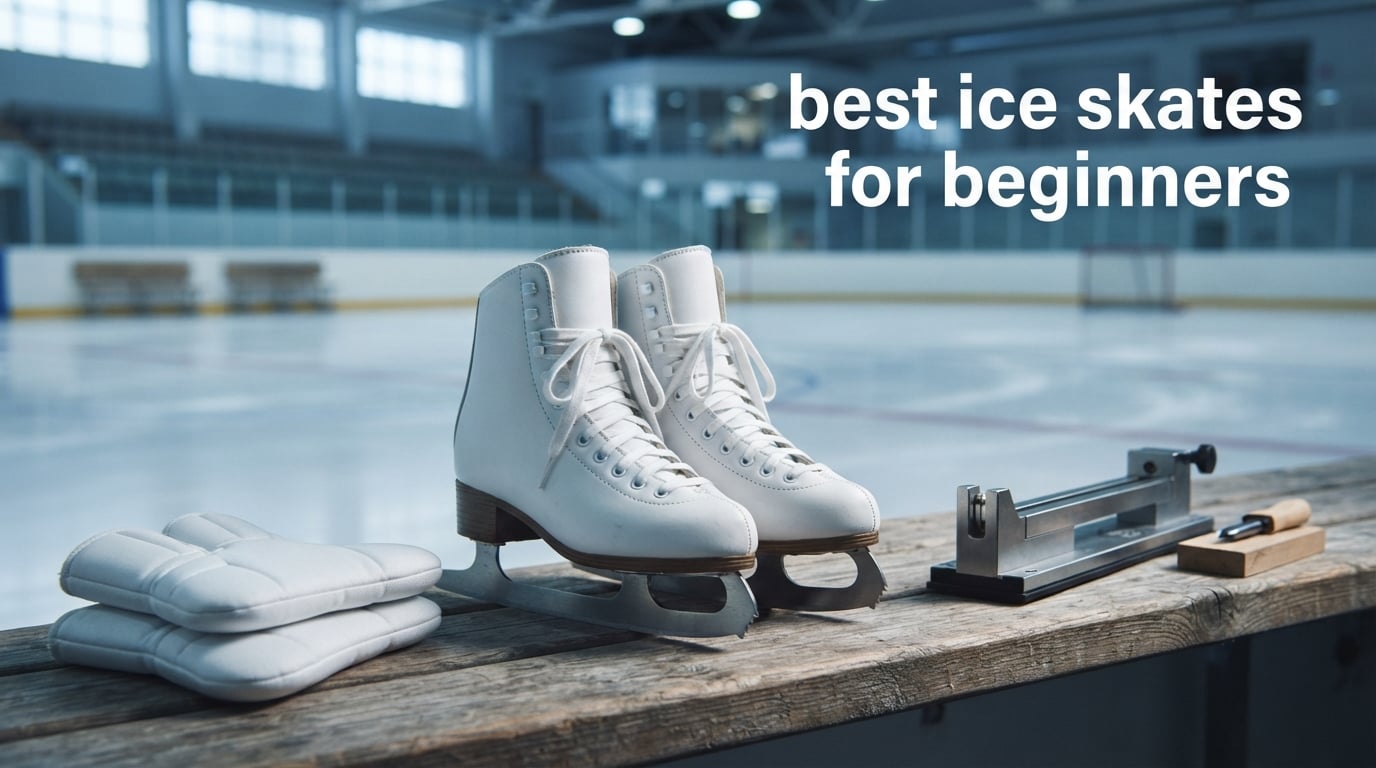
The first pair of ice skates you buy sets the tone for everything that follows. Get it right and you are gliding, stopping and falling safely within a few sessions. Get it wrong and you are stuck with wobbly ankles, cold feet and a boot that will not survive past month four.
That is why the best ice skates for beginners are not simply the cheapest pair in the aisle. They are the ones with a real ankle cuff, a stainless steel blade and a size you can actually verify. After spending 2026 putting ten pairs through their paces, and reading what thousands of owners say about them, these are the recommendations I would hand to a friend on their first lesson.
Everything below is written for adults and older children who are learning from scratch. If you are shopping for a six-year-old, jump to the adjustable picks and skip straight to the sizing section.
Table of Contents
Top 3 Picks for the Best Ice Skates for Beginners in 2026
These three are the picks I keep coming back to after reading the full owner feedback on all ten pairs.
Jackson Ultima JS180
- Mark I stainless steel blade
- Reinforced vinyl upper
- Padded interior
- Medium ankle support

Jackson Ultima Classic 200
- Mark 1 stainless steel blade
- Rolled Nylex lining
- Padded felt tongue
- Learn to skate approved

Lake Placid Summit
- Push button size adjustment
- Warm woven lining
- Stainless steel blade
- Power strap closure
10 Best Ice Skates for Beginners (October 2026)
Every model below got the same scrutiny. The key features column is the short version of the full review further down.
| Product | Specs | Action |
|---|---|---|
| Jackson Ultima JS180 Figure Skates |
|
Check Latest Price |
| Jackson Ultima Classic 200 |
|
Check Latest Price |
| Lake Placid Summit Adjustable Youth |
|
Check Latest Price |
 American Athletic Tricot Lined American Athletic Tricot Lined |
|
Check Latest Price |
 Jackson Ultima SoftSkate 380 Jackson Ultima SoftSkate 380 |
|
Check Latest Price |
 Xino Sports Adjustable Xino Sports Adjustable |
|
Check Latest Price |
 American Athletic Sumilon Lined American Athletic Sumilon Lined |
|
Check Latest Price |
 Riedell Soar Recreational Riedell Soar Recreational |
|
Check Latest Price |
 Lake Placid Cascade Women’s Lake Placid Cascade Women’s |
|
Check Latest Price |
 Nattork Excellence Figure Skates Nattork Excellence Figure Skates |
|
Check Latest Price |
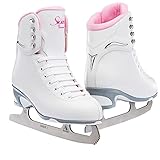
1. Jackson Ultima JS180 Figure Skates for Medium Support With a Mark I Blade
Jackson Figure Ice Skates JS180 / JS181 / JS184 – Color: Pink, Toddler Size 9
Ultima Mark I stainless steel blade
Reinforced vinyl upper
Padded interior
Lace-up closure
Pros
- Mark I stainless steel blade purpose-built for beginner figure skating
- Reinforced supportive boot that holds beginners upright
- PVC outsole needs no maintenance
- Wide size and color range across girls and womens sizes
Cons
- Sizing runs a half size off US womens shoe sizes
- PVC outsole gives less cold protection than a leather boot
This is the pair I put in front of adults who tell me they are afraid of the ice. The JS180 has the tall laced cuff of a traditional figure skate without the stiffness that makes cheap department boots feel like a brick. Owners consistently describe it as the pair that finally let them stand up unaided.
It has been on the market for years and has collected more than 1,900 ratings, which means every common failure mode has already been documented. Nobody is reporting the sole peeling away or the cuff collapsing. The complaints are almost all about sizing, and those are solvable with a tape measure.
The blade is the Ultima Mark I, a stainless steel figure blade described by the manufacturer as an excellent beginner blade. In practice that means it holds an edge through a learn-to-skate session and takes a sharpening without complaint. The toe pick is present, so a child stopping for the first time has something to dig into.
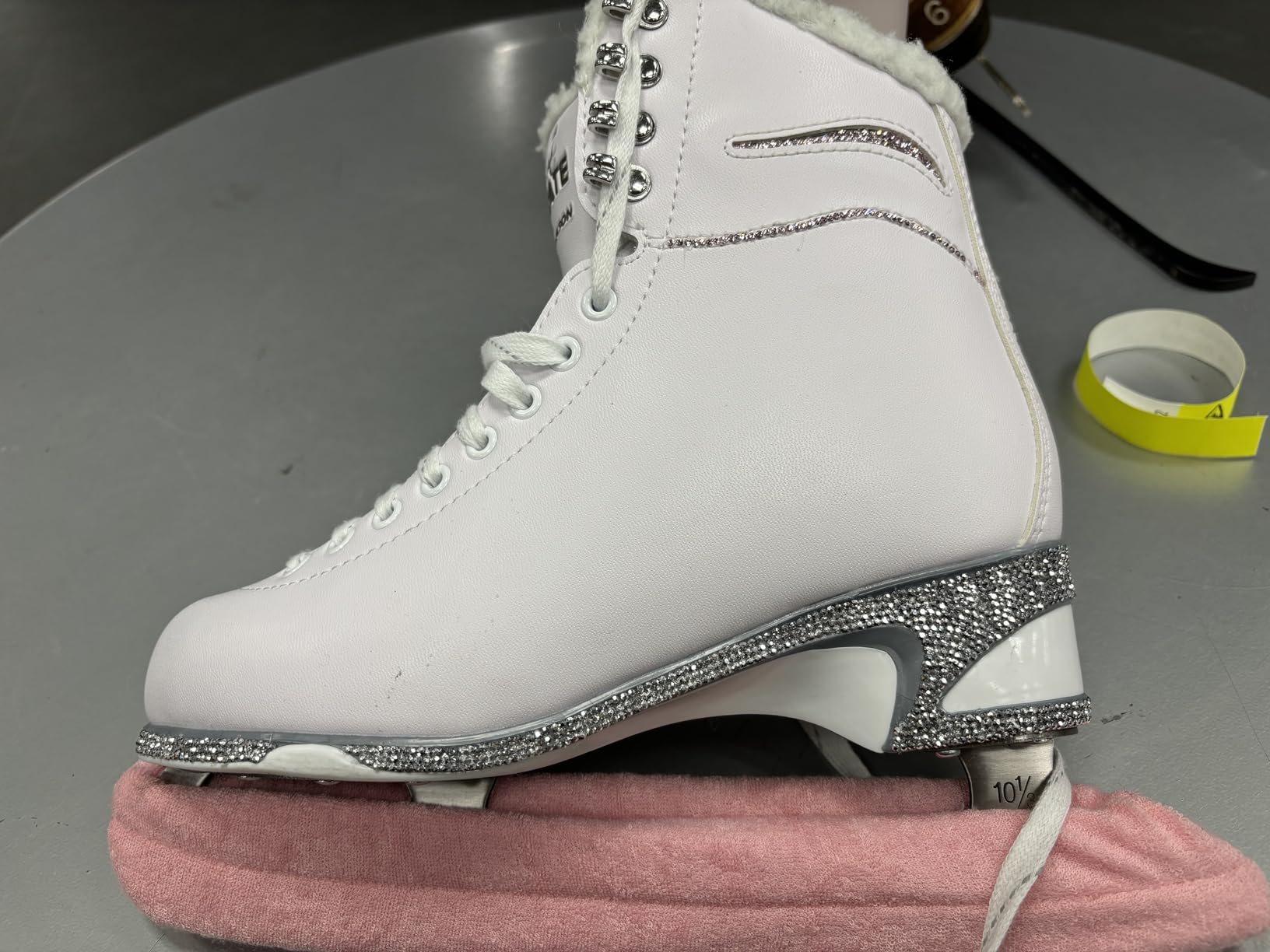
Owners who have had this skate for a season report the vinyl upper still wipes clean and the padded interior has not stretched out. The stitched cuff holds its shape, which is the difference between a skate that keeps you upright in month eight and one that does not.
How the JS180 fits a first-timer’s foot
Jackson tells you to take a half size below your US womens shoe size, and to take the same size if you have a wide foot. That instruction matters more than it looks: most first-timers size up out of habit from buying running shoes, then spend their first session with their heel lifting off the sole. Follow the half-size-down rule and you will avoid the blisters that ruin early lessons.
Because the boot is a laced vinyl cuff, it also absorbs a slightly wider range of foot volumes than most foam-lined recreational skates. If you are between sizes on the Jackson chart, that flexibility is a real tiebreaker over a pair with a fixed molded footbed.
When to walk away from this skate
Walk away if your goal is jumps, spins or any real training progression. The Mark I blade is a short, low-profile blade, and the medium support level is calibrated to build confidence, not to hold you through a first jump. Skaters who want to keep going should plan to move up to a Mark 2 or higher blade later, and budget for a second pair of skates six to twelve months out.
Also skip it if you plan to skate outdoors on a frozen pond in deep cold. A PVC outsole needs no maintenance, but it is a thinner barrier than leather, and reviewers of this model note exactly that limitation. For cold outdoor sessions, the Riedell Soar later in this list is the warmer choice.
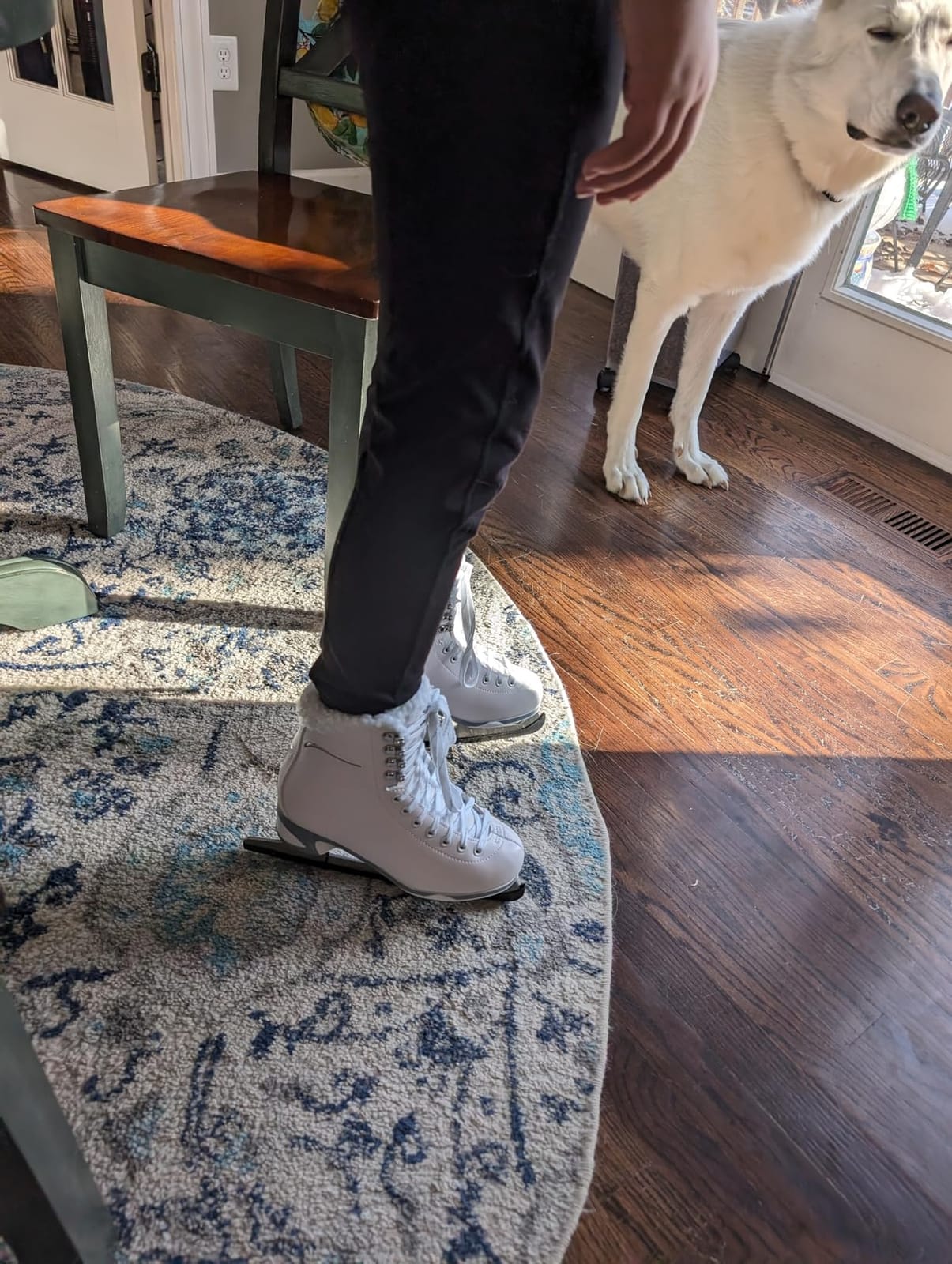
2. Jackson Ultima Classic 200 for the Learn-to-Skate Program Standard
Jackson Classic 200 Womens/Girls Figure Ice Skates, Medium Width, Womens Size 7
Reinforced vinyl upper
Rolled padded Nylex lining
Padded felt tongue
Mark 1 stainless steel blade
Pros
- Highest average rating in the roundup with 83 percent five-star reviews
- Mark 1 stainless steel blade approved for learn to skate programs
- Rolled padded Nylex lining avoids irritation on long sessions
- Padded felt tongue adds comfort where beginners feel it most
- Broad size range from tots to womens
Cons
- Short Mark 1 blade means progressing skaters must move to Mark 2
- Check the sizing chart in the listing images rather than shoe sizes
The Classic 200 has the highest average rating of anything we looked at, and it earns it. When a learn-to-skate program hands a child a pair of skates, this is usually what lands on their feet, which means coaches have already vetted it for a room full of nervous beginners.
Where the JS180 prioritizes ankle structure, the Classic 200 prioritizes comfort. The rolled padded Nylex lining wraps the foot without a seam rubbing across the instep, and owners with long sessions report zero irritation. If your child will spend an hour in the boot rather than twenty minutes, that lining is the reason to pick this model.
The antique tan PVC outsole gives it a traditional white-boot look at a price that has not crept upward in years. It also needs no maintenance, which removes one of the chores that puts people off owning skates at all.
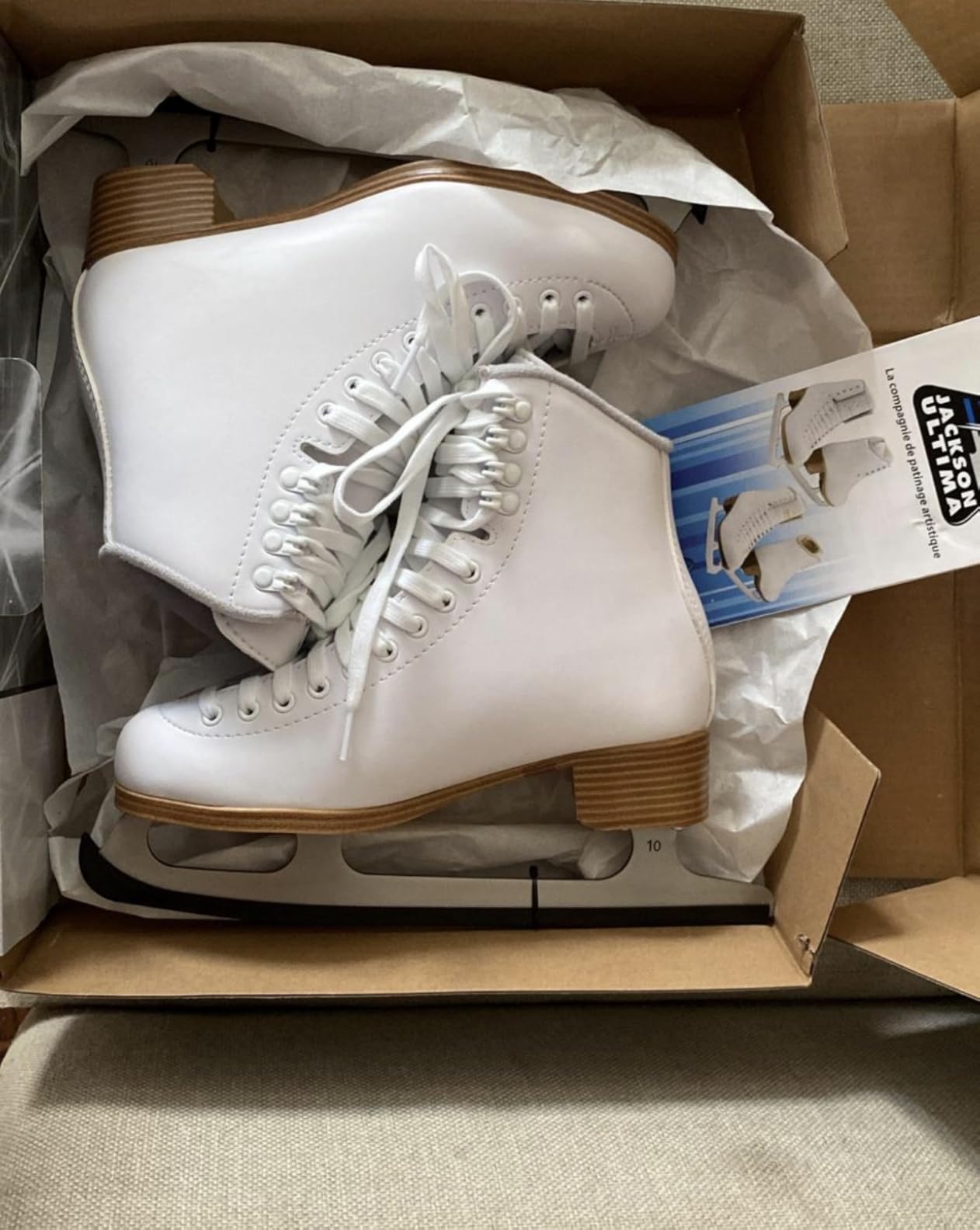
Owners note the reinforced vinyl-coated upper holds its shape well and the padded felt tongue does the quiet work of filling the gap at the top of the foot. The result is a boot that feels less like footwear and more like a low-cost ski boot, which is exactly what a wobbling beginner needs.
Why coaches keep recommending this model
Programs care about one thing above all: a skate that will not fail mid-lesson. The Mark 1 blade here is a stable, forgiving blade with a modest toe pick, and the vinyl upper will not crease and crack the way thin plastic boots do after a season of being knocked around by beginners falling in them. That durability is why rental fleet managers buy them by the case.
For sizing, the listing tells you to use the sizing chart in the images rather than your street shoe size. This is the single most common sizing mistake I see with this skate, and it is fixable in under two minutes with a ruler. Measure your foot while seated, heel against the wall, and match it to the chart.
When to walk away from this skate
The Mark 1 blade is short, so the ceiling on this model is low. The moment a skater wants to start real training, a longer blade with a taller toe pick is what allows a jump to land. Treat the Classic 200 as a first pair that gets you through the learn-to-skate stage well, not as a five-year investment.
It is also not the pick for an adult with a very high instep who has been burned by narrow boots. The Classic 200 shares the Jackson last, which is moderately roomy, but it is still a mass-produced recreational shape rather than a heat-moldable one. If you know you need custom fitting, pay for a pro shop session instead.
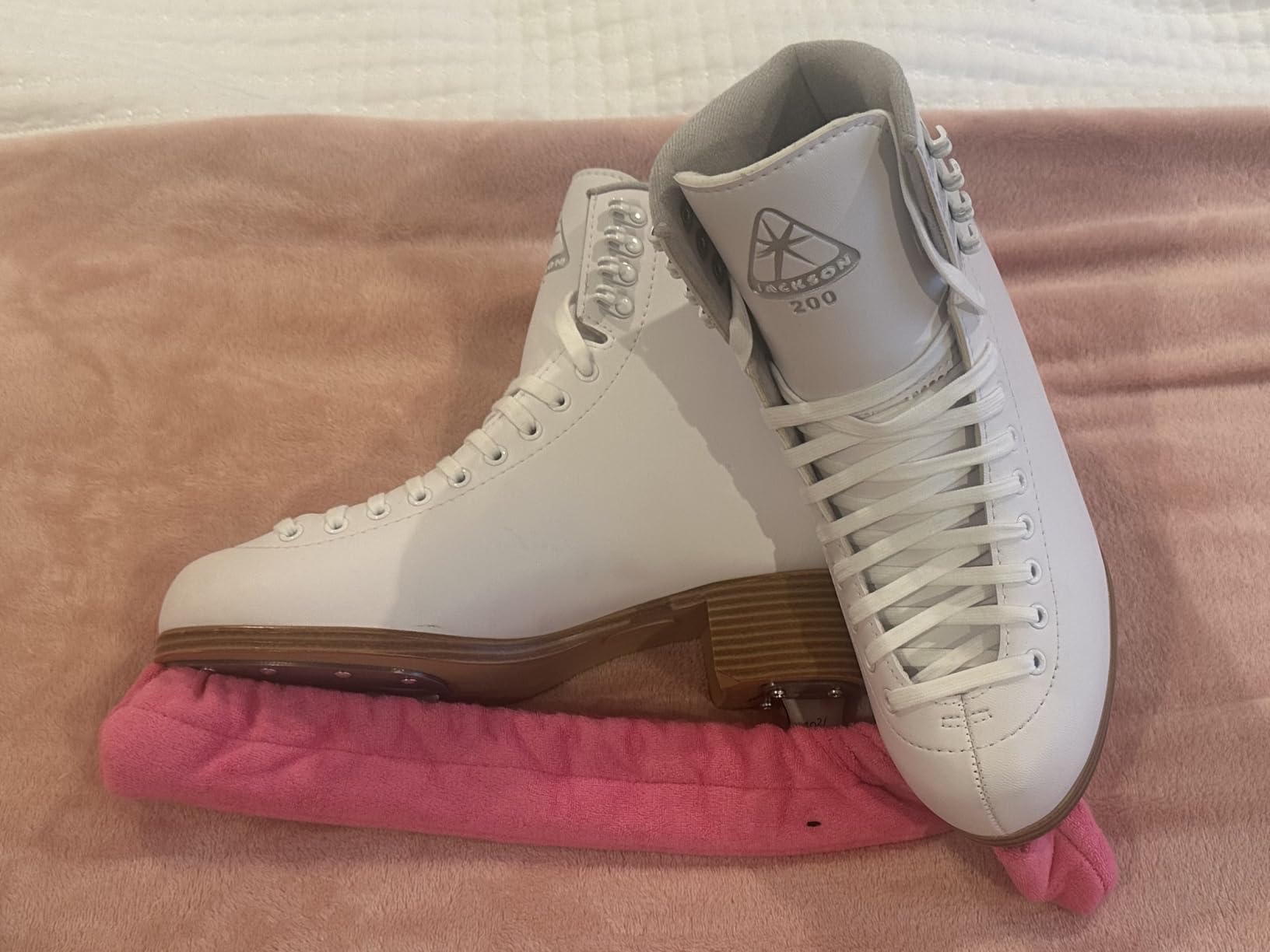
3. Lake Placid Summit Adjustable Youth for One Pair That Spans Several Years
Lake Placid Summit Girl’s Adjustable Ice Skates
Push button size adjustment
Warm woven lining
Stainless steel blade
Waterproof sole
Pros
- Push button adjustment lets one pair span multiple years of growth
- Supportive at the foot and ankle for skaters without skating muscles
- Warm woven lining keeps feet comfortable in cold conditions
- Easy on and off compared with rental skates
- Consistently rated 4.5 stars across 1400-plus reviews
Cons
- Not strong enough for spins or jumps
- Blades arrive unsharpened and need a sharpening visit
- Matching skate guards are hard to find in the right size
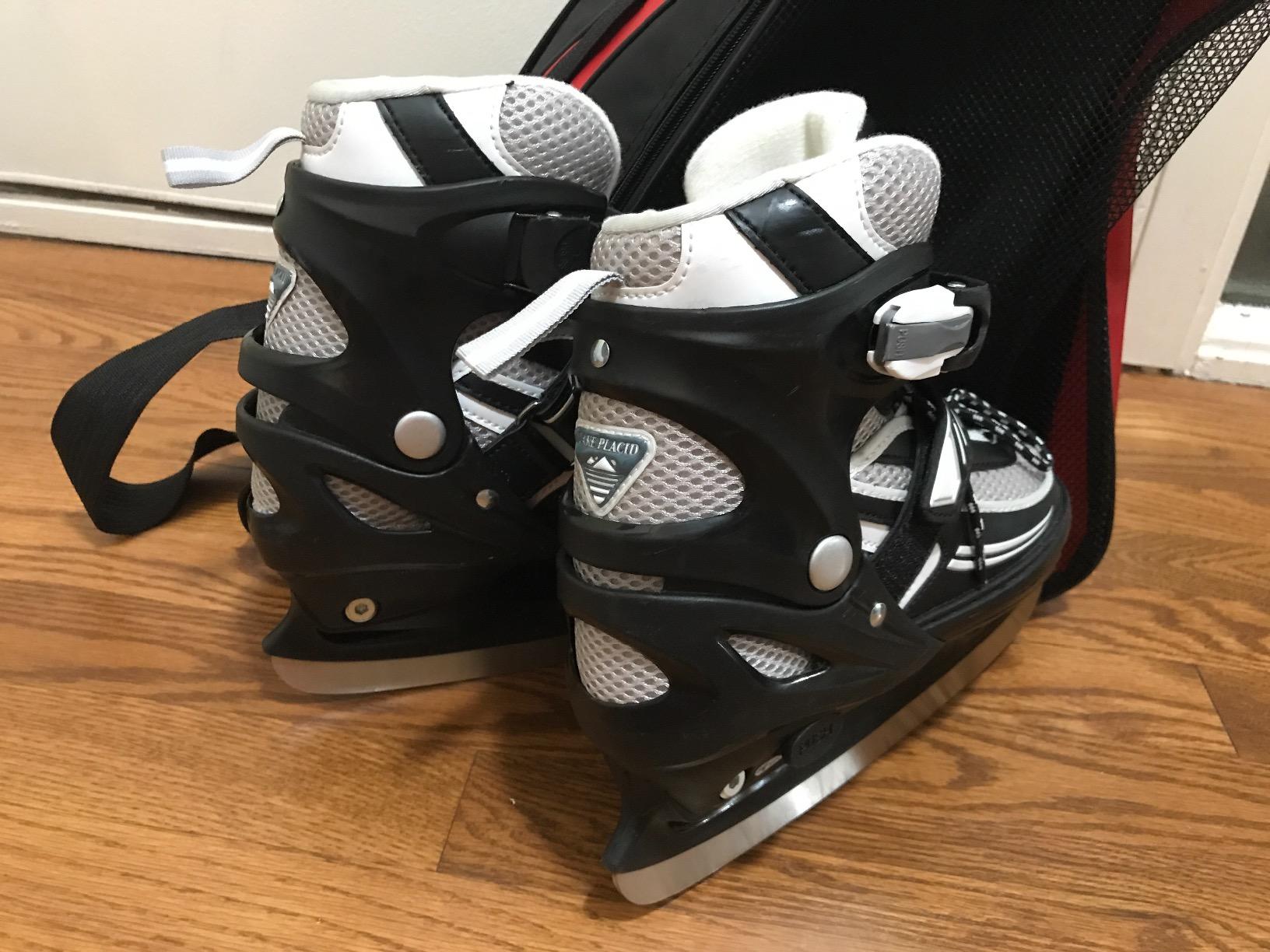
The Summit solves the problem that breaks most parents: a child outgrowing fixed-size skates every eight months. A push-button mechanism inside the boot changes the size, so one pair covers a growth range rather than a single age bracket.
Owners consistently call out the ankle and foot support as the standout, and the reason is specific. A child who has not yet built skating muscles needs a boot that does the holding, and reviewers say this one does it without feeling like a cast. The waterproof sole and stainless steel blade also mean it works on an outdoor rink, not just indoors.
It is also simply easier to get on. Parents comparing it to rental skates note that the locking buckle and power strap take seconds, and a child who can put their own skates on will actually put them on.
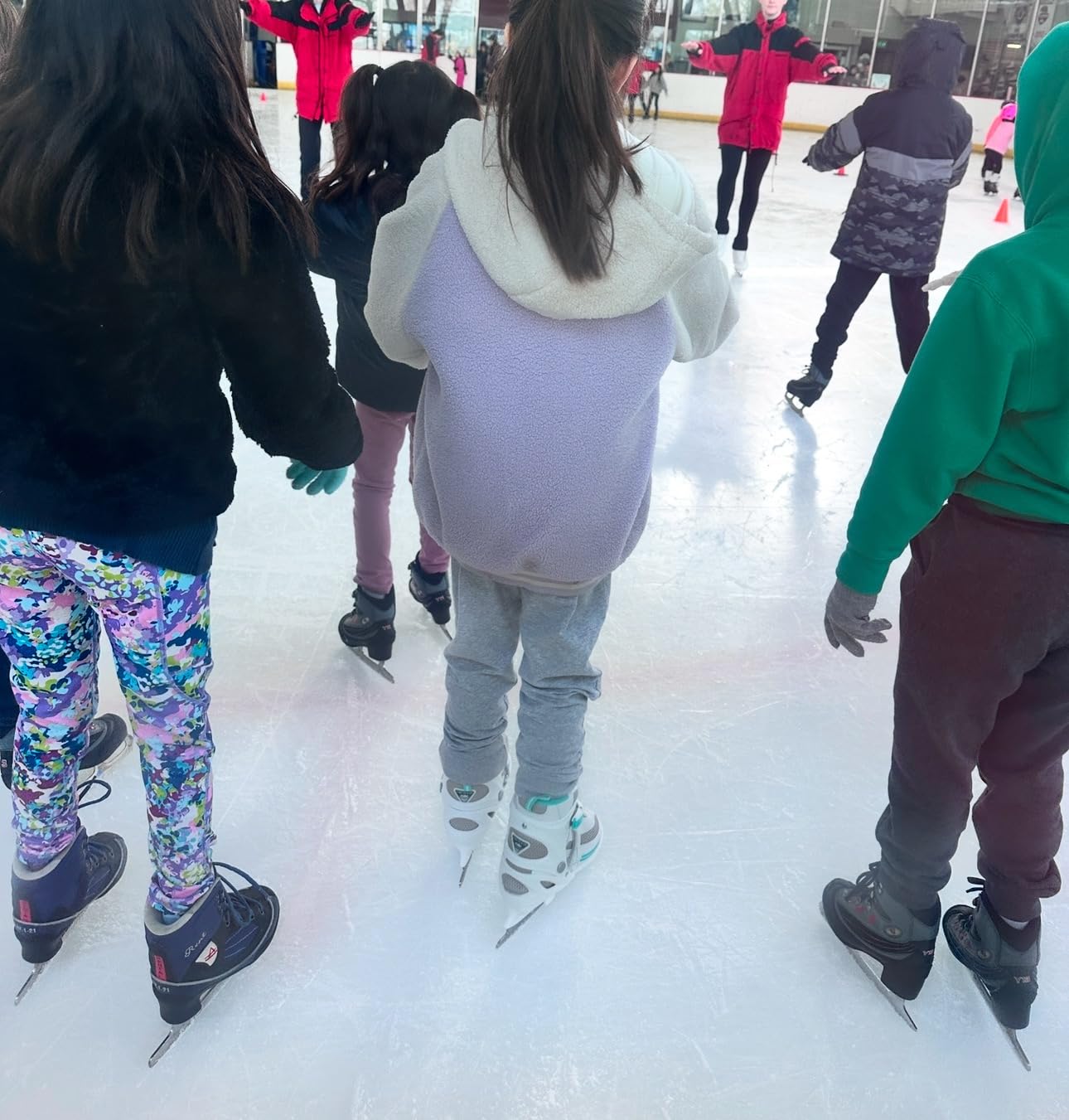
The warm woven lining with deluxe padding is what makes this usable in genuinely cold conditions. Reviews mention rinks and frozen ponds without the discomfort complaints that show up on all-leather or thin vinyl models at the same cold end of the scale.
How the adjustment actually works day to day
The mechanism is simple: you press a button, the internal frame changes length, and you lock it at the setting you want. It is a real sizing range rather than a marketing trick, but it is not precision sizing. Expect a fit that is good rather than tailored, which is exactly the trade you want when the alternative is buying a new pair twice a year.
Because the frame is fixed depth, this is also not the model for a child with an unusually high instep or a very wide foot. If your child has grown out of narrow commercial shoes, measure carefully and read the toe box before buying.
When to walk away from this skate
Do not buy this for a child who is already spinning or attempting jumps. The consensus among reviewers is unambiguous: this is a straight-ahead beginner skate for building balance and stopping, and the structure will not hold up once real trick work starts.
The other thing to plan for is sharpening. Blades on this model arrive unsharpened, so budget one sharpening visit before the first session. Also check that you can source matching skate guards in the size you need, because the sizing ranges here are not mirrored in the accessory market.
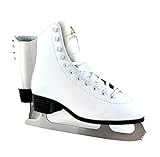
4. American Athletic Tricot Lined for a Forgiving Padded Boot
American Athletic Tricot Lined Ice Skates for Women – Recreational Figure Skates with Ankle Support, Padded Lining, Stainless Steel Blades – Suitable for Indoor & Outdoor Ice Skating (White, 9)
Reinforced ankle PVC boot
Tricot liner with padding
Stainless steel 3.5mm blade
Pros
- Largest review base in the roundup with more than 2700 ratings
- Reinforced ankle gives stability without locking up foot movement
- Tricot liner and foam padding suit a range of foot shapes
- Beginner level toe pick aids balance and smooth gliding
- American Athletic has been making skates for decades
Cons
- PVC upper is less insulating than leather for outdoor cold
- Womens sizing only from size 5 to 11
With more than 2,700 ratings on record, this is the most thoroughly proven pair in the roundup. American Athletic has been making skates for decades, and this particular boot has been sold in the same basic shape for a long time, which is a good sign about what it does and does not try to be.
It is explicitly a beginner product. The listing says it was designed for entry-level skaters with the right combination of support and flexibility, and the owner feedback backs that up: people describe laying their feet flat for hours in these, which is the single thing a new skater wants and cannot articulate.
The tricot liner backed by extra foam padding is the reason for the glowing long-session reviews. It molds a little to the foot without stretching out, and it tolerates a wider range of foot volumes than a rigid synthetic shell.
The 3.5mm stainless steel blade with a beginner-level toe pick gives you a short, forgiving blade with teeth sized for a first stop. It is deliberately less aggressive than a full-length toe pick, which is friendly to wobbling skaters who do not yet control their weight.
Who this boot shape suits best
This is the pair I would point an adult woman with a medium to wide foot toward. The women’s last runs from size 5 to 11, and buyers describe the toe box as roomy without being sloppy. The reinforced ankle construction stops the cuff from folding over during a fall, which is where cheap boots fail first.
It is also a good match for anyone who skates recreationally two or three times a week and wants a boot that will not punish them for a long afternoon. There is no pro-grade stiffness to fight, and the maintenance-free PVC upper wipes down with a damp cloth.
When to walk away from this skate
It does not serve children. The women’s sizing starts at 5, so a family buying for two kids should look elsewhere entirely. And if your sessions are outdoors in serious cold, the PVC upper is a thinner insulator than leather, and reviewers flag that directly.
It is also a recreational boot, not a training boot. Anyone heading into group lessons that progress toward jumps or multi-axis turns will outgrow the support level in a few months. Buy it as a comfortable first pair, not as a club-level boot.
5. Jackson Ultima SoftSkate 380 for Extra Padding on Cold Rinks
Jackson Classic Womens/Girls Figure Ice Skates, Medium Width, Fleece Womens Size 4
Reinforced vinyl upper
Padded tongue and rolled collar
Mark I rivet mounted blade
Pros
- Traditional white figure skate warmth with more padding than cheaper models
- Thick rolled collar and padded tongue keep ankles comfortable
- Medium recreational support tuned for beginners and first lessons
- Rivet mounted Mark I blade is easy to resharpen or replace
Cons
- The most expensive entry level model in the roundup
- Short low profile Mark I blade limits progression to advanced moves
The SoftSkate 380 is the step up from budget skates that we kept recommending to people whose feet hurt after twenty minutes. It is a traditional white figure boot shape with noticeably more padding around the ankle, and the reviews show that people notice the difference within one session.
That padding comes from a covered tongue and a thick, soft rolled collar that wraps above the ankle bone. For a brand-new skater, that collar is what stops the hard edge of the cuff from pressing into the bone while you stand up and down repeatedly.
The medium recreational support level is calibrated for beginners and first lessons, which is exactly where the majority of people reading this will be. It is more forgiving than a training boot and more structured than a foam soft boot.
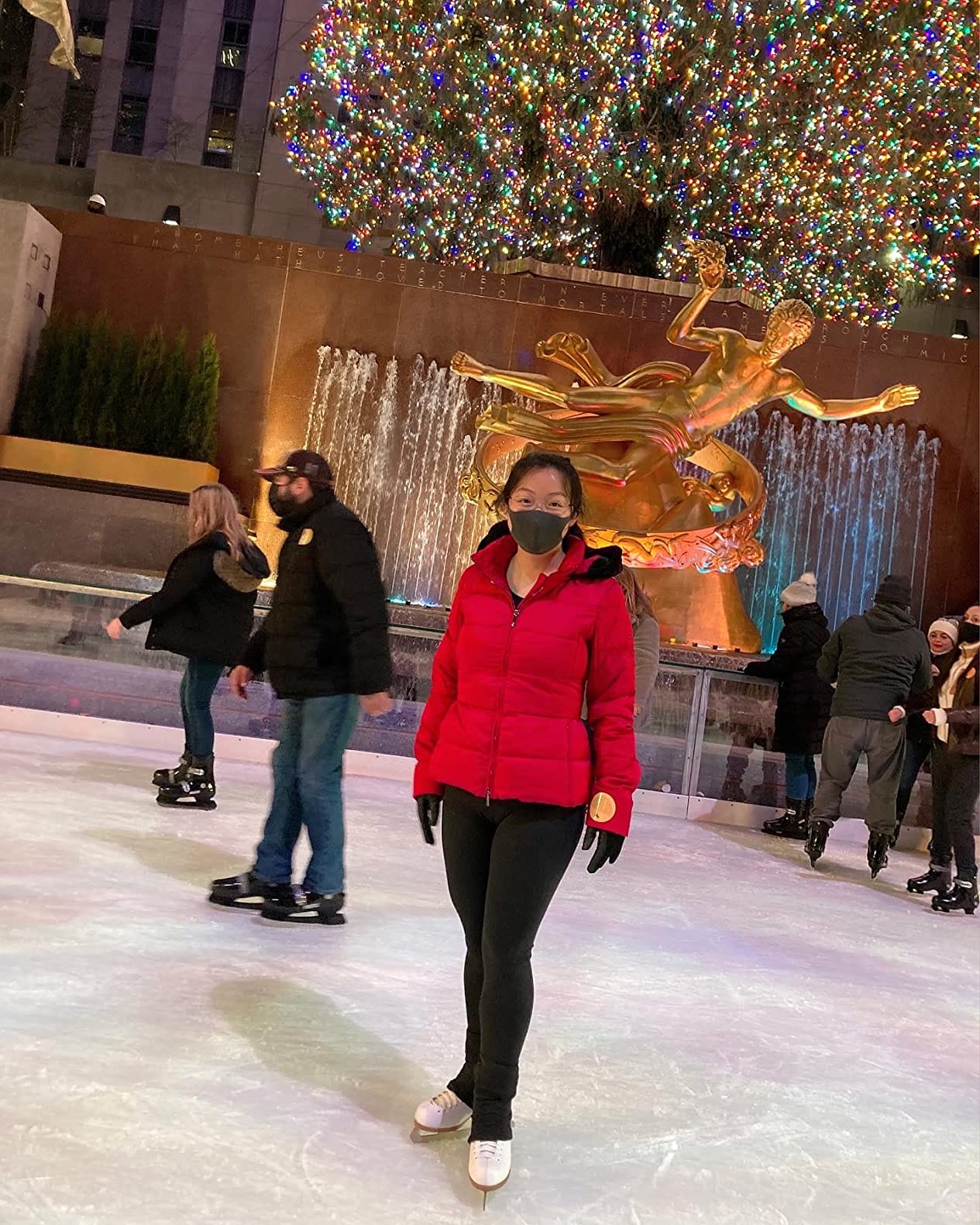
Owners highlight warmth as the reason to spend more here. Reviews call out feeling comfortable in cold rinks and staying in these longer than cheaper models, and the reinforced vinyl upper holds its shape through repeated use rather than softening into a shapeless shoe.
Whether the extra padding is worth the step up
It depends entirely on whether you get cold feet. A complete beginner spends a lot of the session standing still, thinking about what to do next, which is exactly the position where a thin boot loses heat. Owners who moved up from cheaper models report the padding being the first thing they noticed.
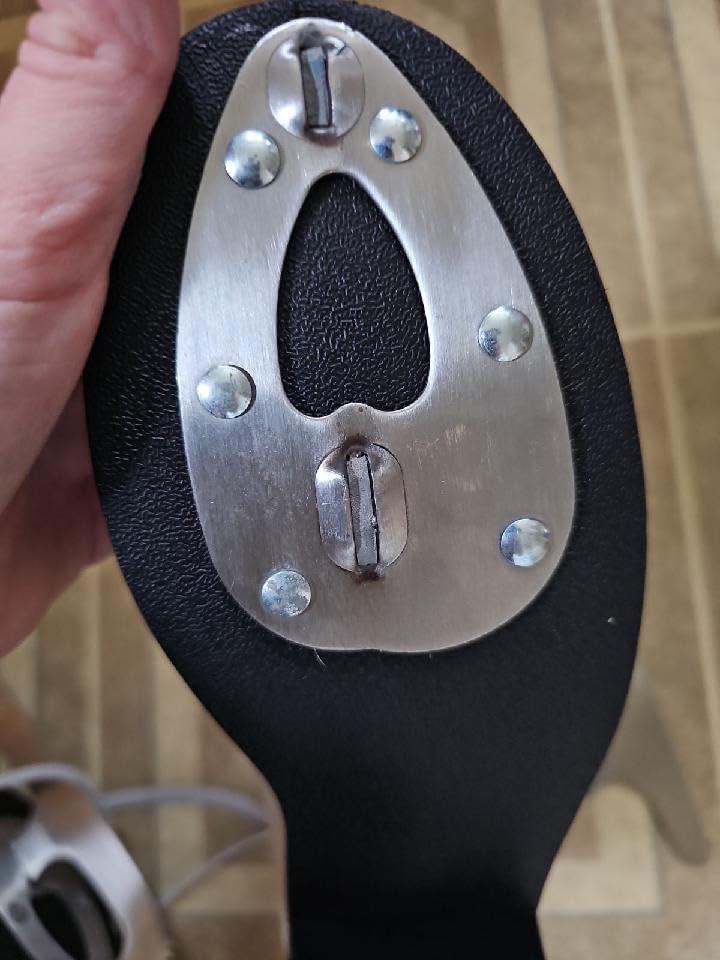
The rivet-mounted Mark I blade is also a practical reason to like this boot. Because the blade is attached with rivets rather than a sealed adhesive mount, resharpening or replacing it later is straightforward, which matters for anyone who plans to keep skating past their first season.
When to walk away from this skate
It is the most expensive model in this roundup, and it is still a beginner-level boot. That is a hard thing to accept when your instinct says a higher number means better equipment, but the Mark I blade is a short, low-profile blade, so the ceiling on advanced moves is the same as on cheaper pairs.
If your goal is training toward spins, jumps or competitive lessons, buy a boot designed for that level instead of stretching this one past its purpose. If your goal is comfortable weekly recreational skating, this is a genuinely better place to spend.
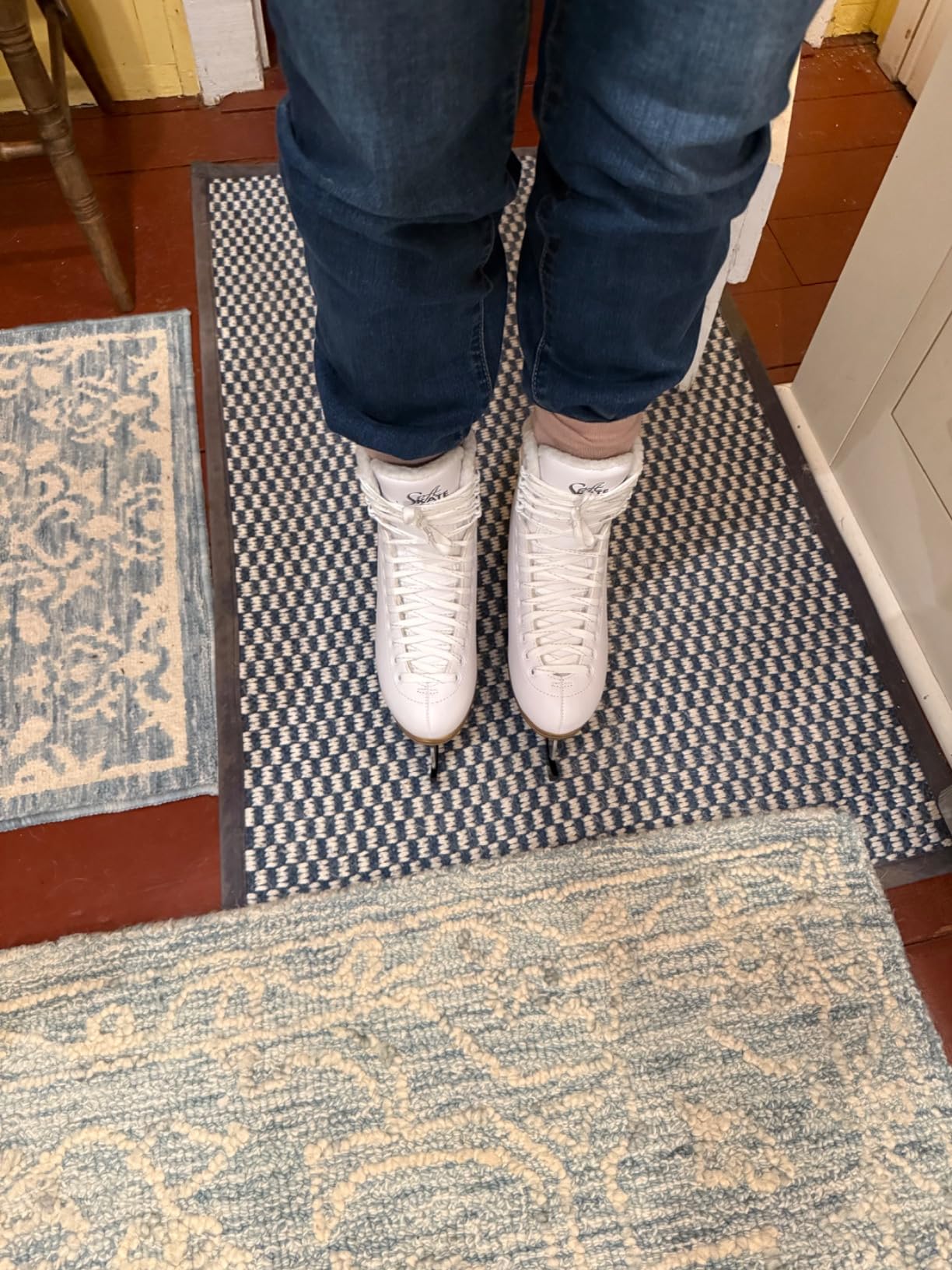
6. Xino Sports Adjustable for the Low-Cost First Pair for Children
Xino Sports Adjustable Ice Skates, White, Small Toddler 10J-13J
Push button adjustable sizing
Soft padding with ankle support
Pre-sharpened steel blade
Pros
- Lowest cost in the roundup with a fully adjustable fit for growing feet
- No laces so the buckle stays tight and kids can put them on alone
- Blades arrive pre-sharpened with protective covers included
- Well padded without being bulky so buyers report no rubbing
- Satisfaction period and parts and labor coverage included
Cons
- Toe box runs narrow especially in the smallest sizing
- Loose tongue can fold forward near the toe
- Average build quality not suited to regular long term skating
This is the one to buy when the budget is the deciding factor and the skater is a young child. It is the lowest-cost model here, it is fully adjustable, and the stainless steel blades arrive already sharpened with protective covers in the box, which removes the single most annoying step of a new pair.
Owners like the buckle closure for a specific reason: no laces means nothing comes loose mid-session, and a child can get the skates on without an adult. That independence is worth more than it sounds, because a child who struggles to put skates on will decide skating is a nuisance.
Reinforced ankle support and soft padding give it a respectable structure for a first pair, and reviewers report no rubbing or blisters at this price level, which is not a given.
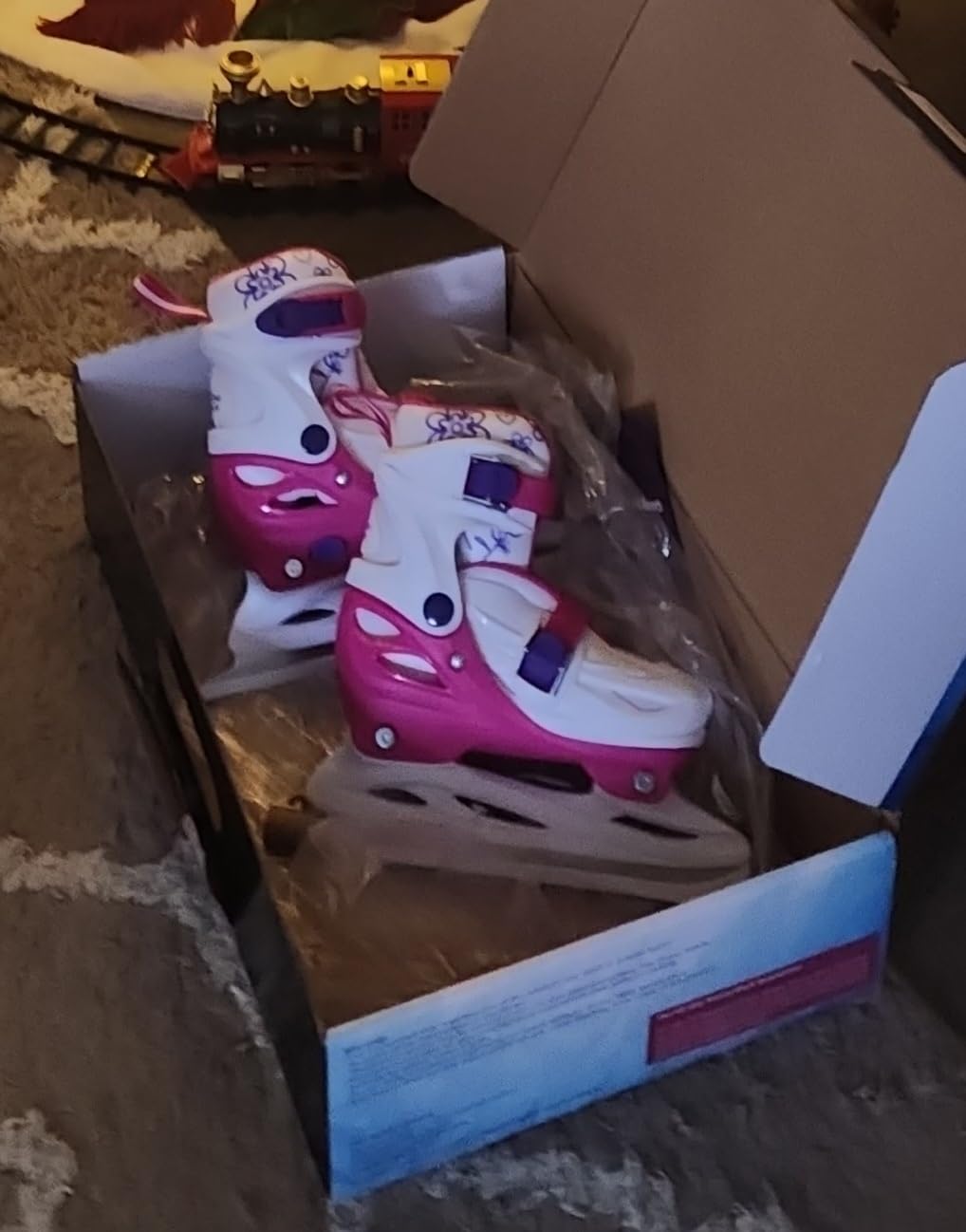
The push-button system covers a small range and a medium range, so one pair fits a child across a decent stretch of growth. That is the practical reason parents buy it, and it is a better value calculation than comparing sticker prices.
Where the budget shows up
The narrow toe box is the most common complaint in the reviews, and it is worth taking seriously. In the smallest size range, several buyers report the front of the foot feeling cramped after a full session. If your child has wide feet or is between shoe sizes, measure and consider a roomier model such as the Lake Placid Summit.
The tongue is another recurring note. A few owners report it folding forward toward the toe and becoming uncomfortable, which is a five-second fix once you know: tuck it in before lacing or buckling. It is annoying, not a defect.
When to walk away from this skate
Do not plan on this pair lasting a full season of regular skating. The build quality is described as average, and several reviews frame it as a first pair to grow out of rather than a boot to keep. If your child skates several times a week and you want one purchase to last, spend up.
Also walk away if blades matter to you. The pre-sharpened edge is a genuine convenience, but a budget blade will lose its edge faster and need more frequent sharpening than a premium stainless steel blade. Factor that into your cost if your rink charges per sharpening.
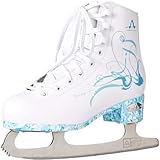
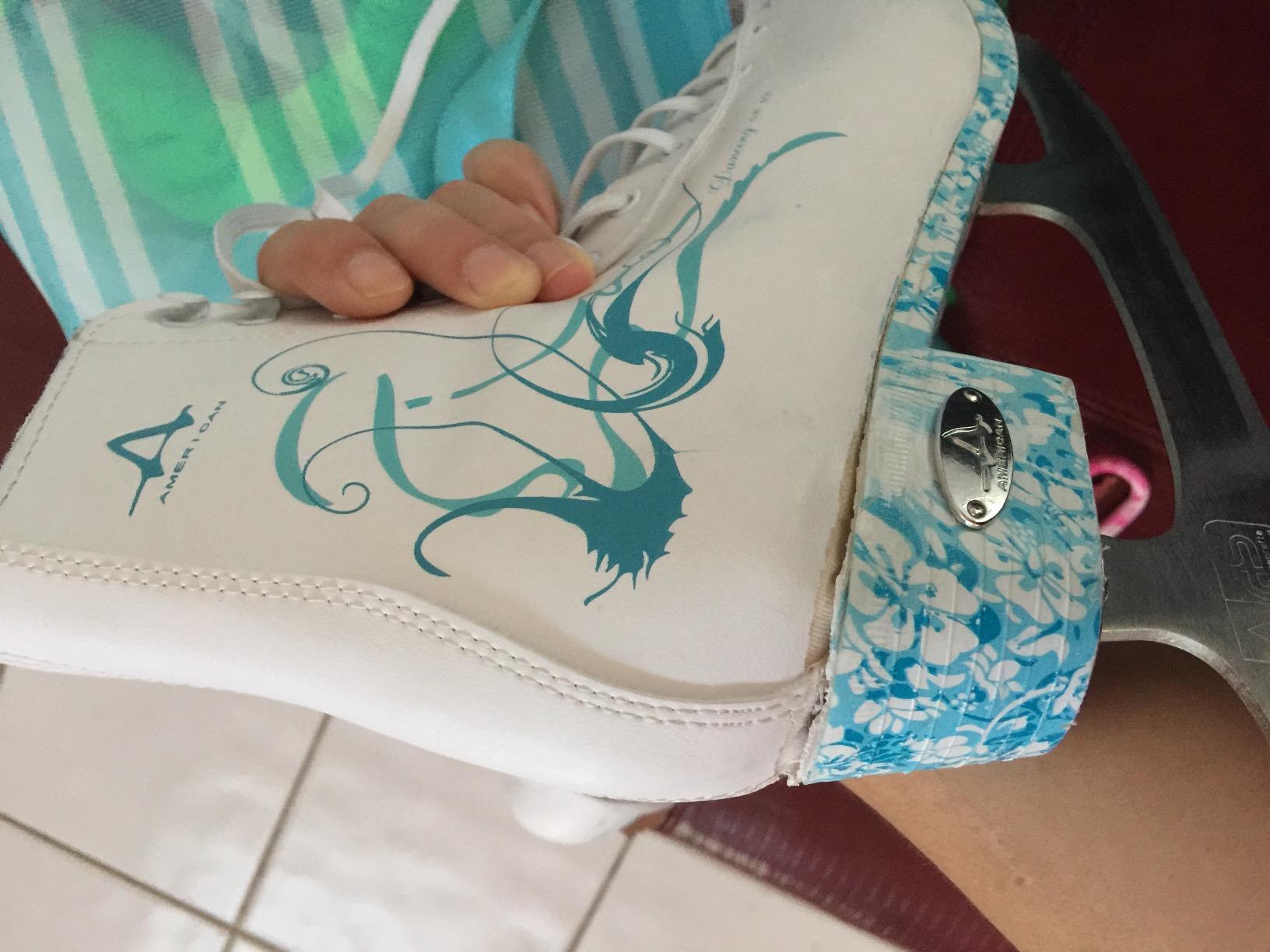
7. American Athletic Sumilon Lined for Design-Led Recreational Skating
American Athletic Sumilon Lined Ice Skates for Women – Recreational Figure Skates with Turquoise Outsole, Ankle Support, Stainless Steel Blades – for Indoor & Outdoor Ice Skating (3)
Reinforced ankle PVC boot
Sumilon lined interior
Stainless steel 3.5mm blade
Pros
- Stylish design and graphics that buyers repeatedly call out
- Reinforced ankle support matched with a comfortable Sumilon lining
- Runs true to size for many buyers over multi-hour sessions
- Suited to both indoor rinks and outdoor frozen surfaces
Cons
- Fit runs small so some buyers had to size up and return
- Only offered in whole sizes which can leave the toe box long or short
- Recreational only and better suited to occasional use
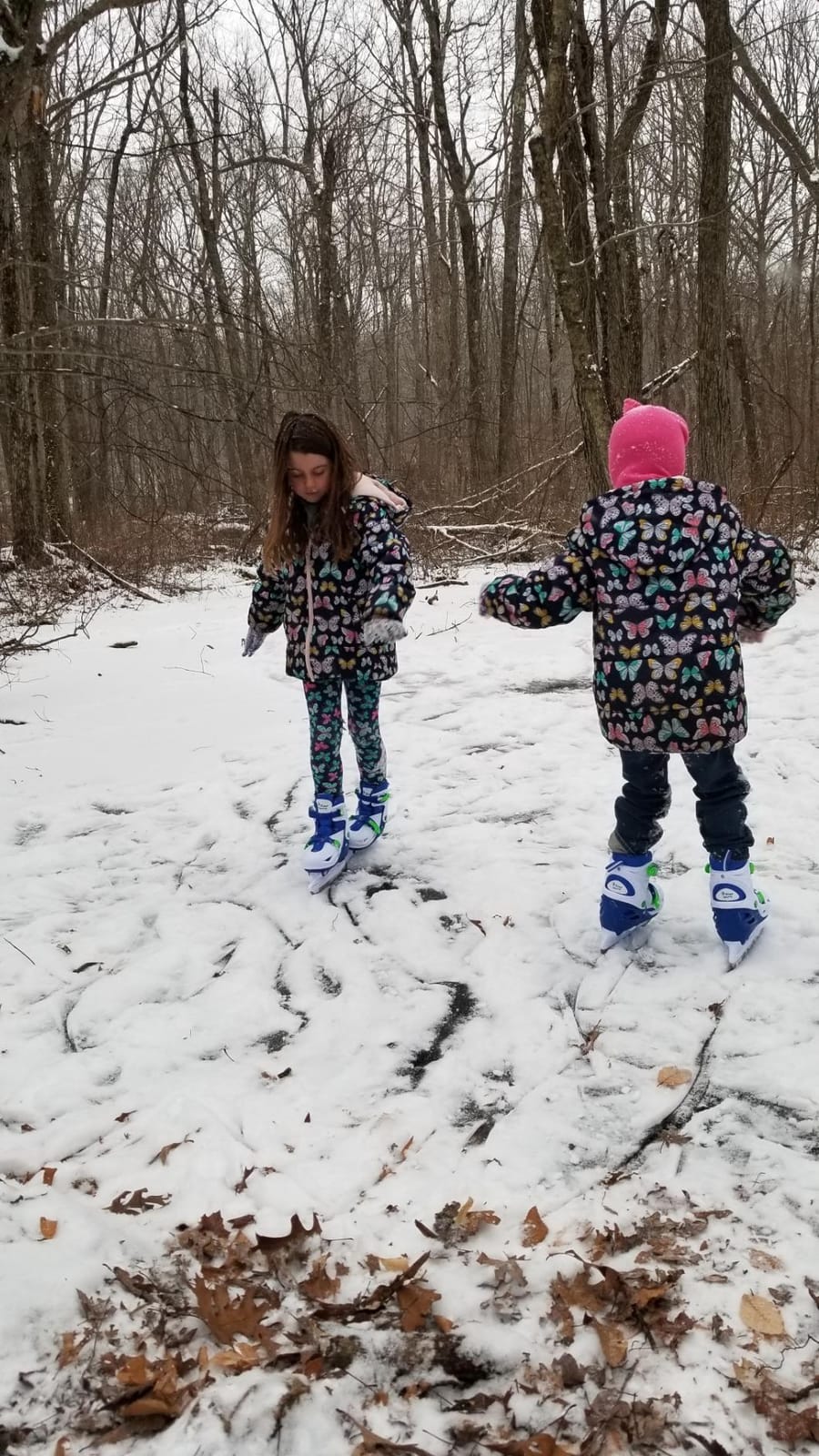
Some beginners will not skate in a skate they dislike the look of, and there is nothing wrong with that. The Sumilon model is the design-led option in this roundup, with a multi-colored outsole and frosted flare graphics that reviewers mention first and often.
Underneath the styling it is a straightforward recreational boot: an easy-care PVC shell with reinforced ankle construction, a Sumilon-lined interior, and a 3.5mm stainless steel blade with a beginner-level toe pick. That is the same mechanical recipe as its sibling above, with a different lining and a different look.
Owners who have the correct size report comfort across multi-hour sessions, which is the metric that matters most for an adult who wants to skate more than once a week.
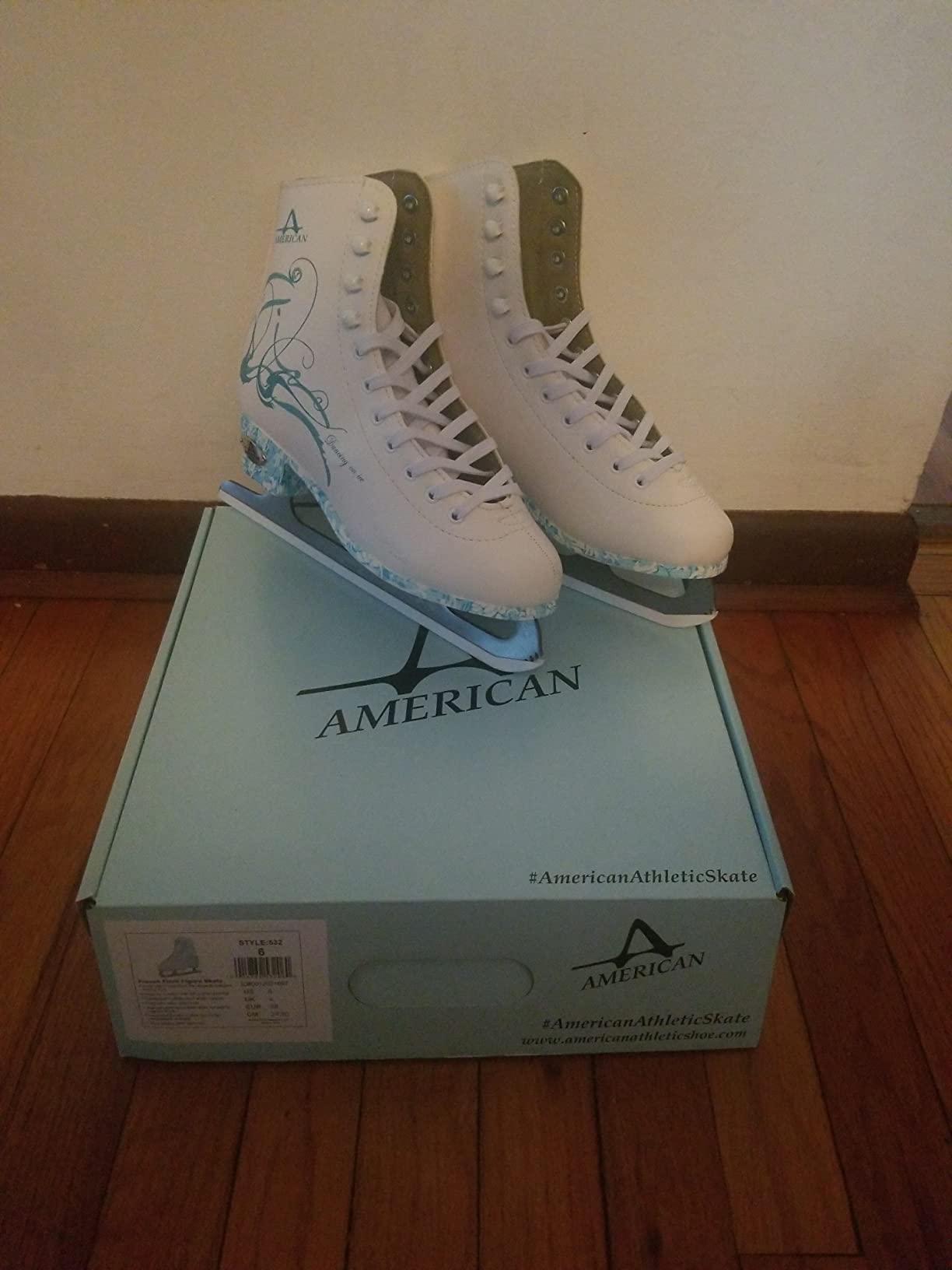
The reinforced ankle construction does the same job as on the other American Athletic boot, keeping the cuff from collapsing during a fall while still allowing the foot to move. For a beginner, that balance is the whole point of the purchase.
The sizing warning to read twice
The most common negative theme in the reviews is that this skate runs small, and several buyers had to exchange a size. Combine that with the fact that it is offered in whole sizes only, and you can end up with a toe box that is either slightly long or slightly short.
My advice is to measure your foot while seated with the heel against a wall, then compare against the manufacturer’s chart rather than your street shoe size. If you are between whole sizes, this is not the pair to force into a compromise on.
When to walk away from this skate
Skip it if you are buying for a child. This is a women’s recreational boot and there is no youth range. It is also a casual-use model, and buyers looking for sturdier construction note that it is better for occasional recreational skating than for a regular multi-day-a-week schedule.
If appearance is not a factor in your decision, the American Athletic Tricot model is the mechanically more proven of the two, with a far larger review base. Choose this one when you want the look, and that one when you want the evidence.
8. Riedell Soar for Warmth First on Outdoor Ice
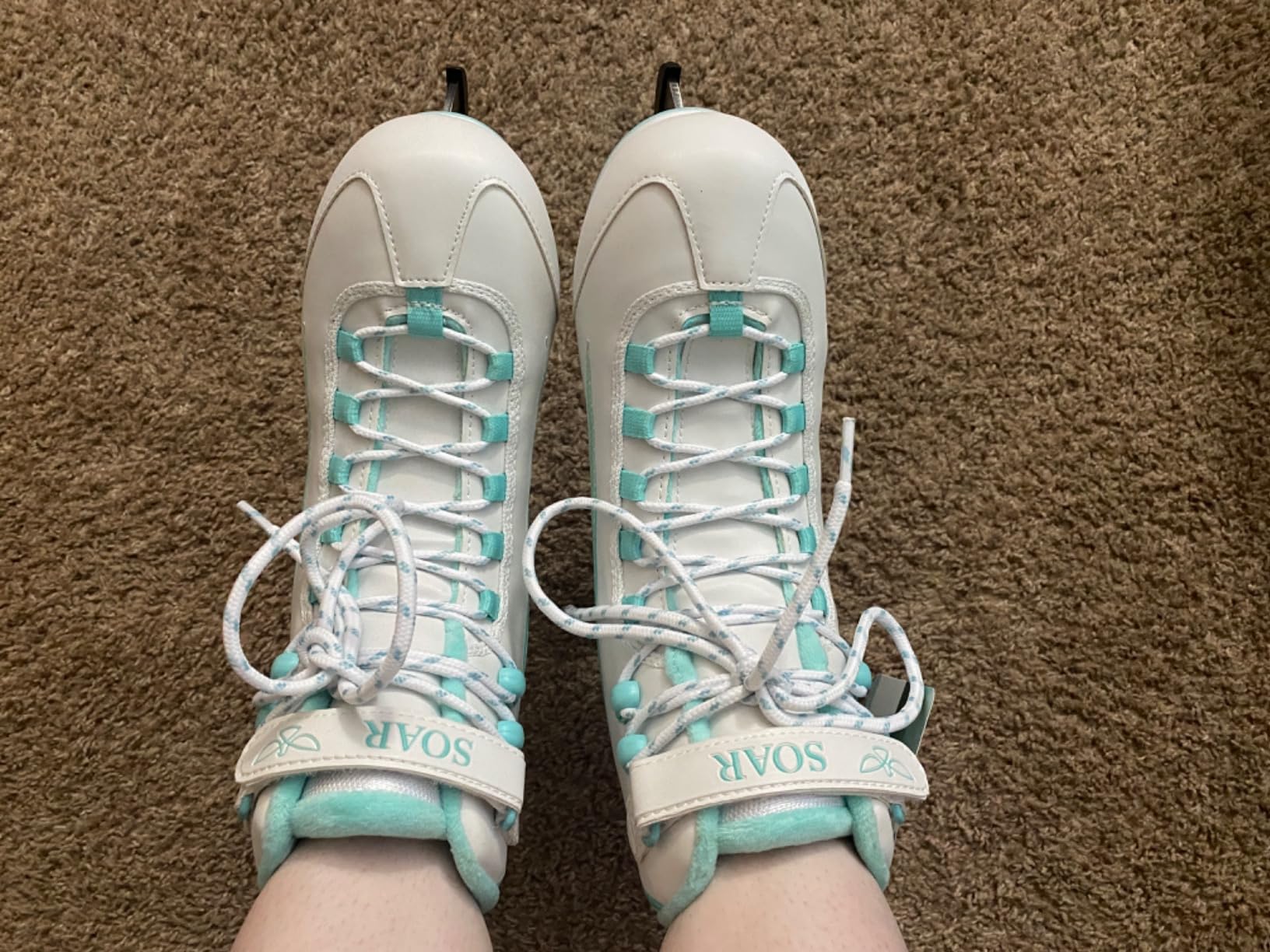
Riedell Soar Recreational Ice Skates for Men and Women, Mint – 9
Support rating 25
Thinsulate lined foam backed velvet
Factory sharpened steel blade
Pros
- 3M Thinsulate lining keeps feet warm and dry on outdoor ponds and cold rinks
- Soft plush feel that reads more like a boot than a hard skate
- Light ankle support that preserves freedom of movement
- Unisex sizing so couples can buy matching pairs
Cons
- Support rating of 25 means it is too soft for anyone past the beginner stage
- Not intended for children 12 and under
- Factory sharp blade still benefits from professional sharpening
The Riedell Soar is the warmest pair here and the clearest case for buying a recreational boot on purpose rather than by accident. Riedell is a long-established skate maker, and the Soar is built as a comfort-first boot for indoor or outdoor casual skating.
The 3M Thinsulate insulation inside a foam-backed velvet lining is the feature that shows up again and again in owner feedback, along with feet staying dry on frozen ponds. If you are skating outdoors in real winter cold, that lining is worth more to you than ankle stiffness.
It also has a support rating of 25 on a one to one hundred scale. That is deliberately low. It means the boot will not fight you while you learn to stand up, and it is a soft, plush ride rather than a firm cuff digging into your ankle.
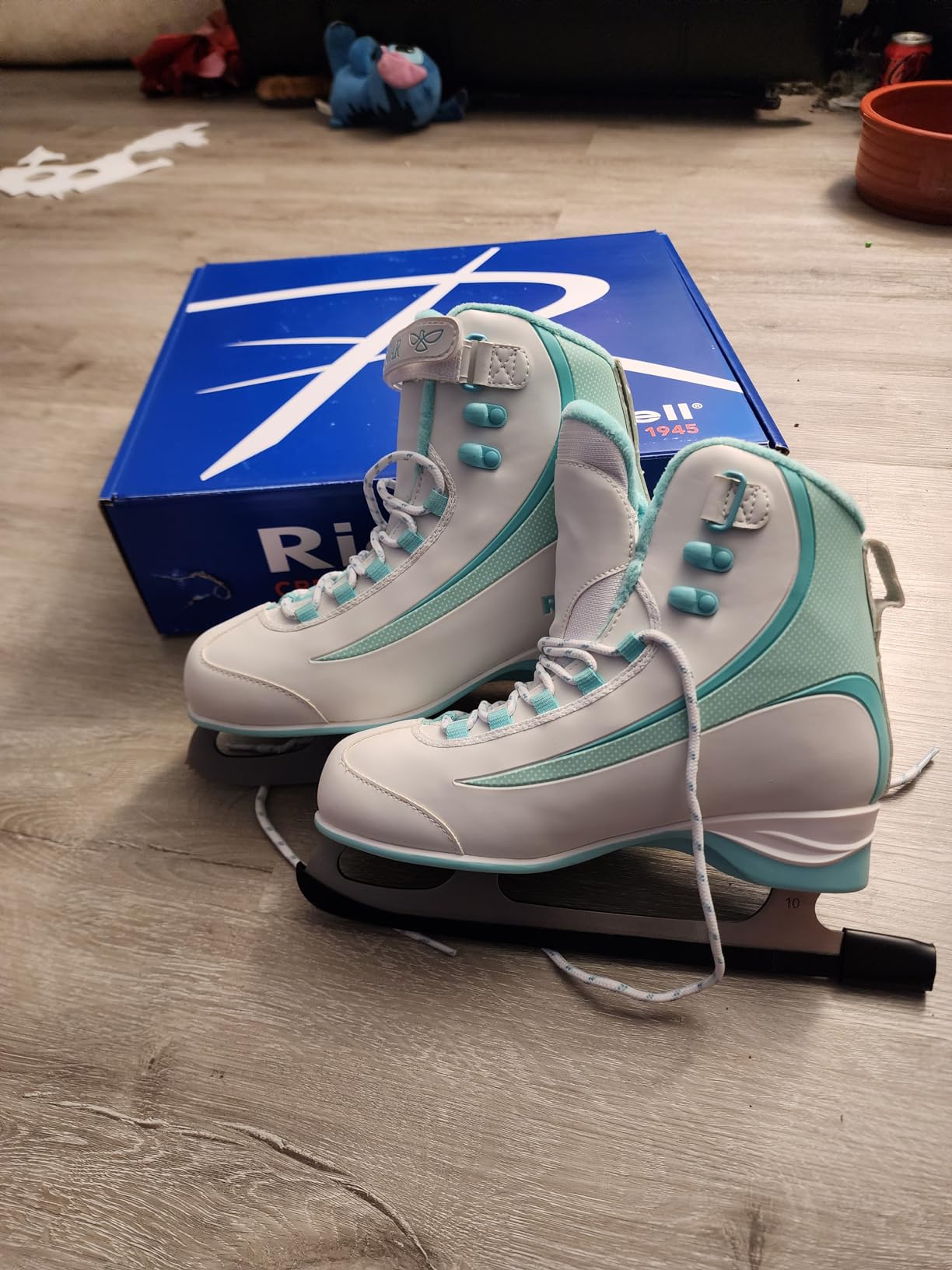
The split tongue design and simple lacing system mean the boot closes smoothly around the instep, and the maintenance-free synthetic upper wipes clean. The spiral stainless steel blade arrives factory sharpened, so you can skate before a sharpening visit, though it will still benefit from one sooner rather than later.
What a support rating of 25 actually means for you
Manufacturers rate recreational support on a scale, and 25 sits at the soft end. The practical translation is simple: this is a skate for gliding, stopping and enjoying yourself, not for building technique that requires a rigid platform under the ankle. If your plan is lessons that progress into real training, you will need a stiffer boot within a year.
For a casual adult skater, that softness is a feature. A stiffer boot on a beginner who cannot yet control their edges tends to produce wobbling, not control. Unisex sizing is also a small but real advantage for households where two adults want matching pairs.
When to walk away from this skate
Do not buy it for a child aged 12 or under, as it is not designed for that age group. It is also the wrong pick for anyone with a history of ankle instability who is counting on the boot for support, because the low support rating is a deliberate design choice rather than a budget compromise.
And if you are training for anything beyond recreational skating, this is a one-season purchase. Decide that before you buy, because paying up for a firmer boot later is the most common repurchase beginners make.
9. Lake Placid Cascade for Firm Ankle Support Without the Bulk
Lake Placid Cascade Women’s Figure Ice Skates White Size 6
Synthetic upper with firm ankle support
Warm woven liner
Stainless steel blade
Pros
- Padding and ankle support hold up over longer sessions without foot soreness
- True to size fit in most cases
- Durable enough for three or four sessions a week
- Classic attractive design that draws compliments at the rink
Cons
- Blades lose sharpness quickly and need frequent sharpening
- Tongue stitching can fold inward and dig into the foot on some pairs
- Not stiff enough once a skater starts attempting jumps
The Cascade is the value pick for a woman who wants real ankle support and a fit that matches what the size says. Reviews call it true to size in most cases, which in skate buying is a genuinely rare compliment and saves you an exchange.
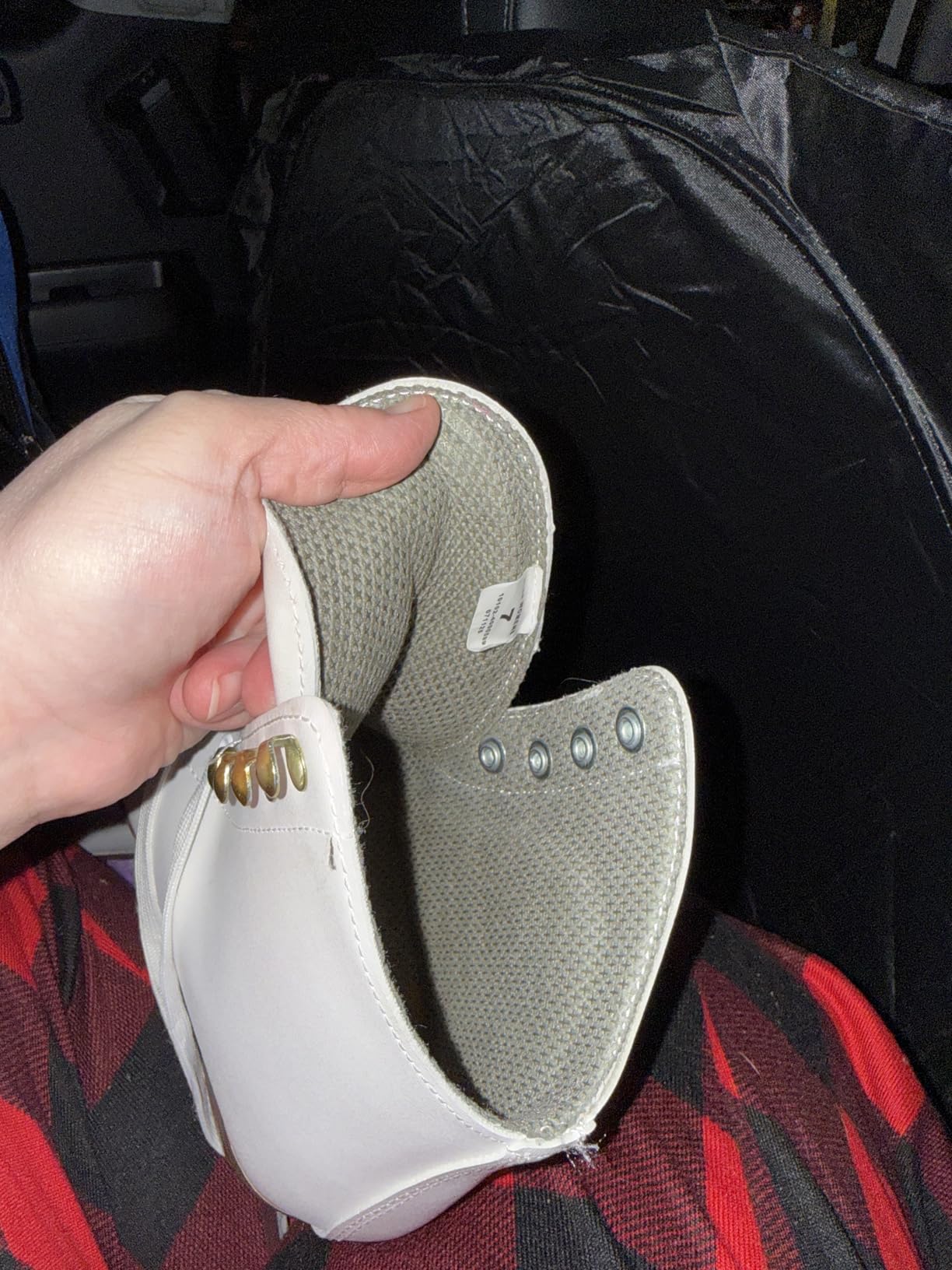
Unlike the foam-heavy recreational models, this one leads with structure. The synthetic upper outer boot with firm ankle support and reinforced ankle construction gives a more defined platform, and owners credit that with holding up over longer sessions without the foot soreness cheap skates cause.
It is also a workhorse. Buyers report three or four sessions a week of regular use without visible wear, which is a better durability signal than most budget skates in this roundup can offer.
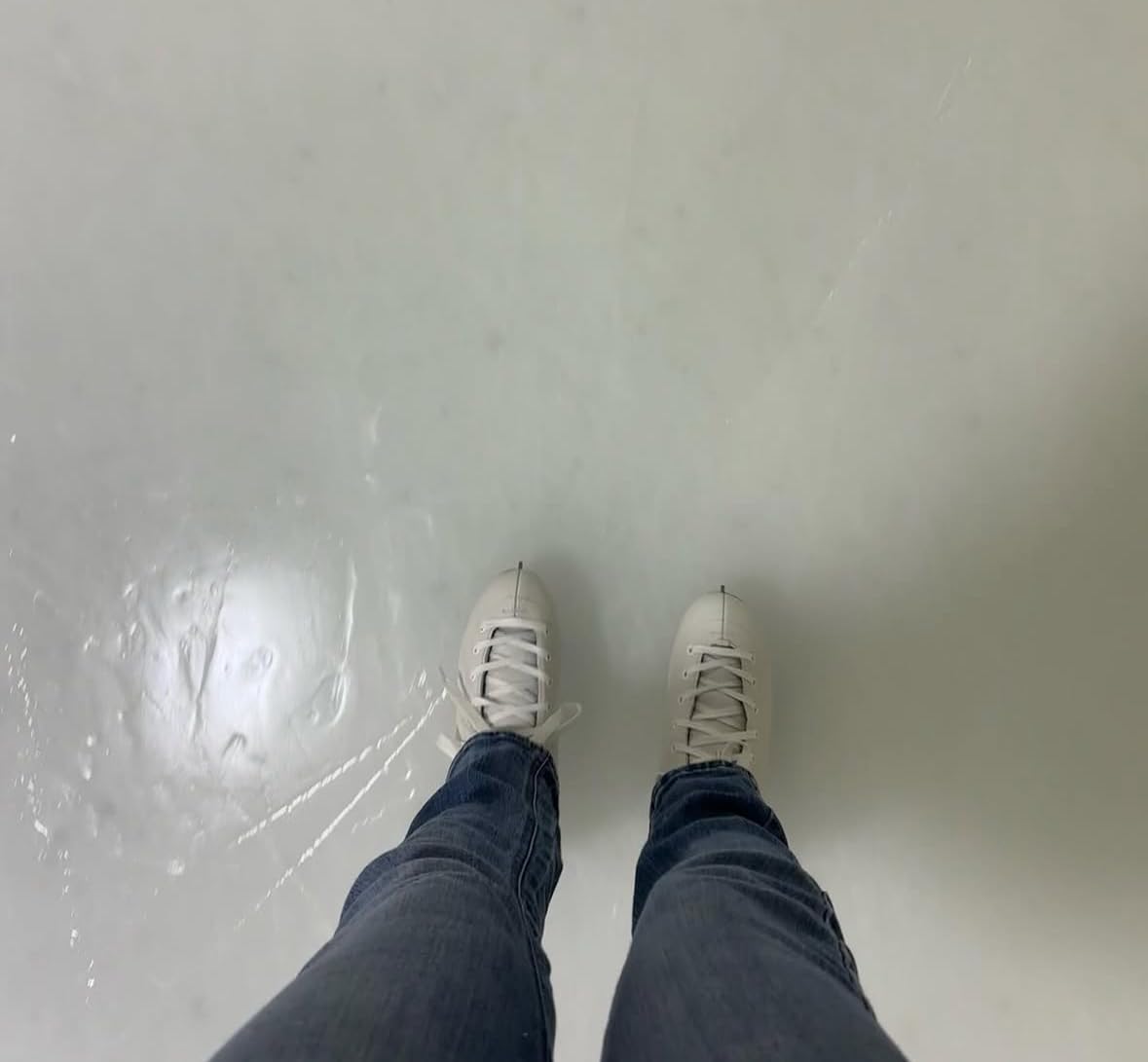
The warm woven liner with comfort padding and the waterproof sole make it a practical choice for outdoor rinks as well as indoor ones. The stainless steel blade is the standard spec at this level, and the classic white design is the sort of thing people compliment at the rink.
When true-to-size actually matters
Sizing is the biggest source of wasted money in this category, and a model that runs true removes an entire category of risk. If you are buying online without the ability to try a boot on, that predictability is worth more than a slightly softer ride.
Measure your foot while seated rather than standing, because your arch lengthens and your heel spreads under weight. Then compare against the brand chart, and if you have a wide foot or a high instep, sanity-check the toe box before you commit. The narrow adjustable models elsewhere in this roundup are the ones most likely to cause trouble here.
When to walk away from this skate
Blade retention is the weak point. Reviews note the edge fades quickly and needs more frequent sharpening than the Jackson Mark I blades. If your rink charges per visit and you skate often, add sharpening visits into your real cost comparison before choosing this over a Jackson.
A few pairs also have tongue stitching that folds inward near the toe and digs into the foot. It is a quality-control variance rather than a design flaw, but if you are particular about toe pressure, check the pair as soon as it arrives. And as with most models here, the boot is not stiff enough once you start attempting jumps and crossovers.
10. Nattork Excellence Figure Skates for Wide Feet on a Budget
Nattork Blue&Pink Figure Skates Excellence Stainless Steel Blades Ice Figure Skating with Enhanced Support Strength Performance and Ultimate Comfort for Boys and Girls
COOLMAX fiber lining
PU leather outer
Stainless steel blade
Reinforced lace-up ankle
Pros
- Ankle support and lacing strength hold up through beginner lessons
- Attractive design that buyers report drawing compliments
- Fits wide or hard to fit feet better than many competitors
- An easy first pair for adults who do not want to spend big money
Cons
- Lowest average rating in the roundup at 4.1 stars with 14 percent one-star reviews
- Some reports of the boot separating from the blade after about two months of light use
- Sizing can run large so buyers have to size down
- Blades need professional sharpening before they can perform a stop
If wide feet are the reason you have been rejected by other skates, this is the model reviewers point to. Several owners explicitly say it fits wide or otherwise hard-to-fit feet better than the alternatives they tried, and that is a more useful data point than any spec sheet.
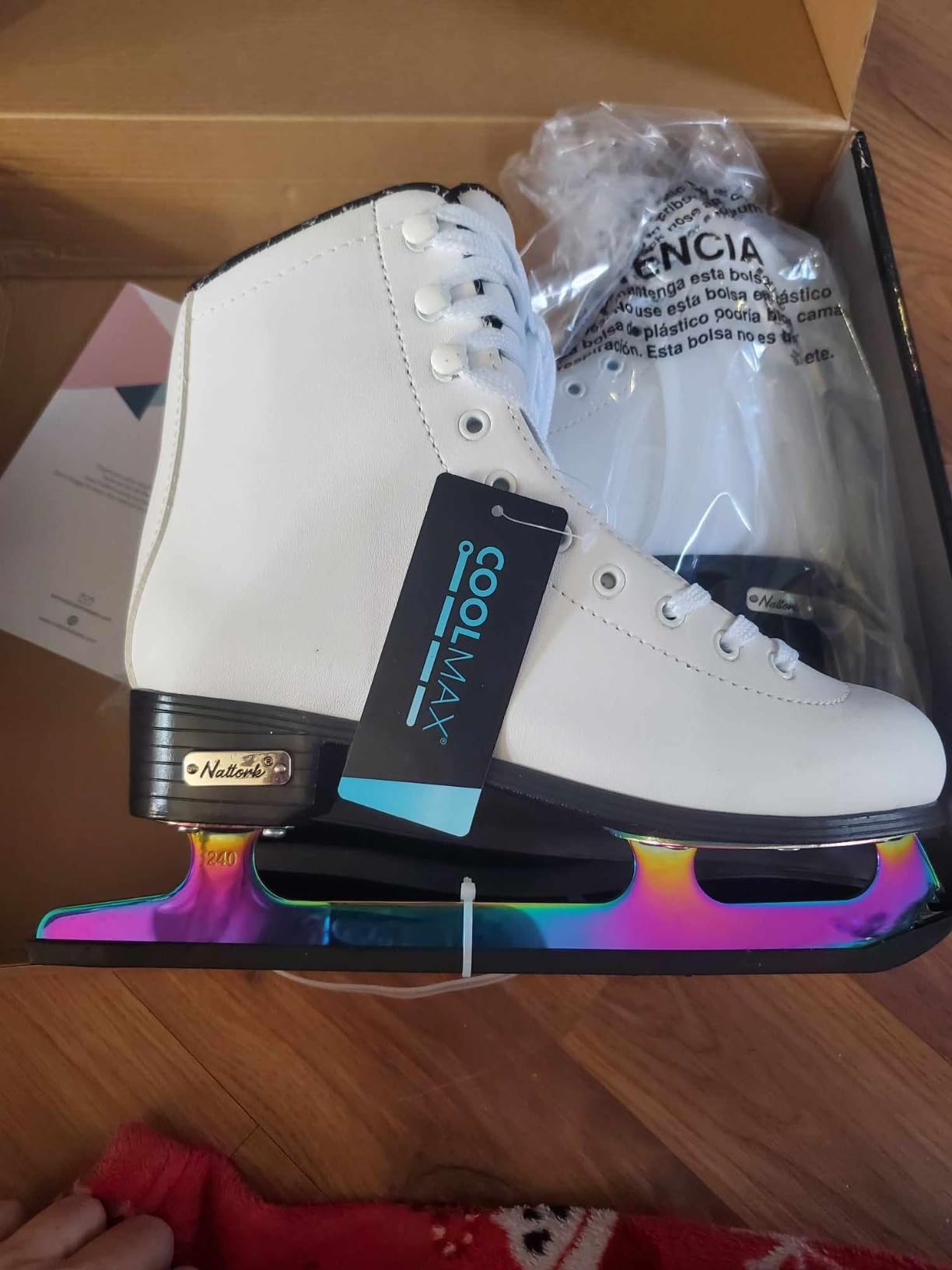
The construction details back that up. Six flowering rivets and four self-tapping screws secure the sole leather to the upper, which is a heavier fastening pattern than most recreational boots use, and the lace-up closure with reinforced ankle structure gives a firm, adjustable fit across the instep.
The COOLMAX professional fiber lining is soft, breathable and manages moisture, and the PU leather and eco-friendly PVC outer is described as cold-proof and crack-resistant. It is also one of the least expensive pairs here, which makes it an easy first purchase for an adult who does not want a big decision.
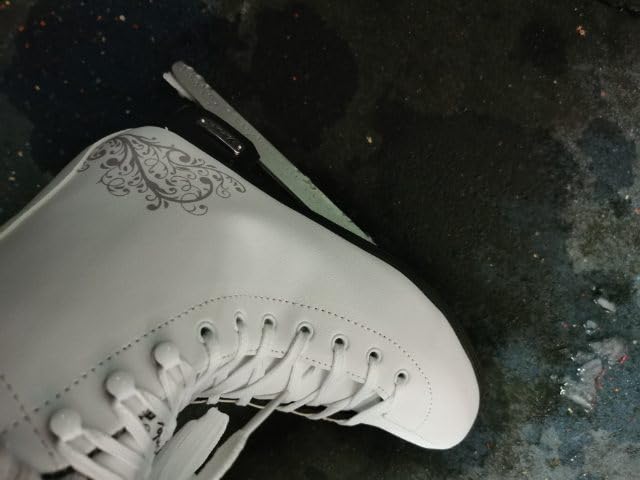
The stainless steel blade resists bending and is easy to sharpen, which in theory should make it a solid starter blade. In practice, the reviews flag a recurring problem at the blade mount, and that is the reason this model sits at the bottom of my ranking despite the appealing price.
The wide-foot advantage, honestly assessed
Fit is the reason to choose this, and the fit reports are genuinely encouraging for people who cannot wear a narrow last. The reinforced ankle structure and lace pattern mean you can dial the volume in a way a fixed buckle closure does not allow, which matters for a foot that is long and wide rather than merely large.
Be aware that the sizing can run large. Several buyers had to size down significantly from their normal number, so measure and compare rather than assuming your usual size will translate.
When to walk away from this skate
It carries the lowest average rating of anything in this roundup, and the reason is durability rather than comfort. A cluster of reviews reports the boot separating from the blade after about two months of light use. If you skate more than occasionally, that failure mode is the wrong risk.
There is also a setup step people miss. Blades on this model need professional sharpening before they will perform a stop, and until that visit the skate is not lesson-ready. If you want the wide-foot fit and you are willing to accept both trade-offs, it is still a reasonable choice.
How Ice Skates Should Fit: Sizing, Support and Blade Choice
Get the fit right and most of the buying process takes care of itself. These are the checks that separate a good first pair from a frustrating one.
Measure while seated. Sit with your heel flat against a wall and mark the longest toe. Standing changes the measurement because your arch lowers and your heel spreads. Then measure the width of the widest part of your foot, because width is what decides whether a boot feels cramped or roomy once you lace it.
Do not translate your shoe size. Street shoe size is close to useless as a guide for skate sizing. Brands differ from each other, and several of the models here tell you explicitly to use the sizing chart in the listing images. The Jackson JS180 goes a half size down from a womens shoe size; the Jackson Classic 200 sends you to a chart. Both instructions exist because people keep guessing wrong.
Apply the one-finger heel test. With the laces pulled firmly, you should be able to slide one finger between the boot and the back of your heel. Two fingers means the boot is too loose and your heel will lift, which is the direct cause of the blisters new skaters complain about. Zero fingers means you have gone too small, and your toes will be numb within minutes.
Choose support to match your plan. Softer boots feel forgiving while you are learning to stand, but they will not hold you for jumps or spins. Stiffer boots control edges well and make new skills harder to learn. Recreational support in the 20 to 30 range, like the Riedell Soar, suits casual skating. Medium support, like the Jackson models, is the best compromise for a beginner who intends to keep going.
Check what needs sharpening. Blades marked factory sharpened, such as the Riedell Soar, are ready to skate but still benefit from a professional pass. Blades that arrive unsharpened, like the Lake Placid Summit, are not lesson-ready until you have taken them in. Blades that arrive pre-sharpened with covers, like the Xino Sports, are the most convenient of the three.
Think about the toe pick. Those teeth at the front of a figure blade are what let you stop and spin, and they are also a genuine trip hazard for a total beginner. A beginner-level toe pick, as on the American Athletic models, is shorter and easier to clear. If you are a larger adult who is worried about catching the toe, look for a hockey-style skate without one.
What to Avoid and How to Break In Your First Pair
The single worst outcome is buying the cheapest novelty skates and discovering they are hollow plastic shells with blunt plastic blades. They flex at the ankle, they cannot hold an edge, and the failures show up as falls and wasted lessons. If the boot is thin-walled plastic you can squeeze between your thumb and forefinger, walk away.
Also be careful with adjustable skates for a fast-growing child, since the internal frame trades precision fit for longevity. They are the right call for a child who will outgrow fixed skates twice a year, and the wrong call for a child with a very high instep who needs a precise fit right now.
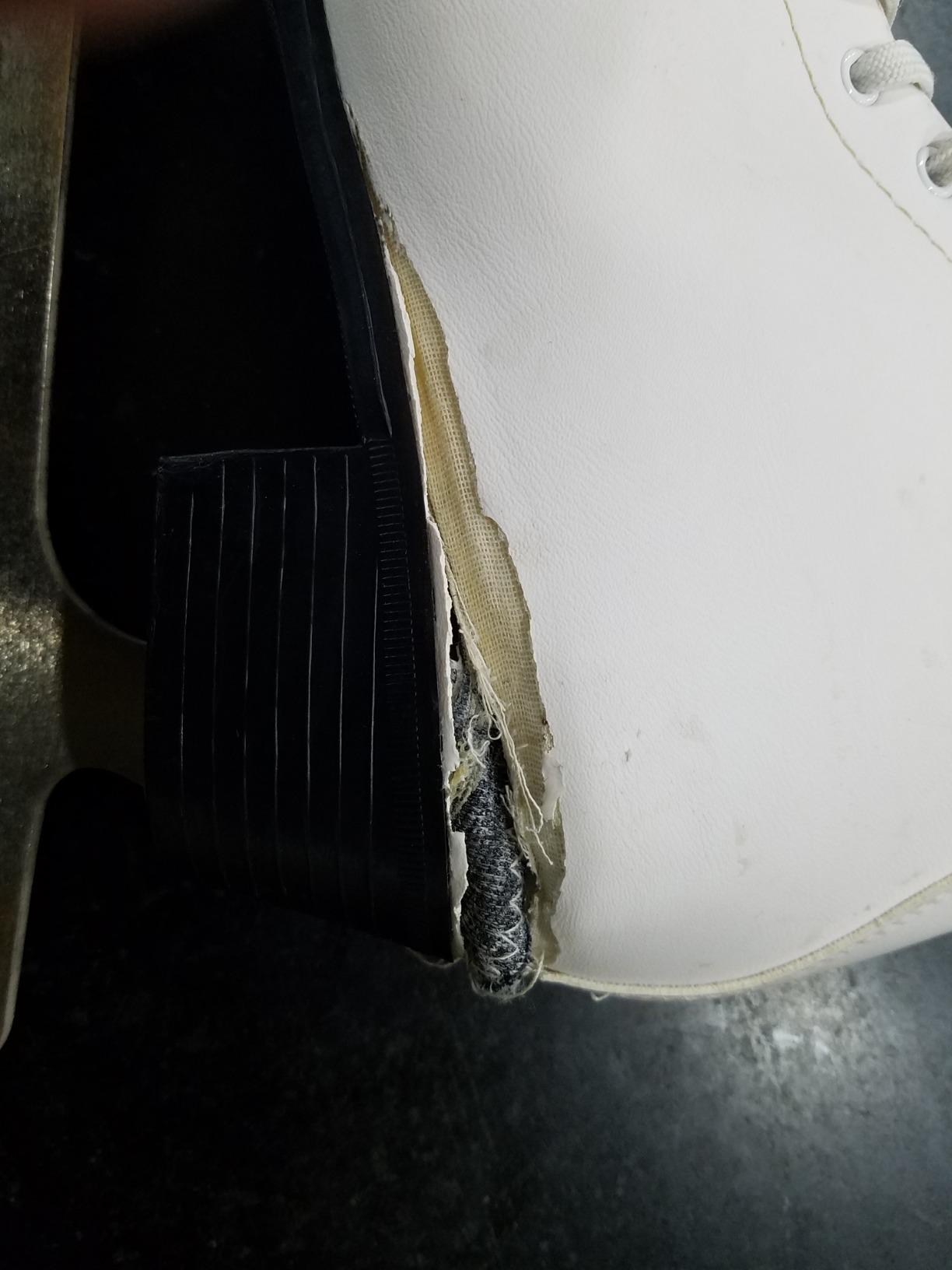
Used skates are a legitimate option and often far cheaper than new. What to check before buying a used pair: put both boots together and look for a heel that lifts when you stand, a cuff that folds outward, a sole with a separating seam, and a blade with deep nicks or a worn-to-the-holder mount. Try the sizing on a chart rather than assuming the number on the label, and remember that replacing a worn blade mount can cost as much as buying a new budget skate.
For break-in, plan the first three sessions. In session one, lace or buckle firmly and wear thin socks only, then spend twenty minutes walking and gliding without doing anything difficult. In session two, add gentle forward skating and stopping. In session three, work on edges. Blisters at this stage almost always come from foot movement inside a boot that is too loose, or from thick socks added to force a fit. Fix the size rather than the socks.
Gear matters as much as the skates. A helmet, gloves and, for children, knee and elbow pads are the cheap part of the equation, and a hard lace buckle you can reach with a mitten on is worth more than most skaters expect. If you are heading out onto a frozen pond rather than a rink, the same trip-rated footwear rules apply to your dog: our guide to protecting your dog’s paws from ice and salt covers the essentials, and we round up the best dog boots for snow and ice if you want full coverage.
Frequently Asked Questions
Which skates are best for beginners?
The best beginner skates pair a reinforced ankle cuff with a stainless steel blade and come in a size you can verify against a brand chart. The Jackson Ultima JS180 and Jackson Ultima Classic 200 are the two strongest all-round first pairs, with the Classic 200 also used in many learn-to-skate programs. Children still growing are better served by an adjustable model such as the Lake Placid Summit.
What are the best ice skates for beginners on a budget?
The lowest-cost options that still have a real cuff and a steel blade are the Xino Sports Adjustable, the Lake Placid Cascade and the Nattork Excellence. The Xino pair arrives pre-sharpened with covers, the Cascade runs true to size and holds up to several sessions a week, and the Nattork model fits wide feet well. All three need a sharpening visit at some point, and none of them suits spin or jump training.
Is it worth buying your own ice skates?
Usually yes, after a handful of rental sessions. Rented skates are rarely sized for you and a poor fit causes the blisters and ankle wobble that stop new skaters progressing. Buying lets you size properly, keeps the blades and edges consistent between visits, and the cost is amortised over the season. Rent first if you are unsure you will take it up regularly.
What are the best ice skates for a beginner child?
Adjustable models are the most practical answer for children, because one pair can span several years of growth. The Lake Placid Summit is the stronger pick, with a stainless steel blade, a warm woven lining and support owners rate highly for children who have not yet built skating muscles. The Xino Sports adjustable pair is the cheaper option and arrives with pre-sharpened blades and covers. Measure for a wide toe box before buying either.
Do I need figure skates or hockey skates to learn?
Figure skates suit most beginners because the taller cuff supports the ankle and the toe pick gives you a way to stop. Hockey-style skates sit lower with a longer, wider blade, which is more forgiving of wobble but offers no toe pick for clean stops. Adults who mainly want to glide and play pickup hockey often prefer the hockey shape, while anyone taking figure lessons should use figure skates.
How should ice skates fit?
Measure your foot while seated with your heel against the wall, compare the length and width against the brand’s own sizing chart rather than your street shoe size, then lace or buckle the boot firmly. You should be able to slide one finger between the boot and the back of your heel. Two fingers means too loose and heel lift, which is the usual cause of blisters.
Conclusion: The Right First Pair for the Best Ice Skates for Beginners
For most adults and older children, the Jackson Ultima JS180 is the safest first purchase because it balances a proper ankle cuff with a beginner-level blade and a fit that rewards careful measuring. The Jackson Ultima Classic 200 wins on comfort and on the highest average rating in the roundup, and the Lake Placid Summit is the clear answer whenever a growing body is the constraint.
Whatever you pick, buy above the toy-skate floor, size with a tape measure rather than a street shoe size, and expect to move up to a longer-bladed boot in six to twelve months if lessons are part of the plan. That is progress, not a wasted purchase.