
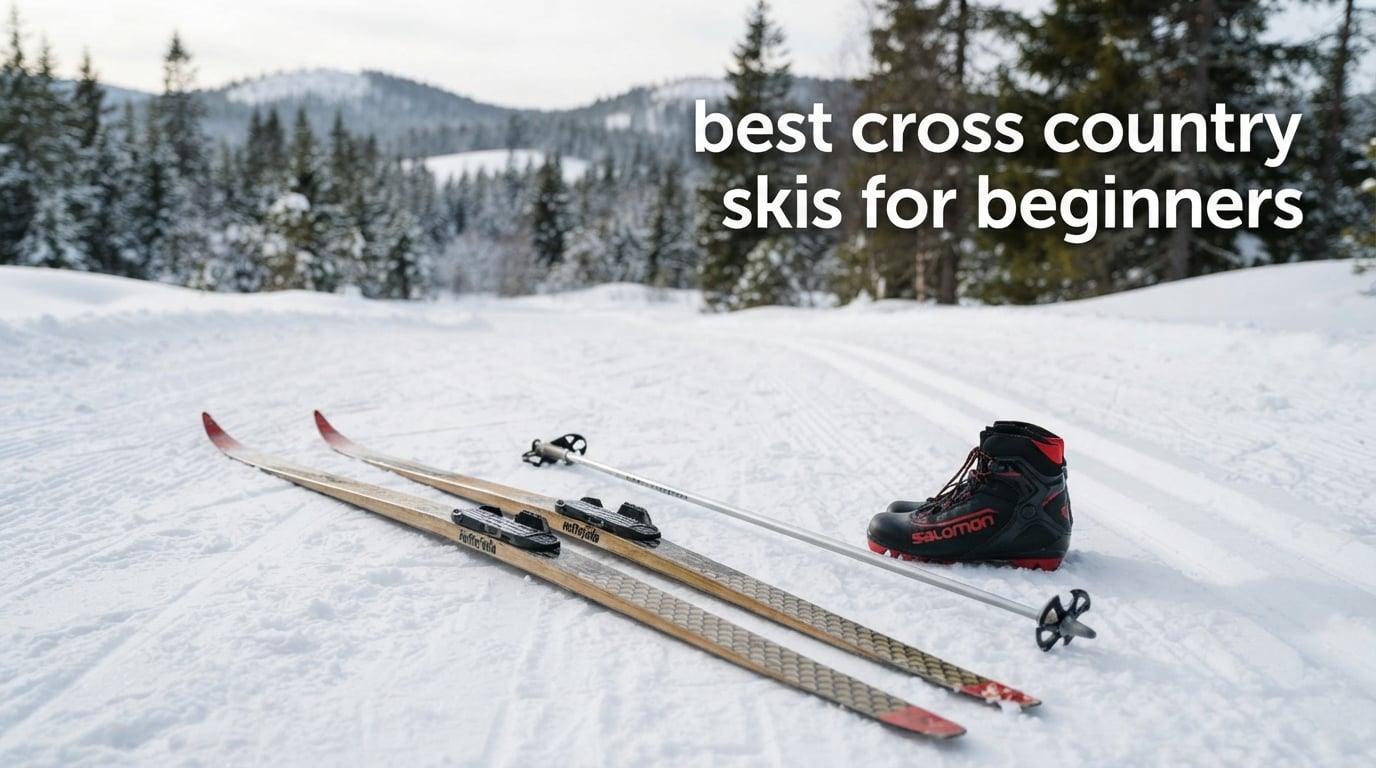
The best cross country skis for beginners are waxless classic skis with a fishscale or mohair skin grip zone, sized by skier weight rather than height, and built with a forgiving flex. Those three principles — grip without waxing, correct length, soft enough flex to stay balanced — matter far more than any spec a brand prints on the side of the ski.
I have spent more time than I care to admit reading spec sheets, sizing charts and owner reviews across every entry-level Nordic ski category, and then comparing them against what beginner instructors repeatedly say their students get wrong. This roundup is built on that comparison, and every pick below ships with bindings already mounted, which removes the single most common first-timer mistake.
Before the picks, here is what I judged each ski on. Grip that works without wax: a machined negative waxless base or a fishscale pattern grips in cold, dry snow and means you never have to borrow a wax bench to get a first ski day done. Sizing by weight: manufacturers chart these skis by skier weight, so a shorter person can and often should be on a longer ski. Forgiving flex: a stiffer ski is only enjoyable in fully frozen tracks, and most first-season snow is not frozen. Bindings already mounted, so your boots can match on day one. And a clear terrain fit, because the number one question on every beginner forum is whether one pair can handle both groomed and ungroomed terrain.
That last question deserves an honest answer up front. A touring ski with metal edges will physically work in both places, but the answer on every trail forum is the same: do not go too wide, or the skis will not fit inside a groomed classic track at a Nordic centre. Keep the tip under roughly 70mm if you plan to spend most of your time on tracked trails, and step up to a wider metal-edged ski only when ungroomed routes become your regular habit. You can see the widths of every pick in the comparison table below.
Table of Contents
Top 3 Cross-Country Ski Picks for Beginners in 2026

Whitewoods 75mm 3Pin Complete Package
- Skis boots bindings and poles
- 64-55-59 sidecut
- Waxless machined negative base
- 12 lb package weight

Whitewoods Adult NNN Package 177cm
- Rottefella NNN bindings pre-mounted
- Complete four-piece package
- 64-55-59 sidecut
- Thinsulate-lined NNN boots

Rossignol EVO OT 65 IFP Positrack
- Positrack waxless base
- Wood air core
- Control Step-In bindings
- Metal edges
All three top picks use a waxless base, so no first-time owner needs to learn waxing before the first ski of the season. The two Whitewoods packages are complete four-piece sets for skiers in the 121 to 150 pound range, and they win on having every component already matched; the Rossignol is a ski-and-binding set that trades that convenience for off-trail capability.
Quick Overview: Best Cross-Country Skis for Beginners in 2026
| Product | Specs | Action |
|---|---|---|
| Whitewoods 75mm 3Pin Package 177cm |
|
Check Latest Price |
| Whitewoods Adult NNN Package 177cm |
|
Check Latest Price |
| Rossignol EVO OT 65 IFP Positrack 185cm |
|
Check Latest Price |
 Rossignol Evo XT 55 Positrack 195cm Rossignol Evo XT 55 Positrack 195cm |
|
Check Latest Price |
 Whitewoods Whitetail Metal Edge NNN 170cm Whitewoods Whitetail Metal Edge NNN 170cm |
|
Check Latest Price |
 Rossignol BC 80 Positrack 186cm Rossignol BC 80 Positrack 186cm |
|
Check Latest Price |
 Fischer Excursion 88 Crown/Dual Skin 176cm Fischer Excursion 88 Crown/Dual Skin 176cm |
|
Check Latest Price |
 Whitewoods Adult NNN Package 207cm Whitewoods Adult NNN Package 207cm |
|
Check Latest Price |
Two things to notice in this table. The complete packages sit in the 121 to 150 pound band, because that is where matched four-piece sets are easiest to buy, while the wide metal-edged models further down the list need ungroomed terrain to justify their size. Neither is a ranking judgement, and the buying guide below explains exactly where each ski stops being a sensible first purchase.
1. Whitewoods 75mm 3Pin Cross Country Ski Package — Best All-In First Setup
Whitewoods Adult 75mm 3-Pin Cross Country Ski Package, 177cm – Skis, Boots, Bindings, Poles (40, 121-150 lbs.)
177cm skis for 121-150 lbs
64-55-59 sidecut
Waxless negative base
12 lb package
Pros
- Ships with skis boots bindings and poles already matched
- Waxless base needs no waxing prep
- Laminated wood core keeps weight down
- Pre-mounted bindings save a shop visit
Cons
- 3-pin binding is a legacy system with limited boot choice
- Boots may run large
- Only 48 reviews
This is the package I keep coming back to for someone standing in a shop in October with a hard spending limit and no idea what a binding toe is. Everything arrives in one box: 177cm skis, boots, poles and a set of already-mounted bindings. There is no second errand to a shop that stocks compatible boots, and that alone removes a step that derails a lot of first-timers.
The ski itself is a conventional beginner classic: a laminated wood core with a lightweight cap, a powder tip, an ABS tail protector, and a 64-55-59 sidecut. Grip comes from a machined negative waxless base, so the ski holds in cold dry snow without any kick wax. Skiers between 121 and 150 pounds are the target group for the 177cm length.
The bindings are the part to think hard about. They are 75mm 3-pin touring bindings, mounted on flat heel plates, and the boots that come with them have a matching 75mm sole. That system works, and it is simple to step into. But 3-pin is a legacy platform, and the wider selection of cross-country boots in any shop today is built around NNN soles. If you think you might upgrade boots in a year or two, this is the one reason to look at the NNN package instead.
Reviewers are broadly positive about value and about the fact that nothing is missing, and the 4.0 rating across 48 reviews is backed by the largest body of owner feedback of any ski here. The recurring complaints are practical rather than fatal: boot sizing runs large for some feet, and the laces on the included boots are the part reviewers worry about lasting more than a season or two.
Our advice: if you are buying a first setup and you want one box, one invoice and one trip to the shop, this is the ski. Treat the boots as a first-season boot and plan to be fitted properly when you move up.
Who this package suits
It suits an adult beginner between 121 and 150 pounds who will ski groomed and rolling terrain, has never waxed a ski, and wants a working setup this week rather than a research project. The included 15mm tapered fiberglass poles with adjustable padded straps are a genuine bonus, because poles are the piece most first-timers forget to buy.
It also suits a parent buying for a teenager who is still growing, since the boots span a wide range of sizes and the ski length is matched to weight rather than age or height. If your local trail network is flat to rolling, this setup will not outgrow you.
Where it falls short
It falls short on the binding system. 3-pin boots are increasingly hard to find, and a skier who outgrows the included boots may find themselves shopping in a narrow corner of the market. If your club or rental shop runs NNN, matching them now saves friction later.
It also falls short if your local terrain is genuinely ungroomed. Without full metal edges, a ski like this is at its best on packed and tracked snow, and it will feel vague on icy descents. For that, look at the metal-edged options further down.
2. Whitewoods Adult NNN Cross Country Ski Package 177cm — Best Value for a Modern Setup
Whitewoods Adult NNN Cross Country Ski Package, 177cm – Skis, Bindings, Boots, Poles (39, 121-150 lbs.)
177cm skis for 121-150 lbs
64-55-59 sidecut
Rottefella NNN bindings
12 lb package
Pros
- Complete four-piece package
- Rottefella NNN Touring bindings pre-mounted
- NNN boots work with any standard NNN binding
- Thinsulate lining for warmth
Cons
- Boot liners can bunch over time
- Some reports of boot toe separation
- Only 30 reviews
This is the same ski platform as our top pick with the binding and boot system swapped to NNN, and for most first-time buyers that swap is the smarter long-term decision. The included boots have an NNN sole, and the manufacturer states plainly that they will work with any standard NNN binding system, which means you can replace or upgrade bindings later without replacing boots.
The bindings are Rottefella NNN Touring Basic units, already mounted. The Basic model is described as a step-in design that does not require mounting plates, which makes it a sensible choice for someone who does not ski every single day and does not want a fiddly heel mechanism in a cold car park.
The ski is the same familiar shape as the package above: 64-55-59 sidecut, laminated wood core, powder tip, machined negative waxless base, ABS tail protector, and a 177cm length sized for skiers in the 121 to 150 pound range. Grip works in cold dry snow with no wax bench involved.
The 4.3 rating across 30 reviews is a solid showing, and reviewers generally like the value and the fact that the components are already matched. The complaints cluster around the boots rather than the skis: liners that can bunch after extended use, laces that some owners feel do not pull tight enough, and a handful of reports of toe separation on the boot shell.
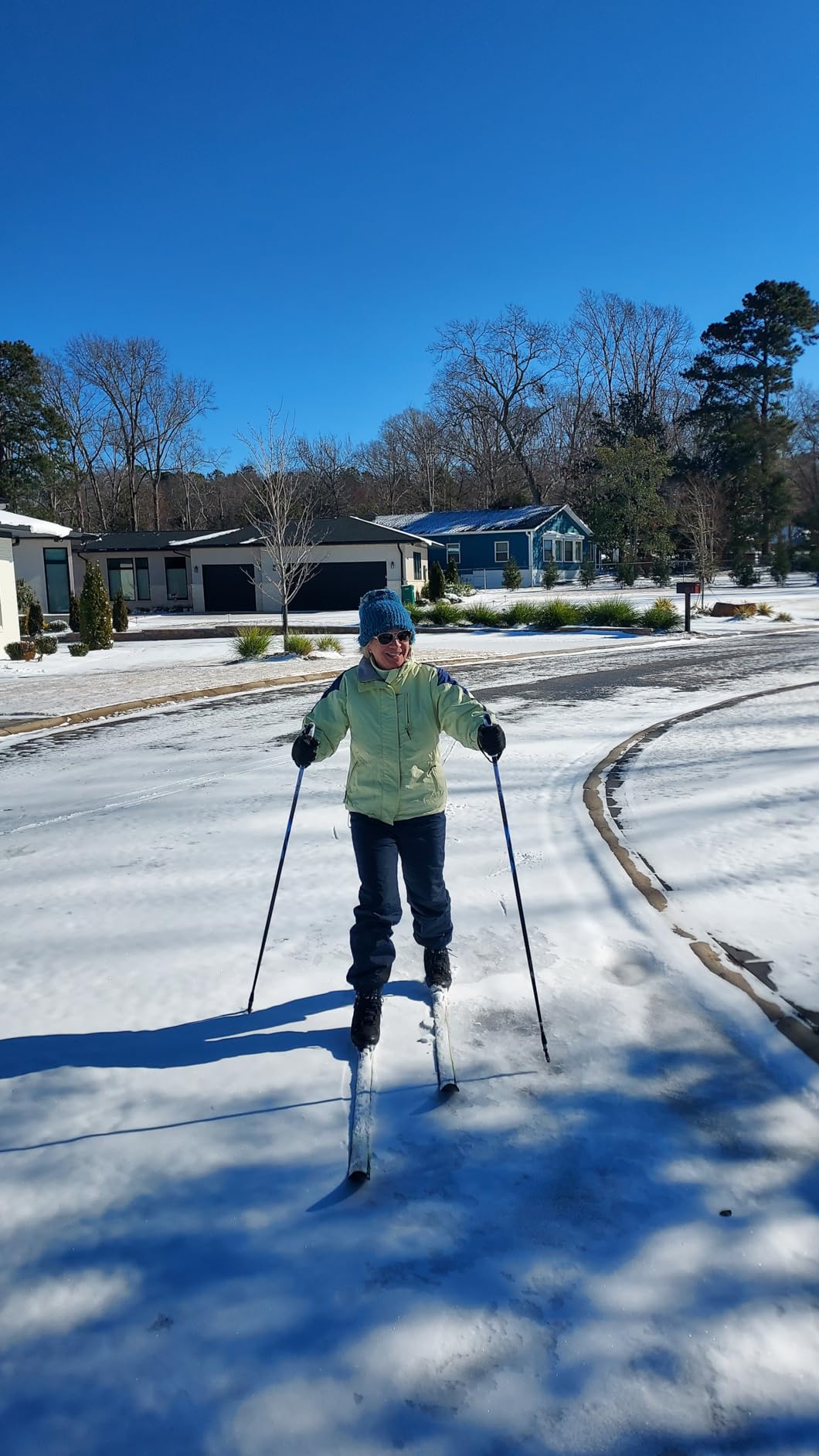
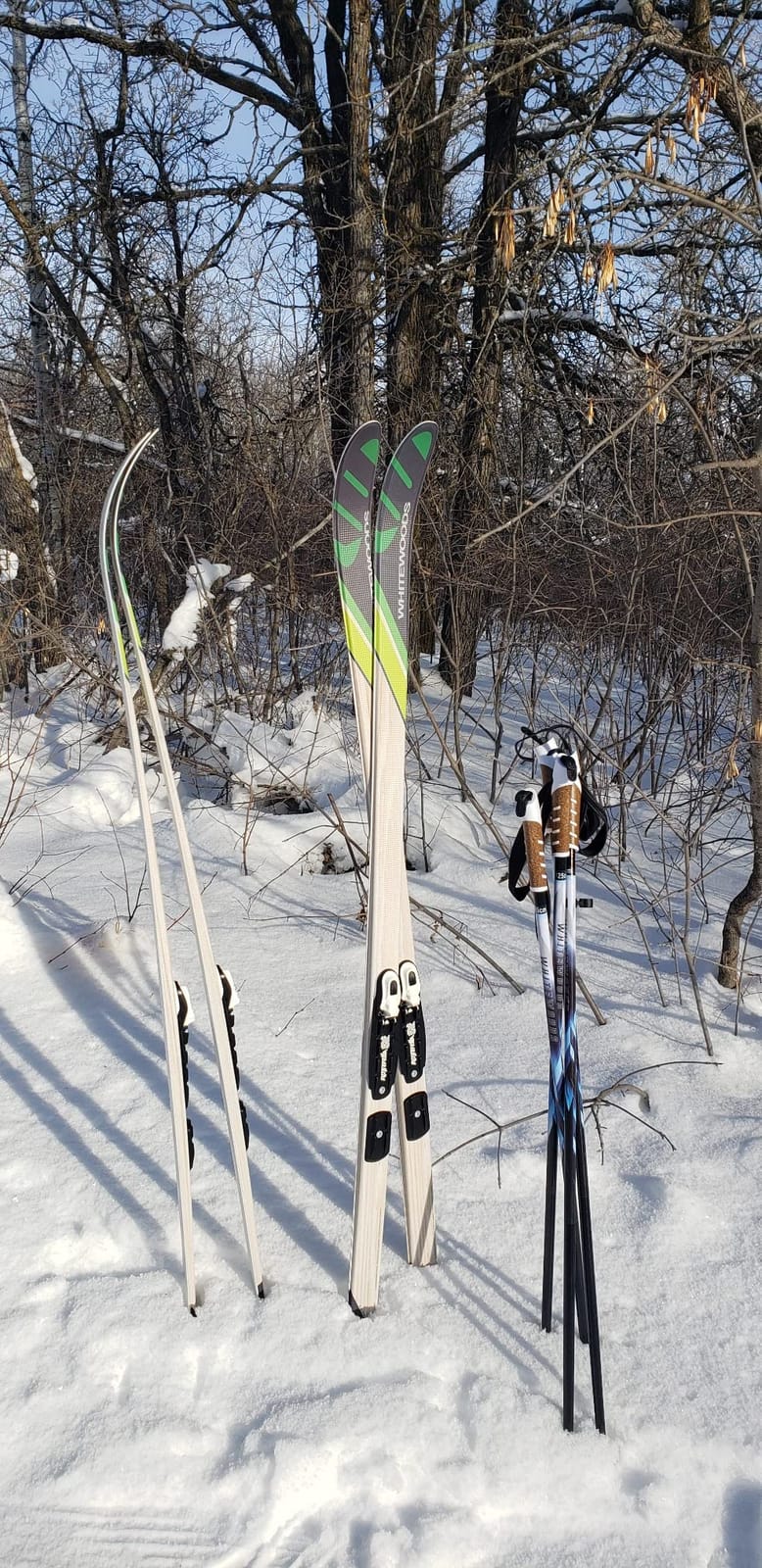
Owner photos tend to show the same thing the spec sheet promises, which is a matched four-piece setup that a beginner can actually use. The one thing you cannot see in a photo is boot fit, and that is worth a conversation in person if you can manage it.
Our advice: this is the ski we would hand to a friend who is starting cross-country skiing this winter and plans to keep going. The NNN platform is the least restrictive choice available, and the price difference from a legacy package is small enough to be worth paying.
What a beginner should check before ordering
Check the boot size first. Included boots are a starting point, and a boot that is too loose will undermine every hour you spend learning kick and glide. If you can, compare against a pair you already know fit rather than trusting the printed size alone.
Second, confirm the ski length against your weight including the clothes and pack you will actually wear. The 177cm length is charted for 121 to 150 pounds, and being at the top of that band is more comfortable than being at the bottom of a longer ski.
Where it falls short
The boot is the weak point, and reviewers say so directly. This is a lace-up boot with a Thinsulate-lined liner rather than a fully injected composite shell, and it will not deliver the precise control of a higher-end boot once you start pushing harder on descents.
It is also not the best choice if you plan a lot of uphill touring above the tree line, where a stiffer, lighter ski with climbing skins earns its extra weight. For groomed Nordic centre trails and flat to rolling local routes, though, it is hard to argue with.
3. Rossignol EVO OT 65 IFP Positrack — Best for Off-Trail Stability
Rossignol EVO OT 65 IFP Positrack Mens XC Skis 185 W/Control Step in Bindings
185cm ski with wood air core
Positrack waxless base
Metal edges
Step-in bindings included
Pros
- Rated 4.9 across 12 reviews
- Metal edges give real control on hard snow
- Wood air core keeps the ski light
- Control Step-In bindings included
Cons
- Skis only
- boots and poles not included
- Only 12 reviews
The Rossignol EVO OT 65 is built for off-trail and backcountry skiing, and its 4.9 average is the highest of the eight. The design choices all point that way: a wood air core for low weight, a wider profile than a track ski, and metal edges for edge grip on hard and icy snow. The 12-review sample is small, so treat the score as an encouraging early signal rather than a long track record.
Grip comes from a Positrack waxless base, which is Rossignol’s textured-sine-print system and works across a broad range of conditions without preparation. That is a real advantage for a beginner, because there is no temperature window to learn and no kick wax to apply at the car park.
The geometry is described as a shorter length with a medium sidecut, which is the combination that makes a ski agile in trees and stable in variable snow. The 185cm version is a relatively short ski for its length class, and that is deliberate — it is easier to turn than a long adult ski.
It is sold as a ski-and-binding set, not as a package, so boots and poles are a separate purchase. Budget for those before comparing it against one of the complete bundles.
Why the geometry suits a beginner
A medium sidecut and a shorter overall length are forgiving choices. A beginner spends most early turns in a snowplough wedge, and a ski that turns readily makes those first hundred metres far less punishing than a long, stiff plank with a narrow waist.
Metal edges are the other differentiator here. On refrozen tracks, icy parking areas and the occasional downhill section of a backcountry route, edges are the difference between a controlled turn and a skid that ends abruptly.
Where it falls short
It is not a complete setup. Add boots and poles to the cost before you compare it against a package, and a first-timer on a tight budget will find better value in one of the Whitewoods bundles.
Its 65-class width also narrows your track options compared with a dedicated touring ski. That is good news for groomed classic tracks, since it will fit inside them, but it means less float than the wider metal-edged models further down this list.
4. Rossignol Evo XT 55 Positrack 195cm — Best Value Classic Track Ski
Rossignol Evo XT 55 Positrack Mens XC Skis 195 W/Tour Step in Bindings
55/48/52 sidecut, the narrowest here
Fish scale grip with Positrack base
Sizes 165cm to 195cm
Tour Step-In bindings included
Pros
- Bindings already mounted
- Fish scale grip works without wax
- Clear weight-based sizing chart
- Tour Step-In bindings included
Cons
- Skis only
- boots and poles not included
- Only 5 reviews
The Evo XT 55 has the narrowest sidecut of the eight skis here, at 55/48/52, and Rossignol rates it for beginner to intermediate skiers. The ski itself is a fishscale Positrack classic, and it is the model most often named when a beginner wants a single pair of classic skis for groomed tracks.
The sizing information is unusually clear for an entry-level ski, and it follows the weight-based rule rather than the height-based one. The chart runs from 165cm for 85 to 135 pounds through to 195cm for skiers at 180 pounds and above, with a 55/48/52 sidecut held constant at 175cm across sizes.
That narrow waist is the point. A 48mm waist is what you want if your skiing is classic diagonal stride on prepared tracks, because it reduces drag and improves glide compared with a wider touring profile. It is also why this ski is less convincing in deep, ungroomed snow.
The bindings included are Tour Step-In units, which is a step-in platform rather than a fully free-heel touring binding. That suits groomed Nordic centre use and flat local trails, and it is simpler to step into than many plate-mounted systems.
Our caveat: with 5 reviews behind the 5.0 rating, the score is encouraging but thin. The specification is what makes this a safe pick — the sizing chart, the waxless fishscale grip and the track-friendly width are all exactly what a first-year classic skier needs.
Best for staying in the track
Among the skis here, this one is the most confident on a groomed classic track with a firm, cold surface. The narrow waist glides, and the fishscale grip zone holds on the forward kick without any wax.
It is also the easiest ski here to size properly, because the weight bands are published. Measure your weight in normal winter clothing, find your band, and take that ski length.
Where it falls short
It is skis only. The listed included components are bindings, so you will need boots and poles on top, and any first-timer budgeting carefully should account for that before falling for a low ski price.
It is also a track ski without full metal edges. On icy descents or when a trail opens up into ungroomed powder, the narrow waist and the absence of a steel edge will be obvious. If ungroomed terrain is your primary interest, this is the wrong ski.
5. Whitewoods Whitetail Metal Edge NNN Package 170cm — Best for Icy and Hard Trails
Whitewoods Whitetail Adult Metal Edge Cross-Country NNN Ski Package – Skis, Boots, Bindings, Poles | 170CM (for Skiers 131-155 lbs.) (EU Boot Size: 38)
170cm skis for 131-155 lbs
68-60-65 sidecut
7/8 metal edges
Complete NNN package
Pros
- Metal edges add control on ice and hardpack
- Four sizes published by weight
- Complete package with Rottefella NNN bindings
- Air-channeled laminated wood core
Cons
- Only 4 reviews
- Wider than a pure track ski
- Newer listing with limited owner history
The Whitetail answers a question most entry-level packages ignore: what happens when the trail is icy or the snow has been driven hard by traffic? The answer here is 7/8 metal edges, and they change the character of the ski entirely compared with the plain-waxless packages.
The rest of the package is built the same way. The core is a five-layer air-channeled laminated wood construction with cap construction and a powder tip, and the base is a machined negative waxless base. The 68-60-65 sidecut is wider than a classic track ski but still narrow enough to fit inside a groomed lane.
It is a complete package. Rottefella NNN Touring Basic bindings come pre-mounted, the boots are 302-model NNN boots with 100 grams of Thinsulate lining, and poles are included. The whole set weighs 12 pounds, and the skis come in four lengths with clearly published weight bands from 100 to 130 pounds up to 176 pounds and above.
The size range is the quiet strength of this listing. A lot of entry-level setups only exist in one or two lengths, which means a skier at either end of the weight range is pushed into a ski that does not fit. Here you can choose.
With a 5.0 rating from 4 reviews, the feedback is encouraging but there is not much of it yet. Judge this one on the specification and the price rather than on review volume, and treat the review count as something to re-check later in the season.
Why metal edges matter in your first season
Groomed Nordic trails get scraped, re-groomed and frozen. A ski without a steel edge skates sideways across that surface, and the first genuinely icy day of the season is when a lot of beginners decide they do not enjoy this sport. Metal edges bite, which means a turn starts when you ask for one.
The 7/8 length means the edge runs most of the ski, giving control where it matters without adding excessive weight. Combined with a waxless base, you get grip on the kick and edge control on the turn, with no waxing routine at all.
Where it falls short
At 68mm at the tip, it is a touring-capable width rather than a pure track ski. It will still fit a groomed classic lane, but you will feel more drag on long flat tracks than you would on a 55mm track ski.
Four reviews is a very thin evidence base, so if you are risk-averse about an unfamiliar brand at an unfamiliar price point, this is not the one to pick. If you value the metal edges and the four-length size range, it is a strong fit for a skier who plans to keep going past the first season.
6. Rossignol BC 80 Positrack 186cm — Best for Heavier Beginners
Rossignol BC 80 Positrack XC Skis w/BC Auto Bindings Sz 186cm
186cm ski for 147-180 lbs
Positrack waxless base
Full-length metal edges
NNN-BC step-in bindings
Pros
- Sized for skiers 147-180 pounds
- Full-length metal edges for backcountry control
- Single camber and tip rocker ease turning
- NNN-BC step-in bindings included
Cons
- NNN-BC boots are not interchangeable with standard NNN
- Skis only
- Only 2 reviews
This is the pick for anyone in the upper weight band, and it is worth reading carefully because the binding system is the deciding factor. The BC 80 comes with NNN-BC step-in bindings, and NNN-BC is a different platform from standard NNN. Boots with an NNN sole will not work with an NNN-BC binding.
That distinction is the single most common compatibility mistake in this sport, and it is why instructors repeatedly tell beginners to check the toe piece of their boot rather than the label. If you are buying a complete setup for a heavy skier and you want the option to swap bindings later, that trade-off matters.
On the ski side, the design is aimed at backcountry and ungroomed use. It has full-length metal edges, single camber, and a slight tip rocker that makes downhill turns easier to initiate. The core is described as lightweight and durable wood, and grip comes from the same Positrack waxless base used on the other Rossignol skis here.
It is charted for a person weighing 147 to 180 pounds, which is a narrower window than the 121 to 150 pound band on the packages above. If you sit outside that band, this length will feel wrong, and you should look at a size with a published weight range that brackets you.
When this ski makes sense
It makes sense for a skier in the 147 to 180 pound range who intends to ski ungroomed routes with a climbing setup, and who is happy to commit to the NNN-BC boot ecosystem. Tip rocker plus metal edges is a forgiving combination on descents, which is exactly where a heavier beginner tends to have trouble.
It also makes sense for anyone whose only access to skiing is ungroomed terrain. The Positrack base handles variable conditions without wax, and the full-length edges give you something to stand on when the surface hardens.
Where it falls short
The binding system is the problem. If you already own standard NNN boots, or if you want the flexibility to move between track skis and touring skis later, NNN-BC locks you into one ecosystem. Most general cross-country boots sold in shops will not fit.
At 80mm, it is also too wide for comfortable groomed classic track skiing. It will not work inside a narrow prepared lane, and it is sold as skis only, so boots and poles are on you.
7. Fischer Excursion 88 Crown/Dual Skin Xtralite — Best for Weekend Backcountry Touring
Fischer Excursion 88 Crown/Dual-Skin Cross Country Skis, Yellow, 179cm
176cm ski with Crown and Dual Skin grip
Full-length steel edge
Wide offtrack profile
Sintered base
Pros
- Two-piece climbing setup built into the grip zone
- Full-length steel edge
- Light at 10 pounds
- Air Channel core with tour rocker
Cons
- Marked advanced
- not a first-season ski
- Skis only
- Only 1 review
We are including this ski because it represents the top of the progression, and it is worth understanding what you are buying into before you decide you are not ready for it. The Excursion 88 is built for offtrack touring, with a wider profile, a deeper sidecut, and a full-length steel edge.
The climbing system is the headline feature: a two-piece setup combining the Offtrack Crown pattern with an Easy Skin under the foot. That means you can climb a steep pitch in skin mode, then drop the skin and glide on the sintered base. The base structure is sintered rather than a cheap extrusion, which is the right call for touring.
Construction-wise it uses an Air Channel core and a tour rocker profile, and the ski weighs 10 pounds. It is available in 169cm, 176cm, 189cm and 199cm lengths, so there is a size for most adult weights. Fischer backs it with a two-year limited warranty.
Now the honest part. This ski is listed as advanced and it is not a beginner tool. An 88mm ski is meaningless in a groomed classic track, the wide profile punishes you on flat prepared lanes, and the climbing system only pays off if you are already comfortable on ungroomed descents. With one review behind it, there is also no owner history to learn from.
What it is actually good for
It is good for a skier who already owns track skis and has decided to add a touring setup, or for a complete beginner who lives somewhere with no groomed trails within reach and has a strong partner or guide. The combination of climbing skin, steel edges and tour rocker is a genuine mountain package.
The sintered base is also the reason it glides the way it does. If you ever do graduate to this ski, the base is the component that will reward you with years of service.
Where it falls short for a first-timer
It falls short on forgiveness. A wide, advanced-level touring ski with a deep sidecut demands a level of balance control that most first-season skiers do not have, and the failure mode is worse than on a narrower ski because the tips dive rather than hold.
It is also skis only, listed without bindings, boots or poles, so your real cost is meaningfully higher than the sticker figure. If your question is which cross-country skis to start on, this is not the answer — it is the third or fourth ski you eventually buy.
8. Whitewoods Adult NNN Cross Country Ski Package 207cm — Best for Skiers Over 180 Pounds
Whitewoods Adult NNN Cross Country Ski Package, 207cm – Skis, Bindings, Boots, Poles (48, 180 lbs. & Up)
207cm skis for 180 lbs and up
64-55-59 sidecut
Rottefella NNN bindings
Complete four-piece package
Pros
- Only 207cm complete NNN package among these picks
- 40 owner reviews
- Rottefella NNN Touring bindings pre-mounted
- Thinsulate-lined NNN boots
Cons
- Limited to skiers at 180 pounds and above
- Same boot concerns as the shorter version
- Not sized for lighter skiers
Longer beginners are routinely left out of entry-level roundups, and that is a real gap. At 180 pounds and above, most classic track skis are too short, and the usual advice to size up runs into the fact that plenty of packages simply stop at 150 pounds. This one is built for the 180-plus band.
The ski is the same Cross Tour NNN platform as the 177cm package, with a 64-55-59 sidecut, laminated wood core, powder tip, machined negative waxless base and ABS tail protector, extended to 207cm. The bindings are Rottefella NNN Touring Basic units, pre-mounted, and the package includes NNN boots with 100 grams of Thinsulate lining plus poles.
It is listed as a four-item package and the whole set weighs 12 pounds, which is light for a 207cm classic ski plus boots. The weight comes from the wood core and cap construction rather than any metal reinforcement.
The 4.4 rating across 40 reviews is the second largest body of owner feedback of the eight skis here, which makes this a well-worn package rather than a listing with two comments. The complaints are the same ones carried over from the shorter version: boot liner durability and how the included boots hold up over multiple seasons.
Why length matters so much at this weight
Under a heavier skier, a short ski develops a lot of speed relative to the available edge and base area, which is the classic recipe for chatter and for a turn that will not hold. A longer ski gives the base more surface to run on and more edge to press with, so the same technique produces a calmer ski.
On the other side of that coin, an overlong ski is heavy and hard to turn, which is why the weight chart matters more than the height chart. At 180 pounds and up, 207cm is a fit, not a flex.
Where it falls short
It is strictly for heavier skiers. If you are under 180 pounds, this ski is too long and the handling will feel ponderous from the very first turn, and no amount of technique fixes that.
The boots are the same limitation as the shorter package, and at this weight you will notice a boot that is slightly loose more than you would at 140 pounds. If you can, budget for a proper fitting rather than relying on the supplied boot.
How to Choose Your First Cross-Country Skis
Buying guide content is where most first-timer mistakes happen, and almost none of them are about brand. Working XC instructor guidance consistently points at two fixable causes: a ski length that does not match the skier’s weight, and poor technique. Only the first one is solved at the checkout, and the specs below are the part that decides it. If you want the broader picture of building a first setup, our guide to beginner maintenance kits for a long first season covers the same principle: start with the basics that match your actual conditions rather than the most capable version of everything.
Start with classic, not skate
Start classic. It is the honest recommendation and it matches the principle most beginner guides land on. Classic skiing uses a kick-and-glide motion where a textured grip zone catches snow on the forward stroke so the ski does not slide backward, and you push off in a V-shaped or diagonal stride rather than skating side to side. Skate skiing is a balance sport from day one and it punishes an unstable beginner immediately.
You can move to skate later without buying everything again, because classic and skate skis share the same NNN-style boot platforms. A NNN boot with a stiffer flex will work with skate bindings later. Starting on skate skis and then moving to classic is the harder direction.
Fishscale, skin, or wax?
Waxless is the right answer for most beginners, for one reason: it removes a whole skill you have not learned yet. Three systems cover it. A fishscale or Positrack base is a textured pattern moulded into the base, needs no maintenance beyond cleaning, and grips well in cold dry snow. A mohair or synthetic skin uses a strip of hair or fabric in the grip zone, grips across a wider temperature range and holds better in wet snow, but it needs careful cleaning. Kick wax is the third option and works best in genuinely cold conditions, which is why it has a reputation for being fussy.
One practical warning on waxless care: fishscale patterns collect grime and clump when temperatures climb above roughly 40F. Wipe the grip zone with a warm damp cloth and a drop of dish soap after a warm day, and dry it before storing. A neglected grip zone loses its hold long before the glide is affected. The same weekly-cleaning habit shows up in our beginner reef lighting picks, where equipment that needs regular attention is chosen for how easy it is to maintain rather than for maximum specification.
Size by weight, not by height
Manufacturers size these skis by skier weight. Height is a rough proxy and a poor one, because two people of the same height can differ by 60 pounds. Weigh yourself in the clothing and with the pack you will normally ski in, then use the published weight band for the ski rather than the height chart you remember from alpine skiing.
A useful set of anchor points for classic track skis: under about 100 pounds sits in the short 165cm range, the 121 to 150 pound band maps cleanly to 175 to 177cm, the 131 to 155 pound band to 170cm in a slightly wider touring platform, and 147 to 180 pounds to a mid-180s length. Beyond 180 pounds you are looking at 207cm and a narrower sidecut. Always defer to the chart printed on the specific ski.
How wide is too wide for a groomed track?
The practical rule: if you want to ski groomed classic tracks at a Nordic centre, keep the tip under about 70mm. Below 60mm you are firmly a track ski. From the low 60s up to 70mm is the sweet spot for a beginner who wants to handle both tracked and rolling terrain. Above about 78mm, plan on ungroomed routes as your primary terrain, because the ski will not fit comfortably inside a prepared classic lane.
This is the answer to the question that appears at the top of every beginner forum: yes, one pair can handle groomed and ungroomed terrain, but not every pair, and not without a compromise. The forum consensus is to buy a waxless touring ski that is not too wide, and the width numbers in the comparison table above let you check that before you buy anything.
Match your bindings to your boots
Check the boot before the ski, and this is where most package buying goes wrong. The NNN family, including Turnamic and Prolink, is the current standard and the broadest boot selection in the market. NNN-BC, a backcountry-specific variant, uses a different toe interface and will not accept standard NNN boots. SNS and 3-pin are older systems that still appear in complete packages.
The practical rule for a beginner: buy a package on NNN, or buy skis on NNN, so that any boot you buy later fits. If you find a deal on an NNN-BC touring setup, treat it as a commitment to one boot ecosystem rather than a flexible purchase.
What a complete beginner package includes
Four items, and each one matters. Skis with compatible bindings already mounted are the core purchase. Boots are the piece that actually transmits your movement, and a well-fitted boot is worth more than an expensive ski. Poles matter for balance and rhythm, and the right length is roughly 83 percent of your height for classic skiing. A complete package bundles all four with matched components, which removes guessing.
The trade-off is that package boots are entry-level by design. They are warm, waterproof and serviceable, and they will not be the last boot you buy. Our position is that a matched package plus one lesson is a better first purchase than bare skis plus a set of incompatible boots assembled from a bargain bin. Buyers who want a structured first-season checklist can compare it with our beginner power tool buying guide, which follows the same start-with-the-matched-set logic.
Buy new rather than used, and buy early
Buy new if you can. Used skis carry the classic beginner traps: a base sanded flat by a previous owner, a binding plate that does not match any boot you can find, and a set of incompatible components. The binding mismatch is the one that ends the purchase, because the boots simply do not exist for that platform in most shops.
On timing, buy before the season starts rather than at the end of it. Entry-level sizes in the 175 to 185cm band sell through first, and once a season’s inventory is gone the remaining sizes are the awkward ones. You will rarely find a genuine discount on beginner gear at the end of the winter, and a package that includes boots and poles is where seasonal price movement is least generous.
Finally, take one lesson. Nearly every guide written by an actual instructor says the same thing: technique, not equipment, is why beginners struggle. The skis in this roundup are designed to make that first season less punishing, but they cannot teach you the diagonal stride.
Frequently Asked Questions
What are some good cross-country ski sets for beginners?
A complete set for a beginner is four matched pieces: skis with bindings already mounted, cross-country boots on the same binding platform, poles sized to roughly 83 percent of your height, and a waxless base so no waxing is required. The Whitewoods NNN and 3-pin packages we reviewed include all four and use the NNN platform, which gives you the widest choice of replacement boots later. A set beats piecing things together separately because a mismatch between binding and boot is the most common reason a first purchase goes wrong.
What are the best budget cross-country skis?
For a skier in the 121 to 150 pound range, the complete Whitewoods NNN package is the strongest value option because it includes boots, bindings and poles with a pre-mounted Rottefella NNN binding, so nothing extra needs to be sourced. The Rossignol Evo XT 55 Positrack is an alternative that is sold as skis and bindings only, so boots and poles still have to be budgeted separately. Buyers should compare total setup cost rather than the cost of the ski alone.
What is the best brand of skis for beginners?
Fischer, Rossignol, Salomon, Atomic and Madshus all make well-regarded entry-level Nordic skis, and the honest answer is that brand matters less than width, sizing chart and binding platform. What distinguishes a good beginner ski is a waxless base, a published weight-based size range, a forgiving flex and bindings that are already mounted. Pick on those four things, then let brand preference break the tie. The picks in this roundup come from Rossignol, Fischer and Whitewoods, and each is included for a specific terrain and weight band.
How to choose the right cross-country skis?
Work through five steps. First, decide your terrain: mostly groomed Nordic centre tracks, or regularly ungroomed routes. Second, pick the discipline, and start with classic rather than skate because it is more forgiving. Third, choose the grip system, and for a beginner that means waxless fishscale or skin rather than kick wax. Fourth, size by weight, not height, using the chart printed on each ski. Fifth, budget the whole package, since boots are often a separate cost on a skis-only purchase.
What type of skis are best for a beginner skier?
Waxless classic skis with a forgiving flex, sized by skier weight and sold with bindings on a common platform such as NNN, are the right first pair for most beginners. They grip without waxing, they stay stable at low speed, and they are easy to turn. Avoid stiff race-grade flex, avoid anything much wider than 70mm if you will use groomed tracks, and avoid bindings-only purchases unless you already own compatible boots.
What are the key differences between fish scale and skin skis?
Fishscale skis have a pattern moulded into the base of the grip zone, need no maintenance, and work best in cold dry snow. Skin skis use a strip of mohair or synthetic material in the grip zone, which grips across a wider temperature range and holds up better as snow turns wet, but the skin needs careful cleaning and correct storage. A mohair skin costs more and is more demanding to maintain, so a beginner typically starts fishscale and moves to skin or wax when their skiing range widens.
Are 20 year old cross-country skis still good?
It depends entirely on what has happened to them. A two-decade-old ski with an intact base, straight edges and undamaged camber can still glide acceptably, and the binding plate is the real question, because a 20-year-old NNN or SNS mounting pattern may have no matching boots left in the market. Used skis with sanded bases or factory defects are not worth the saving, and a used boot-and-binding mismatch is the most common way beginners end up with unusable gear. For a first pair, new equipment on a matched platform is the safer route.
Can one pair of cross-country skis work for both groomed and ungroomed trails?
Yes, but the ski has to be narrow enough to fit a groomed classic track. Keep the tip under roughly 70mm and you can use the same ski on prepared lanes and on rolling ungroomed terrain. Above about 78mm you are committed to ungroomed routes, because a wide touring ski will not sit properly inside a prepared track. The waxless touring skis in this roundup, such as the 68mm Whitetail package, sit in that workable middle ground.
Conclusion: Which Cross-Country Skis Should You Buy?
For a budget first-timer in the 121 to 150 pound range who wants everything in one box, the Whitewoods 75mm 3Pin package is the simplest first season you can buy, and the Whitewoods Adult NNN package at 177cm is the better long-term call for the same money range because the NNN platform keeps every future boot option open. If you mostly ski groomed Nordic centre trails, take the NNN package and stay under about 70mm of tip width.
For a groomed-trail regular who has already done a season, the Whitewoods Whitetail metal-edge package adds the edge grip that icy tracks demand, and the Rossignol EVO OT 65 IFP is the pick if off-trail versatility matters more than having a package. For a weekend backcountry explorer, the Fischer Excursion 88 is genuinely capable gear, but only once you can already turn well on narrower skis.
Whatever you choose in 2026, size by weight, start classic, and book a lesson before your first ski day. Our best cross country skis for beginners shortlist comes down to one rule: pick the ski that matches the terrain you will actually ski, not the most capable ski on the shelf.