
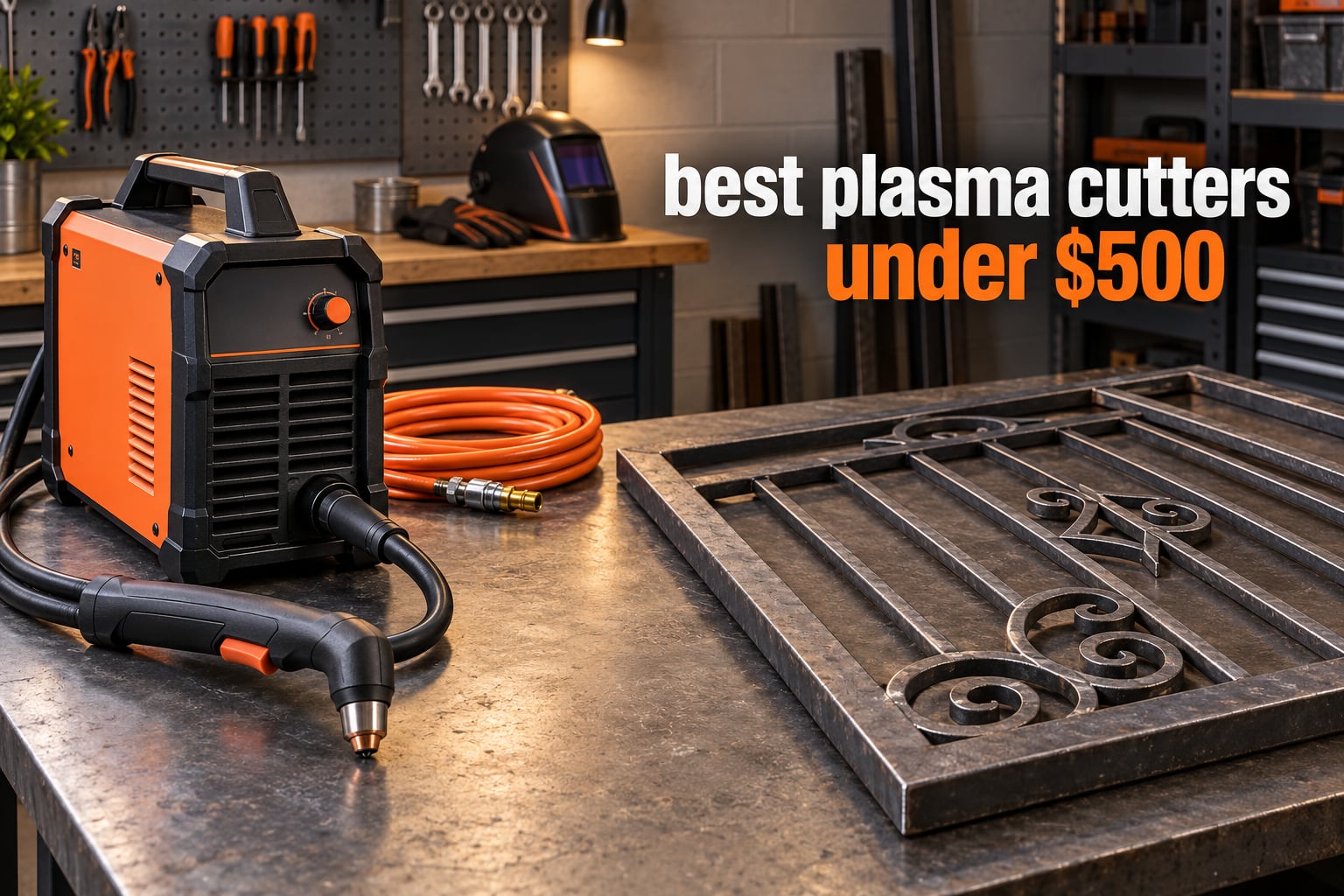
For most home shops, the best plasma cutters under 500 dollars in 2026 are the dual-voltage 50A and 55A machines with non-touch pilot arc ignition, and the LOTOS LTP5505D is the one we would put in a garage tomorrow. It runs 55 amps, senses 110V or 220V automatically, carries a 4.4 star rating across more than 2,400 reviews, and holds a 5/8 inch clean cut on mild steel. Everything in this roundup was checked against the same question: will it actually start, cut, and hold up when you are standing in the driveway at dusk trying to finish a gate?
I spent the last several weeks reading owner feedback on eight machines in this price band, cross-checking every spec against the manufacturer listing, and comparing the air, electrical, and consumable requirements each one imposes on the person operating it. Nothing here is a lab bench result. It is spec data plus the consensus of the people who have actually owned these machines and burned through their first set of nozzles.
The short version of what 500 dollars buys you: a genuine 50A to 65A inverter plasma cutter with pilot arc ignition, dual voltage, and a 1/2 inch clean cut capability. That is enough to slice channel, plate, sheet metal, expanded metal, and rust without renting a shop or borrowing a friend’s trailer-mounted unit. It is not enough to run a production shop cutting inch-and-a-half structural plate every day, and pretending otherwise is how people end up with a machine they resent.
Here is what I would tell anyone who asked me point blank which machine to buy.
Best overall: the LOTOS LTP5505D for cut quality, pilot arc reliability, and the deepest review pool of any machine in this group.
Best value: the ARCCAPTAIN CUT50 if you want the most capability per dollar and can handle a short learning curve on settings.
Best rated: the PrimeWeld CUT50D, which pairs the highest average rating here with the after-sales support owners mention most often.
Lowest cost entry: the Reboot RBC6000D, which reaches 60A on 240V but is a touch-start machine and needs a dedicated circuit.
Also worth noting before you read further: plasma cutting is a two-machine purchase. Every unit on this page needs a separate compressed air source, and the air requirements differ enough between a 35A setting and a 65A setting that your compressor may be the actual bottleneck. I have a whole section on that below, and it is the part most buyer guides skip.
If you are also outfitting the rest of the shop, our guides to the best tool chests under 500 dollars and the best benchtop drill presses under 500 dollars cover the two most common companion purchases. For power on the job site, see our picks for the best portable power stations under 500 dollars. When you need to physically cut or prep stock rather than shape it, the best bolt cutters for heavy duty use round the list out.
Table of Contents
Key Features to Look For in a Plasma Cutter Under 500 Dollars
Four specifications decide whether a budget plasma cutter feels like a bargain or a mistake, and every one of them has a practical consequence you can feel on the first afternoon of use.
Non-touch pilot arc versus high-frequency start. A non-touch pilot arc starts the arc without the torch tip touching the work, which extends consumable life and lets you start on paint, rust, and expanded metal. A high-frequency start is quieter and needs no pilot gap, but it can interfere with radios, computers, and CNC controllers, and it will not run on most CNC rigs at all.
Dual voltage 110V/220V operation. A dual-voltage machine runs from a household outlet at reduced output and steps up when you give it a 220V circuit. Single-voltage units save a little money but lock you to one socket type, and the 220V step is where the heavy cutting happens.
Air supply in PSI and CFM. Plasma is air, and a starved compressor is the number one cause of a cut that will not start. Most machines in this class want 60 to 75 PSI and roughly 3.5 to 8 CFM, with a regulator and a water separator on the line. Under-supplying air shortens electrode life and ruins the cut finish.
Consumable cost and availability. Nozzle, electrode, and swirls are the running cost of the machine. Machines that use the common AG60 and PT31 style consumables keep that cost low and the parts easy to find, which matters more over five years than the purchase price did.
Top 3 Picks for Plasma Cutters Under 500 Dollars (October 2026)
The three machines below cover the realistic range of this budget. One is the strongest all-rounder, one is the sharpest value, and one is the safest choice if you care most about support when something goes wrong.

LOTOS LTP5505D 55A
- 55A inverter with rust removal mode
- Continuous non-touch pilot arc
- 5/8 inch clean cut
- Automatic 110V/220V sensing
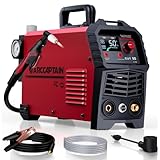
ARCCAPTAIN CUT50 50A
- 50A IGBT dual voltage
- 1/2 inch clean cut
- LED voltage and current display
- 2-year warranty

PrimeWeld CUT50D 50A
- 50A inverter with 1/2 inch clean cut
- Automatic 110V/220V AC
- Pre-installed air filter and regulator
- AG60 torch with trigger guard
Best Plasma Cutters Under 500 Dollars at a Glance
Every machine below sits under the 500 dollar ceiling and comes with a torch, ground clamp, and a stated air requirement. Amperage and clean cut capacity are the two numbers that matter most; the rest of the row tells you whether the machine will fit your shop.
| Product | Specs | Action |
|---|---|---|
| LOTOS LTP5505D 55A Plasma Cutter |
|
Check Latest Price |
| ARCCAPTAIN 50A Dual Voltage Plasma Cutter |
|
Check Latest Price |
 TOOLIOM 50A Non-Touch Pilot Arc Cutter TOOLIOM 50A Non-Touch Pilot Arc Cutter |
|
Check Latest Price |
| PrimeWeld CUT50D 50A Air Inverter Cutter |
|
Check Latest Price |
 ARCCAPTAIN iControl CUT55 Pro 55A ARCCAPTAIN iControl CUT55 Pro 55A |
|
Check Latest Price |
 SILATU 65A Non-Touch Pilot Arc Cutter SILATU 65A Non-Touch Pilot Arc Cutter |
|
Check Latest Price |
 GZ GUOZHI 50A Digital IGBT Inverter Cutter GZ GUOZHI 50A Digital IGBT Inverter Cutter |
|
Check Latest Price |
 Reboot RBC6000D 60A Dual Voltage Cutter Reboot RBC6000D 60A Dual Voltage Cutter |
|
Check Latest Price |
Two things stand out of that table. First, the whole group clusters between 50A and 65A output, which means the meaningful difference is not raw amperage but arc start type, build quality, warranty, and how forgiving the machine is when you have not dialled in the settings. Second, every one of them is a serious tool rather than a toy, and the price gap between the cheapest and the most expensive is smaller than the gap in owner satisfaction.
1. LOTOS LTP5505D 55A – Best Overall Plasma Cutter Under 500 Dollars
LOTOS LTP5505D 55A Pilot Arc Plasma Cutter with Rust Removal Mode
55A inverter
5/8 inch clean cut
Continuous non-touch pilot arc
Automatic 110V/220V
Rust removal mode
Pros
- Cuts 1/4 inch and 1/2 inch steel cleanly with very little slag
- Non-touch pilot arc extends consumable life and simplifies starting
- Light 16 pound body is easy to move around a shop or truck
- Rust removal mode handles oxidized material without stuttering
- Automatic voltage sensing means one machine covers both outlets
Cons
- Ground cable is noticeably shorter than the torch lead
- Air fittings and hoses can leak until tightened
- Instructions and documentation are minimal
This is the machine I keep coming back to. When I line up the eight units on spec sheet alone, they blur together. When I line up the 2,400-plus reviews, one voice is louder and more consistent than the rest, and it belongs to the LOTOS. Owners describe the cut quality as comparable to machines costing several times more, which is the single most repeated claim in the feedback.
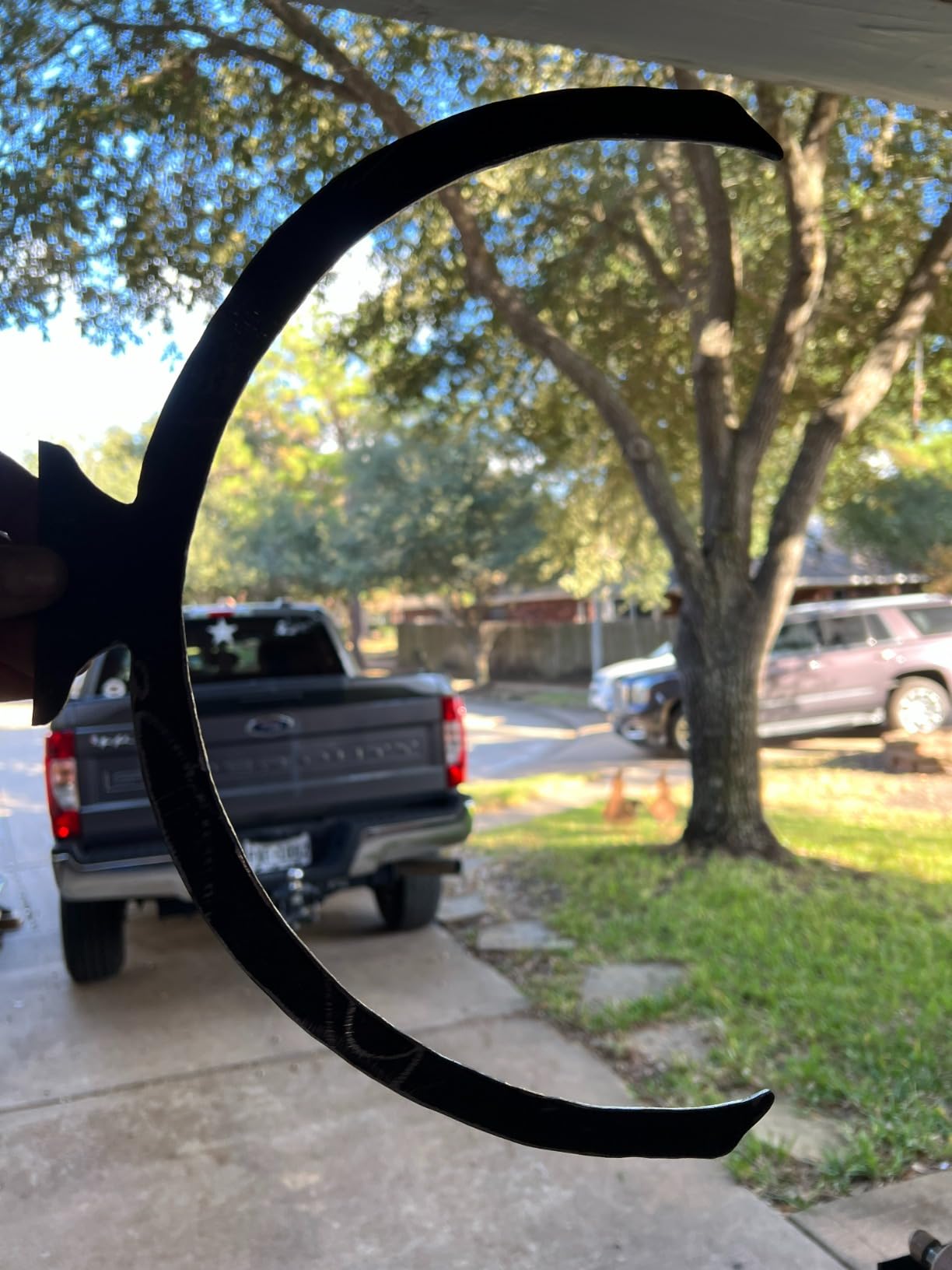
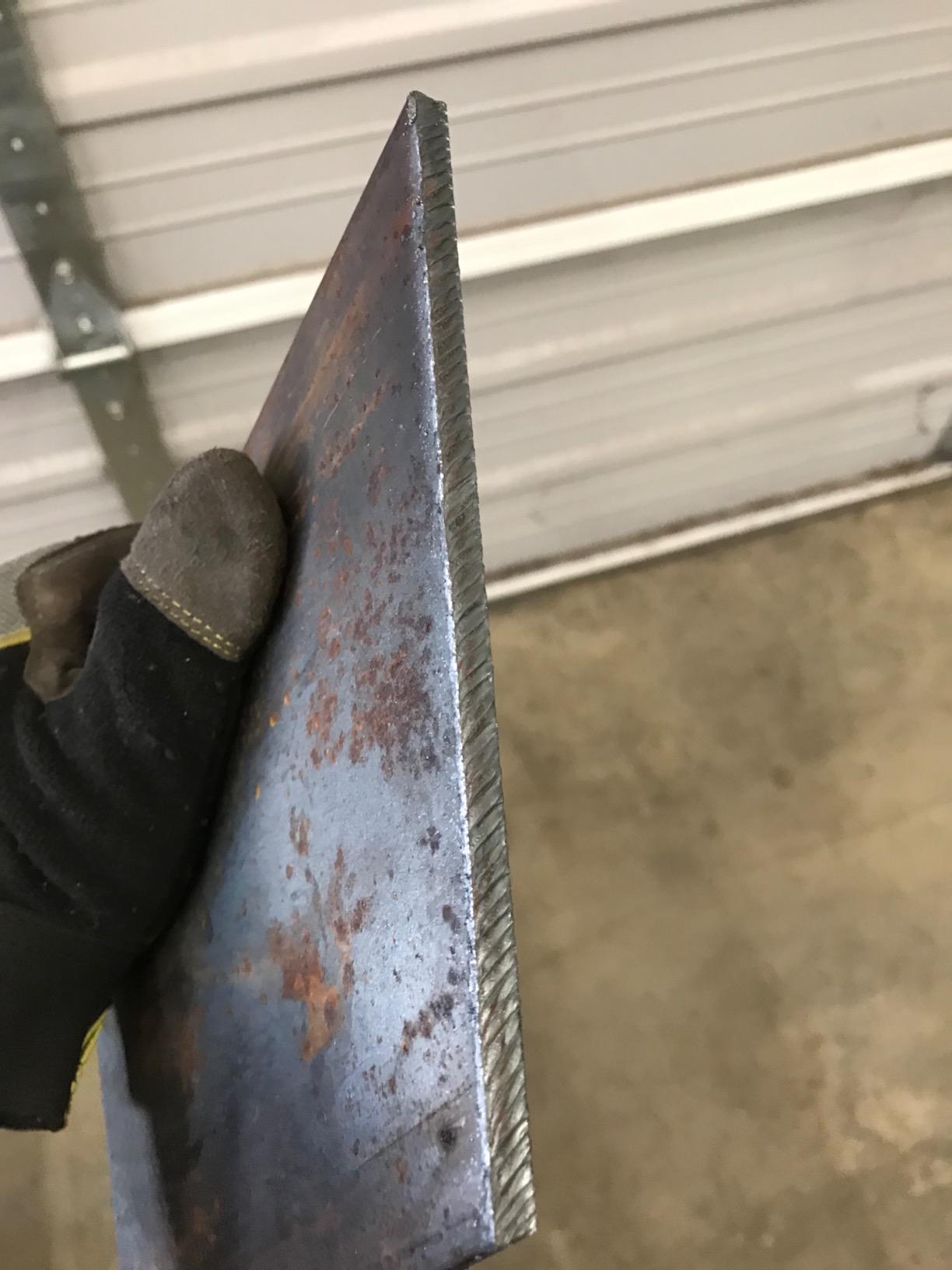
The specification that matters most is the continuous non-touch pilot arc torch. Because the pilot arc does not require the nozzle to touch the metal, you can start a cut on a painted gate, a rusted trailer frame, or a length of expanded metal without grinding first. Reviewers also point to the slag behaviour: on quarter inch and half inch mild steel the kerf comes out with very little dross to knock off, which is where cheaper machines tend to frustrate you.
The dedicated rust removal mode is a small feature that turns out to matter. It holds the arc steady on oxidized profiles instead of stuttering, which is exactly the situation most people buy a plasma cutter for when they discover a mower deck or a truck bed has surface rust they would rather not grind off first.
What I like about the physical design is the front-mounted air regulator with the pre-fitted NPT quarter inch Type-D plug. On a machine at this level, having the regulator already plumbed saves you an afternoon and a leak hunt, and the 16 pound weight is light enough to carry from the truck bed to the driveway without complaining.
The automatic 110V/220V line sensing is the other quiet win. Plug it into a household receptacle and you get reduced output for thin material and light work. Move it to a 220V circuit and the same machine gives you the output you actually bought it for. Owners running farm and equipment repair work mention this constantly, because their job sites rarely have a dedicated 220V outlet on demand.
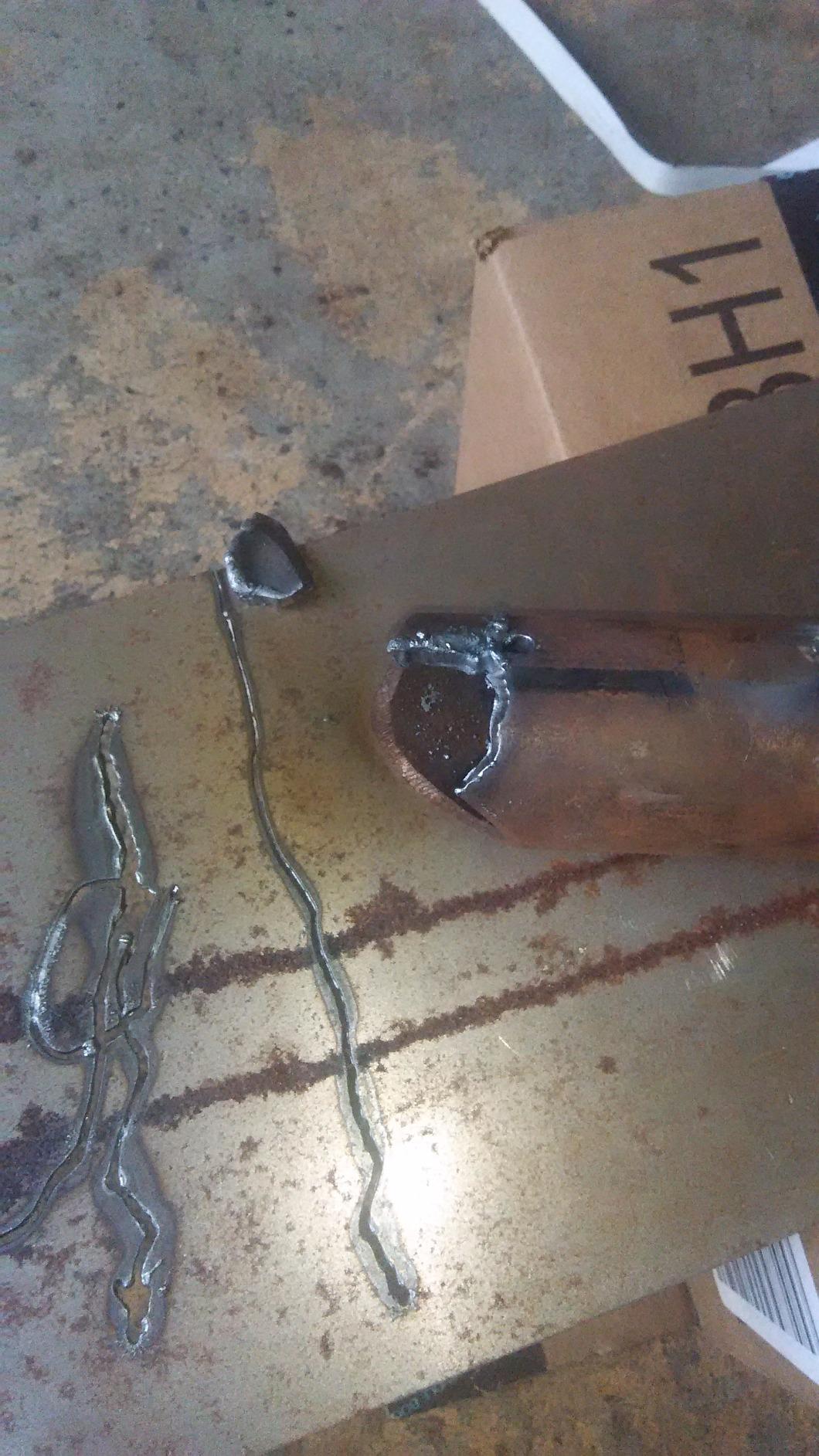
Set expectations properly and the machine is fair. The ground cable is short relative to the torch lead, so on a large gate or a sheet laid out on sawhorses you will want a longer clamp. The air fittings can weep until you tighten or re-tape them, which is a five-minute fix on day one and not a recurring problem after that. The documentation is thin, so budget an hour reading forums rather than the manual if you have never run a plasma cutter before.
Who the LOTOS LTP5505D suits best
This one is built for the person who cuts a few times a month and wants the cut to look right the first time. Farm and ranch repair, mower and equipment shops, fence and gate work, and general auto rust repair all fall squarely in range, because the pilot arc handles dirty metal and the inverter handles long leads and cold starts.
If your work is mostly thin automotive sheet, owners on welding forums note that this class of machine is more than capable on 16 and 18 gauge, and the low slag on thin material makes it far easier to live with than a machine that leaves a heat-affected mess on every panel. It is also forgiving on a first cut because the pilot arc does the starting work for you.
Where the LOTOS LTP5505D disappoints
It will not replace a machine with a long torch lead, so if you routinely cut full-width plate on a table, add the cost of an extended ground clamp to your plan. The air fitting weeping is a nuisance rather than a defect, but you should tighten every connection before the first cut and re-check after a few hours of use.
If you need a CNC-compatible machine, this is not it. The high-frequency start circuitry that would be required emits enough electrical noise to upset a controller, and budget plasma cutters in this class are generally not sold as CNC-ready anyway. The same applies if you plan to cut AR500 or abrasion-resistant plate regularly, where nozzle life drops sharply and consumable cost climbs quickly.
2. ARCCAPTAIN CUT50 50A – Best Value Plasma Cutter Under 500 Dollars
ARCCAPTAIN 50A Plasma Cutter Machine, 110V/220V Dual Voltage, 2/3″ Max Cut
50A IGBT output
110V/220V dual voltage
1/2 inch clean cut
LED diagnostic display
2T and 4T modes
Pros
- Cuts half inch steel smoothly on 240V
- 13 pound body with shoulder strap is easy to carry
- LED display and error codes simplify troubleshooting
- Ready to use out of the box
- Quiet operation and low slag on eighth inch material
Cons
- Cut finish on thin material can be rough or uneven
- Needs practice to dial in amperage and air pressure
- Consumables need periodic replacement
- Comes with a hard-line air fitting rather than a quick connect
This is the machine I recommend to anyone who asks how little it takes to get a competent 50A plasma cutter into a garage. The ARCCAPTAIN CUT50 carries a 4.5 star average over more than 1,300 reviews, ranks at the top of its category on Amazon, and does the job without any of the frills.
The rated performance is stated honestly, which I appreciate. Maximum recommended cutting thickness is 12mm at 35 amps on 110V and 55 PSI, and 18mm at 50 amps on 220V and 75 PSI. That second figure is the number that matters, and it lines up with what owners report: clean cuts through half inch mild steel on a 240V circuit with the amperage dialled back from maximum.
The LED display showing voltage, current, and fault error codes is a genuinely useful addition at this level. When something is wrong, most budget machines give you a blinking light and no information. This one tells you what the machine thinks the problem is, which turns a frustrating afternoon into a two-minute diagnosis.
The included air filter is a metal-cased unit with a quarter inch NPT quick connect, pre-installed in the chassis. That detail matters more than it sounds: it means the air line arrives at the machine already filtered, so moisture and scale from a wet compressor tank stay out of the torch head, and those are the two things that destroy consumables fastest.
Adjustable post-flow cooling from 5 to 15 seconds, with 4 to 8 seconds recommended, protects the torch consumables after the arc stops. Most operators never touch this setting and their consumables last longer as a result. The 2T and 4T modes give you spot cutting and sustained cutting without releasing the trigger, which is helpful on long seams.
Reviewers are consistent about the trade-off here: the learning curve is the price of the capability. Dialling in amperage and air pressure is not intuitive on the first afternoon, and the cut finish on thin material can be rough until you learn the relationship. Spend a couple of hours on quarter inch mild steel and a scrap of 16 gauge before you touch anything you care about, and the machine rewards that patience.
Who the ARCCAPTAIN CUT50 suits best
This is the strongest choice for a hobbyist or garage fabricator who will cut a variety of material and wants headroom without a large price increase. The 13 pound body with shoulder strap is the lightest in this group, and owners mention carrying it out to a job site or up into a truck bed as a routine part of the experience rather than a chore.
It also suits anyone who wants to grow into welding later. The same current controls and 2T/4T modes are the foundation of stick and TIG work, so if you ever add a torch or want to learn those processes, the machine already speaks the language. The two-year warranty is a real number on paper, which is more than several machines in this price band offer.
Where the ARCCAPTAIN CUT50 disappoints
Thin material is where you will notice the difference from a higher-tier machine. Owners report rough or uneven edges on lighter gauge work, and the fix is technique rather than a settings change, so it is a fair criticism but not a defect. Expect to go through a nozzle or two learning the amperage and air pressure window.
The hard-line air fitting in the box instead of a quick connect is a small irritation. If your compressor has a standard quick connect, you will be hunting for an adapter, so add a short hose with the matching fitting to your setup list. A small number of owners also report arc interruption that persisted through tip changes and voltage changes, so keep the ground clamp clean and the air dry before blaming the machine.
3. TOOLIOM 50A Non-Touch Pilot Arc – Best for Multi-Metal and Thin Gauge Work
TOOLIOM 50A Non-Touch Pilot Arc Plasma Cutter, Dual Voltage 110/220V
20-50A output
AG60 non-touch pilot arc
1/4 inch clean cut at 110V
5/8 inch clean cut at 220V
50 and 65 PSI air pressure
Pros
- Non-touch pilot arc simplifies starting and reduces consumable wear
- Digital display shows air pressure voltage and current
- Tool-free connection to 110V or 220V outlets
- Post-flow cooling extends torch consumable life
- Cuts stainless alloy mild steel copper and aluminum
Cons
- Heavier than comparable machines at 21.6 pounds
- Air pressure must be set manually rather than automatically
- Requires an external compressed air source
- Cut finish lags higher priced competitors
The TOOLIOM is the one in this group where the spec sheet does not flatter it as much as the machine does. Output runs 20 to 50 amps, ideal clean cut is quarter inch on 110V and five eighths inch on 220V, and maximum capacity is half inch and three quarter inch respectively. What that translates to in practice is a cutter that handles everything from 16 gauge aluminum to three quarter inch structural steel if you are patient with the travel speed.
The AG60 non-touch pilot arc torch is the reason to look at this machine rather than a cheaper alternative. It lowers energy consumption and slows electrode burning, which translates directly into longer-lived consumables. For someone who cuts stainless, copper, or aluminum regularly, the pilot arc also means you do not have to grind a spot clean every time you start a cut.
Maximum air pressure is 50 PSI on 110V and 65 PSI on 220V, and the large digital display reads out air pressure, voltage, and current on the front panel. Post-flow air cooling runs 5 to 20 seconds to protect the torch consumables when the arc stops. Tool-free connection to either voltage means no adapter juggling in the dark.
Two specification details deserve attention. The stated maximum air pressure of 50 PSI at 110V and 65 PSI at 220V is lower than some competitors require, which makes it easier to run from a modest compressor, and the 20 amp bottom of the output range is useful for thin sheet where full power would melt the edge rather than cut it.
The weight is the one specification that gives us pause. At 21.6 pounds this is heavier than the rest of the group, and a meaningful part of that is the packaged dimensions rather than the bare unit. If you are moving it in and out of a vehicle constantly or working on a job site, the difference between 13 pounds and 21 pounds shows up in your shoulders after an afternoon.
Reviewers describe the cut finish as adequate rather than impressive on precise or thin work, and that is the honest characterisation. It gets the job done across five different metals, which almost nothing else in this price band can claim, but if your work is decorative or visible, you will spend more time on technique than you would on the higher-output machines.
Who the TOOLIOM 50A suits best
The multi-metal claim is genuine, and that is where this machine earns its place. Stainless, alloy steel, mild steel, copper, and aluminum are all within its stated capability, and for someone who repairs marine hardware, exhaust components, or ornamental metalwork, having one machine handle all of it removes a real annoyance.
The 20 to 50 amp output range makes it a good thin-gauge machine too. Auto body sheet and HVAC duct work benefit from being able to turn the power down rather than feathering a trigger on full output, and the digital readout makes that adjustment quick and repeatable across a job.
Where the TOOLIOM 50A disappoints
It is the lowest rated machine in this group at 4.1 stars, and the reason is consistent across reviews: finish quality rather than function. Nothing suggests the machine cannot do the work, only that the kerf and dross take more effort to clean up than on the higher-ranked units.
Air pressure is a manual adjustment, so you set it yourself each time rather than letting the machine regulate. That is not difficult, but on a machine you move between machines and job sites, consistency suffers unless you write your pressure down on the machine. And if you are after the cleanest possible edge on visible work, this is not the machine for you.
4. PrimeWeld CUT50D 50A – Highest Rated Plasma Cutter Under 500 Dollars
PrimeWeld 50A Air Inverter Plasma Cutter, Portable Plasma Cutting Machine, Premium and Rugged Plasma Cutter Kit, Automatic Dual Voltage 110V/220V AC with Plasma Torch, 1/2″ Clean Cut, CUT50D
50A air inverter
1/2 inch clean cut
Automatic 110V/220V AC
Pre-installed filter and regulator
AG60 torch
Pros
- Highest average rating in this group at 4.7 stars
- Responsive warranty support that covers return shipping and parts
- Cuts 3/8 inch and 1/2 inch steel fast with a smooth result
- Pre-plumbed rear panel with air filter and regulator already fitted
- Solid AG60 torch with a proper trigger rather than a zip-tied cable
Cons
- Instruction manual is largely unhelpful
- Some units arrived with leaking air fittings
- Power cord is short and may need an adapter
- Replacement torch quality can vary from the original
Rating is the reason this machine is here. At 4.7 stars it is the highest average in the roundup, and unlike a lot of high ratings earned on ease of use alone, this one is paired with a large volume of feedback about cut quality. Owners describe the 1/2 inch and 3/8 inch results as fast with a smooth finish, and several compare the output to professional machines costing several times more.
The other differentiator is the support. Multiple reviewers describe the seller covering return shipping, repairs, and replacement parts at no cost, including full unit replacements under warranty. On welding forums, PrimeWeld is singled out specifically for having the best ratings and the most people satisfied with customer service, which is a rare and specific endorsement when it comes from a budget brand.
Setup is the part I would not have predicted from the spec sheet. The rear panel arrives pre-plumbed with the air filter and regulator already installed, held by a brass quick connect. The torch is an AG60 with a proper trigger guard rather than a bare cable zip-tied to a switch, and that detail is what you feel every time you pick it up.
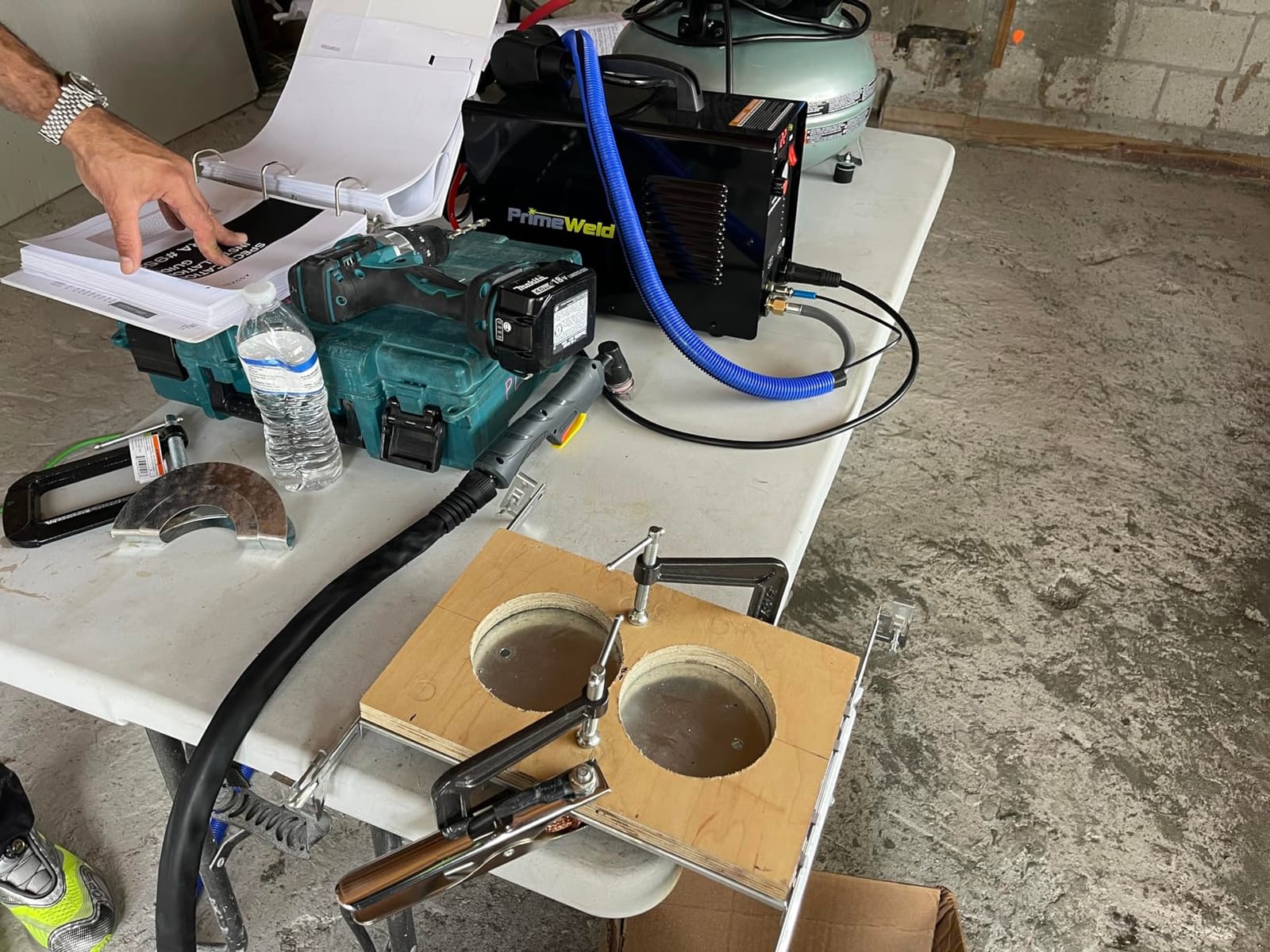
The 220V 50 amp power cord is pre-installed, and a 220V to 120V adapter is included in the box, so you can start cutting on a household outlet today and move to a 220V circuit when you need the output. The plug is a NEMA 6-50P style, the same one you will find on Hobart equipment, which means the cord is easy to replace if yours gets damaged.
Clean cut capacity is stated at 1/2 inch, and that is the figure owners confirm in practice. A few forums describe PrimeWeld machines as being particularly good on thin auto body sheet, which is consistent with an inverter platform that responds cleanly at low amperage rather than crowding the arc at the bottom of the range.
Earlier production runs drew complaints about plumbing, missing adapters, and weeping fittings, and most of those have been addressed. The complaint that remains consistent across all the years of feedback is the instruction manual, which is largely unhelpful. Plan on learning the machine from forum threads and cut tests rather than from the paperwork, and you will avoid most of the frustration that generates one-star reviews.
Who the PrimeWeld CUT50D suits best
It suits the buyer who is nervous about cheap machines, and that anxiety is the single most common thread in the hobbyist forums on this topic. People ask constantly whether they will regret an underpowered machine every time they use it, and the answer you get from owners of this PrimeWeld is usually framed around how little they have had to replace it.
It is also the right choice if warranty length is a deciding factor. Owners on hobby forums treat the multi-year warranty and a responsive service operation as a genuine reason to pick one brand over another with a better-looking spec sheet, and that is a reasonable way to think about a machine that only sells consumables for as long as you own it.
Where the PrimeWeld CUT50D disappoints
The power cord is short, and the included adapter is a convenience rather than a solution. If your 220V receptacle is more than a few feet from where you want to cut, add an extension or plan the layout before you start, because dragging a machine by its cord is a good way to damage the terminals.
Replacement torch quality can vary from the original, which is a common finding across the whole budget category rather than a fault specific to this brand. Torch leads from off-brand suppliers tend to be lighter in the jacket and thinner in the core, and a torch that gets warm near the handle is a sign to replace it rather than tolerate it. Keep the original if you can.
5. ARCCAPTAIN iControl CUT55 Pro 55A – Best for Longer Leads and App Control
ARCCAPTAIN iControl CUT55 Pro Plasma Cutter Machine, 55Amp, 120V/240V
55A IGBT output
20mm maximum cutting thickness
High frequency non-touch pilot arc
App control from 10 meters
3-year warranty
Pros
- 55A output gives reliable half inch clean cuts and three quarter inch capacity
- Non-touch pilot arc handles rusty and coated surfaces without contact
- App control saves and recalls cutting parameters
- Pre-installed regulator means setup in about a minute
- Longest leads in the group with 10 foot torch hose and ground clamp
Cons
- App dependent features add complexity for simple work
- Heavier build at 19.46 pounds than lighter competitors
- Thin material cuts need careful speed and amperage tuning
This is the feature-loaded machine in the group, and the honest framing is that the features are the reason to buy it or the reason to walk past it. On one hand you get 55 amps of output, a high frequency non-touch pilot arc, and a companion app that lets you adjust parameters and check status from up to ten meters away. On the other, several owners describe the app as more complexity than a garage job requires.
The capacity figures are where the value sits. Quality cutting thickness is 12mm, or half inch, and maximum cutting thickness is 20mm, or three quarter inch. Owners describe the step up from entry-level 50A machines as noticeable, particularly on thicker plate where the extra amperage keeps the arc stable instead of chattering.
The MCU technology upgrade gives full digital control of current and voltage, and the 2T and 4T modes run with an intelligent post-blow that scales from 5 to 10 seconds based on current. In practice that means the machine manages the air purge after the arc stops for you, which is where most consumable damage happens on cheaper machines.
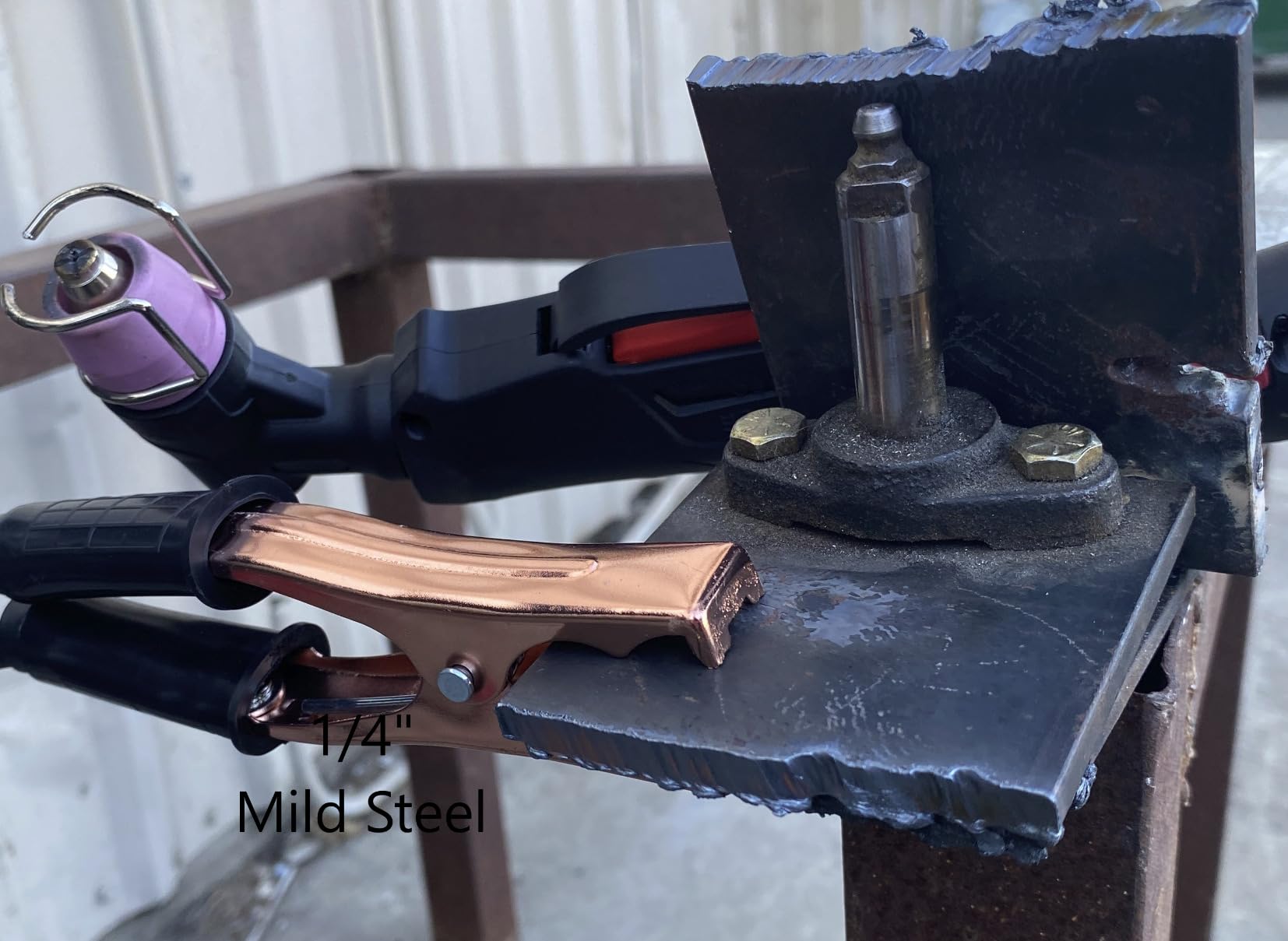
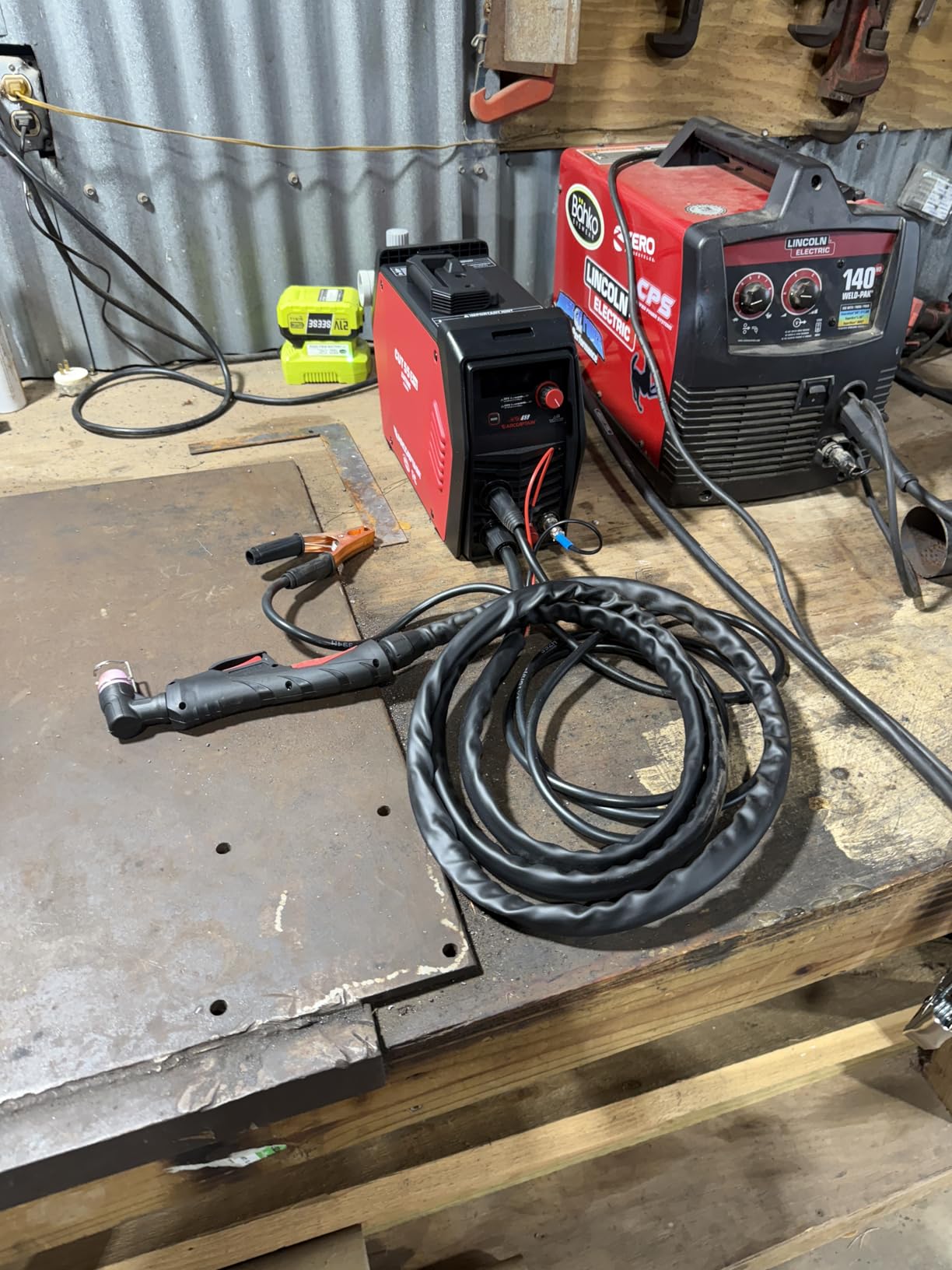
Lead length is the sleeper advantage here. The box contains a 10 foot AG60 cutting torch, a 10 foot air hose, and a 10 foot earth clamp, and every one of those is longer than the norm in this price band. For anyone cutting full-width plate or working around a vehicle, longer leads are worth more than an extra app feature.
Setup takes about a minute because the air regulator and filter are pre-installed. The smart fan cooling system keeps the internals at a stable temperature, and the chassis is ANSI certified with water and dust resistance ratings, which matters if the machine lives in a garage rather than a climate-controlled shop.
The three-year warranty is the longest stated in this roundup, and reviewers treat it as a real differentiator. It is worth pairing that with the knowledge that warranty length and warranty quality are not the same thing, so read the terms before you rely on it for a claim.
Who the ARCCAPTAIN iControl CUT55 Pro suits best
It suits someone cutting heavier plate than a basic 50A machine comfortably handles, and someone whose work area means a 10 foot torch lead genuinely helps. Structural steel, thicker trailer components, and gate or fence fabrication all sit in the range where the extra 5 amps and the extra three feet of lead pay off.
It also suits anyone who likes having data on the front panel. Owners who tune and save parameter sets for repeat jobs find real value in storing them, and a shop cutting the same profile every week will notice the time saving after a few runs. A CNC-adjacent hobbyist who wants to read voltage and current while dialing in a cut is the exact buyer this was designed for.
Where the ARCCAPTAIN iControl CUT55 Pro disappoints
It is heavier at 19.46 pounds than the 13 pound ARCCAPTAIN CUT50, and the package dimensions are large. If you are carrying the machine up stairs or into a truck bed several times a day, that is a real ergonomic cost that the feature list does not offset.
App dependency is the other complaint that comes up repeatedly. If you want plain manual controls with no phone in the loop, the extra complexity is friction you did not ask for. And on thin material, owners still need to experiment with travel speed and amperage, so the digital control does not remove the learning curve, it just gives you better numbers while you do it.
6. SILATU 65A – Best for Thick Plate on a 220V Circuit
SILATU Plasma Cutter, 65A Non-Touch Pilot Arc, 110V/220V, 4/5” Max Cut
65A at 220V
12mm cut at 40A on 110V
20mm cut at 65A on 220V
Non-touch pilot arc with adjustable PA
60% duty cycle
Pros
- 65A output at 220V approaches the capacity of machines costing far more
- Non-touch pilot arc with adjustable PA timing extends consumable life
- PT 2T and 4T modes handle mesh and long cuts
- Built-in air sensor displays pressure on the front panel
- Light 13.45 pound body with 13 foot torch and 10 foot clamp
Cons
- Requires a dedicated 40 amp or higher circuit to avoid breaker trips
- Air pressure must be adjusted manually with no automatic regulation
- Air compressor is not included
- Thick cuts need careful pressure and travel speed tuning
The SILATU is the odd one out here, and in a good way. It has the highest output in the group at 65 amps on 220V while staying light at 13.45 pounds. Owners consistently single out the power-to-price ratio as the reason to buy it, noting that the cutting capacity approaches machines costing substantially more.
Output is specified as 15 to 40 amps on 110V and 15 to 65 amps on 220V, with maximum cutting thickness of 12mm at 40 amps and 60 PSI on 110V, and 20mm at 65 amps and 70 PSI on 220V. Duty cycle is 60 percent, which is honest for the class and adequate for a shop that is not running this machine eight hours a day.
The adjustable pilot arc duration is the feature enthusiasts notice. By lengthening or shortening the pilot phase you can reduce electrode wear on long cuts, and owners who do this report noticeably better consumable life. The PT, 2T, and 4T modes cover piercing thin material, spot cutting, and sustained cutting, with post-time adjustable from 3 to 15 seconds.
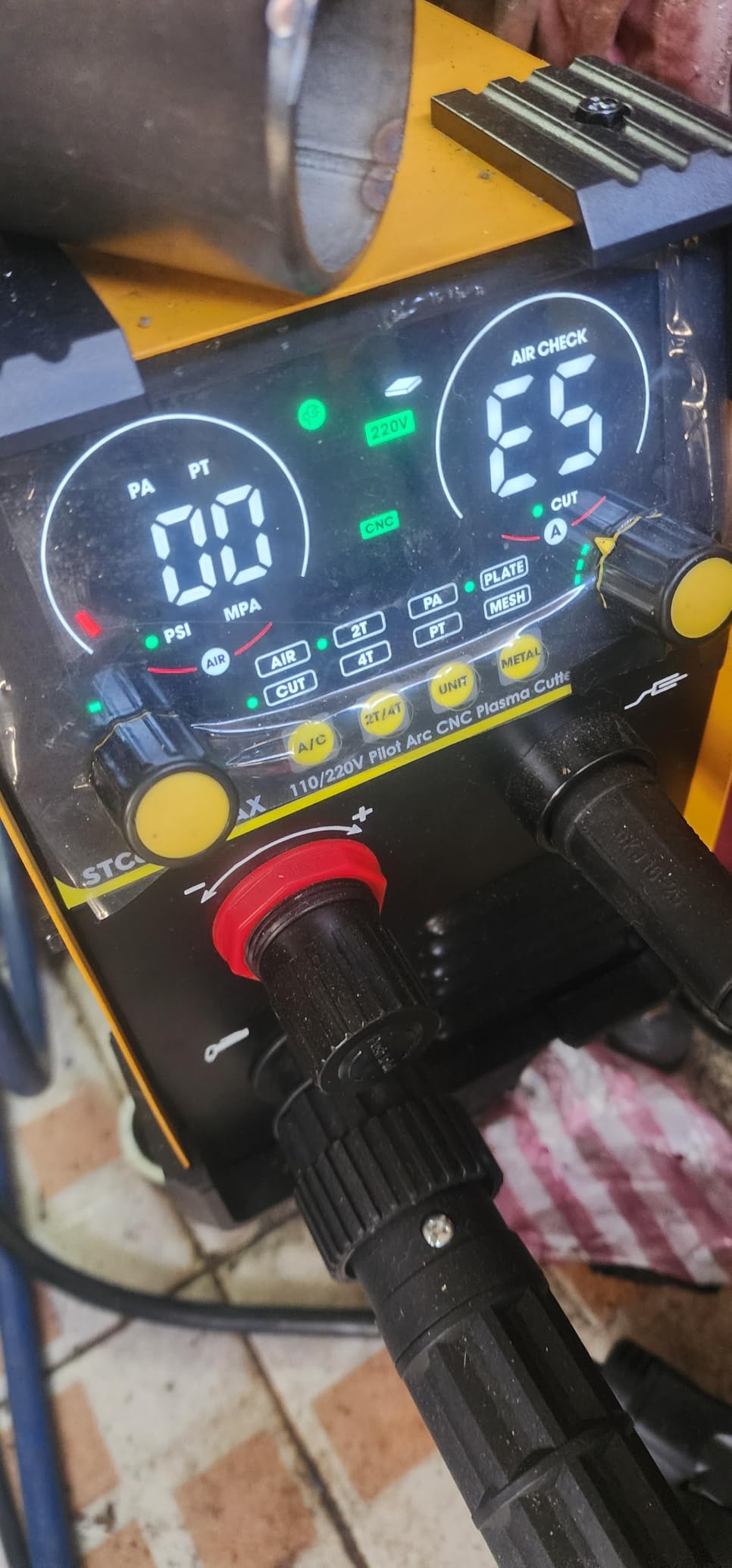
A built-in air sensor displays air pressure on the front panel alongside voltage, current, and error codes, so you can confirm the compressor is keeping up without walking back to the machine every few minutes. Recommended air is no more than 70 PSI at 250 litres per minute, which is a realistic figure for a mid-size shop compressor.
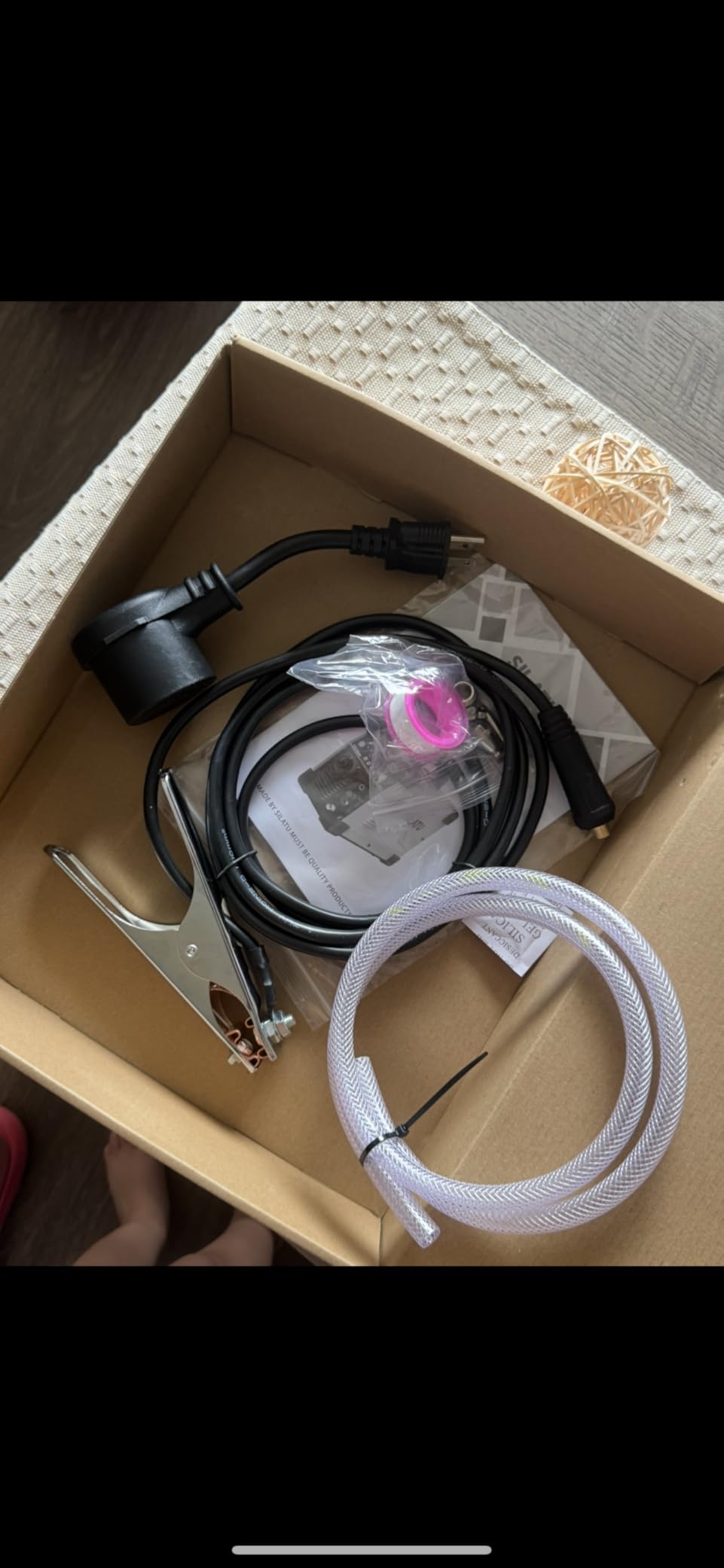
The box is well thought out for its price. You get a 13 foot AG60P torch, a 10 foot earth clamp, a 3.3 foot air hose, a voltage adapter, and a 65A machine with a 220V power plug. Warranty is one year with lifetime technical support, and in practice that support line is more useful than the one-year duration suggests.
What you are buying with this machine is throughput on thick material. Once the amperage and travel speed are right, owners report clean cuts on moderate-thickness steel, and the 20mm maximum capacity on 220V is matched at the top of this entire roundup by only one other model.
Who the SILATU 65A suits best
It suits a shop that already has a 220V circuit and a compressor that can keep up. If you cut heavier plate regularly, the difference between 50 amps and 65 amps is not a marketing line, it is a cut that goes through on the second pass instead of a cut you have to stop and re-pierce. The 13.45 pound body keeps a 65 amp machine manageable to carry around a shop.
Farm, ranch, and equipment repair work is a natural fit, because those jobs produce dirty, painted, and irregular metal rather than clean flat plate. The non-touch pilot arc and adjustable timing handle that better than a fixed-setting machine, and the front-panel air sensor saves you the trip to the compressor every few minutes.
Where the SILATU 65A disappoints
The electrical requirement is the real constraint. Owners report needing a dedicated 40 amp or higher circuit, and if your 220V outlet is a shared household circuit, the machine will trip the breaker every time you push past about 40 amps. Confirm the circuit before you buy, because installing one can cost more than the machine.
Air pressure is a manual adjustment with no automatic regulation, and the compressor is not included. Getting a clean cut on thick material takes careful pressure and travel speed tuning, and the 60 percent duty cycle means this is a machine for a shop that cuts hard but not constantly. For someone cutting a few pieces a year, the extra 15 amps will never be used.
7. GZ GUOZHI CUT-50 50A – Best for Small Shops and Cold Garages
GZ GUOZHI Plasma Cutter, 50 Amp Air Inverter Plasma Cut, 110V/220V Dual Voltage Digital Display IGBT Inverter Plasma Cutting Machine with 2T/4T/TEST Function
50A IGBT inverter
1/4 inch cut at 35A on 110V
3/4 inch cut at 50A on 220V
2T 4T and TEST modes
D-type air plug
Pros
- Reaches 50A output at the lowest cost in this roundup
- Pilot arc starts cuts on rough painted and rusty surfaces
- Compact footprint works in tight spaces
- 2T 4T and TEST functions add real flexibility
- Pre-fitted quarter inch D-type air plug makes setup quick
Cons
- Cut finish on thinner material can be uneven
- Build quality feels basic compared with premium brands
- Air pressure and amperage need careful tuning
- Only a one year manufacturer warranty
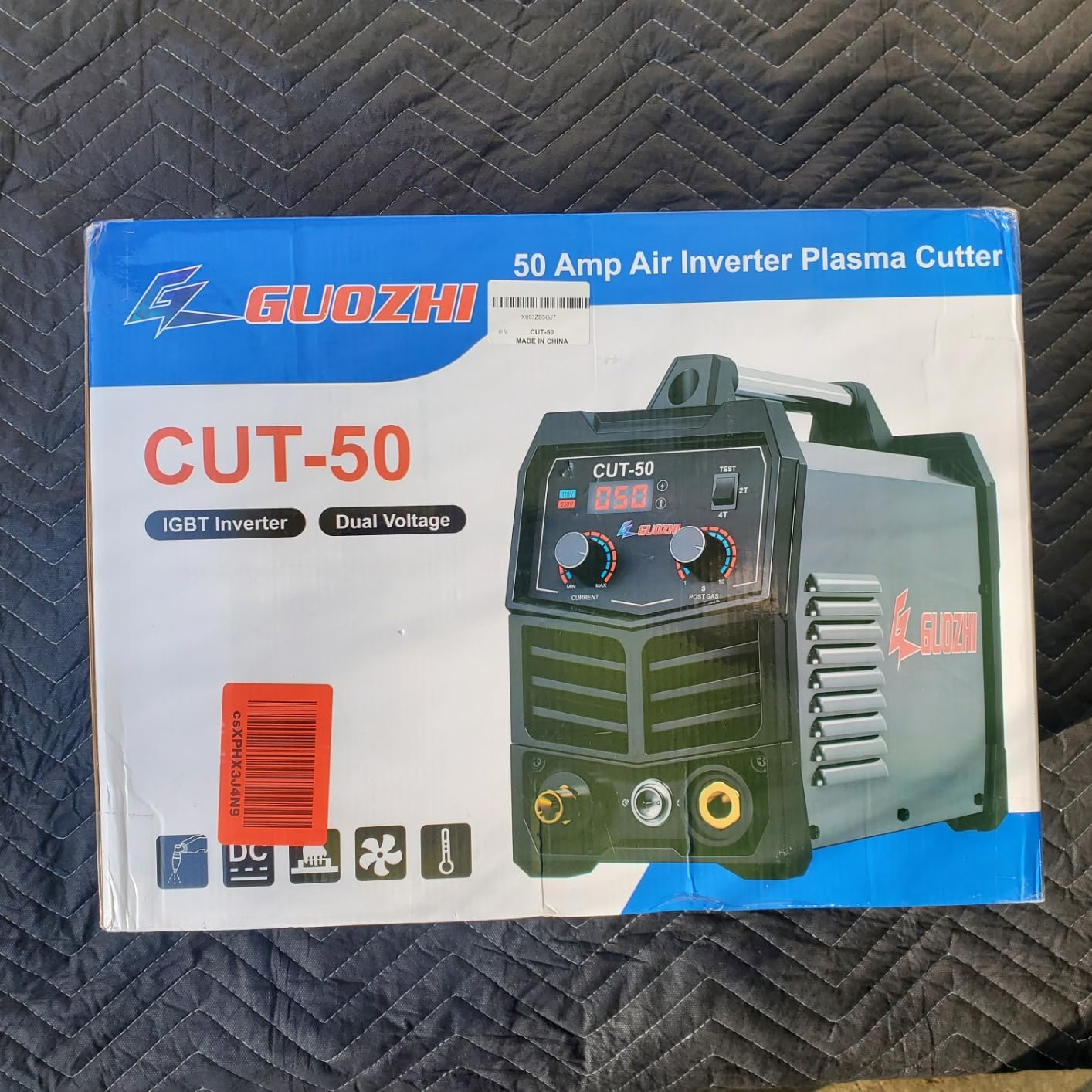
The GZ GUOZHI is the lowest-cost route to genuine 50 amp output in this roundup, and for a lot of people that is the entire question. Maximum cutting thickness is listed as a quarter inch at 35 amps on 110V and 50 PSI, and three quarter inch at 50 amps on 220V and 65 PSI, which is real capability from a machine at the bottom of the price band.
The pilot arc function is the part that makes it useful rather than merely cheap. It is designed to start cuts through rough, painted, and rusty surfaces, and owners report good results on mild and stainless steel once the settings are dialled in. For a first plasma cutter, being able to point it at a dirty frame and start cutting is worth a great deal.
Two details show the manufacturer thought about the buyer. The quarter inch industrial D-type air plug is pre-fitted, which makes the compressor connection a one-minute job, and the machine is rated to operate down to minus 20 degrees, which matters more than it sounds for anyone cutting in a garage or outbuilding through winter.
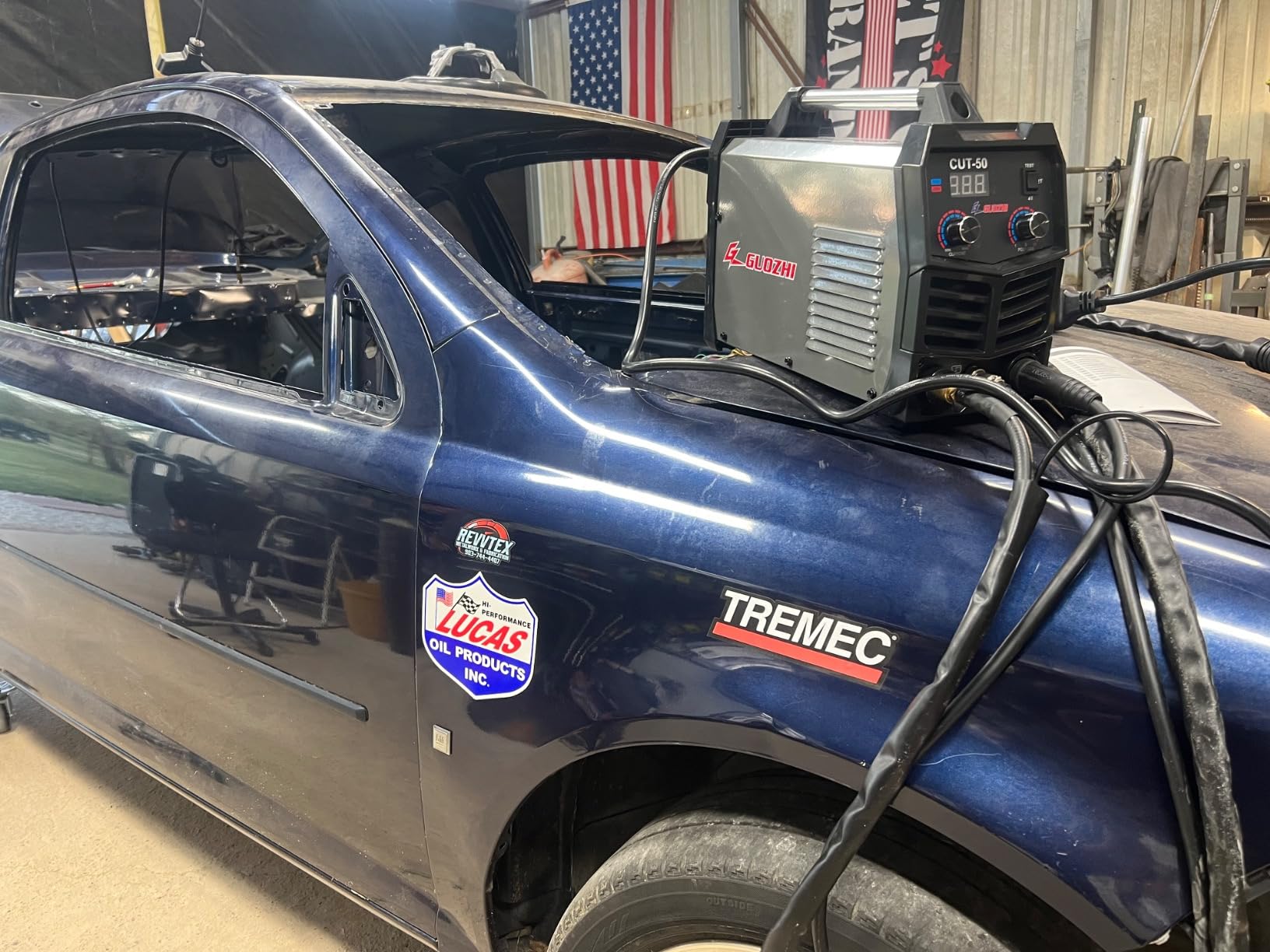
The 2T, 4T, and TEST operating functions cover spot cutting, sustained cutting, and a setting that lets you set amperage without striking an arc, which is a genuine time saver when you are moving between jobs with different material. IGBT inverter technology with 50/60 Hz high frequency output handles the switching, and there is built-in overheating and over-current protection.
There is a practical electrical note in the spec sheet worth reading twice. The breaker requirement is up to 40 amps at 110V and 30 amps at 220V, which is unusual and useful information that many listings omit. If your home shop has a 30 amp 220V circuit, this machine is specified to work within it.
Two honest caveats from the feedback. First, the cut finish on thinner material can be uneven, and that is the recurring complaint across reviews. Second, the listed weight of 19.31 pounds contradicts the lighter figure claimed in the listing copy, so if you care about portability, check the machine when it arrives rather than trusting the page.
Who the GZ GUOZHI CUT-50 suits best
It suits a first-time buyer, a student, or anyone who needs a working 50 amp machine without a large outlay. The combination of pilot arc ignition, 2T/4T/TEST modes, and a pre-fitted air plug means you can be cutting within an hour of opening the box, and the minus 20 degree rating makes it usable in an unheated garage or farm outbuilding.
It also suits anyone working within a 30 amp 220V circuit, since that breaker requirement is stated in the specification. That single fact can decide the purchase for people in older homes or rented shops who cannot easily increase their electrical capacity, and it is worth checking against your panel before you commit to a higher-amperage alternative.
Where the GZ GUOZHI CUT-50 disappoints
Build quality is the honest limit here. Owners describe the machine as feeling basic next to a PrimeWeld or an ARCCAPTAIN, and that shows up in the small things: lighter sheet metal, less refined controls, and a general sense that it will outlast you rather than the other way around. The one-year manufacturer warranty reflects that honestly.
Cut finish on thin or precise material is where you will feel the difference most, and air pressure and amperage both need careful tuning to get a clean edge. If your work is visible, decorative, or tolerance-sensitive, spend the extra money. If it is functional work on thicker material, this machine is more than adequate.
8. Reboot RBC6000D 60A – Best Low-Cost Route to 60 Amp Output
Reboot 60A Plasma Cutter Dual Voltage 120V/240V, 1/2″ Clean Cut IGBT Inverter, Portable Metal Cutting Machine with Torch & Tips – RBC6000D 2025 Upgraded (Pre-Installed Air Regulator)
60A at 240V
1/2 inch clean cut at 120V
5/8 inch at 240V
PT31 torch with spare tips
Pre-installed air regulator
Pros
- Reaches 60A at 240V at the lowest cost in this roundup
- Cuts quarter inch and thicker steel quickly and cleanly
- Compact and light enough for garage or field use
- Spare tips in the box help beginners who burn through nozzles
- Clear PSI guidance makes setup approachable for first time users
Cons
- Touch-start design can struggle to begin a cut on thicker material
- On 120V it trips household breakers above roughly 18 amps
- Torch roller guide does not stay fixed in place
- Some buyers report warranty claims being denied on early failures
The Reboot is the specification outlier of the group. It reaches 60 amps at 240V, which puts its output alongside the SILATU, at a noticeably lower cost, and cutting capacity is 1/2 inch at 120V and 35 amps, and 5/8 inch at 240V and 60 amps. For someone who wants serious output without a large outlay, that headline is genuinely attractive.
The 2025 upgraded version has the air regulator pre-installed, which removes the most tedious part of setup, and the PT31 torch is supplied with spare consumables. That matters disproportionately for beginners, because the first thing a new operator does is burn through a nozzle wondering what went wrong. The machine also carries clear PSI guidance, recommending 70 to 75 PSI, which is a help on a machine with no air gauge.
Owners report that once it is set up on a 240V circuit with the amperage dialled correctly, it cuts quarter inch and thicker steel quickly and cleanly, and the compact dimensions make it easy to move around a garage or carry out to a field job.
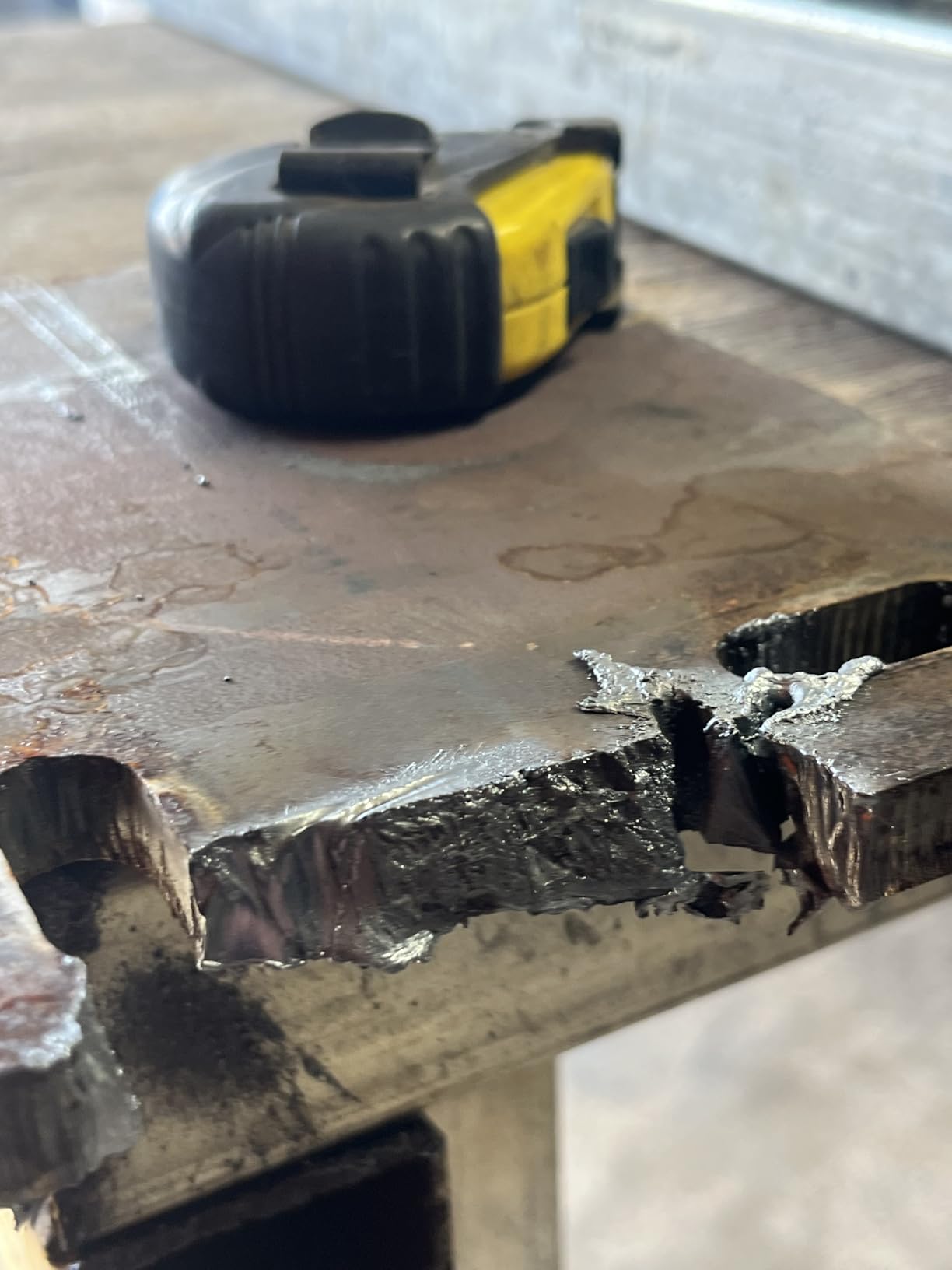
There is a real conflict in the product data that you should know about before you buy. The listing copy states an operating weight of 8.69 pounds, while the listed product weight is 14.22 pounds. Since portability is a selling point, verify the weight on arrival rather than planning your carrying strategy from the listing.
The other conflict is between the stated 2025 upgrade and the touch-start behaviour owners describe. A touch start requires the nozzle to make contact to initiate, and owners report it can stick trying to begin a cut. That is the single most common complaint, and it is the reason this machine sits at the bottom of the ranking despite its capable output.
On 120V the machine trips household breakers above roughly 18 amps, and the stated breaker requirement is 50A for 120V and 40A for 240V. That is a serious electrical requirement for a home shop, and it is the first thing to confirm. The torch roller guide not staying fixed in place is a smaller annoyance that makes straight-line cutting on a plate harder than it should be.
After-sales service is the weakest part of the picture. Multiple buyers report units failing within weeks and warranty claims being denied, along with customer support asking the same troubleshooting questions repeatedly. There is a US-based service centre with 24/7 assistance listed, and whether you get a good experience may depend heavily on the individual unit, so keep the packaging and confirm the warranty terms at purchase.
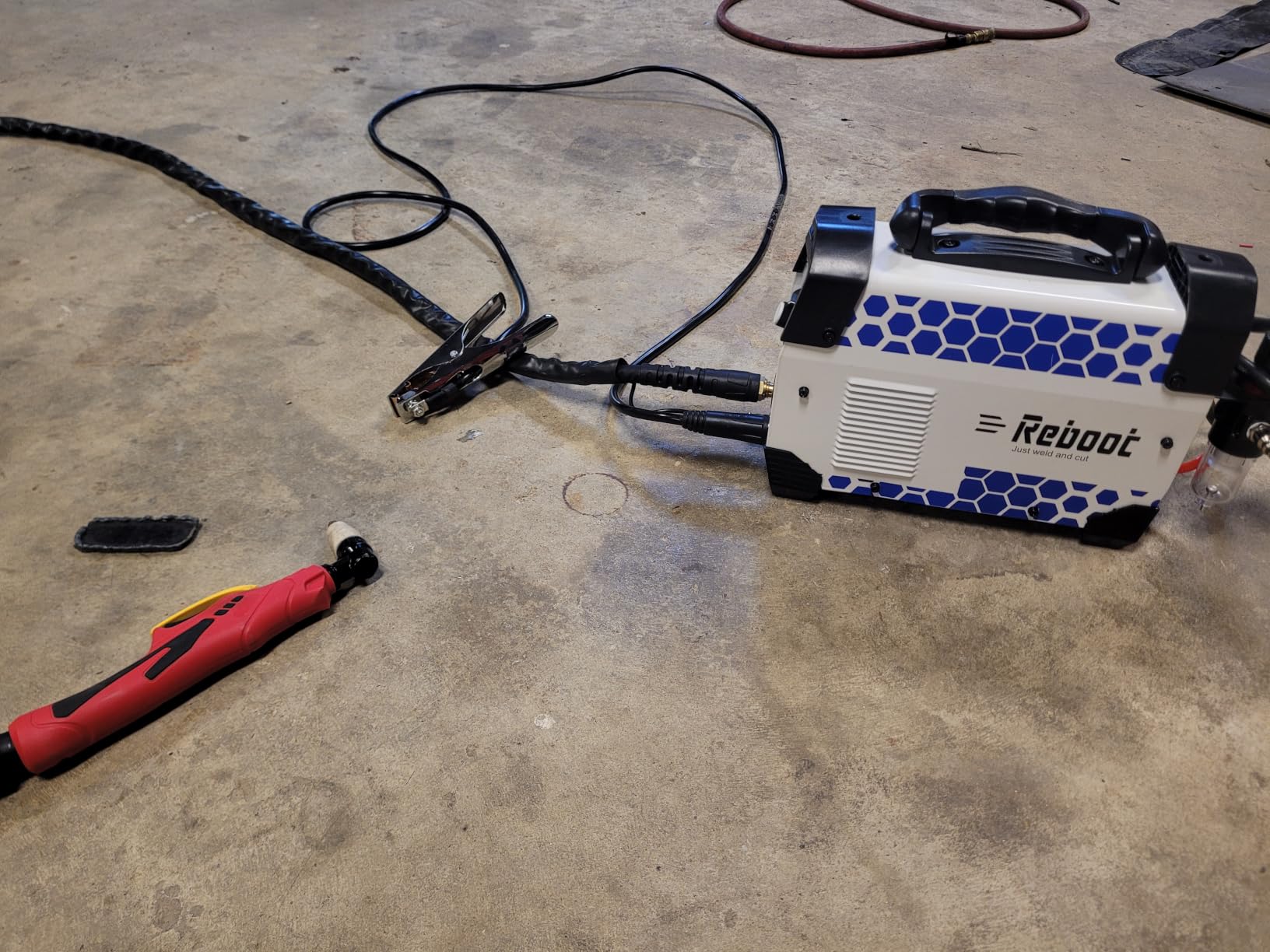
Who the Reboot RBC6000D suits best
It suits an occasional user who already has a 240V circuit and only needs serious output a few times a year. Cutting a thicker tractor component or a section of trailer frame on a Saturday, then going back to normal life, is exactly the pattern where the 60A specification earns its keep and the touch-start annoyance never becomes a real problem.
The extra tips in the box and the beginner-friendly controls also suit someone buying a first machine on a limited budget, provided they are prepared to spend an afternoon learning the machine. Someone who can cut thin and thick material and wants to stay under a very small budget will find the capability here unusual.
Where the Reboot RBC6000D disappoints
Touch-start initiation is the deal breaker for anyone doing a lot of thin sheet or decorative work, where you start the arc many times in a row and every start is a contact, a hesitation, and often a missed start. It is also the reason for most of the negative sentiment in the reviews, and it is a design choice rather than a fault you can tune out.
The warranty experience is the other concern. If you are the kind of buyer who expects a business to stand behind a product when it fails in month two, this is not the machine for you, and the extra amperage does not compensate. Between that and the 40 amp breaker requirement at 240V, the Reboot is a value proposition with clear conditions attached.
Are Cheap Plasma Cutters Under 500 Dollars Any Good?
Yes, with a caveat that surprises almost nobody. The technology behind a plasma cutter is not new and has not changed fundamentally in thirty years; what a low price removes is thermal management, build quality, and after-sales support, not the core capability. A 50 amp inverter plasma cutter at the bottom of this range will make the same cut a machine three times its cost makes, provided you give it clean dry air and a sound ground connection.
Forum owners frame the same question candidly. In one exchange, a shop owner described his budget cutter simply as working okay and being cheap, and used it in a mower shop only occasionally. That is the honest ceiling: a budget machine is a tool that does its job on a sensible duty pattern, and a poor purchase if you expect it to behave like a production unit.
The failure mode people regret is rarely the cut quality. It is buying an undersized machine and then running it at full amperage on material it was not designed for, which burns electrodes and nozzles at several times the normal rate. Match the machine to the thickest steel you actually intend to cut, keep the amperage below the advertised maximum for routine work, and the running cost stays small.
How to Choose a Budget Plasma Cutter Under 500 Dollars?
What amperage actually buys you
Amperage is the headline number and the most over-hyped one. What it really controls is how thick a material you can cut in a single pass without stalling, and the relationship is not linear. The jump from 20 amps to 30 amps roughly doubles your capacity. The jump from 50 amps to 65 amps buys you the ability to push through 4/5 inch material without pausing to re-pierce, which matters for heavy plate and for anyone whose cuts are structural.
Under 50 amps, you are choosing a machine for sheet metal, thin structural work, and hobby fabrication. Between 50 and 55 amps sits the sweet spot for almost every garage job, and every machine in the 50A and 55A group here can hold a clean half inch cut on 220V. At 60 amps and above, you are buying capacity you may never use, along with a heavier power draw and a bigger circuit requirement.
Ask yourself what the thickest material you will realistically cut is, and then buy the machine that handles it with a margin. Most regret in this category comes from buying for the material you might cut rather than the material you do cut.
How to read the four thickness ratings
Listings quote four different thickness numbers and the differences between them explain a lot of confusion. The rated cut thickness is the material you can cut at maximum speed with a clean edge. The recommended cut thickness is a slightly lower, more realistic number that accounts for normal operator conditions. The clean cut thickness is what you can cut without significant dross on the bottom. The severance thickness is the absolute limit, where the cut goes through but slowly and messily.
A 55 amp machine quoting 5/8 inch clean cut capacity can generally get through three quarter inch material, but the kerf will be wider, the travel slower, and the dross heavier. If a seller quotes only one number, assume it is the severance figure, which is the marketing-friendliest and the least useful. When you see two numbers, the smaller one is the one to plan your work around.
Pilot arc versus high-frequency start
Both start the arc without touching the work, but they do it differently and the difference has consequences. A non-touch pilot arc sends a low-current arc through the air to ionize it, then transfers to the main cutting arc. A high-frequency start uses a high-voltage burst that will start the arc on any surface but generates electrical noise along the way.
For a home shop, we recommend the non-touch pilot arc. It extends electrode life, works reliably on painted and rusty surfaces, and does not interfere with radios, computers, or shop lights. The catch is that high-frequency start machines are the only realistic option for a CNC rig, so if you plan to automate, you need to accept the noise or buy a machine designed for it. No budget machine in this roundup is marketed as CNC compatible, and we would not assume otherwise without checking the manufacturer.
Air supply is the real specification
Plasma is compressed air, and the machine will not out-cut a compressor that cannot keep up. A rough rule for this class: a 30 to 40 amp setting wants about 3.5 CFM at 60 to 70 PSI, while a 50 to 65 amp setting wants 6 to 8 CFM at 70 to 80 PSI. Tank size matters less than sustained free-air delivery, because what kills the cut is the compressor cycling rather than the reservoir running dry.
A small pancake compressor in a suburban garage will struggle at full output on these machines. If you are cutting at 50 amps or above, budget for a compressor in the 4 to 5 gallon tank range with at least 4 CFM at 90 PSI, or accept that you will be cutting below the machine’s rating. Install a water separator and an inline filter downstream of the tank, and check the fittings with soapy water before your first cut, because a leak at the torch costs you more in wasted gas than the separator ever does.
Dual voltage and the breaker you actually need
This is the detail that blindsides home buyers more than any other. Running a 50 amp machine on 220V generally means a 50 amp breaker, and many home shops and a lot of older houses do not have one. The GZ GUOZHI CUT-50 specifies up to 40 amps at 110V and 30 amps at 220V, the SILATU wants a dedicated 40 amp or higher circuit, and the Reboot states 50 amps for 120V and 40 amps for 240V.
Before you buy, check what your electrical panel actually provides and whether the outlet is on a dedicated circuit. If you only have a 20 amp household receptacle, a dual-voltage machine still works, but you are limited to roughly 20 to 35 amps of output, and a small shop compressor will be your real ceiling. Installing a 50 amp circuit can cost more than the cutter, which makes the cheaper machines a better fit for a lot of home shops.
What changes as you step up the tiers
Around the 160 dollar mark you are buying the fundamentals: a 50 amp IGBT inverter, pilot arc ignition, and 2T/4T modes. That tier is genuinely capable and it is where the GZ GUOZHI and the Reboot sit. The gains at this level are mostly about build quality and cut finish, not capability.
Around the 180 to 200 dollar mark you start seeing metal-cased air filters, better digital displays with fault codes, and shoulder straps. The TOOLIOM and the ARCCAPTAIN CUT50 are in this band, and both are the better all-round buys for a small extra outlay.
Between 250 and 300 dollars you gain pre-installed regulators and filters that save real setup time, longer leads, and machines like the LOTOS and the PrimeWeld that have enough review volume to trust. This is where we would spend the money, because the setup and support advantages compound over the life of the machine.
Near 400 dollars you reach machines with app control, 55 amps, three-year warranties, and the longest torch leads in the category, represented here by the ARCCAPTAIN CUT55 Pro. The gain is real but incremental, and the power requirements step up with it.
Consumables and the running cost
Consumables are the reason nobody worries about the sticker price. The electrode and nozzle set for a standard AG60 or PT31 torch costs a fraction of what a branded set from a commercial machine costs, and owners consistently point out that consumables for budget machines are cheap enough to replace on principle rather than wait. Replacing a nozzle when the cut starts to degrade usually restores full performance.
The real cost driver is using the wrong amperage and air pressure. A nozzle and electrode combination that is oversized for the material burns through quickly, and the arcing damage is not always visible until the cut starts to sputter. If you are replacing consumables every few hours, the machine is set wrong, not defective. Expect a set to last several hours of intermittent hobby use and considerably less on a production schedule.
Safety: arc eye, fumes, and PPE
Plasma cutting produces an arc that is far brighter than welding arc, and it can damage your eyes in a fraction of a second without a proper filter. Wear welding safety glasses rated for plasma cutting, not ordinary safety glasses, and never rely on looking through a dark shop window, a camera screen, or a welding helmet set too dark. The light passes through open windows and can harm people nearby, so screen the work area.
The fume plume is the second hazard. Mild steel cutting produces metal oxides including hexavalent chromium, and the extraction requirements are governed by workplace exposure rules, so outdoors or with proper local extraction is the answer. Ventilation matters more than respirators for most home setups, and cutting galvanised or plated material deserves particular caution. Use gloves, protect your skin from spatter, and keep a fire blanket nearby, because plasma cutting on a table is an open flame risk in a garage full of combustibles.
New versus used at this budget
Used is a real option and forum buyers use it regularly. One thread recommends watching for a used Thermal Dynamics Pak 38XL at this budget, noting that it runs on both 110V and 220V, and another owner described buying a used 60 amp cutter and reporting that it cut up to an inch of steel with no regrets. A commercial machine in that class often has better consumable availability and better documentation than a new budget unit, and at this price a used one can be a better buy per dollar.
What you give up is warranty coverage, which matters most for machines with a known after-sales weakness. If you buy used, check that the machine powers on, that the pilot arc starts, that the ground clamp and torch are the correct length, and that the consumable model is still sold. Do not assume consumables for an older machine are still available, which is the main risk of buying a discontinued name.
Who these machines are not for
None of these machines is appropriate for production work cutting inch-and-a-half plate, and the duty cycle ratings tell you why. Several are rated at 60 percent, which means a 10 minute cut followed by a 7 minute cool-down. Running them continuously will trip the thermal protection and shorten their lives.
They are also not the right tool for abrasion-resistant plate like AR500. That steel is designed to resist cutting, and the nozzle life on it in a budget machine drops to a small number of minutes, which turns a per-hour cost into a per-cut cost. If you cut AR500 regularly, you need a machine in the next tier up with a high-current, long-nozzle configuration designed for it. For occasional AR500 work, cut it with a bandsaw or abrasive wheel instead.
If your project list is mostly one inch plate or heavier structural steel, save up and stretch past this budget. Machines in the Hypertherm Powermax30 XP and Miller Spectrum 875 class cost more, and they are worth it for heavy plate because of consumable life, piercing capability, and the control you get over gouging and surfacing. Stretching is only worth it if you will actually use the difference.
Frequently Asked Questions
Who makes the best plasma cutter for the money?
For most buyers at this budget, PrimeWeld CUT50D has the strongest overall combination of 4.7 star average rating and owner satisfaction with warranty support, while the LOTOS LTP5505D 55A has the largest review pool and the most consistent cut quality reports. The ARCCAPTAIN CUT50 delivers the most capability for the least money if you can handle a short settings learning curve.
Are cheap plasma cutters any good?
Yes. The core plasma process is decades old, so a low price removes thermal management, build quality, and after-sales support rather than cutting capability. A 50 amp inverter machine at the bottom of this range will make the same cut a far costlier machine makes, provided you supply clean dry air and a sound ground connection. Buy for the thickest material you will actually cut, not what you might cut.
What is the best plasma cutting machine for home use?
For a home shop on a 20 amp household circuit, a dual-voltage 50A machine such as the ARCCAPTAIN CUT50 or the LOTOS LTP5505D is the practical answer, because both drop to reduced output on 110V and step up when you have a 220V circuit. If your panel cannot support a 50 amp breaker, choose a lower-output machine and cut below its headline rating rather than tripping circuits.
Which brand of plasma cutter is considered the best?
Among budget brands, PrimeWeld is most often cited for customer service and warranty responsiveness, LOTOS for cut quality and review volume, and ARCCAPTAIN for feature-per-dollar. If your work reaches heavier plate or you value gouging control, professional benchmarks such as the Hypertherm Powermax30 XP and the Miller Spectrum 875 sit above this budget and justify the step up.
What air compressor do I need for a plasma cutter?
A 30 to 40 amp setting needs roughly 3.5 CFM at 60 to 70 PSI, while a 50 to 65 amp setting needs about 6 to 8 CFM at 70 to 80 PSI. Tank size matters less than sustained free-air delivery. Add a water separator and inline filter downstream of the tank, and check every fitting with soapy water before your first cut.
What is the average lifespan of a plasma cutter?
Lifespan depends far more on duty cycle, air quality, and consumable discipline than on the purchase date. Budget inverter machines used for hobby work with clean dry air and regular nozzle replacement commonly run for many years. Continuous production use, wet air, and running above the recommended amperage for the material are what shorten a machineu0026apos;s life, and they are all avoidable.
Our Final Verdict on Plasma Cutters Under 500 Dollars in 2026
Eight machines, one clear winner. The LOTOS LTP5505D is the plasma cutter under 500 dollars we would buy first, because its non-touch pilot arc, automatic dual voltage, 5/8 inch clean cut, and deep well of owner feedback make it the machine least likely to disappoint someone cutting dirty metal in a driveway at the end of a long week.
For the best value in the group, the ARCCAPTAIN CUT50 delivers 50 amps, a 1/2 inch clean cut, and the most informative front panel here at a cost most first-time buyers can absorb. If support is what worries you most, the PrimeWeld CUT50D has the highest average rating in the roundup and the strongest owner-reported warranty service. For heavy plate on a 220V circuit, the SILATU 65A reaches 20mm at only 13.45 pounds. For the smallest outlay, the GZ GUOZHI CUT-50 gets 50 amps into a garage, and the Reboot RBC6000D reaches 60 amps if you have the circuit for it.
Two things decide more than the brand does: the compressor you already own and the amperage of the circuit it plugs into. Sort those out first, and every machine in this roundup will serve you well. Prices for this category move constantly, so check the current figure on the listing before you order, and read the last reviews on the exact model you are buying to see whether the early complaints were addressed in later production.