
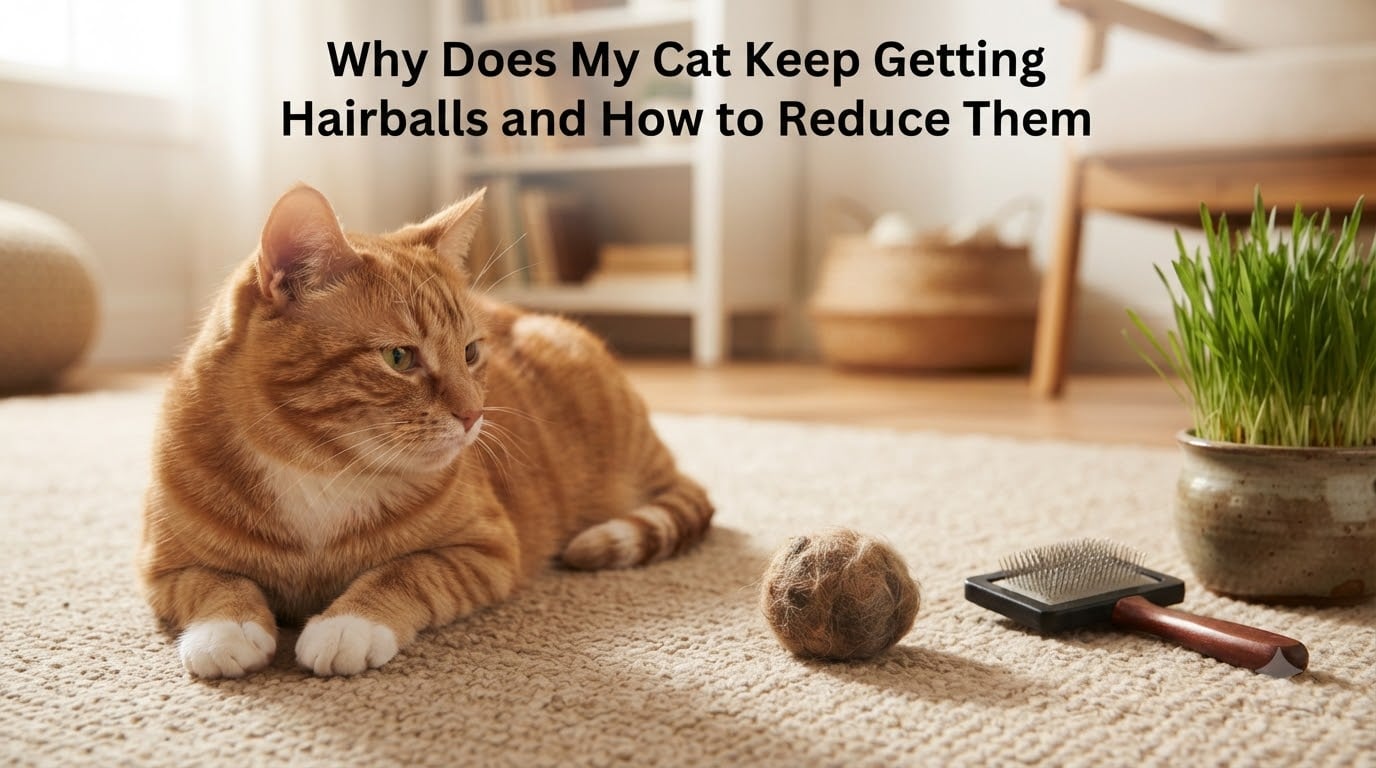
That 3 a.m. hacking sound is one most cat owners know all too well. You hear the gagging, the retching, and then the unmistakable sight of a hairball on your carpet. If you are wondering why does my cat keep getting hairballs and how to reduce them, you are in the right place.
A hairball (technically called a trichobezoar) is a clump of undigested hair that forms in a cat’s stomach when swallowed fur accumulates instead of passing through the digestive tract. Occasional hairballs, around once every week or two, are considered normal for healthy cats. But if your cat is producing them more frequently than that, something else may be going on.
I have spent years working with cat owners who deal with this exact problem, and the good news is that most hairball issues can be reduced significantly with a few targeted changes. In this guide, I will walk you through why cats get hairballs, when you should worry, and the practical steps you can take starting today to reduce them.
Table of Contents
What Are Hairballs and Why Do Cats Get Them?
Hairballs are the byproduct of a completely natural behavior: grooming. When cats clean themselves, their tongues do something remarkable. The surface of a cat’s tongue is covered in tiny backward-facing hooks called papillae. These hook-like structures catch loose fur as the cat licks its coat.
Instead of spitting that fur out, the cat swallows it. Most of the time, this swallowed hair passes through the digestive tract and exits in the litter box without any problem. But keratin, the protein that makes up hair, is indigestible. When too much accumulates in the stomach, it clumps together and forms a hairball.
The cat’s body has only one way to get rid of that clump: bringing it back up. The hairball passes from the stomach through the esophagus and out the mouth. This is the coughing, gagging, and retching process you hear before a hairball appears on your floor.
The resulting hairball is usually cylindrical rather than round, because it takes the shape of the esophagus as it comes up. It typically measures about an inch long and has a dark, matted appearance from stomach fluids and bile.
So in short, cat hairballs happen because cats groom themselves constantly, and their tongues are designed to capture loose fur. The more a cat grooms, the more fur it swallows, and the more likely hairballs become.
Why Does My Cat Keep Getting Hairballs?
If your cat seems to produce hairballs constantly, several factors could be at play. Some cats are simply more prone to them than others, and understanding why can help you target the right solution.
Breed and Coat Type
Long-haired breeds like Persians, Maine Coons, and Ragdolls naturally swallow more fur during grooming. Their long coats shed more, and the loose hair has farther to travel through the digestive system. These breeds almost always need extra grooming help from their owners.
Excessive Grooming
Some cats groom compulsively, far beyond what is needed for basic cleanliness. This can be triggered by stress, anxiety, boredom, or even pain. A cat that licks itself for hours each day will inevitably swallow more fur than its digestive system can handle. If your cat has started over-grooming recently, think about what changed in its environment.
Seasonal Shedding
Cats shed more heavily during spring and fall as their coats adjust to changing temperatures. During these peak shedding seasons, even short-haired cats can develop more hairballs. I have noticed this pattern clearly with my own cats, and many owners report the same spike during seasonal transitions.
Underlying Health Issues
Sometimes frequent hairballs point to a medical problem. Inflammatory bowel disease, food allergies, and even flea infestations can cause increased grooming or interfere with normal digestion. A study published by the National Institutes of Health found that flea infestation is one of the most common drivers of excessive grooming behavior in cats.
If your cat has suddenly started producing more hairballs without any obvious cause like seasonal shedding, it is worth discussing with your veterinarian. The hairballs may be a symptom rather than the primary problem.
Age and Mobility
Older cats sometimes develop more hairballs as their digestive systems slow down with age. Arthritis can also make it harder for senior cats to groom effectively, leading to mats and tangles that shed in larger clumps when they do manage to groom.
Signs Your Cat Has a Hairball
Most cat owners recognize the hairball routine, but the signs are not always obvious. Knowing what to look for can help you distinguish between a routine hairball and a more serious problem.
The classic signs include:
Persistent coughing, hacking, or gagging sounds
Retching that may last several minutes before the hairball appears
A cylindrical mass of matted fur on the floor, often with a yellowish or brown tint
Reduced appetite for a short period before the hairball comes up
Constipation or reduced litter box output in the days leading up to a hairball
These symptoms typically resolve once the hairball is expelled. If your cat keeps hacking but nothing comes up, or if these symptoms persist for more than a day, that is a different situation entirely and one you should take seriously.
When Are Hairballs Normal vs. When to Worry
This is one of the most common questions I hear from cat owners, and it is critical to get right. Knowing the difference between a normal hairball and a dangerous situation can literally save your cat’s life.
What Is Normal
For most healthy cats, producing a hairball once every week or two is considered normal. Some cats, particularly long-haired breeds, may produce them slightly more often without cause for alarm. As long as the cat is eating, drinking, and acting normally between episodes, occasional hairballs are just part of being a cat.
Red Flags That Should Concern You
Call your veterinarian if you notice any of these warning signs:
Hairballs more than once or twice a week on a regular basis
Vomiting food or bile instead of hairballs
Lethargy or unusual tiredness
Loss of appetite lasting more than 24 hours
Constipation or no bowel movements for over two days
A swollen or hard abdomen
Repeated hacking or gagging that produces nothing
Diarrhea or visible distress
These symptoms can indicate an intestinal blockage, which is a medical emergency. A large hairball can obstruct the digestive tract, preventing food and water from passing through. Without treatment, this can become life-threatening.
The key distinction is simple: if your cat produces an occasional hairball and otherwise acts completely normal, you are fine. If your cat seems sick, stops eating, or cannot pass anything, get to a vet right away.
How to Prevent Hairballs in Cats?
Reducing hairballs comes down to managing how much fur your cat swallows and helping what does get swallowed pass through the digestive system. Here are the most effective methods I have found, ranked roughly by impact.
Brush Your Cat Daily
This is the single most effective thing you can do. If you remove loose fur with a brush before your cat can swallow it during grooming, you directly reduce the amount of hair entering the digestive tract. For long-haired cats, daily brushing makes a dramatic difference. Even short-haired cats benefit from a few brushing sessions per week.
Use the right tool for your cat’s coat. A slicker brush works well for most cats, while a deshedding tool like a Furminator is excellent for removing the loose undercoat. For long-haired breeds, a wide-toothed comb helps prevent tangles that would otherwise break off and get swallowed.
Switch to a Hairball Formula Food
Many cat food brands offer hairball control formulas. These foods contain higher levels of fiber, which helps bind hair and move it through the digestive tract instead of letting it accumulate in the stomach. Some also include omega-3 and omega-6 fatty acids that improve coat health and reduce shedding.
When switching foods, do it gradually over seven to ten days by mixing the new food with the old. Sudden diet changes can cause digestive upset that makes hairball problems worse, not better.
Add Fiber to the Diet
If you do not want to switch foods entirely, you can supplement your cat’s current diet with fiber. A teaspoon of plain canned pumpkin (not pumpkin pie filling) mixed into wet food a few times a week provides gentle fiber that helps move hair through the digestive tract. Some owners also use psyllium husk powder in small amounts.
Encourage Hydration
Dehydration makes hair harder to pass through the intestines. Cats are notorious for not drinking enough water, so consider adding a water fountain to encourage more drinking. Feeding wet food instead of dry kibble also increases your cat’s overall moisture intake significantly.
Try Cat Grass
Cat grass, usually grown from oats, wheat, or barley seeds, gives cats a natural source of fiber. Many cats enjoy nibbling on it, and the roughage helps their digestive system process swallowed fur. You can grow cat grass indoors in small pots year-round. This is a remedy that comes up constantly in cat owner communities, and many people swear by it.
Use Hairball Gels or Pastes
Commercial hairball remedies come in gel or paste form and typically contain petroleum jelly or mineral oil as the active ingredient. These lubricate the digestive tract, helping hair pass through rather than accumulating. Most are flavored to appeal to cats, though some cats refuse them. You can smear a small amount on your cat’s paw, and they will lick it off while cleaning themselves.
Discourage Excessive Grooming
If your cat grooms compulsively, address the root cause. Provide more enrichment through play, puzzle feeders, and climbing spaces. If you suspect anxiety, talk to your vet about calming strategies. Reducing the grooming behavior reduces the amount of fur swallowed.
Control Fleas and Parasites
Flea infestations cause intense itching, which leads to excessive grooming and more swallowed fur. Keep your cat on a regular flea prevention program year-round. This simple step eliminates one of the most common drivers of over-grooming.
Natural Remedies for Hairballs
Many cat owners prefer to start with natural approaches before reaching for commercial products. Based on what I have seen in cat owner communities and veterinary recommendations, here are the natural remedies that get the best results.
Canned pumpkin: One teaspoon of plain canned pumpkin provides soluble fiber that helps move hair through the digestive tract. Most cats accept it mixed into wet food.
Fish oil supplements: Omega-3 fatty acids from fish oil improve coat health and reduce shedding. A small amount added to food daily can make a noticeable difference over several weeks.
Cat grass: As mentioned above, fresh cat grass provides natural fiber and gives cats something safe to chew on instead of your houseplants.
Petroleum jelly: A dab of plain petroleum jelly on your cat’s paw works the same way as commercial hairball gels. The cat licks it off while grooming, and it coats the digestive tract. Use about half a teaspoon once or twice a week.
Butter: A small amount of unsalted butter can help lubricate the digestive tract. Use no more than half a teaspoon a few times a week, since too much fat can cause diarrhea.
One important note: natural does not always mean safe in unlimited quantities. Stick to small amounts and introduce new remedies gradually. If your cat has any existing health conditions, check with your vet before adding supplements.
How to Brush a Cat That Hates Being Brushed?
This is a problem I hear about constantly. Many cat owners know they should brush their cat but give up because the cat fights it every time. If your cat runs at the sight of a brush, here is a step-by-step approach that actually works.
Step 1: Choose the right tool. Some cats hate slicker brushes but tolerate rubber grooming gloves. A grooming glove feels like petting to the cat, and the rubber nubs catch loose fur as you stroke.
Step 2: Start slow. Leave the brush near your cat’s favorite sleeping spot for a few days so it becomes a familiar object. Let the cat sniff it and investigate on their own terms.
Step 3: Pair with treats. Place a treat near the brush, then gently touch the brush to the cat for just a few seconds while they eat. Gradually increase the brushing time over several sessions.
Step 4: Brush in short sessions. Aim for two to three minutes at a time, once or twice a day. Short, positive sessions work far better than long, stressful ones.
Step 5: Focus on the areas cats shed most. The back, sides, and base of the tail produce the most loose fur. Do not worry about getting every spot.
Step 6: Try grooming during sleep. Many cats accept brushing more readily when they are drowsy or half asleep. Gentle strokes can feel like part of a comfortable grooming routine.
Patience is the key here. It may take weeks, but most cats can learn to tolerate or even enjoy brushing if you build the association slowly and positively.
When to See a Vet About Hairballs?
Knowing when to seek veterinary care is the most important thing in this entire article. While most hairballs are harmless, an intestinal blockage from a hairball can be fatal without treatment.
Contact your veterinarian immediately if your cat shows any of these emergency signs:
Repeated vomiting without producing a hairball
Abdominal swelling or a hard, painful belly
Complete loss of appetite for more than 24 hours
Lethargy, weakness, or hiding behavior
No bowel movements for two days or more
Difficulty breathing
Dehydration (check by gently pinching the skin between the shoulder blades; if it does not snap back immediately, your cat may be dehydrated)
Your vet can take X-rays or perform an ultrasound to determine if a hairball is causing a blockage. In mild cases, they may administer laxatives or fluids to help the hairball pass. In severe cases, surgery may be required to remove the obstruction.
If your cat frequently produces hairballs and you cannot seem to reduce them with home care, schedule a vet visit regardless. As I mentioned earlier, persistent hairballs can signal an underlying condition like inflammatory bowel disease, food allergies, or thyroid issues that need medical treatment.
Frequently Asked Questions
What can I give my cat that throws up a lot due to hairballs?
You can give your cat a commercial hairball gel or paste, which typically contains petroleum jelly or mineral oil to lubricate the digestive tract. Natural options include a teaspoon of plain canned pumpkin for fiber, a small amount of fish oil for coat health, or a dab of petroleum jelly on the paw. Hairball formula cat food with added fiber also helps. If vomiting persists despite these measures, consult your veterinarian.
How often is too often for a cat to throw up a hairball?
Producing a hairball once every week or two is considered normal for most cats. If your cat throws up hairballs more than once or twice a week on a regular basis, that is too often and warrants investigation. Frequent hairballs can indicate excessive grooming, seasonal shedding, or an underlying health issue like inflammatory bowel disease or food allergies. Consult your vet if the frequency increases suddenly.
What food helps cats pass hairballs?
Hairball formula cat foods are designed with higher fiber content to help move hair through the digestive tract instead of accumulating in the stomach. These foods often contain added omega fatty acids that improve coat condition and reduce shedding. Wet food is also beneficial because it increases hydration, which keeps the digestive system functioning smoothly. You can also supplement regular food with a teaspoon of plain canned pumpkin for extra fiber.
How do you get rid of hairballs naturally?
Natural hairball remedies include daily brushing to remove loose fur before the cat swallows it, feeding cat grass for natural fiber, adding a teaspoon of plain canned pumpkin to food, supplementing with fish oil to reduce shedding, and using a small amount of petroleum jelly on the paw to lubricate the digestive tract. Encouraging hydration with a water fountain or wet food also helps hair pass through the digestive system.
Conclusion
Understanding why does my cat keep getting hairballs and how to reduce them comes down to two things: managing how much fur your cat swallows and helping what does get swallowed pass through safely.
The most effective combination for most cat owners is daily brushing with the right tool, a fiber-rich diet or hairball formula food, and adequate hydration. Natural remedies like pumpkin, cat grass, and fish oil can give you an extra edge without relying on commercial products alone.
Remember that occasional hairballs are normal. But if your cat’s hairball frequency suddenly increases, or if you notice any warning signs like appetite loss, lethargy, or unproductive gagging, do not wait. Call your veterinarian right away, because intestinal blockages can become life-threatening quickly.
Start with one change at a time, give it a few weeks to show results, and you will likely see a noticeable reduction in those middle-of-the-night hacking sessions. Your cat, and your carpets, will thank you.