
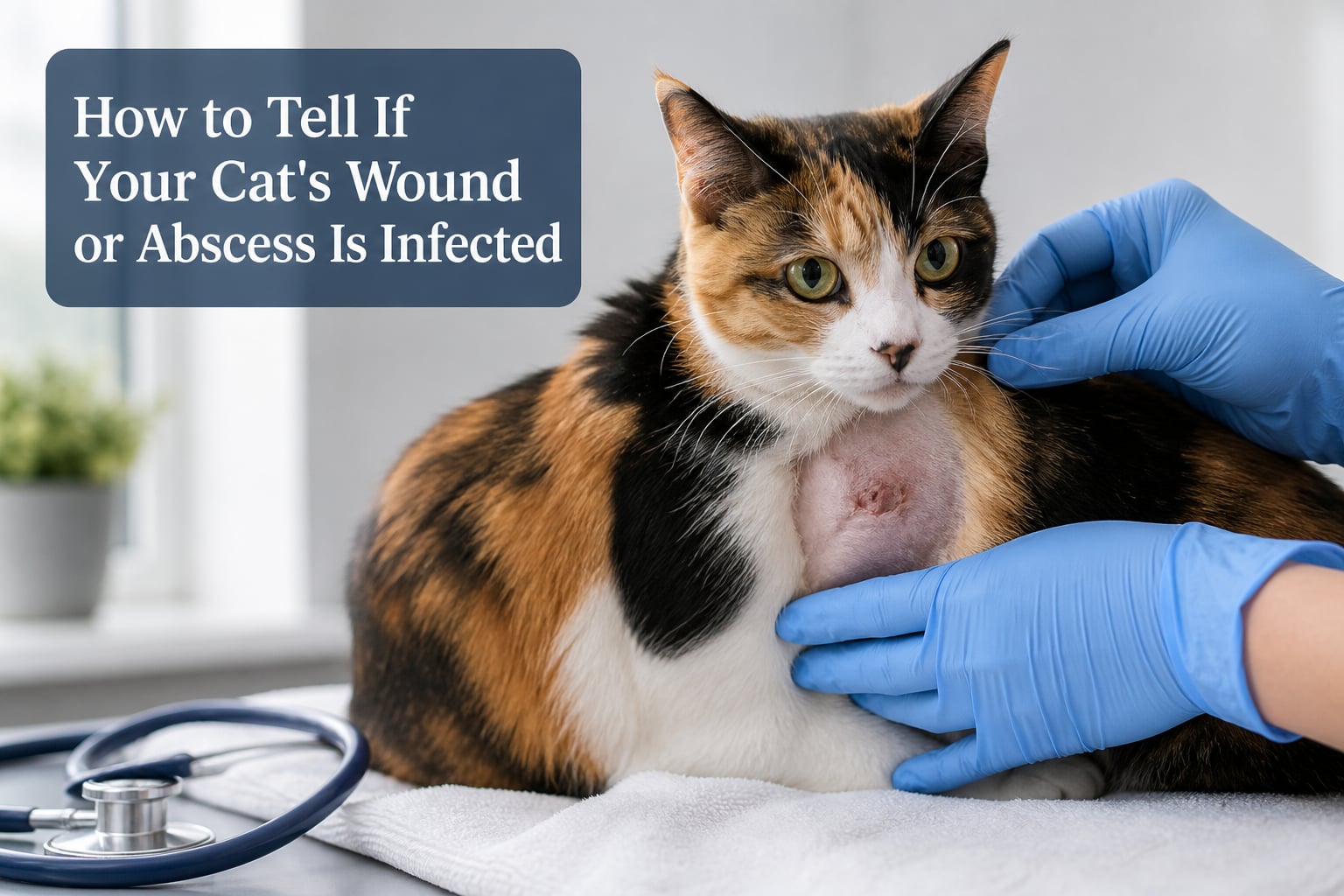
I noticed a wet patch on my cat’s shoulder after a midnight cat fight years ago, and within two days it turned into a swollen, oozing bump the size of a walnut. That was my first real lesson in how fast a cat wound infected with bacteria can turn into an abscess, and how important it is to catch the warning signs before things get serious.
If you’re reading this, chances are you’ve spotted something on your cat and you’re not sure whether it’s just a scab or something deeper. Learning how to tell if your cat’s wound or abscess is infected matters because cats hide pain so well that by the time obvious symptoms appear, the infection has often been brewing for days. In this guide, I’ll walk you through the visual signs, behavioral changes, fever checks, healing timeline, and emergency red flags our team has learned from caring for cats and reviewing veterinary guidance over the years.
Table of Contents
What Is a Cat Wound Abscess and How Does Infection Start?
A cat wound abscess is a pocket of pus that forms under the skin when bacteria from a bite, scratch, or puncture get trapped and multiply. The cat’s immune system sends white blood cells to fight the bacteria, and as those cells die, they accumulate into the thick yellow, green, or bloody fluid you may see draining from the wound.
How an Abscess Forms After a Bite or Scratch
Cat fight wounds are the most common trigger. A puncture from a tooth carries bacteria deep under the skin, and the small surface opening heals over quickly, sealing the bacteria inside. Over the next 2 to 7 days, pus builds up under the skin and creates a firm, painful swelling. By the time the abscess bursts or is treated, the infection has often been active for nearly a week.
Common Causes: Fights, Scratches, and Dental Issues
Outdoor and indoor-outdoor cats are most at risk because they encounter other cats defending territory. Scratches from claws, foreign objects like splinters or thorns, and even dental root infections can all cause abscesses. Tooth root abscesses often appear as swelling under the eye or along the jaw and need prompt veterinary dental care.
Visual Signs Your Cat’s Wound Is Infected
The fastest way to tell if a cat wound is infected is to look at it. Swelling, redness, heat, and discharge are the four classic visual clues. If you see any combination of these, infection is likely already in progress.
Swelling, Redness, and Warmth Around the Wound
A normal healing wound looks pink and slightly tender for the first day or two. An infected wound becomes increasingly swollen, the skin turns deep red or purple, and the area feels noticeably warmer than the surrounding fur. A firm or fluctuant lump under the skin that wasn’t there before is a strong sign of abscess formation.
Discharge Colors and What They Mean
Discharge is one of the clearest infection signals. Clear or slightly pink fluid in the first 24 hours is usually normal serum. After that, watch for thick yellow or green pus, which means active bacterial infection. Brown, gray, or foul-smelling discharge suggests a more advanced infection that needs veterinary cleaning. Blood-tinged pus is also a red flag.
Hair Loss and Skin Changes
Hair around an infected wound often mats together with discharge and falls out, leaving a bald patch. The exposed skin may look crusty, ulcerated, or develop dark scabs over raw tissue. Cats also overgroom infected areas, which can hide the wound under a wet patch of saliva-matted fur.
Behavioral Changes That Signal Infection
Cats are masters at hiding pain, but infection usually changes their daily routine. If your cat seems “off” and you’ve already noticed a wound or lump, behavioral signs often confirm what’s happening beneath the surface.
Lethargy, Hiding, and Reduced Activity
A cat with an infected wound will often sleep more, avoid play, and seek out quiet hiding spots. If your normally social cat suddenly disappears under the bed or behind furniture for more than a day, infection is a likely cause. Our team has seen cats who were eating normally become withdrawn within hours of an abscess forming.
Appetite Loss and Changes in Drinking Habits
Infection suppresses appetite. A cat who skips more than one meal, walks away from food they normally love, or shows no interest in treats is signaling that something systemic is going on. Dehydration can also set in quickly, so check whether your cat is drinking less or, conversely, drinking much more than usual.
Pain Indicators: Limping, Flinching, and Aggression
Pain from an infected wound shows up as limping if the wound is on a leg, flinching when you touch the area, or sudden aggression when handled. Some cats hiss or swat at their owners, something they never did before. Vocalization when lifted or petted near the wound is another reliable clue.
How to Check Your Cat’s Temperature for Fever?
A fever above 102.5°F (39.2°C) is one of the strongest indicators that a local wound infection has become systemic. Taking your cat’s temperature at home gives your vet valuable information before you arrive at the clinic.
Normal vs Fever Range in Cats
Normal feline body temperature runs between 100.5°F and 102.5°F (38.1°C to 39.2°C). Anything above 102.5°F suggests fever, and a reading above 104°F (40°C) is a medical emergency that needs immediate veterinary attention. Below 99°F (37.2°C) is also concerning and can indicate shock.
Step-by-Step: Taking a Rectal Temperature Safely
Use a digital pet thermometer with a flexible tip. Apply a small amount of petroleum jelly to the tip, gently lift your cat’s tail, and insert the thermometer about half an inch into the rectum. Hold it steady until it beeps. Reward your cat with a treat afterward. If you can’t safely do this, skip it, your vet will take the temperature at the visit.
Mild vs Serious Infection: When to Go to the Vet
Not every small wound needs an emergency visit, but almost every infected wound needs professional care within 24 hours. Here’s the breakdown our team uses to decide how fast to act.
Signs You Can Monitor at Home
A truly minor scratch with no swelling, no discharge, and a cat behaving normally can be cleaned at home and watched for 24 hours. If the wound stays dry, closes on its own, and your cat keeps eating and playing, you’ve likely avoided infection. Anything more than that needs a vet.
Warning Signs That Need Same-Day Vet Care
Schedule a same-day visit if you see any of the following: a swelling larger than a pea, any pus or foul odor, hair loss exposing raw skin, your cat skipping a meal, mild lethargy, or limping. These signs mean infection has set in and antibiotics or drainage are likely needed.
Emergency Signs That Need Immediate Care
Head straight to an emergency vet if your cat has any of these: fever above 104°F, pale or white gums, rapid or labored breathing, collapse, refusal to eat or drink for more than 24 hours, an abscess that has ruptured and is leaking foul-smelling fluid, or wounds near the eyes, throat, or chest. Sepsis can develop quickly, and waiting even a few hours can be the difference between a routine treatment and a crisis.
What to Do Step by Step If You Suspect Infection?
If you suspect your cat has an infected wound, follow these steps in order. The goal is to stabilize your cat, prevent further contamination, and get professional care as soon as possible.
Step 1: Safely Examine the Wound
Wrap your cat in a towel to limit scratching. Gently part the fur around the suspicious area and look for swelling, discharge, or breaks in the skin. Do not squeeze a suspected abscess, as this can push bacteria deeper or rupture it in an uncontrolled way.
Step 2: Clean the Area With Warm Water
If the wound is open and draining, gently rinse the area with lukewarm saline or plain warm water. Pat dry with clean gauze. Do not apply hydrogen peroxide, alcohol, or human antibiotic ointments without vet guidance, as these can damage healing tissue or be toxic if licked.
Step 3: Contain Your Cat for the Vet Visit
Place your cat in a carrier with a soft towel. Avoid letting them lick the wound during transport, as their mouth carries additional bacteria. If you have an E-collar from a previous visit, put it on to prevent further self-trauma.
Step 4: Get to the Vet Within 24 Hours
Call your vet or an emergency clinic and describe the symptoms. Most abscesses require lancing and flushing under sedation, plus a course of antibiotics. Your vet may also run bloodwork to check for systemic infection and test for FIV and FeLV if the wound came from a fight.
Healing Stages After a Cat Abscess Bursts or Is Treated
Knowing what normal healing looks like helps you spot problems early. Most uncomplicated abscesses follow a predictable two-week recovery once treated.
Days 1-3: Drainage and Inflammation
The first few days after treatment involve continued drainage, mild swelling, and some redness at the site. Your cat may still be lethargic and on pain medication. Discharge should gradually decrease and change from thick and colored to thinner and clearer.
Days 4-7: Wound Closure and Scab Formation
By day four or five, the wound edges begin to close and a scab forms over the opening. Swelling should be noticeably reduced. Your cat’s appetite and energy usually return to normal in this window. Contact your vet if discharge resumes or swelling increases.
Days 8-14: Tissue Repair and Hair Regrowth
The scab falls off, leaving healthy pink skin underneath. Hair begins to regrow within two to three weeks. Full cosmetic healing can take a month or more, especially in long-haired cats. Scar tissue may remain permanently.
Disease Risks From Bite Wounds: FIV and FeLV
Cat fight wounds carry a hidden risk beyond bacterial infection. Bite wounds are one of the main ways Feline Immunodeficiency Virus (FIV) and Feline Leukemia Virus (FeLV) spread between cats.
How Feline Immunodeficiency Virus Spreads
FIV is transmitted primarily through deep bite wounds where infected saliva enters the bloodstream. Outdoor cats who fight frequently are at highest risk. Many vets recommend testing new bite-wound patients for FIV and FeLV, especially if vaccination status is unknown.
Why Vets Often Test After Bite Wounds
Testing after a bite wound gives a baseline result, because FIV can take up to 8 weeks to show on tests. If your cat tests negative initially and again later, you can rule out transmission from that fight. If your cat goes outdoors, vaccination against FeLV is the best protection.
Vet Treatment Costs and What to Expect
Treatment costs vary by region and severity, but most cat abscess cases fall within predictable ranges. A simple in-office lancing with antibiotics typically runs from $150 to $400. Surgical drainage under anesthesia, bloodwork, and FIV/FeLV testing can push total costs to $500 to $1,200. Emergency or after-hours visits often add $200 or more. Pet insurance and wellness plans can offset a significant portion of these costs.
Typical Cost Ranges for Abscess Treatment
For an uncomplicated abscess treated at a regular vet visit, expect $150 to $400. For a complex case requiring anesthesia, hospitalization, or surgery, expect $600 to $2,000. Ask for an itemized estimate before authorizing treatment, and ask about payment plans if cost is a concern.
How to Prevent Future Wounds and Abscesses?
Prevention is far easier and cheaper than treatment. The single most effective step is keeping your cat indoors or providing a secure outdoor enclosure. Spaying or neutering reduces territorial fighting. Regular vet checkups catch dental abscesses early. If your cat does go outside, the FeLV vaccine and a quick inspection after each outdoor session help catch problems before they escalate.
Indoor Lifestyle and Cat-Proofing Tips
For multi-cat households, separate resources (food bowls, litter boxes, resting spots) reduce competition that triggers fights. Window perches, climbing trees, and daily play sessions keep indoor cats mentally stimulated and less likely to slip outside looking for adventure.
Frequently Asked Questions
Will an abscess on a cat heal on its own?
Most abscesses do not heal on their own. While a small one may occasionally rupture and drain, the bacteria usually stay trapped under the skin and the infection returns. A vet visit for lancing, flushing, and antibiotics is almost always required for full recovery.
What does an infected abscess look like on a cat?
An infected abscess appears as a swollen, firm or soft lump under the skin, often with redness, warmth, hair loss, and thick yellow, green, or bloody discharge. Foul odor and visible pus are strong indicators that the wound needs veterinary cleaning.
How can I tell if my cat’s wound is infected?
Look for swelling, redness, warmth, discharge, hair loss, and foul odor at the wound site. Watch for behavioral signs like lethargy, appetite loss, hiding, limping, and flinching when touched. Any combination of these signals infection.
How long does it take for an abscess to form after a cat fight?
Most cat fight abscesses develop within 2 to 7 days after the bite. The puncture seals over quickly, trapping bacteria, and pus builds up gradually. By day three or four the swelling is usually visible, and by day seven it may burst if untreated.
What should I do if my cat’s wound is infected?
Clean the area gently with warm water or saline, prevent your cat from licking it, and get to the vet within 24 hours. Do not apply hydrogen peroxide, alcohol, or human antibiotic creams without veterinary guidance. Avoid squeezing the wound.
How do I know if my cat’s wound is serious?
A wound is serious if you see fever above 102.5°F, pale gums, rapid breathing, foul-smelling pus, swelling larger than a pea, refusal to eat, or collapse. These signs mean infection has become systemic and require immediate veterinary care.
Final Thoughts on Spotting a Cat Wound Infected Before It Gets Worse
Trust your instincts. If something looks or feels off about your cat, it probably is. The difference between a quick in-office treatment and an emergency surgery often comes down to catching a cat wound infected in its earliest stages. Keep an eye on swelling, discharge, energy, and appetite, and don’t wait more than 24 hours to call your vet if you’re unsure. A little caution now saves a lot of pain, stress, and money later.