
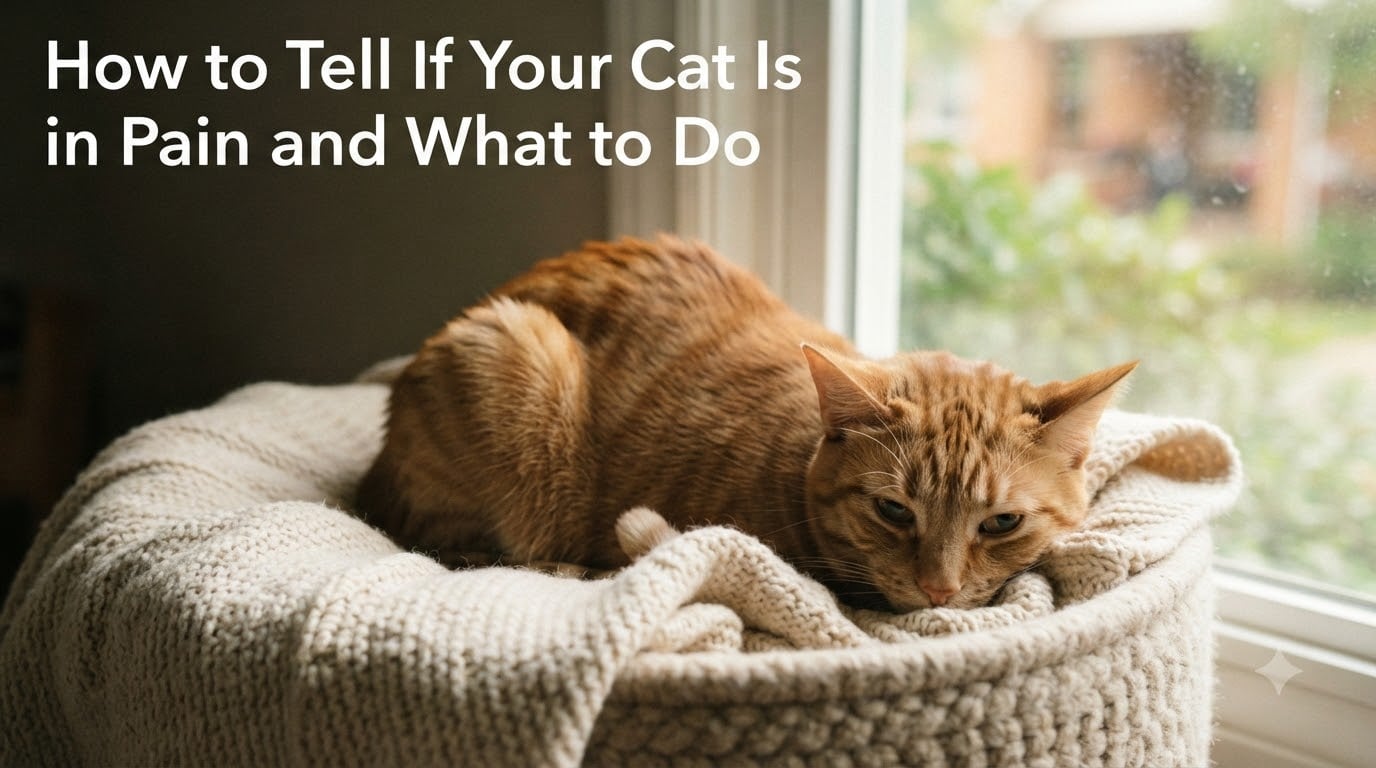
Cats are masters of disguise when it comes to pain. Unlike dogs, who may limp visibly or whine when something hurts, cats evolved to hide suffering as a survival instinct. In the wild, a sick or injured cat becomes easy prey, so their biology wired them to mask discomfort until it becomes unbearable.
That means by the time most cat owners notice something is wrong, their cat may have been hurting for weeks or even months. I learned this the hard way with my own senior cat, who seemed “just a bit slower” until a vet visit revealed advanced arthritis in both hips.
This guide breaks down exactly how to tell if your cat is in pain and what to do about it. You will learn the physical signs, behavioral changes, the Feline Grimace Scale, and clear steps for when to rush to the vet versus when to monitor at home. If you have a senior cat or one with a chronic condition, this information could genuinely add years to their life.
Table of Contents
How to Tell If Your Cat Is in Pain: The Evolutionary Reason Cats Hide Suffering
The reason cats hide pain comes down to millions of years of evolution. In the wild, predators target the weakest animal in a group. Showing pain signals vulnerability, so cats developed an instinct to suppress obvious signs of discomfort.
This survival mechanism served wild cats well, but it creates a real problem for indoor cat owners today. Your cat’s brain still tells them to act normal even when they are hurting. A cat with a painful dental infection will still purr, eat (sometimes), and move around. A cat with arthritis will still try to jump, even when it hurts.
Research from the University of Montreal confirmed that cats experience pain just as intensely as dogs and humans, but they express it differently. This is why learning the subtle cat pain signs matters so much. You cannot rely on obvious signals. Instead, you need to become a student of your cat’s normal behavior so you can spot the small deviations that signal trouble.
The key is establishing a baseline. Know how your cat typically moves, eats, grooms, sleeps, and interacts. Any change from that baseline, even a small one, deserves attention.
Physical Signs of Pain: Posture, Gait, and Body Language
Physical changes are often the first visible clues that your cat is hurting. These signs tend to show up before behavioral shifts, so training your eye to spot them early can make a real difference.
Hunched or stiff posture is one of the most telling physical signs. A cat in pain often sits with their back arched higher than normal, head lowered, and legs tucked tightly underneath. This hunched posture protects vulnerable areas and reduces the need to move.
Limping and mobility issues point to musculoskeletal pain. You might notice your cat favoring one leg, walking stiffly after rest, or hesitating before jumping onto furniture they used to reach easily. Changes in jumping behavior are one of the earliest signs of arthritis in cats, and forum members on r/seniorkitties report this symptom more than any other.
Tucked limbs and tight body positioning suggest abdominal pain. Cats with gastrointestinal issues, urinary blockages, or internal injuries often press their belly against the floor or keep all four legs pulled close to their body.
Trembling or tenseness when touched is another red flag. If your cat flinches, tenses up, or pulls away when you pet a specific area, that body part may be painful. Some cats begin shaking or trembling persistently when pain becomes severe.
Decreased grooming shows up as a matted, greasy, or dull coat. Cats in pain stop grooming because the twisting and stretching motions hurt. Conversely, some cats over-groom a specific painful area, creating bald patches or skin irritation.
Behavioral Changes That Signal Your Cat Is in Pain
Behavioral shifts can be harder to spot than physical signs, but they are often more reliable indicators. Cats are creatures of habit, so any disruption to their routine deserves investigation.
Hiding in unusual places ranks among the top pain signals reported by cat owners. If your social cat suddenly starts spending all day under the bed, in closets, or behind furniture, pain is a likely cause. Reddit users on r/CatAdvice consistently share stories of cats retreating to dark, enclosed spaces when hurting.
Increased aggression or irritability often accompanies pain. A normally gentle cat may hiss, swat, or bite when touched, especially near the painful area. This is not your cat becoming mean. It is a defensive reaction to protect themselves from further discomfort.
Social withdrawal looks different from hiding. Your cat may stay in the same room but stop seeking attention, refuse to sit on your lap, or avoid interactions with other pets in the household.
Litter box avoidance frequently signals pain rather than behavioral issues. A cat with arthritis may find it too painful to climb into a high-walled litter box. Cats with urinary tract pain may associate the box with the pain of urinating and start going elsewhere. Before assuming a behavior problem, rule out a medical cause.
Sleep pattern changes take two forms. Some cats in pain sleep far more than usual, while others become restless and pace at night. If your cat suddenly cannot settle into a comfortable position or wakes frequently, pain may be the reason.
Restlessness and pacing indicate that your cat cannot find a comfortable position. You might see them circle repeatedly before lying down, get up and move constantly, or seem unable to relax.
One important note from the forums: many owners confuse pain with aging. A senior cat who “slows down” is not just getting old. Slowing down is often a pain symptom that responds to treatment. Never dismiss behavioral changes in an older cat as simply part of aging.
The Feline Grimace Scale: 5 Facial Cues That Reveal Pain
The Feline Grimace Scale (FGS) is a science-backed tool developed by veterinary researchers at the University of Montreal to assess pain in cats based on facial expressions. It evaluates five specific facial features, each scored from 0 (no pain) to 2 (obvious pain). A total score above 4 typically indicates moderate to severe pain requiring veterinary attention.
Here are the five criteria that make up the Feline Grimace Scale:
1. Ears. In a pain-free cat, ears point forward and sit in a relaxed position. Mild pain causes ears to rotate slightly outward. With significant pain, ears flatten against the head or rotate sideways and downward.
2. Eyes. Relaxed cats have eyes that are open and alert. As pain increases, eyes become partially closed, squinted, or take on a droopy appearance. Severe squinting is a strong indicator of discomfort.
3. Muzzle tension. A relaxed cat has a round, loose muzzle. Pain causes the muzzle to appear tense, with the area around the mouth pulling tight. In pronounced pain, the muzzle looks flattened or pinched.
4. Whisker position. Normal whiskers spread outward and curve gently. When a cat hurts, whiskers pull back and press flat against the face or point straight downward. Drooping whiskers are one of the clearest visual pain signals.
5. Head position. A comfortable cat holds their head up and moves it freely. A cat in pain lowers their head, tucks the chin toward the chest, or holds the head in a fixed, stiff position.
I recommend checking these five features on your cat when they are healthy and relaxed. That gives you a baseline to compare against when you suspect something is wrong. The FGS works best when you observe your cat at rest, not during play or feeding.
Vocalization and Eating Changes as Pain Indicators
Changes in the sounds your cat makes and how they eat can reveal pain that visual cues miss. These changes are often dramatic and sudden.
Vocalization changes vary widely. Some cats in pain become much more vocal, with persistent meowing, howling, or crying. Others go completely silent. New or unusual sounds at odd hours warrant attention.
The purring paradox confuses many owners. Purring does not always mean contentment. Cats also purr when stressed, frightened, or in pain as a self-soothing mechanism. The frequency of a purr (between 25 and 150 Hz) has been shown to promote bone healing and tissue repair. So if your cat purrs constantly while showing other pain signs, the purring itself may be a coping response.
Growling, hissing, or yowling when touched or moved is a clear pain signal. These sounds are defensive warnings that mean “this hurts, please stop.”
Decreased appetite is one of the most common and important pain indicators. A cat who skips meals, eats less than usual, or shows interest in food but walks away after a few bites may have dental pain, nausea, or generalized discomfort. Cats who stop eating entirely for more than 24 hours are at risk for a serious liver condition called hepatic lipidosis, so appetite loss should never be ignored.
Dropping food or chewing on one side specifically points to dental pain. Bad breath, drooling, and pawing at the mouth are additional signs of oral discomfort.
Changes in water consumption matter too. Drinking significantly more or less than usual can signal kidney pain, urinary issues, or other internal problems.
How to Tell If Your Cat Is in Pain From Kidney Failure, Cancer, or Chronic Conditions?
Different health conditions produce different pain patterns. Understanding these patterns helps you recognize what your cat may be experiencing.
Kidney failure is extremely common in older cats. Pain signs include increased thirst and urination, weight loss, vomiting, bad breath (ammonia-like), lethargy, and a hunched posture. Cats with kidney disease often sit in a “meatloaf” position with all legs tucked under and head lowered.
Cancer pain varies depending on the type and location. Bone cancer causes limping and reluctance to move. Internal tumors may cause abdominal swelling, persistent hiding, and decreased appetite. Oral cancer makes eating painful and may cause drooling or jaw dropping.
Osteoarthritis affects an estimated 60 to 90 percent of cats over age 12. Signs include stiffness after rest, reluctance to jump, decreased activity, muscle loss in the hind legs, and a stiff or bouncy gait. Arthritis pain is chronic, meaning it builds slowly over months, which makes it easy to miss.
Dental disease causes mouth pain that cats hide remarkably well. By age three, most cats have some degree of dental disease. Watch for bad breath, dropping food, pawing at the mouth, chewing on one side, and decreased grooming around the face and neck.
Post-surgical pain requires special attention. Even routine procedures like spaying or dental extractions cause significant discomfort. Your vet should send you home with pain medication, and it is essential to complete the full course even if your cat seems fine.
The distinction between acute pain (sudden onset from injury or surgery) and chronic pain (ongoing from conditions like arthritis) matters because they require different management approaches. Acute pain needs immediate treatment, while chronic pain benefits from long-term strategies.
When to See a Veterinarian: Emergency vs. Routine Care
Knowing when to rush to an emergency clinic versus scheduling a regular appointment can save your cat’s life. Use these guidelines to make that decision.
Seek emergency care immediately if your cat shows any of these signs:
– Inability to urinate, especially in male cats (this is a life-threatening blockage)
– Profuse bleeding or obvious trauma like a fall or car accident
– Difficulty breathing, open-mouth breathing, or blue-tinged gums
– Sudden paralysis or inability to move the hind legs
– Repeated vomiting or vomiting blood
– Body temperature below 99 or above 103 degrees Fahrenheit
– Seizures or collapse
Schedule a veterinary appointment within 24 to 48 hours if you notice:
– Decreased appetite lasting more than 24 hours
– Persistent hiding or dramatic behavioral changes
– Limping or mobility changes that persist beyond a day
– Changes in litter box habits, especially straining to urinate
– Vocalization suggesting pain when touched or moved
– Weight loss you can see or feel over the spine or hips
Monitor but do not panic if:
– Your cat has a slightly off day but eats, drinks, and uses the litter box normally
– Activity decreases mildly during hot weather or after vaccinations
– Your cat skips one meal but eats normally afterward
When in doubt, call your vet’s office. Most clinics have staff who can help you decide whether your cat needs an immediate visit. It is always better to call and be told it is fine than to wait and miss a serious problem.
What to Do if Your Cat Is in Pain at Home
If you suspect your cat is in pain, there are steps you can take right now while you arrange veterinary care. The most important rule: never give your cat human pain medication without explicit veterinary instruction.
NEVER give cats these over-the-counter medications: acetaminophen (Tylenol), ibuprofen (Advil), naproxen (Aleve), or aspirin. Even a single dose of acetaminophen can be fatal to a cat. Ibuprofen causes kidney failure and stomach ulcers. These medications are highly toxic to cats and can kill them within hours.
Make your home comfortable while you wait for your vet appointment. Provide soft, supportive bedding in a warm, quiet area. If your cat has arthritis or mobility issues, add ramps or steps to their favorite spots so they do not need to jump. Use low-sided litter boxes that are easy to step into.
Adjust food and water access. Place bowls at a comfortable height so your cat does not need to crouch. Offer warm, strong-smelling food to encourage eating if appetite is low. Warming wet food slightly increases its aroma and palatability.
Reduce stress and handling. Let your cat choose when to interact. Avoid picking up a cat who may be in pain unless absolutely necessary. If you must move them, support the whole body gently and avoid pressure on any sensitive area.
Keep a pain diary. Note when symptoms occur, how long they last, and what seems to trigger or relieve them. This information is incredibly valuable for your vet and can speed up diagnosis significantly.
Transport safely. Use a secure carrier with soft bedding. Place a towel over the carrier to reduce visual stress. Drive carefully and avoid sudden stops.
Effective veterinary pain management options exist and are safe for cats. Your vet may prescribe cat-specific NSAIDs like robenacoxib, gabapentin for nerve pain, or buprenorphine for moderate to severe pain. There is no reason for any cat to suffer untreated pain in 2026, so please do not delay seeking professional help.
Frequently Asked Questions
How do I soothe my cat in pain?
Provide a warm, quiet, soft resting area away from household traffic. Keep food, water, and litter boxes easily accessible without climbing or jumping. Avoid handling painful areas and let your cat initiate contact. Never give human pain medications. Call your vet for safe, cat-specific pain relief options.
What is the 3-3-3 rule for cats?
The 3-3-3 rule is a decompression guideline for newly adopted cats. It suggests cats need 3 days to decompress, 3 weeks to learn your routine, and 3 months to fully settle into their new home. It is not directly related to pain assessment but helps establish behavioral baselines.
How do cats lay when in pain?
Cats in pain often adopt a hunched meatloaf position with all four legs tucked tightly underneath, back arched, and head lowered. They may also press their belly flat against a cool floor to relieve abdominal pain. A cat who cannot get comfortable and keeps shifting positions may also be hurting.
What do cats do when in pain?
Cats in pain may hide in unusual places, stop grooming, eat less, become aggressive when touched, vocalize differently, limp, avoid jumping, change litter box habits, and show facial tension like flattened ears, squinted eyes, and drooping whiskers. Any combination of these signs warrants a veterinary visit.
Is my cat in pain or just old?
Slowing down, stiffness, and decreased activity are not normal parts of aging in cats. They are almost always signs of pain, most commonly from arthritis or dental disease. A thorough veterinary exam can identify the cause and treatment can dramatically improve quality of life, even for senior cats.
What can I give my cat for pain at home?
Never give your cat any human medication including Tylenol, ibuprofen, aspirin, or naproxen, as these are toxic and potentially fatal. The only safe pain relief comes from medications prescribed by a veterinarian. At home, focus on comfort measures like warm bedding, easy access to resources, and gentle handling until you can see your vet.
Conclusion
Learning how to tell if your cat is in pain and what to do about it is one of the most valuable skills any cat owner can develop. Cats will not tell you they hurt. They will hide it, mask it, and push through it until they cannot anymore. Your job is to read the subtle signs before that point arrives.
Remember the key indicators: changes in posture and mobility, behavioral shifts like hiding or aggression, the five Feline Grimace Scale facial cues, vocalization changes, and appetite loss. Any deviation from your cat’s normal baseline deserves attention.
The most dangerous myth is that slowing down is a normal part of cat aging. It is not. It is almost always a treatable pain signal. Modern veterinary medicine offers safe, effective pain management for cats of every age and condition. No cat should suffer in silence.
If you notice any of the signs covered in this guide, call your veterinarian today. Early intervention prevents chronic pain, speeds recovery, and gives your cat the best chance at a comfortable, happy life. Trust your instincts. You know your cat better than anyone, and if something feels off, it probably is.