
Every aquarist I know has a story about the time they skipped quarantine and paid for it. I lost twelve tetras in one weekend because a new arrival looked healthy but carried ich. That is exactly why learning how to set up a quarantine tank for sick or new fish is the single most important skill in this hobby.
A quarantine tank for fish acts as a safety net between the store and your display aquarium. It gives you a controlled space to observe, treat, and acclimate new or sick fish without risking your entire stock. Setting one up takes about an hour and costs less than replacing even a few fish.
In this guide, I walk through every step of building a quarantine tank from scratch. You will learn what equipment to buy, how to set it up, how long to keep fish isolated, and which medications to keep on hand. By the end, you will have a system that protects your fish for years to come.
Table of Contents
What Is a Quarantine Tank and Why You Need One?
A quarantine tank is a separate, temporary aquarium used to isolate newly purchased or sick fish before introducing them to your main display tank. It is sometimes called a hospital tank or isolation tank, and it serves one core purpose: keeping problems contained.
When fish travel from a breeder to a wholesaler to a pet store, they pass through multiple water systems. Each transfer stresses the fish and exposes them to new pathogens. Even a fish that looks perfectly healthy in the store can be carrying parasites, bacteria, or viruses that are still in their incubation period.
Quarantine gives you a window of time to watch for symptoms before those pathogens reach your established fish. On Reddit’s r/Aquariums, hobbyists frequently share stories of losing entire tank populations after skipping quarantine. One common example involves Camallanus worms, which spread invisibly and can wipe out dozens of fish before you notice them.
A quarantine tank also doubles as a hospital tank. If a fish in your main display gets sick or injured, you move it to the quarantine tank for treatment. This protects healthy tank mates from infection and lets you dose medication without harming plants, invertebrates, or your main tank’s biofilter.
The bottom line: if you add new fish to any aquarium, you need a quarantine tank. It is not optional equipment for serious hobbyists.
Equipment and Materials Needed
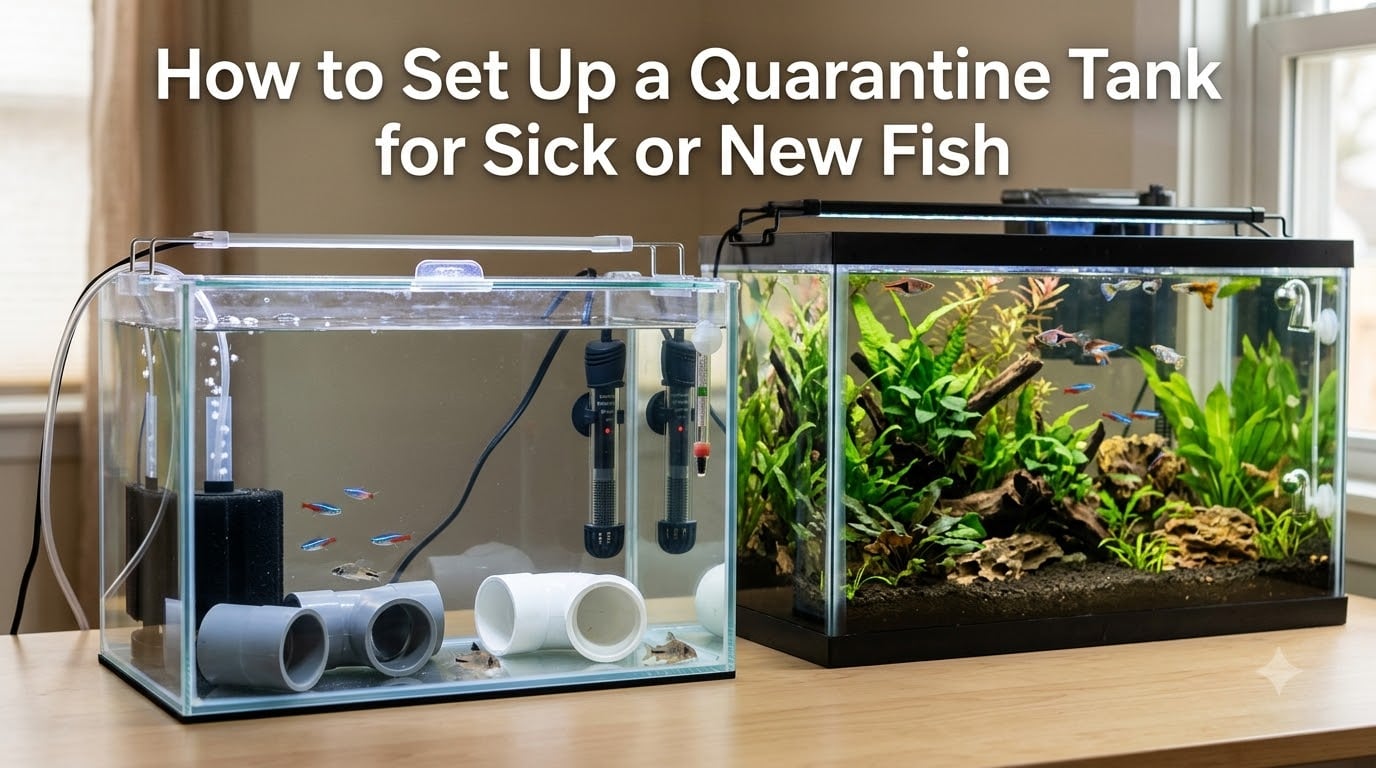
Setting up a quarantine tank for fish requires only a handful of basic items. Here is the complete equipment checklist I use for every quarantine setup:
Tank or container: A 10-gallon glass aquarium works for most community fish. For larger fish like goldfish or cichlids, use a 20-gallon or 29-gallon tank. A clean plastic storage tub works just as well if you are on a budget.
Sponge filter: A sponge filter provides gentle water flow and biological filtration without trapping medicated food or harming sick fish. It is the standard choice for quarantine and hospital tanks.
Air pump and tubing: This powers the sponge filter. Choose a pump rated for your tank size.
Heater: An adjustable aquarium heater keeps water at the correct temperature for your species. Most tropical fish need 76 to 80 degrees Fahrenheit.
Thermometer: A simple stick-on or floating thermometer lets you monitor temperature daily.
Water conditioner: A dechlorinator removes chlorine and chloramine from tap water. Use it every time you do a water change.
Bare bottom (no substrate): Skip the gravel. A bare bottom tank lets you see waste, monitor eating, and clean easily during medication rounds.
Hides and cover: Add PVC pipe sections, plastic plants, or a coconut hut. Fish need places to hide to reduce stress. Avoid porous decorations that absorb medication.
Lid: A glass or plastic cover prevents jumping and reduces evaporation. Drill or cut a small hole for airline tubing if needed.
Light (optional): A dim light is fine. Keep the tank in a quiet area away from heavy foot traffic to minimize stress on the fish.
Separate equipment: Use a dedicated net, siphon, and algae scraper for the quarantine tank. Never share these with your main tank to prevent cross contamination.
How to Set Up a Quarantine Tank for Sick or New Fish?
The setup process takes about 30 to 60 minutes once you have all the equipment. Follow these eight steps in order.
Step 1: Choose Your Location
Place the quarantine tank in a quiet, low-traffic area of your home. A spare room or basement corner works well. Keep the tank away from direct sunlight, which causes temperature swings and algae growth.
Make sure the surface is level and can support the weight of the filled tank. A 10-gallon tank with water and equipment weighs about 90 pounds.
Step 2: Clean the Tank
Rinse the tank, sponge filter, PVC hides, and any plastic plants with plain tap water. Never use soap, detergent, or chemical cleaners. Residue from these products is toxic to fish.
If you are reusing a tank that previously held sick fish, sterilize it first. Fill it with a bleach solution at 200 parts per million (roughly 1 part bleach to 50 parts water) and let it sit for 24 hours. Rinse thoroughly, then fill with dechlorinated water to neutralize any remaining bleach before use.
Step 3: Add Water and Conditioner
Fill the tank with tap water at the correct temperature for your species. Add water conditioner according to the package instructions. Most conditioners dose at one capful per 10 gallons, but always verify the label.
Let the water sit for 15 to 20 minutes after adding conditioner before introducing fish.
Step 4: Install the Sponge Filter and Heater
Place the sponge filter in a corner and connect it to the air pump with airline tubing. Position the heater near the filter output for even heat distribution. Set the heater to your target temperature and wait 30 minutes before plugging it in to prevent glass cracking.
Check the thermometer after one hour to confirm the temperature has stabilized.
Step 5: Add Hides and Cover
Place two or three PVC pipe sections or plastic plants in the tank. Fish that have hiding spots experience less stress, which supports their immune system. Avoid live plants in a quarantine tank because many medications kill them.
Install the lid to prevent jumping and reduce evaporation.
Step 6: Seed the Biofilter (If Possible)
A cycled quarantine tank is ideal because it prevents ammonia spikes. The easiest way to cycle quickly is to keep your sponge filter running in your main display tank between uses. When you need to set up quarantine, move the seeded sponge filter over.
If you do not have a pre-seeded filter, add a bacterial starter product to jump-start the nitrogen cycle. You will need to do more frequent water changes until the biofilter establishes.
Step 7: Test Water Parameters
Before adding fish, test for ammonia, nitrite, nitrate, and pH. Ammonia and nitrite must read zero. pH should match the conditions your fish are coming from as closely as possible.
If ammonia or nitrite is above zero, do a partial water change and wait 24 hours before retesting.
Step 8: Acclimate the Fish
Float the fish’s bag in the quarantine tank for 15 minutes to equalize temperature. Then add small amounts of tank water to the bag every 5 minutes for 30 minutes. This slow acclimation prevents osmotic shock.
Net the fish into the quarantine tank and discard the bag water. Never pour shipping water into your quarantine tank because it may carry pathogens.
How Long to Quarantine Fish?
The standard quarantine period for new fish is 4 to 6 weeks. This window covers the incubation period of most common parasites and bacterial infections, including ich, velvet, and internal worms.
Here is how I break down the timeline for different situations:
New fish from a trusted local store: 4 weeks minimum. Observe daily for symptoms. If the fish shows no signs of illness after 4 weeks, you can move it to your main tank.
New fish from an online retailer: 6 weeks. Shipping stress weakens the immune system and increases the risk of latent infections. Give these fish extra time.
Sick fish from your main tank: Keep in the quarantine tank until symptoms clear completely, then add 7 to 10 more days of observation. Stopping treatment too early is a common cause of relapse.
After prophylactic medication: Wait at least 7 days after the final dose before moving the fish. This gives you time to confirm the fish is eating well and showing no side effects.
Conflicting advice online causes confusion. Some sources say 2 weeks is enough. In my experience and that of experienced hobbyists on fish forums, 2 weeks misses too many slow-developing infections. Stick with 4 weeks as your absolute minimum.
Medication Protocols for Quarantine
One of the most common questions on aquarium forums is whether to medicate new fish preventatively. The answer depends on the source of your fish and your risk tolerance.
The Medication Trio Approach
Many experienced hobbyists use a “medication trio” during quarantine. This protocol treats the three most common disease categories simultaneously: bacterial infections, external parasites, and fungal infections.
The standard trio consists of:
Maracyn (erythromycin): Treats bacterial infections like fin rot and columnaris.
ParaCleanse (praziquantel and levamisole): Targets internal parasites including Camallanus worms and tapeworms.
Ich-X (malachite green formulation): Treats external parasites like ich and velvet.
Dose all three on day one of quarantine, following the package instructions for each product. Repeat the round after 7 days if symptoms persist or as a follow-up. This approach is widely recommended on the Aquarium Co-Op forum and covers most pathogens a new fish might carry.
When to Wait and Observe Instead
If you are quarantining fish from a trusted local fish store that you have used for years, you may choose to observe first and treat only if symptoms appear. Keep all three medications on hand so you can act quickly if needed.
Never use medication as a substitute for clean water and proper observation. Medicated fish still need regular water changes and careful monitoring.
Medication and the Biofilter
Most of the medications above are safe for your biofilter, but always check the label. If the filter does suffer a die-off, you will see ammonia spikes within a few days. Test daily during treatment and do water changes as needed.
Remove carbon from any filtration before dosing medication. Carbon absorbs medications and renders them useless within hours.
Maintenance During Quarantine
A quarantine tank without an established biofilter requires frequent water changes. I recommend changing 25 to 50 percent of the water every 2 to 3 days during the first two weeks of quarantine.
Test for ammonia and nitrite daily. If either reads above zero, do an immediate 50 percent water change. Even low levels of ammonia stress fish and suppress their immune response.
When doing water changes, match the new water temperature to the tank within 2 degrees. Add dechlorinator to the new water before pouring it in. Siphon waste from the bare bottom every few days to keep the environment clean.
Feed sparingly during quarantine. Offer small amounts twice a day and remove uneaten food after 5 minutes. Overfeeding causes ammonia spikes, especially in an uncycled tank.
Watch for signs of stress every day. Clamped fins, heavy breathing, hiding constantly, or refusing food are all red flags that something is wrong.
Quarantine for Saltwater and Invertebrate Fish
Saltwater quarantine follows the same principles but with different medication protocols. Copper-based treatments are the standard for marine parasites like marine ich and velvet, but copper is lethal to invertebrates. Use a dedicated copper-safe quarantine tank and test copper levels daily with a reliable test kit.
For marine fish, many hobbyists use a method called Tank Transfer Method (TTM) instead of medication. This involves moving the fish to a clean tank every 72 hours, breaking the parasite lifecycle without chemicals.
Quarantining invertebrates like shrimp and snails requires a different approach. Copper and many medications kill them, so never dose a tank holding invertebrates. Instead, quarantine shrimp and snails in clean, well-filtered water for 4 weeks of observation. If you need to treat fish that share quarantine space, move the invertebrates to a separate container first.
Signs of Illness to Watch For
Daily observation is the heart of quarantine. Look for these common warning signs:
White spots on fins or body: Likely ich. Raise the temperature gradually and dose with Ich-X.
Frayed or dissolving fins: Fin rot or bacterial infection. Start Maracyn treatment.
Rapid gill movement or gasping at the surface: Could indicate ammonia poisoning, low oxygen, or gill parasites. Test water first, then treat accordingly.
Stringy or white feces: Often a sign of internal parasites. ParaCleanse is the appropriate treatment.
Loss of color or lethargy: General stress or infection. Isolate the fish, test water, and observe for 24 hours before deciding on medication.
Red or inflamed gills: Ammonia burn or gill flukes. Check water parameters immediately.
Catching symptoms early makes treatment far more effective. A fish treated on day two of an infection has a much higher survival rate than one treated on day five.
Common Mistakes to Avoid
I have made most of these mistakes myself. Learn from them instead of repeating them.
Skipping quarantine entirely: This is the number one mistake. Even healthy-looking fish can carry disease. The cost of a quarantine setup is always less than the cost of replacing your entire tank.
Using substrate in the quarantine tank: Gravel traps waste and medication residue. A bare bottom tank is easier to clean and lets you monitor fish health accurately.
Sharing equipment between tanks: Using the same net or siphon for quarantine and display tanks spreads pathogens. Buy separate equipment and label it clearly.
Quarantining for too short a period: Two weeks is not enough for most diseases. Stick with 4 weeks minimum.
Not having a quarantine tank ready before buying fish: Setting up a tank the day you bring fish home is stressful for everyone. Keep your sponge filter seeded in your main tank so it is ready to go at any time.
Over-medicating without observation: Dumping every medication into the tank without knowing what you are treating can harm fish and crash your biofilter. Observe first, then treat with targeted medications.
Ignoring water quality: Ammonia and nitrite spikes kill more quarantined fish than disease does. Test daily and change water aggressively in an uncycled tank.
Frequently Asked Questions
What to put in a quarantine tank for new fish?
A quarantine tank needs a sponge filter, heater, thermometer, bare bottom (no gravel), PVC pipe or plastic plant hides, a lid, and dechlorinated water. Do not add live plants or substrate, as they trap waste and absorb medication. Keep a dedicated net and siphon for the quarantine tank only.
How long should a new fish be in quarantine?
New fish should stay in quarantine for a minimum of 4 weeks. Fish purchased from online retailers should be quarantined for 6 weeks because shipping stress increases disease risk. The quarantine period covers the incubation window of most common parasites and bacterial infections.
Should I medicate new fish in quarantine?
Many experienced hobbyists use a medication trio of Maracyn, ParaCleanse, and Ich-X on the first day of quarantine to cover bacterial infections, internal parasites, and external parasites. If your fish comes from a trusted local store, you can observe for 4 weeks and treat only if symptoms appear. Always keep medications on hand.
Does a quarantine fish tank need to be cycled?
A cycled quarantine tank is ideal because it prevents ammonia spikes that stress fish. The easiest method is to keep your sponge filter running in your main display tank between uses, then move the seeded filter to the quarantine tank. If you cannot pre-cycle, use a bacterial starter product and perform frequent water changes until the biofilter establishes.
How often should I change the water in a quarantine tank?
Change 25 to 50 percent of the water every 2 to 3 days during the first two weeks of quarantine. Test for ammonia and nitrite daily. If either reads above zero, do an immediate 50 percent water change. Match the new water temperature to the tank and always add dechlorinator.
What size tank is best for a quarantine tank?
A 10-gallon tank works for most community fish like tetras, guppies, and small cichlids. For larger fish such as goldfish or full-grown cichlids, use a 20-gallon or 29-gallon tank. A clean plastic storage tub of equivalent volume is a budget-friendly alternative that works just as well.
Can I use a bucket as a quarantine tank?
Yes, a clean 5-gallon bucket works for temporary or emergency quarantine of small fish. Add a small sponge filter, heater, and dechlorinated water. Buckets are best for short-term situations because they offer limited space and no viewing window for observation. Upgrade to a proper tank for full quarantine periods.
Conclusion
Knowing how to set up a quarantine tank for sick or new fish is the difference between a thriving aquarium and a recurring cycle of disease and loss. The process is straightforward: gather basic equipment, set up a bare bottom tank with a sponge filter and heater, acclimate your fish slowly, and observe for 4 to 6 weeks.
Keep the medication trio on hand, test your water daily, and never share equipment between your quarantine and display tanks. The small investment of time and money you make in quarantine protects every fish you already own.
Set up your quarantine tank today, before you need it. Your fish will thank you.