
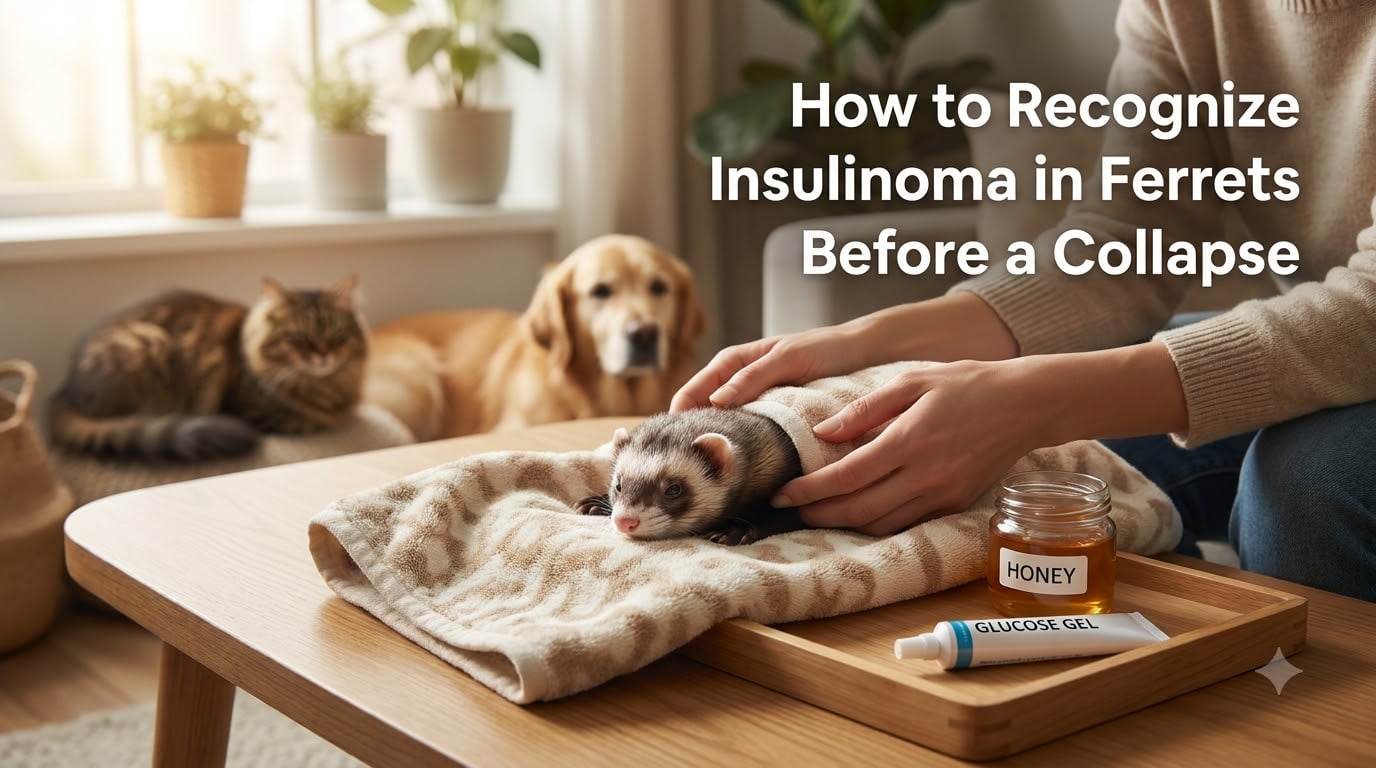
Insulinoma in ferrets is one of the most common and most frightening diseases a ferret owner will ever face. The condition develops when small tumors grow inside the pancreas and silently push blood sugar lower and lower until your ferret suddenly goes limp in your arms.
I have watched ferret owners describe the exact moment they knew something was wrong. One person said their ferret “splayed out awkwardly, not moving and drooling everywhere.” Another wrote, “my ferret is 4 and a half years old and just got diagnosed with Insulinoma.” Almost every story starts the same way: a moment of collapse that seemed to come out of nowhere.
It does not come out of nowhere. There are warning signs. This guide walks you through how to recognize insulinoma in ferrets before a collapse, what the stages actually look like day to day, and exactly what to do if your ferret crashes. We will also cover prevention, long-term management, and when it is time to talk to your vet about quality of life.
Table of Contents
What Is Insulinoma in Ferrets and Why Are They So Prone to It?
Insulinoma in ferrets is a tumor of the pancreatic beta cells that overproduces insulin. Insulin is the hormone that pushes sugar out of the bloodstream and into the cells. When too much insulin pours out, blood glucose drops below the safe range, and the brain and muscles literally run out of fuel.
The Merck Veterinary Manual lists insulinoma as one of the most frequently diagnosed hormonal disorders in middle-aged and older ferrets. According to DVM360, ferrets between 4 and 6 years old are the most common age at diagnosis, and many owners first notice symptoms around the ferret’s 4th or 5th birthday.
Why ferrets specifically? A few reasons come up again and again in the veterinary literature:
Obligate carnivore biology. Ferrets are designed to eat meat. Their pancreases are not built to handle the constant carbohydrate load of many commercial kibble diets, which may stress the insulin-producing cells over years.
Genetic predisposition. Insulinoma is seen across breeds, but it shows up particularly often in ferrets descended from large commercial breeding lines in North America.
Age. Beta cell tumors grow slowly. By the time a ferret reaches middle age, the tumors have usually been developing for years.
Diet history. High-carbohydrate foods, sugary treats, and frequent starchy snacks all keep insulin levels elevated, which may accelerate tumor growth over time.
The good news is that owners who learn the early signs can often catch the disease months before the first collapse. The trick is knowing what to watch for.
Early Warning Signs of Insulinoma in Ferrets
Early signs of insulinoma in ferrets are easy to miss because they look like “just getting older.” A ferret who used to zoom around the room now sleeps more. A ferret who used to leap onto the couch hesitates at the bottom step. None of these changes feel urgent on their own.
But together, they form a pattern. Here are the most common early warning signs our team has identified across veterinary sources and owner reports:
Lethargy that lasts more than a day. Sleeping longer, playing less, and appearing tired even after rest.
Mild hind leg weakness. Slight wobble in the back legs, especially when walking across a smooth floor.
Weight loss despite eating normally. The tumors burn glucose, so even a ferret with a healthy appetite can lose muscle and fat.
Reduced interest in play. A previously playful ferret who now prefers to hide or curl up in a hammock.
“Speed bump” posture. Ferret forum owners frequently describe their ferret standing with a hunched back, head low, looking like a small speed bump on the floor.
“Flat ferret” syndrome. Lying completely flat on the belly with legs splayed out behind, instead of the normal alert crouched position.
Subtle disorientation. Bumping into familiar furniture or seeming confused in a room they know well.
If you notice even two of these signs together, it is worth scheduling a blood glucose check. A normal ferret blood glucose runs around 80 to 120 mg/dL. Anything consistently below 60 to 70 mg/dL should raise suspicion for insulinoma, according to veterinary internists.
One of the most useful tips I have seen from long-time ferret owners is to keep a simple weekly log. Note the date, what your ferret ate, energy level, and any wobbles or strange postures. Patterns show up faster on paper than in memory.
Progressive Stages of Insulinoma: From Mild to Critical
Insulinoma tends to progress in stages, and each stage looks different. Understanding the stages helps you know where your ferret is on the timeline and how urgently you need to act.
Stage 1: Early or Mild Hypoglycemia
Blood glucose levels are still mostly within normal range but dip low after exercise or between meals. Symptoms are subtle. Your ferret might seem “off” one day and completely normal the next.
Common Stage 1 signs include occasional hind leg wobble, mild tiredness after play, and a brief moment of staring into space. Many ferrets still eat well and enjoy normal activity in this stage.
Stage 2: Moderate and Recurring Symptoms
Glucose dips become more frequent and more obvious. Symptoms happen weekly or even several times a week. The ferret may have visible weakness episodes that last from a few minutes to an hour.
Stage 2 signs include repeated ptyalism (drooling), pawing at the mouth as if something is stuck, episodes of staring upward (called “stargazing”), and a glazed or unfocused eye appearance. Some ferrets start to lose weight in this stage even with normal eating.
Stage 3: Severe and Pre-Collapse
Blood glucose drops below the safe threshold more often than not. Symptoms become severe and unpredictable. This is the stage right before collapse, and it is the one this guide is built around.
Stage 3 signs include sudden loss of balance, head tilting, full hind limb paralysis (the ferret drags its back legs), tremors, and periods where the ferret seems completely disconnected from the environment. If you see Stage 3 symptoms, your ferret is dangerously close to collapse. Move to the emergency steps in the next section.
Critical Signs That a Collapse Is Imminent
Collapse from insulinoma in ferrets can happen in minutes. The window between “something is wrong” and “my ferret is unresponsive” is sometimes less than 30 minutes. Knowing the final warning signs can save your ferret’s life.
Watch for these imminent collapse signals:
Drooling that suddenly gets much worse. Thick, ropey saliva pooling in the mouth or hanging from the lips.
Pawing at the mouth. The ferret paws at the face repeatedly as if trying to remove something. This is a classic pre-seizure behavior.
Stargazing. The ferret tilts the head back and stares upward for 10 to 30 seconds at a time.
Tremors or shaking. Fine tremors in the legs or face that look like shivering but are not related to cold.
Sudden hind leg collapse. The back legs give out while the front legs still try to move. Owners describe the ferret as appearing “drunk.”
Disconnection. The ferret stares blankly, does not respond to name, and seems unaware of surroundings.
Bruxism. Teeth grinding or clenching, sometimes loud enough to hear across a room.
These signs mean blood sugar is critically low. Skip ahead to the emergency action checklist below and call your vet immediately while you prepare to transport.
A forum user on holisticferretforum.com put it bluntly: “When a ferret is crashing from low blood sugar this is a MEDICAL EMERGENCY. Your ferret can die in your arms.” That is not exaggeration. Hypoglycemic seizures can be fatal.
Insulinoma Collapse vs Cardiac Collapse vs Dental Disease
One major gap in most ferret care articles is that not every collapse is insulinoma. Older ferrets can collapse from heart disease, from severe dental pain, or from a combination of issues. Knowing the difference matters because the emergency response is different.
Here is how to tell them apart in the moment:
Insulinoma collapse usually starts with drooling, pawing at the mouth, and weakness that worsens over minutes. The ferret may still be partly aware and respond briefly to sugar rubbed on the gums.
Cardiac collapse often comes with rapid or labored breathing, blue or pale gums, and weakness that hits suddenly without warning drooling. Sugar will not help and may waste critical time.
Dental pain collapse usually involves heavy drooling, refusal to eat hard food, and pawing at one side of the mouth. The ferret may still walk but appear to be in obvious pain.
When in doubt, rub a small amount of honey or sugar water on the gums. If the ferret perks up within 1 to 2 minutes, insulinoma is the most likely cause. If there is no change, head straight to the vet regardless. Time matters more than diagnosis in the moment.
What to Do If Your Ferret Collapses From Insulinoma?
A hypoglycemic collapse is a true emergency. These are the steps to follow, in order:
Stay calm and grab your emergency kit. Every ferret owner with a ferret over 3 should keep honey, Karo syrup, or high-sugar gel in the house. Have it within reach at all times.
Rub sugar on the gums. Use a fingertip to dab a small amount of honey, maple syrup, or glucose gel directly onto the ferret’s gums. Do not pour liquid into an unconscious mouth because it can cause choking.
Wait 1 to 2 minutes. Most ferrets with hypoglycemic collapse respond quickly to sugar on the gums. You may see blinking, head lifting, or small twitches.
Offer food once the ferret is alert. A high-protein meal like warmed-up raw duck or a critical care formula helps stabilize blood glucose. Avoid sugary treats at this stage because they can trigger a rebound crash later.
Wrap your ferret in a warm towel. Collapsed ferrets lose body heat quickly. A warm towel or a microwaved rice sock wrapped in cloth keeps them stable during transport.
Call your vet while you prepare to leave. Even if your ferret perks up, a collapse episode means your ferret needs professional care within the next few hours.
If your ferret does not respond to the gum sugar within 2 minutes, do not keep trying. Move directly to transport. The ferret may need IV dextrose at the clinic, which is something only a vet can provide.
When to Seek Emergency Veterinary Care
Any collapse, seizure, or episode where your ferret stops responding should trigger an immediate vet visit. Even if the ferret seems fully recovered within minutes, the underlying tumor is still there and the next episode could be worse.
You should also seek emergency care if you see:
Active seizure activity lasting more than 1 minute
Multiple seizures within a 24-hour period
Loss of bowel or bladder control during an episode
Failure to recover within 10 minutes of sugar treatment
Any new hind limb paralysis that does not resolve within 30 minutes
At the clinic, your vet will likely run a blood glucose reading (the normal range is roughly 80 to 120 mg/dL), a full chemistry panel, and possibly a serum insulin level sent to the University of Tennessee Endocrinology Lab for confirmation. Treatment decisions are usually made within hours of diagnosis.
If your regular ferret vet is not available, go to the nearest 24-hour emergency veterinary hospital. Hypoglycemic ferrets do not wait for office hours.
Prevention and Long-Term Management of Insulinoma in Ferrets
You cannot always prevent insulinoma in ferrets, especially in older animals with a long dietary history. But you can slow progression, reduce collapse episodes, and give your ferret more good days.
Here is what works best based on what we have seen across veterinary sources and long-time ferret owners:
Dietary Changes That Help
Feed a high-protein, low-carbohydrate diet. Raw prey-model diets or high-quality grain-free kibble with named meat as the first three ingredients are the foundation. According to LafeberVet and other veterinary sources, reducing simple sugars reduces the constant insulin demand on the pancreas.
Freeze-dried raw treats, plain cooked meat, and egg are better than sugary commercial treats. Avoid anything with fruit, honey, molasses, or potato starch listed in the first five ingredients.
Medication Management
Most ferrets with diagnosed insulinoma end up on daily prednisone, sometimes combined with diazoxide. These medications do not cure the tumors, but they raise blood glucose and reduce how often the ferret crashes. Give medications on the schedule your vet sets, and never skip doses.
Home Monitoring
Many experienced owners learn to use a pet glucometer like the Alpha Trak to spot trends. A single low reading is not a crisis, but a downward pattern over several days means it is time to adjust the plan with your vet. Keep a simple log of readings, energy levels, and food intake. Patterns show up faster in writing than in memory.
Feeding Schedule
Two or three small meals a day, evenly spaced, helps keep glucose more stable than one large meal. Some owners leave a small amount of high-protein food available at all times so the ferret can top up its own glucose between meals.
Long-term management is about buying good days, not curing the disease. Most ferrets with insulinoma can live 6 months to 2 years after diagnosis with the right combination of diet, medication, and vigilant care.
Frequently Asked Questions About Insulinoma in Ferrets
What are the early signs of insulinoma in ferrets?
The most common early signs are lethargy, mild hind leg weakness, weight loss despite normal eating, and unusual postures such as the speed bump or flat ferret stance. Drooling and pawing at the mouth can also appear in early stages. Symptoms often come and go at first, which makes them easy to overlook.
Is insulinoma in ferrets painful?
Insulinoma itself is not typically painful, but the secondary effects of low blood sugar can be distressing. Seizures, disorientation, and collapse are uncomfortable and frightening for the ferret. The tumors themselves are usually small and grow slowly, so pain from the pancreas is uncommon in early stages.
How long do ferrets live with insulinoma?
With proper medication and diet, ferrets with insulinoma typically live between 6 months and 2 years after diagnosis. Surgical removal of tumors can extend that window in some cases, but insulinoma is considered a chronic, manageable condition rather than a curable one in most ferrets.
What are the end-stage symptoms of insulinoma in ferrets?
End-stage insulinoma symptoms include frequent seizures, prolonged collapse episodes, hind limb paralysis, severe weight loss, loss of appetite, and unresponsiveness. Many ferrets in late stages spend most of their time sleeping and show little interest in play or food. Quality of life discussions with your vet are important at this point.
Can I prevent insulinoma in my ferret?
You cannot fully prevent insulinoma, especially in older ferrets with genetic predisposition. Feeding a high-protein, low-carbohydrate diet throughout life, avoiding sugary treats, and getting regular blood glucose checks after age 3 can help reduce risk and catch the disease early. Early detection gives you more treatment options.
How is insulinoma different from a cardiac collapse?
Insulinoma collapse usually comes with drooling, pawing at the mouth, and progressive weakness that responds quickly to sugar on the gums. Cardiac collapse typically involves rapid breathing, pale or blue gums, and sudden weakness without warning drooling. Sugar will not help a cardiac collapse, so immediate vet care is critical.
Final Thoughts on Recognizing Insulinoma in Ferrets Before a Collapse
Insulinoma in ferrets is common, but it is also one of the conditions where early owner awareness makes the biggest difference. The ferrets who do best are the ones whose owners noticed the small changes first: the slight wobble, the longer naps, the new speed bump posture, the brief moment of staring into space.
Keep a log. Watch for patterns. Have honey or glucose gel in the house before you need it. Learn the difference between an insulinoma collapse and other emergencies so you can act fast. Talk to your vet about baseline blood glucose checks once your ferret turns 3 or 4.
The goal is not to live in fear of collapse. The goal is to recognize insulinoma in ferrets early enough that your ferret never collapses at all. With the right combination of diet, medication, monitoring, and quick emergency response, many ferrets with insulinoma enjoy months or even years of good quality life.