
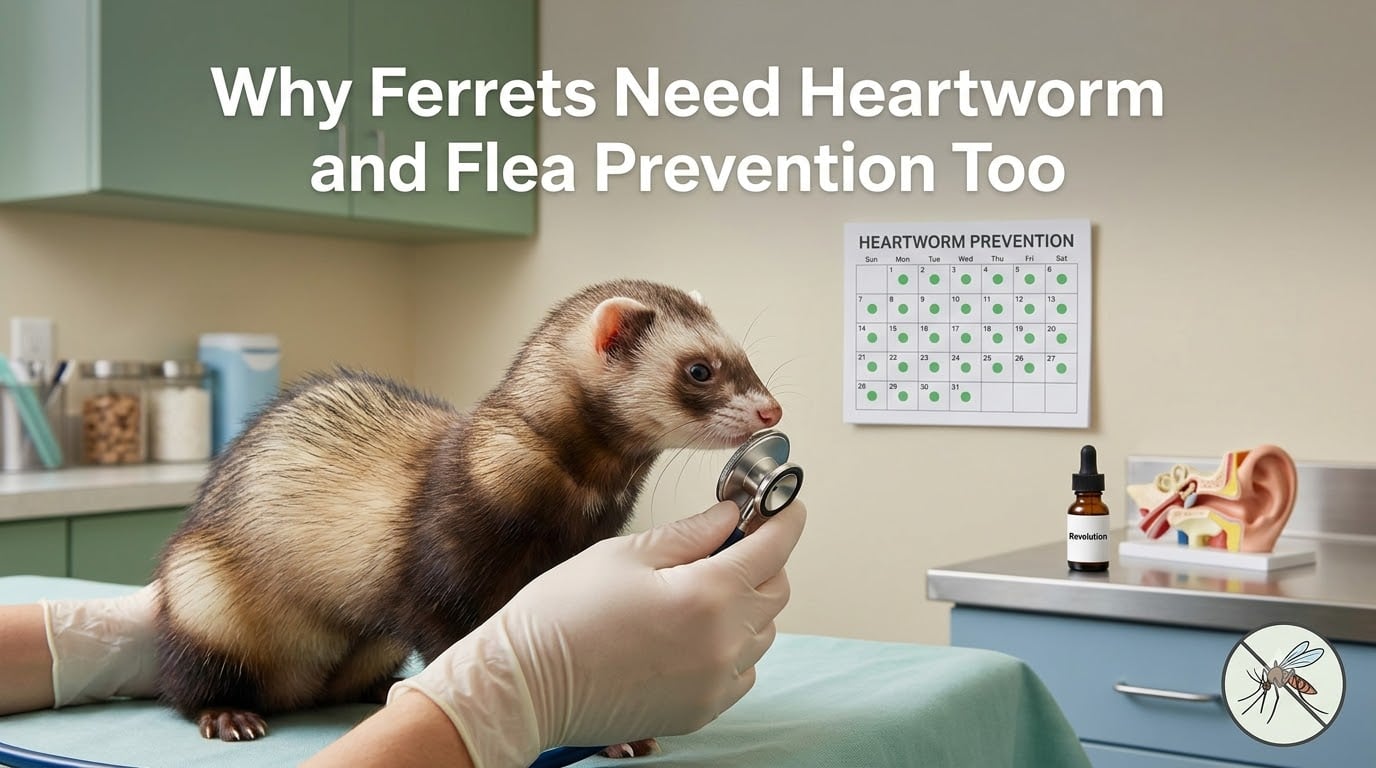
Ferrets need heartworm and flea prevention just like cats and dogs, but their small size makes them even more vulnerable to parasites. I learned this the hard way when my first ferret, Bandit, came home with ear mites from a shelter environment and I had no idea what product to use safely.
Here’s what every ferret owner should know: just ONE heartworm can kill a ferret. Unlike dogs, who may harbor hundreds of worms with mild symptoms, a single adult heartworm in a ferret’s tiny heart causes serious disease or death. The American Heartworm Society recommends year-round prevention for all ferrets, and I’ll explain exactly why this matters in 2026.
In this guide, I’ll walk you through the heartworm life cycle, the warning signs to watch for, safe prevention products, and the common mistakes I see ferret owners make. By the end, you’ll know exactly how to protect your ferret from these silent threats.
Table of Contents
What Is Heartworm Disease and Why Ferrets Are Uniquely at Risk?
Heartworm disease is a serious parasitic condition caused by worms that live in the heart, lungs, and blood vessels of infected animals. Ferrets are uniquely susceptible to heartworm disease because of their small body size and tiny hearts.
The disease starts with a mosquito bite. An infected mosquito transmits microscopic heartworm larvae into your ferret’s bloodstream. Over the next six months, those larvae mature into adult worms that travel to the heart and pulmonary arteries. In a dog, this might mean dozens of worms with gradual symptoms. In a ferret, a single worm can block blood flow catastrophically.
The Heartworm Life Cycle Explained Simply
Here’s how heartworm spreads to your ferret in five steps. First, a mosquito bites an infected animal and picks up microfilaria (baby worms) from the blood. Second, those microfilaria develop inside the mosquito over 10 to 14 days into infective larvae.
Third, the mosquito bites your ferret and deposits the larvae onto the skin. The larvae enter through the bite wound and migrate through the tissue. Fourth, over six months, the larvae travel through the bloodstream and mature into adult worms. Fifth, the adult worms reach the heart and pulmonary arteries, where they cause inflammation and physical blockage.
The entire cycle takes about six months from mosquito bite to adult worms in the heart, which is why prevention must be consistent and year-round.
Why Even One Heartworm Can Kill a Ferret
A ferret’s heart is roughly the size of your thumbnail. When an adult heartworm reaches that tiny organ, even a single worm can cause complete or partial blockage of blood flow. The American Heartworm Society states explicitly that one heartworm in a ferret can cause serious disease or death.
Dogs can survive with dozens of heartworms because their larger hearts and pulmonary arteries can still move blood around the obstruction. Ferrets have no such reserve. The worm’s mere presence triggers an inflammatory response that compounds the physical blockage, leading to heart failure, respiratory distress, or sudden death.
There is also no safe cure for heartworm in ferrets. The adulticide medications used in dogs (like melarsomine) are too dangerous for ferrets. Treatment is limited to managing symptoms and attempting surgical removal, which carries significant risk. Prevention is the only reliable option.
Signs of Heartworm Disease in Ferrets Every Owner Should Know
Recognizing heartworm symptoms early can mean the difference between life and death for your ferret. The signs progress from subtle to severe, and by the time advanced symptoms appear, the disease is often already causing irreversible damage.
Early Warning Signs
The earliest symptoms of heartworm disease in ferrets are easy to miss. Watch for low energy, decreased appetite, and mild weight loss. Your ferret might sleep more than usual or seem less interested in play. Some ferrets develop a soft, occasional cough that owners often mistake for a hairball.
You might also notice your ferret tiring quickly during normal activity. A healthy ferret is playful and active, so any persistent lethargy deserves attention. These early signs typically appear three to four months after infection, when the larvae are still migrating and the adult worms haven’t fully matured.
Advanced Symptoms Requiring Emergency Care
Advanced heartworm disease in ferrets presents with dramatic symptoms that demand immediate veterinary care. Look for severe respiratory distress, including labored breathing, open-mouth breathing, or gasping. The gums may turn pale, bluish, or muddy in color due to poor oxygen circulation.
Other emergency signs include collapse, sudden weakness in the hind legs, coughing up blood, and abdominal swelling from fluid buildup. If your ferret shows any of these symptoms, treat it as an emergency. Heartworm disease progresses rapidly in ferrets, and waiting even a few hours can be fatal.
Do Indoor Ferrets Really Need Heartworm Prevention?
Yes, indoor ferrets absolutely need heartworm prevention. The FDA specifically warns that indoor cats and ferrets still need heartworm prevention because mosquitoes easily enter homes through open doors, windows, and even small gaps in screens.
One mosquito bite is all it takes to transmit heartworm larvae. You don’t need an infestation of mosquitoes in your home, just a single infected one that got inside. I keep my ferrets indoors 100% of the time, and my vet still requires them to be on monthly Revolution because the risk is simply too high to ignore.
The American Heartworm Society recommends year-round prevention for ferrets regardless of lifestyle. Mosquitoes are active in most regions for at least six months of the year, and many areas now have year-round mosquito activity due to warming climates. Skipping prevention during winter months leaves your ferret exposed during shoulder seasons when mosquitoes are most active.
Why Flea Prevention Is Just as Critical for Ferrets
Flea prevention for ferrets is not optional. Ferrets can get fleas just like cats and dogs, and a severe infestation can kill them within days due to blood loss. Their small body size means even a moderate flea burden represents a significant percentage of their total blood volume.
How Fleas Cause Fatal Anemia in Ferrets
Fleas feed on blood, and a single female flea can consume up to 15 times her body weight in blood daily. Multiply that by dozens or hundreds of fleas, and you can see how quickly a ferret can become anemic. Walkerville Vet notes that fleas can cause fatal anemia in ferrets very quickly, especially in young, old, or already weakened animals.
Signs of flea-induced anemia include pale gums, extreme lethargy, cold ears and feet, rapid breathing, and collapse. If you notice your ferret scratching excessively and showing any of these symptoms, see a vet immediately. Severe anemia requires blood transfusions and aggressive supportive care.
Fleas also transmit tapeworms and can trigger flea allergy dermatitis, which causes intense itching and skin infections. Even a few fleas can make your ferret miserable and unhealthy.
Ear Mites and Other Parasites Ferrets Commonly Get
Ear mites are extremely common in ferrets, especially those from shelters or pet stores. These tiny parasites live in the ear canal and cause intense itching, head shaking, and dark, crusty ear discharge. Left untreated, ear mites can lead to secondary bacterial infections and hearing loss.
The good news is that many heartworm prevention products for ferrets also protect against ear mites, fleas, and some internal parasites. Revolution (selamectin), for example, covers heartworm, fleas, ear mites, ticks, and some intestinal worms. This makes parasite prevention much simpler when you choose a broad-spectrum product.
Safe Heartworm and Flea Prevention Products for Ferrets
Choosing the right product is critical because ferrets are not just small cats or dogs. Their metabolism differs significantly, and products formulated for other species can be toxic. Always work with a ferret-savvy veterinarian who can prescribe the correct dosage based on your ferret’s weight.
Revolution (Selamectin): The Most Recommended Option
Revolution (selamectin) is the most frequently recommended heartworm and flea prevention for ferrets by both veterinarians and experienced ferret owners. According to r/ferrets users and the American Heartworm Society, Revolution protects against heartworm, fleas, ear mites, ticks, and some internal parasites in a single monthly topical application.
Revolution is applied to the back of the neck, where your ferret cannot lick it off. The liquid is absorbed through the skin and distributed throughout the body. Most ferrets tolerate it well, though some may experience mild irritation at the application site. The product is prescription-only, so you’ll need a vet visit to obtain it.
Dosage is typically calculated by weight. A 0.4 ml dose is common for ferrets in the 2-4 pound range, but your vet will determine the exact amount. Never use dog or cat Revolution formulations without veterinary guidance, as the concentrations may differ.
Advantage Multi and Other Vet-Approved Alternatives
Advantage Multi (imidacloprid plus moxidectin) is another commonly recommended option for ferrets. It protects against heartworm, fleas, and some intestinal parasites. Like Revolution, it’s a monthly topical treatment that requires a prescription and veterinary dosing guidance.
Other products that some veterinarians prescribe off-label for ferrets include certain formulations of ivermectin and milbemycin. However, these require careful dose calculation and monitoring. Off-label use should only occur under direct veterinary supervision.
Your vet may recommend different products based on your ferret’s age, weight, health status, and local parasite risks. The key is consistent monthly administration of a product specifically approved or vetted for ferret use.
Dangerous Products to Avoid
Many flea and tick products marketed for dogs are toxic to ferrets and can cause seizures, tremors, or death. Avoid products containing permethrin, pyriproxyfen, or high concentrations of essential oils. These ingredients are sometimes safe for dogs but metabolized differently by ferrets.
Never use over-the-counter flea collars, flea shampoos, or flea dips on ferrets without explicit veterinary approval. Even some “natural” or “gentle” products contain ingredients that are dangerous for small mammals. When in doubt, ask your vet before applying anything to your ferret’s skin.
Forum users on r/ferrets consistently warn that dosage is extremely important and dangerous if done wrong. One user shared a story of a friend’s ferret becoming severely ill from an incorrect cat-flea product dose. This is why veterinary supervision is non-negotiable.
Year-Round Prevention Schedule and Veterinary Care
Ferrets should receive heartworm and flea prevention year-round, with doses administered every 30 days. Setting a recurring calendar reminder helps ensure you never miss a dose. Missing even one month can leave your ferret vulnerable during peak mosquito or flea season.
Most ferret-savvy veterinarians recommend annual heartworm testing, even for ferrets on year-round prevention. Testing involves a simple blood draw that checks for heartworm antigens or microfilaria. Some vets also recommend periodic echocardiography to visualize the heart and check for adult worms.
Your ferret should see an experienced exotics or ferret-knowledgeable veterinarian at least once a year for a wellness exam, vaccine boosters (if applicable in your area), and parasite prevention review. If you move to a new region with different parasite risks, discuss adjusting your prevention plan with your vet.
Common Mistakes Ferret Owners Make With Parasite Prevention
The biggest mistake I see is assuming ferrets are too small to need parasite prevention. Some owners skip prevention entirely, thinking their indoor ferret is safe. Others try to save money by skipping winter months. Both approaches leave ferrets vulnerable to potentially fatal infections.
Another common mistake is using dog or cat flea products without veterinary guidance. Even products that seem “natural” or “mild” can be dangerous for ferrets. The metabolism of a ferret is not the same as a cat or dog, and what’s safe for a 60-pound dog can kill a 2-pound ferret.
Finally, some owners stop prevention after adopting a ferret from a shelter that already treated the ferret. The shelter treatment is a single dose that wears off after 30 days. Continuous monthly prevention is required to maintain protection. Skipping this leaves your ferret exposed once the initial dose expires.
Frequently Asked Questions About Ferret Parasite Prevention
Do ferrets need heartworm medicine?
Yes, all ferrets need heartworm prevention regardless of whether they live indoors or outdoors. The American Heartworm Society recommends year-round prevention because mosquitoes can easily enter homes through open doors and windows, and even a single heartworm can kill a ferret due to their small heart size.
What heartworm prevention is safe for ferrets?
Revolution (selamectin) and Advantage Multi (imidacloprid plus moxidectin) are the most commonly recommended heartworm preventatives for ferrets. Both are prescription monthly topical treatments. Your veterinarian will calculate the correct dose based on your ferret’s weight. Never use dog or cat heartworm preventatives without veterinary guidance.
How often do ferrets need flea treatment?
Ferrets need flea treatment monthly, year-round, using a product approved for ferrets such as Revolution or Advantage Multi. Consistent monthly application prevents infestations and protects against the dangerous blood loss that fleas can cause in ferrets.
Do ferrets get fleas easily?
Yes, ferrets can get fleas from other pets, contaminated bedding, or outdoor exposure. Their small size means even a moderate flea burden can cause life-threatening anemia. Flea prevention should be maintained year-round, especially in multi-pet households.
Can ferrets use dog or cat flea medicine?
Most dog and cat flea medicines are not safe for ferrets because their metabolism differs significantly. Some products contain ingredients like permethrin that are toxic to ferrets. Always consult a ferret-savvy veterinarian before using any flea product, and never apply dog or cat formulations without explicit dosing guidance.
Why are ferrets susceptible to heartworm?
Ferrets are extremely susceptible to heartworm because of their tiny hearts. While a dog might survive with dozens of heartworms, a single adult heartworm can cause complete or partial blockage of blood flow in a ferret’s small heart, leading to heart failure or sudden death. There is no safe cure for heartworm in ferrets, making prevention essential.
Final Thoughts on Ferret Heartworm and Flea Prevention
Ferret heartworm prevention is not a luxury, it’s a necessity. Because even one heartworm can kill a ferret, and fleas can cause fatal anemia within days, consistent year-round parasite prevention is one of the most important things you can do for your ferret’s health. Work with a ferret-savvy veterinarian to choose Revolution or Advantage Multi, administer the correct monthly dose, and avoid products formulated for cats or dogs without professional guidance.
If you’ve been on the fence about starting prevention, talk to your vet this week. Your ferret depends on you to make the call, and the small monthly cost of prevention is nothing compared to the heartbreak of losing a ferret to a preventable disease.