
Last summer, a friend of mine lost her 3-year-old greyhound within 20 minutes of finishing a routine walk. The pavement felt comfortable enough under her own hand. She never saw the signs. By the time her dog collapsed, internal organs were already failing.
Heatstroke in pets is the kind of emergency that gives no second chances. It can kill a dog or cat in under an hour, and it does not care if you are a first-time owner or a seasoned one. The difference between a story like hers and a happy outcome usually comes down to knowing what to look for and acting in the right order during those critical first minutes.
I have spent months reviewing veterinary emergency protocols, talking with ER vets, and digging through owner accounts on forums like r/DogAdvice and r/pugs to put together this guide. My goal is simple. By the end, you should know exactly how to recognize heatstroke in any pet, how to cool them safely before transport, and how to avoid the mistakes that cost the most time.
Let’s start with the basics, because understanding what is happening inside your pet’s body is what makes every later step make sense.
Table of Contents
What Is Heatstroke in Pets and Why It Happens So Fast?
Heatstroke in pets (the medical term is hyperthermia) happens when a pet’s body temperature climbs above what their cooling systems can handle. In dogs, that tipping point is a core temperature above 104F (40C). Once it crosses 105.8F (41C), cells start dying and organs begin to shut down. Cats tolerate heat slightly better but follow a similar pattern.
Dogs and cats cannot sweat through their skin the way humans do. They have a few sweat glands in their paw pads, but those barely make a dent. Their main cooling tool is panting. As they pant, moisture evaporates from the tongue and upper airways, carrying heat away.
This system works beautifully in mild weather. It falls apart fast when humidity rises above 70%, when the animal is stuck without airflow, or when the air itself is hotter than the body. Under those conditions, panting actually pulls in hot air faster than it removes heat.
Here is what most owners miss. Heatstroke does not start when your pet collapses. The cascade begins when heat production outpaces heat loss. From that point, body temperature climbs about 0.2F every minute. In 30 minutes, a healthy dog at 101.5F can be at 107F, well into the danger zone where the brain, kidneys, and gut begin to fail.
The other piece that surprises people is that heatstroke can develop without extreme conditions. A 78F day with 80% humidity is enough to push a brachycephalic (flat-faced) dog over the edge in 15 minutes of moderate exercise. Closed cars, even with windows cracked, can reach 120F in 10 minutes. Asphalt in summer can hit 150F, hot enough to burn paws and reflect radiant heat upward at the same time.
This is why I now treat any panting that lasts longer than 10 minutes after rest in hot weather as a warning, not a normal sign.
The Early Warning Signs of Heatstroke in Pets
Catching heatstroke early is the single biggest predictor of survival. The signs follow a predictable ladder, and knowing which rung your pet is on tells you what to do next. I have grouped them into three stages based on what ER vets use to triage cases.
Stage 1: Mild Heat Stress
These are the signs that say “pay attention, this can still turn around.”
Excessive panting that does not slow down within 5 minutes of stopping activity
Rapid, noisy, or raspy breathing
Mild drooling, or drooling that just started
Restlessness, pacing, or an inability to settle
Bright pink or red gums and inner eyelids
Slightly warm paws and ears
Seeking cool surfaces like tile or shade
If you see two or more of these, act now. Move to shade, offer cool (not cold) water, and watch closely. Most pets recover at this stage within 20 to 30 minutes.
Stage 2: Moderate Heat Exhaustion
This is where organs start to feel the strain. Stop home treatment and prepare to call your vet.
Heavy, thick drool or sudden drooling in a non-drooling breed
Gums that look dark red, gray, or tacky
Vomiting or diarrhea (sometimes with blood)
Weakness or stumbling when walking
Disorientation, confusion, or not responding to your voice
Body temperature between 104F and 105.8F
Stage 3: Severe Heatstroke
This is a true emergency. Get to the nearest veterinary clinic immediately.
Collapse or inability to stand
Seizures or muscle tremors
Pale, white, or blue gums
Little or no urine production
Body temperature above 105.8F
Unconsciousness or unresponsiveness
One important note about cat signs. Cats mask illness instinctively, so by the time a cat looks visibly distressed, the situation is usually advanced. Watch for open-mouth breathing in cats (always abnormal), hidden behavior, and warm ears combined with lethargy. Owners on r/pets have repeatedly shared that their cat’s first obvious sign was refusing food and hiding in a cool spot.
Heat Exhaustion vs Heatstroke in Pets: Know the Difference
People often use these terms interchangeably, but they describe different points on the same curve. Treating them the same way can lead you to either overreact or wait too long.
Heat exhaustion is the earlier stage. Body temperature is elevated but usually under 104F. The pet is alert, panting hard, and uncomfortable. With prompt cooling and rest, most pets recover fully within an hour.
Heatstroke is the point where internal damage begins. Body temperature is above 104F and rising, and the body’s cooling systems are overwhelmed. Without veterinary care, mortality rates climb above 50% even with aggressive treatment.
The practical takeaway is that heat exhaustion is your last safe window to act at home. Heatstroke requires a vet, period. If you are unsure which one you are seeing, call your vet on the way to cooling. They would rather you call early and not need help than call late when they can no longer reverse the damage.
Which Pets Are Most at Risk for Heatstroke
Some pets handle heat far worse than others, and knowing your pet’s risk level changes how cautious you need to be on warm days.
Brachycephalic breeds top the list. Pugs, English bulldogs, French bulldogs, Boston terriers, Pekingese, and Persian cats have compressed airways and soft palates that block airflow. They cannot pant efficiently. Owners on r/englishbulldog regularly share stories of bulldogs going into crisis after just 10 minutes outside in 80F weather. I treat these dogs as if 75F is already too hot for exertion.
Sighthounds like greyhounds, whippets, and salukis have very low body fat and thin coats. They lose heat slowly through panting because there is little insulating fat, but they also gain heat quickly in direct sun. My friend’s greyhound was a classic case of this risk profile.
Other high-risk groups include very young and senior pets (their thermoregulation is weaker), overweight pets (insulating fat traps heat), pets with heart disease or laryngeal paralysis, and dark-coated breeds that absorb more solar radiation.
Working dogs and high-drive breeds like border collies and huskies present a sneaky risk. They will keep running and playing past the point of heat exhaustion because their drive overrides self-regulation. Owners have to enforce rest breaks, because the dogs will not.
Emergency Response: How to Recognize and Respond to Heatstroke in Any Pet
This is the part to memorize. In a real emergency, you will not have time to scroll through a long article. The STOP-COOL-TRANSPORT framework comes from veterinary emergency protocols and is the clearest system I have found for both dogs and cats.
Members of r/DogAdvice who used a similar structured approach reported that their dogs reached the vet faster and with lower body temperatures than those who tried to “figure it out” in the moment.
STOP: Move and Stabilize
Move your pet to a shaded or air-conditioned area immediately.
Stop all activity. Carry small dogs if they resist walking.
Call your vet or the nearest emergency clinic and say “I suspect heatstroke” so they can prepare for your arrival.
Do not give food, water in large amounts, or any medication. Even a small amount of water in a vomiting pet can cause aspiration.
COOL: Lower Body Temperature Safely
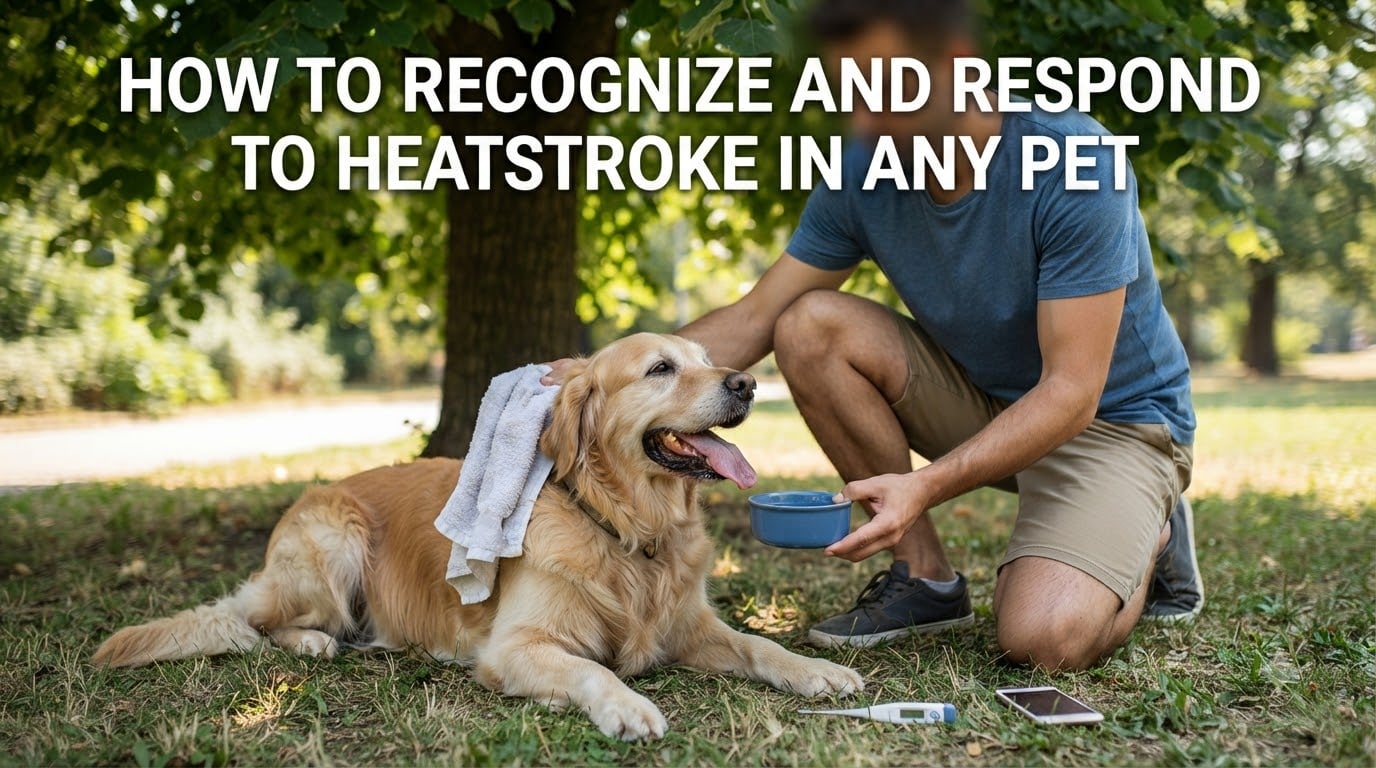
Wet your pet’s fur with cool (not cold) water. Lukewarm tap water works well. Focus on the belly, groin, armpits, and paws.
Place them in front of a fan or in moving air if possible. Evaporation is what removes heat, not just the water itself.
Apply cool, damp cloths to the ears and paw pads. These areas have many blood vessels close to the skin.
Replace damp cloths every 2 to 3 minutes as they absorb heat.
Stop active cooling once body temperature reaches 103F. Overcooling can cause shock and heart arrhythmias.
Two important “do nots” here. Do not use ice or ice water. Ice constricts blood vessels in the skin, trapping heat inside the body where the damage happens. Do not cover your pet with a wet towel and leave it on. Towels trap heat against the body. The RSPCA specifically warns against this because it makes things worse.
TRANSPORT: Get to the Vet
Continue cooling during transport by running the car air conditioner and wetting the pet periodically.
Keep windows cracked for airflow but do not aim them directly at the pet.
Bring a towel and a bowl of cool water for ongoing cooling.
Note the time symptoms started, what your pet was doing before, and any vomiting or diarrhea. The vet will want this information.
If your pet collapses or stops panting entirely, call the clinic again so the team can meet you at the door.
The target throughout this whole process is to bring your pet’s temperature down to 103F before reaching the vet. Studies cited by the Royal Veterinary College show that pets arriving below 103.5F have survival rates around 80 to 90%, while those arriving above 106F drop to under 50%.
What a Veterinarian Does for Heatstroke
Once you arrive, the veterinary team takes over a process that often runs for 24 to 72 hours. Understanding what they do helps you know why the urgency matters and what to expect financially.
The first step is aggressive cooling and IV fluid therapy. Cool fluids are given through a catheter to lower core temperature from the inside while external cooling continues. This also treats the dehydration and shock that almost always accompany heatstroke.
Bloodwork is drawn immediately to check organ function. Heatstroke damages the kidneys, liver, gut lining, and coagulation system. The vet is looking for signs of multiple organ dysfunction syndrome, which is the leading cause of death in severe cases.
Most pets are hospitalized for at least 24 hours of monitoring. The vet will watch for delayed complications including kidney failure, bleeding disorders, and heart arrhythmias. Some pets need plasma transfusions or specific medications to support clotting.
Treatment costs in 2026 range widely depending on severity. Mild cases treated early may run a few hundred dollars. Severe cases with multi-day hospitalization, plasma, and intensive monitoring can run into several thousand dollars. This is one of the reasons prevention is so much cheaper than treatment.
Recovery and Long-Term Effects After Heatstroke
Surviving the first 24 hours is a good sign, but recovery is not immediate. Most pets need 1 to 2 weeks of restricted activity and close monitoring at home.
Watch for late-appearing symptoms in the days after the event. These include vomiting, loss of appetite, dark or bloody urine, and unusual lethargy. These can signal delayed organ damage even when the initial crisis seemed resolved.
Some pets develop long-term sensitivity to heat. A dog that has had heatstroke once is at higher risk for future episodes because organ damage may have reduced their ability to thermoregulate. Owners on r/Petloss who lost pets to heat-related complications in the weeks after initial recovery emphasize the importance of follow-up bloodwork.
Diet and hydration matter during recovery. Offer small, frequent meals of bland food for the first few days. Keep fresh cool water available at all times but do not force drinking. Follow your vet’s recheck schedule exactly.
How to Prevent Heatstroke in Pets?
Most heatstroke cases are preventable with a few habits built into warm-weather routines. None of these require special equipment, just consistent practice.
Time Your Outings
Walk dogs before 9 a.m. or after 7 p.m. during summer months. If the pavement is too hot for the back of your hand after 5 seconds, it is too hot for paws. Carry a small water bottle and collapsible bowl on every outing.
Never Leave Pets in Cars
Even in 70F weather, a car’s interior reaches 104F within 30 minutes. Cracking windows does not help significantly. If you cannot bring your pet with you when you leave the car, leave them at home.
Create Cool Zones at Home
Provide access to shaded areas, fans, and cool tile or hardwood floors. Frozen water bottles wrapped in towels give pets a cool spot to lie against. For outdoor pets, ensure shaded shelter and unlimited cool water, and consider a kiddie pool for water-loving dogs.
Build a Pet First Aid Kit
Keep these items together for emergencies. A small cooler with ice packs, a spray bottle for cooling water, a digital rectal thermometer (pet-specific), towels, and your vet’s emergency number. Knowing where these are before you need them saves critical minutes.
Watch the Forecast, Not Just the Thermometer
Humidity matters as much as temperature. The heat index chart that humans use applies to pets as well. When the heat index is above 90F, restrict activity for all pets and especially for brachycephalic breeds, seniors, and overweight animals.
Climate change is also making heat seasons longer. In 2026, veterinary ERs are reporting heatstroke cases from April through October in many regions, not just the traditional June through August window. Adjust your routine to your local pattern rather than the calendar.
Frequently Asked Questions About Heatstroke in Pets
What are the first signs of heatstroke in pets?
The earliest signs of heatstroke in pets are excessive panting that does not slow down within 5 minutes of stopping activity, restlessness or pacing, bright pink or red gums, drooling, and warm ears and paws. If you notice two or more of these signs, move your pet to a cool area immediately and watch closely.
How can you identify and respond to heat exhaustion or heatstroke?
Identify heat exhaustion by heavy panting, drooling, and weakness with normal mental alertness. Identify heatstroke by disorientation, vomiting, dark gums, collapse, or seizures. Respond by following the STOP-COOL-TRANSPORT steps: move to shade, wet the pet with cool (not cold) water focusing on belly and paws, place in front of a fan, and transport to the vet while continuing to cool.
What will a vet do for heat stroke?
A vet will lower your pet’s core temperature using cool IV fluids, run bloodwork to assess organ damage, treat shock and dehydration, monitor for delayed complications like kidney failure and clotting problems, and hospitalize the pet for at least 24 hours of observation in moderate to severe cases.
How long does it take for a dog to show signs of heat stroke?
A dog can show signs of heatstroke in as little as 10 to 30 minutes under high-risk conditions such as being in a closed car, intense exercise in humidity above 70%, or prolonged exposure to direct sun on hot pavement. Body temperature climbs about 0.2F per minute once cooling systems are overwhelmed, so early signs can progress to severe heatstroke within 30 minutes.
Should I use ice to cool my dog with heatstroke?
No, do not use ice or ice water to cool a dog with heatstroke. Ice constricts the blood vessels in the skin, trapping heat inside the body where the damage occurs. Use cool tap water, focus on the belly, paws, and ears, and combine with airflow from a fan. Stop active cooling once body temperature reaches 103F to avoid overcooling.
Can cats get heatstroke and how do I spot it?
Yes, cats can and do get heatstroke, though they often hide the early signs. Watch for open-mouth breathing (always abnormal in cats), warm ears combined with lethargy, hiding in cool spots, refusing food, and grooming less than usual. By the time a cat shows visible distress, the situation is usually advanced, so act fast and call your vet.
Final Thoughts on Keeping Your Pet Safe from Heatstroke
Heatstroke in pets is one of the few emergencies where the owner’s response in the first 10 minutes determines almost everything that follows. The actions are simple. Recognize the early signs, follow the STOP-COOL-TRANSPORT sequence, and get to a vet even if your pet seems to be improving.
If you take only three things away from this guide, make them these. Cool tap water is safer than ice for active cooling. Brachycephalic, senior, and overweight pets need extra caution at temperatures that feel comfortable to you. And if you are ever unsure whether your pet is in trouble, call your vet. They would always rather talk you through a non-emergency than meet you when it is too late.
Save this article on your phone for the months ahead. Share it with anyone who walks your dog, watches your pet, or lives with a flat-faced breed. The 10 minutes you spend reading this now might be the 10 minutes that save a life later in 2026.