
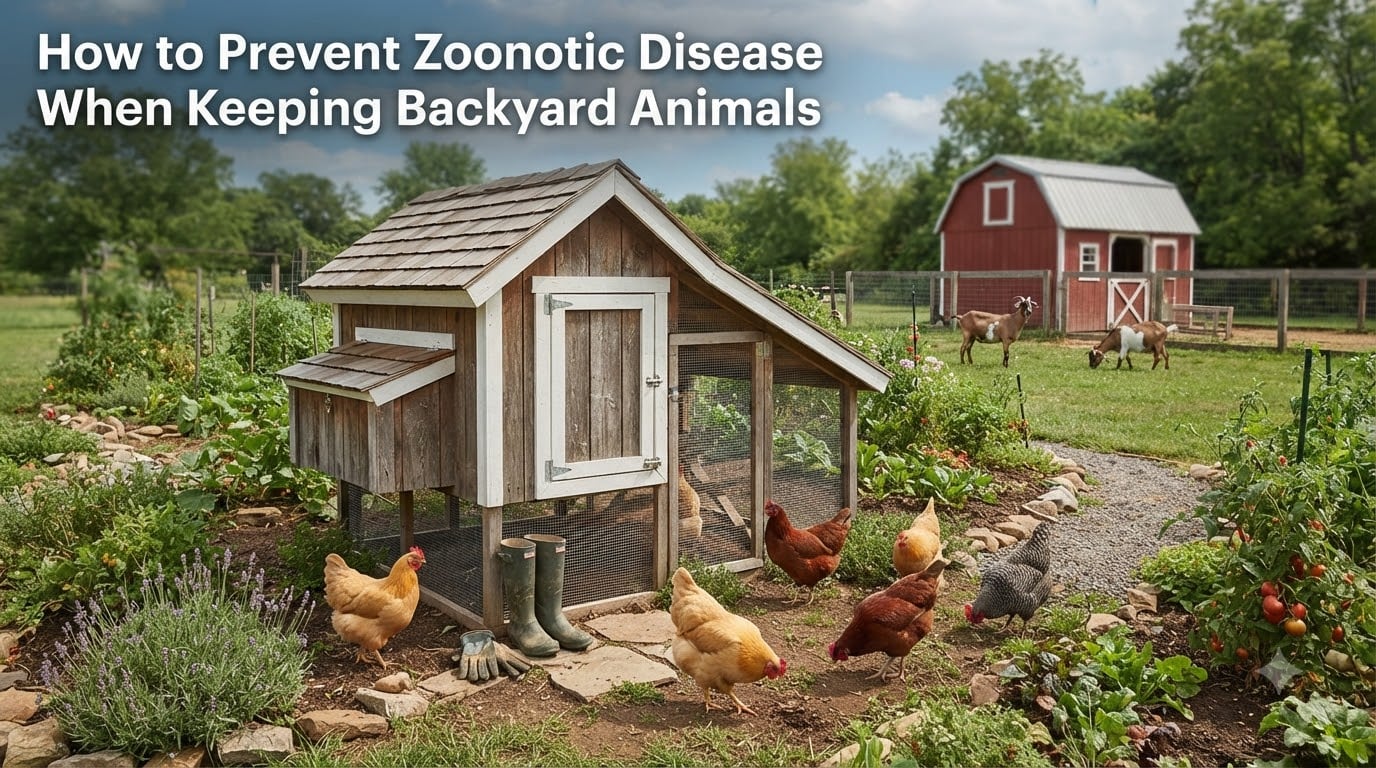
I learned about zoonotic disease the hard way when a friend of mine ended up in the ER after handling what looked like perfectly healthy chicks at a feed store. She spent five days on IV antibiotics fighting a Salmonella infection she never saw coming. That story is the reason our team wrote this guide. We want every backyard animal owner to walk away with the knowledge that keeps their flock, herd, and family safe.
Every year, the CDC tracks hundreds of Salmonella outbreaks linked to backyard poultry. Add in Campylobacter, E. coli, and the looming H5N1 avian influenza threat, and you have real reasons to take prevention seriously. The good news: you do not need a commercial biosecurity setup to keep your family safe. You need consistent habits and a clear plan. This guide shows you exactly how to prevent zoonotic disease when keeping backyard animals, drawing from CDC guidelines, veterinary associations, and what our team has learned from raising chickens, ducks, and goats at home.
By the end of this article, you will know the most common zoonotic threats by animal type, the exact handwashing protocol that cuts your risk, what PPE to wear and when, how to clean coops the right way, how long to quarantine new animals, and how to protect kids, elderly relatives, and anyone immunocompromised. We will also address the things most guides skip, like legal considerations and how to talk to worried neighbors. Let’s get started.
Table of Contents
What Are Zoonotic Diseases and Why Do Backyard Animals Matter?
Zoonotic diseases are illnesses that can spread from animals to humans. The CDC estimates that 6 out of every 10 known infectious diseases in people can spread from animals, and 3 out of 4 new or emerging infectious diseases originate in animals. When we talk about how to prevent zoonotic disease when keeping backyard animals, we are talking about breaking the transmission chain between your flock or herd and your household.
Backyard animals create a specific kind of risk. Unlike commercial operations, small flocks and herds often lack formal biosecurity programs, regular veterinary oversight, and trained handlers. Even more important: a chicken can look perfectly healthy and still shed Salmonella in its droppings. The bird does not have to be sick to make you sick. That is the heart of the problem and the reason a prevention-first mindset matters.
Transmission happens through several routes, and understanding them helps you target the right prevention step.
Direct contact: Handling animals, especially poultry, can transfer bacteria from feathers, feet, beaks, or fur to your hands.
Indirect contact: Touching contaminated surfaces like coop walls, feed bowls, waterers, bedding, or fence posts spreads pathogens even without animal contact.
Fecal-oral route: The most common transmission path. Tiny amounts of contaminated droppings on hands, eggs, or food move bacteria into your mouth.
Inhalation: Dry fecal dust, aerosolized feed, or disturbed bedding can carry pathogens into your lungs.
Vector-borne: Mosquitoes, ticks, fleas, and rodents can transmit some zoonotic diseases between animals and humans.
The takeaway: prevention is layered. You are not relying on a single step. You are building habits that interrupt every plausible transmission route.
Common Zoonotic Diseases From Backyard Animals
Knowing what you are defending against makes prevention concrete. Here are the diseases our team considers most important for backyard animal owners in 2026.
Salmonella
Salmonella is the headline risk for backyard poultry. Symptoms in humans include diarrhea, fever, stomach cramps, and vomiting, typically appearing 6 hours to 6 days after exposure. The CDC reports more than 1,000,000 Salmonella illnesses in the U.S. each year, with backyard poultry driving a growing share of outbreaks. Chicks and ducklings under 6 months old shed the bacteria most heavily, even when they appear healthy.
Campylobacter
Campylobacter causes similar gastrointestinal symptoms and is the second most common bacterial cause of diarrhea in the United States. Backyard chickens, turkeys, and ducks frequently carry Campylobacter in their intestines without showing symptoms. Infection happens through the same fecal-oral route as Salmonella, often via contaminated water, equipment, or unwashed hands.
E. coli (STEC)
Certain strains of E. coli, especially Shiga toxin-producing E. coli (STEC) like O157:H7, can cause severe illness including kidney failure in young children. Cattle, goats, sheep, and other ruminants are the main carriers. Even petting zoo and farm visit exposures have triggered outbreaks.
Avian Influenza (H5N1 and H5N5)
Highly pathogenic avian influenza has been spreading through wild birds, poultry, and dairy cattle since 2022. Human cases remain rare but serious, with high mortality rates in documented infections. Backyard flock owners in affected regions need strict biosecurity. As of 2026, H5N1 continues to circulate in wild bird populations, making vigilance essential.
Psittacosis
Psittacosis (also called parrot fever) comes from Chlamydia psittaci, a bacterium shed by infected birds, especially psittacines like parrots, parakeets, and cockatiels. Symptoms include fever, headache, and pneumonia. Cockatiels and other pet birds can be carriers without obvious illness.
Rabies
Any mammal can carry rabies. While backyard poultry rarely transmit it, livestock, rabbits, and feral cats near your property can. Any bite or scratch from a wild or unvaccinated animal warrants immediate medical attention.
Q Fever, Brucellosis, and Leptospirosis
These bacterial infections are less common but worth knowing about, especially if you keep goats, sheep, or cattle. Q fever spreads through inhalation of contaminated dust from birthing fluids or placenta. Brucellosis causes flu-like illness and is transmitted through unpasteurized dairy or contact with birthing animals. Leptospirosis spreads through water or soil contaminated with infected animal urine.
Quick Reference: Zoonotic Diseases by Animal Type
| Animal | Primary Zoonotic Risks | Main Transmission Route |
|---|---|---|
| Chickens, ducks, turkeys | Salmonella, Campylobacter, Avian Influenza | Fecal-oral, indirect contact |
| Goats, sheep, cattle | E. coli STEC, Q Fever, Brucellosis, Cryptosporidium | Fecal-oral, birthing fluids, unpasteurized dairy |
| Rabbits | Tularemia, Ringworm, Pasteurella | Direct contact, tick bites |
| Pet birds (parrots, cockatiels) | Psittacosis | Inhalation of dust, direct contact |
| Pigs | Brucellosis, Leptospirosis, Influenza | Respiratory droplets, contact |
| Bees (apiaries) | Limited; mainly allergic reactions | Stings |
| Wildlife (rodents, raccoons) | Rabies, Leptospirosis, Hantavirus | Bites, urine-contaminated dust |
Hand Hygiene: Your First Defense Against Zoonotic Disease
If you remember nothing else from this guide, remember this: handwashing is the single most effective step. The CDC and our own experience agree that the vast majority of backyard-related zoonotic illness would be prevented with consistent, thorough handwashing.
The Right Way to Wash Hands After Animal Contact
Wet your hands with clean, running water (warm or cold).
Apply soap and lather well, covering backs of hands, between fingers, and under nails.
Scrub for at least 20 seconds. Need a timer? Hum the “Happy Birthday” song twice.
Rinse thoroughly under running water to wash away loosened pathogens.
Dry with a clean towel or air dry. Reusable cloth towels should be laundered regularly.
Hand sanitizer with at least 60 percent alcohol is a backup, not a replacement. Use it when soap and water are unavailable, then wash properly as soon as you can. Sanitizers do not work well against all pathogens (notably, they are less effective against certain parasites like Cryptosporidium).
When to Wash Your Hands
Our team built a habit around specific trigger moments. Wash your hands every time you finish one of these tasks.
After handling animals, even if you wore gloves
After collecting eggs or working in the coop
After touching feed, water containers, or bedding
After cleaning manure or soiled equipment
Before eating, drinking, or preparing food
After removing boots or coveralls worn in the coop
After treating a sick or injured animal
Keep a handwashing station near the coop entrance. A simple setup with a soap dispenser, running water (even from a hose), and paper towels makes compliance realistic. We learned this the hard way. If the sink is 50 steps away, you skip washing. Convenience drives habit.
Personal Protective Equipment (PPE) for Backyard Animal Care
Gloves, dedicated footwear, and protective clothing form your second layer of defense. PPE stops pathogens before they reach your skin or your home.
Gloves
Disposable nitrile or latex gloves work well for most tasks: collecting eggs, handling sick birds, cleaning coops, or working with birthing animals. We keep a box in the coop and another in the barn. Put them on at the start of the task, change them if they tear, and discard them in a sealed trash bag at the end. Wash hands after removal.
Heavy-duty rubber gloves are better for cleaning jobs involving disinfectants or scrubbing manure-caked surfaces. They protect both you and your hands from harsh chemicals.
Dedicated Footwear
This is one of the highest-impact habits, and most casual owners skip it. Designate a pair of boots or shoes strictly for coop and barn use. Do not wear them into your house, kitchen, or car. Pathogens tracked on footwear are a documented outbreak driver.
If you cannot dedicate a pair of boots, use disposable boot covers. They slip over your regular shoes and get discarded after each coop visit. We keep a stack by the coop door along with a boot brush and a shallow disinfectant footbath tray (a plastic tray with a diluted bleach solution that boots step into on the way in and out).
Coveralls and Designated Clothing
Wearing coveralls or a dedicated jacket over your regular clothes keeps contamination off your everyday wardrobe. Wash these items separately from household laundry, in hot water with detergent, and dry on high heat. We keep a hook by the back door where coveralls hang, ready for the next coop visit. They never enter the house wearing them.
Masks and Eye Protection
For dusty jobs like dry-cleaning coops, sweeping old bedding, or working in confined animal areas, wear an N95 or P100 mask. Dry fecal dust carries pathogens directly into your lungs. Goggles or a face shield protect your eyes from splashes during high-pressure washing or birthing assistance. Skip the mask only if the work is light and bedding stays damp.
Safe Handling of Animals and Equipment
How you physically interact with your animals matters as much as what you wear. Calm, deliberate handling reduces stress on the animals, which lowers their disease susceptibility, and reduces your risk of bites and scratches.
Handle Animals Gently and Predictably
Approach animals from the side where they can see you. Speak softly. Move slowly. Sudden movements trigger flight or defensive responses, especially in poultry. When picking up a chicken, support its body with both hands, one under the breast and one over the wings. Never squeeze.
Wash your hands before and after handling any sick or injured animal, even if you wear gloves. Sick animals shed pathogens at much higher rates than healthy ones.
Avoid Bites and Scratches
Most backyard poultry do not bite aggressively, but beaks and claws can break skin. Any break in skin is a route for bacteria like Pasteurella or Staphylococcus. If you are scratched or bitten:
Wash the wound immediately with soap and running water for 5 minutes.
Apply an antiseptic and cover with a clean bandage.
Monitor for redness, swelling, drainage, or fever.
Seek medical care if symptoms develop or the wound is deep.
Keep Equipment Clean and Species-Specific
Dedicate tools (scrapers, rakes, buckets) to specific animal areas. Do not use the same shovel for the chicken coop and the goat barn unless you disinfect it between uses. We color-code our tools: green for poultry, blue for goats, red for the garden. It sounds obsessive until you watch cross-contamination drive a Salmonella outbreak through a flock.
Disinfect equipment weekly with a 1:32 dilution of household bleach (about 1/2 cup bleach per gallon of water) or a quaternary ammonium compound labeled for animal housing. Rinse thoroughly and let dry before reuse.
Animal Housing and Coop Management Best Practices
A clean, well-ventilated living space keeps animals healthier, which keeps you healthier. Stress and overcrowding suppress immune systems and increase pathogen shedding.
Cleaning Protocol Step-by-Step
Follow this process for a thorough monthly deep clean. Adjust frequency based on flock size, but never go longer than 6 weeks between deep cleans.
Remove all animals. Move them to a temporary pen or run while you clean.
Dry-clean first. Remove all bedding, manure, feathers, and feed scraps. Sweep walls, roosts, and nesting boxes. Wear your mask during this step.
Pre-rinse surfaces with water to remove remaining organic matter. Organic material neutralizes most disinfectants.
Apply disinfectant. Use a 1:10 bleach-to-water solution (about 1.5 cups bleach per gallon of water) for heavily soiled areas. For routine cleaning, a 1:32 dilution works well. Spray or wipe on all surfaces, including roosts, nest boxes, walls, and floors.
Let it sit for 10 minutes to kill pathogens. Contact time matters. Wiping it off immediately wastes the disinfectant.
Rinse thoroughly with clean water, especially surfaces animals touch. Bleach residue can irritate feet and respiratory tracts.
Allow to dry completely before adding fresh bedding. Moisture breeds bacteria and mold.
Add 4 to 6 inches of fresh bedding (pine shavings work well). Avoid cedar, which can cause respiratory irritation.
Daily and Weekly Maintenance
Deep cleans alone are not enough. Small habits prevent buildup.
Daily: Remove visible manure from high-traffic areas. Refill waterers with fresh water. Collect eggs promptly. Refill feeders; remove wet or moldy feed immediately.
Weekly: Replace top layer of bedding in nesting boxes. Scrape droppings boards under roosts. Check for signs of pests. Wipe down waterers with diluted vinegar.
Monthly: Deep clean as outlined above. Inspect for structural damage or rodent entry points.
Ventilation and Air Quality
Good airflow reduces moisture, ammonia, and pathogen load. Aim for at least 1 square foot of ventilation opening per 10 square feet of floor space, positioned high on walls to avoid drafts at roost level. In winter, balance ventilation against cold protection. Ammonia smell at nose level means ventilation is inadequate.
Pest and Rodent Control
Rats and mice carry Salmonella, Leptospira, and other pathogens. They contaminate feed and bedding with urine and droppings. Seal holes larger than 1/4 inch with hardware cloth. Store feed in metal containers with tight lids. Remove spilled feed daily. Use snap traps if needed, but never poison, which can poison animals and wildlife.
Wild birds carry avian influenza and other pathogens. While you cannot exclude them entirely, keep them away from your flock’s feed and water by using covered feeders and runs. Avoid free-ranging your birds in areas with heavy wild bird traffic (shorelines, migratory paths).
Quarantine Procedures for New and Sick Animals
Every new animal is a potential disease introduction. The CDC recommends at least 30 days of separation for new poultry. We extend this to 4 to 6 weeks for any bird we buy from a sale or swap meet, where birds from many sources mix.
Setting Up Quarantine
House new animals in a separate airspace. Ideally, 30 feet or more from your existing flock, with separate ventilation. If distance is impossible, use solid barriers and run separate air handlers.
Use separate equipment for the quarantine area: feeders, waterers, tools, boots. Color-coding helps.
Care for quarantined animals LAST. After feeding and watering your main flock, change clothes and boots before visiting new birds.
Observe daily for signs of illness: lethargy, respiratory symptoms, diarrhea, decreased egg production, abnormal droppings, swelling, or sudden death.
Quarantine lasts a minimum of 30 days. Extend if any symptoms appear.
Test when possible. For poultry, ask breeders about NPIP (National Poultry Improvement Plan) certification. For other species, ask your vet about pre-introduction testing.
Quarantining Sick Animals
The same principles apply. Isolate any animal showing symptoms immediately. Diseases spread fast through close contact. We built a small “hospital pen” inside our larger barn for this purpose, with its own supplies and dedicated boots.
Protecting Children and High-Risk Individuals
Children under 5, adults over 65, pregnant women, and anyone immunocompromised face higher risks of severe zoonotic illness. Salmonella in a toddler can mean hospitalization. Avian influenza in an elderly relative can mean death. Prevention here is non-negotiable.
Children-Specific Rules
Supervise all contact between children and animals, every single time.
No kissing, snuggling, or holding animals near the face.
Children should not handle baby chicks or ducklings without close supervision and immediate handwashing.
Keep animals out of play areas, sandboxes, and gardens where kids spend time.
Do not allow animals in kitchens, dining rooms, or anywhere human food is prepared or served.
Teach and model handwashing until it is automatic.
For families with infants or toddlers, consider waiting until children are at least 5 years old before introducing backyard poultry. The CDC is clear on this point: young children are at highest risk for severe Salmonella infection.
Immunocompromised, Pregnant, and Elderly Household Members
Anyone in these groups should avoid direct contact with animal birthing fluids, manure, and known sick animals. They should not clean coops, handle raw poultry, or work with raw eggs. If they must be involved, full PPE (mask, gloves, coveralls, dedicated footwear) is essential.
Pregnant women should specifically avoid contact with birthing goats, sheep, and cattle due to Q fever and Brucellosis risk. They should also avoid unpasteurized dairy from any animal source.
Recognizing Signs of Illness in Backyard Animals
Catching illness early protects both your animals and your family. A sick bird that is shedding pathogens at high levels is a bigger risk to you than a healthy one.
Chickens and Other Poultry
Respiratory signs: sneezing, coughing, gasping, watery eyes, nasal discharge
Digestive signs: diarrhea, abnormal droppings, bloody stool
Behavioral changes: lethargy, isolation from the flock, decreased appetite
Production changes: sudden drop in egg laying, thin-shelled or misshapen eggs
Physical signs: swollen joints, paralysis, twisted neck, weight loss, pale comb
Sudden death of multiple birds (suggests serious outbreak)
Goats, Sheep, and Cattle
Respiratory signs: coughing, nasal discharge, rapid breathing
Digestive signs: diarrhea, bloating, decreased cud-chewing
Reproductive signs: abortion, stillbirth, retained placenta
Behavioral changes: isolation, decreased appetite, lethargy
Physical signs: lameness, swollen joints, fever
Milk production changes in dairy animals
Rabbits
Sneezing, nasal discharge, matted fur on forepaws
Diarrhea or absence of droppings
Lethargy, hunched posture, loss of appetite
Hair loss, flaky skin, scratching (possible ringworm)
When in doubt, call your vet. Early intervention saves animal lives and reduces zoonotic risk.
Safe Egg Handling and Food Safety Practices
Eggs can carry Salmonella on the shell and, rarely, inside. Proper handling prevents illness.
Collecting Eggs
Collect eggs at least twice daily, more often in hot weather.
Discard cracked, broken, or heavily soiled eggs. Bacteria penetrate cracks quickly.
Do not wash eggs with cold water. Cold water causes shell pores to contract, drawing bacteria inside. Either leave unwashed (in countries where this is standard) or wash with warm water (warmer than the egg) and dry immediately.
Refrigerate unwashed eggs at room temperature for up to 2 weeks; refrigerated eggs last 5 weeks.
Cooking and Eating
Cook eggs thoroughly until both yolk and white are firm. Avoid runny yolks, homemade mayo, hollandaise, and eggnog made with raw or undercooked eggs. If you feed eggs back to your flock or dogs, cook them fully first.
Wash hands thoroughly after handling raw eggs, just as you would with any raw animal product. Keep raw eggs separate from ready-to-eat foods.
When to Seek Veterinary Care for Your Backyard Animals?
Backyard animal owners benefit enormously from a relationship with a veterinarian experienced in their species. Large animal vets handle livestock; avian vets handle poultry; small ruminant specialists cover goats and sheep. Find one before you need one.
Regular Preventive Care
Annual or biannual wellness exams
Vaccinations appropriate to species and region (rabies for mammals, tetanus for horses, region-specific poultry vaccines)
Parasite control (deworming for ruminants, mite and worm treatment for poultry)
Hoof trimming, beak trimming, shearing as needed
Nutritional counseling
When to Call the Vet Immediately
Multiple animals sick at the same time
Sudden death of any animal without obvious cause
Neurological symptoms (twisted neck, paralysis, circling)
Severe respiratory distress
Reproductive problems (abortions, especially in goats and sheep)
Any sign of avian influenza in your flock, especially in areas with active H5N1 outbreaks
Bites or scratches from a wild animal
Report Suspected Avian Influenza
If you suspect H5N1 or H5N5 in your flock (especially with sudden deaths, neurological signs, or respiratory distress in multiple birds), contact your state veterinarian or USDA APHIS immediately. Do not handle dead birds with bare hands. There are federal indemnity programs and biosecurity response resources available.
Legal and Community Considerations for Backyard Animals
Most people we know who keep backyard animals have, at some point, dealt with a concerned neighbor or a city ordinance question. Knowing the rules protects you and reduces conflict.
Local Ordinances
Before bringing home any animal, check your city or county regulations. Common restrictions include:
Number of animals allowed per lot
Rooster prohibitions in residential zones
Setback requirements (distance coops must be from property lines or dwellings)
Prohibitions on certain species (goats, pigs, roosters, ducks, geese)
Slaughter restrictions
Permit requirements
Violations can result in fines, forced removal of animals, or worse. Knowing the law up front saves grief later. Your city planning or animal control office can clarify rules. HOAs have additional restrictions in many neighborhoods.
Talking to Concerned Neighbors
Most neighbor concerns come from fear, smell, or noise. Address each directly.
Smell: Regular cleaning (covered above) prevents odor. Compost manure properly, away from property lines.
Noise: No roosters, or confine them to insulated coops before dawn.
Disease fears: Share your biosecurity plan. Invite neighbors to see your setup. Show that you follow CDC and veterinary guidelines.
Predator and pest concerns: Show your secure housing and rodent control measures.
Education defuses most conflicts. Most people have no idea how the CDC, USDA, and state agencies regulate small flocks. Sharing reputable resources builds confidence.
Quick Reference: Daily, Weekly, and Monthly Prevention Checklist
Print this. Tape it inside your coop door. Run through it until it is muscle memory.
Daily Tasks
Wash hands before and after any animal contact
Collect eggs twice daily; discard damaged ones
Remove visible manure from high-traffic areas
Refill clean water in all waterers
Check feed for mold or moisture; remove spoiled feed
Observe all animals for signs of illness
Wear dedicated footwear or boot covers in coop areas
Weekly Tasks
Replace top layer of bedding in nesting boxes
Scrape droppings boards under roosts
Wipe down waterers with diluted vinegar
Wash and disinfect feed scoops and buckets
Inspect coop for rodent entry points; seal as needed
Wash coveralls and dedicated clothing in hot water
Restock hand soap, paper towels, and gloves at coop station
Monthly Tasks
Deep clean coop with 1:10 or 1:32 bleach solution (see protocol above)
Inspect ventilation; ensure 1 sq ft opening per 10 sq ft floor space
Check structural integrity of housing (rot, predators, drafts)
Rotate and compost manure properly (away from animal areas)
Review biosecurity supplies; restock disinfectant and PPE
Schedule or check on veterinary care plans
When Bringing Home New Animals
Quarantine for a minimum of 30 days, ideally 6 weeks
Use separate equipment, dedicated boots and coveralls
Care for new animals after your existing herd or flock
Test for relevant diseases if possible
Watch closely for signs of illness during quarantine
Frequently Asked Questions
What are some ways to prevent zoonotic diseases?
Wash your hands thoroughly with soap and water after every contact with animals, their feed, or their environment. Wear dedicated footwear and gloves in animal areas. Keep coops and barns clean with regular disinfection using a diluted bleach solution. Quarantine new animals for at least 30 days before mixing them with your existing herd or flock. Keep children supervised around animals and teach proper hygiene early.
How to prevent disease in backyard chickens?
Start with biosecurity: dedicated boots for the coop, handwashing before and after handling birds, and clean equipment. Quarantine new chickens for 30 days minimum. Keep coops dry, well-ventilated, and clean with weekly bedding changes and monthly deep cleans using a 1:32 bleach solution. Control rodents and wild birds, which carry pathogens. Monitor your flock daily for signs of illness and isolate sick birds immediately.
Are backyard chickens a health hazard?
Backyard chickens carry some health risks, mainly Salmonella, Campylobacter, and avian influenza, but these risks are manageable with consistent hygiene and biosecurity practices. Healthy-looking birds can still shed bacteria, so prevention matters regardless of how your flock looks. Families with young children, elderly relatives, or immunocompromised members should take extra precautions. With proper handwashing, dedicated footwear, and clean coops, most backyard chicken owners experience no health problems.
Do backyard chickens carry disease?
Yes, backyard chickens can carry Salmonella, Campylobacter, E. coli, and avian influenza, even when they appear perfectly healthy. They shed these bacteria in their droppings, on feathers, and on body surfaces. Most chickens carry some level of these pathogens naturally. The risk to humans is real but preventable through consistent hand hygiene, protective equipment, and clean living conditions. Outbreaks occur mainly when owners skip basic biosecurity steps like handwashing and coop cleaning.
What are safe practices to avoid zoonotic diseases from wildlife?
Keep wildlife out of feed storage by using sealed metal containers. Seal any holes larger than a quarter inch in coop walls and roofs to block rodents. Remove spilled feed daily and clean up fallen fruit or nuts from trees near animal areas. Avoid handling wild animals, especially raccoons, skunks, foxes, bats, and feral cats, which are rabies vectors. If you must handle wildlife, wear gloves and wash hands thoroughly. Vaccinate livestock and pets against rabies where appropriate.
What are the most common problems with backyard chicken coops?
The most common backyard chicken coop problems are moisture buildup, poor ventilation, rodent infestations, and dirty bedding. Moisture breeds bacteria and respiratory illness. Poor ventilation causes ammonia buildup from manure, damaging bird lungs. Rodents contaminate feed and spread disease. Dirty bedding harbors parasites and pathogens. Address these with proper ventilation design, regular bedding changes, sealed feed storage, and routine cleaning with appropriate disinfectants like diluted bleach.
Bringing It All Together
Learning how to prevent zoonotic disease when keeping backyard animals comes down to consistency, not complexity. The habits that protect your family are simple: wash your hands every time, wear dedicated boots and gloves in animal areas, keep coops clean and ventilated, quarantine new animals, and watch for signs of illness in your animals and your family.
Backyard animal keeping is one of the most rewarding things our team has done. The fresh eggs, the personalities of our ducks, the gentle curiosity of our goats, all of it brings joy that store-bought food cannot match. That joy does not have to come at the cost of health. With the habits outlined here, you can protect your family and your animals for years to come.
Start small. Pick one or two prevention practices to build this week: a handwashing station by the coop, dedicated boots, or a monthly cleaning schedule. Once those habits stick, add another. Within a few months, you will have a complete biosecurity routine that feels automatic, and your family will be safer for it. That is how we prevent zoonotic disease when keeping backyard animals: one habit at a time, every day, year after year.