
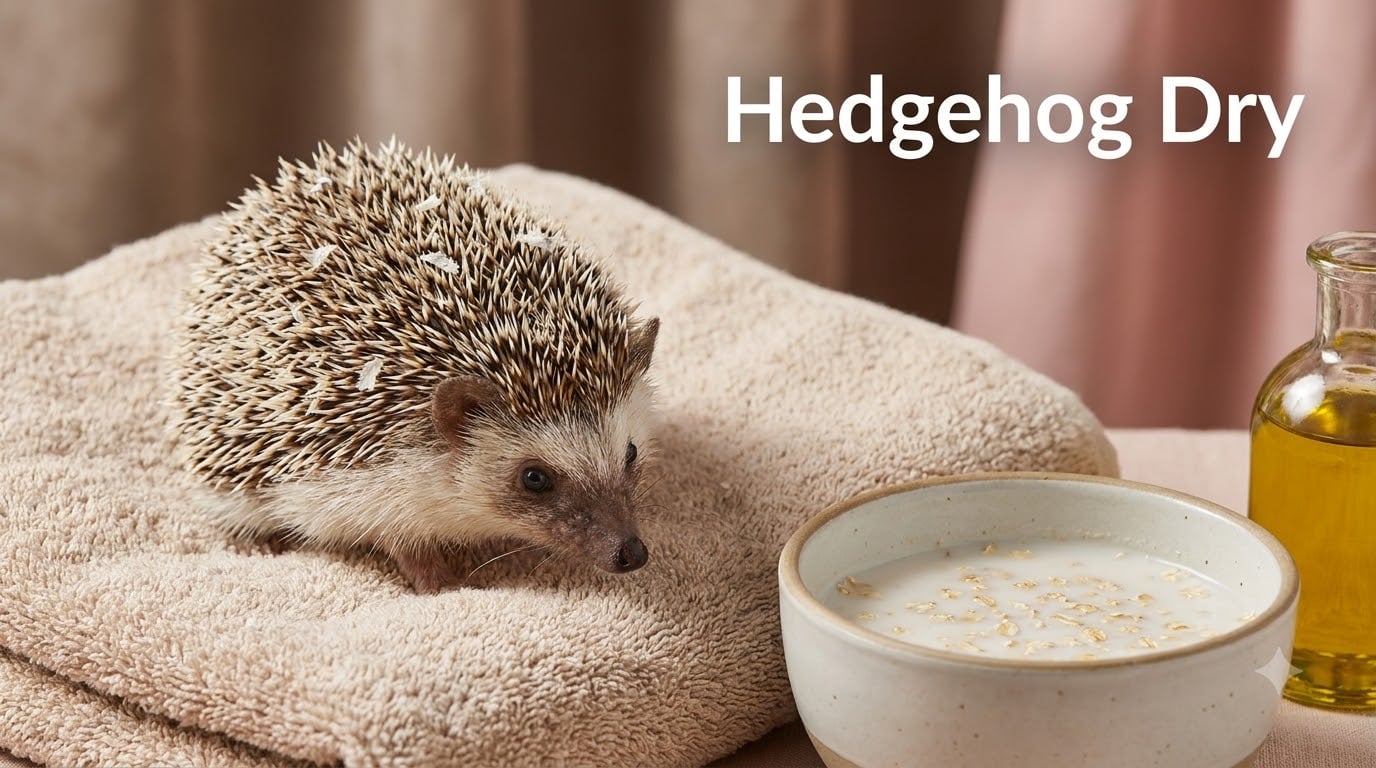
Hedgehog dry skin is one of the most common health complaints I see among pet hedgehog owners, and it’s also one of the most frustrating. Flaky skin shows up out of nowhere, your hedgehog scratches more than usual, and you start wondering whether you’re dealing with simple dryness or something worse like mites.
I’ve spent weeks going through veterinary sources, breeder forums, and the r/Hedgehog subreddit to put together this troubleshooting checklist. In this guide, you’ll learn how to identify the cause of your hedgehog’s flaky skin, how to tell dry skin apart from mites, the exact treatments that work at home, and the warning signs that mean it’s time to call an exotic vet.
Table of Contents
What Hedgehog Dry Skin Looks Like and Why It Happens?
Hedgehog dry skin usually shows up as small white or grey flakes visible between the quills and along the back. Many owners describe it as “dandruff” sitting on top of the quills.
Other common signs include increased scratching, especially right after waking up, and small amounts of quill loss beyond what’s normal during quilling. The skin underneath may look pink or slightly rough instead of smooth and soft.
The main causes of hedgehog dry skin are:
Low humidity: Indoor heating in winter drops humidity below 30%, which is far too dry for a hedgehog’s skin.
Over-bathing: Baths more than once a week strip natural oils and make flaking worse.
Poor diet: Kibble that’s low in essential fatty acids can leave skin dull and flaky.
Seasonal changes: Many hedgehogs develop dry skin in late fall and winter.
Harsh bedding: Cedar and some pine shavings contain oils that irritate skin.
Quilling, the natural process where baby hedgehogs lose baby quills and grow adult ones between 6 and 12 weeks, can also look like dry skin. The difference is that quilling comes with new quills poking through, while dry skin produces flakes without new growth.
Hedgehog Dry Skin vs Mites: A Symptom Comparison
The single biggest question hedgehog owners ask is whether they’re dealing with dry skin or mites. The two can look similar at first, but the underlying causes and treatments are completely different.
Mites are tiny parasites, most commonly Caparinia tripilis, that burrow into the skin and cause intense itching. A mild case of mites can look almost identical to dry skin flakes, which is why I built this comparison:
Flake appearance: Dry skin flakes are bigger and irregular. Mite flakes are usually finer, dustier, and concentrated around the face, ears, and lower back.
Scratching intensity: Dry skin causes mild scratching. Mites cause frantic, almost constant scratching, often with the hedgehog rubbing against cage items.
Bald patches: Dry skin rarely causes bald spots. Mites cause visible thinning and bald patches, especially around the eyes and ears.
Quill loss: Dry skin causes occasional quill loss. Mites cause clusters of quills falling out together.
Behavior: With dry skin, behavior is normal. With mites, hedgehogs often become irritable, ball up more, and may stop eating.
The “white paper test” is a simple at-home trick many owners use. Place your hedgehog on a dark cloth or white paper towel and gently rub its back. If you see tiny moving specks, those are likely mites, not dry skin.
When in doubt, treat for both. A vet visit with a skin scraping can confirm mites under a microscope. The most common safe treatment is Revolution (selamectin), applied topically by a vet. Never use over-the-counter Ivermectin without veterinary guidance, as dosing errors can be fatal.
How to Give a Hedgehog Oatmeal Bath: Step-by-Step
An oatmeal bath is the safest first-line treatment for hedgehog dry skin. It soothes irritation, hydrates the skin, and most hedgehogs tolerate it well.
Grind plain oatmeal: Put a quarter cup of plain, unflavored oatmeal into a blender or food processor and pulse until it looks like fine powder. You can also use a clean coffee grinder.
Test the water: Fill a shallow container with about an inch of lukewarm water. The temperature should feel comfortable on the inside of your wrist, around 38 degrees Celsius.
Mix the oatmeal: Stir the ground oatmeal into the water until the water looks milky and slightly cloudy.
Soak your hedgehog: Place your hedgehog in the bath and let it stand or wade for 5 to 10 minutes. Pour the oatmeal water gently over the back and sides, avoiding the face and ears.
Rinse and dry: Lift your hedgehog out, rinse with a small amount of clean lukewarm water, and immediately wrap in a soft, dry towel. Pat dry thoroughly; never leave your hedgehog damp.
Limit oatmeal baths to once a week. More frequent bathing strips natural oils and can make dry skin worse. If your hedgehog hates baths, try placing a small towel in the water so it has something to grip.
Topical Oil Treatments That Are Safe for Hedgehogs
Topical oils help restore moisture to the skin barrier. The key is using small amounts and choosing safe oils.
Olive oil: This is the most recommended option. Apply 4 to 5 drops directly onto the skin between the quills along the back. Massage gently. Use extra virgin olive oil if possible, and apply every 2 to 3 days until you see improvement.
Flaxseed oil: Flaxseed oil is rich in omega-3 fatty acids and absorbs quickly. A few drops rubbed between the quills twice a week can help with persistent dryness. Always refrigerate flaxseed oil to prevent it from going rancid.
Coconut oil: Coconut oil is safe in small amounts, but it can clog pores if overused. Use a pea-sized amount, melted between your fingers, and apply only to dry patches. Monitor for any reaction, as some hedgehogs are sensitive.
Vitamin E oil: Vitamin E supports skin healing. Puncture a vitamin E gel cap and dab the oil directly onto dry or flaking areas. Use once daily for up to a week, then pause.
Warning: Never use tea tree oil on hedgehogs. It is toxic to small animals even in tiny amounts and can cause severe neurological symptoms. Also avoid essential oils, mineral oil, and any product not specifically approved for small mammals.
Dietary Supplements for Hedgehog Skin Health
What your hedgehog eats has a direct impact on skin quality. A diet that’s low in essential fatty acids is one of the top causes of chronic hedgehog dry skin.
Wild Alaskan salmon oil: This is the gold standard supplement. Most experienced breeders recommend adding a small amount to food 2 to 3 times per week. For an average adult hedgehog, half a teaspoon is plenty. Many hedgehog owners see noticeable improvement in skin and coat within 3 to 4 weeks.
Flaxseed oil as a food additive: A few drops mixed into wet food works similarly to salmon oil. It’s a good option if your hedgehog refuses fish-based supplements.
High-quality protein: Make sure the base diet is high-quality cat food or hedgehog-specific kibble with real meat as the first ingredient. Insect protein from mealworms, crickets, or silkworms also supports skin health.
Vitamin E from food: Small amounts of scrambled egg or mashed avocado once a week provide natural vitamin E and healthy fats. Avoid overfeeding, as both are high in calories.
Controlling Humidity and Environment for Hedgehog Skin
Environmental factors are often the hidden cause of hedgehog dry skin. The ideal humidity range for a hedgehog is 40% to 60%, which is higher than most homes maintain during winter.
Start by measuring the humidity in the room where the cage sits. A basic hygrometer costs very little and gives you real numbers. If humidity is below 40%, add a small cool-mist humidifier near (but not directly next to) the enclosure.
Bedding also matters. Paper-based bedding, fleece liners, and aspen shavings are all safe choices. Avoid cedar and untreated pine, which release aromatic oils that irritate skin and can cause respiratory issues.
Place the cage away from heating vents, drafty windows, and direct sunlight. Stable, moderate temperatures between 22 and 26 degrees Celsius support healthy skin year-round.
Baby Hedgehog Dry Skin: Special Considerations
Baby hedgehogs under 6 months old have more sensitive skin than adults. Their skin is also going through the natural quilling process, which looks like dryness but is actually normal.
For babies, skip oil treatments unless a vet recommends them. Use only gentle oatmeal baths if a bath is needed, and never use any product with fragrance or added chemicals.
Quilling usually happens between 6 and 12 weeks of age. During this time, you’ll see baby quills falling out and being replaced by adult quills. Some flaking is normal, but if the baby is scratching constantly or developing bald patches, see a vet.
Always consult an exotic vet before treating baby hedgehogs with any supplement or topical product. Their small size means dosing errors have bigger consequences.
When to See a Veterinarian for Hedgehog Skin Issues
Home treatment works for mild, clearly dry skin. But some signs mean it’s time to stop troubleshooting and book a vet appointment.
Bald patches or open sores: These can indicate mites, fungal infection, or injury that needs prescription treatment.
Persistent scratching: If your hedgehog is scratching constantly after 2 weeks of home treatment, something else is going on.
Swelling, crusting, or discharge: These are signs of secondary infection.
Lethargy or appetite loss: Skin issues combined with behavior changes often signal systemic illness.
Quill loss in clumps: Healthy quills fall out one at a time. Clumps suggest mites or nutritional deficiency.
An exotic vet can perform a skin scraping to confirm or rule out mites, prescribe Revolution (selamectin) if needed, and run blood work to check for underlying issues. Most hedgehog skin problems resolve quickly with the right diagnosis.
Frequently Asked Questions About Hedgehog Dry Skin
How do I fix my hedgehog’s dry skin?
Start with a once-weekly oatmeal bath, apply 4 to 5 drops of olive oil between the quills every 2 to 3 days, and add half a teaspoon of wild Alaskan salmon oil to the food 2 to 3 times per week. Also check that humidity is between 40% and 60%.
How can I tell if my hedgehog has mites or dry skin?
Mites cause frantic scratching, fine dust-like flakes, bald patches, and crusty skin around the face and ears. Dry skin causes larger, irregular flakes with mild scratching and no bald patches. A vet skin scraping is the only way to confirm mites.
Can I put olive oil on my hedgehog?
Yes, olive oil is safe and recommended for hedgehog dry skin. Apply 4 to 5 drops directly onto the skin between the quills along the back, every 2 to 3 days. Use extra virgin olive oil and avoid getting it in the eyes or ears.
Can you put coconut oil on hedgehogs?
Coconut oil is safe in small amounts. Use a pea-sized amount, melted between your fingers, and apply only to dry patches. Overuse can clog pores, and some hedgehogs may be sensitive, so test a small area first.
How often should I bathe a hedgehog with dry skin?
Limit baths to once a week. Over-bathing strips natural oils and makes dry skin worse. Between baths, use topical oils and increase humidity to keep the skin hydrated.
Final Thoughts on Troubleshooting Hedgehog Dry Skin
Treating hedgehog dry skin is mostly about working through the checklist: rule out mites, check the humidity, review the diet, and add gentle topical care. Most mild cases clear up within 2 to 4 weeks once the underlying cause is addressed.
Be patient and observant. Take weekly photos to track progress, and don’t hesitate to see an exotic vet if symptoms don’t improve. Catching the difference between hedgehog dry skin and mites early saves time, money, and your hedgehog’s comfort.