
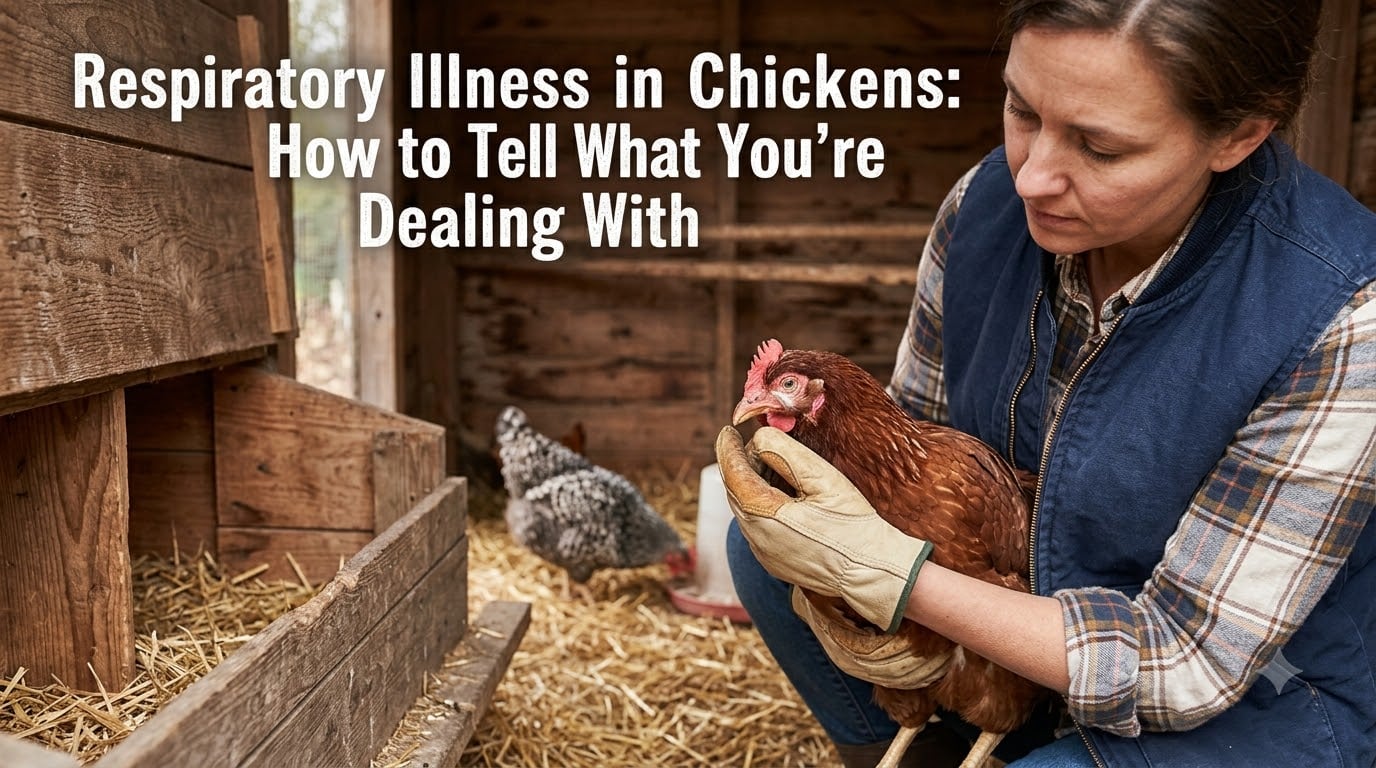
If your chicken is wheezing, sneezing, or producing strange gurgling sounds, you are probably dealing with some form of respiratory illness in chickens. I have raised backyard flocks for years, and I know the gut-punch feeling of hearing that first snick from across the coop.
Respiratory illness in chickens is one of the most common health issues facing backyard poultry keepers. It can range from a mild, short-lived viral infection to a chronic bacterial disease that stays with your flock for life. Getting the right diagnosis quickly matters because treatment, prevention, and even recovery timelines differ depending on which disease you are facing.
In this guide, I will walk you through how to tell what you are dealing with. I will cover the four major respiratory diseases (CRD, Infectious Bronchitis, Coryza, and ILT), provide a side-by-side comparison table, and share what actually works for treatment and prevention based on what I have seen work in real flocks.
Table of Contents
What Is Respiratory Illness in Chickens and How Does It Spread?
Respiratory illness in chickens is any infection or disease that affects the bird’s upper respiratory tract, sinuses, trachea, lungs, or air sacs. It causes inflammation and discharge that interferes with normal breathing.
These illnesses are caused by viruses, bacteria, or mycoplasma organisms. Common pathogens include Mycoplasma gallisepticum (which causes CRD), Infectious Bronchitis Virus (IBV), Avibacterium paragallinarum (which causes Coryza), and Infectious Laryngotracheitis Virus (ILTV).
The diseases spread through three main routes. Airborne transmission happens when sick birds cough or sneeze, releasing droplets that other chickens inhale. Contaminated equipment like feeders, waterers, and clothing can carry pathogens between coops. Finally, vertical transmission from infected hens to their eggs can introduce diseases like CRD to future generations.
Many chicken respiratory diseases are also carried by seemingly healthy birds. Stressors like molting, cold weather, or overcrowding can trigger flare-ups in carriers, which is why outbreaks often seem to come out of nowhere.
Common Symptoms of Respiratory Illness in Chickens
Before diving into individual diseases, it helps to recognize the universal warning signs of respiratory illness in chickens. Early detection improves recovery and limits flock-wide spread.
Respiratory signs include sneezing, coughing, snicking (a sharp, short inhale sound), wheezing, and rales (wet crackling when breathing). You may also see tail bobbing as the bird works harder to breathe.
Physical signs include watery eyes, bubbly or foamy discharge from the eyes or nostrils, and swollen sinuses around the face. In severe cases, the bird may gasp with an open beak, also called gaping.
Behavioral changes often appear alongside respiratory signs. Sick chickens become lethargic, fluff their feathers, and show decreased appetite. Egg-laying hens commonly experience a sudden drop in egg production, sometimes the only early clue.
If you notice any combination of these symptoms affecting more than one bird, assume it is contagious and start preparing to isolate the affected chicken immediately.
The 4 Major Respiratory Diseases Compared: CRD, IB, Coryza, and ILT
Use this side-by-side comparison table to narrow down which respiratory illness in chickens you are most likely facing. Match the symptoms you see at home against each disease’s signature signs.
| Disease | Cause | Key Symptoms | Disease Course | Recovery Time | Treatment |
|---|---|---|---|---|---|
| Chronic Respiratory Disease (CRD) | Mycoplasma gallisepticum (bacteria) | Sneezing, watery eyes, nasal discharge, mild swelling, low egg production, stunted growth in young birds | Slow onset, often chronic carrier state | Weeks to lifelong carrier; symptoms ease in 2-4 weeks with treatment | Tetracycline antibiotics, supportive care; not fully curable |
| Infectious Bronchitis (IB) | IBV coronavirus | Sneezing, coughing, gasping in chicks, sharp drop in egg production, thin or wrinkled eggshells, watery eggs | Rapid onset, spreads fast through flock | 5-7 days acute phase; laying hens take 4-8 weeks to return to normal egg production | Supportive care only; antibiotics prevent secondary infections |
| Coryza | Avibacterium paragallinarum (bacteria) | Swollen face and wattles, foul-smelling thick nasal discharge, sticky eyes, swollen joints in some cases | Rapid onset, very contagious | 2-3 weeks with treatment; full recovery in 4-6 weeks | Tetracycline or sulfa antibiotics; highly responsive to treatment |
| Infectious Laryngotracheitis (ILT) | Herpesvirus (ILTV) | Severe gasping and gaping, coughing up blood, bloody mucus, marked drop in egg production, swollen sinuses | Sudden, severe onset with significant mortality risk | 10-14 days acute phase; survivors can be carriers for life | Supportive care, vaccines in some flocks; severe cases need vet intervention |
To use this table for diagnosis, focus on the symptoms that stand out most in your flock. Foamy discharge and swollen sinuses in young pullets points toward CRD.
Eggshell quality dropping alongside sneezing in a laying flock suggests Infectious Bronchitis. A swollen face with foul-smelling discharge that hits the flock fast almost always means Coryza.
Blood-tinged mucus and birds gasping with open beaks is the classic red flag for ILT, which is the most dangerous of the four. Each disease leaves a signature, and matching those signatures saves time and birds.
Chronic Respiratory Disease (CRD) in Chickens
Chronic Respiratory Disease, also called CRD, is caused by Mycoplasma gallisepticum (often shortened to MG). It is one of the most widespread respiratory diseases in backyard poultry, with studies suggesting it exists in 60 to 90 percent of small flocks to some degree.
CRD symptoms start mildly and worsen over weeks. You will see sneezing, watery eyes, and clear nasal discharge that can become thicker over time. Young birds may show stunted growth, and laying hens will have lower egg production. The disease is rarely fatal on its own, but it weakens the bird’s defenses and opens the door to secondary infections like E. coli.
The frustrating reality about CRD is that infected birds become lifelong carriers. Even after symptoms disappear with treatment, the bacteria remain dormant in the flock. Stress events like molting, cold snaps, or new bird introductions can trigger flare-ups months or years later.
Treatment focuses on managing flare-ups rather than curing the disease. Tetracycline-class antibiotics like oxytetracycline or chlortetracycline shorten symptom duration by roughly half and reduce spread within the flock. Many keepers also support recovery with improved ventilation, dust reduction, and vitamin supplements in the water.
Infectious Bronchitis in Chickens
Infectious Bronchitis is caused by Infectious Bronchitis Virus (IBV), a coronavirus that targets the respiratory tract and reproductive system. It is highly contagious and moves through a flock within a matter of days.
Symptoms include sneezing, coughing, and watery nasal discharge. Chicks and young birds may gasp audibly. The signature clue for laying hens is a sharp drop in egg production along with poor eggshell quality (thin, misshapen, wrinkled, or watery eggs).
Like most viral infections, IB does not respond to antibiotics directly. Treatment focuses on preventing secondary bacterial infections and supporting the bird through the infection. Most birds clear the virus within 7 to 10 days, but egg production can take 4 to 8 weeks to return to normal levels.
Vaccination is common in commercial flocks and available for backyard keepers in some regions. Biosecurity and good ventilation are the most effective preventive measures since IBV spreads so easily.
Coryza in Chickens: Symptoms and Treatment
Coryza is caused by Avibacterium paragallinarum, a fast-moving bacterial infection that produces the most visually obvious symptoms of any common respiratory illness in chickens.
The hallmark signs are a swollen face and wattles, along with thick, foul-smelling nasal and eye discharge. You may also see sticky eyes that crust shut, swollen sinuses, and in some cases joint swelling. Birds often shake their heads trying to clear the discharge.
Coryza spreads quickly through direct contact and contaminated water sources. Once introduced, it can sweep through a flock in less than a week, though symptoms typically appear within 1 to 3 days of exposure.
The good news is that Coryza responds well to treatment. Tetracycline antibiotics like oxytetracycline or sulfa drugs like sulfadimethoxine typically clear symptoms within 2 to 3 weeks. Full recovery, including return to normal laying, usually happens within 4 to 6 weeks. Survivors can become carriers, so continued biosecurity is essential even after symptoms clear.
Infectious Laryngotracheitis (ILT) in Chickens
Infectious Laryngotracheitis, or ILT, is caused by a herpesvirus and is the most severe of the common respiratory diseases in chickens. Mortality can reach 50 percent in unvaccinated flocks, making it the disease you most want to rule out quickly.
ILT symptoms come on suddenly and dramatically. Birds gasp for air with open beaks (gaping), extend their necks to breathe, and may cough up blood or bloody mucus. Egg production drops sharply, and swollen sinuses and watery eyes are also common.
Treatment for ILT is mostly supportive because antibiotics do not affect viruses. Severely affected birds may need to be euthanized to prevent suffering. In outbreak situations, vaccination of unaffected birds can help limit spread, but this is a decision best made with a veterinarian’s input.
Like the other herpesvirus-driven conditions, ILT survivors can become latent carriers. They may shed the virus during periods of stress, leading to future outbreaks. Strict biosecurity and avoiding introduction of birds from unknown sources is the best prevention strategy.
Treatment Options for Respiratory Illness in Chickens
Treatment for respiratory illness in chickens falls into two categories: antibiotic treatment for bacterial causes and supportive care for viral infections. Knowing which approach to take depends on identifying the disease correctly.
Antibiotic treatment works against bacterial infections like CRD and Coryza. The most commonly used antibiotics are tetracyclines (oxytetracycline, chlortetracycline, doxycycline) and sulfa drugs (sulfadimethoxine). These can be administered through drinking water or, in severe cases, by injection. Always observe egg and meat withdrawal times after antibiotic use; tetracyclines typically require 7 to 14 days of egg withdrawal depending on the product.
Natural and supportive care helps birds recover regardless of the cause. Practical steps include improving coop ventilation, reducing dust and ammonia, offering electrolytes and vitamins in drinking water, isolating sick birds, and keeping the affected bird warm and well-fed. Some keepers use herbal remedies like garlic, oregano oil, or apple cider vinegar for symptom relief, though these are not substitutes for antibiotics in bacterial infections.
Recovery timelines vary by disease. CRD flare-ups ease in 2 to 4 weeks with treatment, but the bird remains a carrier. Infectious Bronchitis clears in 7 to 10 days, though egg production takes longer to normalize. Coryza symptoms resolve in 2 to 3 weeks with antibiotics. ILT runs 10 to 14 days with significant mortality risk in severe cases.
How to Prevent Respiratory Illness in Chickens?
Prevention is always cheaper and easier than treatment. A solid biosecurity plan keeps most respiratory illness in chickens out of your flock in the first place.
Start with strict quarantine for new birds. Isolate any new chicken for at least 30 days before introducing it to the flock. During this time, watch for symptoms and consider a vet check for high-value breeding birds.
Improve coop conditions to reduce stress on the respiratory system. Key steps include:
Ensure good ventilation without drafts, especially in winter
Keep bedding clean and dry to control ammonia buildup
Avoid overcrowding; aim for at least 4 square feet per bird inside the coop
Provide dust-bathing areas to support natural respiratory health
Vaccination is available for Infectious Bronchitis and ILT in some regions. If you have had previous outbreaks in your area, talk to a local poultry vet about whether vaccination makes sense for your flock.
When to Call a Veterinarian for Chicken Respiratory Illness
Some situations require professional veterinary help. Call a vet immediately if you see blood in nasal discharge or coughed-up mucus, sudden high mortality in the flock, severe gasping or open-beak breathing, or birds that stop eating and drinking entirely.
Diagnostic testing through PCR, serology, or bacterial culture can identify the exact pathogen. This matters because treatment and management differ significantly between diseases. Many state veterinary diagnostic labs offer affordable testing for backyard flocks.
Zoonotic risk is a common concern among chicken keepers. The four diseases covered here are primarily avian diseases and do not commonly transmit to humans. However, secondary bacterial infections like E. coli or Salmonella can pose a risk, so always wash hands thoroughly after handling sick birds and avoid contact if you are immunocompromised.
Frequently Asked Questions
How long does it take for a chicken to recover from respiratory illness?
Most mild viral respiratory illnesses in chickens clear within 7 to 10 days. Bacterial infections like Coryza typically resolve in 2 to 3 weeks with antibiotics, while CRD flare-ups ease over 2 to 4 weeks but leave the bird as a lifelong carrier. Egg production in laying hens can take 4 to 8 weeks to fully return after Infectious Bronchitis.
How do you tell what respiratory infection chickens have?
Match the most distinctive symptoms to the disease. Foamy eyes and stunted growth in young birds points to CRD. Sharp egg production drops with sneezing and thin shells suggests Infectious Bronchitis. Swollen face with foul-smelling discharge indicates Coryza. Gasping, gaping, and bloody mucus signals ILT. A vet can confirm with PCR or serology testing.
Can a chicken recover from a respiratory infection without antibiotics?
Yes, for viral infections like Infectious Bronchitis and ILT, antibiotics are not effective and supportive care is the only option. Birds with strong immune systems often recover on their own in 7 to 10 days. However, bacterial infections like Coryza and CRD typically need antibiotics to shorten symptom duration and prevent secondary infections.
Is CRD in chickens curable?
No, CRD caused by Mycoplasma gallisepticum is not fully curable. Infected birds become lifelong carriers even after symptoms disappear. Treatment with tetracycline antibiotics reduces symptom severity and shortens flare-ups, but the bacteria remain dormant and can resurface during stressful periods like molting or cold weather.
What do I give a chicken with respiratory issues?
For bacterial infections, oxytetracycline or chlortetracycline in drinking water is the standard treatment. For all respiratory illnesses, supportive care includes electrolytes and vitamins in water, improved coop ventilation, isolation from the flock, and keeping the bird warm. Natural options like garlic, oregano oil, and apple cider vinegar may provide mild symptom relief but should not replace antibiotics for bacterial causes.
Is chicken respiratory disease contagious to humans?
The four major respiratory diseases in chickens (CRD, Infectious Bronchitis, Coryza, and ILT) are not typically contagious to humans. However, secondary bacterial infections like Salmonella and E. coli can transmit from chickens to people, especially through contact with droppings. Always wash hands thoroughly after handling sick birds and avoid contact if you are immunocompromised.
Final Thoughts on Managing Respiratory Illness in Chickens
Respiratory illness in chickens is something almost every flock keeper will face eventually. The key to handling it well is identifying which disease you are dealing with early, since treatment and prevention strategies differ significantly between CRD, Infectious Bronchitis, Coryza, and ILT.
Start by matching your flock’s symptoms to the comparison table above. Once you have a working diagnosis, focus on isolation, supportive care, and appropriate antibiotics for bacterial causes. Then strengthen your biosecurity to prevent the next outbreak.
With prompt action and good flock management, most chickens recover from respiratory illness and return to full health and egg production. Keep this guide handy for the next time you hear that suspicious snick from your coop.