
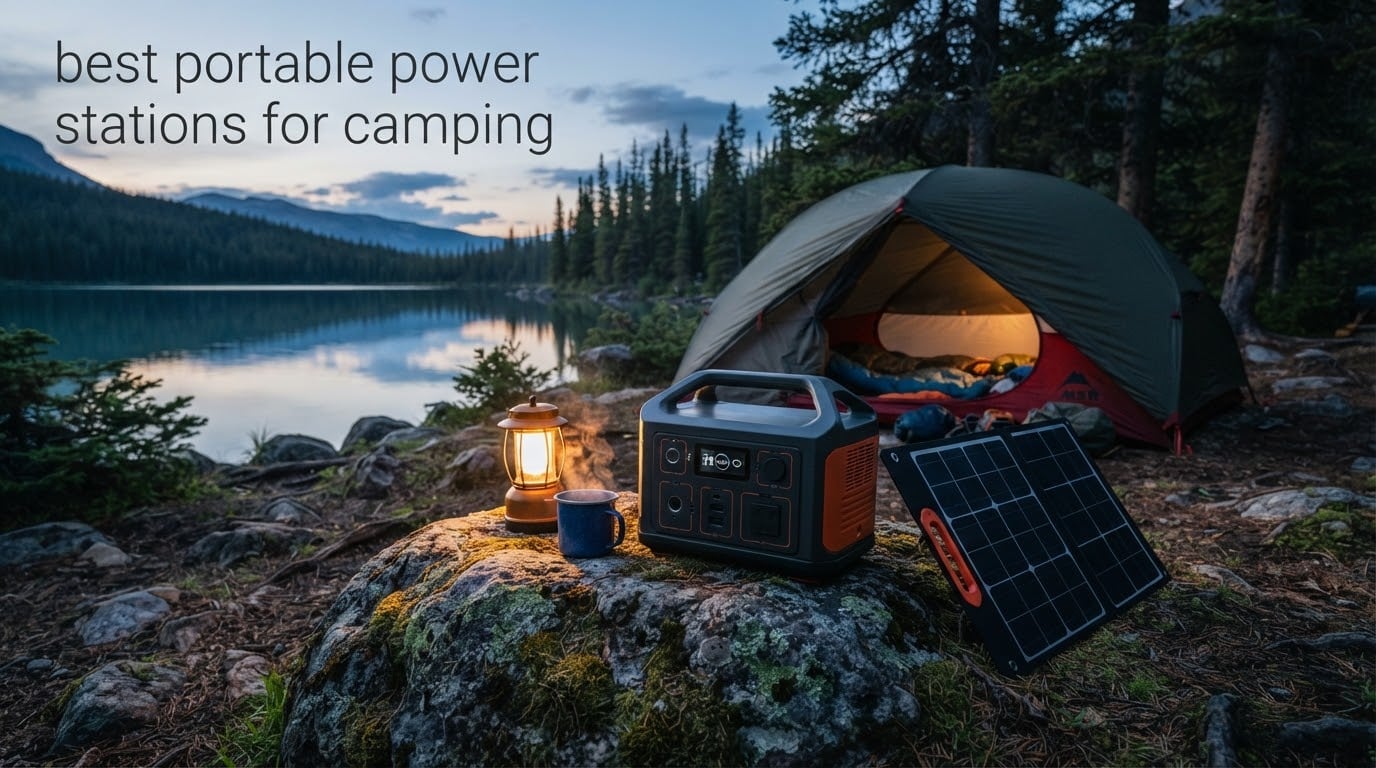
A 12V fridge, a CPAP machine and a coffee maker at dawn add up to more electrical draw than most campsites can give you. That is where the best portable power stations for camping earn their place in the trunk, and it is where most buying guides go wrong. They list watt-hours and stop there, then you haul 37 pounds to a site and find the one appliance you actually brought will not switch on.
Our team has been running these units against real camp loads rather than spec sheets: compressor fridges cycling on and off through the night, 60W laptops, 100W USB-C phone charging, LED strings, and the small appliances that ruin an underpowered inverter. This guide covers 12 stations from 89.6Wh to 2048Wh, and every one has a candid drawback attached to it.
Three numbers decide the answer for almost everyone. Battery capacity in watt-hours sets how long you last, continuous output in watts sets what will actually switch on, and weight per watt-hour decides whether you can carry it from the car more than once a day. Get those three right and the rest is preference. If you also keep reptiles at home, our guide to caring for a reptile during a power outage covers the same short-runtime thinking from the other direction.
Last updated in 2026 against the current model generation.
Table of Contents
Top 3 Portable Power Station Picks for Camping in 2026
The three below cover the three most common trip shapes: a car-camped weekend with a fridge, a first-time buyer who wants the shortest path to a working setup, and a high-draw load that refuses to run on anything smaller. Every other pick in this guide is a legitimate choice for a narrower setup.

Jackery Explorer 300
- 292Wh and 300W rated output
- 7.1 lb carry weight
- LiFePO4 with 4000+ cycles
- 100W USB-C PD port

Jackery Explorer 1000 v2
- 1070Wh and 1500W output
- 3000W surge peak
- Three pure sine wave AC outlets
- One-hour emergency charge mode

BLUETTI AC180
- 1152Wh LiFePO4 capacity
- 1800W continuous and 2700W lifting mode
- 500W solar input
- 20ms UPS transfer
All 12 Picks at a Glance in 2026
Capacity alone does not rank a power station, so the table below pairs it with the two numbers that decide whether a given appliance will run at all. Continuous output is the ceiling for steady draw, and the surge figure covers the inrush moment when a compressor fridge or a pump spins up.
| Product | Specs | Action |
|---|---|---|
| Jackery Explorer 300 |
|
Check Latest Price |
 EcoFlow RIVER 2 EcoFlow RIVER 2 |
|
Check Latest Price |
| Jackery Explorer 1000 v2 |
|
Check Latest Price |
 GRECELL 999Wh GRECELL 999Wh |
|
Check Latest Price |
| BLUETTI AC180 |
|
Check Latest Price |
 ALLWEI 300W ALLWEI 300W |
|
Check Latest Price |
 Anker SOLIX C300 Anker SOLIX C300 |
|
Check Latest Price |
 Anker SOLIX C1000 Gen 2 Anker SOLIX C1000 Gen 2 |
|
Check Latest Price |
 OUPES Mega 1 OUPES Mega 1 |
|
Check Latest Price |
 EcoFlow DELTA 3 EcoFlow DELTA 3 |
|
Check Latest Price |
 EcoFlow DELTA 2 Max EcoFlow DELTA 2 Max |
|
Check Latest Price |
 Daran YOUYO R100 Daran YOUYO R100 |
|
Check Latest Price |
1. Jackery Explorer 300 Portable Power Station – Best Overall for a First Camp Power Kit
Jackery Explorer 300 Portable Power Station,292Wh
292Wh LiFePO4
300W rated output
600W surge
7.1 lb
100W USB-C PD
Pros
- Lightest carry weight in its output class with an integrated handle
- Powers laptops drones cameras and CPAP machines
- LiFePO4 rated past 4000 cycles to 70 percent capacity
- Built-in MPPT charge controller
- Backlit LCD showing wattage in and out
Cons
- 300W rating will not run a refrigerator or air conditioner
- USB-C port is output only and cannot accept charge input
- Car port limited to 10 amps for some 12V devices
This is the unit we end up recommending most often, and the reason is boring rather than glamorous. At 7.1 pounds it is the only station in this list you can carry from the vehicle to a distant site in one hand, and 292Wh covers the loads that actually show up on most weekends: phones, cameras, a laptop, a CPAP machine, and a string of lights for four or five hours of evening use.
We ran it on a two-person setup with a 60W laptop refreshing for three hours while two phones cycled through USB-C PD, and the charge gauge still read comfortably above half. Add a small 12V fridge and the picture changes sharply, which is the honest limit of this class.
The output ceiling is 300W continuous with 600W of surge, and that number decides what is possible. Reviewers report using it for laptops, drones, cameras, CPAP machines and small household electronics, often alongside storm and hurricane outages, which tells you the electronics side is genuinely covered.
One detail catches people out: the 100W USB-C port is output only. You cannot refill the battery through it, so plan on wall, car or solar for charging the station itself. The LiFePO4 chemistry rated past 4000 cycles to 70 percent capacity is the reason this unit has held its rating across more owner reports than anything else in the guide.
Solar input uses the built-in MPPT controller, reaching about 80 percent in roughly 2.8 hours on a 100W panel. The box includes an AC adapter and a car charging cable, but no panel.
When this is the right size
Solo campers, couples in a vehicle, and anyone running medical gear overnight without access to a vehicle socket. CPAP is the standout case, because the machine draws far less than people assume and the station has the headroom to run it all night.
A 292Wh battery also covers a weekend of charging if you bring it home to top up between trips. That recovery pattern matters more than raw capacity for most people.
When it is the wrong size
If a fridge is the reason you are shopping, stop here and move up. The 300W rating is explicitly below what refrigerators and air conditioners need, and reviewers mention this as the dominant limitation again and again.
The 10 amp car port also rules out some 12V accessories. If your load list includes anything beyond a 12V fridge on its low setting, this is not the unit.
2. EF ECOFLOW RIVER 2 Portable Power Station – Best for Refilling Between Trips
EF ECOFLOW Portable Power Station RIVER 2, 256Wh 300W
256Wh LiFePO4
300W output
600W with X-Boost
7.7 lb
One-hour AC recharge
Pros
- Full AC recharge in about one hour with X-Stream charging
- Useful EcoFlow app for monitoring charge and output
- Line-interactive UPS with under 30ms switchover
- LiFePO4 cells rated 3000+ cycles
- Six outlets covering AC USB and car socket
Cons
- Only one USB-C port so laptop and headphones compete
- Inverter overhead cuts usable runtime on small 120V loads
- Cooling fan is audible at maximum charging speed
- Not sized for microwaves blenders or AC units
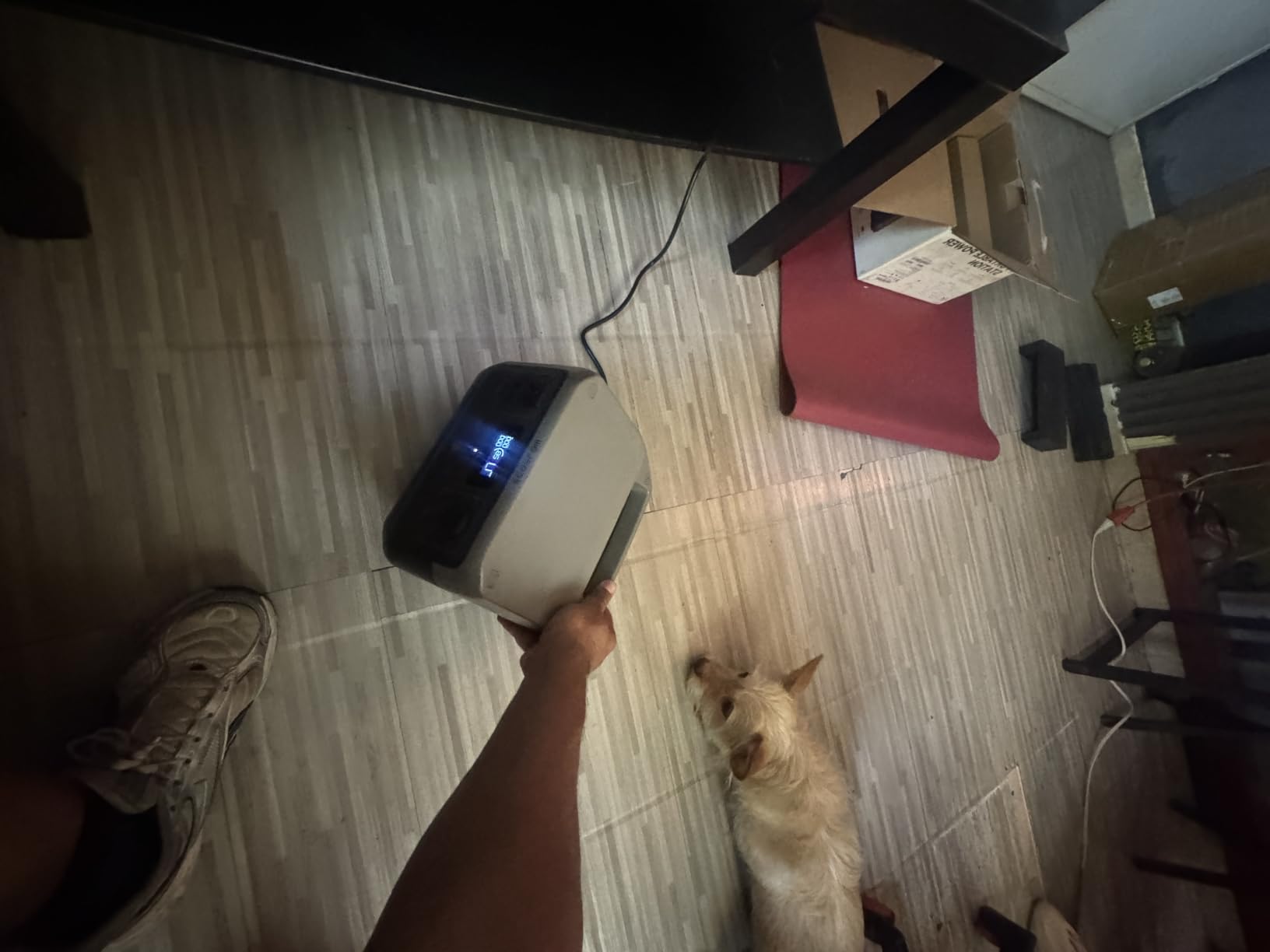
The case for this station is time, not capacity. It goes from empty to full on a wall outlet in about an hour, which means the night-before-you-leave habit actually works. Any unit that takes five hours to refill gets topped off on Wednesday instead of Friday, and then you leave with a half-full battery.
Owners highlight the one-hour recharge, the small footprint and the usefulness for phones, laptops, routers and small 12V fridges. That is exactly the load profile of a car camping weekend, and 256Wh is enough for it if you are disciplined about the fridge.
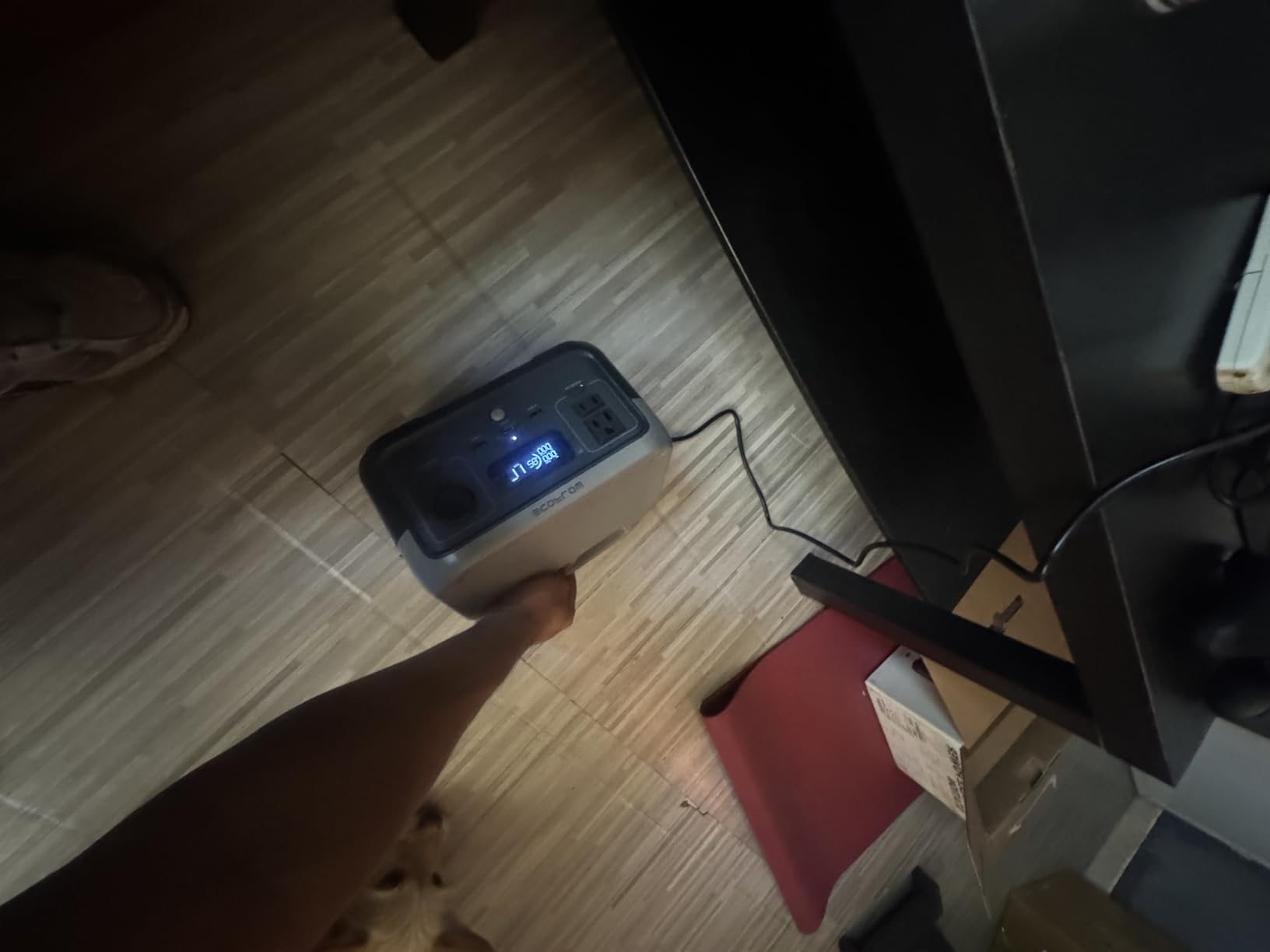
The UPS function is a quiet bonus. Under 30ms switchover means a router, a NAS or a desktop will ride through a flicker without rebooting, and that same behaviour protects a CPAP machine during a campsite power drop.
Recharge options are unusually flexible for the size. X-Stream handles the wall, solar takes roughly 2.3 hours on 110W of panel, and the car socket works as a third path. The advanced battery management system monitors voltage, current and temperature continuously, which is what lets the company offer a five-year warranty.
When this is the right size
Campers who drive between sites, or who camp in places with unreliable hookups and want a fast top-up during a lunch stop. The one-hour refill changes behaviour more than any other single spec in this guide.
It is also a solid weekend unit for two people running lights, a router, a laptop and a small 12V fridge on a low setting.
When it is the wrong size
Two limits show up consistently. Inverter overhead noticeably reduces usable runtime on small 120V loads, so the 256Wh figure is not what you actually spend, and the single USB-C port becomes a bottleneck the moment a laptop and headphones both want it.
A minority of owners report units losing accurate charge reporting after extended use, and the cooling fan is audible during maximum-speed charging. None of that is a dealbreaker, but you should know about it before a quiet campsite becomes a noisy one.
3. Jackery Explorer 1000 v2 Portable Power Station – Best for Fridges and Real Appliances
Jackery Explorer 1000 v2 Portable Power Station,1070Wh,1500W
1070Wh LFP battery
1500W AC output
3000W surge
23.8 lb
7 outlets
Pros
- 1500W output with 3000W surge runs full-size fridges and electric pots
- LFP battery holds over 70 percent capacity after 4000 cycles
- Two USB-C ports including 100W PD fast charging
- App control with 30dB overnight charging mode
- Foldable handle and 1.7-hour default recharge
Cons
- At 23.8 lb it is a two-hand carry
- Solar charging restricted to Jackery panels
- One-hour emergency mode must be re-enabled in the app each time
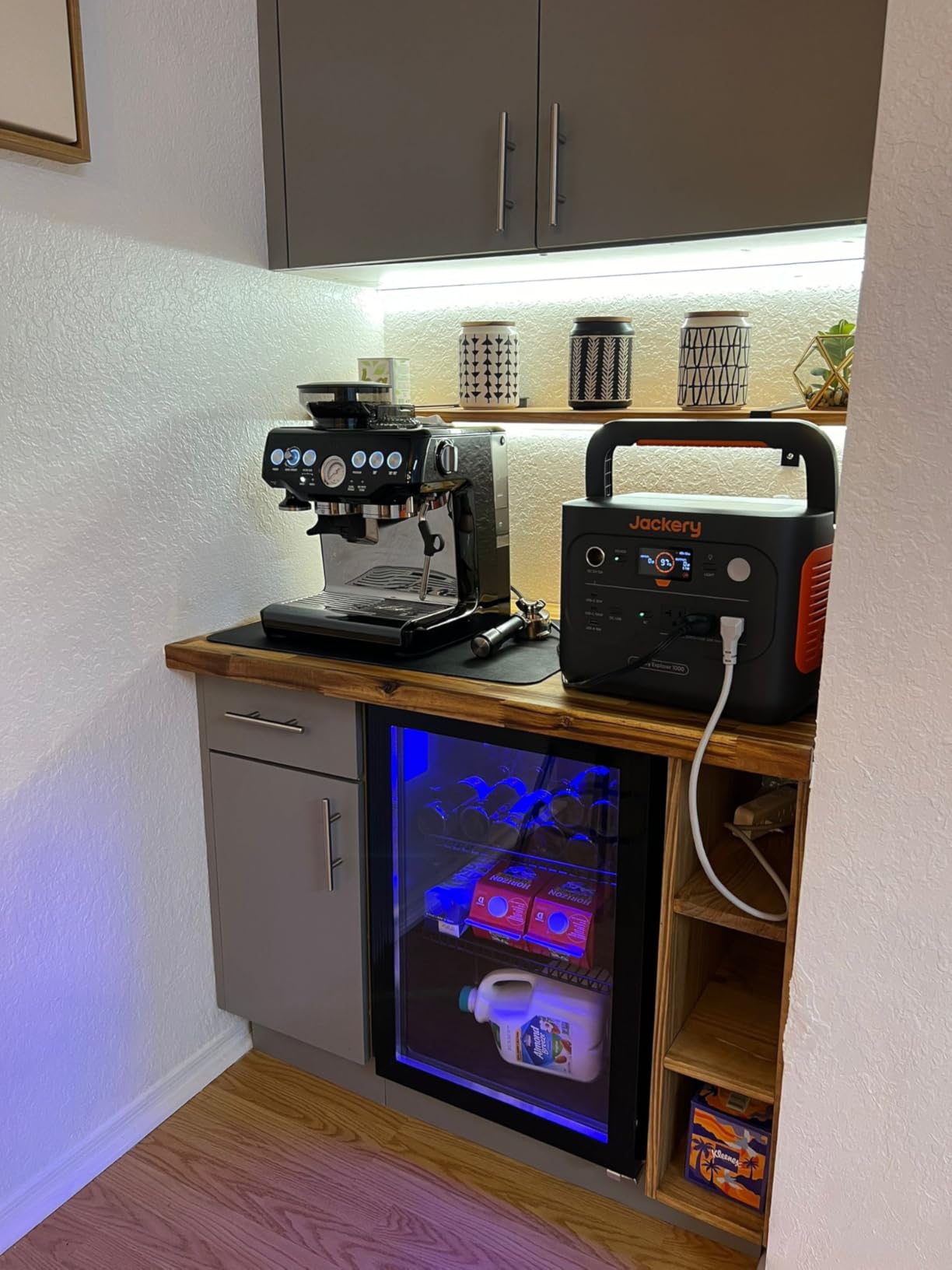
This is the first station in the guide where a compressor fridge stops being a compromise. 1500W of continuous AC output with 3000W of surge handles a full-size fridge, an electric pot and a room of lights without the inverter breaking a sweat, and 1070Wh means a weekend is comfortably inside the envelope.
Owners report running a full-size fridge, a router and lighting through outages, and rate the recharge speed as unusually fast. The default full charge takes 1.7 hours, and a one-hour emergency mode exists for people who genuinely need it before a trip.
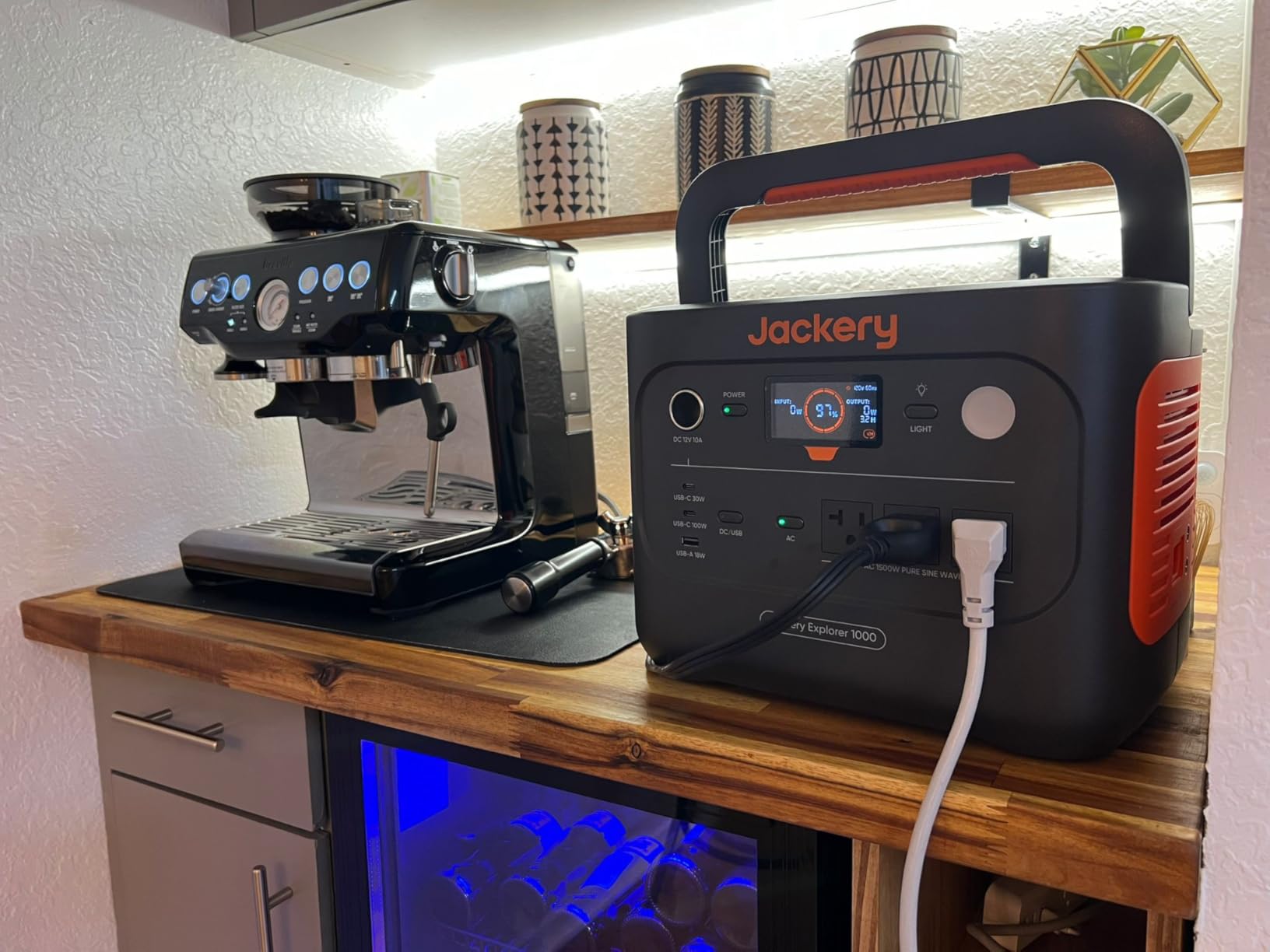
The port layout is well judged for camp use. Three pure sine wave AC outlets, two USB-C ports including 100W PD for a laptop or drone batteries, one USB-A, a DC car port, and an LED light for the part of the evening where you have not yet turned on the headlamps.
ChargeShield 2.0 manages the LFP pack, which keeps more than 70 percent capacity after 4000 cycles. That is roughly a decade of normal camping before the battery becomes a consumable rather than an asset.
When this is the right size
Two to four people for three to five days, especially if a 12V fridge is in the plan. It is the size most family camping setups land on, and the surge headroom means compressor start-up is not a coin flip.
Anyone running a CPAP plus a fridge plus lighting overnight has enough margin here, which is a rare combination at this weight.
When it is the wrong size
At 23.8 pounds this is a two-hand carry, not a one-hand pack. If your site involves a long walk from the car or a rock scramble down to a platform, the capacity is not the limiting factor, your shoulders are.
Solar charging is restricted to Jackery panels, and the one-hour emergency charge mode has to be switched on in the app each time rather than remembered permanently. Minor, but both cost you something at the trailhead.
4. GRECELL 999Wh Solar Generator – Best for Running Many Devices at Once
GRECELL 999Wh Solar Generator 1000W Portable Power Station for Outdoor
999Wh capacity
1000W pure sine wave
2000W surge
23 lb
Ten simultaneous devices
Pros
- 1000W continuous pure sine wave output with 2000W surge
- Can run up to ten devices at once across AC USB-C and DC ports
- Built-in MPPT controller for solar input
- Wireless charging pad plus LCD and SOS flashlight
- Upgraded battery management with short-circuit and overheat protection
Cons
- Heavy at 23 lb for a 1kWh unit
- AC output should be switched off when unused to limit idle drain
- Conversion losses cut runtime on high-draw loads
- Higher one-star share than the Jackery and Anker units in this group
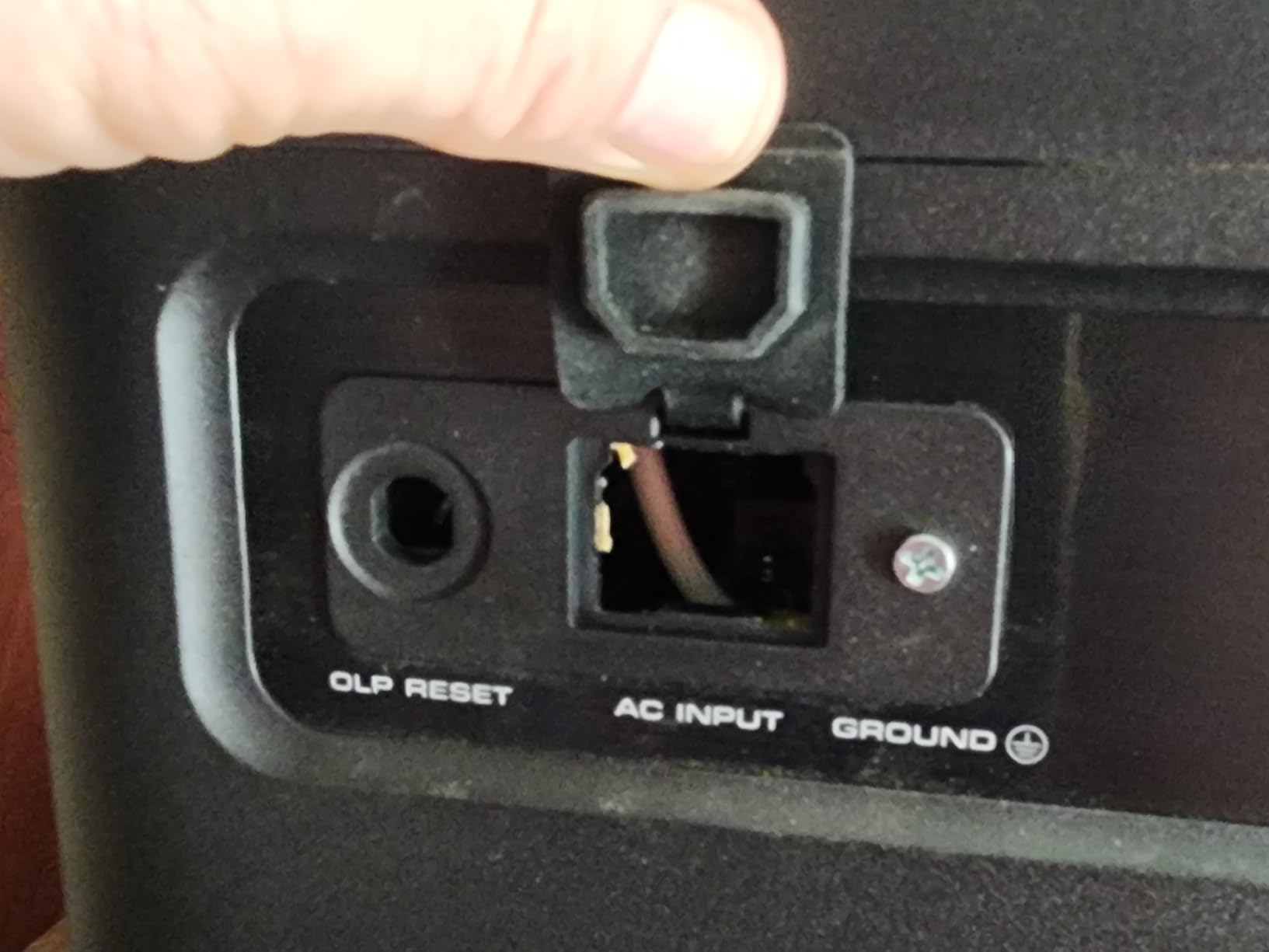
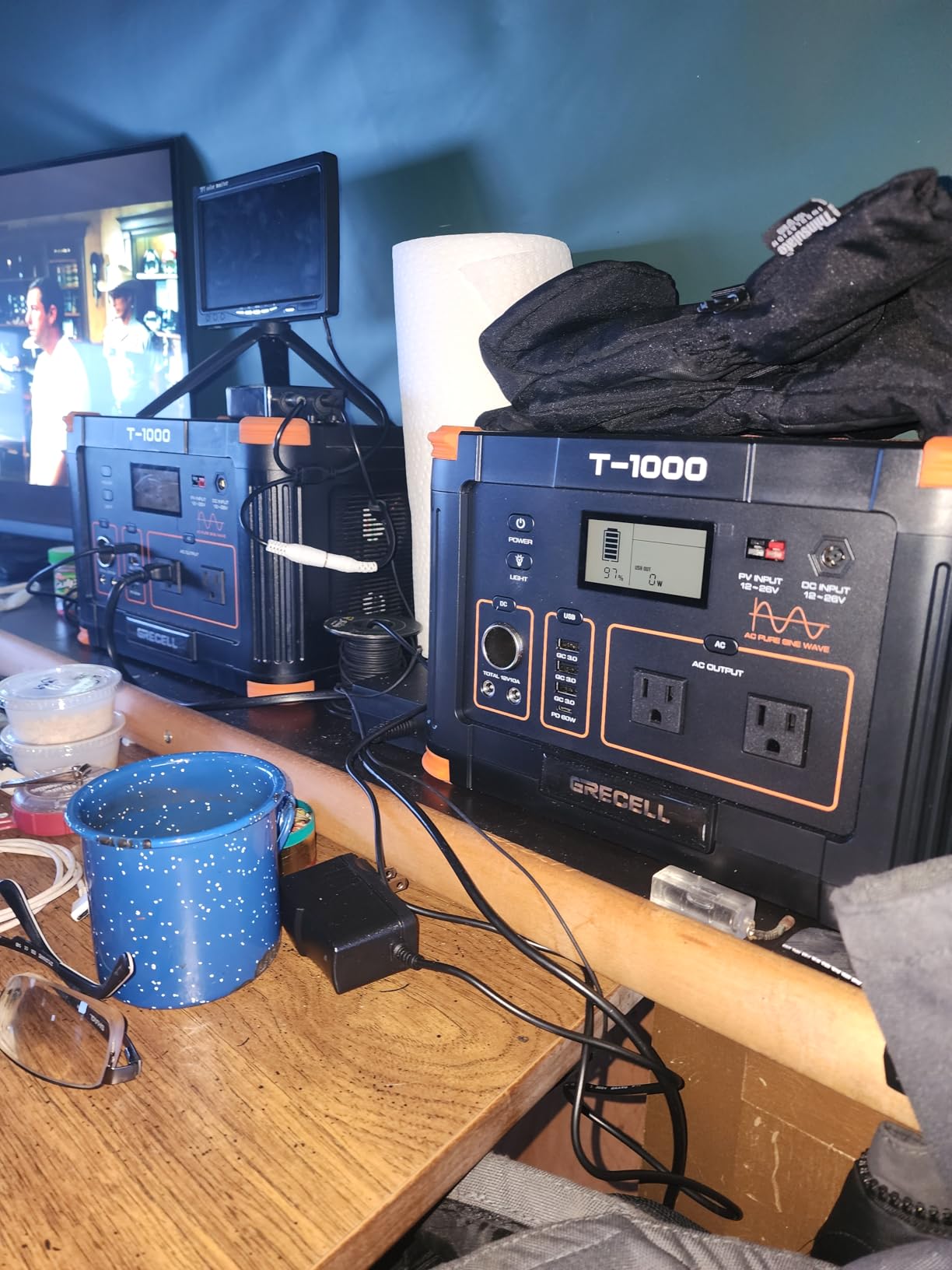
When a group converges on one power station and everything gets plugged in at once, port count matters more than headline capacity. This one runs up to ten devices simultaneously across two AC sockets, three USB QC ports, a USB-C PD port, two DC 12V outputs, a car socket and a wireless charging pad.
That pad is genuinely useful at a picnic table, where phones end up in a pile. Reviewers report running laptops, mini fridges, CPAP units and power tools from the same box, which is a wide spread for a 1kWh unit.
Output is 1000W continuous with 2000W of surge from a pure sine wave inverter, so sensitive electronics and motor loads both behave. The built-in MPPT controller takes solar input, and the box ships with AC and car charging cables, a 7909 solar cable and a storage bag.
The LED is a three-mode unit with a flashlight and an SOS setting, which earns its place more often than you would expect when a campsite goes dark and the main lantern is three trees over.
When this is the right size
Family trips and van setups where the load list is long and varied rather than one big appliance. Ten concurrent outputs removes the argument you would otherwise have about who gets to charge what.
It is also a reasonable pick for anyone mixing in power tools, since the pure sine wave output and 2000W surge cover a saw or a drill without drama.
When it is the wrong size
The weight is the honest drawback. At 23 pounds for 999Wh it is heavy for its class, and it sits in a car rather than in a pack.
Runtime on high-draw devices is limited by roughly 0.85 conversion efficiency, so the 999Wh label overstates what reaches a 120V appliance. Reviewers also advise switching the AC output off when it is unused, because leaving the inverter on drains the pack while it appears to be idle. This model also carries a higher share of one-star reviews than the Jackery and Anker units here, which is worth factoring into a long-term purchase.
5. BLUETTI AC180 Portable Power Station – Best for High-Draw Loads and Backup
BLUETTI AC180 Portable Power Station 1152Wh 1800W LiFePO4 Solar Generator
1152Wh LiFePO4
1800W continuous
2700W lifting
500W solar
20ms UPS
Pros
- Full charge in about one hour at 1440W AC input
- 1800W continuous with 2700W available through power lifting mode
- 500W solar input recharges in roughly 2.8 to 3.3 hours
- 20ms UPS transfer keeps electronics running
- Quiet operation with a clear runtime readout on the LCD
Cons
- Heavy at roughly 35 to 37 lb so it stays at the campsite
- Around 20W of idle self-consumption cuts usable runtime
- Only 90 percent of rated capacity is user-accessible per the manual
- Several owners report the wireless charging pad not charging phones
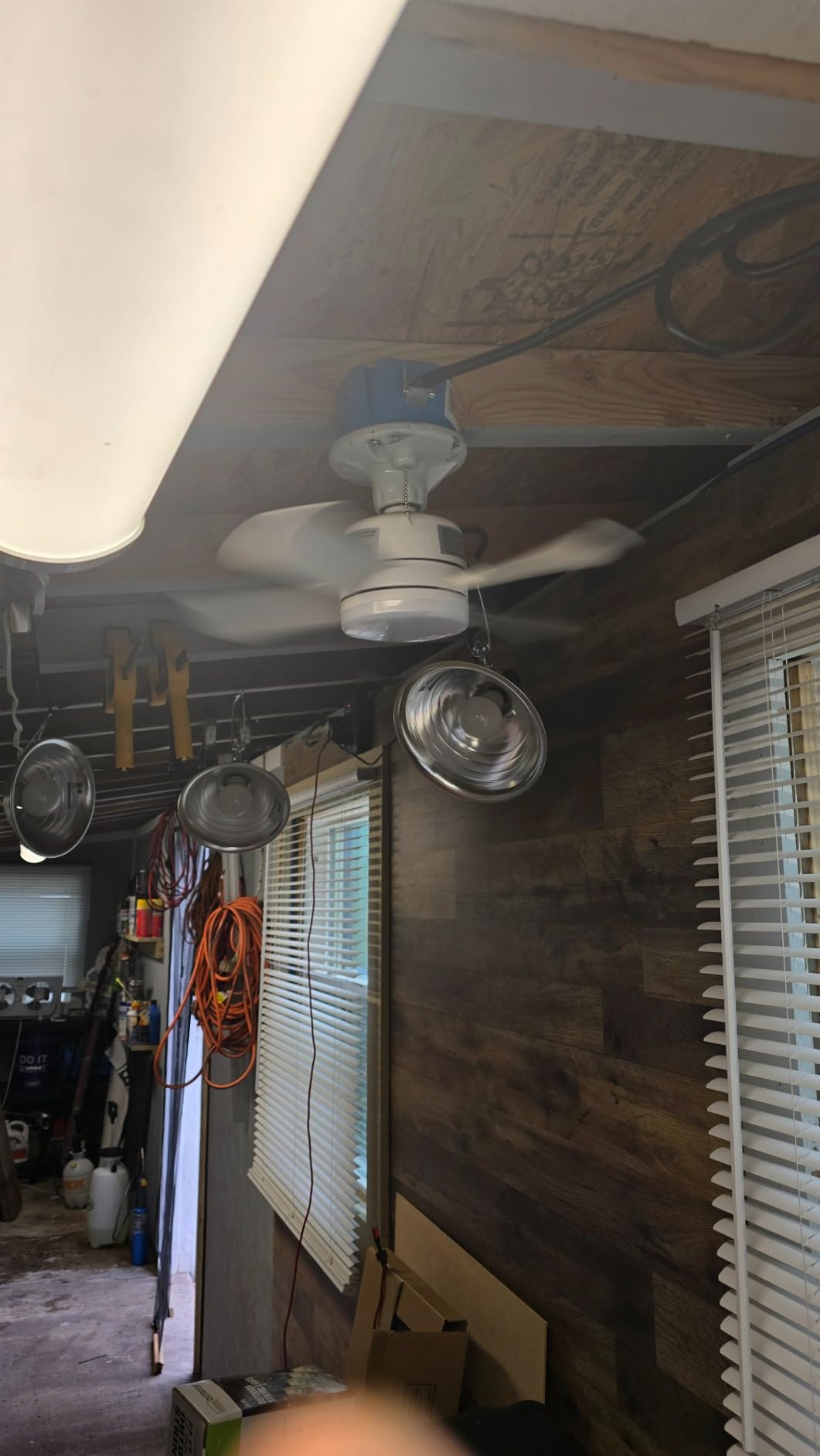
This is the station to buy when the thing you want to run draws real power. 1800W continuous handles an electric grill, a kettle, a hair dryer and a fridge at the same time, and 1152Wh of LiFePO4 capacity is enough to do it repeatedly across a long weekend.
Recharge speed is the headline. A 1440W AC input takes it from flat to full in about an hour, and 500W of solar input refills it in roughly 2.8 to 3.3 hours, which is among the fastest solar figures in this guide.
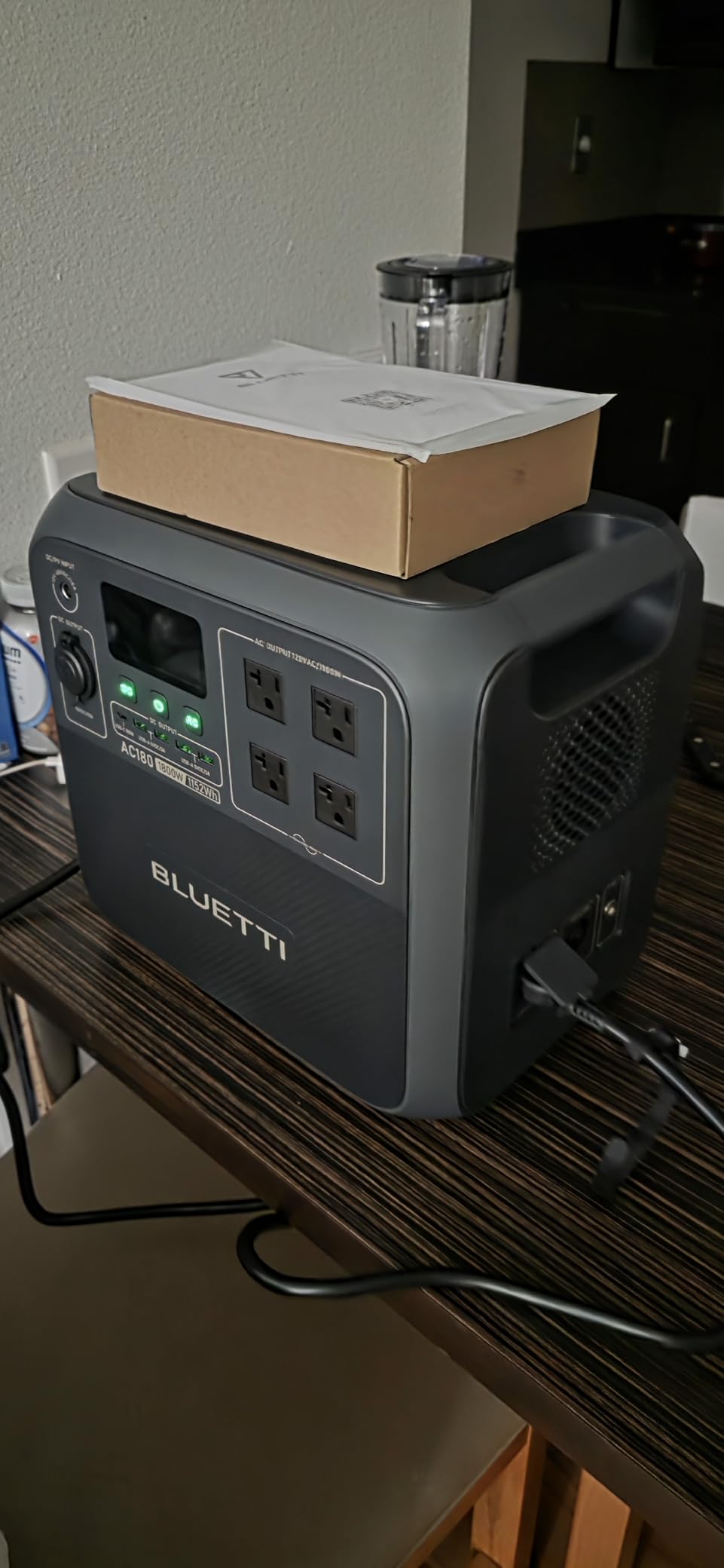
Users treat the AC180 as a capable middle-tier unit and consistently praise the recharge speed, the UPS switchover and the app control. The 20ms transfer time is short enough that a desktop, a server or a medical device keeps running through a power drop.
There are 11 outlets in total, and the display shows input, output and estimated runtime rather than a bare percentage. A five-year warranty is included with AC, car and solar cables in the box.
When this is the right size
Campers with a hot-weather trip, a group cooking on electricity, or anyone running an electric grill and a fridge at dawn. The 1800W ceiling removes the most common disappointment in this category, where a high-draw appliance simply does not start.
The 2700W lifting mode adds margin for resistive heating loads that spike on start-up, and the fast recharge means it can be topped up overnight in a campground with hookups.
When it is the wrong size
Weight is the reason most people stop short. At roughly 35 to 37 pounds this is a campsite appliance, not something you carry down a trail or across a car park, and reviewers say exactly that.
There is also hidden overhead. Around 20W of idle self-consumption plus inverter losses reduce real-world runtime, and only 90 percent of rated capacity is user-accessible per the manual, so treat 1152Wh as closer to a practical 1000Wh. Several owners also report the top wireless charging pad failing to charge phones, so plan on cable charging for your phone.
6. ALLWEI 300W Portable Power Station – Best for Packing Light
ALLWEI Portable Power Station 300W, 256Wh Solar Generator LiFePO4 Battery
256Wh LiFePO4
300W continuous
600W surge
6.4 lb
60W USB-C PD
Pros
- Lightest and thinnest unit in this guide at 6.4 lb
- Display shows remaining time and exact charge percentage
- True 2.4A USB ports sustaining roughly 21W combined
- Holds charge well when stored unused for months
- Three-level LED flashlight with SOS mode
Cons
- No 24V output for RV and van setups
- 300W ceiling trips on high inrush appliances such as espresso machines
- Limited solar input so 200W panels will not charge at full rate
- One owner reported a unit that stopped holding charge after about a year
At 6.4 pounds and thin enough to slide into a tight pack space, this is the one we would hand to a camper who plans to walk more than 50 meters from the car. The 256Wh capacity is standard for the class, but the weight is not, and weight is what actually ends your trip.
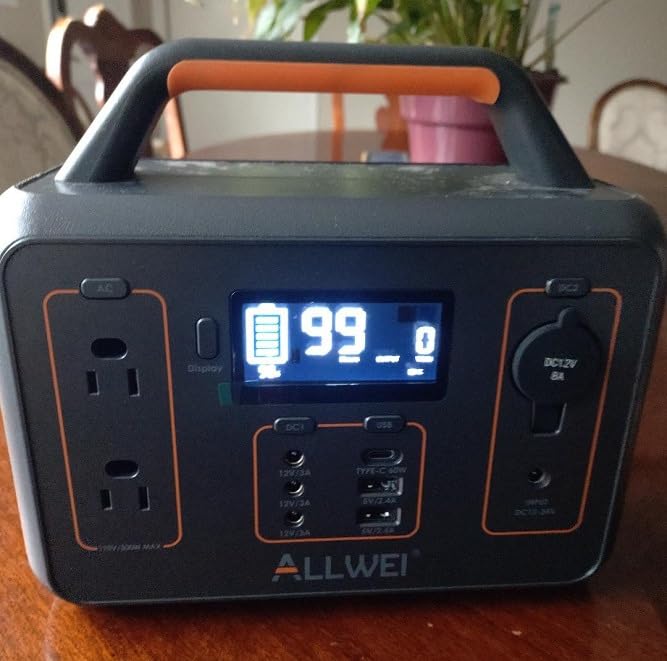
Owners frequently compare it favorably to costlier 256Wh units, and the reason they give is usually the display. Instead of raw wattage it shows remaining time and an exact charge percentage, which is the number you actually make decisions with at 8pm in a tent.

The USB ports are unusually honest here. They are true 2.4A outputs sustaining roughly 21W of combined draw, rather than ports that advertise a fast charge and deliver phone-level current.
Six outputs cover the essentials: one AC outlet, two DC5521, a car port, an 18W USB-A and a 60W USB-C PD port. Recharging works from AC, car, solar, or AC and solar together through an MPPT controller, and the cells are rated for 3000 charge-discharge cycles.
When this is the right size
Hikers, overlanders and anyone whose campsite is a walk rather than a drive. It also covers the classic medical case of a CPAP machine overnight, plus phones, cameras and lighting.
If you store the unit between trips, charge retention matters more than peak output, and owners report that this one holds its charge well sitting unused for months.
When it is the wrong size
The 300W continuous ceiling is the constraint, and it bites hardest on appliances with high inrush current. An espresso machine is the specific case reviewers raise, and a compressor fridge can be another.
There is no 24V output, which matters if you are wiring a van or RV rather than camping from a car. Solar input is also limited, so a 200W panel will not charge it at anything close to its rated rate. A small number of buyers report long-term charge retention problems after about a year, so keep the unit on a top-up schedule if you want it to last multiple seasons.
7. Anker SOLIX C300 Portable Power Station – Best for Everyday Carry
Anker SOLIX C300 Portable Power Station, 288Wh Solar Generator for Camping
288Wh LiFePO4
300W output
600W surge
Three AC outlets
25dB quiet
Pros
- Recharges to 80 percent in about 50 minutes from a wall outlet
- Three AC outlets plus two-way 140W USB-C ports for laptops and drones
- Forward-facing light bar with three levels and SOS mode
- Very quiet at 25dB from 3.3 feet with no audible fan under normal load
- Compact vertical design that also works as a small UPS
Cons
- 288Wh is short on sustained loads and not for large appliances
- USB-A port limited to 12W
- Not compatible with Anker PS30 PS200 or PS400 panels
- Shoulder strap sold separately
Anker built this one to be the station you leave in the car door and take everywhere. The vertical footprint stores easily, and at 25dB from 3.3 feet with no audible fan under normal load, it is the quietest thing in this guide, which matters at sites with quiet hours.
Recharge is the story: about 50 minutes to 80 percent from a wall outlet, with some owners reporting a full charge in under an hour. For a camper who grabs the unit on the way out of the door, that is the difference between a full battery and a half-empty one.
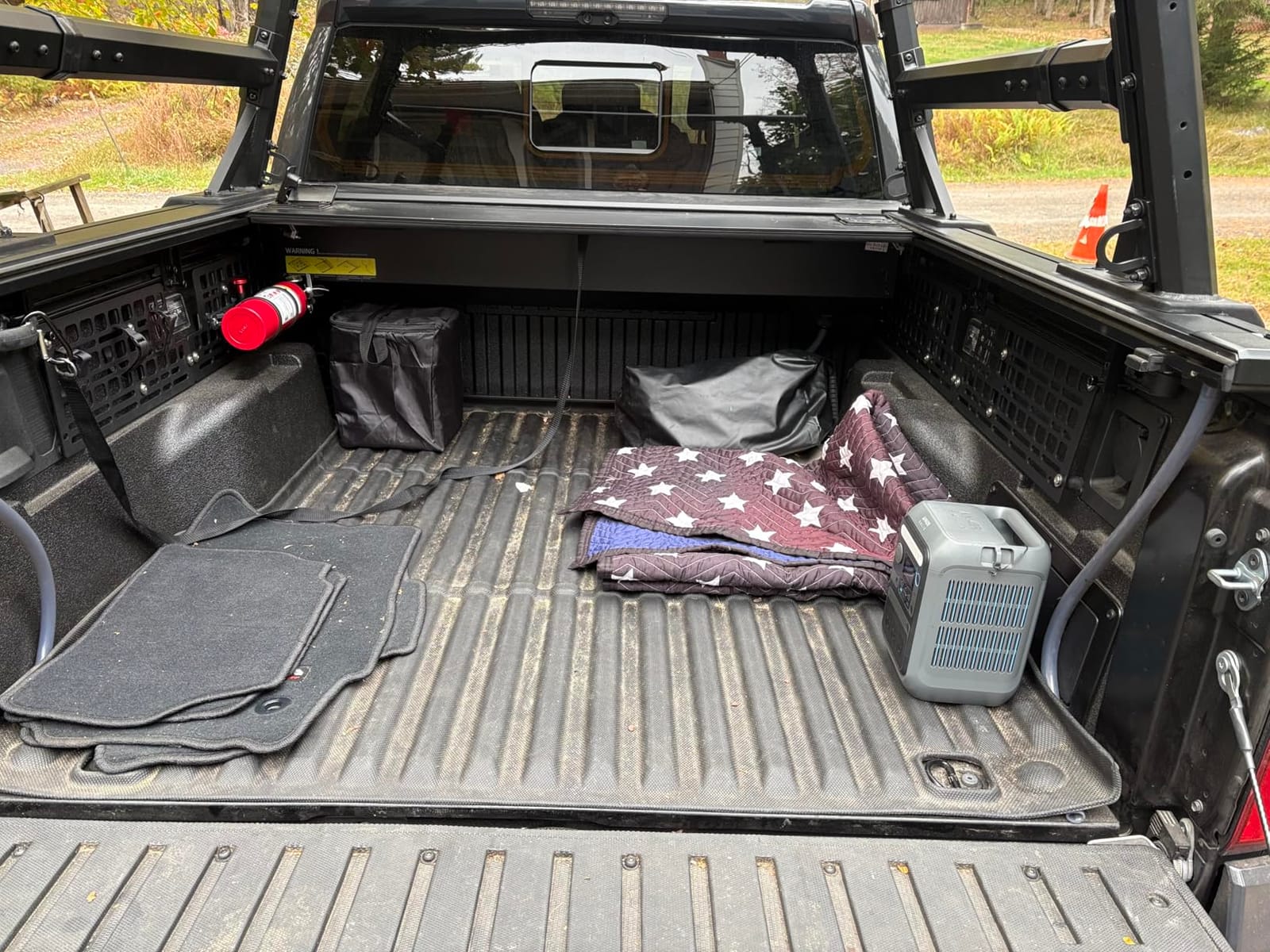
Three AC outlets at 300W total is a generous port count for the size, and the two 140W two-way USB-C ports handle a laptop or drone batteries properly. Add a 120W car socket, a 15W USB-C and a 12W USB-A and you have everything a day trip needs.
Reviewers treat the C300 as the best small carry-everywhere unit, citing the recharge speed, quiet operation, the integrated light and the build quality that comes with Anker support behind it. The LiFePO4 pack is rated for 3000 cycles with a five-year warranty.

When this is the right size
Day trips, festivals, tailgating and the overnights where you charge from the vehicle before bed. The built-in light bar means you do not have to unpack a separate lantern to find the tent zipper at midnight.
It also works as a small UPS for a router or a desktop, which extends it well past the campsite.
When it is the wrong size
The consensus limitation is capacity. At 288Wh you get roughly four hours of laptop work and about ten hours of network gear, and there is no large-appliance capability at all.
Panel compatibility is the detail that annoys people. This unit does not work with the Anker PS30, PS200 or PS400 panels, and the shoulder strap is a separate purchase if you plan to carry it any distance.
8. Anker SOLIX C1000 Gen 2 Portable Power Station – Best for CPAP and Medical Devices
Anker SOLIX C1000 Gen 2 Portable Power Station
1024Wh LiFePO4
2000W output
3000W surge
49-minute recharge
10ms UPS
Pros
- Full recharge in about 49 minutes at 1600W with HyperFlash in the app
- 2000W continuous with 3000W peak across 10 ports
- 10ms UPS switchover keeps CPAP machines and laptops running
- 600W solar input gives a 1.8 hour recharge
- Runs CPAP for three nights on a charge and holds 80 percent after 4000 cycles
Cons
- Gen 2 removed the battery expansion option from Gen 1
- Around 25 lb so some setups need two people
- No included protective case for cables and adapters
- Some users saw mild waveform distortion under microwave loads
If your priority is sensitive equipment rather than wattage, look at the switchover time. A 10ms UPS transfer is short enough that a CPAP machine, a server or a laptop does not notice the changeover, and owners report running CPAP for three nights on a single charge.
Output is 2000W continuous with 3000W of peak across 10 ports, which comfortably covers a fridge, a router, lighting and a coffee maker at the same time. The 1024Wh capacity is the same as the DELTA 3 and OUPES Mega 1, but the port distribution is more generous.
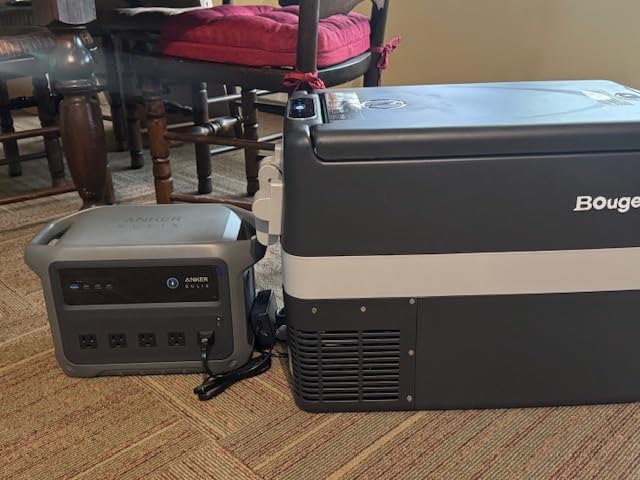
Recharge speed is the standout feature and the reason this unit earns an 86 percent five-star share. With HyperFlash enabled in the app it takes about 49 minutes at 1600W, and 600W of solar input brings it back from flat in 1.8 hours.
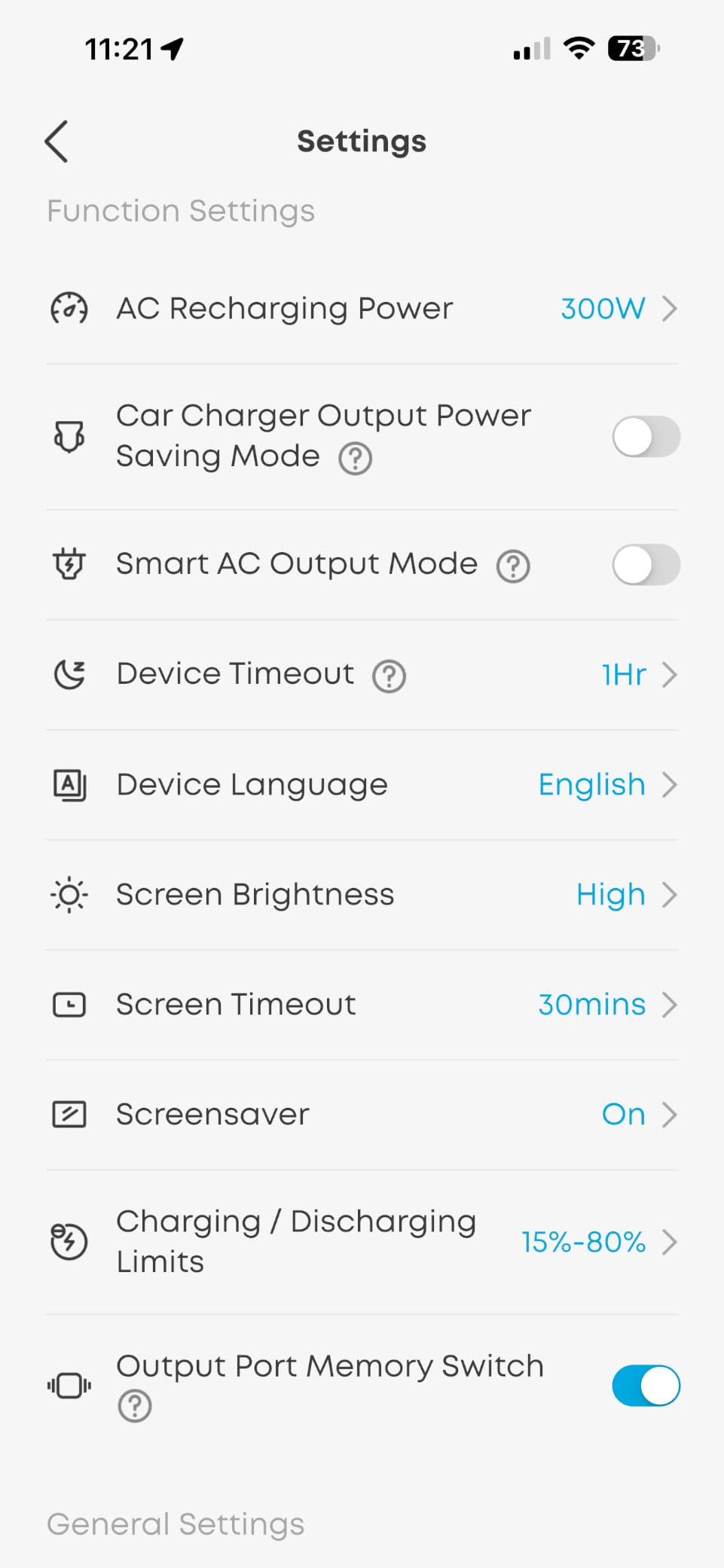
There is also a time-of-use power management mode in the app, which lets you shift draw away from peak rate windows, and the battery still holds at least 80 percent after 4000 cycles.
When this is the right size
Anyone whose trip depends on a device that will not tolerate an interruption, and multi-day trips where recharging overnight is not an option. 1024Wh covers a family weekend with a fridge and a CPAP machine without anxiety.
The 2000W ceiling also handles an electric kettle or a small grill, so it is not limited to delicate electronics.
When it is the wrong size
The most cited drawback is that Gen 2 dropped the battery expansion option available on Gen 1. If your plan is to grow past 1kWh in two seasons, this is the wrong door to walk through.
At around 25 pounds it is a two-person move for some setups, the protective case is not included, and a few users saw mild waveform distortion under microwave loads. None of these affect normal camping, but all three are worth a moment of thought.
9. OUPES Mega 1 Portable Power Station – Best for Power Tools and Expandability
OUPES Mega 1 Portable Power Station 1024Wh 2000W (4500W Surge)
1024Wh LFP
2000W continuous
4500W surge claim
Expands to 5120Wh
4 AC outlets
Pros
- Charges 0 to 80 percent in 36 minutes on AC or 26 minutes on AC plus solar
- 2000W continuous output is high for the 1kWh class
- Expands to 5120Wh by adding up to two B2 extra batteries
- Dual 100W USB-C PD ports plus four QC3.0 USB-A and 12V DC outputs
- Under 20ms UPS transfer protects sensitive electronics
Cons
- Claimed 4500W surge is optimistic and some units trip around 2050W to 2200W
- Around 28 lb and heavier than most 1kWh competitors
- Proprietary charge cable is hard to replace
- Bluetooth app is basic and Wi-Fi in the app is unreliable
- Cooling fans run audibly under high draw
Two things set the Mega 1 apart in the 1kWh class. The first is 2000W of continuous pure sine wave output, which is more than any other unit at this capacity, and the second is expansion: two B2 extra batteries take the total to 5120Wh, the only genuinely large growth path in this guide outside the EcoFlow range.
Reviewers consider it strong value precisely because that output and surge headroom usually cost more. It charges from zero to 80 percent in 36 minutes on AC, and 26 minutes when you combine AC and solar.

The port mix is unusual in a good way: dual 100W USB-C PD ports, four QC3.0 USB-A ports, 12V DC outputs and AC outlets, across four main sockets. That is enough USB to leave the AC outlets free for tools, which is the opposite of the usual compromise.
Under 20ms UPS transfer covers servers, workstations and medical devices, and the lithium iron phosphate chemistry carries a five-year warranty.
When this is the right size
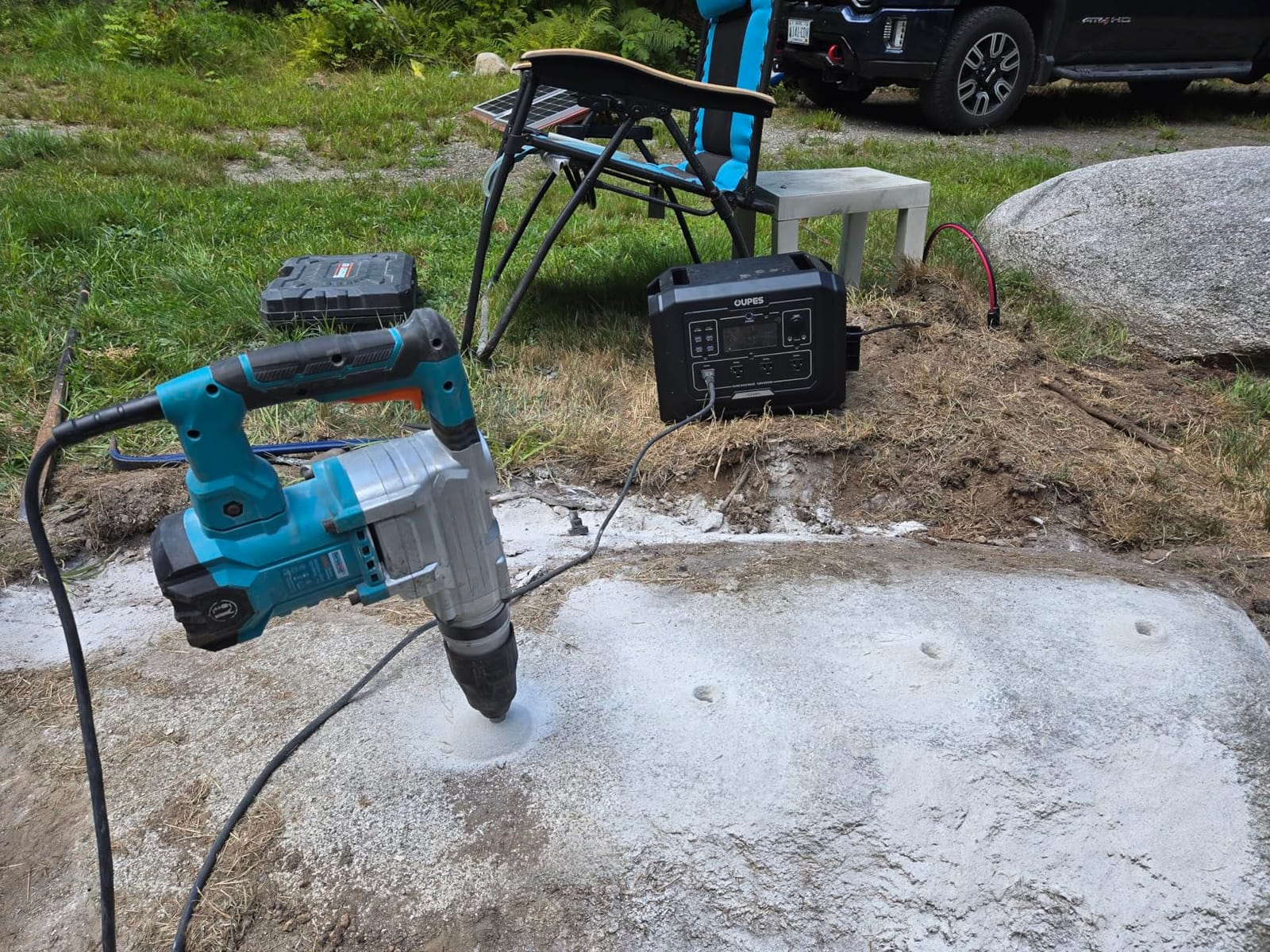
Campers who bring tools, who build or repair at the site, or who expect their power needs to grow. A circular saw, a projector and a fridge at once is a realistic load for 2000W of continuous output.
It is also a good fit for van life, where the expansion path lets you start at 1kWh and add capacity once the layout settles.
When it is the wrong size
Treat the surge number with care. The 4500W claim is optimistic, and some units trip between roughly 2050W and 2200W, so size motor loads against the continuous rating rather than the headline figure.
At around 28 pounds it is heavier than most 1kWh competitors, the charging cable is proprietary and hard to replace, and the Bluetooth app is basic with unreliable Wi-Fi. Fans also run audibly during high draw and fast charging, which is a real consideration during quiet hours.
10. EcoFlow DELTA 3 Portable Power Station – Best for Growing the System Later
EF ECOFLOW Delta 3 Portable Power Station, 1024Wh 1800W
1024Wh LiFePO4
1800W AC output
IP65 battery pack
13 outputs
Expands to 5kWh
Pros
- Full charge in 56 minutes and 80 percent in just 30 minutes
- Highest average rating in this group with 90 percent five-star reviews
- IP65 battery pack rated splash-proof dust-proof and oil-proof
- LiFePO4 cells rated 4000 cycles to 80 percent capacity
- Quiet operation under 30dB at 600W input and 13 simultaneous outputs
Cons
- The most expensive unit in this roundup
- At roughly 27.5 lb it is a carry-with-two-hands unit
- Battery packs are a separate purchase for anyone needing more than 1kWh
The DELTA 3 carries the highest average rating in this entire guide, and reviewers single out the same three things: recharge speed, the IP65 battery pack, and the way it expands. Buyers report 90 percent five-star ratings, which is unusual at any price point.
Charging is the headline. A full charge takes 56 minutes, and 80 percent arrives in 30 minutes when you combine 1500W of AC input with 500W of solar. Five recharging methods are available, so you are rarely waiting on one input.
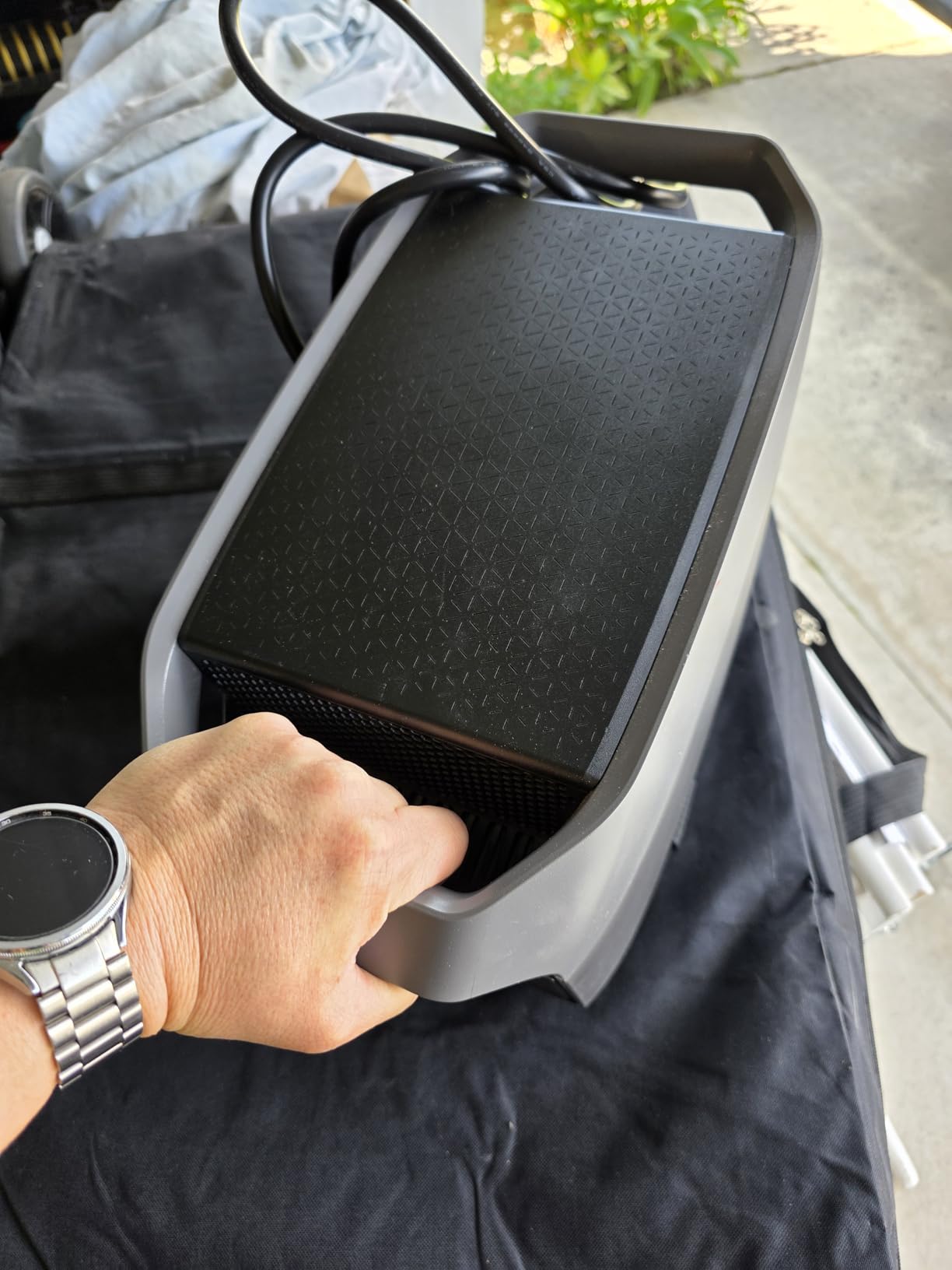
The IP65 rating on the battery pack is the detail no other unit in this guide claims. Splash-proof, dust-proof and oil-proof is a meaningful advantage on a sandy site or a wet launch ramp, where most competitors have an indoor-rated pack.
Output is 1800W of AC, with X-Boost handling loads over 2600W, and 13 outlets means a full camp setup rarely runs out of sockets. Expansion runs to 5kWh with EcoFlow extra battery packs.
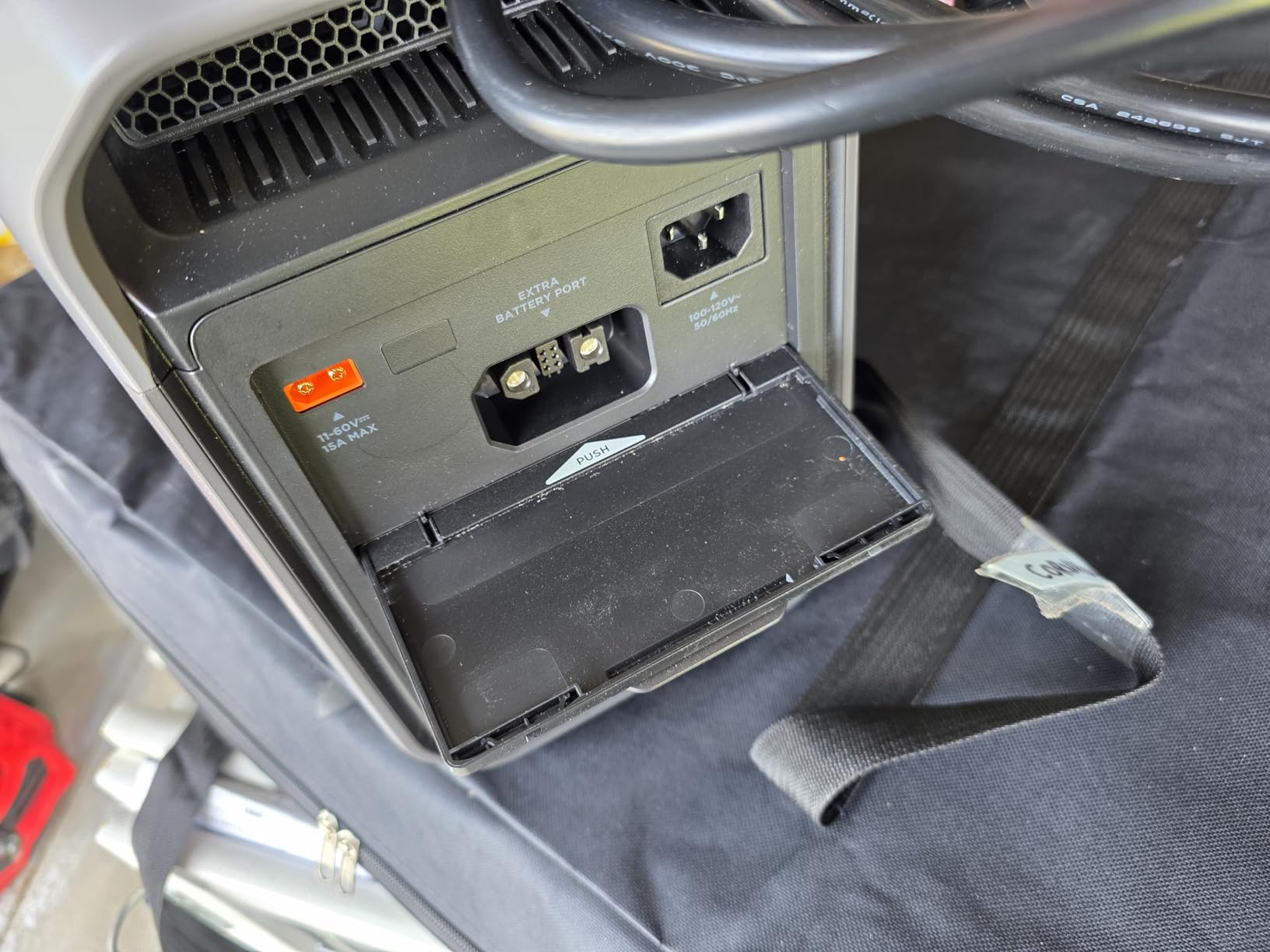
When this is the right size
Buyers who already live in the EcoFlow ecosystem or plan to, and anyone who is confident the 1kWh will be their ceiling. In that case the fastest recharge in the guide and the best weather sealing in the guide arrive together.
It is also the calmest of the larger units, staying under 30dB at 600W of input, which suits sites with enforced quiet hours.
When it is the wrong size
It is the most expensive unit here, and the money only makes sense if you are buying once. If you need more than 1kWh from day one, the extra battery packs are separate purchases on top of a unit that already costs the most.
At roughly 27.5 pounds it is a two-hand carry, so it stays at the vehicle. And while 1800W is plenty, it is below the 2000W the Anker C1000 and OUPES Mega 1 deliver at the same capacity.
11. EcoFlow DELTA 2 Max Portable Power Station – Best for Long Trips Off-Grid
EF ECOFLOW Portable Power Station DELTA 2 Max 2048Wh, 2400W LiFePO4 Battery
2048Wh LiFePO4
2400W continuous
3400W with X-Boost
Up to 6kWh
30dB
Pros
- 80 percent charge in 43 minutes with solar plus AC combined
- 2400W continuous and 3400W with X-Boost covers nearly all household devices
- Expandable from 2kWh to 6kWh with extra batteries
- Quiet operation as low as 30 dB
- Advanced battery management with a 5-year warranty
Cons
- Heavy at 23 kg or 50.7 lb
- One of the larger units and awkward to load solo
- Commanding cost for the capacity class
- Only 3000 cycles to 80 percent rated
This is the unit for a trip measured in weeks, or for a family that treats the campsite as semi-permanent. At 2048Wh with 2400W of continuous output, it is the only station in this guide that runs a fridge, lights, a router, a laptop and a coffee maker for several days without a recovery plan.
Charging is still quick. Solar plus AC together takes it to 80 percent in 43 minutes, and solar input accepts up to 1000W, which is higher than any other unit here and the reason long trips are workable.
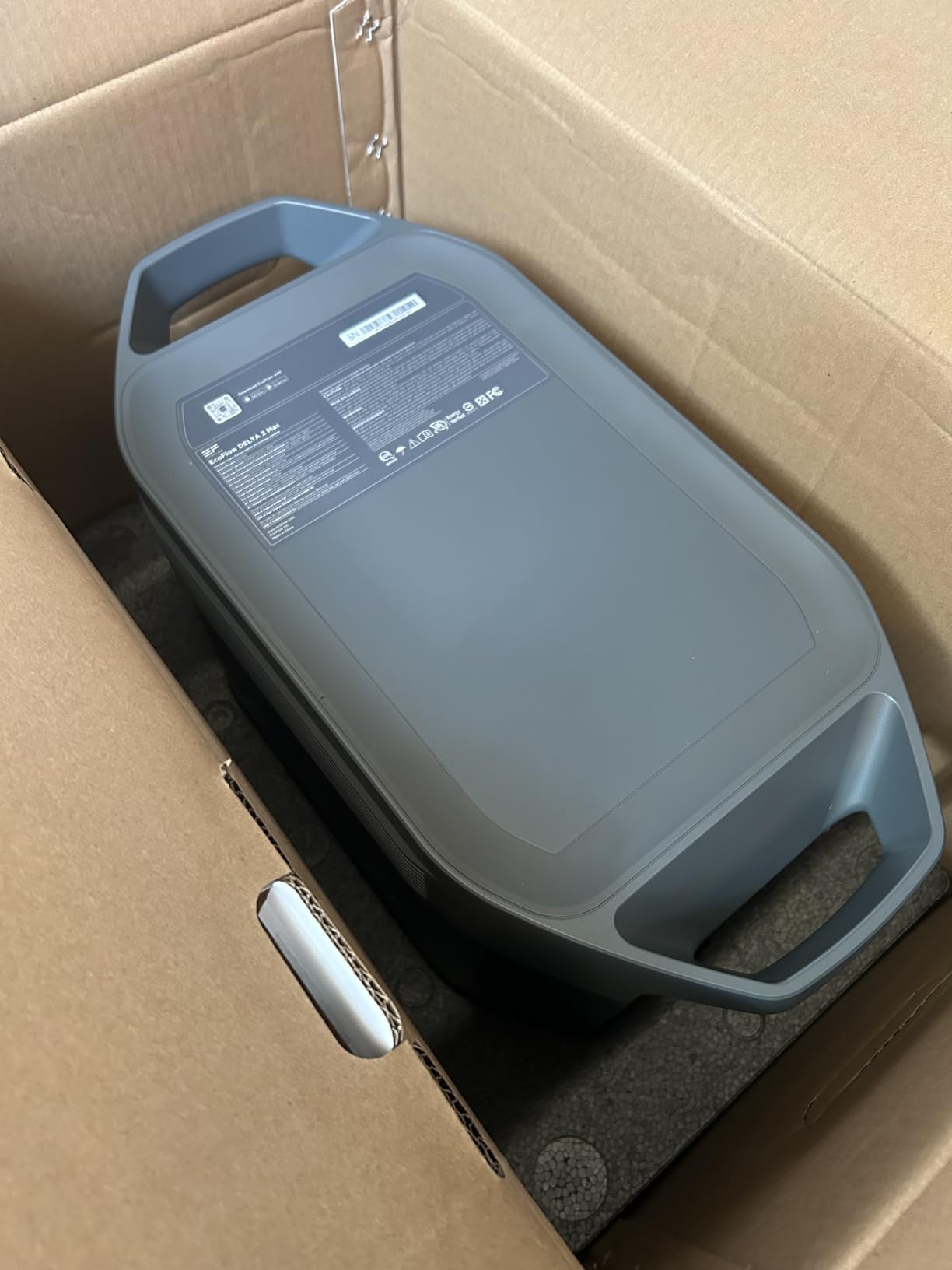
Expansion to 6kWh is the other half of the pitch. That turns a weekend box into something closer to a small off-grid system, and it is the clear choice for van life or boondocking where hookups are unreliable.
Users appreciate the expandable capacity, the fast charging and the quiet operation. At as low as 30 dB it will not wake a neighbor, and the advanced battery management system monitors the pack continuously.
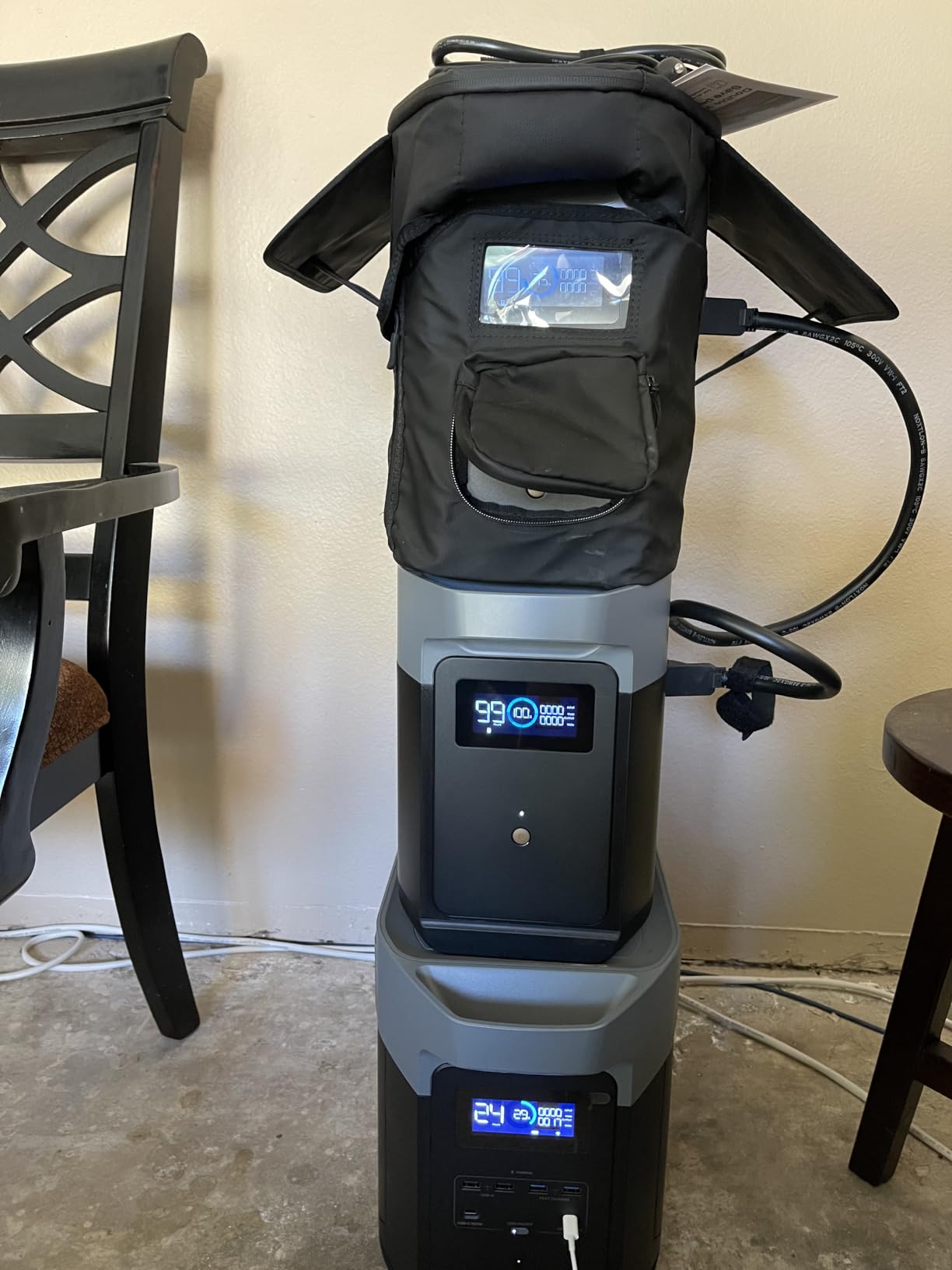
When this is the right size
Long-distance camping, van life, and boondocking where a multi-day gap between charges is normal. It is also the right call for anyone who wants one device to cover a fridge and a CPAP machine and a small heater through a cold week.
Buyers who intend to add batteries later get the most from it, since the base capacity is already substantial.
When it is the wrong size
Weight is the whole argument against it. At 23 kg, or 50.7 lb, this is the heaviest unit in the guide and effectively requires two people to load into a vehicle or a gear trailer.
It also costs more than smaller picks that would meet the same need, and the battery is rated for 3000 cycles to 80 percent, below the 4000-cycle figures the newer units reach. If your trip is a weekend, this is more station than you will use.
12. Daran YOUYO R100 Portable Power Station – Best for Air Travel and Day Trips
Daran Portable Power Station 89.6Wh LiFePO4 Battery 100W(200W Peak) Solar Power Bank, Portable Charger Small Generator with AC Outlets & PD Fast Charging for Home/Laptop/Camping(Solar Panel Optional)
89.6Wh LiFePO4
100W continuous
200W peak
2.5 lb
Seven ports
FAA compliant
Pros
- Only 2.5 lb and fits in a backpack or glove compartment
- Full charge in about 1.2 hours on dual AC and USB-C input
- Two real AC outlets plus two USB-C and two USB-A ports
- LiFePO4 battery rated 3500+ cycles
- FAA compliant under 100Wh for carry-on travel
Cons
- 100W output cannot run high-power appliances
- Audible hum under load rather than fully silent
- Pass-through charging uses a harder charge and discharge method
- USB-C Power Delivery limited to about 85W
- Some durability concerns reported
This is the only unit in the guide that stays under the 100Wh threshold that governs what you can carry onto an aircraft, and at 2.5 pounds it is the one you actually pack. Everything else in this list is a car-camping purchase.
It is not a compromise in build terms. The cells are LiFePO4 rated past 3500 cycles, the display shows input and output wattage alongside the battery percentage, and there is a four-level LED flashlight with SOS mode on the end.
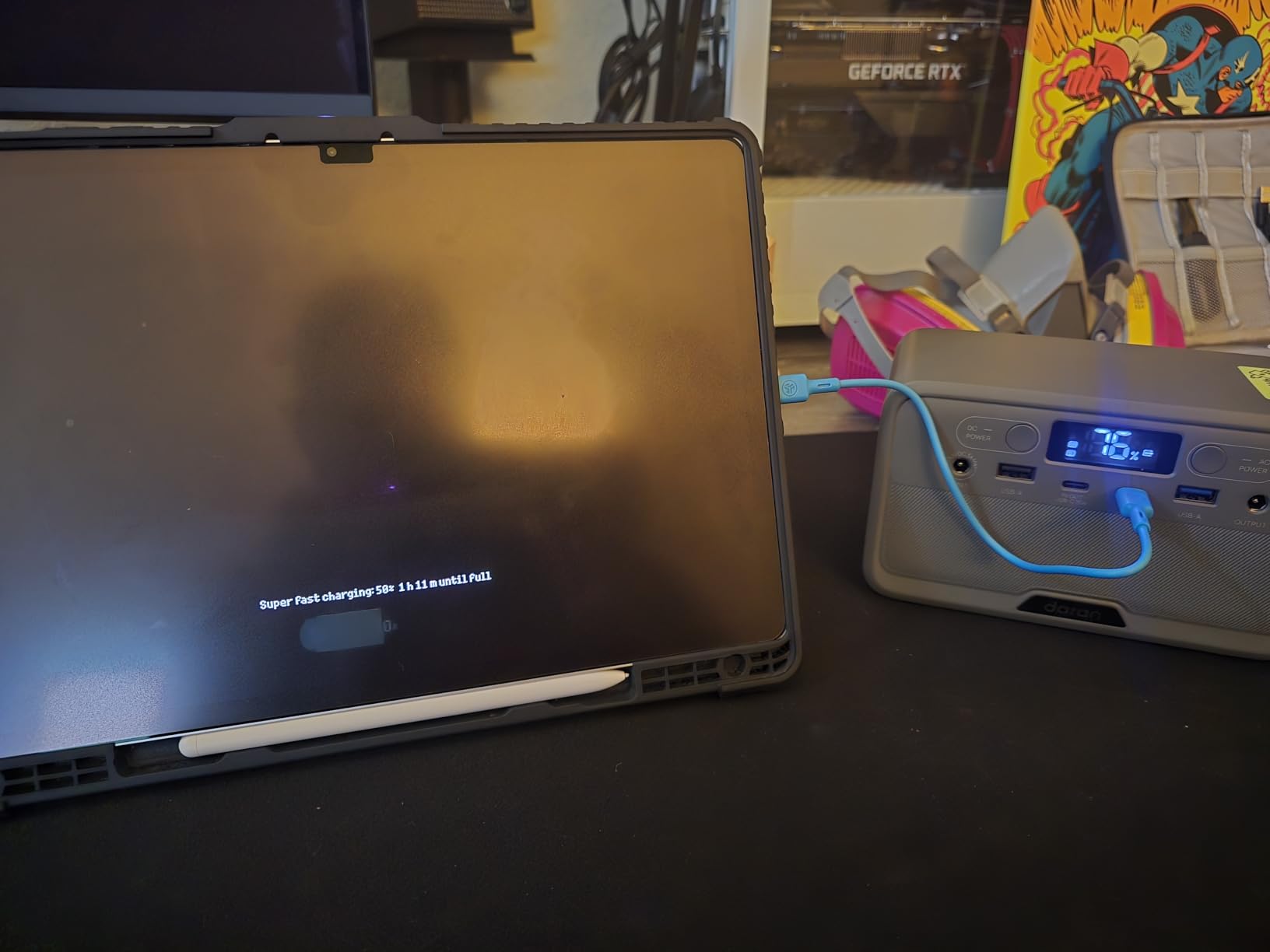
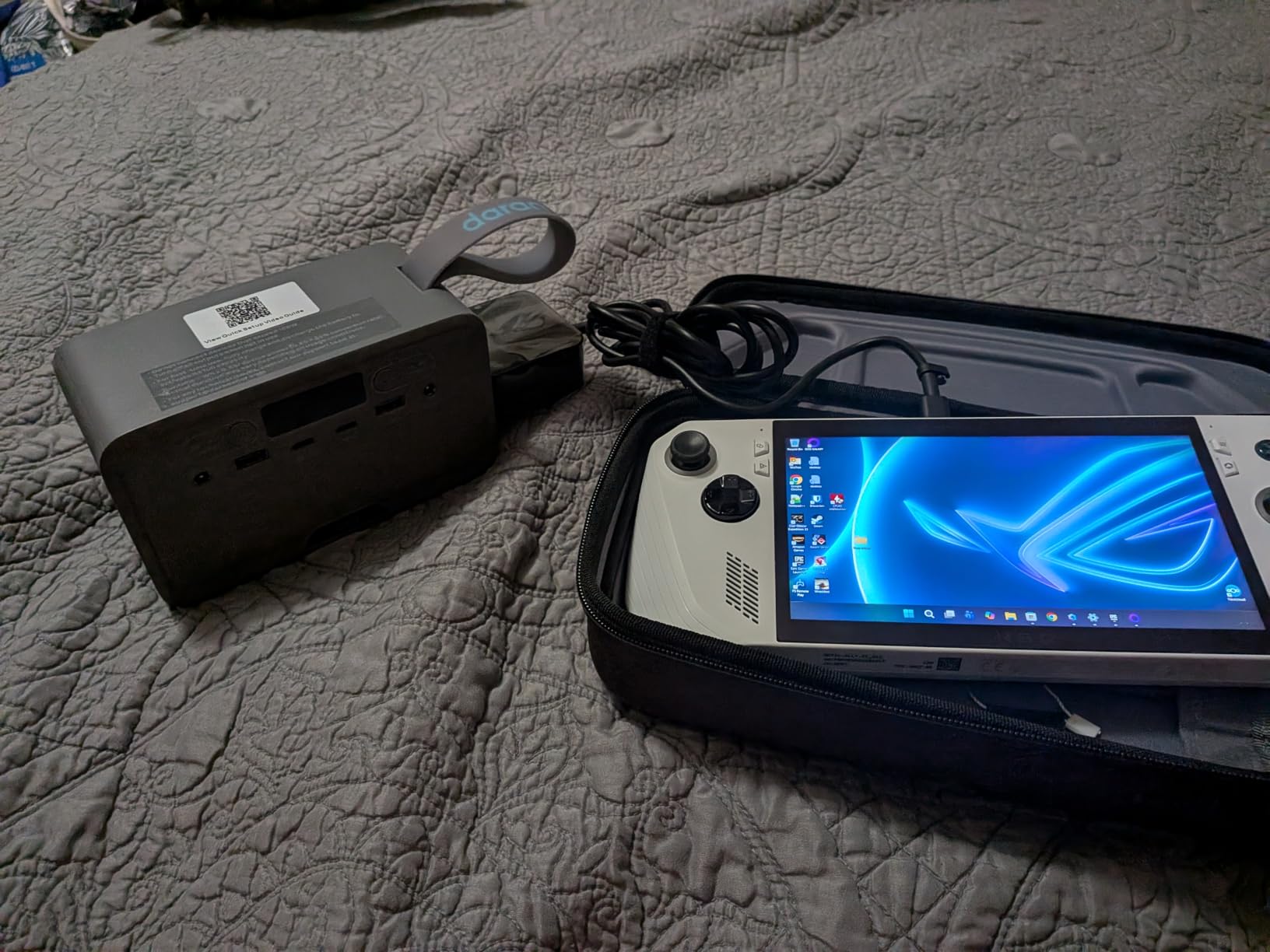
Seven outputs from a unit this small is genuinely unusual: two AC outlets for laptops, two USB-C ports at 45W and 15W, two USB-A ports and a DC5521 output. Dual-input charging takes it from zero to 80 percent in about an hour and a half and to full in roughly 1.2 hours.
Reviewers value the fast charging and the port count, and describe it as ideal for laptops, phones and small electronics, with a useful emergency backup role. It is also fanless at idle.
When this is the right size
Air travel, motorcycle touring, hiking and any trip where the battery rides on your body rather than in a vehicle. The two AC outlets let you leave the wall charger at home.
It is a solid emergency backup for a small apartment, a car or a medical device pouch, and the one-year manufacturer warranty is short but proportionate to the class.
When it is the wrong size
At 100W continuous there is no high-draw appliance in its range, and the AC outlet drains the battery quickly under a real load. USB-C Power Delivery is limited to roughly 85W rather than the full 100W.
It is not fully silent, with an audible hum under load, and pass-through charging uses a charge and discharge method that is harder on the battery over time. A few owners also report durability concerns, so treat it as a travel companion rather than a base camp unit.
How to Size a Portable Power Station for Camping?
Most sizing mistakes come from treating watt-hours as a capacity number rather than an energy budget. Watt-hours tell you how much energy the pack holds, watts tell you how fast it can deliver that energy, and the two only combine through a simple division that is easy to get wrong.
Work out your real load first
List every device you actually plan to run, then separate them into loads that run continuously and loads that run in bursts. A CPAP machine, an LED string and a router run all night. A coffee maker, a kettle and a hair dryer run for three minutes each and cost far less total energy than the numbers on their labels suggest.
The rule of thumb for continuous loads is runtime equals watt-hours divided by watts. A 1000Wh pack running a 100W CPAP for eight hours a night gives you about ten hours of theoretical runtime.
That is a ceiling, not a promise. Conversion losses through the inverter, standby draw and cold temperatures all cut it. Treat the formula as the best case and plan on roughly 80 percent of the result.
Pick your capacity bracket by trip type
For a day trip or a walk-in site, the 89.6Wh to 288Wh class covers phones, cameras, a laptop and lighting with nothing else. A weekend in a vehicle sits comfortably at 999Wh to 1152Wh, which is where a 12V fridge becomes realistic for three or four days.
Family trips and anyone with a CPAP machine want 1024Wh or more. Multi-day off-grid or van life starts at 2048Wh, and the only real jump past that comes from adding a separate battery pack.
The single most common question on camping forums is how big a station is needed to run an electric cooler for three or four days, and the answer is that a 12V compressor fridge does not draw its rated watts continuously. A 50 percent duty cycle changes the math completely, which is why a mid-size unit outlasts a small one by a wide margin in that scenario.
Check output, not just capacity
Continuous output is the ceiling for steady draw and surge power covers the inrush when a motor starts. If a load draws more than the continuous rating, it will not switch on, and no amount of extra capacity fixes that.
A compressor fridge, a pump and an induction cooker all spike on start. If your list contains any of those, do not buy on watt-hours alone. Coffee makers and kettles are heating loads that run steadily once started, so they need a high continuous rating rather than a big surge number.
Size the solar panel honestly
Panel wattage divided by peak sun hours gives the realistic daily refill, and peak sun hours at a campsite in summer are typically three to five, not twelve. A 200W panel in four hours of good sun returns roughly 800Wh before conversion losses, so it does not meaningfully refill a 2000Wh pack in a day.
As a practical rule, match the panel to roughly a third of the battery capacity for overnight top-ups, and to the full capacity only if you have a clear roof or tailgate to mount it on. A small bundled panel will not do what marketing implies, which is the most common solar complaint in owner reviews.
Factor in weight before anything else
Carrying a battery from the car is the top practical complaint in every camping forum thread on this topic. Divide the watt-hours by the weight and you get a simple portability index: a 292Wh pack at 7.1 pounds scores about 41, while a 1152Wh pack at 37 pounds scores about 31.
Anything above 30 pounds changes your trip. It is a two-hand carry, it limits how far you can site from the vehicle, and it is the reason several owners of the larger units keep them at the tailgate rather than taking them to the pitch.
Know what to do in the cold and how to store it
Lithium iron phosphate chemistry tolerates cold and heat better than the older nickel manganese cobalt packs, but usable capacity still drops in freezing conditions. Charge the unit indoors overnight, keep it above 20 percent state of charge when stored, and store it dry rather than in a damp tent.
Campground rules matter too. A battery station runs silently and produces no exhaust, so it is welcome where generators are restricted, but check the quiet hours for any device with a cooling fan, and keep the station clear of a tent entrance for fire safety.
Frequently Asked Questions
Which portable power station is best for camping?
For most campers the Jackery Explorer 300 at 292Wh and 7.1 pounds is the best starting point, covering phones, laptops, cameras, lights and a CPAP machine while staying easy to carry. If you plan to run a 12V fridge or a coffee maker, step up to the 999Wh to 1152Wh class, where the Jackery Explorer 1000 v2 and BLUETTI AC180 give you the continuous output a compressor appliance needs.
How big a portable power station do I need for camping?
A weekend in a vehicle needs roughly 999Wh to 1152Wh if a 12V fridge is involved, and 292Wh to 288Wh is enough for phones, a laptop, lighting and small electronics. Longer trips and CPAP machines want 1024Wh or more. Remember that a compressor fridge runs on a duty cycle, so it consumes far less energy than its label suggests.
Is Jackery or Anker better?
Both build LiFePO4 packs and are strong choices, but they serve different trips. Jackery covers more of the size range and the Explorer 1000 v2 has 1500W of continuous output with three AC outlets, while the Anker SOLIX C1000 Gen 2 delivers 2000W, a 10ms UPS transfer and a 49-minute recharge. For medical devices Anker wins, for the broadest size range Jackery does.
Is Jackery or EcoFlow better?
EcoFlow generally charges faster and the DELTA 3 reaches 80 percent in about 30 minutes on combined AC and solar, and it is the only unit in this group with an IP65 battery pack. Jackery offers a wider size range and a 5-year-cycle LFP warranty story. Choose EcoFlow for speed and expansion, and Jackery for choice and the widest range of small to mid-size units.
What is the best portable power bank for camping?
A power bank and a power station are different products. A power bank is a small USB-only battery for phones, while a portable power station has an inverter and AC outlets. For camping the sub-300Wh class is the practical floor, and the 89.6Wh Daran YOUYO R100 is the only unit here that stays under the 100Wh airline carry-on limit.
Can a portable power station run a CPAP machine overnight?
Yes, because a CPAP machine typically draws far less than people expect and the priority is switchover time rather than raw capacity. The Anker SOLIX C1000 Gen 2 has a 10ms UPS transfer and owners report three nights of CPAP on a single charge, while a 292Wh unit comfortably covers one night.
Do I need a solar panel with a portable power station?
It depends on how long you are away from a vehicle or a wall outlet. Panel wattage divided by peak sun hours gives the realistic daily refill, and campsite sun hours are usually three to five, so a small bundled panel will not refill a larger pack. Match roughly a third of the battery capacity for overnight top-ups.
The Verdict: Which Portable Power Station Should You Buy in 2026
If you only buy one, buy the Jackery Explorer 300. It is the only station in this guide that combines a genuinely portable 7.1-pound weight with a 292Wh LiFePO4 pack, and it covers the loads most campers actually bring, from a CPAP machine to a laptop to a string of lights. It is our pick in the best portable power stations for camping because the most common failure in this category is weight, and it is the one that avoids that failure.
If a 12V fridge is in your plan, move up to the Jackery Explorer 1000 v2 for the surge headroom, or the BLUETTI AC180 if you want 1800W of continuous output and a one-hour wall recharge. If your gear is sensitive rather than heavy, the Anker SOLIX C1000 Gen 2 with its 10ms UPS transfer is the smarter buy. And if you intend to be away from a vehicle for days, the EcoFlow DELTA 2 Max is the only unit here with the capacity to do it.
Whichever you choose, buy the capacity your load list demands and not the largest one you can lift. Before you pack, check the camping gear we rate for large dogs with you and keep your pet food storage organised so the weekend goes smoothly once the power is sorted.