
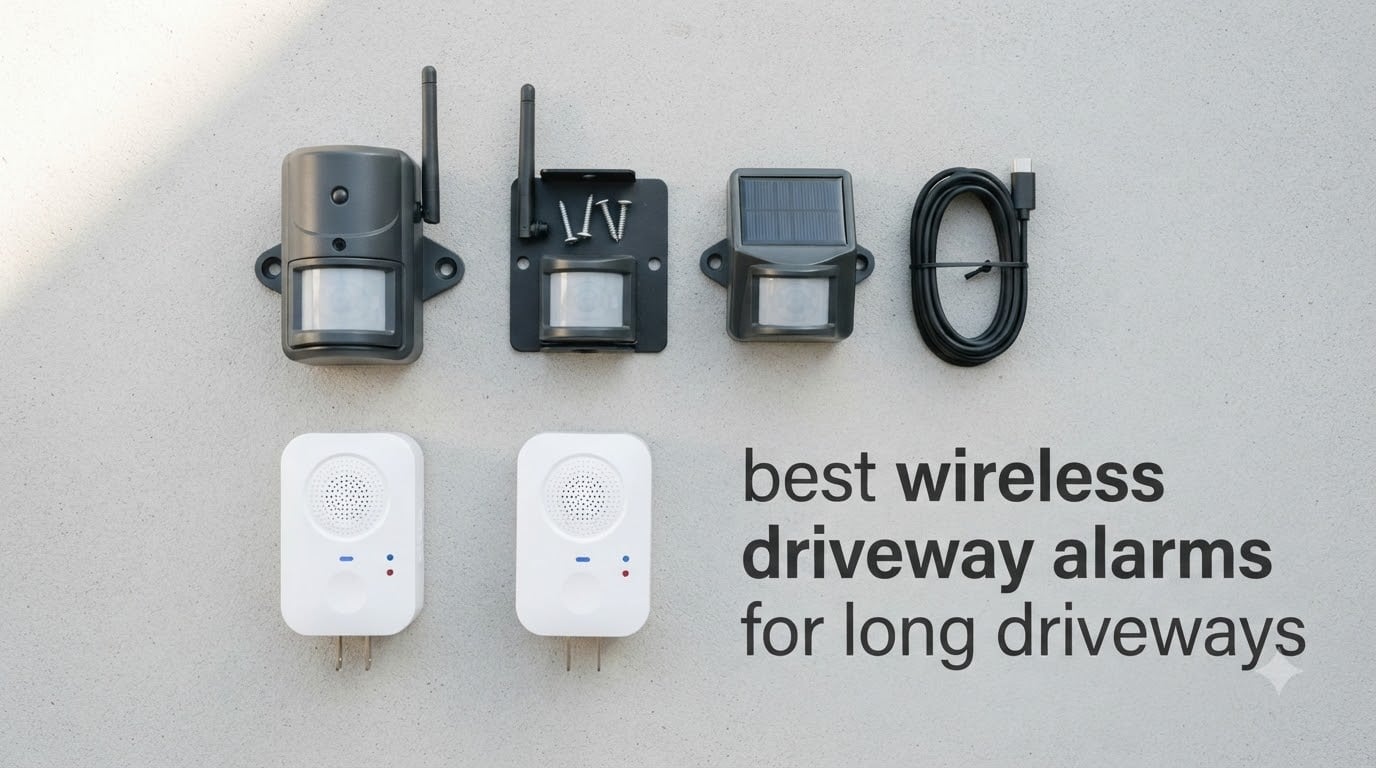
If you live at the end of a half-mile gravel drive, an ordinary driveway alarm will not do you any favours. The sensor barely gets a vehicle within sight of the house before the truck is already pulling up, and the difference between a 500 ft warning and a 2,600 ft warning is the difference between reacting and watching. This guide covers the best wireless driveway alarms for long driveways, tested against the only numbers that matter on rural property: how far the signal really carries, how far the sensor actually throws, and what happens when a stand of trees sits in the middle.
We spent weeks comparing eight systems rated from 1,760 ft to one full mile of transmission range. All of them are wireless, all of them are designed for outdoor use, and every one of them works on a receiver that sits inside your house rather than on the driveway itself. What separates them is sensor type, power source, how many entrances you can cover later, and whether the alert reaches your phone.
One thing to clear up before we start: the range printed on the box is the range between the sensor and the receiver, not how far down the driveway the sensor can see. Those are two separate numbers, and confusing them is the single biggest reason long-driveway buyers end up disappointed. We break both down in detail below.
Table of Contents
Top 3 Best Wireless Driveway Alarm Picks for Long Driveways (September 2026)

HTZSAFE 808A Half-Mile Kit
- 1/2 mile transmission
- 50 ft detection
- 2 sensors included
- expands to 32 sensors

eMACROS HS002 Solar Kit
- Solar powered
- 2600 ft range
- expands to 64 sensors
- 20 to 30 ft detection

Wuloo 1760 Ft Solar Kit
- 1760 ft range
- 2 sensors
- 24 month rechargeable battery
- clock and alarm receiver
The HTZSAFE 808A takes the top slot because it pairs a genuine half-mile claim with the largest installed base of anything we looked at, two sensors in the box, and room to grow to 32 sensors. The eMACROS HS002 is the one to beat if you would rather never touch a battery again. The Wuloo kit covers two detection points and doubles its receiver as a clock, which is a neat trick for a shop or gate house.
Best Wireless Driveway Alarms for Long Driveways in 2026
| Product | Specs | Action |
|---|---|---|
| HTZSAFE 808A Half-Mile Kit |
|
Check Latest Price |
| eMACROS HS002 Solar Kit |
|
Check Latest Price |
| Wuloo 1760 Ft Solar Kit |
|
Check Latest Price |
 Dakota Alert DCMA-4K Plus Dakota Alert DCMA-4K Plus |
|
Check Latest Price |
 TECKNET EMD01001BA01 Solar RGB Kit TECKNET EMD01001BA01 Solar RGB Kit |
|
Check Latest Price |
 HTZSAFE HB-807A Solar Kit HTZSAFE HB-807A Solar Kit |
|
Check Latest Price |
 Betterlink AU-NS001-1R1S Betterlink AU-NS001-1R1S |
|
Check Latest Price |
 eMACROS Pro3 Wi-Fi Solar Kit eMACROS Pro3 Wi-Fi Solar Kit |
|
Check Latest Price |
Two things stand out in that grid. First, every kit here claims between a third of a mile and a full mile of sensor-to-receiver transmission, so the range figure alone will not decide your purchase. Second, only one of the eight pushes alerts to a smartphone.
How Far Do Wireless Driveway Alarms Actually Reach?
Most of these systems will carry a signal anywhere from 1,760 ft to a mile, but the sensor itself only detects movement across roughly 16 to 70 ft of driveway, and real-world range is often well short of the claim once trees, buildings or hills sit in the path.
Two different numbers get printed on the box, and buyers need to keep them apart. Detection range is how far the sensor can see across your driveway, and on every alarm in this roundup it sits somewhere between 16 ft and 70 ft. Transmission range is how far the radio signal travels from that sensor to the receiver in your house, and that is the 1,760 ft, 2,600 ft or one-mile figure.
So a 2,640 ft transmission alarm is not going to give you two extra thousand feet of warning. It gives you the freedom to put the sensor at the far end of the drive, which is exactly what you want: the sensor triggers when someone crosses it, and the alert reaches you regardless of how far away it is.
Owners on long gravel drives report figures considerably lower than the claims. A TractorByNet thread on wireless driveway alerts has a 1,200 ft drive where a Dakota Alert unit runs at roughly 500 ft effective because the path goes through trees, and he still gets plenty of warning. Owners of the TECKNET kit describe confirming the half-mile claim on drives of 700 to 1,200 ft, while Betterlink buyers report the range holding at about 400 ft through heavily wooded ground.
A useful rule of thumb: if the sensor and receiver have a clean line of sight, budget close to the full claim. If mature trees, a barn or a hill sit between them, cut the claim roughly in half and buy a longer-throwing model than you think you need. Reliable Chimes, in their own testing, found transmission range typically accurate to about 500 ft, which covers the majority of driveways.
1. HTZSAFE 808A+2T808 Half-Mile Kit – Best Overall for Long Driveways
Driveway Alarm- 1/2 Mile Long Range Motion Sensor- 1 Receiver+2 Sensors
2640 ft range
50 ft detection
2 sensors
expands to 32 sensors
Pros
- Half-mile range suits long driveways and acreage
- Two sensors plus a plug-in receiver give two alert points
- Sensors ship pre-paired so setup is quick
- Two sensitivity steps of 35 ft and 50 ft
- Very large installed base with high ratings
Cons
- Not solar powered so AA batteries need routine changes
- Batteries are not included in the package
- Only two sensitivity steps for tuning
The HTZSAFE 808A is the one we kept coming back to. The 808A+2T808 package ships with one plug-in receiver and two sensors, and both sensors arrive already programmed to it, so the pairing work that normally eats an evening takes about five minutes. That matters on a long driveway, because you are mounting hardware at the far end of a gravel track in whatever the weather is doing.
Transmission is quoted at 1/2 mile, or 2,640 ft, using FSK+FHSS encoding that is designed to hold up around other wireless gear. Detection is a 50 ft throw with two sensitivity steps, 35 ft on low and 50 ft on high. The system scales to 32 sensors with unlimited receivers, which means you can cover a gate, a footpath and a second entrance later without starting over.
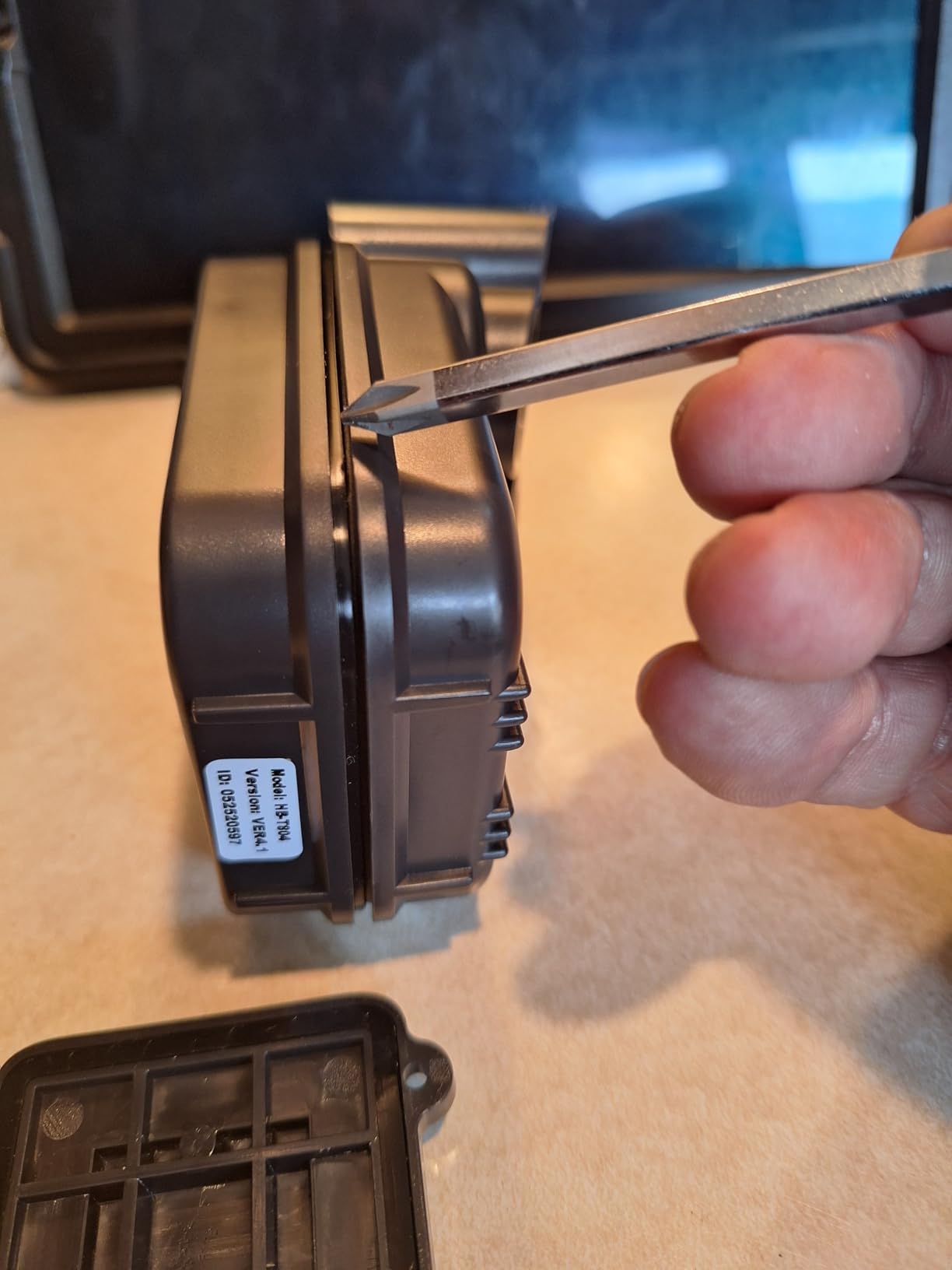
What we like most is how the two sensors are handled separately. Each one can be given a different melody, so you learn to tell by ear whether the vehicle is coming up the main drive or slipping in through the side gate. The receiver runs four volume levels and 35 optional melodies, which is more tonal choice than most kits at this level offer.
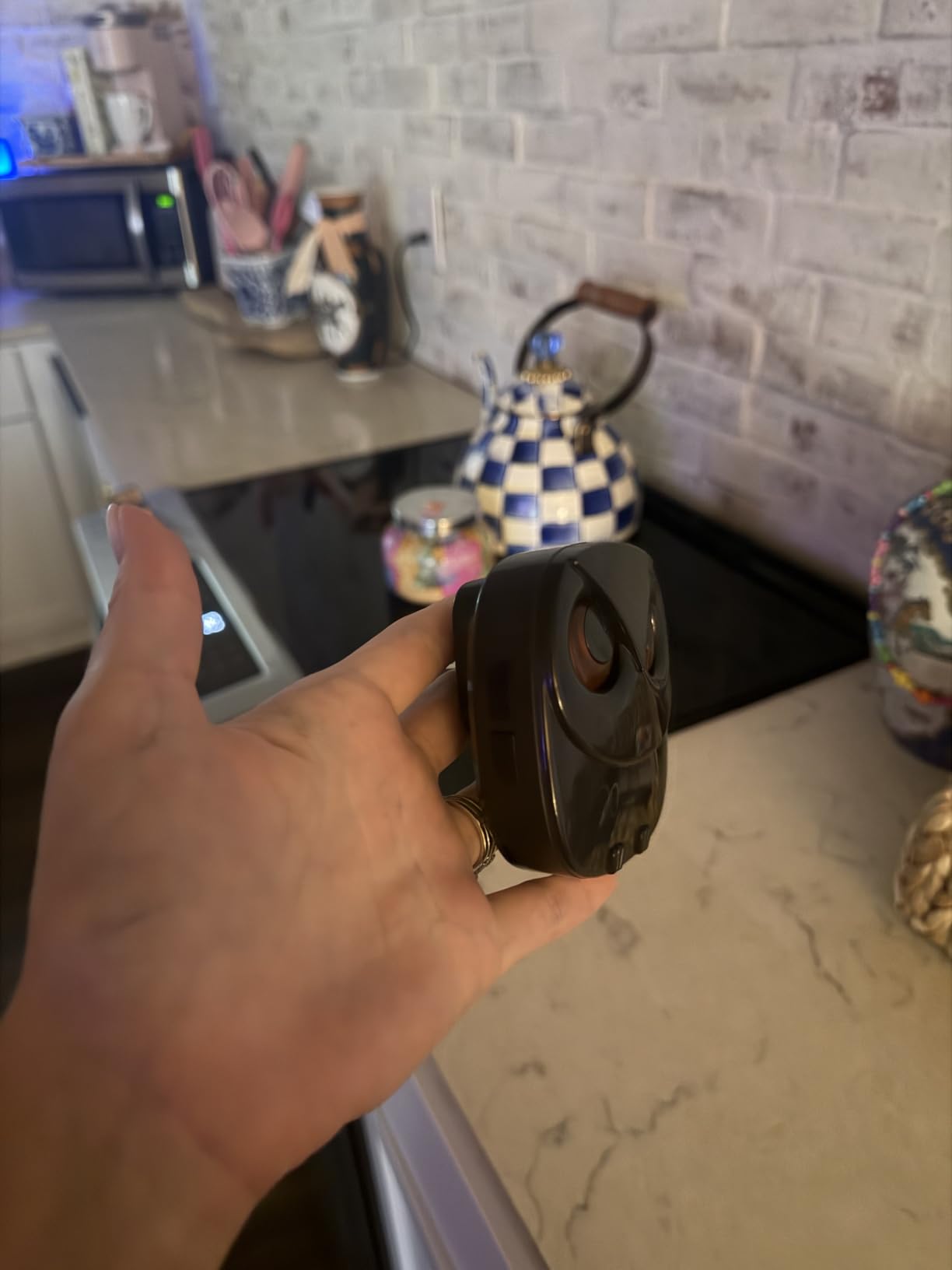
Spec-wise it is an alkaline-powered design using three AA cells per sensor, rated to work from -30 to 150 degrees Fahrenheit and built for wall mounting. It is not solar, so somebody has to walk out to the sensor once or twice a year. For most households that is a five-minute job, and it is the price you pay for a signal that has proven itself across a very large number of installations.
What to check before buying the HTZSAFE 808A
Measure your drive first. If it is under about 500 ft with clear sightlines, this kit is comfortable. Beyond 1,000 ft, or with heavy tree cover, look at the one-mile model further down the list or a solar kit so you are not swapping batteries at the gate in January.
Decide how many alert points you want now. The two sensors cover a main drive and a secondary entrance well, and adding more later is straightforward, but each extra sensor needs its own mounting post and cable-free power.
Where the HTZSAFE 808A falls short
Batteries are not included, and AA cells on a sensor at the end of a long drive are the recurring complaint. The two-step sensitivity is also coarser than the three-step and sliding-lens systems elsewhere in this list, which makes trimming wildlife triggers a bit of a compromise.
It is an audio-only receiver. If you want the alert on your phone while you are away from the property, this is the wrong kit for that job.
2. eMACROS HS002-1T1 Solar Kit – Best Value for Very Long Drives
eMACROS 1/2 Mile Solar Wireless Driveway Alarm, 1 Receiver & 1 Sensor
2600 ft range
Solar powered
expands to 64 sensors
20 to 30 ft detection
Pros
- Half-mile range built for long rural drives
- Solar charging means batteries rarely need replacing
- Expands to 64 sensors with per-zone chimes
- Sensor holds up in heavy rain and storms
- No wiring or trenching to install
Cons
- No app so alerts are receiver audio only
- Detection capped at 30 ft on the high setting
- Receiver must be plugged into a wall outlet
The eMACROS HS002 is the pick for anyone who wants a half-mile system and no maintenance routine. The sensor carries a solar panel that continuously trickle-charges an internal lithium polymer battery, so there is no annual trip to a post at the far end of the drive with a screwdriver. For a 1,000 ft driveway, that convenience is worth more than it sounds.
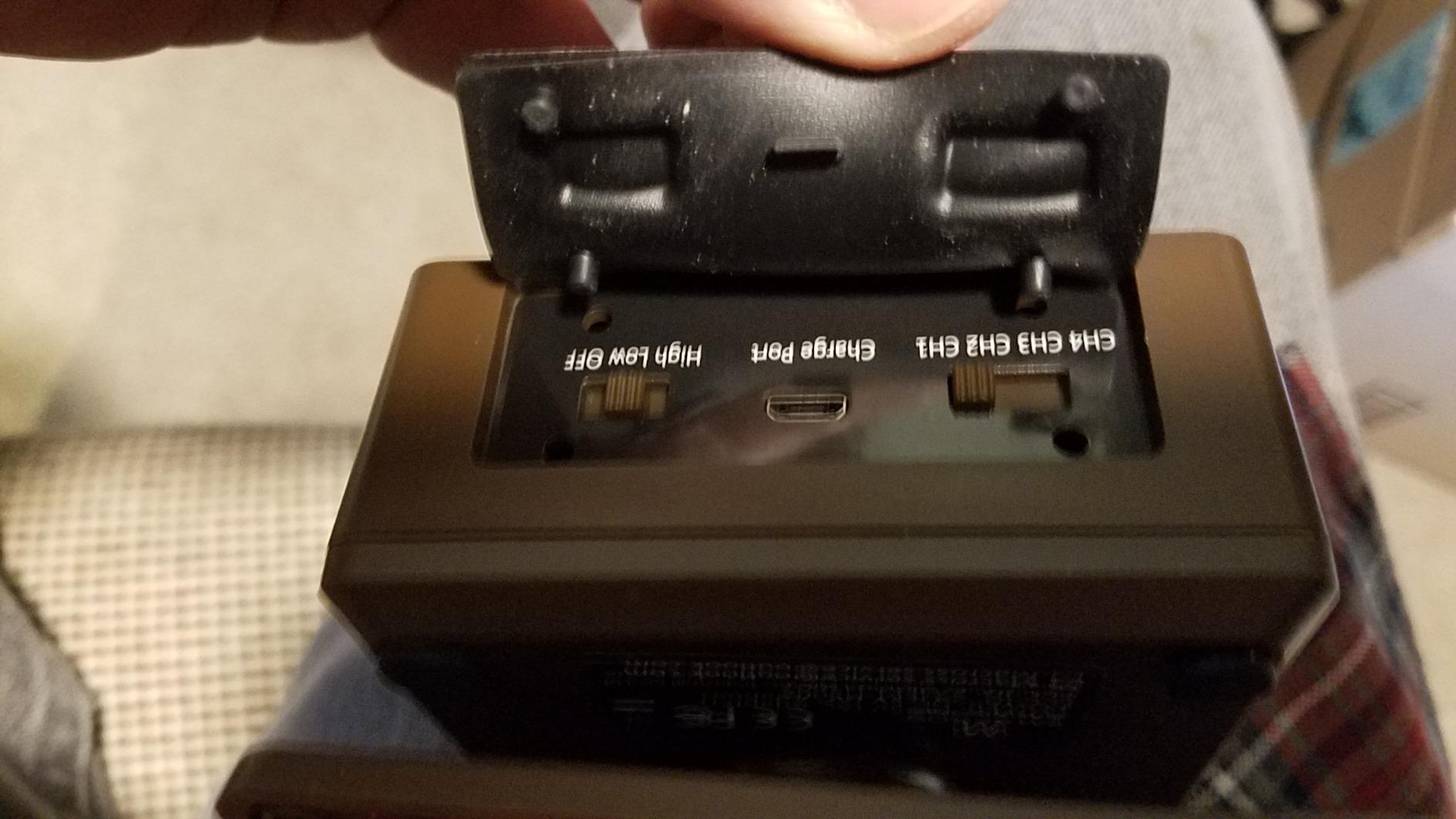
Range is quoted at 1/2 mile, or 2,600 ft, and the manufacturer describes it as tested through forests, storms and heavy rain. Detection reach is 20 ft on low sensitivity and 30 ft on high, which is on the shorter side for this group but workable on a drive that is wide and flat. Operating temperature runs from -20 to 60 degrees Celsius.
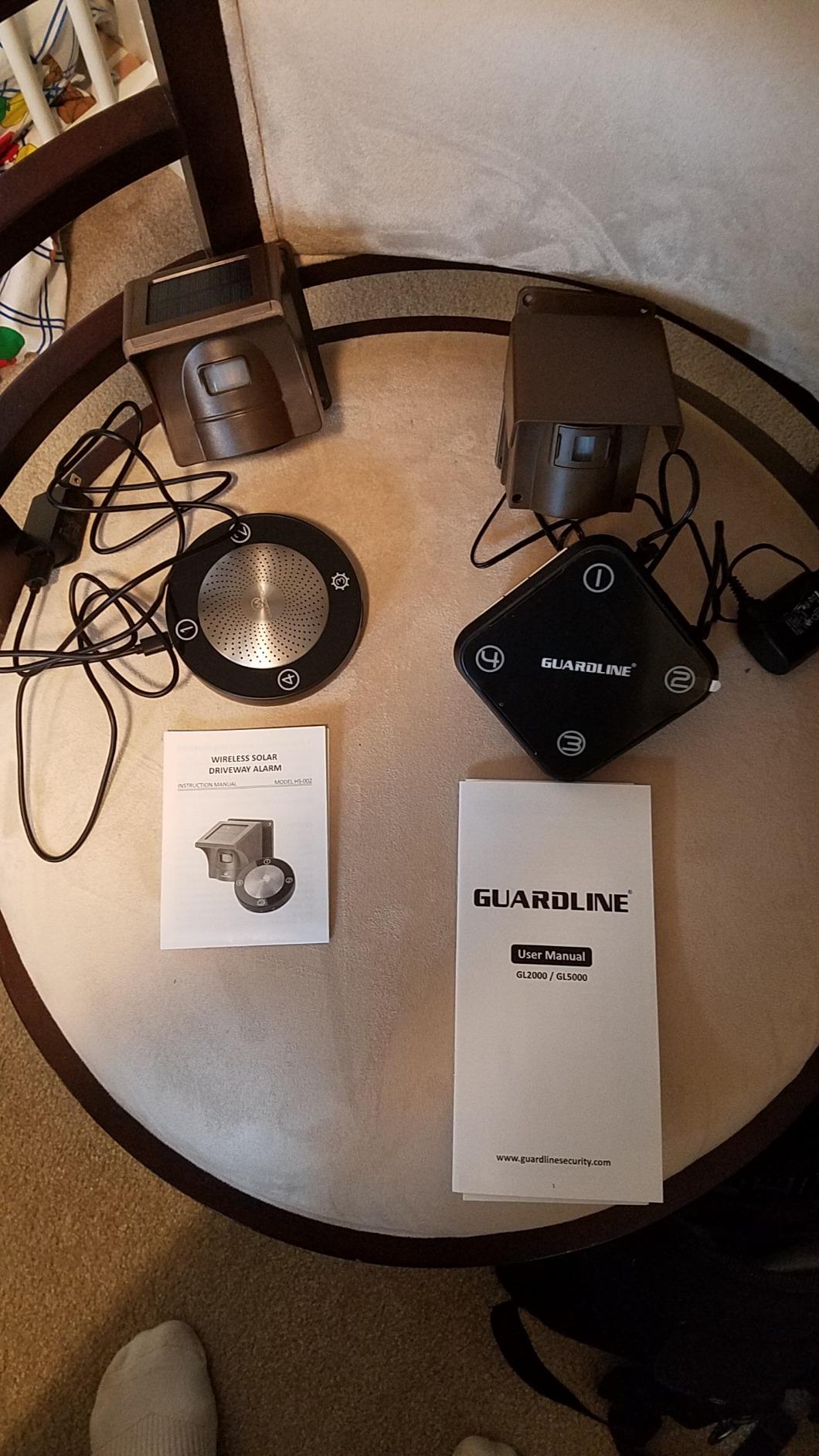
The expansion ceiling is the standout specification: 64 sensors and unlimited receivers, each assignable a different chime. On a farm with a house drive, a shop entrance, a gate and a walking path, that is enough architecture to cover the whole property with one receiver programme. The kit ships with the receiver, the sensor, and charging cables and adapters.
Install height guidance is unusually specific and worth following: 3 to 4 ft when you are detecting people, 2 to 3 ft when you are detecting vehicles. That is the kind of detail most listings skip, and getting it wrong is a common reason a sensor misses cars.
Why this is the best value solar option
The combination of a half-mile claim, solar power and 64-sensor expansion is not something you normally find together, and the 11k-plus reviews behind it give you a large sample of long-drive installations to draw on. If your drive runs 400 to 1,200 ft and you have no mains power at the far end, this is the configuration we would build first.
It also suits properties with a shop or outbuilding, because the receiver can be duplicated anywhere with mains power and given its own chime for each zone.
Where the eMACROS HS002 falls short
This is explicitly the non-app version, so all alerts are audio at the receiver. If you are away from the property regularly and want push notifications, skip to the eMACROS Pro3 further down.
Thirty feet of detection reach is the tightest throw among the solar kits here, and a 30 ft cap is easy to under-aim on a wide drive. The receiver also has to be plugged in, so it cannot simply be carried to another room on a battery.
3. Wuloo WUL-19056-1T2 Solar Kit – Best Two-Sensor Starter System
Solar Driveway Alarm Wireless Outside 1800ft Range, Outdoor Motion Sensor & Detector Driveway Alert System with Rechargeable Battery/Weatherproof/Mute Mode(1&2-Brown)
1760 ft range
2 sensors
24 month battery
receiver is also a clock
Pros
- 1760 ft range verified in real-world conditions
- Two sensors and a receiver give multi-point coverage
- Solar rechargeable battery rated up to 24 months
- Sensitivity adjustment cuts leaf and small-animal triggers
- Receiver doubles as an alarm clock with mute
Cons
- 1760 ft is shorter than the half-mile models
- Expands to only 8 additional sensors
- No smartphone or Wi-Fi notifications
The Wuloo package is the most complete box in the roundup for a small property: one receiver and two sensors, all solar, all paired. Where most competitors sell you a single sensor and let you work out coverage yourself, you get two detection points straight away, which on a long drive often means the entrance and the house end.
The 1/3-mile claim, or 1,760 ft, is the shortest here, but the listing is unusually honest about conditions, describing the range as verified through trees, buildings, walls and vehicles rather than open air. On a 700 ft drive with partial tree cover, that figure is realistic. On a 1,500 ft drive, it is not, and you should look further up the list.
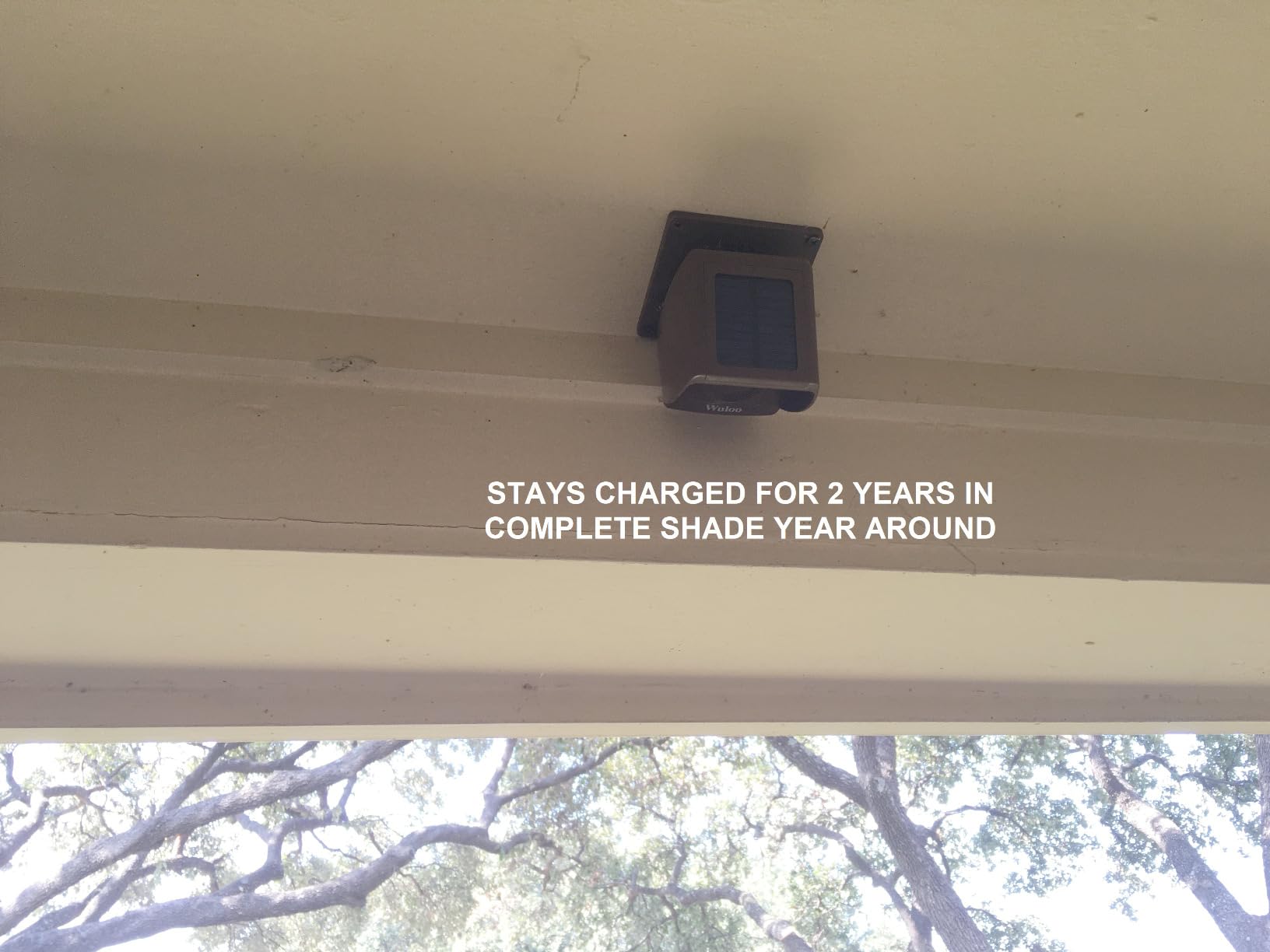
Solar charging here is rated for up to 24 months on a full charge, which is a strong claim, and the sensor is described as weatherproof for rain and snow. Detection zone reaches 30 ft with adjustable sensitivity, and the sensitivity control is the feature owners mention most when wildlife becomes a problem.
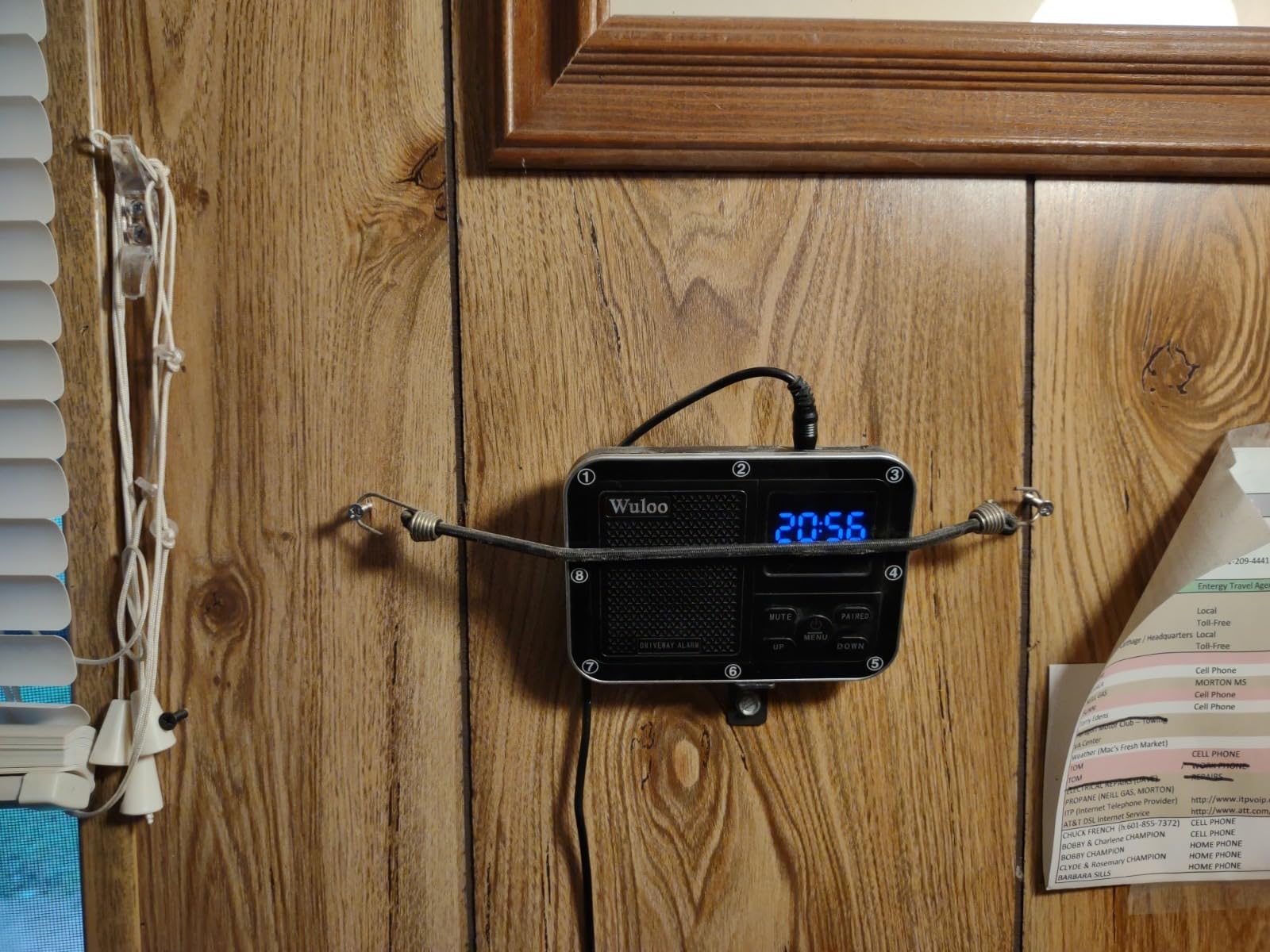
What genuinely surprised us was the receiver. It works as a driveway receiver, an alarm clock and a clock with adjustable chimes, and it has a mute mode for when you do not want the alert at 3 a.m. In a shop or gate house that is a more useful box than a plain chime unit.
What to check before buying the Wuloo kit
Measure your drive and be honest about obstructions. Below 800 ft with some trees, this is comfortable. Above 1,000 ft, the range claim will not get you the warning time you want.
Count your entrance points. Two sensors covers a main drive plus one extra, and the ceiling of 8 additional sensors is fine for a house but tight for a farm with several gates.
Where the Wuloo kit falls short
The 1,760 ft range is the limiting factor on this list, and the expansion ceiling of 8 is the second. There is no app or Wi-Fi, so the receiver has to be indoors and plugged in.
The package is heavier than most solar competitors at 0.9 kg, which is not a real problem but tells you the housings are substantial rather than minimal.
4. Dakota Alert DCMA-4K Plus – Best for One-Mile and Obstructed Drives
Dakota Alert Wireless Driveway Alarm DCMA-4K Plus 1-Mile Motion Sensor Kit
1 mile range
110 dB alert
9V battery
16 sensors per receiver
Pros
- One-mile transmission handles the longest and most obstructed drives
- 110 dB output carries to several rooms and the yard
- A single 9V battery runs a year or more
- Code-learning pairing gets you running in minutes
- Scales to 16 sensors per receiver
Cons
- Not solar powered so it needs an annual battery change
- Four volume levels with no per-zone melodies
- No Wi-Fi or app notifications
When the drive is longer than a mile, or when the signal path runs through a stand of trees, the Dakota Alert DCMA-4K Plus is the honest answer. Its quoted transmission range is one mile, the longest in this roundup, and that extra margin is precisely what you are buying when the clear-line-of-sight assumption breaks down.
Output is 110 dB, which is genuinely loud. On a property where the receiver sits in a house with a closed door between it and the driveway, that figure matters more than any extra melody. There are four selectable volume levels to tame it when the kids are asleep.
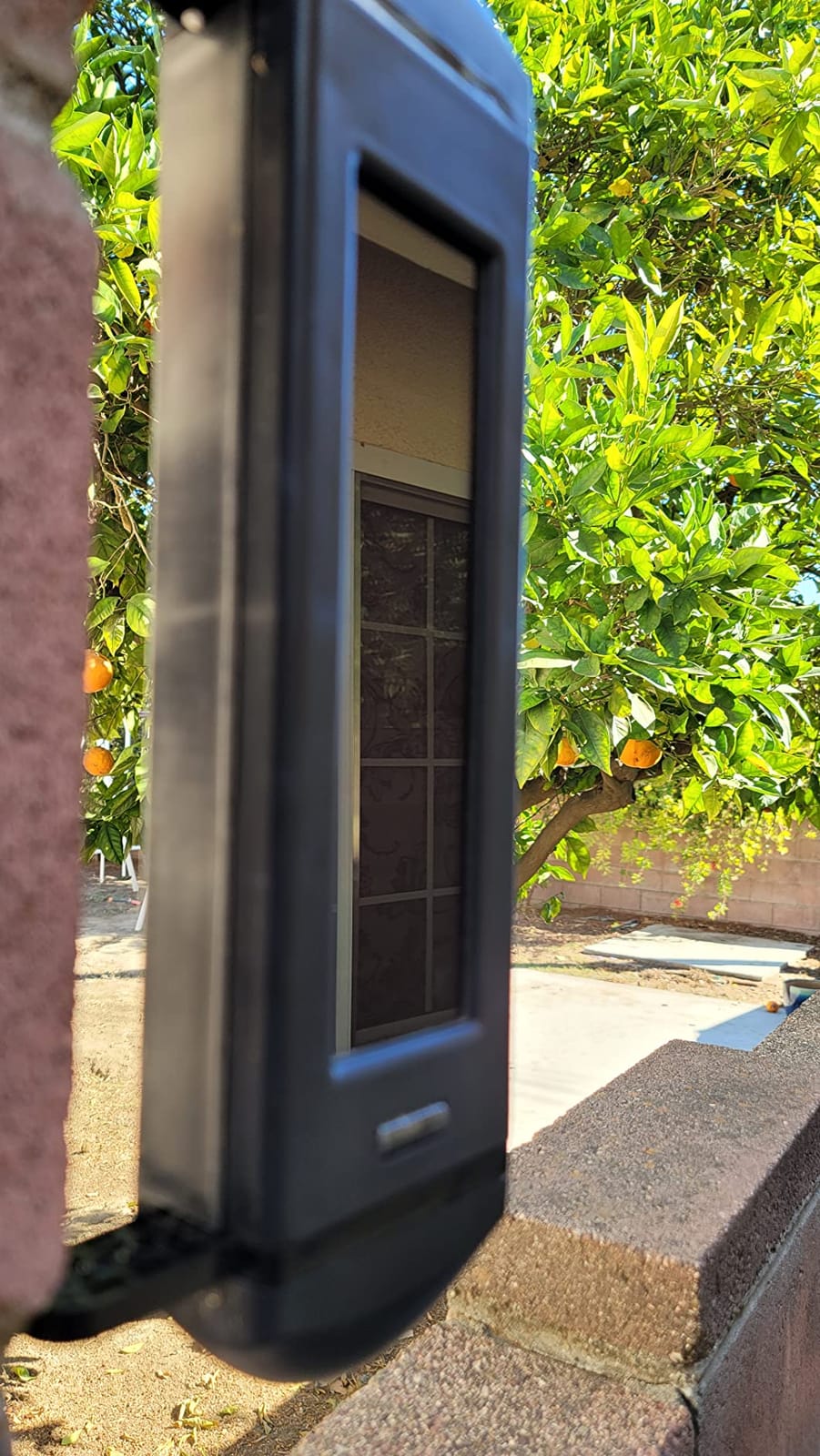
Power is a single 9V alkaline cell rated at a year or more between changes, and pairing uses code-learning technology, so there is no dip-switch fiddling. The system handles 16 sensors per receiver or unlimited receivers on one sensor, and mounting is either self-adhesive or screw-in depending on how permanent you want it.
This is also the brand forum owners reach for by name. In the TractorByNet driveway thread, a 1,200 ft gravel drive owner recommends Dakota Alert directly, reporting that he runs it at about 500 ft effective through trees and still gets his warning. The same owner had battery trouble with an older 3000-series unit and moved to a newer model, noting that the CR123A cells he uses last indefinitely.
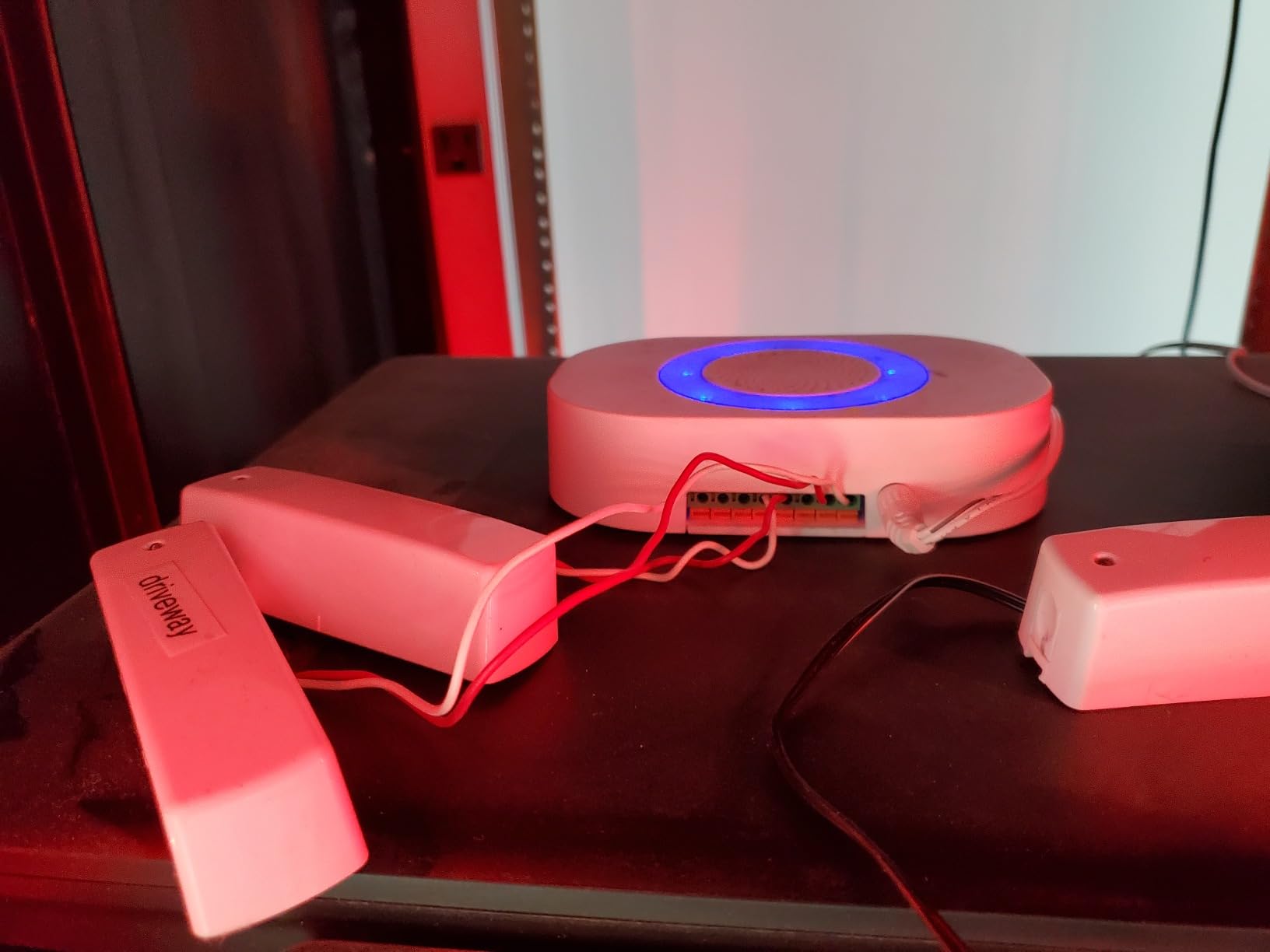
Why the one-mile claim is worth paying for
Range claims are the easiest thing for a manufacturer to inflate and the hardest for a buyer to test. A model with a one-mile figure and a 1/2-mile model behave the same in open air, but only the longer-throwing unit survives a treeline, a barn or a change in elevation without dropping the link.
It is also the safest pick if you do not yet know exactly where the receiver will go. Extra reach means you can move the receiver later without re-buying the sensor.
Where the DCMA-4K Plus falls short
No solar charging, so it needs one battery change a year at the far end of the drive. Four volume levels and no per-zone melodies means a two-sensor setup sounds identical whichever entrance triggered.
There is no app connectivity, so the alert stays inside the house. On a very long drive, 110 dB of indoor chime is doing a lot of work on its own.
5. TECKNET EMD01001BA01 Solar RGB Kit – Top Rated Signal and Zoning
TECKNET Non-APP Solar RGB Wireless Driveway Alarm
2600 ft range
IPX5 waterproof
36 melodies
solar with USB recharge
Pros
- Highest rated kit here with a 76 percent five-star share
- Half-mile range confirmed by owners at 700 to 1200 ft
- Solar charging held up through repeated storms
- Sliding lens panels narrow the detection field
- 36 melodies and 4 alert zones tell zones apart
Cons
- Blue trip LED on the sensor announces a detection
- Receiver has no latched event indicator
- Melodies run 3 to 5 seconds which some find long
- Short USB cable with no AC plug
The TECKNET EMD01001BA01 has the strongest rating of the eight, and the review pattern backs it up. Owners repeatedly describe a half-mile signal that punches through walls, trees and long distances on partial sun, and a housing that has survived a dozen thunderstorms and stretches of overcast weather without losing charge.
Detection is pyroelectric infrared, meaning it reacts to heat movement rather than reflected light, with a rotating bracket for aiming. Sensitivity gives you two steps, 16 ft on low and 33 ft on high, and the sensor is rated IPX5 for water protection with a -15 to 50 degree Celsius operating tolerance.
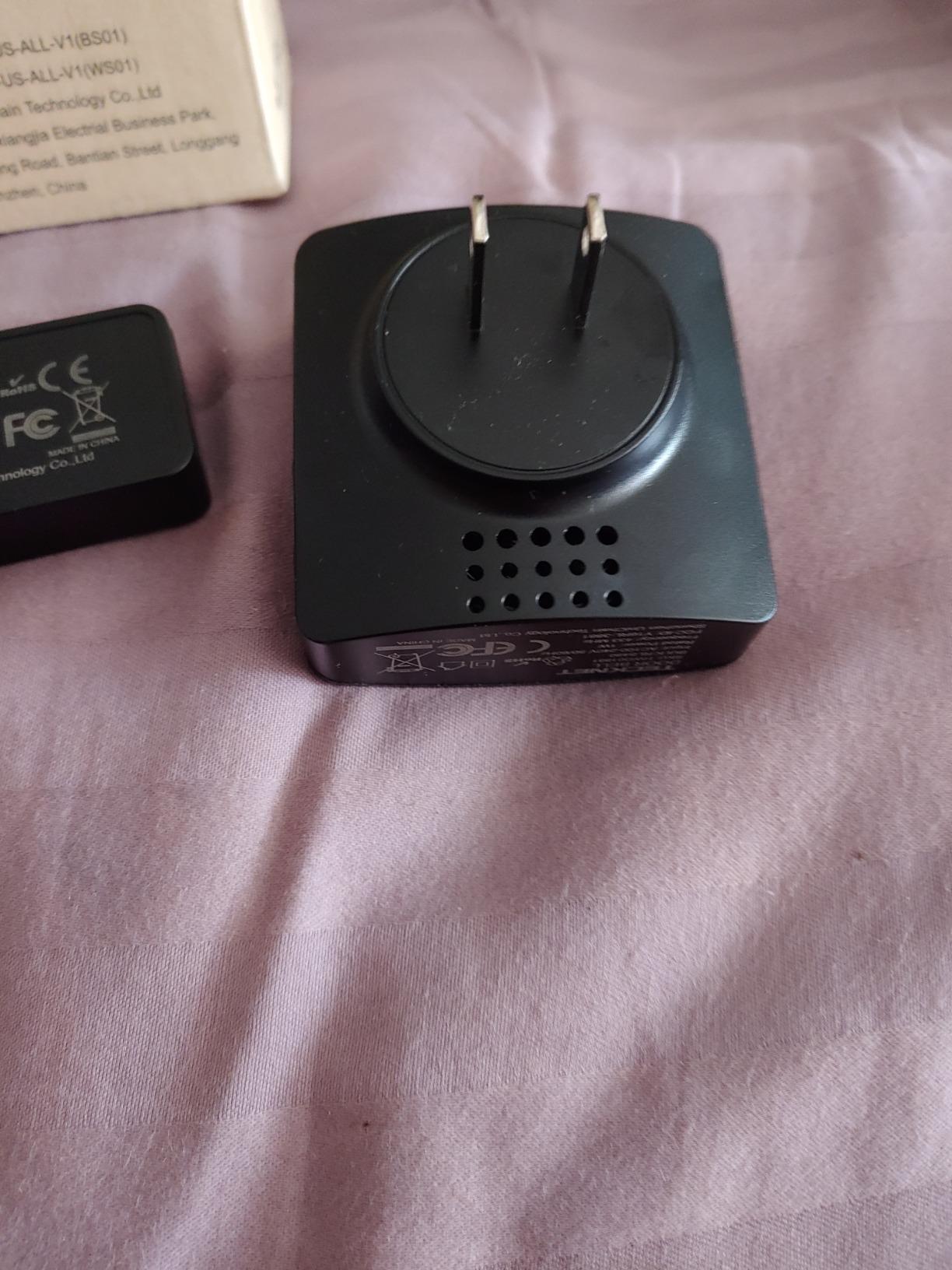
Where it separates itself from the pack is the receiver. You get 36 melodies, five volume levels and four separate ringer alert zones, plus RGB flashing LEDs on both the sensor and the receiver. On a property with several entrance points, being able to tell which zone fired without walking to the window is worth the extra complexity.
Solar charging is backed up by a USB recharge port for cloudy and rainy stretches, so a dark sensor in November does not mean a dead sensor in December. Setup is pre-paired with a quick-start guide in the box, and there is no app, no account and no subscription fee.
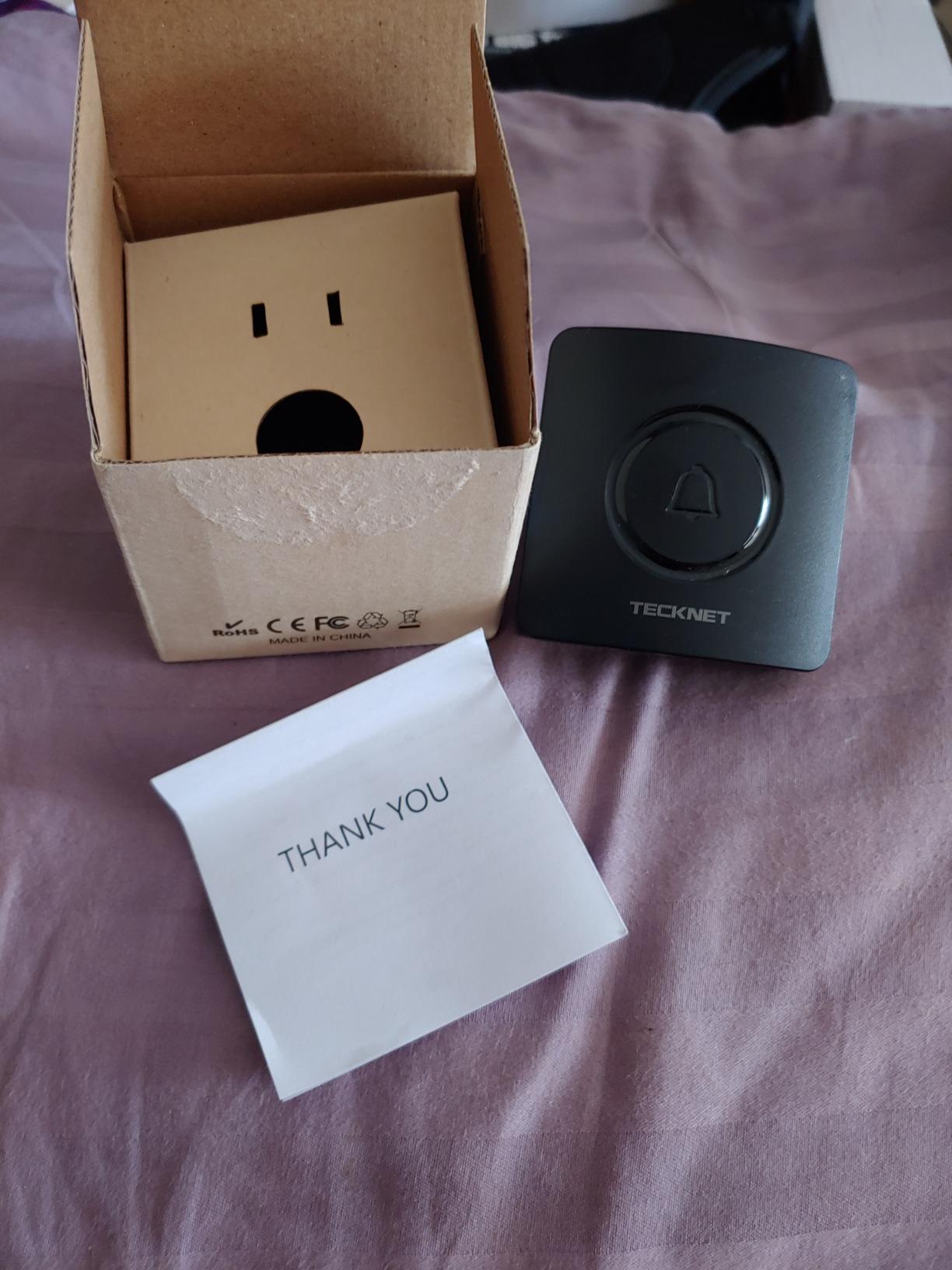
What to check before buying the TECKNET kit
Confirm your phone expectations first. This is a non-app system by design, and owners like that trade, but if you travel and want push alerts you need a different product.
Check how you feel about visible feedback. Sliding lens panels let you narrow the detection field, which is the best wildlife control in this roundup, and they also change how much of the driveway the sensor can cover.
Where the TECKNET kit falls short
The blue LED on the sensor lights when it trips, which announces the presence of the alarm to anyone standing at the far end of your drive. Owners who want stealth remove or tape over it.
Receiver LEDs flash only briefly, so a missed chime leaves no latched indicator to review later. The melodies also run 3 to 5 seconds, which is a long sound if a short beep is what you prefer, and the included USB cable is short with no AC plug attached.
6. eMACROS Pro3 MC004-1T2 – Best for Phone and App Alerts
eMACROS Pro3 2.4G Wi-Fi Solar Driveway Alarm,1 Receiver+2 Sensors
2.4GHz Wi-Fi push alerts
2600 ft range
solar sensors
20 to 30 ft detection
Pros
- Only kit here with app push notifications for alerts away from home
- Phone control of ringtones and receiver settings
- Solar charging with multi-year battery life
- Pre-programmed and paired over Bluetooth out of the box
- Responsive manufacturer support
Cons
- Requires a 2.4GHz Wi-Fi network
- Startup and shutdown chimes are loud and cannot be muted
- Daily false alert about 90 minutes after power-on
- Detection capped at 30 ft which is the shortest here
One of the four questions people ask most about this category is whether a driveway alarm can notify your phone. The eMACROS Pro3 is the only kit here that can, through 2.4GHz Wi-Fi and the My Hosmart app, with real-time push notifications when a sensor trips. The radio link from sensor to receiver is still a half mile, or 2,600 ft, so the long-range side of the problem is covered too.
Long-term owners of this unit praise the solar charging, with one reporting eight years of service before needing attention. The sensors are solar with rechargeable batteries and weatherproof housings, and the receiver ships pre-programmed so Bluetooth from your phone handles the initial pairing.
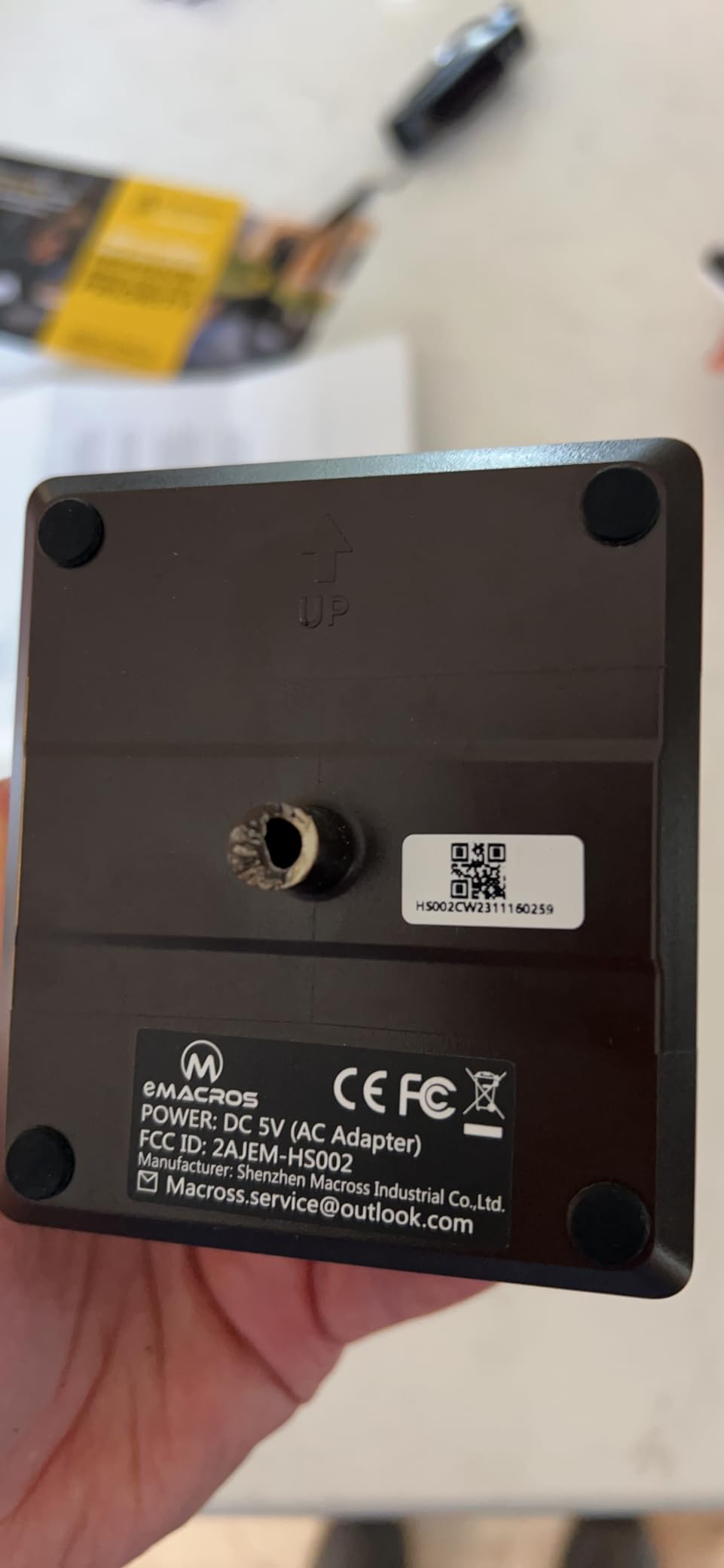
Detection distance is adjustable at 30 ft on high or 20 ft on low, which is the shortest throw among the solar models we tested. On a narrow drive that is fine. On a wide gravel approach where you want warning further out, mount the sensor earlier in the run rather than at the gate.
It is motion detection only. There is no camera and no video recording, which keeps the price sane and the privacy question simple, but it also means you get an alert rather than evidence.
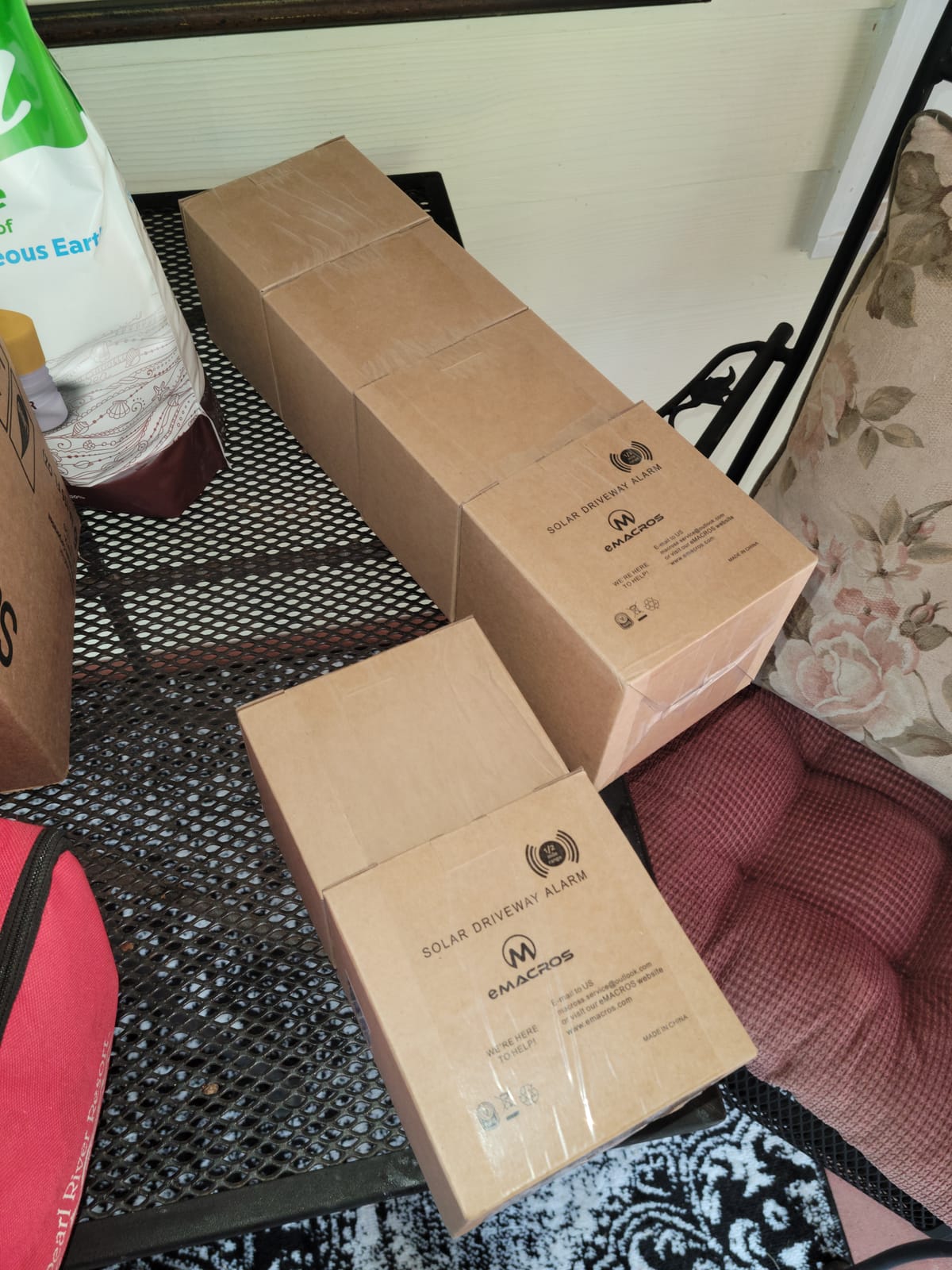
When app connectivity actually helps
It matters when you are not inside the house, or when the receiver is in a part of the building nobody occupies. A cabin, a shop or a gate house at the far end of a property all benefit from the alert landing on your phone instead of a chime in an empty room.
It also helps with maintenance, since low-battery prompts and receiver settings are handled from the app rather than by climbing a ladder. Anyone who spends long stretches away from home can apply the same planning mindset to the gear they travel with, as we cover in our picks for the best cat travel crates for long trips.
Where the eMACROS Pro3 falls short
It is the most expensive unit in this roundup, and the 4.1 rating reflects real configuration friction. It needs 2.4GHz Wi-Fi, and 5GHz is not supported, which trips up people who have split their networks or upgraded a router.
The receiver announces itself loudly on power-on and chirps loudly on power-off, and neither can be muted. Owners also report a false alert roughly 90 minutes after the unit powers on, and a few reports of new units refusing to link at 100 yards with clear line of sight. PIR sensors can also miss electric vehicles, which emit very little heat.
7. HTZSAFE HB-807A+HB-T504 – Best for 70 Ft Detection and Spoken Zones
HTZSAFE Solar Driveway Alarm 1/2 Mile Long Range – 1 Receiver + 1 Sensor
2640 ft range
70 ft detection
3 sensitivities
receiver backup battery
Pros
- Longest detection throw here at 70 ft with three sensitivity steps
- Receiver backup battery keeps alerts alive during a cut
- Spoken zone labels such as Driveway and Garage
- Backup battery allows portable use between rooms
- Ball-and-socket mount makes aiming straightforward
Cons
- Fixed two-post screw mount limits mounting options
- Receiver can lose volume settings when powered off
- Some melodies are long and tinny at close range
- Solar battery may only hold days in heavy shade
The HB-807A+HB-T504 solves the problem the HTZSAFE 808A leaves open: detection reach. Its PIR sensor throws up to 70 ft, with three sensitivity steps at 25 ft, 50 ft and 70 ft, so on a wide gravel drive you can set the detection point well back from the gate and still catch a vehicle at speed. No other kit in this roundup combines that throw with a half-mile transmission claim.
The receiver carries a built-in rechargeable backup battery, which means the alerts keep working through a power cut and you can carry the receiver from room to room without hunting for an outlet. On a property where the house has no mains power near the driveway entrance, that is a meaningful feature rather than a gimmick.
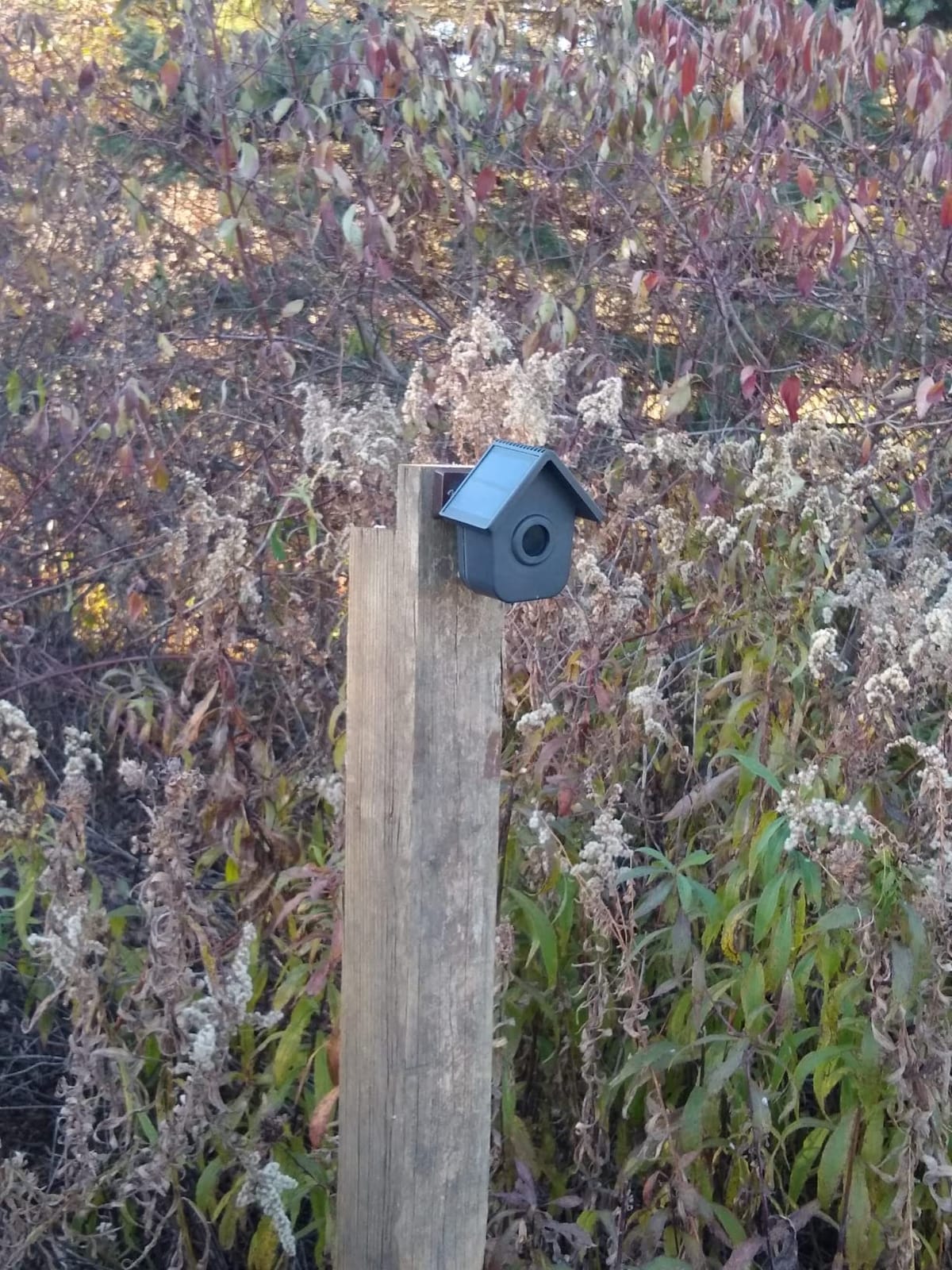
Spoken zone labels are the detail we did not expect to like and now recommend. Among the 35 melodies are tones that announce Driveway, Front Door, Backyard or Garage, which is far more useful than learning a melody by heart when you are trying to work out what just went off at 2 a.m.
Power comes from a solar panel feeding a built-in rechargeable battery in the sensor, with five adjustable volume levels and expansion to four sensors plus unlimited receivers. The ball-and-socket mount makes the aiming genuinely simple, which matters when you are setting detection distance from the side of a moving truck.
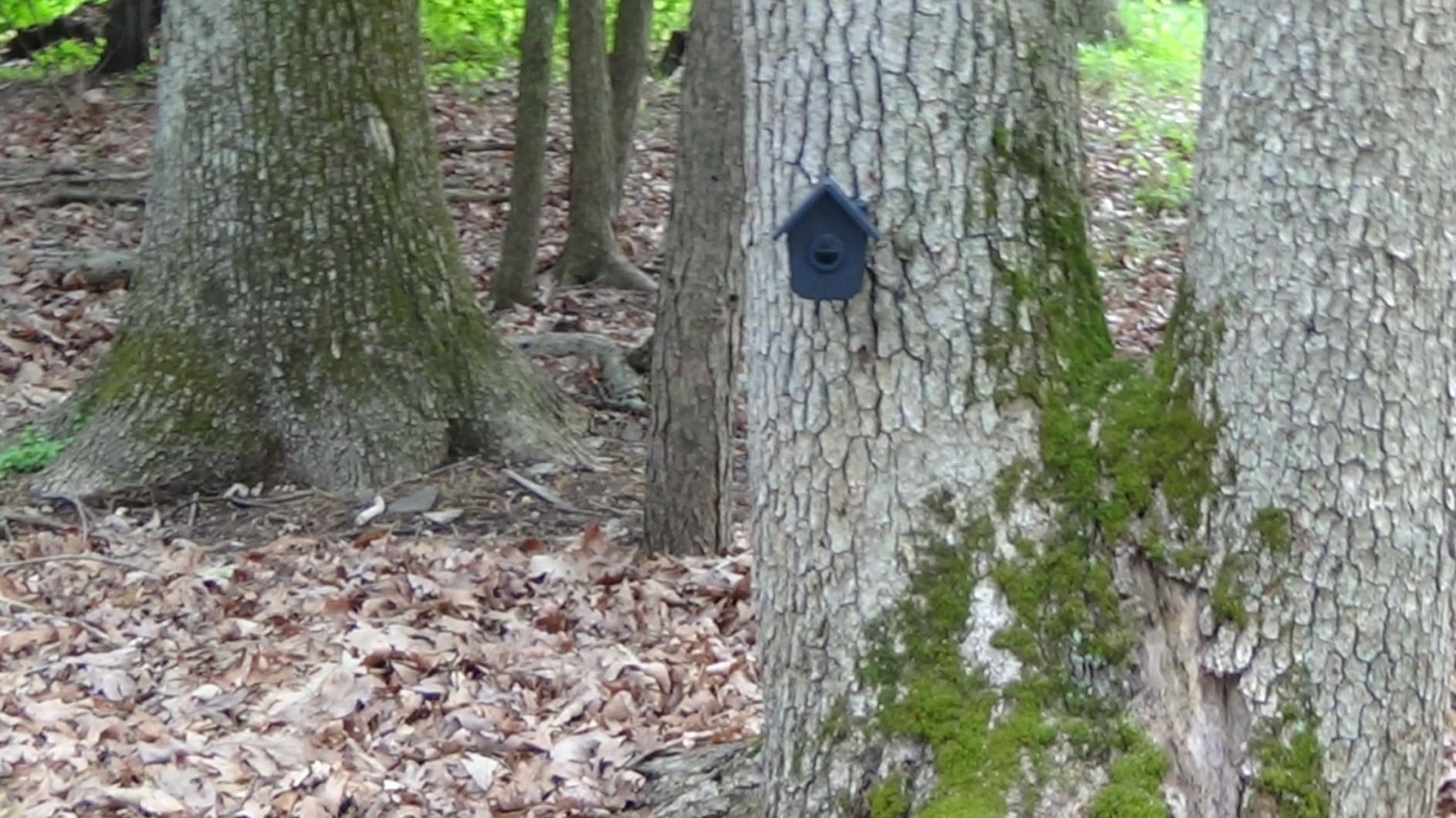
Who this kit suits best
A wide drive with a fast approach, a house with intermittent power, or anyone who wants to know the name of the zone that triggered rather than guess from a tune. Buyers also report strong support from the manufacturer, including replacement sensors, which matters when a sensor sits at the end of a long track.
If your driveway is gravel and wide, the 70 ft throw is the single most useful spec in this whole roundup.
Where the HTZSAFE solar kit falls short
Mounting is limited to two post screws, so alternative fixings have to be improvised, and if you are mounting to a fence rather than a dedicated post, plan that in advance. The receiver has also been reported losing tone and volume settings when it is powered off.
Solar performance degrades in heavy shade, where some owners see the battery hold only a few days between charges, and a minority report receivers failing after extended use. Melodies are long and can sound tinny at close range.
8. Betterlink AU-NS001-1R1S – Best for All-Weather Housing
BetterLink 1/2 Mile Long Range Solar Wireless Driveway Alarm System 1R1S
IP65 housing
2640 ft range
2-year warranty
30 ft PIR detection
Pros
- IP65 all-weather housing rated for the full year
- Two-year manufacturer warranty behind the unit
- Ties for the highest rating in the roundup
- Solar charging with USB-C fallback
- Four alert modes including a light-only option
Cons
- Solar panel cannot be tilted without tilting the whole sensor
- Some units lost water resistance after about two years
- Reported misses of some vehicles in heavy rain
- Receiver is rechargeable rather than wall-powered
Weather rating is where the Betterlink separates itself. The sensor housing is IP65, the highest all-weather rating in this roundup, and the operating range is -20 to 60 degrees Celsius. If your driveway is on exposed ground with no windbreak, that is the number to shop on rather than range.
Transmission is quoted at a half mile, or 2,640 ft, in open areas, with 30 ft of infrared detection radius and algorithm-tuned false alarm rejection. Customers report strong forest performance at roughly 400 ft, and a minority of reviews mention missing some vehicles in heavy rain, which is a fair trade to weigh against the housing rating.
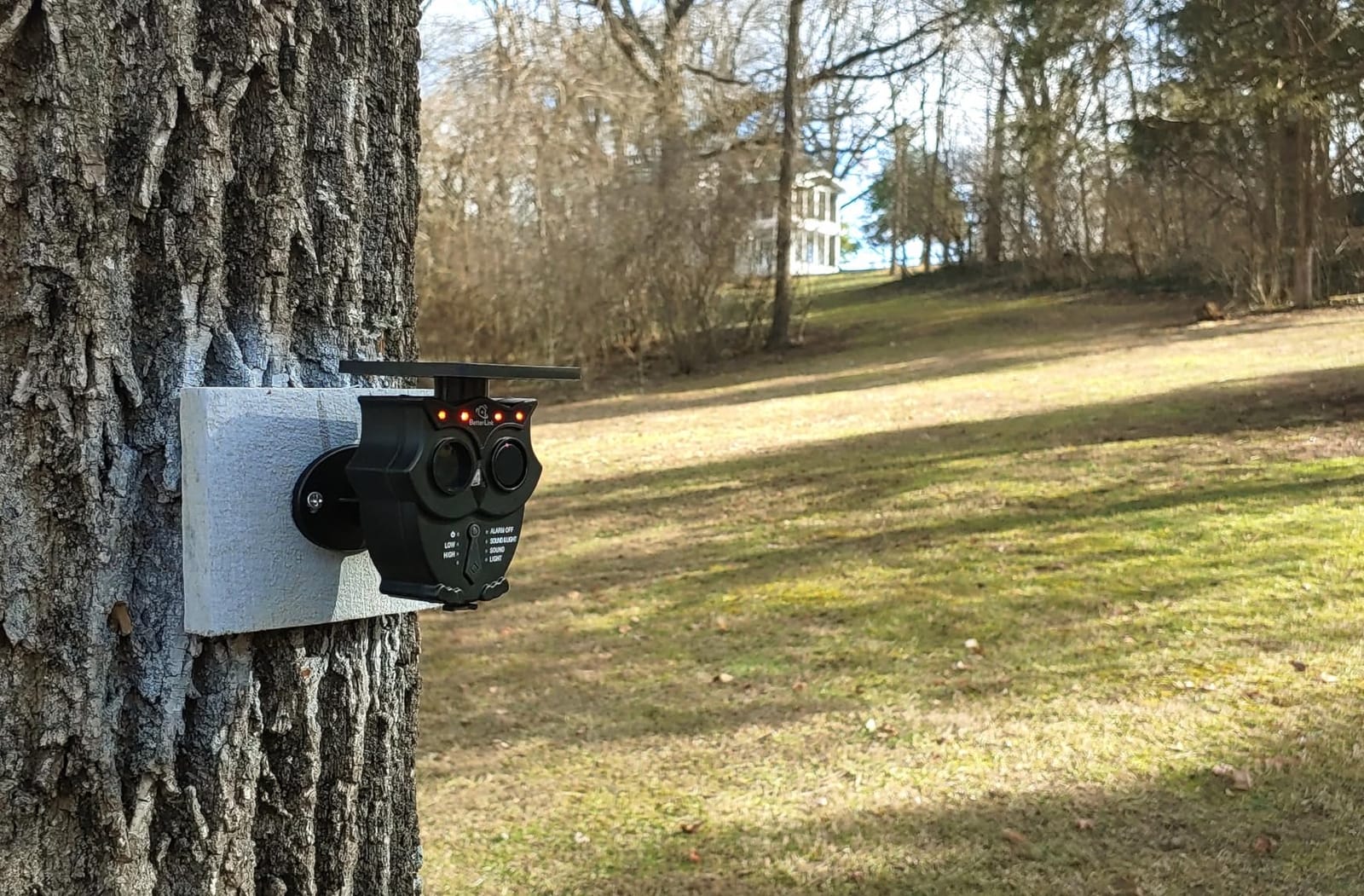
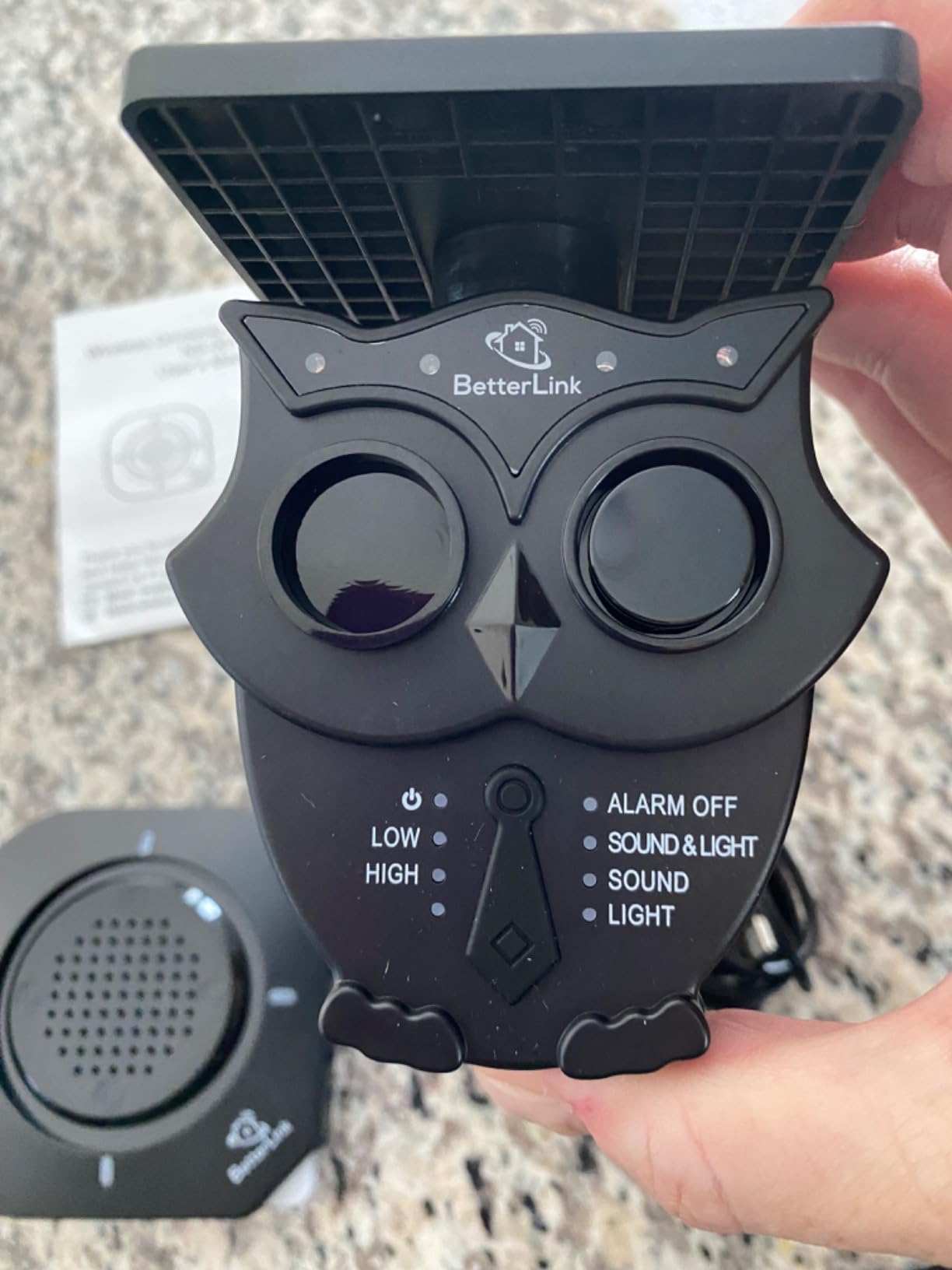
There are four selectable alert modes, which is unusual at this level: audible alarm, light alarm, sound and light, or a receiver-linked mode. The light mode is genuinely useful in a house where a chime at 2 a.m. is worse than no chime, and the receiver announces when charging is needed.
A two-year manufacturer warranty comes with it, which is longer coverage than most kits in the category offer. The receiver is rechargeable rather than continuously wall-powered, so it can be carried between rooms, and up to 16 sensors work with one receiver.
What to check before buying the Betterlink kit
Check the sun. A solar panel that cannot be tilted independently means aiming it for a low winter sun also aims the whole sensor body, so choose a post position that suits the worst month rather than the best one.
If you want audio only during the day and light alerts at night, the four alert modes make this one of the more flexible receivers we tested.
Where the Betterlink falls short
The solar panel rotates only with the sensor body, which is the most-cited design complaint in the reviews and can cost you charging hours in winter. Some units have also reported losing water resistance after about two years outdoors, which sits awkwardly beside the IP65 claim.
The receiver being rechargeable rather than wall-powered means you will charge it rather than plug it in, and a few owners find the green status LED on the receiver too bright for a bedroom.
How to Work Out the Range Your Driveway Needs?
Start by measuring, not by guessing. Walk the drive from the point where you would want the first alert to the house, write down the number, and then measure again from the gate if the drive bends. Owners on long-driveway forums consistently say that this single step would have saved them a wrong purchase.
Then add your obstructions. If a treeline, an outbuilding or a hill sits between the sensor and the receiver, double your measured figure before you compare it to a range claim. That is the difference between a 900 ft drive and the 2,640 ft unit you actually need.
Use these tiers as a starting point:
Under 250 ft: any kit here will work. Choose on power source, weather rating and price rather than range.
250 to 500 ft: a 1,760 ft system is comfortable. This is the tier most of the market is built for.
500 to 1,000 ft: pick a half-mile model and expect real-world performance somewhere between 400 and 800 ft with partial cover.
1,000 ft and beyond: buy the longest throw available. The Dakota Alert one-mile kit is built for exactly this, and no amount of clever placement closes a gap of that size.
Two more variables belong in that calculation. First, detection range, which decides how early in the approach you are warned: the 70 ft HTZSAFE solar model gives you materially more time than a 30 ft unit on the same driveway. Second, whether you can put a receiver where you can hear it, which on a large property often means more than one receiver rather than a longer range claim.
How Wireless Driveway Alarm Systems Actually Work?
Every system in this roundup has the same three parts, and understanding them removes most of the confusion. The sensor watches your driveway. The transmitter is the radio in the sensor that relays the alert. The receiver sits inside and sounds a chime, a siren or a phone notification.
The transmitter and receiver talk to each other over a radio link, and that link is what the range figure on the box describes. The sensor, meanwhile, is watching a cone or a beam across the driveway. Nothing in the system measures how fast a car is travelling, so warning time is purely a function of how early detection happens, which is a detection question rather than a transmission question.
That leads to a rule worth keeping: put the sensor as far from the house as the radio link will allow, and set detection distance as far up the driveway as you can aim it. Those two adjustments together usually deliver more warning time than upgrading to a longer range model.
On a farm or ranch where a hold-up and recall routine matters alongside the alarm itself, our guide to the best long training leads for recall training covers the handling side of working animals on the same property.
Sensor Type, Solar Power and False Alarms
All eight systems here use passive infrared, or PIR, detection. The sensor looks for heat movement across its field of view, which is why an EV with a cold battery can occasionally slip past and why a person walking slowly gives a weaker signal than a person walking fast.
Break beam systems work differently. An infrared beam runs from a transmitter to a receiver across the drive, and anything that breaks the beam sets off the alert. They are more precise and almost immune to wildlife, but they need two posts, alignment and a clear line, which is why they are harder to deploy on a 1,000 ft drive with trees. Buried probe systems are a third option and require trenching.
On power, the choice is solar versus battery. Solar removes the maintenance round entirely and the batteries inside are rechargeable lithium polymer, but performance depends on how much sun the post actually gets. Forum owners report CR123A cells lasting indefinitely in a good battery-powered install, and a TractorByNet owner replacing a failing older 3000-series Dakota unit with a newer model specifically because of battery problems.
On false alarms, four things help more than anything else:
Aim the sensor across the drive rather than along it, so a car passing outside the cone does not trigger it.
Use the sensitivity steps to cut the throw to the width of the actual driveway, not the width of the property.
On the TECKNET and Betterlink kits, use the sliding lens panels and the algorithm-tuned rejection to cut small animals.
Mount on a rigid post away from trees and cables, since a branch brushing the housing in wind will trigger most sensors.
If you also keep working animals on the property, our pick for grooming kits for long-haired rabbits is a separate matter, but the two share a theme: a fixed routine beats a reactive one.
Installing a Wireless Driveway Alarm for Maximum Range
Range is won or lost at the mounting stage more than at the buying stage. Five steps cover almost every long-driveway install we have worked through.
Measure the line of sight first. Stand where the sensor will go and look at the house. If you cannot see the receiver position clearly through foliage or around a building, note it and add range margin to your purchase decision.
Choose the sensor position for warning time. Put it as far down the drive as the radio link allows, at roughly 2 to 3 ft for vehicle detection and 3 to 4 ft for pedestrian detection, which is the guidance the eMACROS kit states and which applies generally.
Use a rigid post. Adhesive mounts are fine for a short-term test and poor for a post at the end of a gravel drive, where flex in wind turns into false triggers. Screw the mount to something that does not move.
Aim deliberately. Set the sensitivity to its lowest step first, confirm the sensor sees the full width of the drive, and only then step the sensitivity up. The rotating bracket on the TECKNET and the ball-and-socket mount on the HTZSAFE solar kit make this adjustment quick.
Test before you trust it. Walk the entire drive from both directions and have someone stand in the house to confirm the receiver chimes. Test with the vehicle, since a car is a larger heat target than a person and behaves differently at speed.
Finally, think about where the receiver lives. Every kit here needs mains power at the receiver, apart from the HTZSAFE solar receiver with its backup battery. If the house has no outlet near the entrance you want to cover, a second receiver in a shop or gate house is usually cheaper than extending power, and most of these systems support unlimited receivers.
Frequently Asked Questions
What is the best driveway alarm for long driveways?
The HTZSAFE 808A+2T808 is the best overall pick for long driveways. It offers 1/2 mile (2,640 ft) of transmission between sensor and receiver, ships with two sensors and one receiver, expands to 32 sensors, and has a very large installed base. For a drive beyond a mile or one with heavy tree cover, the Dakota Alert DCMA-4K Plus with its one-mile range is the stronger choice.
What is the longest range driveway alarm?
The Dakota Alert DCMA-4K Plus claims a full one mile of wireless transmission between sensor and receiver, the longest figure in this roundup. Most of the other systems cluster between 1,760 ft and 2,640 ft. Real-world performance depends on line of sight: owners with tree-lined drives commonly report effective ranges of 400 to 800 ft.
How far will a driveway alarm work?
A driveway alarm typically transmits between 1,760 ft and one mile, but the sensor only detects movement across 16 to 70 ft of driveway. On a clear line of sight you can expect close to the full claim. With mature trees, buildings or hills in the path, cut the claim roughly in half and choose a longer-throwing model than you think you need.
Is there a driveway alarm that can be connected to my phone?
Yes. The eMACROS Pro3 MC004-1T2 is the only kit in this roundup with app push notifications, working over 2.4GHz Wi-Fi through the My Hosmart app. Note that 5GHz networks are not supported. It pairs with Bluetooth, runs 2,600 ft of sensor-to-receiver range, and uses solar sensors. The other seven systems are audio-only receivers.
How do I know how much range my driveway alarm needs?
Measure the drive from the point where you want the first alert to the house, then double that figure if trees, an outbuilding or a hill sit between the sensor and the receiver. Under 250 ft suits any kit here, 250 to 500 ft suits a 1,760 ft system, 500 to 1,000 ft needs a half-mile model, and beyond 1,000 ft calls for the longest range available.
How do I stop my driveway alarm going off for deer and other animals?
Aim the sensor across the driveway rather than along it, then set sensitivity to the width of the actual drive rather than the property. Sliding lens panels on the TECKNET and Betterlink kits and the algorithm-tuned rejection on the Betterlink narrow the field further. Mounting on a rigid post away from overhanging branches stops wind-driven false triggers, and the 70 ft HTZSAFE solar model lets you aim detection well back from where animals usually cross.
Are solar driveway alarms reliable in winter?
Solar driveway alarms are reliable where the post gets real sun, and the sensors hold a rechargeable lithium polymer battery that normally means no routine battery changes. Performance drops in heavy shade, where some owners report only a few days between charges, and snow cover on the panel can cut charging further. A sensor with a USB or USB-C recharge fallback covers the worst weeks.
Conclusion
The best wireless driveway alarms for long driveways come down to two decisions: how long your drive is, and what sits between the far end of it and your house. The HTZSAFE 808A+2T808 is our pick for most people, with a half-mile link, two sensors in the box and 32-sensor expansion behind it. Go solar with the eMACROS HS002-1T1 if you never want to swap a battery, take the Dakota Alert DCMA-4K Plus when the drive runs past a mile or the path is obstructed, and choose the eMACROS Pro3 if you need the alert on your phone.
Whatever you pick, measure the drive, check the line of sight, and set the sensitivity to the width of the actual lane. Updated for 2026, and the range numbers above are the ones that came out of the specifications, not the marketing.