
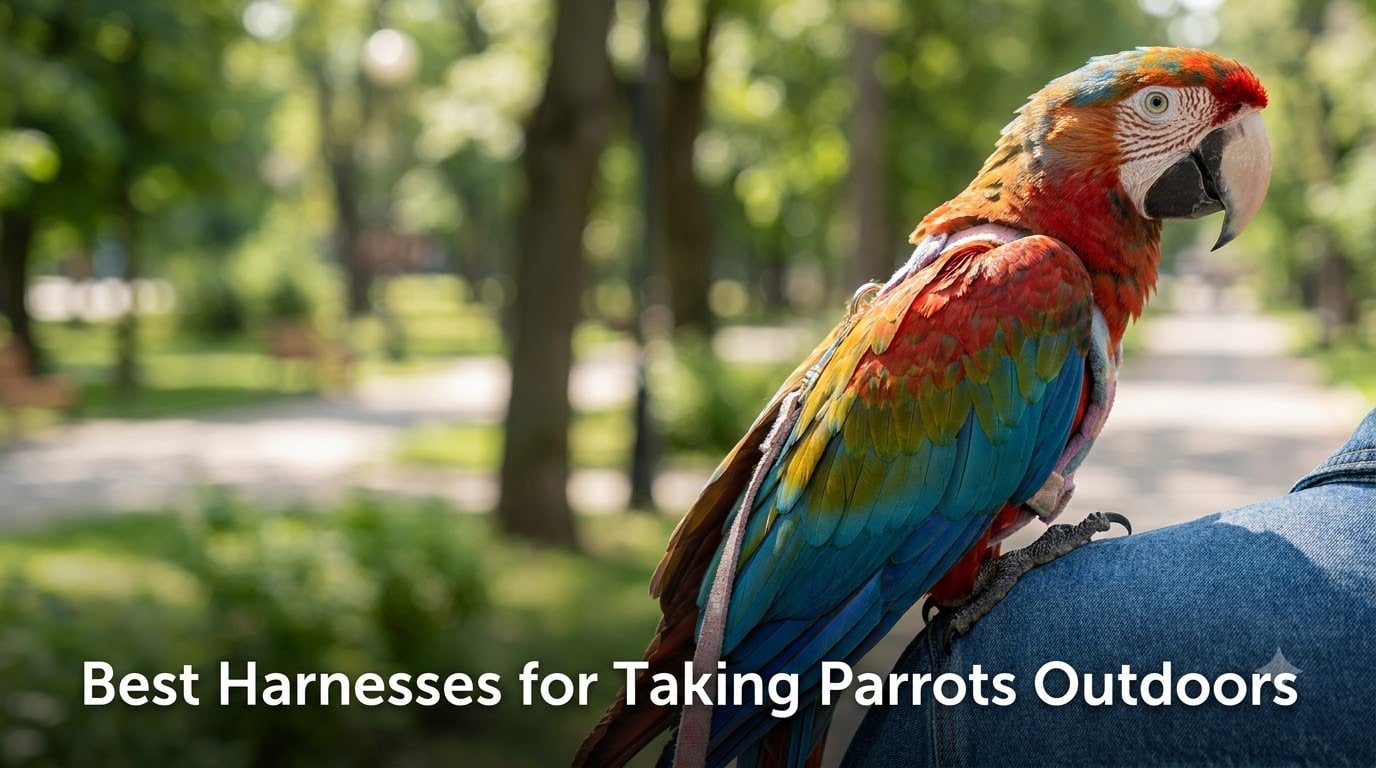
The morning my quaker parrot spooked off the porch rail, she covered forty feet before I finished standing up. A clipped wing bought me a hard landing in the neighbour’s hedge instead of a missing bird, and that was the day I stopped treating outdoor time casually. Even a clipped parrot can catch a gust and be gone in seconds.
That is why we spent three months researching the best harnesses for taking parrots outdoors. We fitted harnesses on an 82 gram green cheek conure and a 145 gram quaker, helped a friend’s African Grey with the larger sizes, and read through thousands of owner reviews plus long threads on r/parrots, r/Conures, and Parrot Forums. Owners are brutally honest about what chews through, what slips off, and what survives a startled launch.
The pattern that emerged: a harness is only as safe as the way it fits and the way it fails. The best ones attach around the wings and chest rather than the legs, keep hard buckles away from the breastbone, use an elastic leash that softens the jolt when a bird hits the end of the tether, and come in a size that matches your bird’s weight in grams.
One thing the forums say loudest: no harness here is a free-flight tool, and none work on a bird that panics when straps touch its wings. Training takes one to two months for most birds and up to a year for stubborn ones. Everything below assumes you will put that time in.
Here is what we found, starting with the three we would hand to a friend without hesitating.
Table of Contents
Top 3 Picks for Taking Parrots Outdoors

The Aviator 40-Foot Leash…
- Nylon and rubber shock cord
- Expands up to 100%
- 40 ft outdoor range
- Works with all Aviator sizes

VANFAVORI Bird Diaper Fligh…
- Flight suit plus 80-inch elastic leash
- Waterproof liner and cotton pad
- For small parrots 80-105 g
- Indoor diaper and outdoor harness

VANFAVORI Medium Bird Harness
- 80-inch elastic leash with soft recoil
- Anti-chew strap
- Metal chain bite guard
- For birds 120-160 g
Editor’s Choice. The Aviator 40-foot extension is the community favourite for a reason. It is the only product here built around a genuine shock cord, and it stretches to twice its length so a medium or large parrot gets real flying exercise without a hard stop.
Best Value. The VANFAVORI diaper flight suit is one cheap kit doing two jobs: a droppings catcher for indoor shoulder time and a casual outdoor suit with an elastic leash for small parrots in the 80 to 105 gram range.
Top Rated. The VANFAVORI medium harness has the deepest review pool of anything we looked at. Its elastic leash gives the softest recoil in the budget class, and it is sized for the birds most people own: conures, quakers, and senegals from 120 to 160 grams.
Best Parrot Harnesses for Outdoor Use in 2026
Here are all eight harnesses side by side, with the quick specs you need before jumping to a full review.
| Product | Specs | Action |
|---|---|---|
| The Aviator 40-Foot Leash Extension |
|
Check Latest Price |
 Dnoifne Parrot Harness and Leash Dnoifne Parrot Harness and Leash |
|
Check Latest Price |
| VANFAVORI Medium Bird Harness |
|
Check Latest Price |
| VANFAVORI Bird Diaper Flight Suit |
|
Check Latest Price |
 Barn Eleven Wing Harness and Leash Barn Eleven Wing Harness and Leash |
|
Check Latest Price |
 ASOCEA Adjustable Bird Harness ASOCEA Adjustable Bird Harness |
|
Check Latest Price |
 Barn Eleven Flying Rope Kit Barn Eleven Flying Rope Kit |
|
Check Latest Price |
 Hypeety Buckle Adjustable Vest Harness Hypeety Buckle Adjustable Vest Harness |
|
Check Latest Price |
1. The Aviator 40-Foot Leash Extension – Most Trusted System for Real Outdoor Flight
The Aviator Bird Harness Leash Extension: 40 foot/12 Meter for Medium or larg.
40 ft nylon and rubber shock cord
Stretches up to 100%
Attaches to Aviator wrist strap
3.8 oz total weight
Pros
- Shock cord absorbs the jolt when a bird hits the end
- Stretches to double length for real flight range
- Compatible with every Aviator harness size
- Built by The Parrot University with a long track record
Cons
- Only works with the Aviator harness system
- An extension only so you need the harness itself
- Snags on grass if you chain multiple extensions together
This is the piece of kit that turned our outdoor sessions from a tense shoulder walk into real exercise. It clips onto the Aviator wrist strap and unspools forty feet, then stretches to roughly double that when the bird launches. When the quaker decided a pigeon was worth chasing, the shock cord lifted her back around in a slow arc instead of snapping her to a stop mid-air.
That soft catch is the entire reason this is our Editor’s Choice. Every budget harness here connects a static leash to a small clip, and a panicked bird hitting a static line takes the full stop through its chest. An elastic bird flight harness is not a comfort feature, it is the difference between a bird that lands grumpy and one that lands hurt.
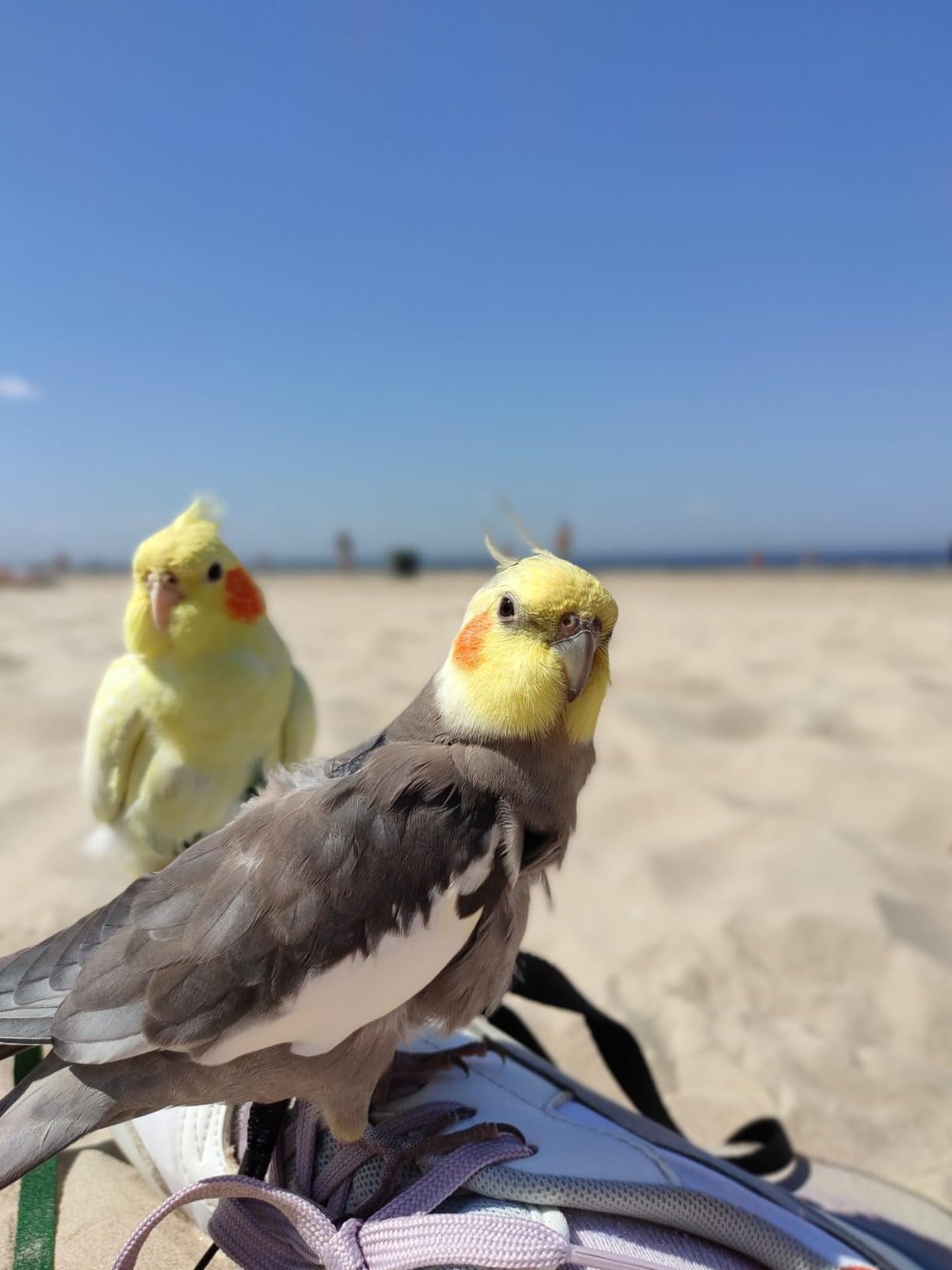
Construction is quality nylon braided over rubber shock cords, and ours survived a full season of grass, gravel, and one determined chewing session from a conure who treats everything as a toy. Sixty-eight percent of reviewers give it five stars, and macaw and cockatoo owners are the loudest fans because a big bird on a short leash is a wrestling match for both of you.
The honest downsides: this is an extension, not a standalone harness, so you are buying into the Aviator system. It only attaches to the Aviator wrist strap, and the maker warns against chaining multiple extensions because the knot snags on grass at exactly the wrong moment.
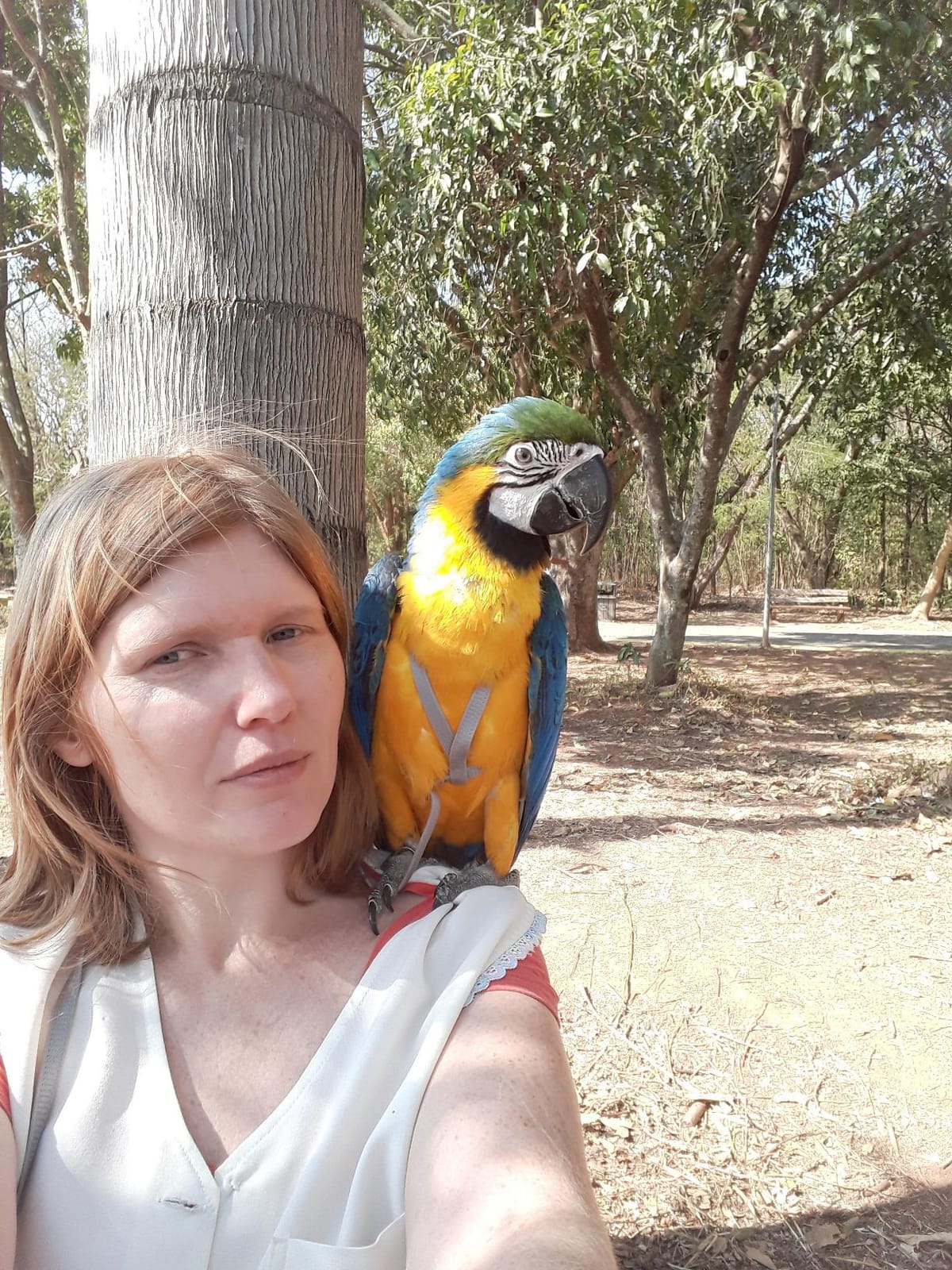
Which Birds and Aviator Sizes It Works With
The 40-foot version suits medium Aviator harnesses and larger, which in practice means African Greys, Amazons, macaws, and large cockatoos. Petite and extra-small Aviator sizes take the ten-foot extension, and small through extra-large take the twenty-foot.
The logic is momentum. A 500 gram bird building speed over forty feet carries serious energy into the end of the leash, and this version’s heavier cord is built for it. A small bird on a long line just gets more runway to build speed before the catch.
How We Would Start With It
Begin with a short leash. That is the most repeated advice in the reviews, because you need a few sessions to learn where the line drifts and catches before you have forty feet of it in play.
We practised in a fenced yard with the line paid out but the bird starting on a shoulder, so we felt the recoil before she did. Coming from a two-meter leash, expect a session or two of adjusting.
2. Dnoifne Adjustable Harness and Leash – Best Nylon Rope Design for Medium Parrots
Dnoifne Pet Parrot Bird Harness and Leash, Adjustable Training Design Anti-Bite, Bird Nylon Rope with Cute Wing for Parrots, Suitable for Scarlet, Keck, Mini Macaw and Same Size Birds (Black)
Nylon rope harness and leash set
Adjustable anti-bite straps
2 m total leash length
0.63 oz, 9 colors
Pros
- Lightweight flexible rope that shrugs off casual chewing
- Genuinely adjustable across a range of medium species
- Handle on the leash is comfortable for long walks
- Prime shipping and a very low entry price
Cons
- One-piece head loop is genuinely hard to get over wings
- Sizing runs large so smaller birds step on the chest strap
- Cheeky chewers can still work through the rope
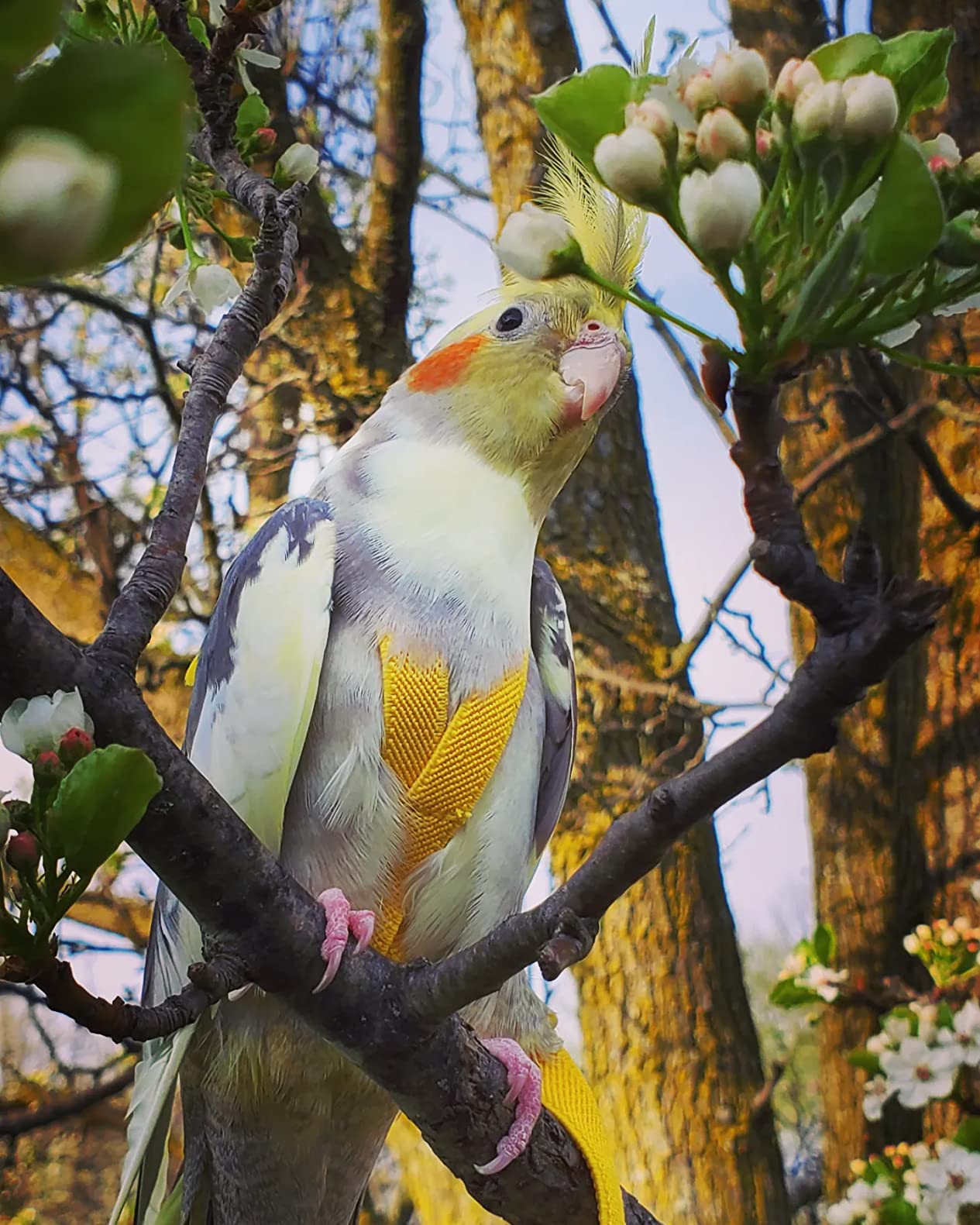
The Dnoifne is the harness that surprised me most. It is a rope style harness with a little decorative wing on the back, and on a calm bird it sits so light that the conure stopped noticing it within ten minutes. The dense braid resists the exploratory chewing a green cheek does to everything new.
Where it earned its keep was on a friend’s mini macaw, exactly the bird type on the packet. The loops pulled down to a proper fit around the wings and chest, the ergonomic handle made a long park walk easy on the hand, and the nine colour options include bright shades that stay visible against grass.
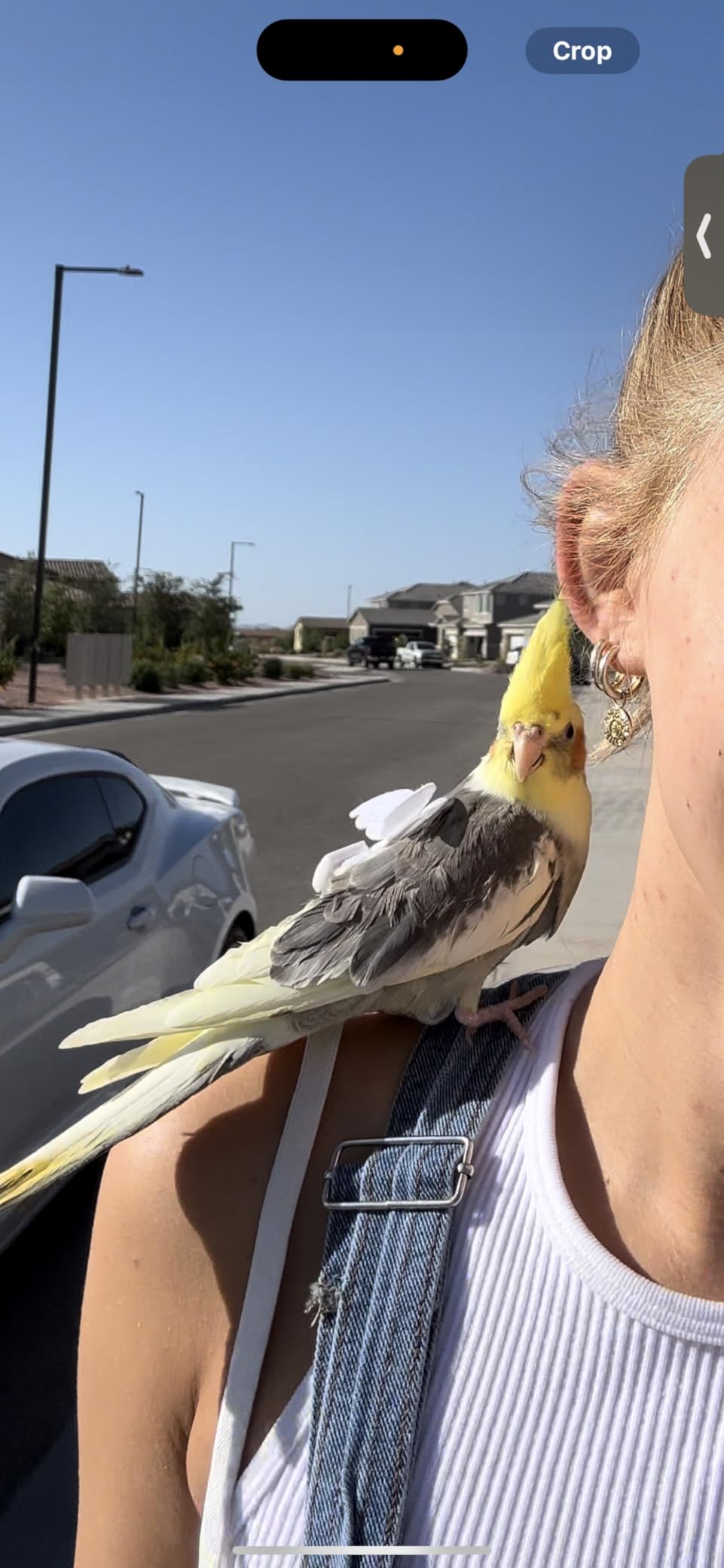
The catch is getting it on. This is a one-piece design, so the head loop must travel over the head and down past both wings before anything tightens. Our quaker needed two people and a towel the first three times, and plenty of the 914 reviewers describe birds becoming stressed during application. Head-shy birds will fight this design.
Sizing is the other landmine. The M targets Alexandrine, scarlet, Keck, and mini macaw sized birds and runs long in the chest, with multiple cockatiel owners reporting the strap hanging so low their bird steps on it. Despite the marketing, this is not a cockatiel harness, and the 57 percent five-star rate comes from people with right-sized, calm birds.
Sizing Reality Check Before You Order
Match this to weight, not to optimism. The M suits Alexandrines, scarlet and mini macaws, and Keck sized birds, roughly the 150 to 350 gram class. Under about 120 grams, this is the wrong product and you want the petite sizes further down this list.
Measure the chest with a soft tape while the bird stands, and size down rather than up if you are between sizes. A loose chest strap on a rope harness is the failure mode that lets a bird walk out of it mid-flight.
How to Get It On Without a Fight
Desensitise the head loop first. We spent a week feeding treats through the loop until she voluntarily put her head in, then added the wing pass on a towel, and only then did the full application outdoors.
For a squirming bird, the towel method from the forums works: wrap the bird gently with the head free, slip the loop over the head, then unwrap each wing through its strap in turn. Two people makes the first attempts far easier.
3. VANFAVORI Medium Bird Harness – Best Elastic Leash Kit for Conures and Quakers
VANFAVORI Medium Bird Harness with 80-inch Leash
80-inch elastic leash with soft recoil
Anti-chew 10 mm strap
Metal chain front section
For birds 120-160 g
Pros
- Elastic leash gives a soft bounce with no hard jerk
- Stretchy strap material will not choke a sudden launch
- Sized by bird weight in grams with detailed guidance
- Detachable leash makes progressive training easy
- Plain weave inner side is gentle on feathers
Cons
- Application takes real training and several sessions
- Clips are clunky with no quick release
- Aggressive chewers can work through the strap over time
This is the harness we reached for most often, and with 1,457 reviews it has the deepest real-world evidence base here. It sat in the top ten of its category when we checked, and the split is honest: 51 percent five stars from owners whose birds fit it, and a frustrated minority who found application a nightmare.
The elastic leash is what sells it. A bird launching off a shoulder gets a bouncy, progressive catch rather than a snap, and you can see the difference in how quickly the bird relaxes about reaching the end. Owners describe the strap as feeling like a bra strap, which sounds odd until you realise that stretch is what stops the harness choking a bird that suddenly flies.
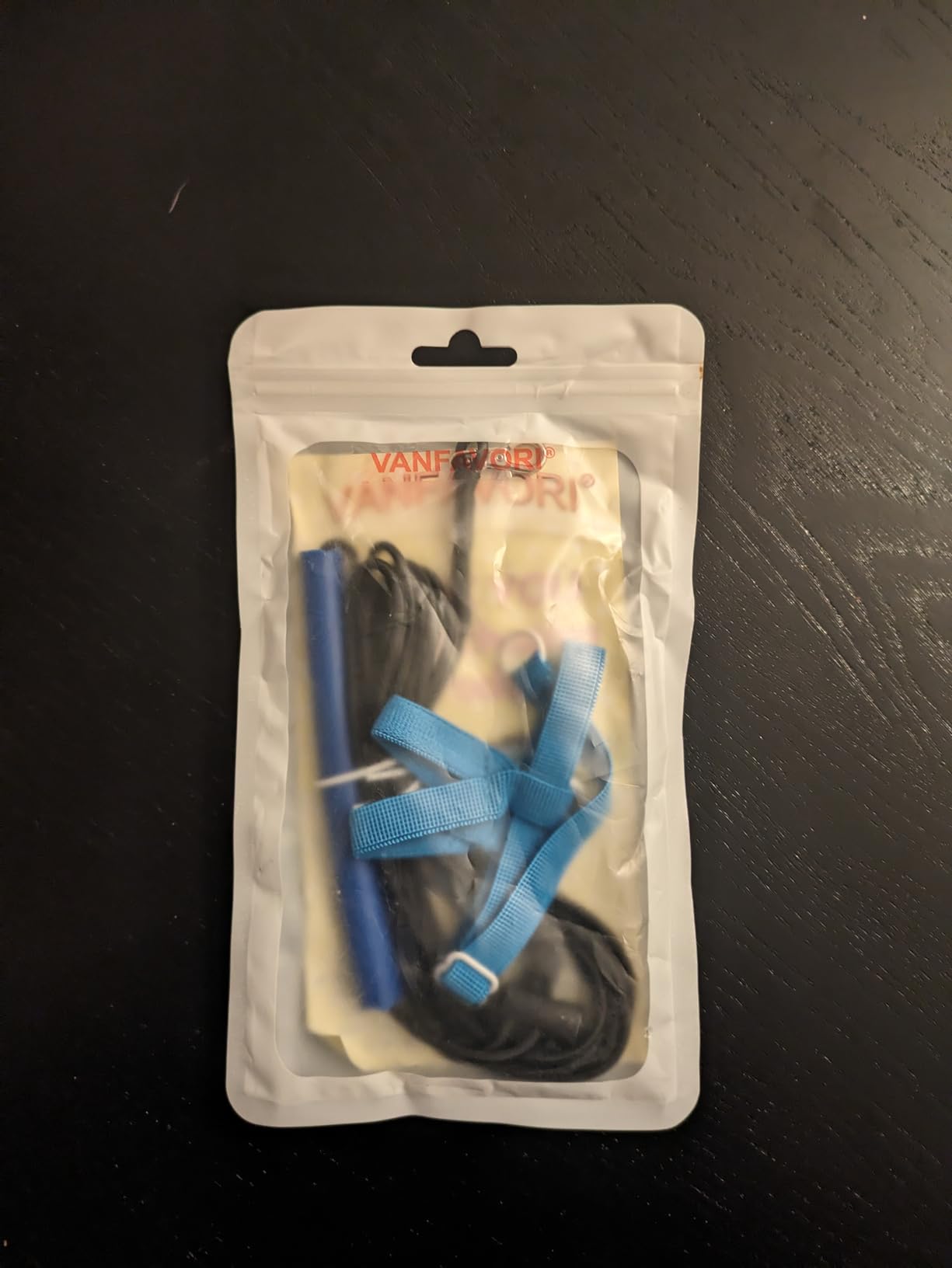
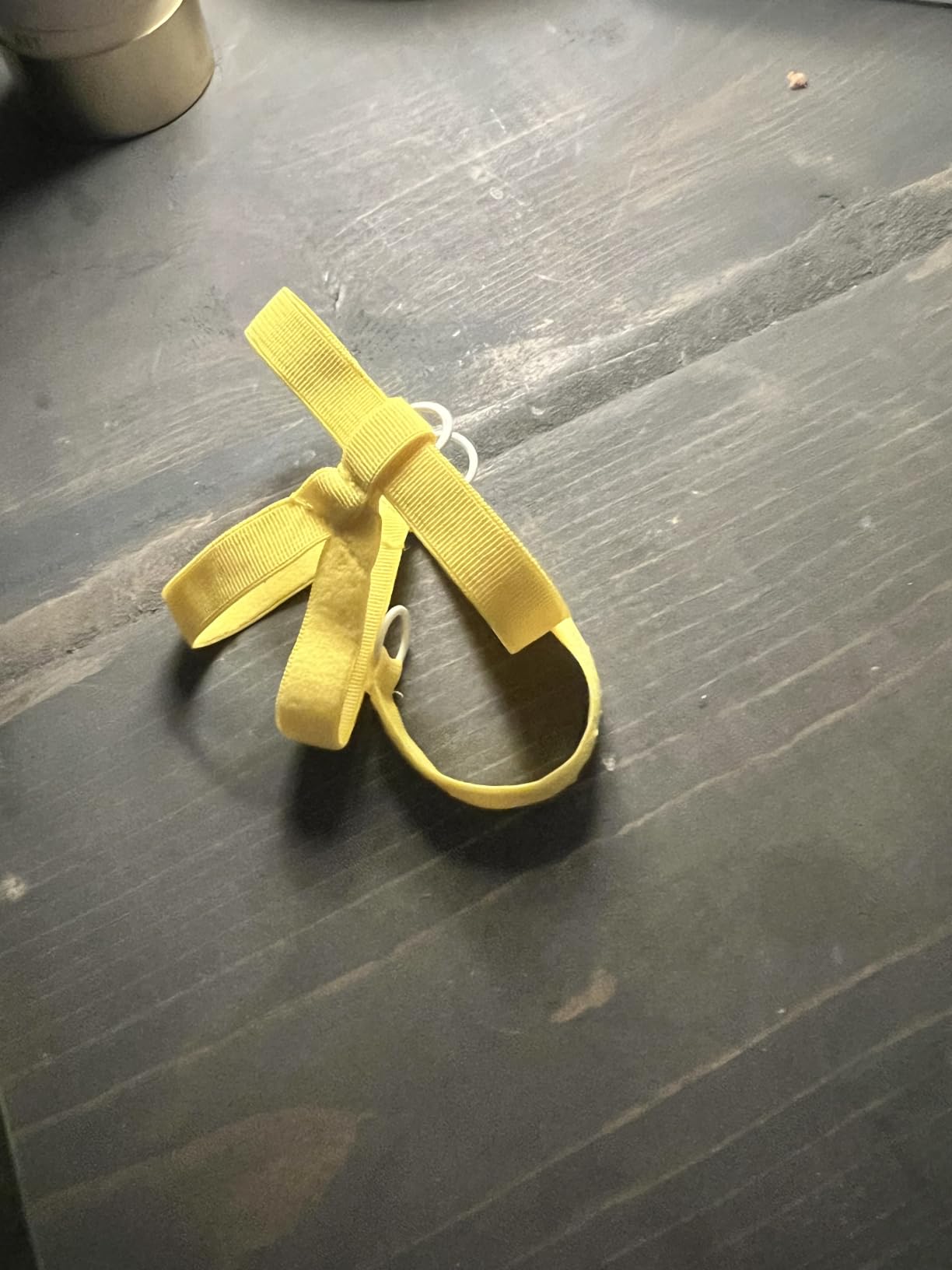
The M covers 120 to 160 grams, which maps cleanly onto quakers, senegals, and sun conures, and that precision is rare at this price. The strap runs 10 mm wide with a plain weave face against the feathers and a small metal chain section at the front, which is exactly where a bored conure starts chewing.
The bad news is real. It is difficult to put on, the straps dangle while you tighten, and owners accurately describe the clips as clunky with no quick release. One review describes needing two people to remove it without hurting the bird, and Grey, cockatoo, and senegal owners report the strap eventually being chewed through. It is also not recommended for unclipped medium parrots new to harnesses.
Which Birds Should Wear the Size M
The manufacturer’s weight band is the reliable guide: 120 to 160 grams, covering quakers, senegals, and sun conures. There are eleven colour and size variants including extra small sizes, so check each variant’s weight band rather than assuming letter sizes match other brands.
Green cheek conures sit at the bottom of this range and often do better in a petite size from another maker on this list. Weigh your bird in grams first, because the difference between a 95 gram and a 125 gram bird changes which harness is safe.
Using the Detachable Leash for Training
The detachable leash makes this workable for first-time owners. Put the harness on indoors with no leash and let the bird wander the coffee table getting used to the straps, then clip the leash on for short sessions before you ever go outside.
The maker includes video instructions, and multiple reviewers recommend practising on a stuffed animal first, the same trick BirdTricks has recommended for over a decade. Muscle memory on the straps matters when a live bird is squirming.
4. VANFAVORI Bird Diaper Flight Suit – Best Value Kit for Small Parrots
VANFAVORI Bird Diaper Flight Suit with 80-inch Elastic Leash, M Size, Blue
Flight suit plus 80-inch elastic leash
Waterproof liner with cotton pad
Denim overalls style, 0.63 oz
For birds 80-105 g
Pros
- Doubles as a diaper so shoulder time stays clean
- Waterproof liner with replaceable cotton pads
- Elastic leash included in the same cheap kit
- Cute denim overalls design with multiple patterns
Cons
- Sizing runs small so green cheek owners may need to size up
- Birds can fly out if the elastic neck is not fitted properly
- Bow tie detaches easily and the clasp can arrive broken
This is the one that makes strangers smile. The VANFAVORI flight suit is a little denim overall with a bow tie, carrying an Amazon’s Choice badge and a 4.1 star rating across 106 reviews. It fits our small test subjects in the 80 to 105 gram band, which is cockatiel, conure, and quaker territory.
The genuinely useful part is the diaper function. A waterproof liner with a cotton pad catches droppings, so the suit that goes on for a sunny walk also keeps a shoulder clean during a video call. For indoor shoulder time alone it has quietly become one of my favourite bits of kit, and cleanup is a pad swap rather than a wash.
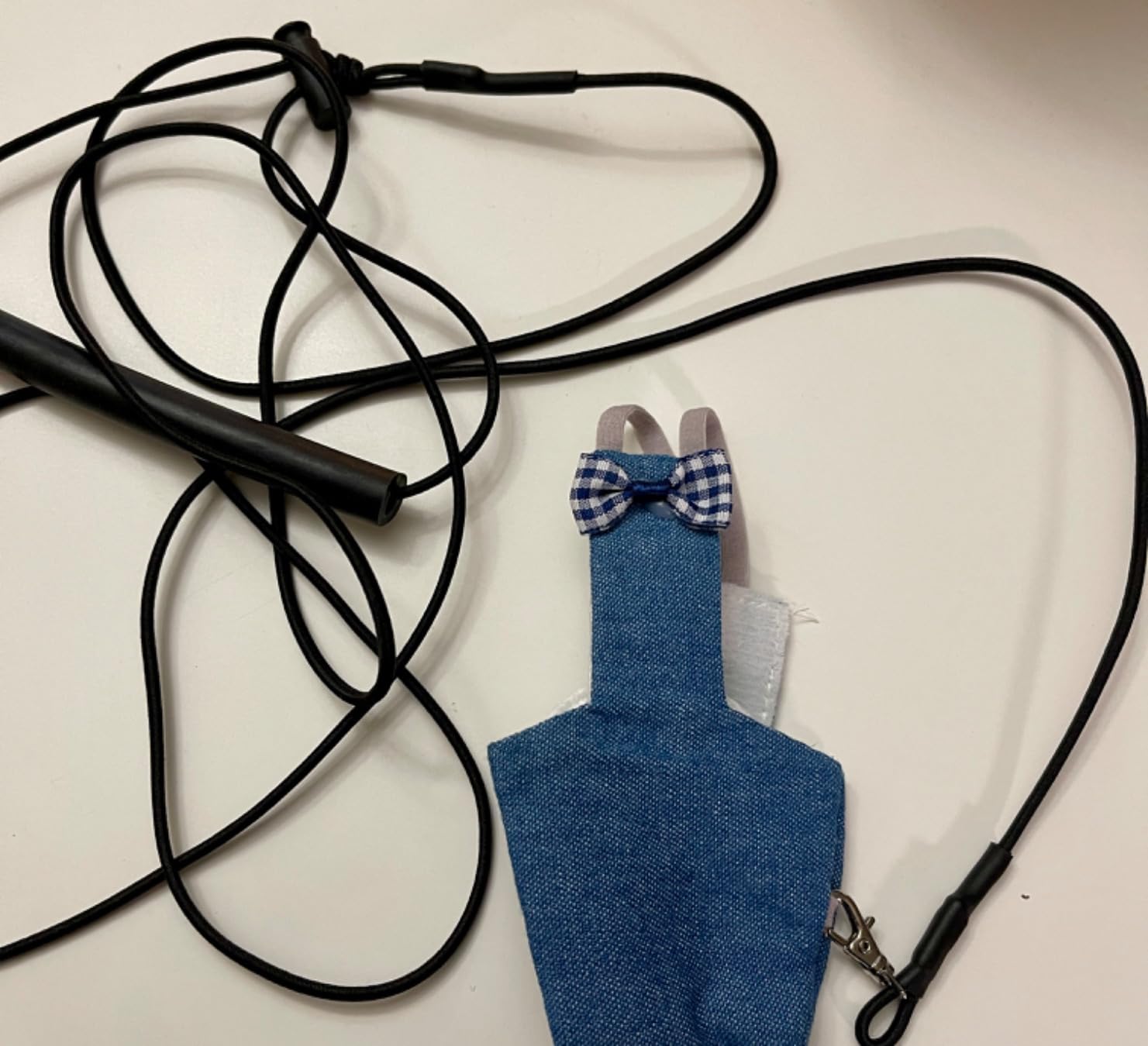
As an outdoor harness the picture is more nuanced. The leash is a proper 80-inch elastic one with decent give, and for calm strolls and socialisation it does the job. But a flight suit restrains a bird mainly through the elastic neck and body wrap, and reviewers are clear a bird can fly out of it if the fit is wrong. It is not the tool for a bird that launches hard and often.
Small annoyances add up. The bow tie pops off on day one, the clasp has arrived broken for some buyers, and the M runs small. Check the clasp before the first outing, and if your green cheek is at the top of the weight band, size up.
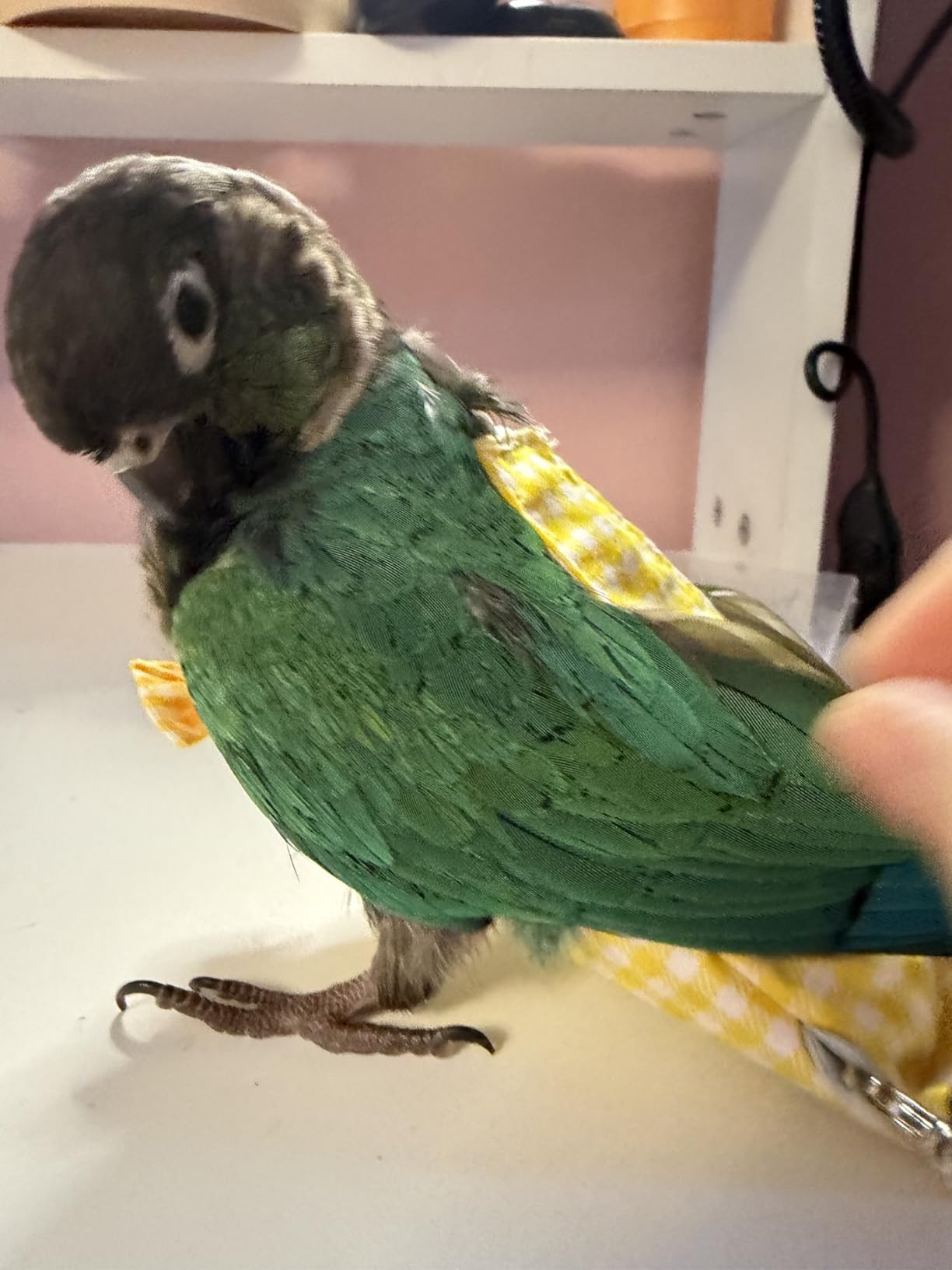
Indoor Diaper vs Outdoor Harness Duty
Use it as a diaper first and a harness second. For shoulder time, supervised patio sitting, and slow walks where the bird mostly perches on you, it is excellent, and the droppings containment genuinely changes how much bird time you allow indoors.
For real flying, recall practice, or a strong startle response, use a dedicated wing-and-chest harness instead. Treating a flight suit as a strong-flight tool is where the one-star reviews come from.
Care and Lifespan Expectations
The cotton pads are the real consumable, so treat them as replaceable. Hand wash the suit rather than machine washing it, because the waterproof liner and neck elastic break down faster under heat and agitation.
Inspect the neck elastic before every use. Elastic fails first on any flight suit, and a stretched neck opening is exactly how a bird slips out at height. If it has gone slack or wavy, retire the suit.
5. Barn Eleven Wing Harness and Leash – Best Budget Pick for Budgies and Cockatiels
Barn Eleven Wing Harness and Leash
Nylon webbing with anti-chew weave
2 m leash with rubber grip handle
Metal chain front section
Sizes S to XL, 0.35 oz
Pros
- Very light at 0.35 ounces for small birds
- Metal chain section resists front beak work
- Rubber non-slip handle gives a secure grip
- Wide size range from S through XL in three colors
Cons
- Leash has no elastic so a fast flyer gets yanked
- Sizing runs small even for budgies
- Webbing can fray with use and determined chewing
At this price the Barn Eleven wing harness is what I would hand someone with a budgie or cockatiel who wants to try harness training without spending much. It is astonishingly light at 0.35 ounces, which matters enormously for a 40 gram budgie, and the little wing on the back is genuinely charming.
The build follows the same template as its larger sibling below: anti-chew nylon webbing with a plain weave side facing the feathers, and a lightweight metal chain section at the front where most beaking happens. The leash has a rubber non-slip handle that stays confident in the hand, and there are twelve variants across S to XL in blue, purple, and yellow.
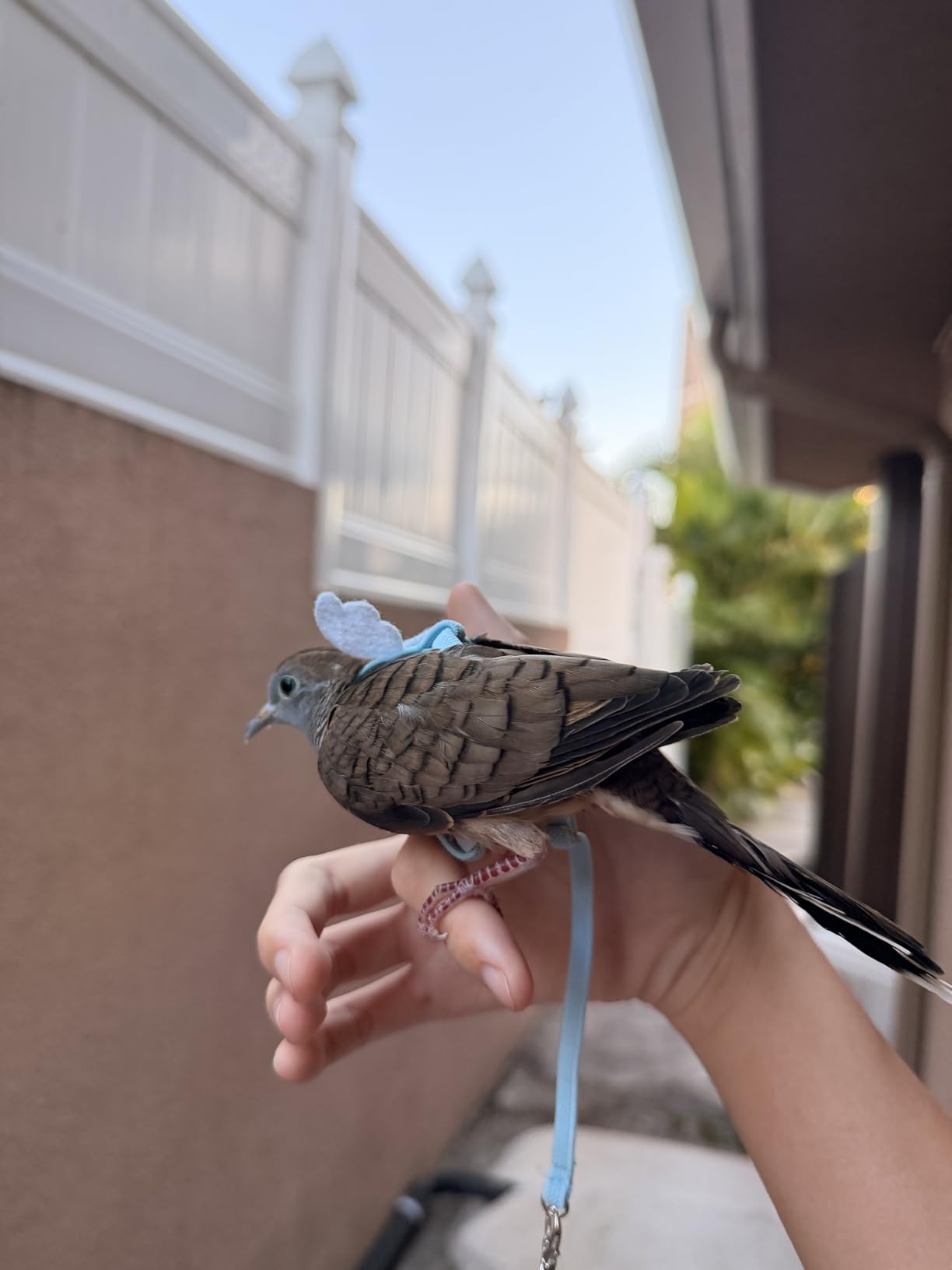
Now the limitation you must plan around. The leash is a static two meters with no elastic recoil, and multiple reviewers flag that a bird flying to the end gets yanked. On a small, light bird the effect is milder than on a large one, but it is still a hard stop. We adapted by keeping walks short and letting the bird perch rather than fly.
Durability is the other weakness. From 179 reviews it sits at 3.7 stars, and while 51 percent give five stars, a consistent minority report fraying webbing and the odd bird chewing through the leash and escaping. It is a fine introductory harness, and not the one to trust on a strong flyer or committed chewer.
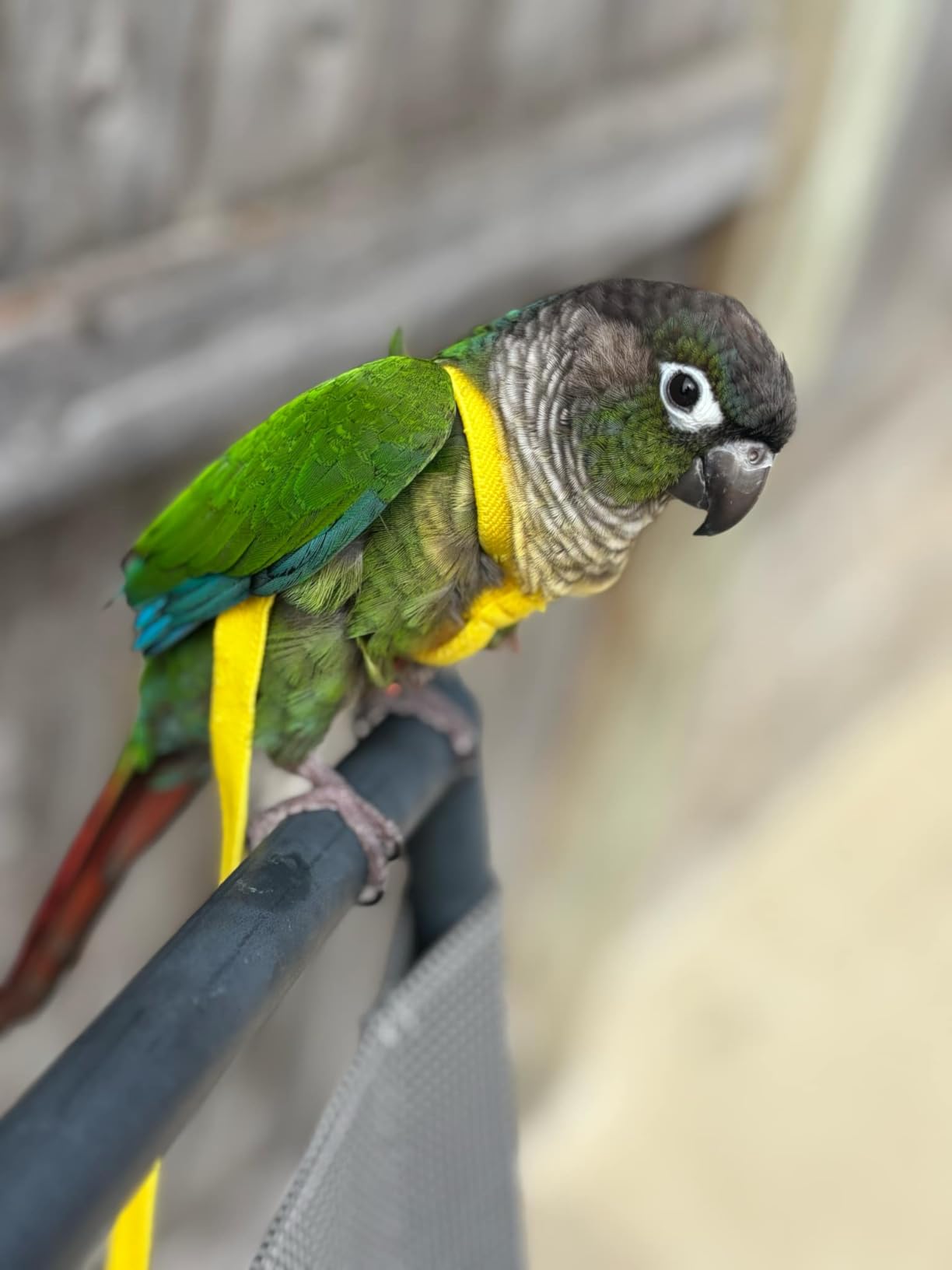
Which Size to Order for Small Species
The S is listed for budgies, lovebirds, cockatiels, mynas, green cheek and sun conures, quakers, and even finches, but it runs small in a confusing way. Some budgie owners find even the S oversized while cockatiel owners sometimes need the M.
Ignore the species chart and go by weight and chest measurement. Under about 60 grams this is a gamble, between 70 and 110 grams the S or M works, and above that step up to the L and XL, which suit pigeons and larger parrots better.
Managing the Non-Elastic Leash
With no shock absorption, you become the shock absorber. Hold the leash with a bent arm and let your elbow take the hit when the bird reaches the end, rather than locking the arm straight.
Keep the working length short at first. Letting out a full two meters of static line to a small bird that suddenly launches is how the yank happens, so start at arm’s length and extend as you both learn the rhythm.
6. ASOCEA Adjustable Bird Harness – Best Value for Amazons and Small Cockatoos
ASOCEA Adjustable Bird Harness and Leash
Strong nylon webbing
Chest range 26-40 cm
For birds 300-500 g
0.7 cm strap width
Pros
- Genuinely fits the 300 to 500 gram class most harnesses skip
- Lots of adjustment room to dial in the fit
- Straightforward webbing design that is easy to inspect for wear
- Training with it builds real handling trust
Cons
- Large cockatoos can chew through the webbing quickly
- Head hole and body hole are the same size which complicates fitting
- Adjustment is multi-step and awkward on a live bird
The ASOCEA fills a gap that annoys me about this category: the 300 to 500 gram band. Yellow naped amazons, galahs, and smaller cockatoos are too heavy for most budget sizing and not always heavy enough for macaw gear, and this one is built for a 26 to 40 cm chest range specifically.
It is a simple, honest nylon webbing harness with plenty of adjustment, and that adjustability is the selling point. Once dialed in, owners report it is easy to use and that the training process itself builds real trust. The species list runs from green cheeks through amazons, sulphur crested and umbrella cockatoos, and even blue and gold macaws on the largest settings.
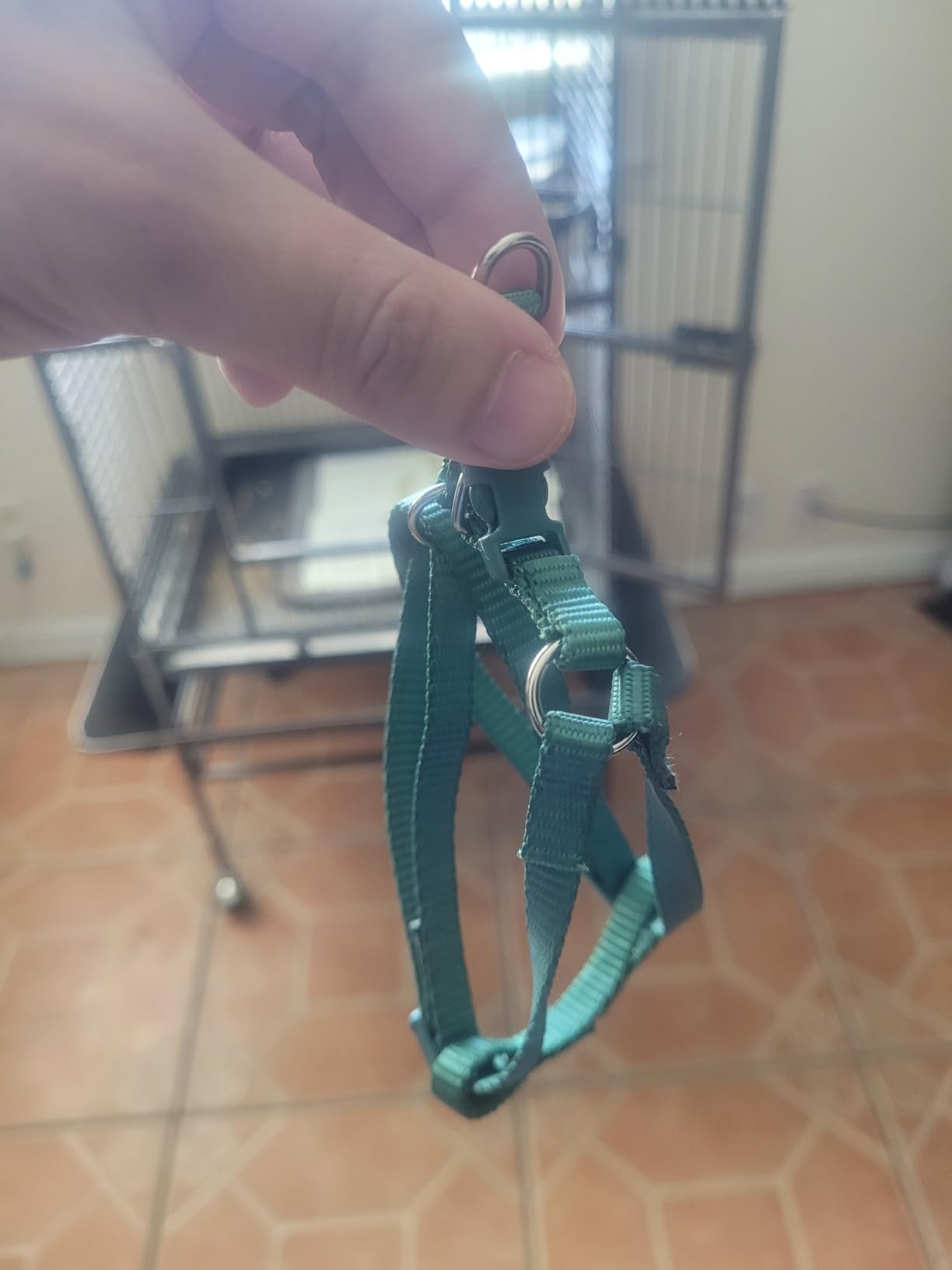
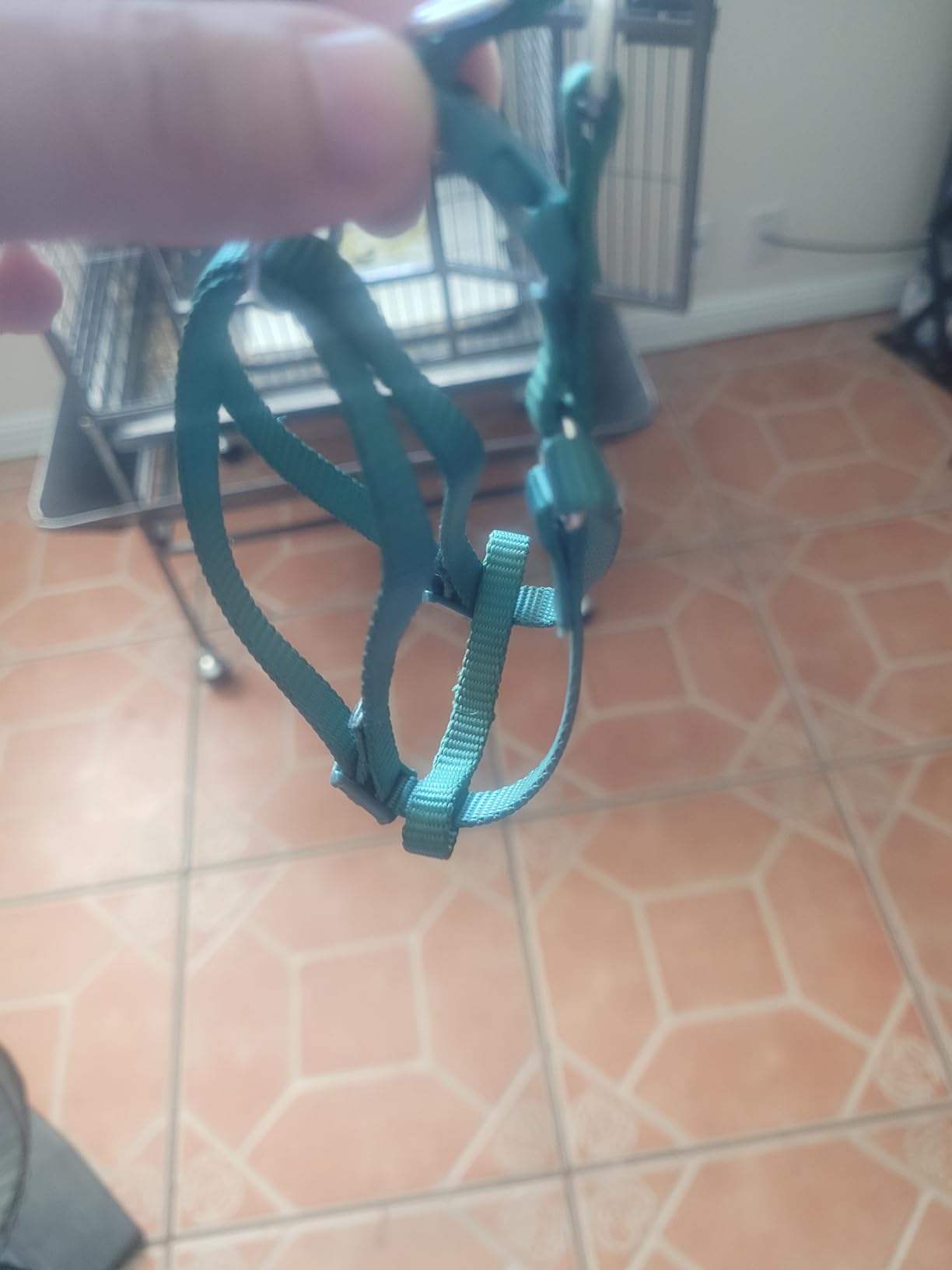
The chew resistance claim only goes so far. Webbing is webbing, and umbrella cockatoo owners describe their birds cutting through it quickly, which tracks with what a cockatoo beak does to nylon. It also has an awkward quirk owners flag repeatedly: the head hole and body hole are the same size, which complicates fitting and causes occasional misalignment that leaves the bird uncomfortable.
Sizing inconsistency is the biggest complaint. Even on the smallest setting some galah owners found it too large, and a quarter of the 254 reviewers left one star, mostly over chew-through failures and fit problems. The five-star pattern is consistent though: people who measured their bird first and had a calm, harness-tolerant bird.
Getting the Fit Right on Stocky Species
Amazons and galahs are rounder through the chest than conures, and that shape is what the 26 to 40 cm range is designed around. Measure around the widest part of the chest, just behind the wings, and compare that number to the range rather than trusting the species list.
For galahs specifically, review experience suggests it can run large even at the smallest setting. If your bird measures under about 28 cm, look at smaller sizes in the Barn Eleven range instead.
Temperament and Training Requirements
This suits birds already comfortable being handled and restrained. Owners are explicit that it is not for nervous birds or ones that are not harness trainable, so if your amazon lunges at towels, do the desensitisation work long before unboxing this.
Cockatoos need extra chew supervision. Never leave any harness on an unsupervised cockatoo, and treat visible webbing fuzz as a reason to inspect closely. A chewed strap is not cosmetic damage, it is a pending escape.
7. Barn Eleven Flying Rope Kit – Best Petite Harness for Green Cheek Conures
Barn Eleven Flying Rope Kit with 78.7-inch Leash
Petite size for birds 75-110 g
78.7-inch leash
Anti-chew webbing with plain weave inner
Metal chain front guard
Pros
- Proper petite sizing for 75 to 110 gram birds
- Plain weave inner layer sits gently against feathers
- Front metal chain resists the worst of the beaking
- Six sizes from petite through XL for multi-bird homes
Cons
- Stretchy mesh lets a determined bird stretch out of the neck hole
- Sliding clasp can loosen or tighten on its own
- Leash may measure shorter than the advertised length
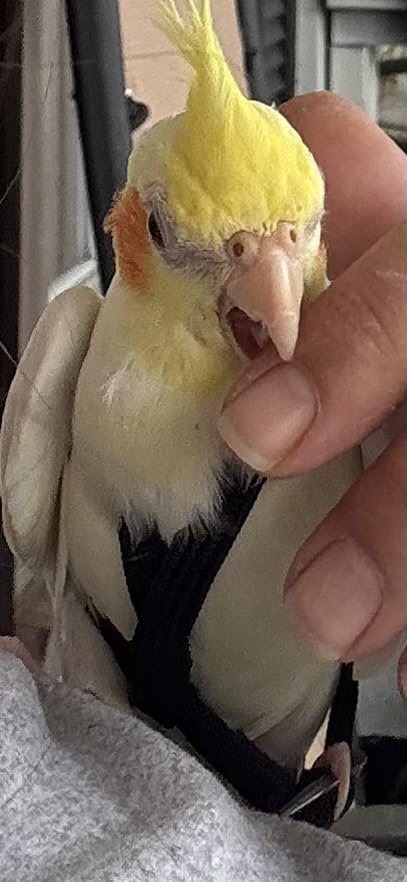
The petite size here targets birds between 75 and 110 grams, exactly the green cheek conure, cockatiel, mynah, and rosella class, and our green cheek fit it better than anything else we tried at this price. The plain weave inner layer is a thoughtful touch, because feather irritation is what makes small birds reject a harness.
It shares the family build of anti-chew webbing with a lightweight metal chain at the front, and six sizes run from petite to XL, which makes it sensible for a multi-bird household wanting one system. At 0.35 ounces the bird barely registers it.
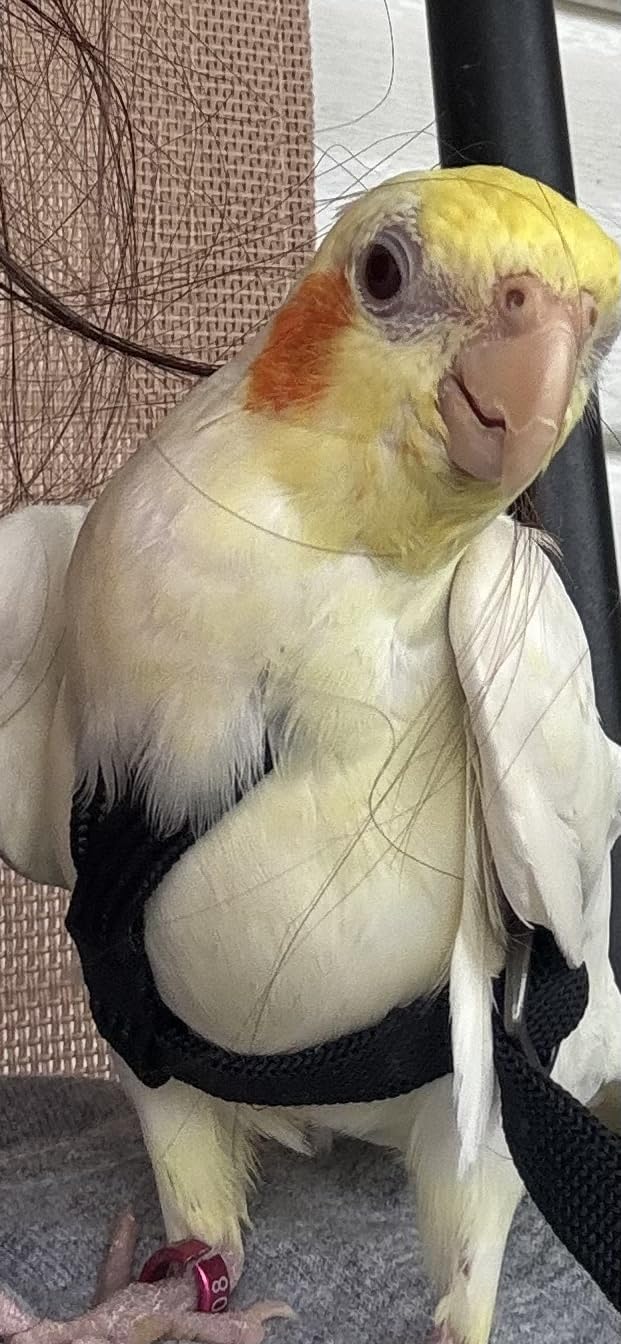
Two design issues need managing rather than ignoring. The mesh is stretchy, which eases application but means a determined bird can work its head and stretch out of the neck opening. More seriously, the clasp slides freely, and owners report it loosening on its own or tightening dangerously when a bird startles. The one-star reviews here are overwhelmingly about that clasp, not the fit.
Second, several owners measured the leash and found it shorter than the advertised 78.7 inches, and with just 96 reviews there is less collective experience to lean on than with the VANFAVORI. Together those are good reasons to verify the whole setup yourself before trusting it outdoors.
Fitting a 75-110 Gram Bird Safely
Weigh the bird in grams on a kitchen scale first. The petite band covers green cheek conures, slim cockatiels, mynahs, and rosellas, and a bird over 110 grams should step up to the XS or S rather than stretching the petite.
Check the neck opening tension every time. You should not be able to slip the mesh over the head without sliding the clasp, and if you can, the bird will find the same route at speed. Removing a fitted harness should require loosening the clasp deliberately.
Locking Down the Sliding Clasp
Set the fit, then re-check it after a minute of the bird moving around. Adjusters that walk under load are common on budget webbing harnesses, and the fix is checking the fit immediately before going outside rather than once at the start.
Watch for the strap running during a startle. If the bird flaps hard and the clasp slides tighter, that is a constriction risk, so interrupt calmly and reset. If yours does this repeatedly, retire it, because that specific failure is the one that hurts birds.
8. Hypeety Buckle Adjustable Vest – Best Harness for Macaws and Large Cockatoos
Hypeety Bird Harness and Leash with Buckle Adjustable Vest for Outdoor, L
Cross 8 band vest design
Escape-proof buckles
Nylon canvas, chew resistant
Size L chest 33-49 cm
Pros
- Escape-proof buckles genuinely hold a large strong bird
- Cross 8 band design slips on easier than head loops
- Size L chest range of 33 to 49 cm fits big macaws
- Adjusts across a wide range as a young bird grows
Cons
- Frequently mistaken for a dog harness so check the size carefully
- Runs very large and overwhelms medium parrots
- Clip can be chewed if left on an unattended bird
- No instructions included in the box
For big birds a different logic applies. A macaw has the beak to destroy webbing and the strength to make a sliding clasp meaningless, so the Hypeety uses a vest style cross 8 band with proper escape-proof buckles. Macaw owners in the review pool consistently praise the fit and security, and the size L adjusts across a 33 to 49 cm chest, which is real macaw and large cockatoo territory.
We had no macaw in the test group, so I leaned on the 280 reviews, and the five-star ones are dominated by owners of Camelot and hybrid macaws and umbrella cockatoos describing a solid fit, bright rainbow styling, and buckles that hold. A nice bonus for large birds is the adjustable range giving a young bird room to grow into it.
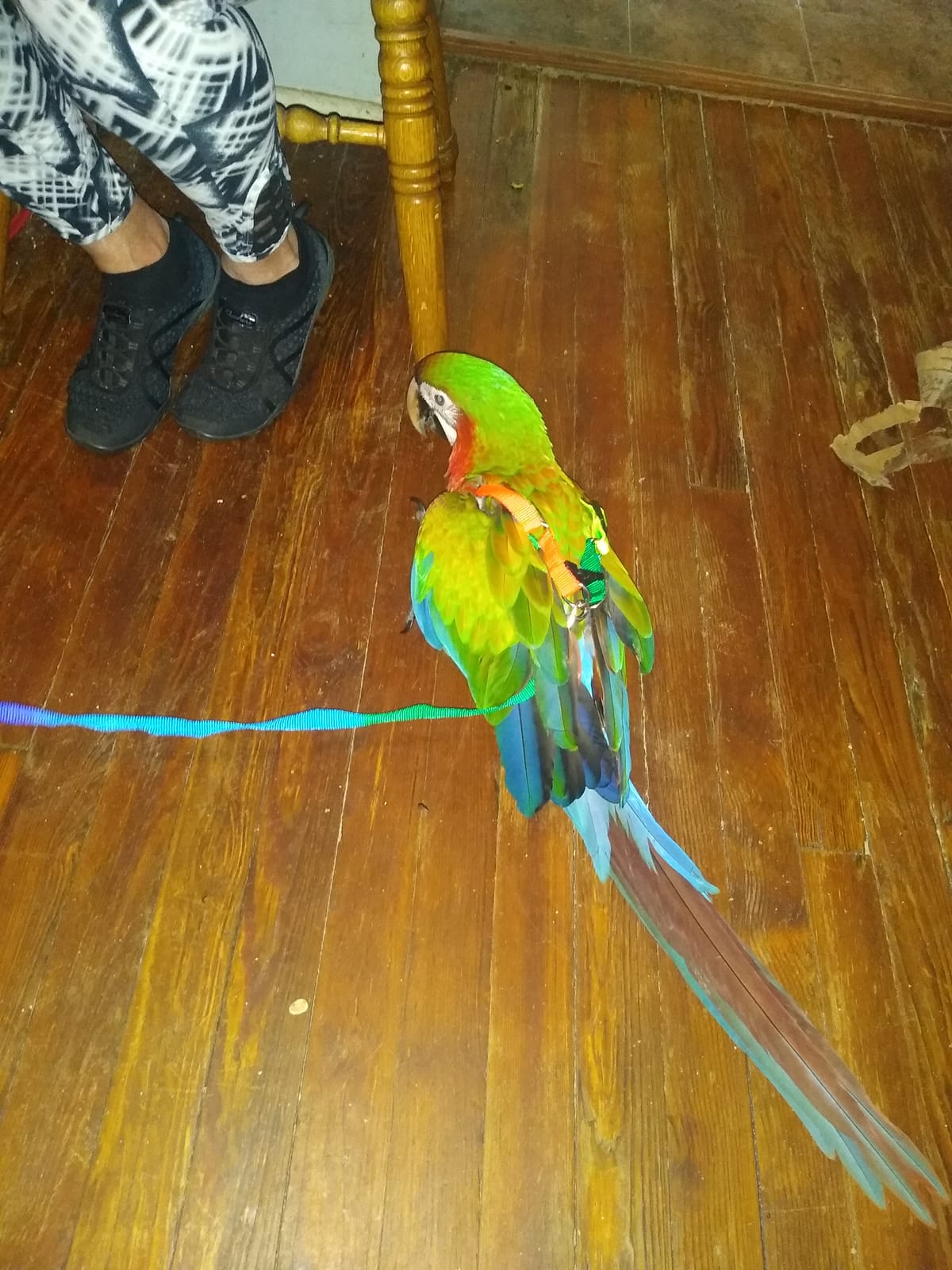
Two warnings before buying. First, a striking number of buyers report receiving something they describe as a dog harness, and the smaller variant runs very large, so measure your bird and read the chest range rather than trusting the photos. Second, there are no instructions in the box at all, which for a harness going on a macaw is a real oversight.
The 3.5 rating is the lowest here, and it is mostly explained by sizing and expectation mismatches rather than failures on correctly fitted large birds. The 46 percent five-star rate comes largely from the big-bird owners this is actually for, while the 22 percent one-star rate comes largely from people who ordered it for a medium parrot.
Measuring a Macaw for the Size L
Measure the chest just behind the wings and compare against the 33 to 49 cm range for the L, or 13 to 33 cm for the M. A large macaw with a chest over 40 cm wants the top of the L range, and a smaller hybrid may sit mid-range with room to grow.
Do not order the M for a medium parrot without doing the maths first. The M band overlaps several parrot species, but reviews describe the fit as generous, and a loose vest is one a bird can shake out of.
What to Check Before the First Outing
Since there are no instructions, learn the cross 8 band layout on a stuffed animal first. Work out which loop is the head and which are the wing passes before a large, strong beak is anywhere near your fingers.
Inspect the buckles and stitching after every session, and never leave the vest on an unsupervised bird. Reviews note the clip can be chewed through given time, and a large parrot with motivation will find any weak point you leave available.
How to Choose the Best Parrot Harness for Outdoor Use
A harness choice comes down to five things, and getting any one of them wrong is how birds escape or get hurt. Here is the order we would think about them in.
1. Breakaway and Escape-Proof Design
The most important thing a harness does is fail safely. A one-piece slip-on harness like the Aviator has nothing a bird can open and nothing that can pinch, which is why forum owners rank no-clip designs above plastic or metal clips. Where clips exist, they should be escape-proof buckles you squeeze deliberately, like the Hypeety vest.
The breakaway concept only works in your favour when the harness fits. A bird that can stretch its neck out of a loose neck hole will do exactly that the first time something startles it, so fit and escape resistance are the same conversation.
2. Material and Chew Resistance
Nylon webbing and braided nylon rope are the standard, and both resist casual chewing but not sustained effort from a large beak. Features that genuinely help are a plain weave inner face against the feathers and a metal chain section at the front of the strap, where a beak naturally lands first.
Be realistic about your bird. A budgie mouthful of webbing is cosmetic, while a cockatoo or macaw can sever a strap in minutes. For heavy chewers, inspect before every outing and treat fraying as structural failure.
3. Fit and Adjustability
Fit by weight in grams and chest measurement, never by the species name on the packet. The word medium covers a 90 gram bird on one brand and a 400 gram bird on another, which is why sizing complaints dominate the one-star reviews of nearly every product above.
A proper fit needs two fingers of clearance at the neck and chest, no strap crossing the crop, and enough tension that the harness cannot rotate or slide off the wings. If you can slip it over the head without loosening anything, the bird can leave the same way.
4. Leash Length and Shock Absorption
An elastic or shock-absorbing leash is the most important safety feature on any parrot walking harness, because it decides what happens when your bird hits the end of the tether at speed. The Aviator’s rubber shock cord and the VANFAVORI elastic leashes both turn a hard stop into a progressive catch.
Static leashes, like the one on the budget Barn Eleven wing harness, transfer the entire stop to the bird’s chest. They are usable on calm, light birds that mostly perch, and they are the wrong choice for a bird that launches hard.
5. Harness Types: Over-Head, Vest, and Flight Suit
Over-head wing loop harnesses like the Aviator and Dnoifne are the community standard. They spread pressure across the chest and wings, and a well-made one has no hard parts against the body.
Vest style harnesses like the Hypeety use buckles and a cross 8 band, and suit large, strong birds that need security a slider cannot provide. Flight suits cover more body, add a diaper function, and work for calm small birds that mostly perch on you, but they restrain through elastic, which makes them unsuitable for hard flyers.
6. Harness Types to Avoid
Avoid anything that attaches to the legs. Leg attachment harnesses are repeatedly linked on parrot forums to hip dislocation and broken bones, because a launch puts the bird’s full weight plus momentum through two thin leg straps. There is no safe version of this design.
Also avoid dog and cat harnesses, however similar they look. The proportions are wrong for a bird’s keel and wings, they put pressure on the crop, and several products marketed as bird harnesses are dog harnesses in practice. Check the chest range in centimetres against your bird’s actual measurement before ordering anything.
Parrot Harness Size Guide by Species
No single brand’s size chart covers every bird, so here is a cross-brand guide built from the weight bands in the products above plus manufacturer species lists. Weigh your bird first, match the weight, then sanity check the species.
Under 70 grams, budgies, some lovebirds, parrotlets. This is the hardest class to fit, and the honest answer is that most harnesses, including the smallest Aviator petite, start around 70 grams. The Barn Eleven S is the closest budget option. Under about 60 grams, a harness is a gamble and a travel carrier is the safer tool.
75 to 110 grams, green cheek conures, slim cockatiels, mynahs, rosellas. The Barn Eleven petite flying rope kit is sized exactly for this band, and the VANFAVORI extra small variants also apply here.
80 to 105 grams with a diaper need, cockatiels, small conures, quakers. The VANFAVORI diaper flight suit M is built for this band and adds droppings containment for indoor use.
120 to 160 grams, quakers, senegals, sun conures. The VANFAVORI medium harness with the 80-inch elastic leash is the best match, and the Barn Eleven M or L also covers this range.
150 to 350 grams, Alexandrines, mini macaws, Keck sized birds, Indian ringnecks. The Dnoifne M is designed for exactly this class and fits well on calm birds.
300 to 500 grams, yellow naped amazons, galahs, smaller cockatoos and macaws. The ASOCEA adjustable harness covers a 26 to 40 cm chest and this weight class specifically.
Over 500 grams, large macaws, umbrella and sulphur crested cockatoos. The Hypeety vest in size L, with a 33 to 49 cm chest range and escape-proof buckles, is the right class of gear. Pair it with the Aviator 40-foot extension if your bird is on the Aviator system.
How to Harness Train Your Parrot
Training is where harness projects live or die, and the forum consensus is blunt about the timeline: one to two months of consistent daily sessions for most birds, and up to a year for a stubborn adult. Owners who started with eleven-week-old babies still reported a month or two of work. Here is the process that works.
1. Weigh and measure your bird. Get a gram weight and chest measurement before ordering anything, because sizing errors poison the whole process. A harness that pinches or hangs loose teaches the bird that harnesses are unpleasant.
2. Leave the harness near the cage. Let the bird see it, ignore it, and eventually ignore it completely. This desensitisation takes days and cannot be rushed.
3. Make the harness a treat dispenser. Feed favourites through the head loop until the bird voluntarily puts its head in. This is the highest-value step, and it separates birds that accept a harness from birds that fight one.
4. Practise on a stuffed animal. Rehearse the full application on a toy until your hands know the sequence. BirdTricks has recommended this for over a decade, and several owners in our research credited it with saving the project.
5. Short wearing sessions indoors. Put the harness on with no leash, let the bird wander a table for a minute or two, then remove it before chewing starts. End on a success, not a struggle.
6. Add the leash indoors. If your harness has a detachable leash like the VANFAVORI, clip it on and let the bird drag it under supervision so the tugging sensation is not new outdoors.
7. Take it outside briefly. First trips should be short, quiet, and low to the ground in a fenced area at a calm time of day. Bring high-value treats and leave before the bird gets overwhelmed.
8. Never force a struggle. If the bird is fighting the application, stop, remove the harness, and go back a step. Every forced session sets you back weeks, and a bird that learns the harness means restraint may never accept it.
9. Keep the harness off-limits as a toy. Do not let the bird chew it during or after sessions, because a bird that treats the harness as a chew toy will eventually destroy it while wearing it.
Two field-tested tricks from owners: a darkened room genuinely calms some birds for first applications, and the towel method gets a harness onto a squirming bird safely while you build cooperation. Use both as aids, not as substitutes for training.
Parrot Harness Safety Warnings: What NOT to Do
Are parrot harnesses safe? Yes, when the fit is right, the training is done, and the handler stays alert. These are the specific failures that hurt birds, and nearly all come from owner reports in the reviews and forums we read.
Never use a leg-attachment harness. These are linked to hip dislocation and broken bones, because a launch puts the bird’s full momentum through the legs. There is no safe version.
Never clip the leash to something stationary and walk away. A startled bird taking flight while tethered to a chair hits the end of the leash with nobody watching. The leash goes in your hand or the harness comes off.
Never leave a harnessed bird unattended. Chewing through a strap takes a determined bird minutes, and the clip on a vest is also a chew target. Unattended is how harnesses become escapes.
Never let a strap constrict the crop. A harness that rides up pressures the crop and can interfere with breathing and digestion. If the straps have migrated forward, reset the fit before continuing.
Never use a harness with a frayed or chewed strap. Webbing damage is structural, and it fails under load, exactly when the bird is in the air.
Never rely on a harness alone outdoors. A harness is a backup, not a guarantee. Startles, predators, and gusts all happen, and a sufficiently panicked bird can slip even a good harness.
Always scan for hawks, cats, and dogs. Predators are the outdoor hazard owners underestimate most, and a bird on a leash cannot flee, so you are its only defence.
Always check fit and buckles right before going outside. Sliding clasps loosen and walk under load, so the thirty-second check before every outing is the cheapest safety measure in this guide.
Frequently Asked Questions
What is the best harness for parrots?
The Aviator harness from The Parrot University is the community favourite, praised on parrot forums as universally liked for its one-piece, no-clip design and elastic shock-absorbing leash. The VANFAVORI medium harness is the best budget pick for conures and quakers, the VANFAVORI diaper flight suit is the best value for small birds, and the Hypeety vest is the strongest option for macaws.
How to harness a parrot?
Weigh and measure your bird, then order the matching size. Leave the harness near the cage for several days, feed treats through the head loop until the bird voluntarily puts its head in, and rehearse the application on a stuffed animal. Do short indoor wearing sessions with no leash, then add a detachable leash indoors, then take short, calm trips outside in a fenced area. Most birds need one to two months of daily sessions.
Are parrot harnesses safe?
Yes, when the fit is correct and the bird is trained to accept it. Safe use requires an elastic or shock-absorbing leash, no leg-attachment straps, no pressure on the crop, constant supervision, and a strap and buckle check before every outing. A harness is a backup rather than a guarantee, so stay alert for predators, traffic, and weather.
How long does it take to harness train a parrot?
Expect one to two months of consistent daily sessions for most birds, and up to a year for a stubborn or older parrot. Owners who started with eleven-week-old babies still reported one to two months, and some birds never accept a harness at all. Go at your bird’s pace, because forcing the issue makes acceptance less likely.
What is the 3 3 3 rule for parrots?
The 3-3-3 rule describes how a new parrot adjusts to a new home: the first 3 days the bird is overwhelmed and may eat little, the first 3 weeks it settles in and learns your routine, and the first 3 months it fully bonds and shows its real personality. Harness training should wait until the bird is past the initial 3-day stress window.
Can a parrot fly with a harness on?
Yes, and controlled flight is part of the point. A harnessed parrot can glide, take short flights, and get real exercise on a long leash, with the shock-absorbing leash softening the stop at the end. Longer leashes like the Aviator 40-foot extension are designed so medium and large parrots can fly safely within a controlled range.
Can you walk a parrot on a leash?
Yes, once the bird accepts the harness. Walks usually mean the bird perching on your shoulder or hand while you hold the leash, with short flights between perches. Start in quiet, fenced areas at calm times of day, keep early walks short, and always hold the leash yourself rather than clipping it to anything stationary.
How do you transport a parrot long distance?
Use a secure travel carrier, not a harness. A hard-sided carrier with ventilation and a perch keeps the bird contained through car rides and unexpected scares, which a harness cannot do over hours. Harnesses are for short walks and outdoor time at your destination, and many owners keep both in the car.
Final Thoughts on the Best Harnesses for Taking Parrots Outdoors
If you want one answer, the Aviator system with the 40-foot extension is what the parrot community trusts most, and its rubber shock cord is a safety feature nothing else here matches. On a budget, the VANFAVORI diaper flight suit does two jobs for almost nothing, and the VANFAVORI medium harness is the best pick for conures, quakers, and senegals in the 120 to 160 gram band.
Size for your actual bird, not the species on the packet. Small birds need the petite Barn Eleven, amazons and galahs fit the ASOCEA, macaws need the Hypeety vest with real buckles, and any bird under about 70 grams is probably better served by a travel carrier than by any harness currently sold.
Whatever you choose, budget the same patience for training as you did for the harness. The best harnesses for taking parrots outdoors only work once your bird has learned to wear one, and a month or two of treat-filled sessions is time well spent. When it clicks, an afternoon walk in real sunshine with your bird on your shoulder is worth every session.