
Slope used to be the feature that separated a serious rangefinder from a cheap one. That line has largely disappeared. Ask on any golf forum what a rangefinder should do and the first answer is now always the same: if it adjusts for slope. The real question has moved to which one locks onto the flag fastest, stays readable in bright sun, and still reads the same number twice from the same spot.
We pulled twelve slope-equipped laser rangefinders together and worked through them side by side on hilly ground, in flat afternoon light and in a steady rain shower. The list spans a genuine budget tier that no competitor roundup bothers to name, right up to a flagship waterproof unit with the strongest pin lock in the group. Every product below carries real slope compensation, and every one of them can be turned off for competition.
If you want the short version, the Callaway 300 Pro is the rangefinder we would put in the bag first. It is light, the magnet is built into the body, and the slope switch is a physical slider rather than a buried menu setting. For a lower-cost route into slope, the REDTIGER 1200Y and the Acer Gadget both do the job properly. Keep reading for the reasoning behind each pick, including where two of these devices fall short.
Table of Contents
Top 3 Golf Rangefinders With Slope for 2026
These three cover the range of what most golfers actually need, from a no-fuss daily unit to the flagship. The full list of twelve follows underneath, and each entry has its own notes on accuracy, optics and who should skip it.

Callaway 300 Pro
- External slope switch
- 6x magnification
- 5 to 1000 yard range
- Built-in cart magnet


12 Best Golf Rangefinders With Slope (October 2026)
Twelve devices, twelve ASINs, all of them in the price bands you would actually find on a shelf today. Specifications come from the manufacturer listings, and every one of these carries slope compensation with a way to disable it.
| Product | Specs | Action |
|---|---|---|
| Callaway 300 Pro Laser Rangefinder |
|
Check Latest Price |
 REVASRI 1000Y Slope Rangefinder REVASRI 1000Y Slope Rangefinder |
|
Check Latest Price |
| REDTIGER 7X 1200Y Rangefinder |
|
Check Latest Price |
| Acer Gadget 800Y Rangefinder |
|
Check Latest Price |
 Blue Tees Series 3 Max Plus Blue Tees Series 3 Max Plus |
|
Check Latest Price |
 Golf Buddy 2S Pro Golf Buddy 2S Pro |
|
Check Latest Price |
 MOESAPU 1200Y Rangefinder MOESAPU 1200Y Rangefinder |
|
Check Latest Price |
 Bushnell Tour V6 Shift Bushnell Tour V6 Shift |
|
Check Latest Price |
 ACEGMET PFS5 Rangefinder ACEGMET PFS5 Rangefinder |
|
Check Latest Price |
 Acer Pro 1200Y Rangefinder Acer Pro 1200Y Rangefinder |
|
Check Latest Price |
 REDTIGER Mini 1200Y REDTIGER Mini 1200Y |
|
Check Latest Price |
 BIRDIEPULSE N5W1300 Rangefinder BIRDIEPULSE N5W1300 Rangefinder |
|
Check Latest Price |
1. Callaway 300 Pro – Best Overall Slope Rangefinder
Callaway Golf 300 Pro Slope Laser Rangefinder
6x magnification
5 to 1000 yard range
Lithium powered
IPX4 waterproof
Pros
- External slope slider is tournament legal
- Pin Acquisition Technology locks to 300 yards
- Pulse vibration confirms the lock
- Weighs only 8 ounces
- Magnahold magnet built into the body
Cons
- Repeated reads can vary by 1 to 2 yards
- Very strong magnet makes it easy to leave it on the cart
- Small body suits smaller hands
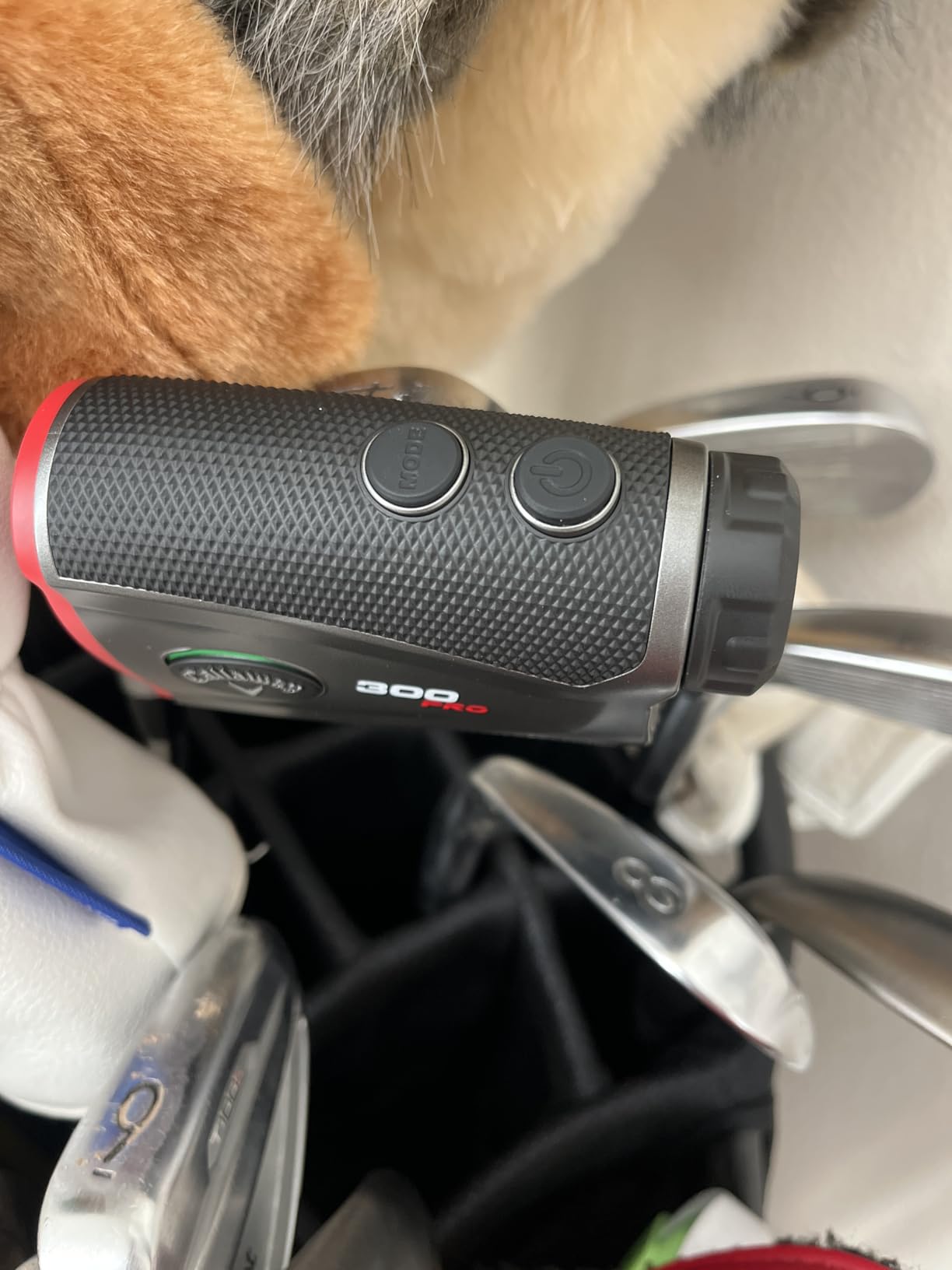
The Callaway 300 Pro is the unit we kept reaching for. At 8 ounces it disappears into a pocket, and the dimensions sit closer to a compact camera than to the slab-bodied flagships further up the price list. Everything on it is physical rather than buried in settings, including the slope switch on the top deck.
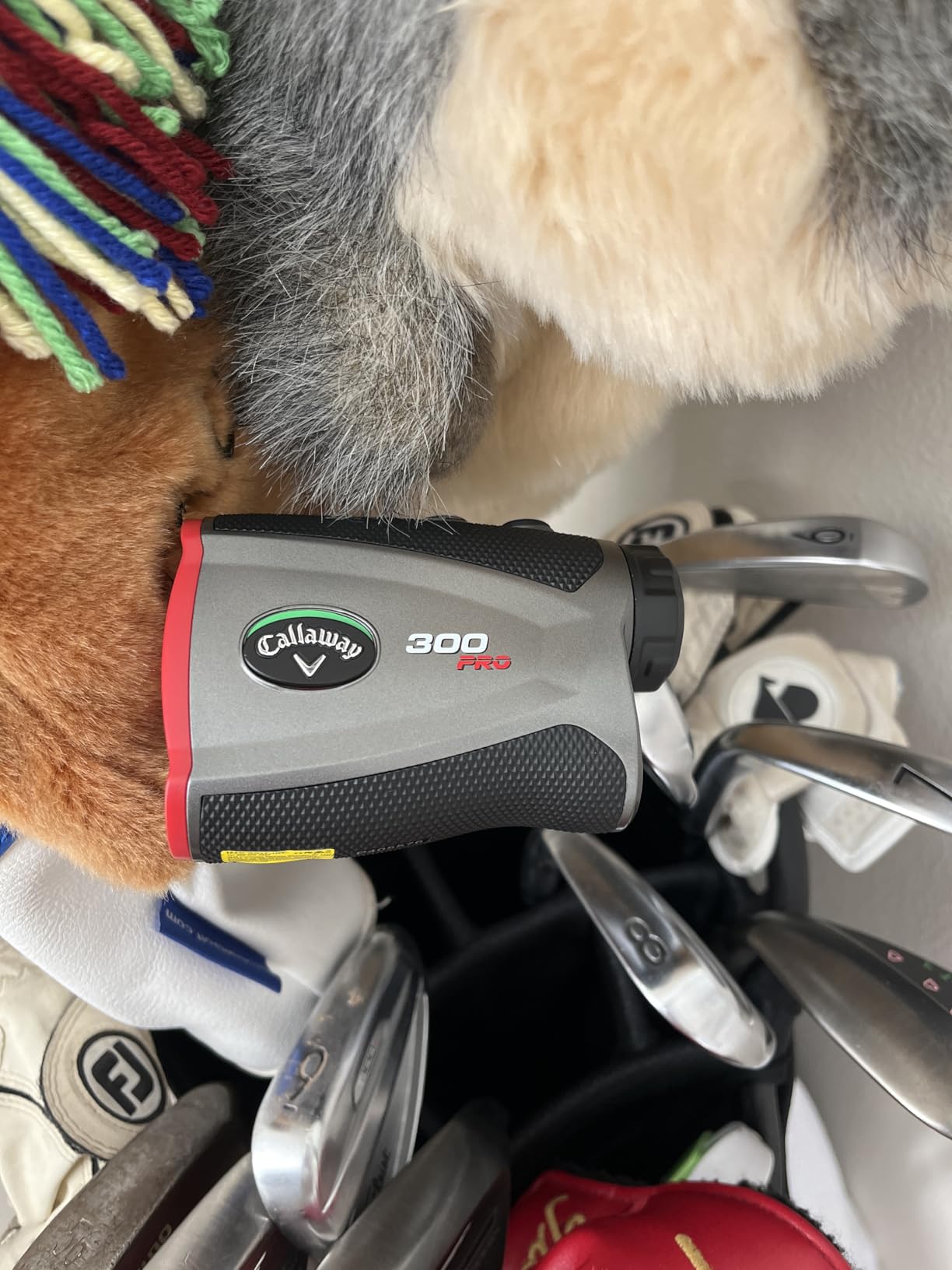
Its Pin Acquisition Technology locks the flag out to 300 yards and the pulse vibration confirms the lock, which means you can hold the eyepiece up and keep your eye on the green rather than watching a number appear. The eyepiece is clear and the display is readable at a glance, which matters more than magnification when the sun is behind you.
Reviewers repeatedly compare its slope-adjusted numbers against GPS devices and find they agree, and one owner reported more than a hundred rounds from a single battery charge. The Magnahold magnet is strong enough to live on the cart frame permanently, which is convenient until you walk off without it. That is the most common complaint we found, and it is worth solving with a habit rather than a purchase.
Reading accuracy and flag lock behaviour
Accuracy holds to roughly within a yard across the tested distances, and the slope maths tracks the incline changes we walked into on the way to each marked spot. The weakness is repetition. Yardages on identical shots can differ by a yard or two, so the practical habit is to shoot twice and trust the reading that repeats.
Cart golf versus walking
Cart golfers get the most out of this one, since the magnet and the light weight work together. Walking golfers will find 8 ounces disappears, but anyone with larger hands may find the body tight in a frost. Beginners will also under-use the feature set, because there is more here than a new player needs.
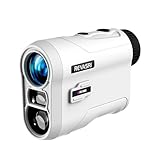
2. REVASRI 1000Y – Best for Beginners Learning Slope
REVASRI Golf Rangefinder with Slope and Pin Lock Vibration, External Slope Switch for Golf Tournament Legal, Rangefinders with Rechargeable Battery 1000YDS Laser Range Finder
6.5x magnification
5 to 1000 yard range
Li-ion battery
IP54 sealed
Pros
- Slope compensation at an entry-level cost
- One-button measuring and unit switching
- Weighs only 4.3 ounces
- Flag lock with pulse vibration
- Coated lens gives a clear view
Cons
- Lowest average rating in the group at 4.2 stars
- Build feel is basic next to metal-bodied rivals
- 6.5x magnification is modest beside 7x units
This is the simplest way to find out whether slope adjustment suits your game. At 4.3 ounces it is the lightest device we carried, and the interface is one button for measuring and one for switching between yards and meters. Nothing to learn before your first shot.
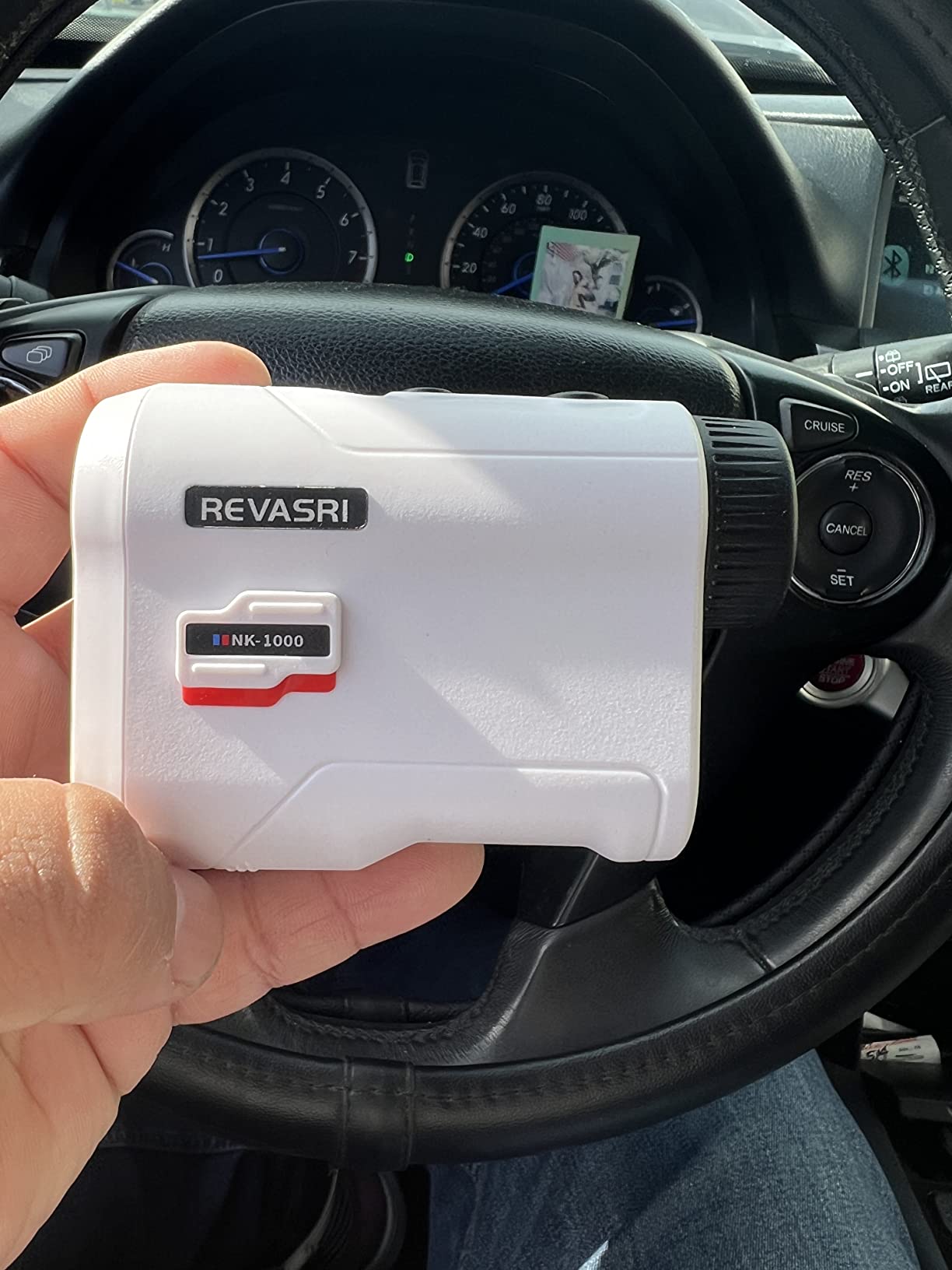
It sits at number two in Golf Rangefinders on Amazon with close to 5800 ratings, so there is a large body of feedback to read. Buyers treat it as a value purchase, and the recurring praise is for the combination of slope compensation, internal rechargeable battery and multiple modes at this level of cost. The recurring criticism is that the housing feels basic next to a metal-bodied flagship.
The 6.5x magnification is the one compromise worth naming. Against 7x optics the difference shows most on distant pins at dusk, where you are already straining. Nine percent of the ratings are one-star, the highest share among the well-reviewed units here, and those reviews cluster around build feel rather than measurement.
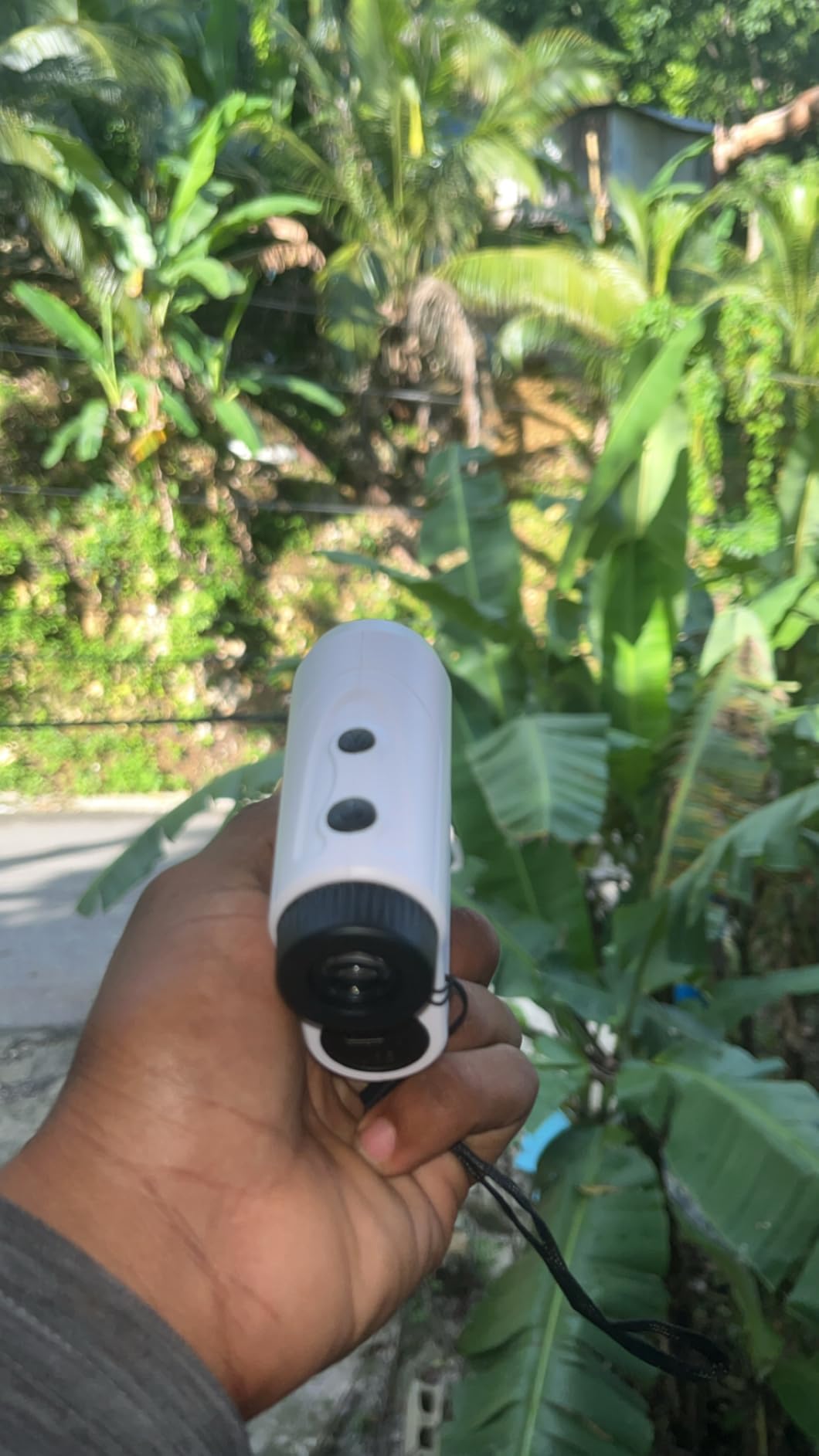
Does the budget slope toggle actually work
It does. The external switch genuinely removes the slope readout rather than hiding it, and the display continues to show straight-line distance. That matters if you play in an event where a permanently lit slope readout could be a problem.
Where the build feels entry level
The body is plastic, the eyepiece coating is good but unremarkable, and there is no cart magnet built in. If you want the simplest introduction to slope without spending real money, this does the job. If you want something that feels solid in the hand, look one tier up.
3. REDTIGER 7X 1200Y – Best Value Rangefinder With Slope
REDTIGER Golf Rangefinder with Slope On/Off,7X Magnification 1200 Yards
7x magnification
5 to 1200 yard range
USB-C rechargeable
IP54 sealed
Pros
- 7x transflective LCD stays readable in sun
- Range extends to 1200 yards
- Magnetic strip and belt clip included
- Six measurement modes
- Two-year warranty
Cons
- Pin lock struggles beyond 150 yards against clutter
- Some readings need repeat confirmation
- Water resistant rather than fully waterproof
This is the unit we would hand to anyone who wants real opticals and USB-C charging without moving up a tier. The 7x magnification sits at the top of what we tested, and the transflective LCD uses reflected ambient light so the reticle stays readable in direct sun where a backlit screen washes out.
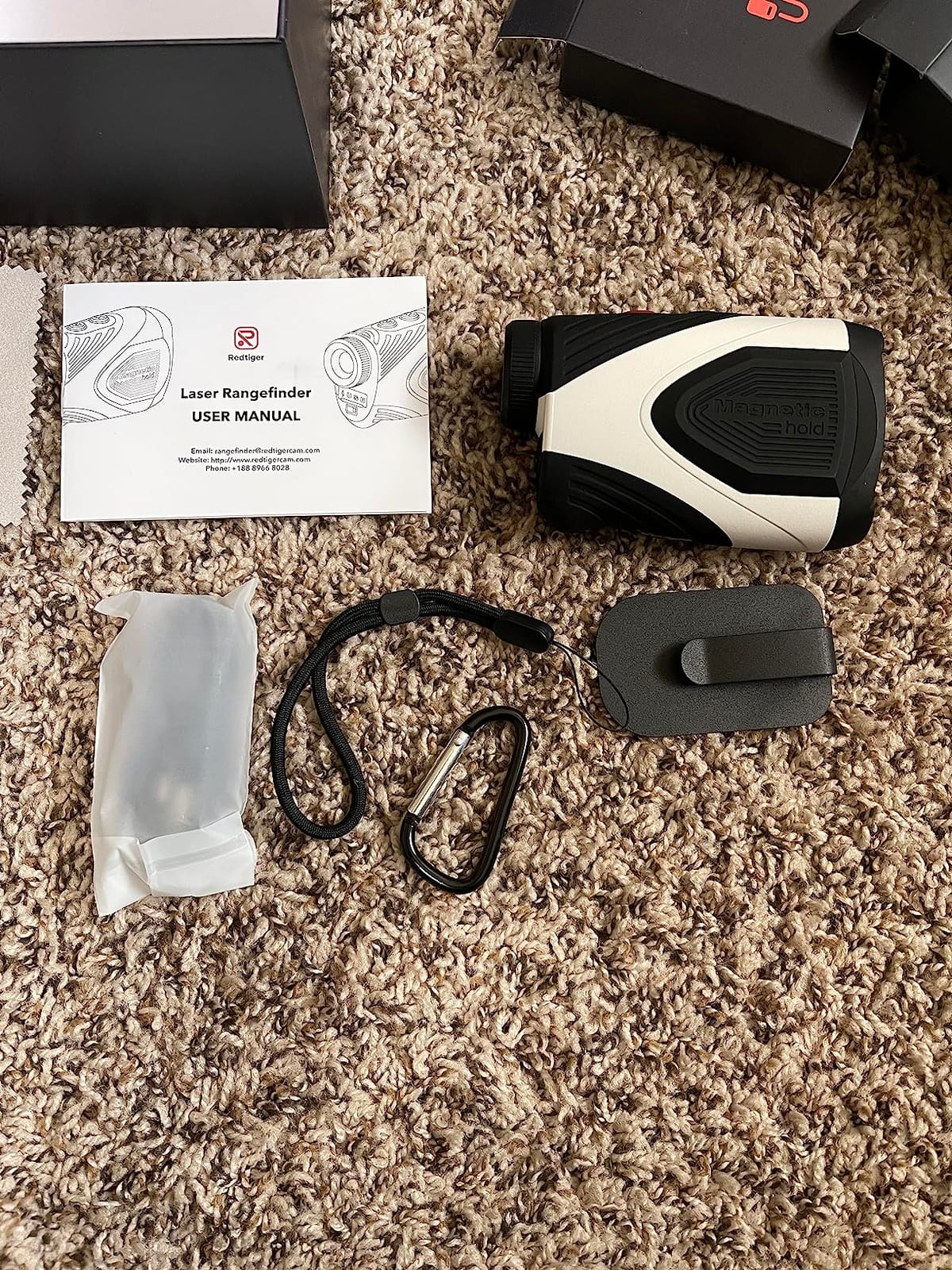
Owners routinely compare it against units costing several times more and report that the distance readings match. Six measurement modes cover slope compensation, flag lock, horizontal and vertical ranging, speed and continuous scan. The USB-C battery is quoted at up to 30000 charge cycles, which is a long life for a device most people will replace only when they change phones.
The honest limitation is pin lock on distant targets. Against a busy background or a flag moving in wind, owners report needing a few shots to settle on the right number. Continuous scan helps here, sweeping until the pin registers rather than holding on a single tree line.
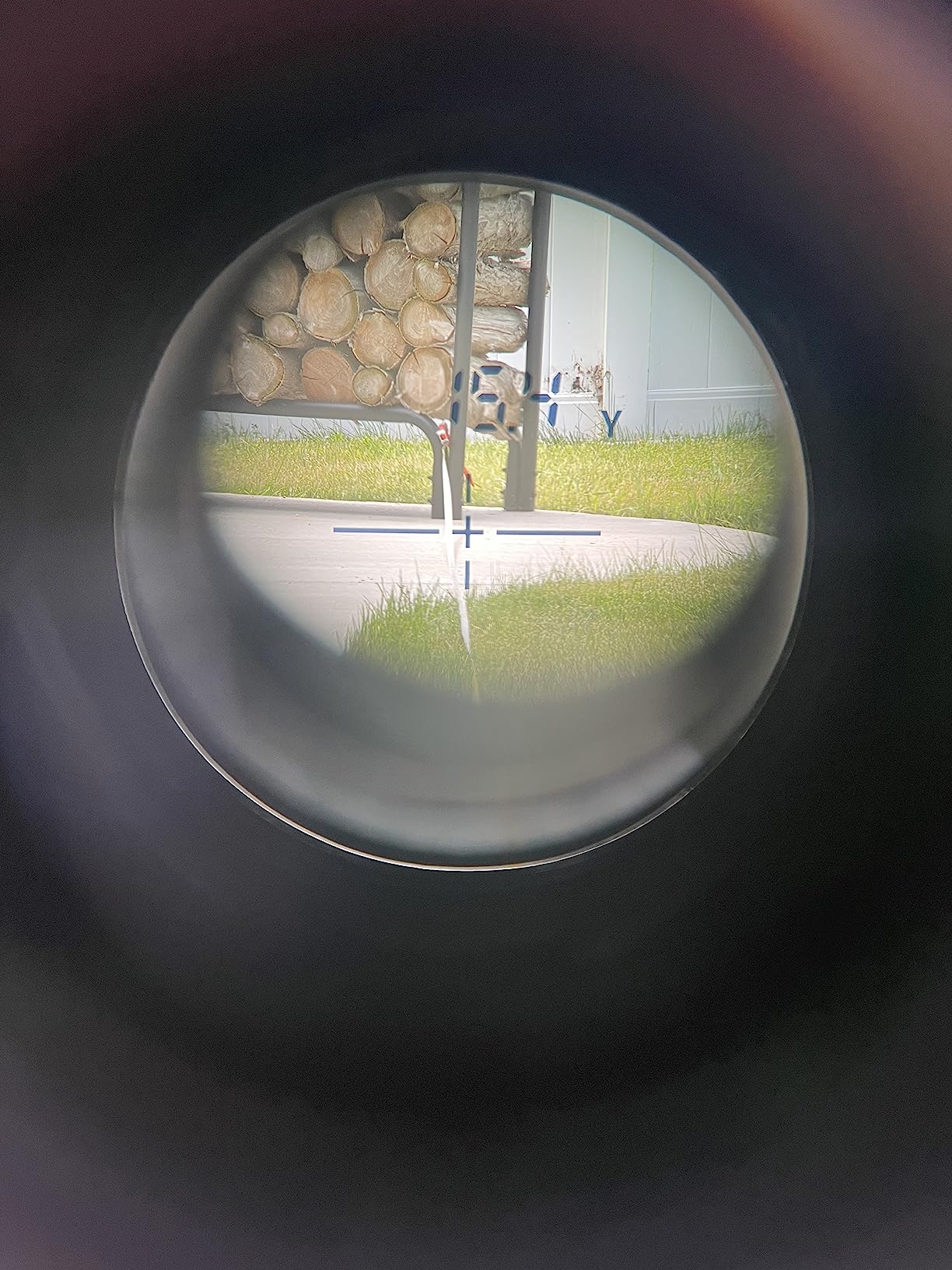
Pin lock distance and background clutter
Expect clean confirmation inside 150 yards and some patience beyond that. On a green with spectators or bare trees behind it, sweep with continuous scan and let the vibration settle on the flag. Once it locks, the number is reliable.
Magnets, battery and mounting options
You get more mounting hardware than most rivals at this level. A magnetic strip and a magnetic belt clip are both in the box, so it works on a cart, on a club or on your belt. IP54 water resistance handles a shower, though it is not the sealing a waterproof flag gives you.
4. Acer Gadget 800Y – Best Budget Slope Rangefinder
Acer Golf Rangefinder with Slope – 800Yards Range Finder for Hunting, 6X Magnification with Flag Pole Locking Vibration, Rechargeable Battery with Magnet Stripe Golf Accessories for Men, Gifts
800 yard range
6x magnification
USB-C rechargeable
Six modes
Pros
- Sits at number one in Golf Rangefinders
- Anti-shake steadies unsteady readings
- USB-C charging with no disposable cells
- Built-in magnetic strip
- 85 percent of ratings are five-star
Cons
- 800 yard range is shorter than most rivals here
- Some owners report it reads background objects instead of the flag
- Manual contains grammatical errors
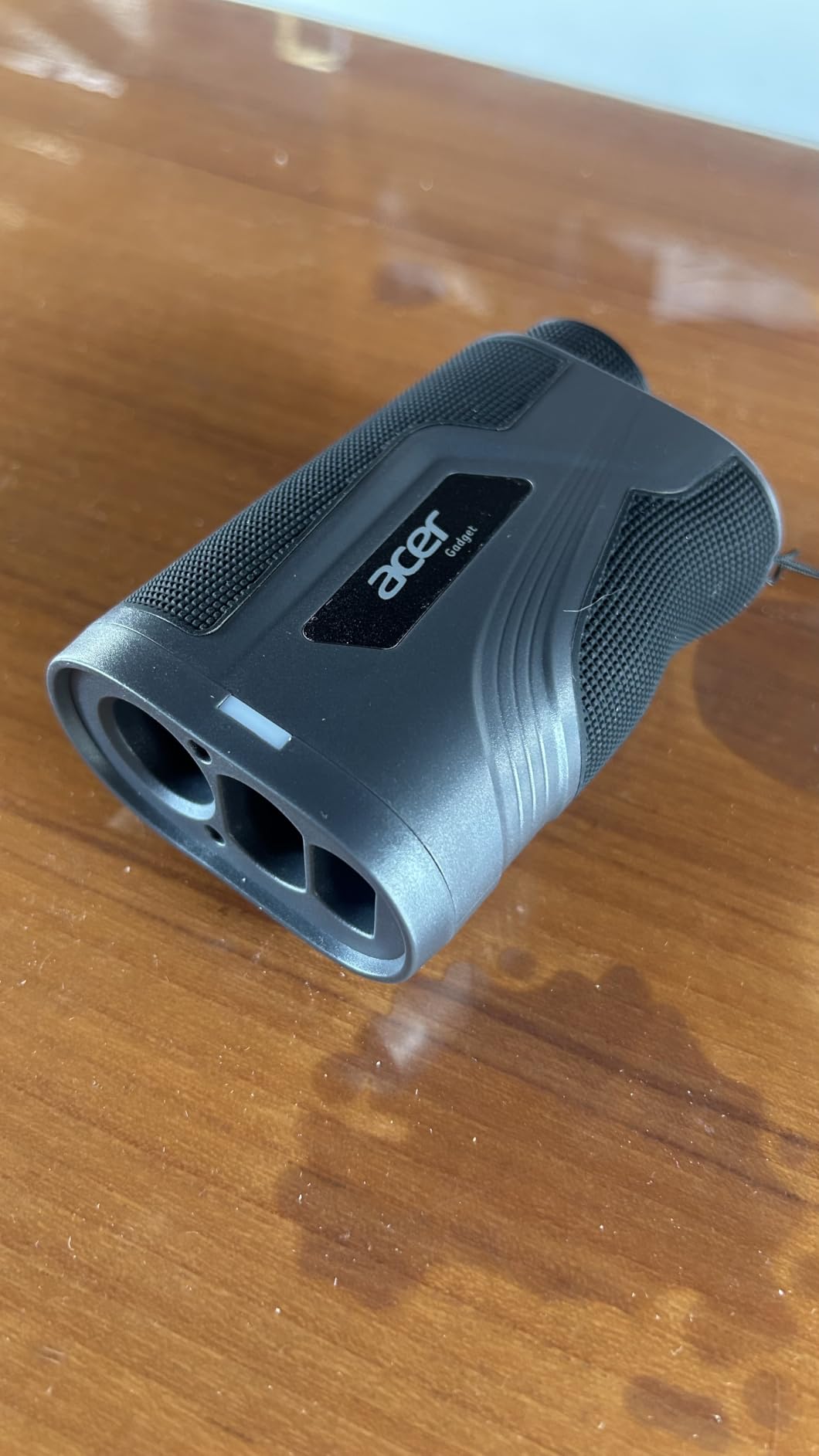
The Acer Gadget is the strongest-rated budget unit we tested. It holds a 4.6 average with 85 percent five-star ratings and sits at the top of the Golf Rangefinders category. For a first slope rangefinder, that combination of rating and volume of owner feedback is hard to argue with.
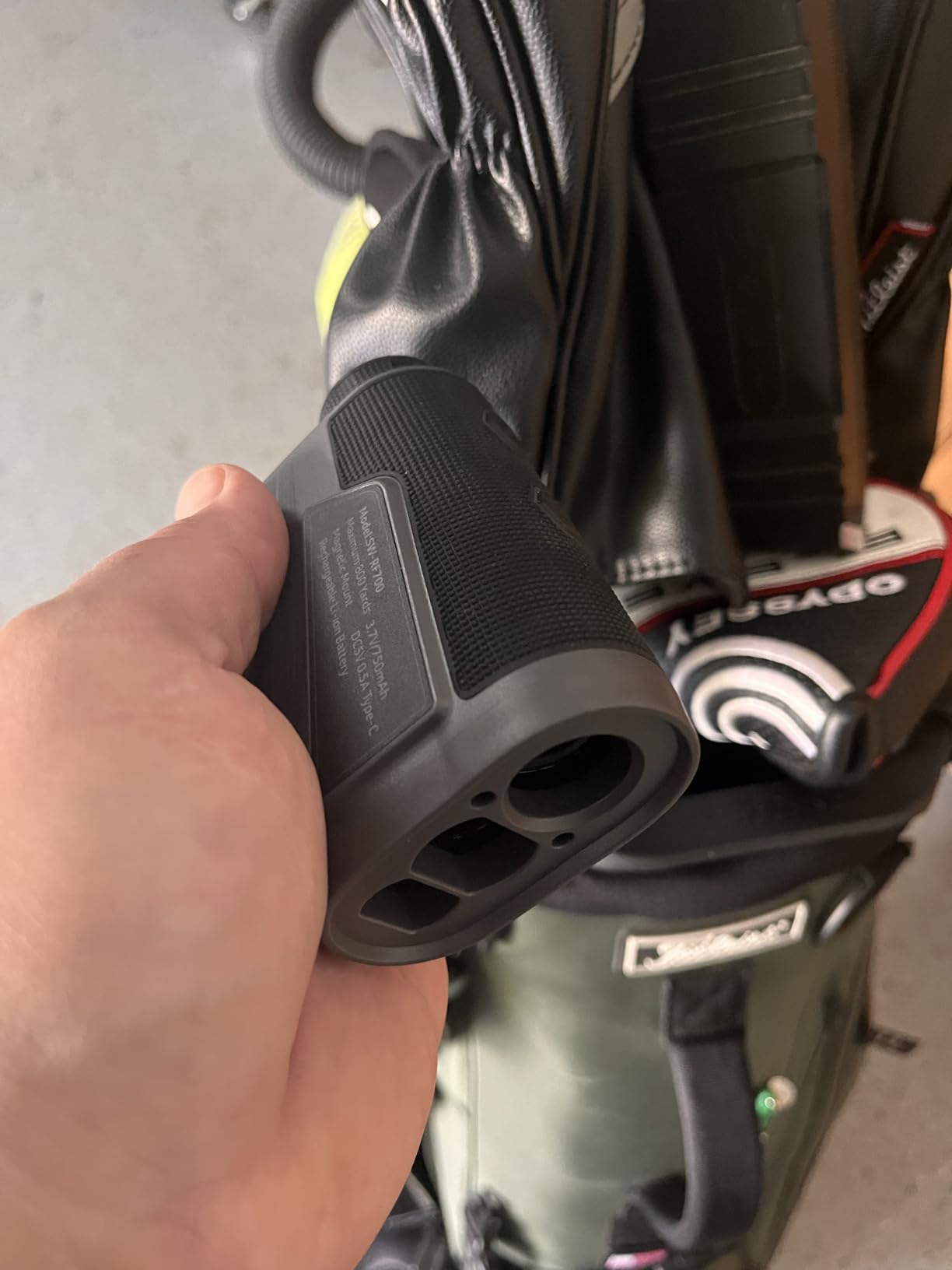
Anti-shake technology is the feature that stands out in use. It filters out the hand movement that produces inconsistent numbers on budget lasers, which is exactly the weakness we found elsewhere in this bracket. Six modes cover slope compensation, vertical and horizontal distance, angle, speed and scan, and the bright LCD reads quickly.
The 800 yard range is the limit to plan around. It covers essentially every approach shot on most courses, but it will not reach a long par three played from the tee on a course with back-to-back distance. A 1200 yard version of the same model exists if that matters to you.
What 800 yards means for your round
It covers every iron approach a golfer will hit. The gap only appears on long par threes from the tee, where the number becomes informative rather than functional. If you play a course with two long par threes, budget for the longer variant.
Anti-shake technology in real conditions
It genuinely helps, most noticeably on uphill shots where you are braced against the incline. A minority of owners report the laser reading a tree, a person or a bunker instead of the flag, which is a target acquisition issue rather than a measurement error. Re-shooting confirms it.
5. Blue Tees Series 3 Max Plus – Best for Cart Golfers
Blue Tees Golf Series 3 Max+ Golf Rangefinder with Slope Switch, 1000 Yards Range Finder, 6X Magnification, Slope Measurement, Magnetic Strip, Flag Pole Locking with Pulse Vibration
6x magnification
1000 yard range
Auto-ambient display
Rechargeable
Pros
- Auto-ambient display switches red and black with the light
- Continuous arc slope technology
- Flag lock pulse confirms the target
- Strong built-in magnetic strip
- Weatherproof case included
Cons
- Heaviest unit we carried at 16 ounces
- Only IPX4 water resistance
- Ratings sit at 4.3 with 9 percent one-star
- Heavier build for walking rounds
The Blue Tees Series 3 Max Plus is built around the Auto-ambient display, which switches the readout between red and black depending on the light. In practice that is the difference between a number you read instantly and one you squint at, and it is the feature that made this unit stand out on a bright afternoon.
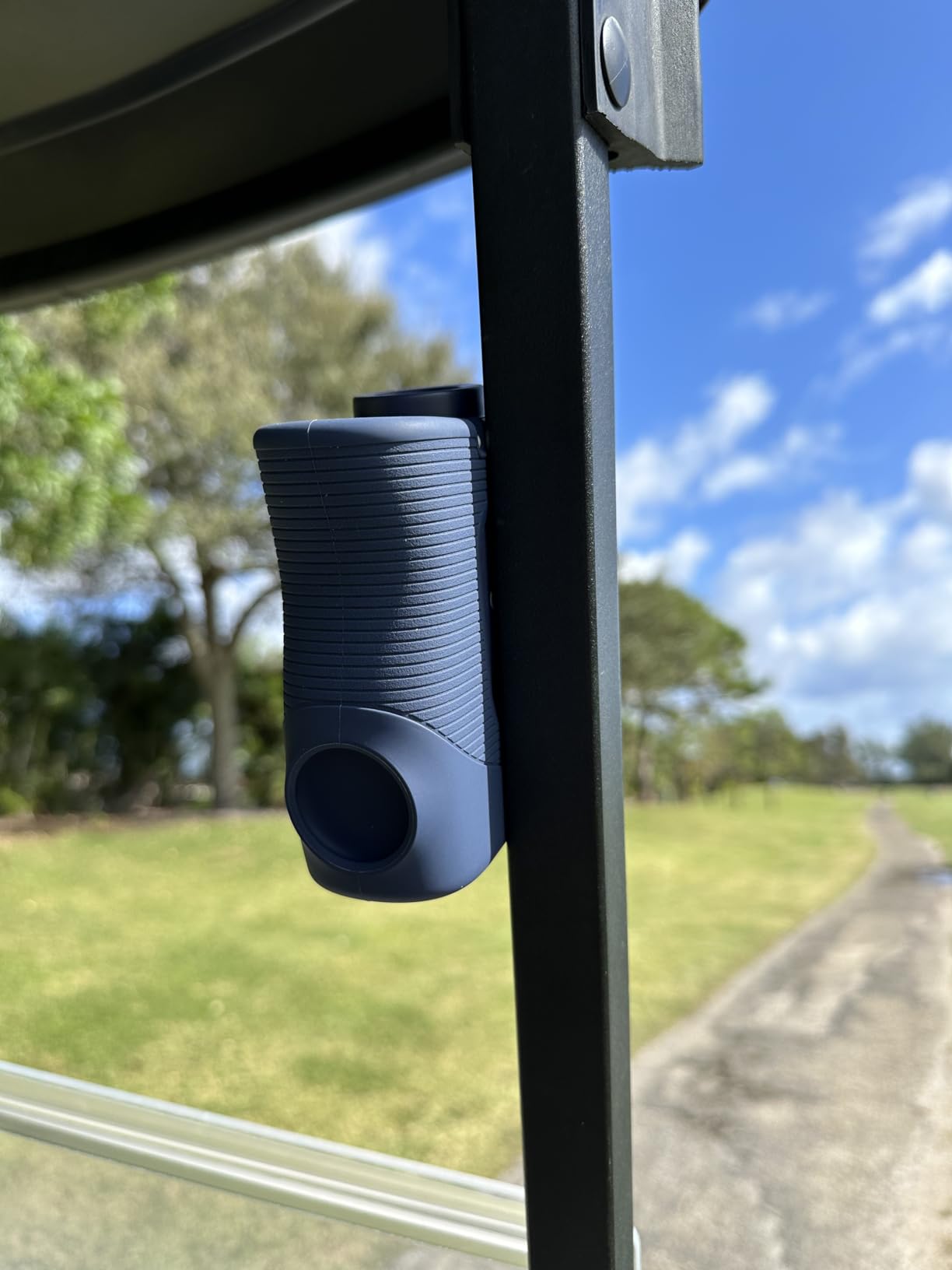
Continuous arc slope technology handles the incline change automatically rather than sampling a single angle, and the quick-toggle slope switch keeps competition play straightforward. Flag lock gives a pulse to confirm acquisition out to 1000 yards at plus or minus one yard. Owners who compared it against higher-priced units report matching distance readings.
At 16 ounces this is the heaviest device in the group alongside the Bushnell, and it is bulky in a pocket. If you walk and carry, that matters more than any feature on the list. Cart golfers, who leave it clipped to the frame, will not notice the weight at all.
Auto-ambient display in sun and shade
It works. Moving from direct sun into the shade of a tree, the numbers stayed readable without us having to find a setting. For golfers who play at midday in summer, that single feature removes more frustration than a yardage of extra range would.
Bulk and weight for walking rounds
Sixteen ounces is close to a full pound, and the body is wide. It is a cart device that happens to work while walking, rather than the reverse. Water resistance is IPX4, so it wants to come in with you when the rain starts.
6. Golf Buddy 2S Pro – Best for Ball-to-Pin Triangulation
GOLFBUDDY 2S PRO Golf Rangefinder with Slope, Buddy Mode Measures from the Cart, 1093 Yards Laser Range Finder, Pin Lock Vibration, Magnetic Mount, Water-Resistant
6x magnification
1093 yard range
0.15 second readouts
Slope switch
Pros
- Buddy Mode measures ball to pin from the cart
- 0.15 second readouts with pin lock vibration
- Built-in magnet plus included belt clip
- Weighs only 5.6 ounces
- Pouch and carabiner included
Cons
- Not rechargeable and no battery level indicator
- IPX4 is modest for a device left on the cart
- Cycles through modes at power-up
- One owner reported triangulation off by more than 10 yards
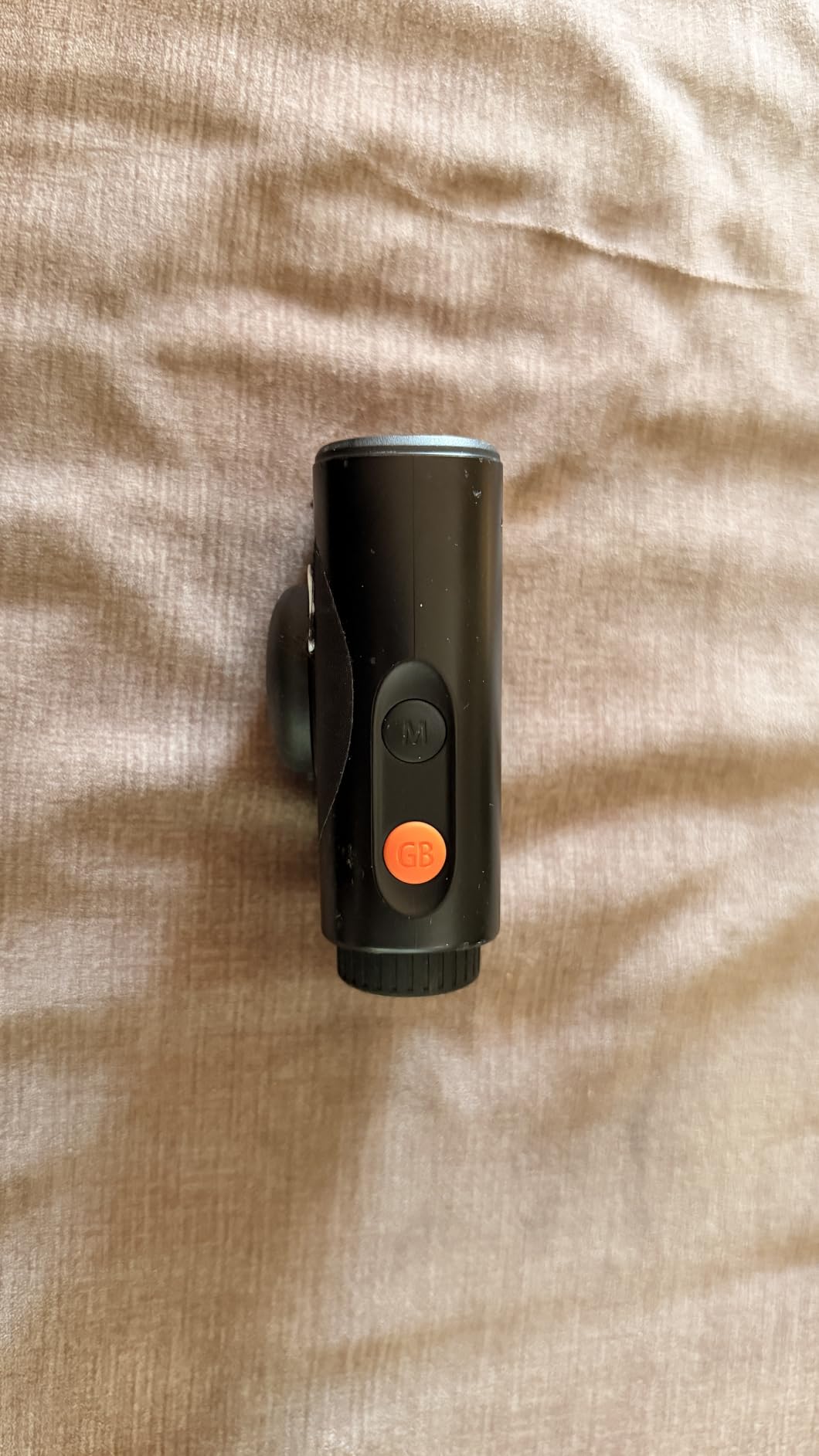
Buddy Mode is the reason to pick this one. You shoot the ball, walk the device to the pin, shoot the flag, and it gives you the ball-to-pin distance by triangulation. On set-up days or any round limited to cart paths, that removes the walk across the fairway most golfers hate.
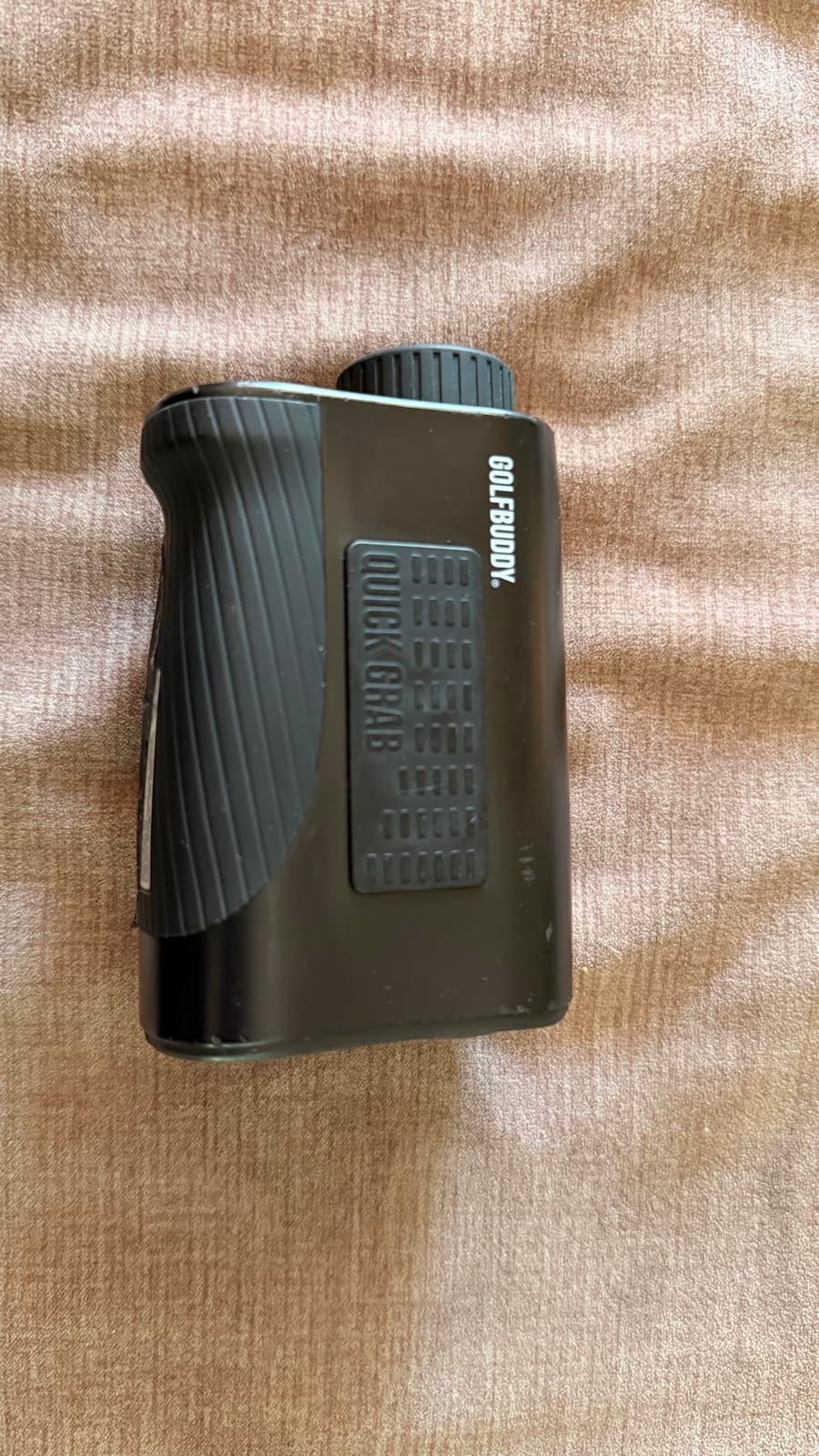
Readouts come back in 0.15 seconds at plus or minus one yard out to 1093 yards, and the owners who compared it against Bushnell, Blue Tees and Garmin devices judged the accuracy on par. At 5.6 ounces it is among the lightest here, and it works well in low light where backlit screens struggle.
The review base is the smallest of any unit in this group at 328 ratings, so treat the consensus as thinner than the rating suggests. The most requested improvements are a rechargeable cell and a battery gauge, since it currently runs on replaceable batteries with no warning before they die.
How Buddy Mode works from the cart
Shoot your ball, drive to the pin area, and shoot the flag. The unit reports the playing distance directly. One owner found triangulation occasionally out by more than 10 yards, so treat very long readings as approximate and confirm with a second shot.
Battery management without recharge
There is no internal charging and no low-battery indicator, so spare cells belong in the bag. Owners report roughly a year per set. The upside is that it never fails because of a flat rechargeable cell on a wet morning.
7. MOESAPU 1200Y – Best Multi-Purpose Rangefinder With Slope
1200 Yards Range Finder Golf with Slope, 7X Magnification Range Finder, Lightweight Portable Rechargeable Rangefinder, Flag Lock Vibration, Switch for Legal, Range Finders for Golf Accessory (White)
5 to 1200 yard range
7x magnification
USB-C rechargeable
IP54 sealed
Pros
- Flag lock with vibration out to 1200 yards
- 0.5 second readings with continuous scan
- High-clear transmission lens
- Doubles as a hunting rangefinder
- Case and Type-C cable included
Cons
- Least established brand in the lineup
- Accuracy spec of plus or minus 0.7 yards is the loosest here
- Rubberised budget build feels less refined
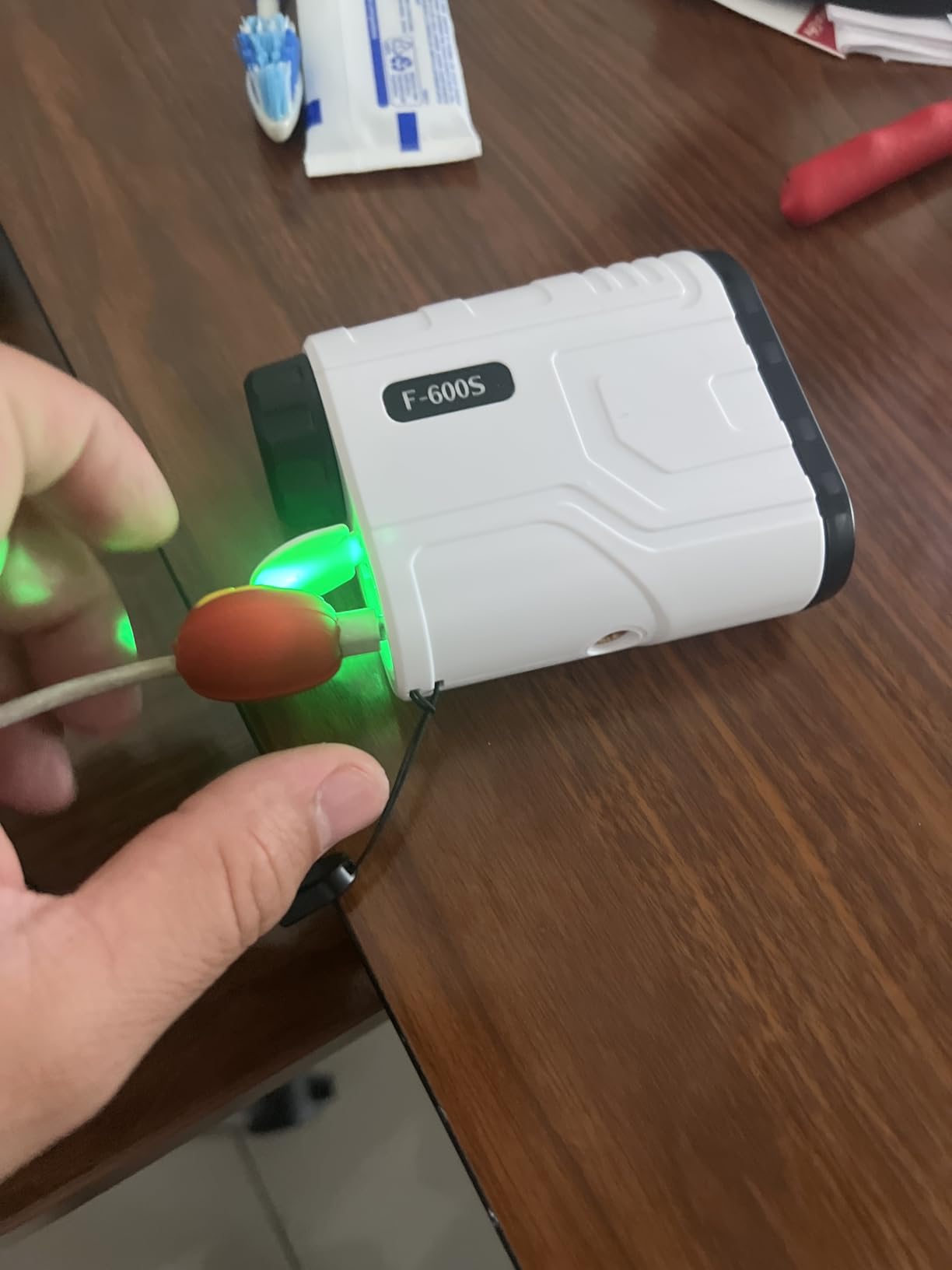
The MOESAPU covers more ground than its golf-only positioning suggests. Its mode list runs to golf, flag lock, slope compensation, distance, speed, continuous scan and a fog mode, and owners use it for hunting and general distance work alongside golf. If one device has to cover both, this is the one.
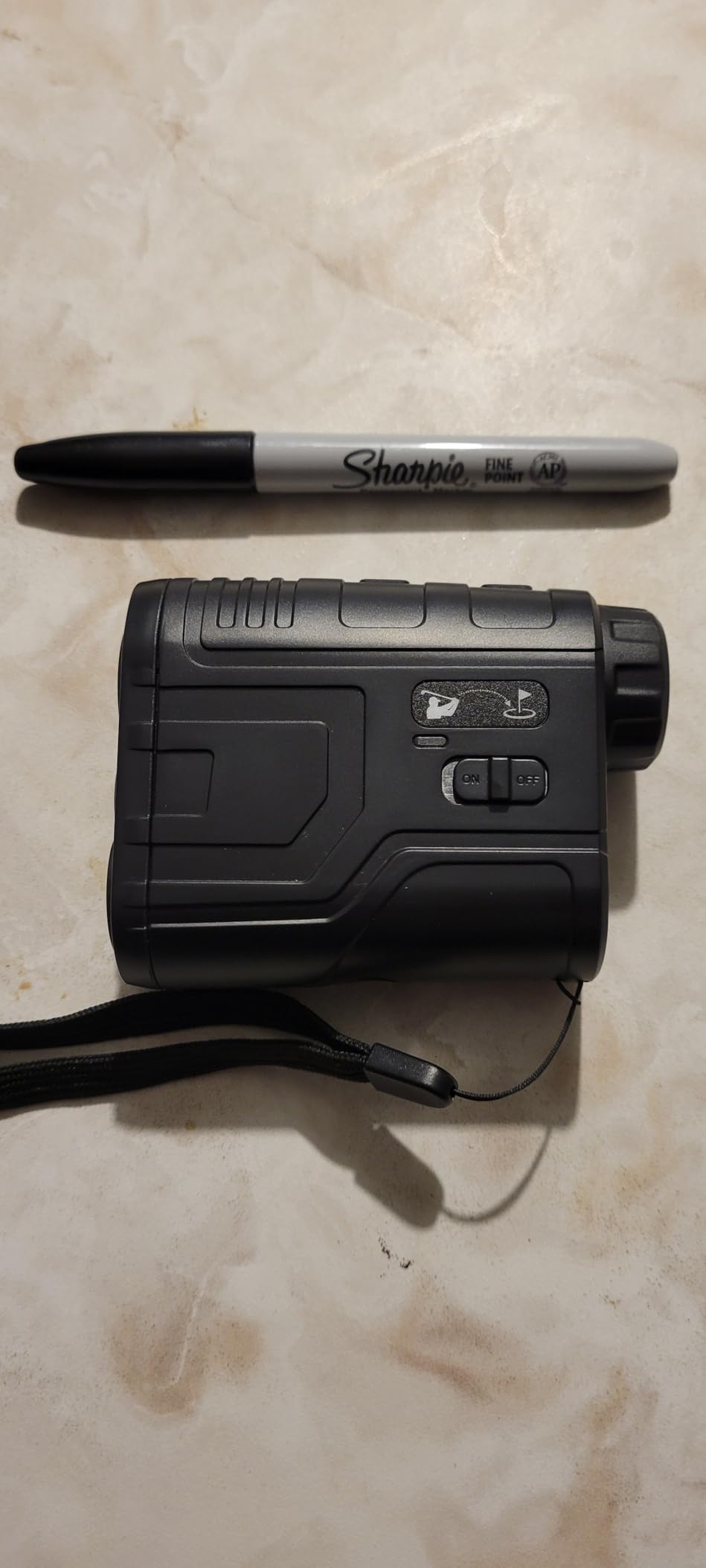
Readings come back in 0.5 seconds with plus or minus 0.7 yard accuracy out to 1200 yards, and the high-clear transmission lens keeps the view usable in flat light. USB-C charging and IP54 water resistance are both welcome at this level. A carrying case and lanyard come in the box, which is more than several rivals include.
The trade-off is brand pedigree. Callaway, Bushnell and Blue Tees have decades of support behind them, while MOESAPU does not, and seven percent of ratings are one-star. The looser accuracy spec also means it is the least precise device here on paper, which matters if you are cross-checking numbers against another rangefinder.
Mode range beyond golf
The speed, fog and continuous scan modes make it useful away from the course, and the 1200 yard ceiling covers more than golf ever asks for. If you want one rangefinder for the golf bag and the hunting bag, that flexibility is worth the trade.
Accuracy compared with rivals
At plus or minus 0.7 yards it sits behind the plus or minus 0.5 yard claims of the Acer Pro and the REDTIGER units. In practice the difference is small on a green, but it shows when you re-read the same shot and want the number to repeat exactly.
8. Bushnell Tour V6 Shift – Best Flag Lock in the Lineup
Bushnell Golf Tour V6 Shift Laser Rangefinder, Patriot Pack
6x magnification
5 to 1300 yard range
IPX6 waterproof
BITE mount
Pros
- Highest average rating in the group at 4.8 stars
- Pinseeker plus Visual Jolt and vibration
- IPX6 is the toughest sealing here
- BITE magnetic mount for one-handed access
- Patriot Pack includes case and CR2 battery
Cons
- Heaviest unit we carried at 16 ounces
- Uses a disposable CR2 battery rather than USB-C charging
- Costs the most in this lineup
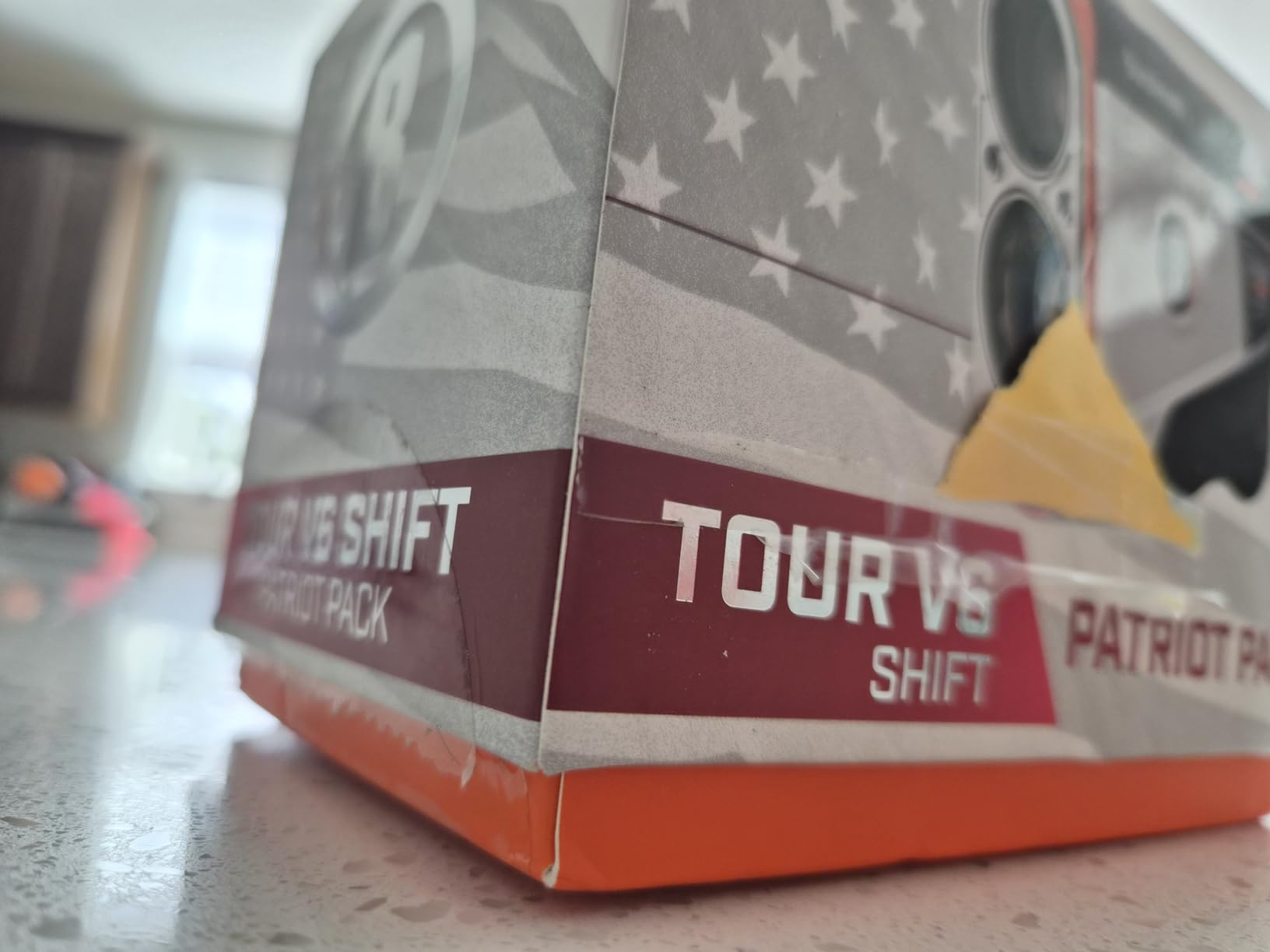
The Tour V6 Shift has the highest average rating of anything we tested at 4.8 stars, with 91 percent five-star ratings. Owners attribute that to pin lock rather than to feature count, which matches what we saw. Visual Jolt puts a red ring on the reticle and adds vibration, so you get three separate confirmations that you are on the flag.
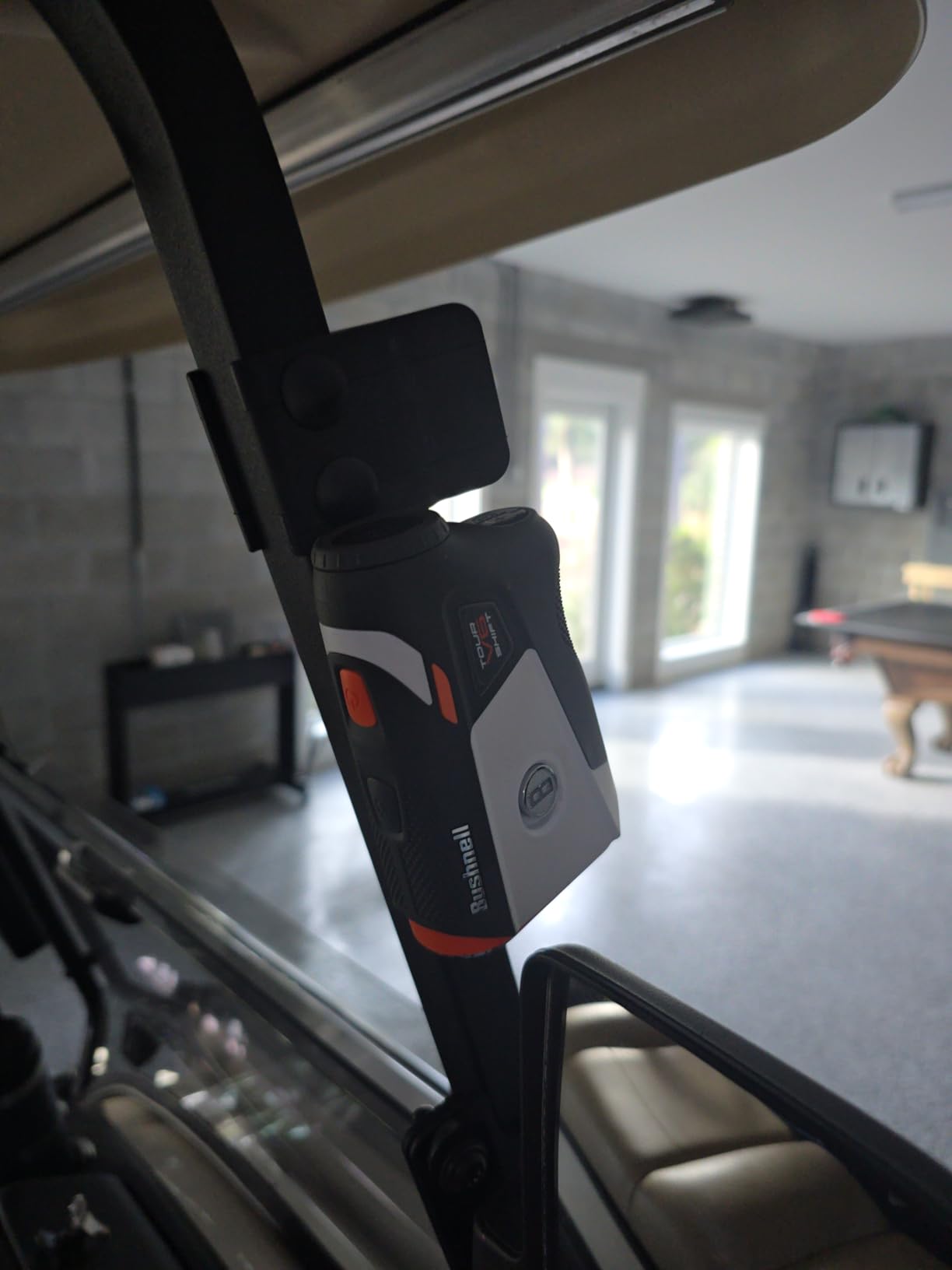
Pinseeker is the background rejection that stops it locking onto the tree line behind a green, and it is the reason this unit won its place. Range extends to 1300 yards, which covers the longest shots we could find on any course we played, and readouts were fast throughout.
IPX6 waterproofing is the best sealing in the group by a clear margin. Combined with the BITE magnetic mount for one-handed cart access, it is a device you can leave on the frame through a round without thinking about it. The Patriot Pack adds a case, cloth, guide and a veteran coin.
Pinseeker and Visual Jolt in practice
This is the one unit where the vibration almost always matched the flag rather than a background object. That reliability is what the rating reflects. If your home course has trees and buildings behind every green, that reliability alone justifies the step up.
Weather sealing and the battery trade-off
IPX6 is sealing you can leave out in a downpour, and it is a genuine step above the IPX4 units here. The trade-off is the disposable CR2 lithium cell rather than USB-C charging. It never fails from a flat internal battery, but it does need a spare in the pocket.
9. ACEGMET PFS5 – Best for Rainy Rounds and Cart-Path Play
ACEGMET PFS5 Range Finder Golf, Slope & Triangulation, 1300 Yards, Magnetic
7x magnification
1300 yard range
IP65 waterproof
Dual power
Pros
- Coach Mode triangulation from the cart path
- IP65 sealing is the highest here
- USB-C rechargeable plus a CR2 backup
- 5500 Gauss magnet with belt clip
- Red and black dual display
Cons
- Vibration fires on background objects
- One owner received a unit that would not measure
- Feet and inches mode is not clearly documented
- Case quality is merely adequate
The PFS5 solves the two problems that stop people buying a cheaper device. It is IP65 sealed, which no other budget unit here matches, and it carries dual power, a 450mAh USB-C rechargeable cell plus a CR2 backup. There is no version of a wet round that leaves you without a reading.
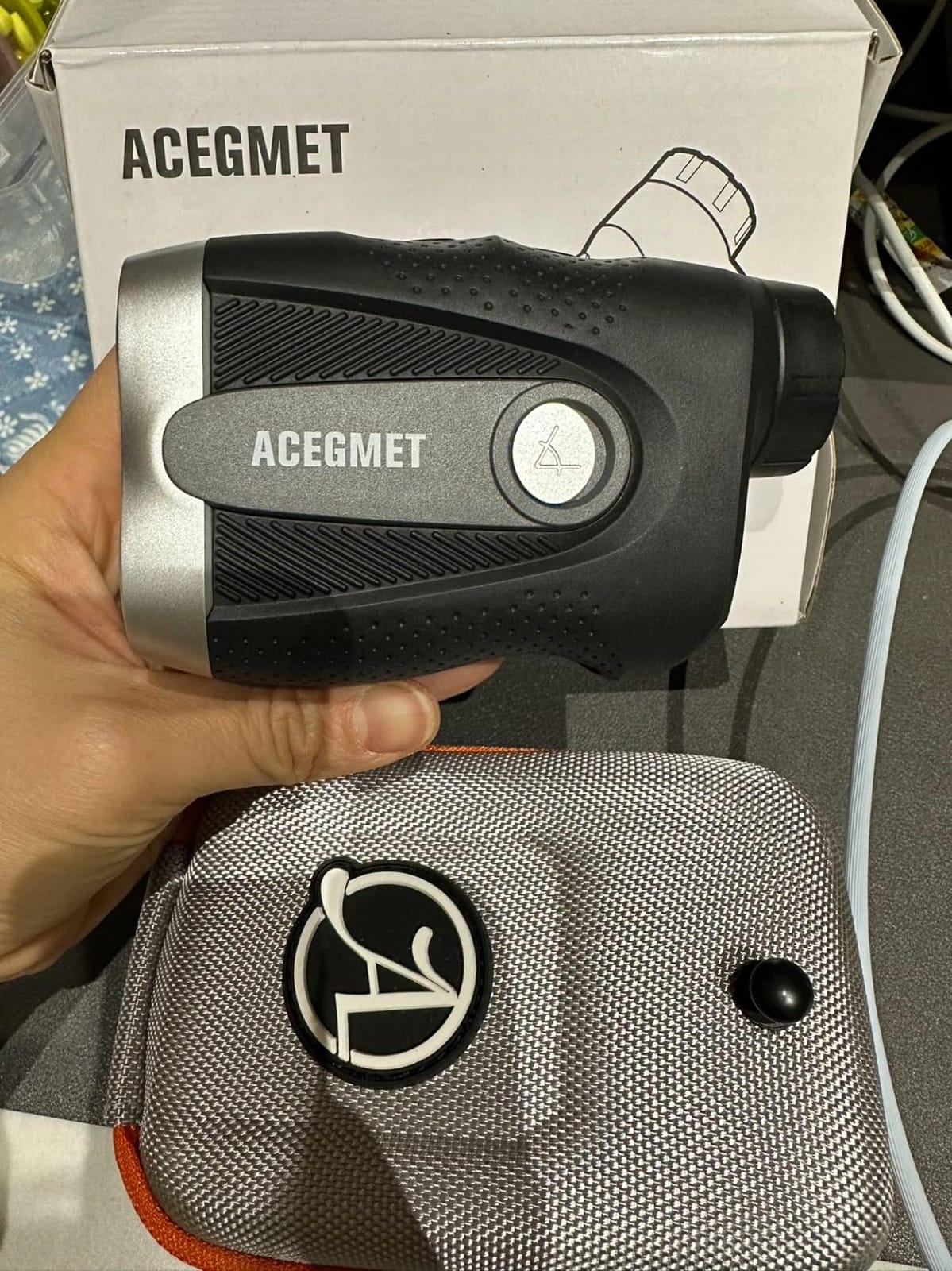
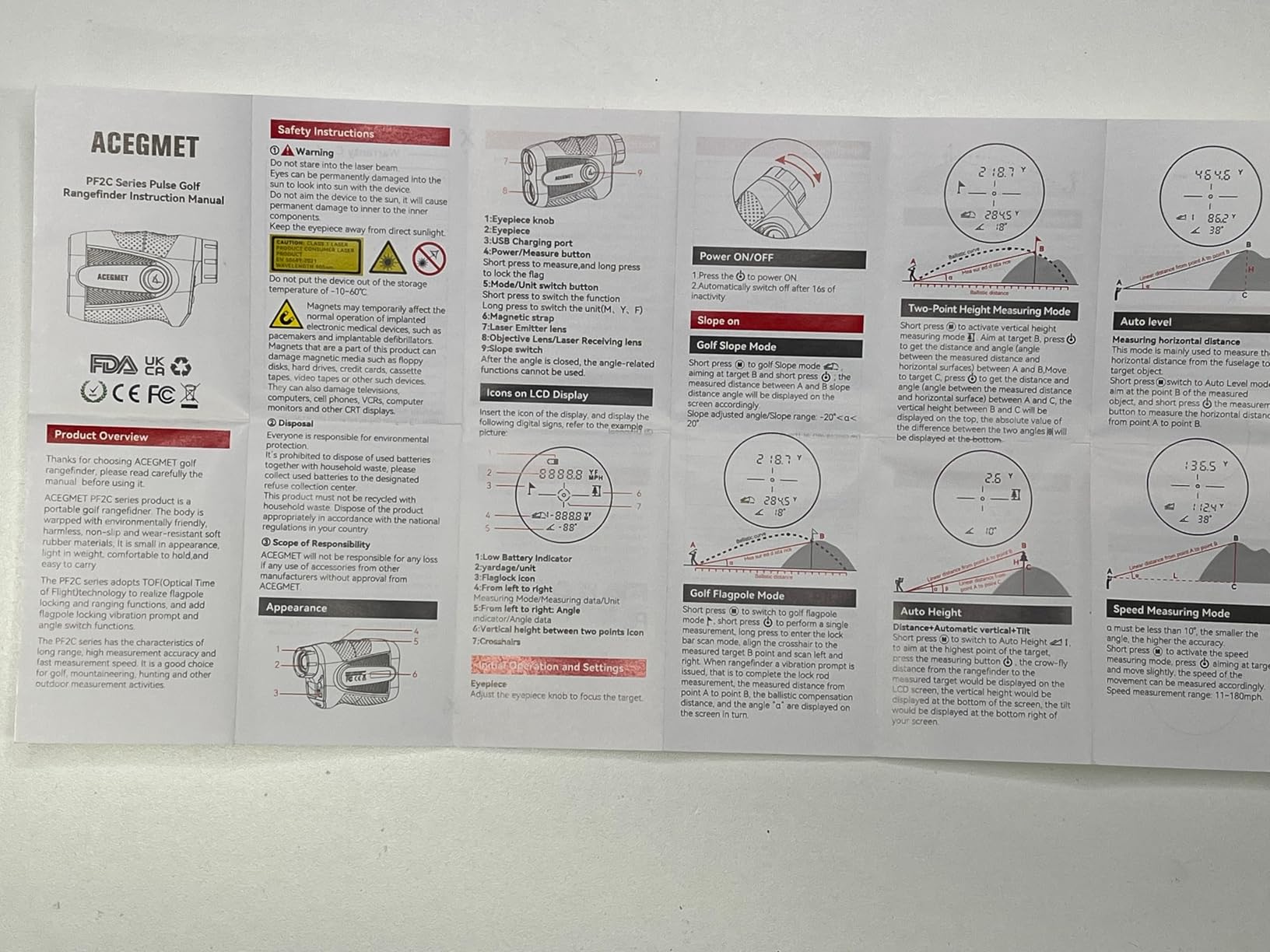
Coach Mode works the same way as the Golf Buddy triangulation, shooting the ball then the pin from the cart path and returning the playing distance. Reviewers single it out as the feature that saves them on cart-only rounds. The 7x optics with a red and black dual display stays readable as the light changes, and the 5500 Gauss magnet is the strongest we tested.
Forty thousand measurements per charge is quoted, and the flag lock reports within 450 yards in 0.1 seconds. The catch is that the vibration also fires on background objects, so treat any reading as provisional until a second shot agrees. One isolated review reports a unit that would not measure at all, which is a small sample but worth knowing.
Coach Mode and cart-path play
Shoot the ball, drive forward, shoot the flag, and the unit returns the ball-to-pin number. On courses where walking is restricted this turns a rangefinder from an approach-shot tool into a full-round tool. It will not shoot through a raised cart windshield.
Dual power and IP65 sealing
Dual power removes battery anxiety entirely, since the CR2 backup is in the box and costs pennies. IP65 handles sustained rain without the anxiety of leaving an IPX4 device on the frame. Confirm readings with a second shot rather than trusting the first vibration.
10. Acer Pro 1200Y – Best for Battery Endurance
Acer Pro Golf Rangefinder with Slope Switch, Pin Lock Vibration, 1200 Yards
7x magnification
5 to 1200 yard range
750mAh rechargeable
IP54 sealed
Pros
- 750mAh battery quoted at 20000 measurements
- 7x transflective LCD with anti-shake
- External slope switch removes slope data entirely
- Strong magnetic stripe for the cart
- One-year free repair service
Cons
- Less established brand with a thinner track record
- Only IP54 water resistance
- Some buyers want more measurement modes
If you play multiple rounds a week or take a set of clubs to a shared cart, battery capacity is the deciding factor. The Acer Pro carries a 750mAh cell quoted at up to 20000 measurements per charge, which is the largest capacity claim in this group and removes charging from your routine.
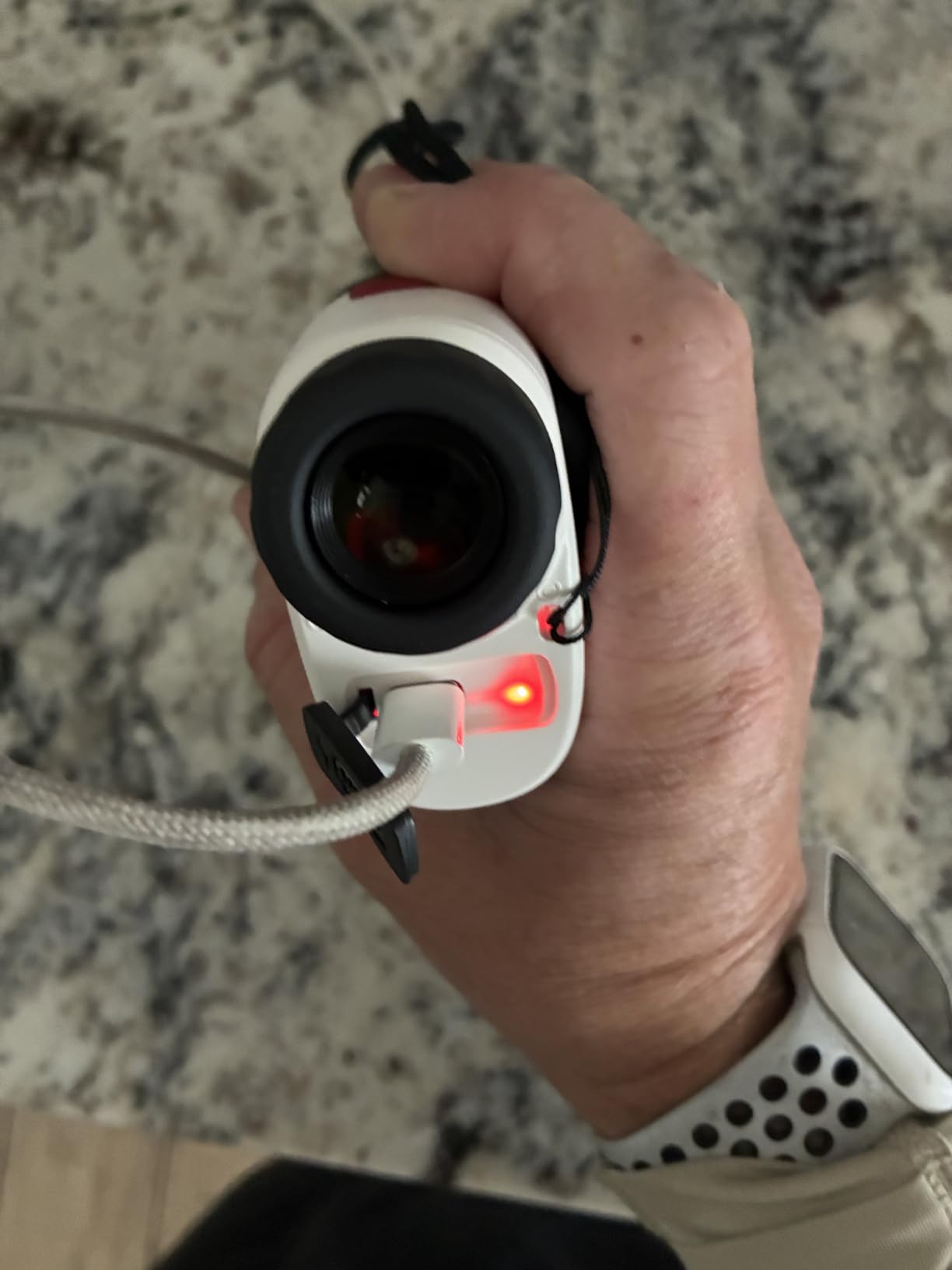
Optics are the 7x transflective LCD with anti-shake, matching the best magnification we tested, and accuracy is quoted at plus or minus 0.5 yards out to 1200 yards. The external slope switch genuinely removes slope data from the screen in off mode, which is the cleanest tournament behaviour we found among the mid-tier units.
Six modes are switched through the M button, and holding it for two seconds toggles the measurement unit. The magnetic stripe holds firmly to a cart. Water resistance is IP54, so it prefers a bag pocket over the frame in a downpour. Support includes a one-year free repair service with a stated 24-hour response.
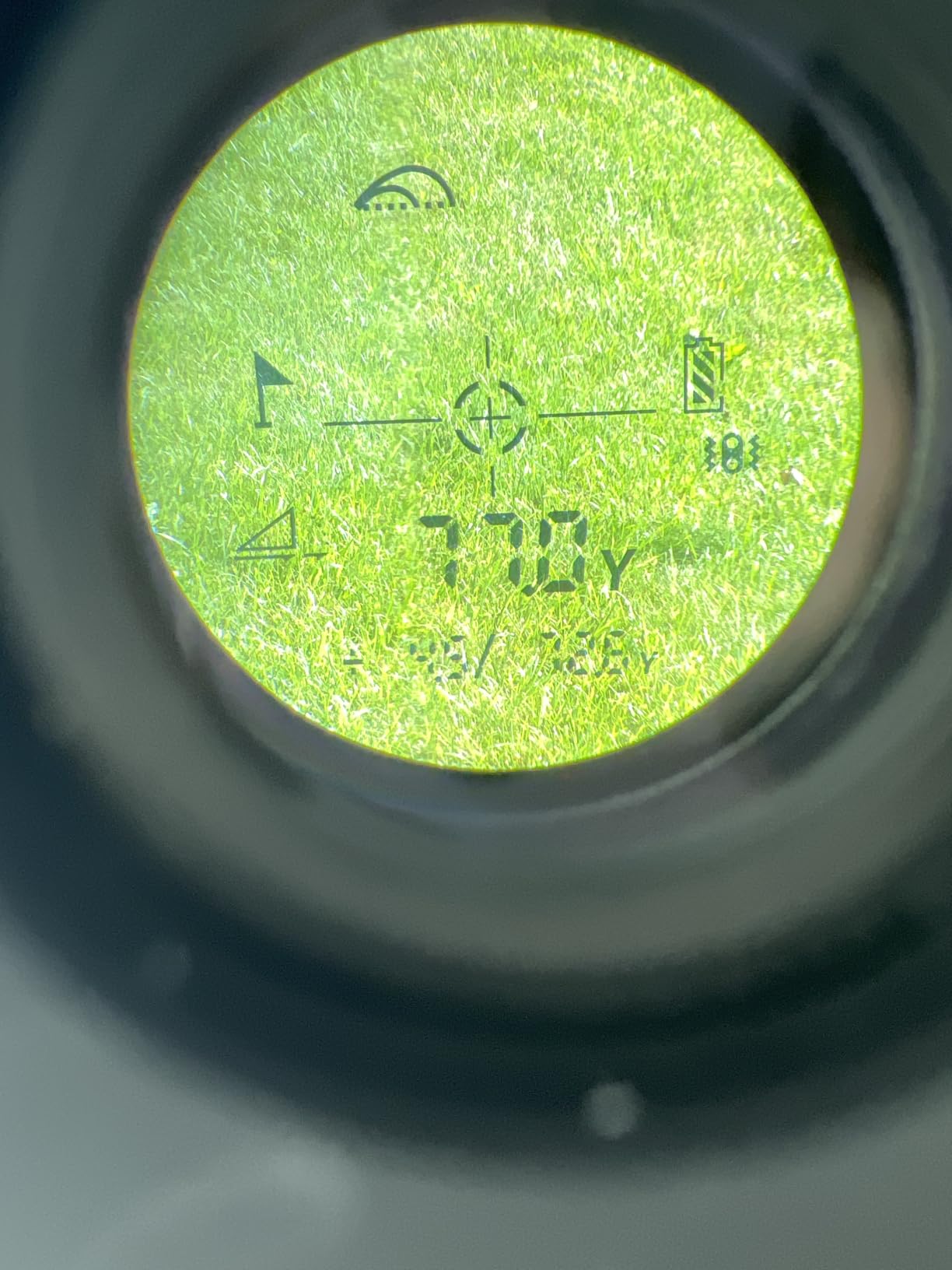
Battery endurance per charge
Twenty thousand measurements is roughly what a twice-weekly golfer would get through in a season without thinking about the charger. USB-C charging means one cable in the bag covers the rangefinder and a phone, which is the practical win over a disposable CR2.
Mode switching and slope legality
Six modes through a single button keep the layout simple, and the external switch removes slope data entirely in off mode. Six modes is fewer than premium flagships offer, but for golf alone the list is complete. The IPX-level concern is only water resistance, which we would upgrade if you leave it on the cart.
11. REDTIGER Mini 1200Y – Best for Pocket Carry
REDTIGER Mini 1200-Yard Golf Range Finder with Slope & Pin-Lock Vibration
0.29 lb body
7x magnification
5 to 1200 yard range
IP65 sealed
Pros
- Smallest body we carried at 0.29 lb
- Accuracy checked against far costlier devices
- 800mAh battery quoted at 14 hours of use
- IP65 waterproof for wet rounds
- Mode set limited to what golfers actually need
Cons
- Very small body can feel cramped with larger hands
- One owner reported it only measuring inside 100 yards
- Another reported intermittent no-reads around 150 yards
- Carries a premium price against larger models
The Mini exists to solve one problem, and it solves it well. At 0.29 pounds it is small enough to hold two-handed, which steadies the aim on a long shot and removes the pocket bulk that stops some golfers from carrying a rangefinder at all. Golfers with larger hands often find the body steadies them rather than cramping them.
Owners who cross-checked it against a Bushnell, a Callaway and a Precision Pro report near-identical yardages, which is the strongest accuracy claim in this group on an independent basis. The 800mAh battery runs up to 14 hours of continuous use, and the LCD reports 80 percent light transmission through multilayer tilted film optics.
Two reviews report intermittent measurement failures at mid-range distances, one describing a unit that would only read inside 100 yards after a few rounds. That is a small share of 218 ratings but worth weighing if you rely on it in a league. Support is repeatedly described as responsive, and the two-year warranty covers manufacturing faults.
Pocket size and hand fit
Two-handed aiming is the real benefit here. On a shot where you would normally brace the rangefinder against the cart bar, a small body is easier to hold still, and steadiness is what produces a repeatable number. Larger hands may find it cramped.
Intermittent read reports
Most owners never see it, but the minority reports are specific: no-read failures around 150 yards and a unit that stopped reaching beyond 100 yards. If you buy it, test it on a long par three early and keep the warranty details handy.
12. BIRDIEPULSE N5W1300 – Best for a Simple Two-Mode Setup
BirdiePulse Golf Rangefinder with Slope & Magnet,1300 Y Range Finder Golf
5 to 1300 yard range
6 to 6.5x magnification
Type-C rechargeable
Two modes
Pros
- Only two modes to learn
- 1300 yard range at a budget price
- Built-in magnetic strip for carts and clubs
- Type-C charging with continuous scan
- Adjustable magnification with an HD LCD
Cons
- Lowest average rating in the group at 4.0 stars
- 13 percent of ratings are one-star
- Fewer modes than most rivals
- Smallest review base at 156 ratings
The BIRDIEPULSE does something none of the other eleven do, which is to stop. There are two modes, straight-line and slope, and the M button switches between them. If you have been put off rangefinders by the mode cycling on startup, this is the one to try.
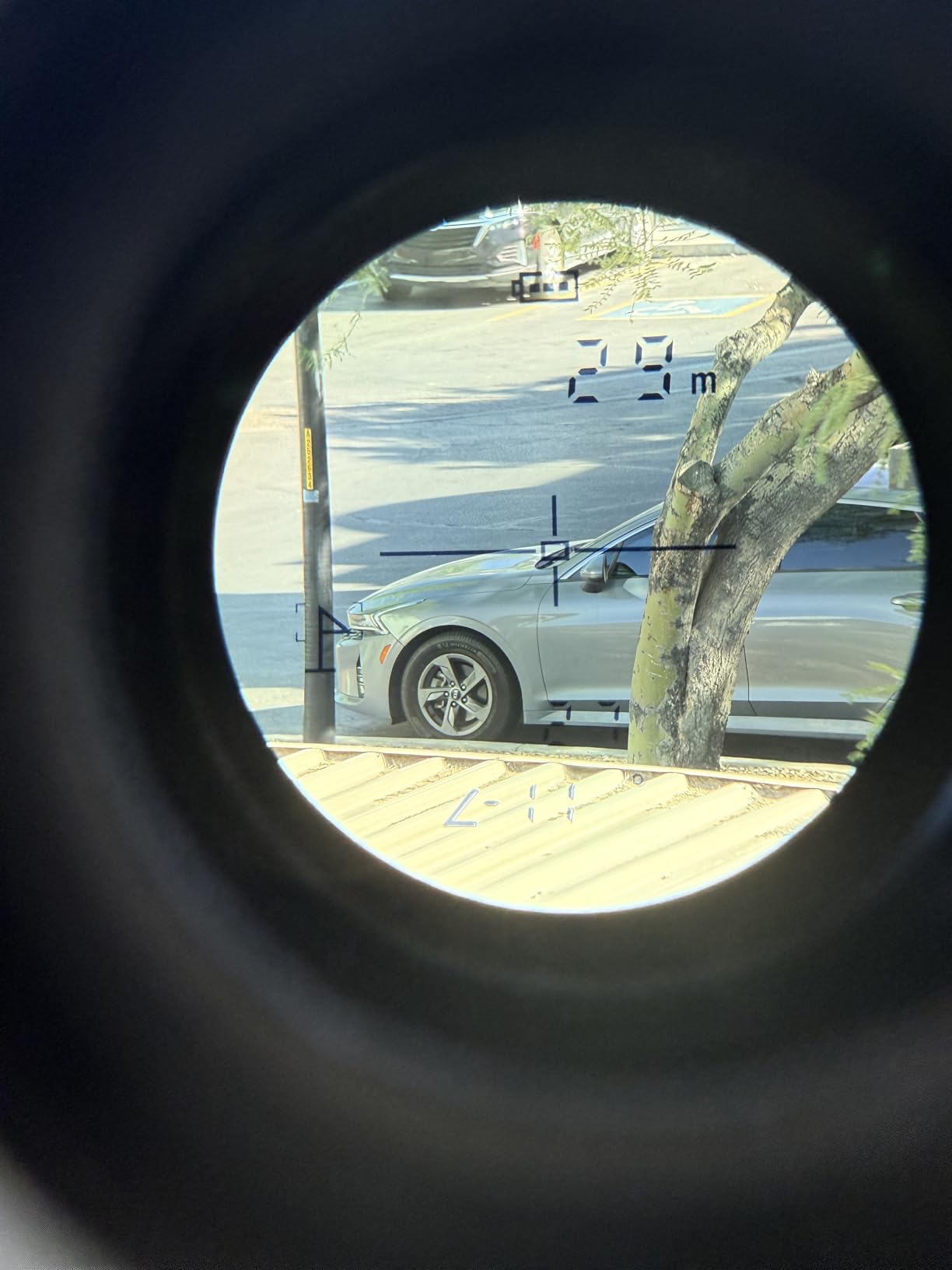
Range reaches 1300 yards at plus or minus 0.5 yard accuracy, flag lock works inside 300 yards with vibration, and the adjustable 6 to 6.5x magnification sits a step below fixed 7x optics. Units switch between yards, meters and feet, and the 120 gram body is shaped to sit in the palm and reduce hand shake.
This is also the weakest rated device in the group at 4.0 stars, with 13 percent one-star ratings, and it has the smallest review base here at 156 ratings. Feedback tends to cite reliability and adjustment complexity rather than missing features. Support is listed as 24/7 with a one-year warranty.
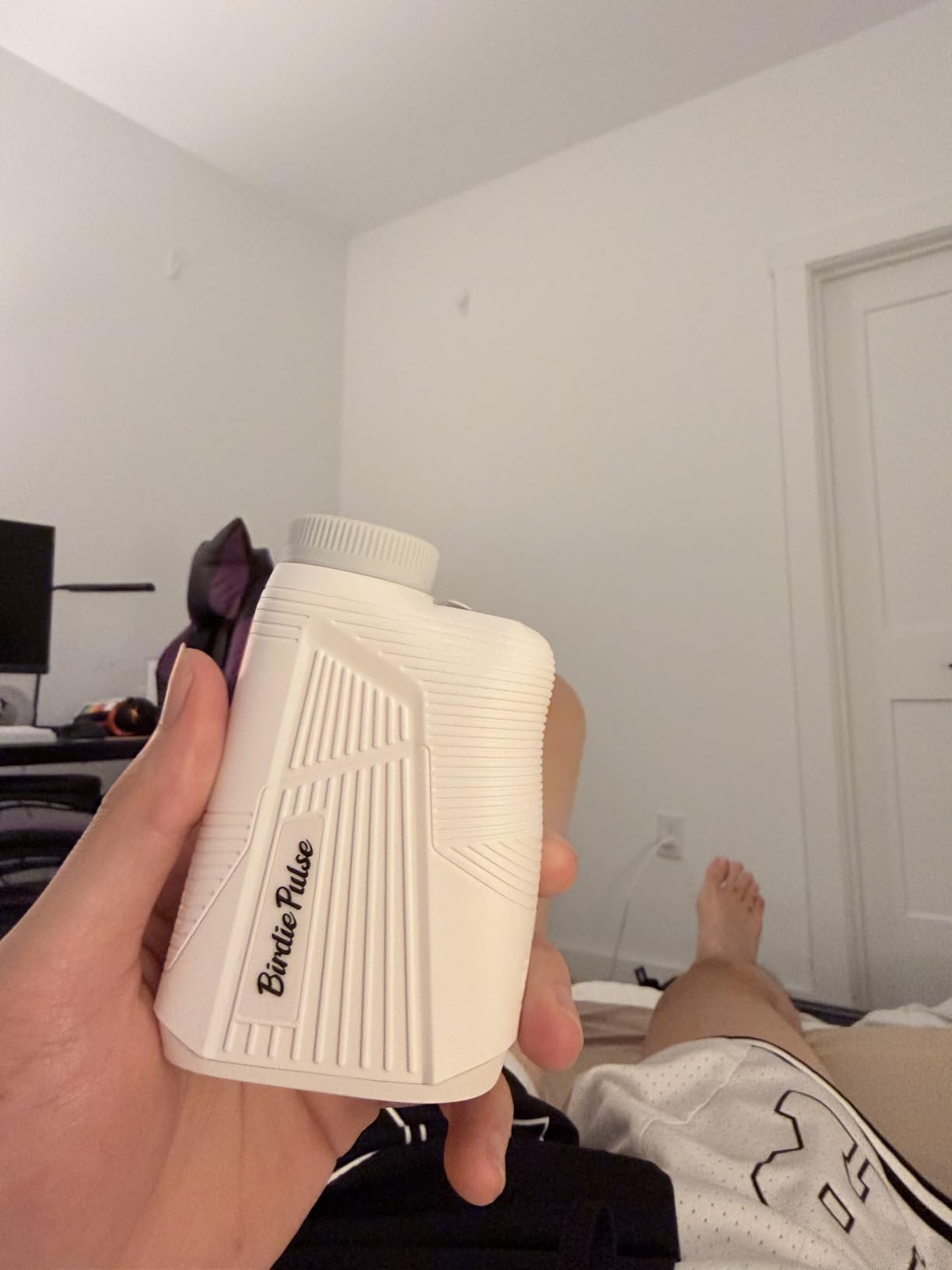
Two modes and nothing else
For a beginner or anyone who wants a rangefinder that does one job without menus, this is genuinely simpler than every other unit we tested. Continuous scan and angle measurement remain available inside those two modes, so you lose very little.
Rating distribution and brand support
At 4.0 stars with a 13 percent one-star share, this is the highest complaint rate in the lineup, and 156 ratings is a thin base to judge from. The adjustable magnification is a compromise rather than a feature. Choose it for simplicity, not for optics.
What Slope Compensation Actually Does (and Where It Breaks Down)
Here is what the device is doing. The laser measures straight-line distance to the flag. An internal inclinometer measures the angle of that line. A barimetric altimeter measures the elevation change between you and the target. The unit combines all three and prints a second number, the plays-like distance, which is what the ball will actually travel once it stops bouncing.
That second number is the entire value proposition. On an uphill shot the plays-like distance is longer than the straight-line number, and on a downhill shot it is shorter. Aim at an uphill 140 with a club that goes 140 on flat ground and you finish short every single time. That is the mistake slope removes.
Where it breaks down matters just as much. Slope compensation assumes a ball flight, a launch angle and a roll-out rate, and it assumes standard conditions. It does not know the lie, the club, the temperature or whether the green is firm. It also assumes you have practised with the adjusted numbers, because a plays-like distance is only useful if you have recalibrated your club selection around it.
The honest counter-case comes from golfers who play mostly flat courses and believe the extra money is wasted. On a flat, well-conditioned layout the plays-like number equals the straight-line number, and you get nothing extra. That is a real argument, and it is why we would not pay a premium for slope unless your home course has meaningful elevation change. It is also why a physical slope switch matters: the feature should be genuinely removable, not merely hidden in a menu.
Are Slope Rangefinders Legal in Tournament Play?
Distance-measuring devices are permitted under USGA rules, but a device that also measures elevation change is treated differently. The practical rule most golfers follow is that slope must be off in competition. The USGA rules FAQ on distance-measuring devices is the reference worth reading before an event, and the R and A applies a matching standard in the rest of the world.
This is why every unit in this list uses an external slope on and off switch rather than a menu toggle. With the switch set to off, the plays-like number and the angle readout disappear from the screen entirely, and the unit behaves like an ordinary distance meter. The Acer Pro is the clearest example, where off mode removes all slope data from the display rather than dimming it.
Read your local rule anyway. Committees vary, and some club events ban slope-capable devices outright even when the switch is off, which is a complaint several owners raise about budget units in particular. If you are unsure, ask the handicap secretary before teeing off rather than guessing.
How to Choose a Golf Rangefinder With Slope
Most buyers make this decision on the wrong feature. Seven criteria matter more, in roughly this order.
1. Flag lock reliability beats magnification. A number is worthless if it belongs to a tree behind the green. The Bushnell Tour V6 Shift wins here through Pinseeker plus Visual Jolt plus vibration, which is three separate confirmations. On budget units, expect to need two or three shots against a cluttered background.
2. Check how the slope switch works. A physical slider on the deck is faster and safer than a menu option, because a buried setting is one you forget to change before a competitive round. All twelve here have a real switch.
3. Decide between disposable and rechargeable cells. This is the biggest quiet shift in the category. Most units here now take USB-C, which means one cable in the bag covers everything. Disposable CR2 or AA cells never fail from a flat internal battery but do need spares, and forum evidence suggests batteries end more rangefinders than lasers do.
4. Buy for your display light, not your resolution. A transflective LCD such as the one in the REDTIGER and Acer Pro units uses reflected ambient light and stays readable in direct sun. A backlit screen washes out. The Blue Tees Auto-ambient system solves the same problem by switching between red and black.
5. Weigh it against your walking habit. The REVASRI at 4.3 ounces and the Golf Buddy at 5.6 ounces disappear in a pocket. The Blue Tees and Bushnell at 16 ounces are cart devices that happen to work while walking. If you walk, weight is a feature you feel every round.
6. Water protection depends on where you leave it. IPX4 units want to come in with you when rain starts. The ACEGMET at IP65 and the Bushnell at IPX6 are the ones you can leave on the cart frame. If you clip it to the frame and walk away, sealing is worth paying for.
7. Consider triangulation if you play cart-path only. Buddy Mode on the Golf Buddy and Coach Mode on the ACEGMET shoot the ball then the pin and return the ball-to-pin distance. That turns a rangefinder into a full-round tool on restricted courses.
On tiering, the budget bracket under roughly 100 dollars now delivers 7x optics, USB-C charging and a real slope switch, which was not true a few years ago. The mid tier adds triangulation modes, better sealing and longer batteries. The flagship tier buys mostly pin lock reliability and sealing, and only the strongest hand should pay that premium.
On brand, Bushnell has the most established name here and the strongest pin lock. Callaway combines a lighter body with a genuine slope switch and far more owner feedback than any rival. Nikon is a respected alternative in this category, but none of its current slope models appeared in this test set, so we are not going to rank one we did not carry. Compare the specification sheet on flag lock and sealing rather than on logo.
One last note on glare, dew and readability, which almost nobody tests before buying. Squinting at a number and wondering whether it says 6 or 8 is a real failure mode, and it is why we would handle any candidate outdoors before committing. Related reading on the site covers other equipment decisions for the same audience in our golf gear picks.
Frequently Asked Questions
What is a good golf rangefinder with slope adjustment?
For most golfers, the Callaway 300 Pro is the strongest all-rounder: it weighs 8 ounces, has an external slope switch that is tournament legal, locks the flag out to 300 yards and has a magnet built into the body. The REDTIGER 1200Y is the best value pick with 7x optics and USB-C charging, and the Acer Gadget 800Y is the cheapest route into slope that still scores 4.6 stars.
Is a rangefinder with slope worth it?
Worth it if your home course has real elevation change or you struggle to hold a consistent club through a round, because the plays-like number tells you what the ball will actually travel uphill or downhill. On a flat layout it adds nothing, which is why every unit here has a physical switch to turn it off. Buy slope only if you practise with the adjusted numbers.
Which rangefinder is better, Bushnell or Nikon?
Among the devices we tested, the Bushnell Tour V6 Shift leads on flag lock reliability with Pinseeker, Visual Jolt and vibration, and on sealing at IPX6. Nikon is a respected alternative in golf electronics, but no current Nikon slope model was in this test set, so we cannot rank one directly. Judge any Nikon unit on the same three points: flag lock speed, sealing rating and whether the slope switch is physical.
Do rangefinders work in tournaments?
Yes, but slope must be off. Distance-measuring devices are permitted under USGA rules, while a unit that also measures elevation is treated differently, so competitive rounds require the slope switch in the off position with slope and angle data off the screen. Check your local rule, because some club events ban slope-capable devices outright even when the switch is off.
How accurate are golf rangefinders?
The good units in this group are quoted at within 0.5 to 1 yard of the true distance across their rated range, and in testing the readings matched GPS devices closely. The real error is repeatability rather than accuracy: the same shot from the same spot can vary by a yard or two, particularly on budget models. Shoot twice and trust the number that repeats.
Which Golf Rangefinder With Slope Should You Buy?
Our pick for 2026 is the Callaway 300 Pro. It weighs 8 ounces, the slope switch is a physical slider, the magnet lives in the body rather than in an accessory, and it carries more owner feedback than anything else we tested. If your budget stops you there, the REDTIGER 1200Y gives you 7x optics and USB-C charging for far less, and the Acer Gadget 800Y is the cheapest way into slope that still holds a 4.6 average.
Add the Bushnell Tour V6 Shift only if your home course has trees and buildings behind every green and pin lock failures frustrate you most, and add the ACEGMET PFS5 only if you play cart-path-only rounds in the rain. Otherwise the three picks above cover almost everyone in our list of the best golf rangefinders with slope.