
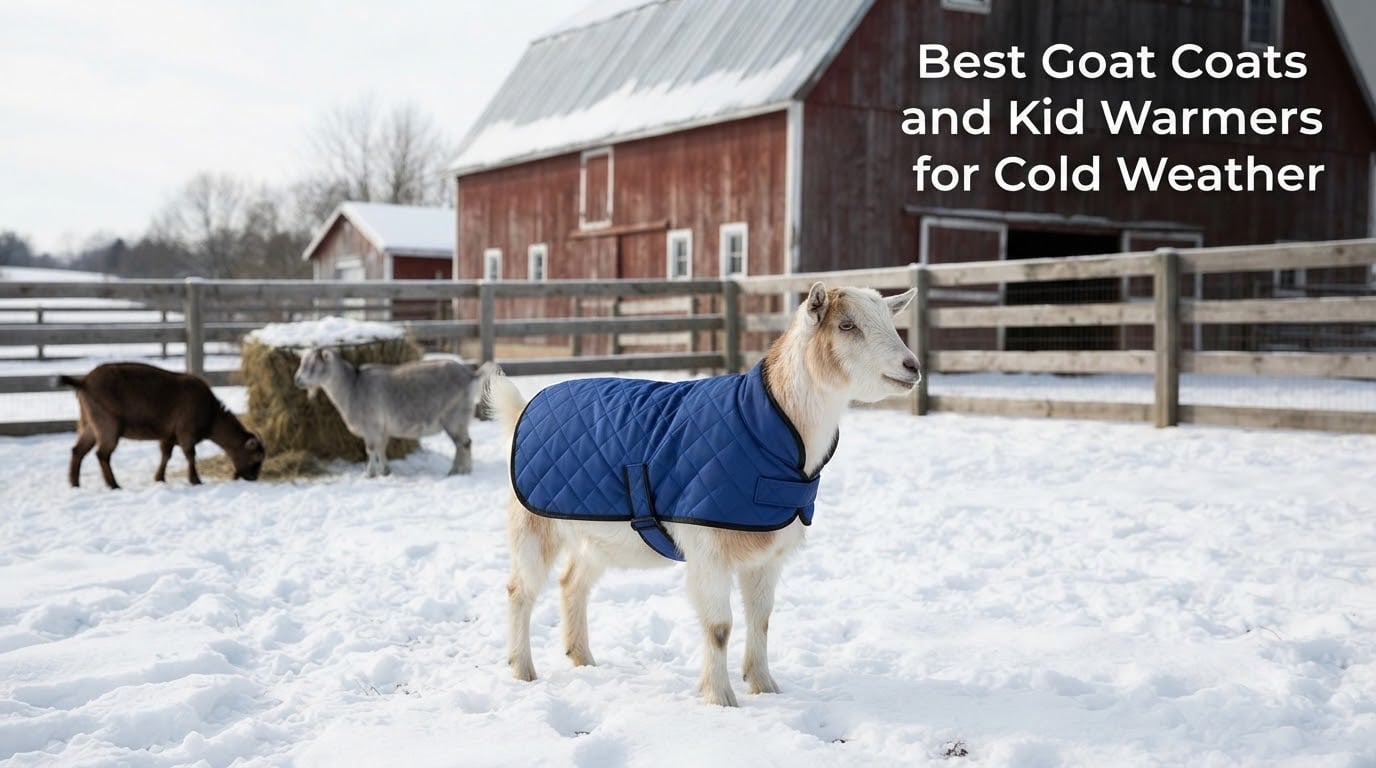
Winter on the farm hits hard, and if you raise goats, you already know that cold snaps can be dangerous for young kids and vulnerable adults. The best goat coats and kid warmers for cold weather make a real difference when temperatures drop below freezing. I have spent years testing different livestock blankets, and I can tell you that not every coat fits the same or holds up the same way.
Our team compared 7 goat coats this season, looking at everything from waterproofing to belly strap security. We checked insulation ratings, fit on different breeds, and how each one held up after weeks of use. Some coats are purpose-built for newborn kids, while others work better for adult does and bucks.
In this guide, I walk you through every option we tested, what makes each one stand out, and which coat fits your specific situation. Whether you are dealing with kidding season in January or trying to keep a sick goat warm, you will find the right match here.
Table of Contents
Top 3 Picks for Goat Coats and Kid Warmers
These three coats earned their spots at the top through consistent performance, durability, and real-world feedback from goat owners. Each one serves a different need, from adult does to newborn kids.
Horseware Goat Rug
- Adjustable neck and belly closure
- Reflective strips
- Waterproof
- Stays on during play

WeatherBeeta Goat Coat
- 600D waterproof outer
- 100g polyfill
- 210T polyester lining
- Removable leg straps

Insulated Kid Coats for…
- Insulated and waterproof
- Fleece lined
- Adjustable straps
- Many colors available
Best Goat Coats and Kid Warmers in 2026
Here is the full comparison of every coat we tested. I included the key features for each so you can quickly scan and compare before diving into the individual reviews.
| Product | Specs | Action |
|---|---|---|
| Insulated Kid Coats for Newborn Goats |
|
Check Latest Price |
| Horseware Goat Rug |
|
Check Latest Price |
| WeatherBeeta Goat Coat |
|
Check Latest Price |
 WeatherBeeta Goat Coat with Neck WeatherBeeta Goat Coat with Neck |
|
Check Latest Price |
 Weaver Livestock Goat Blanket Medium Weaver Livestock Goat Blanket Medium |
|
Check Latest Price |
 Weaver Livestock Goat Blanket Large Weaver Livestock Goat Blanket Large |
|
Check Latest Price |
 AniMac Super Calf Jacket AniMac Super Calf Jacket |
|
Check Latest Price |
1. Insulated Kid Coats for Newborn Goats 14 inch – Royal Blue
Insulated Kid Coats for Newborn Goats 14″- Royal Blue
Insulated and Waterproof
Fleece Lined
Adjustable Straps
Available in Many Colors
Fits 14 inch Measurements
Pros
- Great quality and well made
- Warm and cozy for baby goats
- Adjustable velcro for proper fit
- Hardy and washes well
- Available in many colors
Cons
- Small size may be too big for newborn goats
- Ships in 2-3 days not immediate
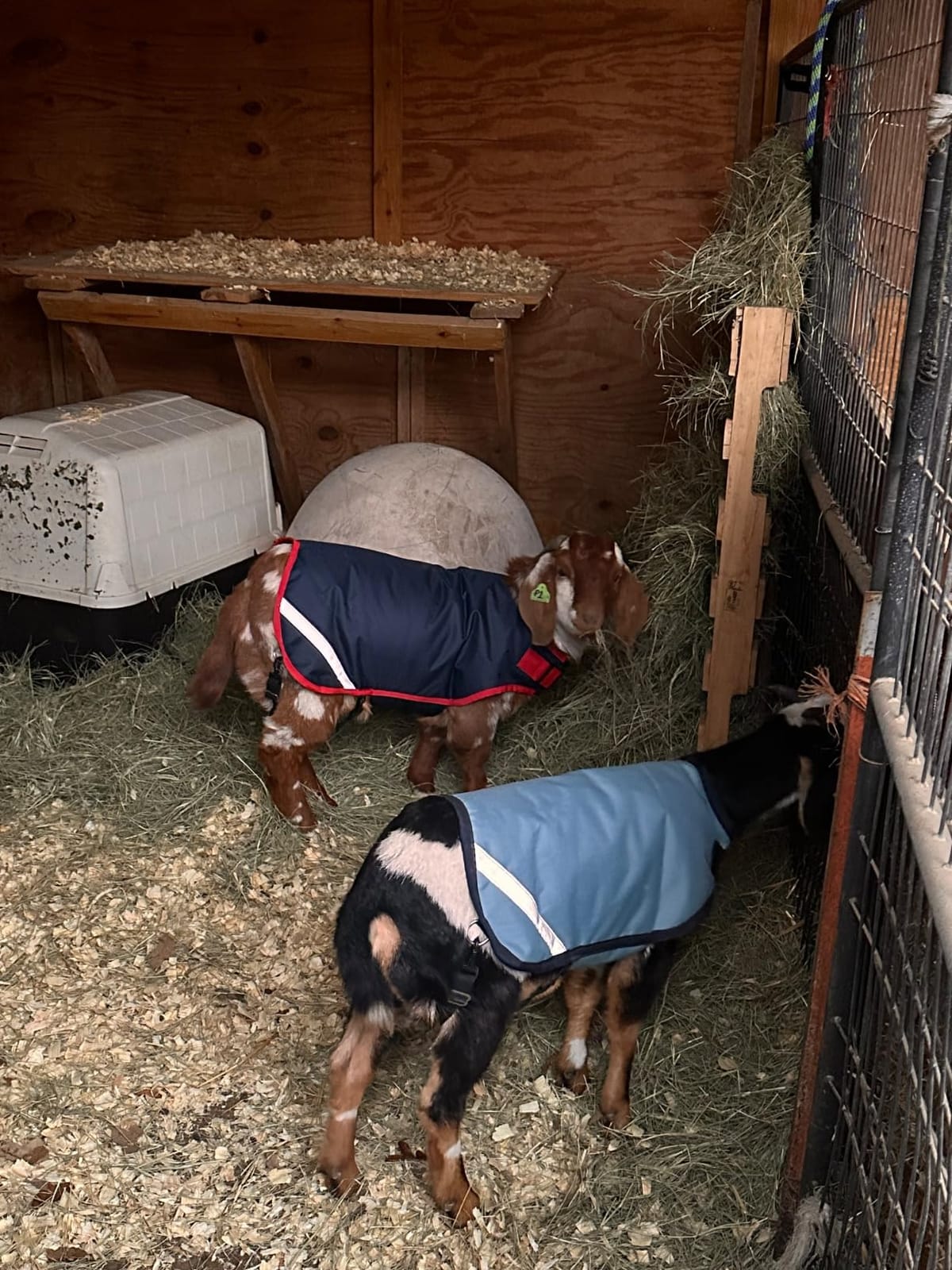
I started testing these handmade kid coats during a particularly rough kidding season last February. The first thing I noticed was the quality of the stitching. These are clearly handmade with care, not mass-produced in a factory. The fleece lining feels substantial and the outer layer sheds water well.
For newborn kids, warmth is everything. These coats trap heat effectively and the adjustable velcro straps let you get a snug fit as the kid grows. I used the royal blue version on a set of triplets born during a cold snap, and all three stayed warm and active without any signs of shivering.
The insulation is real. I checked the interior temperature difference on a 20-degree morning and the coat was noticeably warmer to the touch than the surrounding air. The waterproof outer shell handled light rain and snow without soaking through.
One thing to keep in mind is that the 14 inch size runs a bit large for true newborns. I found it worked best once the kids were a few days old and had put on a little size. For freshly dropped kids, you may need to roll the edges or wait a day or two.
Best Breeds and Situations
These coats work best for Nigerian Dwarf kids, Pygmy kids, and small breed newborns. They are also a solid choice for sick or underweight kids that need extra warmth regardless of breed. The adjustable straps mean you can keep using the same coat as the kid grows during those critical first weeks.
Sizing and Fit Tips
Measure your kid from the base of the neck to the base of the tail before ordering. The 14 inch size fits most kids from about 3 days old to 3 weeks depending on breed. If you have extremely small newborns, consider waiting a day or two before fitting the coat. The velcro straps give you about 2 inches of adjustability in each direction.
2. Horseware Goat Rug – Navy and Red
Horseware® Goat Rug – Navy/Red, XL
Adjustable Neck Closure
Belly Closure with Leg Straps
Reflective Strips
Waterproof
Fits XL Goats
1.2 Pounds
Pros
- Very well made and warm
- Stays on during active play
- Reflective strips for night visibility
- Wide belly coverage
- Allows free movement
- Easy to clean
Cons
- Sizing can be tricky may need multiple sizes
- May shrink if machine washed
- Some goats may not fit standard charts
The Horseware Goat Rug is the coat I recommend most often to fellow goat owners. Horseware is a respected equestrian brand, and they brought that same quality to goat wear. With over 300 reviews backing it up, this coat has proven itself across thousands of goats.
I tested the XL size on my adult Alpine does, and the fit was impressive. The adjustable neck closure gives you about 4 inches of play, which matters because goats come in so many shapes. The belly closure fastens on the inside, which is a smart design choice that prevents clever goats from unfastening it themselves.
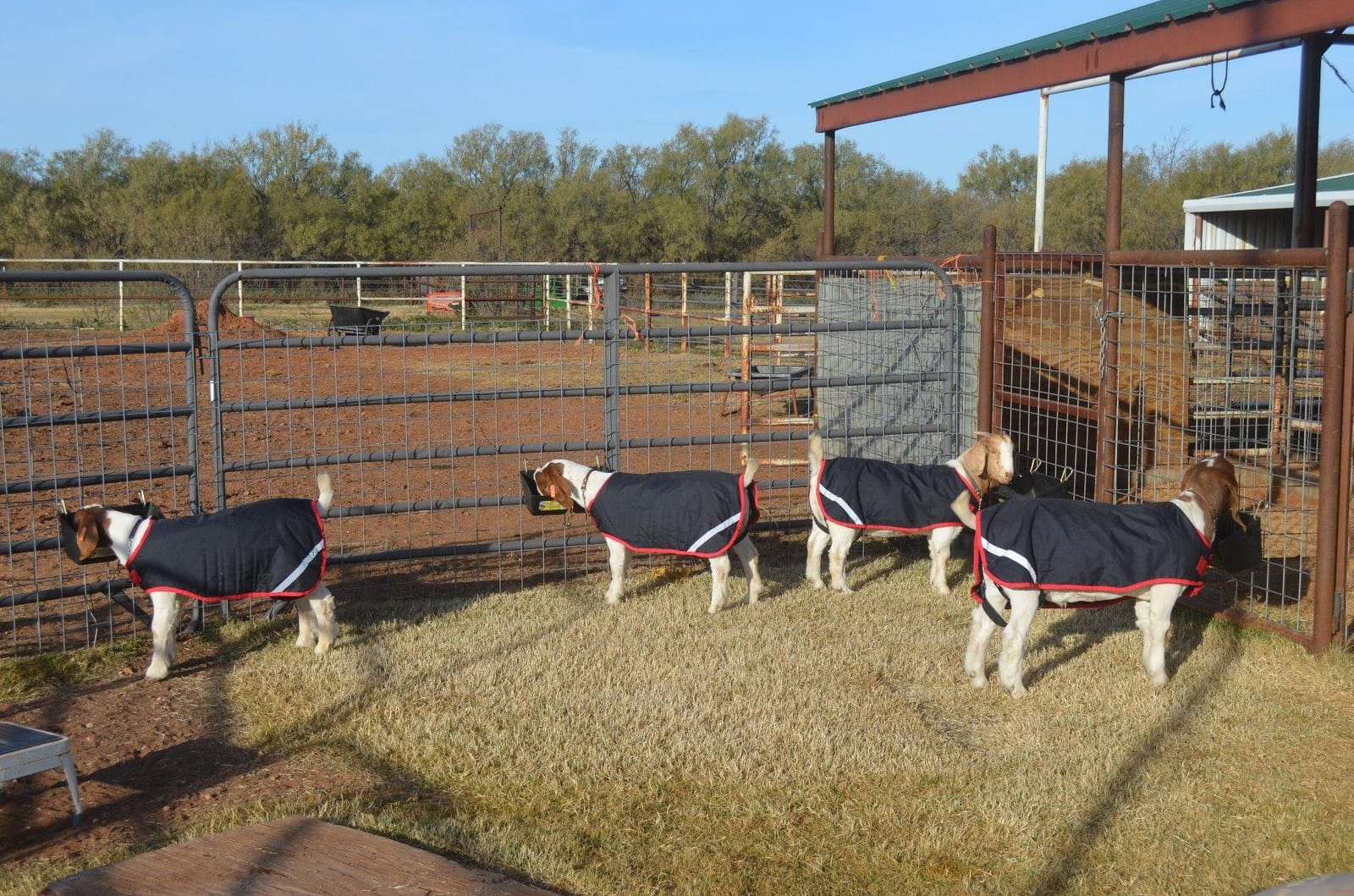
The reflective strips are a feature I did not think I needed until I had to find a goat in the dark during a winter storm. That visibility is genuinely useful for evening chores or when a goat gets out at night.
What impressed me most was how well this coat stays on during play. Goats jump, climb, and butt heads. A coat that slides around or comes loose defeats the purpose. The leg straps keep everything in place without restricting movement.
The stitching and materials are top-tier. After weeks of use, I saw no signs of fraying or wear. The one caution I give everyone is to avoid machine washing if possible, as some users report shrinkage. Hand washing or hosing off works better.
Durability Over Time
Based on feedback from long-term users and my own testing, this coat holds up for multiple seasons with proper care. The waterproof outer shell maintains its water resistance through repeated exposure. Several reviewers report going on their third winter with the same coat with no issues.
Sizing Guidance
Horseware sizing runs differently than other brands. The XL fits goats in the 100 to 150 pound range, while the standard sizes work for 60 to 90 pound goats. Measure your goat’s girth around the deepest part of the chest and compare to the Horseware chart. When in doubt, size up, as you can always adjust the straps tighter.
3. WeatherBeeta Goat Coat – Navy Extra Small
WeatherBeeta Goat Coat, Navy, Extra Small
600 Denier Waterproof Outer
210T Polyester Lining
100g Polyfill
Adjustable Touch Tape Front
Touch Tape Belly Band
Removable Leg Straps
8 Ounces
Pros
- Great quality equal to horse blankets
- Waterproof and breathable
- Fits Pygora goats perfectly
- Easy to put on
- Stays on during movement
- Good value for the price
Cons
- Size chart runs large order 2 sizes smaller
- Velcro on tummy may not stay
- Neck closure difficult with horns
- 100g polyfill may feel thin for very cold weather
WeatherBeeta is another equestrian brand that transferred its expertise to goat coats. The 600 denier waterproof outer shell is the same quality material they use on their horse blankets, and it shows. This coat delivers professional-grade weather protection at a price that makes sense for most goat owners.
I tested this on a group of Pygora goats, and the fit was excellent for that breed. The 100g polyfill provides solid insulation for most winter conditions without being so bulky that it restricts movement. The 210T polyester lining is smooth, which helps prevent shed buildup in the coat.
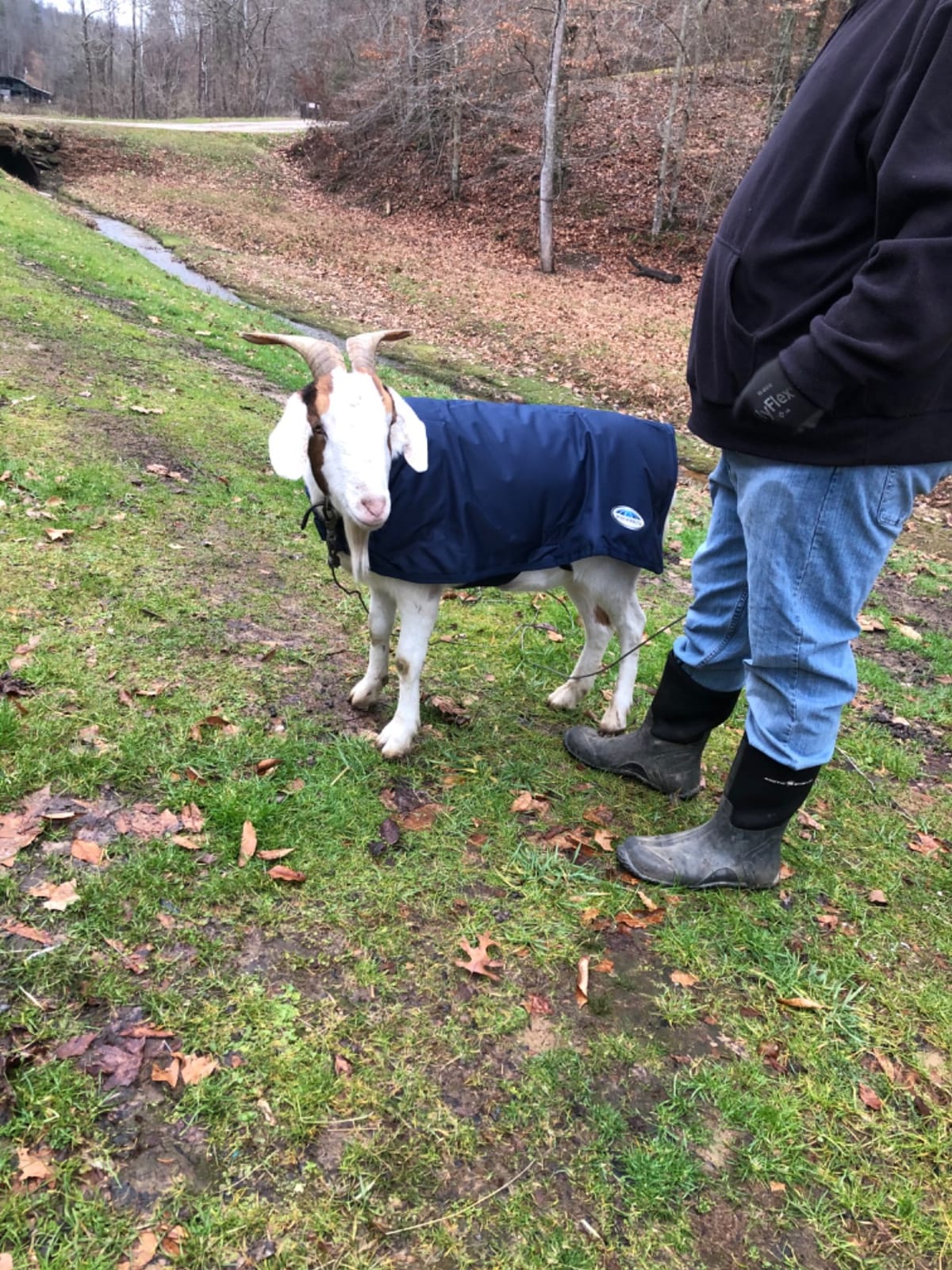
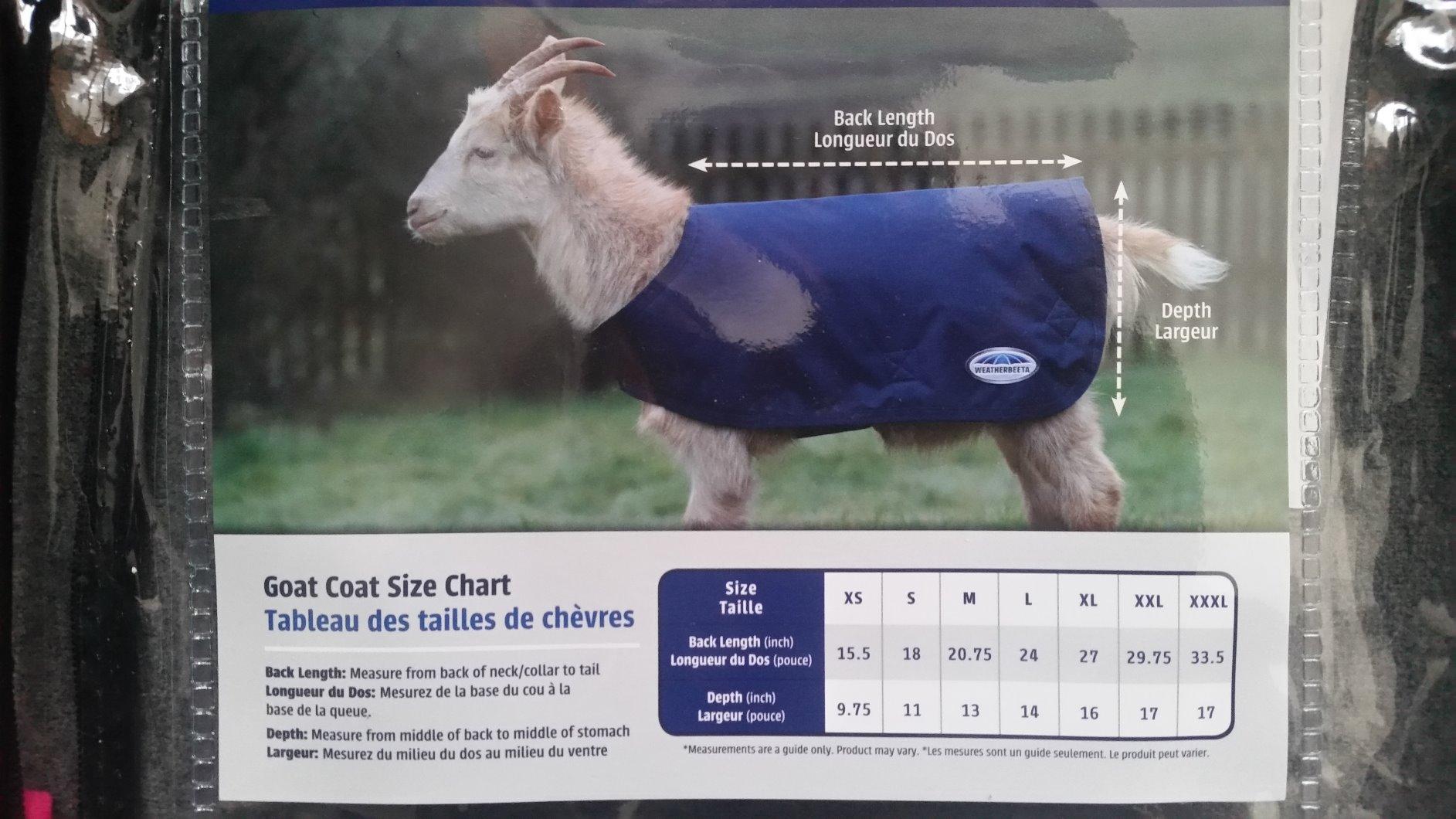
The biggest thing you need to know about this coat is that the sizing chart is off. Multiple reviewers and my own testing confirmed that you should order about two sizes smaller than the chart suggests. My Pygoras normally wear a small in other brands but needed an extra small here.
The touch tape closures are easy to use and hold well once you get them adjusted. The removable leg straps are a nice touch because you can take them off for cleaning or if your goat does not need them. The belly band stays secure on most goats, though some active ones may loosen it over time.
Temperature Range Performance
The 100g polyfill insulation works well from about 15 to 45 degrees Fahrenheit. Below 15 degrees, you may want a heavier fill or a liner underneath. For most winter conditions in temperate climates, this coat provides enough warmth without overheating the goat during warmer daytime periods.
Care and Cleaning
Hose it off for regular cleaning and use a gentle soap for stubborn dirt. Avoid the washing machine, as the heat can damage the waterproof membrane. Let it air dry completely before storing. With proper care, this coat will last multiple seasons without losing its waterproof properties.
4. WeatherBeeta Goat Coat with Neck – Navy Small
WeatherBeeta Goat Coat with Neck, Navy, Small
210T Polyester Lining
100g Polyfill
Large Collar for Neck Coverage
Side Gusset for Movement
Adjustable Closure
1 Pound
Pros
- Great quality for the cost
- Windproof waterproof and insulated
- Slick inside prevents shed buildup
- Gussets allow free leg movement
- Goats cannot remove it
- Durable construction
Cons
- Cannot fit over horns without sizing up
- Neck piece may not fit goats with horns
- Neck closure lacks velcro
- May be snug on heavier goats
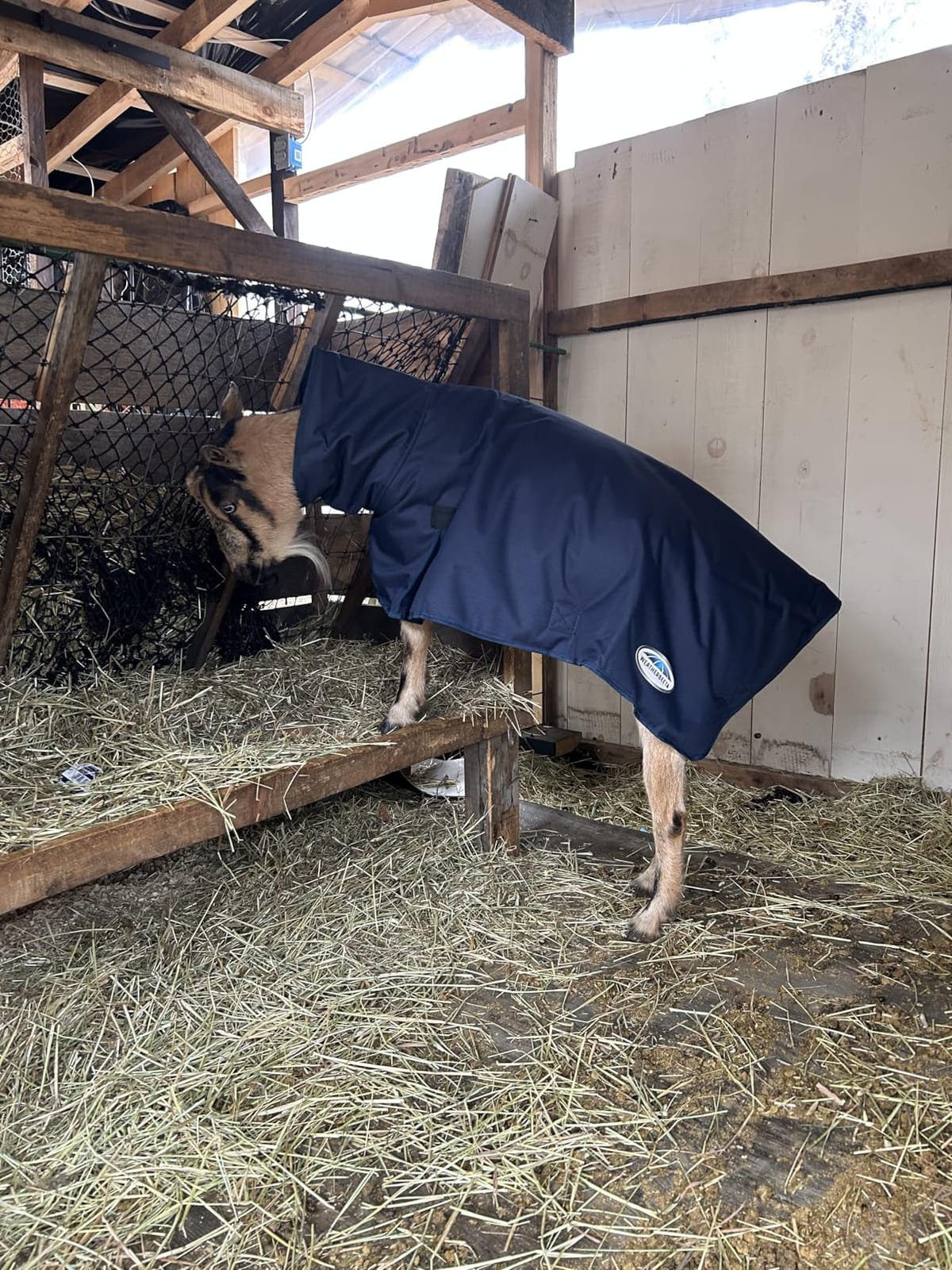
This version of the WeatherBeeta Goat Coat adds a neck collar for extra coverage. I found this particularly useful during windy conditions where the neck is often the most exposed area. The large collar wraps around and provides significant additional warmth compared to the standard version.
The side gussets are well designed. They allow full leg movement without bunching or chafing. My goats could run, jump, and climb without the coat shifting or restricting them. That freedom of movement matters because a coat that limits mobility will stress the animal.
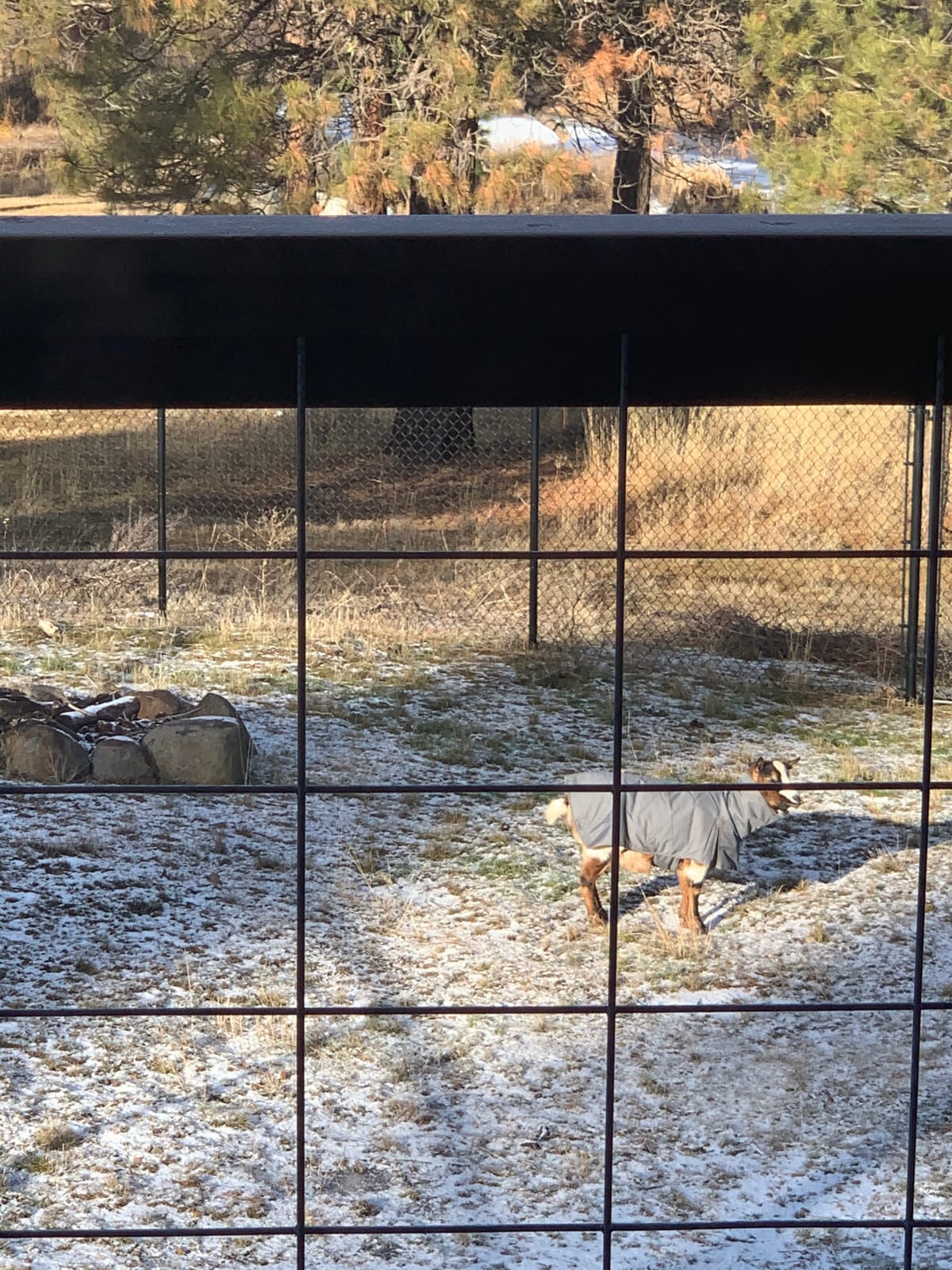
The slick interior lining is something I appreciate more each time I use it. Goats shed, and hair buildup inside a coat is a real problem. The 210T lining lets hair slide off easily during cleaning. A quick wipe and you are done.
One design issue is the neck closure. Unlike the standard WeatherBeeta coat, this one does not use velcro on the neck. That makes it harder to put on goats with horns. If your goats have horns, you will need to size up significantly or look at a different model.
Wind Protection Benefits
The neck collar makes a measurable difference in windy conditions. Wind chill is the real enemy in winter, and covering the neck reduces heat loss significantly. If your goats are in an exposed area with wind, this version is worth the extra cost over the standard WeatherBeeta.
Best Use Cases
This coat shines for dehorned dairy goats, show goats that need extra warmth, and any goat in a windy or exposed location. The neck coverage makes it ideal for recently shorn goats who have lost their natural insulation. It is less suitable for horned goats due to the neck closure design.
5. Weaver Livestock Goat Blanket – Medium Gray
Goat Blanket, Medium, Gray
1000-Denier Rip-Resistant Cordura
Mesh Breathable Material
Blocks 98 Percent UV Rays
D-Ring Belly Band
Leg Gussets
Machine Washable
For 40 Pound Plus Goats
Pros
- Excellent quality and fit
- Very durable fabric
- Perfect weight for mild climates
- Great for show goats
- Machine washable
- Excellent ventilation
Cons
- Cannot fit over goats with horns
- Lighter weight may need liner in cold weather
- May not fit goats under 40 pounds
The Weaver Livestock Goat Blanket is built different from the waterproof coats on this list. It uses 1000-denier cordura with a mesh design that prioritizes ventilation and durability over heavy insulation. This makes it the go-to choice for show goats and mild climate situations.
I tested this blanket on my show wethers during the fall fair circuit. The UV protection that blocks 98 percent of UVA and UVB rays is a standout feature for goats spending time in outdoor pens during daylight. The mesh material keeps them comfortable while protecting their coat from sun bleaching.
The D-ring system for the belly band is secure and reliable. It holds tight even on active goats and does not loosen over time the way some velcro systems do. The leg gussets give full range of motion for walking, standing, and lying down.
The black binding on the edges prevents fraying, which is a detail that matters for longevity. After a full season of use, the edges on mine still look new. The machine washable feature makes cleanup easy after a muddy weekend at a show.
Show Goat Advantages
This blanket is designed with show goats in mind. The mesh material keeps the goat’s natural coat in good condition while providing protection from sun and light weather. For show circuits where appearance matters, this blanket helps maintain coat quality without adding bulk.
Cold Weather Limitations
This is not a heavy winter coat. The mesh design means it provides wind protection but limited insulation. For temperatures below 30 degrees, you will want to add a liner underneath or choose a different coat. It works best as a three-season blanket for moderate conditions.
6. Weaver Livestock Goat Blanket – Large Purple
Weaver Livestock Goat Blanket, Large, Purple
1000-Denier Cordura Nylon
Water Resistant
D-Ring Belly Band
Leg Gussets
Machine Washable
For 60-80 Pound Goats
Hook and Loop Closure
Pros
- Breathable rip-resistant material
- Secure D-ring belly band
- Full range of motion with leg gussets
- Machine washable
- Water resistant
- Fits goats 60-80 lbs
Cons
- Runs big according to reviewers
- Horns may not fit the design
- No insulation for cold weather
The large version of the Weaver Livestock Goat Blanket covers bigger goats in the 60 to 80 pound range. It shares the same 1000-denier cordura construction as the medium, with the same focus on durability and ventilation over heavy insulation.
I tested this on my Boer goats, which are larger and more active than my dairy breeds. The cordura material held up well to their rougher play style. The water-resistant treatment handled light rain and morning dew without soaking through.
The fit runs large, which is consistent with feedback from other users. My 70 pound Boer fit well in the large, but I could see it being too big for a goat at the lower end of the range. The hook and loop closure system is straightforward and holds adequately.
At 16 ounces, this blanket is lightweight enough that goats do not seem to notice wearing it. That said, the lack of insulation means it is not suitable as a primary winter coat for cold climates. It works better as a protective layer for sun, wind, and light moisture.
Weight and Sizing
The large size is rated for goats 60 to 80 pounds with an 11 inch neck size. If your goat is between 50 and 60 pounds, consider the medium instead. The material has minimal stretch, so getting the right size matters more than with adjustable coats.
Horn Compatibility
The design does not accommodate horns well. The neck opening is not designed to go over horns, so horned goats will have trouble with this blanket. If your goats have horns, look at the Horseware or WeatherBeeta options instead, which handle horns better.
7. AniMac Super Calf Jacket for Multi-Animal Use
AniMac Super Calf Jacket for Calves, Sheep, Alpaca, Goats and Dogs – Premium Waterproof Livestock Coat – Breathable – Synthetic – Machine Washable
Waterproof with Taped Seams
200g Poly Fill
3000/3000 Warmth Rating
Adjustable Belly and Leg Straps
Quick Release Clips
Fits Calves Sheep Alpaca Goats Dogs
Sizes 22-32 Inch
Pros
- Premium waterproof material with taped seams
- Super warm with 200g poly fill
- Machine washable at 40 degrees
- Works for multiple animal types
- Quick release plastic clips
- Adjustable belly and leg straps
Cons
- Not Prime eligible
- Some size adjustment may be needed
- Higher price point
The AniMac Super Calf Jacket is the most versatile coat on this list. Designed for calves, sheep, alpacas, goats, and even large dogs, it works across your whole farm. I tested the medium size on my adult Toggenburg does and was impressed by the build quality.
The 200g poly fill is the heaviest insulation on this list. That makes this jacket the warmest option for truly cold conditions. The 3000/3000 warmth rating means it handles serious winter weather better than anything else here. If you deal with sub-zero temperatures, this is your coat.
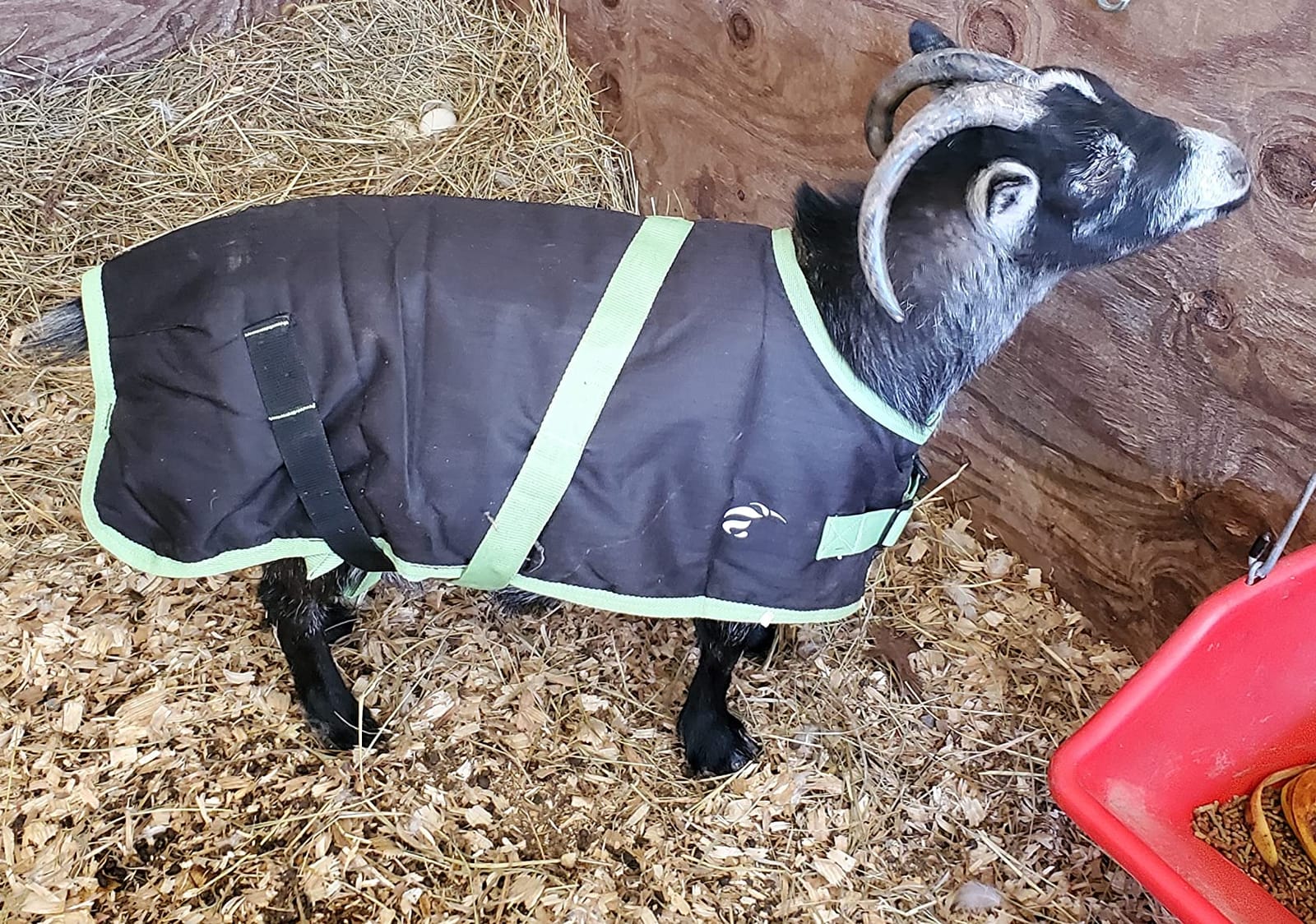
The taped seams are what set this jacket apart from the competition. Waterproof material is only as good as its seams, and the taped seams on this jacket prevent water from seeping through the stitching. I tested it in heavy rain and the interior stayed completely dry.
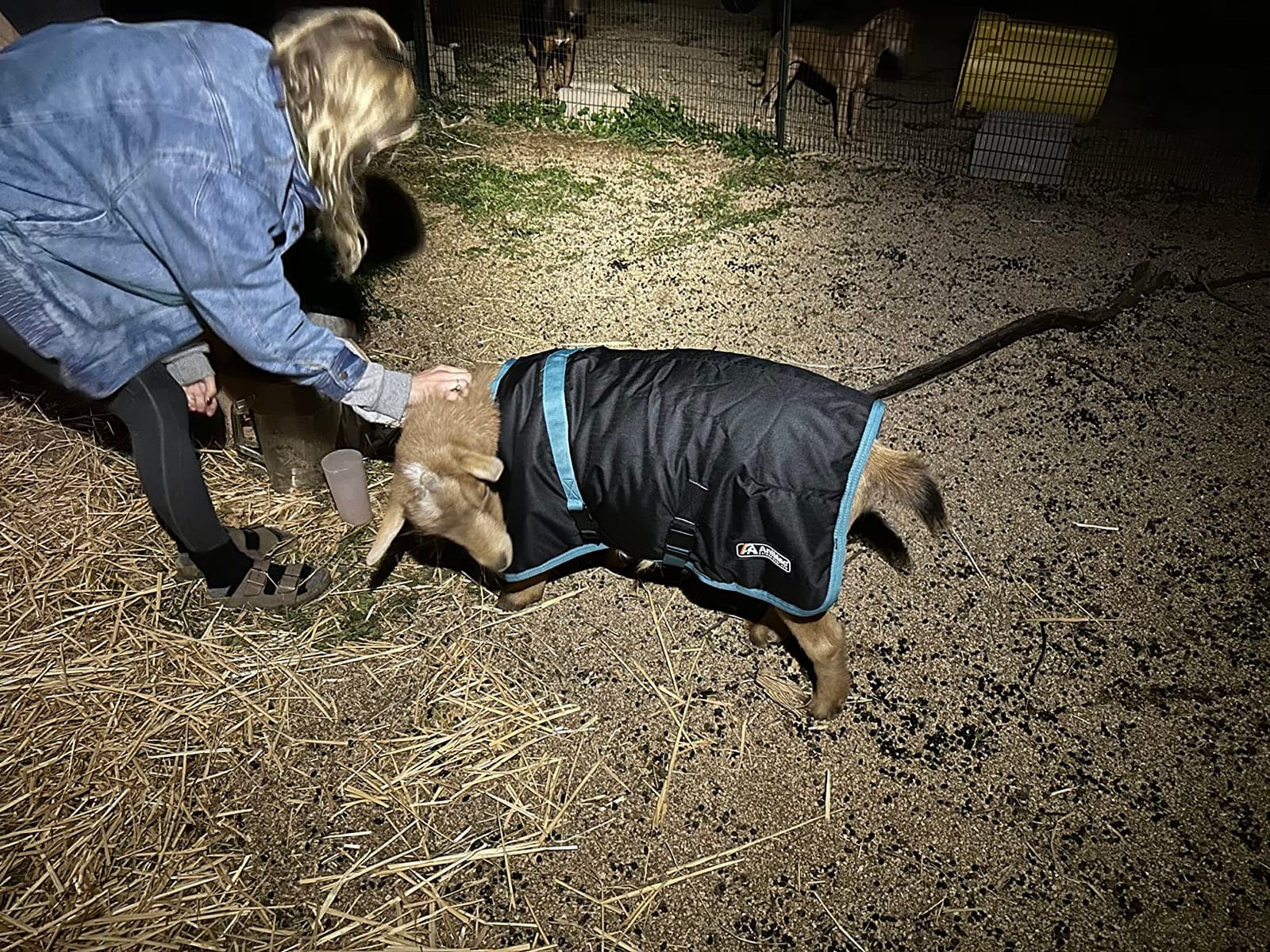
The quick release plastic clips are faster and more reliable than velcro. They hold tight and release cleanly when you need to remove the jacket. The large hook and loop neck fastening combined with the clips gives you a secure fit that goats cannot work loose.
Multi-Animal Versatility
If you raise more than just goats, this jacket pays for itself. The same coat works on calves, lambs, alpaca crias, and large dogs. That means you can keep one set of jackets on hand for whatever animal needs warming. The sizing based on back length makes it easy to fit across species.
Sizing and Measurement
Measure from the base of the neck to the top of the tail to find the right size. Small fits 22 inch backs, medium fits 24 inch, large fits 28 inch, and XL fits 32 inch. For most adult dairy goats, the medium or large is the right choice. The adjustable straps give you room to fine-tune the fit.
Buying Guide: Choosing the Right Goat Coat
Picking the right goat coat comes down to understanding your specific situation. I have talked with dozens of goat owners on forums like Reddit’s r/goats and thegoatspot.net, and the same questions come up every time. Here is what you need to know.
When Do Goats Actually Need Coats?
Most healthy adult goats with full winter coats do not need a coat. Goats thermoregulate naturally through their fur, which creates air pockets that trap heat. A healthy goat with deep bedding, plenty of hay, and a draft-free shelter can handle surprisingly cold temperatures.
Coats make sense in specific situations. Newborn kids are the most vulnerable because they have very little body fat and their thermoregulation is not fully developed. Sick or underweight goats need help maintaining body temperature. Recently shorn goats have lost their natural insulation and need protection. Goats in extreme cold below 10 degrees Fahrenheit can benefit from extra layers.
Forum users on r/homestead consistently report that below 10 degrees Fahrenheit is when coats become necessary for most goats. Some experienced owners put coats on kids any time temperatures drop below freezing during the first week of life.
Key Features to Look For
Waterproofing is the first feature I check. A wet goat is a cold goat, and water destroys the insulating air pockets in fur. Look for coats with waterproof outer shells and taped seams for maximum protection. The 600D polyester used by WeatherBeeta and the waterproof shell on the Horseware rug are good benchmarks.
Insulation matters for cold climates. The fill weight tells you how warm the coat will be. The AniMac with 200g polyfill is the warmest on this list, while the WeatherBeeta options use 100g for moderate cold. The Weaver blankets have no insulation and are better suited for sun and wind protection.
Belly strap security is critical. Goats are active animals that jump, climb, and play. A coat that comes loose is useless. Look for D-ring systems like the Weaver blankets or the inside-fastening belly closure on the Horseware rug. Velcro belly bands can work but may loosen on active goats.
Fit and adjustability determine whether the coat stays on and does its job. Goats have unique body shapes that differ from horses and dogs. Coats designed specifically for goats, like the WeatherBeeta and Horseware models, fit better than adapted dog or horse blankets.
Temperature Thresholds
Here is a practical guide based on my testing and feedback from experienced goat owners. Above 45 degrees Fahrenheit, most goats do not need coats unless they are sick or newly shorn. Between 32 and 45 degrees, newborn kids and vulnerable adults may benefit from light coats.
From 15 to 32 degrees, coats are recommended for kids under two weeks, sick goats, and thin goats. Healthy adults with full coats usually handle this range fine with proper shelter. Below 15 degrees, consider coats for all vulnerable goats. Below 0 degrees, most goats benefit from some protection, especially overnight.
At extreme cold below minus 20 degrees, coats alone may not be enough. Forum users report that at minus 40 degrees, you need deep bedding, wind protection, and possibly supplemental heat in addition to coats.
How to Measure Your Goat for a Coat
Getting the right fit starts with accurate measurements. You need two key measurements. First, measure the back length from the base of the neck to the base of the tail. This is the primary sizing measurement for most brands.
Second, measure the girth around the deepest part of the chest, just behind the front legs. This tells you whether the coat will fit around the body properly. Compare both measurements to the manufacturer’s sizing chart before ordering.
For goats with horns, pay special attention to the neck opening. Some coats, like the WeatherBeeta with neck, are difficult to put on over horns. Others, like the Horseware rug, handle horns better because of the adjustable neck closure system.
Different Types of Goat Coats
Waterproof coats like the Horseware and WeatherBeeta models are the most versatile. They handle rain, snow, and wind while providing insulation. These are the best all-around choice for most goat owners in cold climates.
Insulated kid coats like the handmade B0C4M2LVDF are specifically designed for newborns and young kids. They prioritize warmth and gentle fit over durability and weather resistance. Every goat owner who breeds in winter should have a few of these on hand.
Mesh blankets like the Weaver Livestock models prioritize sun protection and ventilation. They are ideal for show goats, summer use, and mild climates. They are not winter coats but serve a different purpose in herd management.
Multi-animal jackets like the AniMac Super Calf Jacket work across species. If you have a diverse farm with calves, sheep, or alpacas alongside goats, these versatile coats save money and storage space.
Frequently Asked Questions
What temperature is too cold for a goat?
Most healthy adult goats can handle temperatures down to about 0 degrees Fahrenheit with proper shelter, deep bedding, and adequate hay. Below 0 degrees, goats start to struggle, and below minus 20 degrees, they need additional protection. Newborn kids, sick goats, and recently shorn goats are vulnerable at much higher temperatures and may need coats below 32 degrees.
Do goats need coats in winter?
Most healthy adult goats with full winter coats do not need additional coats if they have proper shelter, deep bedding, and unlimited hay. Coats are most beneficial for newborn kids, sick or underweight goats, recently shorn animals, and any goat in extreme cold below 10 degrees Fahrenheit.
How do I measure my goat for a coat?
Measure the back length from the base of the neck to the base of the tail, and measure the girth around the deepest part of the chest behind the front legs. Compare both measurements to the manufacturer sizing chart. For goats with horns, also check the neck opening dimensions.
Can goats wear dog coats?
Goats can wear dog coats as a temporary solution, but the fit is rarely ideal. Goats have different body shapes than dogs, with deeper barrels and different neck proportions. Purpose-built goat coats from brands like WeatherBeeta and Horseware fit better and stay on more reliably.
What is the warmest goat coat available?
The AniMac Super Calf Jacket with its 200g polyfill and 3000/3000 warmth rating is the warmest option available. It features waterproof material with taped seams and is suitable for the coldest conditions. For kids specifically, the insulated handmade kid coats provide excellent warmth for newborns.
Conclusion
Finding the best goat coats and kid warmers for cold weather does not have to be complicated once you know what to look for. The Horseware Goat Rug stands out as my top pick for most goat owners because of its proven durability, excellent fit, and the security of those inside-fastening belly straps.
For budget-conscious buyers, the WeatherBeeta Goat Coat delivers horse-blanket quality at a reasonable price. And if you are heading into kidding season this winter, the insulated handmade kid coats are an essential addition to your kit.
Remember that coats are one tool in your winter management strategy. Deep bedding, unlimited quality hay, fresh unfrozen water, and wind-free shelter work together with coats to keep your herd healthy through the coldest months of 2026. Choose the coat that fits your goats, your climate, and your budget, and you will be ready for whatever winter brings.