
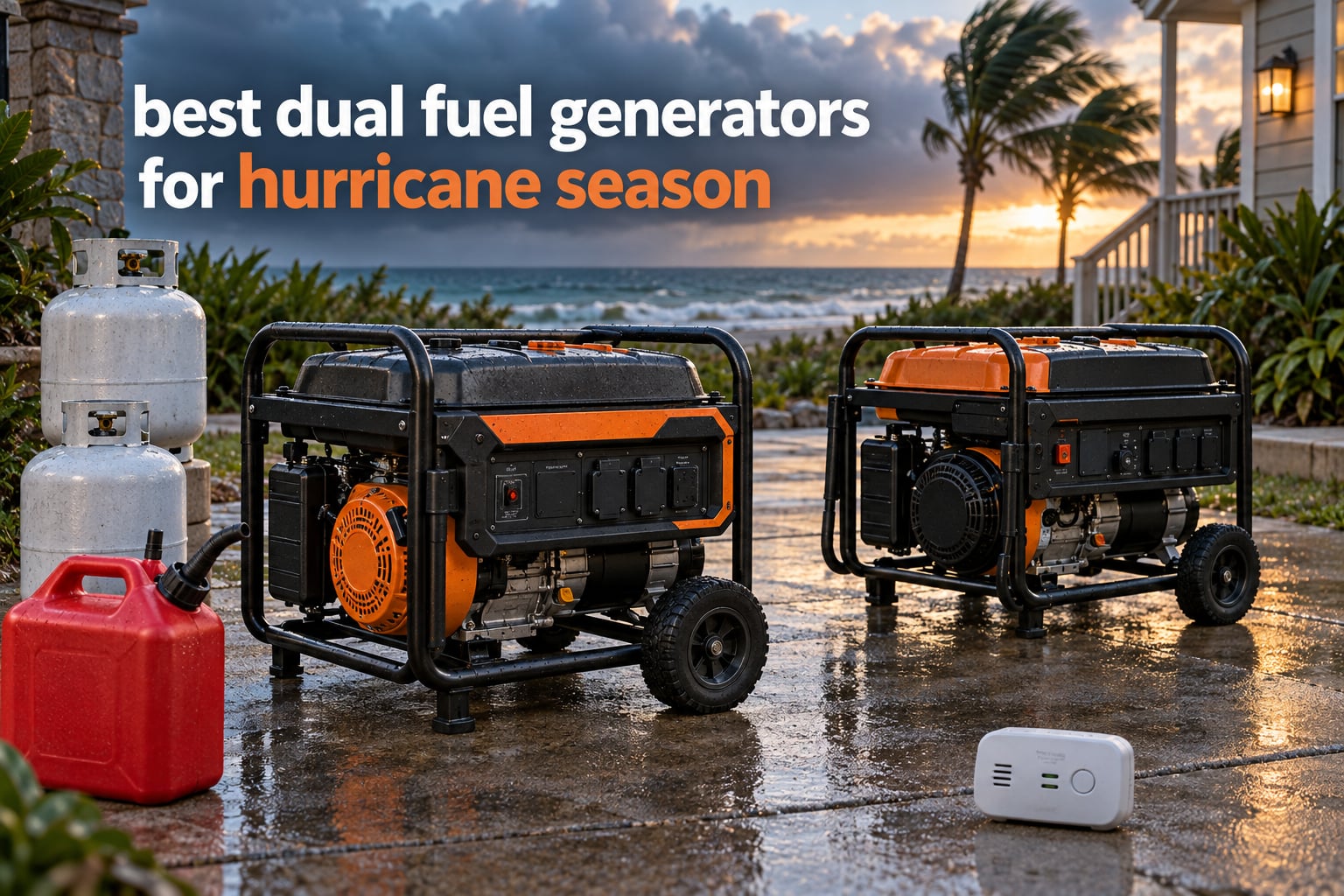
The best dual fuel generators for hurricane season are the ones that keep running when the gas stations stop pumping. A storm knocks out power, but it also empties the fuel supply around it, so a single fuel generator can be perfectly powered and perfectly useless by day two. The best dual fuel generators for hurricane season run on gasoline when gas is available and switch to your own propane cylinder when it is not, and that redundancy is the whole argument.
Our team spent the season comparing ten dual fuel portable generators across the power classes that actually matter when the grid drops: small units for apartments and condos, mid-size open frames for a fridge and a window AC, and 240V machines heavy enough to carry a transfer switch. We checked running watts, peak watts, run time on both fuels, noise, weight, CO protection and outlet configuration against manufacturer listings and owner reports, and we sized each one against a realistic hurricane load rather than a wish list.
Below is the full roundup, plus the sizing math, the fuel endurance math for a three day outage, and the carbon monoxide guidance that no generator manual spells out for storm conditions. We last checked the specs on September 28, and generator run times and availability both move, so treat the numbers as a planning baseline rather than a promise.
Table of Contents
Why Dual Fuel Matters During Hurricane Season
Dual fuel is the single most useful feature you can buy for a storm outage, because the two fuels fail in completely different ways. Gasoline spoils, gums up a carburetor and disappears from pumps within a day or two of a landfall. Propane does none of those things. It stores indefinitely, it burns cleaner, and a cylinder in your garage is a private fuel supply that does not depend on a road being open.
Here is the practical case, in the order it matters during a storm.
Gasoline supply collapses first. Fuel queues form fast after a landfall, and in the hardest-hit areas stations run dry in the first 24 to 48 hours. A dual fuel generator lets you top up from your own cans instead of waiting in a queue for a fraction of a tank.
Propane has a shelf life measured in years, not months. Fuel does not degrade in the cylinder, so staging it in April and using it in September is not a compromise. Owners in coastal forums consistently describe propane storage as the main reason they went dual fuel in the first place.
The engine sees less carbon from propane. A clean burn means fewer deposits, which matters when the machine is running near-continuously for a week rather than an hour at a time.
You can start on one fuel and switch to the other mid-outage. That flexibility is what turns a fuel problem into a solved problem. One forum user put it simply: dual fuel gives you flexibility, and flexibility is the whole point when the supply chain is broken.
The honest trade-offs, because every dual fuel generator has them. Propane output runs lower than gasoline on the same machine, usually in the range of 10 to 20 percent less. Propane costs more per hour of running. The engine is heavier because it carries a second fuel path. And there are two fuel systems to keep clean instead of one. If your outage will last a few hours and your fuel is at the pump, none of that matters. If the road is cut, it is everything.
How We Chose These 10 Dual Fuel Generators?
We scored every candidate on buyer satisfaction first, then on the four things that decide whether a dual fuel generator survives a multi-day hurricane outage: run time on both fuels, CO protection, noise, and service and warranty reach after a storm. Wattage was a filter, not a score, because wattage without the right outlets or the wrong surge capacity is a wasted purchase.
The specific weighting: 40 percent buyer satisfaction from ratings and review volume, 20 percent dual fuel runtime on both fuels, 20 percent safety features including a CO sensor and low oil shutdown, 10 percent noise, and 10 percent warranty length and service network. We excluded any machine with no CO protection above the 2,000 watt class, and we excluded units whose only advantage was a headline wattage number with no surge capacity behind it.
Every spec on this page traces to a manufacturer listing or a retailer spec sheet. We did not include prices. They move daily, and a number that is out of date the day it publishes is worse than no number at all.
Top 3 Dual Fuel Generator Picks for Hurricane Season (September 2026)
Our top three span the three most common hurricane households: a whole-home 240V install, a mid-size home that wants a transfer switch later, and a family running a fridge and a freezer on a budget. These are the three we would tell a friend to buy first, and the reasoning behind each one is in the full review below.

DuroMax XP13000EH
- 10500 running watts on gas
- Transfer switch ready 50A outlet
- Push button electric start
- CO sensor and hour meter
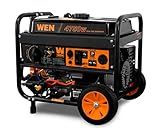
WEN DF475T
- 3800 running watts on gas
- Switchable 120V and 240V output
- Key electric start
- 11 hours at half load

DuroMax XP5500EH
- 4500 running watts on gas
- 9 hours on gas and 8 on propane
- 224cc OHV with electric start
- Low oil shutoff and voltmeter
All 10 Dual Fuel Generators Compared in 2026
Here is the whole lineup on one page. Running and starting watts are on gasoline unless noted, and the outlet column tells you whether the machine can feed a transfer switch or just a few household circuits. Read the propane column carefully if your plan is to run on stored cylinders.
| Product | Specs | Action |
|---|---|---|
| DuroMax XP13000EH |
|
Check Latest Price |
| WEN DF475T |
|
Check Latest Price |
| DuroMax XP5500EH |
|
Check Latest Price |
 Westinghouse iGen5000DF Westinghouse iGen5000DF |
|
Check Latest Price |
 PowerSmart 3800W Dual Fuel PowerSmart 3800W Dual Fuel |
|
Check Latest Price |
 Champion 4000W Dual Fuel Champion 4000W Dual Fuel |
|
Check Latest Price |
 Westinghouse iGen2550DFc Westinghouse iGen2550DFc |
|
Check Latest Price |
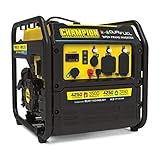 Champion 4250W Dual Fuel Champion 4250W Dual Fuel |
|
Check Latest Price |
 WEN DF360iX WEN DF360iX |
|
Check Latest Price |
 Champion 4500W Dual Fuel Champion 4500W Dual Fuel |
|
Check Latest Price |
1. DuroMax XP13000EH – The Whole-Home Dual Fuel Generator That Earned the Top Spot
DuroMax XP13000EH 13,000-Watt Dual Fuel Portable Generator – Gas & Propane, Electric Start, Whole Home Backup Power, Transfer Switch Ready, RV & Emergency Ready
10500 running watts
13000 starting watts
240V with 50A outlet
CO sensor and hour meter
Pros
- Push button electric start that cranks after months of sitting
- Heavy all metal frame and power panel
- Front facing fuel selector makes switching fast
- Transfer switch ready 50A outlet for whole home backup
- 100 percent copper windings with a 3 year warranty
Cons
- Noticeably loud for its output class
- Arrives without engine oil
- Reversed choke documentation can cause a no start
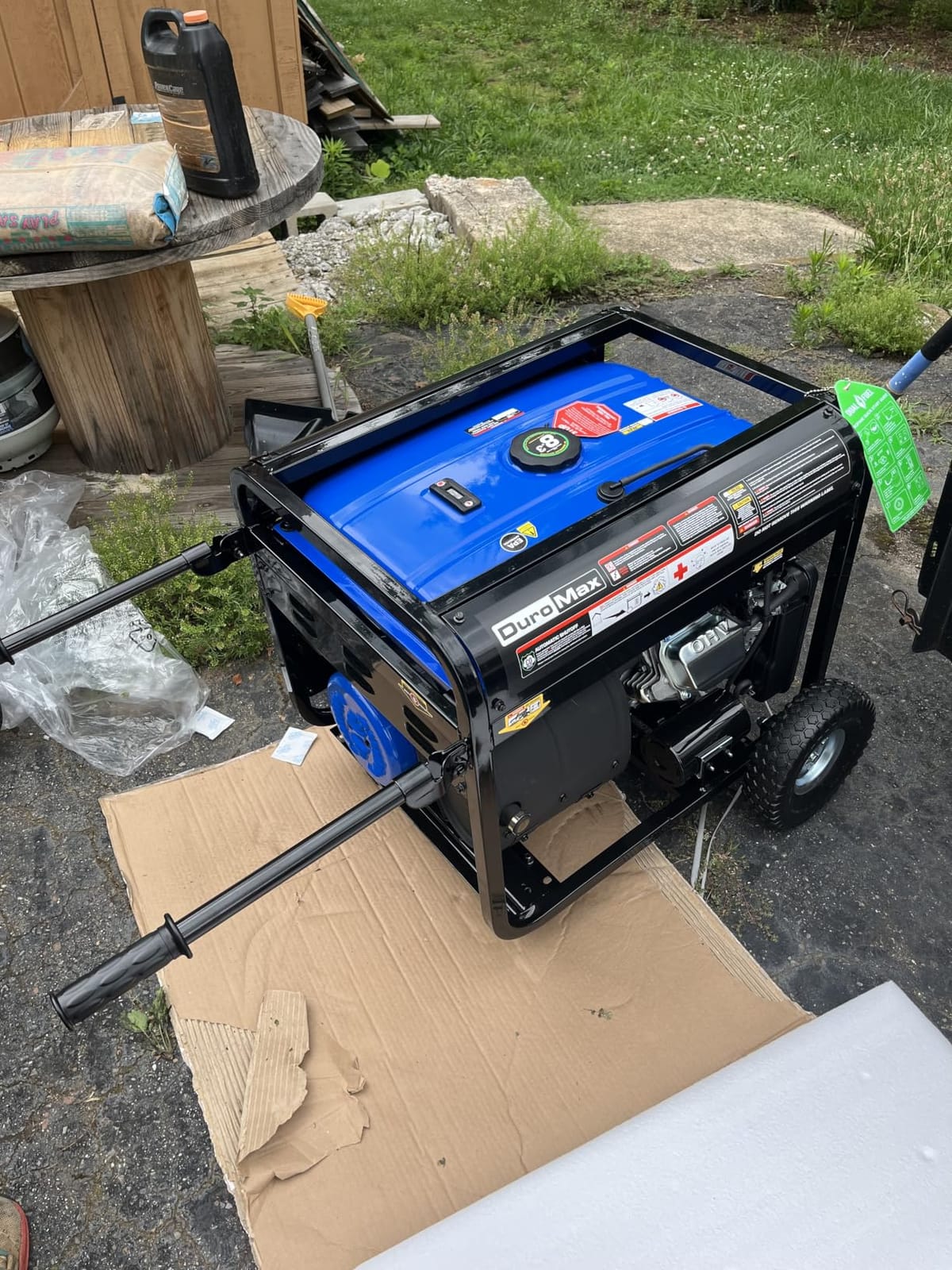
The XP13000EH is the only machine on this list that can genuinely carry a house. With 10,500 running watts and 13,000 starting watts from a 500cc four-stroke, it has the headroom for a central air unit, an electric water heater and a refrigerator on one circuit set, which is the workload that actually defines a multi-day coastal outage.
What makes it hurricane-proof rather than merely large is the combination of three things: a push-button electric start that cranks after months of sitting, a transfer switch ready 50A outlet, and a CO sensor with an hour meter. The electric start matters more than it sounds. Pull-starting a 500cc engine in the dark, in humidity, in the middle of a storm is a completely different experience from turning a key.
It weighs 234 pounds. That is a two-person lift, and it is the single biggest practical complaint we heard from owners. Plan your placement before the storm rather than during it.
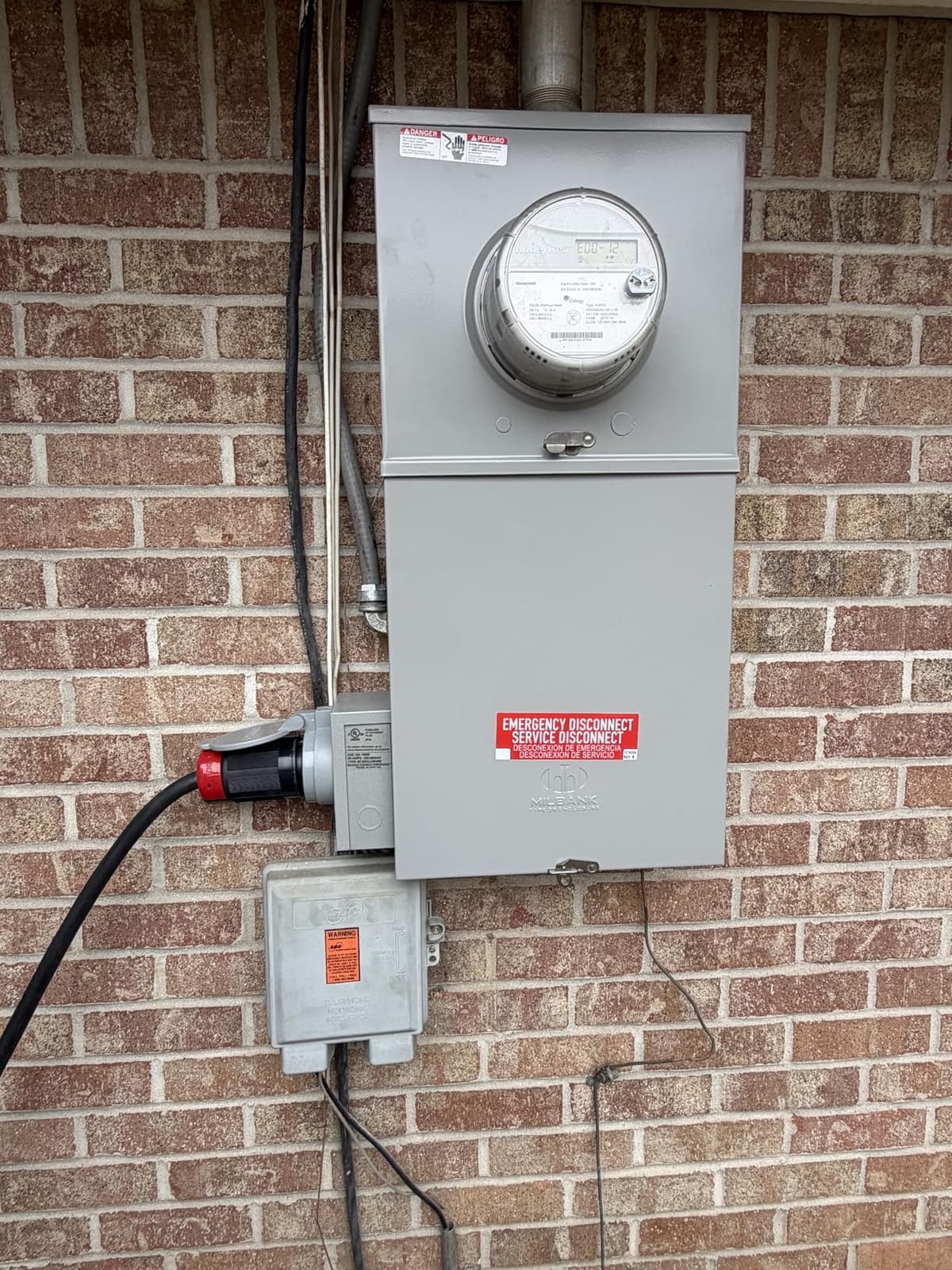
Owners running this through real outages consistently report the same pattern: it starts, it runs, and it keeps running for days. Several describe powering a transfer switch and two HVAC circuits at once, which is exactly the scenario it is built for. The copper windings and all-metal frame are the parts that show up in long service life reports.
Noise is the trade-off, and it is a real one. For a machine in this class it is loud, and in a dense neighborhood or an apartment-adjacent setting you will hear every hour of the night. The fuel selector is a simple front-facing control, so switching from gasoline to propane mid-run is not the delicate operation older manuals suggest.
Two documentation issues are worth knowing before you need them. The unit arrives without engine oil, so plan a fill before the first test run. The choke sticker and the manual are reversed on some production runs, and a reversed choke is a classic no-start. A few owners also reported higher oil consumption early in life; the 3-year warranty covers it, and service is the deciding factor there.
What it handles well in a hurricane
This is the machine to buy if your load includes a central air conditioner, an electric water heater, a well pump, or powered medical equipment. The surge capacity is what makes it possible, because compressors and pumps draw a spike of three to four times their running draw at start, and a 13,000-watt starting figure clears that with room to spare.
Pair it with a transfer switch and it stops being a portable machine and becomes a home system you can run for a week.
Where it falls short
Do not buy it if you only need a refrigerator and some lights. At 10,500 running watts it burns fuel faster than you want during a three-day outage, and it covers far more than most households ever switch on. It is also one of the loudest machines on this list, and if you are within twenty feet of a neighbor’s bedroom wall at midnight, that is a nightly problem.
And check your fuel plan honestly. A machine this size on gasoline drinks from the tank quickly, and on propane you give up output for endurance. Both are fine. Neither is fine if you are relying on a fuel source that will not be there on day three.
2. WEN DF475T – The Best Value Dual Fuel Generator With Switchable 120V and 240V
WEN 4,750-Watt 120V/240V Dual Fuel Portable Generator with Wheel Kit and Electric Start (DF475T)
3800 running watts on gas
3500 on propane
Switchable 120V and 240V
11 hours at half load
Pros
- Switchable 120V and 240V output suits a transfer switch
- Key electric start on a 224cc engine
- 4 gallon tank gives up to 11 hours at half load
- Wheel kit oil LPG hose and tool kit in the box
- 2 year warranty
Cons
- Open frame is louder than enclosed inverter models
- 105.8 pounds needs two people to lift
- Full home use still needs a transfer switch and panel work
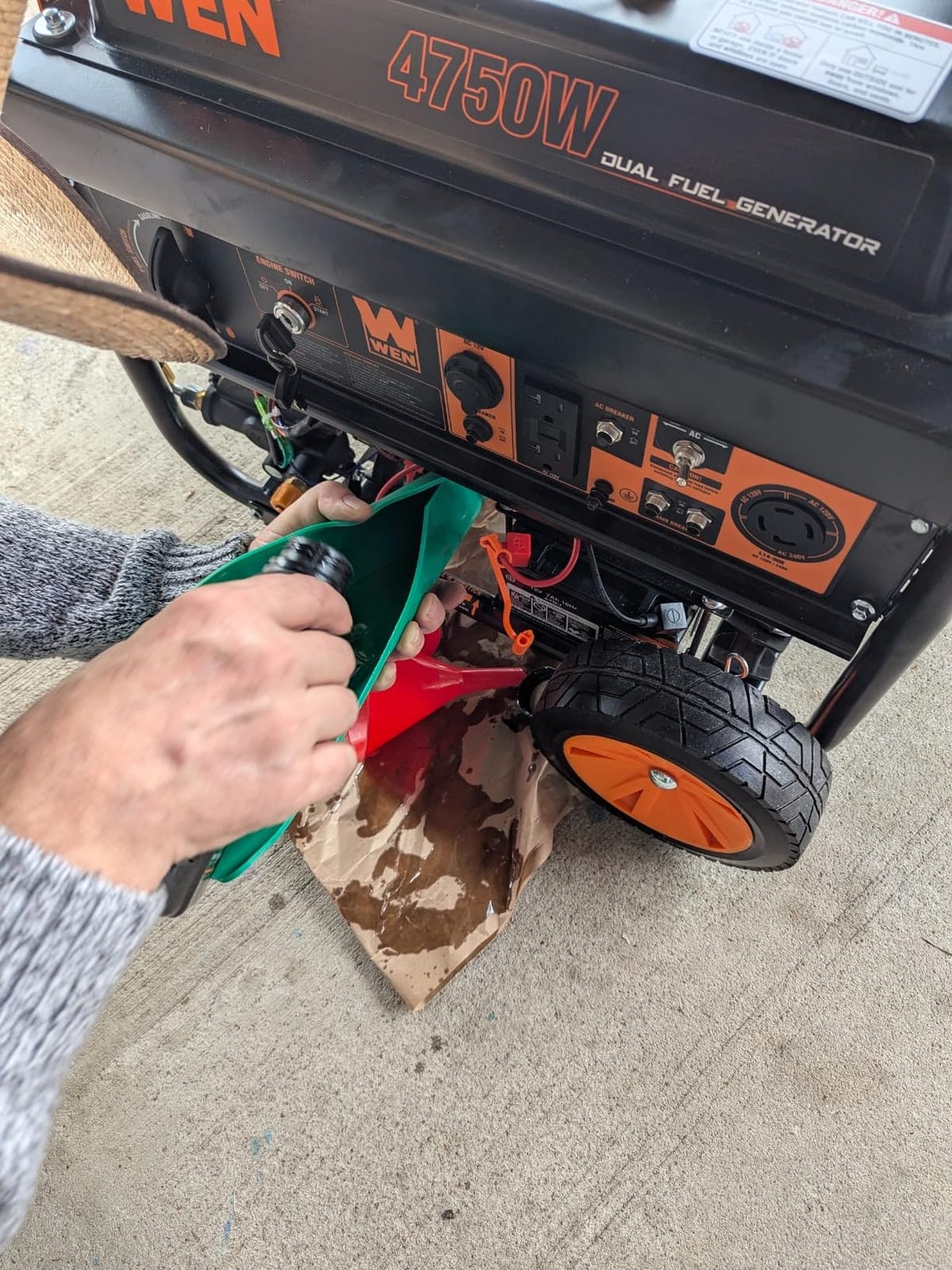
The DF475T is the machine we kept coming back to, because it does one unusual thing well: it switches between 120V and 240V output. That single feature is what separates a mid-size dual fuel generator that can grow into a home backup system from one that is permanently stuck feeding household receptacles.
On gasoline it puts out 3,800 running watts with 4,750 starting watts. On propane it drops to 3,500 running and 4,350 starting, which is about a 10 percent penalty, right where manufacturers say to expect it. The 4-gallon tank gives up to 11 hours at half load, so a three-day outage at moderate load is roughly two refills of gasoline or a few propane cylinders.
The 224cc four-stroke OHV engine with key electric start is the right amount of machine for the job. A refrigerator, a freezer, a router, lights, a dehumidifier and a small window AC is a load this handles without drama.
Owners highlight the same three things repeatedly: the voltage flexibility, the electric start, and the half-load runtime. Against cheaper single-voltage machines in the same power class, the ability to run a transfer switch later is the reason this one is worth the step up.
The outlets are well laid out for real use: two GFCI 5-20R household duplexes, a 120V/240V NEMA 30A L14-30R twist lock, and a 12V DC cigarette-lighter outlet for a battery maintainer or a tire inflator.
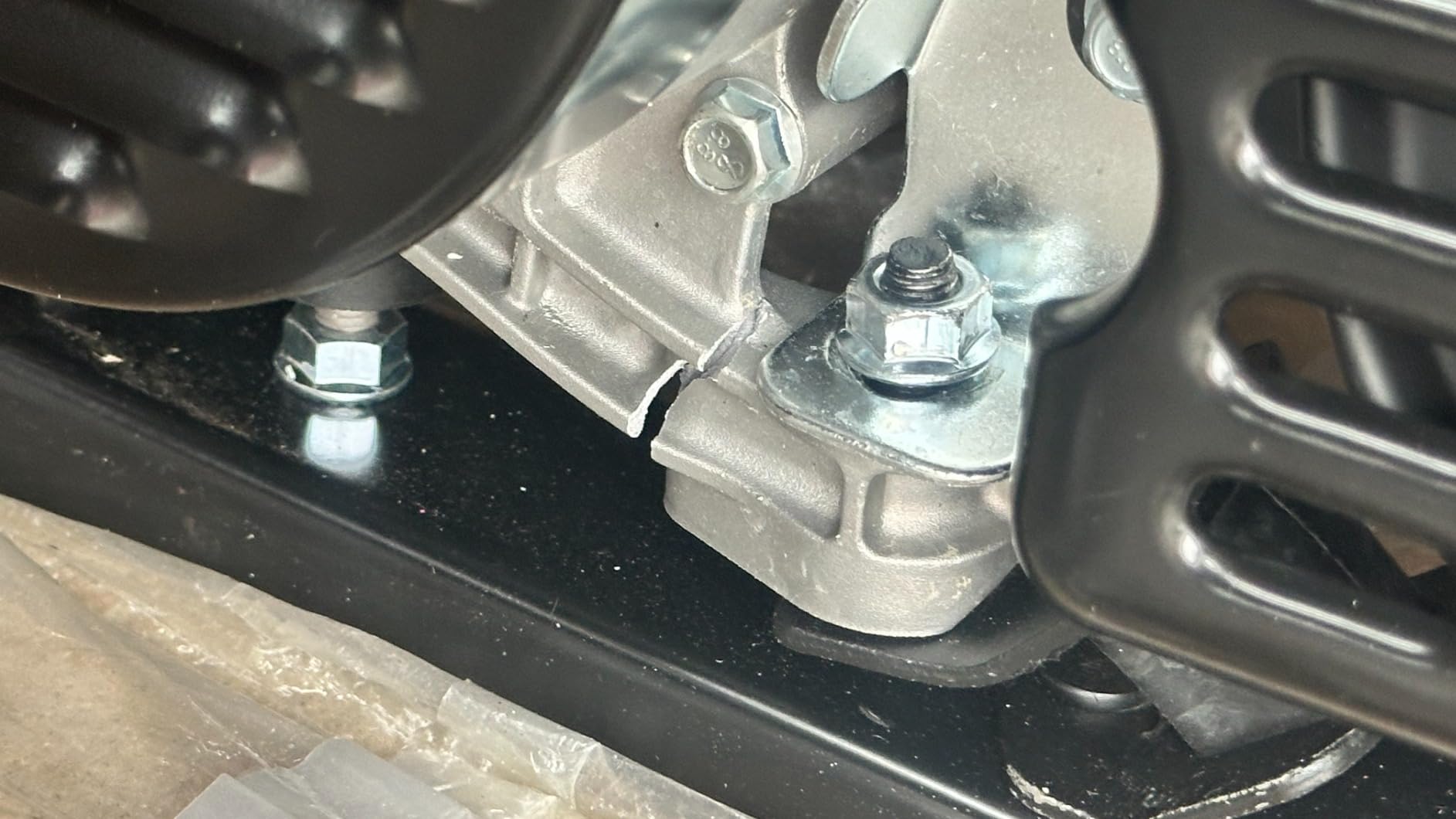
The honest weaknesses are physical. At 105.8 pounds it is heavy for its class, and the open frame means it is louder than an enclosed inverter of similar size. If your outage is at a rental or a condo where noise rules exist, that is worth checking before you buy rather than after.
Why this one fits a mid-size home
It is the rare unit where the surge figure is high enough to start compressor loads without straining. A refrigerator and a chest freezer together can pull 1,300 running watts and over 3,000 at start, and 4,750 starting watts clears that comfortably while leaving room for lights and a router.
The switchable output also means one machine covers two very different hurricane households. Early in the outage, run it with extension cords into the kitchen. Later, if the roads clear and an electrician can install a transfer switch, the same machine becomes a panel feed.
Where it falls short
The 2-year warranty is the shortest in this group, and warranty length matters more than buyers expect when a storm has just knocked out a local repair shop. Plan on servicing it yourself with the included tool kit rather than relying on a dealer.
It is also not quiet. If you are running it overnight in a dense neighborhood, expect to hear it, and expect neighbors to hear it too. The 240V twist lock is a 30A L14-30R, not an RV TT-30R, so RV hookups need an adapter.
3. DuroMax XP5500EH – The Florida Workhorse for Fridge, Freezer and Portable AC
DuroMax XP5500EH 5,500-Watt Dual Fuel Portable Generator – Gas & Propane, Electric Start, RV & Emergency Ready
4500 running watts
5500 starting watts
9 hours gas and 8 on propane
224cc OHV electric start
Pros
- Reported to run a week long outage on propane
- 4500 running watts covers a portable AC and a fridge
- Simple front panel fuel selector dial
- MX2 operation for 120V and 240V
- Low oil shutoff and voltmeter with a 3 year warranty
Cons
- Wheel and handle assembly needed on arrival
- Oil is not included in sufficient quantity
- Battery can arrive undercharged so electric start may not work immediately
The XP5500EH is the unit that shows up again and again in hurricane-season accounts from Florida buyers. At 4,500 running watts and 5,500 starting, it sits at the exact power level where a family home can keep its most important appliances alive for a week without a major refueling routine.
The load it handles is the one most households actually have: a refrigerator, a chest freezer, a dehumidifier, a router, lights and a portable air conditioner. That is a comfortable fit for 4,500 running watts with surge headroom for the compressor loads.
Run time is stated as 9 hours on gasoline and 8 hours on propane at half load, from a tank just under 4 gallons. For a three-day outage at moderate load, plan on roughly six refills of gasoline or a stack of propane cylinders, and count on the fuel rather than the machine being the limit.
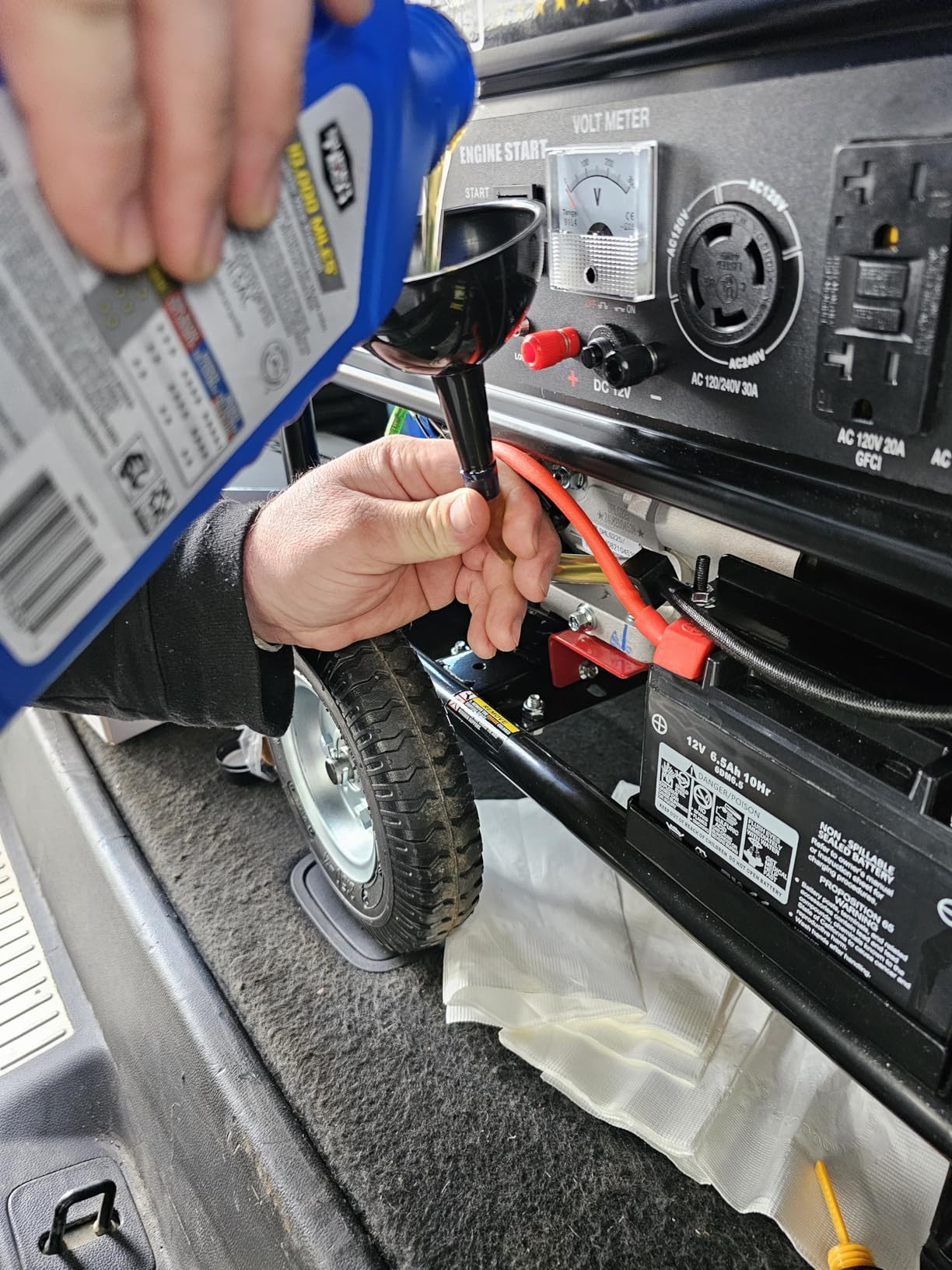
One owner reported running a week-long tropical storm outage on propane without issue, and others describe first-pull starts after long storage with treated fuel. That combination, dual fuel plus reliable cold starting, is exactly the hurricane profile you want and exactly what a single fuel machine does not give you.
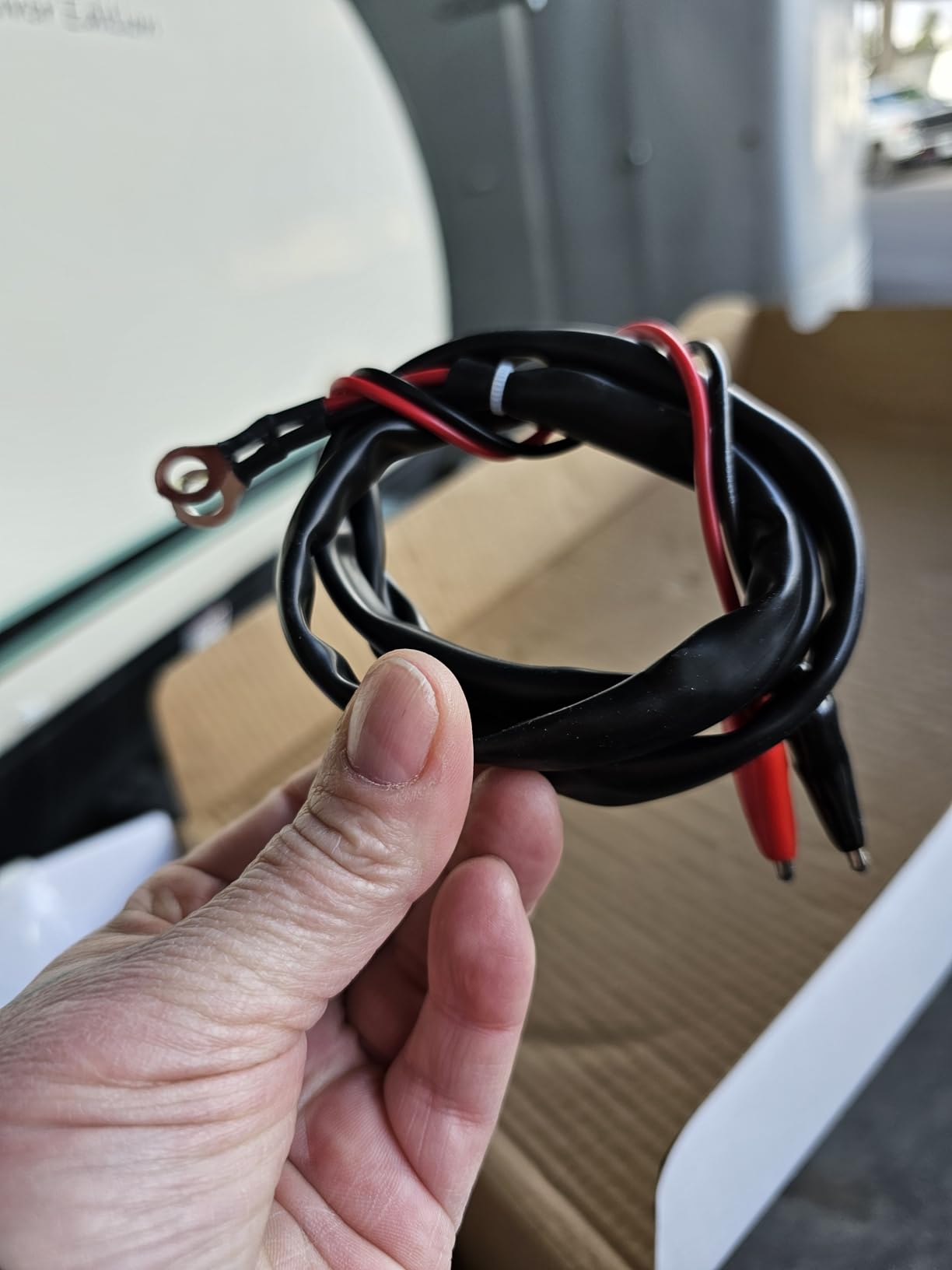
The MX2 platform gives you 120V and 240V operation from a 224cc OHV engine, with two GFCI household outlets, a 30A 120V/240V twist lock, and 12V DC charging posts for maintaining a battery.
It has a 3-year warranty, which is longer than most in this class, and the low oil shutoff and voltmeter are both useful when you are troubleshooting a fault in bad weather.
What it is built for
This is the sweet-spot machine for a 1,500 to 2,000 square foot home that wants its kitchen and its cooling running but not its whole electrical system. It is also the right answer for anyone with a well pump or a sump pump, because 5,500 starting watts clears a half horsepower motor surge.
The simple front-panel fuel selector is underrated. It is a mechanical dial, not a menu, and you can change fuels with wet hands in bad light.
Where it falls short
Assembly is not instant. The wheels, folding handle and battery connection need putting together on arrival, the owner’s manual is thin on the included propane hose and electrical plugs, and the battery can arrive undercharged enough that electric start does not work until you put it on a maintainer.
The wheels and handle hardware feel cheap, and the fuel gauge situation is not as good as the inverter units. For a machine you may need to reposition when wind direction changes, buy a decent wheel kit rather than trusting the supplied one.
4. Westinghouse iGen5000DF – The Top Rated Inverter for Quiet, Clean Power
Westinghouse 5000 Peak Watt Super Quiet Dual Fuel Portable Inverter Generator, Remote Electric Start, Gas & Propane Powered, RV Ready 30A Outlet, Parallel Capable, Blue/Black
3900 rated watts
5000 peak watts
Under 3 percent THD
52 dBA and 18 hour runtime
Pros
- Highest average rating in this group at 4.7 stars
- As low as 52 dBA for a 5000 peak watt inverter
- Remote key fob start during an outage
- Clean power under 3 percent THD
- LED data center shows fuel and run time
Cons
- Remote start needs a battery on a maintainer
- Nearly 105 pounds is a two person lift
- Only one 30A RV outlet
The iGen5000DF has the highest average rating in this group at 4.7 stars across 1,676 reviews, and the rating is explained by the specs rather than by brand loyalty. This is a true inverter: 5,000 peak watts, 3,900 rated watts, and total harmonic distortion under 3 percent.
That last number is the one that matters if you have anything electronic to protect. A router, a desktop, a monitor, a CPAP machine, a home office. Conventional open-frame generators produce a dirtier waveform, and this one does not.
Noise is as low as 52 dBA, which puts it in a category of its own. Compare that to the open-frame machines elsewhere on this list and the difference is not subtle. For a household running a generator overnight, on a residential street, for three nights, that is the feature that decides whether people keep it running.
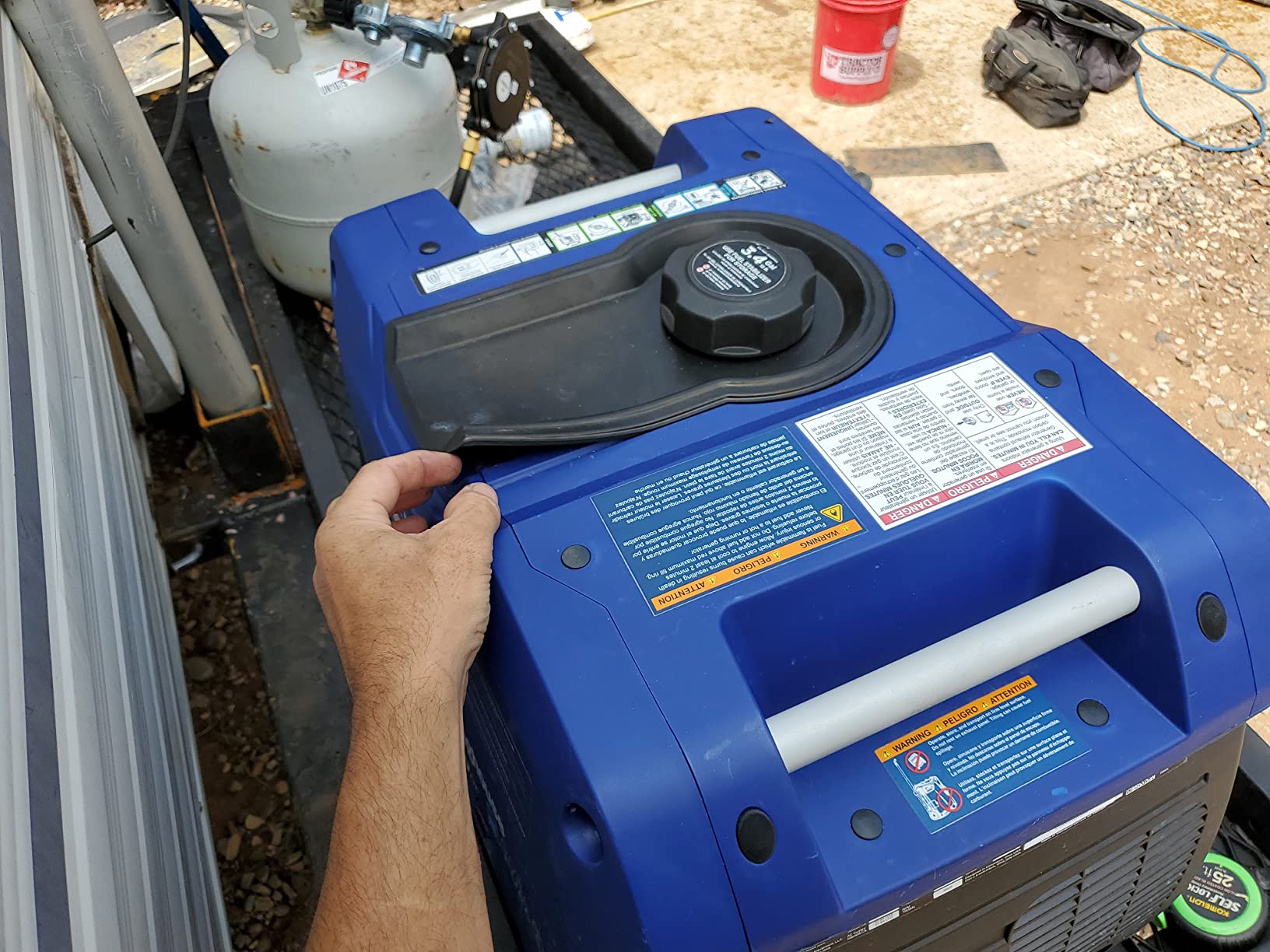
Run time reaches 18 hours on a 3.4 gallon tank in economy mode, which is one of the few figures in this roundup that meaningfully changes your fuel planning.
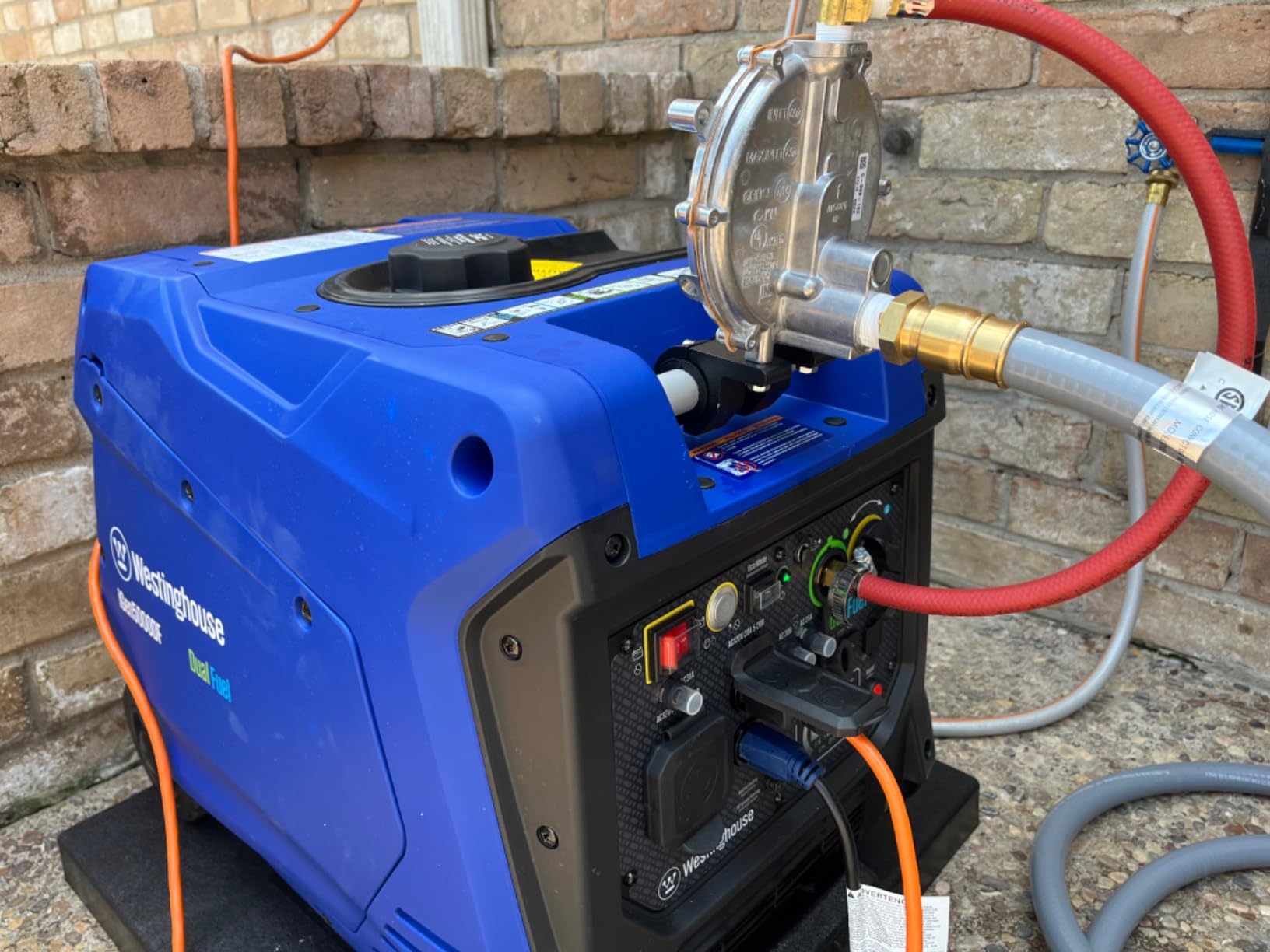
Owners consistently name three deciding features: the low dBA, the clean inverter output, and the remote key fob start. In a real outage, remote start is a genuine quality-of-life change. You are not hauling 105 pounds across wet ground in the dark every time the fridge cycles off.
The LED data center shows fuel level, power output, remaining run time, voltage and lifetime hours, which means you can size your load against the display instead of guessing. The outlet set is a 5-20R 120V duplex, an RV-ready TT-30R 30A outlet, and two USB ports, and the unit is parallel capable if you ever want to pair a second one.
Economy mode and the telescoping handle round out a machine that is genuinely designed for a homeowner rather than a contractor.
Why it wins on sensitive loads
Under 3 percent THD is the number to check if you are running anything with a circuit board in it. Laptops, TVs, routers, medical equipment and modern refrigerators all respond badly to a dirty waveform, and the failure shows up as flickering, a restarting router or a tripped device rather than an obvious failure.
At 52 dBA you can run it through the night without planning around it, which for a household that needs power for three straight nights is arguably the more valuable number.
Where it falls short
The remote start only works if the battery is charged, so a trickle charger on a maintainer is part of owning this machine. Owners who skip that step report a key fob that does nothing during the one outage that matters most.
At nearly 105 pounds it is a two-person handling job, and that matters specifically when you need to move the unit because the wind has changed and the exhaust is now blowing toward a window. There is only one 30A RV outlet alongside the household duplex, so you cannot run two high-draw RV circuits at once.
5. PowerSmart 3800W Dual Fuel – Quiet Inverter Power You Can Carry With One Hand
PowerSmart 3800 Watt Dual Fuel Inverter Generator for Camping or Home Use
3300 running watts on gas
3100 on propane
59 dBA in eco mode
Up to 24 hours on a 20 lb tank
Pros
- Long propane endurance on a standard 20 lb tank
- 59 dBA in eco mode is quiet for the class
- Display panel shows live output
- Starts on the first cord pull once oil is added
- Parallel ready for a second machine
Cons
- 1.3 gallon gas tank means overnight refills
- Access panels need a Phillips screwdriver
- 30A outlet is a locking L5-30R not a TT-30R
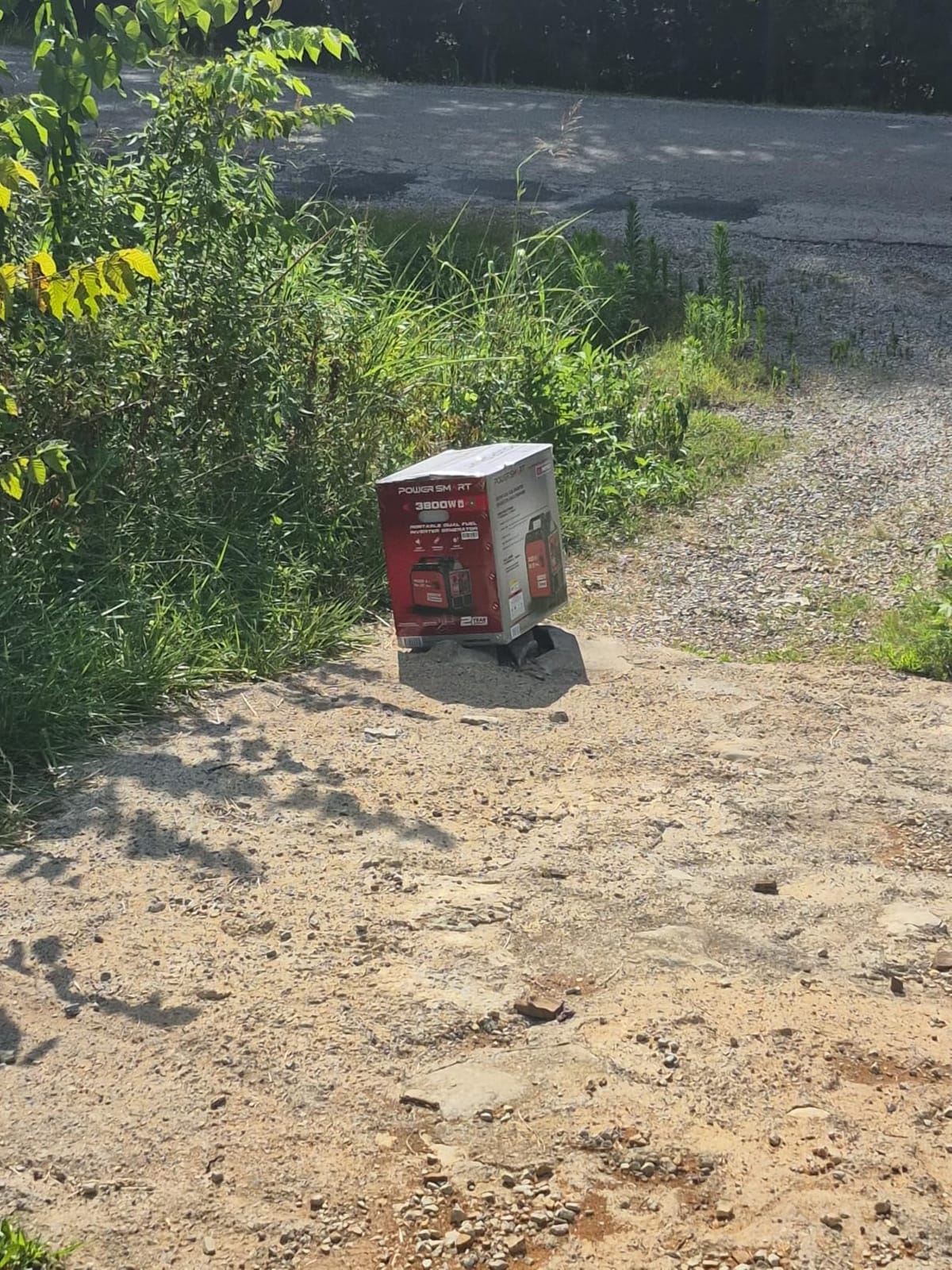
The PowerSmart HB5040DC does something none of the other mid-size machines do: it weighs 50.7 pounds. That changes how you use a generator in a storm, because a 50 pound machine can be moved by one person when wind shifts the exhaust, when rain starts driving sideways, or when you need it somewhere else on the property.
On gasoline it delivers 3,300 running watts with 3,800 starting. On propane, 3,100 running and 3,500 starting. That is enough for a refrigerator, a freezer, lights, a router and a well pump if the pump is a smaller one, and not enough for central air.
Noise is 59 dBA at 25 percent load in economy mode, which is quiet enough for a house or a small apartment. It is certified to ANSI/PGMA G300, ANSI/UL2201 and EPA standards, and it carries a CO sensor, cold start technology, overload and short circuit protection, and low oil shutdown.
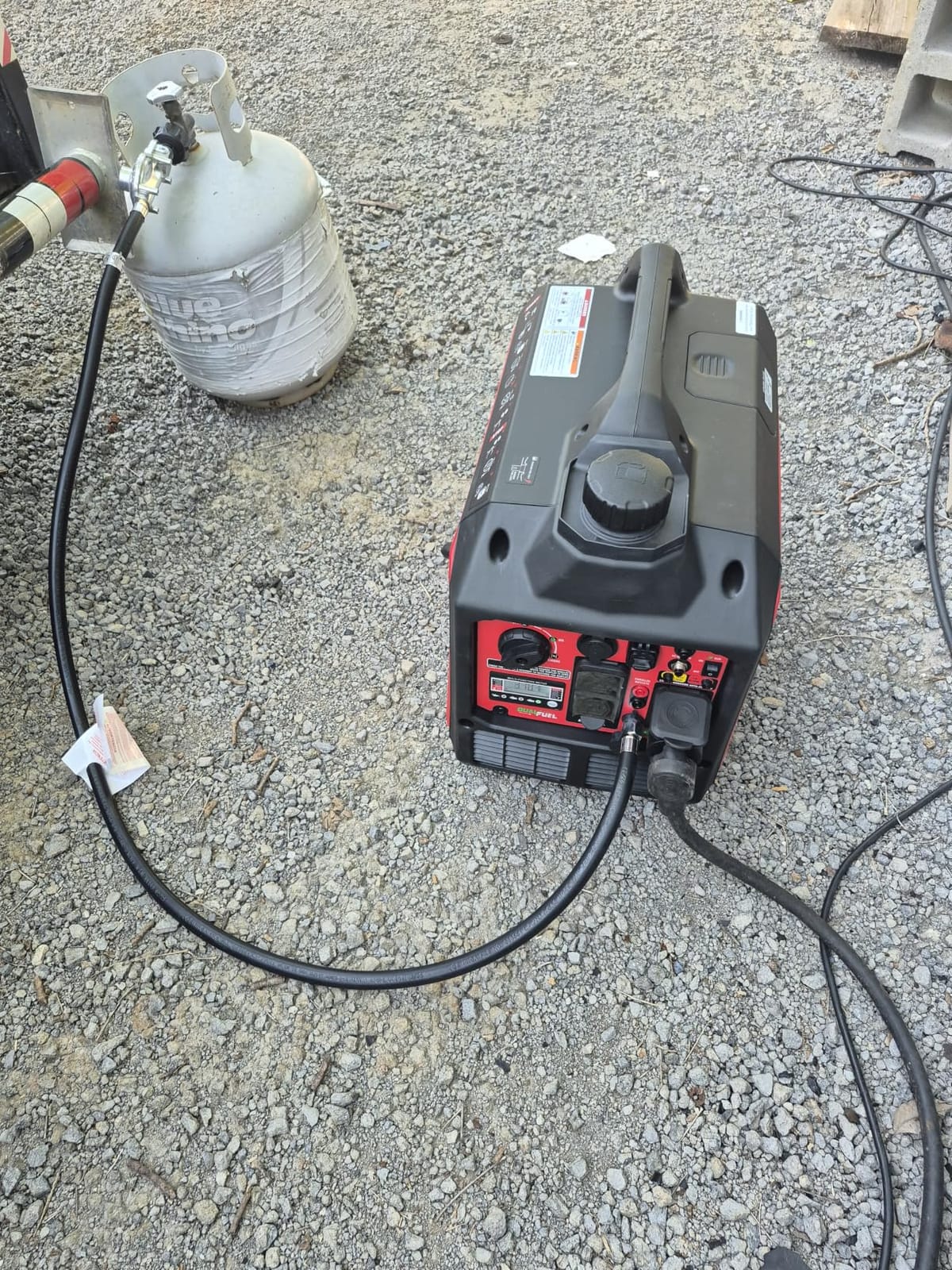
The headline endurance figure is 8 hours at 25 percent load on the small 1.3 gallon gasoline tank, and up to 24 hours on a standard 20 lb propane tank. For a household running on stored cylinders, that number is the entire point: one cylinder per day means a three-day outage needs three cylinders plus a spare.
Owners call it strong value for what it delivers, citing quiet eco-mode running, steady output and the ability to carry a fridge, a freezer, lights and small appliances comfortably. The display panel showing live output helps with load management, which is a genuinely useful thing during a long outage when you are rationing.
It starts reliably on the first cord pull once oil is added, and it is parallel ready if you ever pair a second machine.
Where portability changes the plan
Storm placement is a moving target. Wind changes direction, rain moves in, and a generator that cannot be repositioned becomes a liability. At 50.7 pounds with a compact footprint of roughly 22 by 13 by 19.5 inches, this one goes where you need it.
It is also the practical choice for a condo, a garage apartment, or a house where the generator has to live in a storage shed and come out for a real event rather than sit on a pad all year.
Where it falls short
The 1.3 gallon gasoline tank is genuinely small. Overnight gasoline runs mean refills, and refills at 2am in a dark garage are exactly the kind of task a hurricane does not make easier. Plan on propane for overnight running.
The 30A outlet is a locking L5-30R, not a TT-30R, so RV hookups need an adapter. The access panels and the oil change door need a Phillips screwdriver. And owners report it gets noticeably louder once you drop out of eco mode under a heavier load, which is a normal small-engine behaviour but worth knowing.
6. Champion 4000W Dual Fuel – The Longest Propane Endurance in the Group
Champion 4000-Watt Dual Fuel RV Ready Portable Inverter Generator
3000 running watts on gas
2700 on propane
Up to 25 hours on propane
64 dBA at 23 feet
Pros
- Up to 25 hours of propane on a standard cylinder
- Light enough to move at 51.8 pounds
- CO Shield auto shutoff
- Clean power under 3 percent THD
- Parallel ready
Cons
- Recoil start only with no electric or remote start
- Gasoline runtime of about 10 hours is modest
- Parallel kit sold separately
- 25A outlet is below the 30A many RVs expect
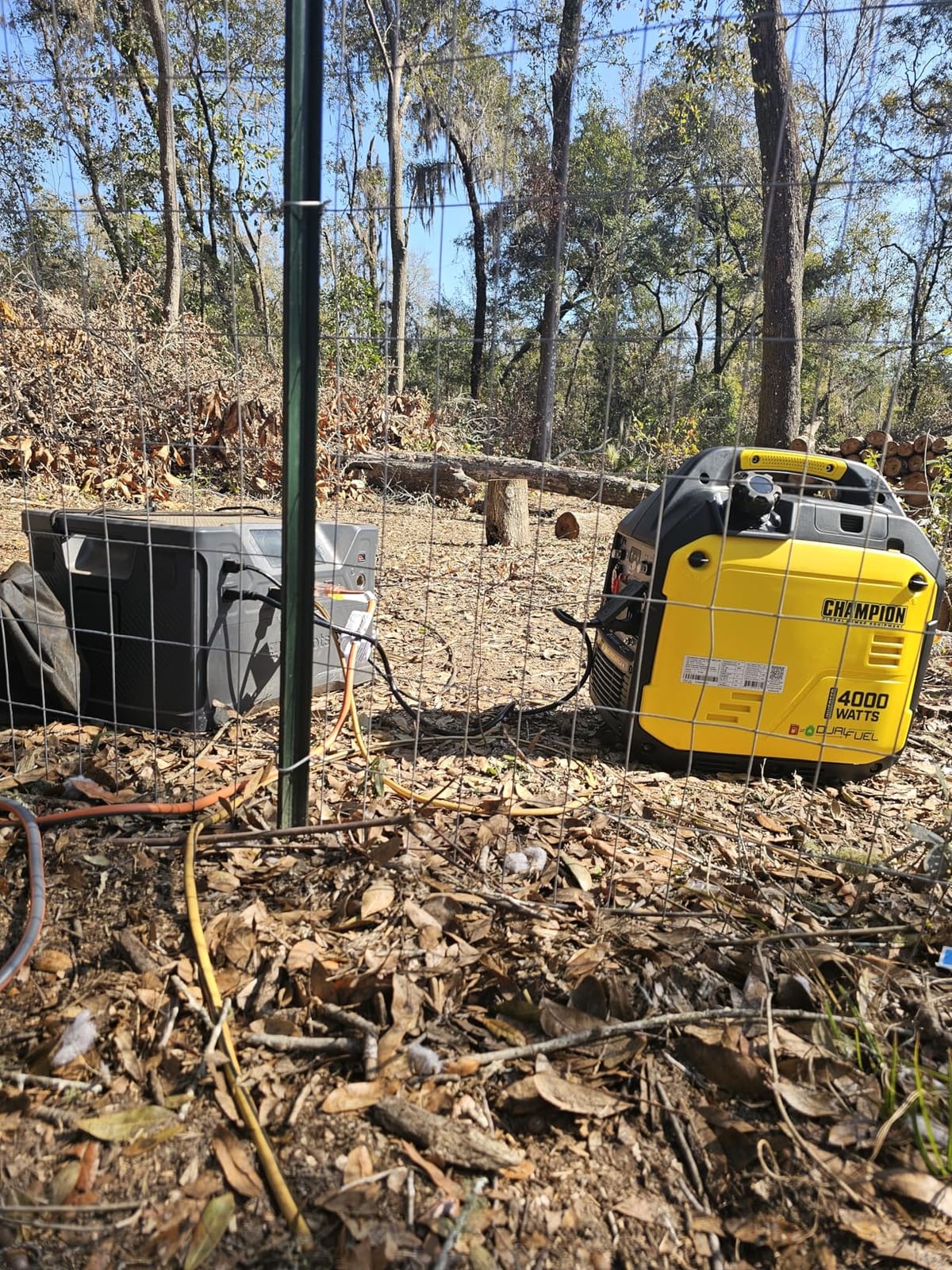
This Champion is the endurance specialist. It runs up to 25 hours on a standard propane cylinder, which is the longest propane figure in the group by a wide margin, and that is the number that matters when your fuel supply is whatever is stacked in your garage.
It is 51.8 pounds, so it is light enough to move, and it is a true inverter with clean power under 3 percent THD. CO Shield gives it an automatic carbon monoxide shutoff, which is a real safety layer and increasingly the feature that matters most in storm conditions.
Output is 3,000 running watts on gasoline with 4,000 starting, and 2,700 running watts on propane. The propane penalty here is about 10 percent, which is normal.
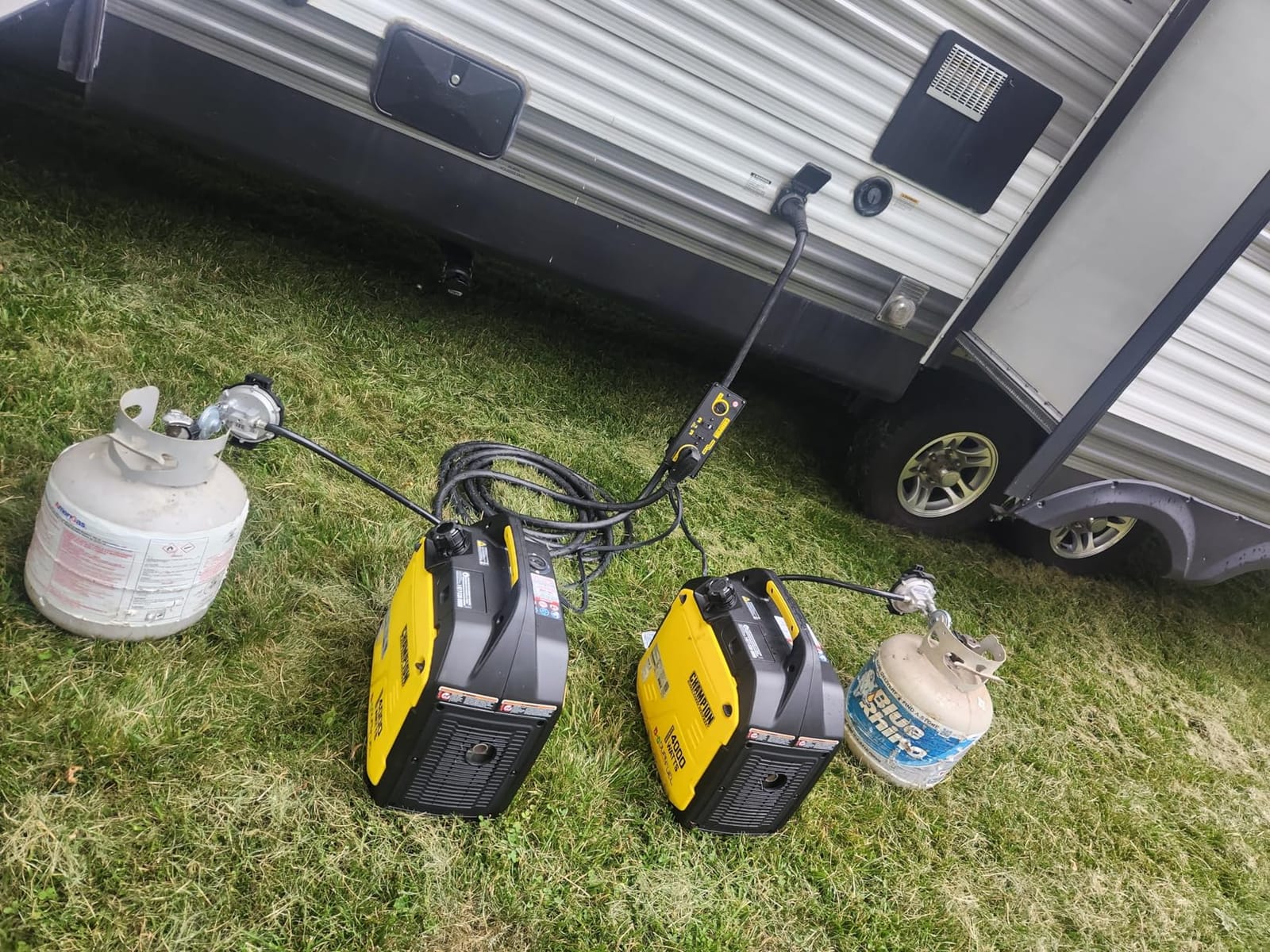
Owners rate it highly for portability, quiet 64 dBA operation at 23 feet, and the very long propane runtime. For campers and light household backup, one cylinder carrying a full day of run time changes the fuel plan from a daily errand into a non-event.
The outlet set is a 120V 25A TT-30R, a 120V 20A 5-20R duplex, a 12V automotive outlet, and parallel outlets. It is parallel ready with a separately sold kit.
Cold start technology is listed, which is relevant in the damp, cooler conditions in the days after a storm passes.
Why propane endurance is the feature to shop for
Count your cylinders, not your hours. If a 20 lb cylinder carries this machine for most of a day, a three-day outage needs three cylinders and a spare, and a seven-day outage needs eight. That is a garage, a corner of a carport and a plan.
Compare that to a machine that empties a cylinder in five hours. Over a week, the difference is the difference between refilling once a day and moving an entire week’s fuel supply on day one.
Where it falls short
It is recoil start only. No electric start, no remote start. If your power is out, your back is not what it was, and it is dark and wet, pulling a cord on a 149cc engine is harder than it sounds. For an older adult or anyone with a back condition, this is a genuine dealbreaker.
The gasoline runtime of about 10 hours is modest for multi-day outages, and the 25A TT-30R outlet is below the 30A many RV setups expect. The parallel kit is a separate purchase.
7. Westinghouse iGen2550DFc – The Apartment and Condo Choice at 42 Pounds
Westinghouse 2550 Peak Watt Super Quiet & Lightweight Portable Inverter Generator, RV Ready 30A Outlet, Gas and Propane Powered, CO Sensor, Parallel Capable, Long Run Time
1900 rated watts
2550 peak watts
Only 42 pounds
As low as 52 dBA
Pros
- Lightest and most compact dual fuel inverter here at 43 pounds
- As low as 52 dBA close to the building
- CO sensor uncommon at this size and weight class
- Oil funnel tool kit and hose included
- Up to 11 hours at 25 percent load
Cons
- 1900 rated watts covers essentials only
- No electric or remote start
- One star review share runs high at 8 percent
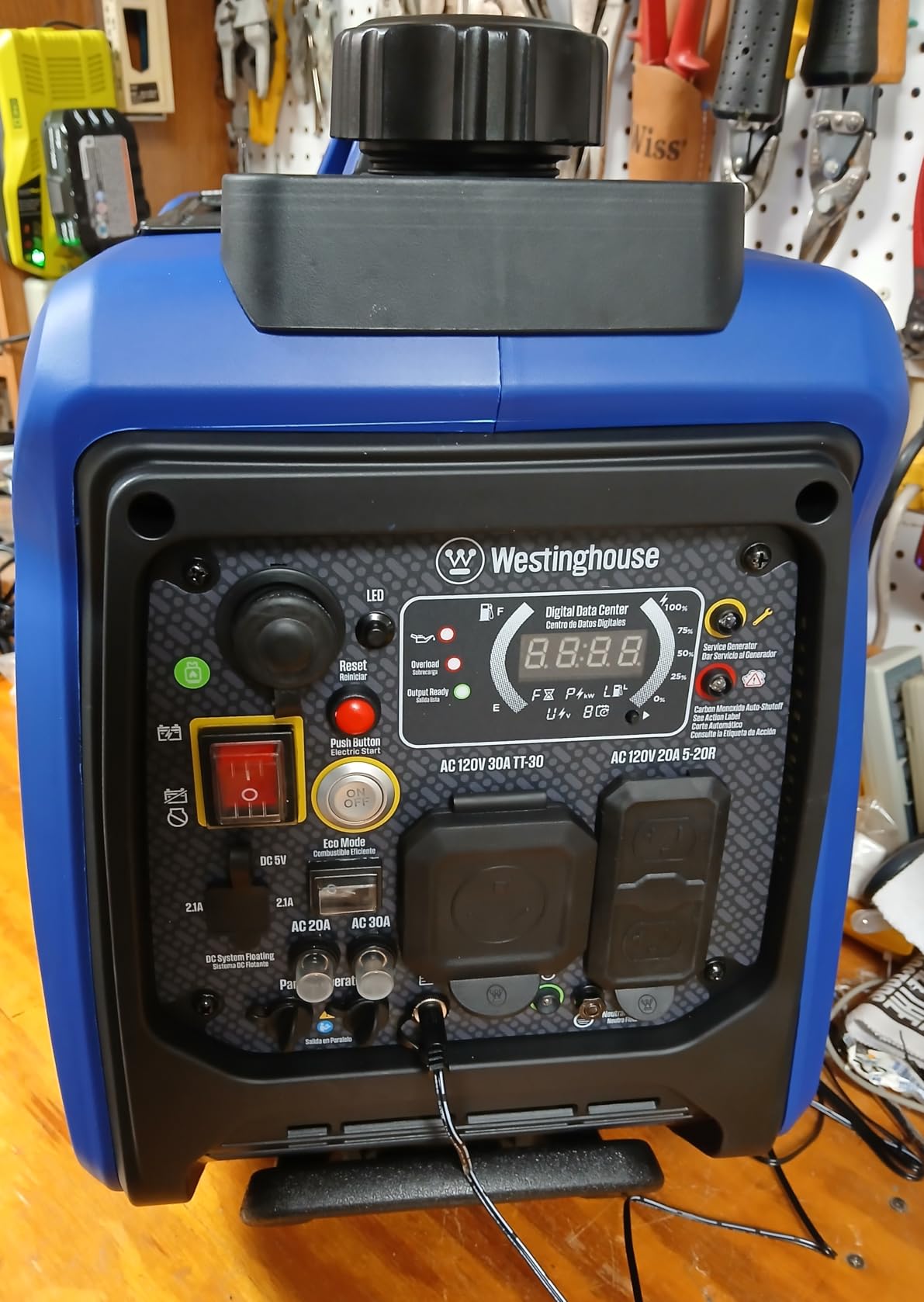
The iGen2550DFc is for people who do not need much and need it to be quiet, light and safe near other people. At 43.2 pounds and 52 dBA, it is the easiest machine on this list to live with in a condo, a ground-floor apartment, or a house where the generator runs close to a neighbor’s wall.
It delivers 2,550 peak watts and 1,900 rated watts at under 3 percent THD, so the power is clean even though the quantity is small. That is enough for a refrigerator, a chest freezer, a router, LED lighting, a phone charger and a CPAP machine, and it is not enough for a well pump, a sump pump or a window AC.
Run time is up to 11 hours at 25 percent load on a 1.16 gallon tank, plus the usual propane option. At that load level, a three-day outage is manageable with a single tank of gas and a couple of cylinders.
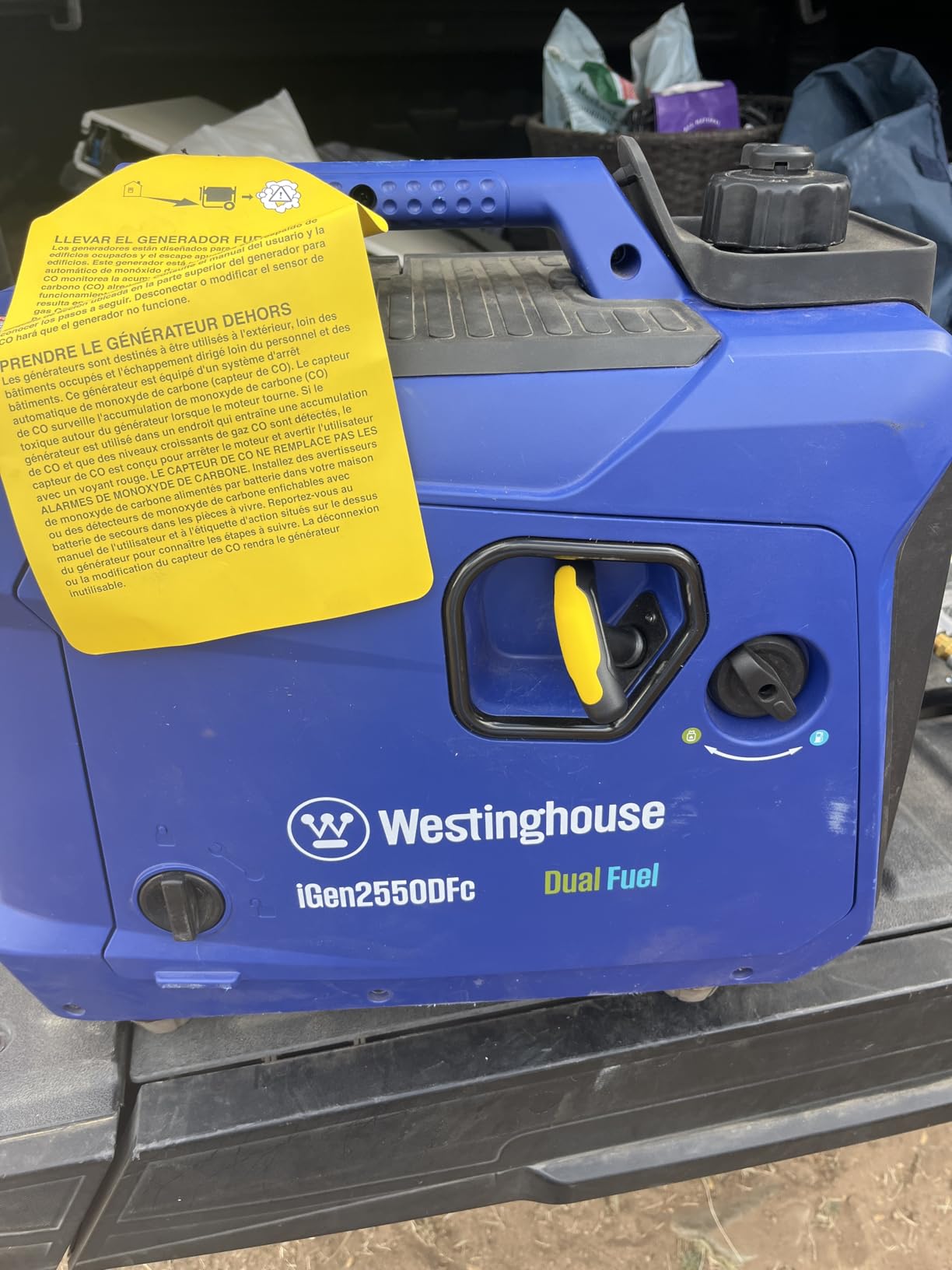
It is plug-and-play: oil, oil funnel, tool kit and propane hose are in the box, which means you can fill it, connect it and test it in twenty minutes. That matters more than it sounds if you are buying this in May and your real test run is in August.
The outlet set is one RV-ready TT-30R, two 120V 20A outlets and two USB ports, with economy mode and parallel capability. The CO sensor at this size and weight class is not universal, and having it here is a genuine plus.
Buyers value the combination of low weight, 52 dBA quietness and a CO sensor in a small footprint, using it for refrigerators, lights and small essentials.
Who this is for
Apartment and condo dwellers, first-time buyers, and anyone whose essential load is food preservation and communications. It is also a good second machine for a household that already has a mid-size generator, because the parallel capability lets you run a matched pair instead of one big one.
For someone on powered medical equipment, the clean inverter output and the quietness both matter, and the load is usually well under 1,900 watts.
Where it falls short
1,900 rated watts is a hard ceiling on what you can run, and it is a ceiling that rules out pumps and cooling. The 1-star review share runs around 8 percent, higher than the higher-rated models in this group, and owners report some units needing warranty service.
There is no electric or remote start, and it does have a CO sensor but no cold start technology listed, so in the damp days after a storm, allow yourself a generous first-start margin.
8. Champion 4250W Dual Fuel – The Open-Frame Value Pick for Well and Sump Pumps
Champion 4250-Watt Dual Fuel Portable Open Frame Inverter Generator, CARB
3500 running watts
4250 starting watts
Up to 22 hours on a 4 gallon tank
64 dBA open frame
Pros
- 4 gallon tank gives up to 22 hours on gasoline
- 3500 running watts suits a well or sump pump
- Genuine 30A RV outlet as standard
- Good wattage to size ratio
- Parallel ready with the optional ParaLINK kit
Cons
- Open frame is louder than enclosed inverter models
- Oil and LPG hose must be added before first use
- 79 pounds is a two person lift
- No CO sensor listed on this model
The Champion 4250W is the value pick for a specific and common problem: keeping a well pump or a sump pump running. Half horsepower motors draw heavily at start, and 4,250 starting watts against 3,500 running is enough to bring one up without the rest of the household browning out.
The 4 gallon tank gives up to 22 hours on gasoline, the longest gasoline runtime on this list, and 64 dBA open-frame operation is quieter than a conventional open frame from the same brand.
It has a genuine 120V 30A RV outlet as standard rather than as an add-on, which saves you an adapter and a trip. There are also two 120V 20A household outlets and a 12V DC outlet with a dual USB adapter.
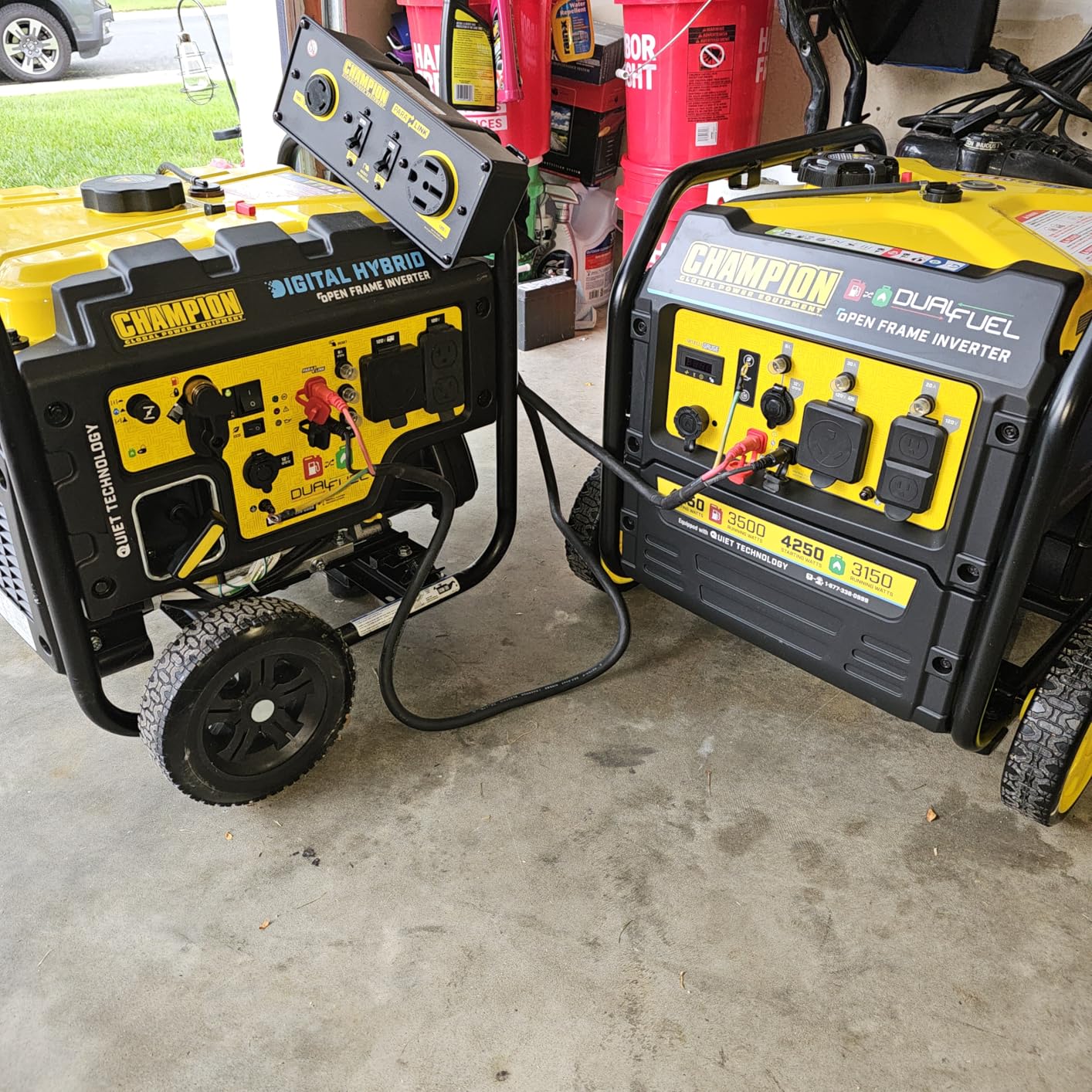
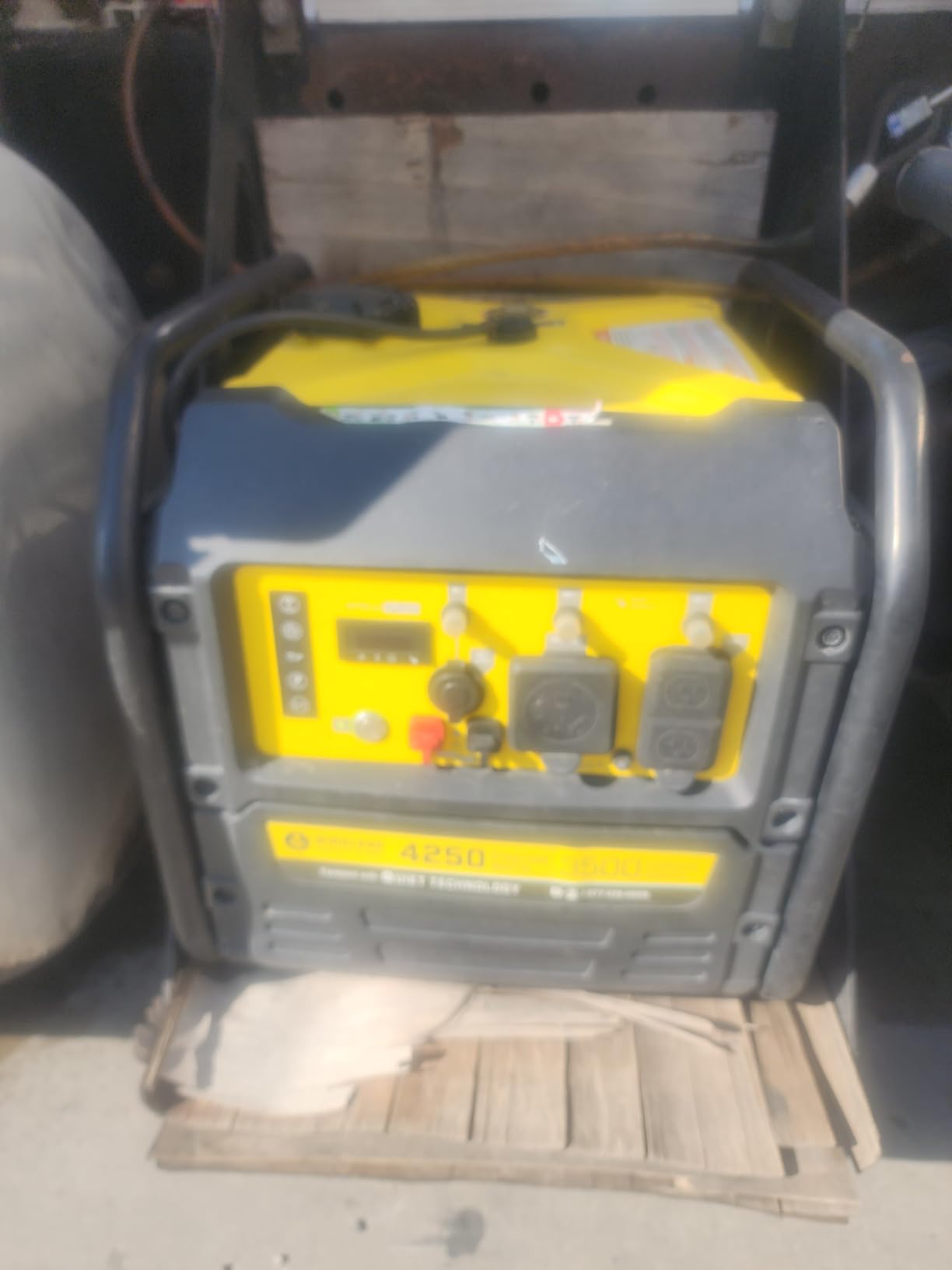
Owners treat this as a value-oriented open-frame workhorse, praising the 22 hour gasoline runtime, the true 30A RV outlet and the 3,500 running watts for the money. A CARB-compliant engine is specified, and parallel readiness through the optional ParaLINK kit means you could double your output later.
Economy mode helps stretch the tank at lower loads, which is exactly the mode a sump pump runs in, since pumps cycle rather than run continuously.
It is 79 pounds, lighter than the WEN DF475T and the Westinghouse iGen5000DF, which makes repositioning easier than most of this class.
Why pumps are the deciding load
A half horsepower well pump can draw close to its full running wattage at startup and stay there. A sump pump cycles. Between them they set the surge requirement for your whole house, and most people discover this by discovering it the hard way with a smaller unit.
Add a refrigerator, a freezer, lights and a router to that and you land right around 2,500 running watts, which is why 3,500 running gives you real margin rather than a paper calculation.
Where it falls short
There is no CO sensor listed on this model, and in a group where buyers treat a missing CO sensor as a safety disqualifier rather than a spec shortfall, that is worth weighing seriously. An open frame is also louder than a fully enclosed inverter of the same output.
Oil and the LPG hose must be added before the first use, the ParaLINK parallel kit is sold separately, and 79 pounds is a two-person lift for most people.
9. WEN DF360iX – The Most Hurricane-Tested Inverter in the Group
WEN Quiet and Lightweight 3600-Watt Dual Fuel RV-Ready Portable Inverter Generator with Fuel Shut Off and CO Watchdog (DF360iX)
2900 rated watts on gas
2600 on propane
49 pounds
CO Watchdog shutdown
Pros
- Reported running a home through Hurricane Francine
- Only 49 pounds so one person can reposition it
- CO Watchdog shuts the machine down
- Digital data center tracks fuel and hours
- Tool free LPG quick connector
Cons
- Recessed TT-30R outlet is awkward to seat
- Non standard short LPG quick connector
- Propane endurance closer to 6 hours per 20 lb tank than claimed
- Loud in eco mode with the 149cc engine
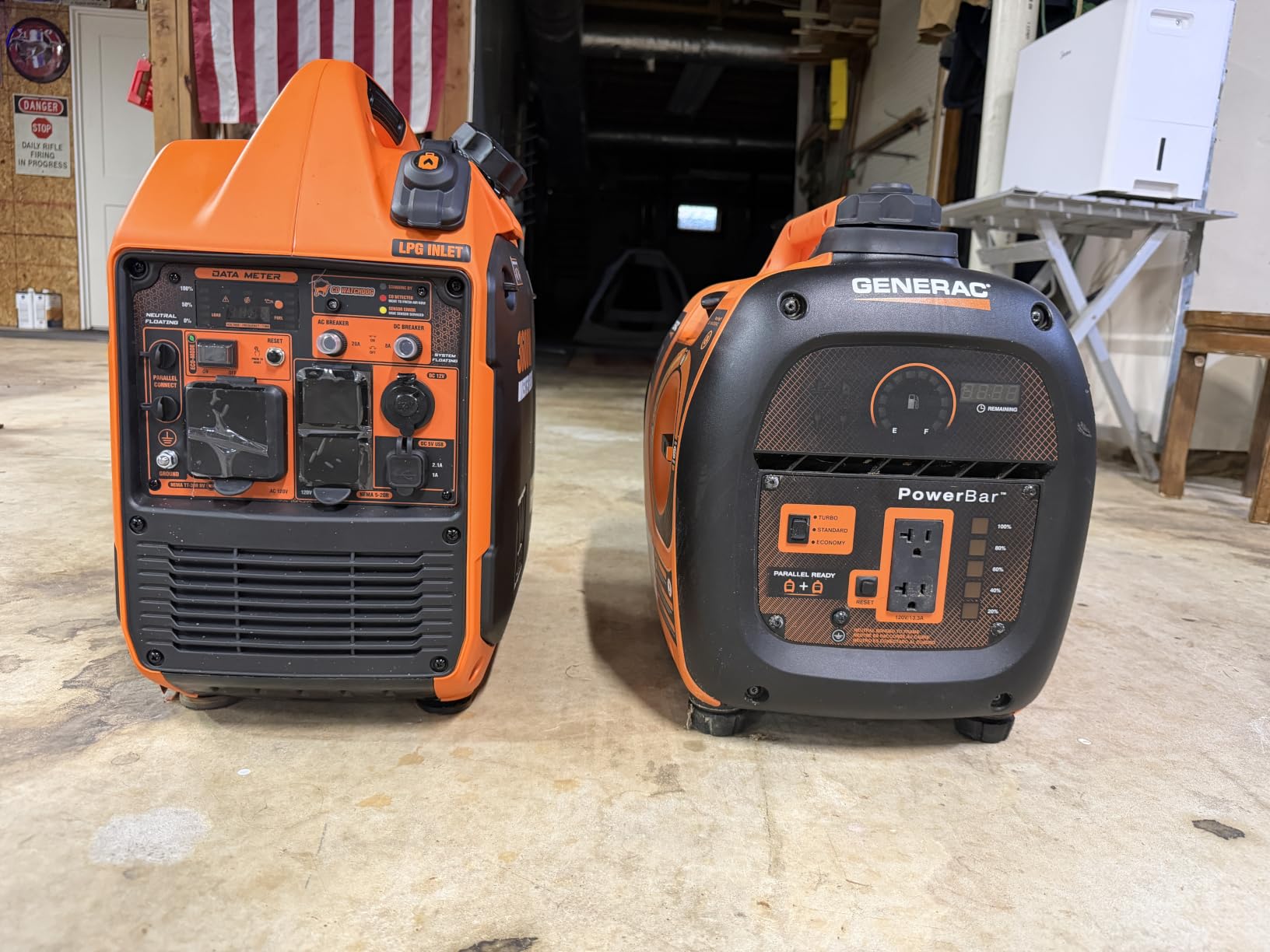
The DF360iX has the single most relevant field report in this entire roundup. One owner reported running a refrigerator, a chest freezer, a desktop computer, lights and a window air conditioner through Hurricane Francine without dropping the load, on a total of 2,600 watts. That is a real, named storm, with a real load list, which is far more useful than any runtime claim in a spec sheet.
The numbers support it. 3,600 surge and 2,900 rated watts on gasoline, 3,500 and 2,600 on propane. At 49 pounds it is the second-lightest machine here, and that is not a small detail when you need to move it as the wind shifts.
It is an inverter unit with clean power for sensitive electronics, and it has a WEN Watchdog CO shutdown sensor that cuts the machine when carbon monoxide climbs. The digital data center shows fuel level, load, voltage and total run hours, which is genuinely useful for tracking service intervals across seasons.
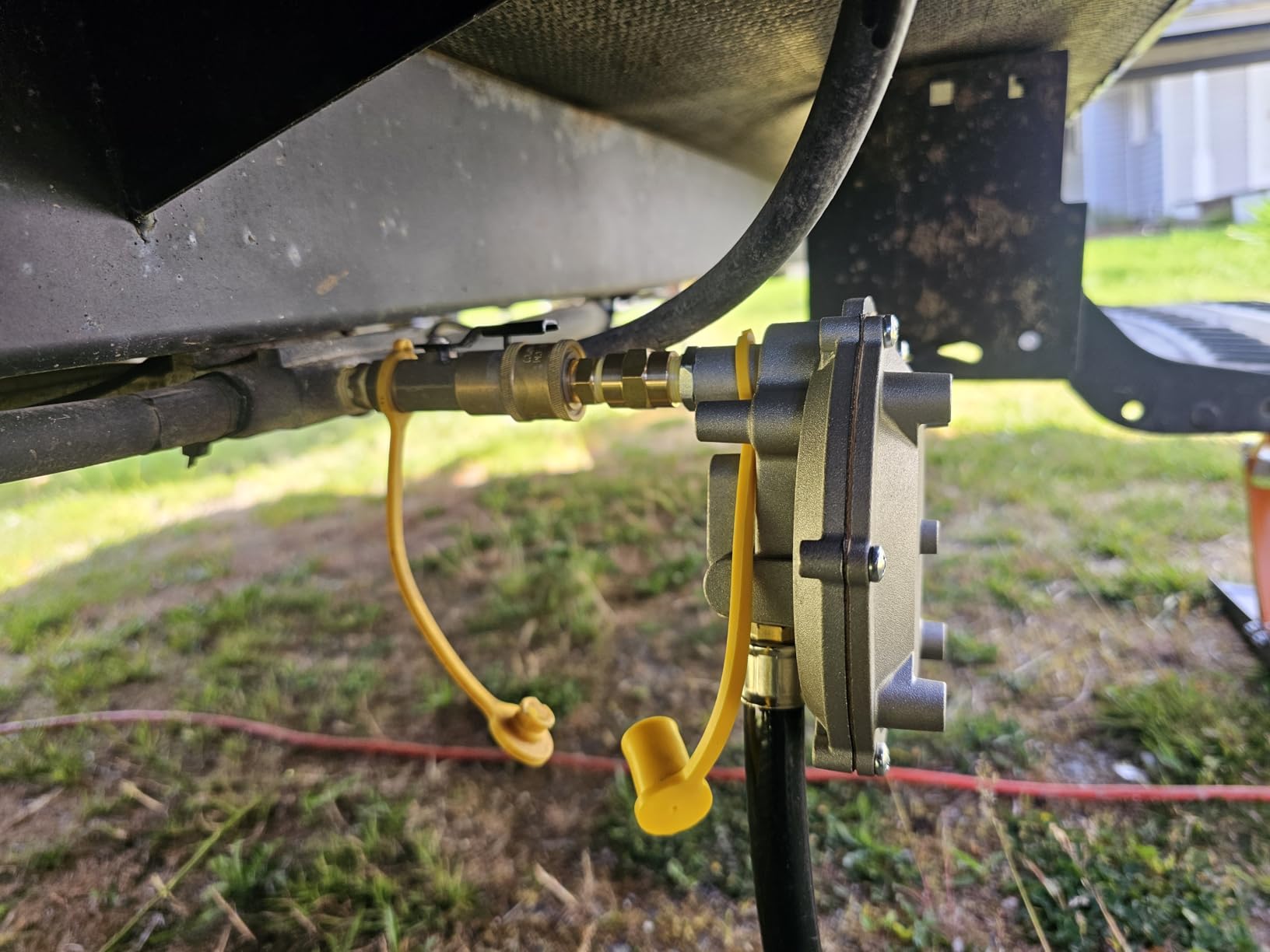
Owners also note that it costs less than the near-identical Champion 4000W dual fuel model, which makes it a value comparison worth making on paper. The outlets are two three-prong 120V receptacles, one TT-30R RV receptacle, one 12V DC receptacle and two 5V USB ports, and a fuel shut-off valve limits maintenance.
For a home office or a house where a desktop, a router and a network switch have to stay alive alongside the refrigerator, this is the shape of machine that fits.
Because it is light, it is also the machine most people will actually reposition when exhaust direction becomes a problem. That is a safety behavior, not a convenience.
The load it proves it can carry
Take the field report as a shopping list. Refrigerator, chest freezer, computer, lights, one window AC. Add a router, a monitor and a phone charger and you are still comfortably under 2,900 rated watts.
That is a genuine three-day household without central air and without a pump, which is the situation a lot of people are actually in.
Where it falls short
The propane runtime figure is overstated relative to what owners actually see. Owners report real-world propane endurance closer to 6 hours per 20 lb tank, not the number on the box, so plan cylinders on the real figure rather than the claimed one.
The 30A RV outlet is recessed in an awkward spot, some plugs are hard to seat in the dark, and the LPG quick connector is a short non-standard type that will not mate with a standard quick connect. Owners also report heavy smoke and a stumble on the very first run before the fuel cap vents, and elevated noise in eco mode from the small 149cc engine.
10. Champion 4500W Dual Fuel – The Quiet All-Nighter With Electric Start
Champion 4500-Watt Electric Start Dual Fuel Portable Inverter Generator
3500 running watts on gas
3150 on propane
14 hours on gasoline
61 dBA
Pros
- 14 hour gasoline runtime covers a full night
- 3500 running watts covers fridges fans and a TV
- 61 dBA suits quiet residential streets
- Parallel kit lets two machines share a load
- CO Shield and electric start
Cons
- 99.2 pounds is heavy for a portable inverter
- CO sensor needs the exhaust fully clear
- Parallel kit sold separately
- A small number of 1 star reviews cite oil leaks
The Champion 4500W is the answer to a specific question: how do I get through the night without getting up to refuel? Up to 14 hours on gasoline from a 2.25 gallon tank means one fill at bedtime carries you to morning with hours to spare, which is the difference between a manageable outage and an exhausting one.
It makes 3,500 running watts on gasoline and 3,150 on propane, with 4,500 starting watts on gas. That load is a refrigerator, a freezer, a television, fans, lighting and a router, with surge headroom for compressor start.
Electric start with an EZ Start Dial, 61 dBA noise output, and CO Shield automatic carbon monoxide shutoff. The Intelligauge power meter shows voltage, frequency and operating hours, so you can track service intervals across seasons.
Owners using it for food trucks, camper vans and storm backup report strong, quiet and fuel-efficient performance with a single-pull start.
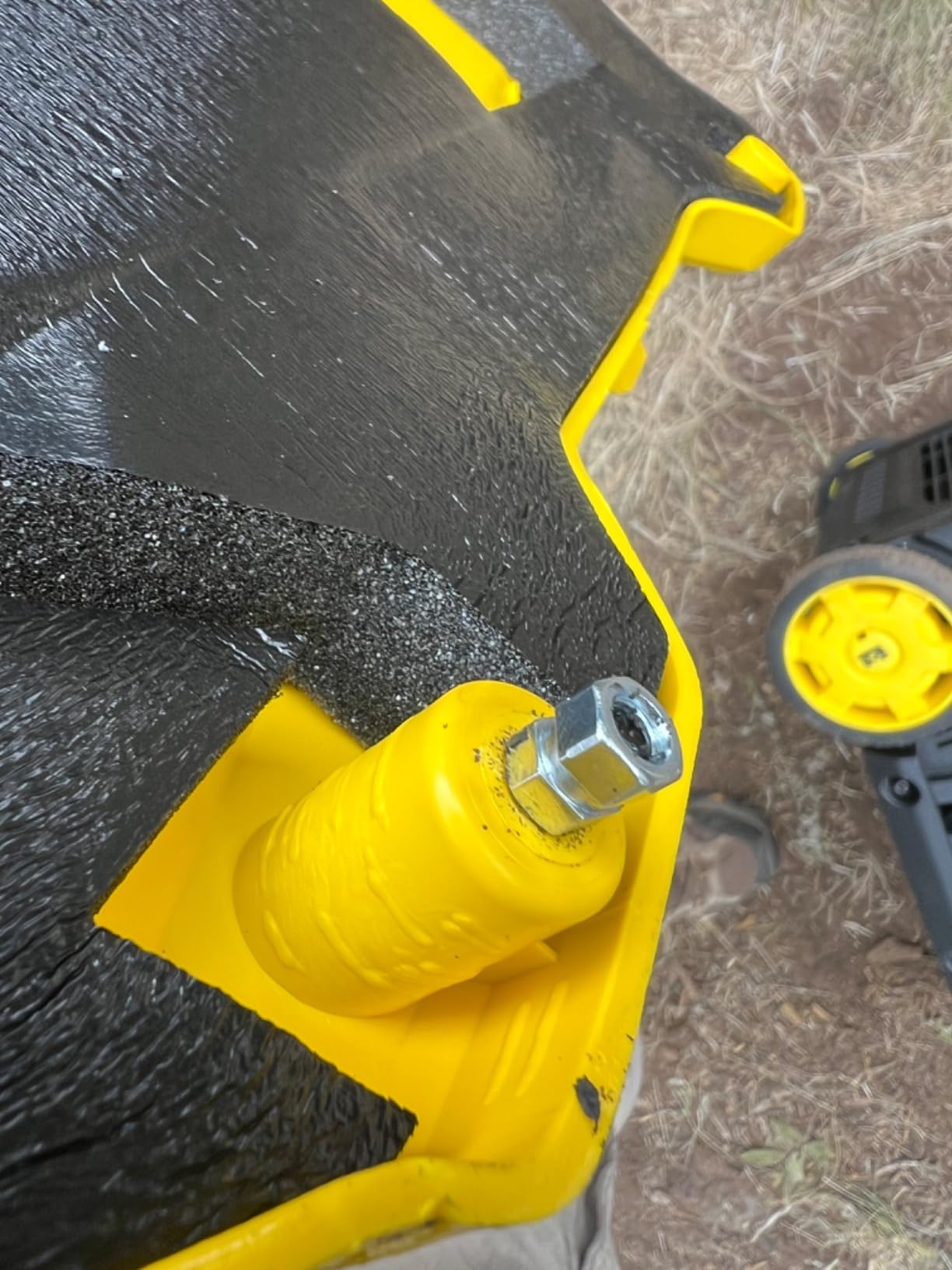
The parallel capability is real here rather than theoretical, with owners verifying it by running matched pairs. For a household that would rather run two lighter machines in two separate rooms than one heavy machine in one place, that is a legitimate strategy.
At 61 dBA it is quiet enough for campsites and quiet residential streets, which puts it closer to the inverter tier in noise than to the open-frame machines it shares a power class with.
Propane endurance is stated as up to 21 hours, which makes it the second-longest propane runtime in this group behind the Champion 4000W.
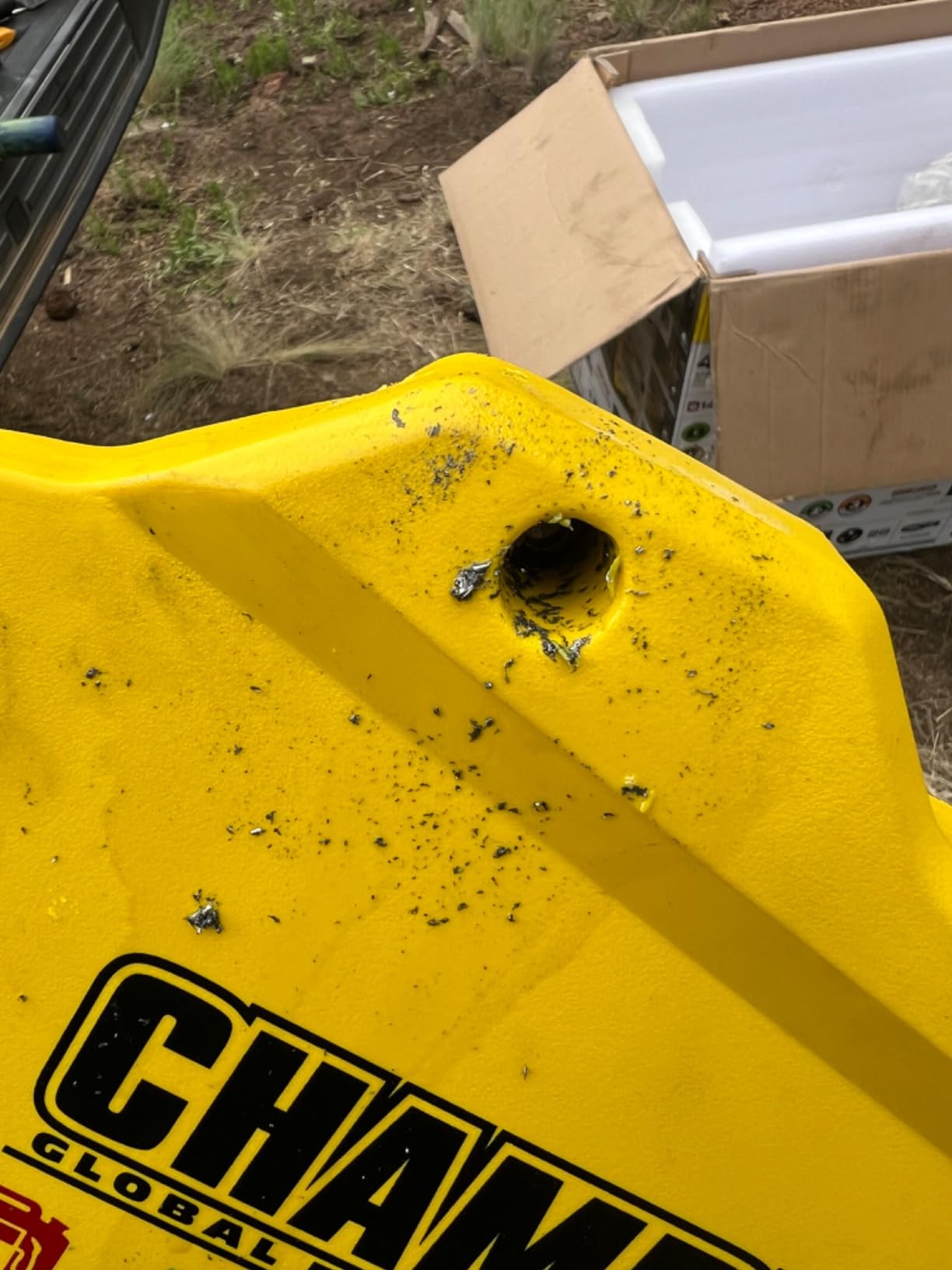
Why overnight runtime is the deciding spec
Think about what a night actually costs you. Getting up at 3am in a dark house to refuel a generator is the part people underestimate, and it is the part that wears a household down over a multi-day outage.
A machine that starts the night full and is still running at dawn removes an entire category of friction for the first two nights, which are usually the hardest.
Where it falls short
At 99.2 pounds it is heavy for a portable inverter, with only the two open-frame machines in this group weighing more. When you need to move it because of wind direction, that weight is a real problem, and it is the main reason to consider a lighter unit instead.
The CO sensor requires the exhaust to be clear or the tailgate fully open, and owners report it shutting down when exhaust is obstructed, which is the system working but is still an interruption. The parallel kit is sold separately, the Intelligauge display is less detailed than the WEN digital data center, and a small number of 1-star reviews cite oil leaks and hard starting that required a workshop visit under warranty.
How to Size a Dual Fuel Generator for a Hurricane Outage?
Size by the loads you cannot lose, not by the size of your house. Square footage is a weak predictor because a 2,000 square foot house with a refrigerator, lights and a router needs almost nothing, while a 1,200 square foot house with a central air unit, a well pump and a freezer needs a great deal. Here is the method, in five steps.
Step one: list your critical loads. Everything else on this list goes on the list later. A refrigerator, a freezer, a router and modem, lighting, a medical device, a fan, a well or sump pump if you have one. Do not include the television, the washer, the dishwasher or the electric water heater unless you have decided you are running them.
Step two: find the running watts of each. These are the numbers that matter for sizing, and they are printed on the nameplate of every appliance or in its manual.
Step three: add them up, then add 25 percent for headroom. Headroom is not waste. Generators run best below their rated output, and a machine at 95 percent of its rating runs hot, loud and short-lived.
Step four: check surge, not just running watts. Compressor-based appliances like a refrigerator, a freezer and a window AC draw three to four times their running watts for a second or two at startup. The starting watts figure has to clear your total running load plus the largest single surge on the list.
Step five: pick the smallest machine that clears both numbers, then check the outlets. A 3,500 running watt machine is useless for whole-home use if it has no 30A twist lock, and a machine with no 30A twist lock can never grow into a transfer switch install later.
A worked example for the question we get most, a 2,000 square foot house. Assume a gas refrigerator and electric range, central air is out, and you have a chest freezer.
For a 2,000 square foot house with no central air, a typical critical load is a refrigerator at 700 to 800 watts, a chest freezer at 400 to 500, a router and modem at 25 to 40, LED lighting at 100 to 150, a box fan at 75 to 100, and a 5,000 BTU window AC at 1,000 to 1,500. That totals roughly 2,300 to 3,000 running watts, and adding 25 percent headroom puts you at about 2,900 to 3,750. Add a microwave at 1,500 watts and you are near 5,000.
So for a 2,000 square foot house running essentials plus one window AC, we would put you in a 3,500 to 4,500 running watt class. That is the Westinghouse iGen5000DF, the Champion 4500W, or the Champion 4250W. If you also need central air or a well pump, you are in the 10,000 watt class and there is no middle option.
If you run a well pump or a sump pump, add the pump first and size everything else around it. A half horsepower motor is the largest surge in most homes and it does not care about your other appliances.
Two smaller generators in parallel can serve the same load as one large one, and the forum debate on that is worth taking seriously. Two 3,500 watt machines give you 7,000 combined, but they must be matched models from the same manufacturer on a proper parallel kit, you need more outlets, and you have twice the machines to place, fuel and protect. We would start with one machine that covers your actual load rather than two that cover a load you do not have.
How Much Propane or Gas You Need for a 3 Day Outage
Here is the endurance math, using the published run times on this list. These are manufacturer figures at a stated load, and real results vary, so treat them as planning numbers and add a margin.
On gasoline at half load, the Champion 4250W gives you the longest night in the group at 22 hours, and the DuroMax XP5500EH manages 9 hours from just under 4 gallons. The Westinghouse iGen5000DF gives 18 hours on 3.4 gallons, the Champion 4500W gives 14, and the WEN DF475T gives 11. The smaller machines run shorter on gas because their tanks are small, not because the engines are weak.
On propane, the endurance picture inverts. The Champion 4000W runs up to 25 hours on a standard 20 lb cylinder, the PowerSmart 3800W up to 24, and the Champion 4500W up to 21. The Westinghouse and Champion inverter machines in the middle of this list are the ones to check the manufacturer figure on before you plan a week.
Convert that to a three-day outage. Three days is 72 hours. At half load on gasoline with no refuel overnight, you are looking at roughly one to three tank fills for a mid-size machine, and considerably more for a whole-home unit running central air.
For a typical coastal household running a refrigerator, a freezer, lights, a router and one window AC, plan on three 20 lb propane cylinders plus two spares for a three-day outage, or roughly 12 to 15 gallons of stabilized gasoline in approved vented containers. The dual fuel advantage shows up here: you can burn gas when it is available and drop to your stored cylinders when the pumps stop, rather than being limited to one fuel you cannot replace.
For a seven-day outage, multiply by roughly two and a half. That is eight propane cylinders for a household load, or a pre-staged gasoline cache in a shed that does not flood. Anything more than a week and you are into whole-home territory, where a permanently installed standby system makes more sense than a portable machine.
One real-world data point worth keeping in mind, because it comes from a grill tank rather than the standard cylinder the spec sheets use. A Sportsman Sandstorm 7500W dual fuel owner reported 15 hours of use from a single 15 lb propane grill tank. Cylinder size changes the math more than people expect, and a stack of 15 lb grill tanks is often easier to buy, store and move than the same total in 20 lb cylinders.
Running a Dual Fuel Generator Safely During a Hurricane
Carbon monoxide kills people every year, and generator exhaust is the second leading cause of carbon monoxide poisoning in the United States after furnaces. Storm conditions make it worse, because people run machines in enclosed spaces to keep them dry, and they close windows because of driving rain. Both instincts are dangerous.
Rule one: never run a generator in a garage, a carport, an enclosed porch, a basement, a shed with a door closed, or any space attached to the house. Not for a minute. Not with the garage door open eight inches. The machine needs at least 20 feet of clearance from the structure and exhaust must point away from doors, windows and vents.
Rule two: install battery or plug-in CO alarms on every level of the home, near sleeping areas especially. Several owners in community forums are explicit that this is the single non-negotiable safety purchase. Where you buy it and what brand it is matters far less than whether it is installed and whether the batteries are fresh.
Rule three: reposition for wind. A machine correctly placed for a north wind becomes incorrectly placed when the wind backs to the south and the exhaust points at a bedroom window. This is why weight matters, and why the 43 pound and 49 pound machines have an operational advantage in a storm that the 234 pound machine does not.
Rule four: protect from rain without enclosing. A fitted generator cover or a small canopy keeps wind-driven rain off the panel without trapping exhaust. Do not wrap the machine in a tarp, do not put it inside a tent, and do not use a fitted cover while the engine is running, because covers are designed for storage, not operation.
Rule five: know how to refuel. Gasoline must go in with the engine off and cool. Never refuel a hot generator, never refuel near an open flame, and store cans upright in a vented area away from the house. Propane cylinders stay outdoors, upright, and away from any ignition source.
Rule six: never backfeed. Plugging a generator into a wall outlet, called backfeeding or suicide cord-ing, sends power back into the utility line and kills lineworkers. The only safe ways to connect a portable generator to a house are a transfer switch installed by a licensed electrician, or a listed interlock kit on the main breaker, installed by a professional. The WEN DF475T and the DuroMax XP13000EH both have the 30A or 50A outlets for a proper transfer switch install, and that capability is a reason to buy them over a cheaper unit.
Rule seven: use the right extension cords for the run. For household circuits, 12 gauge outdoor-rated cords, and heavier for long runs or high draw. Generator cords are not the same as house cords, and a daisy-chained chain of light-duty extension cords is a fire waiting to happen.
After the storm, let the machine cool before you touch anything, and inspect before you restart. Check for water in the crankcase and the air filter housing, which is the most common post-flood failure. If the unit ran in standing water, drain and replace the oil, and assume the air filter is finished. Then let it run at low load for fifteen minutes and listen for anything that is not a steady idle.
For storage between seasons, drain the fuel tank or run it dry, change the oil, clean or replace the air filter, and keep the machine somewhere dry and off the ground. In coastal areas, that means washing salt air off the frame annually. A generator kept on a wet patio in a salt-laden atmosphere corrodes faster than one kept in a garage, and the corrosion shows up as seized pull-start cords and eaten-through grounding points two seasons later.
Who Should Skip a Dual Fuel Generator
A dual fuel generator is the wrong purchase for some people, and telling you that is more useful than another roundup entry.
If your household is only keeping a phone charger alive, a dual fuel generator is overkill. A large power station and a solar panel cover that case with zero fuel, zero noise and no combustion.
If you need to run central air, an electric water heater, an electric oven and a washer at the same time, a portable dual fuel generator is the wrong tool. You need a permanently installed standby system, and no amount of wattage in a portable machine changes that.
If you rent, live in a condo, or have an HOA with a noise ordinance, check the rules before you buy. A 52 dBA inverter is a very different proposition from an open-frame unit at 64 dBA or higher, and the smallest machine you can buy is often the one you cannot legally run at night.
If you will not test-run the machine for two hours in May, buy something else. The most common cause of a dead generator at the moment you need it is that the carburetor varnished over during eight idle months, and that is entirely preventable with a fuel stabilizer and one afternoon.
If you are buying in the two to four weeks before a named storm, your options are narrow and dealer counters are busy. Buy early in the season, test it, and let it sit with treated fuel.
Frequently Asked Questions
What is the disadvantage of a dual fuel generator?
The main disadvantages are a 10 to 20 percent output loss when running on propane, higher cost per hour on propane than gasoline, extra engine weight from the second fuel path, and two fuel systems to keep clean instead of one. Switching fuels also takes attention, and the propane regulator and hose are extra connection points that can leak if mishandled. For most households the trade-off is worth it during a hurricane because gasoline supply collapses faster than a stored propane cylinder ever will.
How big of a generator do I need to run a 2000 sq ft house?
For a 2,000 sq ft house with no central air running a refrigerator, a chest freezer, a router, lights, a box fan and one 5,000 BTU window AC, you need roughly 2,300 to 3,000 running watts. Add 25 percent headroom and you are at about 2,900 to 3,750 running watts, so a 3,500 to 4,500 running watt generator is the right class. Add a well pump, a sump pump or central air and you move to the 10,000 watt class with no middle option.
What is the 20/20 rule for generators?
There is no recognised industry standard called the 20/20 rule for portable generators. If you have seen it, it is most likely a garbled version of two real practices: running a generator at about 20 percent of its rated load to extend run time and reduce wear, and the 20 hour figures that appear on some run time specs. Neither is a standard, and you should size on your actual measured load instead of a rule of thumb.
Can a dual fuel generator run on natural gas?
Most dual fuel generators cannot, but tri fuel kits exist for certain models. The best documented enthusiast path is the Honda EU7000is with a US Carb MSK7000 conversion kit, which lets the machine run on natural gas from an installed line, and some owners run small generators off an existing barbecue natural gas line. Check the manufacturer for a listed kit for your exact model, because an unlisted kit can void the warranty and alter the carburation settings.
How long will 250 gallons of propane last on a whole house generator?
It depends entirely on load. A 250 gallon tank holds about 22 standard 20 lb cylinders, and a mid-size inverter running a refrigerator, lights and a router at low load can run many hours per cylinder, while a whole-home standby burning propane at full output uses far more. For planning, a 3,000 running watt portable dual fuel inverter on propane runs roughly 15 to 25 hours per 20 lb cylinder at moderate load, so 250 gallons covers a typical three to seven day household outage on essential loads and much less if you are running central air.
Do dual fuel generators have remote start?
Some do and some do not. The Westinghouse iGen5000DF in this roundup comes with a key fob remote start alongside electric and recoil start. The Champion 4500W has electric start. The Champion 4000W, the Westinghouse iGen2550DFc, the PowerSmart 3800W and the WEN DF360iX are recoil start only. If remote start matters to you, confirm it on the spec sheet before you buy, and remember that a remote start still needs a charged battery, so put the unit on a trickle charger between outages.
Who makes the best dual fuel generator?
It depends on the use case rather than the badge. Westinghouse and Champion lead on inverter build quality, clean power and service networks. DuroMax leads on high-output open-frame machines. WEN and PowerSmart cover the lightweight and value tiers. For whole-home 240V backup with a transfer switch, the DuroMax XP13000EH is the clear pick. For quiet inverter power for sensitive electronics, the Westinghouse iGen5000DF leads. Pick by your load and your noise tolerance, not by a single brand winner.
What is the best portable generator according to Consumer Reports?
We could not verify a specific Consumer Reports ranking for dual fuel portable generators, and we would rather say so than invent one. The criteria that matter in their testing are the ones we used here: measured noise, measured fuel consumption, run time at a stated load, surge capacity and the presence of CO protection. Check the published results yourself and weight those criteria rather than a single overall score.
Conclusion
If you want one answer, the DuroMax XP13000EH is our top pick among the best dual fuel generators for hurricane season, because 10,500 running watts with a transfer switch ready 50A outlet is the only configuration here that can carry a whole home, and its push-button electric start removes the single most common failure point at the moment you need it most.
For most households the honest answer is smaller. The Westinghouse iGen5000DF gives you the cleanest power and the quietest operation here at 52 dBA with an 18 hour gasoline runtime. The WEN DF475T gives you switchable 120V and 240V at the best value in the group. The Champion 4000W buys you a full day on one propane cylinder, which is the most hurricane-specific feature on this list.
Whatever you pick, buy it before the season starts, fill it with stabilized fuel, run it for two hours on both fuels in a test run, and count your propane cylinders the way you would count your batteries. Fuel is the constraint in a hurricane, not wattage, and the machine that never runs out is the one that gets you to day five.