
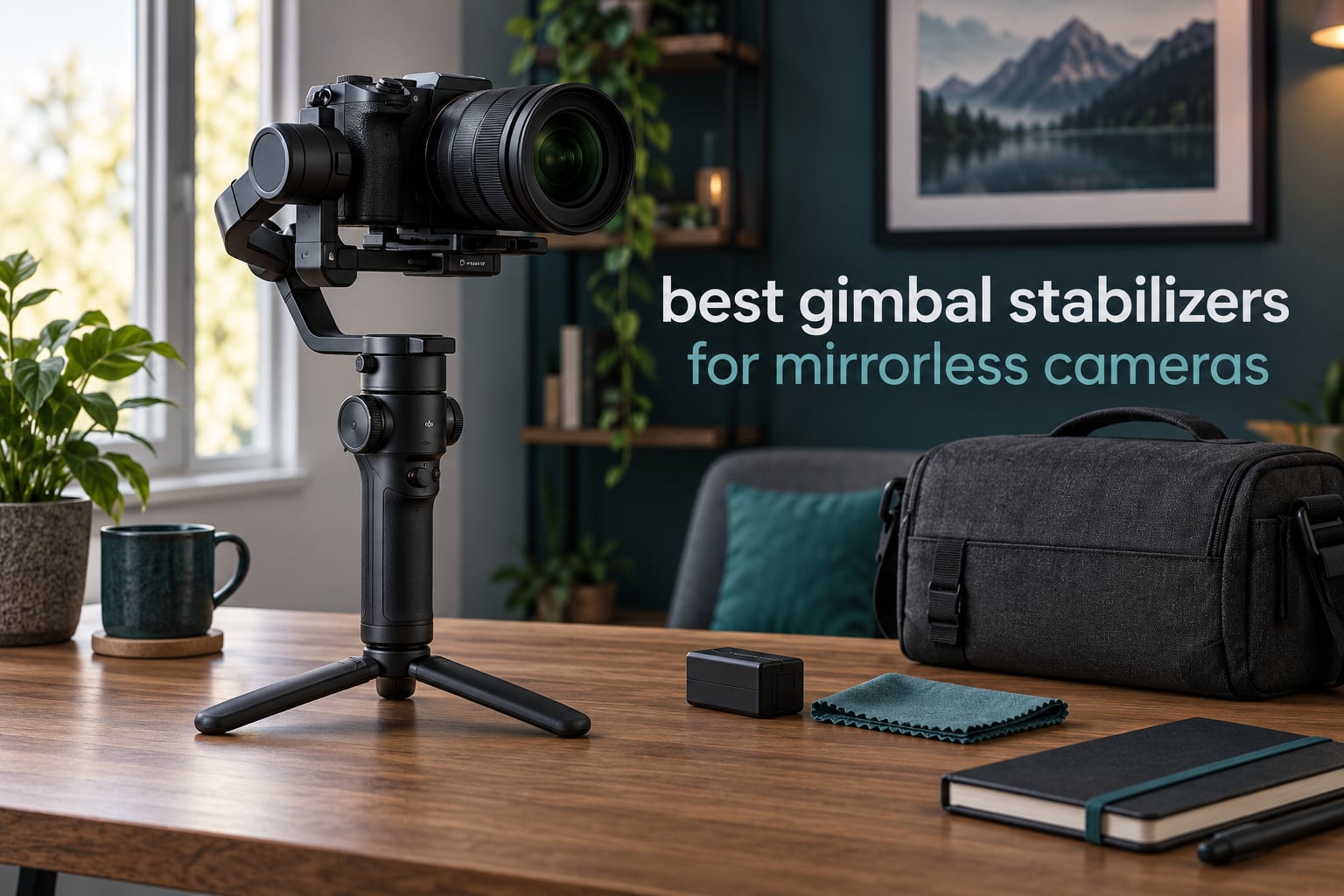
If you want one gimbal that suits most mirrorless shooters, the DJI RS 3 Mini is the safest bet in 2026. It weighs 795 g, carries a tested payload of 2 kg, and has a 1.4-inch colour touchscreen, so it handles a compact full-frame body with a short zoom without feeling like a brick in your hand. The rest of this roundup covers seven more options, from a sub-1 kg model with 3 kg of payload headroom to a 4.5 kg cinema-workhorse.
A gimbal is a three-axis motorised mount. An internal gyroscope senses how the rig is moving and drives brushless motors on the pan, tilt and roll axes to cancel out shake, which is why walking shots come out level instead of bouncing. Mirrorless bodies often have strong in-body image stabilization, but IBIS only smooths small hand tremors. It does not remove the vertical step and sway of walking, running, orbiting or low-angle moves, which is exactly what a gimbal handles.
We spent weeks comparing the eight gimbals below on payload, body weight, battery runtime, vertical shooting, control options and setup friction. Every number in this guide comes from the manufacturer spec sheet and owner reviews, and every pick includes an honest note on who it is not for. We updated the list for 2026, and prices move constantly, so use the check buttons rather than any figure you may have seen elsewhere.
One thing worth saying early: the biggest complaint from new gimbal owners is not motor quality or software, it is balancing. If you have never balanced one before, the models with wide-axis cradles and centre-of-gravity memory below will treat you far better than a slim travel body with a narrow plate.
Table of Contents
Top 3 Picks for Mirrorless Cameras in 2026
If you only read one section, read this one. These three cover the most common mirrorless rigs, from a lightweight travel kit to a full-frame body with a fast standard zoom.
Best overall: DJI RS 3 Mini – 795 g body, 2 kg tested payload, native vertical shooting and a colour touchscreen at a size that fits any camera bag.
Best value: Zhiyun Weebill S – 2.5 kg payload and up to 14 hours of runtime from a 926 g body, with sling mode to cut wrist fatigue.
Best for long shoot days: Zhiyun CINEPEER Weebill 3E – 3 kg of payload headroom in a 990 g body, plus up to 16 hours of claimed battery life.

DJI RS 3 Mini
- 795 g body and 2 kg payload
- Native vertical shooting
- 1.4-inch colour touchscreen
Zhiyun Weebill S
- 2.5 kg payload and 14 h battery
- Sling mode handling
- PF follow POV vortex lock

Zhiyun CINEPEER Weebill 3E
- 3 kg payload under 1 kg
- Up to 16 h battery
- Native vertical and Bluetooth
Quick Comparison of Every Gimbal in 2026
Payload is the number that decides whether a gimbal suits your kit. Body weight decides whether you will actually carry it all day. Here are all eight models side by side.
| Product | Specs | Action |
|---|---|---|
| DJI RS 3 Mini |
|
Check Latest Price |
| Zhiyun Weebill S |
|
Check Latest Price |
 FeiyuTech SCORP-C FeiyuTech SCORP-C |
|
Check Latest Price |
| Zhiyun CINEPEER Weebill 3E |
|
Check Latest Price |
 Zhiyun Weebill 3S Zhiyun Weebill 3S |
|
Check Latest Price |
 FeiyuTech SCORP 2 FeiyuTech SCORP 2 |
|
Check Latest Price |
 DJI RS 3 Pro DJI RS 3 Pro |
|
Check Latest Price |
 Feiyu SCORP Mini 3 Pro Feiyu SCORP Mini 3 Pro |
|
Check Latest Price |
1. DJI RS 3 Mini – Best Overall for Most Mirrorless Shooters
DJI RS 3 Mini, Camera Gimbal Stabilizer, Canon/Sony/Nikon/Fujifilm
Payload: 2 kg
Weight: 795 g
1.4-inch screen
Native vertical
Pros
- Only 795 g for a full handheld day
- 2 kg tested payload covers most mirrorless plus a compact zoom
- 1.4-inch full-colour touchscreen with an intuitive interface
- Native vertical shooting with no extra bracket
- Bluetooth shutter control re-links on its own
Cons
- Compact build leaves little room for a large monitor
- Needs the DJI Ronin app for activation and full control
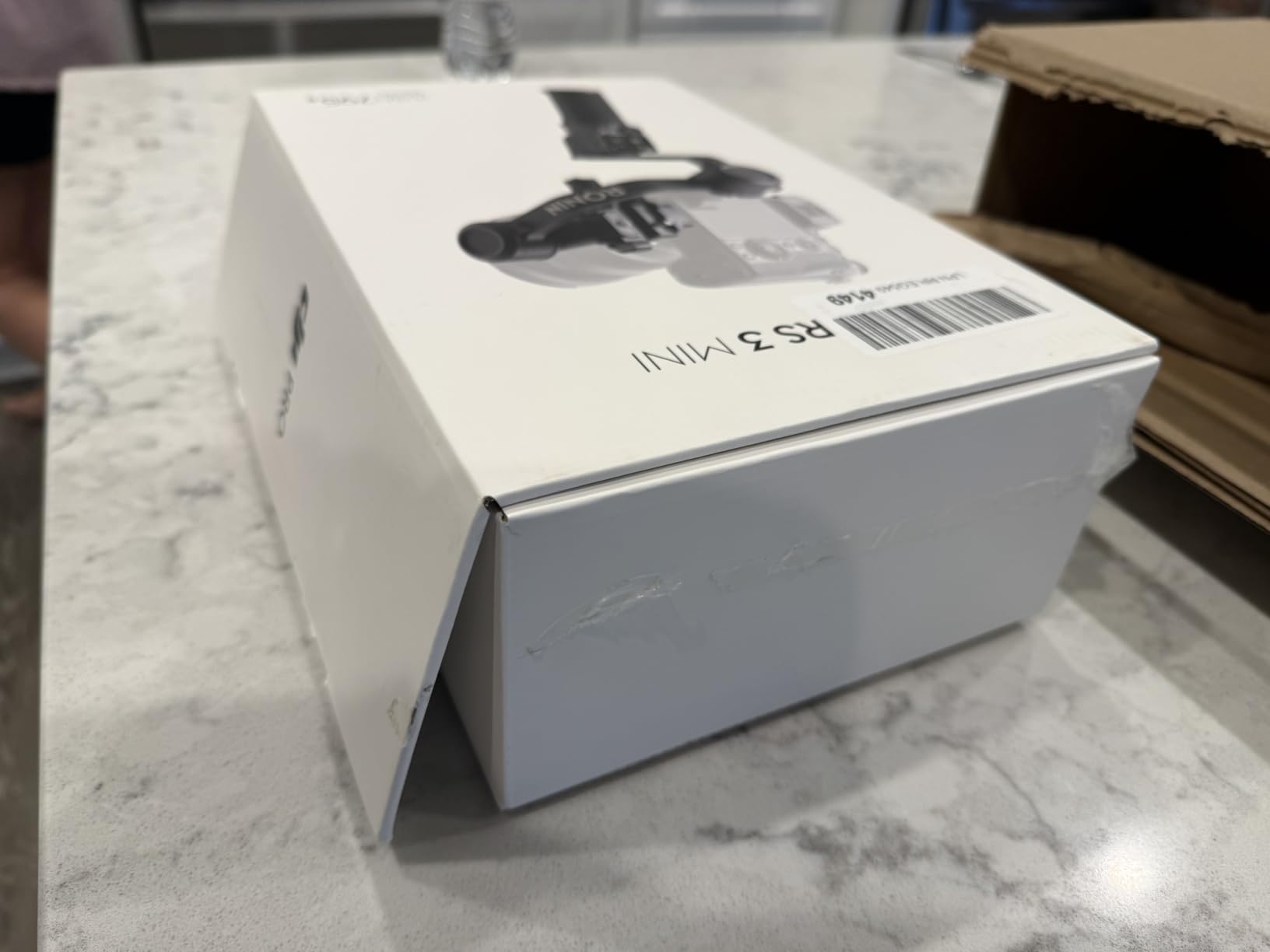
The RS 3 Mini is the first gimbal I hand to someone who has never used one. It is light enough that you forget it is in the bag, and the 1.4-inch full-colour touchscreen means you can check battery, framing and mode without pulling out a phone. The colour panel is small, but it is far more informative than the monochrome status screens on older mid-range gimbals.
Two kilograms of tested payload covers the majority of mirrorless kits. A Sony A7 IV with a 24-70mm, a Canon R8 with a 35mm, or a Fujifilm X-T5 with an 18-55mm all sit comfortably inside that figure, and native vertical shooting means you can turn the rig on its side without an L-bracket or a re-balance. Bluetooth shutter control re-links automatically after the first pairing, which saves a surprising amount of setup time on a fast shoot.
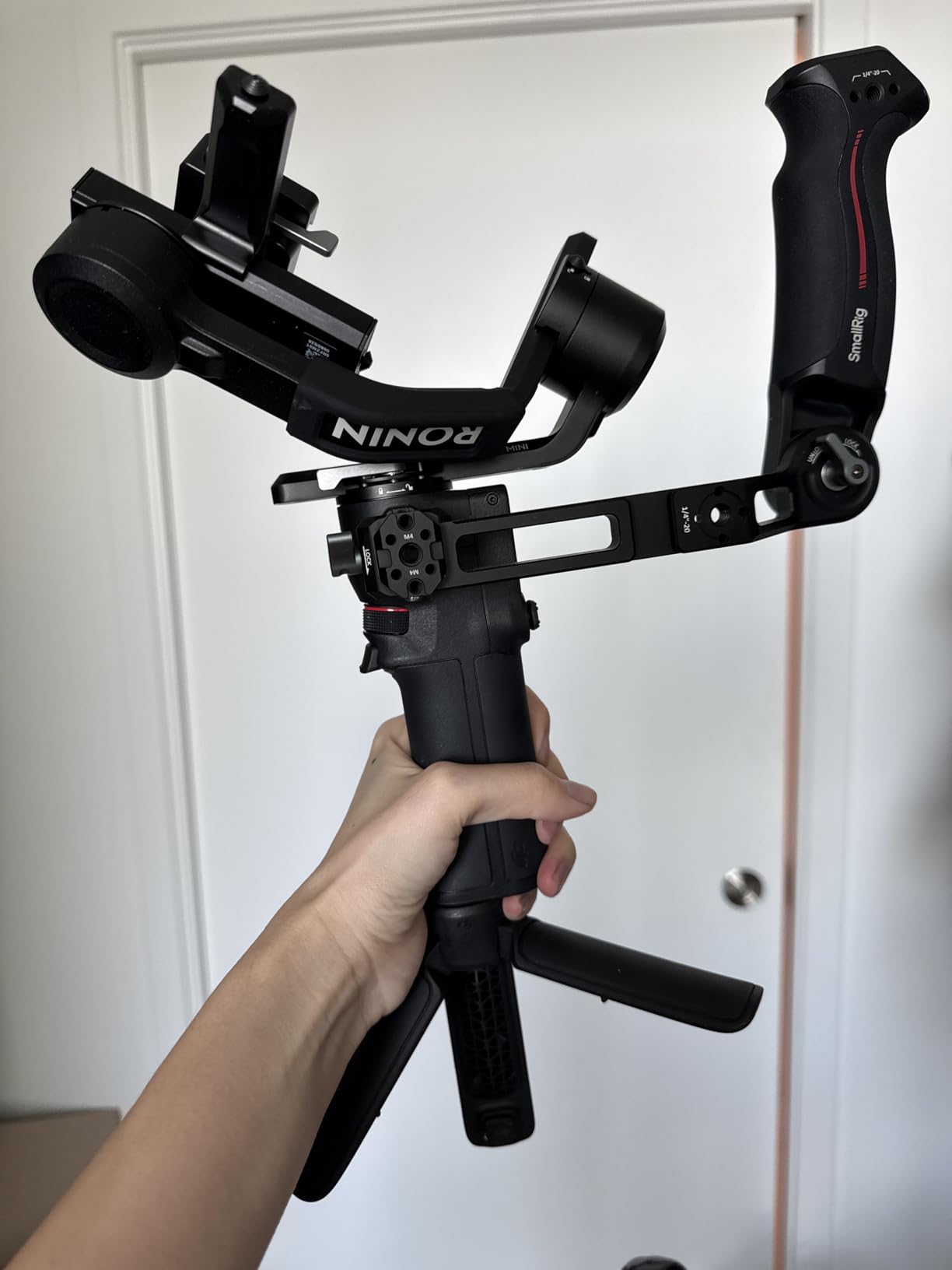
Stabilization comes from DJI’s third-generation RS algorithm, and the PF, PTF and FPV shooting modes give you real control over how the camera follows. PF softens the pan axis for walking shots, PTF keeps pans locked while tilts and rolls follow, and FPV locks all three axes for jib-like moves. Owners rate it 4.3 stars across more than 2700 reviews, and it sits at the top of the professional video stabilizers category, which tells you how often it gets used and compared.
The honest limitation is scale. The Mini’s arms and plate are sized for mirrorless bodies and compact zooms, so a large cinema camera, a long telephoto or an external monitor will crowd the frame. A second limitation is software dependence: the gimbal needs the DJI Ronin app for activation and for parameter changes, and that app is no longer listed in the Google Play store, so you download it from DJI’s own site. Forum users describe the app as a bit confusing the first time you open it, which is worth knowing before you rely on it.
Who the RS 3 Mini suits
This is the gimbal for a solo creator, a vlogger or a travel shooter who carries one body and one lens. If your rig is a mirrorless body plus a prime or a short zoom, the 2 kg payload is comfortable and the 795 g weight is easy on the shoulder over a full walking day. It also suits anyone who shoots vertical short-form content, because the native vertical mode is instant rather than a mod.
It also works well as a first gimbal, because there is little to set up. Turn it on, balance the camera, pick a mode, and shoot. The touchscreen removes the guesswork that sends new owners hunting through YouTube tutorials for menu walkthroughs.
Who the RS 3 Mini does not suit
It is the wrong choice for a cinema rig with a cage, a top handle and a matte box, or for a full-frame body with a 70-200mm telephoto bolted on. The compact frame simply does not have the arm travel to level a large assembly. If your payload is close to 2 kg, step up to a 3 kg or 4.5 kg model rather than running the motors at their limit, where drift and motor heat become noticeable.
2. Zhiyun Weebill S – Best Value Pick With Long Battery Life
Zhiyun Weebill S [Official] 3-Axis Gimbal Stabilizer for Mirrorless and DSLR Cameras
Payload: 2.5 kg
Weight: 926 g
Up to 14 h
Sling mode
Pros
- 2.5 kg payload takes mirrorless and DSLR bodies
- Up to 14 hours of battery for long shoots
- Sling mode reduces arm fatigue
- Solid metal construction on moving parts
- PF follow POV vortex and lock modes
Cons
- Balancing is fiddly and the axis lock can engage early
- Small LCD screen that is hard to read
- Awkward button layout with hidden mode combinations
The Weebill S is the most interesting value story in this group, and it holds a 4.4 star average across more than 1600 owner reviews. Two and a half kilograms of payload is a full tier above the entry-level travel gimbals, and the 926 g body is only slightly heavier than the smallest option here. That combination means you can carry a full-frame body with a fast zoom and still have a gimbal that fits in a normal camera bag.
Battery life is the standout. Up to 14 hours from the internal battery means a wedding ceremony, a full travel day or a multi-day documentary shoot without a battery swap, and that removes a whole category of anxiety. Sling mode lets you switch to an underhand grip for long moves, which takes pressure off the wrist and forearm. Zhiyun also supports the TransMount image transmission module for 1080p at 100 m with up to three receivers if you need wireless monitoring.
![Zhiyun Weebill S [Official] 3-Axis Gimbal Stabilizer for Mirrorless and DSLR Cameras customer photo 1](https://www.hdkkk.net/wp-content/uploads/2026/10/B07Y47P31Y_customer_1.jpg)
The mode list is genuinely rich once it is set up: PF for a smooth follow, full follow, POV, vortex and lock. That gives you more creative control than most gimbals in this price and weight band. Owners regularly mention the metal construction on the moving parts, which is where cheaper gimbals develop wobble over time, and the general feel of the smoothing is the other repeated positive.
Where owners push back is the setup. Balancing on the Weebill S is described as fiddly, and the axis lock can engage at the wrong moment if you do not follow the correct setup order, which produces a camera that will not level. The small LCD screen is hard to read in daylight, and the button layout hides mode switching behind combinations that no one remembers. The mobile app has also been inconsistent across updates, with modes not documented in one place.
![Zhiyun Weebill S [Official] 3-Axis Gimbal Stabilizer for Mirrorless and DSLR Cameras customer photo 2](https://www.hdkkk.net/wp-content/uploads/2026/10/B07Y47P31Y_customer_2.jpg)
Why the Weebill S is worth buying
The pitch is straightforward: for the money of a small travel gimbal you get 2.5 kg of payload, sling mode handling and up to 14 hours of runtime. Very few competitors in this list match the runtime figure, and almost none of them match it at this weight. If your shooting day is long and your battery anxiety is real, that number alone justifies the choice.
It is also a good first gimbal for anyone shooting a heavier mirrorless body. The extra payload headroom means you are not constantly swapping between a travel gimbal for primes and a heavy rig for zooms, which is the mistake that pushes people toward buying two stabilizers.
Where the Weebill S frustrates people
If you are new to gimbals and want a friendly first experience, this is not it. The learning curve on balancing, the setup order for the axis lock and the buried mode combinations all add friction, and forum discussions about first-time gimbal ownership point to exactly these issues. Small screens and app inconsistency are the two complaints that appear most often in owner reviews.
Some owners also report camera control and cabling issues with certain Sony bodies, so check that your specific model is on the compatibility list before you commit.
3. FeiyuTech SCORP-C – Best for Underslung and Low-Angle Work
FeiyuTech SCORP-C Gimbal Stabilizer for Cameras DSLR and Mirrorless Camera
Payload: 2.5 kg
Weight: 1200 g
10-13 h
18 W fast charge
Pros
- Integrated hanging handle for low-angle shots
- Five-way centre-of-gravity adjustment with memory
- Three-axis motor lock stops drift while carrying
- Folding aileron bracket doubles as a tripod
- 10-13 hour runtime with 18 W fast charging
Cons
- Only limited control cables are included
- On-screen interface is small next to newer gimbals
- Physical mode and axis controls take practice
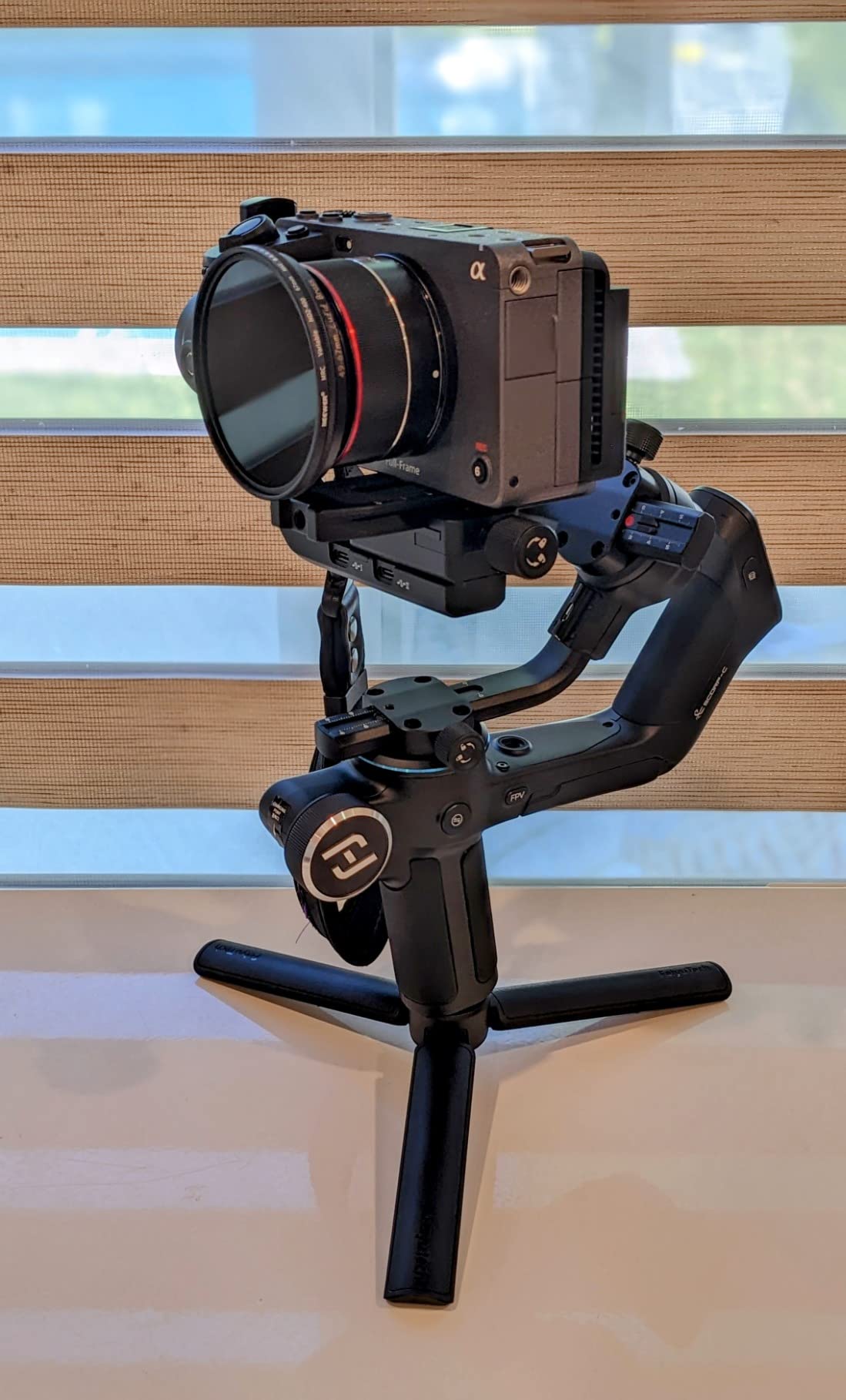
The SCORP-C is built around one idea: a gimbal you can hang below the camera. The integrated hanging handle with beveled edges gives you real control when the camera is upside down for low-angle and underslung shots, and the grip stays comfortable at that awkward angle. Most 3-axis gimbals at this weight need a separate sling grip or a mini tripod to do this, so the built-in handle is the reason to pick this one.
It handles 2.5 kg of payload and compatibility is broad across Sony, Canon, Nikon, Panasonic and Fujifilm bodies, with specific mentions of the Sony a7 IV, a6300, a6400, a7S3, a9, Canon 5D3 and 80D, and the Nikon D7500, Z5 and Z6 II. Runtime is listed at 10 to 13 hours from a 2500 mAh battery, and 18 W fast charging adds roughly 30 minutes of runtime in five minutes, which is genuinely useful between locations.
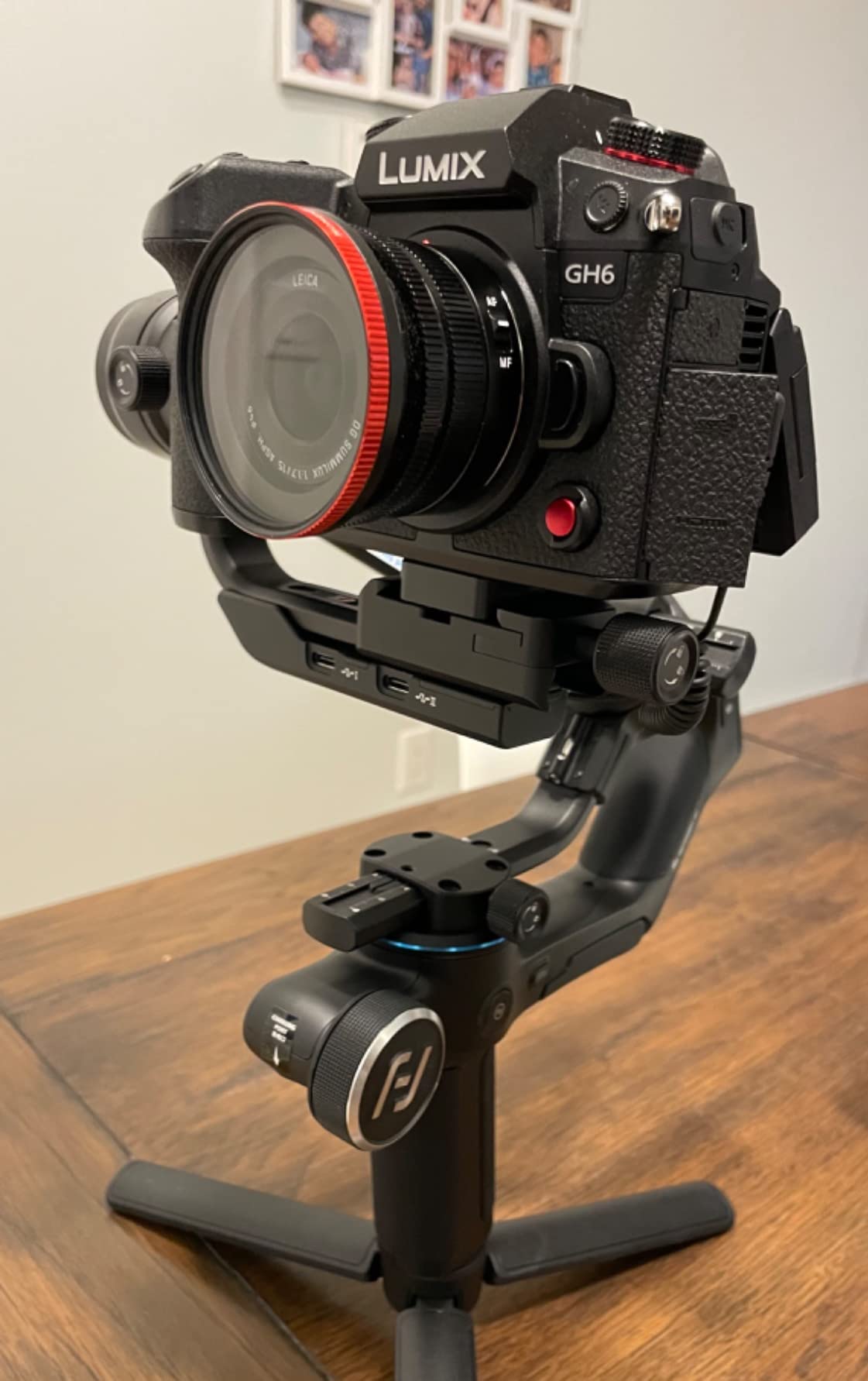
The setup features are unusually thoughtful for this tier. Five-way centre-of-gravity adjustment with memory means you can save a balance for a rig you use often, which removes the most tedious part of repeated setups. A three-axis motor lock prevents unwanted drift while you are carrying the gimbal in a bag or setting up, and the folding aileron bracket folds out as a tripod so you are not hunting for a mini tripod. The Arca-compatible quick release plate also lets you move between the gimbal and a tripod head without re-plating.
Owner reviews settle at 4.3 stars across roughly 700 ratings, with strong marks for the handle and the long runtime. The recurring gripes are practical rather than fundamental: the included control cables are limited, so some camera brands mean an extra cable purchase; the on-screen interface is small compared with newer gimbals; and the physical mode and axis controls take practice before you can change settings without thinking about it.
Where the SCORP-C earns its place
If your work involves ground-level shots, tracking shots of moving subjects from below, or any shot where the camera goes upside down, the integrated handle removes an accessory and an awkward wrist angle. It is a common setup for music videos, event coverage and documentary work where low angles are the point rather than an occasional flourish.
The centre-of-gravity memory and the motor lock also suit shooters who switch rigs often. Balancing once and returning to a saved position beats re-tuning the axis every time you change lenses mid-shoot.
Where the SCORP-C falls short
At 1200 g it is one of the heavier bodies in this roundup, so it is not the model for a lightweight travel kit. The small interface and the physical control learning curve are also real costs if you work fast and want to change modes on the move. Budget for the control cable your camera brand needs before the first shoot, not after.
4. Zhiyun CINEPEER Weebill 3E – Best Payload Headroom Under 1 kg
ZHIYUN CINEPEER Weebill 3E, 3-Axis Lightweight Gimbal Stabilizer for DSLR & Mirrorless Camera Canon/Sony/Panasonic/Nikon, 3KG Payload, Native Vertical Shooting, Bluetooth Shutter Control
Payload: 3 kg
Weight: 990 g
Up to 16 h
Native vertical
Pros
- 3 kg payload in a body that weighs 990 g
- Up to 16 hours of battery life
- A4-sized footprint that fits a normal camera bag
- Wide-axis arm cradle takes large mirrorless zooms
- Native vertical shooting with Bluetooth shutter control
Cons
- Only a Panasonic control cable is in the box
- Sling grip and wrist rest are separate purchases
- Setup order matters to balance it correctly
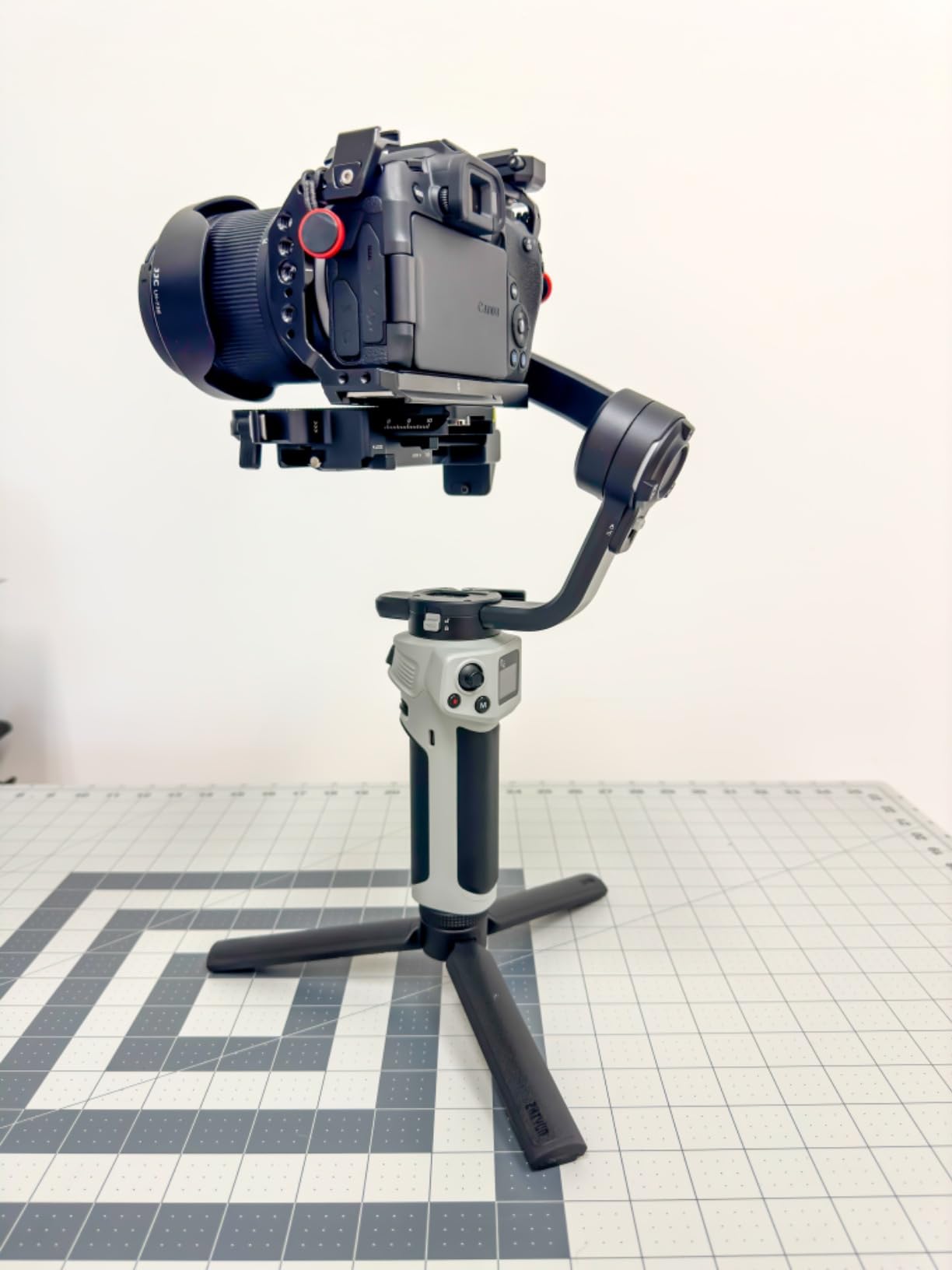
The Weebill 3E does something none of the others in this list manage: it fits 3 kg of payload into a body that weighs 990 g. That is roughly a full-frame mirrorless body, a 24-70mm f/2.8, a shotgun mic and a small cage, carried on something close to an A4 sheet of paper. The folded footprint of 12 by 8 by 2.8 inches means it lives in a regular camera bag rather than a dedicated support case.
Battery life is the headline figure, with up to 16 hours claimed from the internal pack and 14 W PD fast charging that takes the battery from flat to full in about 2 hours and 46 minutes. For a shooter running a full day without a power bank, that is a bigger practical win than any extra stabilisation mode. The redesigned handle also reduces fatigue relative to earlier Zhiyun designs on long takes.
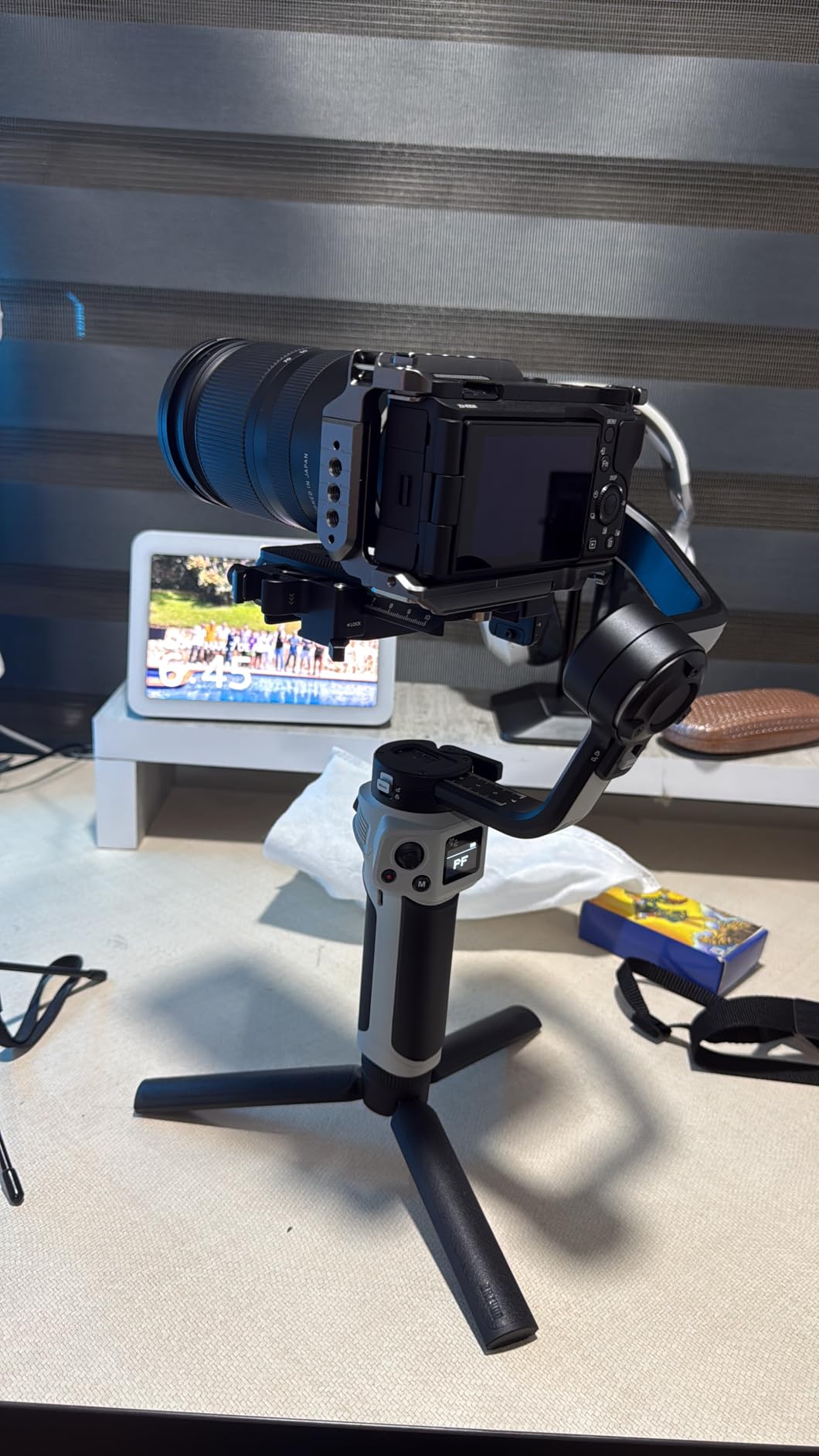
The wide-axis arm cradle is the part to pay attention to. It is designed to take larger lens diameters without the camera sliding sideways on the plate, and Zhiyun names combinations like a 24-70mm F2.8, Sony FE 24-105 F4 G, Nikon Z 24-70 F4 S and Fujifilm XF 16-55 F2.8 as supported. Native vertical shooting is present, and Bluetooth shutter and record control saves time on set once paired. Ratings sit at 4.4 stars from more than 440 owner reviews.
The most common complaint by a distance is cable inclusion. Only a Panasonic control cable ships in the box, so Canon, Sony and Fujifilm shooters need to buy the right cable separately, and that is an easy expense to forget. Sling grip and wrist rest are also sold separately if you want Sling Mode 2.5. Finally, setup order matters, so follow the sequence in the manual or the balance will not hold.
Who should buy the Weebill 3E
This is the pick for a shooter with a genuine full-frame kit who refuses to carry a heavy stabiliser. If your body plus lens plus audio runs anywhere between 1.5 kg and 2.5 kg, the 3 kg payload gives you usable headroom, and the 990 g body stays friendly on long handheld days. Pairing notes: a Sony A7 IV or FX3 with a fast standard zoom, a Canon R8 or R5, a Nikon Z6 III, or a Fujifilm X-T5 with the 16-55mm all fit this class of gimbal.
It is also a sensible all-rounder if you alternate between a light body for travel and a heavier body for client work, because one gimbal covers both without a payload gamble.
Who should skip the Weebill 3E
If you shoot a small mirrorless kit with a prime lens, the extra payload capacity is wasted capacity and the bulk is unnecessary. Buyers who dislike extra purchases should also factor in the separate cable and the optional sling grip, since neither is in the box. For cinema builds with a top handle, monitor and transmitter, step up to a 4.5 kg model.
5. Zhiyun Weebill 3S – Best With a Built-In Fill Light
ZHIYUN Weebill 3S [Official] 3KG Payload Gimbal Stabilizer with Fill Light
Payload: 3 kg
Weight: 1100 g
1000 lux fill light
11.5 h
Pros
- Built-in 1000 lux fill light with 2600K-5500K colour temperature
- 3 kg payload suits full-frame bodies with fast zooms
- Switches horizontal to vertical in about 3 seconds
- 0.96-inch status screen shows working state at a glance
- Sony Canon and Panasonic cables plus tripod in the box
Cons
- Small 0.96-inch screen carries little detail
- Lowest average rating in this group at 4.2 stars
- Bluetooth shutter support misses some bodies
The Weebill 3S is the only gimbal in this roundup with a built-in fill light, and that single feature changes what you can shoot without carrying more gear. The 1000 lux light has an adjustable colour temperature from 2600K to 5500K, so you can match it to a warm interior or daylight shade. For solo creators working in restaurants, at events or in dim rooms, that removes an accessory and its stand from the bag.
Underneath, it is a 3 kg payload gimbal weighing 1100 g, and 3 kg is enough for a full-frame body with a 24-70mm f/2.8. Zhiyun’s tenth-generation honeycomb stabilisation algorithm comes with retuned follow and smoothing curves, and the shooting mode list covers PF, F, L, POV, V and Go+Portrait. Native horizontal and vertical switching takes about three seconds, which matters when you are cutting vertical clips between landscape takes.
![ZHIYUN Weebill 3S [Official] 3KG Payload Gimbal Stabilizer with Fill Light customer photo 1](https://www.hdkkk.net/wp-content/uploads/2026/10/B0C1Z9HLY2_customer_1.jpg)
Two 2600 mAh batteries give up to 11.5 hours of runtime, with PD fast charging taking roughly two hours. The box is generous for a gimbal in this class: Sony, Canon and Panasonic control cables and a tripod are included, which removes the most common first-accessory purchase. Compatibility names the Sony FX3, ZV-1 and ZV-E10 alongside Canon, Nikon, Sony, Panasonic and Fujifilm bodies in general.
It also carries the lowest average rating in this group at 4.2 stars, with a higher share of three-star reviews than its peers, and the small 0.96-inch status screen is the reason. It shows the working state at a glance, but it does not carry much detail, so you are still going to the app for parameter work. Bluetooth shutter support does not cover every camera model, and that is the other recurring complaint.
![ZHIYUN Weebill 3S [Official] 3KG Payload Gimbal Stabilizer with Fill Light customer photo 2](https://www.hdkkk.net/wp-content/uploads/2026/10/B0C1Z9HLY2_customer_2.jpg)
When the built-in fill light changes the decision
The fill light earns its keep in short-form and event work. A 1000 lux source with variable colour temperature is enough to lift a face in a dim venue without a separate LED panel, a cold shoe mount or a second battery to manage. If you regularly shoot interviews indoors, banquet halls or evening events, that convenience is worth more to you than a larger touchscreen would be.
It is also a good fit for Canon owners in particular, since a Canon control cable is included and the 3 kg payload covers bodies like an R8 or R10 with a fast zoom.
When it is not the right call
If you need fine-grained control while you move, the 0.96-inch screen is too small to work from, and you will be opening the app constantly. Shooters who want the smoothest possible mobile workflow should look at a model with a proper touchscreen instead. The 4.2 star average and the smaller review base also mean you have less long-term owner data to lean on.
6. FeiyuTech SCORP 2 – Best for Phone-Free AI Subject Tracking
FeiyuTech SCORP 2 Gimbal Stabilizer for DSLR and Mirrorless Camera, Integrated Al Tracking Sensor, 3-Axis Camera Stabilizer for Sony Canon Panasonic Nikon, 2.5kg Payload Touch Screen Vertical Shooting
Payload: 2.5 kg
Weight: 1070 g
AI tracking
1.3-inch screen
Pros
- Built-in AI tracking sensor with gesture control
- 1.3-inch touchscreen and multifunction control knob
- L-shaped plate with anti-off slider for fast vertical
- Wired and Bluetooth control including focus trigger
- Feiyu SCORP app adds gravity-sensor remote control
Cons
- 2.5 kg payload is below the 3-4.5 kg models
- Advanced features still depend on the app
- Smaller review base than the established models
The SCORP 2 answers a question that comes up constantly in creator forums: can a gimbal follow a subject without a separate tracking module or a phone mounted on it. The answer here is yes. The integrated AI tracking sensor recognises a subject and locks on, and the OK gesture lets you select or release the lock from the shot. Nothing needs to be bolted to the side of the rig, which keeps the weight down and the profile clean.
It carries 2.5 kg of payload on a 1070 g body, which covers a full-frame mirrorless body with a moderate zoom, and the 1.3-inch touchscreen plus a multifunction control knob give you real on-device control. The new-generation L-shaped quick release plate has an anti-off slider, so you can swing to vertical quickly and the camera stays attached. Both wired control cables and Bluetooth wireless control are supported, including a focus trigger on the shutter button.
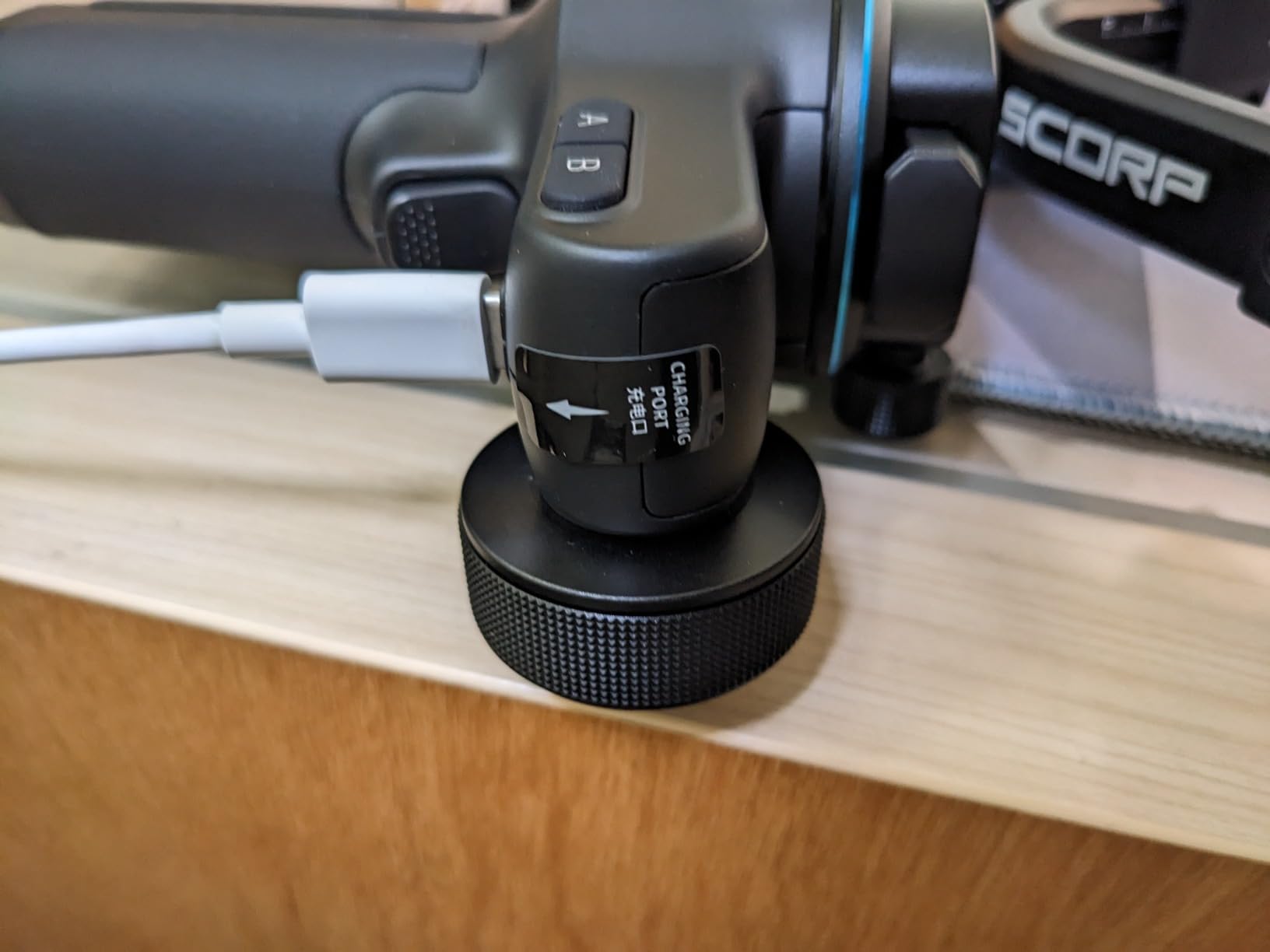
The Feiyu SCORP app adds parameter adjustment and gravity-sensor remote control, which is useful for starting a movement out of frame and letting the gimbal settle. Owner ratings sit at 4.4 stars from around 180 reviews, and the share of five-star ratings is the highest in this group at 77%, which is a promising signal even though the sample is small.
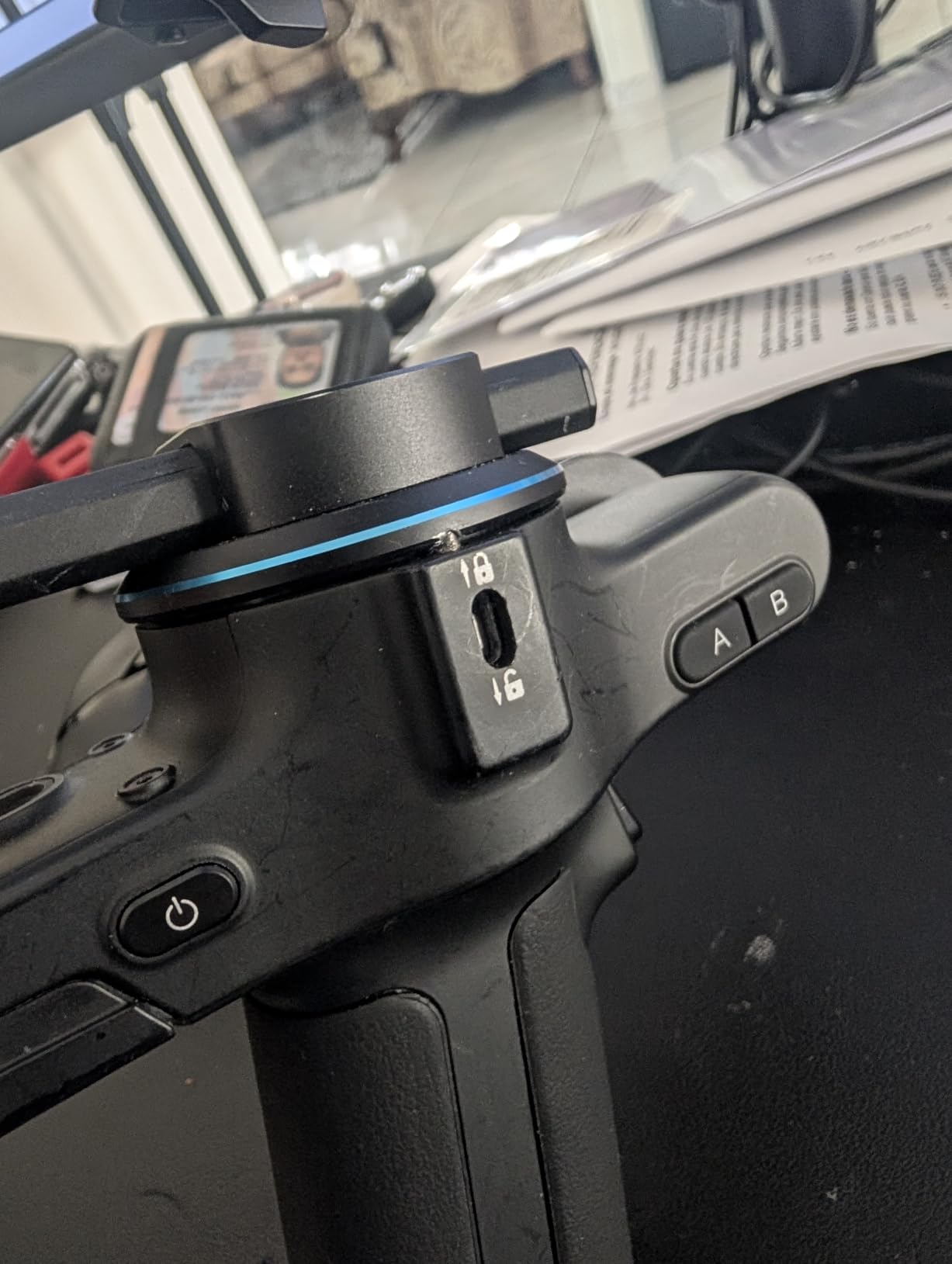
The limits are honest ones. A 2.5 kg payload sits below the 3 kg and 4.5 kg models here, so it is not the answer for a rigged cinema body. The more advanced features still lean on the companion app, so you have not bought an entirely standalone device. And with fewer reviews than the more established models, there is less long-term reliability data to draw on.
Why AI tracking matters for solo shooters
Tracking is the feature that turns a gimbal into a one-person crew. When the camera holds a lock on a walking subject, you can step back, film from a distance, and let the movement stay smooth without a second operator correcting the frame. Doing that with a phone-based tracking module adds weight, balance headaches and another accessory to charge, so an integrated sensor is a meaningful engineering shortcut.
It also suits documentary and event shooters who need to move between subjects quickly, and travel creators shooting in crowded spaces where re-framing by hand is impractical.
Where the SCORP 2 will frustrate you
If your rig weighs more than about 1.8 kg, you will feel the payload ceiling, and pushing a gimbal past its rating brings drift and motor noise. If you want to fine-tune tracking behaviour mid-shoot without touching your phone, the touchscreen is the only route, and it is a 1.3-inch panel. The smaller review base is the third consideration if you buy gear you expect to keep for years.
7. DJI RS 3 Pro – Best for Heavy Cinema and FX Rigs
DJI RS 3 Pro, 3-Axis Gimbal for DSLR and Cameras Canon/Sony/Panasonic/Nikon/Fujifilm/BMPCC, Automated Axis Locks, 4.5 kg (10lbs) Payload, LiDAR Focus Camera Stabilizer
Payload: 4.5 kg
Weight: 1.74 kg
O3 Pro 6 km
LiDAR
Pros
- 4.5 kg tested payload for cinema and FX-series bodies
- Automated axis lock and unlock from the power button
- Extended carbon fiber arms give real leveling space
- O3 Pro transmission up to 6 km
- Bundle covers transmitter focus motor case and handle
Cons
- Heaviest and most costly model here at 1.74 kg
- Focus motor and transmitter add weight and cost when used
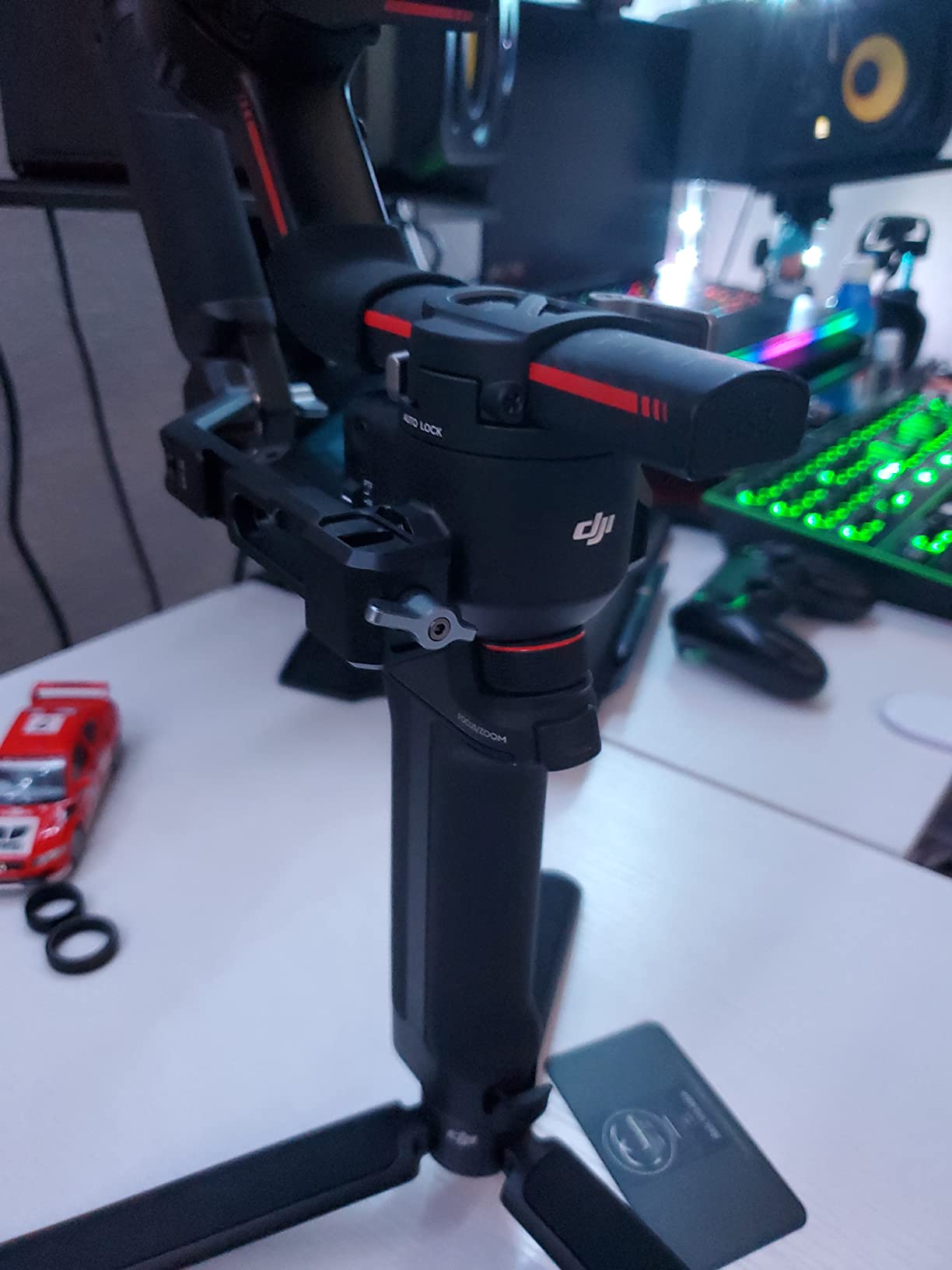
The RS 3 Pro is the only model here that is not really aimed at a mirrorless body. Its 4.5 kg tested payload exists for cinema cameras and full-frame video rigs, and DJI names bodies like the Sony FX6 and Canon C70 as the reason the arms are extended. If your kit is a Sony FX3 or FX6, a Canon C70, a Blackmagic or a rigged mirrorless build with a cage, top handle, matte box and follow focus, this is the gimbal that gives you room to work.
The extended carbon fiber axis arms give plenty of levelling space for large assemblies, which is the part that matters when a rig is heavy and front-heavy. Automated axis lock and unlock from the power button speeds up every transition between shooting positions and every pack-down, and with a heavy rig that convenience is worth a lot. The gimbal weighs 1.74 kg on its own, or around 1.5 kg in some configurations, so it is a two-handed support for long stretches rather than a run-and-gun tool.
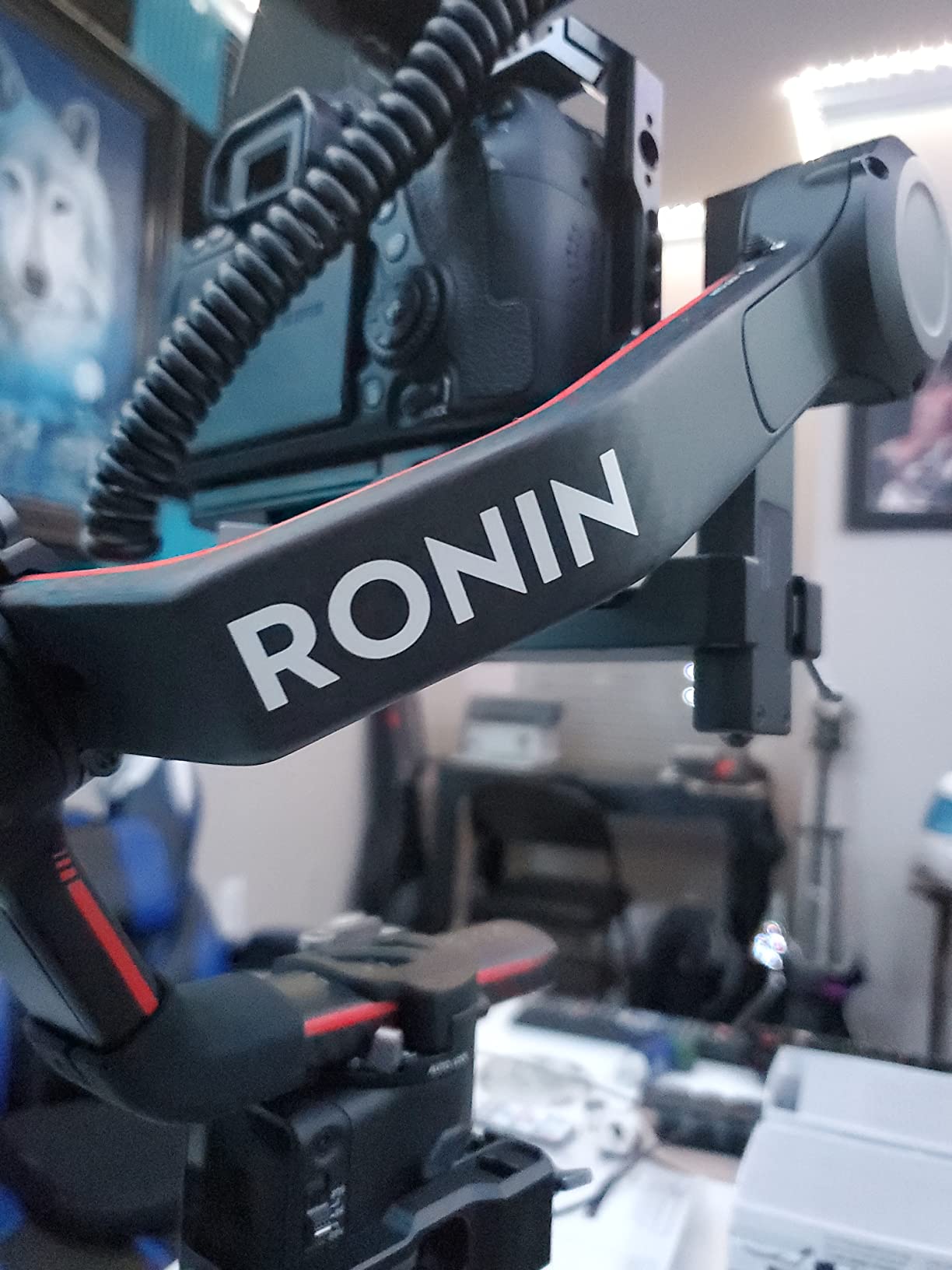
The wireless and focusing systems are what separate this tier. O3 Pro transmission carries video and audio up to 6 km (20,000 ft), and the LiDAR focusing system handles autofocus distance and motor focus support, so a focus puller is optional on smaller productions. A 1.8-inch screen with 4K capture handles monitoring. It also works with vehicle mounts, jibs and Steadicams through the DJI RS SDK, so it can hand off to a larger crew rig when a shot demands it.
Ratings sit at 4.5 stars from more than 300 owner reviews, with a high share of five-star ratings, and owners consistently point to payload headroom, automated locks and transmission reliability. The trade-offs are weight and money. It is the heaviest and most costly item in this roundup, and the focus motor and image transmitter add both cost and setup weight when you switch them on. Most buyers in this class will not use those features on every shoot.
When the RS 3 Pro earns its weight
It makes sense when you are a working professional whose rig crosses into cinema territory: a full-frame video body, a long lens, an external monitor, a shotgun or lavalier wireless audio, and a follow focus. At that point a 3 kg gimbal is not a step down, it is a problem, because the motors run near their limit and the levelling range is too short. It also makes sense for crews that need reliable long-range monitoring or who want autofocus handled by LiDAR rather than an assistant.
Wedding and event teams shooting multi-camera often end up here, as do documentary crews working in locations where a second operator cannot be everywhere.
When it is overkill
If you shoot a mirrorless body with a single lens for a vlog, this is dead weight, and the accessories it supports are wasted budget. The 1.74 kg body also changes how you work: a full day of handheld shooting with this much mass on the wrists is a different job from a run-and-gun day with a travel gimbal. If your total rig is under 2.5 kg, stay with a 3 kg model and put the difference into a lens or audio.
8. Feiyu SCORP Mini 3 Pro – Best Travel and Vlogging Pick
Feiyu SCORP Mini 3 Pro Camera Gimbal Stabilizer for Canon/Sony/Nikon/iPhone
Payload: 2 kg
Weight: 2.2 lb
AI tracking to 59 ft
OLED handle
Pros
- Smallest and lightest body here with 4.4 lb of payload
- AI tracking with 0.003s response out to 59 ft
- Detachable OLED handle controls the gimbal up to 39 ft
- Covers mirrorless action cams and phones
- 3.0 quick-release mount switches to vertical fast
Cons
- 2 kg payload sits well under the pro models
- Smallest review base of the group at 76
- Small OLED screen and app-dependent features
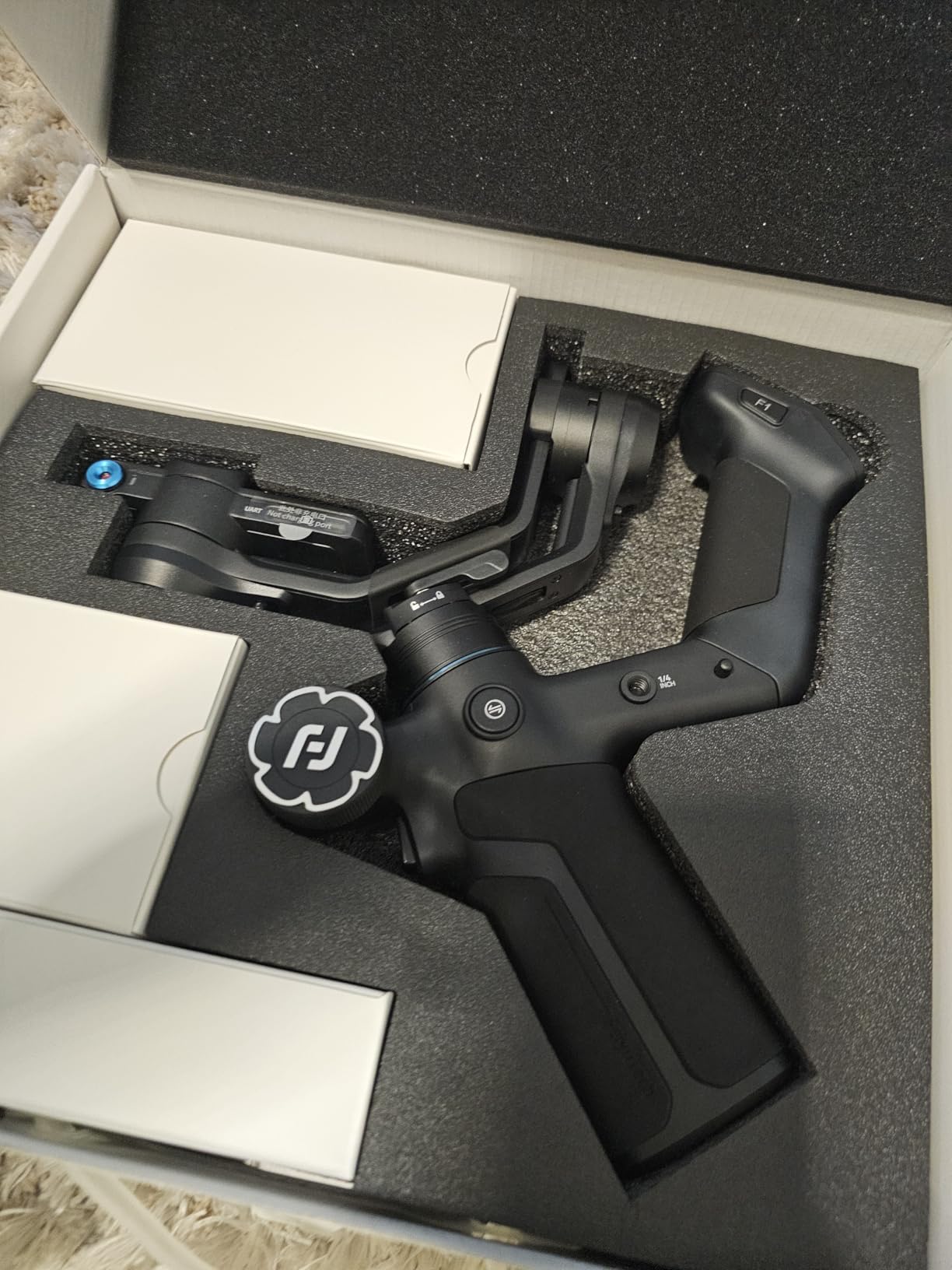
The SCORP Mini 3 Pro is the travel answer in this roundup, and at 2.2 lb it is the lightest gimbal on the list by a clear margin. That weight is the whole proposition: a travel kit where the gimbal is not the reason you leave something behind. It folds to 9 by 2.17 by 9.48 inches and locks in that position, and the 4.4 lb payload is 66% higher than the previous generation, so it now handles a mirrorless body with a real lens rather than only a compact.
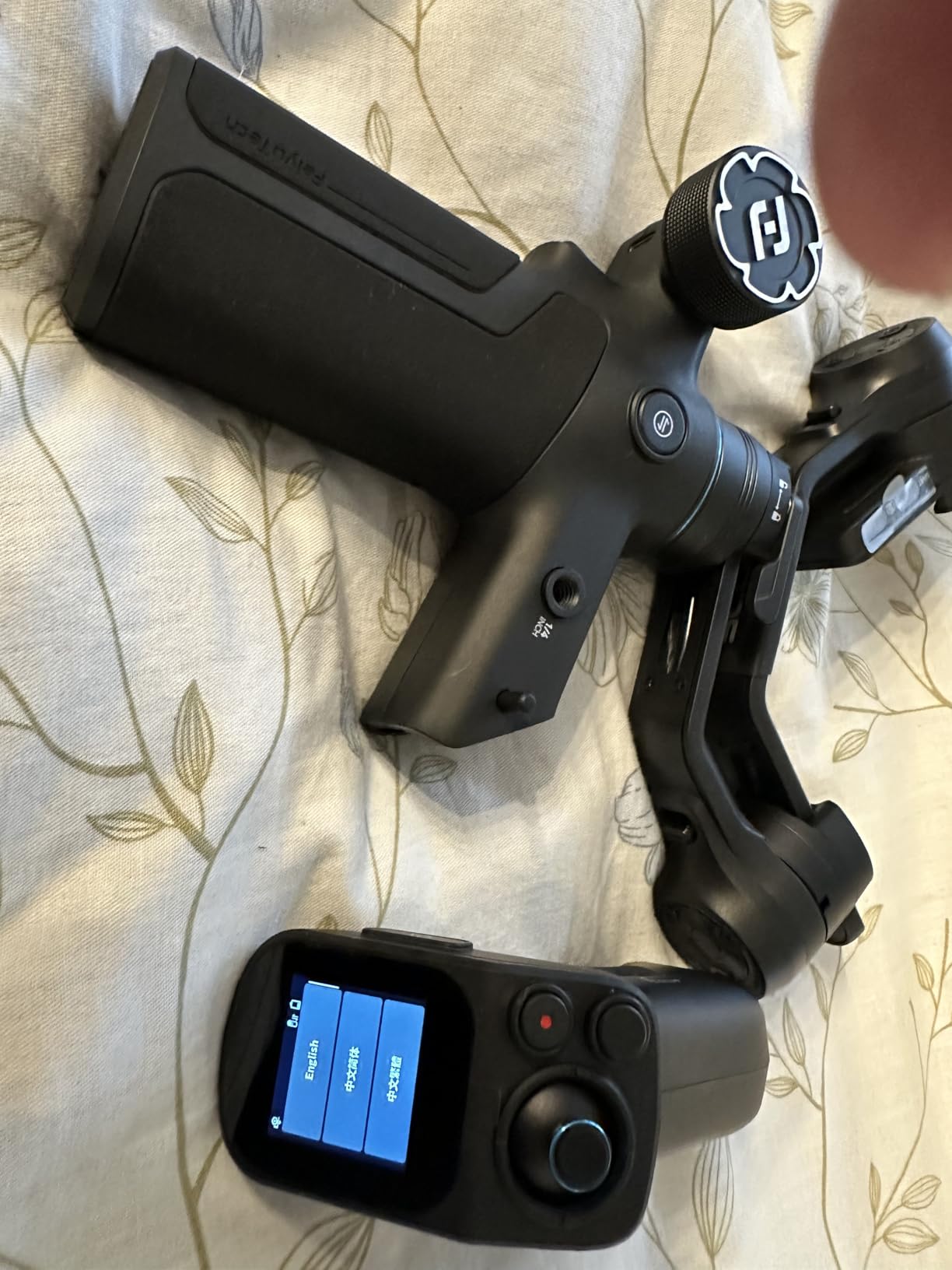
It still has AI tracking built in, with a stated 0.003 s response time and a 59 ft tracking range, plus gesture control. The detachable handle carries a 1.3-inch OLED screen and gives you remote control up to 39 ft away, which means you can set the gimbal down, step back and still adjust framing. The 3.0 quick-release mount switches between horizontal and vertical quickly, and a built-in cooling smartphone clamp means the same gimbal handles a phone for social clips on long recording sessions.
The version 10.0 stabilisation engine uses a tenth-generation quaternion algorithm and supports 4K capture, and owners report smooth output while moving. Compatibility is broad: Canon, Sony, Nikon, Fujifilm and SIGMA mirrorless bodies, plus DJI and GoPro action cameras and smartphones. At 4.6 stars this carries the highest average rating in the group, with no 1-star reviews in the data we worked from.
The caveats are equally clear. With 76 reviews it has by far the smallest review base, so you have much less long-term data than the 2700-review RS 3 Mini or the 1600-review Weebill S. The 2 kg payload is well under the pro models, and the OLED screen is small, with the feature set leaning on the app for anything beyond basic adjustments.
Where the SCORP Mini 3 Pro makes sense
It suits a creator who carries everything in one bag, works across bodies, and shoots a mix of mirrorless video, action camera footage and phone content. If your kit is a compact body with a small zoom, a prime, or an action camera on a short handle, 2 kg is plenty. The detachable remote handle also makes it a strong solo tool when you need the camera further from you than your arm.
Fujifilm and Nikon shooters with compact kits are well served here, and the phone clamp means you are not buying a second device for vertical social content.
Where the light payload bites
The 2 kg ceiling rules out any rig with a fast 24-70mm, an external monitor or a small cage, and running close to a payload limit is where drift and motor noise appear. The small review base is the other caution: buying a 4.6 star model with 76 reviews means you are early to that product, so keep spare parts and cables in mind. If your future rig will grow, a 3 kg model ages better.
How to Choose a Gimbal for Your Mirrorless Camera?
Every mistake we see in gimbal buying comes down to three numbers: rig weight, payload rating, and how long you shoot. Get those right and the model choice mostly makes itself.
Step 1: Work out your total rig weight
Add up everything that sits on the plate: the camera body, the lens, a top handle or cage, a shotgun or wireless microphone, any filter or matte box, and the battery inside the camera. That total is your real payload, not the body weight printed on the box. Then add about 20% headroom. Motors that run constantly near their limit drift, heat up, and produce a low hum on the audio track, so a gimbal rated 30% above your rig gives you room to change lenses mid-shoot.
A practical example: a full-frame body at roughly 700 g with a 24-70mm f/2.8 at about 900 g gives you 1.6 kg before audio. Add a small cage, a top handle and a mic at 200 g and you are near 1.8 kg, which means a 2 kg gimbal is already at its limit and a 3 kg model is the sensible buy. An APS-C body with a compact zoom often lands around 900 g total, where a 2 kg rating leaves plenty of headroom.
Step 2: Payload is only half the story
A high payload rating does not guarantee smooth footage if the arm cannot level the camera or if you keep the motors near their ceiling. Look for wide-axis cradles that accept larger lens diameters, plate travel on both axes, and a stated tested payload rather than a maximum. Tested payload is measured on a balanced rig; maximum payload is a limit you should stay away from.
Body weight matters almost as much. A 2 kg gimbal that stays under 1 kg is easier on the shoulder across a long day, and fatigue is the real enemy of smooth movement. Choose the lightest body that comfortably carries your rig with headroom.
Do you still need a gimbal if your camera has in-body stabilization?
Often yes, and the difference is worth understanding. In-body image stabilization shifts the sensor to compensate for small, high-frequency hand shake inside the camera. It works extremely well for static or near-static shots, for handheld locked-off footage, and for slow panning. It cannot remove the low-frequency vertical bounce of walking, the sway of a run, or the rotational motion of an orbit, because the sensor is moving as a whole and there is no second axis of compensation.
Forum discussion among mirrorless shooters reflects this split, with some owners deliberately skipping a gimbal because their body stabilises well, and others buying one for moving shots specifically. The rule of thumb we would give: if the camera is on a tripod or on a fixed support, IBIS is enough. If the camera is on your body and you are walking, running, orbiting or shooting low angles, you need a gimbal.
Battery life: spec numbers versus a real shooting day
Claimed runtime assumes a nominal payload and moderate movement, and real runtime drops with a heavier rig, active use of the screen, and frequent wireless transmission. Treat the headline figure as a ceiling, not a plan. The 14-hour figure on the Weebill S and the 16-hour figure on the Weebill 3E are the difference between a comfortable day and a day spent managing batteries, and for long-form work that is a real advantage over a smaller pack.
Fast charging is the underrated feature here. The SCORP-C’s 18 W charging adds roughly 30 minutes of runtime in five minutes, and the Weebill 3E reaches a full charge in under three hours. Between setups that recovery time matters more than most spec sheets suggest.
Vertical shooting and quick release plates
If you publish vertical short-form content, native vertical matters more than most buyers expect. Gimbals with native vertical support rotate the camera 90 degrees on the motor and re-level without an L-bracket, and models like the RS 3 Mini, the Weebill 3E, the Weebill 3S, the SCORP 2 and the SCORP Mini 3 Pro all handle it in a few seconds. Gimbals without it need a bracket, which changes the balance and adds a step between a landscape take and a vertical one.
The detail that gets overlooked is plate security. Owners report cameras slipping on quick release plates, and the newer L-shaped plates with anti-off sliders address that directly. If you shoot moving, look for a plate that locks mechanically rather than relying on friction alone.
Phone-free tracking versus app-dependent features
AI subject tracking is now split three ways: built into the gimbal, available as an add-on module, or handled through a companion app. The SCORP 2 and the SCORP Mini 3 Pro integrate tracking into the body, with gesture control and no extra hardware. Other brands rely on a tracking module you attach to the side of the rig, which adds weight and changes the balance.
Every model here still needs its app for activation and for parameter changes, and reviewers describe DJI’s Ronin app in particular as confusing on first use. Factor in app comfort, not just hardware, because you will be opening it on set.
Pairing the gimbal to your camera brand
Camera-brand questions are the most common in forums and the least well answered elsewhere, so here is the short version. Canon bodies such as the R8, R10 and R6 are explicitly supported by several of these models, with Canon control cables included in some boxes and sold separately in others. Sony shooters with an FX3, FX6, A7 IV or a ZV-E10 have the widest accessory and control support here, particularly on the DJI side. Fujifilm and Nikon owners with compact kits are well covered by the 2 kg and 2.5 kg models, while those carrying fast f/2.8 zooms or 70-200mm telephotos should move to a 3 kg rating or above.
Check two specific things before you buy: the control cable situation, because some boxes ship only one brand’s cable, and the Bluetooth shutter support, because it does not cover every body. Those two details cause most of the early regret we hear about.
Combo kits, bare gimbals and the accessory ecosystem
A combo kit bundles cables, a focus motor, a case, a handle or a transmitter. It is good value if you already know you will use those parts, and poor value if you will not, because the bare gimbal is cheaper and you can add the pieces you need. Image transmission and focus motors are the two accessories that genuinely change what you can deliver; focus motors give you motorised focus pulls, and transmission gives you wireless monitoring on a multi-camera shoot.
On accessories more broadly, the ecosystem question is real. One brand’s third-party support for Arca-Swiss plates, focus motors, tracking modules and image transmission is deeper than another’s, and a deeper ecosystem means you can extend the gimbal instead of replacing it. For readers who want the broader picture on camera gear, our guides to WiFi pet cameras for outdoor monitoring and pet cameras for seniors cover a different end of the market but use the same rig-weight-first buying logic. If you are still deciding on a companion monitoring device, our outdoor dog camera picks make the same payload-versus-price trade-off in a different category.
How to Balance a Gimbal in Five Steps
Balancing is the step that puts people off gimbals, and it is mostly avoidable. Budget five minutes the first time and one minute per lens change afterwards. This sequence works on every gimbal in this roundup.
Power on and level the camera mechanically. Turn the gimbal off or into a standby state so the motors do not fight you, then level the camera on the roll axis by hand before you tighten anything.
Adjust the horizontal and vertical balance arms. Slide the camera forward or back until it stays put at any tilt, then side to side until it will not roll. Nudge it, do not force it, and work in small movements.
Set the centre of gravity if the model allows it. Models with centre-of-gravity memory, like the SCORP-C, let you save this position and return to it when you swap lenses.
Lock the arms and re-check the plate. Tighten every adjustment knob in the order the manual specifies, then confirm the quick release plate is fully closed and mechanically locked. This is where the reported slipping incidents happen.
Power on, calibrate the IMU, and walk. Set the gimbal on a flat surface and run IMU calibration as the manual describes, then hold it and confirm the camera stays level through a slow walk. If it tilts in one direction, your balance is off by a fraction, so repeat step two.
Two habits separate smooth footage from shaky footage. First, match the follow speed to your movement: slow pans for walk-and-talk, faster follow for action, and lock mode for tripod-adjacent static shots. Second, keep your knees soft and take steps with the same foot each time, because the gimbal removes camera shake but it cannot remove a deliberate limp in your walk.
Frequently Asked Questions
What is the difference between a gimbal and a stabilizer?
A stabilizer is the broad category: any support that reduces camera movement, including tripods, monopods, shoulder rigs and handheld supports. A gimbal is the specific motorized kind, using brushless motors on the pan, tilt and roll axes plus an internal gyroscope to actively cancel movement in real time. In practice a gimbal removes the walking bounce and sway that a fixed support cannot.
Which DJI gimbal is best for mirrorless cameras?
For most mirrorless shooters, the RS 3 Mini is the right DJI answer: 795 g, a 2 kg tested payload, a 1.4-inch colour touchscreen and native vertical shooting. Move up to a heavier DJI model only when your rig genuinely needs the headroom for cinema bodies, large monitors and long-range wireless monitoring.
What is the best gimbal for a Canon mirrorless camera?
Canon bodies are broadly supported across this roundup. An R8 or R10 with a compact zoom sits comfortably in a 2 kg or 2.5 kg gimbal such as the RS 3 Mini or the SCORP-C, while a 3 kg model like the Weebill 3S covers full-frame bodies with fast standard zooms and includes Canon control cables in the box.
Which Zhiyun gimbal is best for mirrorless cameras?
The Weebill 3E stands out for full-frame kits: 3 kg of payload in a 990 g body with up to 16 hours of claimed battery life. The Weebill S offers more payload headroom than travel models with a 14-hour figure at a lighter price point, and the Weebill 3S adds a built-in 1000 lux fill light for dim indoor work.
What is the best budget gimbal for mirrorless cameras?
Budget models still handle real mirrorless kits when the payload is honest. The RS 3 Mini carries 2 kg at 795 g, and the SCORP-C carries 2.5 kg with a 10 to 13 hour runtime. Add 20% headroom above your measured rig weight, and accept that low-end models with no stated tested payload are a gamble on motor quality.
How much payload capacity do I need for a mirrorless camera?
Add your body, lens, cage, handle, microphone and any filter, then add about 20% headroom. A full-frame body with a 24-70mm f/2.8 and a small cage usually lands near 1.8 kg, which calls for a 3 kg class gimbal. A compact APS-C kit often sits under 1 kg, where a 2 kg rating is comfortable.
Our Verdict for 2026
After comparing all eight, the DJI RS 3 Mini remains the best gimbal stabilizer for most mirrorless cameras in 2026. It weighs 795 g, carries a tested 2 kg payload, shoots vertical natively and has the most usable screen in the group, and its review base of more than 2700 owner ratings is the largest here. It is the pick we would hand to a first-time gimbal owner and the pick we would still recommend to an experienced one.
Buy the Zhiyun Weebill S if payload headroom and long battery life matter most, the Weebill 3E if you carry a full-frame kit and want 3 kg of capacity under a kilogram, and the FeiyuTech SCORP-C if your work lives at low angles. The Weebill 3S is the pick for dim interiors thanks to its built-in fill light, the SCORP 2 and the SCORP Mini 3 Pro cover phone-free AI tracking, and the RS 3 Pro is the only one of the eight built for cinema rigs.
Whichever you choose, weigh your rig, add 20% headroom, and balance it properly before the first shot. Use the check buttons to see the current listing for each model, and check the control cable situation for your camera brand before you order.