
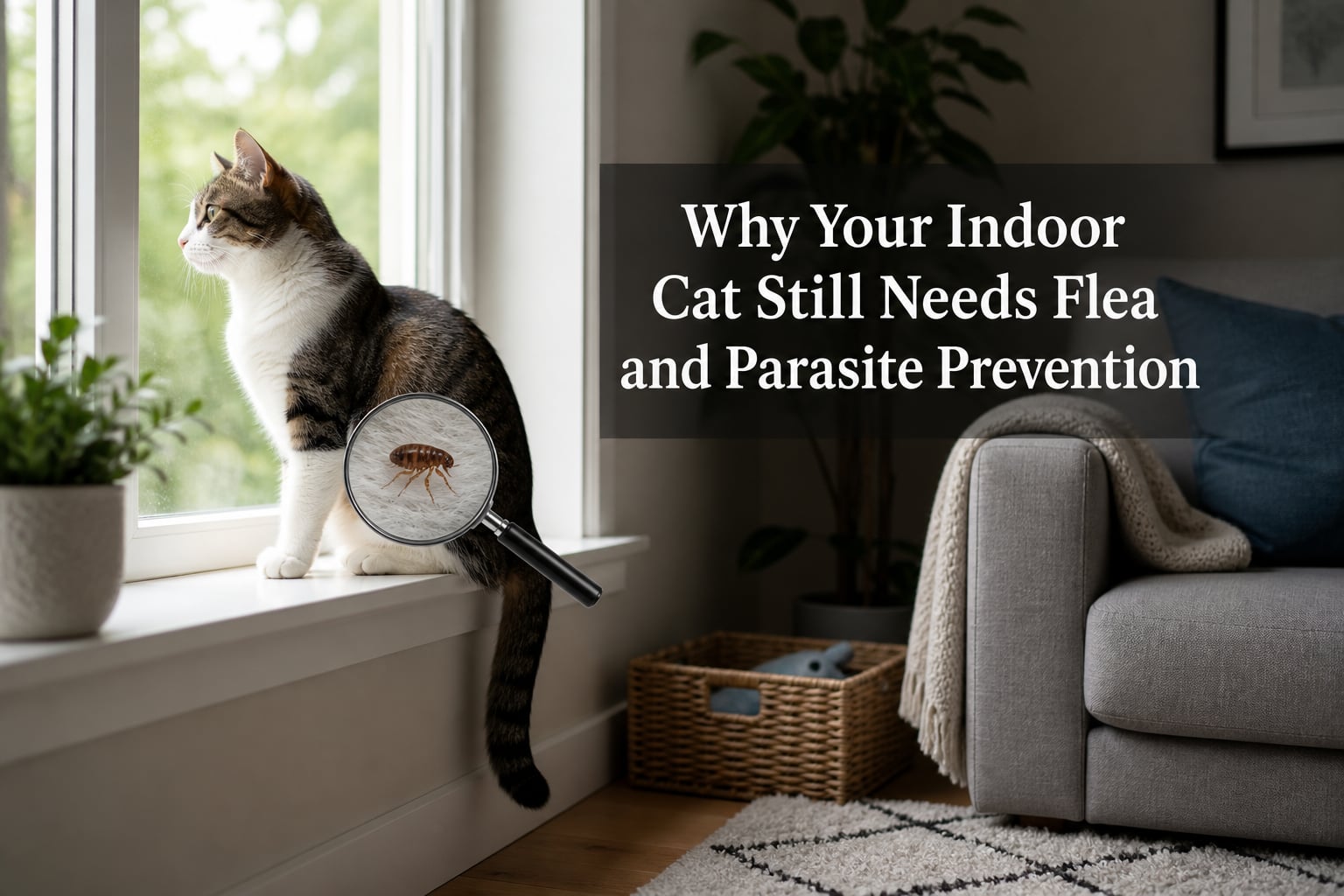
If your cat never steps paw outside, you might assume flea prevention is unnecessary. I hear this from cat owners all the time, and it is one of the most dangerous misconceptions in pet care. The truth is that indoor cat flea prevention matters just as much as it does for outdoor cats, and skipping it can lead to serious health problems.
Fleas, ticks, and internal parasites do not need an open door to reach your cat. They hitchhike on shoes, clothing, other pets, and even sneak in through tiny gaps. Once inside your home, a single female flea can lay up to 50 eggs per day, turning a minor exposure into a full-blown infestation within weeks.
In this guide, I will walk you through exactly how parasites reach indoor cats, the health risks involved, and the prevention strategies that actually work. Whether you have one indoor-only cat or a multi-pet household, understanding these risks will help you keep your feline companion healthy and comfortable year-round.
Table of Contents
Do Indoor Cats Really Get Fleas?
Yes, indoor cats absolutely get fleas. Veterinarians and pet health organizations consistently confirm that no home is completely flea-proof. Even cats in high-rise apartments with no other pets have been diagnosed with flea infestations.
The key issue is that fleas are remarkably resourceful. They do not need your cat to go outside. They find their way in through surprising channels, and once they arrive, your home becomes the perfect environment for them to multiply. Warm indoor temperatures, carpeted floors, and upholstered furniture create ideal conditions for flea eggs and larvae to develop.
Reddit users in communities like r/CatAdvice and r/CATHELP frequently share stories of their strictly indoor cats developing fleas with no obvious explanation. Many of these owners never considered indoor cat parasite prevention until they discovered the problem. Their experiences reinforce what veterinarians say: every cat needs protection, regardless of lifestyle.
How Fleas and Parasites Reach Indoor Cats?
Understanding the entry points for fleas and parasites is the first step in protecting your indoor cat. Here are the seven most common ways these pests make their way inside your home.
1. Other Pets Bringing Fleas Inside
If you have a dog that goes outside, even briefly, they can carry fleas back into your home. Dogs pick up fleas from grass, soil, and contact with other animals during walks. Once inside, those fleas jump onto your cat. In multi-pet households, every animal needs to be on prevention, not just the ones that go outdoors. Forum discussions consistently show that homes with both dogs and indoor cats face significantly higher flea risk.
2. Hitchhiking on Humans
Fleas and flea eggs can attach to your shoes, socks, and pant legs when you walk through infested areas. This includes your yard, a friend’s home, parks, or even common hallways in apartment buildings. You will not always notice them because fleas are tiny and quick. Once you walk through your front door, those hitchhikers drop off and start looking for a host, which happens to be your indoor cat.
3. Rodents and Wildlife
Mice, rats, and other small rodents can carry fleas and other parasites into your home. Even if you never see the rodent itself, a single mouse passing through your basement or walls can leave behind fleas that eventually find their way to your cat. This is particularly common in older homes, rural areas, and during colder months when rodents seek shelter indoors.
4. Moving Into an Infested Home
When you move into a new apartment or house, the previous occupants may have left behind a flea problem. Flea pupae can survive in carpets and floorboard cracks for months without a host. When you and your cat move in, the vibrations and carbon dioxide trigger those pupae to hatch. Many cat owners discover fleas within days of moving into a new place, completely caught off guard.
5. Visiting Groomers, Boarders, and Vets
Even a strictly indoor cat leaves home occasionally for grooming, boarding, or veterinary visits. These environments expose your cat to other animals, some of whom may carry fleas or parasites. A short stay at a boarding facility or a trip to the groomer is enough for your cat to pick up an unwelcome passenger. Reddit users specifically flag groomers and boarders as risk vectors that surprised them.
6. Used Furniture and Carpets
That secondhand couch or vintage rug might come with hidden tenants. Flea eggs and larvae can survive in upholstery and carpet fibers for extended periods. Bringing used furniture, rugs, or even cardboard boxes into your home introduces a potential flea source. Always inspect and clean secondhand items thoroughly before bringing them inside.
7. Screened Patios and Open Windows
Screened porches and open windows give your cat fresh air, but they also provide access points for fleas, ticks, and mosquitoes. Fleas can jump through damaged or loose screens. Mosquitoes carrying heartworm larvae can slip through standard window screens. If your cat enjoys porch time, they face more exposure than you might think.
Common Myths About Indoor Cats and Fleas
Misinformation about flea prevention leads many indoor cat owners to skip protection entirely. Let me address the most common myths I encounter.
Myth: Indoor cats cannot get fleas. This is fiction. As covered above, fleas enter homes through multiple channels. No indoor environment is completely sealed off from the outside world.
Myth: Fleas die off in winter, so prevention is unnecessary during cold months. Also fiction. Heated homes maintain warm temperatures year-round, creating perfect conditions for fleas to thrive even when it is freezing outside. Flea season is effectively every season when your home is climate-controlled.
Myth: If my cat does not scratch, they do not have fleas. Fiction. Some cats are not particularly sensitive to flea bites and may show minimal scratching even during an active infestation. By the time visible scratching starts, the problem is often well established.
Myth: Natural remedies like essential oils are enough for indoor cats. Fiction. Essential oils and home remedies have not been proven effective for flea prevention. In fact, many essential oils are toxic to cats. Always consult your veterinarian before trying any alternative treatments.
Myth: Only homes with visible dirt or poor hygiene get fleas. Fiction. Fleas are not a sign of a dirty home. They are opportunistic parasites that can infest the cleanest living spaces. Even meticulous housekeeping cannot prevent fleas from entering your home on shoes or clothing.
Health Risks of Fleas and Parasites for Indoor Cats
Fleas are more than just an itchy nuisance. They carry and transmit diseases that can seriously harm your cat. Indoor cat parasite prevention protects against several specific health threats.
Flea Allergy Dermatitis
Some cats develop an allergic reaction to flea saliva, a condition called flea allergy dermatitis. A single flea bite can trigger intense itching, hair loss, red and inflamed skin, and open sores from excessive scratching. Cats with flea allergies suffer disproportionately, and the condition can persist long after the fleas are gone if not treated promptly.
Tapeworms
When cats groom themselves and ingest an infected flea, they can develop tapeworms. These intestinal parasites attach to the lining of your cat’s digestive tract and absorb nutrients. You might notice small, rice-like segments around your cat’s rear end or in their bedding. Tapeworm infections require specific deworming medication from your veterinarian.
Anemia
In severe infestations, fleas consume enough blood to cause anemia, especially in kittens, senior cats, and cats with underlying health conditions. Symptoms include lethargy, pale gums, weakness, and loss of appetite. Anemia from flea infestation can become life-threatening if left untreated.
Cat Scratch Disease (Bartonella)
Fleas transmit Bartonella bacteria, which causes cat scratch disease. Infected cats may not show symptoms but can transmit the bacteria to humans through scratches or bites. This is a particular concern in households with children, elderly family members, or anyone with a weakened immune system.
Heartworm Disease
Mosquitoes transmit heartworm larvae, and a single mosquito bite is all it takes. Heartworm disease in cats is difficult to diagnose, has no approved treatment, and can be fatal. Indoor cats are not safe from mosquitoes, which enter homes through open doors, windows, and tiny gaps. Heartworm prevention is often overlooked for indoor cats, but it should be part of your prevention plan.
Signs Your Indoor Cat May Have Fleas
Early detection makes treatment much easier. Here are the key signs to watch for if you suspect your indoor cat has fleas.
Excessive scratching, licking, or biting at the skin is the most obvious sign. Pay special attention if your cat suddenly starts focusing on specific areas like the base of the tail, neck, or belly.
Flea dirt, which looks like small black pepper-like specks in your cat’s fur, is actually flea feces composed of dried blood. You can confirm it by placing the specks on a damp paper towel. If they turn reddish-brown, it is flea dirt.
Hair loss, particularly around the lower back, hind legs, and abdomen, often results from over-grooming due to flea irritation. Red, irritated skin or small scabs may also appear in these areas.
Restlessness, irritability, or sudden behavioral changes can indicate discomfort from flea bites. Some cats become unusually vocal or hide more than usual.
Pale gums may signal anemia in severe infestations. If you notice this symptom, contact your veterinarian immediately.
You might also spot adult fleas moving quickly through your cat’s fur, though they are fast and easy to miss. Using a fine-toothed flea comb can help you find evidence more reliably. Run the comb through your cat’s fur, especially around the neck and tail base, and check what you collect on a white surface.
Indoor Cat Parasite Prevention Strategies
Effective prevention requires consistency and the right approach for your cat’s specific situation. Here is what I recommend based on veterinary guidance and real-world experience from cat owners.
Monthly Flea Prevention
The foundation of protection is a regular, monthly flea prevention treatment. Consistency is everything. Skipping even one month creates a gap where fleas can establish themselves. Most veterinarians recommend year-round prevention regardless of where you live, because indoor temperatures support flea activity in every season. How often should indoor cats get flea treatment? Monthly, without exception.
Topical vs Oral vs Collar Treatments
Topical treatments are applied directly to your cat’s skin, typically between the shoulder blades where they cannot lick it off. These products spread through the skin oils and kill fleas on contact. They are widely used and effective, but safety is a concern if your cat licks the application site before it dries. Reddit users frequently report adverse reactions from cats licking topical treatments.
Oral medications work from the inside out, killing fleas when they bite your cat. These are a good option for cats that tolerate pills or chewable tablets. They eliminate the risk of topical transfer to other pets or humans. However, administering oral medication to a picky cat can be challenging.
Flea collars provide longer-lasting protection, sometimes up to eight months. They are convenient but may cause skin irritation in sensitive cats. Not all collars are created equal, so look for vet-recommended options.
Talk to your veterinarian about which option suits your cat best. They can recommend specific products based on your cat’s age, weight, health status, and household situation.
Year-Round vs Seasonal Prevention
I strongly recommend year-round prevention for indoor cats. The idea that fleas disappear in winter is a myth. Your heated home stays warm enough for fleas to reproduce throughout the year. Stopping prevention during winter months leaves your cat vulnerable and risks an infestation that is harder to eliminate once it starts.
Multi-Pet Household Considerations
If you have dogs or other cats, all pets in the household must be treated simultaneously. Treating only some animals leaves untreated hosts that continue to feed fleas and sustain the life cycle. This is one of the most common mistakes in multi-pet homes. Even if your dog is on prevention but your indoor cat is not, fleas can use the dog as a carrier and then jump to your cat.
What to Do If Your Indoor Cat Gets Fleas
Despite your best efforts, your cat may still get fleas. Acting quickly limits the problem and prevents it from spreading throughout your home.
Step 1: Confirm the infestation using a flea comb. Look for live fleas, flea dirt, or both. If you find evidence, do not panic. Fleas are treatable.
Step 2: Contact your veterinarian for a recommended treatment plan. They will suggest an appropriate flea product based on your cat’s health and the severity of the infestation. Avoid over-the-counter products without veterinary guidance, as some can be ineffective or even harmful to cats.
Step 3: Treat all pets in the household simultaneously. This prevents fleas from simply moving from one untreated animal to another.
Step 4: Clean your home thoroughly. Wash all pet bedding in hot water, vacuum carpets and furniture daily, and dispose of vacuum bags or empty canisters outside. Flea eggs and larvae live in your environment, not just on your cat.
Step 5: Continue prevention treatment on schedule. It typically takes three months of consistent treatment to fully break the flea life cycle, because eggs and pupae continue to hatch after the initial treatment.
Step 6: Monitor your cat for any adverse reactions. If your cat shows signs of illness after treatment, such as drooling, vomiting, or lethargy, contact your veterinarian right away. Forum users report that adverse reactions from licking topical treatments are a real concern, so watch carefully after application.
Frequently Asked Questions
Do indoor cats still need flea and worm treatment?
Yes. Indoor cats need both flea and worm treatment because fleas and parasites enter homes through humans, other pets, rodents, and even used furniture. Once inside, they reproduce rapidly and can cause serious health issues including tapeworms, anemia, and flea allergy dermatitis. Veterinarians recommend year-round monthly prevention for all cats regardless of whether they go outside.
Is parasite prevention necessary for indoor cats?
Yes, parasite prevention is necessary for indoor cats. Parasites like fleas, ticks, and heartworm-carrying mosquitoes find their way indoors through screens, open doors, on clothing, and via other pets. Indoor cats are also at risk of intestinal parasites from ingesting fleas during grooming. Year-round prevention protects against these threats.
Do indoor cats need to be treated for parasites?
Yes, indoor cats should be treated for parasites on a regular schedule. This includes monthly flea prevention, regular deworming as recommended by your vet, and heartworm prevention. Even cats that never leave the home are exposed to parasites through environmental contact, other pets, and household entry points.
What preventatives do indoor cats need?
Indoor cats need monthly flea prevention (topical, oral, or collar), regular intestinal parasite screening and deworming, and heartworm prevention. Your veterinarian can recommend specific products based on your cat’s age, health, and household situation. All pets in the home should be treated simultaneously for maximum effectiveness.
Can indoor cats get fleas from humans?
Yes, humans can carry fleas and flea eggs into the home on shoes, socks, and clothing. Fleas attach to fabric when you walk through infested areas like yards, parks, or other homes. Once inside, they drop off and seek out your cat as a host.
How often should I give my indoor cat flea prevention?
Indoor cats should receive flea prevention every month, year-round. Skipping treatments creates gaps where fleas can establish themselves and reproduce. Even in winter, heated homes provide warm enough temperatures for fleas to remain active and continue their life cycle.
Conclusion: Protecting Your Indoor Cat Matters
Indoor cat flea prevention is not optional, it is a core part of responsible cat ownership. Fleas and parasites find their way inside through surprising channels, and the health risks they carry are serious. From flea allergy dermatitis to tapeworms to heartworm disease, the consequences of skipping prevention are far worse than the effort of staying consistent with treatment.
Work with your veterinarian to choose the right prevention plan for your cat, treat all pets in your household, and stick with it year-round. Your cat depends on you to keep their indoor world safe, and that means taking parasites seriously even when they never go outside.