
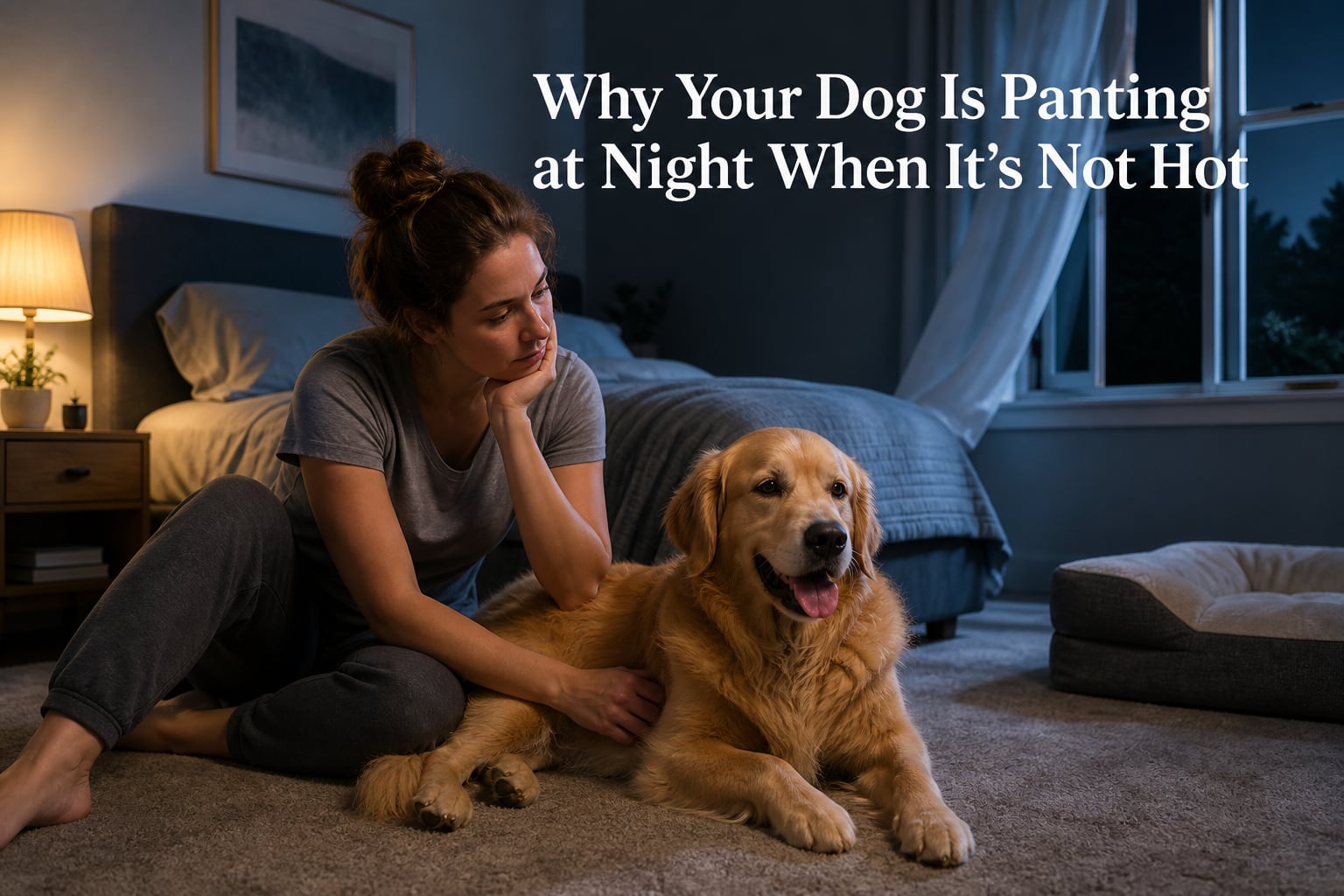
It is 2 a.m. and your dog is panting beside you. The room is cool, the fan is running, and you have not exercised them in hours. So why is your dog panting at night when it is not hot?
This scenario catches many dog owners off guard. We associate panting with overheating or exertion, so nighttime panting in a cool room feels wrong. Most of the time, it is a sign your dog is trying to tell you something. The three most common causes are pain, anxiety, or an underlying medical condition.
I have spent years researching canine health behavior, and the number one thing I tell owners is this: panting without a temperature trigger is your dog’s way of communicating distress. It could be something as simple as stress from a new environment. It could also be an early sign of Cushing’s disease, heart problems, or arthritis pain.
This guide walks you through every possible cause, how to tell the difference between normal and abnormal panting, when to worry, and what you can do tonight to help your dog rest easier.
Table of Contents
Why Your Dog Is Panting at Night When It’s Not Hot: The Quick Answer
Dogs pant at night when it is not hot for three main reasons: pain, anxiety, or disease. When your dog pants in a cool room without exercise, their body is responding to something other than temperature. The panting is a symptom, not the problem itself.
Here are the most common causes we see:
Pain from arthritis, injury, or post-surgery recovery
Anxiety or stress from separation, noise phobias, or changes in routine
Cushing’s disease from excess cortisol production
Heart disease including congestive heart failure
Respiratory conditions like laryngeal paralysis or tracheal collapse
Medication side effects especially from steroids like prednisone
Canine cognitive dysfunction in senior dogs (similar to dementia)
If your dog has started panting at night recently and it happens more than once or twice a week, schedule a vet visit. Panting that shows up suddenly is more concerning than panting that has been happening for years.
Normal Panting vs Abnormal Panting
Before you panic, it helps to understand what panting actually does. Dogs do not sweat the way humans do. They have sweat glands on their paw pads and noses, but those are not enough to regulate body temperature on their own. Panting is your dog’s primary cooling system.
When a dog pants, they rapidly move air over the moist surfaces of their tongue, mouth, and throat. This evaporation pulls heat away from the body. Normal panting happens after exercise, during warm weather, or during brief moments of excitement.
Here is a normal breathing rate guide for a resting dog:
Adult dogs: 15 to 30 breaths per minute at rest
Puppies: 15 to 40 breaths per minute at rest
During sleep: may drop to 10 to 20 breaths per minute
After exercise: can reach 100 to 160 breaths per minute but should slow within minutes
Abnormal panting looks and feels different. Here is how to tell the difference:
Timing: Panting happens at rest, during sleep, or in a cool room
Duration: Panting lasts more than 10 to 15 minutes without stopping
Effort: Breathing looks labored, with visible abdominal effort
Sound: Panting is louder, harsher, or accompanied by wheezing or gagging
Body language: Restless pacing, inability to settle, wide eyes, trembling
Timing shift: Your dog suddenly starts panting at night when they never did before
Count your dog’s breaths per minute when they are calm and asleep. If the number is consistently above 40 at rest, that is a red flag worth discussing with your vet.
Common Causes of Nighttime Panting
Let us break down each major cause in detail. Understanding the specific cause helps you and your vet make the right treatment decisions.
Anxiety and Stress
Anxiety is one of the most common reasons for nighttime panting. When a dog feels anxious, their body releases cortisol and adrenaline. This stress response raises their heart rate and triggers panting, even in a cool room.
Nighttime anxiety often stems from separation. When you go to bed and close your bedroom door, your dog may feel isolated. Noise phobias also play a role. A distant thunderstorm, fireworks, or even neighborhood traffic can trigger anxiety panting in sensitive dogs.
Dogs adopted recently frequently pant on their first few nights in a new home. This is a normal stress response and usually settles within a week or two. If anxiety panting continues, talk to your vet about behavioral strategies or anti-anxiety options.
Signs of anxiety-related panting include pacing, whining, lip licking, yawning, and the inability to settle in one spot. Your dog may also seek constant contact with you or try to hide.
Pain and Discomfort
Dogs hide pain well. Panting is one of the few outward signs that something hurts. Pain raises cortisol levels, which triggers the same stress response as anxiety. The result is panting that has nothing to do with temperature.
Arthritis is the most common pain source, especially in senior dogs. Joint pain often worsens at night when dogs are less distracted by daily activity. They lie still for hours, and stiffness builds up, making them pant from discomfort.
Other pain sources include dental disease, ear infections, gastrointestinal issues, and post-surgical recovery. If your dog recently had surgery, nighttime panting in the first few days is expected. If it continues beyond a week, call your vet.
Watch for these pain indicators alongside panting: reluctance to jump or use stairs, decreased appetite, licking a specific body area, changes in posture, or growling when touched.
Cushing’s Disease
Cushing’s disease, also called hyperadrenocorticism, happens when a dog’s adrenal glands produce too much cortisol. This excess cortisol keeps the body in a constant state of stress, leading to persistent panting.
We see Cushing’s most often in middle-aged and older dogs. Poodles, Dachshunds, and Terriers are genetically predisposed. The panting from Cushing’s tends to be constant and does not respond to cooling or calming techniques.
Other signs of Cushing’s disease include increased thirst and urination, a pot-bellied appearance, thinning skin, hair loss, and increased appetite. If your dog is panting at night and drinking lots of water, Cushing’s is a strong candidate to discuss with your vet.
Diagnosis requires blood tests, including a low-dose dexamethasone suppression test or an ACTH stimulation test. Treatment options include medication like trilostane or, in some cases, surgery.
Heart Disease
Heart disease, particularly congestive heart failure, causes fluid buildup in the lungs. This makes breathing harder, especially when your dog is lying down at night. The result is panting as the body struggles to get enough oxygen.
Small breed dogs like Chihuahuas and Cavalier King Charles Spaniels are prone to mitral valve disease. Large breeds like Dobermans and Great Danes are more susceptible to dilated cardiomyopathy. Both conditions can cause nighttime panting as an early sign.
Other heart disease symptoms include coughing (especially at night or after lying down), exercise intolerance, weakness, and fainting. If your dog pants at night and also has a persistent cough, request a cardiac evaluation.
Vets diagnose heart disease through physical exams, chest X-rays, and echocardiograms. Early detection makes a significant difference in treatment outcomes, so do not delay.
Respiratory Problems
Respiratory conditions directly affect your dog’s ability to breathe comfortably. Two conditions that commonly cause nighttime panting are laryngeal paralysis and tracheal collapse.
Laryngeal paralysis occurs when the muscles that control the larynx stop working properly. The airway does not open fully, making each breath harder work. This condition is common in large breeds like Labrador Retrievers and Golden Retrievers, typically appearing in middle age or older. Forum discussions on Reddit show this condition frequently gets missed until it reaches an advanced stage.
Signs of laryngeal paralysis include a raspy or noisy breathing sound (called stridor), gagging, coughing, and exercise intolerance. Panting from laryngeal paralysis often worsens at night and during warm or humid weather.
Tracheal collapse affects small breeds like Pomeranians, Chihuahuas, and Yorkshire Terriers. The trachea loses its structural support and partially collapses during breathing. The hallmark sign is a honking cough, but panting and labored breathing also occur.
Medication Side Effects
Some medications cause panting as a side effect. Prednisone and other corticosteroids are the most common culprits. These drugs mimic cortisol, which means they trigger the same stress response that causes panting.
If your dog recently started a new medication and began panting at night, check with your vet. The panting may be an expected side effect that will decrease over time. It could also mean the dose needs adjusting.
Other medications that can cause panting include thyroid supplements, pain medications, and certain behavioral medications. Never stop a prescribed medication without consulting your vet first.
Canine Cognitive Dysfunction
Canine cognitive dysfunction (CCD) is similar to Alzheimer’s disease in humans. It affects older dogs, usually over age nine, and causes confusion, disorientation, and changes in sleep patterns. Dogs with CCD often sleep during the day and become restless and panting at night.
This condition frequently goes undiagnosed because owners attribute the changes to normal aging. But CCD is a specific condition with identifiable symptoms.
Signs of canine cognitive dysfunction include nighttime pacing and panting, staring at walls, getting stuck in corners, forgetting house training, and not recognizing familiar family members. If your senior dog pants at night and shows any of these signs, ask your vet about cognitive screening.
Senior Dogs and Nighttime Panting
Senior dogs pant at night more than younger dogs for several overlapping reasons. As dogs age, they develop arthritis pain, cognitive changes, heart issues, and hormonal imbalances. Any of these alone can cause nighttime panting, and many senior dogs deal with more than one at once.
My experience researching senior dog health shows that owners often miss the early signs because they assume panting is just part of getting old. It is not. Panting is always a signal worth investigating, regardless of age.
Here is a breakdown of age-related factors:
Arthritis: Joint inflammation worsens during rest. Your dog lies still for hours, stiffens up, and pants from pain. This is one of the most treatable causes with proper pain management.
Cognitive dysfunction: Nighttime confusion causes anxiety and restlessness. Dogs with dementia may pace and pant because they cannot settle or do not understand why it is dark.
Reduced thermoregulation: Older dogs are less efficient at regulating body temperature. They may pant more because their internal thermostat is less precise.
Chronic disease: Heart disease, kidney disease, and Cushing’s disease are all more common in older dogs and all cause panting.
Breed matters too. Brachycephalic breeds like Pugs, Bulldogs, and French Bulldogs have naturally compromised airways and pant more than other breeds. Large breeds like Retrievers are more prone to laryngeal paralysis. Small breeds are more likely to develop tracheal collapse and mitral valve disease.
If your senior dog has started panting at night, schedule a comprehensive wellness exam. Request blood work, a thyroid panel, and a cardiac evaluation. Many causes of senior nighttime panting are manageable with early intervention.
Emergency Warning Signs: When to Rush to the Vet
Some causes of nighttime panting are emergencies. Knowing the difference between “call your vet in the morning” and “go to the emergency clinic now” can save your dog’s life.
Go to an emergency vet immediately if your dog shows any of these signs alongside panting:
Blue, purple, or pale gums (indicates oxygen deprivation)
Collapse or inability to stand
Severe labored breathing with visible effort and open-mouth breathing at rest
Choking or gagging that does not stop
Extreme lethargy or unresponsiveness
Distended, swollen abdomen (possible bloat, especially in large breeds)
Panting that does not stop after 30 minutes in a cool, calm environment
Vomiting or diarrhea combined with panting
Sudden onset of severe panting with no obvious cause
A real experience shared on Reddit involved a Golden Retriever waking up at 2 a.m. with heavy, nonstop panting. The owner waited, but the panting continued for over an hour. The emergency vet visit revealed congestive heart failure. That thread received over 450 comments from owners with similar experiences.
The lesson: when panting is severe, sudden, and accompanied by other symptoms, do not wait until morning.
For non-emergency situations, call your regular vet to schedule an appointment if your dog:
Pants at night more than twice a week for more than two weeks
Has recently developed nighttime panting with no obvious cause
Shows additional symptoms like coughing, increased drinking, or behavioral changes
Is a senior dog with new-onset nighttime panting
How to Help a Dog Panting at Night?
While you wait for your vet appointment, there are several things you can do at home to make your dog more comfortable. These steps address the environment and your dog’s routine, but they do not replace veterinary care.
Step 1: Optimize the sleeping environment. Keep the room temperature between 68 and 72 degrees Fahrenheit. Use a fan for air circulation. Provide a supportive orthopedic bed, especially for senior dogs with arthritis.
Step 2: Adjust the evening routine. Give your dog their last walk at least an hour before bed. This allows their body temperature to return to normal. Avoid vigorous play in the evening.
Step 3: Manage anxiety triggers. If your dog has noise phobias, use white noise or calming music. Consider a ThunderShirt or anxiety wrap. For separation anxiety, gradually desensitize your dog to being alone at night.
Step 4: Start a panting log. Track when the panting occurs, how long it lasts, and what was happening before. Note your dog’s breathing rate at rest. This information is invaluable for your vet.
Here is a simple panting log format you can use:
Date and time: When did the panting start?
Duration: How long did it last?
Environment: Room temperature, noise, activity before panting
Additional symptoms: Coughing, pacing, whining, drooling
What helped: Did cooling, calming, or distraction stop the panting?
Resting breathing rate: Count breaths per minute while sleeping
Step 5: Record a video. If possible, film a panting episode. Forum users consistently report that showing a video to their vet improved diagnostic accuracy. Vets can learn more from 30 seconds of footage than a verbal description.
Step 6: Never give human medications. Ibuprofen, acetaminophen, and other human pain relievers are toxic to dogs. Only use medications prescribed by your veterinarian.
What Your Vet Will Check For?
When you take your dog to the vet for nighttime panting, expect a thorough workup. The goal is to rule out serious conditions and identify the underlying cause.
Your vet will start with a comprehensive physical exam. They will listen to your dog’s heart and lungs, check their gums for color, examine their throat, and palpate their abdomen. They will also ask about the panting pattern, timeline, and any other symptoms you have noticed.
Diagnostic tests commonly include:
Blood work: Complete blood count and chemistry panel to check organ function
Thyroid panel: To rule out hypothyroidism
Cortisol testing: Low-dose dexamethasone suppression test or ACTH stimulation test for Cushing’s disease
Chest X-rays: To evaluate heart size, lung condition, and signs of heart failure
Echocardiogram: Ultrasound of the heart if cardiac disease is suspected
Blood pressure measurement: To check for hypertension
Urinalysis: To assess kidney function and screen for urinary issues
Bring your panting log and any videos to the appointment. The more data you provide, the faster your vet can narrow down the cause. If your first vet visit does not produce answers and the panting continues, seek a second opinion. Forum insights show that owners who persisted often received diagnoses that initial visits missed.
Frequently Asked Questions
Why is my dog panting at night but seems fine?
If your dog seems otherwise healthy, the panting may be from mild anxiety, a warm sleeping area, or a minor ache. Track the panting for two weeks. If it happens more than twice a week or your dog shows any other symptoms, schedule a vet visit to rule out underlying conditions.
Why does my dog wake up at 3am panting?
Waking up panting at a specific time like 3am often points to anxiety, cognitive dysfunction in senior dogs, or pain from lying in one position too long. Arthritis stiffness builds up during sleep, causing discomfort that triggers panting. Recording a video of the episode helps your vet diagnose the cause.
How to calm a panting dog at night?
Keep the room cool and well-ventilated. Provide a comfortable orthopedic bed. Use white noise or a ThunderShirt for anxiety. Gently stroke your dog and speak calmly. If panting continues for more than 15 minutes in a cool, calm environment, contact your vet.
Why would a dog be panting if not hot?
Dogs pant when they are not hot due to pain, anxiety, or medical conditions like Cushing’s disease, heart disease, respiratory problems, or medication side effects. When panting happens without a temperature or exercise trigger, it signals that something else is going on and warrants veterinary investigation.
When should I worry about my dog panting at night?
Worry if the panting is sudden and severe, lasts more than 30 minutes, or comes with blue gums, collapse, labored breathing, or a distended abdomen. These are emergency signs. For non-emergency cases, see your vet if nighttime panting happens more than twice a week for over two weeks.
What can I give my dog for panting at night?
Never give your dog human medications. Only use treatments prescribed by your vet. Depending on the cause, your vet may recommend pain medication for arthritis, anti-anxiety medication, heart medication, or treatment for an underlying condition. Always get a diagnosis before starting any treatment.
Conclusion
Understanding why your dog is panting at night when it is not hot comes down to identifying the underlying trigger. The most common causes are pain, anxiety, Cushing’s disease, heart disease, respiratory conditions, medication side effects, and cognitive dysfunction in senior dogs.
The most important step you can take is to start tracking the panting. Keep a log of when it happens, how long it lasts, and what other symptoms appear. Record a video. Count your dog’s resting breathing rate. This data gives your vet the best chance of making an accurate diagnosis quickly.
Do not wait if you see emergency signs like blue gums, collapse, or labored breathing. For persistent panting that happens more than twice a week, schedule a vet appointment. Most causes of nighttime panting are treatable, especially when caught early.
Your dog cannot tell you what is wrong, but their panting is a clear signal that something needs attention. Trust your instincts. If the panting feels unusual for your dog, it probably is. Your vet is your best partner in figuring out the cause and getting your dog back to sleeping peacefully through the night.