
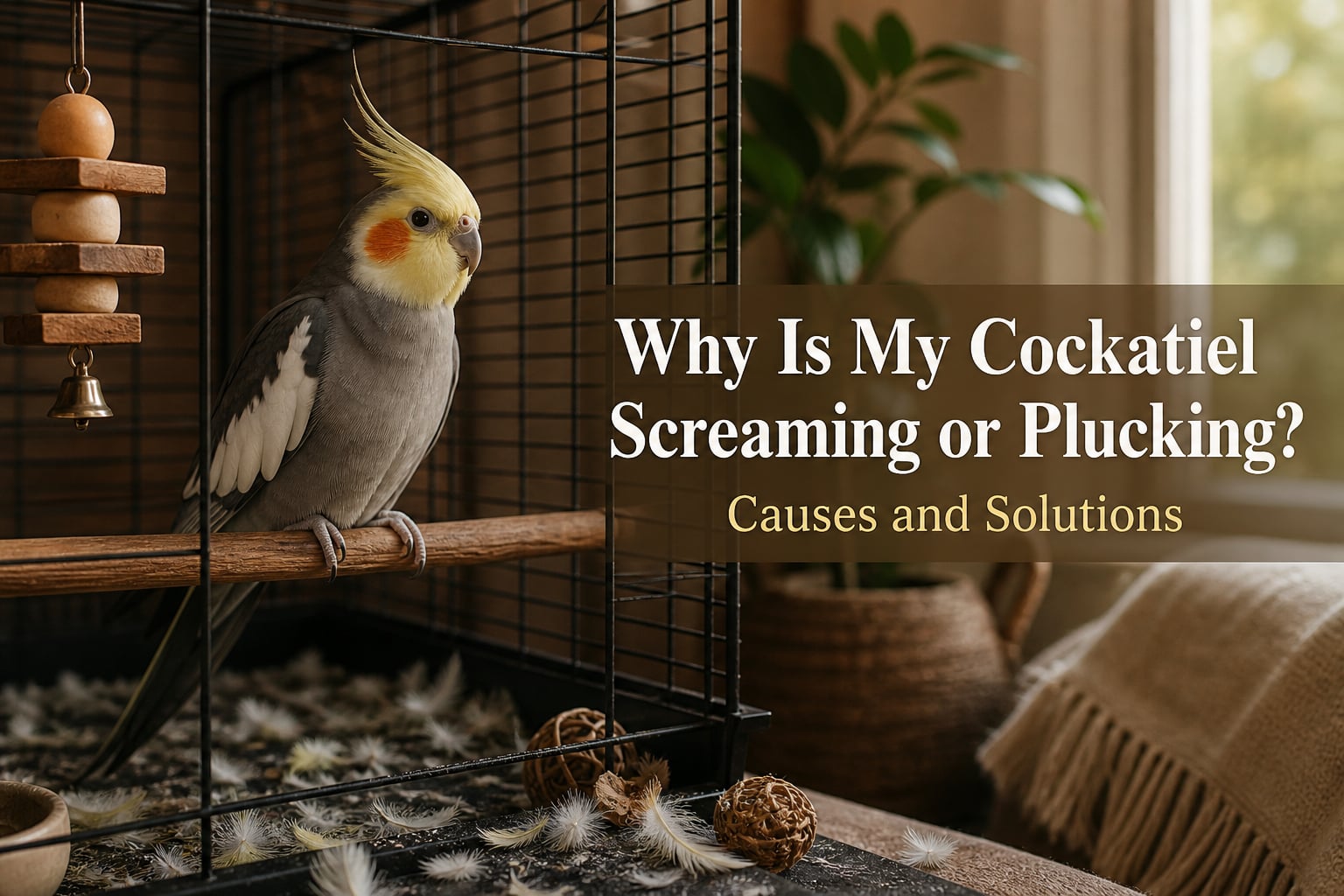
If your cockatiel has started screaming nonstop or pulling out feathers, you are not alone. Cockatiel screaming and plucking are two of the most common behavioral problems owners face, and both usually trace back to hormones, boredom, attention-seeking, stress, or an underlying medical issue.
I have worked with cockatiel owners for years, and nearly every “my bird went crazy overnight” story boils down to a handful of identifiable triggers. The good news is that once you understand why your bird is screaming or plucking, you can take specific steps to help them settle down.
In this guide, I will walk you through every major cause of cockatiel screaming and feather plucking, how to tell the difference between normal and problematic behavior, and practical solutions you can start applying today. Whether your bird is 8 months old and suddenly hormonal or has been plucking for years, you will find answers here.
One important note before we start: cockatiel screaming and plucking are communication, not punishment. Your bird is telling you something is wrong in their world. Our job is to figure out what that is.
Table of Contents
Why Do Cockatiels Scream? Understanding the Behavior?
Cockatiel screaming is almost always a form of communication. In the wild, cockatiels live in large flocks and use contact calls to stay connected with their group. When your pet cockatiel screams, they are usually trying to reach you, their adopted flock member.
Not all screaming is a problem. Morning and evening vocalization is normal flock behavior. Cockatiels naturally greet the sunrise and call out before settling in for the night. This type of calling is usually brief and stops on its own.
Problematic screaming is different. It is loud, persistent, and disruptive. It continues for long stretches and often happens in response to a specific trigger, like you leaving the room or covering their cage.
Common Causes of Cockatiel Screaming
Through research and owner reports, five causes account for the vast majority of problem screaming in cockatiels.
Hormonal changes are the number one trigger, especially in birds between 8 and 12 months old reaching sexual maturity. Hormonal cockatiels become restless, territorial, and vocal. Breeding season triggers can also cause screaming in adult birds.
Attention-seeking is the second most common cause. Cockatiels are smart. If screaming gets them attention, even negative attention like you yelling back, they learn to repeat it. This pattern can develop quickly and become deeply ingrained.
Boredom and lack of stimulation drive many cockatiels to scream. These are intelligent birds that need mental engagement. A cage with nothing to do becomes a prison, and screaming is how they express frustration.
Fear and alarm calling happens when something in the environment startles your bird. A new pet, strange noises outside, or shadows moving across the room can all trigger alarm screams. Night frights, which we cover later, are a particularly distressing trigger.
Social isolation affects cockatiels deeply. These are flock animals. When left alone for long periods, they scream to call their flock back. This is why so many owners report their cockatiel screams when they leave the room.
Understanding Feather Plucking in Cockatiels
Feather plucking is one of the most distressing behaviors a cockatiel owner can witness. Watching your bird pull out their own feathers feels heartbreaking, and it should be taken seriously. Plucking can range from mild over-preening to severe self-mutilation that damages skin and muscle.
Preening vs. Plucking: How to Tell the Difference
Normal preening is healthy and necessary. Your cockatiel uses their beak to clean and align feathers, remove sheaths from new feathers, and keep their plumage in good condition. A healthy, preening cockatiel looks smooth and well-groomed.
Plucking is different. The bird actively pulls out healthy feathers, often focusing on the chest, under the wings, or legs. You will notice bald patches, broken feather shafts, or feathers scattered at the bottom of the cage. The skin may look red, irritated, or have scabs.
One simple test: if your cockatiel has bare patches where feathers should be, especially on the chest or under the wings, and you find whole feathers with intact shafts at the bottom of the cage, plucking is likely the cause. Molting birds drop feathers naturally but do not create bald spots.
What Causes Feather Plucking in Cockatiels
Feather plucking rarely has a single cause. It is usually a combination of physical and emotional factors that push your bird past their coping threshold.
Medical causes must always be ruled out first. Skin infections, parasites, nutritional deficiencies, liver disease, and heavy metal poisoning can all trigger plucking. A cockatiel that suddenly starts plucking needs a veterinary exam before anything else.
Stress and anxiety are major contributors. Moving to a new home, losing a companion bird, changes in the household routine, or the arrival of a new pet can all trigger plucking. Many owners on cockatiel forums report plucking starting after the loss of a cage mate.
Hormonal imbalances play a significant role. A bird in a constant state of hormonal frustration may turn to plucking as a self-soothing behavior. This is especially common in birds kept in environments that unintentionally mimic breeding conditions.
Boredom and lack of foraging opportunities contribute heavily. Wild cockatiels spend hours each day foraging for food. In captivity, eating from a bowl takes minutes. That massive gap in activity can lead to feather destruction.
When Plucking Becomes Self-Mutilation
Plucking exists on a spectrum. At the mild end, a bird pulls a few feathers during stressful moments. At the severe end, the bird progresses to chewing and tearing at their own skin, causing bleeding and open wounds.
Self-mutilation is a veterinary emergency. If your cockatiel is drawing blood or creating open sores, they need to see an avian veterinarian immediately. The behavior can become compulsive and very difficult to stop once it reaches this stage.
Hormonal Triggers: The Hidden Culprit Behind Cockatiel Screaming and Plucking
If there is one thing I want every cockatiel owner to understand, it is the role hormones play in behavioral problems. According to avian veterinarians and experts at Lafeber, the majority of behavior issues in pet birds come down to hormones.
Cockatiels reach sexual maturity between 8 and 12 months of age. This is when many owners first notice sudden behavioral changes. A previously sweet, quiet bird may become loud, territorial, and start destroying feathers. Forum reports consistently confirm this pattern.
Signs Your Cockatiel Is Hormonal
Hormonal cockatiels display several recognizable behaviors. You might notice increased screaming, territorial aggression, masturbation behavior, nest-building attempts (shredding paper or digging in corners), and increased rubbing against objects or perches.
Female cockatiels may lay unfertilized eggs. Both sexes may become fixated on a favorite person or object, displaying courtship behaviors. These signs can appear suddenly and intensely, which is why so many owners describe their bird as having changed overnight.
Hormonal periods typically come and go with the seasons. However, captive cockatiels can become stuck in a chronic hormonal state if their environment unintentionally signals breeding conditions year-round.
How to Reduce Hormone Triggers?
Reducing hormonal triggers is one of the most effective things you can do for a screaming or plucking cockatiel. Here are the key strategies avian experts recommend.
Control light exposure. Cockatiels need 10 to 12 hours of complete darkness each night for proper rest. Extended daylight hours signal breeding season to their bodies. Cover the cage or place your bird in a dark, quiet room overnight. This single change makes a massive difference for many birds.
Remove nesting opportunities. Dark, enclosed spaces trigger nesting behavior. Check for dark corners, boxes, or spaces under furniture where your bird might try to nest. Rearrange the cage interior regularly to prevent territorial attachment to specific layouts.
Manage food abundance. Constant access to abundant food signals ideal breeding conditions. Feed measured portions at consistent times rather than leaving bowls full. Avoid high-fat seeds as a staple, which mimic the rich food availability of breeding season.
Set handling boundaries. Avoid petting your cockatiel on the back, under the wings, or near the tail. These areas are associated with courtship and mating. Stick to head and neck scratches, which are socially bonding without triggering hormonal responses.
Limit mirror access. Mirrors can trigger hormonal and territorial behavior because your bird perceives their reflection as a potential mate. Removing mirrors often reduces screaming and plucking significantly.
How to Stop Cockatiel Screaming: Step-by-Step Solutions
Stopping persistent screaming requires a systematic approach. You cannot simply tell a cockatiel to be quiet. You need to address the underlying cause while teaching alternative behaviors. Here is the step-by-step process that experienced bird keepers and behaviorists recommend.
Step 1: Rule Out Medical Causes First
Before trying any behavioral modification, schedule a visit with an avian veterinarian. Pain, illness, and physical discomfort can all cause screaming. A bird screaming because they are in pain will not respond to behavioral training.
Your vet will check for infections, nutritional deficiencies, respiratory issues, and other health problems. This step eliminates a medical basis for the behavior and gives you confidence to proceed with training.
Step 2: Establish a Consistent Daily Routine
Mickaboo Bird Rescue, a respected rescue organization, emphasizes that routine is the single most important factor in curbing screaming. Cockatiels thrive on predictability. When they know what to expect each day, anxiety and attention-seeking screaming both decrease.
Create a schedule that includes consistent times for waking up, feeding, out-of-cage time, interaction, and bedtime. Your bird should know approximately when each activity happens. Sudden changes to routine are a major screaming trigger.
A sample routine might look like this: uncover the cage at 7 AM, serve breakfast, offer out-of-cage time from 8 to 9 AM, provide fresh water and a foraging toy at noon, evening interaction from 6 to 7 PM, and cover the cage by 8 PM.
Step 3: Manage Attention-Seeking Behavior
This is the hardest step for most owners. When your cockatiel screams for attention, you must not respond. Do not yell at the bird, do not walk over to the cage, and do not even make eye contact. Any response teaches the bird that screaming works.
Instead, wait for a moment of quiet. The instant your cockatiel stops screaming, immediately reward them with attention, a treat, or verbal praise. This teaches the bird that quiet behavior, not screaming, earns what they want.
This process requires patience. Expect the screaming to get worse before it improves. Behavioral psychologists call this an extinction burst. The bird tries harder before finally giving up on the old strategy. Stay consistent through this phase.
Step 4: Provide Environmental Enrichment
A bored cockatiel is a screaming cockatiel. Your bird needs activities that engage their mind throughout the day. Rotate toys weekly to keep things interesting. Offer different types of enrichment.
Foraging toys require your bird to work for food, mimicking natural behavior. Hide seeds in paper cups, stuff millet into cardboard tubes, or use commercial foraging toys. This alone can dramatically reduce boredom-based screaming.
Destructible toys made of safe wood, paper, or palm leaves let your cockatiel satisfy the natural urge to chew and destroy. These are essential for emotional wellbeing.
Training sessions provide mental stimulation and strengthen your bond. Teach your cockatiel simple tricks like stepping up, targeting a stick, or turning around. Ten minutes of training can tire out a bird mentally as much as an hour of physical activity.
Step 5: Address Night Frights
Night frights are a surprisingly common but rarely discussed cause of screaming in cockatiels. Your bird suddenly starts screaming and thrashing in their cage in the dark, often in the middle of the night. This happens because something startles them, and in the dark, they panic.
To prevent night frights, provide a small night light near the cage so your bird can see if startled. Avoid placing the cage near windows where passing headlights or shadows might trigger panic. Keep the room quiet at night.
If a night fright does happen, turn on a light gently and speak softly to calm your bird. Do not pull them out of the cage frantically, as this can cause injury in the dark. Check for injuries afterward, as thrashing can break blood feathers.
Solutions for Feather Plucking in Cockatiels
Stopping feather plucking requires a different approach than stopping screaming. While the underlying causes often overlap, plucking can become a deeply habitual behavior that persists even after the original trigger is resolved. Early intervention is key.
Enrichment and Foraging Activities
The single most effective intervention for plucking is increasing environmental enrichment. Wild cockatiels spend 6 to 8 hours a day foraging. Captive birds need to approximate that activity level to stay mentally healthy.
Introduce multiple foraging stations around the cage. Use puzzle feeders, hidden food items, and shreddable materials. Offer new textures like natural branches with bark to strip. Rotate enrichment items regularly so your bird does not get bored.
Providing bathing opportunities also helps. Many plucking birds find relief in regular misting or shallow baths. The sensation of water on the skin can redirect the urge to pluck and improve feather condition.
Diet and Nutrition Connection
Nutrition plays a bigger role in feather health than most owners realize. A diet based primarily on seeds is deficient in key vitamins and minerals that support healthy skin and feathers. This nutritional gap can contribute directly to plucking.
Transition your cockatiel to a high-quality pellet diet supplemented with fresh vegetables, limited fruits, and a small amount of seeds as treats. Vitamin A deficiency, common in all-seed diets, causes dry, itchy skin that birds try to relieve through plucking.
Omega-3 fatty acids from small amounts of walnuts or flaxseed can improve skin and feather condition. Always consult your avian vet before making major dietary changes or adding supplements.
Reducing Stress and Anxiety
Identify and eliminate stressors in your cockatiel’s environment. Common stress triggers include loud noises, other pets staring at the cage, drafts, improper temperature, and lack of a safe retreat space.
Consider whether loneliness is a factor. Cockatiels are highly social. If your bird spends most of the day alone, getting a companion bird may help. However, introduce a new bird carefully and be prepared for an adjustment period. Some birds do better as single pets with plenty of human interaction.
In some cases, a collar or vest designed to prevent plucking can give damaged feathers time to regrow while you address the underlying cause. These should only be used under veterinary supervision.
When to See an Avian Veterinarian
Knowing when to seek professional help can save your cockatiel’s life. Birds hide illness instinctively because showing weakness in the wild makes them targets. By the time a cockatiel looks visibly sick, they may have been ill for some time.
Warning Signs That Need Immediate Attention
Certain symptoms require an immediate veterinary visit, not a wait-and-see approach. If your cockatiel shows any of the following, do not delay.
Sudden personality changes like extreme aggression, lethargy, or unresponsiveness can signal serious illness. A bird that suddenly stops vocalizing entirely after being loud may be very sick.
Physical signs include fluffed-up posture for extended periods, discharge from the eyes or nostrils, difficulty breathing, tail bobbing (the tail moving up and down with each breath), weight loss, or changes in droppings.
Plucking that progresses to skin damage is a medical emergency. If your bird is creating wounds or bleeding, they need immediate intervention to prevent infection and break the self-mutilation cycle.
Medical Conditions That Cause Behavioral Changes
Several medical conditions can cause screaming or plucking that look behavioral but are actually physical. Heavy metal poisoning from chewing on painted surfaces or old cages causes neurological symptoms and screaming. Psittacosis, a bacterial infection, causes lethargy and behavioral changes.
Psittacine Beak and Feather Disease, caused by circovirus, leads to abnormal feather development and loss. Skin infections from bacteria or fungi cause itching that leads to plucking. Liver disease can cause overgrowth of the beak and feathers problems.
Only a qualified avian veterinarian can diagnose these conditions. When you take your bird in, expect blood work, a physical exam, and possibly a feather or skin culture. The investment is worth it to rule out serious health problems.
Forum experiences consistently show that owners who tried behavioral solutions for months without success often discovered an underlying medical issue once they finally visited a vet. If behavioral changes are not working, there is likely a physical component.
Frequently Asked Questions
How to get cockatiels to stop screaming?
Start by ruling out medical issues with a vet visit. Then establish a consistent daily routine, ignore attention-seeking screams while rewarding quiet moments, provide foraging toys and enrichment, ensure 10 to 12 hours of dark sleep each night, and reduce hormonal triggers like excessive light and nesting spots. Patience and consistency are essential.
Why is my cockatiel suddenly screaming?
The most common cause of sudden screaming is a hormonal shift, especially in cockatiels between 8 and 12 months old reaching sexual maturity. Other causes include environmental changes, a new stressor in the home, illness, or a change in routine that has disrupted your bird’s sense of security.
Why does my cockatiel scream when I leave the room?
This is a contact call. Cockatiels are flock animals and consider you their flock member. When you leave, they call out to locate you and bring you back. Establishing a consistent routine and teaching an alternative quiet contact call can help reduce this behavior.
How can I tell if my cockatiel is plucking or just preening?
Normal preening keeps feathers clean and smooth without creating bald spots. Plucking creates visible bare patches, usually on the chest or under the wings, and you will find whole feathers with intact shafts at the bottom of the cage. If your bird has bare patches where feathers should be, plucking is likely.
Conclusion: Building a Calmer Life with Your Cockatiel
Cockatiel screaming and plucking are solvable problems when you understand the causes and commit to consistent solutions. The most common triggers, hormones, boredom, attention-seeking, stress, and medical issues, all respond to the strategies outlined in this guide.
Start with a veterinary exam to rule out medical causes. Build a predictable daily routine. Provide rich enrichment and foraging opportunities. Reduce hormonal triggers in the environment. And above all, be patient. Your cockatiel is communicating the only way they know how. When you listen and respond thoughtfully, the screaming fades and the feathers grow back.