
When the temperature drops, keeping a pet bird warm and safe in winter becomes a real concern for owners like us. I learned this the hard way a few winters ago when my cockatiel started puffing up and sleeping more than usual, and the house thermometer read 62°F (16°C). That cold snap pushed me to research proper thermoregulation, draft prevention, and bird-safe heating, and this guide shares what I picked up along the way.
Pet birds come from tropical and subtropical climates, so even mild cold can stress their systems. By the end of this 2026 guide, you will know the safe temperature range in both Fahrenheit and Celsius, the warning signs of a cold bird, how to set up a draft-free environment, and what to do if your power goes out during a storm.
Table of Contents
What Temperature Is Too Cold for Pet Birds?
Most pet birds start showing cold stress when room temperatures fall below 65°F (18°C), and anything under 60°F (15°C) is considered dangerous for tropical species. The ideal range for nearly all common pet birds, including parrots, cockatiels, budgies, and finches, is between 65°F and 85°F (18°C to 29°C). Some hardy species like zebra finches and Java sparrows tolerate dips into the low 60s briefly, but a sustained temperature below 60°F risks hypothermia.
I keep a digital thermometer mounted at cage level, not eye level, since warm air rises and the reading can be off by 3-5°F. Aim for stable temperatures rather than allowing swings between day and night, because sudden drops stress birds more than steady cool air. If your house drops below 65°F overnight, your bird needs supplemental warmth.
How to Recognize the Signs Your Bird Is Too Cold?
Birds hide illness instinctively, so subtle behavior changes are your earliest warning. The most common signs of cold stress include:
Fluffed feathers for hours: Birds fluff up briefly to trap warm air, but constant fluffing signals they cannot stay warm.
Tucking the beak into the chest or wing: A bird burying its face is conserving body heat.
Lethargy and sleeping more than usual: Cold birds reduce activity to save energy.
Shivering or trembling: Visible shaking means the bird is in immediate distress.
Loss of appetite or weight loss: Cold birds eat less because digestion slows down.
Hunched posture on the perch: A bird sitting low with feathers puffed is fighting to stay warm.
If you notice more than one of these signs, raise the room temperature right away and watch for improvement. A bird that does not warm up within an hour needs an avian vet visit, since prolonged cold weakens the immune system.
Step 1: Position the Cage Away From Drafts and Cold Walls
Where you place the cage matters more than most owners realize. Cold air seeps in around windows, exterior doors, and uninsulated walls, and even a small draft can drop the temperature around the cage by 5-10°F. Move the cage to an interior wall, away from windows, and at least a few feet off the floor since cold settles downward.
Avoid placing the cage near heating vents that blow directly on the bird, as this causes dry skin and uneven temperatures. The sweet spot is a quiet corner of a room that stays between 68°F and 75°F (20°C to 24°C) throughout the day. If you feel a draft when you walk past the cage at night, your bird feels it too.
Step 2: Use a Cage Cover to Retain Nighttime Heat
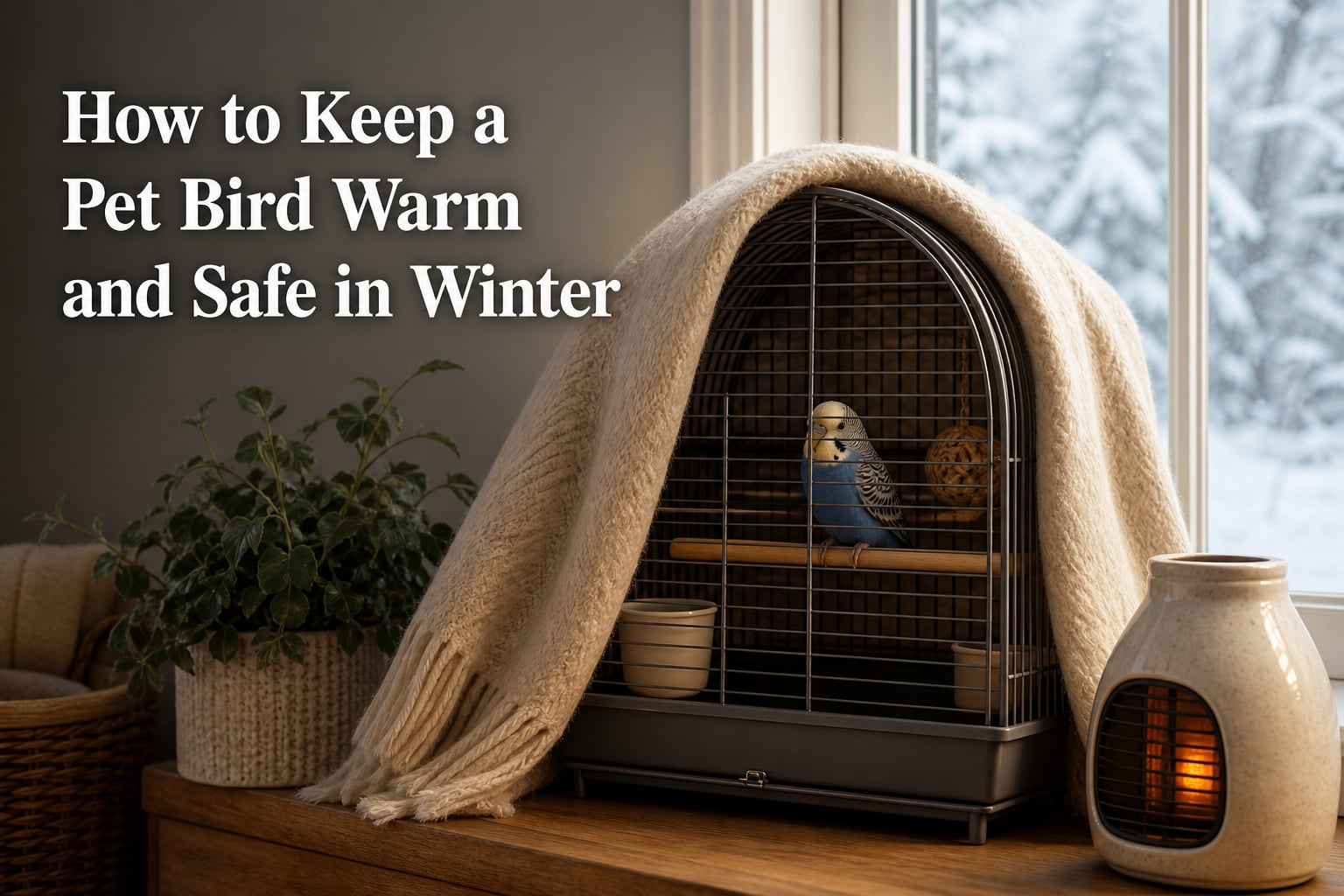
A breathable cage cover traps the heat your bird generates overnight and blocks light that disrupts sleep. Choose a cover made from cotton, fleece, or another breathable fabric, since plastic or vinyl covers trap moisture and cause respiratory problems. The cover should fit snugly and cover all sides while leaving the bottom open for airflow.
I use a dark cotton cover that drops the temperature inside the cage by about 3°F less than the surrounding air, which means the bird’s body heat stays trapped rather than escaping. Replace the cover weekly to prevent bacteria buildup, and never cover a cage during the day unless the bird is sick and needs to rest.
Step 3: Add a Heated Perch or Thermal Panel
Heated perches and thermal panels give birds a warm spot without overheating the whole room. Here is how the main options compare:
Heated perch: Mounts inside the cage, warms only where the bird sits, runs on low voltage, and uses minimal electricity. Best for perching birds like parrots and cockatiels.
Thermal panel: Mounts to the side of the cage, radiates gentle warmth over a wider area, and works for birds that sleep on flat surfaces or in nesting boxes.
Ceramic heat emitter: Produces heat without light, mounts above the cage, and works well for larger enclosures. Requires a thermostat to avoid overheating.
Bird-safe space heater: Heats the whole room, ideal for older homes with poor insulation. Choose oil-filled radiator styles, which lack exposed hot coils and reduce burn risks.
Avoid heat lamps with bright bulbs, since the 24-hour light disrupts sleep and the surface temperature can scorch feet. Always plug heating devices into a thermostat so the temperature stays consistent, and never use a heating pad designed for humans, since birds can chew the wires.
Step 4: Adjust Your Bird’s Winter Diet for Extra Warmth
Birds burn more calories in cold weather to generate body heat, so winter calls for slightly higher fat and calorie intake. Offer warm foods like cooked quinoa, sprouted seeds, and small amounts of unsalted nut butter to give your bird extra fuel for thermoregulation. Fresh vegetables still matter, but starchy foods like sweet potato and squash provide faster energy in winter.
Fresh water is just as critical as food. Heated water dishes or bowls changed twice daily prevent freezing, and ceramic dishes insulate better than thin plastic. Birds that drink less in winter risk dehydration, which makes them feel colder, so check the water level every few hours during cold snaps.
Step 5: Control Humidity and Prevent Respiratory Problems
Indoor winter air often drops below 30% humidity, and dry air irritates bird airways and feathers. A cool-mist humidifier placed several feet from the cage brings humidity into the safe 40-60% range, which reduces respiratory infections and helps feathers stay healthy. Clean the humidifier every three days to prevent mold and bacteria growth.
If you do not want a humidifier, misting your bird with warm water two or three times a week provides similar benefits. Watch for signs of respiratory distress like clicking sounds, tail bobbing, or discharge around the nares, and contact an avian vet if these appear. Cold, dry air makes birds more vulnerable to aspergillosis and bacterial infections.
How to Winterize an Outdoor Aviary Safely
Outdoor aviaries need extra preparation when temperatures fall below 50°F (10°C). Wrap three sides of the aviary with clear plastic sheeting or wind blocks to cut drafts while keeping the front open for sunlight and ventilation. Move the roosting area to the most sheltered corner and add extra nesting material so birds can burrow in for warmth.
For birds that live outdoors year-round, consider bringing them inside during any cold snap below 32°F (0°C). Many owners I have spoken to use a garage, basement, or spare room as temporary housing for the worst nights. Tropical species like budgies, cockatiels, and most parrots should not stay outdoors once temperatures drop below 50°F for more than a few hours.
Emergency Power Outage Plan for Bird Owners
Winter storms knock out power when birds need heat the most, so a backup plan is essential. Use this checklist to prepare before the next storm:
Stock hand warmers: Wrap them in a thin towel and place them at the bottom of the cage for 4-6 hours of gentle warmth.
Wrap the cage: Drape blankets over three sides, leaving the front partially open for airflow and oxygen.
Move to the smallest room: A bathroom or closet stays warmer than open living areas because of the smaller volume.
Use body heat: Hold your bird inside your shirt against your skin for short periods of direct warmth.
Fill hot water bottles: Wrap in towels and place around (not inside) the cage for radiant heat.
Avoid candles: Scented candles release fumes toxic to birds; use flashlights instead.
Test your emergency setup once before a real outage, so you know exactly what works and how long each item lasts. A generator or battery-powered inverter for the heated perch adds extra safety if outages are common in your area.
Common Winter Dangers Bird Owners Overlook
The biggest hidden winter threats are not cold air but the things we do to warm ourselves. Non-stick cookware, including Teflon pans, air fryers, and self-cleaning ovens, releases polytetrafluoroethylene fumes when heated, and these fumes kill birds within minutes. Use stainless steel, cast iron, or ceramic cookware during winter cooking sessions.
Other winter hazards include space heaters with exposed coils, scented candles, essential oil diffusers, and kerosene heaters, all of which release particulates that overwhelm a bird’s sensitive respiratory system. Avian influenza also circulates more during cold months when wild birds cluster at feeders, so keep your pet bird away from outdoor feeding stations and wash your hands after handling wild bird feeders.
Frequently Asked Questions
What temperature is too cold for pet birds?
Most pet birds experience cold stress below 65°F (18°C), and anything under 60°F (15°C) is dangerous for tropical species. The ideal range is 65-85°F (18-29°C) for parrots, cockatiels, budgies, and finches.
How do I keep my pet bird warm at night?
Cover the cage with a breathable cotton or fleece cover, add a heated perch, and make sure the room stays above 65°F. Avoid plastic covers, which trap moisture and cause respiratory problems.
Can pet birds survive cold weather?
Hardy species like zebra finches tolerate brief cold snaps, but most pet birds cannot survive sustained temperatures below 50°F. Tropical species need indoor housing once temperatures drop below 60°F.
How do I keep my bird warm during a power outage?
Wrap three sides of the cage with blankets, move it to the smallest room in the house, and use wrapped hand warmers or hot water bottles for 4-6 hours of gentle warmth. Avoid candles and scented products.
What food should I feed my bird in winter?
Offer slightly higher-calorie foods like cooked quinoa, sprouted seeds, sweet potato, and unsalted nut butter. Always provide fresh, unfrozen water since dehydration makes birds feel colder.
Final Thoughts on Winter Bird Care
Knowing how to keep a pet bird warm and safe in winter comes down to three habits: monitor the temperature at cage level, watch your bird’s body language for cold stress, and prepare for power outages before storms hit. I check our thermometer twice a day during cold months and have a small bin packed with hand warmers, blankets, and a backup perch ready to go.
Start with the easiest wins today: move the cage away from drafts, grab a breathable cover, and pick up a digital thermometer if you do not already have one. Once those basics are in place, add a heated perch or thermal panel for the coldest weeks. Your bird will stay healthier, happier, and much warmer through the entire 2026 winter season.