
Finding a tiny bug on your pet or yourself is unsettling enough without wondering what exactly you are dealing with. If you have ever stared at a speck on your dog’s fur and asked whether it is a flea or a tick, you are in good company. Our team hears this question constantly from pet owners, parents, and anyone who spends time outdoors during warmer months.
Learning how to tell the difference between fleas and ticks matters because each pest requires a completely different response. Fleas cause fast-spreading indoor infestations that demand whole-home treatment. Ticks pose a slower but more dangerous threat, transmitting serious diseases like Lyme through prolonged attachment to a host.
In this guide, we break down every distinguishable feature between these two blood-feeding parasites. You will learn how to identify each one by sight, behavior, bite pattern, and habitat. We also cover the health risks, prevention strategies, and specific steps to take when you find either pest on your pet or yourself.
By the end, you will have a practical mental checklist you can rely on the next time you spot something crawling or attached.
Table of Contents
Fleas vs Ticks at a Glance
The fastest way to separate these two parasites comes down to a few key traits. Here is a quick-reference breakdown you can scan in seconds.
Classification: Fleas are insects with six legs. Ticks are arachnids with eight legs, related to spiders and mites.
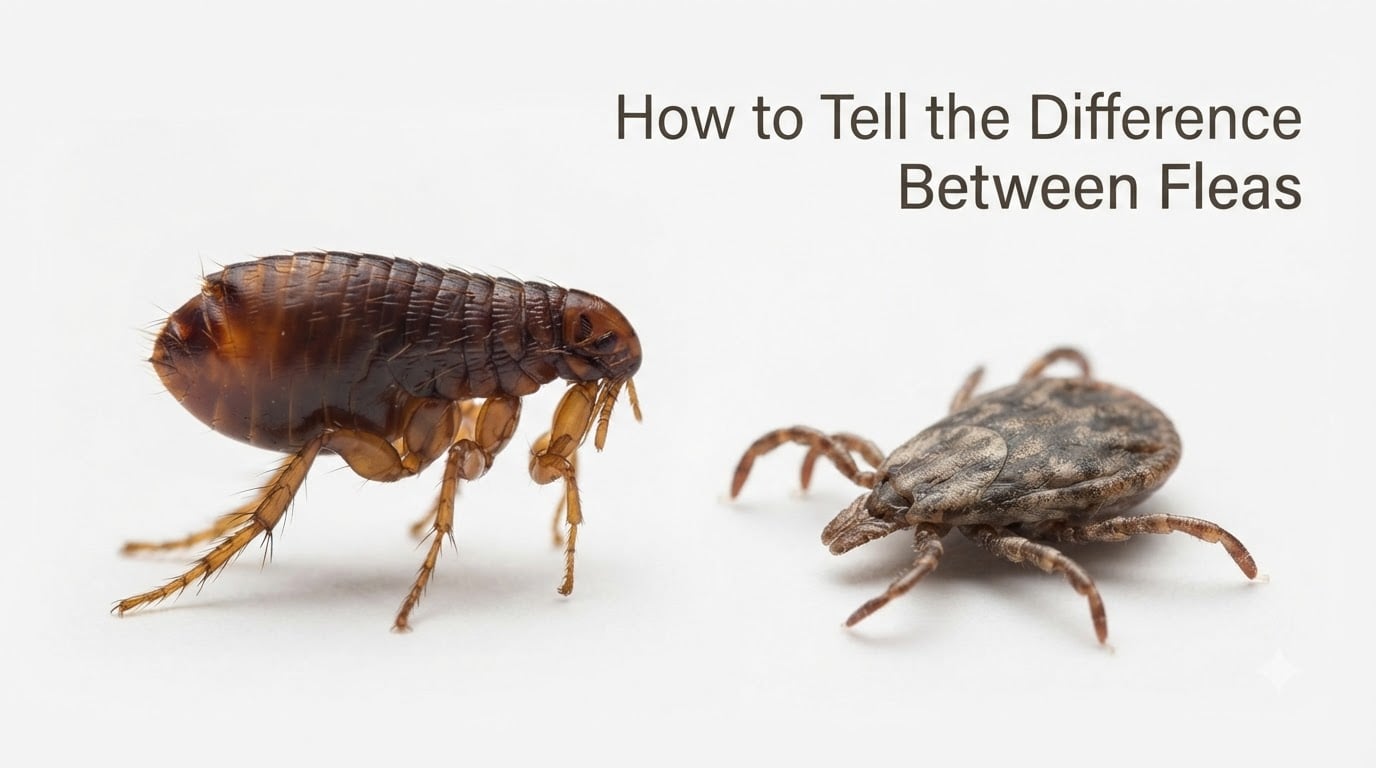
Size: Adult fleas measure about 1/8 inch long. Unfed ticks range from 1/16 to 1/4 inch, but engorged ticks can swell to the size of a small grape.
Body shape: Fleas have laterally flattened, narrow bodies built for moving through fur. Ticks have oval or teardrop-shaped bodies that expand dramatically when feeding.
Movement: Fleas jump, using powerful back legs to launch up to two feet. Ticks crawl slowly and cannot jump or fly.
Feeding: Fleas feed briefly and repeatedly, hopping on and off hosts. Ticks attach firmly and feed on a single host for several days.
Habitat: Fleas thrive indoors in carpets, bedding, and pet fur. Ticks live outdoors in tall grass, wooded areas, and leaf litter.
Disease risk: Fleas spread plague, murine typhus, and tapeworms. Ticks transmit Lyme disease, Rocky Mountain spotted fever, and several other serious illnesses.
Keep these contrasts in mind as we explore each category in detail below.
Physical Differences Between Fleas and Ticks
The most reliable way to identify either pest is by examining its physical structure. These two parasites look nothing alike once you know what details to check.
Body Shape and Size
Fleas are tiny, dark-colored specks about 1/8 inch long, roughly the size of a sesame seed or a grain of coarse sand. Their bodies are compressed sideways, meaning they appear thin when viewed from the front but wider from above. This lateral flattening lets them slip smoothly between strands of animal fur.
Ticks have a distinctly different silhouette. They are oval or teardrop-shaped, with a broader profile than fleas. Before feeding, an unfed tick might be only 1/16 to 1/8 inch across, comparable to a poppy seed. After engorging on blood, a tick can balloon to 1/2 inch or larger, resembling a small gray or brown bean.
If the bug you found looks flat and narrow like a dark splinter, it is likely a flea. If it looks rounded, plump, or attached and swelling, you are looking at a tick.
Leg Count and Classification
One of the most definitive identifiers is the number of legs. Fleas are insects, which means they have six legs arranged in three pairs. Ticks are arachnids, putting them in the same family as spiders and scorpions, and they have eight legs as adults.
Counting legs on something this small is challenging with the naked eye. But if you can capture the pest on a light surface and use your phone’s camera zoom, the difference becomes visible. Six legs means flea. Eight legs means tick.
Note that tick larvae, which are newly hatched and rarely encountered, have only six legs. They gain their fourth pair after molting into nymphs.
Color and Texture
Fleas typically appear dark reddish-brown to nearly black, with a hard, shiny exoskeleton that reflects light. Their bodies look smooth and glossy, almost like a tiny polished pebble.
Unfed ticks range from light brown to reddish-brown or grayish-black depending on the species. Many common tick species have a hardened plate called a scutum on their back. Female deer ticks, for example, have a distinctive dark reddish-brown body with a darker scutum behind the head. Engorged ticks take on a gray, blue-gray, or pale tan coloration as their body stretches.
Texture also differs. Fleas have a smooth, glossy shell. Ticks have a slightly leathery, wrinkled appearance, especially when engorged.
How Fleas and Ticks Behave Differently?
Behavior is often the easiest way to tell these two apart, even before you get a close look. The way a pest moves and feeds tells you exactly what you are dealing with.
Movement: Jump vs Crawl
Fleas are phenomenal jumpers. Using specialized, powerful hind legs, an adult flea can leap up to two feet vertically and over a foot horizontally. This jumping ability lets them launch from carpets, lawns, or infested bedding directly onto a passing host.
If you see a dark speck suddenly vanish, that is a flea. They move fast and erratically, darting through fur and disappearing before you can pin them down.
Ticks do not jump and cannot fly. They crawl deliberately and slowly, using all eight legs to travel across skin, fur, or clothing. A tick found on your pet likely walked there from tall grass or brush, climbing steadily until it found a suitable feeding spot.
The behavioral contrast is stark. Fleas dart, jump, and scatter. Ticks crawl, pause, and cling.
Feeding Behavior
Fleas feed in quick bursts. They hop onto a host, pierce the skin, consume a blood meal in a few minutes, and move on. A single flea may bite its host many times in one day, which is why flea infestations produce clusters of red, itchy bumps.
Ticks are patient, long-term feeders. Once a tick finds a host, it cuts into the skin and embeds its mouthparts securely. It then feeds slowly over three to seven days, growing larger as it fills with blood. An engorged tick is one that has been attached and feeding for some time.
This difference in feeding duration has major implications for health. Ticks generally need to stay attached for 24 to 48 hours to transmit Lyme disease, which is why prompt removal is critical.
Habitat Preferences
Fleas are primarily an indoor problem. They live and reproduce inside homes, laying eggs in carpets, pet bedding, upholstered furniture, and floor cracks. The flea life cycle, from egg to adult, can complete in as little as two weeks under warm, humid conditions.
Ticks are overwhelmingly outdoor pests. They wait on vegetation in a behavior called questing, holding onto grass blades or leaf litter with their back legs while reaching out with their front legs to grab onto a passing host. You will encounter ticks in wooded areas, tall grass, brushy trails, and leaf piles.
If you found the pest inside your home on soft furnishings, fleas are the more likely culprit. If you found it after a hike, walk, or time in the yard, suspect a tick.
Flea Bites vs Tick Bites: What to Look For
When you cannot find the bug itself, the bite pattern it leaves behind offers strong clues about which parasite you encountered.
Flea Bite Appearance
Flea bites look like small, raised, red bumps, often grouped in clusters or lines of three or four. They typically appear on the lower legs, ankles, and feet in humans, since fleas jump from carpets and flooring. On pets, flea bites cluster around the base of the tail, the lower back, the neck, and the belly.
Flea bites itch intensely and almost immediately. Many pets develop flea allergy dermatitis, an allergic reaction to flea saliva that causes severe scratching, hair loss, redness, and skin infections. If your dog or cat is biting at their haunches or losing fur above the tail, fleas are a top suspect.
One hallmark of flea activity is flea dirt. This looks like tiny black or dark brown specks of pepper scattered through the fur. On close inspection or when placed on a damp paper towel, flea dirt dissolves into a reddish-brown smear, confirming it is digested blood.
Tick Bite Appearance
A tick bite looks very different from a flea bite. The most obvious sign is the tick itself, still attached to the skin. The bite site may show a small red area of irritation, but unlike flea bites, tick bites are usually singular rather than clustered.
Tick bites often go unnoticed at first because ticks inject a mild anesthetic while feeding. Many people and pets do not feel the initial bite. The real concern develops days later, when certain tick-borne illnesses produce a distinctive rash.
The classic bullseye rash, formally called erythema migrans, is the hallmark of early Lyme disease. It appears as a red ring that expands outward from the bite site, sometimes clearing in the center to create a target shape. Not every Lyme infection produces this rash, but when it appears, it is a strong indicator that a tick bite occurred.
Comparing Bite Reactions
In practical terms, flea bites announce themselves immediately with itching and clusters. Tick bites are stealthy, often painless, and reveal their seriousness days or weeks after the fact. If you or your pet have multiple small itchy bumps in a short period, suspect fleas. If you find a single attached bump that grows over hours or days, it is a tick.
Signs of Flea vs Tick Infestation
Knowing what to look for around your home and on your pets helps you catch a problem early. The warning signs differ significantly between these two parasites.
Signs of Fleas
Excessive scratching is usually the first clue. If your pet suddenly starts biting, licking, or scratching more than usual, particularly around the lower back and tail base, check for fleas immediately.
Run a flea comb through your pet’s fur, focusing on the neck, lower back, and behind the ears. You may capture live fleas, but you are more likely to find flea dirt. Place any dark specks on a white, damp paper towel. If they leave a rust-colored stain, that is flea dirt and confirms an active infestation.
You might also see fleas jumping in your carpet or on light-colored pet bedding. Tiny white specks in pet bedding or your own bed can indicate flea eggs, which are smooth, oval, and about 1/50 inch long.
Signs of Ticks
Tick signs are different because ticks do not reproduce indoors the way fleas do. You will not find a tick infestation in your carpet. Instead, you will find individual ticks attached to your pet or yourself.
After outdoor activity, run your hands over your pet’s entire body, checking between toes, inside ears, around the face, under the collar, and in skin folds. Ticks prefer warm, protected areas. An attached tick feels like a small bump, similar to a scab or skin tag at first touch.
On yourself, check behind the knees, in the groin area, around the waist, under the arms, in and around the ears, and along the hairline. Use a mirror or ask someone to check spots you cannot see.
If your pet develops a fever, seems lethargic, loses appetite, or shows lameness in the weeks following outdoor exposure, consult a veterinarian. These can be signs of tick-borne illness even if you never saw the tick.
Health Risks and Disease Transmission
Both fleas and ticks are more than a nuisance. They are capable disease vectors, but the illnesses they carry and the way they transmit them differ.
Flea-Borne Diseases
Fleas are most dangerous in large numbers because of the cumulative effect of their bites. Heavy infestations can cause anemia in puppies, kittens, and small pets due to blood loss. Flea allergy dermatitis is the most common consequence for dogs and cats, leading to intense itching, skin infections, and hair loss.
Fleas also carry tapeworms. Pets swallow infected fleas while grooming, and the tapeworm then develops inside the pet’s digestive tract. You may see small, rice-like segments around your pet’s rear end or in their bedding.
In humans, fleas are historically infamous for transmitting plague and murine typhus. These are rare today but still occur in certain regions. Flea bites on humans can also cause secondary skin infections from scratching.
Tick-Borne Diseases
Ticks are widely regarded as the more dangerous of the two because of the severity of the diseases they carry. Lyme disease is the most common tick-borne illness in North America, transmitted primarily by blacklegged ticks, also called deer ticks.
Other serious tick-borne illnesses include Rocky Mountain spotted fever, anaplasmosis, babesiosis, ehrlichiosis, and Powassan virus. Some of these can be life-threatening if not treated promptly.
The encouraging news is that prompt tick removal significantly reduces disease risk. For Lyme disease specifically, a tick generally needs to be attached for 24 to 48 hours before transmission occurs. Finding and removing ticks quickly is one of the most effective protections you have.
If you develop a fever, rash, headache, fatigue, joint pain, or flu-like symptoms within a few weeks of a tick bite, seek medical attention and tell your doctor about the exposure.
Prevention Tips for Fleas and Ticks
Prevention is always easier than dealing with an established problem. The strategies differ depending on which pest you are targeting.
Protecting Your Pets
Year-round flea and tick prevention is the single most important step. Talk to your veterinarian about the best preventative product for your pet’s species, size, and lifestyle. Options include topical treatments, oral medications, and collars.
Never use dog products on cats, as some ingredients that are safe for dogs are toxic to felines. Follow dosing instructions precisely and maintain the schedule without gaps.
Groom your pet regularly with a flea comb, especially during spring and summer. This helps you catch problems early before they escalate into full infestations.
After Outdoor Activity
Make tick checks a routine after any time spent in grassy, brushy, or wooded areas. Check yourself, your children, and your pets within two hours of coming indoors. Showering soon after outdoor activity can help wash off unattached ticks.
When walking in tick habitat, wear light-colored clothing so ticks are easier to spot. Tuck pants into socks, use insect repellent containing DEET or picaridin on exposed skin, and stay on the center of trails.
Home and Yard Defense
For flea control, vacuum frequently, especially in areas where your pet sleeps. Wash pet bedding weekly in hot water. Treat your home and yard if an infestation takes hold, since fleas spend most of their life cycle off the host in the environment.
For tick control around your property, keep grass mowed short, remove leaf litter, and create a barrier of wood chips or gravel between lawns and wooded areas. Trim bushes and clear brush where ticks and their wildlife hosts thrive. Discourage deer and rodents from entering your yard, as they are common tick carriers.
Addressing moisture also helps. Both fleas and ticks thrive in humid conditions, so reducing standing water and improving drainage makes your property less hospitable to both.
Frequently Asked Questions
How do I know if I have ticks or fleas?
Check the pest’s movement and appearance. Fleas are tiny, dark, fast-moving specks that jump and scatter when disturbed. Ticks are slow-crawling, oval-shaped arachnids that attach firmly to skin and stay in place. If you see clusters of itchy red bites on lower legs or around your pet’s tail base, suspect fleas. If you find a single bump on your pet or yourself that grows over hours or days, it is likely an attached tick.
Do ticks jump like fleas?
No, ticks cannot jump or fly. Ticks crawl slowly using all eight legs and reach hosts by questing, which means they wait on vegetation with front legs extended to grab onto a passing animal or person. Only fleas jump, using powerful hind legs to leap up to two feet.
Can fleas live in your bed?
Yes, fleas can live and reproduce in bedding, especially pet bedding. Flea eggs, larvae, and pupae develop in carpets, mattresses, and upholstered furniture. Adult fleas prefer to feed on pets but will bite humans in the same environment. Wash bedding weekly in hot water and vacuum regularly to break the flea life cycle.
Are fleas more harmful than ticks?
Each poses different risks. Fleas cause intense itching, flea allergy dermatitis, anemia in small pets, and can transmit tapeworms. Ticks are generally considered more dangerous because they transmit serious illnesses like Lyme disease, Rocky Mountain spotted fever, and babesiosis. Both require prompt attention, but tick-borne diseases tend to have more severe long-term health consequences.
How to tell if a dog has ticks or fleas?
Run your hands over your dog’s entire body feeling for small bumps. Check between toes, in ears, under the collar, and around the face for ticks, which attach and stay in one spot. Use a flea comb on the lower back and tail base to look for fleas or flea dirt, which appears as dark specks that leave a reddish smear on damp paper. Excessive scratching and hair loss above the tail strongly suggest fleas.
What can be mistaken for fleas on a dog?
Several small pests and particles get confused with fleas. Flea dirt is often mistaken for regular dirt or skin flakes, but it dissolves into a reddish stain on a damp paper towel. Mites, lice, and small flies can resemble fleas, though none jump. Tick nymphs may look like tiny dark specks but have eight legs and crawl rather than jump. If you are unsure, capture the pest on white paper and examine it with your phone camera.
Final Thoughts
Once you know the key differences, identifying these two parasites becomes straightforward. Fleas are six-legged, fast-jumping insects with flattened bodies that cause indoor infestations and itchy clustered bites. Ticks are eight-legged, slow-crawling arachnids that attach firmly to feed outdoors and transmit serious diseases through prolonged attachment.
Remember the essentials: count the legs, watch how it moves, and note whether it stays attached. These three observations will resolve almost any identification question within seconds.
Keep your pet on year-round prevention, perform thorough checks after outdoor activity, and maintain your home and yard to reduce both flea and tick pressure. Knowing how to tell the difference between fleas and ticks is the first step toward protecting your family, your pets, and yourself from the health risks these parasites carry.