
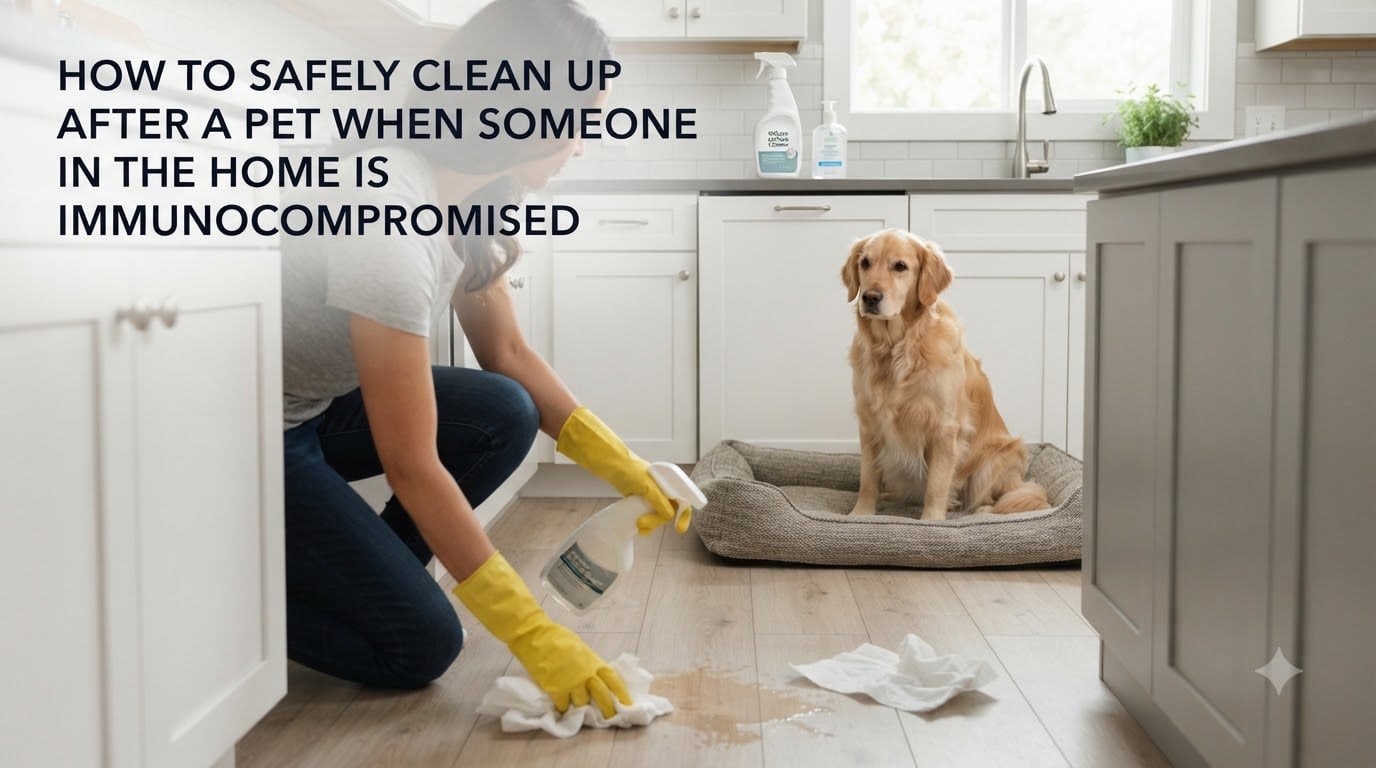
Living with pets while caring for someone with a weakened immune system brings daily questions about safety. The good news is that most immunocompromised households can keep their pets with the right cleanup habits. In this guide, I’ll walk you through how to safely clean up after a pet when someone in the home is immunocompromised, drawing on CDC guidance, peer-reviewed research, and stories from real caregivers.
Our team pulled together recommendations from MedlinePlus, MD Anderson, and transplant support forums to create something I wish we’d had when my aunt went through chemotherapy with two cats at home. You’ll get step-by-step procedures, product guidance, and a clear sense of which tasks others should handle.
Table of Contents
Who Is Considered Immunocompromised and Why Pet Cleanup Matters?
An immunocompromised person has a weakened immune system that cannot fight off infections as effectively as a healthy person. This includes people undergoing chemotherapy, organ or stem cell transplant recipients, people living with HIV/AIDS, those on high-dose steroids or biologics, and individuals with autoimmune conditions. According to the CDC, these groups face higher risk of severe illness from pathogens that healthy immune systems easily contain.
Pets carry 30 to 40 zoonotic diseases, which are illnesses that pass between animals and humans. Transmission happens through saliva, feces, urine, scratches, bites, and contact with contaminated surfaces like litter boxes and cages. For immunocompromised individuals, these everyday exposures can lead to serious or disseminated infections that healthy people would shake off in a few days.
Pathogens That Pose the Greatest Risk
Toxoplasma gondii from cat feces, Salmonella from reptiles and birds, Campylobacter from puppies, and Bartonella henselae from cat scratches are among the most common concerns. Each can cause fever, organ damage, or bloodstream infections in people with reduced immunity. That’s why cleaning up after pets quickly and correctly is not a preference but a medical necessity in these homes.
Essential Safety Equipment for Pet Cleanup
The right protective gear turns pet cleanup from a risk into a routine task. Before touching litter, cages, or accident spots, gather disposable gloves, a properly fitted mask, dedicated cleaning clothes, and EPA-registered disinfectants. These items cost far less than a single urgent care visit and they work for every cleanup scenario.
Disposable Gloves, Masks, and Protective Clothing
Nitrile or latex disposable gloves create a barrier between your skin and pet waste. Change gloves between tasks and toss them in a sealed bag. A surgical or N95 mask reduces the chance of breathing in dried particles from litter or bedding. For people with severe immunosuppression, long sleeves or an apron prevent splashes from reaching forearms and clothing.
Cleaning Products That Kill Pet Germs
Not every household cleaner handles zoonotic pathogens effectively. EPA-registered disinfectants labeled effective against parvovirus, norovirus, and bacterial spores offer the broadest protection. A diluted bleach solution (1 part bleach to 32 parts water for general surfaces, 1:10 for high-risk areas) kills most bacteria and parasites within minutes. Keep enzymatic cleaners on hand for organic stains, since they break down proteins in urine and feces.
Step-by-Step Pet Cleanup Procedures
Every safe pet cleanup follows the same basic sequence: prepare, protect, clean, disinfect, and wash up. This numbered process works whether you are scooping a litter box, cleaning a bird cage, or wiping up an accident on the kitchen floor. Practicing it consistently is what keeps everyone in the home protected.
Put on disposable gloves and a mask before approaching any pet waste or soiled area.
Remove solid waste with paper towels or a scooper and seal it in a plastic bag.
Blot or rinse the area to remove residue before applying any disinfectant.
Apply an EPA-registered disinfectant and let it sit for the contact time listed on the label, usually 3 to 10 minutes.
Wipe the surface clean with disposable paper towels and discard them in a sealed bag.
Remove gloves without touching the outside surface and wash your hands immediately for at least 20 seconds.
Launder any reusable cleaning cloths in hot water with detergent on the same day.
Disinfect reusable tools like scoopers and brushes with the same bleach solution after each use.
Why the Order Matters
Skipping the pre-clean step leaves organic matter that shields pathogens from disinfectants. Rushing the contact time means the chemicals never fully activate. I learned this the hard way when a quick wipe left behind bacteria that made my aunt nauseous for two days. Slow down and follow the sequence each time.
How to Safely Clean Up After Dogs?
Dogs are generally the lowest-risk household pet for immunocompromised owners, but their waste and accidents still require careful handling. Outdoor cleanup reduces exposure risk, while indoor accidents need immediate attention. Daily grooming and weekly bath routines also lower the bacterial load on fur and paws.
Outdoor Waste Cleanup
Pick up dog feces within minutes of your dog relieving itself, even in your own yard. Use a dedicated pooper scooper or bag and avoid touching waste with bare hands. Place the bag in an outdoor trash can with a tight lid. Wash the scooper with hot soapy water or a bleach solution after each use to prevent cross-contamination.
Indoor Accident Cleanup
When a dog has an indoor accident, treat it like a biohazard. Blot the spot with paper towels, then clean with an enzymatic cleaner to fully break down urine proteins. Follow with a disinfectant rated for organic matter. Dry the area completely, since moisture encourages bacterial regrowth. If accidents happen often, take the dog to the vet to rule out medical causes.
Bath and Grooming Safety
Bathe dogs at least once a month to reduce dander and surface bacteria. Use a mild shampoo and wear gloves during the bath. Dry them thoroughly in a warm room and brush them outdoors to keep loose fur away from indoor air. Keep dog bedding washed weekly in hot water.
How to Safely Clean a Cat Litter Box?
The cat litter box is the highest-risk area in any home with an immunocompromised person. Toxoplasma gondii, a parasite shed in cat feces, can cause severe complications during pregnancy and in people with weakened immunity. Daily scooping, weekly deep cleaning, and clear delegation rules are the safest approach.
Daily Scooping Protocol
Scoop waste at least once a day, ideally twice. Wear disposable gloves and a mask, and use a dedicated scooper that you can disinfect afterward. Place clumps in a sealed plastic bag before putting them in the trash. Never flush cat litter, since Toxoplasma can survive wastewater treatment and harm wildlife.
Weekly Deep Cleaning
Empty the entire litter box once a week. Wash it with hot water and a mild detergent, then disinfect with a 1:10 bleach solution. Rinse thoroughly so no chemical residue irritates the cat’s paws or skin. Refill with fresh litter once the box is completely dry. Replace plastic litter boxes every one to two years, since scratched surfaces harbor bacteria.
When Someone Else Should Do It
The strongest recommendation from MedlinePlus, MD Anderson, and transplant specialists is to have a healthy household member handle litter box duties whenever possible. If no one else is available, wear a mask, gloves, and wash hands thoroughly afterward. Pregnant women and people on chemotherapy should never handle litter boxes, even with protection.
Bird, Reptile, and Small Pet Cleanup Protocols
Birds, reptiles, and small mammals like hamsters each carry specific pathogens that can be dangerous for immunocompromised people. Salmonella is the most common concern with reptiles and birds, while small mammals can transmit lymphocytic choriomeningitis virus and ringworm. Each requires tailored cleaning habits.
Bird Cage Cleaning
Clean bird cages daily by removing soiled liner paper and droppings. Wear a mask, since dried bird droppings can become airborne particles. Wash the cage weekly with hot soapy water and disinfect with a diluted bleach solution. Rinse thoroughly and dry completely before replacing liners, food dishes, and perches.
Reptile and Aquarium Maintenance
Reptiles like turtles, lizards, and snakes shed Salmonella in their feces. Clean terrariums in a bathtub or dedicated sink that you disinfect afterward. Never clean reptile equipment in the kitchen or anywhere food is prepared. Wash hands thoroughly after any reptile handling, even if you wore gloves. Aquarium water can harbor Mycobacterium marinum, so wear gloves and avoid splashing.
Small Mammal Cage Cleaning
Hamsters, guinea pigs, and rabbits need weekly cage cleanings with full bedding replacement. Spot-clean droppings daily and wear a mask during full cleanings since bedding dust can carry allergens and pathogens. Disinfect the empty cage with a mild bleach solution and rinse completely. Some vets recommend avoiding litter boxes for pet rabbits during illness in the household.
Best Cleaning Products for Killing Pet Pathogens
The right cleaning products make the difference between removing visible dirt and actually killing infectious agents. EPA-registered disinfectants, diluted bleach, and enzymatic cleaners each play a distinct role. Combining them in the right order is the key to a truly sanitary home.
EPA-Registered Disinfectants
Look for products with an EPA registration number on the label and check List N or List G for products tested against specific pathogens. Quaternary ammonium compounds and hydrogen peroxide-based formulas work well on hard surfaces. Avoid mixing different chemicals, since combinations can produce toxic fumes.
Bleach Solutions
Unscented household bleach is one of the most cost-effective disinfectants available. Use 1 tablespoon per quart of water for general surfaces and 1/4 cup per quart for high-risk areas like litter boxes. Mix fresh solutions daily, since diluted bleach loses potency within 24 hours. Never mix bleach with ammonia or vinegar.
Enzymatic Cleaners
Enzymatic cleaners contain bacteria that digest organic proteins in urine, feces, and vomit. They remove stains and odors that disinfectants alone cannot tackle. Apply them first, let them sit for 10 to 15 minutes, then follow up with a disinfectant to kill remaining pathogens.
Daily, Weekly, and Monthly Cleanup Schedule
A consistent schedule prevents small messes from becoming infection risks. Most households can manage daily tasks in under 15 minutes, weekly tasks in under an hour, and monthly deep cleans in a couple of hours. Setting reminders helps maintain the routine when energy is low.
Daily Tasks
Scoop litter boxes, refresh water bowls, spot-clean cage liners, and pick up yard waste. Wipe kitchen counters and any surface a pet walks on with a disinfectant wipe. Brush pets outdoors if possible to keep loose fur and dander from spreading inside.
Weekly Tasks
Wash all pet bedding in hot water, bathe dogs or groom long-haired pets, and empty and disinfect litter boxes. Clean bird and small mammal cages fully, scrub aquarium glass, and launder any blankets your pet sleeps on. Vacuum upholstered furniture with a HEPA-filter vacuum.
Monthly Deep Cleaning
Steam-clean carpets and rugs, wash pet toys in the dishwasher, and disinfect food and water bowls in the dishwasher or with a bleach soak. Replace air filters and inspect HVAC vents for pet hair buildup. Rotate or replace pet beds that have worn fabric.
Hand Washing and Personal Hygiene After Pet Contact
Thorough hand washing is the single most effective way to prevent zoonotic infection. The CDC recommends washing hands with soap and warm water for at least 20 seconds, especially after handling pets, cleaning waste, or touching food. When soap is not available, use a hand sanitizer with at least 60 percent alcohol.
The 20-Second Handwashing Technique
Wet your hands, apply soap, and lather the backs, between fingers, and under nails. Scrub for 20 seconds, which is about the time it takes to hum the Happy Birthday song twice. Rinse under running water and dry with a clean towel or paper towel. Use the towel to turn off the faucet to avoid recontaminating your hands.
When to Wash Your Hands
Wash hands before eating, preparing food, or touching your face. Wash them after petting animals, handling waste, cleaning cages, and coming in from outdoors. Immunocompromised individuals should wash hands anytime they have been in contact with any animal, including service animals and therapy pets.
Skin and Wound Care
Cover any cuts, scrapes, or open wounds before handling pets or cleaning up after them. Bacteria from pet saliva can enter through broken skin and cause cellulitis or sepsis. Wash any bite or scratch immediately with soap and water for several minutes and call a doctor right away.
When to Delegate Pet Cleanup Tasks
Even with the best protective gear, some cleanup tasks carry too much risk for severely immunocompromised individuals. Caregivers, family members, or paid helpers should handle high-risk chores whenever possible. Asking for help is a sign of strength, not weakness, and it protects everyone in the home.
High-Risk Tasks to Delegate
Litter box scooping, full cage cleanings, and handling reptile habitats top the list of tasks others should do. Picking up dog waste outdoors and bathing large dogs also carry meaningful exposure. Anyone on chemotherapy, recovering from a transplant, or with a CD4 count below 200 should avoid these tasks entirely.
Finding Cleanup Help
Family, neighbors, and pet-sitting services can take on daily chores when household members are unavailable. Some vets and animal shelters offer pet care support for families dealing with serious illness. Nonprofit networks like the Magic Bullet Fund and Pet Partners also connect immunocompromised pet owners with volunteers in some regions.
Setting Boundaries With Pets
Teach pets to stay off kitchen counters, dining tables, and the immunocompromised person’s bed. Keep litter boxes, cages, and food bowls out of main living areas when possible. Wash hands immediately after any pet contact, and ask visitors to do the same before interacting with the household.
Warning Signs of Pet-Transmitted Infections
Even with careful cleanup, infections can still happen. Knowing what to watch for helps you act fast and avoid serious complications. Immunocompromised individuals should keep their healthcare provider’s after-hours number handy and call at the first sign of trouble.
Common Infection Symptoms
Fever, chills, fatigue, diarrhea, abdominal pain, and skin rashes are common early signs of zoonotic infection. Swollen lymph nodes, persistent coughing, and unusual joint pain also warrant attention. Symptoms can appear anywhere from a day to several weeks after exposure, depending on the pathogen.
When to Call a Doctor
Any fever above 100.4 degrees Fahrenheit in an immunocompromised person is a medical emergency. Call your care team immediately if you notice fever, vomiting that lasts more than 24 hours, severe abdominal pain, confusion, or a wound that becomes red, warm, or drains fluid. Early treatment with the right antibiotic can prevent hospitalization.
Bite and Scratch Protocol
Wash any bite or scratch thoroughly with soap and running water for at least 5 minutes. Apply antiseptic and cover with a clean bandage. Call your doctor within a few hours, since post-exposure antibiotics may be needed. Report the incident to the pet’s vet to confirm rabies vaccination status if the pet is not your own.
Frequently Asked Questions
Can immunocompromised people scoop cat litter?
Ideally, no. The strongest recommendation from MedlinePlus, MD Anderson, and transplant specialists is to have a healthy household member handle the litter box. If no one else is available, wear disposable gloves and a mask, scoop daily, wash hands thoroughly afterward, and never handle the litter box if you are pregnant or on chemotherapy.
What cleaning products kill pet bacteria and viruses?
EPA-registered disinfectants, diluted household bleach (1 tablespoon per quart for general use, 1/4 cup per quart for high-risk areas), and hydrogen peroxide-based cleaners are most effective. For organic messes, apply an enzymatic cleaner first to break down proteins, then follow with a disinfectant. Always allow the recommended contact time, usually 3 to 10 minutes.
How often should pet areas be cleaned in an immunocompromised household?
Scoop litter boxes and spot-clean cages daily. Wash pet bedding, bathe dogs, and disinfect litter boxes weekly. Deep clean cages, steam carpets, and wash pet toys monthly. Wipe kitchen counters and any surface pets touch with a disinfectant every day.
Should immunocompromised patients get rid of their pets?
In most cases, no. Medical guidelines from the CDC and NIH state that the benefits of pet ownership often outweigh the risks when proper hygiene is followed. Rehoming may be considered for reptiles, exotic animals, or unvaccinated pets during periods of severe immunosuppression, such as right after a transplant.
What pets are safest for immunocompromised individuals?
Dogs and cats that are well cared for, vaccinated, and groomed regularly are generally considered the safest companions. Reptiles, amphibians, baby chicks, and exotic animals carry higher Salmonella risk and are usually discouraged. Fish in well-maintained aquariums are also considered lower risk, though tank cleaning still requires gloves.
Putting It All Together
Learning how to safely clean up after a pet when someone in the home is immunocompromised comes down to three habits: protect yourself every time, clean thoroughly with the right products, and delegate high-risk tasks when you can. With these routines in place, most immunocompromised households can keep the pets they love without compromising safety.
Talk with your healthcare provider about your specific risks, especially during chemotherapy or right after a transplant. Build a small team of family or friends who can step in for litter duty and cage cleaning when energy runs low. Most of all, give yourself credit for doing one of the hardest balancing acts in caregiving: protecting a loved one without giving up the comfort of a beloved companion.