
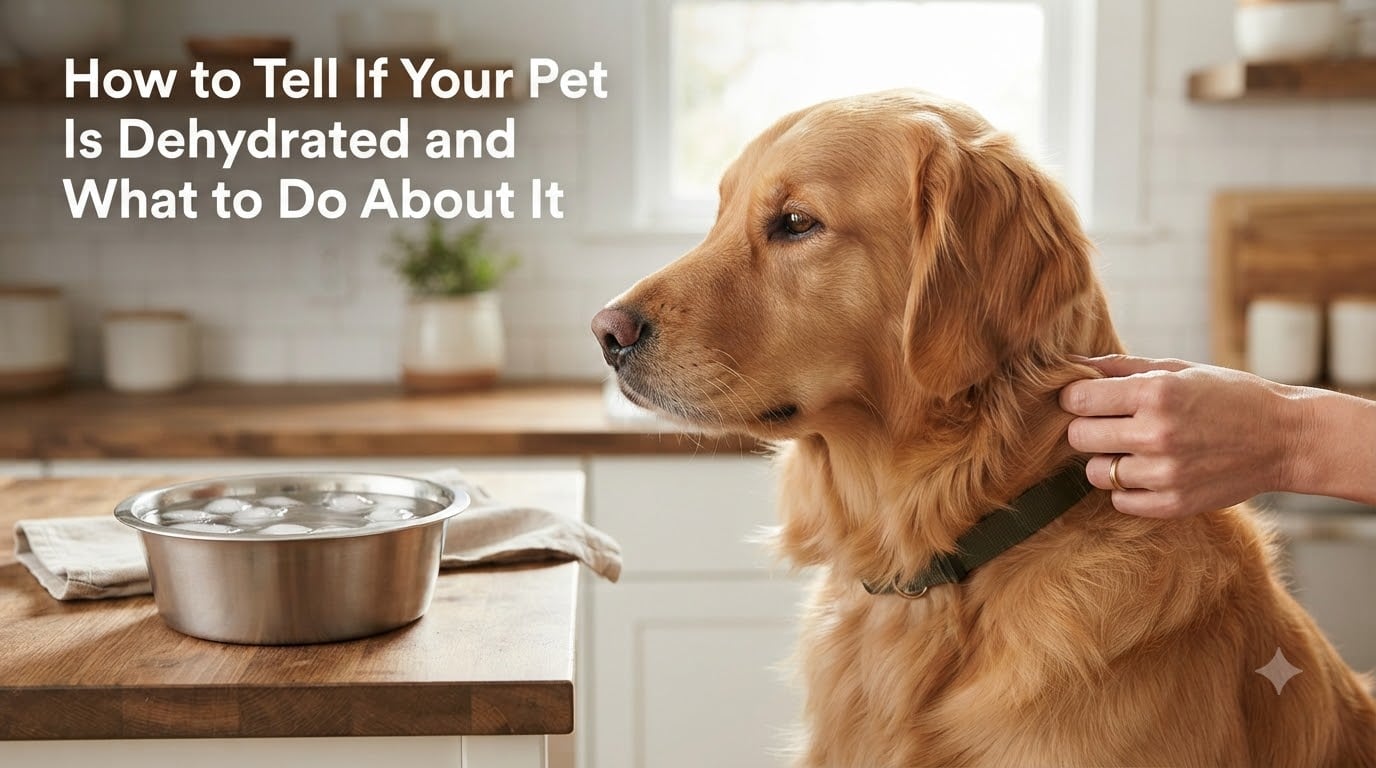
Last summer, my neighbor’s golden retriever collapsed during an afternoon walk. The dog had been panting heavily for hours, but she assumed he was just excited. By the time they reached the emergency vet, his gums were gray and his skin stayed tented when pinched. He spent two days on IV fluids recovering from severe pet dehydration that could have been caught hours earlier.
That experience showed me how fast dehydration sneaks up on pets, especially in warm weather or after a stomach bug. Knowing the early signs can be the difference between a glass of water and a $1,500 vet bill. In this guide, I’ll walk you through exactly how to tell if your pet is dehydrated, what each warning sign means, and what to do about it at home before things get serious.
Table of Contents
What Is Pet Dehydration and Why It Matters?
Pet dehydration happens when your dog or cat loses more fluids and electrolytes than they take in. Water makes up about 60% of an adult pet’s body weight, and even a 10% drop can disrupt organ function. Left untreated, severe dehydration causes shock, kidney failure, and can be fatal within days.
How dehydration affects your pet’s body
When fluid levels drop, blood volume shrinks and circulation slows. Less blood reaches the kidneys, brain, and muscles, which is why dehydrated pets seem sluggish and wobbly. Electrolytes like sodium, chloride, and potassium regulate nerve signals and muscle contractions, so an imbalance causes weakness, confusion, and in serious cases, seizures.
Who is most at risk
Puppies, senior pets, nursing mothers, and toy breeds dehydrate faster because they have less fluid reserve. Pets with chronic illnesses like kidney disease or diabetes face higher risk too, since their bodies flush water constantly. Brachycephalic breeds (pugs, bulldogs, Persians) overheat quickly and pant more, which accelerates fluid loss.
Early Warning Signs of Pet Dehydration
The most common signs of dehydration in pets include dry or tacky gums, sunken eyes, loss of skin elasticity, lethargy, and excessive panting. Catching these early gives you a window to rehydrate at home before the situation becomes an emergency.
Visual signs to look for
Run your finger along your pet’s gum line. Healthy gums feel slick and wet, almost like a freshly licked envelope. Dry, sticky, or tacky gums are one of the clearest early indicators. You may also notice thick, stringy saliva instead of normal thin drool.
Eyes that look dull, sunken, or have a slight gap between the eyelid and eyeball are another red flag. A dry nose isn’t always a worry (some healthy dogs sleep with dry noses), but combined with other symptoms it’s meaningful. Check for panting that seems excessive for the temperature or activity level.
Behavioral changes that signal dehydration
Lethargy is usually the first behavioral sign I notice in my own pets. A normally playful dog who refuses to move from their bed or a cat who skips dinner is telling you something. Loss of appetite, reluctance to play, and restlessness or pacing can all indicate fluid imbalance.
Some pets seek cool surfaces like tile floors or hide in bathtubs when overheated and dehydrated. Others become clingy or irritable. Any sudden personality shift paired with physical symptoms deserves attention.
How to Test for Dehydration at Home (Skin Tent Test)?
You can perform three quick tests at home to gauge dehydration: the skin tent test, gum moisture check, and capillary refill time. These take less than two minutes total and require no special equipment beyond a stopwatch or your phone timer.
Step 1: The skin tent test (skin elasticity test)
Gently pinch the loose skin between your pet’s shoulder blades or at the back of the neck. Lift it up about an inch, then release. In a well-hydrated pet, the skin snaps back to flat within one second. If it stays tented or returns slowly (2 seconds or more), your pet is at least mildly dehydrated.
Older pets and certain breeds like Shar-Peis naturally have looser skin, so this test is less reliable for them. Use it alongside the other two checks for accuracy. A skin tent that takes more than 3 seconds to flatten indicates severe dehydration.
Step 2: Check gum moisture and color
Lift your pet’s lip and look at the gums. Healthy gums are pink (or pigmented in dark-coated breeds) and glistening. Press your finger gently against the gum until it turns white, then release. Color should return within 1-2 seconds. Slow refill suggests poor circulation from dehydration or shock.
Run your finger across the gum surface. Tacky or sticky gums feel like dried paint, while hydrated gums feel wet. Pale, white, gray, or blue gums are emergency warning signs that need immediate vet attention.
Step 3: Capillary refill time test
Press firmly on the gum until the area blanches white. Time how long it takes for the pink color to return. Normal capillary refill time is under 2 seconds. Anything over 3 seconds suggests significant dehydration or cardiovascular issues.
Mild vs moderate vs severe dehydration
Mild dehydration (under 5% fluid loss) shows slight gum tackiness and energy dips. Your pet may still eat and drink on their own. Moderate dehydration (5-10%) brings visible skin tenting, sunken eyes, and clear lethargy. At-home rehydration may work, but a vet check is wise.
Severe dehydration (over 10%) causes collapse, rapid heart rate, cold extremities, and refusal to move. This is an emergency requiring IV fluids within hours. Don’t wait; head to the nearest emergency vet immediately.
Common Causes of Dehydration in Dogs and Cats
Dehydration in pets usually comes from one of three places: not drinking enough, losing too much fluid, or both at once. Identifying the cause helps you prevent it from happening again.
Acute causes
Heatstroke is the fastest killer during summer months. A dog left in a yard without shade or water can become critically dehydrated in under 30 minutes. Heavy panting, drooling, vomiting, and bright red gums signal heatstroke.
Vomiting and diarrhea flush fluids and electrolytes rapidly. Even a single episode of parvovirus or dietary indiscretion can drop hydration levels fast. Fever, burns, and excessive panting after exercise also accelerate fluid loss.
Chronic illness connections
Kidney disease is the most common chronic cause, especially in older cats. Diseased kidneys can’t concentrate urine, so pets urinate more and drink more to compensate. When they stop drinking (often because they feel nauseous), dehydration escalates quickly.
Diabetes, hyperthyroidism, and Cushing’s disease all increase urination and fluid needs. Pets on certain medications like diuretics or steroids lose water faster too. If your pet has a chronic condition, ask your vet about baseline hydration monitoring.
What to Do If Your Pet Is Dehydrated?
For mild dehydration, offer small amounts of cool water frequently and watch for improvement over 2-4 hours. For moderate to severe cases, head straight to the vet for subcutaneous or IV fluids. Never force large volumes of water, which can cause vomiting and worsen the problem.
At-home rehydration for mild cases
Start by offering a few laps of room-temperature water every 10-15 minutes. Ice cubes work well for pets who refuse a bowl, especially cats and small dogs. You can also try adding a splash of low-sodium chicken broth to make water more appealing.
Wet food has about 75-80% moisture, so switching from kibble to wet food temporarily boosts fluid intake. Some pet owners mix a little water into dry food to create a gravy. Plain, unflavored Pedialyte in small amounts can help replace electrolytes for dogs, but skip it for cats unless your vet approves.
Keep your pet in a cool, shaded area and limit activity. Recheck skin elasticity and gum moisture every hour. If symptoms don’t improve within 4 hours, or worsen at any point, contact your vet.
When to see a vet immediately
Head to the emergency vet if your pet shows any of these signs: collapsed or unable to stand, pale or blue gums, skin that stays tented for 3+ seconds, vomiting that won’t stop, or no urine production for 12+ hours. Severe dehydration requires IV or subcutaneous fluids that you can’t safely give at home.
Puppies under 6 months, senior pets, and animals with existing health conditions should see a vet sooner rather than later. Their smaller reserves mean less time to act. Trust your gut; if something feels wrong, call your vet for guidance.
Cat-Specific Dehydration Signs
Cats hide illness instinctively, making dehydration harder to spot than in dogs. Their signs tend to be subtle until the condition becomes serious, which is why routine checks matter so much for felines.
Subtle signs cats show first
Constipation is often the first clue in cats, since dry feces need moisture to pass. A cat who suddenly skips the litter box or produces small, hard stools may be dehydrated. Gums that feel sticky rather than slick and skin that tents between the shoulder blades are key checks.
Cats also show dehydration through third eyelid protrusion (a pale membrane appearing in the inner corner of the eye), reduced grooming leading to dull or matted fur, and hiding more than usual. Panting in cats is rare and almost always signals distress, so any panting deserves a vet call.
How vets assess feline dehydration
Vets use the same skin tent and gum tests, plus bloodwork to check packed cell volume and total protein. A urine specific gravity test measures how concentrated the urine is; higher numbers mean the kidneys are working hard to conserve water, a sign of chronic dehydration.
For severe feline dehydration, vets often use subcutaneous fluids, injecting a sterile electrolyte solution under the skin where it’s absorbed over 6-12 hours. This is less stressful than IV placement and works well for stable cats.
How to Prevent Pet Dehydration?
Prevention comes down to consistent access to fresh water, monitoring intake during high-risk times, and adjusting diet to support hydration. A few small habits can keep most pets safely hydrated year-round.
Daily water requirements by pet weight
A general rule is that dogs need about 1 ounce of water per pound of body weight daily. A 20-pound dog needs around 20 ounces (2.5 cups), while a 60-pound dog needs roughly 60 ounces (7.5 cups). Cats need roughly 4 ounces per 5 pounds of body weight, so a 10-pound cat drinks about 8 ounces daily.
These numbers increase in summer, during exercise, for nursing mothers, and for pets eating dry food. Wet food counts toward intake too; a cat eating only wet food may drink very little extra water and still be well-hydrated.
Practical tips for picky drinkers
Many pets prefer running water, so a pet drinking fountain can dramatically boost intake. Place multiple water stations around your home, especially if you have a multi-level house or several pets. Clean bowls daily, as biofilm buildup turns pets off quickly.
Add ice cubes to the water bowl for fun and cooling. Try flavoring water with a teaspoon of tuna juice (for cats) or bone broth (for dogs). Switch to wet food or mix warm water into kibble. During hot weather, freeze broth into ice cubes for a hydrating treat.
Frequently Asked Questions
How to rehydrate a dehydrated dog quickly?
Offer small sips of cool water every 10-15 minutes rather than a full bowl at once, which can trigger vomiting. For mild cases, add low-sodium chicken broth to the water or switch to wet food. If your dog refuses water or shows severe symptoms like collapse or pale gums, head to the vet for IV fluids immediately.
How long does it take to rehydrate a dehydrated dog?
Mild dehydration often resolves within 4-6 hours of consistent water intake at home. Moderate dehydration treated with subcutaneous fluids at the vet may take 12-24 hours for full recovery. Severe cases needing IV fluids typically require 24-48 hours of hospitalization before the pet returns to normal.
What are two warning signs of dehydration in pets?
The two clearest warning signs are tacky or dry gums and skin that stays tented when pinched. Healthy gums feel slick and wet, while dehydrated gums feel sticky. Skin that doesn’t snap back within 1-2 seconds confirms fluid loss. Sunken eyes and lethargy are additional red flags to watch for.
What can be mistaken for dehydration in dogs?
Fatigue from a long walk, joint pain from arthritis, or low blood sugar can mimic dehydration signs like lethargy and stumbling. Skin tenting varies by breed, so Shar-Peis and very old dogs may show loose skin even when hydrated. Always combine the skin tent with gum checks and refill time for accuracy.
How can a vet tell if a cat is dehydrated?
Vets use the same skin tent and gum tests as for dogs, plus bloodwork to check packed cell volume and total protein levels. A urine specific gravity test reveals how well the kidneys are concentrating urine. For treatment, vets often give subcutaneous fluids under the skin for steady absorption over several hours.
What is the fastest way to rehydrate a cat?
For mildly dehydrated cats, offer wet food with added warm water or a tuna-flavored ice cube to entice drinking. Multiple water stations and a pet fountain often help. Moderately to severely dehydrated cats need veterinary subcutaneous or IV fluids, which work much faster than any home method.
Final Thoughts
Learning how to tell if your pet is dehydrated takes just a few minutes of practice, but it can save your pet’s life. The skin tent test, gum check, and capillary refill time are your three best tools for catching dehydration early, before it becomes a crisis.
Keep fresh water available, watch for subtle behavior changes, and don’t hesitate to call your vet when something feels off. Pet dehydration is treatable when caught early, but it can turn deadly fast when ignored. Trust your instincts, act quickly, and your furry friend will thank you for it.