
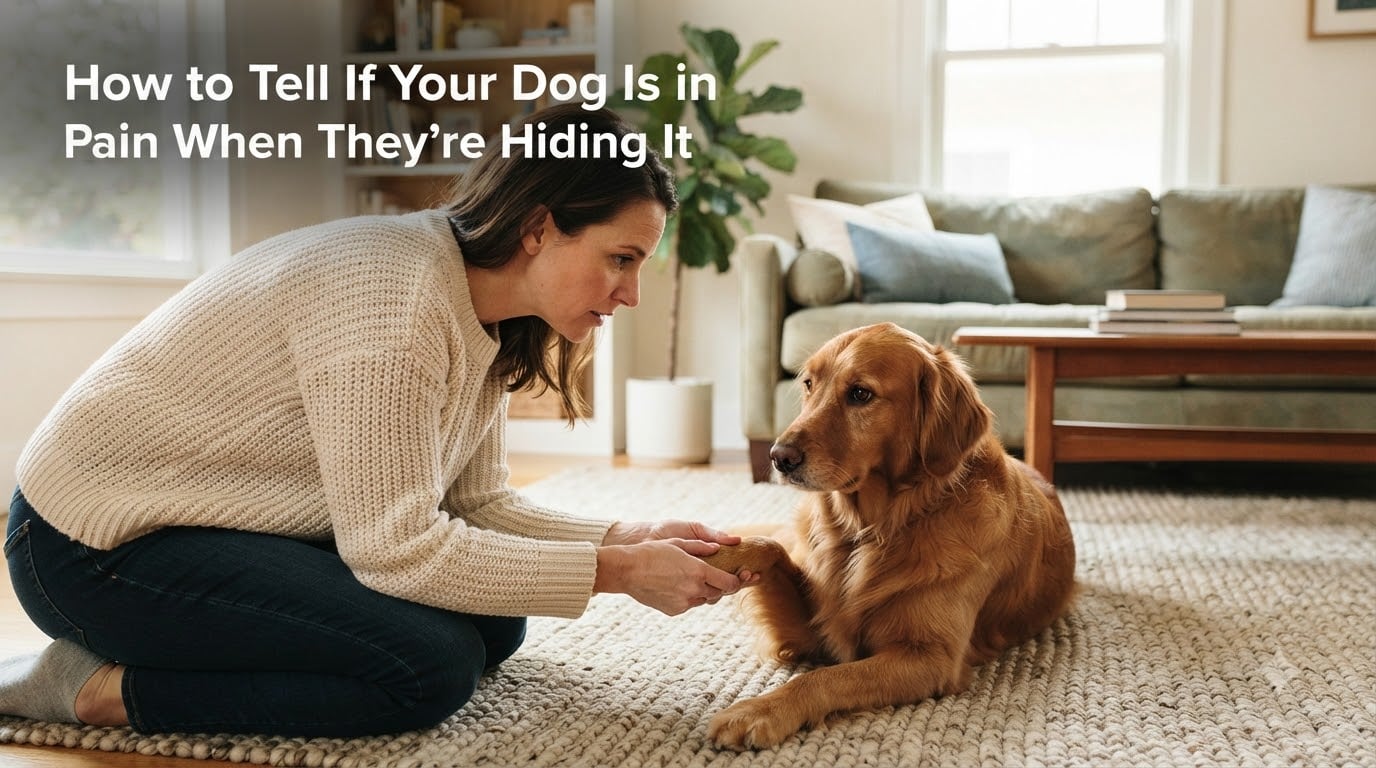
I learned this the hard way with my old Lab, Cooper. He never cried, never limped, and never refused his dinner. By the time we figured out he was hurting, his arthritis had already stolen two good years from him. If you’re searching for how to tell if your dog is in pain when they’re hiding it, you’re already ahead of where I was.
Dogs are masters at masking pain. It’s an inherited survival trait from their wolf ancestors, where showing weakness meant becoming prey. That instinct still runs deep, even in your couch-loving golden retriever. The good news is that subtle signs do exist. You just need to know what to look for, and how to read the small changes in behavior that most owners miss.
In this guide, I’ll walk you through the physical signals, behavioral shifts, and mobility changes that give hidden pain away. I’ll also share what veterinarians recommend when you suspect something’s off, and how to help your dog feel better once you’ve spotted the signs. By the end, you’ll have a practical checklist you can use tonight.
Table of Contents
Why Dogs Hide Pain in the First Place?
Dogs hide pain because thousands of years of evolution told them to. In the wild, a wolf that limped or whimpered became a target for predators or got pushed out of the pack. Showing pain meant showing weakness, and that meant losing access to food, shelter, and protection.
Your dog inherited that survival instinct even though he’s never seen a wolf pack. Studies from veterinary behaviorists confirm that domestic dogs still suppress obvious pain signals as a default response. This is why your dog might wag his tail at the door while quietly suffering from a torn ligament inside.
Modern dogs also learn from experience. If showing pain once led to scolding or being left at the vet, they learn to mask it faster. Senior dogs often hide pain even more effectively because they’ve had years to perfect the skill. This makes early recognition one of the most valuable things a dog owner can learn.
Physical Signs of Pain You Can Actually See
Physical symptoms are usually the first thing you can spot, but they’re not always dramatic. Subtle changes in posture, breathing, and muscle tone often tell the real story.
Shaking or Trembling
A dog who trembles without an obvious reason, like cold weather or excitement, may be in pain. Trembling related to pain tends to come on suddenly and stays localized or generalized. If your dog is shaking but it’s not cold and he’s not anxious, watch closely for other signs.
Excessive Panting
Panting is normal after exercise or in warm weather. Pain-related panting happens at rest, in cool rooms, and without physical exertion. The breaths are usually shallow and rapid. I noticed this with my dog Buddy before his cancer diagnosis; he panted through the night for two weeks before any other symptom showed up.
Drooling More Than Usual
Excessive drooling, especially when not paired with food, can point to dental pain, nausea, or mouth injuries. If your dog’s water bowl and your floors suddenly need more attention, something could be off.
Arched Back or Hunched Posture
A dog standing or walking with an arched back, tucked belly, and lowered head is often telling you his abdomen or back hurts. This “prayer position” or roached back is a classic pain signal in dogs with back injuries, pancreatitis, or abdominal discomfort.
Tucked Tail and Lowered Head
A tail tucked tightly between the legs, combined with a lowered head, signals fear or pain. While stress can also cause this, persistent tucked-tail posture outside of stressful situations often points to physical discomfort.
Tense Muscles and Twitching
Run your hand gently along your dog’s back and shoulders. If the muscles feel rock-hard, or if your dog flinches or twitches when you touch a specific spot, that’s a pain response. Localized muscle tension often points to where the problem is.
Behavioral Changes That Reveal Hidden Pain
Behavior changes are often the earliest indicators dogs give. They happen before physical symptoms become obvious, which is why paying attention to your dog’s routine matters so much.
Sudden Aggression or Irritability
A friendly dog who suddenly growls, snaps, or avoids being touched is often in pain. This is especially telling if your dog normally loves being petted in certain spots. Pain makes dogs protective of their bodies, and they’ll warn you to back off.
Hiding or Withdrawal
Dogs in pain often seek quiet, isolated spots. They may hide under furniture, in closets, or in corners they don’t usually frequent. While some dogs become clingy instead, withdrawal is a more common pain response.
Restlessness and Inability to Settle
Pacing, frequent position changes, and an inability to lie down comfortably all signal pain. Dogs with internal discomfort often can’t find a position that feels right. If your dog keeps getting up, circling, and lying back down, pay attention.
Excessive Licking or Chewing One Spot
Dogs instinctively lick wounds to clean them. Persistent licking focused on one area, like a paw, joint, or flank, often indicates pain or irritation underneath. This behavior can even create hot spots, so it deserves quick attention.
Changes in Vocalization
Whimpering, yelping, groaning, or even unusual silence can signal pain. Some dogs vocalize when they move or when touched. Others go quiet when they’re hurting. Any sudden change in your dog’s normal sounds warrants a closer look.
Appetite Changes
Pain anywhere in the body often kills a dog’s appetite. Dental pain makes chewing uncomfortable. Abdominal pain causes nausea. Joint pain makes the trip to the bowl feel exhausting. If your dog suddenly picks at food or refuses treats he normally loves, something’s likely wrong.
Sleep Pattern Changes
Pain disrupts sleep. A dog in discomfort may sleep more than usual because movement hurts, or less because they can’t get comfortable. Either extreme is worth noticing, especially if it represents a change from their normal routine.
Mobility and Movement Clues
Mobility issues are sometimes the easiest pain indicators to spot, because dogs usually can’t hide how they move as well as they hide other symptoms.
Limping or Favoring a Leg
Limping is the most obvious pain signal, but subtle limps are easy to miss. Watch your dog from the front, back, and side as he walks. A barely perceptible head bob, slight hip drop, or shortened stride on one side all count as limping.
Stiffness When Getting Up
Stiffness after rest, especially in the morning or after naps, is a hallmark of arthritis pain. Your dog may take a few steps to “warm up” before moving normally. This stiffness gets worse in cold weather and as the condition progresses.
Reluctance to Jump or Climb Stairs
A dog who stops jumping on the couch, hesitates at stairs, or refuses to get into the car is often protecting a painful joint or spine. Many owners mistake this for “just getting old” when it’s actually treatable pain.
Abnormal Gait or Posture
Watch how your dog carries himself. A hunched back, lowered head, wide-based stance, or unsteady walk can all indicate pain. Some dogs develop a “crouched” walk when their belly or back hurts. Others swing their hips oddly with hip dysplasia.
Difficulty Lying Down
Dogs with joint or abdominal pain often circle multiple times before lying down, or stand and lie back down repeatedly. They may also avoid certain resting positions they previously favored. This restlessness usually signals discomfort.
How to Check Your Dog for Pain at Home Safely?
Once you suspect pain, a gentle at-home check can help you describe symptoms to your vet. Always move slowly, and stop immediately if your dog reacts negatively.
Step 1: Watch Your Dog Move
Let your dog walk naturally on a flat surface. Watch for limping, stiffness, or favoring one side. Then watch him sit, lie down, and stand back up. Any hesitation or struggle is information for your vet.
Step 2: Check the Body Gently
Run your hands slowly along your dog’s back, sides, legs, and belly. Use light pressure first, then slightly firmer. If your dog pulls away, yelps, or tenses up when you touch a specific spot, mark that location mentally. Check for swelling, heat, or wounds too.
Step 3: Look at the Eyes, Gums, and Posture
Dull or squinty eyes can signal pain. Pale, tacky, or discolored gums suggest illness. A hunched posture, tucked tail, or lowered head tells you something hurts even when no other signs are obvious.
Step 4: Record What You See
Take short videos of anything unusual. Note the time of day, what triggered it, and how long it lasted. This information is gold for your vet, since pain often comes and goes. Dogs tend to “perform normally” at the clinic, so home footage can be the missing piece.
Avoid pressing hard on any spot, and never force a dog in pain to move. If your dog growls or snaps, stop and call your vet instead.
Common Causes of Hidden Pain in Dogs
Pain in dogs usually falls into a few main categories. Knowing these helps you think about what might be going on before you reach the vet.
Arthritis and Joint Disease
Arthritis is the most common chronic pain source in dogs, especially in seniors and large breeds. Hip dysplasia, elbow dysplasia, and aging joints all fall under this umbrella. Stiffness, reluctance to jump, and slow movement are classic signs.
Dental Disease
Dental pain is notoriously underdiagnosed because we can’t see inside our dogs’ mouths easily. Tartar buildup, broken teeth, infected gums, and abscesses all cause significant pain. Bad breath, drooling, dropping food, and chewing on one side of the mouth are red flags.
Injuries and Trauma
Sprains, strains, torn ligaments (like ACL tears), and muscle injuries often heal with rest but cause acute pain. Dogs may hide a limp if the injury is mild, or only show discomfort after activity.
Internal Issues
Pancreatitis, urinary tract infections, gastrointestinal blockages, and bladder stones all cause significant internal pain. These conditions often show up as appetite loss, restlessness, hunched posture, or a tender belly.
Cancer and Tumors
Both benign and cancerous tumors can cause hidden pain, especially as they grow or press on nerves and organs. Senior dogs are at higher risk. Unexplained weight loss, lethargy, and behavioral changes in older dogs always warrant a vet check.
When to See a Vet Right Away
Some pain signs require emergency care, while others can wait for a scheduled appointment. Knowing the difference saves lives and prevents unnecessary panic.
Emergency Warning Signs
Head to the emergency vet immediately if your dog shows any of these:
Repeated vomiting or diarrhea, especially with blood
Swollen or hard belly
Inability to stand or sudden collapse
Seizures or loss of consciousness
Difficulty breathing or choking
Suspected poisoning, injury, or trauma
Straining to urinate with no output (especially in males)
Schedule a Vet Visit Soon If You Notice
Book an appointment within a day or two if your dog shows:
Persistent limping or stiffness lasting more than 24 hours
Loss of appetite lasting more than a day
Sudden behavior changes like aggression or hiding
Excessive panting at rest
Reluctance to move, jump, or climb stairs
Excessive licking of one area
Trust your instincts. If something feels off, call your vet. They’d rather reassure you over the phone than see your dog after a problem has worsened.
How to Help a Dog in Pain?
Once pain is suspected or diagnosed, there are several ways to help your dog feel better. Some start at home, others require veterinary care.
Immediate Comfort Measures
Provide a quiet, comfortable space away from noise and foot traffic. Keep food and water easily accessible, especially if mobility is limited. Use ramps instead of stairs, and offer orthopedic bedding for joint pain. Gentle massage of tense muscles can help once your vet approves.
Veterinary Treatment Options
Your vet may recommend pain medications, anti-inflammatories, or supplements designed for dogs. Never give human pain medications like ibuprofen, acetaminophen, or aspirin without veterinary guidance, as many are toxic to dogs. Treatments like acupuncture, laser therapy, hydrotherapy, and physical rehabilitation can complement medication and offer significant relief, especially for chronic pain.
Home and Environmental Modifications
Slippery floors make joint pain worse; add rugs or runners for traction. Raised food bowls help neck and back pain. Ramps replace jumps onto furniture or into cars. Maintaining a healthy weight reduces stress on painful joints. Short, frequent walks beat long outings for dogs with mobility pain.
Monitor and Document Progress
Keep a simple pain journal noting good days and bad days, what activities triggered problems, and how your dog responded to treatment. This helps your vet fine-tune the plan and catch setbacks early. Recovery isn’t always linear, but tracking trends helps.
Pain in dogs is treatable. With the right combination of veterinary care, home adjustments, and patient observation, most dogs return to a comfortable, happy life even with chronic conditions. The first step is recognizing what they’re trying not to tell you.
Frequently Asked Questions
What position do dogs lay in when in pain?
Dogs in pain often lie with their body tense, legs tucked under them, head lowered, and tail wrapped close to the body. Many avoid stretching out fully because movement hurts. Some dogs prefer lying on cool surfaces to reduce inflammation, while others curl tightly in a ball to protect a sore spot. A hunched or prayer-like posture, with the front legs stretched forward and the back arched, signals abdominal or back pain.
What are three signs your dog is suffering?
Three of the clearest signs your dog is suffering include persistent limping or stiffness, sudden aggression or withdrawal, and appetite or sleep changes. Dogs in pain also pant at rest, lick one spot repeatedly, hide in unusual places, vocalize when touched, or move less than usual. Because dogs instinctively mask pain, any combination of these subtle changes deserves a closer look and often a vet visit.
How to tell if a dog is in pain or suffering?
Look for physical signs like trembling, panting, drooling, an arched back, tucked tail, and tense muscles. Watch for behavioral changes such as hiding, restlessness, aggression, or refusing touch. Mobility clues include limping, stiffness, reluctance to jump, and difficulty lying down. The most reliable method is to compare your dog’s current behavior to their normal baseline, since small changes often reveal what obvious symptoms hide.
How to soothe a dog in pain?
Soothe a dog in pain by providing a quiet, comfortable space, soft bedding, and easy access to food and water. Use ramps instead of stairs, add rugs on slippery floors, and avoid handling sore areas. Consult your vet for safe pain medications, supplements, or treatments like acupuncture or physical therapy. Never give human pain medications like ibuprofen or acetaminophen unless explicitly prescribed, as many are toxic to dogs.
Why do dogs hide pain?
Dogs hide pain because of an inherited survival instinct from their wolf ancestors. In the wild, showing weakness made animals vulnerable to predators and caused them to be expelled from the pack. Domestic dogs still carry this instinct, even though they live in safe homes. They also learn quickly that obvious pain signs sometimes lead to stressful vet visits, which reinforces the hiding behavior. That’s why recognizing subtle signs is so important.
Final Thoughts on Recognizing Hidden Pain in Dogs
Learning how to tell if your dog is in pain when they’re hiding it comes down to one core skill: knowing your dog’s baseline. The more familiar you are with their normal behavior, posture, appetite, and energy, the faster you’ll catch the subtle shifts that mean something’s wrong. Dogs can’t tell us with words, so they tell us with their bodies, their routines, and their reactions.
If you take one thing from this guide, let it be this: trust your gut. You know your dog better than anyone. When something feels off, even if you can’t name it, that instinct is worth acting on. Call your vet, document what you’re seeing, and don’t wait for obvious symptoms to appear. Early recognition of pain gives your dog faster relief and better outcomes, no matter what the underlying cause turns out to be.
1 thought on “How to Tell If Your Dog Is in Pain When They’re Hiding It (September 2026)?”