
Seeing your dog frantically licking, chewing, and scratching at one spot can be alarming. That raw, red, angry patch of skin is likely a hot spot — and dog hot spots can go from barely noticeable to genuinely painful in less than 24 hours.
The good news is that many mild hot spots respond well to treatment at home when you catch them early. The catch is knowing where the line sits between a manageable home situation and something that needs a veterinarian right away.
In this guide, I walk you through exactly what hot spots are, what causes them, a step-by-step home treatment protocol, and the specific signs that mean it is time to call your vet. I also cover cost expectations, breed predispositions, and prevention so you can keep these painful flare-ups from coming back.
Table of Contents
What Is a Hot Spot on a Dog?
A hot spot on a dog — formally called acute moist dermatitis or pyotraumatic dermatitis — is a localized, painful, red, and inflamed area of skin that appears suddenly and worsens quickly. The condition is self-inflicted in the sense that your dog’s own licking, chewing, and scratching creates and sustains the wound.
The moisture from constant licking keeps the surface wet, which prevents healing and creates an ideal environment for bacteria. That is why hot spots spread so fast — a small patch can double in size overnight.
What Does a Hot Spot Look Like on a Dog?
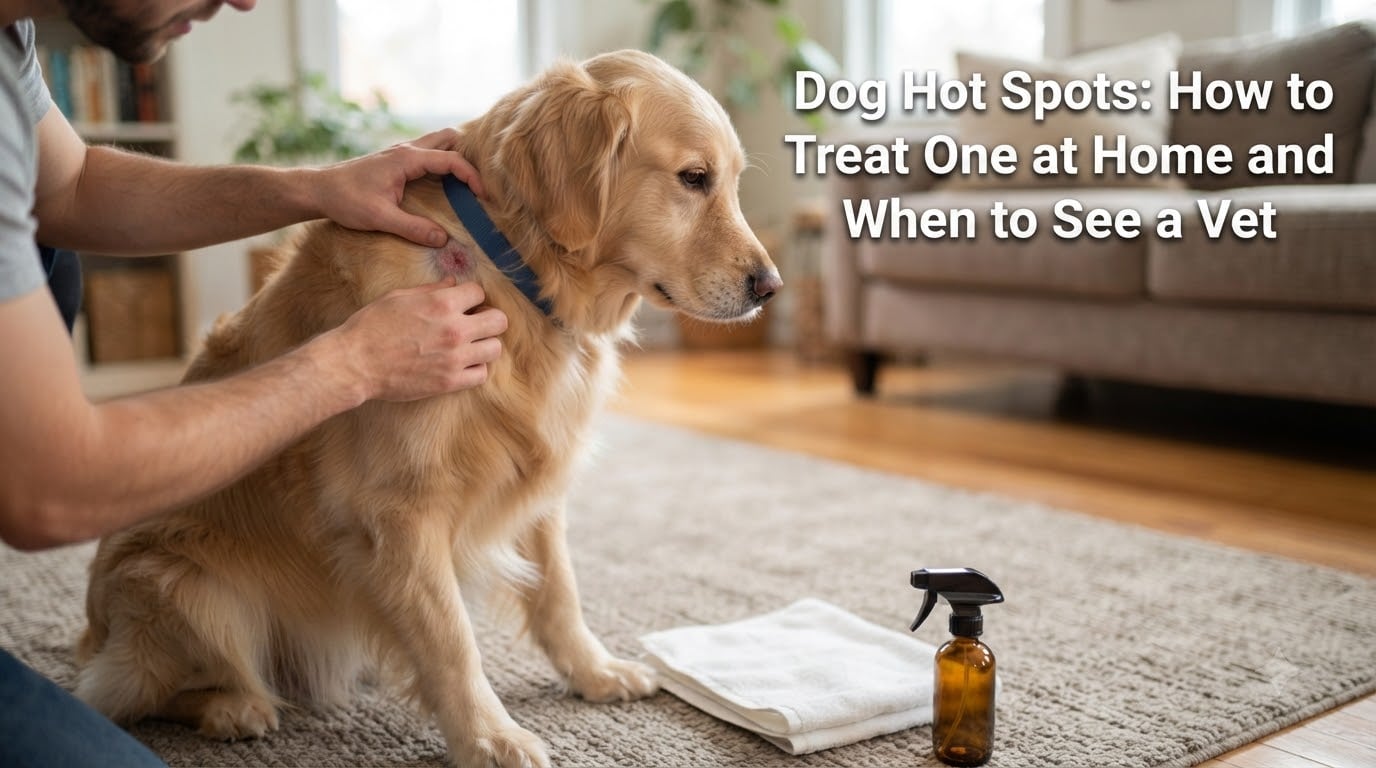
A typical hot spot looks like a raw, red, oozing, and sometimes crusted patch of skin. The surrounding hair is often matted with discharge, and the area is warm to the touch (which is where the name “hot spot” comes from). You may also notice hair loss around the edges.
Common locations include the neck, hips, legs, and the area near the base of the ears. Dogs with thick or double coats — Golden Retrievers, Labrador Retrievers, German Shepherds, and Newfoundlands — are especially prone, but any breed can develop one.
Are Hot Spots on Dogs Contagious?
No, hot spots are not contagious to other dogs or to humans. They are a localized skin reaction, not a transmissible infection. However, the underlying cause (such as fleas) could be shared, so always consider whether the root trigger affects other pets in the home.
What Causes Hot Spots on Dogs?
Hot spots always start with an itch, irritation, or pain that triggers your dog to lick or chew. Understanding the underlying trigger is essential because treating the hot spot without addressing the cause almost guarantees it will return.
Allergies: The Most Common Trigger
Flea allergy dermatitis is the single most common cause I see discussed by both vets and dog owners. Even a single flea bite can send a sensitive dog into an itch spiral. Environmental allergies (pollen, grass, dust mites) and food allergies also rank high on the list.
Moisture and Swimming
Dogs who swim or get frequent baths and do not dry properly are prime candidates for hot spots. Trapped moisture under a thick coat softens the skin and sets the stage for bacterial overgrowth. This is why hot spots spike in summer — warm, damp fur is the perfect breeding ground.
Ear Infections and Anal Gland Issues
Ear infections cause head shaking and scratching near the ears, which can create hot spots around the neck and ear flap. Similarly, anal gland discomfort leads to licking and chewing near the base of the tail.
Stress, Boredom, and Pain
Dogs who are anxious, under-exercised, or in pain (from arthritis, for example) may lick obsessively at one spot. This is sometimes called acral lick dermatitis and behaves similarly to a classic hot spot.
Other Triggers
Burrs, matts, insect stings, minor scrapes, and even contact irritants can start the cycle. Anything that makes your dog focus on one area repeatedly can escalate into a hot spot.
How to Treat Dog Hot Spots at Home: Step by Step
If the hot spot is small (under an inch), less than 24 hours old, and your dog is otherwise healthy, you can usually start home treatment. Here is the protocol vets and experienced owners consistently recommend.
Step 1: Stop the Licking Immediately
Before you do anything else, put a recovery cone (also called an e-collar or Elizabethan collar) on your dog. No home treatment will work if your dog keeps licking. Every lick introduces more bacteria and moisture, undoing your progress.
If your dog cannot wear a traditional cone, try a soft cone, an inflatable collar, or a surgical recovery suit that covers the affected area.
Step 2: Trim or Shave the Hair Around the Hot Spot
This is the step owners most often skip, and it is one of the most important. Carefully clip the hair around the hot spot — including a wide margin of at least an inch — so air can reach the skin and so you can actually see the full extent of the wound.
Use quiet clippers, not scissors, to avoid accidentally cutting already-sensitive skin. The trapped, matted hair is loaded with bacteria and moisture, so removing it speeds healing dramatically.
Step 3: Gently Clean the Area
Clean the hot spot with a gentle antiseptic. A chlorhexidine solution is the veterinary standard, but a mild, pet-safe antiseptic wipe works too. Pat dry with a clean paper towel — never rub.
Avoid hydrogen peroxide and rubbing alcohol. Both damage healthy tissue and actually slow healing, despite being common in many home medicine cabinets.
Step 4: Apply a Pet-Safe Topical Treatment
Apply a veterinary-recommended hot spot spray or ointment. Vetericyn is widely trusted because it is safe if your dog licks it. For itch relief, a thin layer of 1% hydrocortisone cream (the plain human version, with no added ingredients) can reduce inflammation on small areas.
Do not use tea tree oil at full strength — it is toxic to dogs if ingested. Skip any product containing lidocaine or zinc oxide unless your vet specifically recommends it.
Step 5: Keep It Clean and Dry
Clean the area twice a day and let it air dry. Skip baths and swimming during healing. Each time you clean, check whether the hot spot is shrinking, staying the same, or spreading.
Step 6: Address the Underlying Cause
If fleas are present, start (or restart) flea prevention immediately. If you suspect a food or environmental allergy, talk to your vet about long-term management. Treating the surface without fixing the trigger is why so many owners report hot spots “keep coming back.”
When to See a Vet for a Hot Spot
This is the question that comes up constantly in forums, and it deserves a clear answer. Use these time and symptom thresholds to decide.
The 48-Hour Rule
If the hot spot is not visibly improving after 48 hours of consistent home treatment, call your vet. A sore that has been present for more than 24 hours is likely already infected, according to Cornell University’s College of Veterinary Medicine, and may need prescription medication.
Signs You Should Not Wait
Skip home treatment and go straight to the vet if you notice any of the following:
The hot spot is larger than two inches across or spreading rapidly.
The area is oozing pus, smells foul, or has green or yellow discharge.
Your dog has a fever, is lethargic, or stops eating.
The skin is broken, raw, bleeding, or appears to be ulcerating.
There are multiple hot spots appearing at once.
Your dog is in obvious pain and will not let you touch the area.
The hot spot is near the eye, mouth, or genitals.
Emergency vs. Urgent Care
A hot spot is rarely a true life-threatening emergency, but it can become urgent quickly. Most cases can wait for a same-day or next-day regular vet appointment. Go to an emergency clinic only if your dog shows systemic signs like fever, extreme pain, or lethargy alongside the skin lesion.
What Will the Vet Do?
Your vet will clip and clean the area thoroughly, often under mild sedation if your dog is painful. They may prescribe a topical or oral antibiotic, an anti-inflammatory (like a short course of steroids), pain medication, and possibly an e-collar. If an underlying allergy or infection is driving the hot spot, they will address that too.
How Much Does Hot Spot Treatment Cost?
For a straightforward vet visit, expect to pay roughly $50 to $150 for the exam, cleaning, and basic medications. If your dog needs sedation, a longer antibiotic course, or diagnostic testing for underlying allergies, the total can climb to $200 to $500 or more. Costs vary widely by location and clinic type.
Pet insurance may cover treatment if the condition is not pre-existing. It is worth checking your policy before the visit.
How to Prevent Hot Spots on Dogs?
Prevention is far easier than treatment. These are the habits that make the biggest difference for dogs prone to hot spots.
Keep Your Dog Dry, Especially After Swimming
After every swim or bath, dry your dog thoroughly — especially under the collar, behind the ears, and anywhere fur is thick. A high-velocity dog dryer is a worthwhile investment for double-coated breeds.
Stay on Top of Flea Prevention Year-Round
Consistent flea control prevents the most common trigger of all. Do not stop in winter — fleas persist indoors and a single bite can restart the cycle.
Brush and Groom Regularly
Regular brushing removes loose hair, dirt, and debris that trap moisture against the skin. For thick-coated breeds, professional grooming every four to eight weeks helps prevent matting, which is a major hot spot risk factor.
Manage Allergies Proactively
If your dog has known allergies, work with your vet on a long-term plan. This might include a limited-ingredient diet, allergy medications (like Apoquel or Cytopoint), omega-3 fatty acid supplements, or medicated shampoos.
Reduce Stress and Boredom
Provide enough exercise, mental enrichment, and attention. Anxious, bored dogs are more likely to develop compulsive licking that leads to hot spots. Puzzle feeders, daily walks, and consistent routines all help.
Frequently Asked Questions
Will a hotspot on a dog heal itself?
No, hot spots rarely heal on their own because the constant licking keeps the area wet and infected. Without intervention — at minimum a recovery cone and gentle cleaning — most hot spots worsen and spread within 24 to 48 hours. Early treatment is what allows healing.
How do I get rid of my dog’s hot spots fast?
The fastest approach is to put on a recovery cone immediately, clip the hair around the area, clean it twice daily with chlorhexidine, apply a pet-safe hot spot spray like Vetericyn, and keep the skin dry. Catching it early means you can often see improvement within a day or two.
When should I take my dog to the vet for hotspots?
See a vet if the hot spot is larger than two inches, oozing pus, foul-smelling, painful, or not improving after 48 hours of home care. Also go if your dog has a fever, multiple hot spots, or lesions near the eyes, mouth, or genitals.
How much does it cost to treat a hotspot on a dog?
A typical vet visit for a hot spot runs about $50 to $150 for the exam, cleaning, and basic medication. With sedation, antibiotics, or allergy workups, the total can reach $200 to $500 or more depending on severity and location.
Conclusion
Dog hot spots are painful, fast-moving, and frustrating — but they are also highly treatable when you act quickly. The key takeaways: stop the licking with a cone, clip the hair, clean gently, keep it dry, and address whatever caused the itch in the first place.
If the hot spot is large, spreading, oozing, or not improving within 48 hours, do not wait — call your vet. Knowing how to treat one at home and when to see a vet is the single most important skill for keeping your dog comfortable and preventing these flare-ups from taking over.