
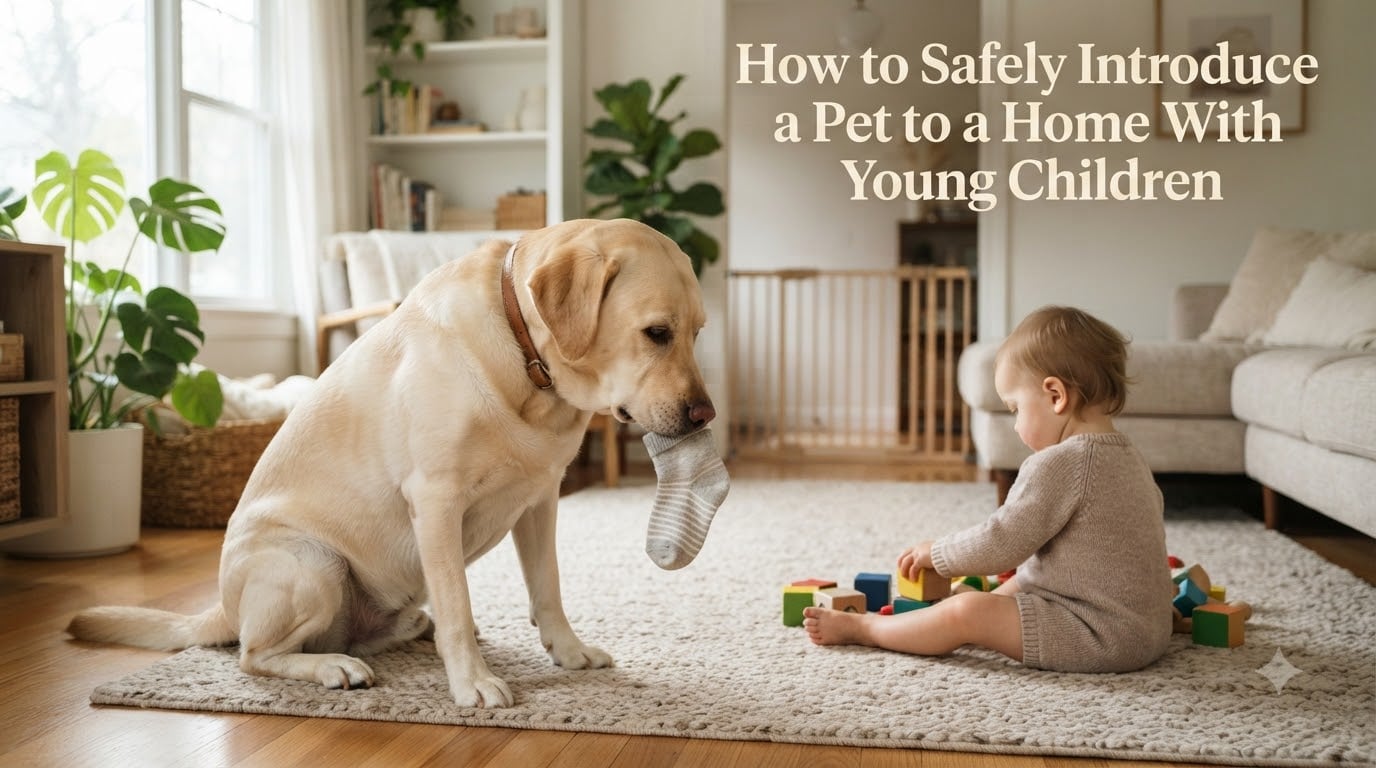
I remember standing in our doorway three years ago, nine-month-old Lily on my hip, watching our Lab mix Taco press his nose against the baby gate. My husband held the leash while I sobbed. We had prepared for months and still felt terrified.
That moment taught me something no parenting book had: bringing a baby home to a pet, or bringing a pet home to a child, is a crash course in patience, observation, and trust. Our team has talked to dozens of families, three veterinarians, two certified dog behaviorists, and a cat behavior consultant to put together this guide. We have gathered the protocols that actually work, including the often-cited 3-3-3 rule, the pet consent test, and body language checklists used by shelter staff.
If you are wondering how to safely introduce a pet to a home with young children, you are not alone. Roughly 70% of U.S. households with kids under 6 also share their home with at least one pet, according to the AVMA. Done right, these introductions become the foundation for one of the most meaningful relationships your child will ever have. Done wrong, they can leave scars on both sides. This guide walks you through every phase, from the week before arrival to long-term supervision, with separate playbooks for dogs, cats, and small pets like rabbits and hamsters.
Table of Contents
Why Safe Pet Introductions Matter for Young Children?
Children under the age of 5 are the most likely group to be bitten by a dog, and most of those bites happen in the home with a familiar pet. The American Veterinary Medical Association reports that dog bites send roughly 800,000 people to emergency rooms each year, with children disproportionately affected.
But the goal of safe introduction is not just preventing injuries. It is teaching your child how to respect another living being and giving your pet a chance to feel safe in a household that just changed drastically. A rushed introduction can undo years of training, while a slow, thoughtful one builds trust that lasts the pet’s lifetime.
For the pet, a chaotic first encounter can trigger fear-based aggression that takes months of behavior work to undo. For the child, an overwhelming experience with a hissing cat or growling dog can plant anxieties that last for years. The stakes are real, but so are the rewards when it goes well.
Before You Bring a Pet Home: Essential Preparation Steps
The work begins weeks before the first nose-to-nose meeting. Whether you are bringing home a new puppy or introducing a baby to a resident dog, the prep window is where you set the tone.
Step 1: Start Scent Swapping Early
Bring home a blanket or item that carries the new arrival’s scent before the actual meeting. For a new baby, have your partner or a family member bring home a worn onesie from the hospital and let your dog sniff it, then reward calm behavior with high-value treats.
For a new pet arriving, ask the shelter or breeder for a towel or toy that has been in their space. Place it in the area where the pet will spend their first days. This pre-loading helps everyone start with familiar smells instead of an overwhelming sensory dump.
Step 2: Train the Behaviors You Will Need
Two commands save lives: a solid “place” cue (go to your bed) and a reliable “leave it.” If you have an existing pet, spend two to four weeks sharpening these before the new arrival comes home.
If you are adopting a new pet and have kids, look for a rescue that offers a basic obedience foundation or book a few sessions with a certified trainer before bringing the animal home. The investment pays dividends for years.
Step 3: Baby-Proof and Pet-Proof Simultaneously
Get down on the floor at your child’s eye level and at your pet’s eye level. You will see two very different worlds. Look for choking hazards (small pet food, dropped crayons), escape routes (gaps in baby gates, open toilet lids), and danger zones (stairs without gates, heavy items the pet could pull down).
Install baby gates at the bedroom door or any room the pet needs as a sanctuary. Decide ahead of time which furniture the pet is allowed on and teach your child those boundaries before introductions begin.
The 3-3-3 Rule Explained: What New Pet Parents Need to Know
The 3-3-3 rule is a widely cited framework from rescue organizations and applies whether you are adopting a new dog or bringing a baby home to a resident dog. It breaks adjustment into three rough time windows.
3 days to decompress. The first 72 hours are sensory overload. A new pet may hide, refuse food, or shut down. A resident dog meeting a new baby may seem disinterested, anxious, or unusually clingy. None of these reactions are the permanent truth. Give everyone space to breathe.
3 weeks to settle in. By week three, the pet starts to feel that this might be home. True personality begins to emerge. You will see quirks, preferences, and small tests of boundaries. This is when most behavior problems surface if they are going to, so stay observant.
3 months to feel at home. Around the three-month mark, the pet has usually accepted the new normal. A bond with the child starts to form, routines feel automatic, and stress signals should fade. Some pets take longer, especially rescues with tough histories. That is normal.
For a parent bringing home a baby, the same timeline applies in reverse for your dog. Day three is when the novelty wears off and the reality of crying, smell, and schedule changes hits. Week three is when the toughest behaviors usually appear. Month three is when most dogs have settled into the new family rhythm.
Creating Safe Spaces Your Pet Can Retreat To
Every pet in a household with young children needs a sanctuary they can access without being followed. Even the most patient dog can reach a limit, and a toddler’s enthusiasm can feel relentless.
For Dogs
Set up a crate in a quiet corner or a bed behind a baby gate in a low-traffic room. Teach your dog that this is their space, never a time-out or punishment zone. Children should be taught that when the dog goes there, the dog is off-limits, full stop. Use a consistent cue like “Dog’s resting” so the whole family uses the same language.
For Cats
Cats need vertical space. A tall cat tree, a cleared shelf, or a perch near a window gives your cat an escape route your toddler cannot follow. Provide one hiding spot per cat in the household, plus one extra. A cardboard box in a closet or under a bed counts. Keep litter boxes, food, and water behind baby gates so the cat can access them without crossing the child’s play space.
For Small Pets
Rabbits, guinea pigs, hamsters, and other small pets need an enclosure that no toddler can reach into unsupervised. A heavy-topped cage or a critter pen in a room with a closed door is ideal. Children should always be seated on the floor when handling small pets, with an adult within arm’s reach.
Teaching Young Children How to Interact With Pets Safely
Children are not born knowing how to read a dog or a cat. They have to be taught, and the lessons need to be repeated often, especially in the first few months.
By Age: What Your Child Can Handle
Under 12 months: Your child should not be left alone with any pet, ever. Direct contact should happen only while an adult holds the baby and an adult manages the pet.
1 to 3 years: Toddlers can learn “soft touches” with supervision. Practice on a stuffed animal first. Teach them to offer an open palm rather than grabbing and to stop petting the moment the pet moves away. They cannot be trusted to interpret warning signs, so your eyes stay on the interaction.
3 to 5 years: Preschoolers can begin to understand the “ask before you pet” rule. They can learn to let a dog sniff a closed fist and to recognize when a dog walks away as a clear “no.” They still need close supervision, especially with cats and small pets.
5 and up: School-age children can take on more responsibility, like refilling water bowls or helping with feeding. They can also start to learn body language basics, but supervision is still required whenever very young pets are involved.
The “Pet Pet Pause” Rule
Teach your child this pattern: Pet three times, then pause. If the pet stays close, pet again. If the pet walks away, the answer is no. This single habit prevents most unwanted interactions and teaches your child to respect another creature’s boundaries. It also catches early signs of discomfort before they escalate.
Reading Your Pet’s Body Language: Warning Signs and Comfort Signals
One of the most useful things you can do as a parent is learn to read what your pet is telling you. Children miss these signals, but you will not.
| Signal | What It Means |
|---|---|
| Loose body, soft eyes, wiggly body | Comfortable and happy |
| Whale eye (showing whites of eyes) | Anxious, wants space |
| Lip licking or yawning when not tired | Stress signal, back off |
| Tail tucked or held low and stiff | Fear, do not approach |
| Airplane ears (pinned back) | Worried or stressed |
| Raised hackles (hair standing up) | Overstimulated, may escalate |
| Paw lift or freezing in place | Highly uncomfortable, intervene now |
| Low growl or grumble | Final warning, separate immediately |
| Exposed teeth or snap | Immediate intervention required |
| Slow blinks from a cat | Trust and affection |
| Tail thumping on the floor (cat) | Overstimulation, not happiness |
| Flat ears and dilated pupils (cat) | Fear or aggression warning |
The rule is simple: if you see any of the warning signals, calmly separate the pet and child without scolding either one. Move the pet to their safe space and redirect your child’s attention. Punishment does not teach a pet to feel safe. It teaches them to hide their warnings.
The Pet Consent Test: A Simple Way to Gauge Comfort
The pet consent test, sometimes called the “consent test” or “seven-second pet,” is a technique used by shelter behavior staff and trainers to gauge whether an animal is genuinely enjoying an interaction.
Here is how it works. Pet the dog or cat for about three seconds, then stop and pull your hands away. Wait to see what the pet does.
If the pet leans back in, nuzzles your hand, or stays close, that is consent to continue.
If the pet walks away, turns their head, or moves to a different spot, that is a clear “no.”
Teach your child this same rhythm. Pet, pause, watch. This single technique has prevented countless bites because it puts the pet’s voice at the center of every interaction.
It also teaches your child that love is something you earn through gentleness, not something you take by grabbing. That lesson transfers to every relationship they will ever have.
Step-by-Step Introduction Process for Dogs
Once the prep work is done, the first meeting sets the tone for everything that follows. Take it slow.
Step 1: Greet the dog first. When bringing a baby home, have one adult greet and calm the dog before anyone brings the baby inside. The dog has waited hours for their family to return and should not feel replaced.
Step 2: Allow scent introduction from a distance. Have a calm adult hold the baby while the dog sniffs from a few feet away. Reward the dog with treats for calm behavior. If the dog is too excited, you are too close. Back up.
Step 3: Use a leash for the first week. Keep the dog on a leash during all baby interactions for the first seven to ten days. This is not about control. It is about giving the dog an easy out if they feel overwhelmed and giving you a way to step in without chasing.
Step 4: Practice “Baby Moves.” Babies move unpredictably. Before your baby is mobile, practice crawling, lunging, and grabbing motions with the dog on leash and reward calm responses. This pre-teaches the dog that baby movements predict treats, not threats.
Step 5: Never leave them alone together. Even after months of good behavior, never leave a dog and a young child unsupervised. Most dog bites to children in the home happen during gaps in adult attention.
Step-by-Step Introduction Process for Cats
Cats and babies can coexist beautifully, but cats process change differently than dogs. They often hide for the first few days and need extra patience.
Step 1: Set up a base camp. Confine the new cat or your existing cat to one quiet room with food, water, litter box, hiding spots, and a perch for the first few days. This is their sanctuary while they adjust to new smells, including baby smells.
Step 2: Swap scents before faces meet. Rub a cloth on the baby and place it near the cat’s food bowl. Rub a cloth on the cat and place it near the baby’s sleep area. Feed both parties during these swaps so each scent predicts something positive.
Step 3: Allow visual contact through a barrier. Use a baby gate or cracked door so the cat can see the baby without direct access. Reward calm behavior with treats or play. If the cat hisses or fluffs up, increase the distance.
Step 4: Supervise first direct meetings. Hold the baby in your arms or seat the baby in a bouncer. Let the cat approach on their own terms. Never force the interaction. Many cats will sniff once and walk away. That is a successful first meeting.
Step 5: Always provide an escape route. Make sure the cat can leave the room whenever they want. A toddler following a cat is one of the most common triggers for defensive scratching.
Introducing Small Pets: Rabbits, Hamsters, and Guinea Pigs
Small pets are often the most overlooked introduction challenge, but they are also the most vulnerable. A well-meaning toddler can seriously injure a hamster or rabbit with a single squeeze.
Always handle small pets while seated on the floor. Use a towel wrap for wiggly animals. Teach your child to scoop with two hands and never to pick up a pet from above, which mimics how predators grab prey.
Rabbits in particular have fragile spines. A fall from even a low height can paralyze a rabbit. Children under six should interact with rabbits on the floor only, with an adult’s hands supporting the rabbit’s body at all times.
Hamsters, gerbils, and mice are nocturnal and easily stressed by daytime handling. Schedule interactions for early evening when they are naturally awake, and keep sessions short. A grumpy, sleep-deprived hamster is a biting hamster.
Never allow a small pet and a cat or dog to interact without a secure barrier, no matter how trustworthy your dog seems. Predatory drive is instinctive and can switch on unexpectedly.
Supervision Guidelines and When to Get Professional Help
Supervision is not a one-time setup. It is an ongoing practice that changes as your child grows and your pet ages.
Levels of Supervision
Direct contact supervision: You are within arm’s reach, eyes on the interaction at all times. Required for all babies and toddlers with any pet.
Close supervision: You are in the same room, attentive but not hovering. Appropriate for older preschoolers with calm, well-trained pets.
Periodic check-ins: You are in the home but not the same room. Only acceptable for school-age children with pets that have a long history of reliable behavior.
If you cannot provide direct supervision, separate the child and pet with a baby gate or closed door. Never rely on crates, cages, or baby gates as a substitute for adult attention.
When to Call a Professional
Reach out to a certified dog behaviorist or veterinary behaviorist if you see any of the following:
Any growl, snap, or bite, even a “warning” one
Resource guarding around food, toys, beds, or the baby
Persistent fear, hiding, or shaking around the child
Reactivity that gets worse over time instead of better
Regression after a calm period, especially around toddler mobility milestones
For cats, consult a feline behavior consultant if the cat is eliminating outside the litter box, hiding for more than a week, or showing aggressive behavior toward family members.
Small pet concerns are best handled by an exotics veterinarian, especially if you notice appetite changes, hair loss, or unusual aggression, which can signal pain or illness.
There is no shame in asking for help. Most behavior problems are solvable with the right plan, and reaching out early almost always prevents a small issue from becoming a serious one.
Frequently Asked Questions
What is the 3-3-3 rule for introducing dogs?
The 3-3-3 rule describes three rough time windows for adjustment. In the first 3 days, the pet is decompressing and may hide, refuse food, or act shut down. By 3 weeks, true personality starts to emerge and you may see small behavior challenges surface. Around 3 months, the pet has usually accepted the new normal and settled into family routines. Some pets, especially rescues, take longer.
How can I tell if my dog likes my baby?
A dog that likes a baby shows a loose, wiggly body, soft eyes, and a relaxed open mouth. They may gently sniff and walk away. Warning signs include stiff posture, whale eye (showing the whites of the eyes), lip licking, tucked tail, raised hackles, or any growl. Calm avoidance is a yes. Stiff stillness is a no.
How long does it take a dog to adjust to a new baby?
Most dogs begin to settle into the new normal within 2 to 4 weeks, with full adjustment around the 3-month mark following the 3-3-3 framework. Dogs with previous positive experiences around children tend to adjust faster. Rescue dogs with unknown histories may take 6 months or longer and benefit from professional support during the transition.
How do I introduce a cat to a toddler?
Start with scent swapping using cloths, then move to visual contact through a baby gate or cracked door. Reward the cat with treats for calm behavior. Allow the cat to approach the toddler on their own terms, never force the meeting. Always give the cat an escape route and teach your toddler not to chase. Most cats need several days to weeks to fully adjust.
What are the warning signs a dog is uncomfortable around a child?
Watch for whale eye, lip licking, yawning when not tired, tucked tail, airplane ears, raised hackles, paw lifting, freezing in place, low growls, or exposed teeth. Any of these signals means the dog wants space. Calmly separate the dog and child without scolding, and reach out to a certified behaviorist if the signals repeat or escalate.
Can small pets like hamsters live safely with young children?
Yes, with careful supervision. Always handle small pets while seated on the floor with an adult within arm’s reach. Teach children to scoop with two hands, never grab from above, and keep sessions short. Keep small pets away from cats and dogs at all times, and never leave a toddler alone with any small animal.
When should I call a professional about pet behavior issues?
Contact a certified dog behaviorist or veterinary behaviorist for any growl, snap, or bite, persistent resource guarding, increasing fear or reactivity, or regression around toddler milestones like crawling or walking. For cats, consult a feline behaviorist for litter box issues, prolonged hiding, or aggression. Early intervention almost always prevents small problems from becoming serious ones.
Final Thoughts on Building a Safe Multi-Species Family
Learning how to safely introduce a pet to a home with young children is less about a single perfect protocol and more about a long-term practice of observation, preparation, and respect. The families I have talked to who do this well share three habits. They prepare before the arrival. They supervise every interaction, especially in the early months. And they teach their children that pets are family members with feelings, not toys to be poked.
Whether you are bringing home a baby to a resident dog, adopting a cat into a busy toddler household, or adding a bunny to a crew of curious kids, the principles are the same. Go slow. Read body language. Give everyone a safe space. And ask for help when something feels off. Done with patience, the result is the kind of bond that shapes your child’s view of animals, kindness, and responsibility for the rest of their life.