
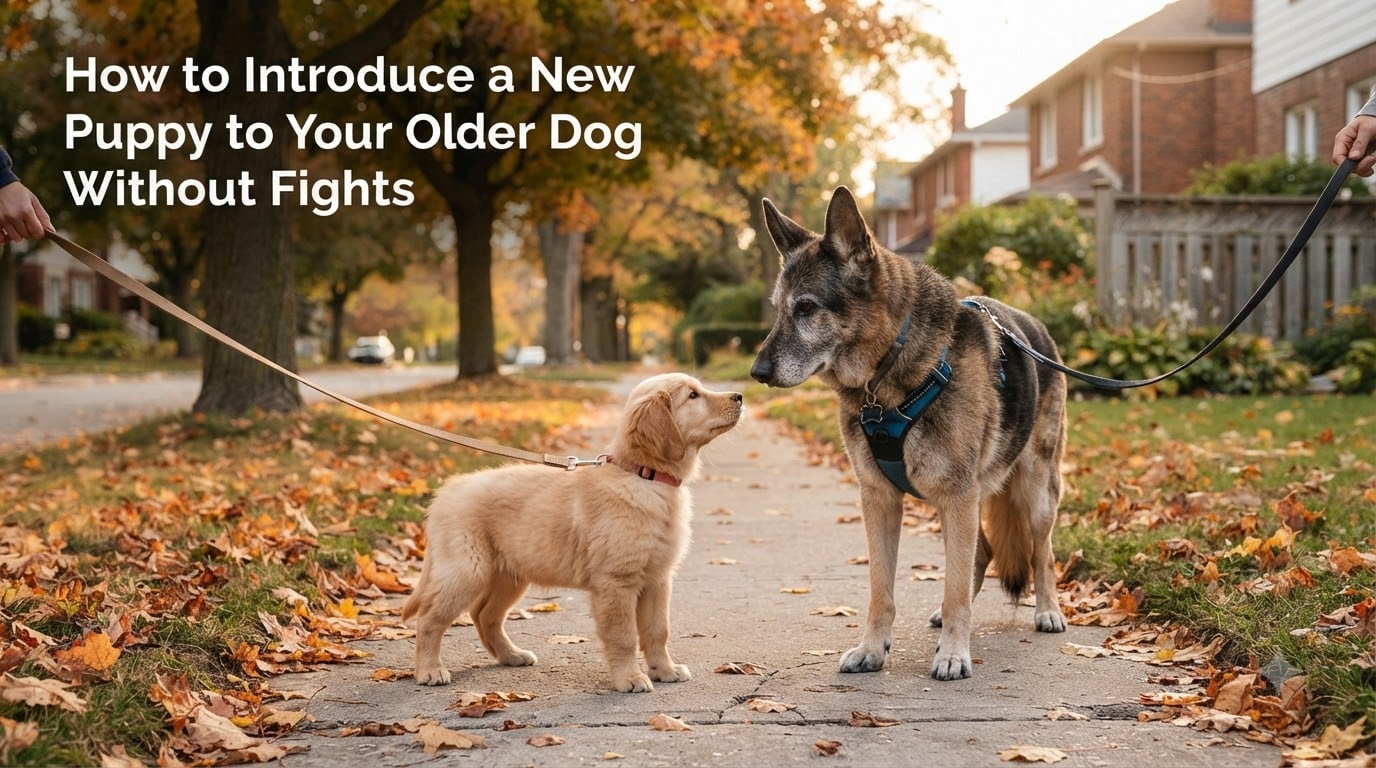
Bringing home a new puppy when you already have an older dog is exciting, but it can also feel overwhelming. I have helped multiple families through this transition, and the same truth keeps coming up: a successful first meeting sets the tone for years of peaceful coexistence. This guide on how to introduce a new puppy to your older dog without fights walks you through every step I have seen work, from neutral ground meetings to long-term harmony at home.
Whether your older dog is a laid-back senior or a bossy middle-aged character, the approach below respects both dogs’ needs. You will also find answers to the most common questions dog owners ask, including the 3-3-3 rule, growling, and how long real acceptance takes.
Table of Contents
What to Expect When Introducing a New Puppy to Your Older Dog?
The first weeks are an adjustment period for both dogs, and expectations matter more than any single technique. I tell every client that the goal of an introduction is not instant friendship. It is calm tolerance, mutual respect, and the beginnings of trust.
Most older dogs will not welcome a bouncy puppy with open paws. Growling, lip licking, and walking away are all normal boundary-setting behaviors. These are communication, not aggression, and they are healthy signs that your older dog is teaching the puppy house rules.
Based on the experiences shared by hundreds of dog owners online and in my own client work, here is the realistic timeline:
Days 1 to 3: Both dogs are stressed. The puppy is overwhelmed by the new environment, and the older dog feels displaced.
Weeks 1 to 3: Initial wariness fades. Short supervised interactions replace constant tension.
Months 1 to 3: Genuine comfort develops. Many dogs start playing, sharing space, and even napping near each other.
Beyond 3 months: Most pairs settle into a stable relationship. Some older dogs remain aloof, and that is also a healthy outcome.
About 70 percent of owners report peaceful coexistence within four weeks. Genuine friendship often takes three to six months, and a small number of dogs never become best friends but live happily side by side.
Understanding the 3-3-3 Rule for New Dogs
The 3-3-3 rule is a simple framework that helps you set realistic expectations during the first three months. It breaks down what most newly adopted or rehomed dogs experience:
3 days to decompress: The new puppy is overwhelmed, may not eat well, and may seem shut down or overly clingy.
3 weeks to settle in: The puppy learns your routine, finds favorite spots, and starts showing its real personality.
3 months to feel at home: The puppy bonds with you, accepts household rules, and starts to trust your older dog.
Apply this same lens to your older dog. They also need 3 days to accept the disruption, 3 weeks to reset routines, and 3 months to feel secure again. When both dogs follow parallel adjustment curves, conflict drops sharply.
What is the 3-3-3 rule for introducing dogs specifically? It is a reminder that patience is the most important training tool you have. If you expect instant results, you will rush the process and create stress. If you accept the timeline, you will notice small wins every day.
How to Introduce a New Puppy to Your Older Dog Without Fights: Step by Step
Follow this exact sequence for the best first meeting. I have used it with young puppies, adopted adults, and senior dogs. The structure is the same because the underlying canine communication is the same.
Step 1: Prepare your home before the puppy arrives. Set up a crate, baby gate, or exercise pen for the puppy in a quiet room. Stock separate food bowls, beds, and toys. Your older dog should not feel that any of his belongings have been taken.
Step 2: Swap scents first. Before the dogs ever meet face to face, rub a soft cloth on the puppy’s cheeks and behind its ears, then place it near your older dog’s bed. Do the reverse for the older dog. Scent is a dog’s primary language, and this lowers the shock of the first meeting.
Step 3: Choose a neutral meeting location. A quiet park, a friend’s yard, or even a calm sidewalk corner works. Avoid your home, your yard, or any space your older dog considers his territory. The goal is to remove the urge to defend.
Step 4: Walk the dogs parallel first. Have a helper hold the puppy on a loose leash while you walk your older dog. Walk in the same direction, slightly apart, for 5 to 10 minutes. This lets both dogs notice each other without pressure.
Step 5: Allow a brief on-leash greeting. Drop the leashes loose, never tight, and let the dogs approach each other at their own pace. Draglines on flat collars or back-clip harnesses work best. Avoid face-to-face confrontation by walking in curves together.
Step 6: Watch for body language, not behavior. Soft bodies, play bows, and loose wagging tails are good. Stiff legs, hard stares, and tucked tails are warning signs. End the meeting on a positive note after 10 to 15 minutes, before either dog gets tired or overstimulated.
Step 7: Bring the puppy home to a controlled space. Carry the puppy into the house so the older dog does not feel his threshold has been invaded. Allow the older dog to enter first, then bring the puppy in through a different door. Crate the puppy for the first hour and let the older dog investigate.
Step 8: Supervise every interaction for the first 2 weeks. Never leave them alone together, even for a minute. Most serious incidents happen in the first 14 days when owners assume the dogs are friends.
Reading Dog Body Language During Introductions
Body language is the only reliable way to know how your dogs really feel. Vocalizations can be misleading because some dogs growl happily during play. The signals below are the ones I watch for in every meeting.
Calm and curious signals:
Loose, wiggly body
Soft eyes with slow blinks
Relaxed open mouth, almost like a smile
Curved or play-bow posture
Tail at mid-height, sweeping side to side
Stress signals to take seriously:
Lip licking, yawning, or turning the head away
Whale eye (showing the whites of the eyes)
Stiff, frozen body posture
Tail tucked or held very high and rigid
Hard stare with closed mouth
If you see stress signals from either dog, create distance. A few seconds of slow walking usually resets the interaction. Forcing contact after stress signals is the fastest way to escalate into a fight.
Setting Up Your Home for a Multi-Dog Household
Your home setup either reduces conflict or multiplies it. The Dogs Trust and Ohio State University guides both emphasize what trainers call an “environment of plenty,” a space where neither dog has to compete for anything.
Place food bowls in separate rooms or on opposite sides of the same room. Feed on a strict schedule so the older dog never sees the puppy as a thief. Water bowls should be in two different locations.
Use crates, baby gates, or exercise pens to give each dog a private retreat. Every dog needs a space where the puppy is not allowed to pester them. This is not cruel, it is respectful.
Create a clear escape route for your older dog. If the puppy is overwhelming, your older dog should have a baby gate, a dog door, or a high spot to retreat to. Adult dogs who feel trapped are the ones who escalate.
Match the puppy’s energy with enrichment. A tired puppy is a polite puppy. Frozen Kongs, snuffle mats, and short training sessions drain the puppy’s battery and leave your older dog alone.
Normal Growling vs Warning Signs of Real Conflict
This is the question I get most often: “My older dog is growling at the new puppy. Is this normal?” The answer is almost always yes, when the growl is part of normal communication.
Normal communication growls:
Low, rumbly growl when the puppy takes a toy
Brief growl followed by a calm walk away
Growl with a relaxed body and soft eyes
Growl that stops the moment the puppy backs off
Warning signs that need intervention:
Growl paired with a stiff body and hard stare
Snapping that makes contact, even without breaking skin
Resource guarding that includes blocking doorways or furniture
Cornered or freezing behavior from either dog
Repeated high-pitched yelping from the puppy
Should you let your older dog correct the puppy? Yes, but only mild corrections. A growl, a snap in the air, or a body block is the older dog teaching the puppy how to behave. Stop the interaction only if the correction escalates or the puppy does not back off.
Managing Puppy Behavior Around Your Older Dog
Puppies are exhausting. They have no manners, no bite inhibition, and no sense of personal space. Your older dog should not have to train the puppy for you. That is your job.
Use a houseline (a lightweight 6-foot leash that drags on the ground) so you can step on it and stop the puppy from mugging your older dog. Reward the puppy with treats for looking away from the older dog, lying down nearby, or walking past calmly.
Clicker training works beautifully here. Click and treat the puppy every time it chooses to disengage from the older dog. You are building a habit of calm coexistence, not just preventing chaos.
Enforce nap time. Puppies need 18 to 20 hours of sleep per day. An overtired puppy is a nightmare for an older dog. Crate the puppy for two-hour naps between play sessions.
When to Introduce a Puppy: Age and Timing Considerations
The best age to introduce a puppy to an older dog is between 8 and 16 weeks. This window lines up with the puppy’s primary socialization period, when its brain is most open to new relationships.
Avoid introductions during major life changes. If your older dog just recovered from surgery, lost a companion, or moved homes, wait until things settle. Stress stacks, and adding a puppy to an already stressed dog is a recipe for conflict.
Vaccination timing matters too. Your puppy should have had at least one round of vaccinations before meeting unknown dogs in public spaces. Ask your vet about safe socialization areas like puppy classes or your own backyard.
For senior dogs, consider adopting an older puppy or young adult instead of an 8-week-old land shark. A 4-to-6-month-old puppy has better bite inhibition and self-control, which gives your senior dog a much easier time.
Keeping Your Older Dog’s Quality of Life Intact
One of the biggest pain points dog owners share is guilt. They feel terrible that the puppy has disrupted their older dog’s peaceful life. The good news is that you can protect that bond with a few intentional habits.
Walk your older dog alone at least once a day. This one-on-one time maintains your bond and keeps your older dog mentally healthy. Many older dogs become depressed when all walks suddenly involve the puppy.
Feed, train, and play with the older dog first. Putting the older dog first tells him that the puppy is not a threat to his status. Order matters more than you think.
Watch for signs of burnout in your older dog. Hiding, refusing to eat, snapping more than usual, or losing interest in walks are all signals that the puppy tax is too high. Increase separation time and give your older dog a quiet room away from the puppy.
Maintain your older dog’s training and routines. The puppy will learn by watching the older dog. If you change the rules for the older dog, you lose your role model.
When to Seek Professional Help
Most introductions go smoothly with patience, but some situations need an expert. Contact a credentialed behaviorist or veterinary behaviorist if you notice any of the following:
Either dog has caused injury that breaks skin
One dog is genuinely afraid to move around the house
Resource guarding is escalating despite separation
Either dog is showing signs of severe stress or shutdown
Multi-dog aggression is not improving after 4 to 6 weeks
Look for a Certified Applied Animal Behaviorist (CAAB) or a board-certified veterinary behaviorist (DACVB). Avoid trainers who recommend “alpha rolls” or punishment-based methods, as these increase aggression rather than reduce it.
Frequently Asked Questions
How long will it take my older dog to accept a new puppy?
Most older dogs begin to tolerate a new puppy within 2 to 4 weeks, but full acceptance usually takes 3 to 6 months. Some senior dogs remain aloof but learn to coexist peacefully. The 3-3-3 rule is a helpful guide: 3 days to decompress, 3 weeks to settle in, and 3 months to feel at home. Patience and consistent supervision are the two biggest factors in how quickly your older dog accepts the puppy.
What is the 3-3-3 rule for introducing dogs?
The 3-3-3 rule is a framework that breaks down the adjustment period for a new dog: 3 days to decompress from the stress of the change, 3 weeks to settle into your routine and learn the household rules, and 3 months to feel fully secure and bonded. Apply it to both dogs. Your older dog also needs this window to accept the new puppy and recover from the disruption of a new addition.
How do I stop my new puppy from attacking my older dog?
Use a houseline so you can stop the puppy from pouncing on your older dog. Reward calm behavior with treats, and redirect biting energy into chew toys or short training sessions. Enforce puppy nap time, since overtired puppies behave worse. Clicker training is especially effective: click and treat every time the puppy chooses to disengage from the older dog. Most puppies outgrow this phase within a few months.
What is the best age to introduce a puppy to an older dog?
The ideal age to introduce a puppy to an older dog is between 8 and 16 weeks, when the puppy is in its primary socialization window. For senior dogs especially, consider a slightly older puppy (4 to 6 months) who has better bite inhibition and self-control. Avoid introducing a puppy during stressful life events for your older dog, such as recovery from surgery, a recent move, or the loss of a companion dog.
Final Thoughts on a Peaceful First Introduction
How to introduce a new puppy to your older dog without fights comes down to three things: preparation, patience, and consistency. Choose a neutral location, read body language carefully, and protect both dogs’ space and resources during the first weeks. Accept the 3-3-3 timeline as the realistic norm, and celebrate small wins instead of chasing instant friendship.
Most dogs settle into a comfortable rhythm when you respect their boundaries and give them time. If you follow the steps above, you will be giving your older dog and your new puppy the best possible start to a long and peaceful life together.