
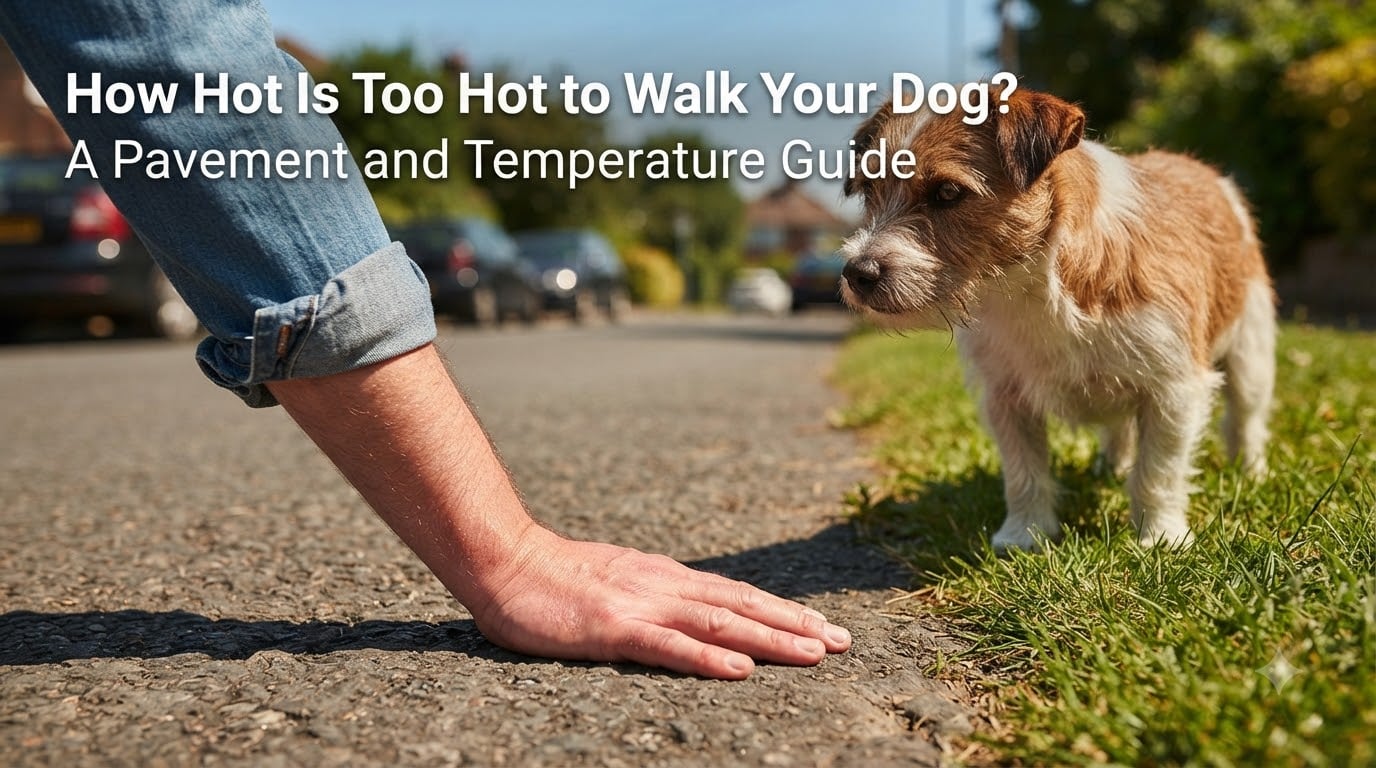
How hot is too hot to walk your dog? The short answer: when the air temperature hits 85°F (29°C) or higher, pavement becomes dangerous for most dogs, and at 90°F (32°C) the risk of heat stroke skyrockets. I’ll walk you through the exact temperature thresholds, how pavement heats up far hotter than the surrounding air, and the simple 7-second test that can save your dog’s paws from painful burns.
Last August, I took my Labrador out for what I thought was a safe mid-morning walk when the air was only 82°F. Within two blocks, he was lifting his paws off the sidewalk and whimering. The pavement read 138°F with an infrared thermometer I bought that same day. That moment changed how I approach every summer walk, and it’s why I wrote this guide for 2026.
Table of Contents
How Hot Is Too Hot to Walk Your Dog?
Most dogs are at risk when air temperatures climb above 85°F (29°C), with heat stroke becoming a serious danger above 89°F (32°C). At 90°F and up, you should avoid pavement walks entirely during daylight hours. For dogs with darker paw pads, thicker coats, flat faces, or shorter legs, the safe threshold drops even lower, closer to 80°F.
Vets generally consider air temperatures under 77°F (25°C) to be safe for most breeds on shaded pavement. The “ideal walking window” sits between 60°F and 77°F, where pavement temperatures stay manageable and dogs can cool themselves through panting without strain. Anything above that range demands extra caution and pavement testing.
Understanding Pavement Temperature: Why Hot Air Isn’t the Full Picture
Pavement can reach 40 to 60°F hotter than the surrounding air temperature on a sunny day. When the air reads 85°F, dark asphalt can easily top 140°F. This happens because dark surfaces absorb solar radiation efficiently and retain that heat for hours, even after the sun shifts position.
Concrete behaves similarly but often runs 10 to 15°F cooler than asphalt because of its lighter color. Sand, metal surfaces like manhole covers, and artificial turf can get even hotter than asphalt, sometimes exceeding 150°F in direct sun. Grass stays closest to air temperature because the moisture in soil and plant tissue dissipates heat through evaporation.
Wind and cloud cover offer some relief but don’t eliminate the danger. I’ve tested pavement at 132°F on a partly cloudy 80°F day because the clouds rolled in after hours of direct sun. Once pavement heats up, it stays hot well into the evening, which is why timing your walks matters as much as reading the thermometer.
Pavement Temperature Chart: Air Temperature vs Asphalt
Here’s a practical conversion chart based on veterinary guidelines and field testing. Use this to estimate pavement temperature before heading outside.
| Air Temperature | Estimated Asphalt Temperature | Risk Level |
|---|---|---|
| Below 60°F (15°C) | Around 105°F (40°C) | Safe for most dogs |
| 60-69°F (15-21°C) | Around 115°F (46°C) | Safe, ideal walking range |
| 70-77°F (21-25°C) | Around 125°F (51°C) | Caution for sensitive dogs |
| 78-84°F (26-29°C) | Around 130-135°F (54-57°C) | High risk, test pavement |
| 85-89°F (29-32°C) | Around 140-145°F (60-63°C) | Dangerous, avoid pavement |
| 90°F+ (32°C+) | 145°F+ (63°C+) | Heat stroke risk, stay indoors |
These numbers come from field measurements on dark asphalt in direct sunlight. Light-colored concrete runs 10 to 15°F cooler. Grass and shaded dirt stay closest to actual air temperature, which is why shaded walks during peak heat are still possible when pavement is off-limits.
The 7-Second Hand Test: A Simple Way to Check Pavement
The 7-second test is the fastest way to know if pavement is safe for your dog’s paws. Place the back of your flat hand on the pavement and hold it there for seven full seconds. If you can’t keep it down comfortably for the entire count, the surface is too hot for your dog.
Here’s how to do it properly:
Find a sunny section of pavement that represents your walking route, not a shaded spot.
Press the back of your hand flat against the surface, fingers together.
Count slowly: “one-Mississippi, two-Mississippi” all the way to seven.
Pull your hand away. If it stings, burns, or feels uncomfortably hot, the pavement will burn your dog’s paws.
I keep a mental note to test pavement around 10 a.m. and again at 4 p.m. during summer. The temperature shift between those hours can be dramatic. Always test multiple surfaces on your route because manhole covers, metal grates, and painted crosswalk lines get significantly hotter than the surrounding asphalt.
Humidity and Heat Index: The Hidden Danger
Humidity dramatically affects how dangerous hot weather is for dogs because they cool themselves primarily through panting. When humidity climbs above 60%, your dog’s ability to release heat through evaporative cooling drops sharply. An 85°F day at 70% humidity feels hotter to a dog than a 90°F day at 30% humidity.
Heat index combines air temperature and humidity into a single “feels like” value. Here’s a quick reference for dogs:
Under 90°F heat index: Generally safe with shade and water access.
90-100°F heat index: Caution. Limit walks, watch for overheating signs.
100-110°F heat index: High danger. Walks should be very short or postponed.
Above 110°F heat index: Emergency zone. No outdoor activity during peak hours.
You can find the current heat index on any weather app under “feels like.” If your weather app shows a feels-like temperature significantly higher than the actual reading, treat that number as your walking threshold instead of the raw air temperature.
Breed-Specific Risk Factors
Not all dogs handle heat equally. Flat-faced breeds like Pugs, French Bulldogs, Boston Terriers, and Bulldogs are at highest risk because their shortened airways make panting less efficient. A Pug can develop heat stroke at 82°F while a Labrador might be comfortable until 88°F under the same conditions.
Other high-risk categories include:
Short-legged breeds: Dachshunds, Basset Hounds, Corgis. Their bellies and paw pads sit closer to hot surfaces and absorb radiant heat faster.
Thick-coated breeds: Huskies, Golden Retrievers, Newfoundlands, Chow Chows. Their insulating coats trap heat against the body.
Dark-coated dogs: Black Labs, Rottweilers, Dobermans. Dark fur absorbs more solar radiation.
Senior dogs, puppies, and overweight dogs: Less efficient thermoregulation and higher strain on the heart.
Low-risk breeds include those with longer snouts, lighter coats, and leaner builds: Greyhounds, Whippets, and most short-coated sighthounds handle heat noticeably better. That said, every dog has limits, and breed alone doesn’t override the pavement temperature rules.
Signs of Burnt Paws and Heat Stroke in Dogs
Paw pad burns often go unnoticed because dogs instinctively try to keep walking and don’t always cry out. Watch for these signs after a walk on hot pavement:
Lifting or favoring paws, limping, or reluctance to continue walking.
Excessive licking or chewing at the paw pads.
Visible redness, blisters, darkened patches, or missing pieces of pad.
Whimpering, panting excessively, or stopping to lie down on cool grass.
Heat stroke is a medical emergency. Symptoms include heavy panting, drooling thick saliva, bright red gums, vomiting, diarrhea, disorientation, collapse, or seizures. Body temperature above 104°F is the clinical threshold. If you suspect heat stroke, move your dog to shade immediately, wet them with cool (not cold) water, offer small amounts of water if conscious, and head to the vet right away.
Safe Walking Times and Alternatives to Pavement
The safest walking windows during summer are before 9 a.m. and after 7 p.m., once pavement has had time to release stored heat. In desert climates like Phoenix, even 8 p.m. pavement can read over 120°F after a 110°F day, so adjust based on your local conditions.
When pavement temperatures are high, try these alternatives:
Grass routes: Walking on grass, dirt trails, or shaded dirt paths keeps paw pads safe regardless of air temperature.
Dog parks with grass: Early morning visits before surfaces heat up.
Indoor enrichment: Sniff games, training sessions, and puzzle feeders on hot afternoons.
Short outdoor breaks: 5-minute potty trips in shaded grass instead of full walks.
Hydration matters as much as timing. Bring a collapsible water bowl and offer water every 10 to 15 minutes during walks. Watch for signs of dehydration: dry gums, excessive drooling that suddenly stops, or loss of skin elasticity when you gently lift the scruff.
What to Do If Your Dog Burns Their Paws?
Immediate first aid for paw pad burns starts with getting your dog off the hot surface. Move them to a cool, shaded area and gently rinse their paws with cool water, not cold or ice water. Cold water constricts blood vessels and can worsen tissue damage.
Apply a cool, damp cloth to the affected pads for 10 to 15 minutes. Do not apply butter, oil, or any home remedies, as these trap heat and can cause infection. If blisters have formed or any pad tissue is visibly damaged, cover the paws with clean gauze and contact your vet.
Mild burns with just redness often heal within 48 hours with rest and paw protection. Moderate to severe burns with blistering, tissue loss, or limping that lasts more than a day require veterinary care. Dogs with burned paws should avoid walks until pads have fully healed, typically 10 to 14 days for moderate burns.
Paw Conditioning and Summer Preparation Tips
Just like human skin, paw pads need gradual exposure to develop tougher tissue. Dogs who walk primarily on soft surfaces year-round are more vulnerable to summer pavement than dogs who walk on varied surfaces daily. Start conditioning paws in early spring by walking on sidewalks and asphalt for short sessions, gradually increasing duration as pads toughen naturally.
Moisturizing paw pads with vet-approved balms helps maintain pad elasticity and prevents cracking in summer heat. Avoid human lotions, which can soften pads too much and actually increase burn risk. Trim hair between paw pads to reduce heat retention and improve airflow.
For dogs who absolutely must walk on hot pavement (service dogs, urban dogs without grass access), consider breathable mesh booties with rubberized soles. Many dogs refuse booties at first, so introduce them gradually with treats and short practice sessions indoors before relying on them outside.
Frequently Asked Questions
How hot is too hot for dogs to walk on the sidewalk?
When air temperatures reach 85°F (29°C) or higher, sidewalks become dangerous for most dogs. At 90°F (32°C), pavement can exceed 140°F and the risk of heat stroke becomes severe. Test pavement with the back of your hand for seven seconds before walking. If you cannot hold your hand there comfortably, the surface is too hot for your dog’s paws.
What is the 7-7-7 rule for dogs?
The 7-7-7 rule is a pavement safety test: place the back of your hand on the pavement for 7 full seconds. If it’s too hot for your hand, it’s too hot for your dog’s paws. The test works because dogs’ paw pads absorb heat at roughly the same rate as human skin. Test in direct sun, not shade, for an accurate reading.
How hot is too hot for dog paws on pavement?
Dog paw pads can start to burn at pavement temperatures above 125°F (51°C). Asphalt in direct sun can reach 140 to 150°F when air temperature is only 85 to 90°F. Use the 7-second hand test as a practical check, or measure with an infrared thermometer for precision.
How hot is asphalt on a 90 degree day?
On a 90°F day with direct sun, asphalt typically reaches 140 to 150°F (60 to 65°C), roughly 50 to 60°F hotter than the air temperature. This temperature can cause second-degree burns on paw pads within 60 seconds of contact. Walking on grass or shaded surfaces is strongly recommended at this air temperature.
What temperature is too hot for dogs to be outside?
Most dogs should avoid outdoor pavement walks when air temperatures exceed 85°F (29°C). Heat stroke risk rises sharply above 89°F (32°C). High humidity compounds the danger: at 85°F with 70% humidity, the heat index exceeds 95°F and outdoor activity should be limited to shaded areas with water access.
Final Thoughts on Walking Your Dog in Hot Weather
How hot is too hot to walk your dog comes down to three checkpoints: air temperature, pavement temperature, and humidity. The safe zone sits below 77°F air temperature with manageable humidity. Between 78°F and 84°F, the 7-second test becomes essential. At 85°F and above, swap pavement walks for grass routes, early morning outings, or indoor play until temperatures drop.
Our team’s biggest recommendation: buy an infrared thermometer. For under $15, you can measure pavement temperature directly and remove all the guesswork. Pair that with the 7-second test, and you’ll know within seconds whether the route is safe. Your dog’s paws will thank you, and you’ll avoid the heartbreak of a burned-pad injury that takes weeks to heal.
1 thought on “How Hot Is Too Hot to Walk Your Dog (September 2026)?”