
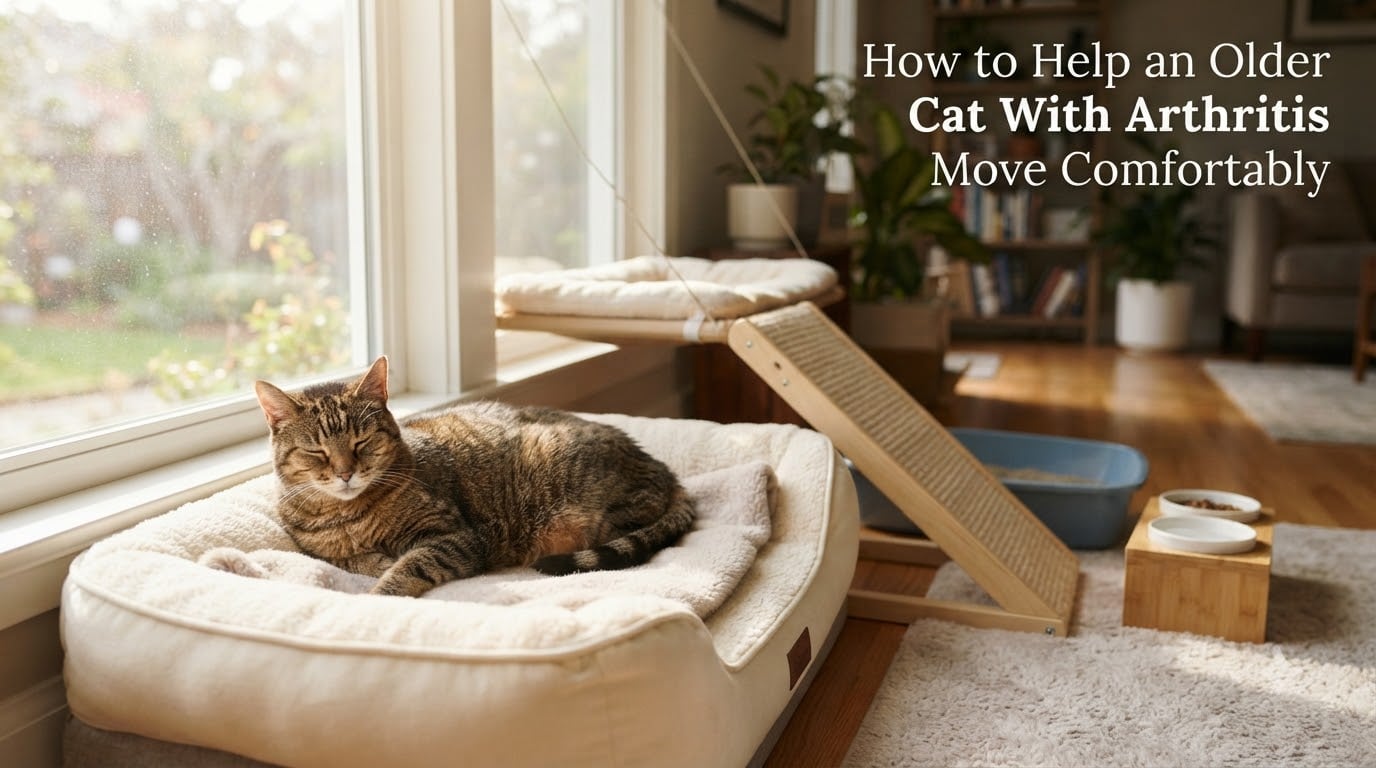
To help an older cat with arthritis move comfortably, focus on soft warm beds, low-entry litter boxes, ramps to favorite spots, slip-resistant floors, raised food bowls, and prompt veterinary pain management. Small home changes paired with the right treatment plan can transform a senior cat’s daily life.
When I adopted my 14-year-old tabby, Marlowe, I noticed he no longer jumped onto the kitchen counter. At first I chalked it up to age, but my vet confirmed it was osteoarthritis. That moment sent me down a research rabbit hole that helped me and Marlowe, and it’s the basis for this guide.
Arthritis affects roughly 60% of cats over age 6 and up to 90% of cats over 12, yet it is one of the most underdiagnosed feline conditions. Cats are masters at hiding pain, so the responsibility falls on us to recognize the subtle signs and adjust the home before discomfort becomes suffering.
This guide walks you through how to help an older cat with arthritis move comfortably, from spotting early symptoms and modifying your home, to bedding, litter box tweaks, gentle grooming, safe lifting techniques, and the latest veterinary treatments.
Table of Contents
Understanding Arthritis in Senior Cats
Feline osteoarthritis is a degenerative joint disease in which the smooth cartilage cushioning the ends of bones gradually wears away. As cartilage thins, bone ends begin to rub together, creating inflammation, stiffness, and pain.
It most commonly affects the elbows, hips, knees, and shoulders, but the spine is frequently involved too. Unlike dogs, cats rarely limp outright. Instead, they move less, jump shorter distances, and sleep in awkward positions to protect sore joints.
Several risk factors speed the progression:
Age, with prevalence climbing sharply after age 10
Previous joint injuries or fractures
Hip dysplasia, more common in Maine Coons, Persians, and Siamese
Obesity, which multiplies stress on every joint
Genetic predisposition in certain pedigreed breeds
Veterinarians diagnose arthritis through physical exam, palpation, and X-rays. Bloodwork often accompanies diagnosis to rule out hyperthyroidism or kidney disease, which can mimic some symptoms.
Recognizing the Signs of Arthritis in Your Cat
The first step in helping a senior cat move comfortably is noticing the signs. Because cats hide pain instinctively, the clues are subtle.
Watch for Mobility Changes
Reluctance to jump onto familiar surfaces is the hallmark sign. Your cat may attempt the counter or bed and back off, or use a chair as a stepping stone. Stiffness is usually worse after naps and improves once the cat moves around.
Look at Grooming Habits
Arthritic cats stop grooming hard-to-reach areas, especially the lower back, hind legs, and base of the tail. Matted fur, greasy patches, or flaky skin in these spots point to pain, not laziness.
Notice Litter Box Behavior
A cat that used to leap into a tall litter box may now perch on the edge, miss, or eliminate nearby. Accidents outside the box are one of the most common reasons owners finally book a vet visit.
Track Personality Shifts
A normally sociable cat may withdraw or become irritable when touched. Others become clingy because movement is uncomfortable. Loss of appetite, hiding, and reduced play are all red flags.
“I thought my cat was just getting old and grumpy. After starting pain medication and adding a ramp to our bed, he started sleeping on my pillow again. The transformation was almost instant.” — A user on r/SeniorCats
How to Help an Older Cat With Arthritis Move Comfortably Through Home Modifications?
The biggest comfort gains come from removing obstacles in your cat’s daily path. You don’t need a renovation, just a few targeted changes.
Add Ramps and Steps to Favorite Spots
Ramps and pet steps let your cat reach sofas, beds, and window perches without jumping. Pet owners in forum communities consistently report that gentle incline ramps work better than steep steps, because older cats often refuse to climb stairs of any kind.
Choose ramps with a gradual slope, a non-slip surface, and side rails for confidence. For very short heights, a sturdy wooden step or a stack of storage boxes can serve the same purpose.
Install Slip-Resistant Runners
Hardwood and tile floors are skating rinks for arthritic cats. Lay non-slip runners or yoga mats along the paths your cat uses most, between the litter box, food station, and favorite resting spots.
Keep claws trimmed to give cats better traction. Cats use their claws like soccer cleats when launching or stopping.
Use Raised Food and Water Bowls
Elevated bowls reduce the need to crouch, easing strain on the elbows, shoulders, and spine. A simple ceramic bowl on a low wooden stand works well. Aim for a height that lets your cat eat with the head slightly lowered rather than pressed to the floor.
Plan Multi-Level Strategies for Stairs
If your home has stairs, consider gating off upper levels and creating a complete “senior suite” on the ground floor, with bed, litter box, food, water, and a perch with a window view.
For cats who insist on following you upstairs, carpet runners on stair treads provide grip. Some owners train cats to use a baby gate as a barrier so they cannot attempt stairs unsupervised at night.
Choosing the Right Bedding and Warmth Solutions
Senior cats sleep 16 to 18 hours a day, so where they rest matters more than anywhere else. Joint-friendly bedding reduces inflammation and stiffness.
Memory Foam and Orthopedic Beds
Memory foam conforms to your cat’s body and distributes weight evenly, taking pressure off bony joints. Look for beds with a low entry point, so an arthritic cat can step in rather than climb.
Heated and Self-Warming Beds
Cold worsens joint pain. Heated cat beds with thermostats or self-warming pads that reflect body heat both provide relief. Forum owners frequently mention these as the single most impactful purchase for senior cats.
Bed Placement Matters
Place the bed in a draft-free, quiet spot off the floor if possible, but accessible without jumping. A chair with a folded blanket can work. Avoid placing beds near heating vents that cycle on and off, as temperature swings aggravate stiffness.
| Bedding Type | Best For | Watch Out For |
|---|---|---|
| Memory foam | Joint support, older cats | Higher price, heavier |
| Heated bed | Cold climates, stiff joints | Cord safety, overheating risk |
| Self-warming pad | Budget-friendly warmth | Less pressure relief |
| Standard plush bed | Mild stiffness | Limited joint support |
Making the Litter Box Accessible and Easy to Use
Litter box problems are the symptom owners notice first and the one most easily fixed with the right equipment.
Switch to a low-entry box with sides under 4 inches, or use a storage tub with a cut-out doorway. Place boxes on every floor your cat frequents, because arthritic cats rarely trek upstairs to relieve themselves.
Choose a fine, soft clumping litter that feels gentle on paws. Avoid pellets or rough textures that can deter a cat whose joints already hurt.
Place a non-slip mat outside the box to catch litter and give your cat stable footing on entry and exit.
Helping With Grooming, Nails, and Gentle Massage
Arthritis limits the positions cats can hold while grooming. Your help keeps them clean, comfortable, and free of painful mats.
Brush Where They Cannot Reach
Daily brushing, especially along the back, hips, and rear legs, prevents matting and stimulates circulation. Use a soft brush and short sessions, stopping if your cat flinches or pulls away.
Trim Overgrown Claws
Less scratching means claws overgrow and can curl into paw pads, a serious and painful condition. Trim claws every 2 to 3 weeks, or ask your vet or groomer to do it.
Try Gentle Massage
Light massage around the neck, shoulders, and along the spine can ease stiffness. Use slow circular motions with your fingertips, and stop immediately if your cat shows discomfort. Never press directly on a joint.
Some owners find that warming a towel in the dryer for a few minutes and draping it over their cat’s back provides additional comfort, but always test the temperature first.
How to Safely Lift and Carry an Arthritic Cat?
Few resources cover this, yet improper lifting is a common source of avoidable pain.
Never scoop an arthritic cat under the front legs the way you would a healthy one. This puts all the cat’s weight on the abdomen and stretches already sore joints.
Instead, slide one hand under the chest behind the front legs, and the other hand under the hindquarters to support the lower back and hips. Lift smoothly and keep the cat level against your body.
To pick up a cat from a high surface, bring your arms up to the cat rather than dragging the cat down. Lower the cat the same way, placing the hind legs down first so the cat can steady itself with the front.
Veterinary Treatment Options and Pain Management
Home modifications help, but arthritis is a medical condition that benefits from veterinary treatment. Never give your cat human pain relievers, especially acetaminophen or ibuprofen, which are highly toxic.
NSAIDs Prescribed by Vets
Veterinarians commonly prescribe feline-formulated non-steroidal anti-inflammatory drugs such as meloxicam or robenacoxib. These reduce inflammation and improve mobility, but require monitoring of kidney and liver values.
Solensia Injections
Solensia (frunevetmab) is a monthly monoclonal antibody injection that targets nerve growth factor, a key pain signal in arthritic cats. Many owners report visible improvement after 2 to 3 doses, including easier jumping and more play.
Joint Supplements
Glucosamine, chondroitin, and omega-3 fatty acids support cartilage and may reduce inflammation. Always choose products formulated for cats and approved by your vet, since dosing and ingredients vary widely.
Complementary Therapies
Laser therapy, acupuncture, and hydrotherapy are increasingly offered at veterinary clinics. They can reduce pain and improve range of motion, especially when combined with weight management and home care.
Weight Management and Gentle Exercise for Arthritic Cats
Every extra pound puts roughly four pounds of additional force on a cat’s joints. Weight loss is one of the most powerful interventions available.
Ask your vet about a senior cat food with fewer calories and added joint support. Measure portions rather than free-feeding, and limit treats to under 10% of daily calories.
Encourage gentle movement with wand toys, low-throw fetch, and treat puzzles. Short play sessions of 5 to 10 minutes, twice a day, keep joints mobile without overdoing it.
Mental stimulation matters too. Food puzzles, bird-watching perches, and clicker training keep your cat engaged even on days when movement is limited.
When to Contact Your Veterinarian?
Schedule a vet visit if you notice any of the following:
Sudden refusal to move, eat, or use the litter box
Crying when picked up or touched
Visible swelling or heat around a joint
Aggression or hiding lasting more than a day
Vomiting, lethargy, or appetite loss after starting medication
Senior cats benefit from twice-yearly wellness exams, so the vet can track arthritis progression and adjust treatment. Keep a simple journal of mobility changes between visits to share.
Frequently Asked Questions About Caring for an Arthritic Cat
What helps senior cats with arthritis?
Soft, warm, low-entry orthopedic beds; ramps or steps to favorite spots; non-slip flooring; raised food and water bowls; low-sided litter boxes; gentle daily brushing; and prompt veterinary pain management, including NSAIDs or Solensia injections. Combining home modifications with medical treatment produces the best results.
How do you treat arthritis in elderly cats?
Treatment combines environmental changes, weight control, joint supplements, and veterinary medications. NSAIDs such as meloxicam reduce inflammation, while Solensia injections target nerve growth factor for sustained relief. Complementary therapies like laser, acupuncture, and hydrotherapy are often added for cats that need extra support.
Is it common for older cats to get arthritis?
Yes. About 60% of cats over age 6 show signs of osteoarthritis, and the figure rises to roughly 90% in cats over 12. Because cats hide pain, many cases go undiagnosed without active observation by owners.
What do vets give cats for arthritis?
Veterinarians typically prescribe feline NSAIDs such as meloxicam or robenacoxib, monthly Solensia (frunevetmab) injections, joint supplements with glucosamine and omega-3s, and adjunct therapies like laser treatment or acupuncture. Never give cats human medications such as ibuprofen or acetaminophen, which are toxic.
How long do cats with arthritis typically live?
Arthritis itself is not fatal, and with proper pain management, weight control, and home adjustments, many cats live comfortably for years after diagnosis. The outlook depends more on overall health, kidney function, and access to treatment than on the arthritis alone.
A Comfortable Retirement for Your Senior Cat
Knowing how to help an older cat with arthritis move comfortably is really about listening closely and adjusting the small things. A heated bed here, a low-sided litter box there, a ramp to the window perch, and a conversation with your vet about pain relief can restore a senior cat’s joy.
Start with the changes that take an afternoon, watch your cat’s response, and build from there. Marlowe is back on the kitchen counter, by way of a ramp, and purring every step of the way.