
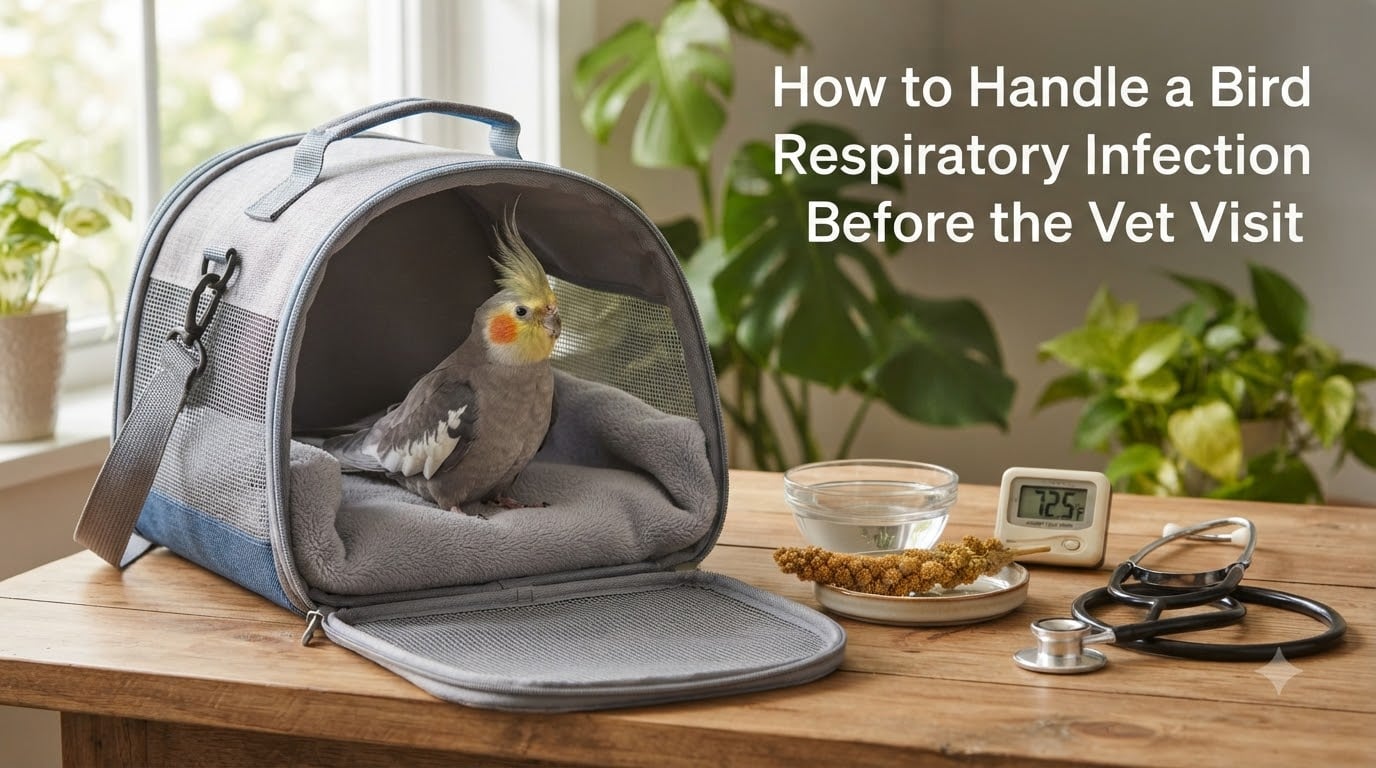
If your bird is showing signs of a respiratory infection, every minute between now and the vet matters. I know that panic. The good news is that with the right steps taken early, you can stabilize your pet and give the vet a much better chance of successful treatment.
Bird respiratory infections are aggressive. Birds instinctively hide illness as a survival mechanism, which means by the time you notice symptoms, the infection may already be advanced. This guide walks you through what to do at home before the appointment, how to recognize true emergencies, and what to expect when you arrive at the avian vet.
You’ll learn exactly how to stabilize your bird, identify which symptoms need emergency care, prepare for the vet visit, and support recovery afterward.
Table of Contents
How to Handle a Bird Respiratory Infection Before the Vet Visit?
The fastest way to handle a bird respiratory infection before the vet is to follow five stabilization steps: isolate the bird in a warm, quiet space; raise humidity with a steam-filled room; remove airborne irritants; offer water and easy-to-eat food; and call an avian-certified vet immediately. These steps don’t replace veterinary care – they buy your bird the time it needs to reach the clinic in better shape.
Use this checklist the moment you suspect a problem:
Step 1: Move the bird to a separate quiet room with temperatures between 85-90°F
Step 2: Add humidity by running a hot shower to fill the room with steam for 10-15 minutes
Step 3: Turn off any fans, air fresheners, candles, or non-stick cookware nearby
Step 4: Place food and water within easy reach without forcing the bird to perch high
Step 5: Call an avian vet or emergency clinic and describe the symptoms in detail
What Is a Bird Respiratory Infection and Why Birds Hide Symptoms?
A bird respiratory infection is any infection affecting the upper respiratory tract (sinuses, nostrils, trachea) or lower respiratory tract (lungs, air sacs) of a bird. Common culprits include bacteria like Chlamydia psittaci and Mycoplasma, fungi like Aspergillus, viruses, and parasites like air sac mites or gapeworms.
Birds evolved to mask every sign of weakness. In the wild, a visibly sick bird becomes a predator’s target, so pet birds instinctively suppress symptoms until they physically cannot. By the time you see tail bobbing, open-mouth breathing, or fluffed feathers, the infection has often been present for days or weeks.
This hiding instinct is why our team treats owner-reported symptoms as serious. Even a “small” sneeze combined with one behavioral change (less singing, sleeping more) deserves a vet call.
Signs and Symptoms of Bird Respiratory Infection
Recognizing a bird respiratory infection comes down to watching for respiratory symptoms plus behavioral shifts. Birds show illness through their breathing and their energy levels at the same time.
Common Respiratory Symptoms
Tail bobbing: The tail moves up and down with each breath – a classic sign of labored breathing
Open-mouth breathing: Bird breathes with beak visibly open while at rest
Nasal discharge: Clear, white, yellow, or green fluid from nostrils or cere
Sneezing or coughing: Repeated sneezing, often with head shakes
Wheezing or clicking: Audible sounds during breathing, especially in canaries and cockatiels
Voice change: Loss of voice, hoarse chirping, or silence in normally vocal birds
Watery or swollen eyes: Often paired with sinus involvement
Labored breathing: Visible chest effort with each breath
Behavioral Changes That Confirm Something Is Wrong
Fluffed feathers held for hours, even in warm rooms
Sleeping on both feet with head tucked (sick birds rest more)
Lethargy and reduced interaction with the owner
Reduced eating or drinking, or sitting near the food bowl without eating
Sitting at the bottom of the cage instead of perching
A single symptom may mean nothing. Two or more respiratory signs together – especially tail bobbing plus fluffed feathers – should trigger an immediate vet call. I tell every new bird owner the same thing: if you are wondering whether your bird is sick, the answer is probably yes.
Types of Bird Respiratory Infections
Different causes of bird respiratory infection require different treatments. Knowing the type helps you explain your bird’s history to the vet and understand what tests may be run.
Bacterial Infections
The most common cause of respiratory symptoms in pet birds. Chlamydia psittaci (psittacosis or “parrot fever”) is the headline bacterium – it spreads quickly, can infect humans, and requires specific antibiotic treatment. Mycoplasma and E. coli also cause chronic sinusitis and air sac infections, especially in budgies and cockatiels.
Fungal Infections (Aspergillosis)
Aspergillus spores are everywhere, but they colonize the respiratory tract of immunocompromised or stressed birds. Aspergillosis is serious – it forms plaques inside air sacs and trachea and is a leading cause of death in pet birds. Birds with vitamin A deficiency or those exposed to moldy bedding are at higher risk.
Viral Infections
Avian Bornavirus, Pacheco’s disease, and Polyomavirus all affect the respiratory system. Newcastle disease is rare in pet birds but serious when it occurs. Viral infections often need supportive care while the bird’s immune system fights back.
Parasitic Infections
Air sac mites (Sternostoma) live in the trachea and air sacs of canaries, finches, and sometimes budgies. Gapeworms (Syngamus trachea) attach to the trachea and cause gasping. Both cause dramatic respiratory symptoms that respond to antiparasitic medication once diagnosed.
Emergency Symptoms That Require Immediate Action
Some bird respiratory infection signs mean you skip home care and head straight to the nearest avian or emergency vet. Knowing the difference between urgent and stable situations can save your bird’s life.
Call the vet clinic immediately and prepare to drive there if your bird shows any of these:
Open-mouth breathing with visible chest heaving at rest
Blue, purple, or pale tongue or gums (signs of oxygen deprivation)
Tail bobbing that looks exaggerated with every breath
Blood coming from the nostrils, mouth, or droppings
Sudden collapse or inability to perch
Wheezing or clicking sounds audible from across the room
Extended neck with each breath, head tilted upward
For true emergencies, place the bird in a small, dark, padded carrier with air holes. The darkness calms the bird and reduces oxygen demand while you transport. Do not delay transport to call multiple clinics – call while you drive if you have a passenger.
Step-by-Step Home Care Before the Vet Visit
For non-emergency cases, your job before the vet visit is to keep your bird calm, warm, hydrated, and breathing as easily as possible. Our team has walked dozens of bird owners through these steps over the years, and they consistently help.
Step 1: Isolate the Bird
Move the bird to a small, quiet room away from other pets, kids, and household activity. Use a small cage or carrier so the bird does not have to climb or move much. Line the bottom with a soft towel for grip and comfort.
Step 2: Regulate Temperature and Humidity
Birds with respiratory infections use more energy to stay warm. Aim for an ambient temperature of 85-90°F. You can use a heated perch, a low-wattage infrared bulb on one side of the cage, or a heating pad beneath half the cage. Run a hot shower in the same room for 10-15 minutes to raise humidity and loosen respiratory secretions. Avoid direct heat sources that can burn.
Step 3: Remove Airborne Irritants
Walk through the room and remove anything that releases fumes: candles, essential oil diffusers, air fresheners, sprays, Teflon-coated heaters, and any smoking. Even smells you find pleasant can inflame a bird’s airways.
Step 4: Offer Food and Water
Place food and water within easy reach at perch level or on the cage floor. Offer favorites – millet spray for budgies, warm soft food for older birds, fruits for cockatiels. Sick birds often stop eating, so monitor droppings to confirm food is being digested. If your bird has not eaten in over 12 hours, mention this to the vet – they may need to begin gavage feeding.
Step 5: Minimize Handling and Stress
Limit interaction to brief health checks. Dim the lights and keep noise low. Birds under respiratory stress burn energy fast, and unnecessary handling makes breathing harder. Speak softly when you do approach.
Step 6: Track Symptoms in a Simple Log
Write down the time of symptoms, breathing rate per minute, droppings color, food intake, and any changes. This log is gold for the vet – it gives them a timeline they cannot get from a single exam. Use your phone’s notes app if needed.
Species-Specific Considerations for Budgies, Cockatiels, and Parrots
Different bird species show bird respiratory infection symptoms in slightly different ways. Knowing what to watch for in your specific pet helps you catch problems early.
Budgies
Budgies are notorious for hiding illness. Their small size also means they deteriorate fast once symptoms show. Watch for cere discoloration (the nose area turning brown or crusty in males), tail bobbing while perched, and a sudden preference for sitting on the cage floor. Budgies with Mycoplasma often show chronic mild sneezing that owners dismiss until it worsens.
Cockatiels
Cockatiel owners on forums consistently report tail bobbing as the first red flag. Their powder-down feathers can also clog airways if the bird is in a dusty environment, mimicking infection. Watch for weight loss on the keel bone, clicking sounds, and a sudden drop in whistling or vocalization.
Parrots (African Grey, Amazon, Macaw)
Larger parrots often show subtle behavior changes first – less talking, less interest in toys, sleeping on one foot more than usual. African Greys are prone to Aspergillosis, especially with vitamin A deficiency. Macaws can develop hypersensitivity pneumonitis (sometimes called macaw asthma) from repeated exposure to dust or aerosol irritants.
Canaries and Finches
These small birds hide illness even more aggressively than parrots. Symptoms often appear suddenly: open-mouth breathing, sitting fluffed on the cage floor, or refusing to fly. Air sac mites are a common cause – you may hear a faint click when the bird breathes.
Environmental Hazards to Remove Immediately
Many respiratory infections get worse – or start – because of airborne irritants in the home. Removing these is one of the fastest wins in bird respiratory infection management.
Teflon and PTFE coatings: Non-stick cookware, self-cleaning ovens, space heaters, andirons coated with PTFE release toxic fumes when heated. These can kill a bird within minutes.
Aerosols and sprays: Hair sprays, perfumes, deodorants, cleaning sprays, and essential oil diffusers all inflame airways.
Cigarette and cannabis smoke: Smoke of any kind is a major risk factor for respiratory infections in pet birds.
Candles and incense: Even “natural” candles release soot and fragrances that irritate bird lungs.
Mold and dust: Old bedding, damp areas, and dusty environments feed Aspergillus growth.
One myth worth clearing up: cold drafts alone do not cause respiratory infections. What does happen is that a draft forces a bird to use more energy to stay warm, weakening the immune system and making infection more likely. The fix is steady temperature, not draft-free paranoia.
How to Prepare for the Avian Vet Visit?
A little preparation before you leave makes the vet visit faster and more productive. I have seen owners arrive unprepared and lose valuable minutes at the clinic.
Prepare the Carrier
Use a small, secure carrier – not the full cage. Line the bottom with a familiar towel or paper. Add a small perch if the bird can grip, or skip it for very weak birds. Cover the carrier with a light cloth to reduce stress. Keep the car warm (around 80°F) and quiet during transport.
Bring the Right Things
Recent droppings in a small bag or photo (the vet will want to see color and consistency)
A list of symptoms with dates and times
Photos or short videos of the bird breathing – this helps if the bird acts normal at the clinic
Your bird’s diet, supplements, and any recent changes
The cage itself if it is portable, so the vet can spot environmental triggers
What to Tell the Vet
Be ready to describe when symptoms started, how they have progressed, any exposures to other birds, recent cleaning product changes, and whether the bird is eating and drinking. Vets rely heavily on owner history because birds often mask symptoms during the actual exam.
What to Expect at the Vet: Diagnosis and Treatment
Once you arrive, the vet will run a focused workup to identify the cause of the bird respiratory infection. The exam usually takes 30-60 minutes but can run longer depending on tests.
Common Diagnostic Tests
Physical exam: Listening to air sacs and lungs, checking weight, examining the oral cavity and crop
X-rays: Show air sac thickening, fluid, or plaques typical of Aspergillosis
Tracheal or choanal swab: Culture for bacteria and fungi
Bloodwork: Complete blood count and chemistry to check organ function and infection markers
PCR testing: Detects Chlamydia psittaci and specific viruses
Typical Treatments
Treatment depends on cause. Bacterial infections respond to antibiotics like doxycycline or enrofloxacin. Fungal infections need oral or nebulized antifungals such as itraconazole. Parasitic infections call for antiparasitic drugs. Severe cases may require oxygen therapy, nebulization, or hospitalization with supportive care.
Whatever the treatment, never use over-the-counter pet store medications without vet guidance. Many OTC bird products can worsen respiratory issues or interact badly with prescribed drugs. The Merck Veterinary Manual is clear on this: vet diagnosis must come first.
Recovery and Prevention of Future Bird Respiratory Infections
Recovery time depends on the cause and how early treatment began. Mild bacterial infections often improve within 5-10 days of starting antibiotics. Aspergillosis cases can take weeks of antifungal therapy. Viral infections are managed supportively until the bird’s immune system catches up.
Prevention Checklist
Schedule annual wellness checks with an avian-certified vet, even when your bird seems healthy
Feed a varied diet rich in vitamin A (orange vegetables, leafy greens) to support airway epithelium
Keep the cage away from kitchen fumes, especially when cooking with non-stick pans
Use HEPA filters or air purifiers in the bird’s room to reduce dust and dander
Quarantine any new birds for at least 30 days before introducing them
Replace cage liners and clean food and water dishes daily to prevent bacterial buildup
Avoid smoking, vaping, or burning candles in the same room as the bird
Annual vet visits catch subtle signs before they become full infections. Birds that see a vet once a year have a much better survival rate when respiratory problems do occur.
Frequently Asked Questions
Can birds recover from respiratory infections?
Yes, many birds recover fully with prompt veterinary care. Mild bacterial and parasitic infections often clear within 1-2 weeks of treatment. Fungal infections like Aspergillosis are harder to treat and may need weeks of medication, but survival rates improve when caught early. Birds hide symptoms, so the moment you notice signs, vet care is critical.
How do you treat upper respiratory infection in birds?
Upper respiratory infections in birds need veterinary treatment. The vet will diagnose the cause (bacterial, fungal, viral, or parasitic) and prescribe targeted medication – usually antibiotics, antifungals, antivirals, or antiparasitics. Home care supports recovery by keeping the bird warm, humid, hydrated, and away from irritants, but does not replace vet treatment.
What do vets do for respiratory infections?
Avian vets diagnose bird respiratory infections through physical exams, X-rays, bloodwork, and cultures of swabs from the trachea or sinuses. Treatment may include antibiotics for bacterial infections, antifungals for Aspergillosis, antiparasitics for mites or worms, oxygen therapy for severe breathing trouble, and nebulization to deliver medication directly to the airways.
Are respiratory infections in birds contagious?
Some are. Chlamydia psittaci (psittacosis) spreads between birds and can also infect humans – a zoonotic risk. Bacterial and viral infections spread through droppings, aerosols, and shared food or water. Quarantine any new bird for at least 30 days and wash hands between handling different birds to reduce transmission.
How long can a bird survive a respiratory infection without treatment?
Without treatment, a bird with a respiratory infection can deteriorate rapidly – often within 24-72 hours of visible symptoms. Birds that survive untreated infections usually develop chronic issues. Any visible respiratory symptom should be treated as urgent because the infection has likely been present for days before signs appeared.
What is the 3-3-3 rule for parrots?
The 3-3-3 rule describes a parrot’s adjustment timeline when moved to a new home: 3 days to decompress, 3 weeks to settle in and learn routines, and 3 months to feel secure and bond. It is not directly about respiratory infection, but understanding this timeline helps owners tell normal adjustment behavior from early illness signs in a new bird.
Can I use human antibiotics for my bird?
No. Do not give human antibiotics to a bird without explicit vet guidance. Dosing, drug choice, and duration differ greatly between species. Some human antibiotics are toxic to birds, and incorrect dosing can cause fatal kidney or liver damage. Always see an avian vet before giving any medication.
Final Thoughts on Handling Bird Respiratory Infection Before the Vet
Bird respiratory infections move fast. The combination of instinct-driven symptom hiding and a delicate avian respiratory system means that what looks like a mild sneeze today can become a life-threatening emergency tomorrow. Your role before the vet visit is to stabilize: warm, quiet, hydrated, isolated, irritant-free, and documented.
Call an avian-certified vet the moment you see tail bobbing, open-mouth breathing, fluffed feathers combined with any other symptom, or any of the emergency signs we covered. Time matters, but so does preparation – the steps above give your bird the best possible chance of a full recovery.
If you only remember one thing, make it this: birds mask illness. Trust what you see, act quickly, and let the vet confirm the cause. With the right pre-vet care, most respiratory infections in pet birds are treatable.