
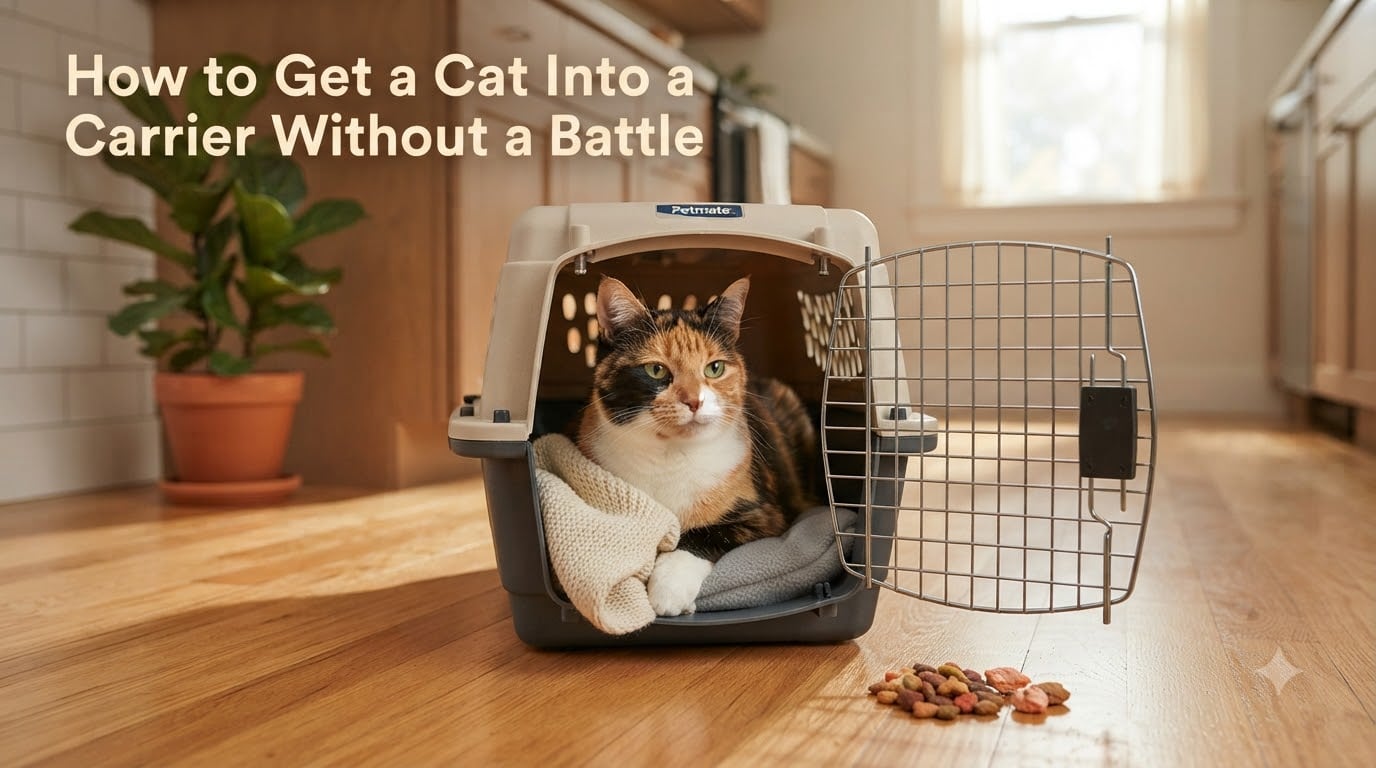
Getting a cat into a carrier without a battle is one of those small battles that can ruin an entire afternoon. I have spent way too many evenings chasing a terrified tabby around the couch, swearing I’d never let it get this far again. The good news? You can teach almost any cat to walk into a carrier calmly, and you have real techniques for the times you cannot. This guide covers everything I have learned from cat owners, shelter workers, and veterinarians for stress-free carrier success in 2026.
Whether you have a young kitten, a stubborn senior, or a formerly feral cat who treats the carrier as a torture device, the methods below work. I will walk you through the psychology of why cats hate carriers, the long-term training plan vets recommend, and the emergency “do it right now” technique when the appointment is in 15 minutes.
Table of Contents
Why Cats Fear Carriers (The Psychology Behind the Battle)?
Cats fear carriers because the carrier has only ever meant one thing in their memory: a car ride, often followed by a needle. The carrier is not just a box. It is a portal to a loud, unstable, unpredictable environment. Add in the fact that cats are creatures of routine, and you have a perfect storm for panic.
Three things trigger the most resistance: the sight of the carrier coming out of the closet, the smell of old fear on the carrier itself, and the physical sensation of being trapped. According to the Hill’s Pet guide on carrier training, the musty smell of a stored carrier can signal “danger zone” all on its own. Cats have roughly 200 million scent receptors compared to our 5 million, so a carrier that smells like last year’s traumatized cat is a real problem.
Understanding this helps you reframe the battle. Your cat is not being difficult. Your cat is panicking because its nervous system is shouting that something terrible is about to happen. Once you accept that, the techniques below start to make sense.
Start Early: Carrier Acclimation That Actually Works
The best way to get a cat into a carrier without a battle is to never let the battle start in the first place. Carrier acclimation means teaching your cat that the carrier is a safe, even pleasant, piece of furniture. Vets and shelter workers I have spoken with all recommend starting at least two weeks before any planned travel, but ideally months in advance.
Here is the acclimation schedule that actually works:
Week 1: Place the carrier in a room your cat frequents. Leave the door open. Toss a treat inside once a day. Do not close the door. Do not pick up the carrier. Let curiosity do the work.
Week 2: Add a soft blanket that smells like you. Place a worn t-shirt inside. Spray the interior with Feliway Classic spray 15 minutes before any introduction. Feed meals near the carrier opening.
Week 3: Move the food bowl just inside the carrier entrance. Once your cat eats comfortably there, push the bowl toward the back of the carrier.
Week 4: Close the door for one second while your cat is eating, then open and treat. Repeat, gradually increasing the closed time to 30 seconds, then 1 minute, then 5 minutes.
Reddit user u/catwrangler42 shared that this exact approach took three weeks with her formerly feral cat, who now walks into the carrier on command. The key is patience. You cannot rush a cat who has decided the carrier is lava.
How to Get a Cat Into a Carrier Without a Battle: Step-by-Step Method
When the acclimation method does not fully work (and honestly, with rescue cats it often does not), here is the technique I now use by default. It works for solo cat owners and does not require a second person.
Choose a small, enclosed room with no hiding spots. A bathroom works well. Close the door.
Bring the carrier in and place it on the floor with the door facing up or fully open.
Move slowly. No sudden steps. Talk in a low, calm voice.
Pick up your cat gently, supporting the back legs and chest. Hold the cat close to your body so it feels secure.
Lower your cat into the carrier hind-end first (legs first into the carrier, head and shoulders last). This is the “backwards” method that veterinary staff swear by.
Close the door quickly but calmly. Clip the latches. Step back.
The hind-end first method works because cats reflexively push forward when they feel pressure behind them. By placing the back legs in first, you use your cat’s own instincts against the panic. According to the PDSA emergency guide, this is the official vet-recommended approach for uncooperative cats.
The Towel Wrap Technique (Cat Burrito Method)
The towel wrap, sometimes called the “cat burrito” method, is the single most reliable technique for getting a scared cat into a carrier. It works by limiting the cat’s ability to thrash, scratch, and bolt. Shelter workers and vet techs use it as a default for fractious cats.
Here is how to do it properly:
Lay a medium-sized towel flat on a surface (the floor, a table, or your lap).
Place your cat gently in the center of the towel.
Fold one side of the towel snugly over your cat’s back, tucking it under the belly.
Wrap the bottom of the towel up over the back legs, like swaddling a baby.
Wrap the remaining side around the neck and shoulders, leaving only the head exposed.
Pick up the wrapped bundle firmly and lower it into the carrier opening.
Close the carrier door before unwrapping, or unwrap carefully if the carrier is roomy enough.
The burrito method prevents the three things that lead to scratches: claws out, back legs pushing free, and head darting sideways. I have personally used this on a 14-pound Maine Coon who could have shredded me without it, and it turned a 20-minute wrestling match into a 90-second job.
Warning: Never wrap tightly enough to restrict breathing. The cat should be snug, not compressed. If your cat is panting, you have wrapped too tightly.
Emergency Quick-In Method: When You Have No Time
Sometimes you do not have 15 minutes. The emergency vet is on the other side of town, the cat is bleeding, and your cat is hiding under the bed. In these cases, speed beats technique. Here is the fastest vet-approved method.
Grab a thick towel or blanket and a hard-sided carrier with a top-opening door.
Bring the carrier into the room where your cat is hiding.
Drape the towel over your cat from behind, scooping it forward in one motion.
Wrap quickly, but do not panic-wrap. The goal is to contain the front paws and head.
Hold the wrapped cat against your body with one arm.
Lower the cat into the carrier hind-end first using the top opening.
Close and latch the door immediately.
Set the carrier down gently. Speak softly. You survived.
The key to the emergency method is the top-opening carrier. Front-loading carriers are dangerous during emergencies because you cannot physically fit a thrashing cat through them in under a second. Top-loading or front-plus-top carriers are what vets use in their own clinics for exactly this reason.
Using Feliway and Calming Aids to Reduce Cat Anxiety
Pheromone products like Feliway Classic mimic the natural facial pheromone cats leave when they feel safe. Spraying the carrier interior 15 minutes before travel can noticeably reduce panting, vocalization, and resistance. The science is solid, and Hill’s Pet highlights pheromone sprays as a first-line tool for cat anxiety.
For best results, follow this routine:
Spray the carrier interior and a small towel 15 minutes before placing your cat inside.
Reapply to the towel every 2 hours on long trips.
Pair the spray with a familiar blanket and a treat. The spray does not work alone on a deeply fearful cat.
Other calming aids that work well include Pet Remedy (a valerian-based spray), Rescue Remedy drops in water, and Zylkene capsules available through your vet. None of these sedate your cat. They reduce the panic response so training can take over.
Keeping Your Cat Calm During the Car Ride
Getting the cat into the carrier is only half the battle. The car ride is where most of the panic actually happens. The vibration, the unfamiliar sounds, the movement of the vehicle, all of it stacks on top of the carrier stress.
Three rules keep the car ride manageable:
Cover the carrier with a light blanket. Removing visual stimulation signals calm. Most cats settle within minutes of being covered.
Secure the carrier on the floor behind the front seat or with a seatbelt. A sliding carrier is a terrified cat.
Skip the music. Driving music stresses cats. Keep the cabin quiet except for the engine.
Some owners find that taking short “practice drives” of 5 minutes, followed by a treat, completely changes the car association over a few weeks. Like the carrier itself, the car is just another thing to acclimate.
When to Consider Gabapentin for Anxious Cats
For cats with extreme, non-responsive anxiety, talk to your vet about Gabapentin. It is a mild, prescription anti-anxiety medication that vets increasingly use for vet visits, travel, and grooming. It is not a true sedative. Your cat will be awake but noticeably calmer.
According to forum discussions on r/CatAdvice, many owners with formerly feral or rescue cats have had success with Gabapentin prescribed 2 hours before vet visits. The medication is inexpensive, well-studied in cats, and has minimal side effects beyond mild drowsiness.
Important: Never give your cat Gabapentin, Benadryl, or any other human medication without veterinary guidance. Dosing is weight-specific and drug interactions matter. A quick vet call is worth it for cats who would otherwise go through pure terror every visit.
Understanding the 3-3-3 Rule for Cats
The 3-3-3 rule is a guideline for what newly adopted cats typically need to feel at home. It applies to any major transition, including a first carrier experience. The rule says 3 days to decompress, 3 weeks to settle in, and 3 months to feel fully at home.
3 days: Your cat is overwhelmed. Hiding is normal. Do not push carrier training.
3 weeks: Your cat starts to understand the routine. This is when acclimation training begins to work.
3 months: Your cat has built trust. Carrier training becomes drastically easier.
Knowing this helps you set realistic expectations. If you adopted your cat two weeks ago and the carrier battle is real, that is normal. The cat is still in the “settling” phase. Give it time, and the work will pay off.
How to Get a Cat Out of a Carrier Safely
Getting your cat out without a fresh round of panic follows most of the same rules. Open the carrier in a small, quiet room. Do not reach in. Let the cat come out on its own. If the cat is reluctant, tilt the carrier on its side so the cat can walk out without feeling exposed from above.
Resist the urge to pull your cat out by the front legs. This is how most cat scratches happen on the return trip. Open, wait, and let the cat decide.
Frequently Asked Questions
How do I get an unwilling cat into a carrier?
Move your cat into a small room with no hiding spots, such as a bathroom. Place the carrier on the floor with the door facing up. Pick up your cat gently, supporting the back legs and chest, and lower it into the carrier hind-end first. Use a towel wrap (cat burrito method) if your cat struggles. Speak in a low, calm voice and avoid chasing.
What is the 3-3-3 rule for cats?
The 3-3-3 rule describes how cats adjust to a new environment. It takes about 3 days to decompress, 3 weeks to settle into a routine, and 3 months to feel fully at home. This rule helps set realistic expectations for newly adopted cats and explains why carrier training takes patience.
How can I get my cat to come in a carrier?
Use positive reinforcement over time. Leave the carrier out as regular furniture for 2-4 weeks. Toss treats inside daily. Feed meals near and eventually inside the carrier. Spray the interior with Feliway 15 minutes before introductions. Avoid forcing the issue, as chasing creates negative associations.
How do I get a cat in a carrier in an emergency?
Use a top-opening hard-sided carrier. Drape a thick towel over your cat from behind, scoop forward in one motion, and wrap quickly to contain the front paws and head. Hold the wrapped cat against your body and lower it hind-end first into the top opening. Close and latch immediately. The whole process should take under 30 seconds.
How do I put a cat in a carrier by myself?
Prepare the carrier in advance by removing the top or opening all doors. Move your cat into a small room. Use the towel burrito method to contain the cat, then lower it into the carrier. Top-opening carriers are dramatically easier for solo handling because you can drop the cat in straight down.
Does Feliway really work for carrier anxiety?
Feliway Classic is a synthetic copy of the facial pheromone cats use to mark safe spaces. Studies and vet reports show it reduces signs of stress in many cats. Spray the carrier interior 15 minutes before travel and pair it with familiar bedding and treats. It works best as part of a full training plan, not as a standalone fix.
Final Thoughts on Getting a Cat Into a Carrier Without a Battle
Learning how to get a cat into a carrier without a battle comes down to one idea: choose the long game over the short game. The hundreds of cat owners who report stress-free vet visits all started weeks early, not minutes before. They acclimated the carrier, used towels, added Feliway, and treated the cat like a partner rather than a problem to wrestle.
If you only take three things from this guide, take these: start carrier training now, even if you have no trip planned. Buy a top-opening hard-sided carrier. Keep a towel folded next to it. Use the hind-end first method every time. Your cat will not miraculously love the carrier, but the battle will shrink until it barely exists.
And if you have an extreme case, ask your vet about Gabapentin. There is no shame in giving a fearful cat a calmer ride. The goal is not to be a hero. The goal is a healthy cat who actually gets to the vet when it matters.