
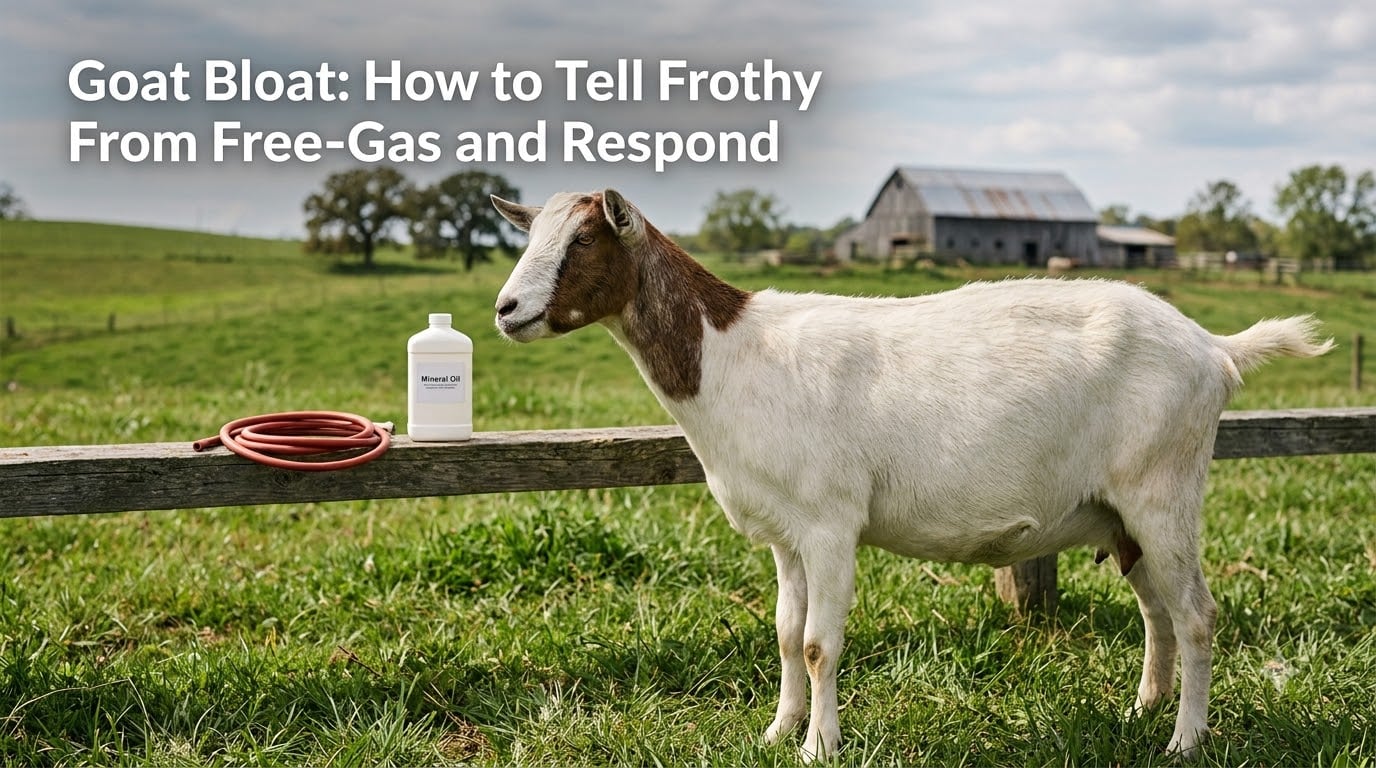
Goat bloat is one of those emergencies that doesn’t wait. A goat can look perfectly fine at morning chores and be in critical condition by lunch. I’ve talked with enough goat owners in forums and on farms to know that the panic is real, especially when you’re staring at a swollen belly and trying to figure out what to do next.
This guide covers goat bloat: how to tell frothy from free-gas and respond with clear, actionable steps. You’ll learn what bloat actually is, how to distinguish between the two main types, what treatments work for each, and when it’s time to call the vet.
Whether you’re a first-time goat owner or you’ve been raising a herd for years, the distinction between frothy and free-gas bloat changes everything about how you respond. Getting it wrong can waste precious time in an emergency.
Table of Contents
What Is Goat Bloat? The Quick Definition
Goat bloat, clinically known as ruminal tympany, happens when gas builds up in the rumen and the goat cannot release it through belching. The rumen expands like a balloon, pressing against the lungs and other internal organs. Left untreated, the goat can suffocate from internal pressure.
This is a true medical emergency. A goat with untreated bloat can die within hours, not days. If you notice a swollen left side paired with labored breathing, you need to act immediately.
There are two main types of bloat, frothy and free-gas, and they require different treatments. That distinction is the single most important thing to understand before reaching for any remedy.
How the Rumen Works (And Why It Matters for Bloat)
Goats are ruminants, meaning they have a four-compartment stomach. The rumen is the largest compartment and acts as a fermentation vat. Billions of microbes break down tough plant fibers, producing gas as a byproduct.
A healthy goat produces one to two liters of gas per hour through this fermentation process. Normally, the goat releases this gas through eructation, which is the scientific term for belching. A healthy goat belches gas roughly once per minute.
Bloat happens when something disrupts that gas-release cycle. Either the gas gets trapped in a stable foam that won’t break down (frothy bloat), or a physical blockage prevents the gas from escaping (free-gas bloat). Understanding this mechanism helps you choose the right treatment.
The Two Types: Frothy vs. Free-Gas Bloat
Frothy bloat and free-gas bloat have similar outward signs but completely different causes and treatments. Here’s a breakdown of how they compare.
Frothy bloat (also called primary or pasture bloat) occurs when the rumen contents form a thick, stable foam. The tiny gas bubbles get trapped in the foam and cannot combine into large enough bubbles to be belched out. This type is most common when goats graze on lush legume pastures like alfalfa or clover.
Free-gas bloat (also called secondary bloat) happens when free gas accumulates in the rumen but cannot escape due to a physical obstruction or dysfunction. The gas is loose and would normally be belched, but something is blocking the esophagus or the eructation reflex isn’t working properly.
Quick comparison:
Cause: Frothy = foam traps gas from legume fermentation; Free-gas = physical obstruction or nerve dysfunction blocks belching
Trigger: Frothy = lush pasture, grain overload; Free-gas = choke, sedation, esophageal obstruction, illness
Gas state: Frothy = trapped in stable foam; Free-gas = loose, free-floating gas
Primary treatment: Frothy = anti-foaming agents (poloxalene, mineral oil); Free-gas = stomach tube to release gas
Urgency: Both are emergencies, but frothy bloat can progress faster on rich pasture
Signs and Symptoms of Bloat in Goats
The most obvious sign of bloat is a distended abdomen, specifically on the left side of the goat. The left paralumbar fossa, the hollow area just behind the ribcage, will bulge outward. In severe cases, the swelling extends above the backbone.
Here are the key symptoms to watch for:
Left-side swelling: The belly bulges out on the left side, often described as looking like an overinflated balloon or a drum
Drum-like sound: When you thump the swollen area with your fingers, it produces a tight, drum-like (tympanic) sound rather than a dull thud
Labored breathing: As the rumen expands, it presses against the lungs. The goat may breathe rapidly with open mouth or stand with front legs splayed
Restlessness and discomfort: The goat may stomp, kick at its belly, get up and down repeatedly, or grind teeth from pain
Loss of appetite: The goat stops eating and may stop chewing cud
Reduced or absent rumen sounds: When you press your ear to the left flank, normal gurgling sounds are quiet or absent
Head extended, nostrils flared: A sign of respiratory distress from pressure on lungs
In advanced stages, the goat may collapse, show blue-tinged gums from oxygen deprivation, or go into shock. At this point, every minute counts.
Hay Belly vs. True Bloat: How to Tell the Difference
One of the most common sources of confusion for goat owners is the difference between a hay belly and true bloat. Many goats naturally develop a wide, round belly from eating a lot of roughage, and this is perfectly healthy.
A hay belly is soft, low-hanging, and bilateral. It sags on both sides of the goat and feels squishy when pressed. The goat eats normally, has normal energy, and produces normal rumen sounds. The belly may even swing side to side as the goat walks.
True bloat is firm, high, and typically one-sided. The swelling sits high on the left side, above the backbone in severe cases, and feels tight like a drum. The goat shows signs of distress, pain, and breathing difficulty.
Forum members on r/goats frequently point out that if a goat has had a swollen belly for several days and seems otherwise fine, it’s almost certainly not bloat. True bloat kills within hours. A chronic swollen belly is more likely related to parasites, poor nutrition, or just a healthy goat eating well.
How to Tell Frothy From Free-Gas Bloat?
Telling the difference between frothy and free-gas bloat comes down to understanding the cause and using the stomach tube test. While both types look similar from the outside, the context and diagnostic steps help you identify which one you’re dealing with.
Step 1: Consider the circumstances. If the goat just came off lush legume pasture (alfalfa, clover) or got into grain, frothy bloat is the more likely culprit. If the goat was recently sedated, is choking on something, or has been ill, suspect free-gas bloat.
Step 2: Pass a stomach tube. This is the definitive diagnostic test and also a first-line treatment for free-gas bloat. A flexible tube is passed through the mouth into the rumen. If free gas rushes out and the deflation is immediate, it’s free-gas bloat. If little or no gas comes out but the abdomen remains swollen, it’s frothy bloat, because the foam blocks the tube.
Step 3: Check what comes back. If you withdraw the tube and see frothy, foamy material with tiny bubbles, you’re dealing with frothy bloat. If the material is liquid without foam, free-gas bloat is more likely.
Without a stomach tube, you’ll need to rely on context clues. Sudden onset after pasture turnout strongly suggests frothy. Onset after sedation, anesthesia, or a choking episode points toward free-gas.
Emergency Action Steps: What to Do Right Now
If you suspect your goat has bloat, take these steps immediately. Every minute matters, and having a plan before panic sets in saves lives.
1. Assess the severity. Is the goat breathing? Is the left side drum-tight and bulging above the backbone? If breathing is labored or the gums look pale or blue, this is a critical emergency, call the vet now.
2. Remove feed and water. Take the goat off pasture immediately and remove all access to feed and water. More fermentation means more gas.
3. Try walking the goat. Walk the goat briskly for 5 to 10 minutes. Movement can sometimes help stimulate eructation and release gas in mild cases of free-gas bloat.
4. Massage the left flank. Stand the goat and firmly massage the left paralumbar fossa area in circular motions. This can help break up small gas pockets and encourage belching.
5. Determine bloat type. Use a stomach tube if available to determine whether it’s frothy or free-gas. This tells you which treatment to pursue.
6. Apply the correct treatment. Anti-foaming agents for frothy bloat, gas release via tube for free-gas bloat. See the next two sections for specifics.
7. Call a veterinarian if there’s no improvement within 30 minutes. If the goat doesn’t respond to initial treatment, professional help is essential. In extreme cases, a vet can perform trocarization (puncturing the rumen to release gas).
Forum owners strongly warn against attempting trocarization yourself. Hitting the wrong spot or using unsterilized equipment can cause fatal peritonitis or pneumonia.
Treating Frothy Bloat
Frothy bloat requires breaking down the foam so trapped gas can escape. The goal is to introduce an anti-foaming agent that collapses the foam bubbles.
Common treatments for frothy bloat include:
Poloxalene (BloatGuard): A commercial anti-foaming agent. Drench orally according to label directions. This is the most effective and widely recommended option.
Mineral oil or vegetable oil: 100 to 200 mL drenched orally. The oil breaks the surface tension of the foam. Olive oil works too, as several goat owners in forums have confirmed.
Dioctyl sodium sulfosuccinate (DSS): A surfactant that breaks down foam, often available through veterinarians.
Baking soda (sodium bicarbonate): 1 to 2 tablespoons dissolved in water and drenched. This helps buffer rumen pH and can assist with mild cases.
Walking and massaging: Combine with any of the above to help move the treatment through the rumen and encourage gas release.
Forum members have shared mixed experiences with dishwashing liquid as a last-resort foam breaker. Several warn that it can cause aspiration pneumonia if the goat inhales it, so use only with caution and never as a first choice.
After treatment, keep the goat off pasture for at least 24 hours and offer only dry hay. Monitor closely for recurrence, as frothy bloat can return if the goat goes straight back to the same feed.
Treating Free-Gas Bloat
Free-gas bloat requires releasing the trapped gas and addressing whatever caused the blockage. The primary tool is the stomach tube.
Passing a stomach tube: Use a flexible PVC or equine stomach tube (about 1/2 to 3/4 inch diameter). Coat it with mineral oil, pass it through a speculum or the side of the goat’s mouth, and gently advance it down the esophagus into the rumen. When it reaches the rumen, gas should rush out with audible and often strong-smelling release.
Always have the goat standing with its head slightly elevated when tubing. Never force the tube, as you can damage the esophagus or pass it into the lungs instead.
Address the underlying cause:
If the goat is choking on a feed blockage, the tube may help push it into the rumen
If the goat was sedated or anesthetized, the bloat may resolve as the goat recovers and normal eructation returns
If an illness is suppressing the eructation reflex, treat the underlying condition
After gas release, offer activated charcoal or rumen-supportive supplements if grain overload is involved
Free-gas bloat can recur if the underlying cause isn’t resolved. If the goat keeps bloating after the tube is removed, call your vet. Chronic or recurring free-gas bloat can indicate a more serious condition like an esophageal tumor, nerve damage, or rumen dysfunction.
How to Prevent Goat Bloat?
Prevention is far easier than treatment. Most bloat cases are preventable with good management practices.
For frothy bloat prevention:
Introduce lush pasture gradually. Turn goats out on legume pastures for only 30 minutes the first day, then increase by 30 minutes daily over a week
Feed dry hay before turnout. Goats with full rumens of dry roughage are less likely to gorge on wet legumes
Wait until dew has dried. Wet pasture increases bloat risk significantly, so avoid early morning turnout on legumes
Provide poloxalene blocks. Free-choice BloatGuard blocks before and during pasture season reduce frothy bloat risk
Limit grain access. Grain overload causes rapid fermentation and acidosis, both of which contribute to bloat
Keep baking soda available free-choice. Many goat owners offer it year-round so goats can self-regulate rumen pH
For free-gas bloat prevention:
Monitor goats recovering from sedation or anesthesia, as they may stop belching
Prevent choke by avoiding overly large feed pellets or whole grains that goats might swallow without chewing
Feed goats at consistent times to prevent gorging, which can lead to esophageal blockages
Address chronic coughing or illness promptly, as these can impair the eructation reflex
A well-managed feeding program is your best defense. Goats that eat balanced diets with adequate roughage rarely bloat. The goats at highest risk are those with sudden diet changes, especially shifts to rich legume pastures in spring and fall.
When to Call a Veterinarian
Call a vet immediately if the goat shows labored breathing, blue gums, collapse, or if initial treatment doesn’t work within 30 minutes. These are signs that the rumen is pressing hard on the lungs and the goat may not survive much longer.
You should also call a vet if bloat keeps recurring after treatment, if you suspect an esophageal obstruction you can’t clear, or if the goat is pregnant (bloat can trigger labor or complicate pregnancy). Kids and senior goats are especially vulnerable and warrant faster veterinary involvement.
I know from forum discussions that finding a goat-savvy vet in rural areas can be tough. That’s why building a relationship with a vet before you have an emergency matters. Keep their number posted in the barn, and have a backup like a local goat community Facebook group for real-time advice when professional help isn’t immediately available.
Frequently Asked Questions
What is the difference between free-gas and frothy bloat?
Frothy bloat occurs when rumen contents form a stable foam that traps gas bubbles, preventing them from being belched. It is caused by lush legume pasture or grain overload. Free-gas bloat happens when loose gas accumulates but cannot escape due to a physical obstruction like choke or a dysfunction in the eructation reflex. The key diagnostic difference: a stomach tube releases gas immediately in free-gas bloat but does little in frothy bloat because foam blocks the tube.
How to get rid of frothy bloat in goats?
Treat frothy bloat with an anti-foaming agent such as poloxalene (BloatGuard), mineral oil (100-200 mL drenched orally), vegetable oil, or dioctyl sodium sulfosuccinate (DSS). Walk the goat and massage the left flank to help break up foam and encourage gas release. Remove the goat from pasture immediately and offer only dry hay for 24 hours after treatment.
Will frothy bloat go away on its own?
No, frothy bloat rarely resolves without intervention. The stable foam keeps gas trapped, and the rumen will continue to expand. Without treatment with anti-foaming agents, the goat can die within hours from pressure on the lungs. Mild cases may improve if the goat is removed from the offending feed and walked, but active treatment is almost always necessary.
How to tell if a goat is bloated or just fat?
True bloat causes a firm, tight, drum-like swelling high on the left side of the abdomen, and the goat shows signs of pain and labored breathing. A hay belly or normal full belly is soft, low-hanging, present on both sides, and the goat eats and acts normally. If the belly has been swollen for days and the goat seems fine, it is likely not bloat, since true bloat kills within hours.
How long can a goat survive with bloat?
A goat with severe untreated bloat can die within a few hours, sometimes as quickly as 2 to 4 hours. The expanding rumen compresses the lungs, leading to suffocation. Time is critical. If you suspect bloat, begin treatment immediately and call a veterinarian if there is no improvement within 30 minutes.
How to get rid of goat bloat fast?
Pass a stomach tube to release gas (effective for free-gas bloat), drench with an anti-foaming agent like mineral oil or poloxalene (for frothy bloat), walk the goat briskly, and massage the left flank firmly. Remove all feed immediately. If there is no improvement within 30 minutes, call a veterinarian for emergency intervention.
What can I give my goat to help with bloat?
For frothy bloat: poloxalene, mineral oil (100-200 mL), vegetable oil, DSS, or baking soda (1-2 tablespoons in water). For free-gas bloat: a stomach tube to release trapped gas. Always remove the goat from feed and pasture, and provide only dry hay during recovery.
Where do you massage a goat with bloat?
Massage the left side of the goat’s abdomen, specifically the paralumbar fossa, the triangular hollow area just behind the last rib. Use firm circular motions with the heel of your hand or fingertips. Stand the goat upright and apply steady pressure to help move gas pockets and stimulate belching. Combine massage with walking for best results.
Conclusion
Goat bloat is a life-threatening emergency, but knowing how to tell frothy from free-gas bloat and respond appropriately gives you a real chance at saving your goat. The key takeaways: identify the type using a stomach tube and context clues, apply the correct treatment fast, and never hesitate to call a vet when things look dire.
Keep an emergency kit with mineral oil, poloxalene, a stomach tube, and baking soda in your barn. Practice your plan before you need it. When it comes to goat bloat: how to tell frothy from free-gas and respond, preparation and speed are what save lives.