
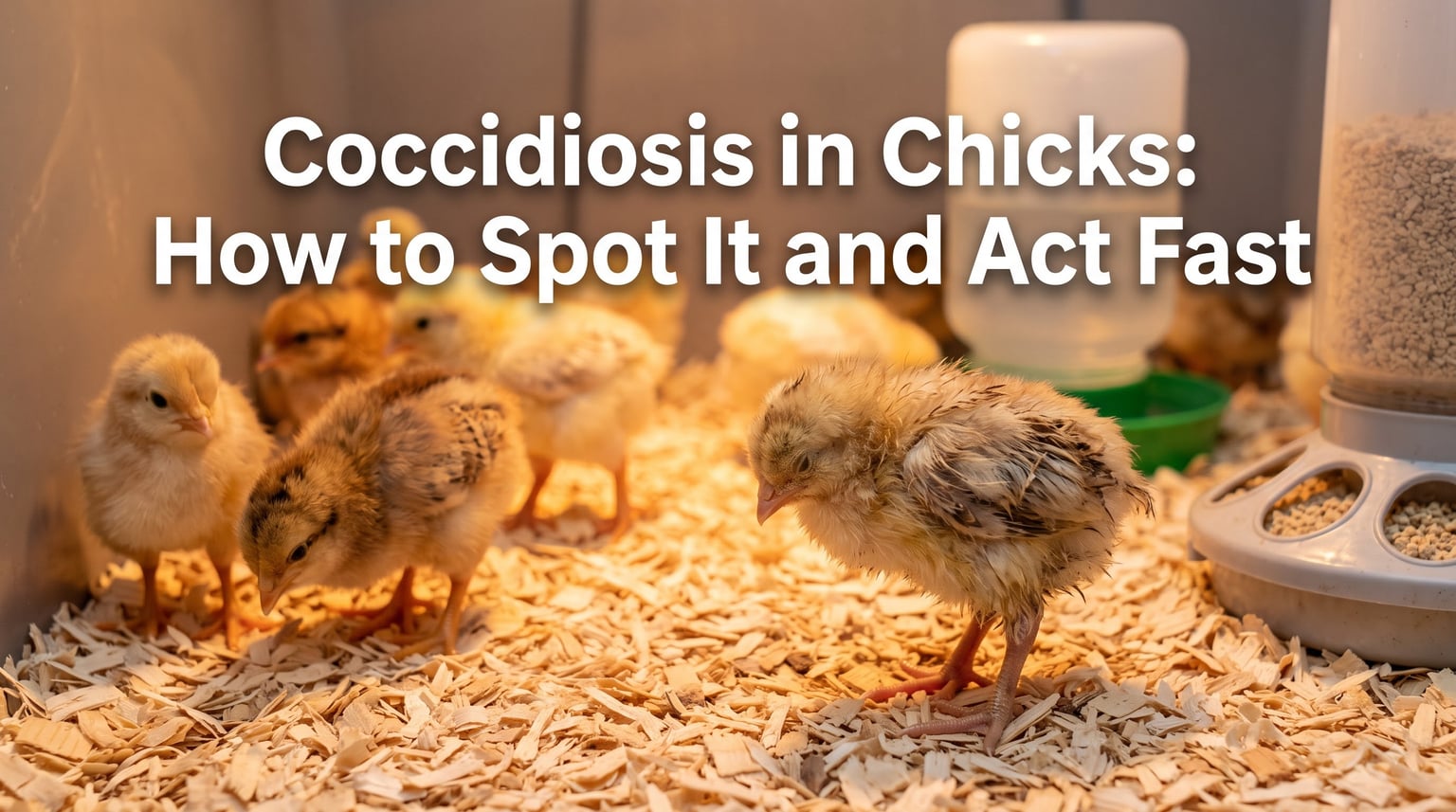
I lost two chicks to coccidiosis before I learned what to watch for. By the time I noticed the bloody droppings, it was already too late. That was years ago, and since then I have raised dozens of batches without losing another bird to this disease. The difference? Knowing how to spot the early warning signs and acting in the first 24 hours. This guide walks you through exactly how to do both.
Coccidiosis in chicks is a fast-moving intestinal disease that can kill a healthy-looking bird within days. Chicks between 3 and 6 weeks old are the most vulnerable, and outbreaks often hit brooders that look perfectly clean. In this article, you will learn what coccidiosis actually is, how to recognize the subtle symptoms before it is too late, and exactly which steps to take the moment you suspect an infection.
Table of Contents
What Is Coccidiosis in Chicks?
Coccidiosis in chicks is a parasitic disease caused by protozoa called Eimeria that invade and destroy the intestinal lining. Nine species of Eimeria affect chickens, with E. acervulina, E. maxima, and E. tenella being the most common in young chicks. Each species targets a different section of the intestine, but the damage pattern is the same: the parasite multiplies inside intestinal cells until they rupture, leaving the chick unable to absorb nutrients or water.
Here is the part most keepers miss: coccidiosis is not a bacterial or viral infection. Antibiotics will not cure it. Treatment requires anticoccidial medication (most commonly Amprolium) or careful management that allows the chick to build natural immunity while you keep the parasite load low enough to survive. Understanding this distinction is the first step to treating it correctly.
How Coccidiosis Spreads Through Your Flock?
The disease spreads through oocysts, microscopic eggs passed in chicken droppings. A single infected chick can shed millions of oocysts per day. Inside each oocyst, the parasite matures through a process called sporulation that takes 1 to 2 days in warm, moist conditions. Once sporulated, the oocyst becomes infectious.
Chicks pick up the parasite by pecking at contaminated litter, feed, or water. Stress events (chilling, overcrowding, or a sudden feed change) accelerate outbreaks because they suppress the chick’s immune system right when exposure is highest. This is why coccidiosis often appears 1 to 2 weeks after a stressful move, even in a clean brooder. The oocysts were already there, waiting for the chick’s defenses to drop.
The incubation period from ingestion to symptoms is typically 4 to 7 days. That timing is the single most important number to remember, because it tells you exactly when chicks are at peak risk after any stressful event.
Early Warning Signs: How to Spot Coccidiosis in Chicks?
By the time you see bloody droppings, the disease has usually been progressing for 2 to 3 days. The earlier signs are subtle, and you have to look for them. I check my brooder chicks three times a day during the danger window (3 to 6 weeks of age) and watch for these five warning signs.
1. Pale or Pasted Vent Area
Check vents every morning during your routine health check. A healthy chick has a clean, dry vent. Diarrhea causes pasting, where droppings stick to down feathers around the vent. The droppings may look orange, yellow, or foamy before any blood appears. If you see pasting on more than two chicks, treat immediately.
2. Ruffled Feathers and Hunched Posture
Sick chicks puff up their feathers and stand hunched with their eyes half-closed. They look sleepy even during their active morning hours. This is a classic protozoa infection response, not a temperature issue. Many keepers waste 24 hours adjusting the heat lamp when the real problem is coccidiosis.
3. Loss of Appetite and Slow Growth
An infected chick will pick at feed but not eat with the normal enthusiasm. Weigh chicks weekly if you are raising meat birds or showing birds. A chick that suddenly stops gaining weight or loses weight has a parasitic load high enough to interfere with nutrient absorption, even if no other symptoms are obvious.
4. Watery or Mucus-Laden Droppings
The earliest stool change is loose, watery droppings, sometimes with visible mucus. Blood may not appear until day 3 or 4 of symptoms. Do not wait for blood. Watery droppings in multiple chicks during the 3 to 6 week window is enough reason to start treatment.
5. Lethargy and Isolation from the Group
Healthy chicks are noisy and active. A chick that stands alone, sleeps through feeding time, or lets flockmates walk over it is in serious trouble. Chicks that isolate themselves have usually been sick for at least 48 hours, which means treatment is urgent.
Why Chicks Aged 3 to 6 Weeks Are Most at Risk?
Maternal antibodies protect chicks for the first 2 to 3 weeks of life. After that protection fades, the chick’s own immune system has to take over. The 3 to 6 week window is when the chick is learning to fight coccidia for the first time, and that learning process involves a low-level infection. The goal is not to prevent exposure entirely (which is impossible) but to keep the parasite load low enough that the chick can build immunity without becoming overwhelmed.
Chicks older than 6 weeks have usually either built immunity or died from earlier exposure. Adult chickens carry oocysts but rarely show symptoms unless something disrupts their immune system. This is why coccidiosis in chicks is so much more deadly than coccidiosis in adult birds.
Emergency Action Steps: What to Do Right Now
If you suspect coccidiosis, follow this checklist in order. Do not skip steps, and do not wait to see if the chick gets better on its own. Speed is the difference between a full recovery and a dead bird.
Step 1: Isolate Sick Birds Within 30 Minutes
Move visibly sick chicks to a separate brooder immediately. Coccidiosis spreads through shared droppings, and isolation stops the parasite cycle. Keep the isolation brooder warm (90 to 95°F), dry, and quiet. Stress kills sick chicks faster than the parasite does, so handle them gently.
Step 2: Start Amprolium (Corid) Treatment Today
Amprolium is the most accessible and effective treatment for backyard keepers. The standard dose is 9.5 cc per gallon of drinking water for 5 to 7 days. Corid liquid (9.6% solution) is widely available at farm supply stores without a prescription. There is no egg withdrawal period, and Amprolium does not harm healthy chicks when dosed correctly.
Step 3: Provide Electrolyte-Supplemented Water
Add poultry electrolytes or a homemade mix (1 tablespoon sugar + 1 teaspoon salt per quart of water) to the medicated water. Coccidiosis causes rapid dehydration, and chicks that drink stay alive longer. Replace the medicated water every 24 hours because Amprolium degrades in sunlight and heat.
Step 4: Deep-Clean the Brooder
Remove all bedding, scrub the brooder with a 10% bleach solution, and let it dry completely in sunlight before adding fresh bedding. UV light kills sporulated oocysts. Do not compost old litter near the coop. Bag it and remove it from the property.
Step 5: Monitor the Flock Every 4 Hours for 72 Hours
New symptoms can appear overnight. Check vents, droppings, and behavior every 4 hours for the first 3 days of treatment. If a chick stops drinking the medicated water within 24 hours, dose it directly with a 1 cc syringe (no needle) of undiluted Corid solution per pound of body weight, twice daily.
Treatment Options: Amprolium, Medicated Feed, and Natural Remedies
The three main treatment approaches each have strengths and limits. Here is how they compare.
Amprolium (Corid): The fastest and most reliable option for active outbreaks. Works by mimicking thiamine (vitamin B1), which starves the parasite without harming the chick. Treatment lasts 5 to 7 days, and most chicks show improvement within 48 hours. The downside is daily water changes and the risk of underdosing if chicks reduce water intake.
Medicated Starter Feed: Contains a low dose of anticoccidial medication (usually Amprolium or a coccidiostat) that prevents severe infection while chicks build immunity. Best used preventatively starting at hatch and continuing through 8 to 10 weeks. Not strong enough to treat an active outbreak on its own. Use it as a follow-up to Corid treatment.
Natural Remedies: Apple cider vinegar, oregano oil, probiotics, and garlic have all shown mild anticoccidial properties in research. None of these is strong enough to save a chick with active bloody diarrhea, but they support gut recovery after medical treatment. Save natural remedies for prevention and recovery, not crisis intervention.
How to Prevent Coccidiosis Before It Starts?
Prevention is cheaper and easier than treatment. The goal is to keep oocyst loads low while chicks build immunity naturally. Here are the four strategies that have worked in my brooder.
1. Keep Bedding Dry and Turned
Wet bedding is where sporulation happens. Stir bedding daily and replace wet spots immediately. Pine shavings absorb moisture better than straw or newspaper. A dry brooder has fewer oocysts and less ammonia, which means less stress on the chick’s immune system.
2. Avoid Overcrowding
Each chick needs at least 0.5 square feet of brooder space for the first 3 weeks, increasing to 1 square foot by week 6. Overcrowding concentrates oocysts in a small area and stresses chicks, which is the perfect setup for an outbreak.
3. Use Medicated Feed Until Week 10
Start chicks on medicated starter feed from day 1 and continue through week 10. This low-level medication keeps parasite loads manageable while the chick develops natural immunity. After week 10, transition to layer feed or grower feed without medication.
4. Quarantine New Birds for 2 Weeks
New chickens often carry coccidial strains your existing flock has never encountered. Quarantine new birds in a separate area for 14 days before introducing them. Watch for symptoms and treat prophylactically with Amprolium during the second week of quarantine.
When to Call a Vet for Sick Chicks
Home treatment works for most mild to moderate cases, but some situations need a veterinarian. Call your vet if more than 30% of your chicks show symptoms at once, if a chick stops responding to Amprolium after 48 hours, or if you see neurological symptoms (twisted neck, circling, paralysis) which can indicate a secondary infection or a different disease entirely.
A vet can run a fecal float test to confirm coccidiosis and identify the Eimeria species involved. Severe cases may require prescription medications like Toltrazuril or sulfa drugs that are not available over the counter. The cost of a vet visit is almost always less than the cost of losing an entire batch of chicks, so do not wait until the situation is unrecoverable to make the call.
Recovery Timeline: What to Expect After Treatment
Most chicks show visible improvement within 24 to 48 hours of starting Amprolium. Droppings return to normal by day 3 to 4. Appetite and energy levels recover by day 5 to 7. Complete recovery, including regrowth of damaged intestinal lining, takes 2 to 3 weeks. During this time, continue the medicated water for the full 5 to 7 day course and supplement with probiotics to repopulate gut bacteria.
Chicks that survive a coccidiosis outbreak often grow slightly slower than unaffected flockmates for the first month of recovery, then catch up by 12 weeks of age. They will have lifelong immunity to the specific Eimeria species they were exposed to, which is actually a small benefit from a difficult experience.
Frequently Asked Questions
How long does coccidia take to show symptoms in chicks?
Coccidia symptoms typically appear 4 to 7 days after a chick ingests sporulated oocysts. During this incubation period the parasite multiplies inside intestinal cells and ruptures them, which is when diarrhea and other signs become visible. Chicks exposed during a stressful event (chilling, crowding, transport) usually show symptoms faster because their immune defenses are already lowered.
How to tell if a chick has coccidiosis?
Check for these five signs in order: pasted or dirty vent area with watery or orange droppings, ruffled feathers with hunched posture, reduced appetite and slow weight gain, loose or mucus-laden droppings (before any blood appears), and lethargy with isolation from the flock. A chick that stands alone and lets others walk over it is usually 48 hours into the infection and needs treatment immediately. Do not wait for bloody droppings, because that sign appears late and means severe intestinal damage has already occurred.
Can chicks survive coccidiosis?
Yes, most chicks survive coccidiosis if they receive Amprolium treatment within 24 hours of showing symptoms. Survival rates with prompt treatment are typically 80 to 90 percent. Without treatment, mortality can reach 50 percent or higher in chicks under 6 weeks old. The chick also builds lifelong immunity to the specific Eimeria species that caused the infection, which makes surviving birds healthier long-term even though the recovery period is rough.
What naturally kills coccidiosis?
No natural remedy kills coccidiosis quickly enough to save a chick with active symptoms, so Amprolium remains the first-line treatment. That said, apple cider vinegar (1 tablespoon per gallon of water), oregano oil (added to feed), garlic powder, and probiotic supplements all have mild anticoccidial properties and support gut recovery after medical treatment. Use these for prevention and during the recovery period, not during an active outbreak.
Act Fast and Save Your Chicks
Coccidiosis in chicks moves fast, but it is also one of the most preventable and treatable chick diseases when you know what to look for. Watch for pasted vents, ruffled feathers, and watery droppings before blood ever appears. Keep Amprolium on hand before you need it, and start treatment the moment more than one chick shows symptoms. Keep brooders dry, avoid overcrowding, and use medicated feed through week 10.
Every chick keeper loses birds to coccidiosis at some point. The keepers who lose fewer birds are the ones who act on suspicion rather than confirmation. When in doubt, treat. A week of unnecessary Amprolium is always better than losing a chick to a disease you could have stopped in 24 hours.