
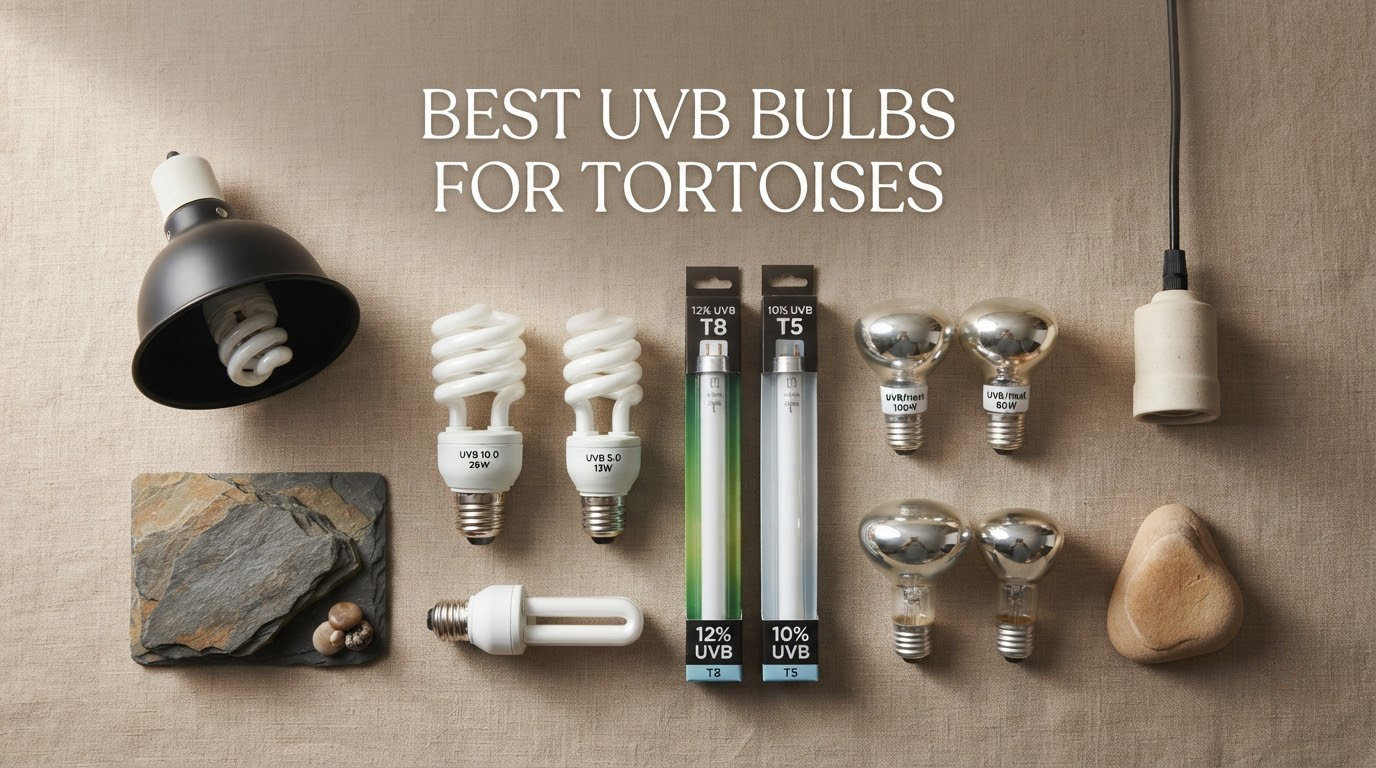
Most new tortoise keepers buy a UVB lamp the way they buy a light bulb, by wattage. That is the single biggest mistake in the hobby, because wattage tells you how much electricity a lamp pulls and almost nothing about how much ultraviolet B reaches the animal’s back. A 160 watt mercury vapour lamp and a 26 watt compact fluorescent can sit in the same enclosure and deliver completely different amounts of usable UV.
Our team compared eight of the highest-rated UVB bulbs for tortoises currently on the market, read through thousands of owner reviews, and cross-checked the setup numbers against long-running keeper communities. The result is a lineup segmented by lamp architecture and enclosure size, not by marketing language. You will find one linear tube, one mercury vapour all-in-one, one LED supplement and five compact fluorescents, with an honest note on where each one fits and where it falls short.
One caveat we want to state up front, because almost no competitor does: we did not lab-test ultraviolet output. The mounting heights, photoperiod and meter readings we give you come from manufacturer specification and from keeper consensus in tortoise forums, and we flag that distinction throughout. What we did do is read the review data closely enough to spot where a lamp’s real behaviour diverges from its packaging.
If you are still setting up from scratch, our guides to UVB lighting kits for reptiles and UVB lamps for Russian tortoises cover the fixture side of the equation. This article stays on the bulbs themselves.
Table of Contents
Top 3 UVB Bulb Picks for Tortoises in 2026
These three cover the setups we see most: a large enclosure needing even overhead UV, a small enclosure on a tight budget, and a single-fixture arrangement where heat and UV must come from one lamp.
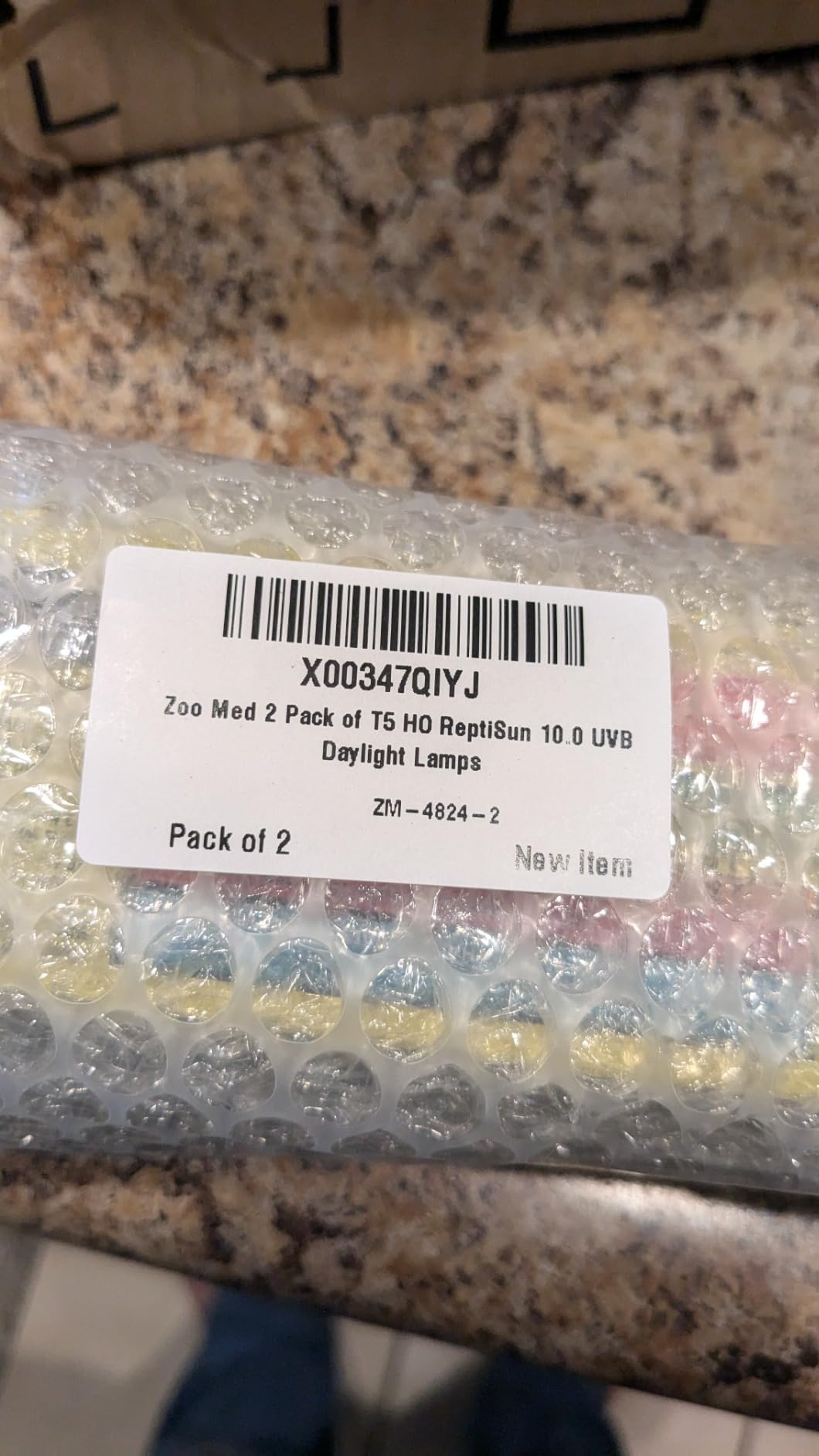
Zoo Med T5 HO ReptiSun 10.0
- 24W linear T5 HO tube
- 10% UVB output
- 2-pack with 1 year warranty

Mega-Ray Mercury Vapor 160W
- Self-ballasted 160W
- UVA plus UVB plus basking heat
- Ceramic socket required
Best UVB Bulbs for Tortoises in 2026
All eight lamps in the table below produce ultraviolet B. They differ in lamp architecture, how much heat they add, and how large an enclosure they can actually serve. The compact fluorescents and the linear tube are UVB-only. The mercury vapour lamp also throws significant infrared heat.
| Product | Specs | Action |
|---|---|---|
| Zoo Med T5 HO ReptiSun 10.0 UVB Lamp, 24W, 2-Pack |
|
Check Latest Price |
| Zoo Med ReptiSun 10.0 Mini Compact Fluorescent 13W |
|
Check Latest Price |
| Mega-Ray Mercury Vapor UVB Lamp 160W |
|
Check Latest Price |
 LUCKY HERP UVA UVB Reptile Light 10.0, 23W LUCKY HERP UVA UVB Reptile Light 10.0, 23W |
|
Check Latest Price |
 REPTI ZOO T5 HO UVB Combo Kit with Desert 10.0 Lamp 24W REPTI ZOO T5 HO UVB Combo Kit with Desert 10.0 Lamp 24W |
|
Check Latest Price |
 UVB Reptile Light Bulb 10.0, 23W Compact Fluorescent, 2-Pack UVB Reptile Light Bulb 10.0, 23W Compact Fluorescent, 2-Pack |
|
Check Latest Price |
 Premium High-Intensity LED UVB Light 10.0, 5W Premium High-Intensity LED UVB Light 10.0, 5W |
|
Check Latest Price |
 Hygger Zoo UVB Light for Reptiles 10.0, 26W Hygger Zoo UVB Light for Reptiles 10.0, 26W |
|
Check Latest Price |
1. Zoo Med T5 HO ReptiSun 10.0 UVB Lamp (24W, 2-Pack) – Best Linear Tube for Large Enclosures
Zoo Med 24 Watt T5 HO ReptiSun 10.0 UVB Lamp, 2pk
24W T5 HO linear tube
10% UVB output
2-pack, 1 year warranty
100-240V ballast
Pros
- Highest rated lamp in this roundup at 4.6 stars
- Spreads UVB across the whole fixture rather than a narrow beam
- Owners report measured UVI readings confirmed with a meter
- Two-pack means you always have a spare
- Accepts both 120V and 240V supply
Cons
- Tubes are fragile and shipping damage is a recurring complaint
- Occasional units arrive dead or short-lived
- Some newer batches emit a purple tint rather than bright white
- Still needs a separate basking heat source
This is the lamp we come back to when someone asks what we would actually fit above a 24-inch tortoise enclosure. The T5 HO format throws UV along the entire length of the tube, so a 4 foot tortoise walking from one end of the cage to the other stays in the light instead of moving in and out of it. That evenness is the whole argument for linear tubes, and it is why experienced keepers rank them above compact fluorescents for this species.
At 24 watts with a 10% UVB rating, this is a desert-spectrum tube rather than a forest one. That is the correct choice for Hermann’s, Russian, Greek and sulcata, and it is more UV than a tropical red-footed needs. A pair means you can cover a longer top or run a spare through the winter without another purchase.
The strongest thing in the review data is that owners are not simply reporting that it glows. Several keepers describe putting a UVI meter on their setup and confirming the output, which is a far higher bar than brightness alone. The rating distribution backs that up: 82% of reviews are five star, the highest share of any product we covered.
The honest weakness is handling. Fluorescent tubes crack in transit more often than screw-in lamps, and a percentage of buyers receive a tube that arrives dead or fails unusually early. The 1 year warranty and the two-pack format partly soften that, since a spare is always on hand.
What to check before you mount it
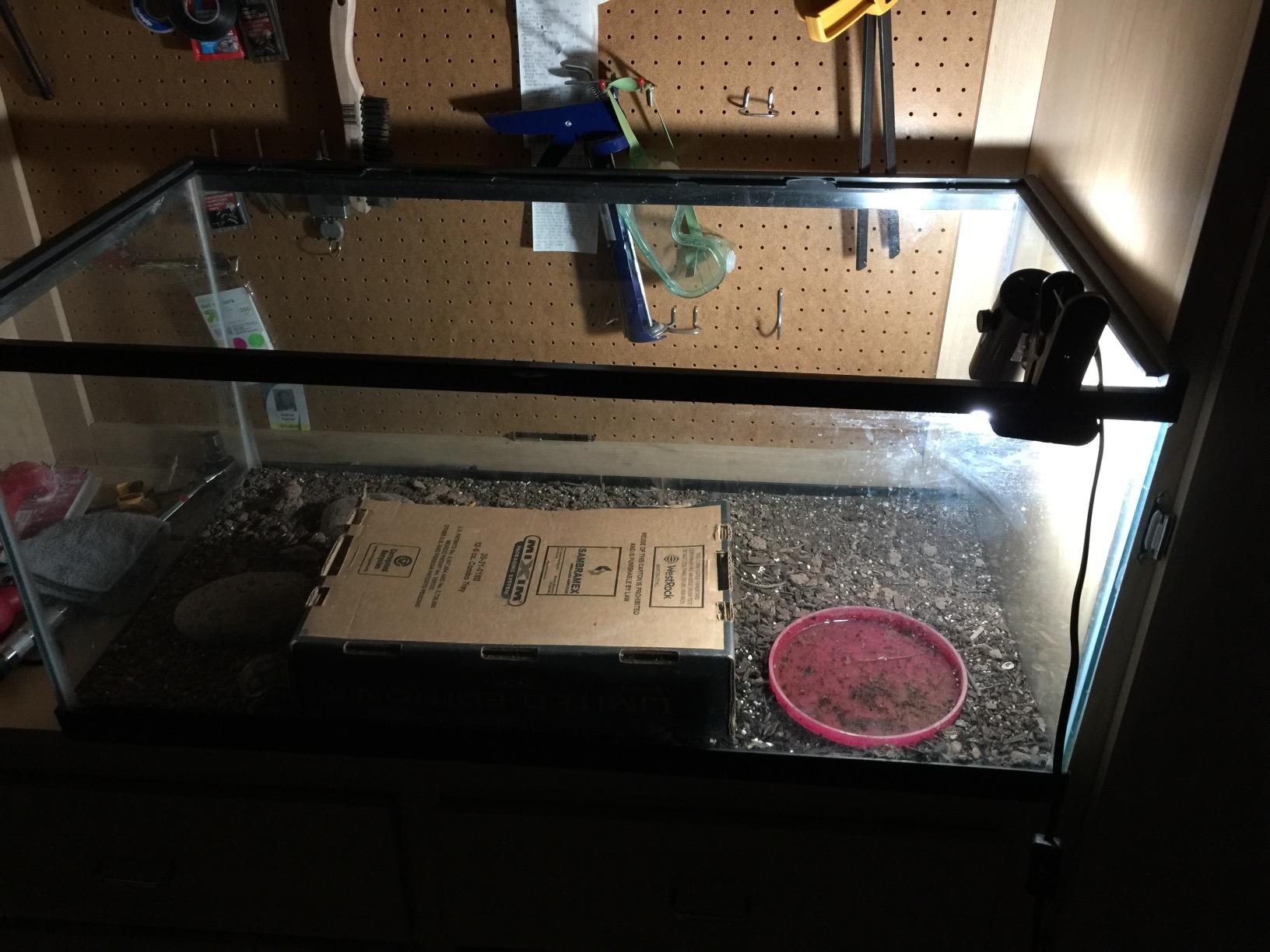
Confirm your fixture length matches the tube length. A 24 inch tube in a 36 inch housing leaves two thirds of the enclosure dark, and a lot of disappointed owners bought a tube that was simply the wrong size for their hood. The lamp is rated from 100 to 240 volts, so it works on either supply, but you still need a proper T5 HO electronic ballast rather than a standard lamp holder.
Set it up at roughly 18 to 20 inches above the substrate, which is the mounting height experienced Arcadia T5 users report working well, and keep in mind that this lamp does not heat. Pair it with a separate basking bulb on a thermostat and you have a setup that handles both jobs cleanly.
Where it falls short
It cannot do everything. There is no meaningful heat output, so a keeper wanting a single fixture for a small enclosure has to add a second lamp anyway. And the purple tint reported on some newer production runs, while not a functional fault, does bother keepers who care about how the enclosure looks.
It is also UVB-only, so a tropical red-footed in a dim forest-style enclosure will be getting considerably more UV than it needs. That is not dangerous in the way excess heat is, but it is one more reason we would not call this the right lamp for every species.
2. Zoo Med ReptiSun 10.0 Mini Compact Fluorescent Lamp (13W) – Best Value Pick
Zoo Med ReptiSun 10.0 Mini Compact Fluorescent Lamp 13 Watts
13W compact fluorescent
10% UVB and 30% UVA
Quartz UV glass
3.17 oz, 6 x 2 x 2 inch
Pros
- Most reviewed lamp in this roundup with 3771 ratings
- Quartz glass built for maximum UVB penetration through screen lids
- Can be mounted vertically or horizontally
- Compact mini format fits small enclosures
- Long-standing best seller ranking near the top of reptile habitat lighting
Cons
- UVB output noticeably weaker than premium European compact fluorescents
- Output drops to roughly half after about six months
- 13W output can be marginal in larger enclosures
- Occasional reports of a dead unit arriving in the box
- No basking heat on its own
With 3771 ratings behind it, this is the most thoroughly reviewed bulb in the group, and that volume of long-term owner feedback is worth something on its own. When a lamp has been running in thousands of homes for over a decade, the failure patterns are well documented rather than anecdotal. Tortoise owners consistently report it working as intended for basking and UV duty.
The detail that separates it from cheaper spirals is the special UVB-transmitting quartz glass. Zoo Med designed the envelope specifically so UV passes through it instead of being absorbed, which is why it performs better under a screened lid than a generic coil of similar wattage. It weighs just 3.17 ounces and measures 6 by 2 by 2 inches, so it disappears into small fixtures.
Two caveats come up repeatedly and we would rather you hear them here. Experienced keepers report the UVB output falling to roughly half after about six months of continuous use, which is earlier than the 12 month cycle most people assume. And the 13 watt figure is genuinely modest, so this is a small-enclosure lamp rather than a whole-cage solution.
One more practical point: it produces no basking heat whatsoever. Every setup using it needs a separate heat source, and if you are starting from nothing that is two fixtures, two bulbs and two thermostats before you get a working enclosure.
Where this lamp actually earns its place
A hatchling or juvenile in a tabletop terrarium under 24 inches, or a quarantine box where you need UV without adding heat to the room. Because it can be oriented vertically or horizontally, you can run it in a narrow hood or stand it upright in a deep dome. It is also the easiest bulb here to find at a large chain pet store, which matters when a manufacturer warranty is your main recourse.
Its ranking in reptile and amphibian habitat lighting is a fair proxy for how established it is. When a product has been selling at volume for that long, the reviews stop being a marketing exercise and start being a reliability record.
Where it falls short
The six-month output decay is the real limitation, and it means budgeting for two bulbs a year rather than one. At 13 watts the beam also does not fill a 4 foot enclosure, so keepers who try to stretch it across a large cage end up with a tortoise that spends most of its day outside the UV zone.
It is also a compact fluorescent, which means it inherits the coil-beam concerns we described earlier. For a small animal in a small space the risk is lower, but it is not the lamp we would pick for an adult tortoise living under a screen top.
3. Mega-Ray Mercury Vapor UVB Lamp (160W) – Best for Heat and UV in One Fixture
Mega-Ray Mercury Vapor UV Light Bulb/Lamp for Reptile and Amphibian Use Tortoise Lizard, UVA UVB, High-Intensity Heat Bulb of UV and Basking – 160 Watts (120V)
Self-ballasted 160W mercury vapour
UVA plus UVB plus visible plus infrared
Ceramic socket required
120V, PAR38 reflector shape
Pros
- Combines UV and serious basking heat in a single lamp
- Long-term owners report consistent health across many animals
- Enclosure heats quickly while the bulb itself stays manageable
- Self-ballasted so no separate ballast hardware is needed
- Shuts off if bumped and restarts once cooled
Cons
- Requires a ceramic socket or standard fixtures can overheat
- Fragile filament needs 15 minutes of cooling before handling
- Several reports of bulbs failing between 10 days and 2 months
- Some desert keepers find UVB inadequate as a sole source
- Expensive to replace and the lamp must be mounted at a distance
This is the pick when you want one lamp to do the work of two. A mercury vapour bulb produces UVA, UVB, visible light and infrared heat at once, so it replaces your basking lamp entirely and removes a whole thermostat from the equation. Keepers running these long-term report better appetite, better growth and more natural sun-seeking behaviour than they saw with tube-only setups.
At 160 watts it is a serious heat source. That is the point for large enclosures, but it also means the mounting window is narrow. The recurring community guidance for a working MVB setup is not closer than about 10 inches to the animal and a maximum useful distance of roughly 20 to 24 inches, with a 100 watt lamp sitting comfortably in a 2 by 2 up to 2 by 3 foot enclosure.
Reliability is the contested part. Mega-Ray splits keepers cleanly: several describe it as the best available metal halide, while others on tortoiseforum.org call the bulbs very unreliable and say warranty claims go unanswered. The honest read is that when a unit works it works very well for years, and a minority of units fail early. Long-term owners running a dozen or more of these report consistent results, which suggests the failure rate is real but not universal.
Do not cheap out on the socket. The lamp requires a ceramic rated socket, and fitting it to a standard plastic or brass fixture is how you get a failed socket or a cracked housing. The bulb weighs 8 ounces, is a PAR38 reflector shape in clear glass and needs a 120 volt supply.
How to get the best result from it
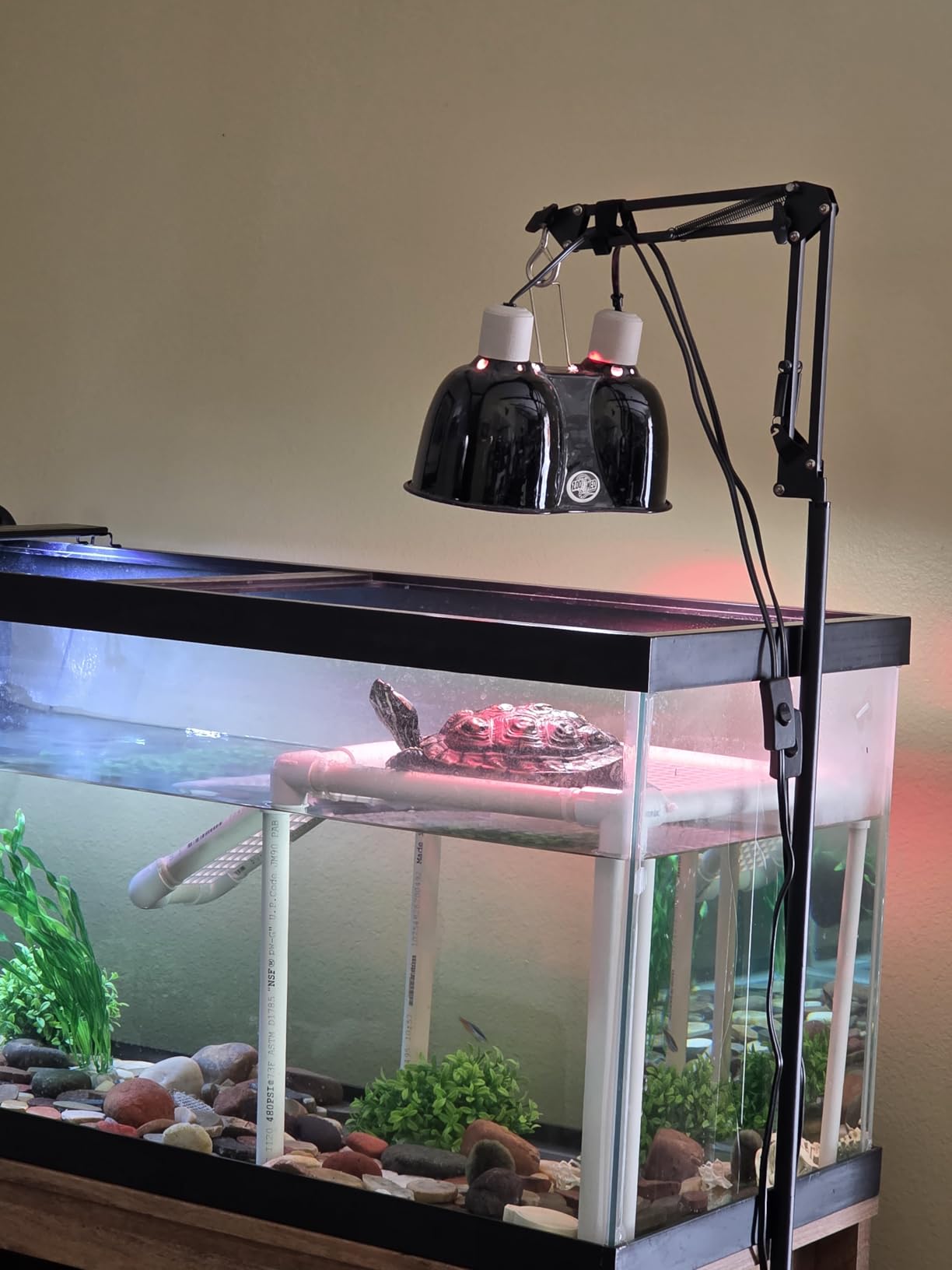
Mount it inside a deep reflector dome rather than bare, run it on a thermostat rather than a simple timer, and give the filament 15 minutes to cool before you touch it. Keepers who report the most success treat it as fixed infrastructure that stays mounted for the life of the animal instead of something they swap around.
Plan the enclosure footprint around it. 160 watts is more heat than a small tabletop terrarium can shed, and a thermostat that is cycling constantly will shorten bulb life and stress the animal.
Where it falls short
It supplies no heat to the enclosure beyond the basking spot itself, so a species that needs a warm overall ambient temperature still needs a separate heat source. Several keepers also flag that the concentrated hotspot can raise basking temperatures higher than a medium species tolerates, which makes the deep reflector dome close to mandatory rather than optional.
The early-failure reports are the other concern. If you are buying one, buy it from a seller with a workable return process, and keep a spare on hand rather than discovering the problem at the end of a cold week.
4. LUCKY HERP UVA UVB Reptile Light 10.0 (23W) – Best Budget Compact Fluorescent
LUCKY HERP UVA UVB Reptile Light 10.0, Desert UVB 150 Compact Fluorescent Lamp, UVB Light for Reptiles 23W, UVA UVB Reptile Light Bulb, UVB Bulb for Reptiles Bearded Dragons Lizards Tortoises Snakes
23W compact fluorescent
10% UVB and 30% UVA
1265 lumens, CRI 80
E26 base, 120V, 6000K
Pros
- 1265 lumens at 23W is bright for a compact fluorescent
- CRI 80 makes reptile colours look vivid
- Standard E26 base fits most dome and clamp fixtures
- Manufacturer claims up to one year of UVB lifespan
- Customer service resolved issues with refunds
Cons
- A number of bulbs reported failing within weeks of installation
- 120V only so not usable on 220-240V supplies
- Some arrive with only part of the spiral lit
- Occasional flicker on startup
- Lifespan claims contrast with many early failures
This is the lamp people buy when they want more UVB than a 13 watt mini can give without moving up to a tube. At 23 watts it produces 1265 lumens, which is genuinely bright for a compact fluorescent, and the 6000 Kelvin output with a CRI of 80 makes the animal look vivid rather than washed out. It runs at 120 volts on a standard E26 base, so it drops into most dome and clamp fixtures without adaptation.
The claimed UVB lifespan of up to one year is attractive on paper. It is worth saying clearly that the review data does not fully support that figure for every unit. A meaningful minority of buyers report early burnout, partial illumination where only part of the spiral lights, and some flicker on startup.
That said, with 2925 ratings and a 4.4 average, this is a well-established product with a 4% share of one-star reviews, which is a reasonable failure rate for a consumable bulb. The service side is decent too, with multiple reports of refunds being processed without argument.
It also throws some warmth, which the Zoo Med mini does not, though nowhere near enough to count as a basking source. Treat the heat as a pleasant side effect rather than a feature you are designing around.
Is it worth the saving over a branded tube?
If your enclosure is 24 inches and you are pairing this with a separate basking heat lamp on a thermostat, the answer is generally yes. You get roughly double the wattage of the 13 watt mini, in a fixture format everyone stocks. Our wider guides to UVB lighting kits for turtles and UVB lamps for aquatic turtles cover the setups where wattage matters less.
Check your supply voltage before buying. This lamp is 120V only, and keepers outside North America will need a different product entirely.
Where it falls short
The early failure rate is the main risk. If you buy one and it dies in three weeks, your UVB coverage is gone until you replace it, and there is no meter reading in the world that tells you in advance. For a tortoise whose shell growth depends on consistent UV, we prefer the predictability of a tube even when a coil is more compact.
It is also, unavoidably, a coil bulb. The narrow intense beam that worries keepers on tortoiseforum.org is a property of the form factor, not of this manufacturer.
5. REPTI ZOO T5 HO UVB Lighting Combo Kit with Desert 10.0 Lamp (24W) – Best for First-Time Keepers
REPTI ZOO T5 HO UVB Lighting Combo Kit, Terrarium Hood Comes with Desert 10.0 UVB T5 Lamp (24W)
T5 HO fixture, hood and 24W Desert 10.0 lamp
Polished curved reflector
500 lm brightness
Works on 120V and 240V
Pros
- Everything needed in one box
- no separate fixture hunt
- Polished curved reflector increases UVB output and brightness
- Low-profile housing suits 24-inch enclosures
- Removable power cable with on and off switch
- End caps protect the tube during handling
Cons
- Rated 4.2 stars with the highest one-star share here at 13%
- UVB output is lower per watt than dedicated T5 HO tubes
- 500 lumens is dim for planted enclosures
- Best results require a matching enclosure size
- Fixture and lamp are a fixed bundle so lamp swaps are limited
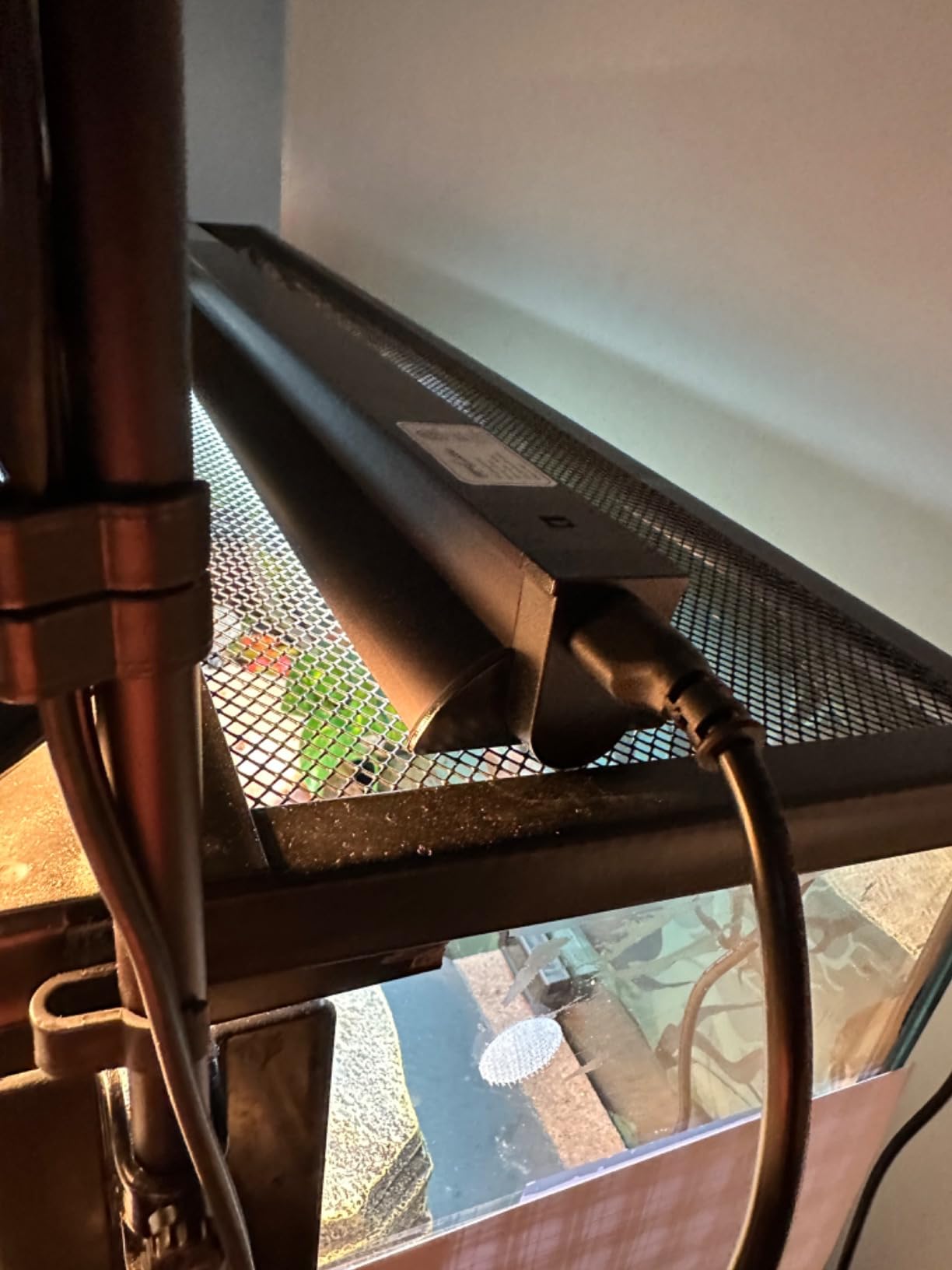
The reason this kit exists is simple: the single most common setup failure is buying a tube and then realising you have no fixture for it. This package includes the T5 HO ballast housing, the low-profile hood with a polished curved reflector, and a 24 watt Desert 10.0 UVB lamp. For a keeper building their first enclosure, that removes three decisions at once.
The curved reflector is doing real work. Polished reflectors recover light that would otherwise scatter upward out of the enclosure, which raises both brightness and the UVB reaching the substrate. The electronic ballast is specified for rapid start, and the removable power cable with a switch is a small thing that makes seasonal teardown painless.
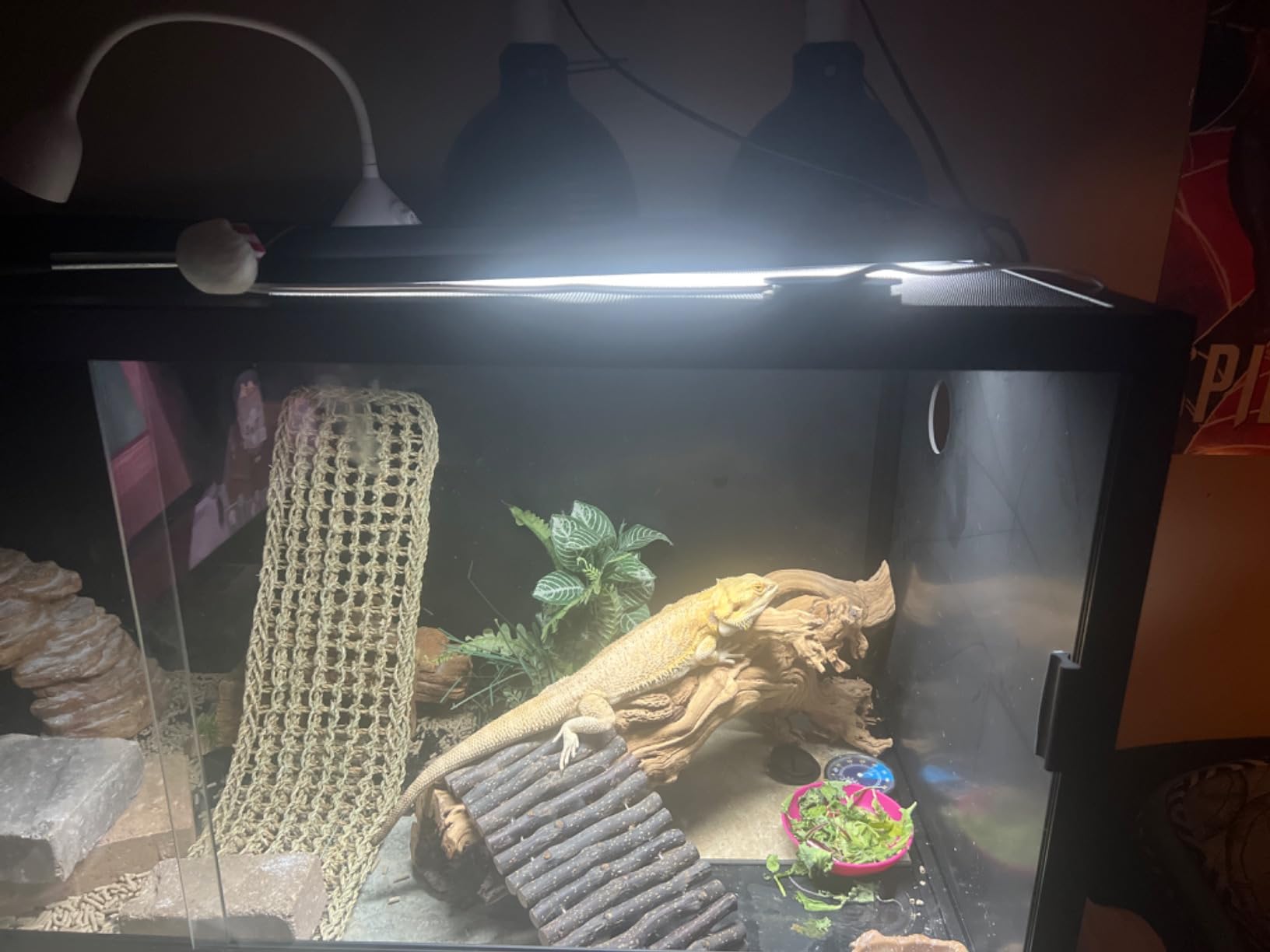
It also runs on both 120 and 240 volts, which is unusually accommodating for a bundled kit. The housing measures 22.64 by 22.83 by 1.65 inches, so it is sized specifically for a 24 inch top, and the 24 watt lamp is the right match for that footprint. Longer enclosures take the 39 watt and 48 inch versions of the same design.
The 13% share of one-star reviews is the highest in this roundup, and the complaints cluster around output. Owners describe the 500 lumen maximum as dim, and note the UVB per watt lags a dedicated premium T5 HO tube. You are paying for the convenience, and the convenience is real.
When to buy this instead of a bare tube
Buy it if you have no fixture at all, if your enclosure top is 24 inches, or if you want a working setup tonight without researching ballasts. It is also a reasonable second zone in a larger enclosure, since the low-profile housing can be positioned rather than fixed overhead.
Do not buy it expecting the output of a premium tube. If you already own a T5 HO fixture, this kit is redundant, and swapping only the lamp within a better fixture is the smarter move.
Where it falls short
The bundle is the weakness as much as the strength. The fixture and lamp are sold together, so you cannot upgrade the lamp alone, and a keeper who later wants a different UVB strength is stuck with whatever shipped in the box. Dim output and mediocre UVB per watt are the recurring complaints, and neither improves as the animal grows.
It also does not heat. Even with a hood on top, this is a UV kit rather than a complete basking solution.
6. UVB Reptile Light Bulb 10.0 (23W Compact Fluorescent, 2-Pack) – Best Two-Pack
Jugbuy UVB Reptile Light Bulb 10.0, 23W UV Spiral Compact Florescent Terrarium Lamp Ideal for Desert Reptiles Bearded Dragons Lizard Tortoise Iguanas Chameleons Snake – 2 Pack
Two 23W compact fluorescents
10% UVB and 30% UVA, no UVC
Quartz glass, E26 base
110-130V only
Pros
- Two-pack gives you a spare bulb on hand
- Interchangeable with standard compact fluorescent dome lamps
- One owner confirmed an accurate 10.0 reading on a UV meter
- Produces noticeable warmth as well as light
- Bright for a budget compact fluorescent
Cons
- Several bulbs reported burning out in about two months
- Warranty is only one month of quality assurance
- Lifespan varies wildly from under 90 days to over three years
- No published measured UVB output data from the manufacturer
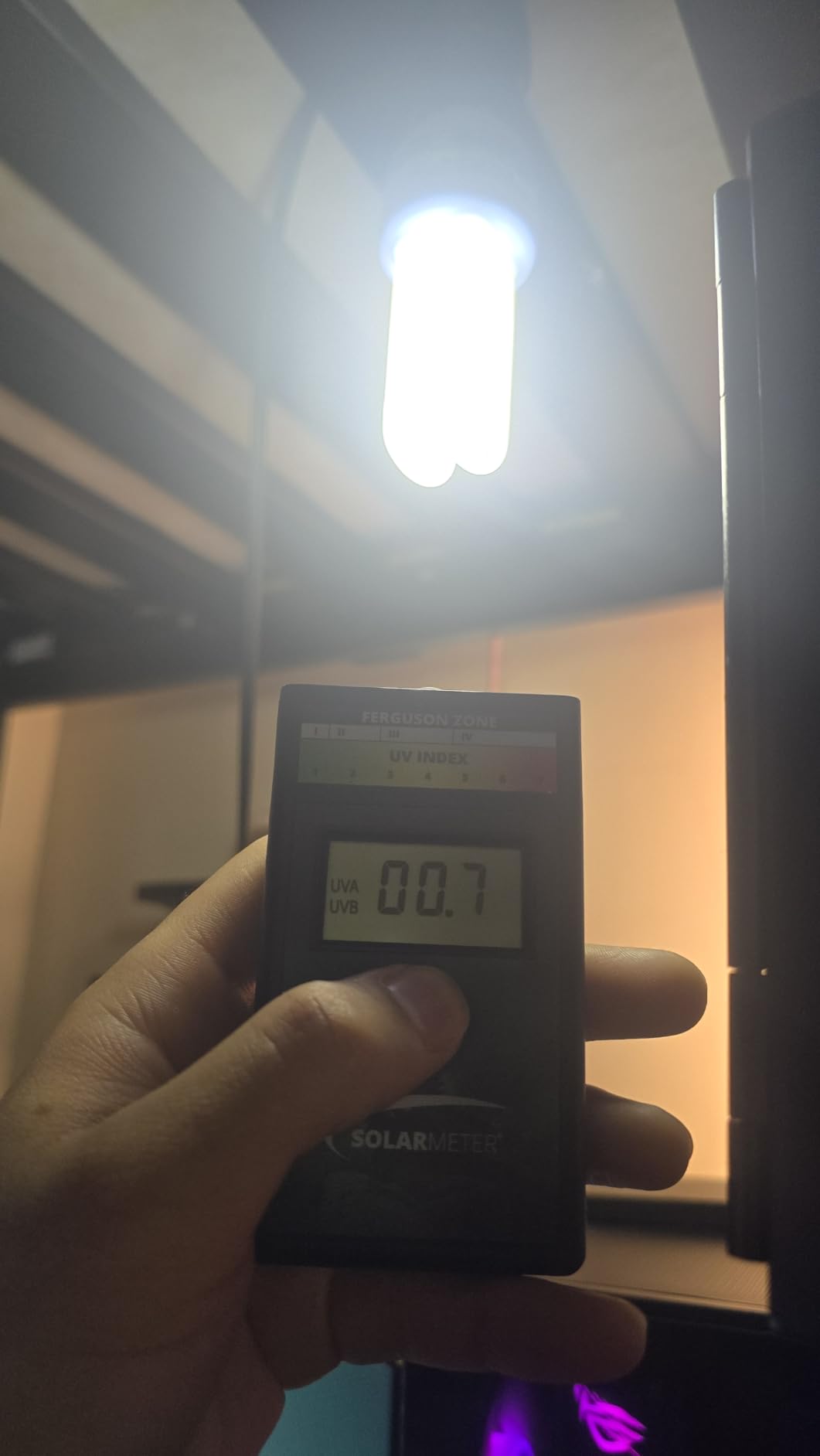
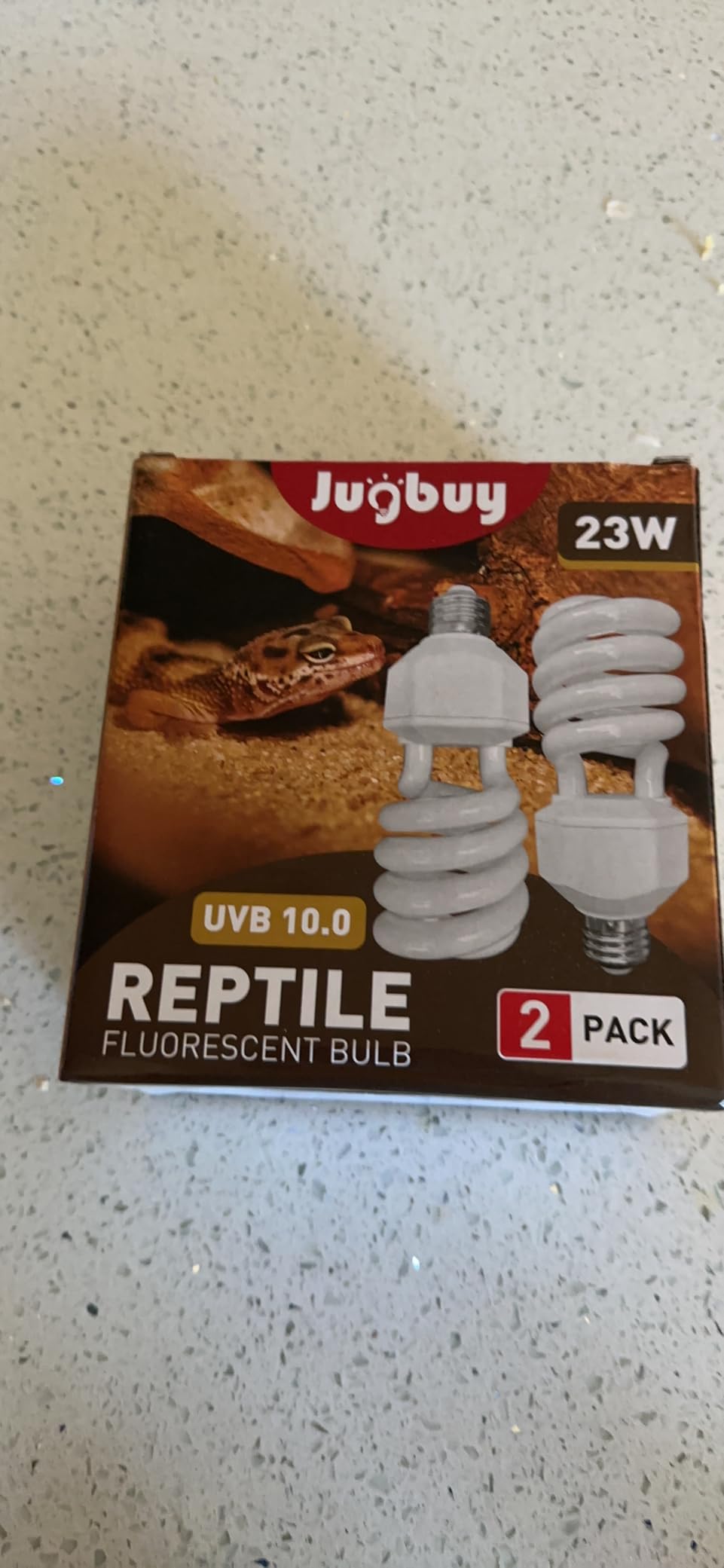
The single most useful thing in the review data for this product is a keeper’s report of putting a solar and UV meter on the bulb and confirming an accurate 10.0 reading. Most budget compact fluorescents make claims that nobody verifies. Having one owner actually check is worth more than a page of marketing copy, and it lines up with the quartz glass and electronic ballast specs.
It runs on 110 to 130 volts at 23 watts per bulb on a standard E26 base, and the two-pack format means you have a replacement on hand before the first one fades. Owners confirm it drops into standard dome fixtures without modification.
Where it falls apart is consistency. The reported lifespan across owners ranges from under 90 days to more than three years for the same product, which is an enormous spread and tells you the manufacturing quality is inconsistent batch to batch. Several buyers report burnout around the two month mark, which is well inside the period where a tortoise depends on that UV for shell growth.
The warranty is one month of quality assurance, and the brand does not publish measured UVB output data. Against a tortoise’s calcium metabolism, a short warranty on the thing producing the UV is a thin margin.
How to use it without getting caught out
Treat the two-pack as a twelve month supply, not a one-off purchase, and set a calendar reminder rather than waiting for visible dimming. If you want to know whether the second bulb is delivering what you need, a meter reading at the tortoise’s back is the only reliable check, since these bulbs can be lit and still short of UV.
It produces some warmth, which helps a small enclosure without replacing a basking lamp. In a 24 inch cage under 18 inches, it is a workable UV source at a low cost.
Where it falls short
The unpredictability is the deal-breaker for many keepers. A lamp that might last three years is a good outcome; a lamp that dies at eight weeks means your enclosure has no UV for most of a season while you source a replacement.
It is also a coil, so the beam-concentration concern applies, and the lack of published output data means you are relying on one owner’s meter reading rather than a verified spec.
7. Premium High-Intensity LED UVB Light 10.0 (5W) – Best Low-Wattage UV Option
GeeKoit Premium High-Intensity UVB Reptile Light for Optimal Calcium Metabolism,5-Watt 10.0 Desert UVB Light Ideal for Desert-Dwelling Reptiles Bearded Dragons Tortoises
5 watt LED Desert 10.0 UVB
Reflector form factor, E26 socket
2 inch diameter, 110V
Pairs with a separate heat lamp
Pros
- Only 5 watts so it adds almost no heat to the enclosure
- LED output decays more slowly than a compact fluorescent
- Compact 2 inch body fits small reflector and dome fixtures
- Standard E26 base drops into most existing setups
- Longer service life than an equivalent CFL
Cons
- Not suitable for leopard geckos and other low-UV species
- Very low wattage so it can never be a heat source
- No independent UVB output measurements published
- Small physical size limits the area the beam covers
- Must be paired with a basking heat lamp
This is the odd one out in the lineup, and that is exactly why it earns a place. It is an LED rather than a fluorescent, and the important difference is decay rate: LED UV output falls off far more slowly than the phosphor coating on a CFL, which is where the six month cliff we saw on the compact fluorescents comes from. For a keeper tired of replacing bulbs twice a year, that is a meaningful upgrade in consistency.
At 5 watts it adds almost nothing to the enclosure temperature. That is a feature in a warm room, or in a setup where your basking heat is already aggressive. It measures 2 inches in diameter by 2.51 inches tall, weighs 2.08 ounces and uses a standard E26 socket, so it is a drop-in supplement to a setup you already have.
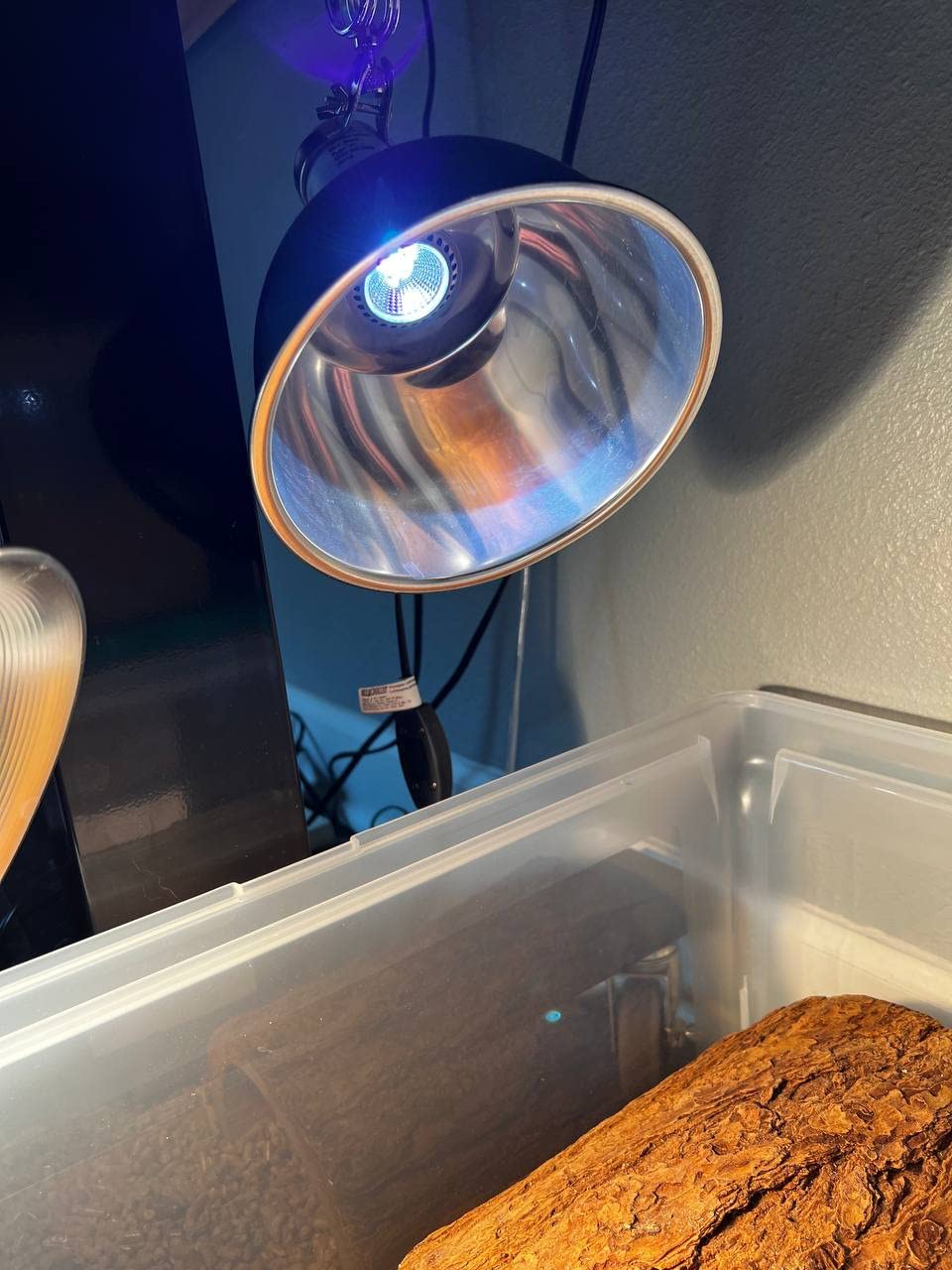
What it is not is a replacement for a main lamp. The 10.0 desert rating is high UV for its size, but the beam is small, and the manufacturer publishes no independent output measurements. Think of it as a targeted UV addition over a basking spot rather than whole-cage coverage.
One practical note: the listing explicitly says it is not for leopard geckos and other low-UV forest species. For tortoises, the desert output is appropriate, but it does mean this is not a universal bulb.
Where an LED UVB bulb genuinely helps
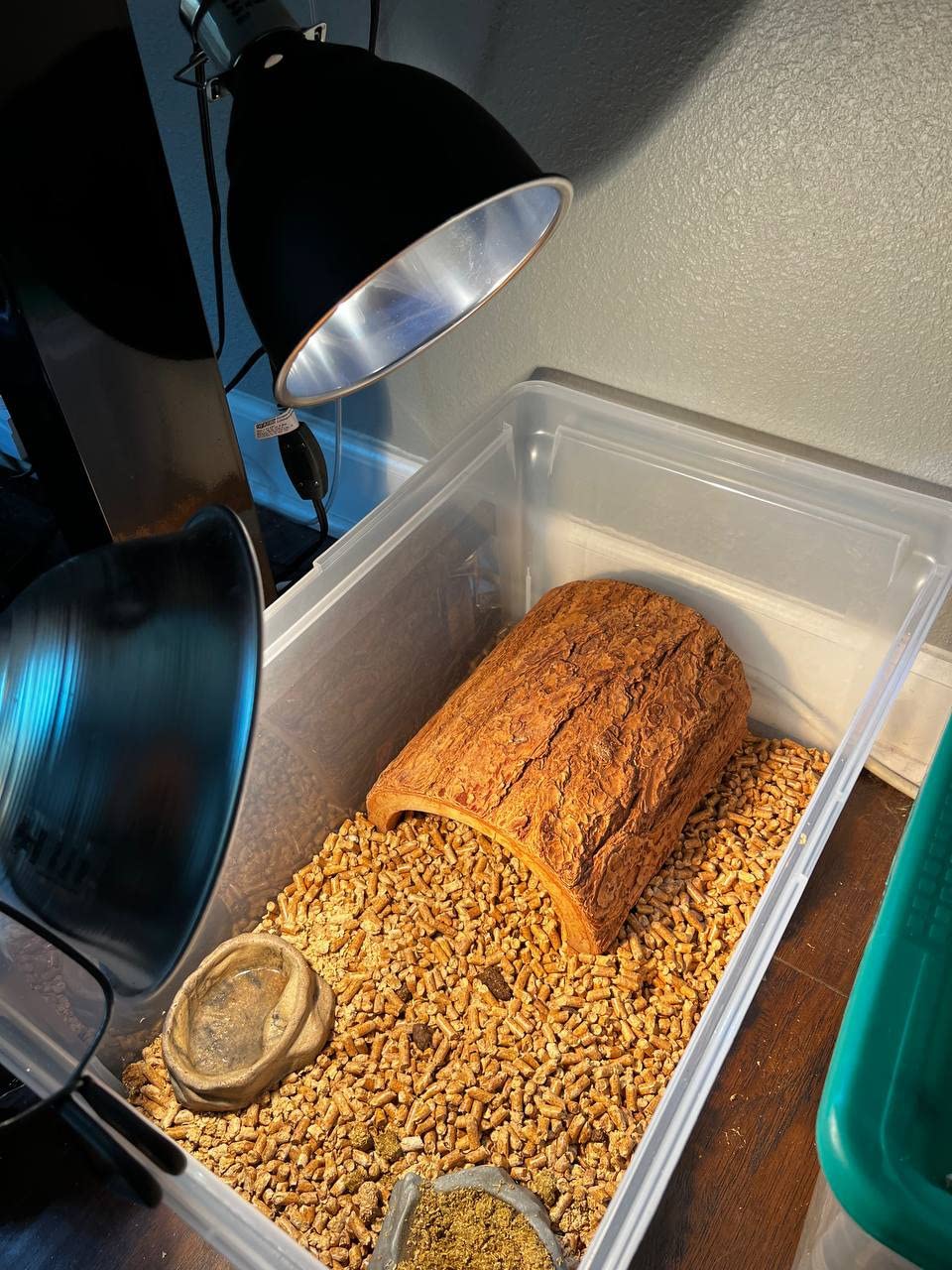
Consider it when your basking spot is working well and the only gap is UV coverage, or when your room runs warm and you cannot tolerate a coil adding heat. It also suits a large-ish enclosure where you want a second, low-intensity UV zone away from the basking area without adding another thermostat.
The slow decay makes the true replacement interval far less critical, which removes a whole category of anxiety for keepers who currently set reminders every six months.
Where it falls short
Small beam, low wattage, no heat. On its own it is an incomplete setup and we would not recommend it as a first UVB source for a hatchling growing fast. It also carries one of the smallest review bases in this roundup at 346 ratings, so the long-term failure picture is less well documented than for the established lamps above.
8. Hygger Zoo UVB Light for Reptiles 10.0 (26W) – Best Entry-Level Compact Fluorescent
UVB Bulb for Reptiles, 10.0 26W UVB Light for Reptiles, Hygger zoo UVA UVB Reptile Light Bulb Reptile UVB Bulb UVB Light for Bearded Dragon Turtle Lizard Reptile Lamp Terrarium Lamp for Desert Reptile
26 watt compact fluorescent
10% UVB and 30% UVA
Premium quartz glass housing
Available in 5.3 and 6.1 inch lengths
Pros
- Among the least expensive options we reviewed
- Several tube lengths offered to fit different fixtures
- Even brightness from evenly distributed fluorescent powder
- Reported to work for amphibian keepers as well as desert species
Cons
- Rated 4.2 stars with an 11% share of one-star reviews
- Multiple reports of failure within 90 days or shattering
- Quartz tube is fragile during handling
- No independently measured or published UVB output
- 26 watt output is limited for larger enclosures
The reason this one is on the list is the length options. It is available in 5.3 and 6.1 inch variants at both 5.0 and 10.0 strength, which solves the sizing problem that trips people up with cheaper single-length bulbs. If your fixture is a compact dome rather than a long hood, having a length that actually fits is half the battle.
The 26 watt version is the highest-wattage compact fluorescent we reviewed, with 10% UVB and 30% UVA output housed in premium quartz glass. Owners report even brightness from the fluorescent powder distribution, and amphibian keepers have used it successfully alongside the desert species it is aimed at.
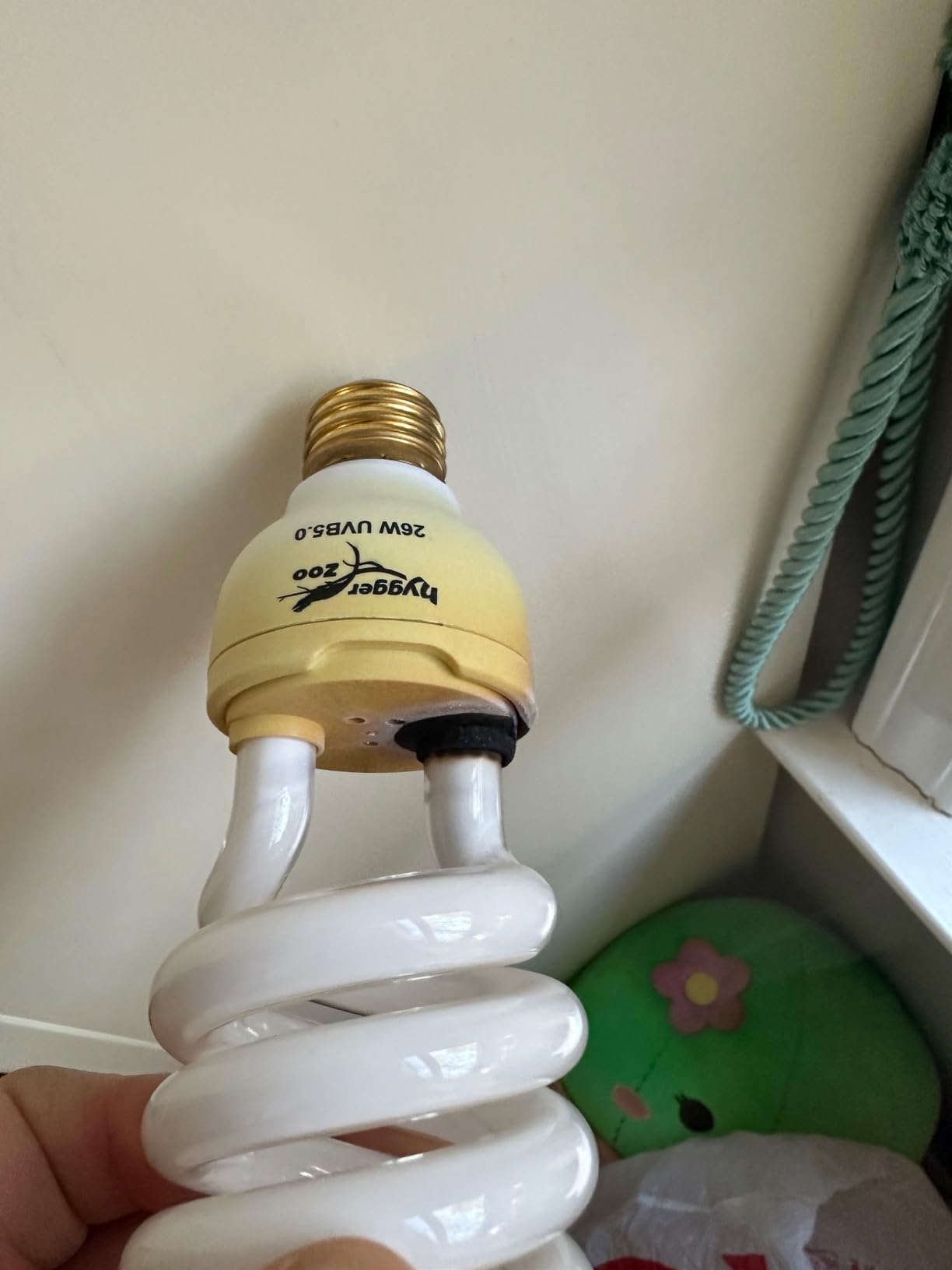
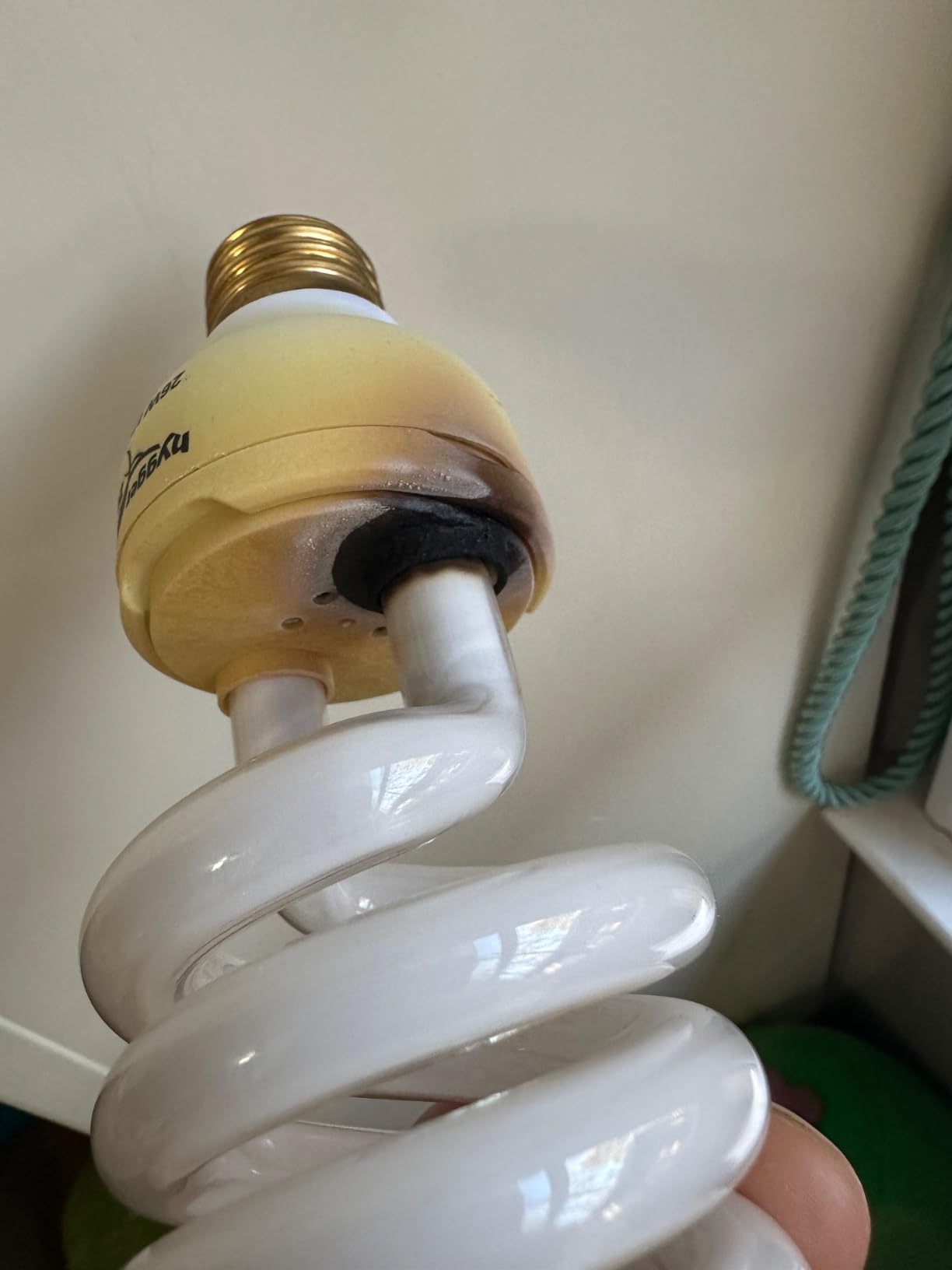
The reliability record is the concern. An 11% share of one-star reviews is the second highest here, and the complaints are specific: bulbs failing inside 90 days, and quartz tubes shattering during handling. Fragile glass in a product aimed at first-time keepers is an unfortunate combination, because the people least likely to handle a bulb carefully are the people most likely to break it.
No measured output data is published, so the 10% figure is a claim rather than a verified number.
When the low cost is the right trade
A temporary quarantine setup, a grow-out pen for juveniles, or a first enclosure on a strict budget where you plan to upgrade once the animal is bigger. In those roles the low entry cost genuinely matters and the shorter expected life is an acceptable trade.
Pick the 10.0 strength for Mediterranean and desert species such as Hermann’s, Russian, Greek and sulcata. Russian tortoises in particular show up repeatedly in owner reports for this lamp, and our UVB lamps for Russian tortoises guide covers the species specifics in more depth.
Where it falls short
Early failure and breakage are the two things that stop us recommending it as a primary long-term source. A bulb that dies at 60 days leaves a gap in UV coverage right when a growing tortoise needs it most, and the quartz glass is unforgiving of a knocked socket.
At 26 watts it is still a point-source coil rather than a linear tube, so it does not solve the even-coverage problem that makes the ReptiSun T5 our top pick.
How Far Should a UVB Bulb Be From a Tortoise?
A UVB bulb should sit roughly 10 to 24 inches above the tortoise for a mercury vapour lamp, and around 18 to 20 inches for a T5 HO tube. Compact fluorescents generally sit lower because their output is weaker, often 8 to 12 inches. Below about 8 inches even a tube can push UV onto a small animal too intensely, and above roughly 24 inches a metal halide beam has spread past the point of usefulness.
The practical figure for a metal halide setup is that 100 watts suits a 2 by 2 up to 2 by 3 foot enclosure, and heavier wattage needs more footprint. A 160 watt lamp in a small cage is not a brighter basking spot, it is a dangerously hot one that will cycle a thermostat constantly.
Now the part most guides skip: whatever the label says, the animal only receives what reaches its back.
Mesh screens and glass both reduce delivered UVB
A metal mesh screen top attenuates ultraviolet before it reaches the substrate, and glass blocks essentially all of it. This is the single most common reason a correctly specified setup underperforms. Keepers routinely mount a lamp at a distance calculated for open air, discover the tortoise is getting far less than expected, and respond by over-buying wattage instead of lowering the lamp.
Lowering the fixture is almost always the better fix. It recovers the light you were already producing rather than paying for a more powerful lamp and more electricity to get the same result at the substrate.
Check that your fixture actually covers the animal
Before anything else, confirm the fixture is long and wide enough for a growing tortoise. A 24 inch tube over a 4 foot animal lights a corner, not the animal. The problem gets worse as they grow, and the instinctive response of buying a bigger bulb rarely fixes a coverage problem that is really a size problem.
How to Choose a UVB Bulb for Your Tortoise
Work through these five decisions in order and the bulb choice usually makes itself. Skipping ahead to wattage is what leads people to a lamp that is too dim, too hot, or the wrong shape entirely.
What UVB output does your species need?
Desert and Mediterranean species need high UV. Hermann’s, Russian, Greek, sulcata and leopard tortoises all live under intense natural sun, and keepers consistently run them on 10% or 12% UVB sources. Forest and tropical species need less. Red-footed tortoises in shaded forest habitat do perfectly well on 5% to 7%.
Getting this wrong in the low direction is a genuine health problem rather than a missed optimisation. UVB triggers vitamin D3 production in the skin, which is what allows the animal to absorb calcium from food. Without enough of it, tortoises develop metabolic bone disease, soft or misshapen shells, and pyramiding where the shell grows unevenly into raised ridges.
Do you need one lamp or two?
Decide this before you shop, because it determines whether you are buying a UV bulb or a UV-plus-heat lamp. A mercury vapour lamp handles both in a single fixture, which is simpler and removes one thermostat. A tube plus a separate basking bulb on a thermostat gives you independent control over heat and UV, which is what experienced keepers running large enclosures tend to prefer.
There is one case where a single lamp is clearly wrong: if you need a precise basking temperature for a hatchling, coupling your heat to your UV means every adjustment to the basking spot changes the UV dose. Separate control is worth the extra hardware at that stage.
How many hours of UVB light do tortoises need?
Run UVB for 10 to 12 hours a day, and use a timer rather than leaving it on manually. A timer removes the two most common errors: leaving the lamp on around the clock, which destroys the day-night cycle and suppresses normal behaviour, and forgetting to switch it on at all on grey winter days.
Keepers also track the season. Photoperiod naturally runs longer in summer and shorter in winter, and forcing a fixed 12 hours through both can leave a winter-housed animal over-exposed to UV while the outdoor light it would normally get is absent.
Which fixture and reflector should I pair with it?
Most UVB bulbs are sold without the correct fixture, and the fixture is where a surprising amount of performance is lost. A polished reflector in a deep dome recovers light that would otherwise escape upward, increasing both brightness and the UV reaching the substrate. For mercury vapour bulbs a deep reflector is close to mandatory, because it spreads the beam and tames the hotspot.
Match the ballast to the lamp. A T5 HO tube needs a T5 HO electronic ballast, and a compact fluorescent needs a fixture rated for its base and wattage. Metal halide bulbs need a ceramic socket, and fitting one to a fixture not rated for it is a fire risk as well as a reliability problem.
Does wattage tell you anything useful?
It tells you how much heat the lamp produces and roughly how large an enclosure it can serve. It tells you nothing at all about UVB output, which is why wattage appears in no sensible ranking of these lamps. A 26 watt compact fluorescent and a 160 watt metal halide are not comparable on any scale that matters for calcium metabolism.
Use wattage as a sizing tool only. Match it to enclosure footprint, then choose the lamp type and UVB strength on their own merits.
When to Replace Your UVB Bulb
Replace UVB bulbs every 6 to 12 months as a default, and align the change with the seasons so you are not discovering the failure in mid-winter. The 6 month end of that range is where most compact fluorescents noticeably fade, while premium T5 HO tubes are more commonly reported running close to a year.
The harder part is that a failed UVB bulb usually still lights up. A phosphor-coated tube or a metal halide can produce perfectly good visible light while its UV output has dropped to nothing, and keepers report this repeatedly. You cannot diagnose the problem by looking at it.
A solar meter such as the SolarMeter 6.2 or 6.5 gives you a number instead of a guess. Take a reading at the tortoise’s back height, not at the glass, and aim for the community-consensus target of roughly 6.2 to 6.5 for a basking tortoise. Re-check monthly and replace when the reading falls, regardless of how bright the lamp still looks.
One caveat worth keeping: the same glass and mesh attenuation that reduces your lamp’s output also reduces what the meter sees through the enclosure, so take readings in a consistent position or you will be comparing two different numbers.
Frequently Asked Questions
What is the best UVB bulb for a tortoise?
The best UVB bulb for a tortoise is a high-output lamp delivering usable UV-B at the animal’s back, matched to enclosure size. A T5 HO linear tube such as the Zoo Med ReptiSun 10.0 gives even whole-cage coverage in large enclosures, while a mercury vapour lamp such as the Mega-Ray 160W provides basking heat and UV in one fixture. Both need a separate heat source unless the lamp is an all-in-one.
What kind of UVB does a tortoise need?
Desert and Mediterranean species such as Hermann’s, Russian, Greek, sulcata and leopard tortoises need a high UVB source, typically 10% to 12%. Tropical and forest species such as red-footed tortoises do well on 5% to 7%. UVB drives vitamin D3 production in the skin, which allows calcium absorption, so too little leads to metabolic bone disease, soft shells and pyramiding.
Is a basking bulb the same as a UVB bulb?
No, they do different jobs. A basking bulb provides infrared heat so the tortoise can thermoregulate, and it produces no meaningful UVB. A UVB bulb provides ultraviolet B for vitamin D3 synthesis, and most UVB-only bulbs produce little or no heat. A mercury vapour lamp is the exception because it delivers both, which is why it is sometimes called a 2-in-1 lamp.
How long should an UVB light be on for a tortoise?
Run the UVB lamp for 10 to 12 hours a day, controlled by a timer rather than manually. A continuous 24 hour cycle disrupts the day-night rhythm tortoises rely on for normal behaviour and feeding, while inconsistent switching leaves gaps in UV exposure. Shorten the photoperiod slightly in winter and lengthen it in summer to follow the natural seasonal cycle.
Do tortoises need UVB bulbs?
Yes. Tortoises kept indoors receive no meaningful UVB through glass or plastic, and UVB is what allows them to synthesise vitamin D3 and metabolise calcium from their food. Keepers who skip it report metabolic bone disease, soft or pyramided shells and poor shell growth. UVB is not a replacement for correct diet, hydration or a proper temperature gradient, but it is a necessary part of an indoor setup.
What wattage UVB bulb should I use for a tortoise?
Match wattage to enclosure footprint rather than species. A 100 watt mercury vapour lamp works comfortably in a 2 by 2 up to 2 by 3 foot enclosure, and heavier wattage needs more space. Linear tubes scale with fixture length, so a 24 inch enclosure takes a 24 watt tube. Remember that wattage describes heat output only and says nothing about how much UVB the lamp produces.
Final Verdict on the Best UVB Bulbs for Tortoises
The best UVB bulbs for tortoises in 2026 are the ones that match lamp architecture to your enclosure rather than chasing the largest wattage number. Our top pick is the Zoo Med T5 HO ReptiSun 10.0 (24W, 2-pack), because a linear tube spreads UV evenly across a whole enclosure, carries the highest rating in this roundup at 4.6 stars, and is confirmed by owners with UVI meters rather than on appearance alone.
For a large enclosure where you want one fixture doing both jobs, the Mega-Ray 160W mercury vapour lamp is the choice, paired with a ceramic socket and a deep reflector. For a hatchling in a small terrarium, the Zoo Med ReptiSun 10.0 Mini is the sensible compact fluorescent, with the understanding that its UV fades noticeably around the six month mark. Budget keepers should look at the LUCKY HERP 23W for brightness or the REPTI ZOO T5 HO combo kit if they have no fixture at all.
Whichever you pick, measure the distance, mount it low enough to defeat the mesh, run it 10 to 12 hours on a timer, and check the output with a meter rather than trusting the glow. That last habit alone will keep your tortoise’s calcium metabolism covered year after year.