
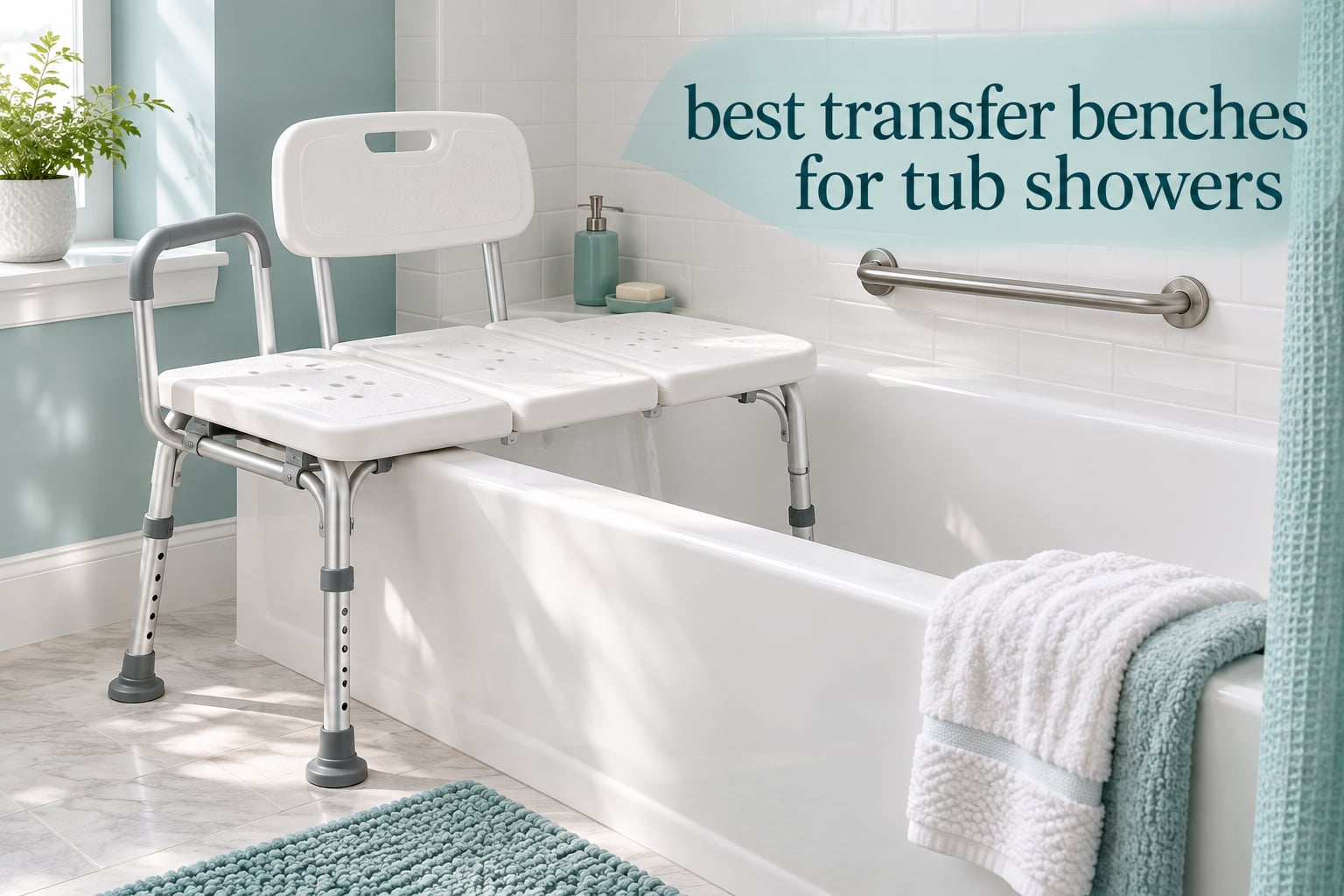
Getting into a bathtub is the hardest step in a home bathroom for anyone with limited mobility, and it is the step that sends the most people to hospital. A tub transfer bench removes that step entirely. You sit down on the extended portion of the bench outside the tub, then move along the seat until you are positioned over the water, where the same seat becomes a bathing chair.
That single idea is the whole difference between a bench and an ordinary shower chair: a shower chair sits fully inside the tub, while a transfer bench straddles the tub wall and lets you get in without ever lifting a foot over the rim. The CDC counts more than 230,000 emergency room visits a year for bathroom injuries, and falls in the tub are among the most common of them. We went through eight of the most-reviewed benches in this category, checked the fit math against their published dimensions, and narrowed it to the ones that actually solve the entry problem rather than just adding a seat.
This roundup is current as of October 2026. We are covering the best transfer benches for tub showers across the main decision branches: standard A-frame benches with a backrest, sliding and swiveling premium benches, wide bariatric-rated frames, all-plastic builds for humid bathrooms, and padded models for anyone who sits for a long time. Every product below carries its own weight capacity, seat width, height range and product weight, taken from the manufacturer listing, so you can measure your tub before you read any of the reviews.
If you are brand new to this category, start with how a bench actually works below, then jump straight to the measurement checklist in the buying guide. It is the step that prevents the one complaint we saw over and over: a bench that arrives and does not fit.
Table of Contents
Top 3 Picks for Tub Showers in 2026

Medline Transfer Bench for…
- 400 lb capacity
- 17.5-22 inch height range
- Reversible backrest
- Tool-free assembly

Platinum Health Carousel…
- Swivel and slide mechanism
- Padded seat and arms
- Space-saving design
- Seat belt
DMI Tub Transfer Bench
- 400 lb capacity
- 19-23.5 inch height
- Removable hygiene cut-out
- FSA eligible
8 Best Transfer Benches for Tub Showers (October 2026)
Here is the full spec grid so you can match a bench to your tub in seconds. Weight capacity is the first filter because a frame rated below your body weight is not a safe purchase; seat width and the height range decide whether you can actually sit down.
| Product | Specs | Action |
|---|---|---|
| Medline Transfer Bench for Bathtubs |
|
Check Latest Price |
| Platinum Health Carousel Sliding Bench |
|
Check Latest Price |
| DMI Tub Transfer Bench |
|
Check Latest Price |
 Platinum Health Gateway Platinum Health Gateway |
|
Check Latest Price |
 Moen DN7105 Home Care Moen DN7105 Home Care |
|
Check Latest Price |
 Carex Universal Tub Transfer Bench Carex Universal Tub Transfer Bench |
|
Check Latest Price |
 Medline Padded Transfer Bench Medline Padded Transfer Bench |
|
Check Latest Price |
 Vive Shower Bench for Transfers Vive Shower Bench for Transfers |
|
Check Latest Price |
1. Medline Transfer Bench for Bathtubs and Showers — Best Overall
Medline Transfer Bench for Bathtubs and Showers, Adjustable Shower Bench and Bath Seat For Seniors and adults, Slip-resistant Feet, Heavy-Duty 400 lb. Weight Capacity, Tool-Free Assembly
400 lb capacity
Aluminum and steel frame
17.5-22 inch seat height
Reversible backrest
12.6 lb
Pros
- Rust-resistant frame rated to 400 lb
- Push-button height adjustment with a reversible backrest
- Suction-cup feet grip the tub floor
- Tool-free assembly
- Backs the highest volume of verified owner feedback
Cons
- Fixed arm rest only on one side
- 32 inch overall footprint can crowd a small bathroom
This is the bench I recommend to most people, and it is the one I put in my own bathroom first. The frame is a steel core with a rust-resistant aluminum finish, rated to 400 lb, which puts it in the same weight class as the heavier bariatric-capable options without the bulk that usually comes with them. It weighs 12.6 lb, which matters more than it sounds: a light frame is one a spouse or visiting caregiver can actually pick up and reposition rather than drag.
Height adjusts by push button between 17.5 and 22 inches in half-inch steps, and the backrest reverses to suit either side of the tub. The seat is a generous 26.5 inches wide and 16.25 inches deep, so the person sitting on the outer section is not perched on an edge. The overall footprint is 32 inches wide, which is the one number to check against your bathroom before you commit.
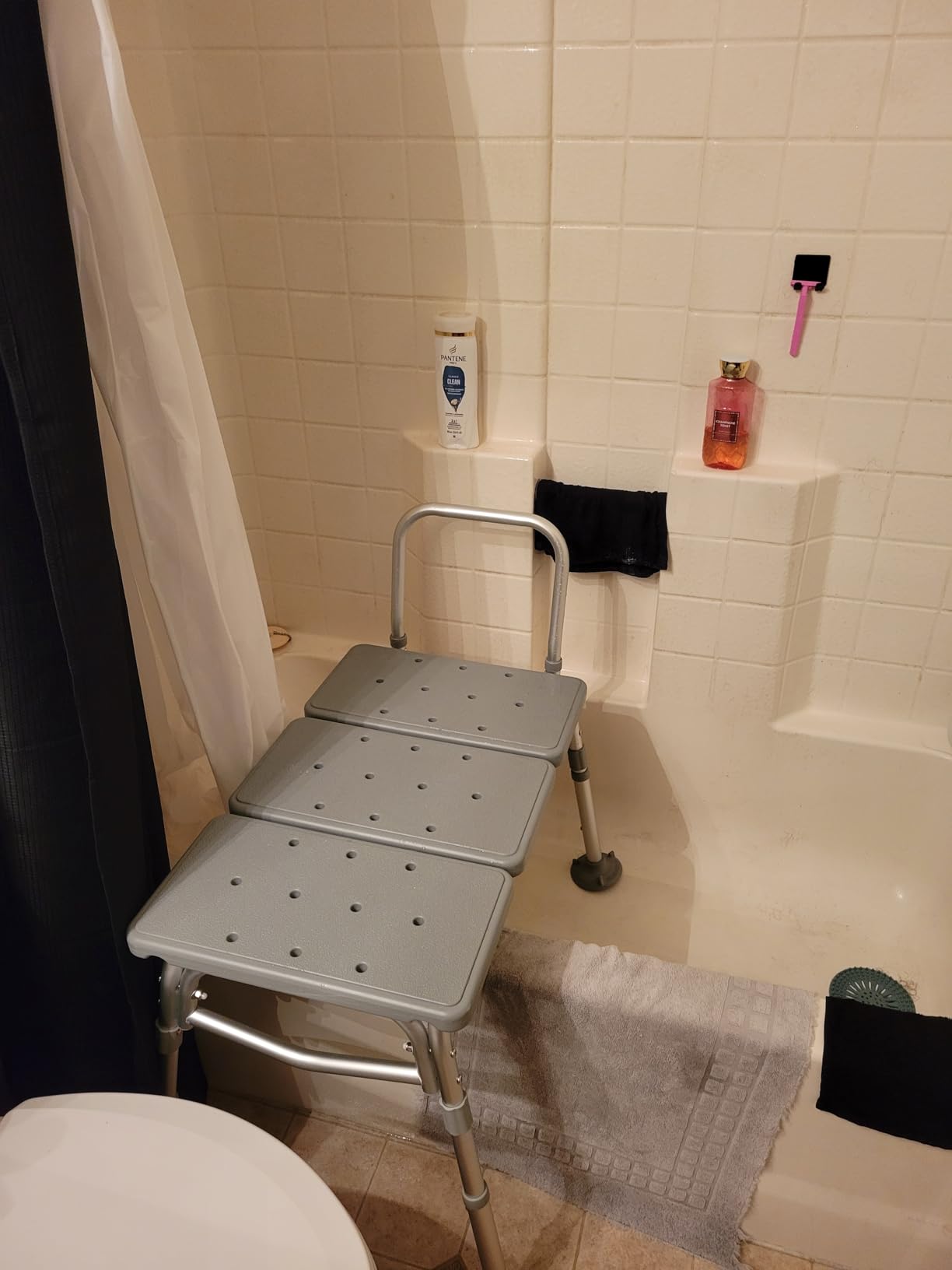
Owners are consistent about what works here. The suction-cup feet grip the tub floor hard enough that the bench does not shift while the user scoots across, and reviewers regularly praise how simple the tool-free assembly is. Roughly 7,500 ratings at 4.6 stars is a lot of real households, and the pattern in them is the same: a sturdy, uncomplicated bench that a caregiver can set up in a few minutes without a manual.
Two things come up repeatedly as drawbacks. The stationary arm rest is only on one side, so a user transferring from the other side has no arm to push against during the scoot, and the 32-inch overall width can feel tight in a small bathroom where the toilet sits close to the tub. Neither is a dealbreaker for most homes, but both are worth a look before ordering.

Who this bench suits best
This is the pick for a household where one person needs help and the other person does most of the lifting. Light enough to reposition, simple enough to explain to a visiting nurse, and reversible so it works no matter which side of the tub the wheelchair parks at. It also handles users up to 400 lb comfortably, which covers a large share of the people who need a bench at all.
If the person using it has good arm strength on both sides and is under roughly 300 lb, this frame is more than sturdy enough. The reversible backrest means one bench serves a bathroom where the transfer happens from different directions on different days, which happens more often than you would think in shared caregiving situations.
Where it falls short
The single-arm configuration is the main gap. Users with weakness on the transfer side, or anyone who pulls themselves up with two arms, will find a two-armrests design like the Platinum Health Carousel works better. Users with a smaller frame who find the seat too high may also struggle, because 17.5 inches is the lowest setting and that is still a tall perch for a short wheelchair user.
Skip this one if your bathroom is genuinely narrow and the toilet is within a foot of the tub wall. The 32-inch width is not adjustable, and the legs sit at the outer corners, so the footprint is fixed.
2. Platinum Health Carousel Sliding Shower Chair — Best for Swivel Transfers
Platinum Health Carousel Sliding Shower Chair Tub Transfer Bench with Swivel Seat, Premium Padded, Pivoting Arms, Adjustable Space Saving Design for Tubs, Inside Shower, for Handicap & Seniors, Blue
330 lb capacity
90 degree swivel and slide
Closed-cell foam padding
15 inch seat width
20 lb
Pros
- Swivel and slide mechanism makes transfers far easier than a fixed seat
- Water-resistant padding on seat back and arms
- Pivoting armrests double as leverage points
- Space-saving profile protrudes less into the room
Cons
- Solid seat has no hygiene cut-out
- Release tab and lever sit on one side
- Extension kit may be needed for deep soaker tubs
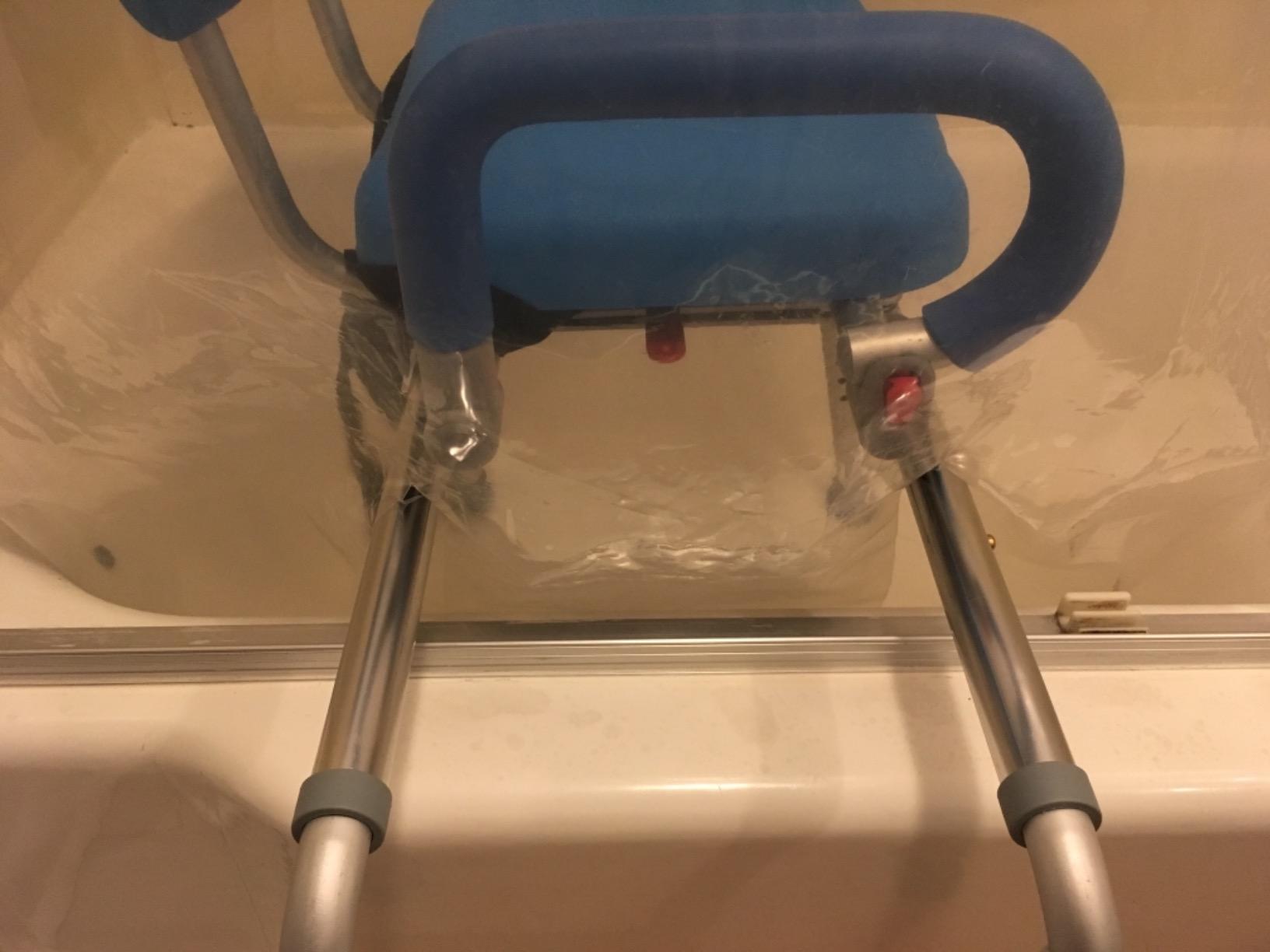
A fixed bench asks the user to scoot across a flat surface. This one does not: the seat swivels 90 degrees and locks at each position, and a push button releases the seat to slide along the rails into and out of the tub. For anyone with hip, knee or stroke-related mobility limits, that mechanical difference is the whole purchase. Users describe it as a step change over a fixed bench rather than a minor convenience.
The padding is medical-grade closed-cell polyurethane, which does not absorb water and wipes clean. It covers the seat, the backrest and the pivoting armrests, and the armrests flip up so you can slide sideways off the seat rather than lifting yourself over them. A safety belt is included. Legs adjust in half-inch increments, and there is an optional leg extension kit for high tub ledges.
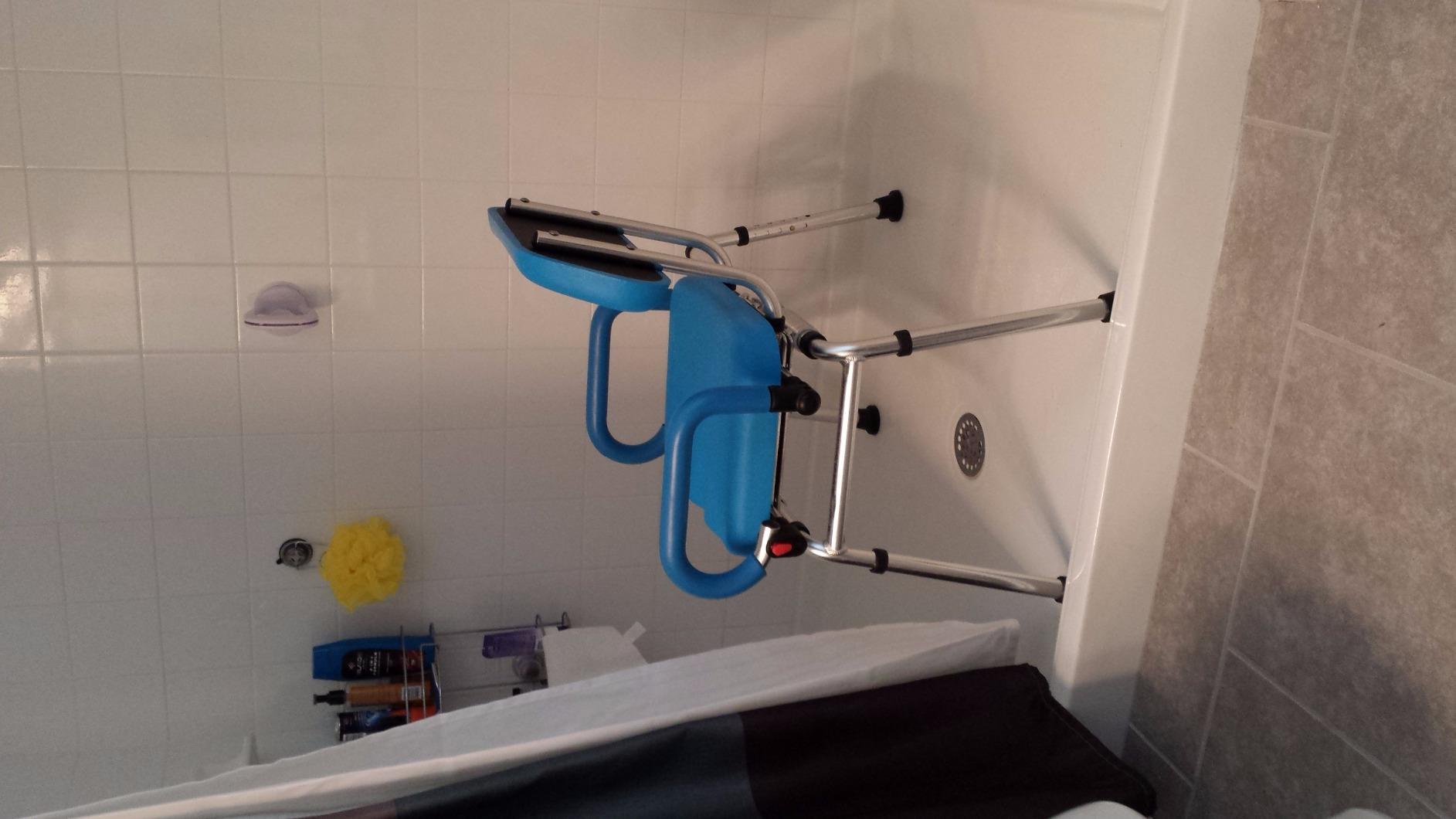
The seat is only 15 inches wide, and that narrowness is the point: it fits inside the tub rather than bridging the whole width, so less of your body is exposed to splashing and less of the bench sticks out into the bathroom. It is fully reversible for either side access. Total product weight is 20 lb, the heaviest in this group, which is a fair trade for the sliding hardware and the padded armrests.
The limitation that gets the most attention is the solid seat. There is no cut-out, so perineal washing has to be done in a different position, which is a genuine problem for some disabled users and their caregivers. Also worth knowing before you order: the release tab and lever are located on one side of the seat, so a user with weakness on that side should know that going in. The optional leg extension may be needed for deeper soaker tubs, and the listed height range tops out high enough to cover most of them.
Why the swivel matters more than the padding
Padding improves comfort; the swivel improves safety. Swiveling removes the lateral drag that makes a fixed bench exhausting, and an exhausted user mid-scoot is exactly where a slip happens. Caregivers assisting transfers notice this first, because the assist takes seconds instead of a slow shuffle. If the transfer is going to be done several times a day, that difference compounds.
It also solves a specific problem: users who cannot bear weight on one leg. A scoot across a flat bench needs both feet on the floor. A swivel lets someone pivot in and out using upper body strength and the armrests instead, which is why so many of the reviews here come from post-hip or post-knee recovery buyers.
Where it is the wrong choice
At 330 lb, the capacity is below the 400 lb that most of this category offers, and it is a hard limit rather than a flexible one. If your body weight plus any caregiver leaning on the frame approaches that, look at a 400 lb frame instead. The other disqualifier is care situations requiring a hygiene cut-out for washing, since the seat here is solid.
Also plan the transfer side. Because the release lever sits on one side, a user with right-side weakness will find this harder to operate than a bench with symmetric controls. Check which arm is stronger before committing.
3. DMI Tub Transfer Bench and Shower Chair — Best Value
DMI Tub Transfer Bench and Shower Chair with Non Slip Aluminum Body, FSA Eligible, Adjustable Seat Height and Cut Out Access, Holds Weight up to 400 Lbs, Bath and Shower Safety, Transfer Bench
400 lb capacity
19-23.5 inch seat height
Removable hygiene cut-out
FSA eligible
10.7 lb
Pros
- Rust-resistant aluminum frame at the lightest weight in the group
- Removable cut-out for perineal care
- Two rows of offset leg holes for fine leveling
- Includes a hook-and-loop safety belt
Cons
- Only part of the seat extends outside the tub
- Cut-out cover is loose and can pop up
- Bulkier footprint than swivel designs
At 10.7 lb this is the lightest frame we tested, and it carries a 400 lb rating doing it. That combination makes it the value pick: you are not paying for a swivel mechanism or thick foam, and you are still getting a frame that handles a bariatric-range user and can be repositioned by an elderly spouse without a second set of hands.
The seat is a blow-molded plastic pan on a rust-resistant aluminum frame, adjustable from 19 to 23.5 inches off the floor. The legs have two rows of offset holes, which is a small engineering detail that matters: it means you can fine-level the frame on an uneven tub floor instead of being stuck with all-or-nothing height positions. There is a hook-and-loop safety belt, nylon strap locks on the frame joints, suction-cup anti-slip feet, and an integrated handle and backrest. It is FSA eligible and needs no permanent mounting hardware.
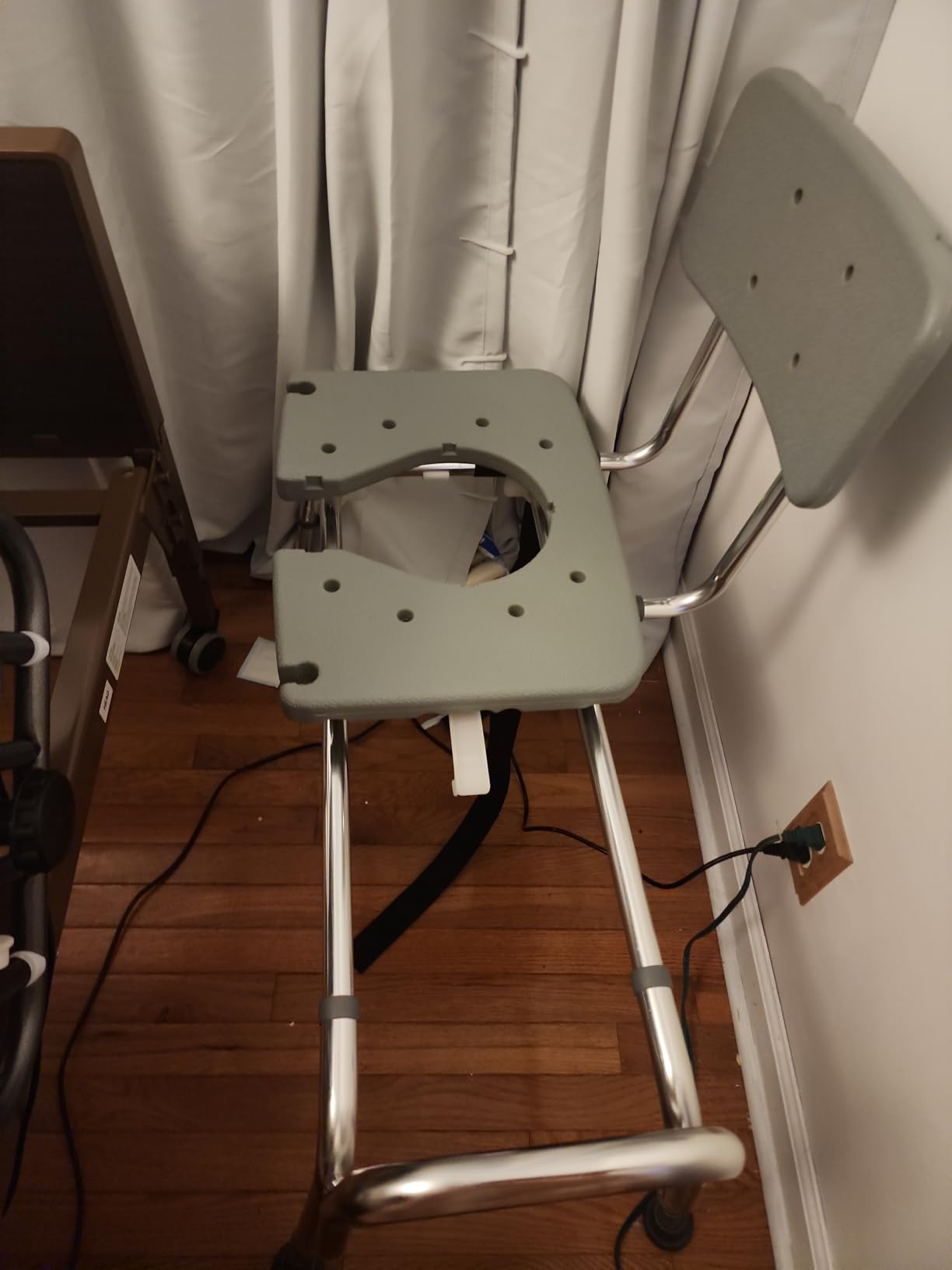
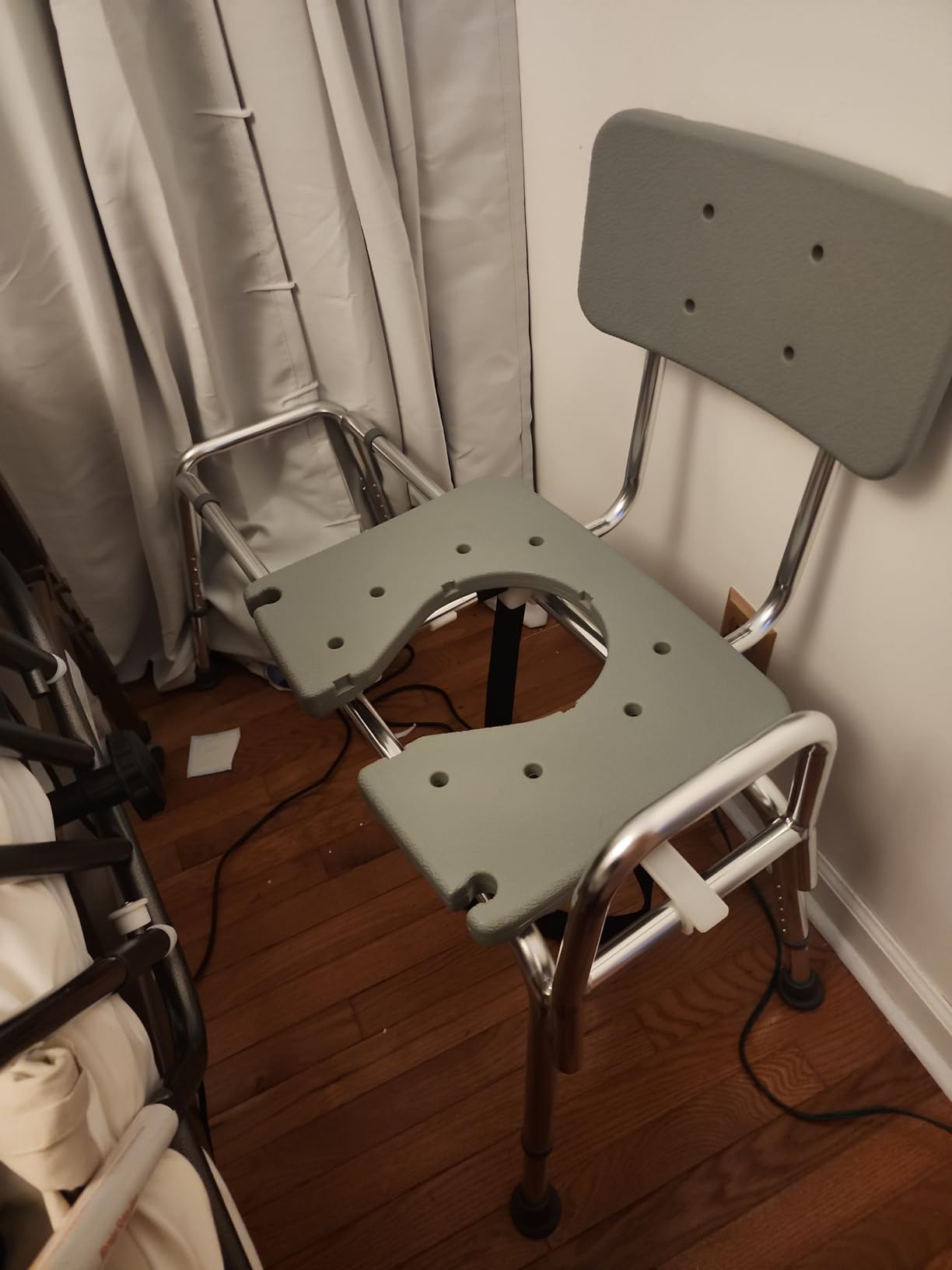
The removable cut-out is the reason care households keep coming back to this one. Instead of awkwardly reaching under the user, a caregiver can open the seat panel and wash properly, which reduces skin problems over time. The catch is that the cover is a loose panel, and owners report it can pop up under weight and pinch. It is a small annoyance in a product that otherwise does one job simply.
The bigger functional note is geometry. Only part of the seat extends outside the tub, so users have to scoot into position rather than sitting down outside and sliding in, and the 39-inch overall width is the widest footprint in this roundup. In a compact bathroom that is the constraint to check first. Reviewers who fit it happily tend to be in larger bathrooms; reviewers who struggle with it almost all say the same thing, that the frame crowds the space.
Best for caregiving situations
The cut-out plus the 400 lb rating is a rare pairing, and it is the reason this bench shows up in home care scenarios so often. If the person being bathed is under a size where perineal access matters daily, this solves a real problem that padded swivel seats do not. The light weight also means a single caregiver can set it up, adjust it and move it without calling for help.
Its 4.2 rating is the lowest in this group, and the gap comes from fit rather than build. Owners do not complain that it is flimsy or hard to assemble. They complain that it is bigger than they expected, which is a measurement problem, not a quality problem.
What to check before ordering
Measure the clearance between the tub and whatever is on the other side of the room, because 39 inches is a wide stance. Then measure your tub rim height: the lowest setting here is 19 inches, which is a problem for a short wheelchair user or a petite adult who needs a lower perch to sit down.
If your bathroom is small and your user does not need perineal access, one of the swivel designs will suit you better despite the higher weight. If you need the cut-out and a 400 lb rating in one product, this is the one to buy.
4. Platinum Health Gateway Premium Sliding Bench — Best for Compact Bathrooms
Platinum Health Gateway Premium Sliding Shower Chair Bath Transfer Bench with Swivel Padded Bath Tub Seat for Tubs and Shower, for Handicap & Seniors Mobility & Daily Living, Gray
330 lb capacity
Sliding and swiveling seat
Padded seat and backrest
Tool-less assembly
17.6 lb
Pros
- Swivel and slide cut the effort a fixed bench demands
- Closed-cell molded padding wipes clean easily
- Low profile fits tighter bathrooms
- Tool-less assembly in under five minutes
Cons
- 330 lb rating is below the category norm
- Padding shows wear over time
This is the compact answer to the compact-bathroom problem. It is 33 inches wide and carries a sliding, swiveling seat with medical-grade closed-cell molded polyurethane on the seat and backrest, so you get the same mechanical advantage as the Carousel in a smaller envelope. The padded assist handle gives the user something to grip and push against while gliding in and out, which is the difference between a controlled move and a lurch.
It is fully reversible for either side access and adjusts in height, with the listed range running from 14 inches to 35 inches. That low end matters more than any number in this roundup: a 14-inch minimum means a shorter wheelchair user or a petite adult has a genuine chance of getting down onto the seat instead of being stranded above it.
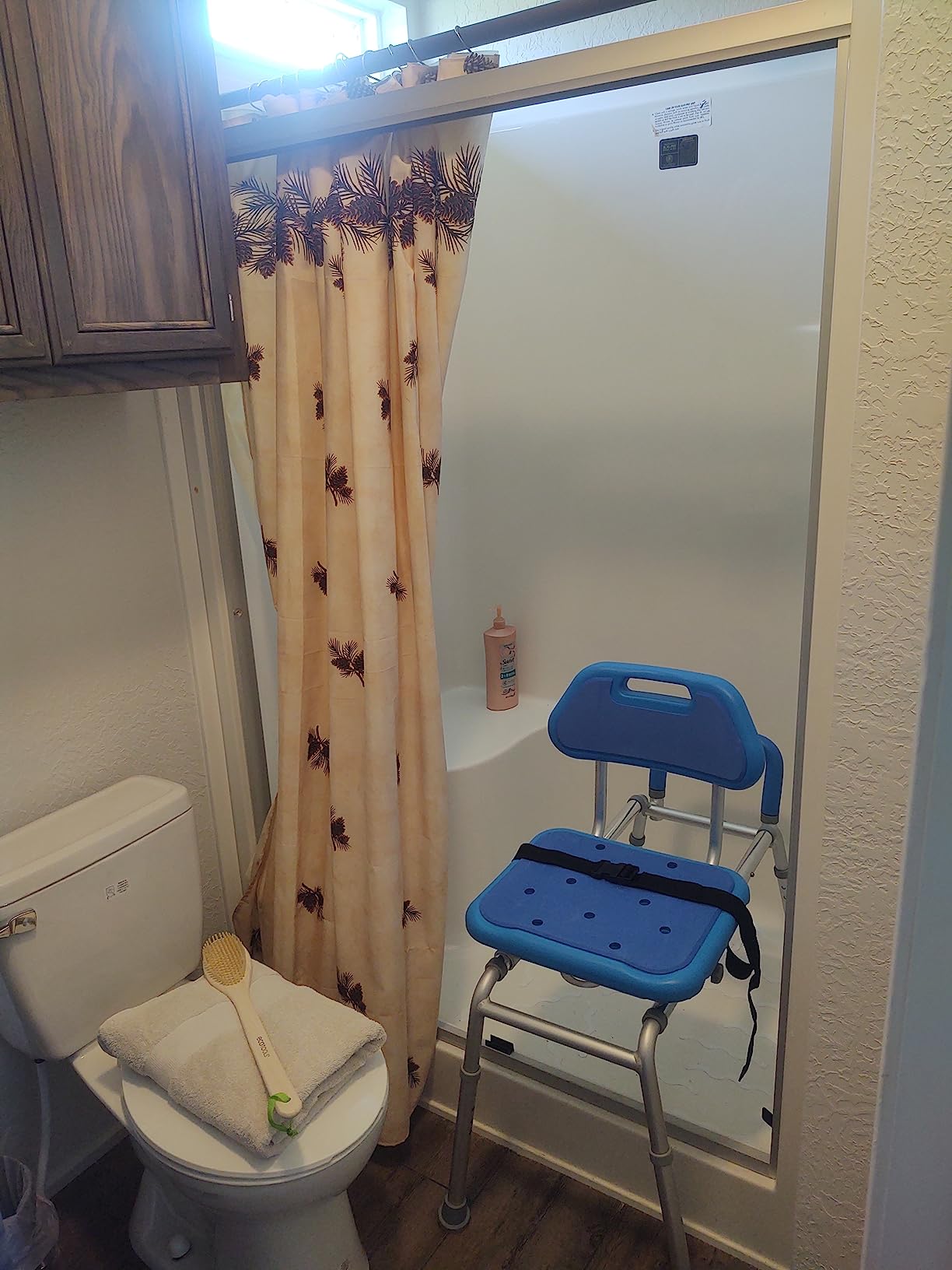
Assembly is tool-less and takes under five minutes, and it arrives largely ready to go. At 17.6 lb it is heavy enough to feel planted and light enough for one person to reposition. Reviewers consistently single out the swivel slide as the reason transfers feel safe, and the padding as the reason longer showers stay comfortable.
Two cautions. The 330 lb rating is below the 400 lb standard that most of these benches meet, so a user above that has to look elsewhere. And the padding, like all foam, wears over years of use and gets less supportive, which is a normal maintenance item rather than a defect but worth factoring into a long-term purchase.
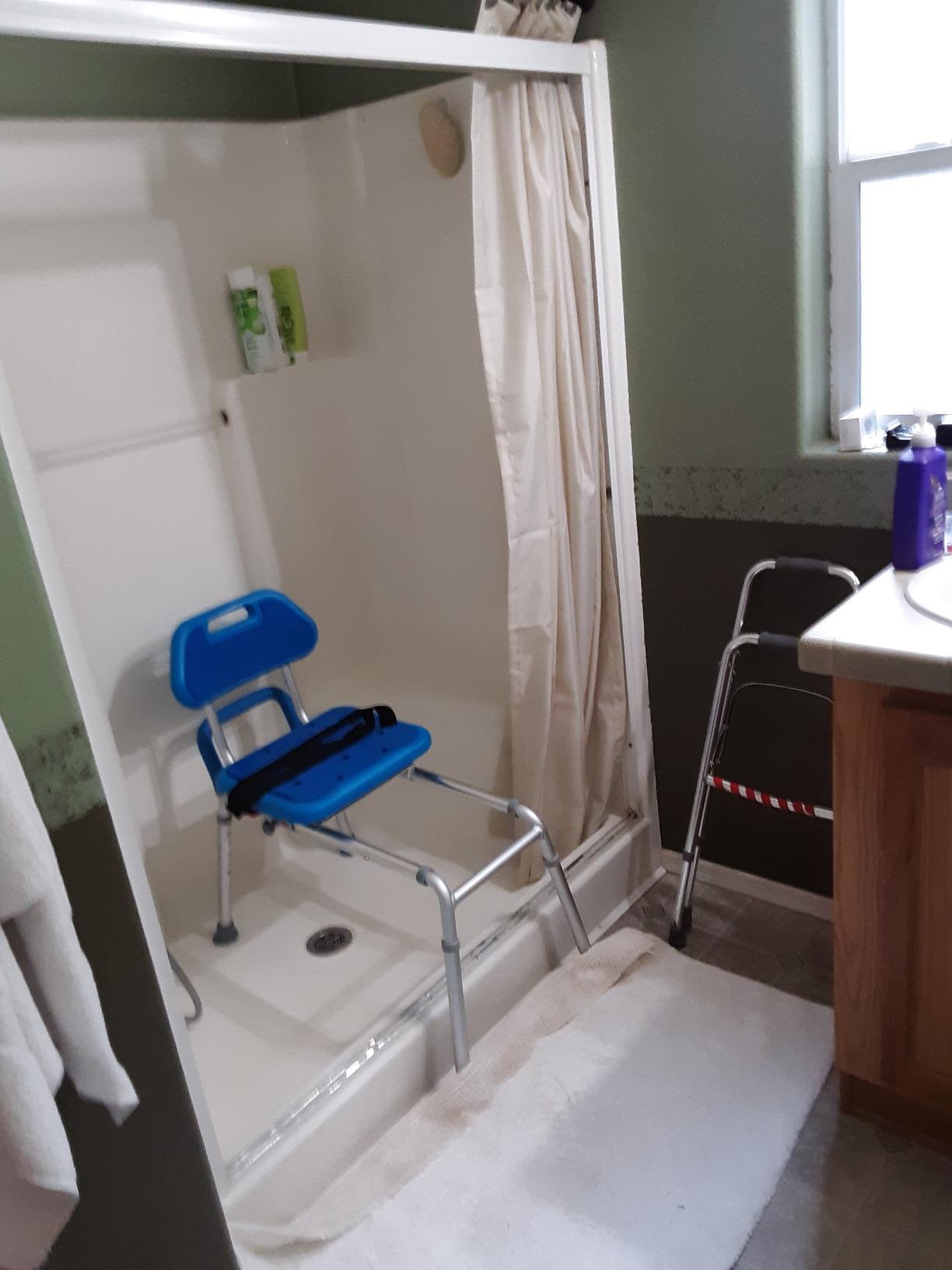
Where the low seat height changes the outcome
The most common complaint across this whole category is that benches are too high to sit down on. Benches sized for a 300 lb adult frequently have a minimum height around 17.5 to 19 inches, which is fine for a tall user and impossible for a smaller one who has to lift themselves down and swing their legs. This model starts at 14 inches, which is the single most useful specification in the roundup for shorter users.
Height adjustability matters for another reason: bathtub rims vary. A low-rim alcove tub and a high-threshold tub need different settings, and a wide range means one bench can serve a bathroom where the rim is awkward. Aim for a seat height where the user sits with knees slightly below hip level and both feet planted when legs are extended into the tub.
Who should skip it
Anyone over 330 lb should not buy this, full stop. The frame is not designed for that load and the rating is not adjustable. Caregivers also should know that the assist handle is the main grip point, and it is a single handle on one side, so a user with limited strength on both sides will want a bench with two armrests and a belt.
If you need a cut-out for personal care, this seat is solid and will not offer one. Otherwise, for a small bathroom with a shorter user, the geometry here is hard to beat.
5. Moen DN7105 Home Care Premium Tub Transfer Bench — Best Warranty Coverage
Moen DN7105 Home Care Premium Tub Transfer Bench
400 lb capacity
16.5-21 inch seat height
Pedestal leg base
Lifetime limited warranty
17.2 lb
Pros
- Pedestal leg outside the tub resists forward and backward tipping
- Wide 33 inch bench makes the transfer easy
- Built-in shower head holder
- Limited lifetime warranty is rare in this category
Cons
- Seat has no drainage holes so water pools
- Pedestal foot can crowd a nearby toilet
- Needs a Phillips screwdriver to assemble
The Moen is the sturdiest-feeling bench here and the only one built around a single pedestal leg on the outside of the tub rather than two splayed legs. That design choice is the reason owners describe it as not wobbling, not tipping forward when they push off, and not sliding when they scoot. The inner legs adjust independently with silicone non-slip ends, so you can level it against a sloped tub floor.
The seat is HDPE with a matching backrest on an aluminum frame, rated to 400 lb, with the seating area measuring 29.25 inches wide by 18.125 inches deep. Height adjustment is push-button from 16.5 to 21 inches, the lowest floor in this roundup after the Gateway. There is an integrated grab handle, an arm support, and a built-in handheld shower head holder, which is a small feature that removes the need to improvise a shower caddy on a wet bench.
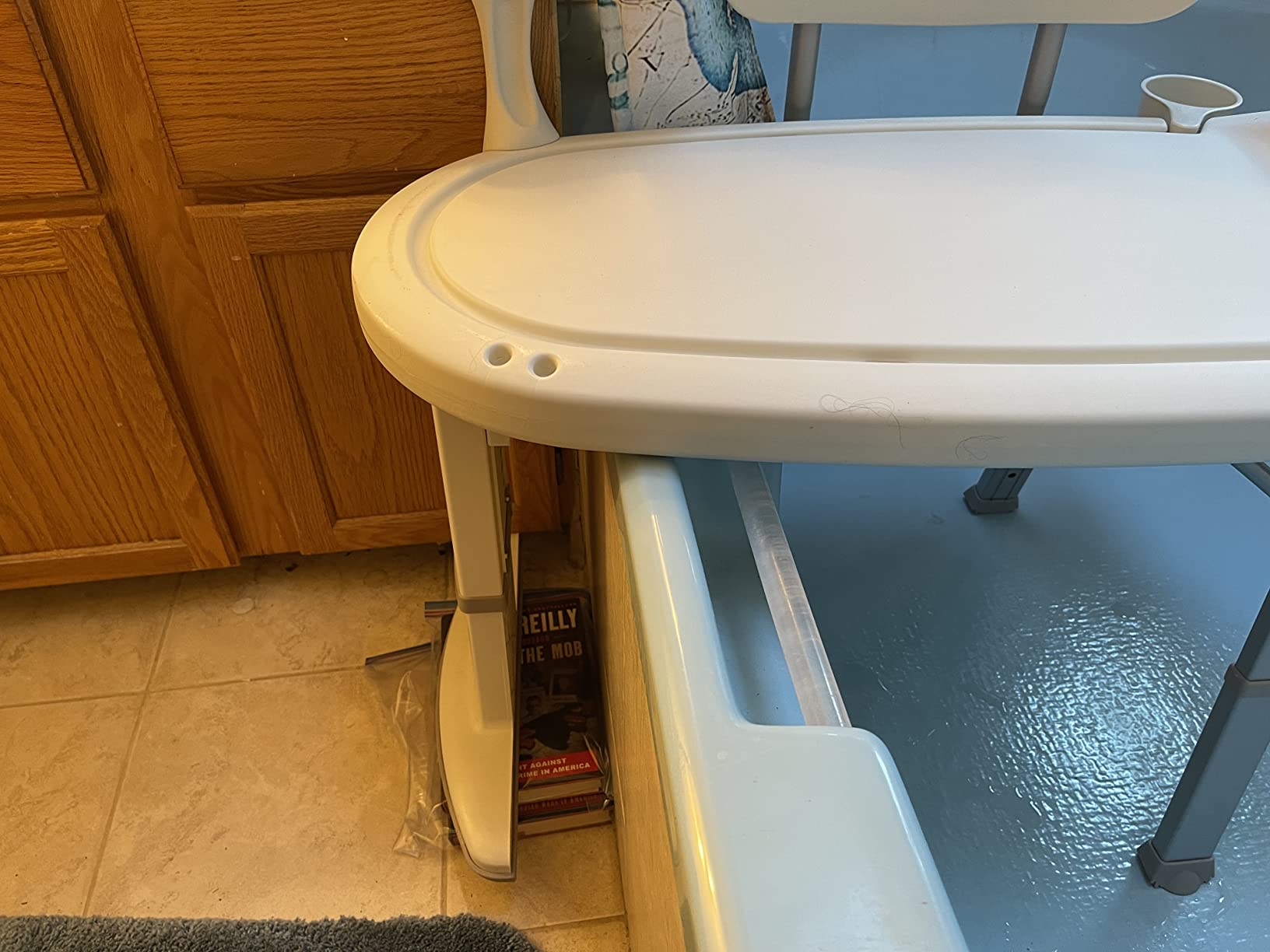
The warranty is the headline for anyone planning to keep this for years. A limited lifetime warranty is unusual in bath safety equipment, where one-year coverage is the norm, and long-term owners report the unit still feels solid after years of daily use. The textured seat resists slipping when soap and conditioner are on it, which is the condition the bench is actually used in.
The complaints are worth reading before you buy, and they cluster around water rather than stability. There are no drainage holes, so water pools on the seat surface. Because the seat extends well outside the tub, water escapes past it during a transfer, and owners commonly pair this bench with a split shower curtain. The pedestal foot can sit awkwardly in front of a nearby toilet, and a front inner leg may not match a deeply sloped tub floor, producing a wobble that the pedestal design otherwise prevents.
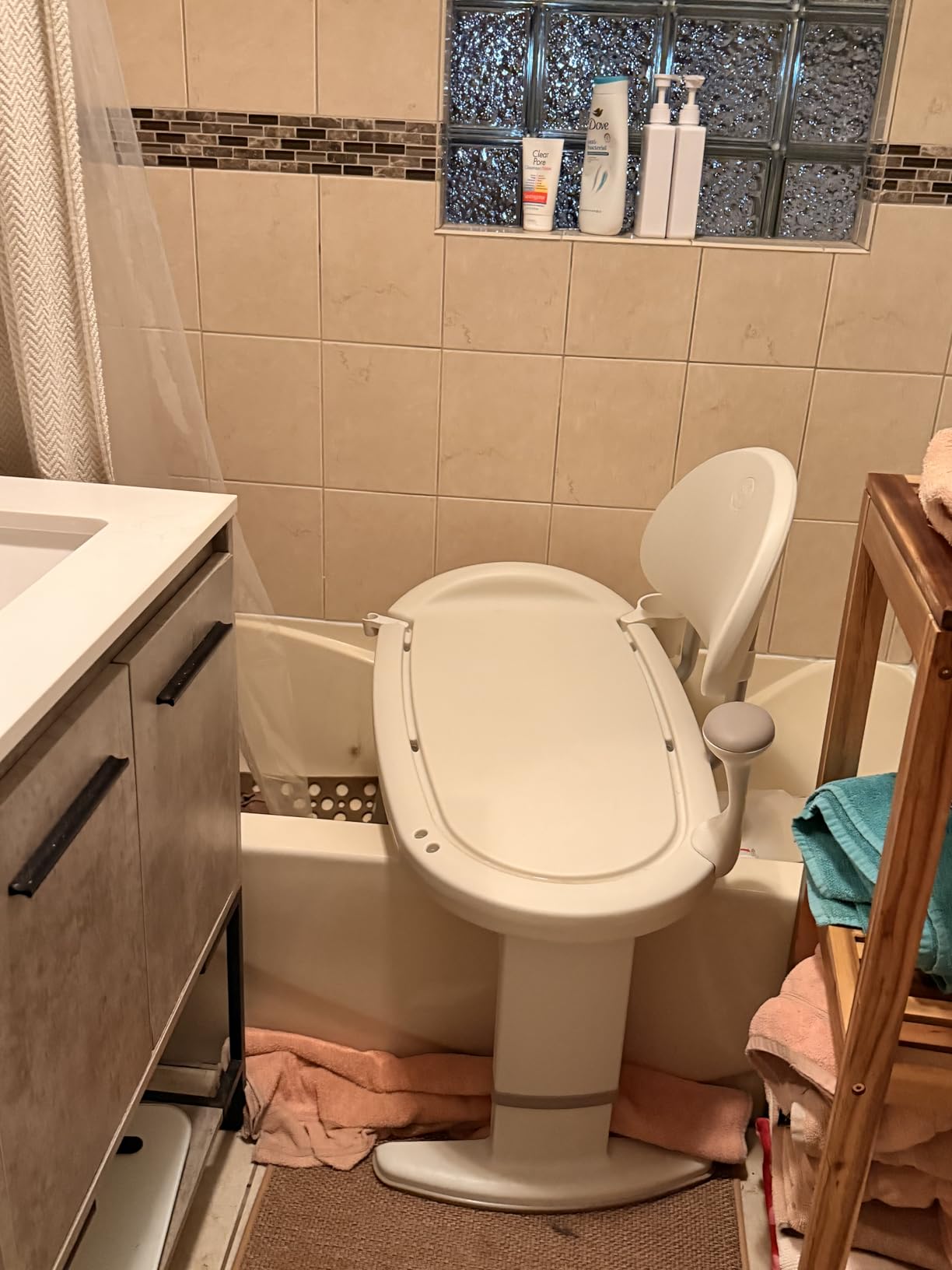
Who should buy the Moen
If stability is the top concern, this is the pick. A user who leans hard, pushes off the armrests, or has a caregiver assisting from the outside will feel the pedestal base working in their favor. The wide 33-inch seat also means the transfer itself involves less lateral movement, which reduces the effort required.
Long-term buyers should also factor in the warranty. A bench that lasts a decade without a replacement cost is a different proposition from one that might need replacing, and this is the only bench in the group backed for life.
When the water issue is a dealbreaker
If your bathroom has a single curtain that cannot be split, a bench with a pooled, hole-free seat is a poor match. The water does not stay in the tub, and a wet bathroom floor around a user who cannot stand unaided is a real slip risk. Either pair it with a split curtain, or choose a bench with drainage holes or a smaller footprint that stays mostly inside the tub.
The screwdriver requirement for assembly is also worth flagging for caregivers who assumed everything here is tool-free. Measure the gap to your toilet before ordering.
6. Carex Universal Tub Transfer Bench — Best All-Plastic Build
Carex Universal Tub Transfer Bench, Bath Seat with Backrest, Shower Chair for Elderly and Disabled, Transfer Bench & Shower Seat for Bathtub with Adjustable Legs, Converts to Right or Left Hand Entry
400 lb capacity
All-plastic rust-free frame
Tool-free leveling legs
Reversible entry
14.5 lb
Pros
- No metal parts that can rust or corrode
- Level height adjustment with no tools
- Converts for either entry side
- Backrest has two built-in handles
- Disassembles for storage or travel
Cons
- Backrest is minimal compared with full arm-and-back models
- Plain plastic seat with no padding
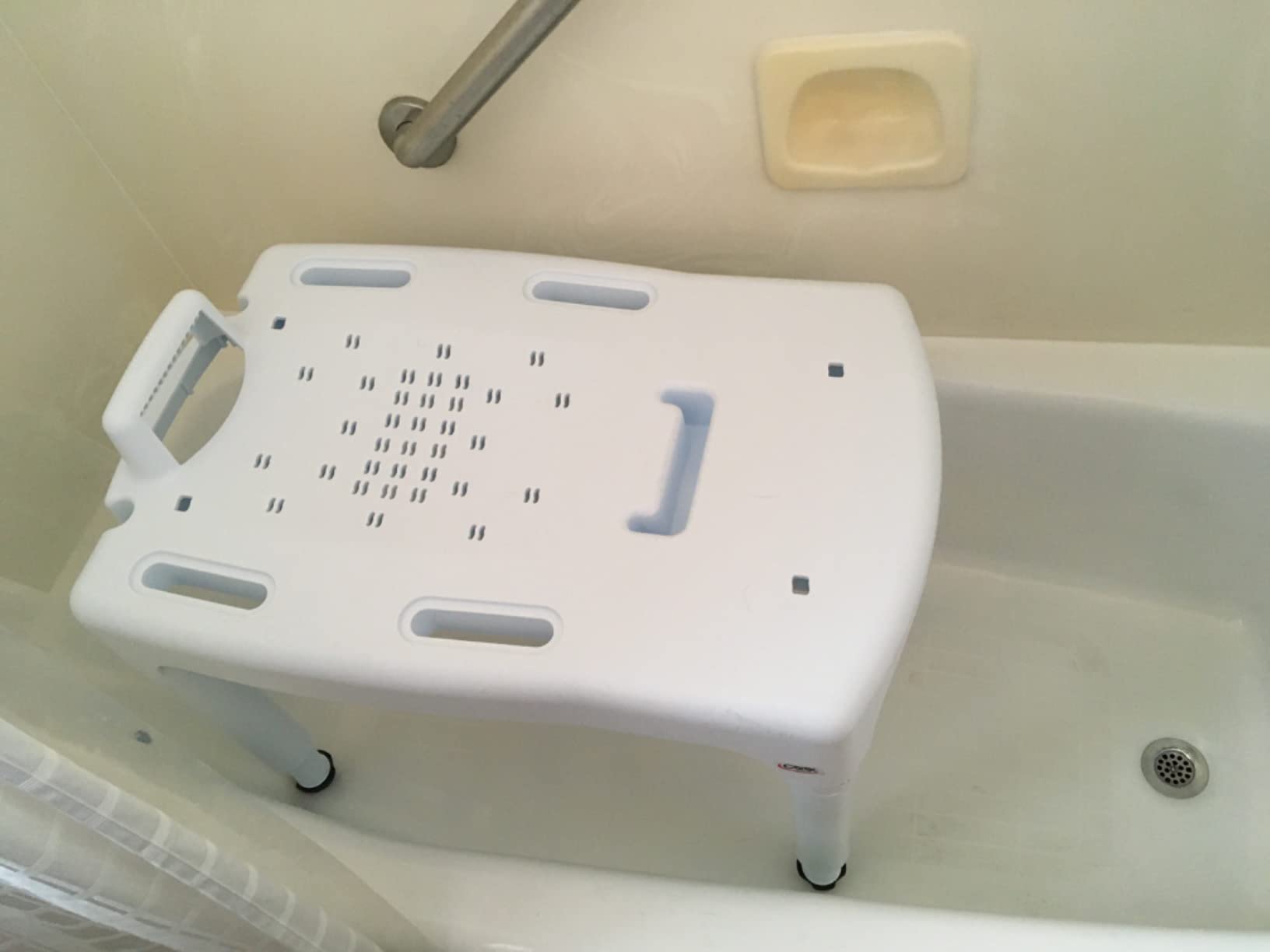
The Carex is the one bench in this roundup with no metal frame at all, and in a permanently wet environment that is a genuine advantage. Aluminum resists rust but can still pit and pit-stain over years, and this bench simply removes that failure mode. It is also one of the few that disassembles for storage or travel, so someone using a hotel or a second bathroom does not need two benches.
Weight capacity is 400 lb. Height adjustment is on the legs themselves, tool-free and independent at each corner, so a slightly uneven tub floor is not a problem. The design converts for right- or left-hand entry, which makes it a sensible pick if the transfer direction is not fixed, and the backrest has two built-in handles that a caregiver can use to position the user without grabbing their arms.
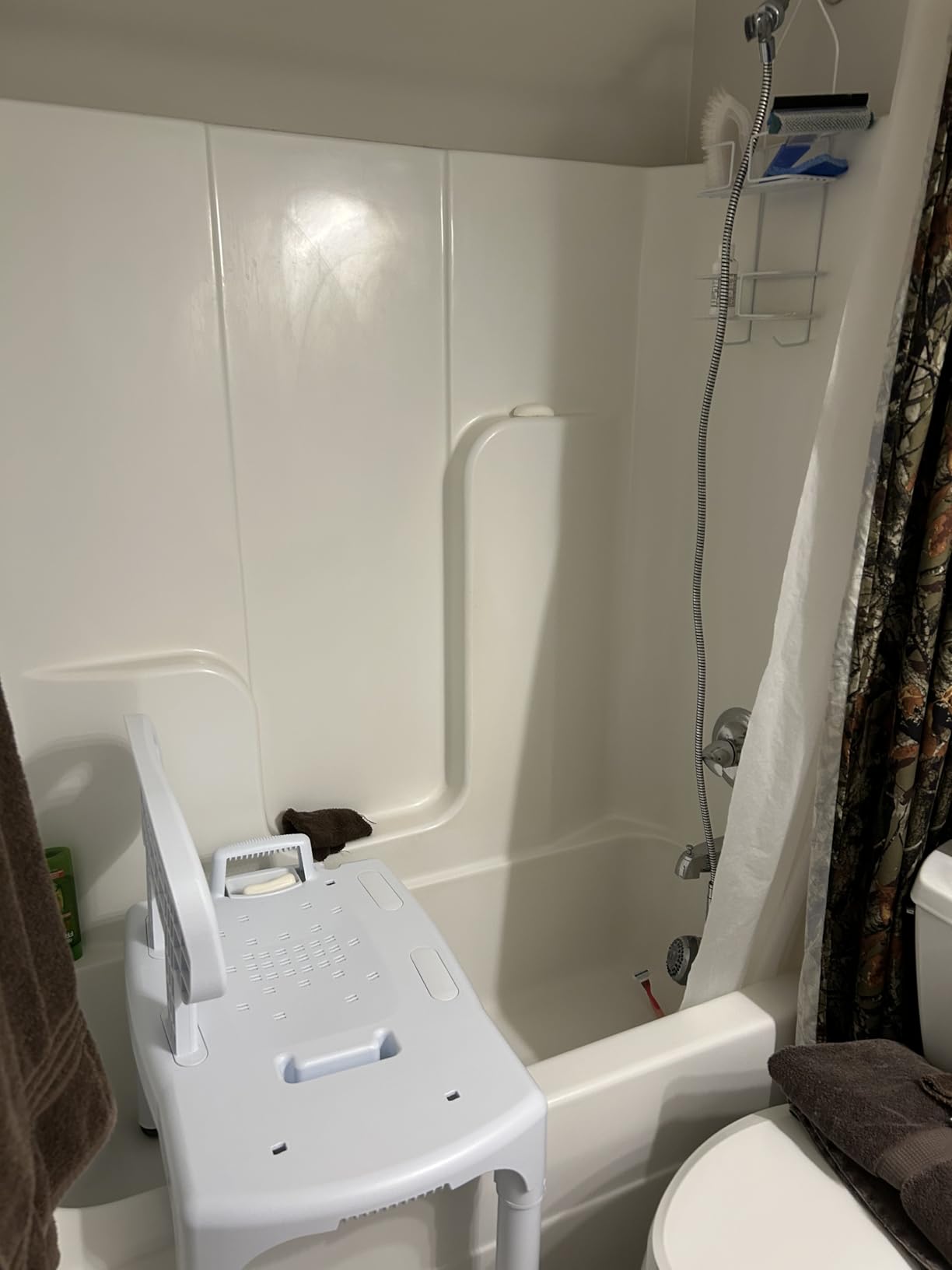
At 14.5 lb it is light for its rating, which is another point in favor of an independent user or a spouse doing the repositioning. The textured non-slip seating surface is molded into the plastic rather than applied on top, so there is no pad to peel, crack or shed. Overall dimensions are 19.02 by 29.76 by 32.99 inches, one of the more compact footprints in the group.
The trade-off is comfort and support. The backrest is minimal compared with a full arm-and-back model, and the seat is plain plastic with no padding, which matters for anyone who sits on it for twenty minutes rather than a quick shower. It is a competent, no-frills bench that does the entry problem well, and it is not trying to be a comfort seat.
When an all-plastic frame is the right call
Choose this if you live somewhere with hard water, high humidity, or a bathroom that never fully dries. There is nothing to corrode, and molded plastic will outlast an aluminum frame in a persistently damp space. It is also the easiest bench here to store between uses, which matters in a bathroom where the bench blocks the tub when nobody is bathing.
Travel and secondary-bathroom users get a lot from the quick disassembly. If a relative stays with you periodically and needs a bath, this is one bench you can put in a closet rather than leave bolted to the tub.
What you give up for that durability
Comfort is the honest answer. A hard plastic seat with a minimal back is fine for a ten-minute shower and uncomfortable past twenty, particularly for anyone with reduced body mass, pressure-sore risk, or post-surgical positioning restrictions. If the bench is going to be occupied for long stretches, a padded model is a better spend of your money and attention.
Support during transfer is also thinner here. The two backrest handles help a caregiver position, but there is no arm to push down on during the scoot, so a user with weak arms may need a bench with full armrests and a safety belt.
7. Medline Padded Transfer Bench — Best for Long Sitting Comfort
Medline Padded Transfer Bench for Bathtub and Shower, Height Adjustable, Slip-Resistant Legs, Rust-Resistant, Side Arm & Back Rest for Extra Support, 400 lb. Weight Capacity, Tool-Free Assembly
400 lb capacity
Padded seat and backrest
18-22 inch height
Side arm support
12 lb
Pros
- Padded seat and back are markedly more comfortable than hard plastic
- Reversible backrest suits either tub orientation
- Each leg adjusts independently for uneven floors
- Useful for anyone at risk of pressure sores
Cons
- Padding is thinner than the listing implies
- Can feel tight for a larger user
- Written instructions are unclear
This is the Medline padded variant, and it exists for a specific reason: some people cannot shower quickly. A padded seat and backrest spread pressure instead of concentrating it on a hard pan, which makes longer showers possible for users with limited body mass, post-surgical positioning restrictions, or existing pressure sensitivity. Caregivers notice the difference quickly because the user stops shifting position.
It carries a 400 lb rating on a rust-resistant aluminum frame and weighs 12 lb, so it stays in the light-weight class despite the padding. The seat measures 24 inches wide by 16 inches deep, with push-button height adjustment from 18 to 22 inches. The backrest reverses for either tub orientation, and there is a side arm rest for stability on the entry side. Each leg adjusts independently, which compensates for uneven tub floors.
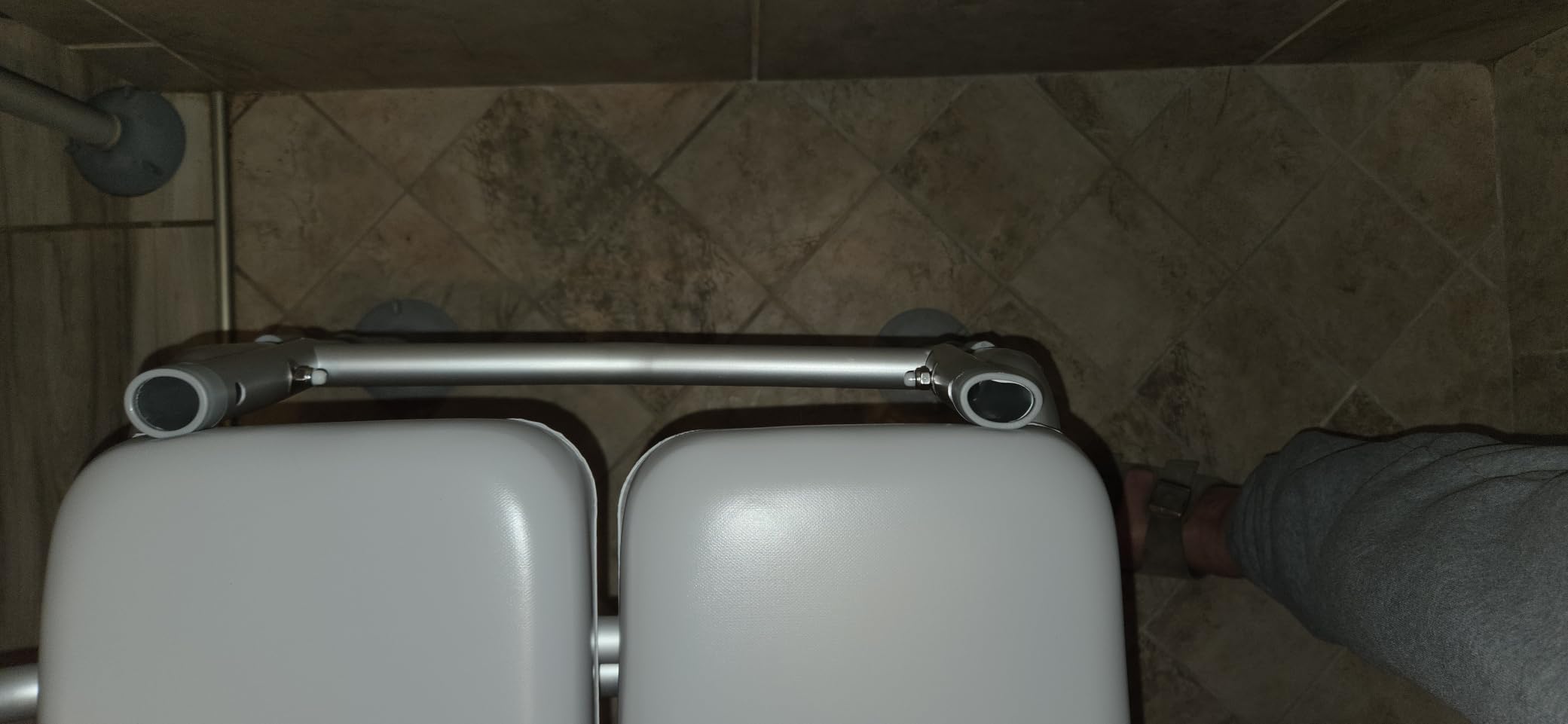
Wide suction-cup feet sit inside the tub and slip-resistant outer feet handle the bathroom floor, and the whole thing assembles tool-free with locking push buttons. Reviewers consistently report that the bench stays put while the user scoots across, which is the specific thing that makes a padded fixed-seat design safer than a padded swivel design in a small bathroom.
Honest notes: the padding is thinner than the product photography suggests, and some reviewers report it eventually cracking with age, which is normal for foam. Instructions are described as unclear, so budget a few extra minutes for setup or ask a caregiver to help. In a very small bathroom, a 32-inch overall width is tight for a larger user.

Who notices the padding most
People who bathe slowly, people who cannot be rushed, and people who already have skin fragility. If the shower is a five-minute event, hard plastic is fine and the extra comfort is wasted. If it is a twenty-minute sit, the padding is the feature that determines whether the bench is usable at all.
It is also a strong choice for caregiver households where the assistant is nearby. The independent leg adjustment means you can level the frame properly rather than working around an uneven tub floor with a rigid frame, and the side arm gives the user a fixed grip point on the entry side.
Limitations to plan around
Compare the 18-inch minimum height against the user’s leg length before ordering. For a short wheelchair user this sits too high, and the Gateway or the Moen both start lower. The overall width of 32 inches also crowds a narrow bathroom, and the fixed seat means a scoot is still required, which is demanding for weaker users.
Foam degrades. Plan on several years of daily use before the pad needs replacing, and check for cracking on an annual basis, especially in a humid bathroom.
8. Vive Shower Bench for Transfers — Best Drainage and Post-Op Recovery
Vive Shower Bench for Transfers – Heavy Duty Tub Transfer Bench for Bathtub
400 lb capacity
30 drainage holes in the seat
Stainless steel frame
18.5-23.5 inch height
Pros
- Extra leg bracing makes it feel sturdier than most
- Thirty drainage holes stop water pooling
- Reversible arm and backrest
- Partially assembled so setup is fast
Cons
- Assembly directions are hard to follow and a spring pin can dislodge
- Legs extend past the seat and can conflict with a close toilet
- Strong suction cups are hard to break loose
The Vive is the bench to look at if water management is your main worry. Its molded plastic seat carries 30 drainage holes, so shower water runs through instead of pooling around the user, and that is a meaningful difference in a seat you might sit in for a long time. The frame is stainless steel, which is a step up in corrosion resistance from the aluminum used on most benches here.
It is rated to 400 lb, weighs in at a base 32 inches wide with dual column extension legs that adjust to 23.5 inches of height, and the seat depth is listed at 24 inches. The arm and backrest reverse for either tub orientation, outer legs have non-skid tips, and the interior legs use large suction cup caps for a firm grip on the tub floor.
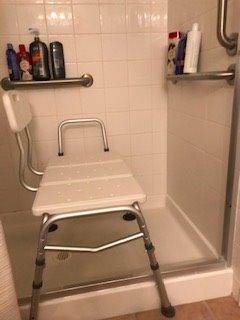
It arrives partially assembled with tool-free final assembly, and it is HSA and FSA eligible with a two year unconditional guarantee. Buyers in post-hip or post-knee recovery describe it as the bench that made independent bathing possible again during a period when almost nothing else was safe to attempt. The reinforced legs and drainage are the two features they name most.
Fit planning is the main task here. The legs extend beyond the seat footprint, so a toilet or vanity sitting close to the tub can conflict with them, and reviewers repeatedly flag this as the step to do before ordering. Assembly directions are described as not intuitive, and a spring pin inside a leg tube can dislodge during setup, so allow time and keep the parts organized. The suction cups grip well, sometimes too well, if you need to move the bench often.
Why drainage matters more than people expect
Water sitting on a seat is uncomfortable, but the more practical issue is that pooled water goes over the edge during a transfer and onto a bathroom floor. A user who cannot stand unaided then has to get out of a wet room. Drainage holes reduce that volume directly, and they also make the seat easier to wipe down between uses, which matters in a caregiving home.
The stainless frame adds a second layer of protection in the same direction. If you are choosing between two benches of similar design, the one that sheds water and resists corrosion will outlast the other in a humid bathroom.
When to choose something else
Choose another bench if a caregiver needs to move the bench several times a day, because the suction caps are difficult to break loose from the tub floor. If your bathroom is tight with a toilet or cabinet right beside the tub, the extending legs are the problem, and a more compact swivel model fits better.
Plan extra setup time for the assembly, and have a second person present for the first build. Once it is together, the post-op users who buy it tend to stay on it for the full recovery period and beyond.
How to Choose a Transfer Bench That Fits Your Tub
Most returns and most disappointed reviews in this category come down to one problem: the bench does not fit the tub. A bench can be perfectly rated, well made and still be wrong for your bathroom, so measure before you choose. Here is the three-measure checklist that catches nearly every fit failure, plus the four specification decisions that follow from it.
Measure your tub before you buy
1. Clear width across the tub rim. Measure the inside of the tub from wall to wall at the widest point, and compare it to the bench’s overall width rather than its seat width. A 26.5 inch seat on a 32 inch frame still needs 32 inches of clearance to sit over the tub. If the measurement is under about 30 inches, concentrate on the narrower swivel designs.
2. Height of the tub rim from the floor. This is the number that determines whether the bench can straddle the tub at all. A tall tub wall needs a bench whose frame sits high enough to bridge it, and some deep soaker tubs need an optional leg extension kit. If the rim is unusually low, check that the bench’s minimum seat height still leaves you in a sensible seated position.
3. Floor space outside the tub. Measure from the tub wall outward to the nearest toilet, vanity or door swing. This is the measurement nobody thinks to take, and it is the one that decides whether a 39 inch frame is usable in your bathroom. Leave room for the user to position a wheelchair in that space too.
Two bonus checks. Measure your tub’s interior depth and slope, because a front inner leg on a steeply sloped floor can produce a wobble no bench solves. And note where the water would go: if the bench extends well outside the tub, plan on a split shower curtain or a shower curtain rod that can be moved aside.
Weight capacity tiers: pick a frame rated above you
Weight capacity is the least glamorous spec and the most important. It falls into three recognizable tiers, and buying above your own body weight gives you margin for a caregiver leaning on the frame or a shift in your mobility.
The standard tier runs 300 to 330 lb and covers most single users under about 250 lb. The heavy-duty tier at 400 lb is the category norm and is what most of this roundup offers. The bariatric tier starts at 500 lb and uses wider seats, heavier frames, and often a 21 to 24.5 inch seat width. If you need that tier, also check the seat width, because a 500 lb rating on a narrow 15 inch seat is uncomfortable even when it is structurally adequate.
One warning from real users: do not treat a 400 lb rating as a target. If your body weight is 350 lb, a 400 lb frame leaves a 50 lb margin, and adding an assisting caregiver’s weight during a transfer can approach it. Either go a tier higher or make sure the caregiver does not lean on the frame.
Seat height: the mistake petite and short users make
This is the most commonly reported fit failure and it is not about length. Benches are designed around a 300 lb adult, and their minimum seat heights commonly land between 17.5 and 19 inches. For a shorter wheelchair user, a petite adult, or anyone with shorter legs, that height is a perch they cannot get down onto, and the whole product fails at the one job it exists to do.
What to look for instead: the minimum height in the specifications, not the maximum. In this roundup the range runs from a 14 inch minimum on the Platinum Health Gateway to 19 inches on the DMI. A drop-arm or swiveling design helps too, because the user does not need to lift themselves onto a high edge; they pivot down into the seat.
Comfortable sitting height puts the user’s knees slightly below hip level with both feet planted or resting flat inside the tub. If a bench cannot reach that position at its lowest setting, it is the wrong bench, regardless of how good its rating looks.
Swivel and slide, or fixed seat
A fixed bench is a flat surface you scoot across. A sliding or swiveling bench moves along rails, or rotates 90 degrees and locks, and it requires much less leg strength. Swivel designs suit anyone with a hip or knee restriction, one-sided weakness, or a caregiver doing the transfer. Fixed designs suit users with good bilateral arm and leg strength who want a simpler, lighter, cheaper frame.
Slide mechanisms need a little maintenance. Squeaking or jamming is usually a lack of lubrication on the rails, and a dry silicone-based lubricant applied to the track a few times a year keeps the movement quiet. Wipe the rails and drainage holes after use, and dry the frame, because trapped moisture in a track is what causes sticking over time.
Water containment and curtain control
A bench that extends outside the tub will let water onto the floor during every transfer. That matters far more for this audience than for anyone else, because a wet floor is a slip risk for someone who cannot catch themselves. Three fixes, in order of preference: choose a compact swivel design that stays mostly inside the tub, use a bench with drainage holes in the seat, and install a split shower curtain or a curtain you can swing clear during a transfer.
Wall-mounted and folding designs exist for very small bathrooms, and they are worth a look if you genuinely have no floor space. Their trade-off is installation complexity and a lower weight rating on some models, so measure carefully and consider having it installed.
Assembly, reversibility and daily upkeep
Tool-free assembly is now standard in this category, and the two Platinum Health models go from box to usable in under five minutes. Moen’s unit needs a Phillips screwdriver, and the Vive arrives partially assembled but with instructions that reviewers find hard to follow. If a single elderly spouse will be setting this up, tool-free is a real advantage.
Check reversibility. A reversible backrest or armrest lets one bench serve a bathroom where the wheelchair parks on either side, which is common when a user transfers from a bed on one side and a chair on the other. Also plan where the bench lives between uses, since most of these sit in the room permanently and some block the tub.
If you want to compare how we approach similar equipment decisions, our bench grinder buying guide uses the same measure-first structure, and the bench vise guide covers the weight-capacity reasoning in more depth.
Transfer Bench vs Shower Chair vs Wall-Mounted Seat vs Tub Lift
A shower chair sits fully inside the tub, while a transfer bench straddles the tub wall so you can sit down outside and move in without stepping over the rim. If you can safely step over the tub lip, a shower chair is enough. If you cannot, you need a bench. A wall-mounted seat saves floor space but requires drilling and a suitable wall. A tub lift lowers you into the water mechanically and is the answer when a bench is not enough.
Shower chair. Sits entirely within the tub basin. Lightest, cheapest, no floor footprint outside the tub, and the only option if you can still step over the rim safely. It fails the moment balance or hip and knee mobility declines, because there is no way to get in without that step.
Tub transfer bench. Straddles the wall, with a portion of the seat outside the tub for entry and a portion inside for bathing. This is the right answer for anyone who cannot step over the rim but can do a lateral transfer with arm support. It is the focus of this roundup.
Wall-mounted or folding seat. Folds flat against the wall when not in use, which solves the small-bathroom problem that floor-standing benches create. The trade-offs are installation effort, a fixed seat height you choose once, and often a lower weight rating than a freestanding frame.
Tub lift. A powered or hydraulic chair that lowers and raises you through the tub wall, and the only realistic option for someone who cannot perform a lateral transfer at all. It also requires a cut-out section of the tub wall. The cost puts it out of reach for many households, which is the main reason people search for a bench as a lower-cost substitute.
Using a Transfer Bench Safely
Tub transfer benches are safe when they are the right size for the user and set up correctly on a level surface, and unsafe when they are not. Most accidents trace to skipping the setup checks or attempting a transfer the user’s strength cannot support.
1. Check the feet every time. Confirm the suction cups are seated on the tub floor and the outer rubber tips are flat on the bathroom floor before the user sits down. A dry floor and a clean tub are what let the cups grip.
2. Set the height before the transfer, not during. Adjust the seat while nobody is on it, then have the user sit with knees slightly below hip level and both feet planted. Adjusting under load is how frames get bent.
3. Buckle the safety belt. If the bench has one, use it for every transfer. It is there for the moment when the user’s grip fails, not for the transfers that go perfectly.
4. Never step over the tub lip. The entire purpose of the bench is to remove that step. Stepping over the rim and then sitting down is a fall, not a transfer.
5. Push, do not pull. Moving into the tub is done by pushing down on the armrests or the assist handle. Pulling upward on the armrests with no leg strength is the classic mechanism behind most bench-related injuries.
6. Have a caregiver on the outside. For anyone over 300 lb, or with two-person care needs, a second person stabilizes the bench from the bathroom side while the user pushes in. Never let an assistant stand on the bench or lean on the seat.
Water is the other half of safety. A split shower curtain, a seat with drainage holes, and a dry floor between uses matter as much as the frame. Add a non-slip bath mat outside the tub, and keep the path from the bench to the toilet dry.
Insurance, Medicare and FSA Coverage for Transfer Benches
Original Medicare generally does not cover a standard tub transfer bench. Under Medicare’s durable medical equipment rules, the covered category is shower and commode chairs, and a bench is not in that category. A physician-documented need can change that. If a doctor or occupational therapist writes that you cannot safely step into or out of a bathtub and a bench is the required solution, it can be submitted as durable medical equipment with a written order, a supplier, and documentation of why a lower-cost chair will not work.
Medicare Advantage plans vary widely and sometimes offer broader bathroom safety coverage than original Medicare, so check your specific plan documents rather than assuming. The same applies to Medicaid, which in some states has bathroom safety allowances for home modifications.
FSA and HSA coverage is the realistic route for most people. Several benches in this roundup are explicitly marked FSA eligible, including the DMI model here, and HSA eligibility is also common. Funds can typically cover the bench plus any DME-supplier paperwork fee. Buy through a supplier that documents eligibility at checkout so you do not have to reconstruct it at reimbursement.
Two practical notes. Coverage rules change, so confirm current terms with your insurer before you commit to a specific model. And if you are working with an occupational therapist, ask them to review fit as well as coverage, because the bench that gets approved is only useful if it fits the tub.
When a Transfer Bench Is Not Enough
A transfer bench has one hard requirement: the user must be able to perform a lateral transfer, meaning they can push with their arms and move their body sideways onto the seat. If they cannot, no bench in this roundup will work, regardless of its rating.
Signals that you need something else include being unable to bear any weight on either leg, being unable to sit up unassisted from a low position, needing two-person or full-hoist assistance, or needing to remain semi-reclined and supported through the transfer. Recumbent designs exist, and they are a different category of equipment with different weight ratings.
For those cases the realistic options are a powered or hydraulic tub lift, which requires a cut-out section of the tub wall, a roll-in shower conversion, or a ceiling-mounted lift with a sling system. All three cost significantly more than a bench. Users on r/hottub and accessibility forums frequently point out that lifts are priced well beyond what many households can absorb, which is exactly why a well-fitted bench is the practical first step for so many people.
Before spending anything, ask an occupational therapist for a home mobility assessment. A forty-five-minute assessment regularly prevents a wrong purchase, because the recommendation sometimes turns out to be grab bars, a shower door modification, or a different bathroom entirely rather than a different bench.
Frequently Asked Questions
Will Medicare pay for a shower transfer bench?
Original Medicare usually does not cover a standard tub transfer bench, because covered durable medical equipment in this area is limited to shower and commode chairs. Coverage becomes possible when a physician or occupational therapist documents in writing that you cannot safely step into or out of a bathtub and a bench is the required solution, submitted as durable medical equipment with a written order. Medicare Advantage plans sometimes offer broader coverage, and FSA or HSA funds are the more realistic route for most buyers.
How safe are tub transfer benches?
They are safe when the frame is rated above the user’s weight, it is level, the suction cups are seated, and the user has enough arm strength to push rather than pull. The main risks are using a bench rated too low, skipping the height adjustment under load, and standing up on wet flooring around the tub. Using the safety belt, never stepping over the tub lip, and having a second person stabilize the bench for users over 300 lb all reduce the risk further.
Is a shower chair or a tub transfer bench better for me?
If you can safely step over the tub rim, a shower chair is enough. If you cannot, a transfer bench is the right choice, because it straddles the tub wall so you can sit down outside the tub and move in without lifting a foot over the edge.
What type of bench is best for a shower?
For most people, a padded or molded A-frame bench with a backrest, a 400 lb rating and push-button height adjustment is the best balance of safety and simplicity. If you have hip, knee or one-sided weakness, add a sliding or swiveling seat so you pivot rather than scoot. If you are a caregiver washing someone with limited mobility, look for a removable hygiene cut-out. If your bathroom is very small, choose a compact swivel design that stays mostly inside the tub.
What is the best shower transfer bench for elderly people?
For an independent senior, a lightweight bench with a 400 lb rating, tool-free assembly and a reversible backrest is easiest to live with, because it can be repositioned without help. For a senior who needs a caregiver, a sliding and swiveling model with pivot armrests and a safety belt makes the assisted transfer far less demanding. The Medline padded model is the pick when the shower is long and pressure comfort matters.
What is the weight limit for a standard tub transfer bench?
Standard benches are usually rated 300 to 330 lb. Heavy-duty models, which are the category norm, are rated 400 lb. Bariatric models start at 500 lb and pair that rating with a wider seat. Buy a tier above your own body weight so there is margin when a caregiver leans on the frame during a transfer.
What is a good transfer bench for a bathtub?
A good bathtub transfer bench has a 400 lb rating, an anodized aluminum or stainless steel frame that resists corrosion, height adjustment that reaches a low enough minimum for the user to sit down, and reversible or adjustable armrests and backrest. Fitted dimensions matter most: the bench must straddle your tub rim and its outside legs must reach the bathroom floor. Measure the tub width, rim height and floor clearance before ordering.
Conclusion: The Best Transfer Benches for Tub Showers in 2026
The Medline Transfer Bench for Bathtubs and Showers is the best transfer bench for tub showers for most households. It pairs a 400 lb rating with a light 12.6 lb frame, a reversible backrest, push-button height adjustment and tool-free assembly, and it carries more verified owner feedback than anything else in this roundup. If you want a second opinion on the one bench most people should start with, start there.
For specific situations, the choices narrow quickly. Choose the Platinum Health Carousel when the user has hip, knee or one-sided weakness and needs to pivot rather than scoot. Choose the DMI bench for caregiving, because the removable hygiene cut-out at a 400 lb rating is the combination this category rarely offers. Choose the Platinum Health Gateway for a small bathroom or a shorter user, since its 14 inch minimum seat height is the lowest here. Choose the Moen for maximum stability and the only limited lifetime warranty in the group. Choose the Carex in a persistently humid bathroom, where an all-plastic frame has nothing to corrode. Choose the Medline padded bench for long showers and pressure comfort, and the Vive when drainage and post-op recovery are the priorities.
Whatever you choose, measure your tub first: the rim width, the rim height from the floor, and the clearance to the nearest toilet. Most of the disappointments in this category were fit problems, not quality problems. Then buckle the belt, check the suction cups, and never step over the rim.