
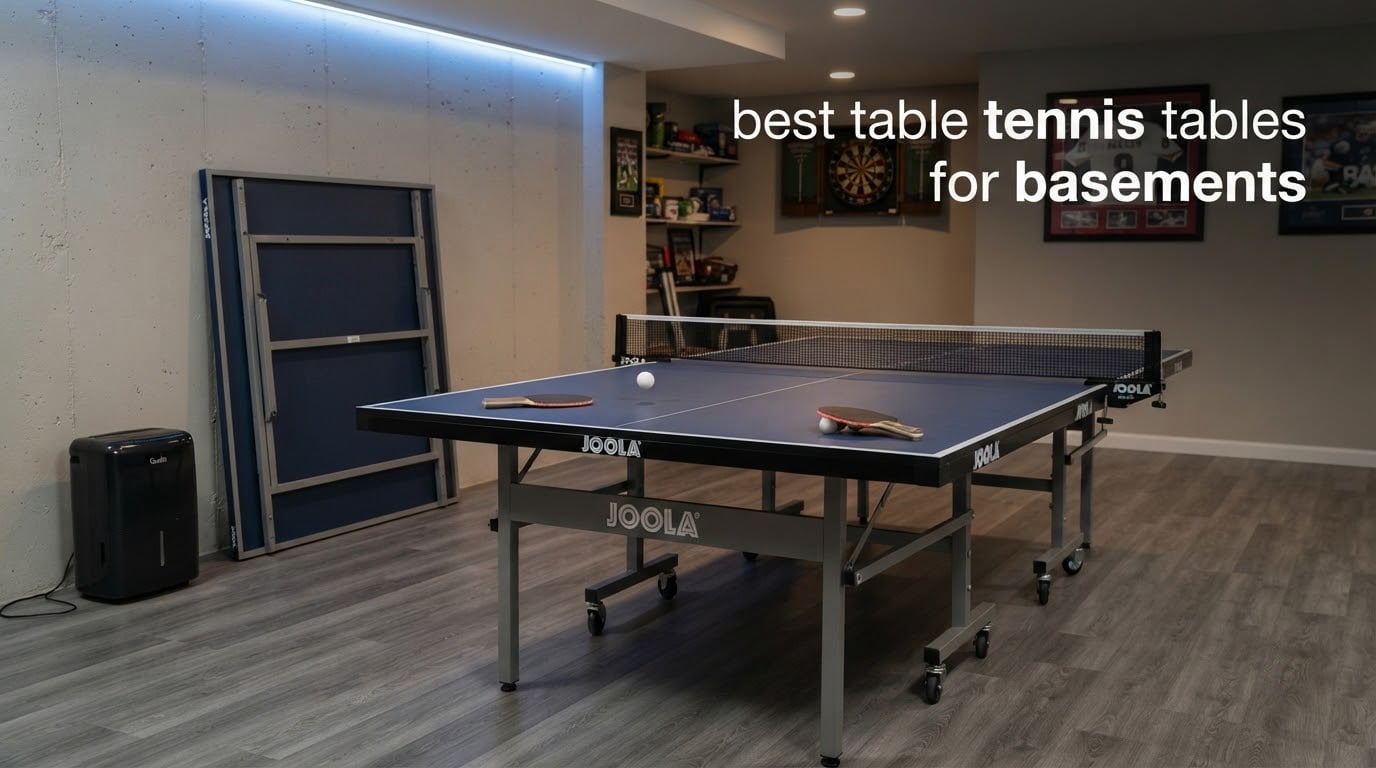
Most basement table buying advice starts with thickness and stops there, which is exactly backwards. Below ground you are dealing with a floor that may not be level, air that holds more moisture than the rest of the house, a ceiling that is closer than you think, and a room that has to double as something other than a game room.
That makes the best table tennis tables for basements a much narrower list than the best table tennis tables in general. We spent weeks comparing eight indoor tables on the specs that actually decide whether a table survives below grade: top thickness and core material, folding hardware, caster type, leg levelers, frame material and folded footprint. Every pick below states where it wins and where it falls short.
Before the list, three questions do most of the work. How much floor space do you really have once you add play clearance? Is your basement damp enough to worry about the top? And is the room going to be used for something else on the other six days of the week?
Our overall pick, the JOOLA Inside Professional MDF, is the table we would put in a typical finished basement because it folds in about half a minute, rolls on 3-inch lockable casters and holds a consistent bounce on a 15mm MDF top. If your basement is tight, the STIGA Space Saver at 71 inches long solves the space problem in a way no full-size table can.
Table of Contents
Top 3 Table Tennis Tables for Basements in 2026

JOOLA Inside Professional MDF
- 15mm MDF regulation top
- 75kg alloy steel frame
- 3-inch lockable casters
- Playback mode

STIGA Advantage Series
- 13mm top on steel tube apron
- Arrives 95% preassembled
- Two halves on lockable casters
- Includes 72 inch net
JOOLA Rally TL Professional
- Regulation 9 by 5 ft MDF top
- Height adjusters on steel legs
- 4-wheel trolley per half
- Corner ball holders
The three cards above are the shortlist. The JOOLA Inside Professional takes the top slot on the strength of the largest owner base of anything we reviewed and a top that owners describe as tournament quality. The STIGA Advantage Series earns its place as the value pick because it arrives 95% preassembled and one person can move it. The JOOLA Rally TL Professional is the one to buy if you are training for league play and want height adjusters and a 4-wheel trolley under each half.
8 Best Table Tennis Tables for Basements (October 2026)
| Product | Specs | Action |
|---|---|---|
| JOOLA Inside Professional MDF Indoor Ping Pong Table |
|
Check Latest Price |
| STIGA Advantage Series Indoor Ping Pong Table |
|
Check Latest Price |
| JOOLA Rally TL Professional MDF Indoor Ping Pong Table |
|
Check Latest Price |
 STIGA Space Saver Compact Ping Pong Table STIGA Space Saver Compact Ping Pong Table |
|
Check Latest Price |
 JOOLA Quadri 15mm Indoor Ping Pong Table JOOLA Quadri 15mm Indoor Ping Pong Table |
|
Check Latest Price |
 MD Sports Foldable Table Tennis Table Set MD Sports Foldable Table Tennis Table Set |
|
Check Latest Price |
 EastPoint Foldable Table Tennis Conversion Top EastPoint Foldable Table Tennis Conversion Top |
|
Check Latest Price |
 GoSports Mid-Size Table Tennis Game Set GoSports Mid-Size Table Tennis Game Set |
|
Check Latest Price |
Note the spread in size and construction across these eight. Four are full regulation 108 by 60 inch, one is a 71-inch compact table, one is a 6-foot mid-size set, and one is a conversion top that needs an existing table underneath.
1. JOOLA Inside Professional MDF Indoor Ping Pong Table – The Best Overall Basement Table
JOOLA Inside Professional MDF Indoor Ping Pong Table with Quick Clamp Table Tennis Net and Post Set – 10 Minute Easy Assembly – Tournament Quality – Foldable with Single Player Playback Mode, Blue
15mm MDF top
108 x 60 x 30 inch
75 kg
3 inch lockable casters
Pros
- Consistent tournament-quality bounce
- Quick assembly in about 10 minutes
- Folds and rolls away in seconds
- Sturdy alloy steel frame
- Playback mode for solo practice
Cons
- Very heavy at 75 kg so two people are needed to move it
- Paddles and balls not included
- A minority report the frame arrived dented
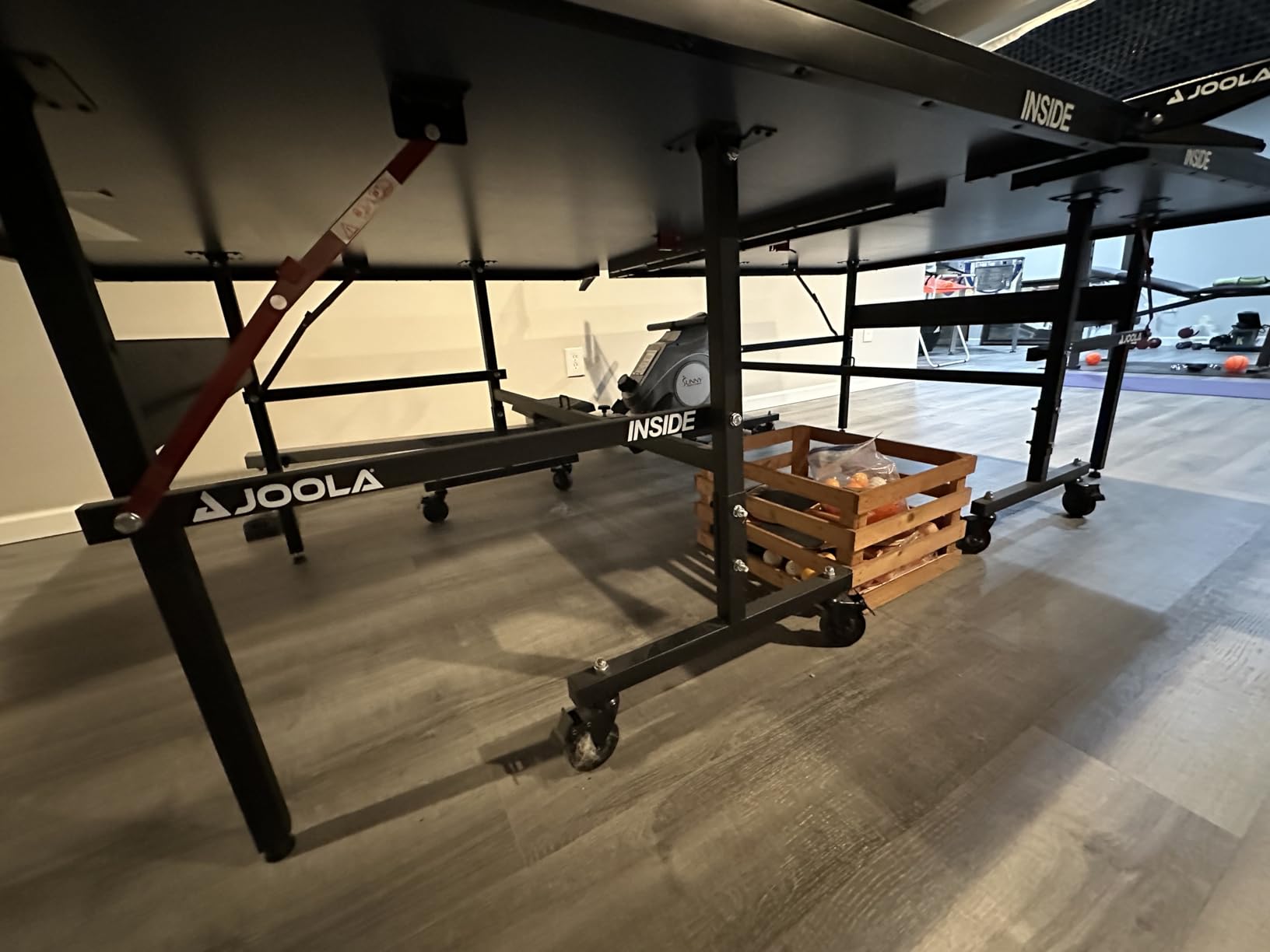
This is the table we keep coming back to for a standard basement, and the reason is simple: it is a regulation 108 by 60 inch table that disappears when you are not using it. The two halves sit on 3-inch lockable casters, so folding and rolling the whole thing to the wall takes roughly half a minute.
Owners consistently describe the bounce as the standout, with the surface staying consistent across the full width rather than going dead in the corners. Assembly is close to the advertised 10 minutes because the wheels are the main build step, and the quick-clamp net and post set is included.

The frame is alloy steel and does not wobble in play, which matters more in a basement than it sounds, because a table near a wall often gets bumped. Owners also report it living happily in the open, ready-to-play position in a rec room rather than being shoved into a corner.
Where it disappoints is weight. At 75 kg this is a two-person job to carry or flip, and if your basement is only reachable down a narrow staircase you need to plan the delivery day accordingly. Paddles and balls are sold separately, which catches out first-time buyers more than anyone else.
Is it worth the extra kilograms compared with a 13mm table?
Yes, if anyone in the house is learning to play properly. The jump from a 13mm entry-level top to a 15mm MDF top is the most noticeable upgrade in this list, and it is the difference between a table that frustrates a developing player and one that does not.
It is also the last step. Going from 15mm to a 25mm competition top costs real weight and real stairs, and for a family basement the 15mm MDF surface is the sensible stopping point.
What will go wrong with it in a damp basement?
Nothing catastrophic, as long as you keep it off the slab. MDF edges are the weak point, so the practical move is a cover, a mat under it, and a dehumidifier running in the same room rather than the basement being left to its own humidity.
A few owners reported the steel frame arriving dented in transit. It is worth photographing the frame the day it lands so any freight damage is straightforward to raise.
2. STIGA Advantage Series Indoor Ping Pong Table – Best Value Pick
STIGA Advantage Series Indoor Ping Pong Table, 13,15,18, and 25mm Tabletops
13mm wood top
Steel tube apron
Arrives 95% preassembled
Includes net and posts
Pros
- Genuinely 10-minute setup
- Light enough for one person to move
- Steel tube apron gives a reliable bounce
- Halves roll on lockable casters
- Playback mode for solo drill
Cons
- 13mm top is entry-level and bounces slower than thicker models
- Paddles and balls not included
- Only a 90-day warranty
This is the recommendation for a basement that has to double as something else, because it is the only table in the list most owners move on their own. At 141 pounds it still takes planning, but the two independent halves on 2-inch lockable casters make it a one-person job in practice.
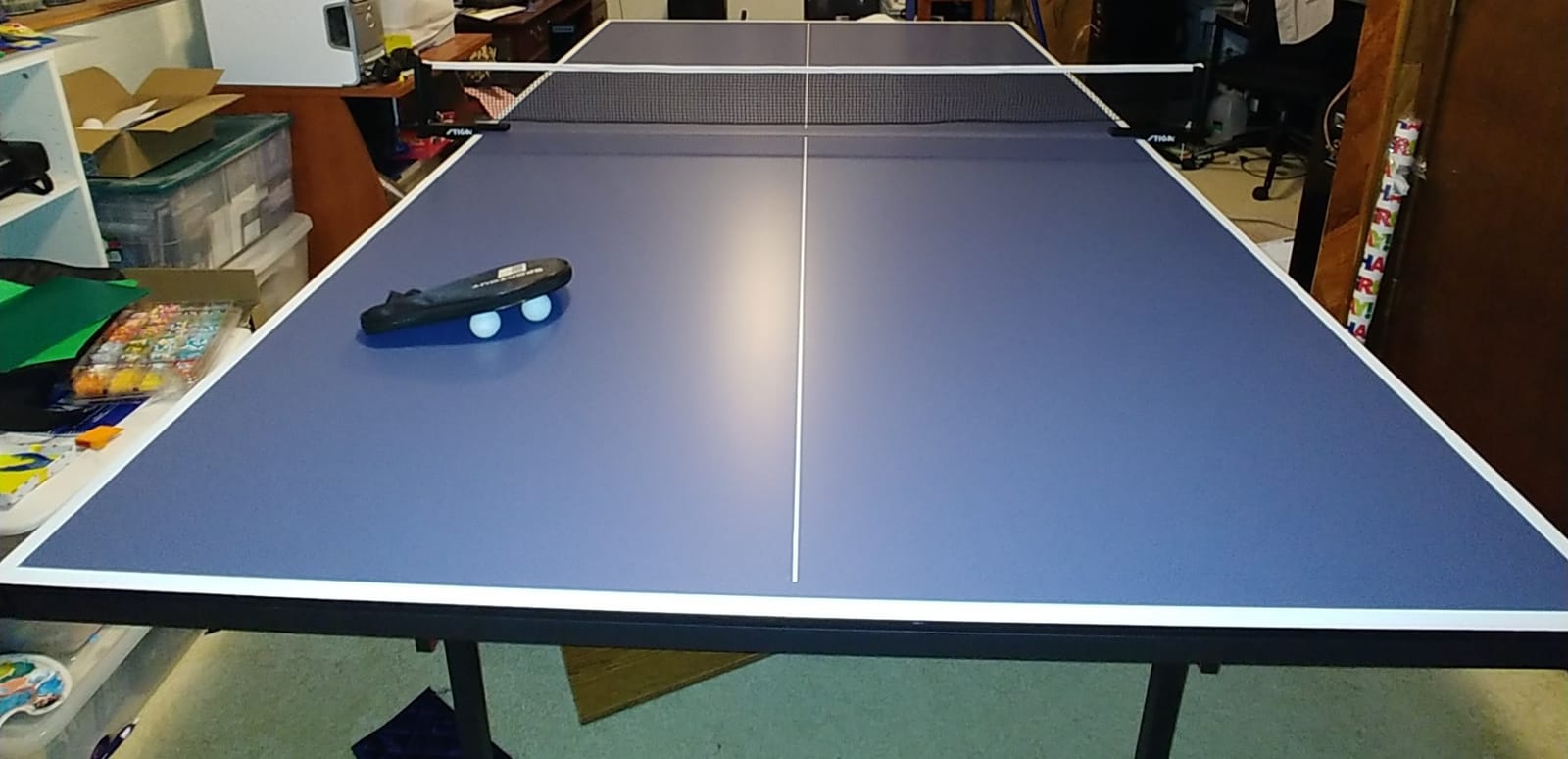
The 10-minute setup claim holds up. The table arrives 95% preassembled, and the 13mm tabletop is reinforced with a 0.75-inch steel tube apron, which is where the reliable bounce comes from at this thickness.
For basement storage, the playback mode is more useful than most people expect. Fold one half upright, engage the safety latch and you have a solo practice surface using half the floor space, which matters in a room that also holds a sofa and a TV.
The honest drawback is thickness. Thirteen millimeters is the entry end of the range and it plays noticeably slower than the 15mm tables in this list. If a teenager in the house is starting to train, you will outgrow this top within a year.
How much play quality do you give up at 13mm?
Enough to notice if you compare it directly, not enough to matter for family rallies and casual league nights. Owners consistently call it dependable recreational play, which is a fair description of where a basement table usually sits.
The STIGA Advantage family also comes in thicker variants, so the honest framing is that this is the entry rung of a range rather than a dead end.
Is the 90-day warranty a reason to look elsewhere?
Only if your basement is unfinished and damp. Retailer support staff confirm the adjustable legs handle uneven floors, but a short warranty is thin cover if a top ever cups in a humid room, so pair this with a cover and a dehumidifier.
For a finished basement with climate control, the short warranty is a much smaller concern than the price-to-spec ratio you are getting.
3. JOOLA Rally TL Professional MDF Indoor Ping Pong Table – Best for League and Training Play
JOOLA Rally TL Professional MDF Indoor Ping Pong Table w/Quick Clamp Table Tennis Net & Post Set – 10 Minute Easy Assembly – Corner Ball Holders – Tournament Quality – Includes Playback Mode
Regulation 9 x 5 ft MDF surface
Steel legs with height adjusters
95% pre-assembled
4-wheel trolley per half
Pros
- True regulation 108 by 60 inch playing surface
- 15-minute setup with 8 bolts
- Separate 4-wheel trolleys simplify moving
- Corner ball holders and abacus scorers included
- Sleek black top suits a finished room
Cons
- Heavier than recreational tables so two people are needed
- Costs more than other 15mm tables
- Paddles and balls not included
This is the pick for a basement being used as a real training surface rather than a family game room. On a mytabletennis.net thread, a player who describes being a basement player his whole life describes buying a table to finally get consistent, and that is exactly the use case this table serves.
Owners highlight the height adjusters on the steel legs as the feature that matters most. On a basement slab that is close to level but not perfectly level, adjusters are what keep the surface playing true over months rather than sagging in one corner.
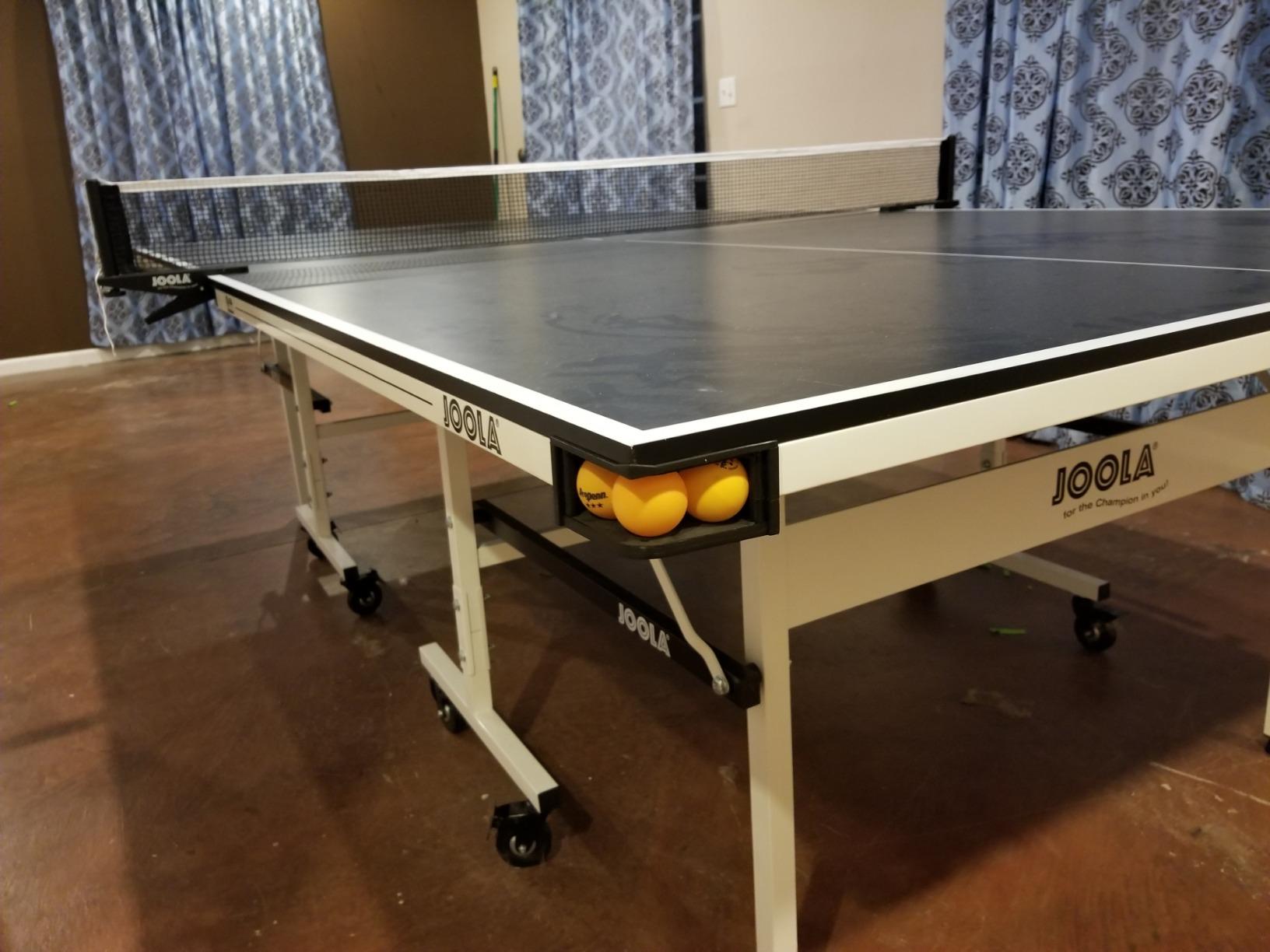
Each half sits on its own 4-wheel trolley with automatic anti-tilting locks, so unfolding, folding and moving are all straightforward. Four corner ball holders and two magnetic abacus scorers are small touches that make it feel like a club table rather than a garage prop.
Two people are still needed to reposition it, and you are paying more than other 15mm tables for that build quality. But if you are training toward league or tournament play, the level surface is the reason to spend here.
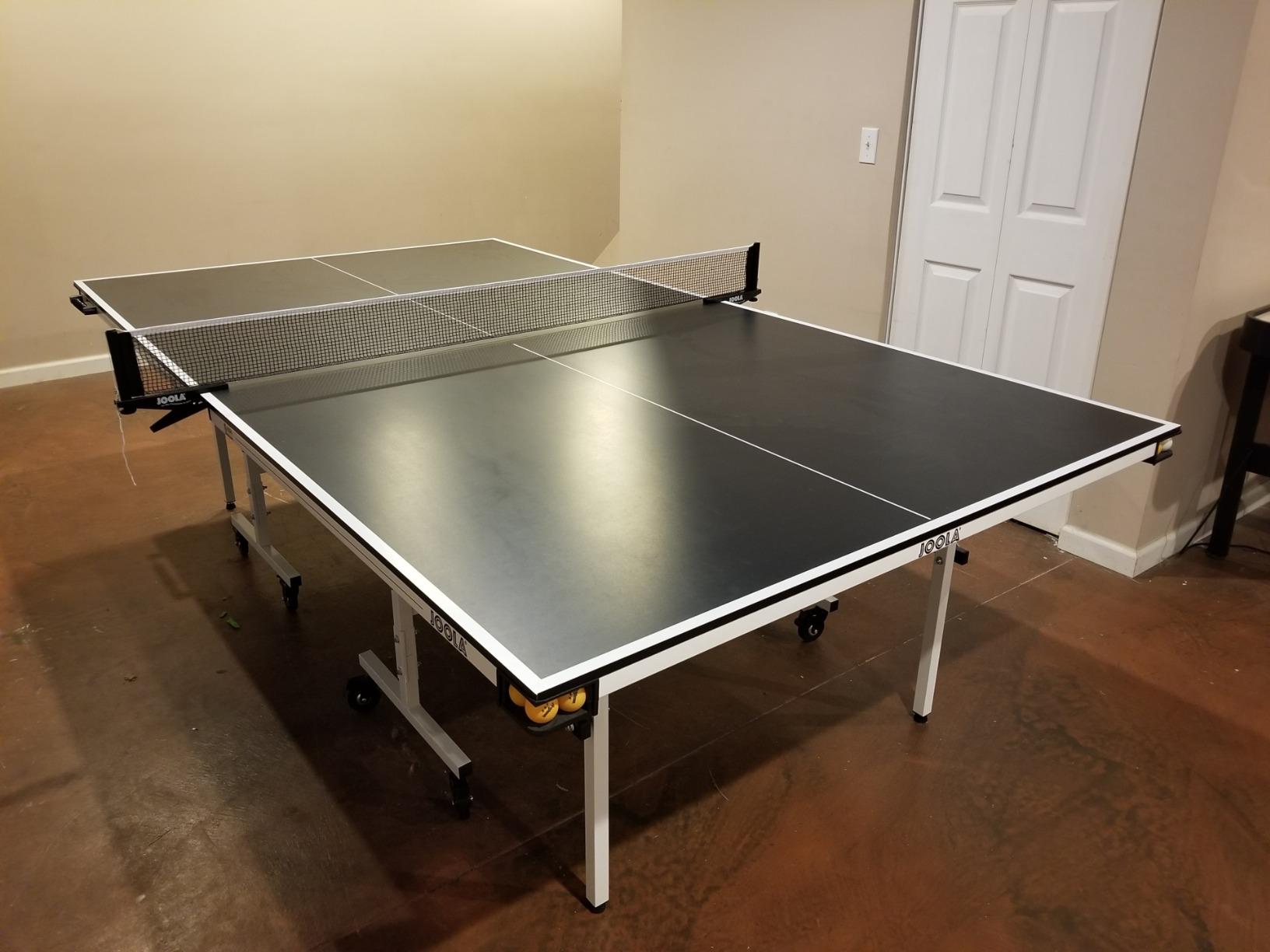
Do the height adjusters actually fix an uneven basement floor?
They fix small and medium variation, and the technical detail here is the thick steel legs with adjusters rather than thin threaded feet. Retailer support confirms the legs adjust specifically for uneven floors, which tells you how often buyers ask about it.
What adjusters cannot fix is a slab that slopes by more than a few inches across the table footprint. That is a shim or plywood-overlay job, not a table job.
Is it worth paying more than a 15mm MDF alternative?
For league and training use, yes. The regulation surface, the anti-tilting trolleys and the height adjusters are all things you feel during long practice sessions rather than during a five-game family session.
For casual play the same money buys more elsewhere, and that is why it sits at number three rather than first.
4. STIGA Space Saver Compact Ping Pong Table – Best for Small Basements
STIGA Space Saver Ping Pong Table – Woodgrain
71 x 40.5 x 30 inch playing surface
MDF top on alloy steel
83 pounds
Net and posts included
Pros
- Compact footprint for tight basements and dorms
- No assembly required
- Halves work as two separate tables
- Folds to a vertical storage position
- Net and post set in the box
Cons
- 71 inch surface limits competitive play
- Only a 30-day warranty
- Slower ball speed than a 9-foot table
If a full regulation table plus clearance will not fit, this is the table that makes the idea possible at all. At 71 by 40.5 inches it is roughly a foot shorter than a standard table, and when you add the play clearance a regulation table needs, the difference decides whether the room works.
Owners buying it for tight spaces consistently point to three things: no assembly, halves that separate into two general-purpose tables, and a fold that stands the table up vertically so the floor is free for other basement use. That last point is the real basement feature.
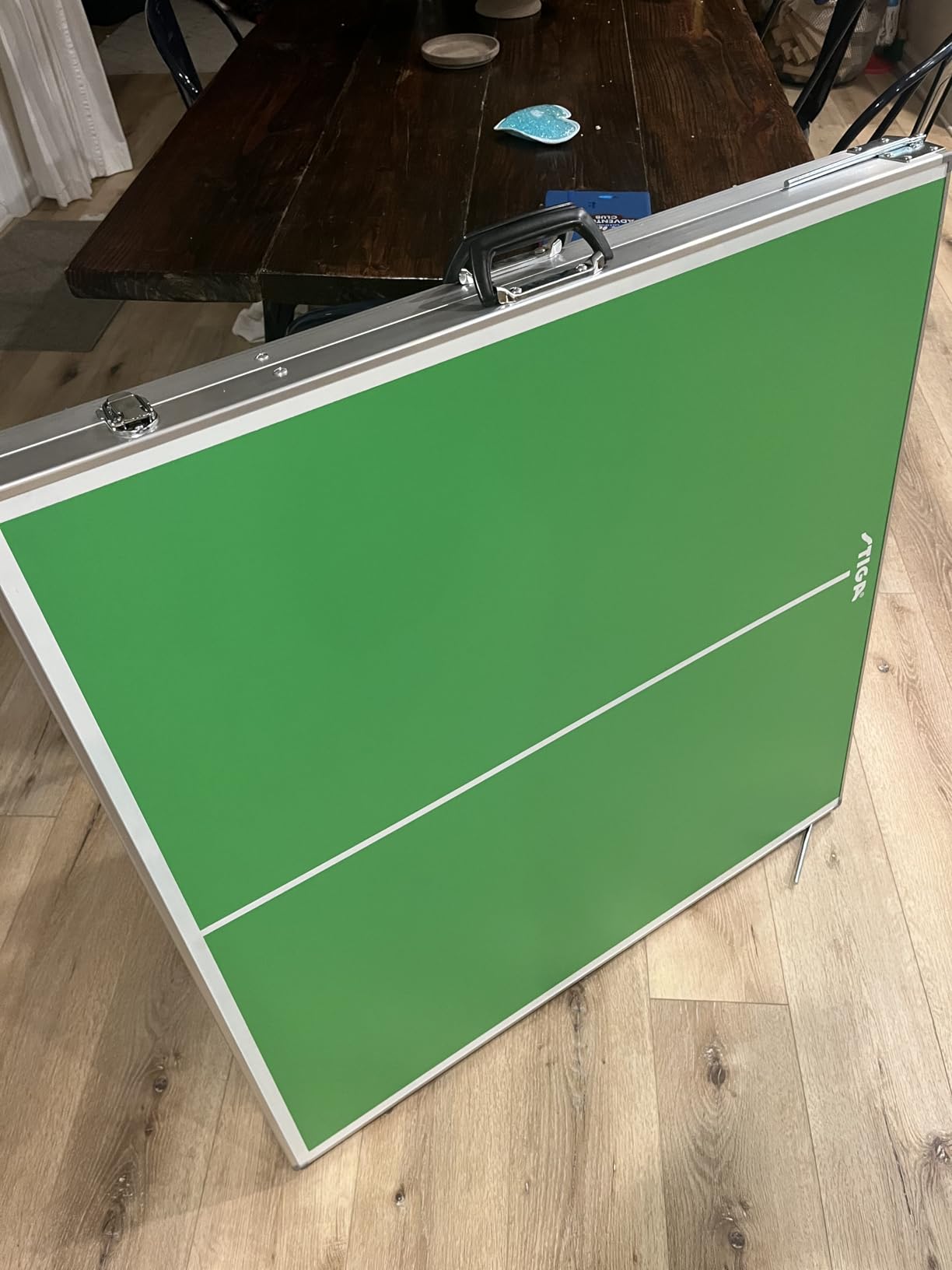
At 83 pounds it is one of the lighter options here, and the woodgrain MDF top on an alloy steel frame keeps the bounce consistent for the size. The included net and post set means nothing else needs buying to get started.
The trade-off is honest and unavoidable. A smaller surface means less room to swing, and ball speed is lower than on a 9-foot table, so this is family and casual play rather than competition.
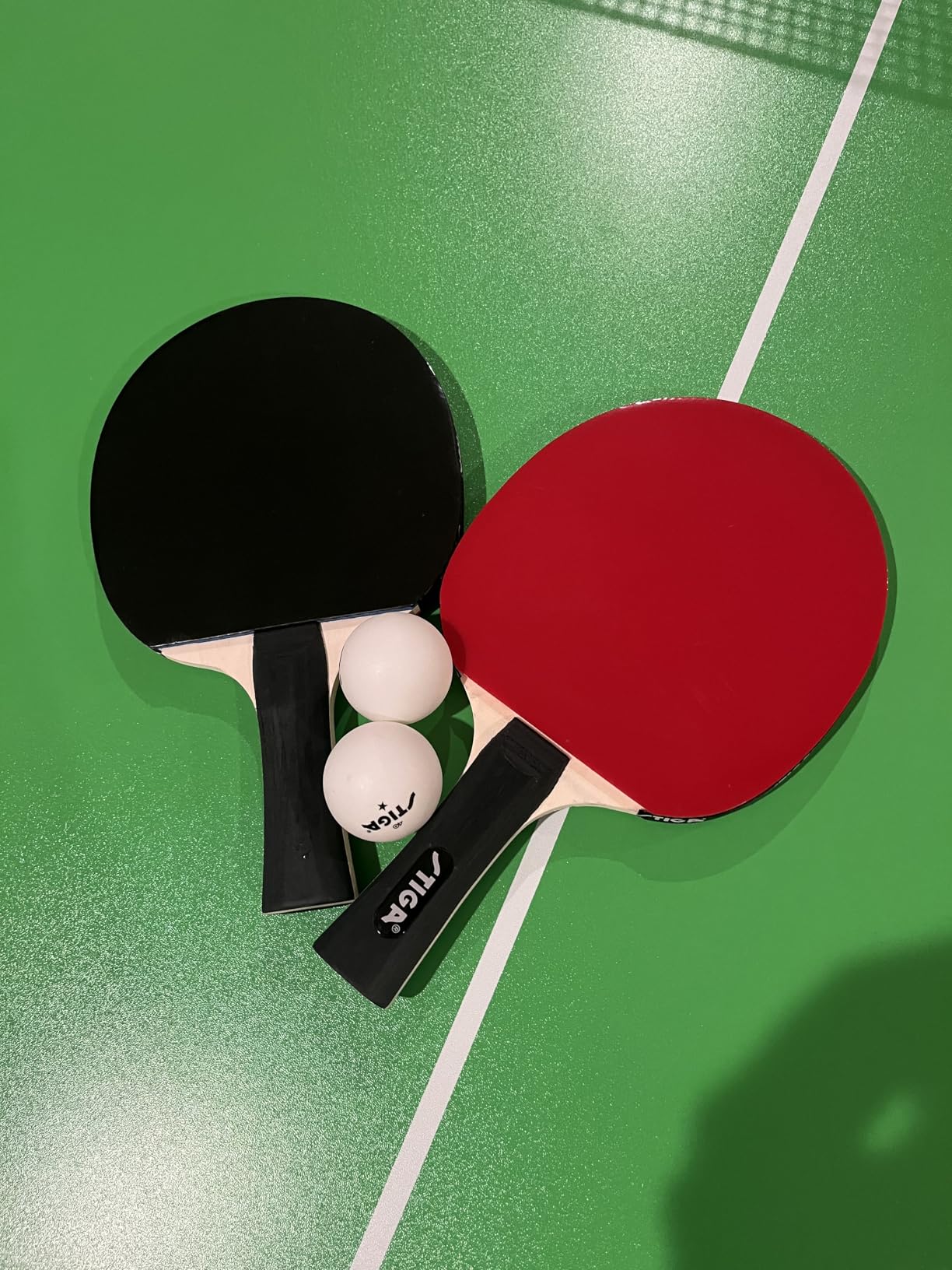
How much smaller than a regulation table is this?
The playing surface is 71 by 40.5 inches against the regulation 108 by 60 inches, so you lose 37 inches of length. That is enough to stop the table fitting in a basement corner with safe clearance, and it is also enough to change how the game feels.
If your basement is 12 by 12 feet, this is a comfortable fit. If it is a narrow strip, measure the clearance before you commit.
Is a 30-day warranty acceptable here?
It is the shortest of the eight, so it is the pick to buy only if you are willing to raise any issue in the first month. The mitigating factor is that this is one of the simplest tables to inspect on arrival.
Check the halves and the folding hardware before you set it up, and keep the packaging until you have played a few sessions on it.
5. JOOLA Quadri 15mm Indoor Ping Pong Table – Best Budget Route to Full Size
JOOLA 15mm Indoor Ping Pong Table with Quick Clamp Table Tennis Net Set – Single Player Playback Mode – Regulation Size Compact Storage Set
Regulation 9 x 5 ft surface
15mm tabletop
4-piece nesting design
129 pounds
Pros
- Lowest-cost route to a real 108 by 60 inch surface
- Stable surface that does not tilt
- Four-piece design nests for storage
- Playable solo or with a robot
- Adjustable feet on each half
Cons
- Long assembly with some misaligned predrilled holes
- A mid-table seam can deflect the ball
- Plastic edge trims warp in humid spaces
- Cheap casters struggle on uneven basement floors
This is the cheapest route to a genuine regulation 108 by 60 inch playing surface, and several owners describe it as good value once it is assembled. The 15mm surface plays properly and the Quadri four-piece design nests into a compact package for basement storage.
Quality control is the recurring theme in the reviews, and it is worth being blunt about. Some owners hit misaligned pre-drilled holes and had to redrill, a few report a visible seam or crease down the middle that can deflect a ball, and there are reports of surface scrapes on arrival.
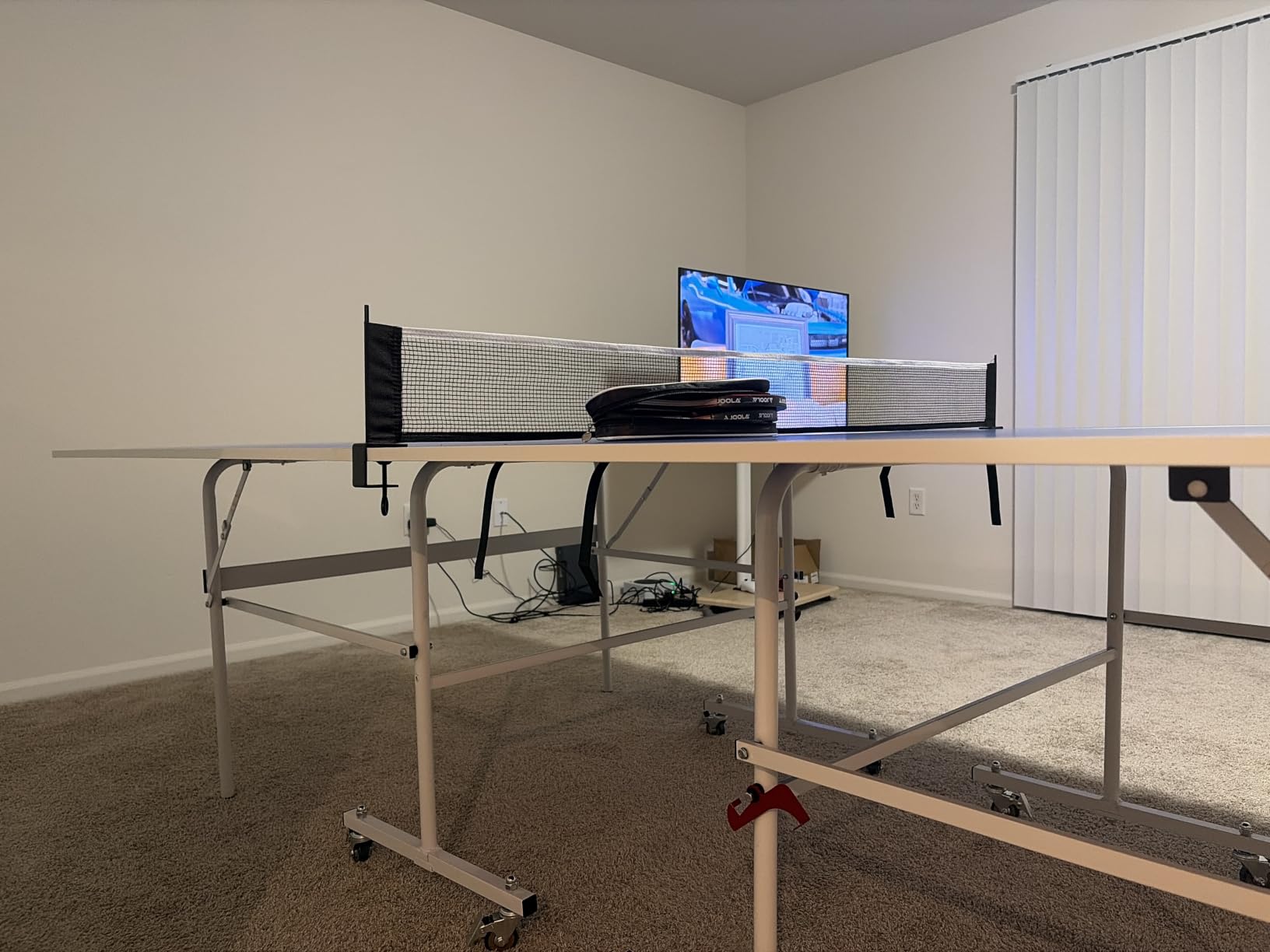
The humidity angle matters more here than anywhere else in the list. Owners specifically report the plastic edge trims warping in humid spaces, and several substituted aluminium trim to fix it. The cheap office-grade casters also struggle on uneven basement floors, which is a real issue on a slab.
Set against that, the table is playable solo with a robot, it has adjustable feet, and owners report being able to fold and move it single-handed once it is assembled. Budget for the assembly time and a set of better casters if your floor is rough.

Should you buy a budget table in a damp basement?
Only with a plan. Replace the plastic edge trim before the humidity moves it, upgrade the casters if the floor is uneven, and keep a cover on the table whenever the basement is unheated.
That is three interventions on a new table, which is work. If you would rather do none of it, one of the steel-framed tables higher up the list is the quieter purchase.
How bad is the mid-table seam in practice?
It catches slow balls more than fast ones, and most owners treat it as an annoyance rather than a dealbreaker once the table is levelled. A folding seam in the centre is normal on a table that splits into two halves.
If you plan to train with a robot, the seam matters more, because a robot will find it every session.
6. MD Sports Foldable Table Tennis Table Set – Best Complete Set
MD Sports Table Tennis Set, Regulation Ping Pong Table with Net, Paddles and Balls (8 Pieces) – Black & Light Blue
Official 108 x 60 inch surface
15mm playfield
Folds to 73 x 60 x 16 inch
114.6 pounds
Pros
- Paddles balls net and posts included in the box
- True official 108 by 60 inch surface
- Reinforced steel leg frames for stability
- Folds flat for space-saving storage
- One of the few complete sets available
Cons
- Assembly required with app-only instructions
- Rated for indoor use only which matters in a damp basement
- Heavier than comparable foldable tables
The reason this set exists in our list is the box contents. It is one of the few options that includes 2 paddles, 2 balls, a net and a post set, so a family can start playing the day it is assembled without a second order.
Underneath the accessories it is a legitimate table: an official 108 by 60 by 30 inch surface, a 15mm playing field and reinforced steel leg frames with 1-1/5 inch aprons. It folds flat to 73 by 60 by 16 inches, which is a useful footprint for a basement wall.
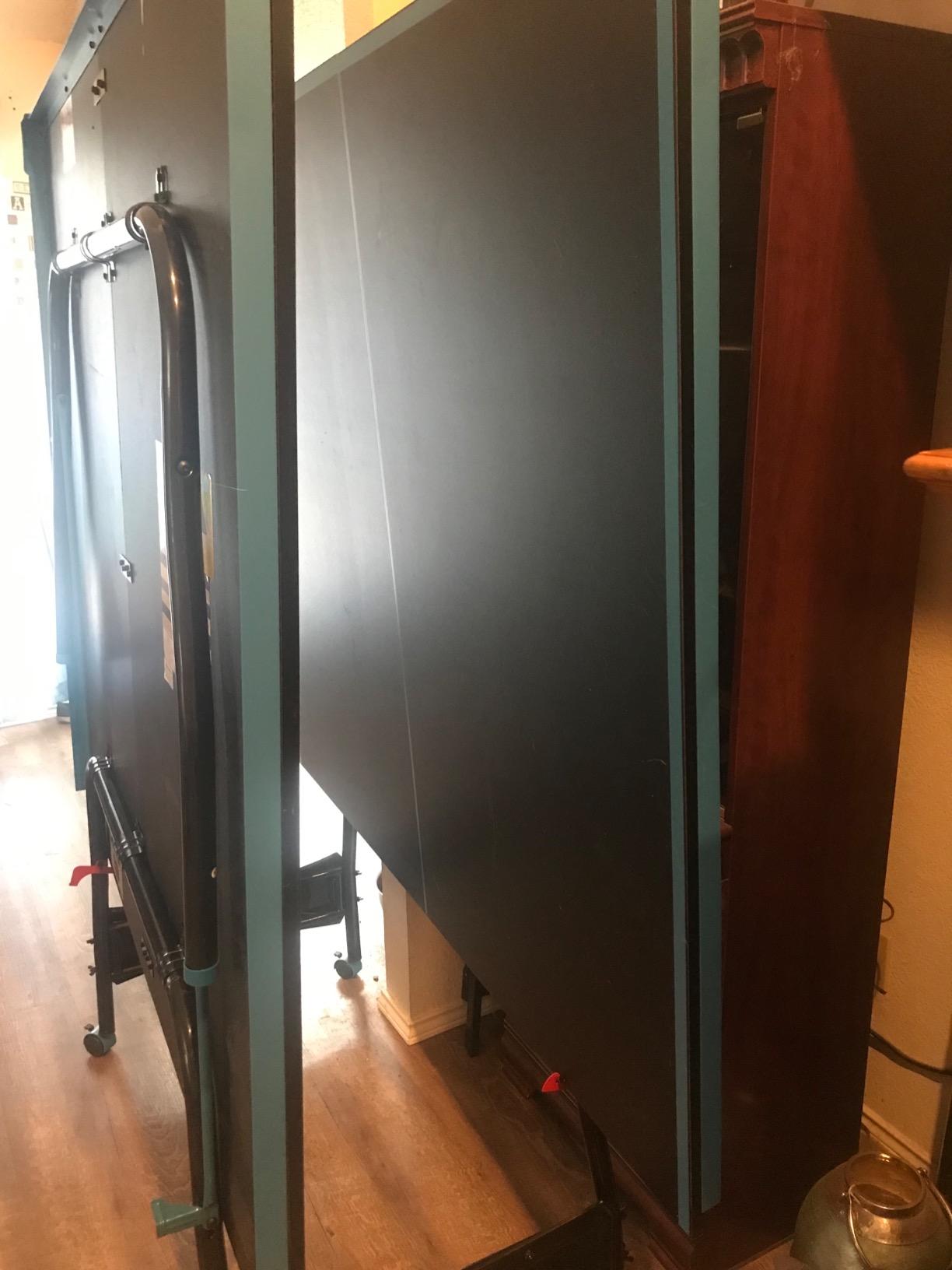
Two things to plan around. Assembly is required and the instructions are digital-only through the BILT app, so have a phone or tablet on hand during the build. And the table is rated for indoor use only, which is exactly the specification that should make you pause in an unheated basement.
At 114.6 pounds it is heavier than comparable foldable tables, so treat folding as a two-person job. In a finished basement with a dehumidifier running, the indoor-only rating is manageable. In an unfinished damp one, pick a different table.
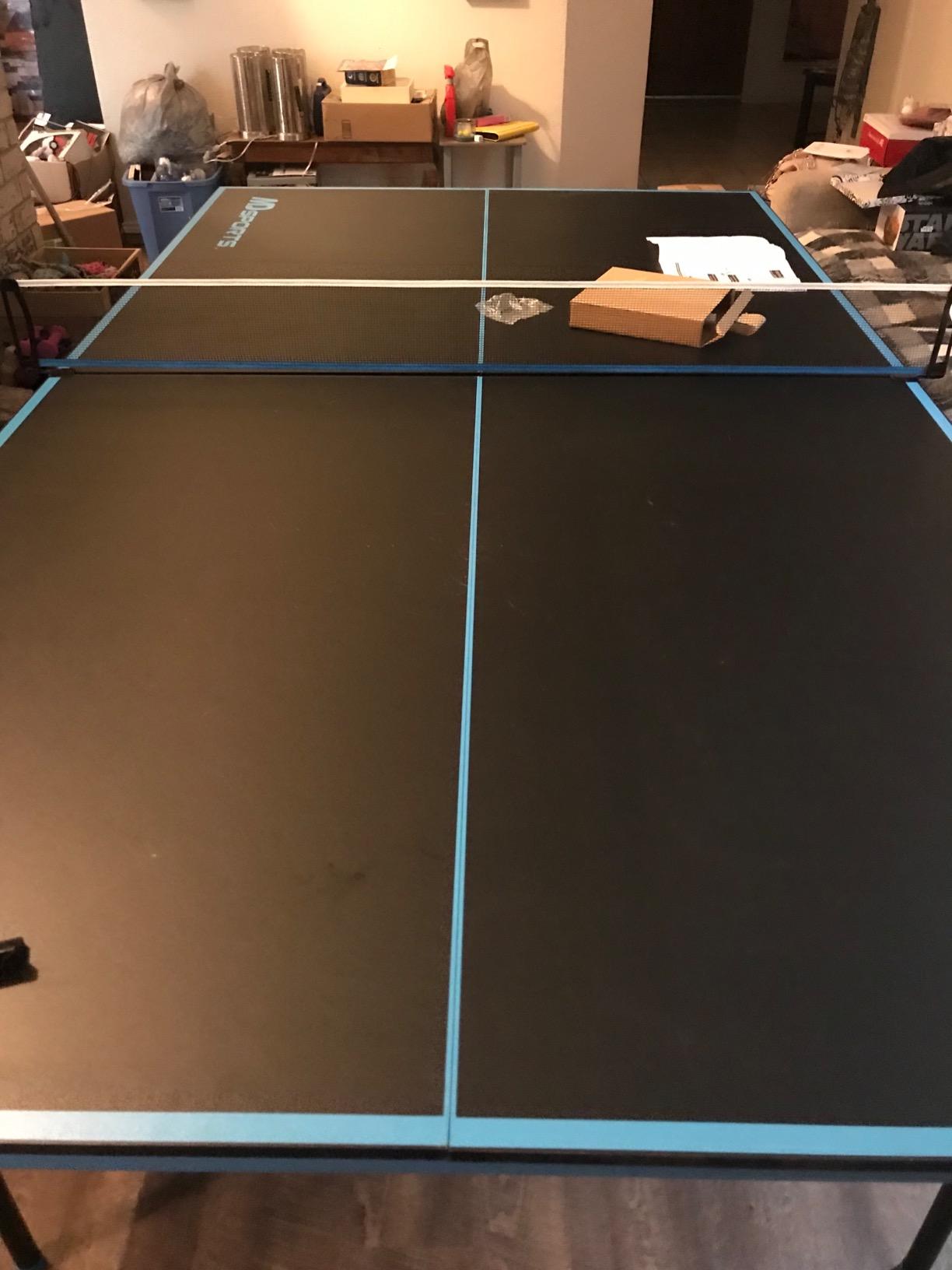
What comes in the box, exactly?
The table, 2 paddles, 2 balls, 1 net and 1 post set. Everything needed to start playing is present, which removes the most common first-purchase complaint in this category.
Bring your own higher-quality paddles later if players progress, but nobody gets stuck on day one.
Can an indoor-only table live in a damp basement?
It can, with humidity control. Run a dehumidifier in the same room, keep the table off bare concrete, and put a cover on it when the basement is cold.
If your basement routinely has condensation on the wall or floor, an indoor-only rating is a warning you should respect rather than work around.
7. EastPoint Foldable Table Tennis Conversion Top – Best for an Existing Pool or Dining Table
EastPoint Foldable Ping Pong Table Topper, Table Tennis, 9 ft x 5 ft, Blue
Full 9 x 5 ft regulation dimensions
Unfolds onto an existing table
83.1 pounds
Net posts and foam pads included
Pros
- Turns an existing pool or dining table into a full regulation table
- Zero assembly
- Excellent packaging with corner protection
- Steel net and posts included
- Stows away when the pool table is needed
Cons
- Needs a large flat fully supporting table underneath or it sags
- Centre joint can dip slightly and may need shims
- Included foam pads are undersized
- Two or sometimes three people to unfold
If the basement already has a pool table or a long dining table, this is the cheapest way to get a full 108 by 60 inch surface without giving up floor space permanently. You unfold it onto the host table and play.
Owners consistently praise the packaging, which is unusually good, with a double box and corner protection that prevented damage in transit. The steel net and post system is solid, which is more than can be said for the nets included with some cheaper tables.
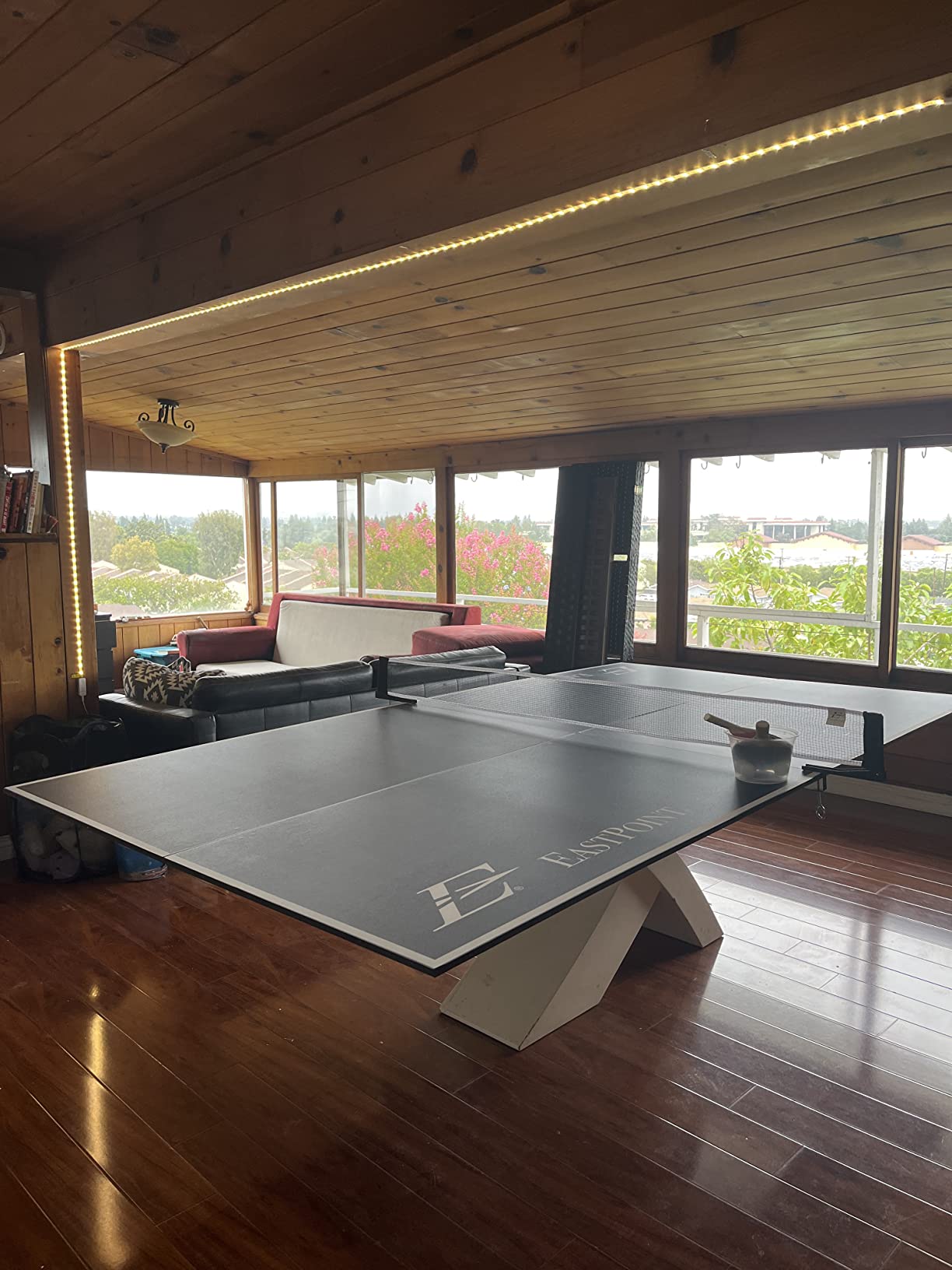
The structural caveat is the whole story. The top must sit on a large, flat, fully supporting surface. Owners on smaller host tables report sagging and adding 2×6 bracing to fix it, and the centre joint can sit slightly low enough to need shims.
The included foam pads are also undersized, and owners add felt or yoga mats for balance and to protect the table underneath. Folding it open takes two people, occasionally three.
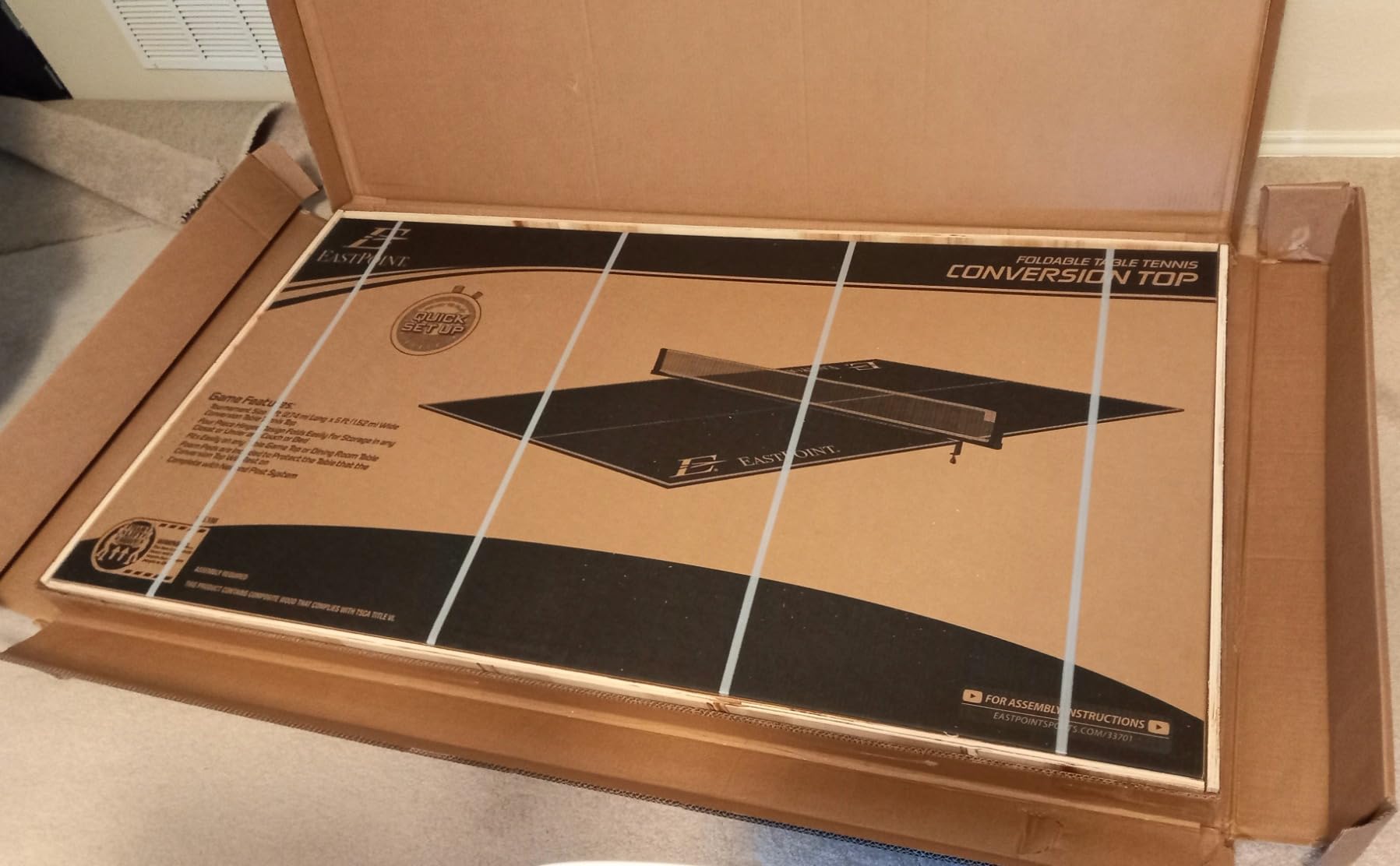
Will it work on anything other than a full-size pool table?
Only on something genuinely full-size, flat and well supported. A dining table with drop leaves down, or a table with a narrower top, will sag in the middle and the bounce will suffer.
Owners who braced a smaller table with 2×6 timber report it works, but that is a project, not a plug-and-play solution.
How does the centre joint behave during rallies?
It can dip slightly, and shims are often the fix. That is a small irritation for casual play and a real one for training, because the joint is exactly where a slow ball will sit.
Bracing the host table and shimming the joint before you play solves both problems for a fraction of the cost of a new dedicated table.
8. GoSports Mid-Size Table Tennis Game Set – Best Mid-Size Set for a Small Basement
GoSports 6 ft x 3 ft Mid-Size Table Tennis Game Set – Indoor/Outdoor Portable Table Tennis Game with Net, 2 Table Tennis Paddles and 4 Balls
6 x 3 ft mid-size surface
Aluminum frame
30 pounds
Folds in seconds
Pros
- Complete set with table net 2 paddles and 4 balls
- Light enough for one person to carry
- Folds and unfolds in seconds
- Works indoors and outdoors
- Consistent bounce for a set at this level
Cons
- 6 by 3 ft surface is well under regulation size
- Aluminium top plays slower than MDF
- Only a six-month warranty requiring the receipt
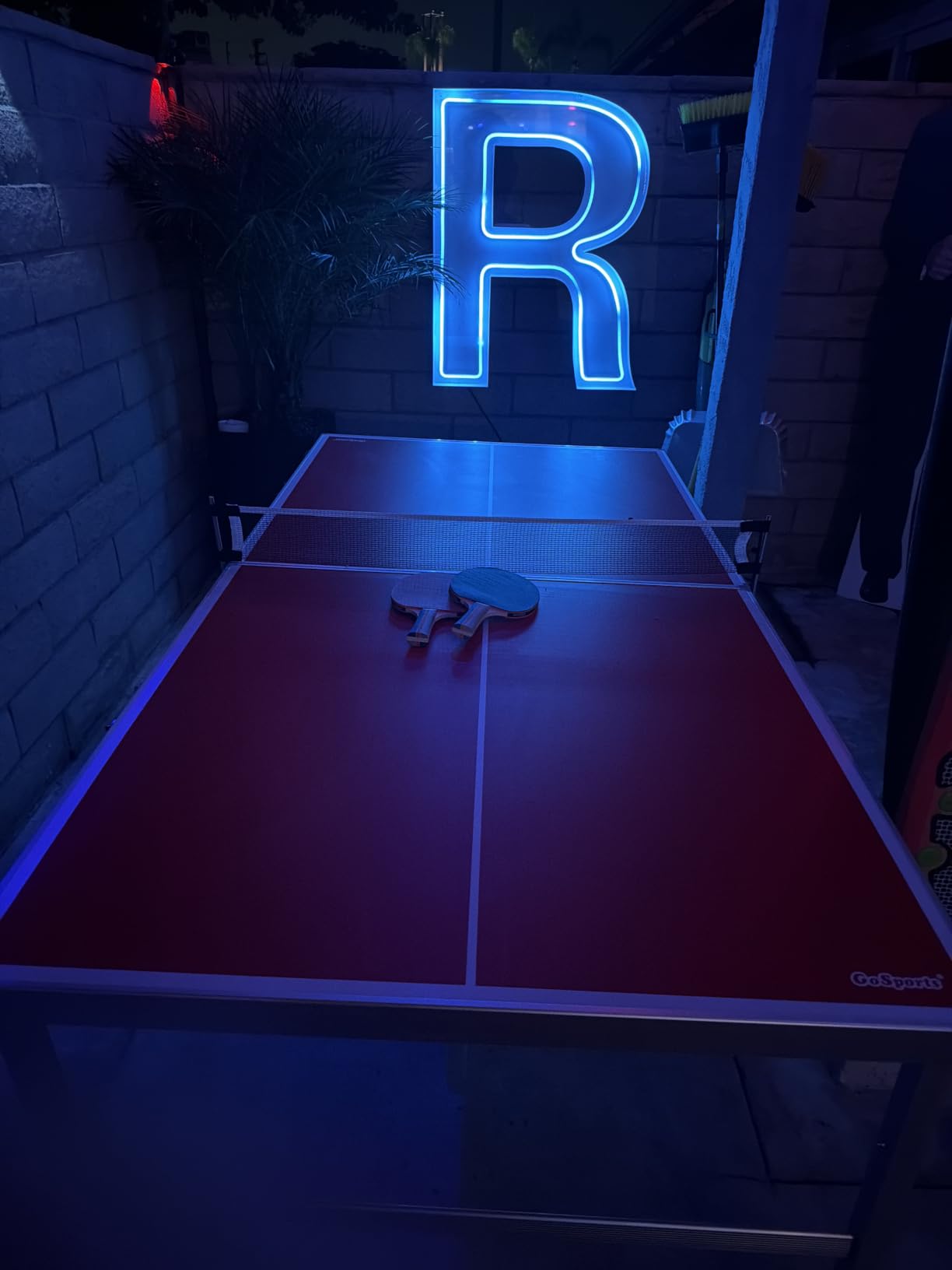
This is the table for a basement that doubles as a storage room, a garage or a craft space, where a full-size table would simply take over. At 6 by 3 feet and 30 pounds, one person can carry it by the built-in handles and set it up in seconds.
It is also a complete set: table, net, 2 paddles and 4 balls are all in the box. For a family that wants to play without assembling anything more serious, the value is hard to argue with.
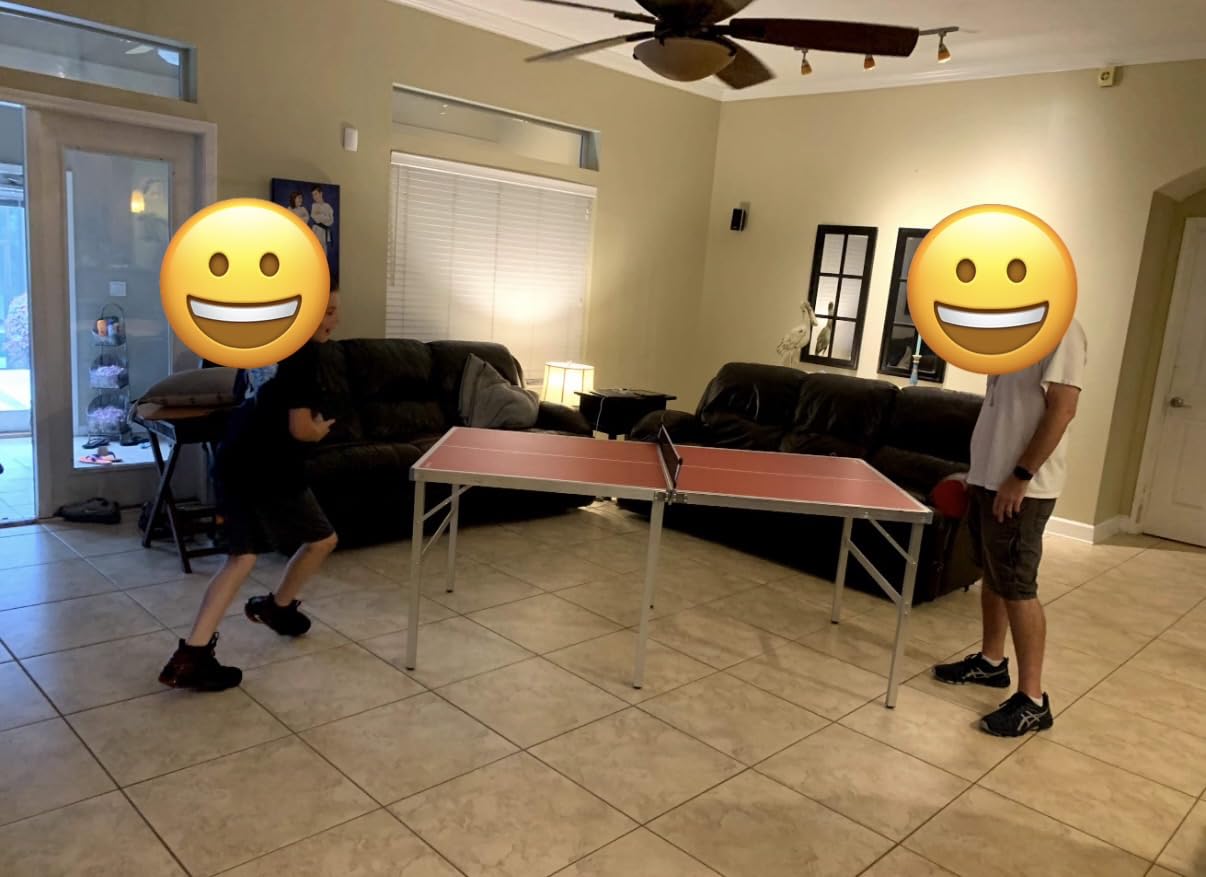
Owners highlight how little room it takes up and how quickly it folds away, which is the defining requirement for a multi-purpose basement. The aluminum frame is sturdy for a set of this type and it works indoors and outdoors.
The limitation is size and surface material. A 6 by 3 foot top with an aluminium playing surface produces slower, shorter rallies than a full MDF table, so it suits family and recreational use rather than anything competitive.
Can this replace a full-size table for regular play?
No, not for anything competitive. Owners are consistent about the 6 by 3 foot surface limiting rallies, and the aluminium top plays noticeably slower than MDF.
Treat it as a second table, a travel table, or a family table for a room with no room for a real one.
Is a six-month warranty a problem?
It is the second shortest here, and claims require the original delivery receipt, so keep it. For a portable set that gets folded and carried rather than set up permanently, the short exposure justifies it.
If your basement is where the table will live permanently, a longer warranty is worth paying for elsewhere.
How to Choose a Table Tennis Table for a Basement
The right table for a basement is decided by four things: how much floor you have, what your floor is made of, how damp the room gets, and how often the table needs to disappear. Work through them in that order.
Measure your basement before you buy anything
A regulation table is 108 by 60 inches. That is only the tabletop, and playing on it safely needs more floor than most people budget for.
Allow roughly 2 to 3 feet behind each end and 3 to 4 feet along each side. That gives a working footprint of about 16 by 10 feet for a full-size table. In a 12 by 12 foot finished basement, that is tight but workable if the table sits lengthwise with the long wall behind the ends.
Then check the room you do not control: the door swing, the stairwell width, and the path from the stairs to the table. A table that cannot be carried in is a table you cannot move for seasonal changes, and basement stairwells are where heavy tables get left on the landing.
If your basement doubles as a workshop, the same double-duty thinking applies to your tools. Our guide to router tables for home shops covers the same floor-space-versus-storage tradeoff from the other direction.
Pick thickness and core together, never thickness alone
Thickness is the number everyone quotes, and it is not enough on its own. A 15mm MDF top and a 15mm particleboard top of the same thickness play very differently.
Here is the useful shorthand. Thirteen to 15mm MDF is the home-play sweet spot and covers most basement tables. Eighteen to 19mm adds noticeable weight and a firmer, faster bounce for players who are improving. Twenty-five millimeter is competition territory and is genuinely heavy to get down a staircase.
Plywood cores are more expensive but move with humidity rather than swelling permanently. MDF is heavier and denser, plays more consistently when dry, and is the first thing to suffer in a damp room.
Decide how much the table has to fold
In a basement, folding is not a feature, it is the difference between a table you use and a table that dominates the room. Check three things.
How many pieces does it split into. Two halves are common, the JOOLA Quadri splits into four nested pieces which is more forgiving in a small room. Then check the folded footprint against your longest clear wall, and finally check whether the casters lock, because an unlocked table on a basement floor moves every time someone walks past it.
Owners tell us flat-folding models are what they actually use day to day, not as a backup plan but as the normal state. Budget for a cover that fits the folded shape, not just the open one.
Understand what leg levelers can and cannot fix
This is the most common basement question and the least well answered anywhere. The honest answer: built-in levelers handle small variation, not a sloping slab.
Retailer support staff confirm that tables have adjustable legs specifically for uneven floors, which is why every table on this list has some form of adjustment. What they cannot fix is a slab that drops more than an inch or two across the table footprint, or a finished floor with a hump.
When you need more than the feet can give you, the options are shimming the low corner with hardwood offcuts, or laying a sheet of plywood over the slab and levelling that. Do this before the table arrives, not after.
As a rough benchmark for a workshop-style basement, our table saw buying guide uses the same floor-levelness and clearance logic, and the basement floor is a harder floor than most people expect.
Basement Setup: Humidity, Level Floors and Lighting
Once the table is in the room, the basement decides how well it plays. Three things matter: moisture, the floor underneath, and the light above.
Keep relative humidity between 35 and 55 percent
That is the range where MDF and plywood tops stay stable and the ball bounce stays predictable. Buy a cheap hygrometer and put it on the wall near the table, because basement humidity is seasonal and a reading in August tells you little about February.
Place a dehumidifier in the same room as the table, not in a hallway or an upstairs room where the moisture has already migrated. Aim its outlet away from the table, and run it in the months when the basement actually feels damp rather than year-round on maximum.
You cannot fully weatherproof a standard indoor top. The realistic mitigations are a dehumidifier, keeping the table off bare concrete, a cover when the room is cold, and never putting an outdoor-rated table in a damp basement and expecting it to be fine.
Keep the table off the slab and check it twice a year
Concrete wicks moisture upward, and a mat or rug under the table legs is cheap insurance against a top that cups at the edges. If you are on a bare slab, a purpose-made floor mat does more than protect your floor, it separates the legs from damp concrete.
Twice a year, check the leg levelers and the hinge. A basement table that is played on weekly will drift, and a leveler that took two turns at the start may need one back after a dry winter.
Light the table from the sides, not overhead
Lighting is a recurring question among basement players, and the answer is consistent. Two shop-style LED lights positioned along the long walls and angled at the surface remove the glare and the long ball shadow that a single overhead fixture creates.
A single ceiling bulb in a low-ceiling basement produces a shadow behind the ball that makes it genuinely hard to judge fast exchanges. Side lighting fixes that without needing to move the table.
While you are setting up, check your ceiling height. Under about 7 feet of clearance, a full regulation table plus overhead play becomes uncomfortable, and the compact and mid-size options in this list make more sense.
What Not to Buy for a Basement
Three categories cause most of the disappointment we see in basement table reviews, and all three are avoidable.
Do not buy a single-layer thin top. The thinnest and cheapest tops flex visibly under a hard shot, and in a basement where the floor is already uneven that flex turns into a dead spot. A steel-framed apron like the one on the STIGA Advantage Series is the minimum.
Do not buy a non-folding table for a room that gets used for anything else. It will be assembled once and then resented every time you want the floor back. Casters and a fold are what make a basement table a basement table.
Do not buy an outdoor-only table for indoor basement use. Outdoor tops are typically aluminium and plastic, they play differently, and they do not tolerate a roller or a robot the way a proper indoor top does.
And check the stairwell before you pay, not after. A 25mm competition top weighing well over 150 pounds may be physically impossible to get down a typical basement staircase, and that problem is discovered on delivery day.
Frequently Asked Questions
How much floor space is needed for a ping pong table?
A regulation table is 108 by 60 inches, but that is only the tabletop. Allow roughly 2 to 3 feet behind each end and 3 to 4 feet along each side for safe play, which works out to a working footprint of about 16 by 10 feet. In a 12 by 12 foot finished basement, a full-size table fits lengthwise with the long wall behind the ends. If the room is smaller than that, a 71-inch compact table or a 6-foot mid-size set is the realistic option.
What is the best ping pong table for small spaces?
The STIGA Space Saver is built for small rooms, with a 71 by 40.5 inch playing surface at regulation height, no assembly required, and a fold that stores it vertically against a wall. For family play the GoSports mid-size set at 6 by 3 feet is even smaller and lighter, though the playing surface is further from regulation play. The 75 percent mid-size format is the deliberate middle ground many tight basements actually need.
What is the best indoor table tennis table?
For most home basements the JOOLA Inside Professional MDF is the best indoor table, with a 15mm MDF top at regulation 108 by 60 inches, an alloy steel frame, and two folding halves on 3 inch lockable casters. Indoor construction means a sealed wood or MDF top on a steel underframe rather than the aluminium and plastic surfaces used on outdoor tables, and that difference is what produces a consistent bounce over years.
What is the best ping pong table for home use?
The JOOLA Inside Professional MDF and the STIGA Advantage Series are the two strongest home choices. The JOOLA has a thicker 15mm MDF top and a larger owner base, and the STIGA arrives 95 percent preassembled, moves more easily, and includes a net and post set. If your home setup has children rather than training adults, the MD Sports set is worth considering because it includes paddles and balls in the box.
Can I weatherproof my ping pong table?
Not completely. A standard indoor MDF or plywood top cannot be made fully weatherproof, but you can control the environment around it. Run a dehumidifier in the same room and aim its outlet away from the table, keep relative humidity between 35 and 55 percent with a hygrometer, keep the table off bare concrete with a mat underneath, and cover it when the basement is unheated. Never place an outdoor-only table in a damp basement.
Will humidity warp my table tennis table?
It can, and MDF edges are the first place it shows. Owners of cheaper tables report plastic edge trims warping in humid basement spaces, and the usual fix is to replace the trim with an aluminium alternative. The prevention is humidity control in the room itself rather than anything applied to the table, since a sealed top sitting in air above 60 percent relative humidity will still move with the moisture in that air.
Do I need a foldable table for a basement?
If the basement is anything other than a dedicated game room, yes. A foldable table with locking casters lets the floor return to normal use, and owners generally report that the folded state is the table’s normal condition rather than a backup plan. Check the folded footprint against your longest clear wall and confirm the casters lock, because an unlocked table moves every time someone walks past it on a basement floor.
How do I level a table tennis table on a concrete floor?
Start with the table’s own adjustable legs, which every table on this list has and which retailer support confirms are there specifically for uneven floors. Those levelers handle small variation only. If the slab slopes by more than an inch or two across the table footprint, shim the low corner with hardwood offcuts or lay a sheet of plywood over the slab and level that instead. Check the levelers twice a year, because a basement table drifts with the seasons.
Final Verdict: Which Table Tennis Table Fits Your Basement
Start with your room, not the spec sheet. A finished basement with 16 by 10 feet of usable floor gets the JOOLA Inside Professional MDF, the regulation 15mm table that folds to the wall in about half a minute. It is our pick for 2026 because the bounce stays consistent, the build is steel, and the owner base is large enough that the failure modes are well documented.
A tight basement gets the STIGA Space Saver at 71 inches, and a basement that is mostly storage gets the GoSports mid-size set. A training room with a slightly uneven slab gets the JOOLA Rally TL Professional, because its height adjusters and 4-wheel trolleys are built for exactly that. And a basement that already has a pool table should look at the EastPoint conversion top before spending on anything new.
Whatever you choose, the table will only live as long as your humidity control allows. Keep the room between 35 and 55 percent, keep the table off the bare slab, and the best table tennis tables for basements will keep playing long after the novelty wears off.