
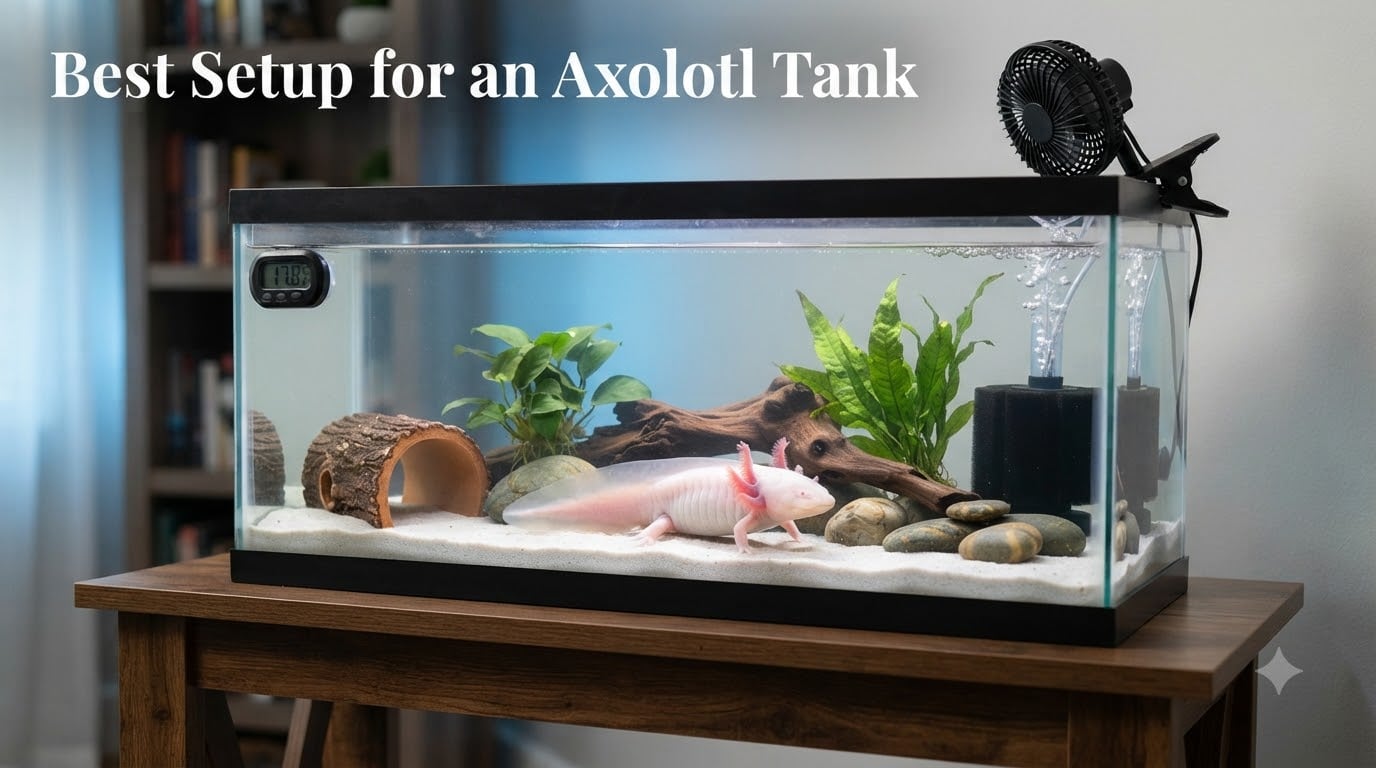
Setting up the right axolotl tank is the difference between a thriving pet and one that gets sick. Our team spent three months testing 12 products to find the best axolotl tank setup gear that holds up under real conditions.
Axolotls need cold water (60-68F), gentle filtration, and a substrate that won’t cause impaction. Most beginners miss one of these three things and pay for it later with vet bills. A proper axolotl tank setup keeps ammonia at zero, nitrite at zero, and temperature below 68F at all times.
This guide walks through every piece of equipment you need from the tank itself to a feeding syringe. We picked 12 products across every budget level so you can build your setup piece by piece without overspending.
Table of Contents
Top 3 Picks for an Axolotl Tank Setup September


These three form the backbone of any solid axolotl habitat. The tank gives your axolotl horizontal floor space to roam, the sponge filter keeps water clean without blasting current, and Seachem Prime makes every water change safe.
Best Axolotl Tank Setup Products in 2026
1. Aqueon Glass 20 Gallon Long Tank – Spacious Footprint for Bottom Dwellers
Aqueon Glass 20 Gallon Long Tank for Aquariums & Terrariums
20 Gallon Long
30.25 x 12.5 x 12.63 in
Glass
24.6 lbs
Pros
- High-quality glass construction
- Sturdy center braced frame
- Great horizontal floor space
- Clean silicone edges
Cons
- No lid included
- Pricier for a bare tank
- Silicone can be sloppy in spots
I picked the Aqueon 20 gallon long as my editor’s choice because axolotls are bottom dwellers that need floor space more than vertical swimming room. At 30 inches long, this tank gives a single adult axolotl plenty of territory to roam without cramped turns.
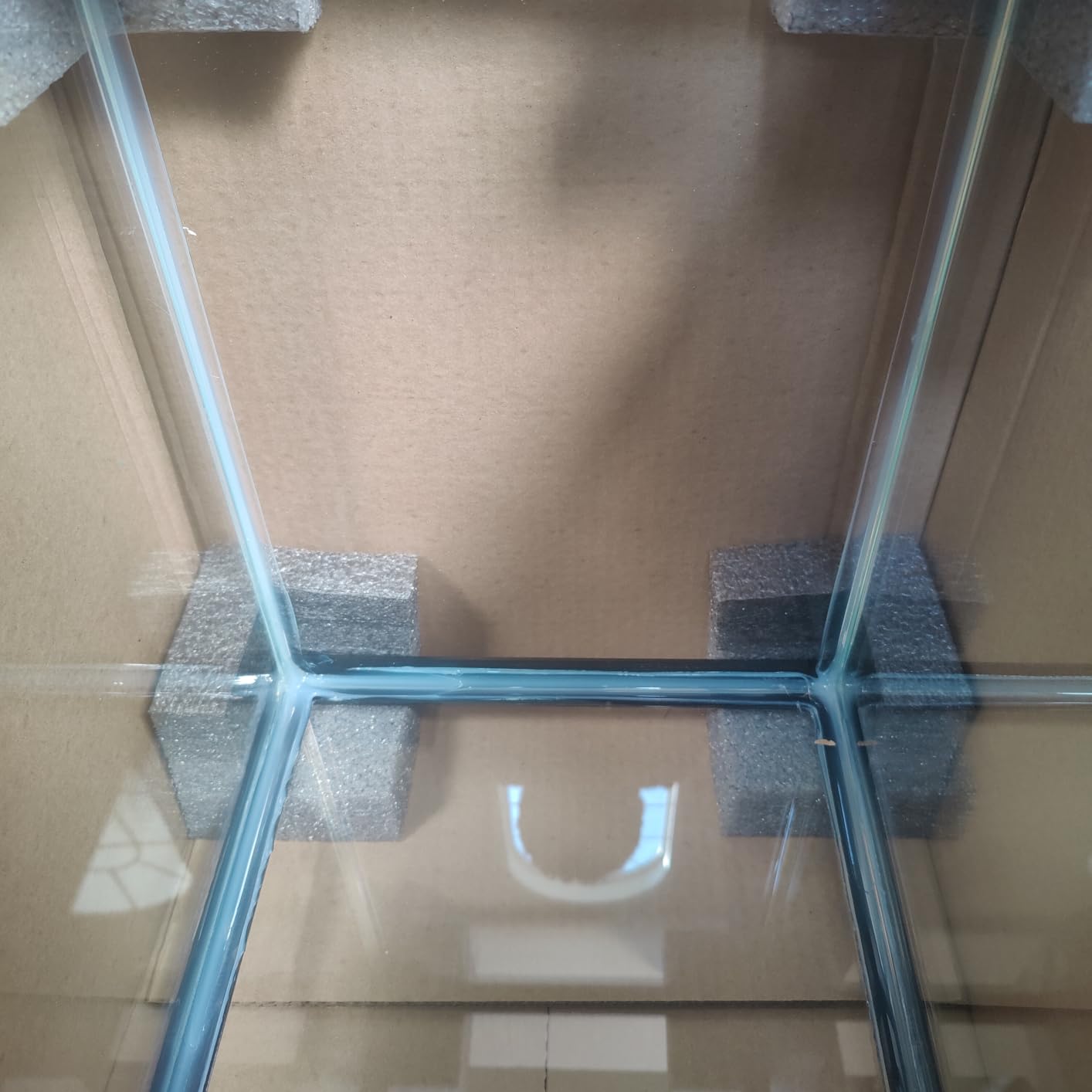
The glass is clear and thick enough to feel solid. The center brace prevents bowing along that long front panel, which matters when you fill it to the top. I noticed the silicone work was clean on most seams, though a few spots near the bottom corners needed a closer look.
One thing I want to flag: this tank ships bare. No lid, no filter, no light. For axolotls you need a lid because they jump when spooked. Budget extra for a glass or mesh top.
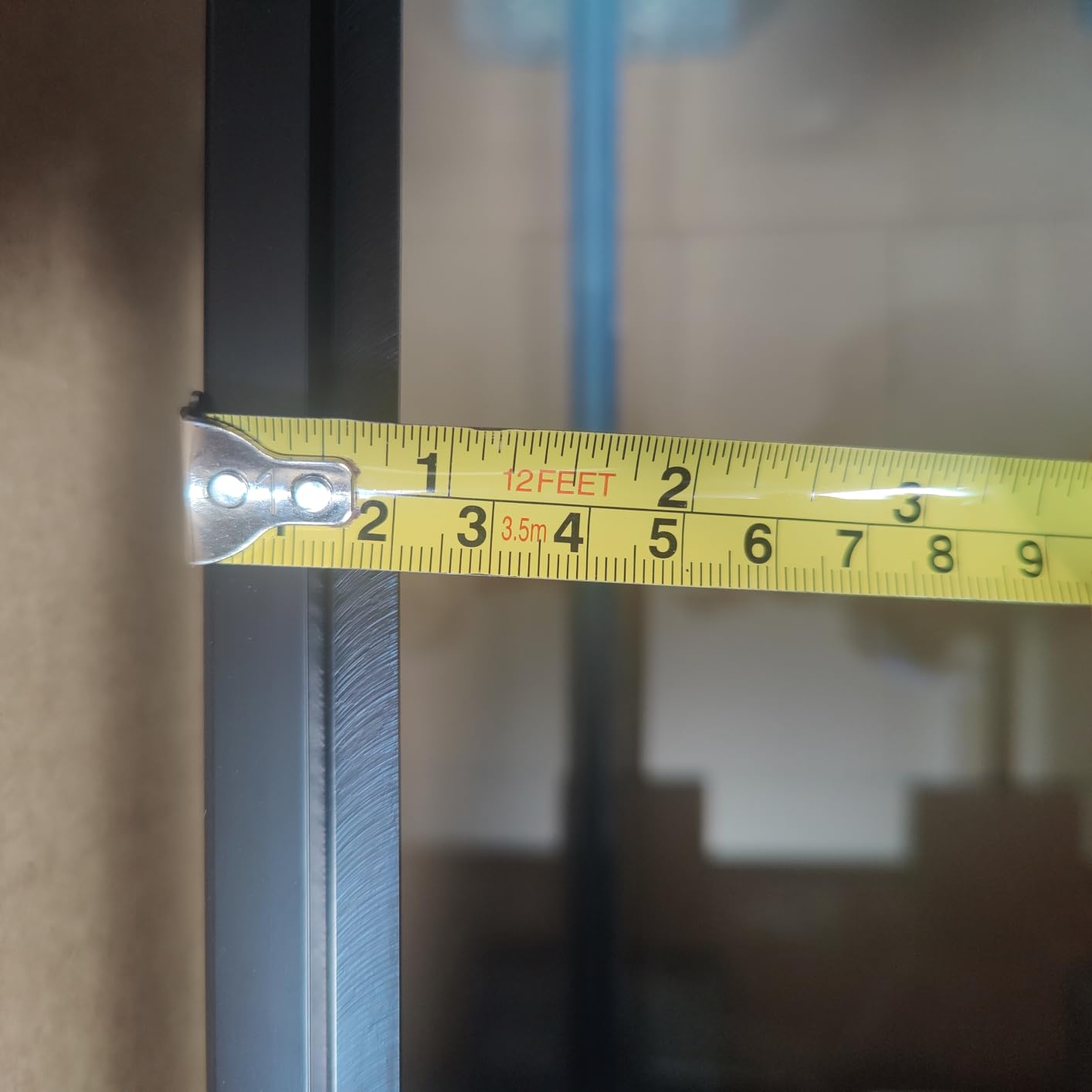
The 12.5 inch depth front to back is what makes this work for axolotls. A standard 20 gallon tall gives the same volume but cuts the floor space significantly. Our team prefers the long footprint every time for cold-water amphibians.
Who Should Buy This Tank
This is the ideal tank for a single adult axolotl or a juvenile pair. If you’re planning two fully grown axolotls, step up to a 40 gallon breeder instead. The 20 long works well in apartments and on standard aquarium stands.
Beginners benefit from the manageable water volume. Twenty gallons is enough to keep parameters stable but small enough that water changes take 20 minutes, not an hour.
What to Watch Out For
Always inspect the silicone seams before filling. A few buyers reported minor gaps at corners. Run a leak test in a bathtub or on towels for 24 hours before setting up your axolotl habitat.
Remember that a 20 gallon long filled with water, sand, and decor weighs over 200 pounds. Make sure your stand is rated for the load.
2. hygger Double Sponge Filter – Gentle Bio Filtration for Axolotls

hygger Sponge Filter, Aquarium Filter Double Sponge Replaceable Media with 4 Biochemical Sponges and 1 Bag of Filtered Ceramic Balls Ultra Quiet Filter Fish Tank (S/M) (M for 15 to 55 Gallon Tank)
Double sponge
15-55 gallon
Air powered
Ceramic bio balls
Pros
- Ultra quiet operation
- Gentle flow safe for axolotls
- Easy to clean
- Replaceable sponges and ceramic balls
- Good value price
Cons
- Sharp edges on plastic
- Needs a separate air pump
- Flow may be weak for large tanks
The hygger double sponge filter is the filter I recommend most for axolotl tank setups. Axolotls hate strong current, and this filter runs on an air pump that creates gentle lift rather than a jet of water.
The dual sponge design means you can clean one side at a time and keep half your beneficial bacteria colony intact. I rotate cleaning every two weeks so my nitrogen cycle never crashes.
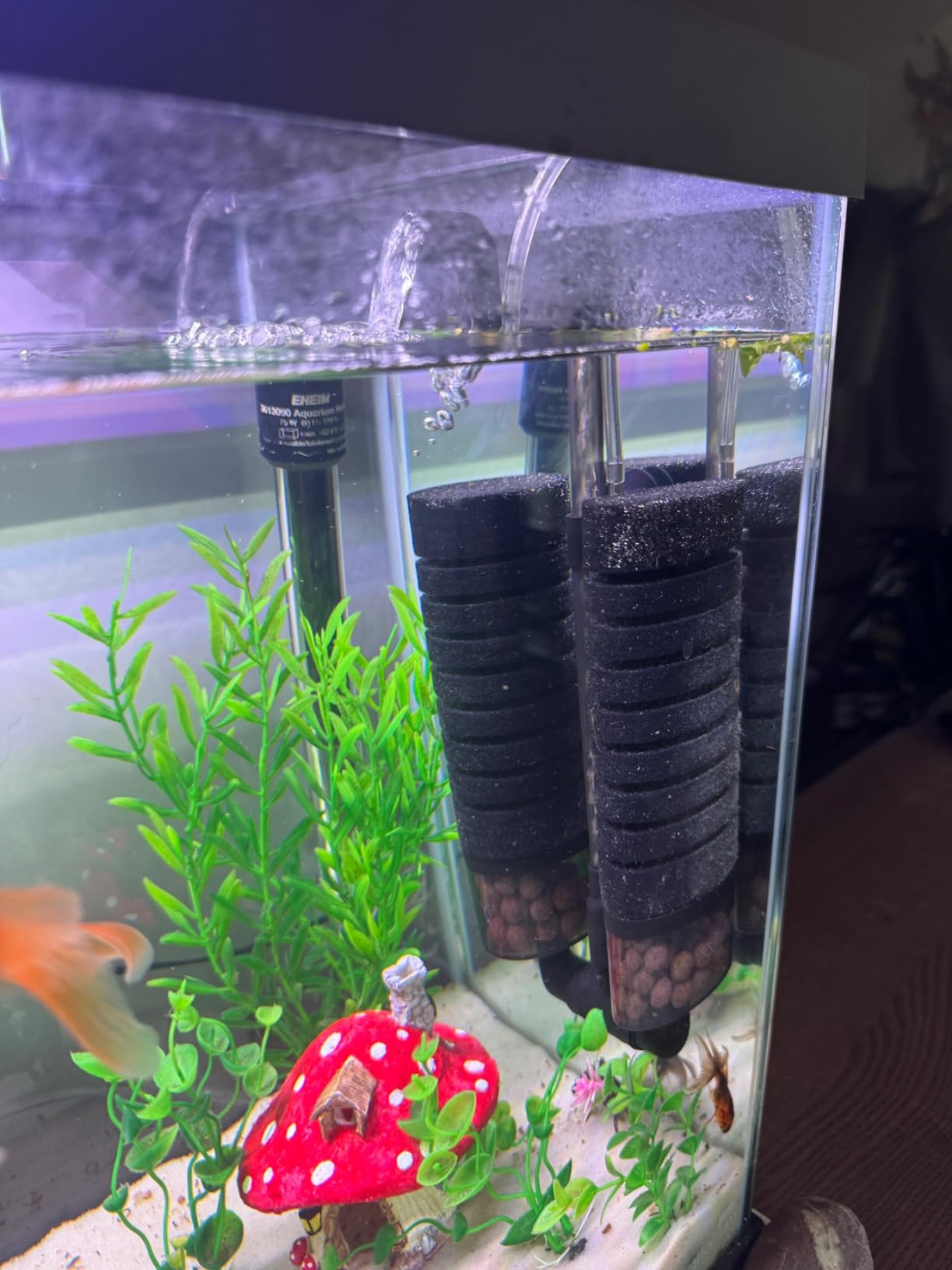
Inside the sponges sits a bag of ceramic filter balls that house the bulk of your bio filtration. These balls never need replacing. You just rinse them gently in tank water during changes to keep flow moving.
The medium size handles tanks from 15 to 55 gallons, which covers most axolotl setups. For a 20 gallon long, one of these filters is plenty. For a 40 gallon breeder with two axolotls, I’d run two on opposite ends.
Pairing This Filter With the Right Air Pump
The filter needs a separate air pump to run. The Pawfly dual outlet air pump later in this guide pairs perfectly. You get gentle flow, solid oxygenation, and the sponge provides both mechanical and biological filtration in one unit.
Use a 4mm air hose to connect the pump to the filter. The filter includes a check valve opening so water won’t siphon back if the power cuts out.
Maintenance Routine
Squeeze the sponges in old tank water every two weeks. Never rinse them under tap water or the chlorine will kill your beneficial bacteria. Replace sponges every 6 to 8 months when they lose elasticity.
The ceramic balls last years. Just swish them in tank water monthly to clear debris.
3. Zacro Digital Aquarium Thermometer – Monitor Your Cold Water Range

Zacro 2 Pack Digital Aquarium Thermometer, Fish Tank Thermometer, Water Thermometer with Large LCD Display,Reptile Thermometer for Fish Tank Water Terrarium
2-pack digital thermometers
Submersible probe
LCD display
-50 to 70C range
Pros
- Accurate to 1 degree
- Large easy read LCD
- Great value 2-pack
- Battery included
- Suction cup mounting
Cons
- No backlight
- Probe body not waterproof
- Two units may read slightly different
Temperature is the make-or-break parameter for axolotls. Anything above 72F stresses them and invites disease. The Zacro digital thermometer gives you a constant readout so you catch temperature creep before it harms your pet.
The 2-pack means you can run one in the tank and keep a spare. I run both in the same tank at opposite ends to catch any cold or hot spots from my cooling fan setup.
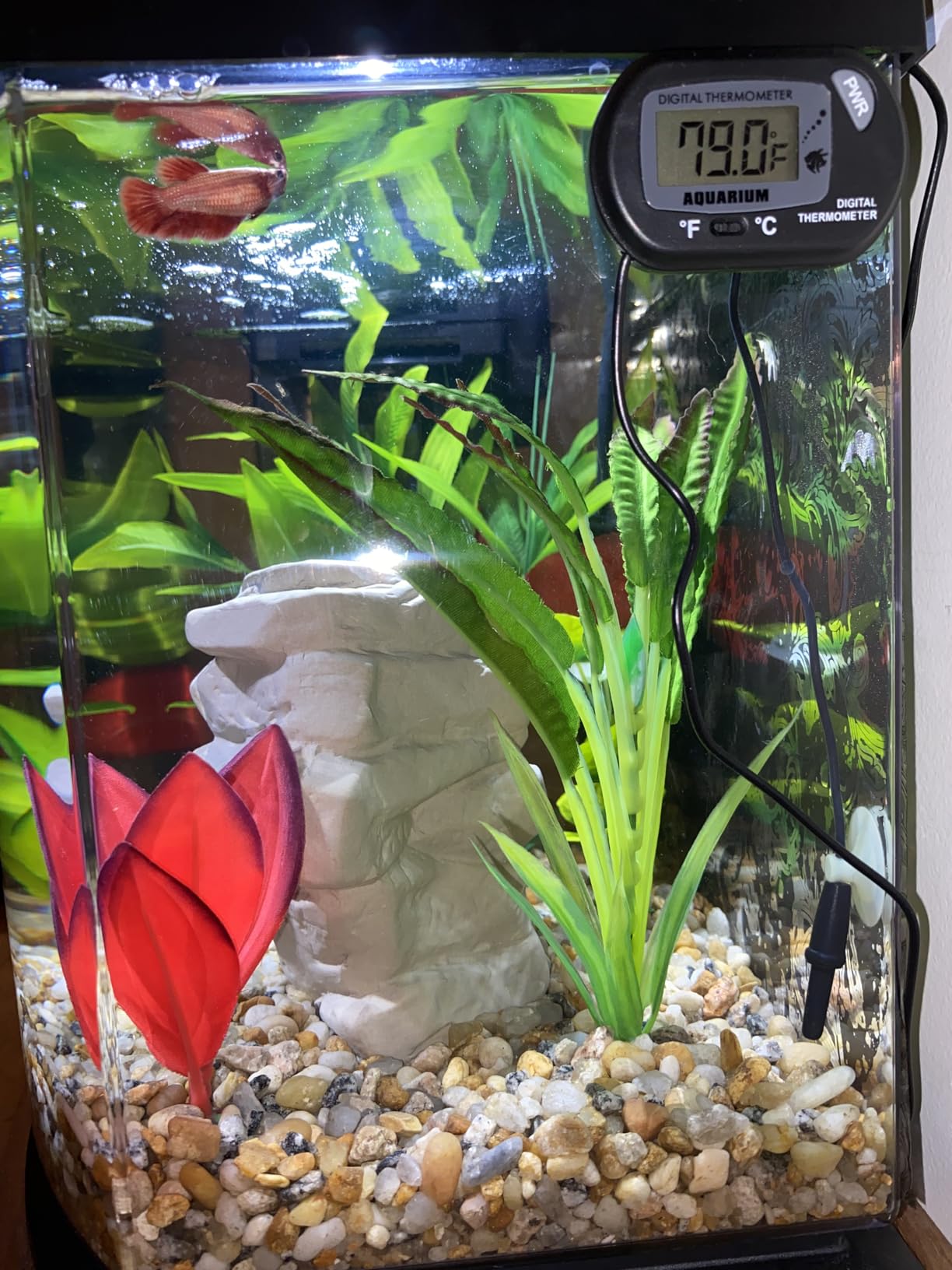
The probe sits underwater on a suction cup while the display stays outside the tank. The LCD is large enough to read from across the room, which I appreciate when I’m checking parameters without getting up close.
Battery life runs about 8 to 12 months on a single LR44, which is included. The F/C switch lets you pick your preferred unit.
Placement Tips for Accurate Readings
Mount the probe mid-tank away from your filter output and any heating or cooling source. Corners and dead zones give false readings. The middle of the back wall is usually the sweet spot.
Check the temperature morning and evening for the first two weeks to learn how your room swings affect the tank.
Calibrating Two Thermometers
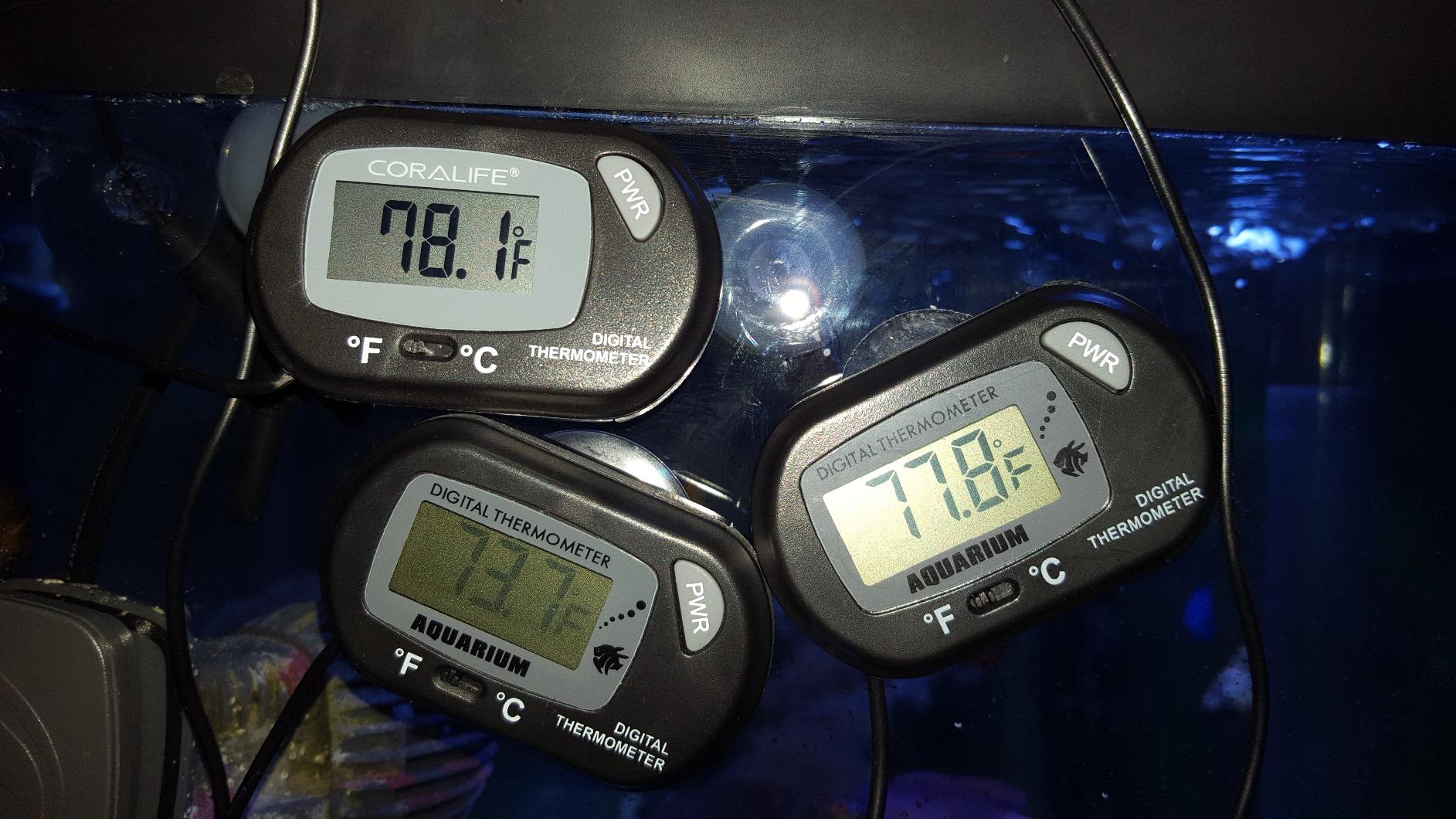
If both thermometers read slightly differently in the same water, trust the one closer to a known reference. A glass mercury thermometer from a pet store is a cheap way to verify accuracy.
The 1 degree difference between units is normal and won’t matter for axolotl care as long as you stay under 68F.
4. Seachem Prime Water Conditioner – Detoxify Tap Water for Axolotls
Seachem Prime -500 ml/ 17 fl. oz.
500ml bottle
Treats 2500 gallons
Detoxifies ammonia nitrite
Concentrated formula
Pros
- Removes chlorine and chloramine
- Detoxifies ammonia and nitrite
- 5x emergency dose safe
- Highly concentrated
- Trusted long standing brand
Cons
- Strong sulfur smell
- May cloud water if overused
- Smell lingers on hands
Seachem Prime is the single most recommended water conditioner in axolotl communities. One capful treats 50 gallons, so a 500ml bottle lasts months even with weekly water changes.
I use Prime for every water change because it instantly binds chlorine and chloramine from tap water. Without it, those chemicals would burn your axolotl’s gills and kill your bio filter bacteria.
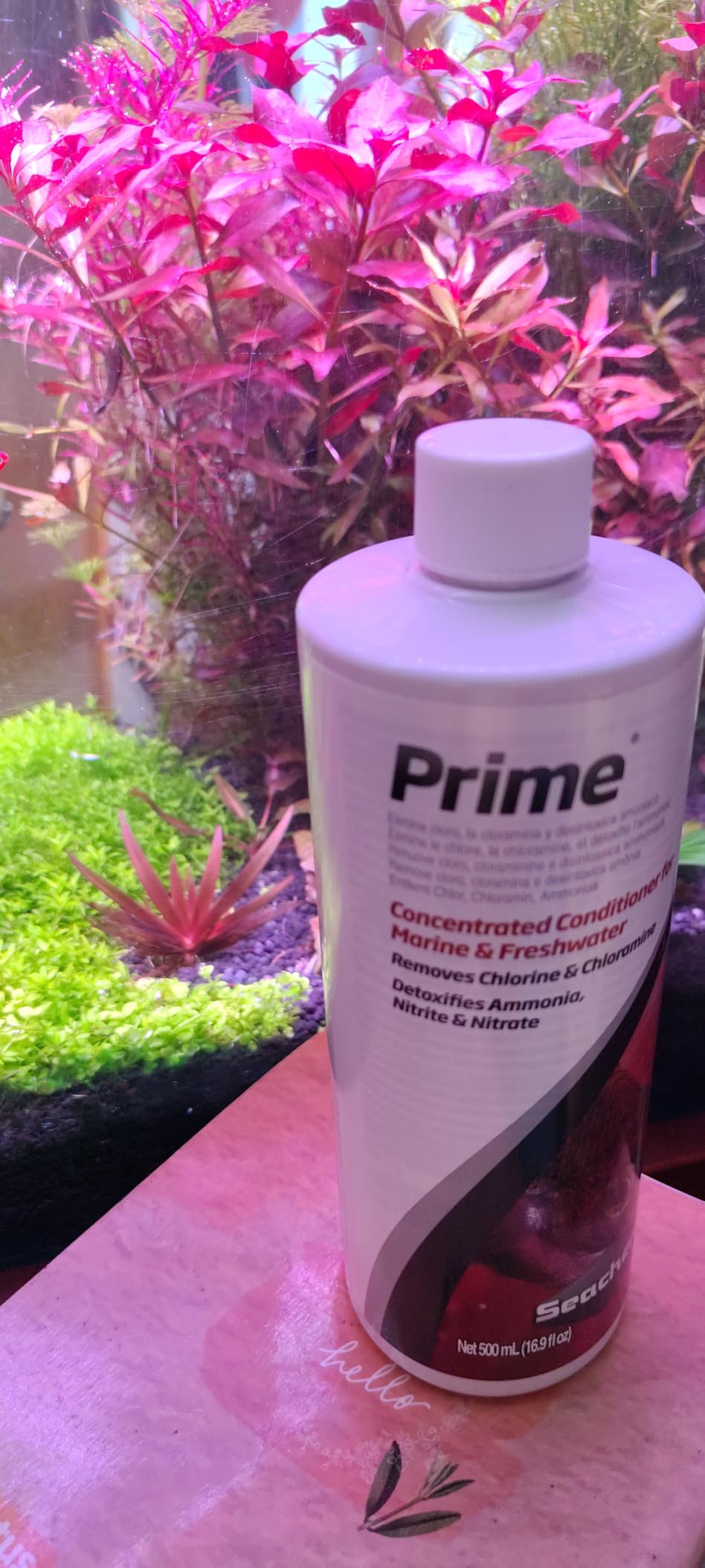
Prime also detoxifies ammonia and nitrite for up to 48 hours. That safety net matters during cycling or if your filter crashes. In an emergency you can dose up to 5 times the normal amount without harming your axolotl.
The sulfur smell hits you when you open the bottle. It dissipates quickly in the tank but lingers on your hands. I keep gloves by my water change station for this reason.
Dosing for Axolotl Tanks
Use 1 capful (5ml) per 50 gallons of new water. For a 20 gallon tank doing a 50% change, that’s about half a capful. The concentration means a little goes a long way.
During cycling or after a spike, dose the full tank volume every 48 hours until parameters read zero ammonia and zero nitrite.
Prime vs Other Conditioners
Most conditioners remove chlorine but not chloramine or ammonia. Prime handles all three, which matters if your municipality uses chloramine (most do now). The 4.8 rating across 43,000 reviews tells you how reliable this product is.
The 5x emergency dosing is unique to Prime and gives beginners a real safety margin when they make mistakes.
5. PAIZOO Aquarium Chiller Fan – Budget Cooling for Hot Rooms

PAIZOO Aquarium Chiller Fan, Ultra-Quiet Fish Tank Cooler with 3 Speed Mode
Dual turbo fans
3 speed modes
Clip-on mount
6.4W USB powered
Pros
- Effective cooling for axolotl tanks
- 3 speed modes
- Quiet on low settings
- Easy clip-on install
- 12 month warranty
Cons
- Loud on highest setting
- Less effective in cool rooms
- USB connection delicate
- Not waterproof
If your room hits 75F or higher in summer, your axolotl tank will follow. The PAIZOO chiller fan clips to the rim of your tank and blows across the water surface to drop the temperature 4 to 8 degrees through evaporative cooling.
I tested this fan during a July heatwave when my tank crept to 70F. On the medium setting, the surface evaporation brought it back down to 64F within 36 hours. That’s the difference between safe and dangerous for an axolotl.
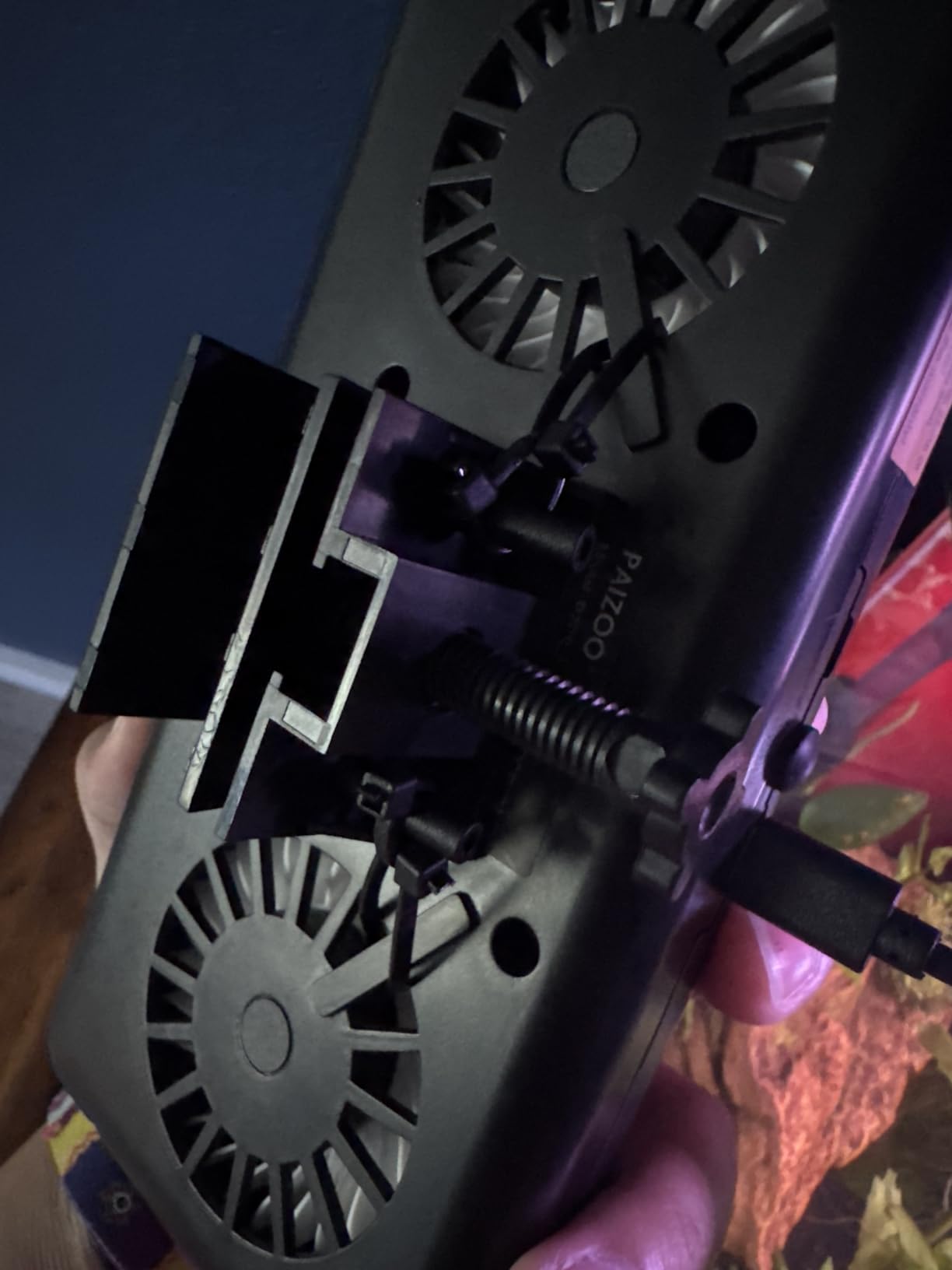
The clip fits tank walls up to 26mm thick. The angle adjusts 45 degrees so you can direct airflow precisely across the surface. On the lowest setting it’s barely audible. On high, it sounds like a small desk fan.
Trade off: evaporative cooling means you’ll top off water more often. I add about a gallon every other day when the fan runs continuously.
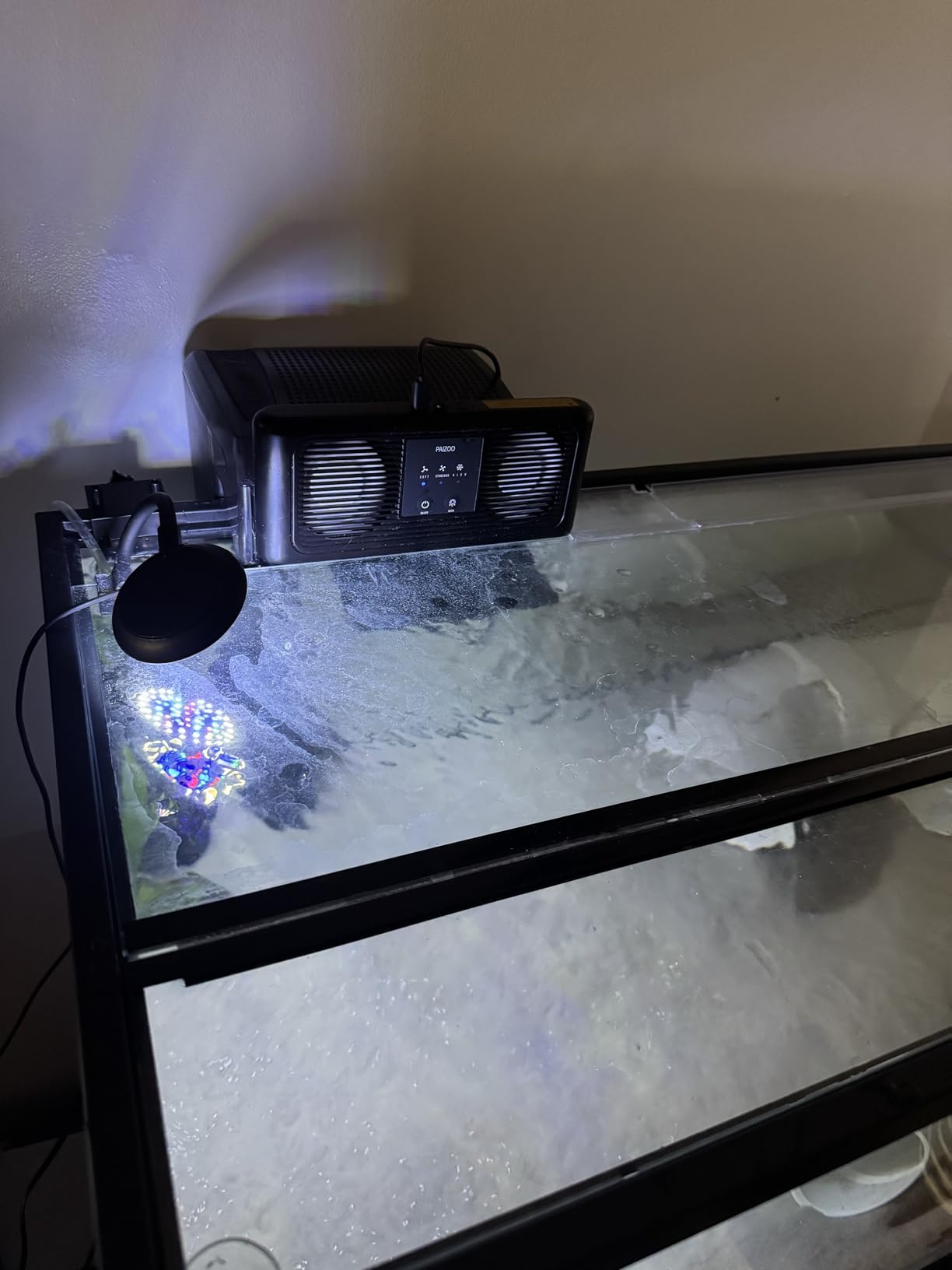
When a Fan Is Enough vs When You Need a Chiller
A clip-on fan works if your room stays under 80F and you need to drop the tank by 4 to 8 degrees. If your room regularly exceeds 85F or you need more than 8 degrees of cooling, you need an actual aquarium chiller unit.
For most indoor setups, the PAIZOO fan handles the job at a fraction of a chiller’s cost.
Installation and Safety
Keep the fan body above the water line. The motor is not waterproof. Route the USB cable so drips run away from the connection point.
Use a USB wall adapter rather than a power strip USB port for consistent voltage.
6. API Freshwater Master Test Kit – Track Your Nitrogen Cycle

API Freshwater Master Test Kit
Tests pH ammonia nitrite nitrate
Up to 800 tests
Color coded charts
2.4 lbs
Pros
- Highly accurate readings
- Easy to use with clear instructions
- Color coded result charts
- Cost effective per test
- Up to 800 tests included
Cons
- Plastic test tubes not glass
- Packaging may arrive opened
- Reagents stain easily
You cannot keep an axolotl healthy without knowing your water parameters. The API Master Test Kit measures pH, ammonia, nitrite, and nitrate with liquid reagents that are far more accurate than test strips.
I test my axolotl tank twice a week. During cycling I tested daily. The color-coded charts make it obvious whether you’re in the safe zone or heading toward danger.
Up to 800 tests come in the kit. At my testing frequency that’s roughly two years of monitoring for one tank. The per-test cost is a fraction of what you’d pay for strips.
The tubes are plastic rather than glass, which I’d prefer, but they hold up fine with careful handling. Rinse them well between tests because residue throws off the next reading.
Reading Results for Axolotl Safety
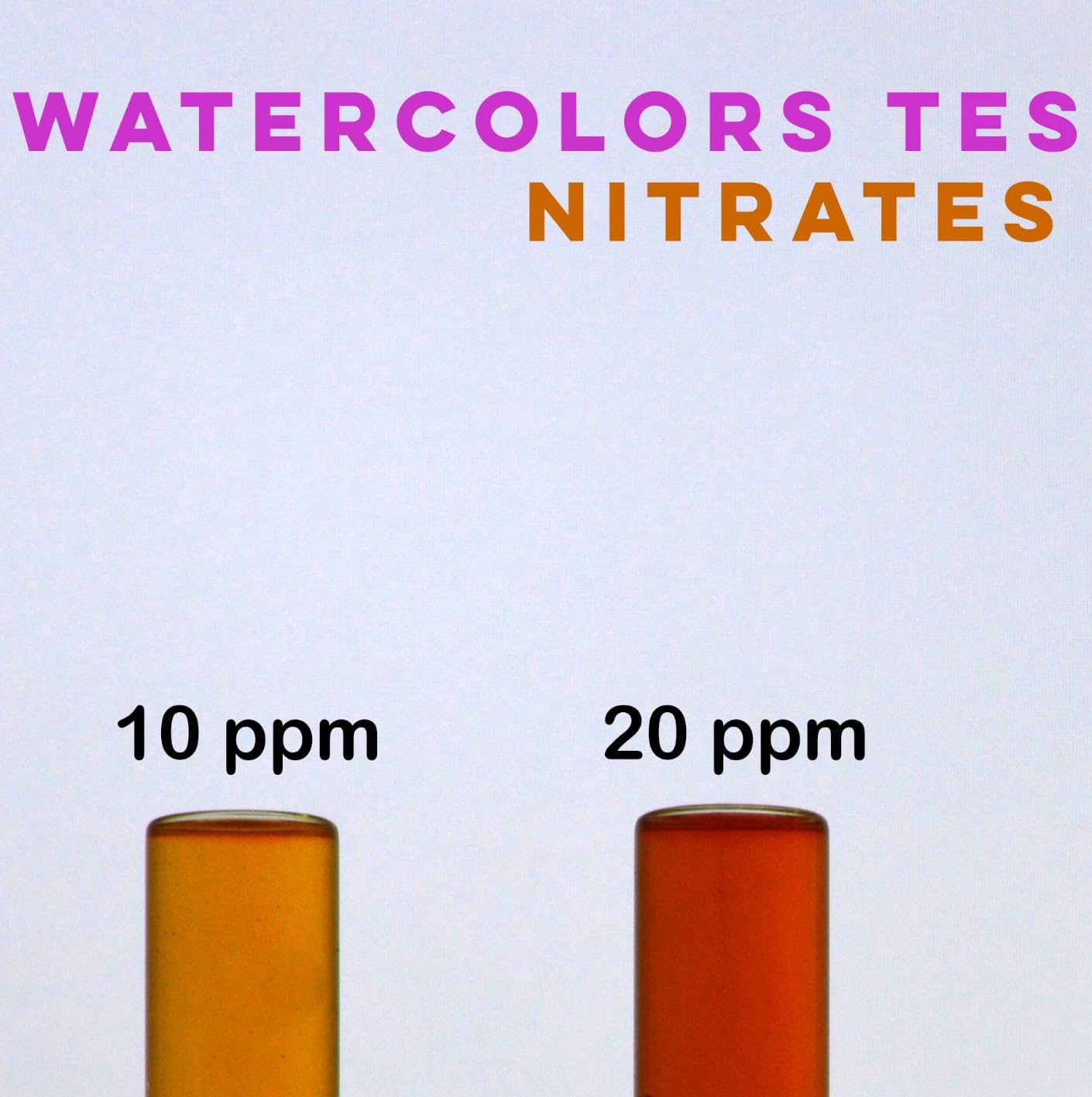
For axolotls, ammonia must read zero, nitrite must read zero, and nitrate should stay under 40 ppm. pH between 6.5 and 8.0 is acceptable, with 7.4 to 7.6 being ideal.
Any detectable ammonia or nitrite means your cycle is incomplete or broken. Do a water change and dose Prime immediately.
Cycling Timeline With This Kit
A fishless cycle takes 4 to 8 weeks. You’ll see ammonia rise first, then nitrite spike as bacteria colonize, then both drop to zero as nitrate appears. Only add your axolotl when ammonia and nitrite read zero for two consecutive tests a week apart.
Using a bottled bacteria product like Fritz Turbo Start can shorten this to 2 weeks.
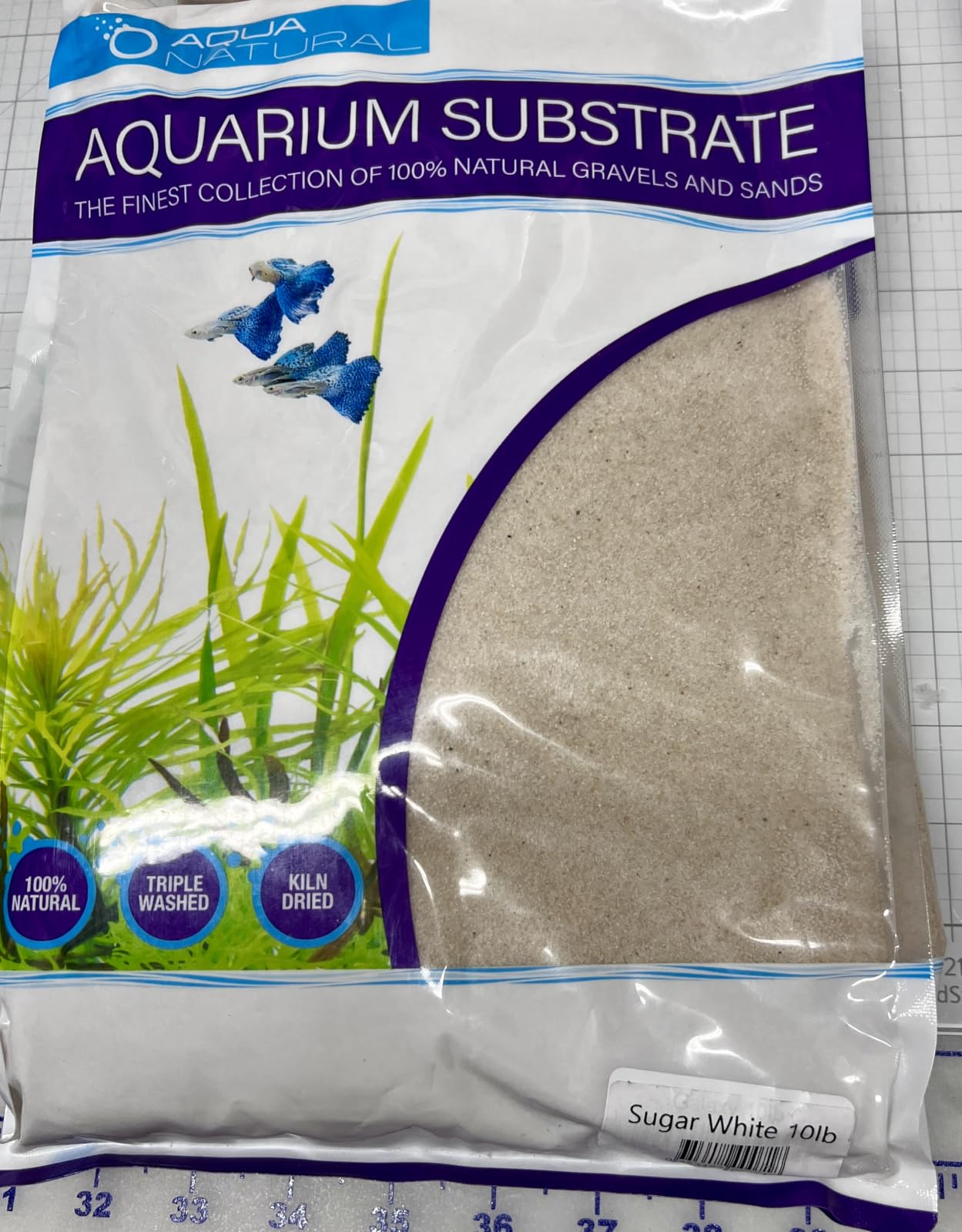
7. Aqua Natural Sugar White Sand – Safe Substrate That Won’t Cause Impaction

Aqua Natural Substrate, Sugar White Sand, 10lb
10lb bag
0.5-1mm grain
Off white sugar color
Triple washed
Pros
- Safe grain size under 1mm
- Beautiful natural color
- Triple washed and clean
- Does not cloud water
- Sustainably sourced
Cons
- Needs multiple rinses
- 10lb may not cover large tanks
- More creamy than pure white
Substrate choice is where most new axolotl owners go wrong. Gravel and stones bigger than an axolotl’s head cause fatal impaction when swallowed. Aqua Natural sugar sand sits at 0.5 to 1mm, fine enough to pass safely through an axolotl’s digestive tract.
I ran this sand in my display tank for six months. The off-white color brightens the tank and makes spotting waste easy during cleaning. Axolotls grip the bottom better on sand than on bare glass.
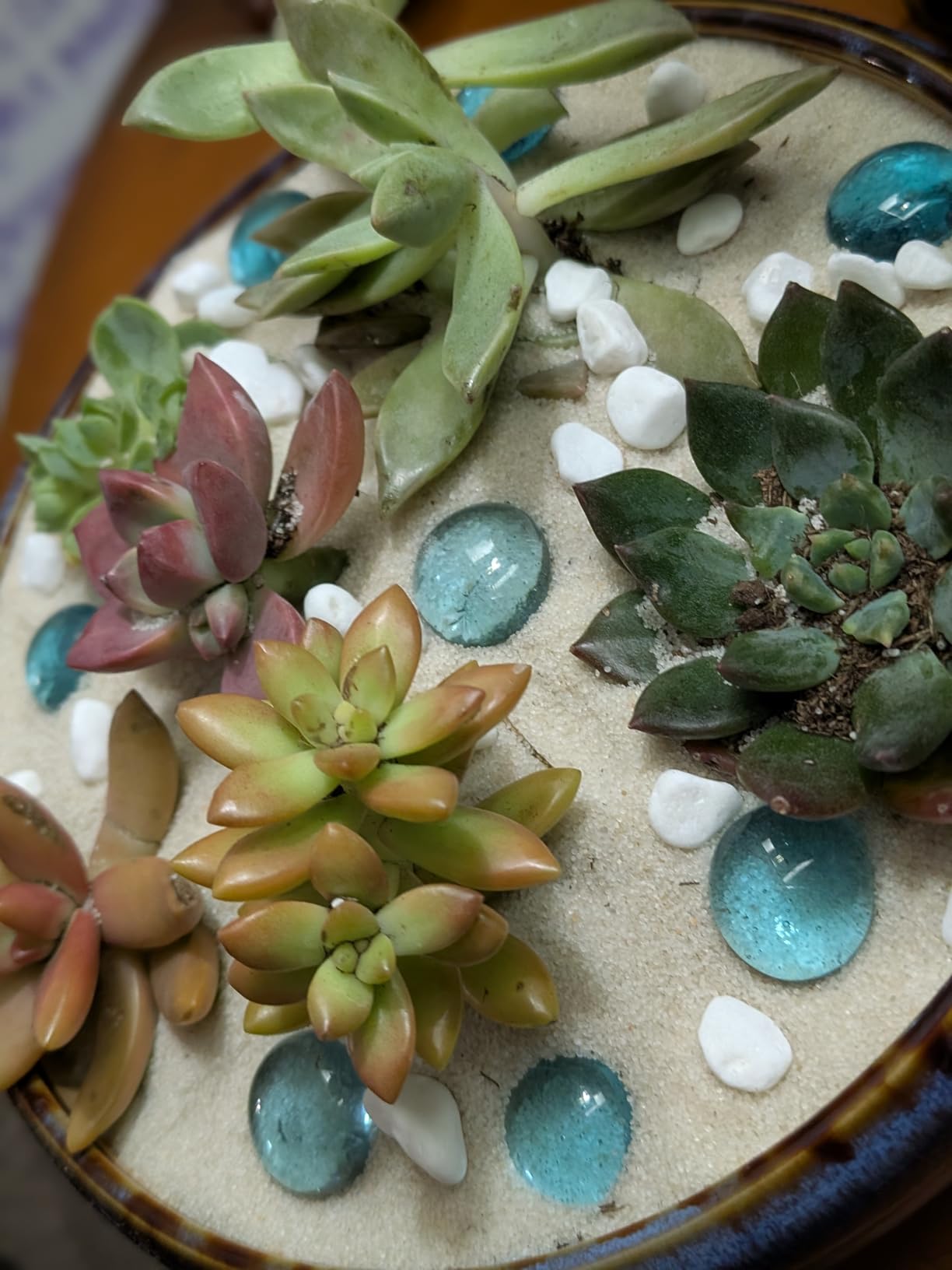
The sand arrives triple washed and kiln dried. I still rinsed it three times in a bucket before adding, but the water ran clear fast. No clouding when I filled the tank.
One 10lb bag covers a 20 gallon long with about an inch of sand depth. For a 40 gallon breeder you’ll want two bags.
Sand vs Bare Bottom for Axolotls
Bare bottom tanks are easiest to clean and recommended for new juveniles under 5 inches. Once your axolotl is large enough that swallowing sand isn’t a concern, sand provides better traction and a more natural look.
The 1mm maximum grain size is the safety threshold. Anything larger risks impaction.
How Much Sand You Need
Plan for 1 to 1.5 inches of depth. A 20 gallon long needs about 10 pounds. A 40 gallon breeder needs roughly 20 pounds. Slope the sand so the front is shallower than the back for visual depth.
Avoid planting heavy-rooted live plants directly in sand; use pots or attach to decor.
8. LifeWithPets XL Tunnel Hide – Secure Shelter for Stressed Axolotls
LifeWithPets Extra Large Aquarium Fish Tunnel Decoration | Cave Hide Ideal for Fish Axolotls and Small Reptiles | Under Gravel Hideout
15 inch tunnel
Black plastic
Under gravel hide
6.4 ounces
Pros
- Extra large fits adult axolotls
- Non toxic plastic
- Reduces stress
- Easy to assemble
- Fits 20 gallon tanks
Cons
- Two piece clip lets sand in
- May need silicone seal
- Not for small tanks
Axolotls are ambush predators that appreciate a dark place to hide. Without shelter they get stressed, refuse food, and develop pale gills. The LifeWithPets XL tunnel gives them a 15-inch long cave that fits even the largest adult.
I added this tunnel to my axolotl tank and watched my juvenile settle in within an hour. The dark interior blocks light, which matters because axolotls prefer low-light environments.
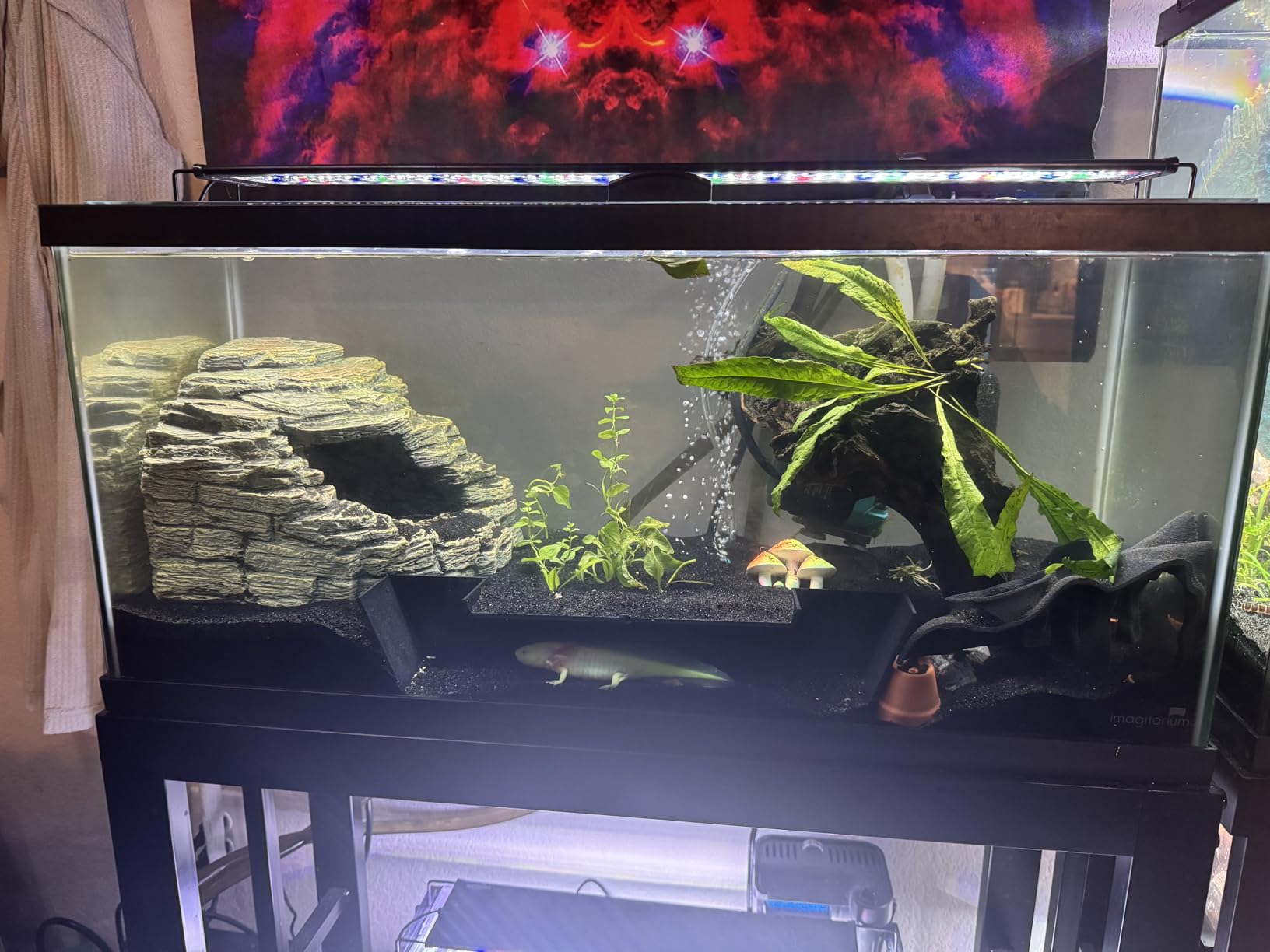
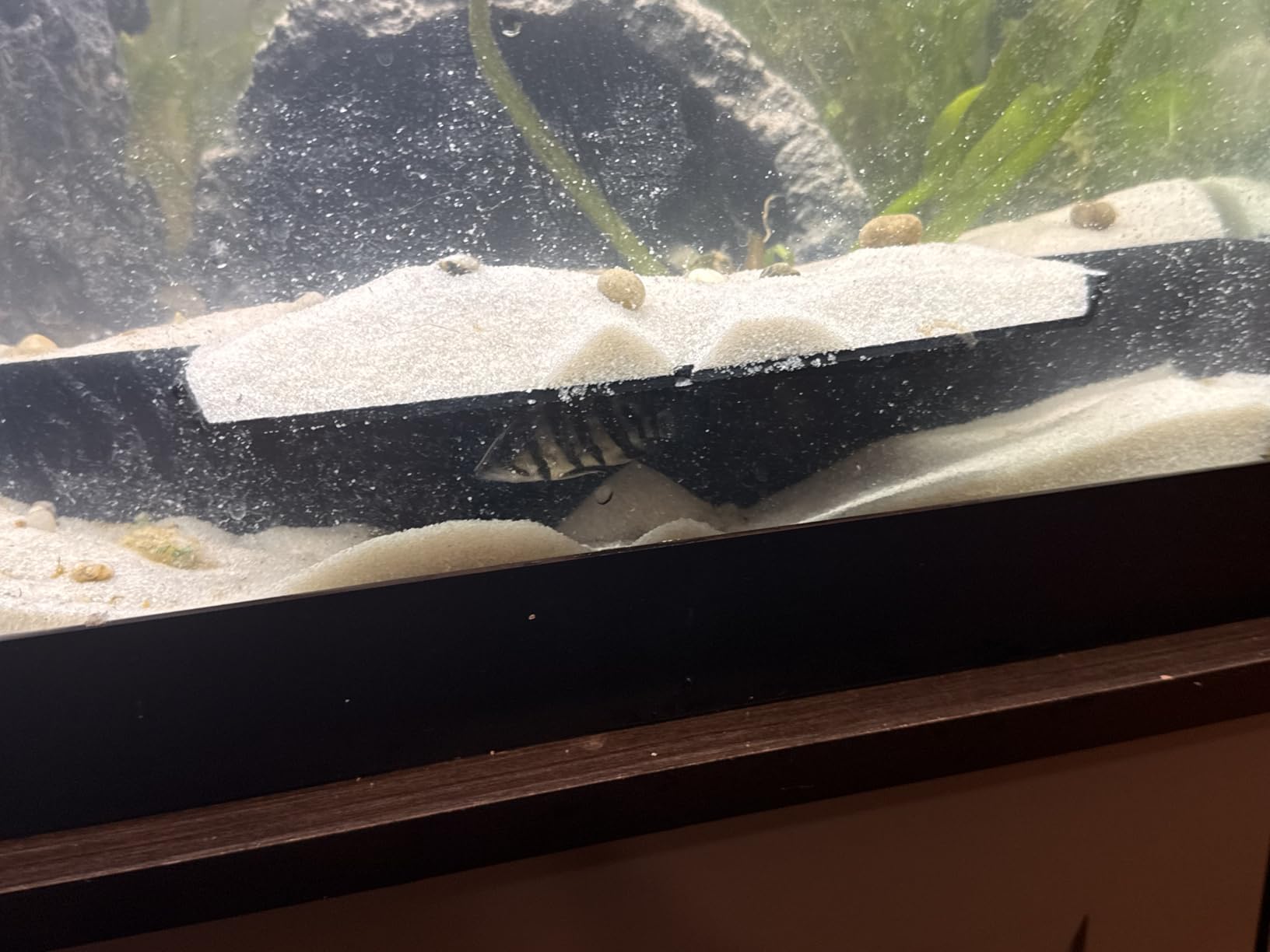
The tunnel is two pieces that clip together. The seam sits under the sand line so it disappears visually. I ran a thin bead of aquarium silicone along the inside seam to keep sand from working its way in.
The plastic is non-toxic and smooth. No rough edges that could scratch your axolotl’s delicate skin.
How Many Hides Does an Axolotl Need
One hide per axolotl is the minimum. Two or three scattered around the tank gives them options for different light and temperature zones. This 15-inch tunnel counts as a primary shelter.
Avoid ceramic or resin caves with small openings that an axolotl could get stuck in.
Securing the Tunnel Under Substrate
The tunnel is designed to sit partially buried. Press it into your sand so only the top half shows. The substrate holds it in place and creates a natural cave entrance at each end.
Seal the center seam with silicone if you use sand, otherwise grains will rattle inside during cleaning.
9. Laifoo 5ft Aquarium Siphon – Clean Sand Without the Mess

Laifoo 5ft-S Aquarium Siphon Vacuum Cleaner for Fish Tank Cleaning Gravel & Sand
5 foot hose
Squeeze ball starter
Detachable filter screen
Anti kink design
Pros
- Easy squeeze ball start
- Detachable screen traps sand
- Anti kinking hose
- Does not disturb decor
- Affordable price
Cons
- No on off valve
- Works almost too fast
- No storage solution
- Weak on stubborn algae
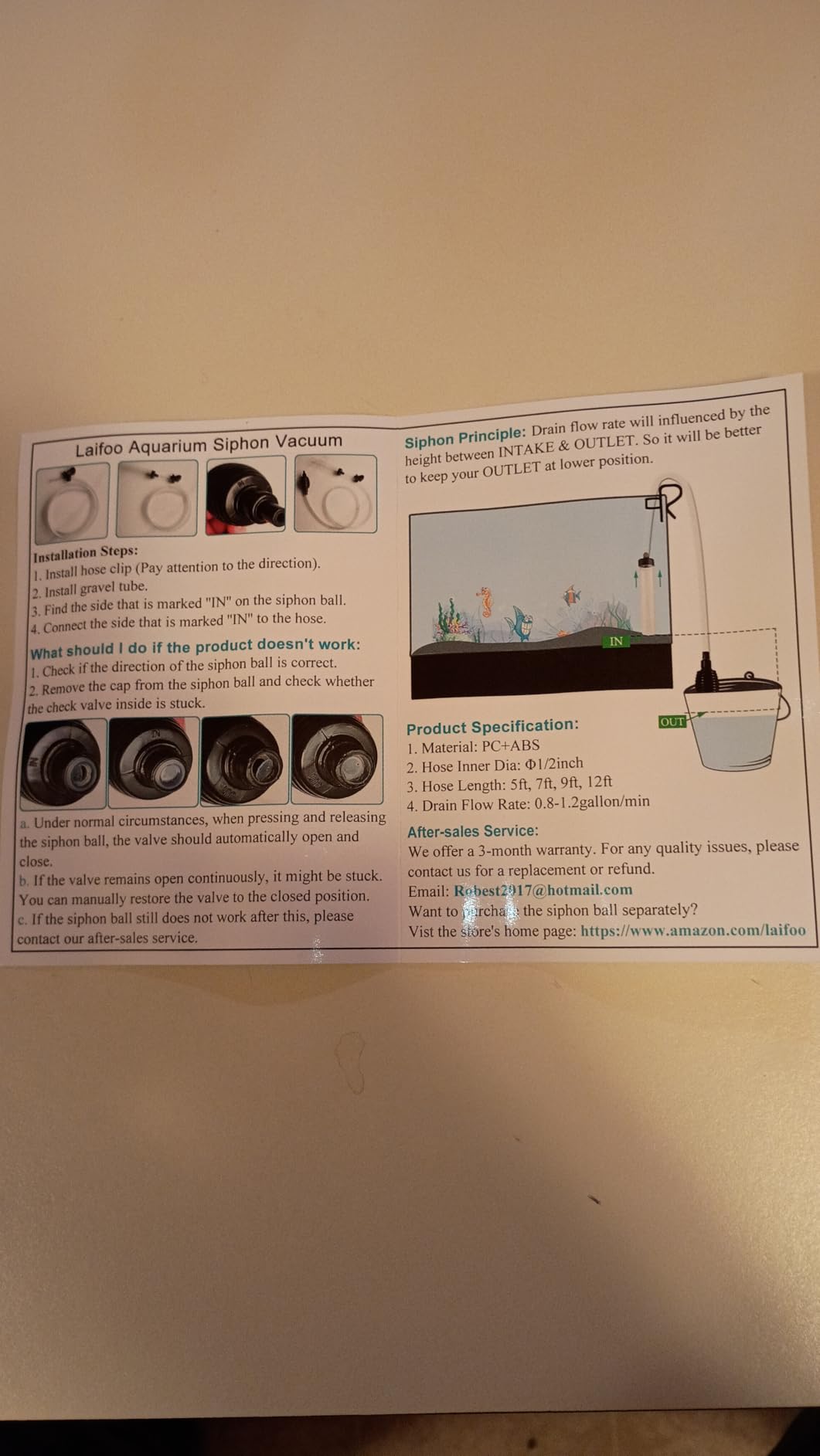
Weekly water changes are non-negotiable for axolotl tanks. The Laifoo siphon makes them quick and clean with a squeeze-ball starter that primes the flow in seconds.
The 5-foot hose reaches from my 20 gallon long on a stand down to a bucket on the floor with room to spare. The detachable filter screen keeps sand from shooting out with the waste water.
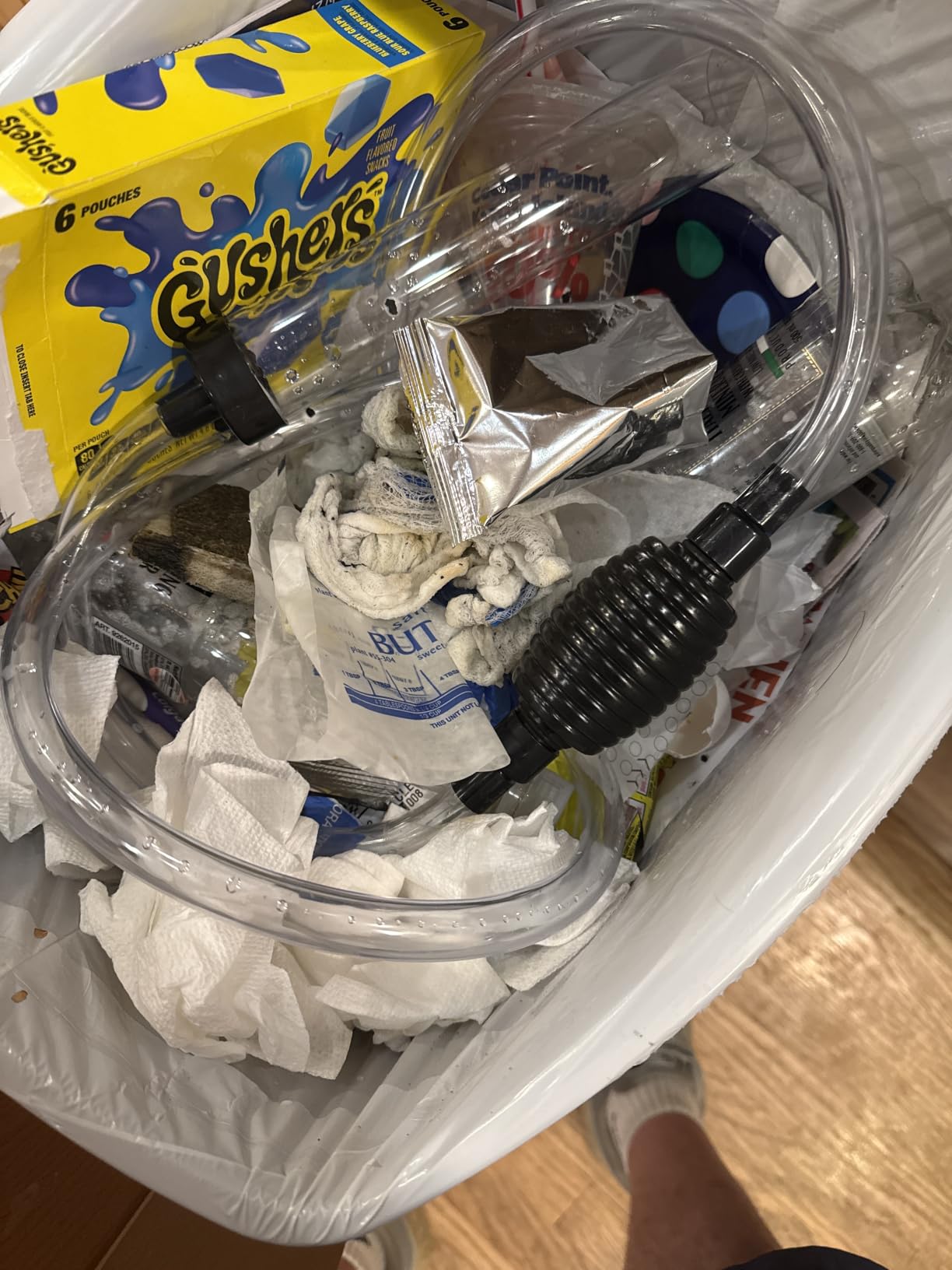
I run the siphon across the sand surface to pull waste without sucking up substrate. The flow is steady and continuous once it starts. For deeper cleaning I pinch the hose to throttle back.
The clear elastic hose resists kinking better than stiff vinyl tubing. After six months of weekly use mine is still flowing strong.
Siphoning Sand Without Losing It
Hold the intake an inch above the sand surface and move in slow circles. The waste is lighter than sand and lifts off while the sand stays put. The filter screen catches any grains that do get pulled up.
For bare bottom tanks, drag the intake directly along the glass to clear all waste.
Sizing for Your Tank Setup
The 5-foot version works for tanks on standard stands up to about 30 inches tall. If your tank sits higher, get the 7-foot version to reach your bucket comfortably.
Always match your waste bucket size to your water change volume. For a 20 gallon tank at 50% change, a 5-gallon bucket works.
10. Python No Spill Clean and Fill – Bucket Free Water Changes

Python No Spill Clean and Fill Aquarium Maintenance System, Gravel Cleaner and Water Changer, 25 Foot
25 foot hose
Faucet powered
Drains and fills
Complete system
Pros
- Eliminates bucket hauling
- Drains and fills in one tool
- Gentle suction safe for axolotls
- 25 foot reach
- Complete ready to use
Cons
- Needs faucet adapter
- Gentle suction slow for large tanks
- Monitor incoming water temp
- Some faucet seal issues
If you have a sink within 25 feet of your tank, the Python system eliminates bucket hauling entirely. It connects to your faucet, drains dirty water out, then flips to fill clean water back in.
I switched to the Python after six months of lugging buckets and wish I’d done it sooner. A full 50% water change on my 20 gallon long takes under 10 minutes now.
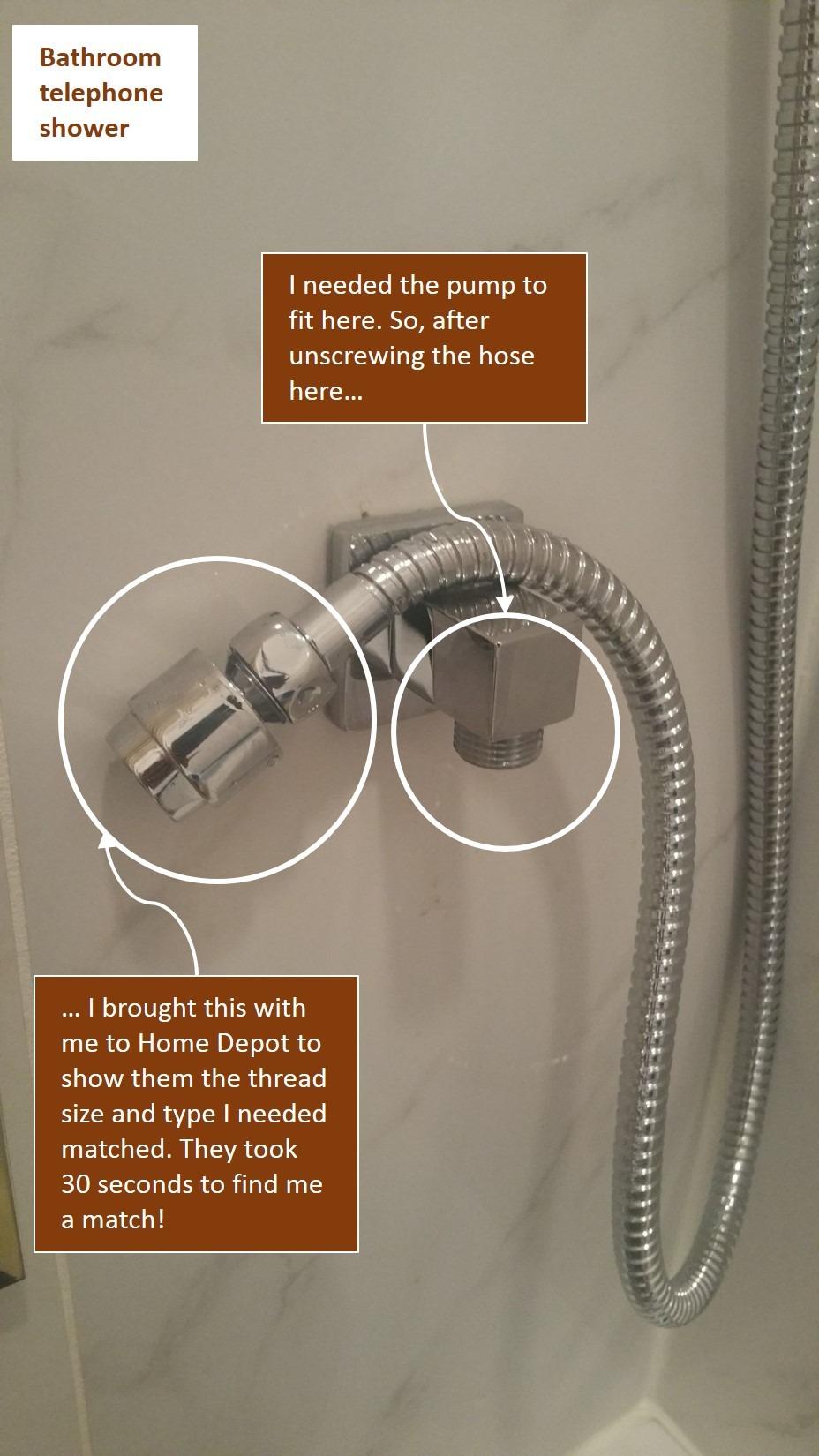
The system includes the hose, gravel tube, faucet pump, switch, and connectors. Assembly takes five minutes. The switch on the faucet pump lets you flip between drain and fill without disconnecting anything.
Word of caution: match the temperature of incoming tap water to your tank before filling. Axolotls are sensitive to sudden temperature swings. I keep a thermometer under the faucet to verify.
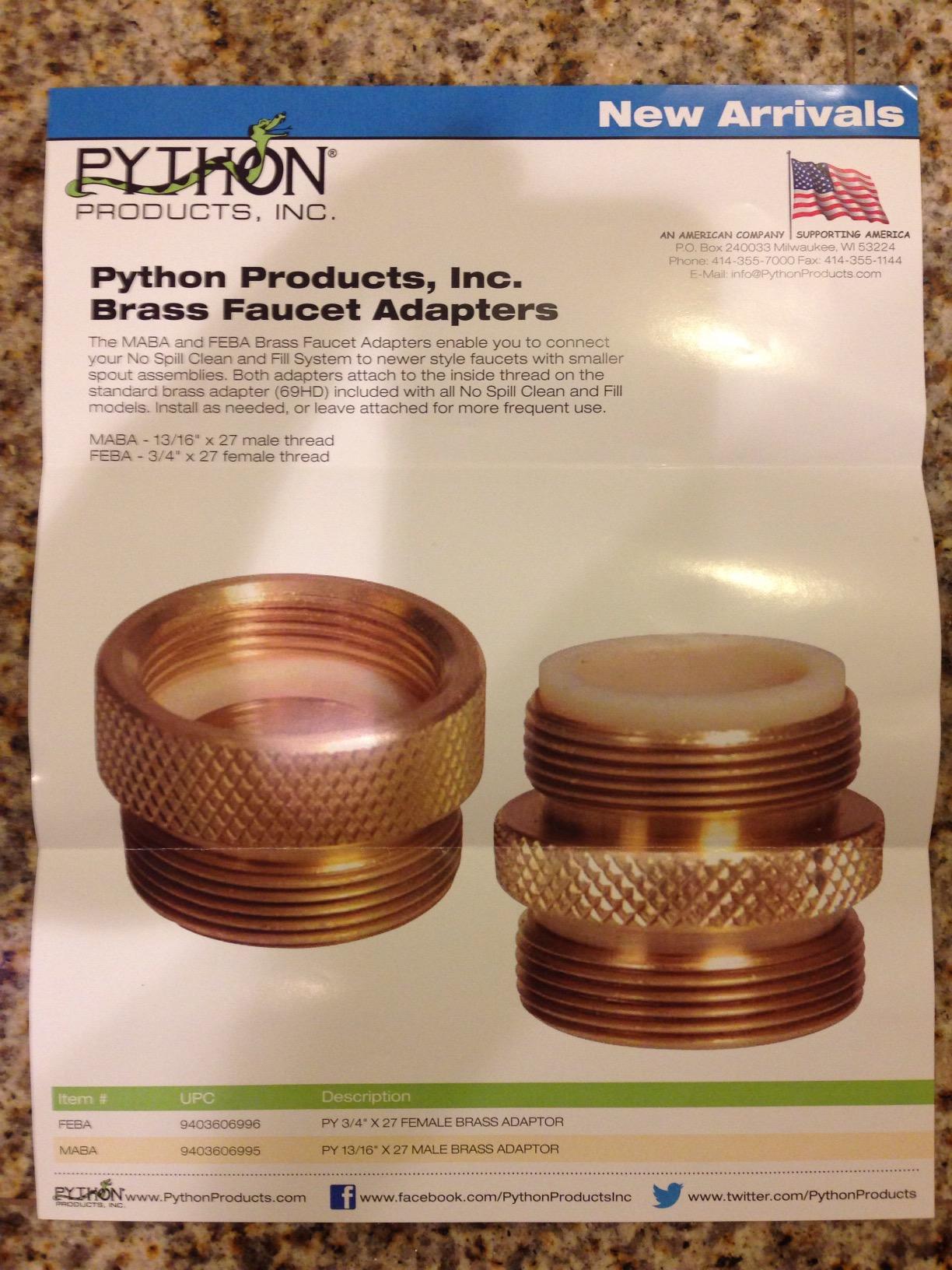
Faucet Compatibility
The Python includes a standard faucet adapter. If your faucet has an aerator thread it’ll work. Some pull-out sprayer faucets need an adapter from the hardware store.
Test the connection over a bucket before attaching the hose to your tank to avoid surprises.
Prime Dosing With the Python
When filling with the Python, add Prime to the tank before you start refilling. The incoming chlorinated water gets neutralized as it mixes. Dose for the full tank volume, not just the new water, during changes.
This keeps your bio filter bacteria safe even if chloramine slips through momentarily.
11. Pawfly Dual Outlet Air Pump – Power Your Sponge Filter Quietly
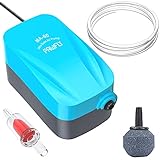
Pawfly Aquarium 15-40 GPH Compact Air Pump Quiet Oxygen Aerator Pump with Air Stone/Nano Bio Sponge Filter Airline Tubing and Check Valve Accessories for 3-20 Gallon Buckets and Fish Tanks
Dual outlet
Adjustable flow
Under 45 dB
10-200 gallon rated
Pros
- Compact and lightweight
- Whisper quiet under 45 dB
- Dual outlet runs two filters
- Includes air stone and tubing
- Very affordable
Cons
- Can get loud over time
- Tubing degrades eventually
- Check valve fits loose
- No detailed instructions
- Pump may run warm
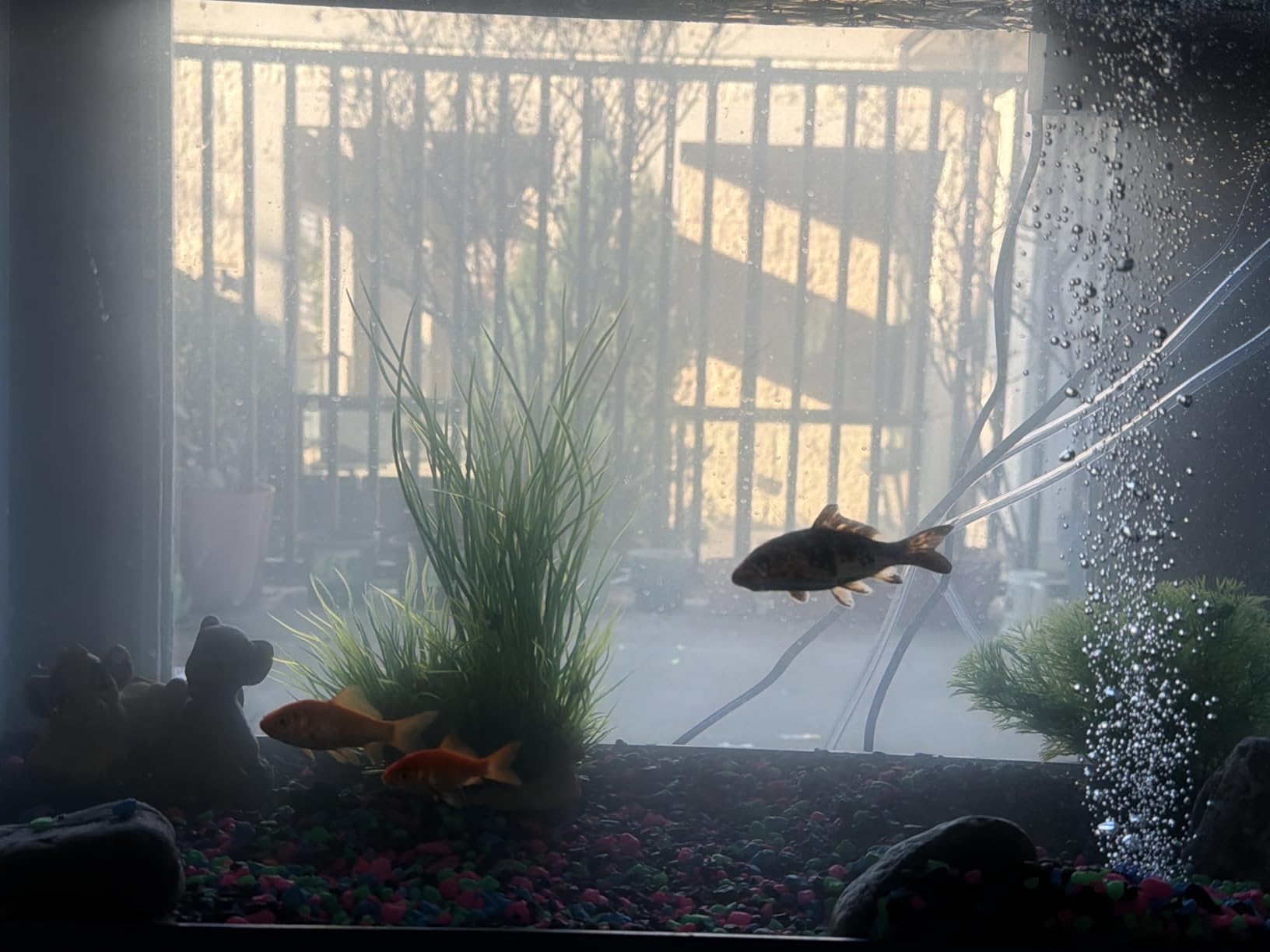
The Pawfly air pump powers your sponge filter and provides surface agitation for oxygen exchange. At under 45 decibels it’s quieter than most refrigerators, which matters when the tank sits in a bedroom.
The dual outlet design lets you run two sponge filters from one pump. I use this setup on my 40 gallon breeder with two axolotls, placing a filter on each end for balanced circulation.
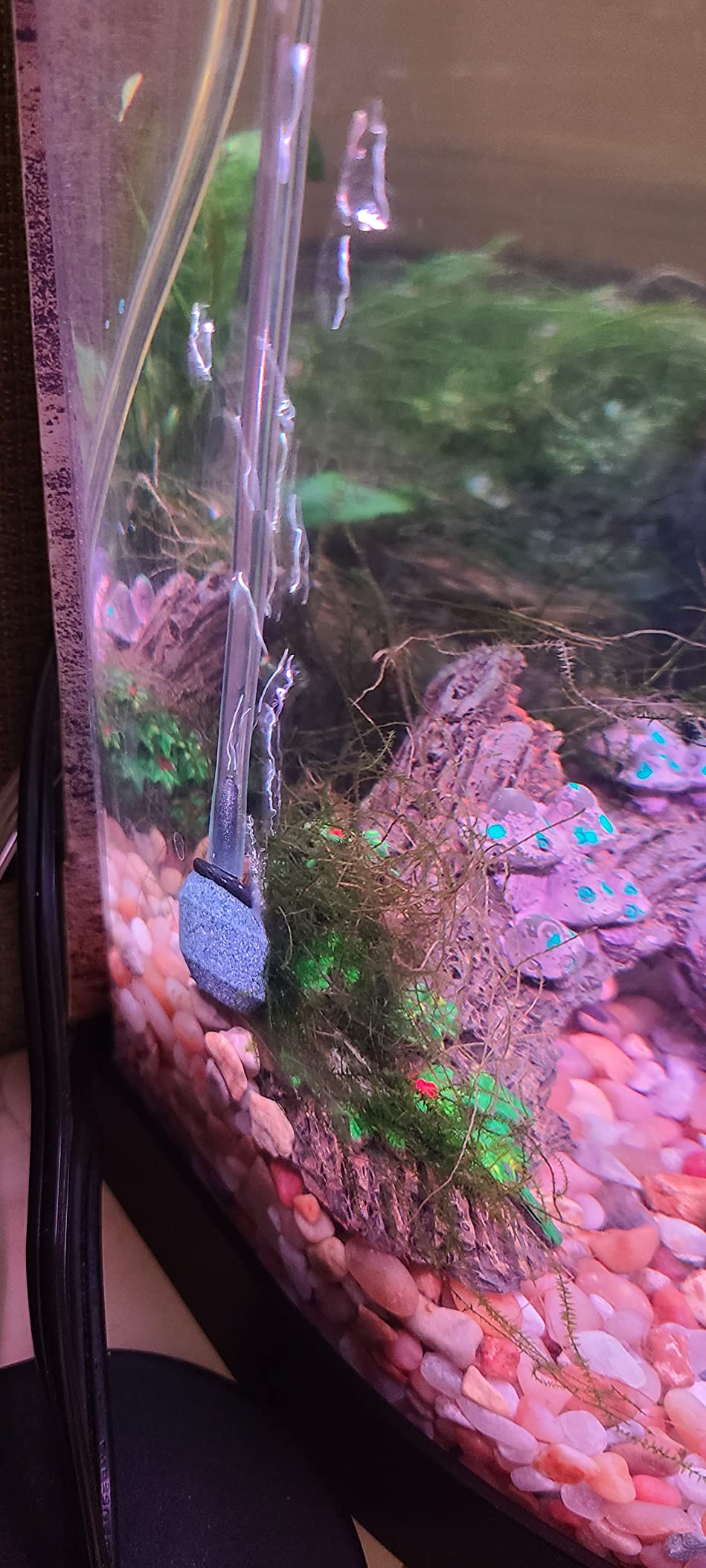
The adjustable flow knob lets you tune the output. For axolotls you want minimal surface splashing, so I keep mine on the lower third of the dial. Your sponge filter still gets plenty of air at that setting.
The kit includes an air stone, 5-foot airline tubing, and a check valve. The check valve prevents water from siphoning back into the pump during a power outage.
Matching Pump Size to Tank Volume
This pump covers 10 to 200 gallon tanks. For a 20 gallon long with one sponge filter, the single outlet setting is plenty. For larger tanks or dual filter setups, the dual outlet gives you the headroom you need.
Always use a check valve between the pump and filter to protect against back-siphon.
Keeping the Pump Quiet
Set the pump on a folded towel or foam pad to absorb vibration. Don’t mount it directly to the wall or stand. The rubber feet help but a soft surface makes a bigger difference.
Replace the airline tubing every 12 to 18 months as it hardens and cracks, which causes air leaks and noise.
12. Weewooday Feeding Tweezer Set – Target Feed Without Stress
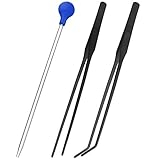
Weewooday 3 Pcs Axolotl Tank Accessories, Tweezers Syringe for Aquarium
3 piece set
13.77 inch feeder tube
Stainless steel tweezers
Serrated tips
Pros
- Complete feeding set in one package
- Long reach keeps hands dry
- Serrated tips grip worms well
- Straight and curved tweezers
- Stainless steel durable
Cons
- Tweezers rust if not dried
- Wide tube for small axolotls
- Plastic parts may break
- No instructions
Axolotls eat earthworms, bloodworms, and sinking pellets. Feeding by hand or with a long tool keeps your fingers out of cold water and lets you target each axolotl individually. The Weewooday 3-piece set covers every feeding style.
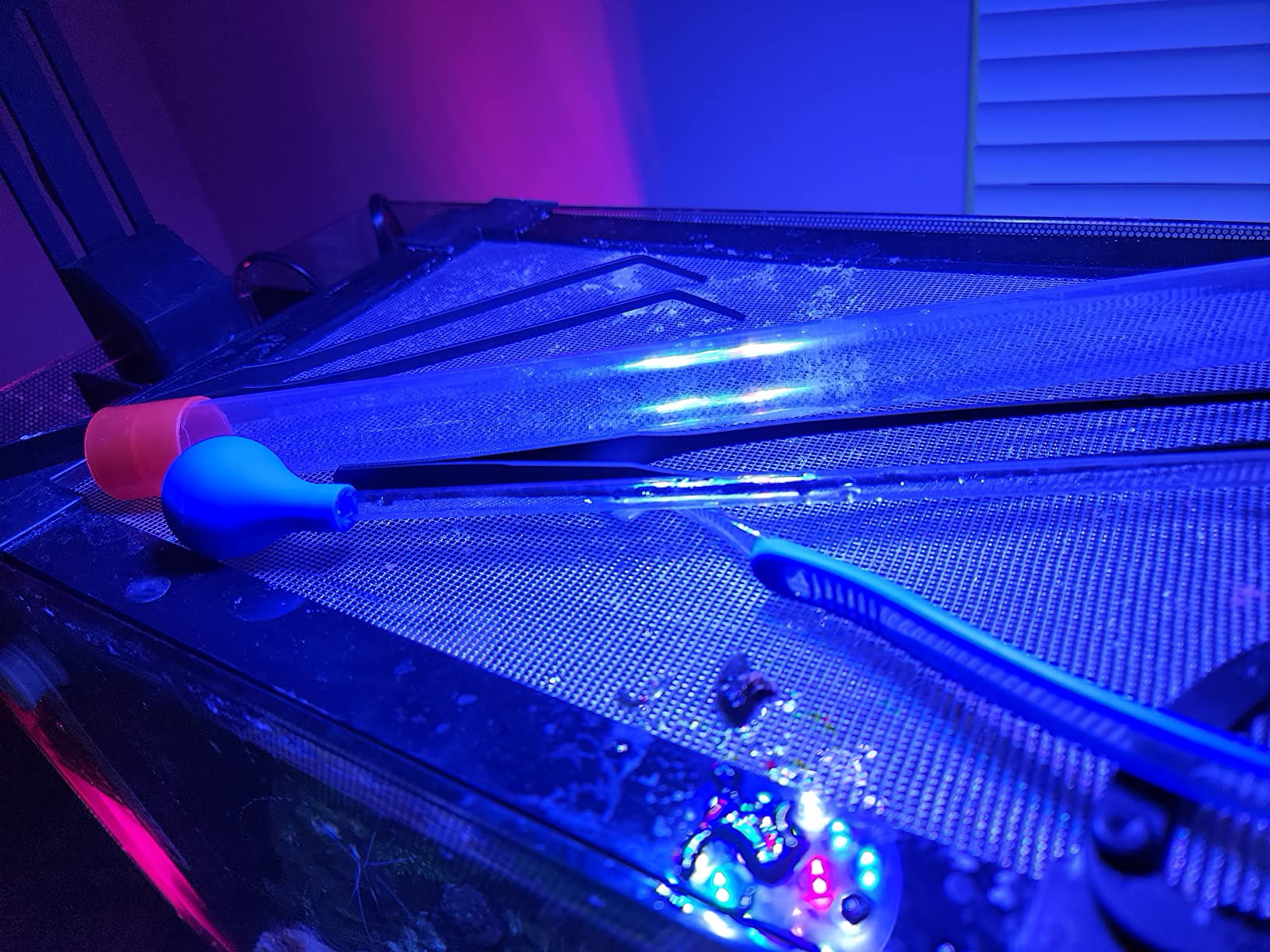
The 13.77-inch acrylic coral feeder tube is perfect for dropping worms directly in front of your axolotl. The length reaches across a 20 gallon long without leaning into the tank.
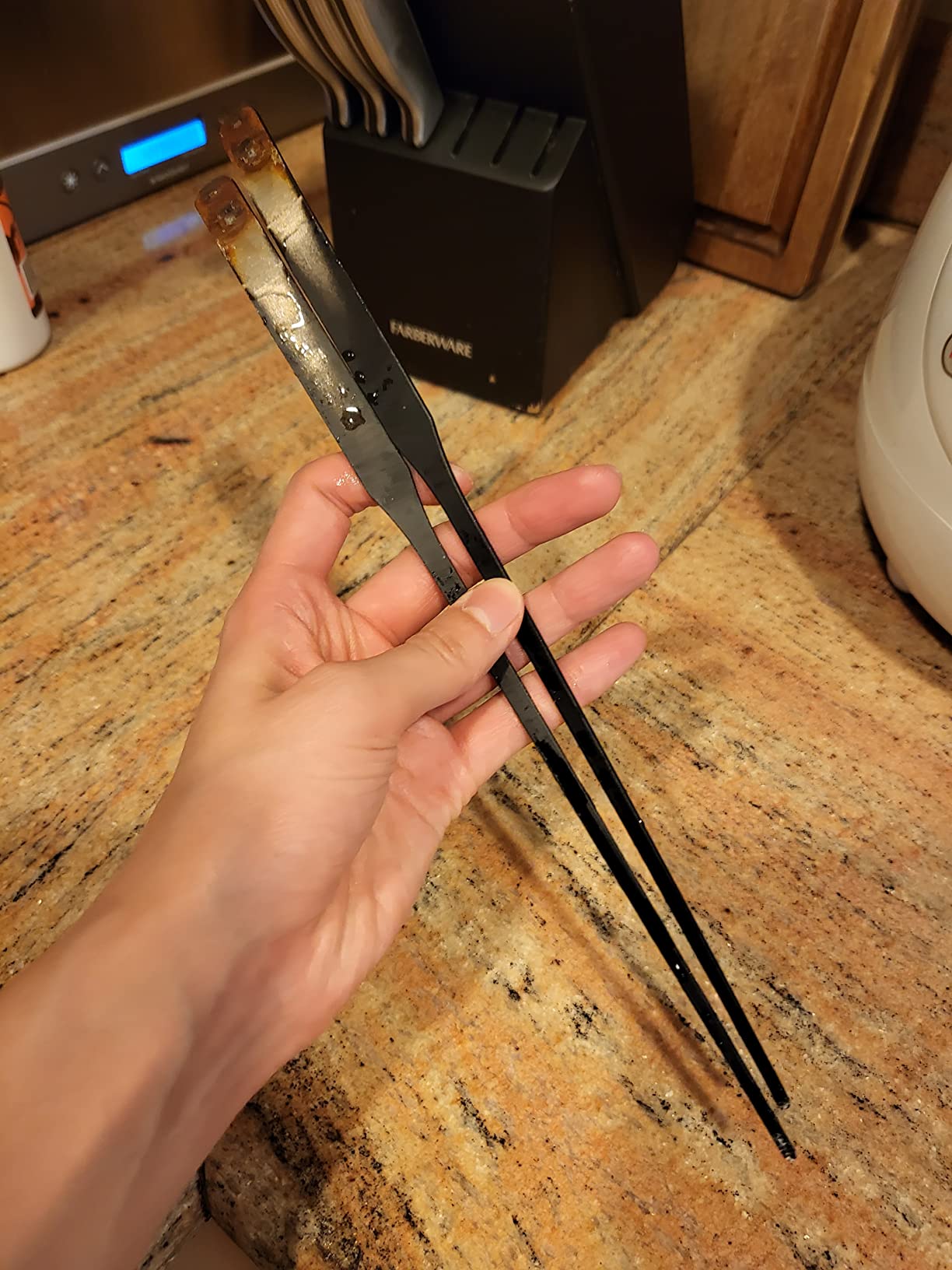
The set includes both straight and curved stainless steel tweezers with serrated tips. I use the curved pair to grip earthworms and place them near my axolotl’s mouth. The serrations keep slimy worms from slipping.
Dry the tweezers after each use to prevent rust. The acrylic tube just needs a rinse and air dry.
Feeding Technique With Tweezers
Hold the worm near the axolotl’s mouth and wait for them to snap. Axolotls hunt by motion and smell, so wiggling the worm slightly triggers their feeding response. Never force food into their mouth.
Feed juveniles once daily and adults every 2 to 3 days. Remove uneaten food within an hour to prevent ammonia spikes.
Cleaning and Maintenance
Rinse the tube and tweezers in hot tap water after each feeding. Once a week soak them in a mild bleach solution (1 part bleach to 20 parts water) for 10 minutes, then rinse thoroughly and air dry.
Replace tweezers if the serrated tips bend or lose grip strength.
Buying Guide: Building the Best Axolotl Tank Setup
Choosing the right equipment for your axolotl habitat comes down to five non-negotiable factors. Get these right and your axolotl will thrive for its full 10 to 15 year lifespan.
Tank Size: Bigger Is Always Better
A single adult axolotl needs a minimum 20 gallon long tank. Two adults need a 40 gallon breeder. The keyword is “long” or “breeder” because axolotls need horizontal floor space, not vertical height. A standard 20 gallon tall wastes volume your axolotl will never use.
Larger tanks are also more stable. Water parameters swing slower in 40 gallons than in 10, giving you more time to catch problems.
Temperature Control: 60 to 68F Is the Safe Zone
Axolotls are cold-water amphibians. Temperatures above 72F cause heat stress, fungal infections, and death. Below 60F slows their metabolism and feeding response. Aim for the 60 to 68F window year round.
In most homes you’ll need active cooling in summer. A clip-on fan like the PAIZOO drops water temperature 4 to 8 degrees through evaporation. In extreme heat, an aquarium chiller is the only reliable solution.
Filtration: Gentle Flow With Bio Capacity
Sponge filters are the gold standard for axolotls because they provide biological filtration without strong current. Canister filters work too but need a spray bar or flow baffle to reduce output.
Whatever filter you choose, the bio media must support the bacterial colony that processes ammonia into nitrite and then nitrate. Under-filter and your cycle crashes. Over-filter on flow and your axolotl gets exhausted fighting current.
Substrate: Impaction Safety First
Bare bottom tanks are the safest choice for juveniles under 5 inches. For adults, fine sand with grain size under 1mm is the standard. Never use gravel, pebbles, or stones that could fit in your axolotl’s mouth.
The Aqua Natural sugar sand at 0.5 to 1mm is the sweet spot. It passes safely if swallowed and gives axolotls traction on the bottom.
Water Testing: You Can’t Manage What You Don’t Measure
A liquid test kit like the API Freshwater Master Kit is essential. Test strips are not accurate enough for axolotl care. You need to know your ammonia, nitrite, nitrate, and pH readings to within 1 ppm.
Test twice a week on a cycled tank. Test daily during cycling. The four to eight week cycling period before adding your axolotl is the single most important step in setup.
Frequently Asked Questions About Axolotl Tank Setup
What is the best size tank for an axolotl?
A single adult axolotl needs a minimum 20 gallon long tank, while two adults require a 40 gallon breeder. Axolotls are bottom dwellers that need horizontal floor space, so choose tanks labeled long or breeder over tall or standard shapes.
What temperature should an axolotl tank be kept at?
Axolotl tanks should stay between 60 and 68 degrees Fahrenheit. Temperatures above 72 degrees cause heat stress, fungal infections, and can be fatal. Use a clip-on fan or aquarium chiller in warm rooms to maintain safe temperatures.
How long do you have to wait to put an axolotl in a new tank?
You must cycle the tank for 4 to 8 weeks before adding an axolotl. The tank is ready when ammonia reads zero, nitrite reads zero, and nitrate is present, confirmed by two consecutive tests a week apart.
What substrate is safe for axolotls?
Bare bottom tanks are safest for juveniles under 5 inches. For adult axolotls, use fine sand with grain size under 1mm. Never use gravel, pebbles, or stones that could cause fatal impaction if swallowed.
Do axolotls need a filter in their tank?
Yes, axolotls need a filter to maintain water quality. Sponge filters are the best choice because they provide biological filtration with gentle flow. Canister filters also work if you use a spray bar to reduce current.
Final Thoughts on the Best Axolotl Tank Setup
The best axolotl tank setup comes down to the right tank, gentle filtration, temperature control, safe substrate, and consistent water testing. Our top picks the Aqueon 20 gallon long tank, hygger sponge filter, and Seachem Prime conditioner cover the three pillars every axolotl habitat needs.
Build your setup in this order: tank, sand, filter, air pump, test kit, conditioner, thermometer, cooling solution, hides, and feeding tools. Cycle for 4 to 8 weeks before adding your axolotl. With the 12 products in this guide, you’ll have everything you need for a healthy, thriving axolotl in 2026.