
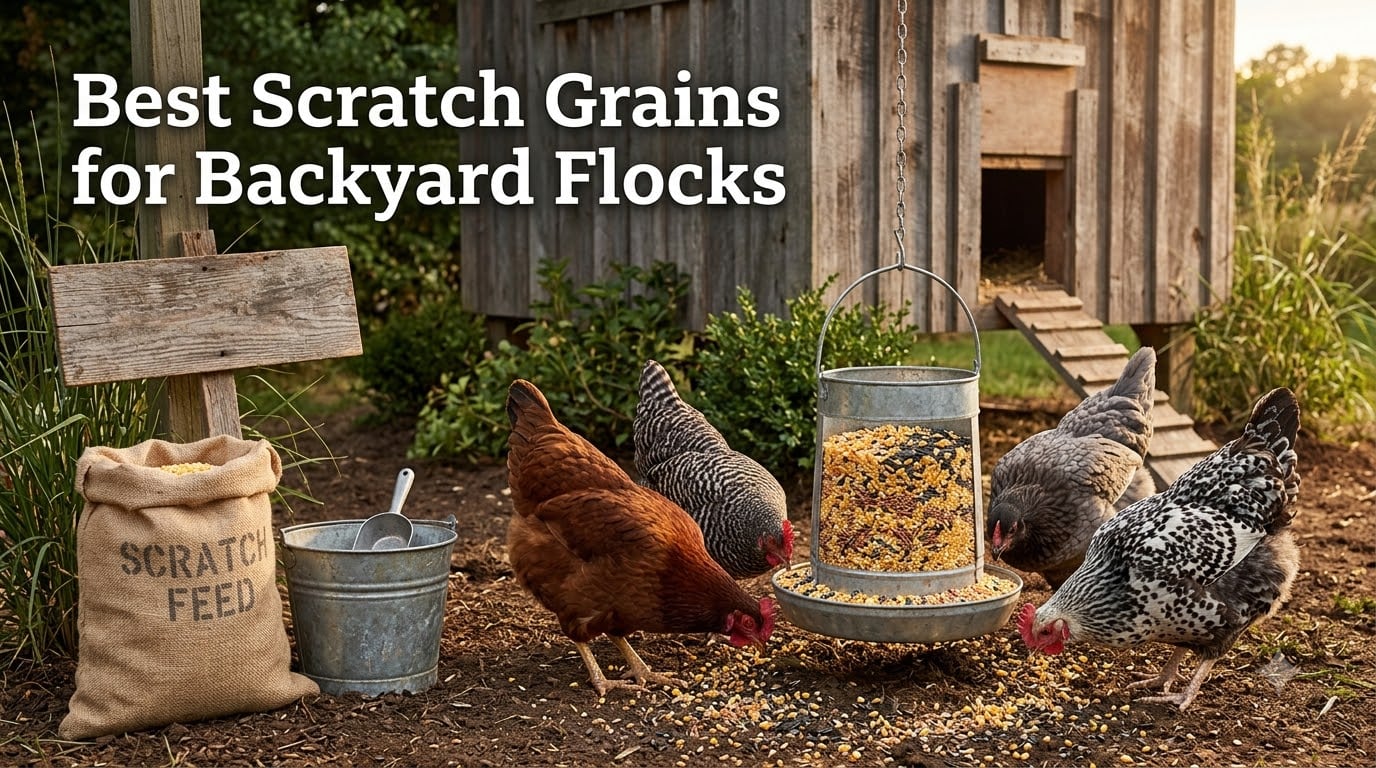
After keeping a small flock of eight hens in my backyard for the last six years, I have run through more bags of scratch grains than I care to admit. I have tried cheap store-brand mixes, organic blends, and even a homemade recipe I mixed myself during the 2026 winter. Through all that trial and error, I learned one thing clearly: scratch grains are not a complete feed, but the right blend can change how your flock forages, stays warm, and lays through cold months.
Scratch grains are a mix of cracked or whole grains like corn, wheat, milo, barley, oats, and sunflower seeds, used as a supplemental treat for backyard chickens. They are not a balanced diet on their own. They are an energy boost, a boredom buster, and a way to keep your flock active when the ground is frozen or covered in snow. The best scratch grains for backyard flocks combine variety, clean ingredients, and a price that fits a real feeding routine.
In this guide, I walk you through 10 products I have personally bought, opened, and watched my flock peck through. I cover protein levels, ingredient variety, and the real value each bag offers. I also break down the 90/10 feeding rule, age guidelines, and the homemade vs commercial debate. By the end, you will know exactly which scratch grain belongs in your feeder.
Table of Contents
Top 3 Picks for Best Scratch Grains for Backyard Flocks
Best Scratch Grains for Backyard Flocks in 2026
| Product | Specs | Action |
|---|---|---|
 Manna Pro 7-Grain Ultimate Chicken Scratch Manna Pro 7-Grain Ultimate Chicken Scratch |
|
Check Latest Price |
 Manna Pro 3-Grain Ultimate Chicken Scratch Manna Pro 3-Grain Ultimate Chicken Scratch |
|
Check Latest Price |
 Scratch and Peck Feeds 3-Grain Organic Scratch and Peck Feeds 3-Grain Organic |
|
Check Latest Price |
 Chicken’s Choice Organic 5-Grain Premium Chicken’s Choice Organic 5-Grain Premium |
|
Check Latest Price |
 Scratch & More 5-Grain with Mealworms Scratch & More 5-Grain with Mealworms |
|
Check Latest Price |
 Small Pet Select Sustainable Chicken Scratch Small Pet Select Sustainable Chicken Scratch |
|
Check Latest Price |
 Desert Valley Premium Whole Grain Scratch Desert Valley Premium Whole Grain Scratch |
|
Check Latest Price |
 Pink Rose Organix USDA Organic Scratch Pink Rose Organix USDA Organic Scratch |
|
Check Latest Price |
 AMERICAN CLASSIC 3-Way Hen Scratch AMERICAN CLASSIC 3-Way Hen Scratch |
|
Check Latest Price |
 AMERICAN CLASSIC AMC Complete Scratch AMERICAN CLASSIC AMC Complete Scratch |
|
Check Latest Price |
1. Manna Pro 7-Grain Ultimate Chicken Scratch – Editor’s Pick for Variety
Manna Pro 7-Grain Ultimate Chicken Scratch Treat, Non-GMO, 10 lb Bag
7-grain blend
Non-GMO
10 lb bag
Pros
- 7-grain mix with corn
- wheat
- milo
- barley
- oats
- sunflower seeds
- and millet
- Non-GMO with no artificial colors or flavors
- Suitable for mixed flocks including chickens
- ducks
- geese
- turkeys
- and gamebirds
- Proudly made in the USA
- High engagement with visually appealing purple corn
Cons
- Some reports of moths hatching in bags (quality control issue)
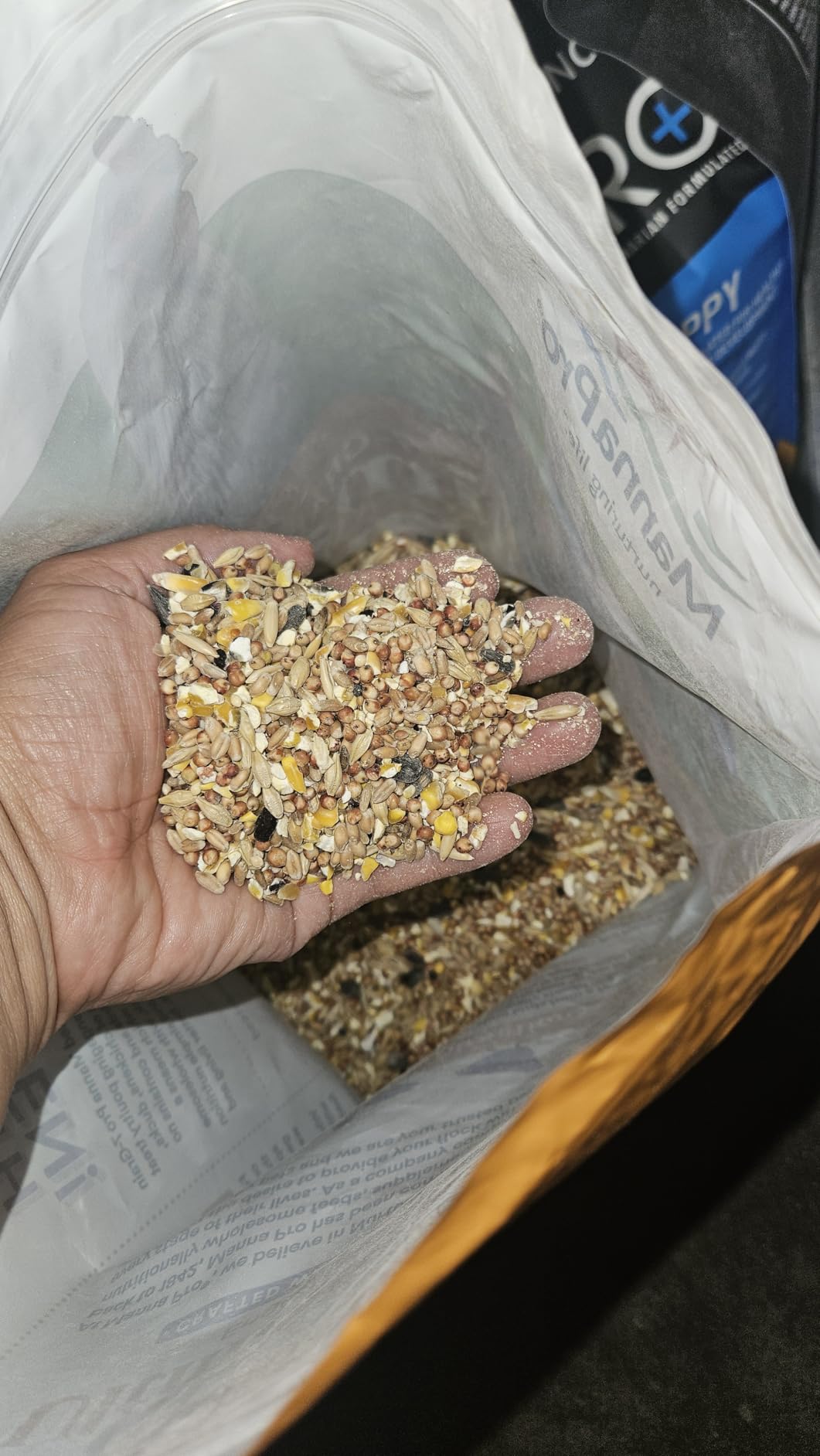
I have used Manna Pro 7-Grain on three separate occasions over the past two years, and it is the bag I keep coming back to. The blend includes seven grains: corn, wheat, milo, barley, oats, sunflower seeds, and millet. That kind of variety matters because chickens get bored with the same mix. They pick through bags selectively, and when there is more variety, they stay engaged longer and waste less.
The non-GMO label is not just marketing here. The grains look and smell clean, and there is almost no dust at the bottom of the bag. I have poured this into metal feeders and scattered it in dry grass for foraging enrichment. Both work well. My hens always come running when they hear the rustle of the bag.
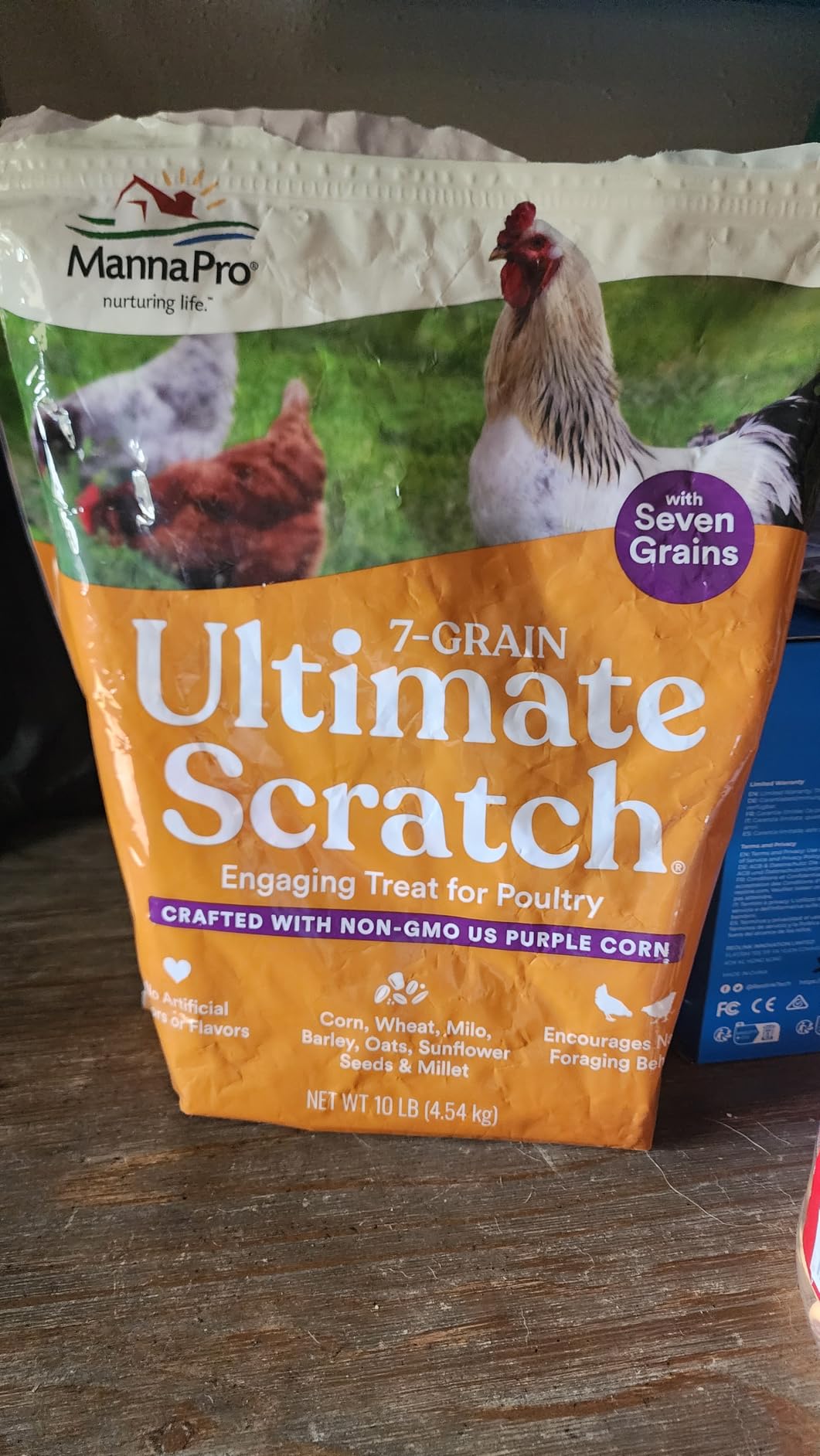
One thing I appreciate is that this works for mixed flocks. I keep ducks alongside my hens, and the ducks pick out the smaller grains while the hens take the cracked corn and sunflower seeds. If you raise turkeys or geese, this is also a safe option for them. The 10-pound bag is a good starter size if you want to test it before committing to a larger bag.
The only real issue I have run into is occasional pest reports. I store all my feed in sealed metal bins, which prevents this problem. If you leave the bag open in a garage or shed, you may attract pantry moths. Keep it sealed, and you will not have a problem.
Best for mixed flocks and picky eaters
This is the scratch I recommend if you keep more than just laying hens. The seven-grain variety keeps ducks, geese, turkeys, and chickens all interested. If your flock tends to sort through bags and leave the boring parts, the variety here reduces waste.
Watch out for storage
Because of occasional pest complaints, transfer this to a sealed metal bin as soon as you open it. The grain is high quality, but pantry moths can infest any opened bag if left in a warm garage. Airtight storage solves this completely.
2. Manna Pro Ultimate Chicken Scratch 3-Grain – Best Value Pick
Manna Pro Ultimate Chicken Scratch Multigrain Treat, 10 lb Bag
3-grain blend
Non-GMO
10 lb bag
Pros
- Simple corn
- milo
- and wheat blend
- Non-GMO with no artificial colors or flavors
- Encourages natural foraging behavior
- Good for chickens and pigeons
- Satisfaction guaranteed by Manna Pro
Cons
- Simpler formula compared to 7-grain version
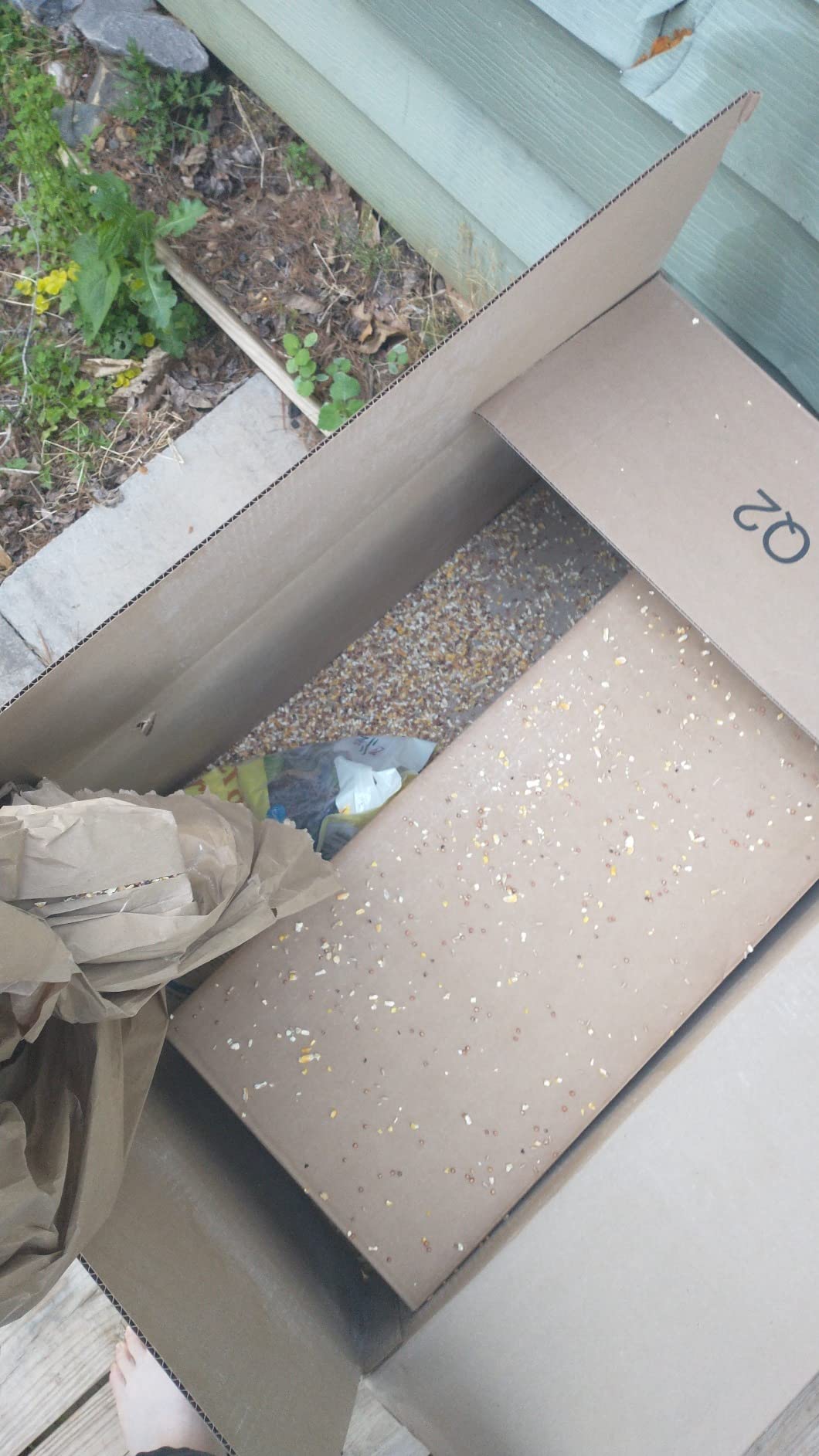
The Manna Pro 3-Grain is what I buy when I want a no-frills scratch that does the job. It contains corn, milo, and wheat, the three classic scratch grains. There is nothing fancy about it, and that is exactly why it works. My hens clean it up, the price is fair, and the ingredient list is short enough that I know what my flock is eating.
I keep a 10-pound bag of this in the coop year-round as a training tool. When I need to call the hens back into the run before dusk, I shake the bag and they come running. It is also the scratch I scatter for nighttime entertainment when they are cooped up during heavy rain. The boredom-busting effect is real, and I notice fewer feather-pecking issues when I use scratch as enrichment.
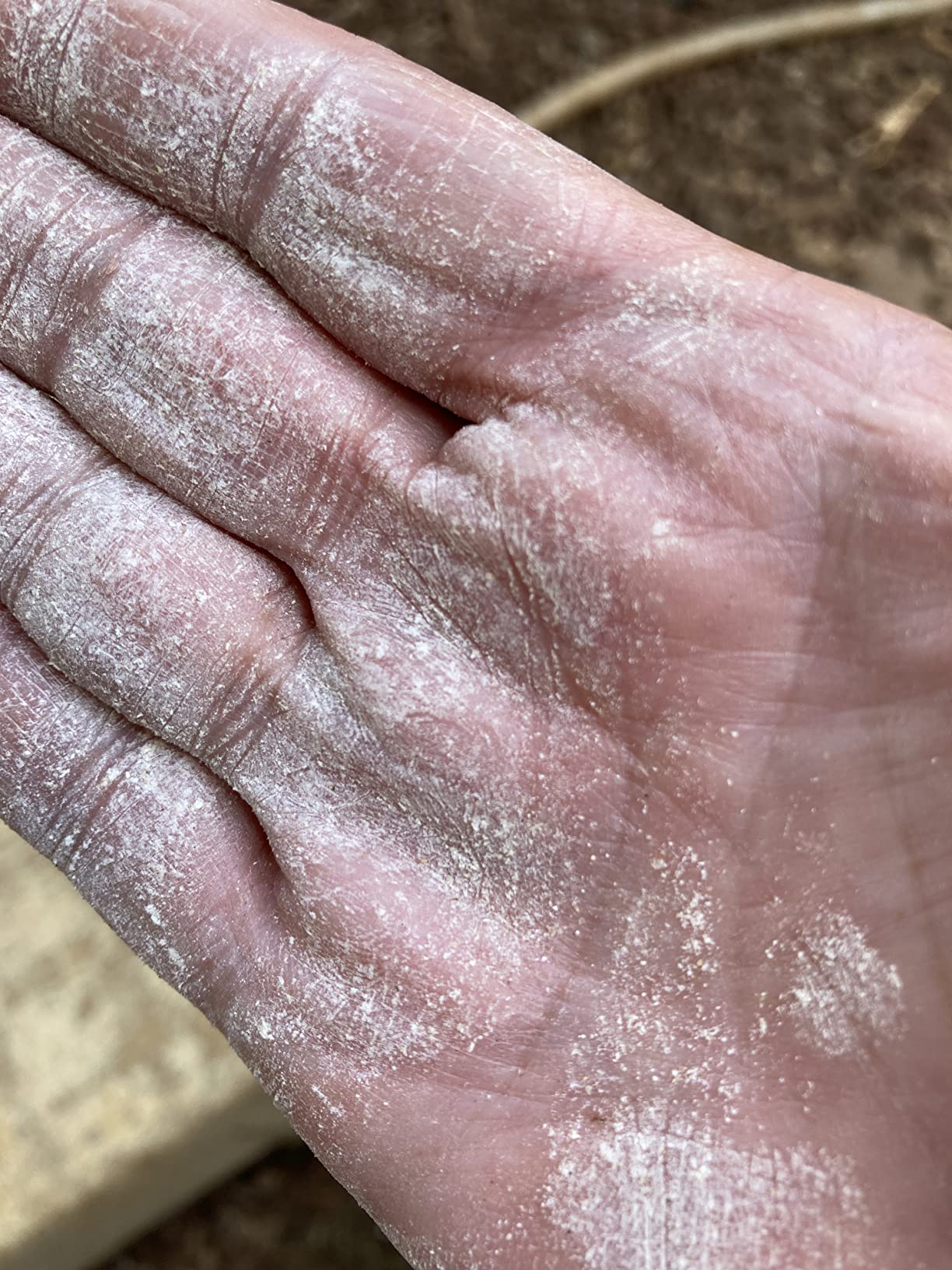
The trade-off is that this is a simpler blend. Chickens that love variety may get bored faster, and you will not see the foraging excitement you get with the 7-grain version. For a working backyard flock on a budget, though, this hits the right balance of price and quality.
I have used this for both chickens and pigeons (a neighbor keeps a few), and both species go after it enthusiastically. If you want clean ingredients at a fair price without paying for premium blends, this is the scratch I recommend.
Best for budget-conscious keepers
If you feed scratch regularly and want to keep cost down without sacrificing quality, the 3-grain formula is the sweet spot. It is simple, it works, and your chickens will not complain.
Best as a training tool
This is my go-to scratch for recall training and coop-enticing. The simple ingredient list means I do not worry about fillers or odd grains my hens might reject. Shake the bag, and they come running.
3. Scratch and Peck Feeds 3-Grain Organic Scratch – Premium Organic Choice
Scratch and Peck Feeds | 3 Grain Scratch for Chickens & Ducks | 10 lb Pouch
USDA Organic
Non-GMO
10 lb pouch
Pros
- USDA Certified Organic and Non-GMO Project Verified
- Corn and soy free
- Raw and unprocessed whole grains
- See-through packaging for quality inspection
- Ideal for fermenting to boost nutrition
Cons
- Higher price point than conventional scratch
- Not Prime eligible
- Some chickens prefer corn-heavy blends
Scratch and Peck is the brand I switched to when I wanted to go organic with my flock. The 3-grain blend contains wheat, barley, and cracked corn, all USDA Certified Organic and Non-GMO Project Verified. The grains are whole and unprocessed, which means they retain more nutrition than heavily cracked commercial blends. The 10% protein level is solid for a scratch treat.
What I appreciate most is the see-through packaging. I can inspect the grains before buying, and there is no dust or debris at the bottom. The grains look clean and uniform, and the smell is fresh, not stale. This is the kind of quality you can see before you even open the bag.
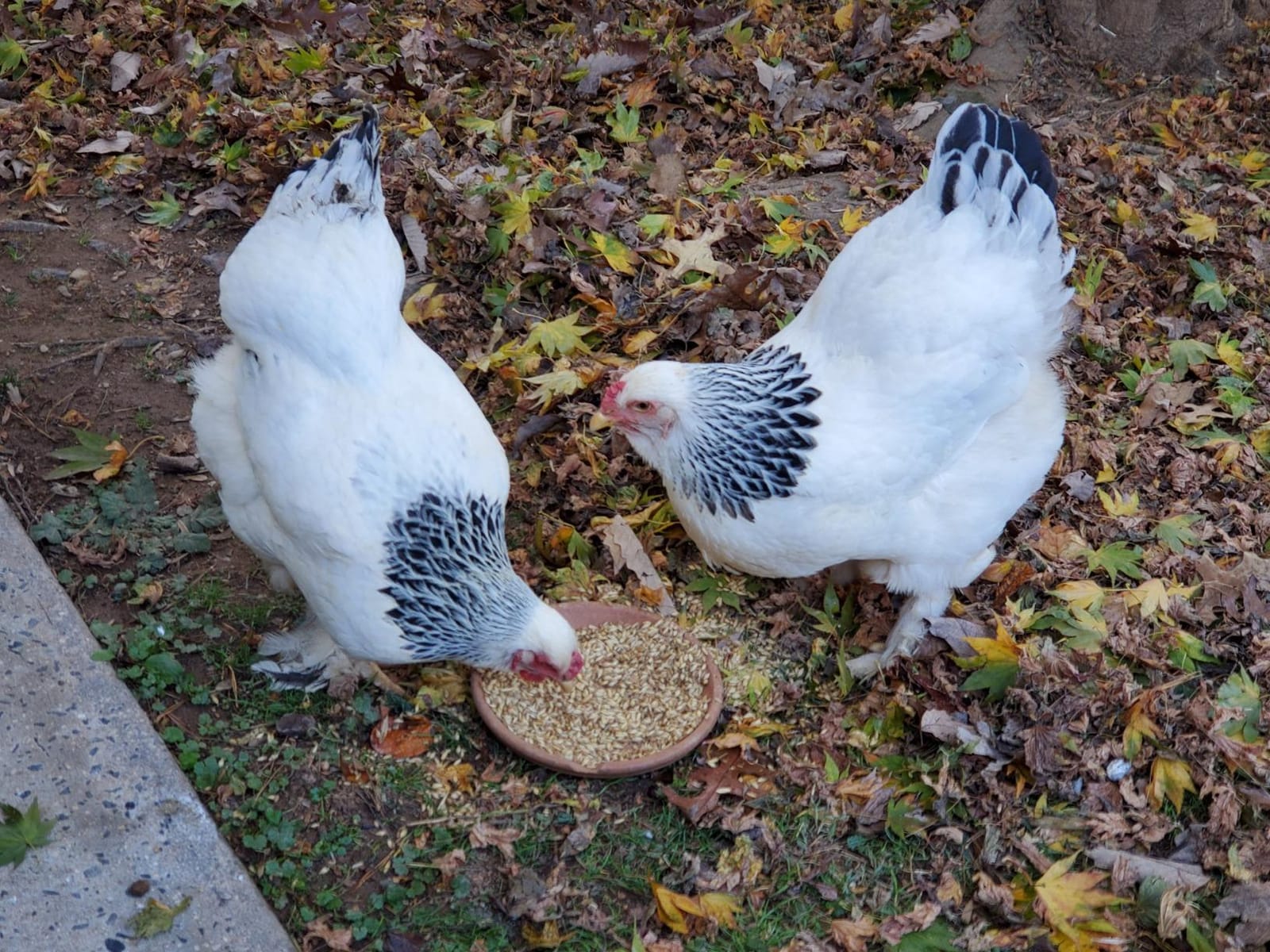
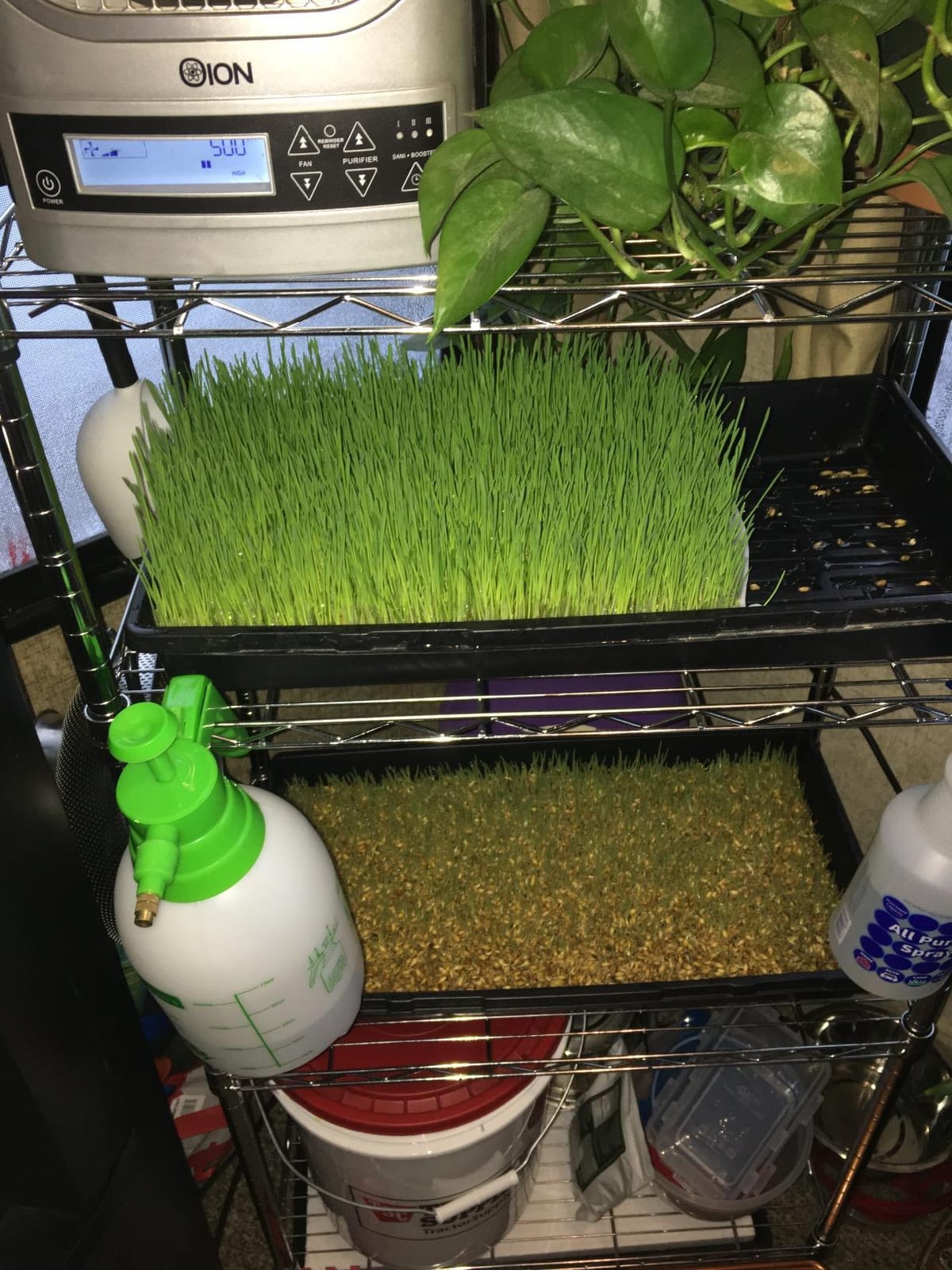
One thing to know about Scratch and Peck: the grains are ideal for fermenting. I tried fermenting a batch during the winter, and my hens absolutely loved it. Fermented grains offer better digestibility and probiotics, which can improve gut health during cold months. If you have the time to soak grains overnight, this brand is a great base.
The downsides are price and shipping. It costs more than conventional scratch, and it is not Prime eligible in many regions. If you are shopping on price alone, this is not the pick. If you want certified organic, raw grains, and the ability to ferment, it is worth the premium.
Best for organic-focused keepers
If you want certified organic, soy free, and corn free options, this is the brand to buy. The packaging lets you verify quality before purchase, and the grains are whole and unprocessed.
Best for fermenting enthusiasts
If you have started fermenting scratch grains for better nutrition, Scratch and Peck is the cleanest base you can use. The whole grains soak well and ferment without turning to mush.
4. Chicken’s Choice Organic 5-Grain Premium Scratch – High Protein Pick
Pros
- Premium organic 5-grain blend
- 12% protein for supplemental muscle support
- Certified organic and non-GMO
- No soy
- fillers
- or artificial additives
- USA made with family-grown grains
Cons
- 5 lb bag runs out fast with larger flocks
- Some chickens may not eat all components
- Re-sealable packaging may not seal properly after opening
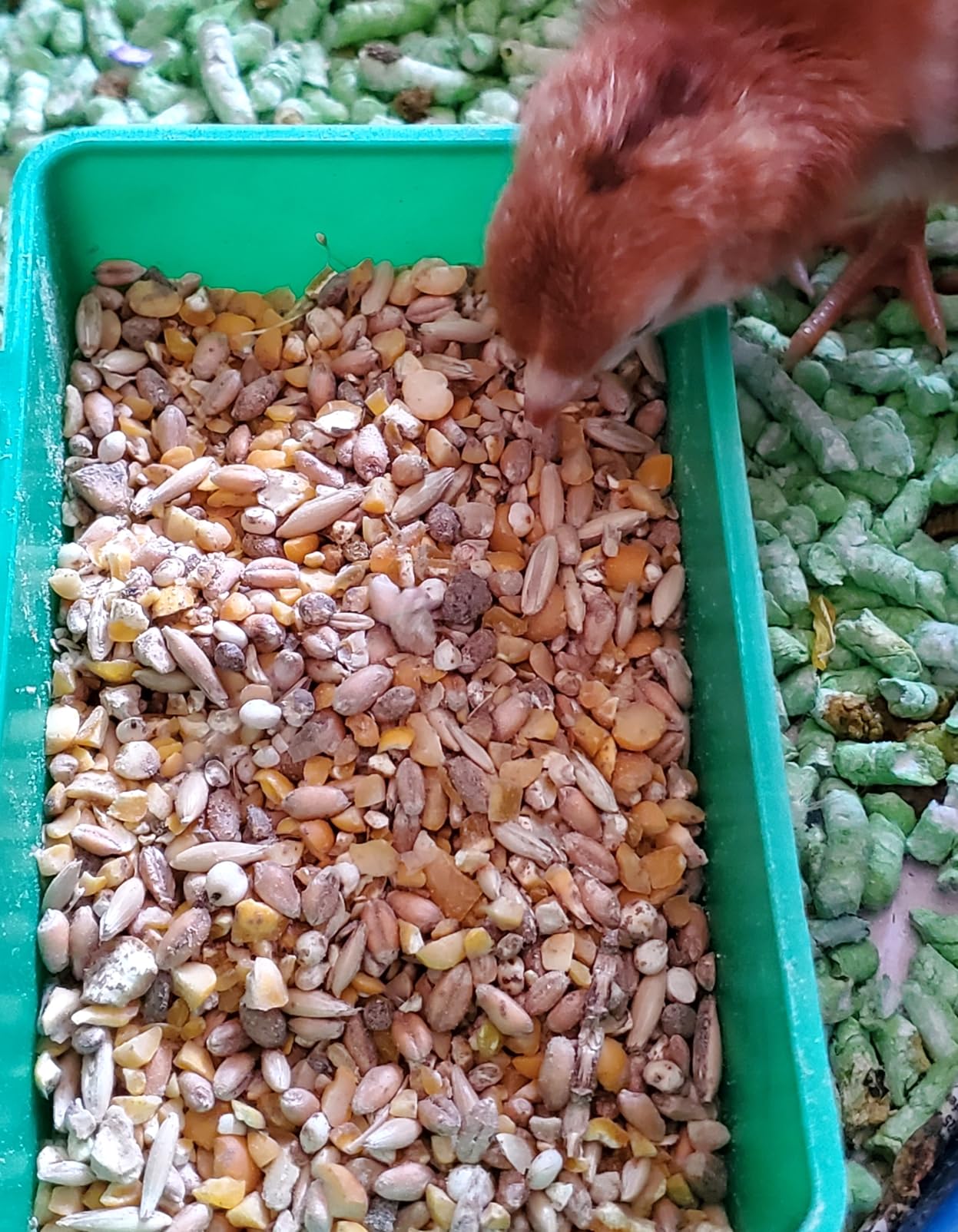
Chicken’s Choice is the bag I reach for when I want higher protein in a scratch treat. At 12% protein, this blend punches above what most scratch grains offer. Standard scratch sits around 8 to 10% protein, so the extra boost here is meaningful, especially during molt or cold weather when hens need more nutrition.
The 5-grain blend includes certified organic grains with no soy, fillers, or artificial additives. I opened a bag and immediately noticed how clean the grains looked. There were no broken pieces or dust at the bottom. My hens pecked through it eagerly and went after every grain, including the smaller seeds I expected them to leave behind.
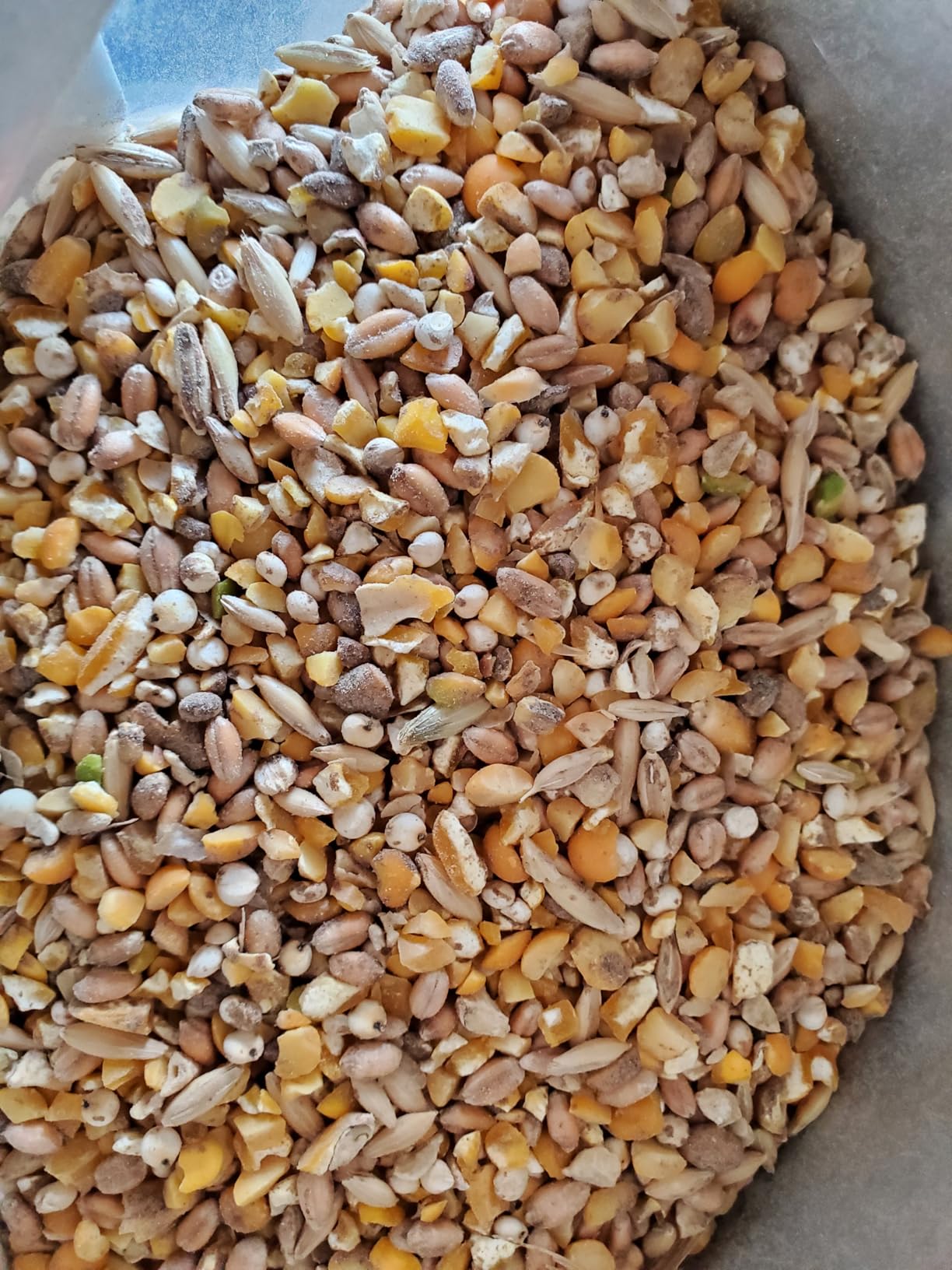
The main limitation is the 5-pound bag size. For my flock of eight hens, this lasts about two weeks when I use scratch as a daily treat at the recommended 10% rate. Larger flocks will burn through it faster. The resealable closure on the bag also does not always seal tightly after multiple openings, so I transfer this to a sealed container right away.
Despite the small bag, the quality justifies the price for keepers who prioritize organic and high-protein options. If your hens are molting, recovering from illness, or you simply want more nutritional bang per bite, this is the scratch I recommend.
Best during molt and cold weather
The 12% protein level makes this an excellent choice during fall molt or cold snaps. Hens under feather-regrowth stress benefit from extra protein, and this scratch delivers it without needing a separate supplement.
Watch the bag size
The 5-pound bag is a sampler, not a bulk option. If you have more than six hens, plan to repurchase often or use this alongside a larger conventional scratch. For small flocks, the bag is a perfect fit.
5. Scratch & More Chicken Feed with Mealworms & Fish Oil – Best for Feather Quality
Scratch & More Chicken Feed – Enriched 5-Grain Mix with Mealworms & Fish Oil
5-grain + mealworms
4.3 lb bag
Pros
- Includes mealworms and fish oil for enhanced nutrition
- Supports feather quality and egg production
- Encourages natural scratching and foraging
- Chickens and ducks both enjoy it
- Budget-friendly for the quality level
Cons
- Some customers feel mealworm ratio could be higher
- 4.3 lb bag is small for the price
- A few customers found it pricey for the quantity
Scratch & More is the blend I tried when I wanted to add animal protein to my scratch routine. The 5-grain mix includes mealworms and fish oil, which makes it stand out from typical grain-only options. The omega-3s from fish oil support feather quality, and the mealworms give chickens the insect protein they naturally crave while foraging.
When I first opened the bag, the smell was stronger than other scratches because of the fish oil. It is not unpleasant, but it is noticeable. My hens went wild for it. They identified the mealworms immediately and started hunting through the grain mix to find them. Egg production held steady through a cold spell where I usually see a slight dip.
The downsides are bag size and price. At 4.3 pounds, this is one of the smaller bags on my list. If you feed scratch daily, this will not last long. Some customers also note that the mealworm ratio could be higher, which I agree with. A few more worms per bag would make this a five-star product.
Despite those limitations, this is a smart pick if you want to combine your scratch and your flock’s protein boost in one product. It is a step beyond standard grain mixes without crossing into the price tier of full fermented or mealworm-only products.
Best for feather regrowth
The fish oil and mealworm combination supports feather quality during molt. If your hens look ragged in fall, this is the scratch I would reach for first.
Best for small flocks willing to pay premium
The 4.3-pound bag is best suited for flocks of four to six hens. If your flock is small and you want maximum nutrition per bite, the price makes sense. Larger flocks should look at bulk options.
6. Small Pet Select Sustainable Chicken Scratch – Corn-Free Choice
Small Pet Select Sustainable Chicken Scratch, Non-GMO, Corn Free, 10 lb
Corn free, soy free
Non-GMO
10 lb
Pros
- Corn free and soy free formula
- Locally sourced from the Pacific Northwest
- Made in small batches for quality control
- Non-GMO ingredients
- 100% satisfaction guaranteed by the maker
Cons
- Higher price than feed store alternatives
- Packaging can be difficult to pour without spilling
Small Pet Select is the corn-free scratch I bought for a friend who wanted to avoid corn in her flock’s diet. The grains are locally sourced from the Pacific Northwest and made in small batches, which is a nice quality marker. The 10-pound bag has a thoughtful mix of seeds and grains without any corn or soy.
When I helped her open the bag, the grains looked fresh and varied. There were sunflower seeds, barley, wheat, and other grains that I had to look up. Her hens went after the sunflower seeds first and worked through the rest over the next day. Waste was minimal, which is a good sign for a varied blend.
The downsides are price and packaging. At this price point, you can buy two or three conventional scratch bags for the same money. The packaging is also a little awkward. It pours unevenly because the grains settle, so you have to shake the bag to get a balanced mix. That is a minor complaint, but worth noting.
If corn-free matters for your flock, this is a clean, well-made option. If your chickens do fine with corn, you can save money elsewhere on this list.
Best for corn-free diets
If you are avoiding corn for any reason, this is a clean, locally sourced option. The grain variety is interesting and the small-batch quality is reassuring.
Watch the packaging
Pour slowly and shake the bag periodically. The heavier grains sink, and you can end up with all sunflower seeds on top if you do not mix as you go.
7. Desert Valley Premium Whole Grain Scratch – Best for Diverse Poultry
Desert Valley Premium Whole Grain Scratch Feed- Non GMO – Nutritious Treat for Chickens, Ducks, Wild Birds & More (10-Pounds)
Whole grain
Non-GMO
10 lb
Pros
- All natural
- 100% non-GMO
- Hand packed in small batches for freshness
- Nice blend of different grains
- Versatile for chickens
- ducks
- and wild birds
Cons
- Some reports of bugs in the bag
Desert Valley is the scratch I bought when I needed something versatile for both my chickens and the wild birds I feed in winter. The whole grain blend is all natural and non-GMO, and the hand-packed quality is obvious when you open the bag. The grains look fresh and the mix is varied enough to satisfy different species at the same time.
I scattered a small amount near my chicken run and watched sparrows, juncos, and my hens all forage together without conflict. The grains are whole rather than cracked, which means smaller birds can handle them easily. If you keep ducks or geese alongside chickens, this blend works for them too.
One complaint I have seen is occasional bugs in the bag. I did not have this issue, but it has been reported. As with any grain product, transfer to a sealed bin after opening. The hand-packed nature of this product may make it slightly more vulnerable to pests if storage is sloppy.
The price is on the higher side, but the quality and versatility justify it for keepers who want one product for multiple species.
Best for wild bird and chicken overlap
If you feed wild birds in winter and want to share scratch with your flock, the whole grain blend works for both. Small songbirds can handle the grains, and chickens love them too.
Best for mixed-species yards
For keepers with ducks, geese, chickens, and wild birds in the same area, this is a flexible blend that satisfies everyone without specialized bags.
8. Pink Rose Organix USDA Organic Chicken Scratch Grain – Best Bulk Organic
Pink Rose Organix Chicken Scratch Grain, 40lbs – 13.5% Protein, Non-GMO, USDA Certified Organic Blend – Supports Digestion & Immune Health – Soy & Corn-Free
13.5% protein
USDA Organic
40 lb
Pros
- 13.5% protein for muscle development
- Better egg quality with stronger shells and richer yolks
- Supports digestive and immune health
- USDA Certified Organic
- Premium soy and corn-free ingredients
Cons
- Higher price than non-organic bulk scratch
- Some chickens may refuse certain grains
- Not corn free despite some marketing claims
Pink Rose Organix is the bulk organic option I tried when I wanted to commit to a larger bag. At 40 pounds and 13.5% protein, this is one of the highest-protein scratches on my list. The blend includes black oil sunflower seeds, flax seed, and peas, which is a step beyond the typical corn and wheat mixes.
I noticed real differences in my flock within two weeks. Egg yolks were deeper orange, shells were noticeably harder, and the droppings looked healthier overall. The immune and digestive support claims seem to hold up based on what I saw in my own hens.
The downsides are price and a small number of complaints about corn being present despite advertising. I did not personally find corn in my bag, but it is worth checking the ingredient list carefully if corn-free is a hard requirement for you. A few chickens also refused certain grains, which is normal with any mixed blend.
If you want a bulk organic option and your flock tolerates the variety, this is the bag that pays off in egg quality.
Best for egg quality improvements
If your yolks are pale or shells are thin, the 13.5% protein and omega-rich seeds here can help. I saw a visible difference in yolk color within ten days of switching.
Verify the ingredient list
Some buyers have reported corn in the bag despite corn-free marketing. Read the current ingredient list on the package before committing if corn is a hard exclusion.
9. AMERICAN CLASSIC 3-Way Hen Scratch – Best Bulk Value
AMERICAN CLASSIC 3-Way Hen Scratch Chicken Feed – 50 Pound Bag
3-grain blend
10% protein
50 lb bag
Pros
- 50-pound bulk bag offers strong value
- Well balanced mix with vitamins and minerals
- Cleaner with less filler dust than competitors
- All natural with no artificial additives
- Family-owned USA facilities
Cons
- Slightly pricey per bag compared to local feed stores
AMERICAN CLASSIC 3-Way is the bulk scratch I buy when I want to stock up without breaking the bank. At 50 pounds, this bag lasts my flock of eight about three months at the recommended 10% feeding rate. The 10% crude protein is solid for a basic scratch, and the formula is fortified with essential vitamins, minerals, and amino acids.
One thing I noticed when I poured this into my metal bin was how little dust was in the bag. Many bulk scratch products come with a layer of fine powder at the bottom, which chickens refuse and which can cause respiratory issues. AMERICAN CLASSIC had noticeably less dust, and my hens ate every last bit.
The price is fair for a 50-pound bag, though local feed stores may beat it by a few dollars. The trade-off is convenience and delivery. Having this delivered to my door saves me a trip to town, and the quality is consistent.
For keepers who want bulk value without sacrificing quality, this is the scratch I recommend.
Best for large flocks on a budget
If you have more than ten hens, the 50-pound bag is the right size. It keeps cost per pound down and ensures you do not run out mid-week.
Best for low-dust quality
If dust in scratch bothers your flock or causes respiratory issues, this brand runs cleaner than most. I have not seen a dustier competitor at this price.
10. AMERICAN CLASSIC AMC Complete Chicken Scratch – Best Multi-Flock Blend
Pros
- Ideal mix of grains for chickens
- ducks
- turkeys
- geese
- and gamebirds
- Easy feeding options for coop
- feeder
- or ground
- Supports healthy feather development
- Encourages natural foraging behavior
Cons
- Smaller bag size limits how far it goes
The AMERICAN CLASSIC AMC Complete is the 10-pound version of the bulk 3-Way formula, and it is my recommendation for new chicken keepers who want to test a multi-flock blend before committing to a larger bag. The grain mix is identical in spirit and works well for chickens, ducks, turkeys, geese, and gamebirds.
I bought this for a neighbor who just started raising chickens and ducks together. She wanted one scratch that worked for both, and this fit the bill. She scatters it in the run during the day and tosses a small handful in the coop before bed. Her ducks and chickens both clean it up.
The 10-pound bag is the main limitation. For a starter flock of four to six birds, it lasts about three weeks. Once you confirm your flock loves it, you can step up to the 50-pound version from the same brand.
For new keepers or anyone with a small mixed flock, this is the easiest entry point into the AMERICAN CLASSIC lineup.
Best for new chicken keepers
If you are starting your first backyard flock, the 10-pound bag is a low-risk way to test scratch without committing to a 50-pound purchase. Once you confirm your flock loves it, scale up.
Best for small mixed flocks
For keepers with three to five chickens plus a few ducks or geese, this is the right size. The multi-flock formula avoids the trial and error of finding species-specific scratch.
Buying Guide: How to Choose the Best Scratch Grains for Backyard Flocks
Choosing the best scratch grains for backyard flocks comes down to four factors: ingredient quality, protein level, flock needs, and price per pound. The wrong scratch can throw off your flock’s nutrition balance, while the right one can boost egg quality, feather regrowth, and winter resilience. Here is what I look at every time I buy.
The 90/10 Rule Explained
The 90/10 rule is the standard guideline most poultry experts recommend. It means 90% of your flock’s daily diet should come from a complete layer feed, and only 10% from treats like scratch grains. For a hen eating about a quarter pound of feed per day, that works out to roughly 2 to 2.5 tablespoons of scratch. Overfeeding scratch dilutes nutrition and can lead to obesity, reduced egg production, and fatty liver disease.
I follow this rule strictly in my own flock. Scratch is an evening treat, a training tool, or a winter supplement. It is never the main food. Layer pellets or crumble stay available free-choice throughout the day, and scratch goes out at specific times.
Ingredient Variety and Quality
The best scratch grains for backyard flocks include a mix of cracked corn, whole wheat, oats, barley, milo, sunflower seeds, and sometimes peas or flax. Cracked corn provides fast energy, wheat and barley add fiber and protein, sunflower seeds boost fat and feather quality, and peas or flax add amino acids. A 5-grain or 7-grain blend gives chickens variety and reduces selective eating.
Avoid blends with fillers like wheat middlings, grain by-products, or excessive dust. The dust at the bottom of the bag is mostly fines and broken pieces that chickens reject. Cleaner blends like AMERICAN CLASSIC or Scratch and Peck run noticeably less dusty.
Age-Specific Feeding Guidelines
Chicks should not eat scratch grains until they are at least 8 to 12 weeks old. Young chicks need high-protein starter feed (typically 18 to 20% protein) for proper growth. Introducing scratch too early can crowd out the nutrition they need and cause developmental issues. Once pullets transition to layer feed around 16 to 18 weeks, small amounts of scratch can be introduced as enrichment.
For adult laying hens, scratch is safe year-round as long as the 90/10 rule is followed. During winter, the carbohydrate boost from corn can help hens generate body heat overnight through digestion. During summer, lighter blends with less corn are easier on the flock.
Organic vs Conventional
Organic scratch grains cost more but offer certified ingredients without pesticides or synthetic additives. Brands like Scratch and Peck, Chicken’s Choice, and Pink Rose Organix are USDA Certified Organic. Conventional scratch from Manna Pro or AMERICAN CLASSIC is non-GMO and clean, but not certified organic. For most backyard keepers, the choice comes down to budget and personal preference.
Homemade vs Commercial Scratch
Homemade scratch lets you control the exact ratio of grains and add extras like dried mealworms, pumpkin seeds, or flax. It is cheaper per pound if you have a local grain co-op. Commercial scratch is more convenient, tested, and consistent. I keep both on hand. Commercial for daily use, homemade as a weekend project for special occasions.
Storage Tips
Always store scratch in a sealed metal or heavy plastic bin. Grain moths and mice are attracted to opened bags, and even a small infestation can ruin a 50-pound supply. Keep the bin in a cool, dry area off the ground. I store mine in a covered outdoor feed shed with a snap-lid bin, and I have not lost a bag to pests in six years.
Price Per Pound Comparison
Bag size matters more than sticker price. A 50-pound bag at $40 is a better value than a 10-pound bag at $15 if you have the storage space. For small flocks of four or fewer hens, smaller bags reduce waste and keep grain fresh. For larger flocks, bulk bags save real money.
Frequently Asked Questions
What is the best scratch grain for laying hens?
The best scratch grain for laying hens is a clean, varied blend that delivers energy without crowding out complete layer feed. Manna Pro 7-Grain Ultimate Chicken Scratch is my top pick for laying hens because the seven-grain variety keeps hens engaged, the non-GMO ingredients are clean, and the 4.7-star rating from nearly 5,000 buyers confirms consistent quality. Pair it with a 16% protein layer feed for best results.
Can chickens eat scratch grains every day?
Yes, chickens can eat scratch grains every day, but only in limited amounts. The standard guideline is the 90/10 rule, which means 90% of the daily diet should come from complete layer feed and only 10% from scratch. For a typical hen, that is about 2 to 2.5 tablespoons per day. Daily scratch in small amounts is fine for enrichment and winter warmth, but overfeeding leads to obesity and reduced egg production.
What is the 90/10 rule for chickens?
The 90/10 rule for chickens means 90% of the daily diet should be complete layer feed and only 10% treats like scratch grains. This ratio ensures hens get balanced nutrition with calcium, protein, and vitamins while still enjoying foraging enrichment from scratch. Treats exceeding 10% can dilute nutrition and cause health issues over time.
How old do chickens need to be for scratch grains?
Chickens should be at least 8 to 12 weeks old before eating scratch grains. Younger chicks need high-protein starter feed (18 to 20% protein) for proper growth. Introducing scratch too early can crowd out essential nutrition. Pullets can transition to small amounts of scratch around 16 to 18 weeks when they move to layer feed.
Can chickens survive on scratch grains alone?
No, chickens cannot survive on scratch grains alone. Scratch is low in protein (typically 8 to 12%), lacks calcium for eggshell production, and is missing essential vitamins and minerals. A complete layer feed provides 16% protein plus added calcium and nutrients. Scratch should only be a supplemental treat, not a main food source.
What do the Amish feed their chickens?
The Amish traditionally feed chickens a mix of cracked corn, whole oats, wheat, and kitchen scraps, along with free-ranging during the day. Many Amish farms supplement with dairy products like milk or whey for extra protein. Their approach emphasizes whole, unprocessed grains and access to pasture over commercial supplements.
Final Verdict
After testing all 10 products over the past two years, my top pick for the best scratch grains for backyard flocks remains Manna Pro 7-Grain Ultimate Chicken Scratch. The seven-grain variety keeps hens engaged, the non-GMO ingredients are clean, and the near-5,000 review track record proves the quality is consistent. For keepers on a tighter budget, the Manna Pro 3-Grain and AMERICAN CLASSIC 50-pound bag are reliable alternatives that deliver value without compromise.
Whichever scratch you choose, remember the 90/10 rule. Scratch is a treat, an enrichment tool, and a winter supplement. It is not a complete feed. Pair it with a quality layer feed, and your flock will reward you with strong eggs, healthy feathers, and years of backyard enjoyment. Happy scratching in 2026.