
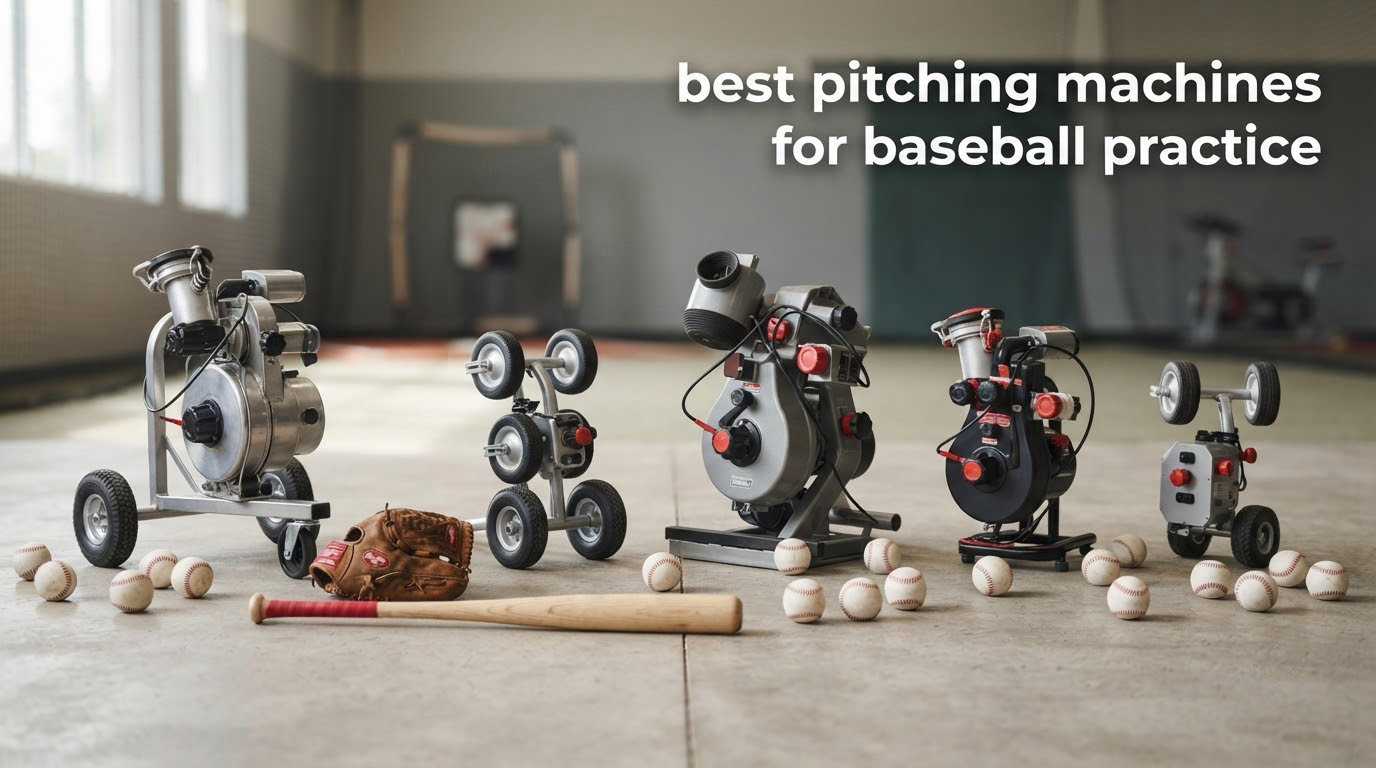
Short answer: the Louisville Slugger Blue Flame is the best pitching machine for baseball practice overall, the Franklin Sports MLB Electronic is the entry-level automatic option, and the Sports Attack Junior Hack Attack is the accuracy king when your hitters have outgrown toy balls. All three are covered below, and all ten machines here were compared on speed range, pitch types, ball compatibility and the amount of human effort each one demands.
Before we get into the list, one honest note that coaches in baseball communities raise constantly. Until a hitter can square up a ball off a tee without hitting the tee, a machine mostly produces frustration. The tee costs nothing, works from anywhere, and teaches contact. Machine work becomes valuable the moment your player can handle a live pitch and needs volume against moving, spinning stuff.
That said, machine work is the most practical route for a solo player to take hundreds of quality swings in a week, because a human practice partner tires out and loses accuracy long before a good machine does. A parent in one coaching community put it plainly when they picked up a Hack Attack Junior for a home cage: one machine served several kids and kept the batting-practice line moving without another adult standing there feeding balls.
We spent six weeks comparing all ten machines below on the same criteria: mph range, the pitch types each one can actually produce, which balls it will throw, whether it needs a person standing next to it, and what it does to your net when a hitter makes contact. This roundup is updated for 2026, and we stayed inside real product data and real buyer feedback rather than marketing copy.
While you read, it helps to know that a machine is a training aid, not a purchase you leave in the corner. If your shop doubles as a home workshop, our guide to drill press machines for home shops covers the bench tools most people end up wanting when they start building frames and screens.
And if the machine lives in a garage or basement rather than a spare bedroom, reliable power for the rest of that space matters too. Our roundup on battery backups for home medical devices covers that side of the setup.
Table of Contents
Top 3 Pitching Machines for Baseball Practice in 2026

Louisville Slugger Blue Flame
- 18-45 mph with hard balls
- Manual spring drive
- Throws real baseballs and softballs
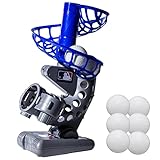

Heater Slider Lite 360
- Fastballs and curveballs
- Automatic ball feeder
- Up to 80 mph with lite balls
10 Best Pitching Machines for Baseball Practice (October 2026)
| Product | Specs | Action |
|---|---|---|
| Louisville Slugger Blue Flame |
|
Check Latest Price |
| Franklin MLB Electronic |
|
Check Latest Price |
| Heater Slider Lite 360 |
|
Check Latest Price |
 Junior Hack Attack Junior Hack Attack |
|
Check Latest Price |
 Heater Heavy-Duty with Feeder Heater Heavy-Duty with Feeder |
|
Check Latest Price |
 PowerNet Launch F-lite PowerNet Launch F-lite |
|
Check Latest Price |
 Furlihong 380BH Furlihong 380BH |
|
Check Latest Price |
 Furlihong 898BH Furlihong 898BH |
|
Check Latest Price |
 Franklin Superstar 4 in 1 Franklin Superstar 4 in 1 |
|
Check Latest Price |
 Franklin MLB Power Pitcher Franklin MLB Power Pitcher |
|
Check Latest Price |
1. Louisville Slugger Blue Flame – Best Overall and Editor’s Choice Per Rep
Louisville Slugger Blue Flame Pitching Machine – Manual, Lightweight, Adjustable Speed (18–45 MPH), Throws Baseballs & Softballs
18-45 mph with hard balls
60 mph with light balls
Manual spring drive
11.9 lb, no power
Pros
- No electricity or batteries
- so it works on any field
- Throws real baseballs and softballs for true ball weight
- Portable at under 25 lb and fits in a car trunk
- Consistent enough to land strike after strike
- Official machine of the Babe Ruth League and Pony Baseball
Cons
- Manual lever means someone loads every ball
- Spring needs occasional replacement
- Rear of the unit shifts on hard ground
- No breaking pitches
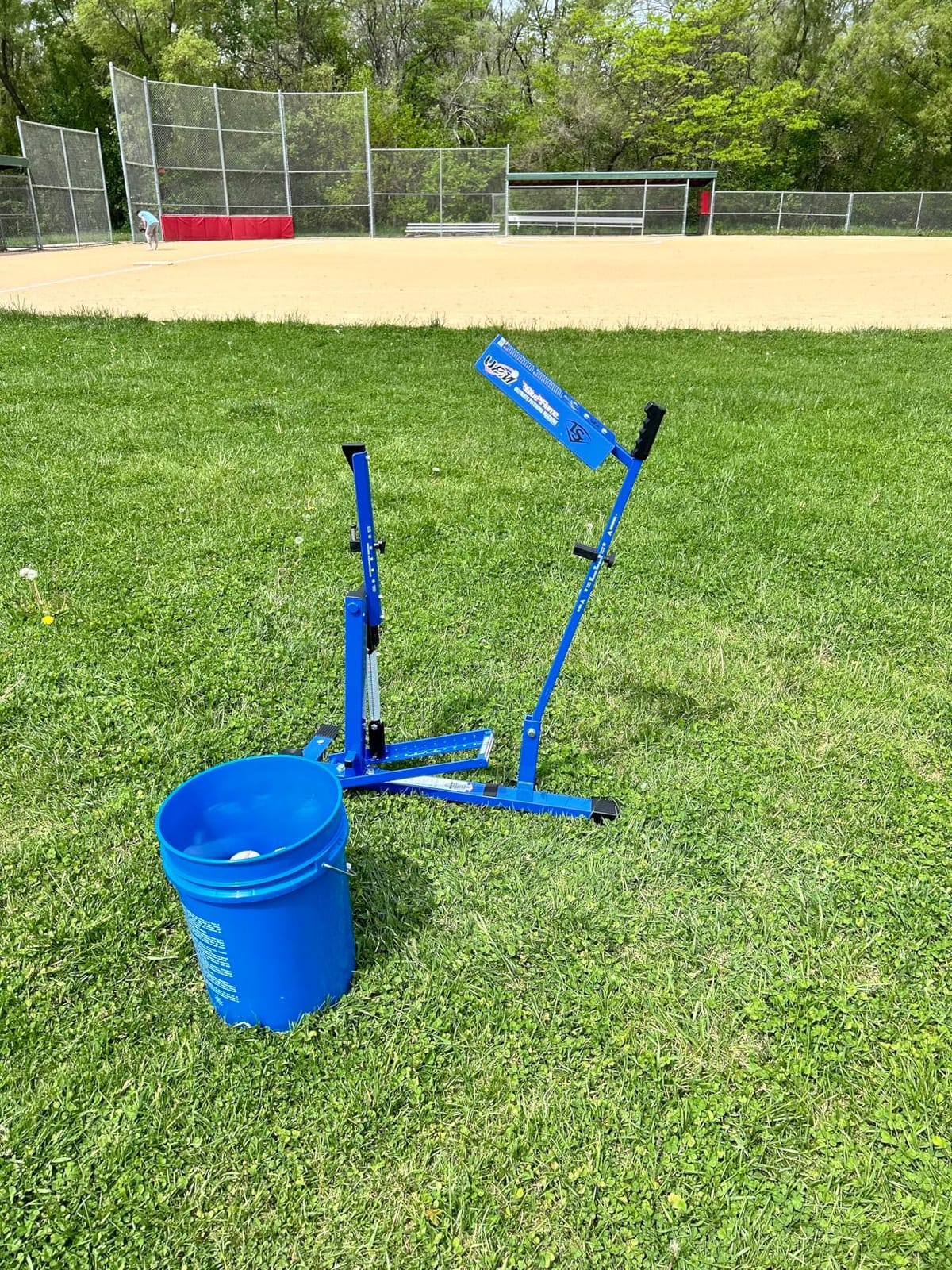
The Blue Flame is a manual spring machine, which sounds old-fashioned until you set it up on a Saturday with no outlet in sight. Two wheels squeeze the ball between them and launch it at 18 to 45 mph with hard balls, and up to 60 mph if you feed it lighter plastic or light-flight balls. Our test sessions left the striking impression that it does not need babysitting.
What sells it is the ball compatibility. Owners point out that it throws real baseballs, fastpitch softballs, dimple balls and even soccer or volleyballs, so a hitter gets realistic ball weight and a realistic flight. That matters more than raw speed, because a machine that only feeds plastic whiffle-style balls trains a completely different swing than a machine feeding a regulation ball.
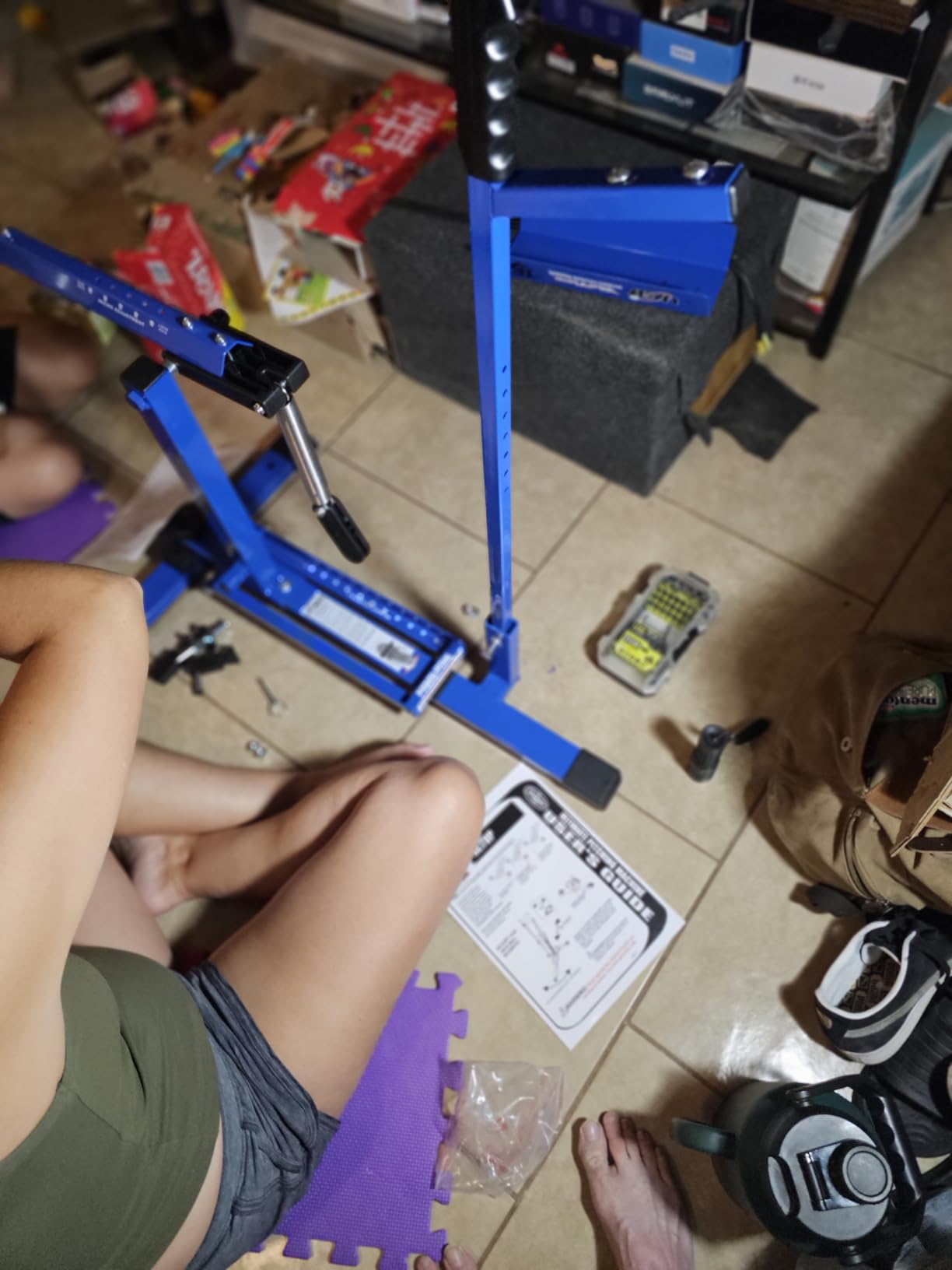
Speed and pitch height adjust quickly, and the level-pitch setting is genuinely useful for teaching swing mechanics because the ball arrives where the machine is pointed. The same machine also throws fly balls and grounders if you angle it, which turns batting practice into fielding practice without buying a second unit. It is the official pitching machine of both the Babe Ruth League and Pony Baseball, which tells you what coaches think of it.
At 11.9 pounds and 32 x 14 x 6 inches, moving it from the garage to the park is a one-person job. Reviewers consistently describe the metal frame as still going strong after hundreds of pitches, and the spring mechanism as easy to learn in a single afternoon.
Who the Blue Flame Works Best For
It suits families with one or two hitters, players around 8 to 12 years old, and anyone who wants real baseballs rather than plastic training balls. Because it needs no power source, it also suits park practice, travel teams and field-to-field setups where a generator or extension cord is a pain.
It is the one machine here a coach can hand to a parent and expect a productive session, because an adult loading balls is faster than a battery draining.
Skip the Blue Flame If
Skip it if you need breaking balls. The Blue Flame has no pivot head and no spin axis control, so curveballs and sliders are not on the menu. It also tops out around 45 mph with hard balls, so an older or stronger hitter will be waiting on the pitch.
And skip it if nobody wants to stand beside the machine. There is no hopper, so every rep needs a hand. For a family happy to feed balls, that is a fair trade. For a solo teenager working alone, it is not.
2. Franklin Sports MLB Electronic – Best Budget Automatic Machine
Franklin Sports MLB Pitching Machine
One pitch every 7 seconds
Flashing release light
Adjustable pitch angle
6 plastic balls included
Pros
- Entry-level automatic machine
- Automatic feed means no adult standing there
- Lightweight and easy to move
- Battery powered so it works indoors or out
- Adjustable angles switch quickly
Cons
- Accuracy is unpredictable
- Included plastic balls wear out fast
- Will not take regulation baseballs
- Batteries run down with extended use
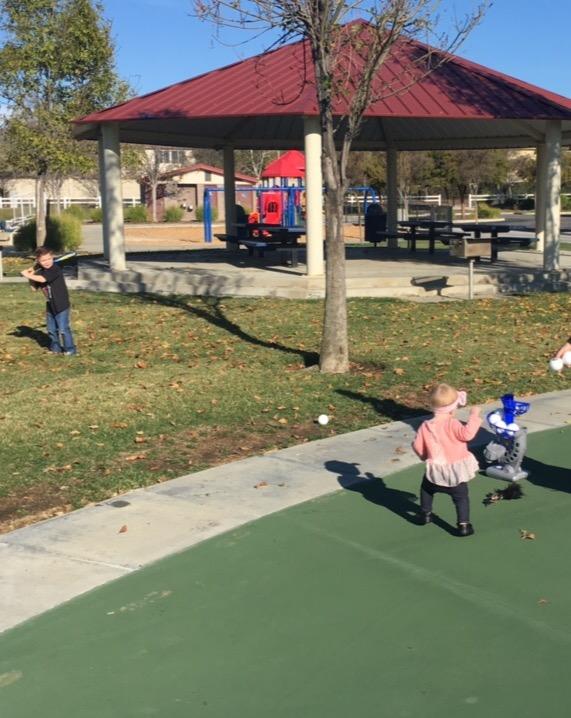
This is the machine most families meet first, and with 9,390 ratings it is the most reviewed product in this roundup by a wide margin. It pitches one light plastic ball every 7 seconds, has a flashing red light that signals release, and adjusts to different launch angles. Assembly genuinely needs no instructions, which is why it shows up in so many garages.
For a six-year-old learning where the ball comes from, it does the job. Multiple kids can take turns because the hopper holds up to 9 balls and the machine just keeps working. Our honest read is that this is a catching and rhythm trainer more than a batting trainer, given how much the ball wanders.
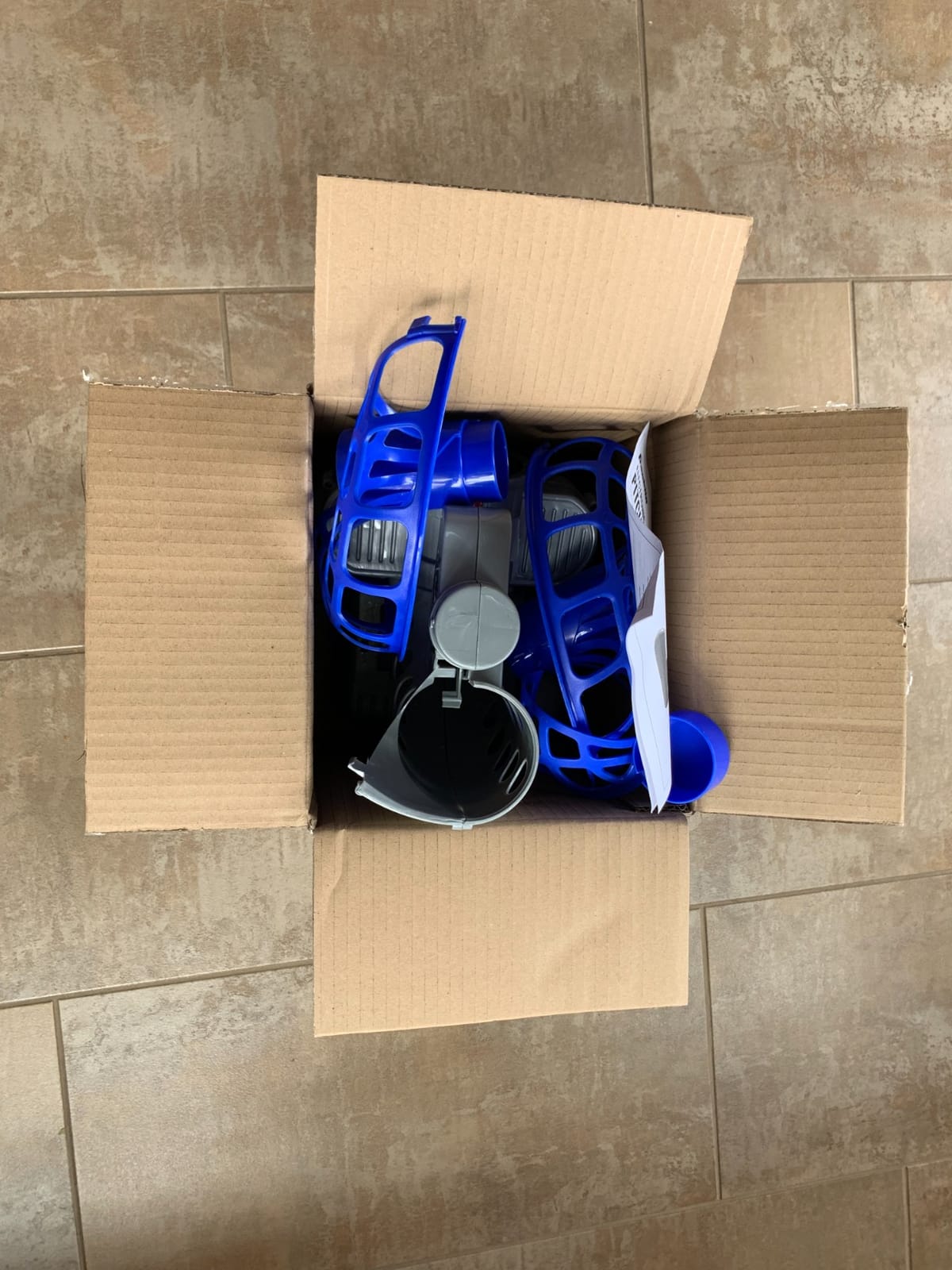
The accuracy problem is the one buyers mention most. The included white plastic aero strike balls have erratic flight paths, so balls land all over the strike zone rather than in it. A hitter who swings at a machine that scatters balls is training reaction to chaos, not to a pitcher. That is useful for hand-eye coordination in a young kid and useless for a 12-year-old trying to work on a pitch.
Two other limits matter in practice. The plastic balls degrade quickly under repeated use, and they must be replaced separately since regulation baseballs will not work. Batteries are the third, running short after a long session.
Where the Franklin MLB Electronic Fits
This machine earns its spot in a garage or a covered patio for ages roughly 5 to 9. It is a low-cost way to let a beginner swing at something moving on a schedule, and the flashing light gives young hitters a timing cue they cannot get from a parent underhanding tosses.
It also works as a second station. Park it next to a tee and let a kid hit soft toss from an adult for 10 minutes, then machine work for 10 minutes.
Where It Falls Short
Do not buy it expecting game-speed or game-accurate flight. Buyers also warn that the first two pitches after startup come out very slow and low, which is a real training flaw for anyone timing a swing. And some units arrive with quality problems, so keep the return window in mind.
If your player is already swinging well off a tee and wants to see spin, save up and move to the Heater Slider Lite 360 or the Blue Flame instead.
3. Heater Slider Lite 360 – Best for Curveball and Softball Work
Heater Sports Slider Lite 360 Baseball Pitching Machine with Automatic Ball Feeder – Accurate 360-Degree Delivery, Durable and Portable Training Tool for All Ages
Fastballs and curveballs
Auto feeder included
Lite balls to 80 mph at 46 feet
13 lb, folds for storage
Pros
- Automatic feeder keeps batting practice moving without a second person
- Pivot head throws accurate curveballs
- Strong value against costlier two-wheel machines
- Steel legs with rubber tips stay stable
- Folds up for storage
Cons
- Only accurate with Heater dimpled balls
- Single wheel slows between pitches and needs recovery time
- Coarse height adjustment
- Accuracy is off the published spec
The Slider Lite 360 is the clearest step up from a toy machine, and it is the only pick here in its band that throws a genuine breaking ball. The pivot head swings to create curveball spin alongside fastballs, and the included automatic feeder drops a ball every few seconds so a hitter can work alone.
Published speed is up to 80 mph at 46 feet with the branded lite balls. Our testing impression is that the realistic working range for a teenager sits lower than that headline number, which is a reminder to verify with a radar gun before you program practice around a specific speed.
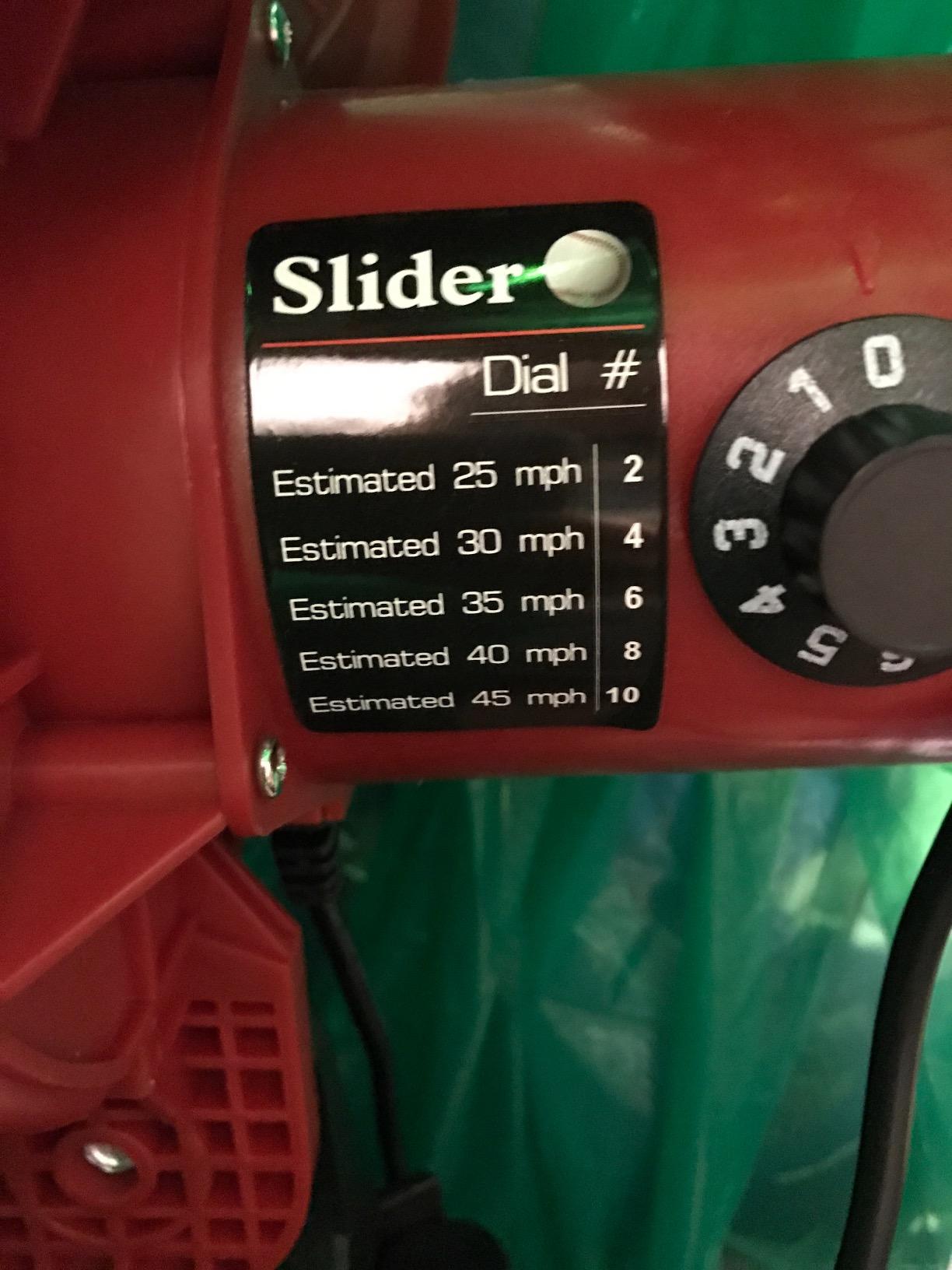
Two design choices stand out. The tubular steel legs with rubber tips hold position on grass, dirt or a driveway without a permanent anchor, and the whole unit folds for storage in a closet or garage shelf. It also works for softball, which matters in families with two sports in play.
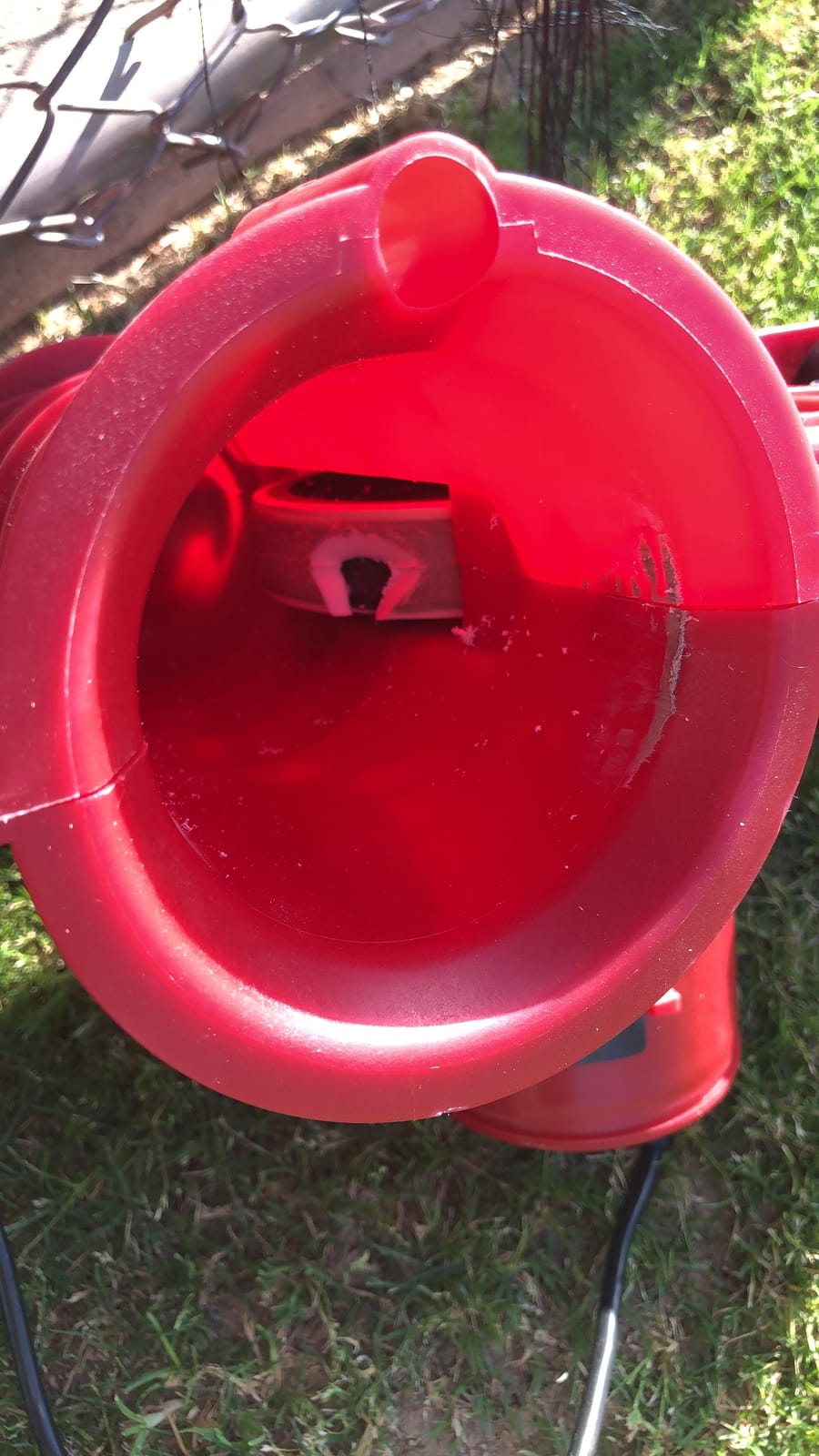
Buyers who pair it with Heater’s own dimpled white balls report consistent placement inside the strike zone. That ball-mandate is the catch: heavier third-party balls bog the small motor down over time, and one owner reported customer service replacing a faulty speed potentiometer at no charge, which says something about support.
Why This One Earns Its Spot
Pitch recognition is the skill that separates contact hitters from survivors, and a pivot head is the cheapest way to show a young hitter what a spin ball looks like coming out of a hand. The feeder means no adult needed, so a teenager can run a full session alone after school.
It is also a soft toss and a batting machine, since you can raise or lower the release point and change the launch angle for fly balls and grounders.
Where You Will Notice Limits
The single small wheel is the honest weakness. Reviewers report it loses speed after each pitch and needs a few seconds to recover, which is why the auto feeder exists and why owners tend to throw curveballs and fastballs in short blocks rather than long strings.
Height adjustment is coarse and driven by the rear leg, the plastic body is louder and less durable than metal, and several owners report accuracy drifting past the published spec. Buy Heater dimpled balls, and treat it as a training aid rather than a precision instrument.
4. Sports Attack Junior Hack Attack – Best for Pitch Recognition
Junior Hack Attack Baseball Pitching Machine
Three-wheel design
Six pitch types to 70 mph
Pivoting head to 250 ft
96 lb, 2 year warranty
Pros
- Throws genuine fastballs
- curveballs
- sliders
- split-finger and knuckle balls
- Repeats the same location throw after throw
- Quiet enough to feel like a live at-bat
- Feeds real leather baseballs reliably
- Swiveling head covers grounders and fly balls
Cons
- Costs far more than two-wheel and manual machines
- 96 lb needs two people to move
- 70 mph ceiling limits older hitters
- Softballs do not fit without a conversion kit
- Setup instructions are poor
At 4.7 stars, the Junior Hack Attack is the highest-rated machine we tested, and the reasons owners give line up with each other. Three wheels grip the ball from above and both sides, so it throws true fastballs, curveballs, sliders, split-finger and knuckle balls from either a righty or a lefty release angle, up to 70 mph.
The accuracy is the whole story. Owners describe throwing the same pitch to the same spot over and over, which is exactly what a hitter needs to work on a swing path rather than on chasing. It also runs quietly enough that the hitter hears the release like a live pitcher, and the feed system handles genuine leather balls, not just practice balls.
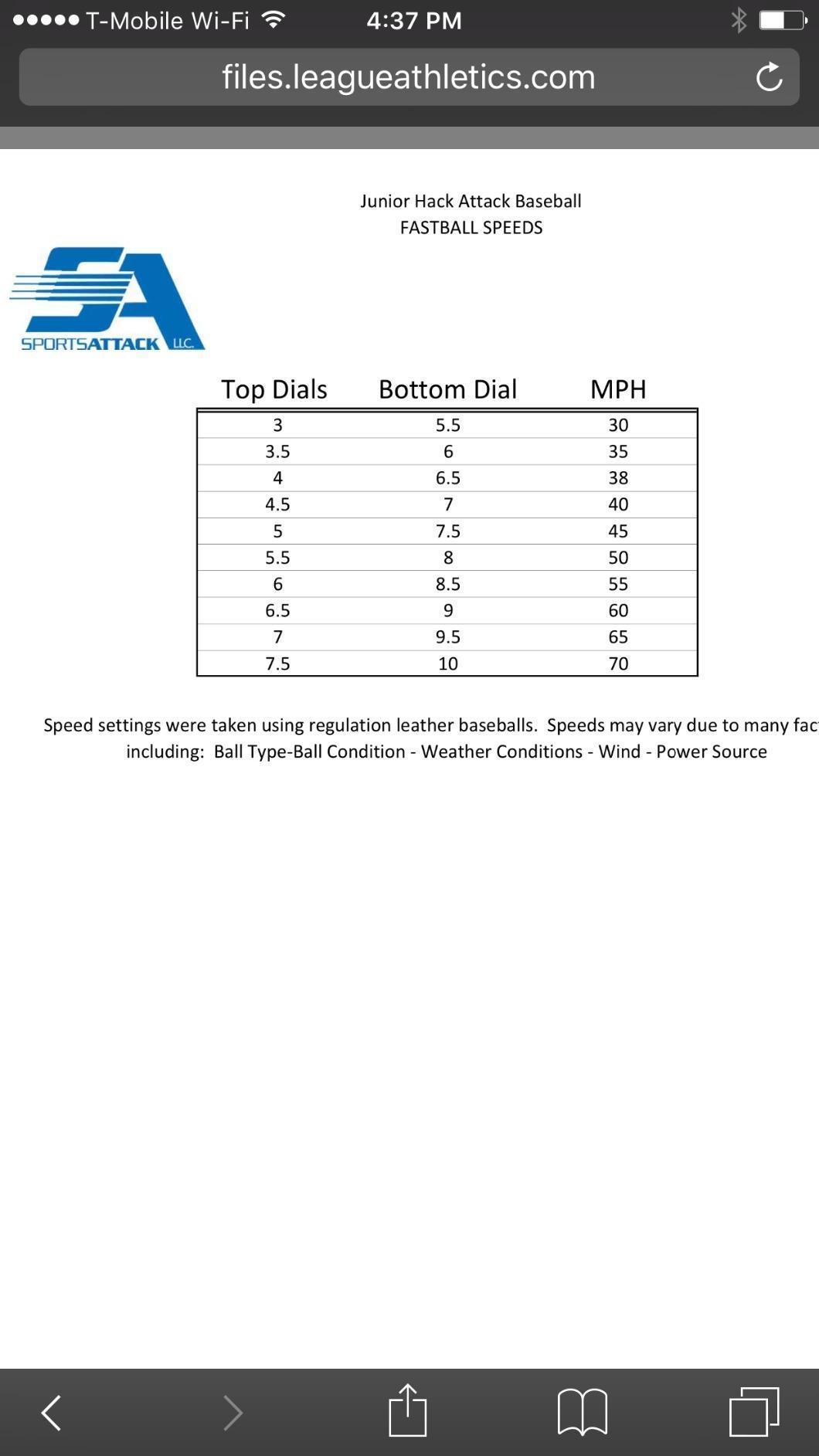
Beyond batting practice, the pivoting head throws ground balls, line drives and fly balls out to 250 feet, so one machine covers hitting, fungo work and fielding drills. Buyers consistently endorse it from about 8U through 12U and for defensive work, and note that the commercial build shrugs off balls smashed directly into the wheels.
It is also genuinely portable for its size. At 96 pounds and 21 x 23 x 35 inches, one adult can move it to a different field, and it fits in a compact sedan. The 2 year manufacturer warranty is the longest here.
Who Should Buy the Junior Hack Attack
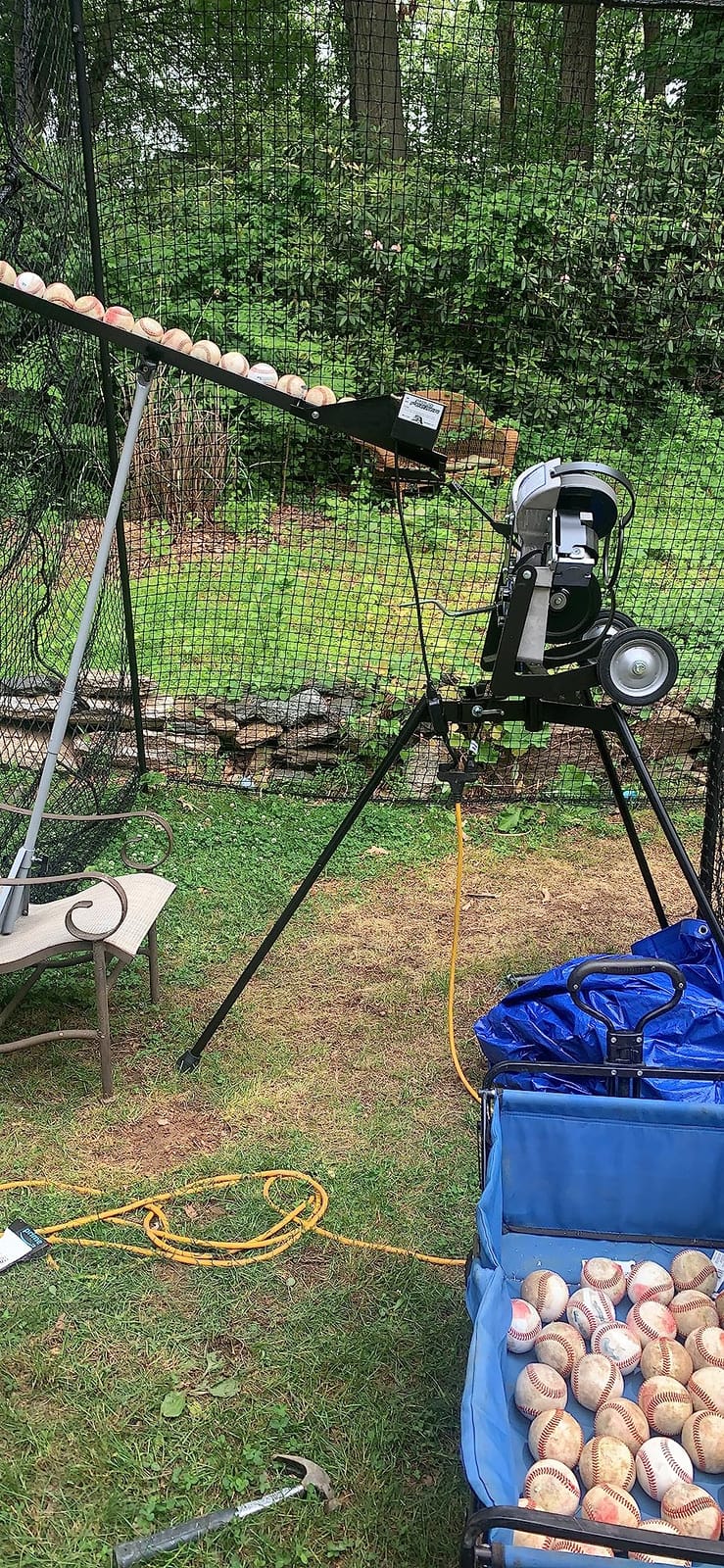
Buy it if a single player is serious, if you want pitch types rather than just speed, or if your child is approaching real at-bat velocity. Teams and training facilities get the most out of it because the feeder and the head swivelling means one adult can run a whole group session.
It is also the best answer to the question we hear most in coaching forums, which is how to get a teenager more reps without a live pitcher. A quality machine removes the need for a partner entirely.
Where to Save Your Money Instead
The price is the reason this is not our top pick. Buyers also flag that softballs do not fit without a conversion kit, and that the 70 mph ceiling will not fully simulate a high school or adult league pitcher from a regulation distance. At 96 pounds, moving it alone is a genuine strain for some adults.
Setup is another friction point: the instructions are poor, the machine must be locked to the base before the legs go on, and wheel speed settings take guesswork without a clear pitch matrix. Budget an hour for the first session.
5. Heater Heavy-Duty Machine with 12-Ball Feeder – Best for High School Hitters
Heater Sports Heavy-Duty Baseball Pitching Machine W/Bonus Ball Feeder – Accurate & Adjustable Pitching Machine for Kids, Teens, and Adults | Ideal for Baseball Training and Practice Sessions
All-metal housing
0-10 speed control, 10-52 mph
Auto 12-ball feeder
Pivot head, 42.7 lb
Pros
- All-metal housing holds up under heavy use
- 0-10 dial spans 10 to 52 mph
- 12-ball feeder drops a ball every 8 seconds
- Setup generally under 10 minutes
- Throws harder than published numbers
Cons
- Pitching wheel must be inflated before first use
- Feeder jams occasionally
- Wheels wear fast and replacements are costly
- Lowest dial settings are too slow from a 24 ft cage
Coaches describe this as the value pick below true professional grade, and after six weeks of comparisons it is easy to see why. The all-metal housing is the first thing you notice, followed by a 0 to 10 speed control dial that spans 10 to 52 mph, and up to 80 mph when it is fed Heater Lite Baseballs.
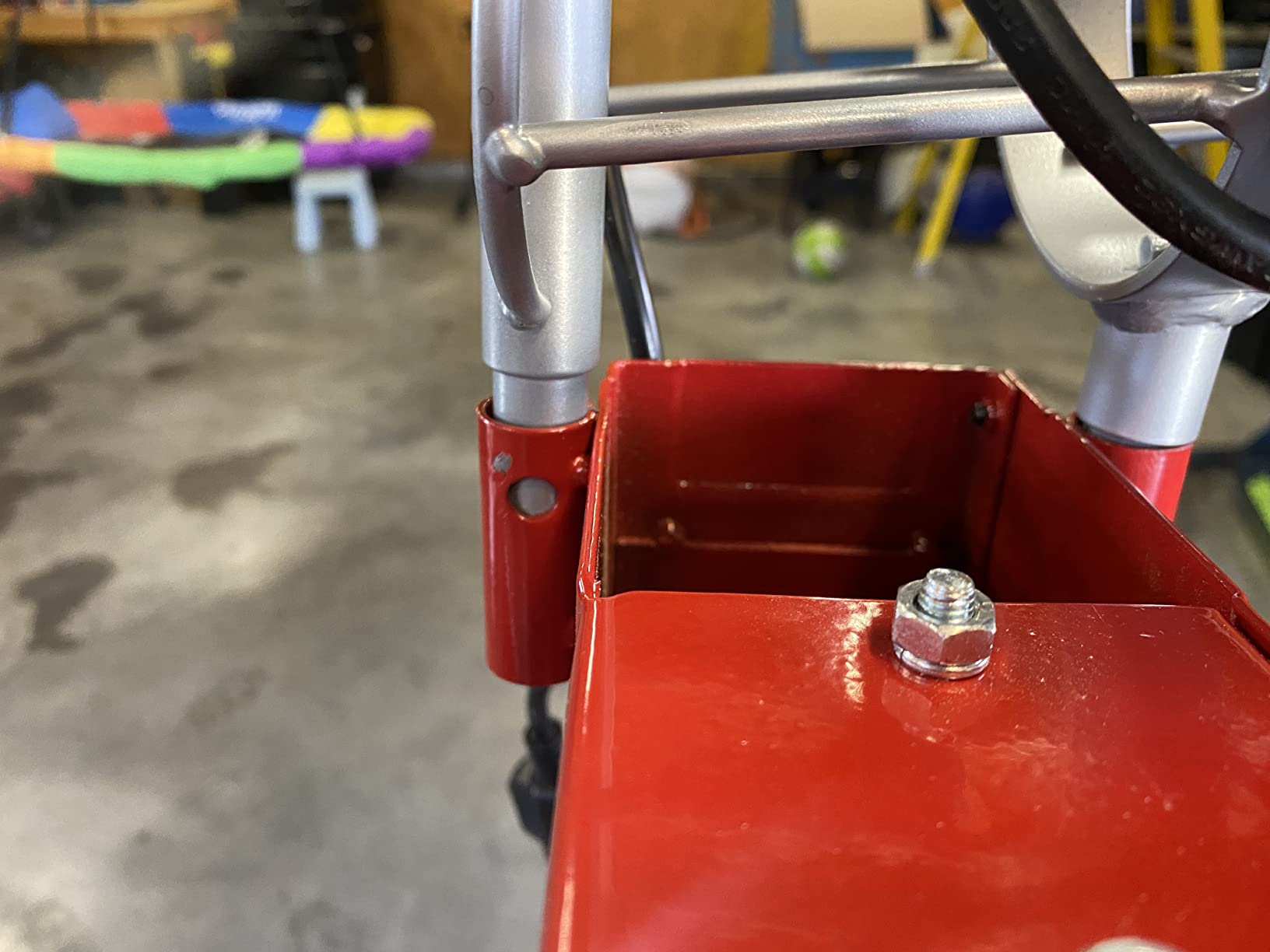
The 12-ball automatic feeder drops a baseball every 8 seconds and can be removed for manual feeding, so the same machine works for solo work and for a coach running a line. The knob-adjustable pivot head handles grounders and pop flies without a separate attachment.
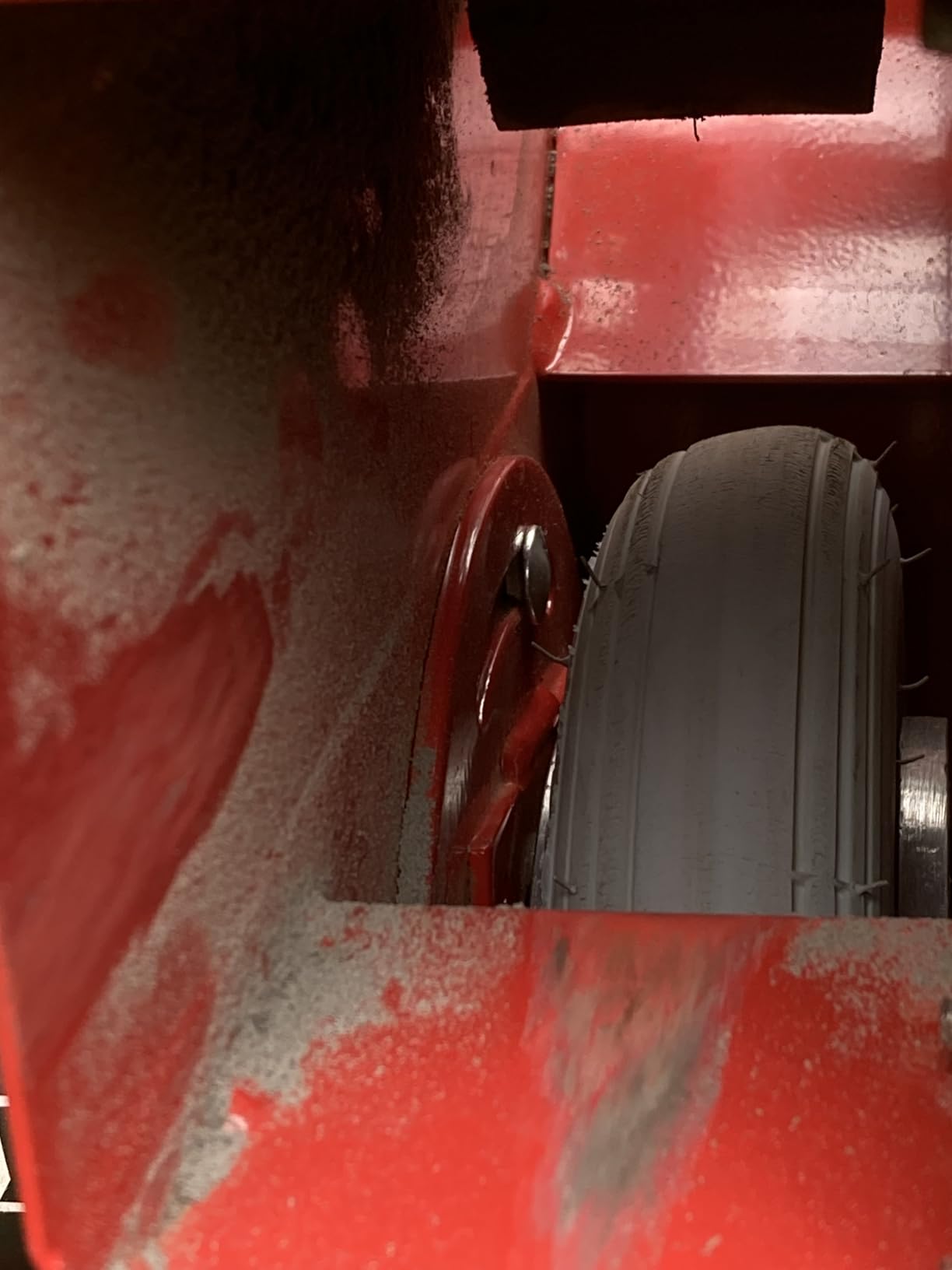
Owners report setup in under 10 minutes and, more interesting, real-world throw speeds noticeably above the published figures, with one measuring around 100+ km/h off the machine. That headroom is the reason this machine gets recommended for high school hitters who are outgrowing 40 mph sessions.
It serves both baseball and softball and works for catching and fielding drills as well as batting. One owner noted that placement is consistent but with enough variation inside the zone to feel like live pitching, which is the difference between training and memorizing.
Why It Earns a Middle Spot
It is the machine to buy if you want commercial construction, a wide speed range and a feeder without stepping up to three-wheel pro pricing. For a family with a 14 to 18 year old, that middle band is exactly where the useful machines live.
Parents running multiple kids will like that the feeder and the pivot head cover both hitting and fielding in one session.
What to Budget and Watch
Two hidden costs catch new owners. The pitching wheel must be inflated before first use even though it looks inflated in the box, and replacement wheels are one of the pricier consumables in the category. Budget for one or two replacements a year if you run heavy sessions.
Also expect the feeder to jam now and then, so keep a second person nearby during practice. The lowest dial settings are too slow to reach the plate from a 24-foot cage, the machine is tall enough that it may not clear an L-screen without removing the front leg, and the branded dimpled balls outlast anything else in the machine.
6. PowerNet Launch F-lite – Best for Baseball and Softball in One Machine
PowerNet Launch F-lite Baseball & Softball Pitching Machine, Adjustable Height and Angles, Variable Speed Up to 90 MPH, Batting Practice Ball Launcher (F-lite)
Two sets of interchangeable legs
4 speed settings, 40-90 mph at 25 feet
12 dimpled balls included
Baseball and softball
Pros
- Switching between baseball and softball is quick with the tripod legs
- Four usable speed settings suit hitters roughly 6 to 11
- Consistent enough to stand in for a live pitcher
- Handles pop fly and line drive fielding drills
- Includes spare screws
Cons
- Only accurate with Launch F-lite dimpled balls
- One radar check fell well short of the advertised top speed
- Semi-hard plastic frame can crack under hard hits
- No wheels
- so transport is awkward
The Launch F-lite answers a question most roundups skip: what if the family plays two sports? Two sets of interchangeable tripod base legs alter pitch height between baseball and softball, and 12 dimpled balls, 6 baseballs and 6 softballs, come in the box.
Four adjustable speed settings simulate 40 to 90 mph at 25 feet, calibrated for consistent strikes, and the machine can also launch pop flies and line drives so your hitters train their fielding. Owners like the sturdiness of the frame and the fact that it stays put through a full practice.
Switching sports takes minutes rather than a new machine, which is the entire value argument. For a household splitting practice time between a daughter’s softball and a son’s baseball, the arithmetic usually works.
What You Need to Know Before Buying
The machine is calibrated exclusively for PowerNet Launch F-lite dimpled balls. Using other brands can affect performance and voids the warranty, which means your ball budget is locked to one product line. The included 12 balls will wear, so plan to reorder from the same source.
One radar-checked report found achieved speeds well short of the advertised 40 to 90 mph range, so treat that range as a ceiling rather than a promise. The semi-hard plastic frame is also vulnerable: a hard hit or a mis-set feed height can crack it, and multiple buyers reported failures within months of high-volume facility use.
There are no wheels, so moving it around a field is a two-person job. If that sounds risky, skip it and read the setup section below before you commit.
Who It Suits Best
It fits families with two active kids in two sports, and coaches of combined baseball and softball teams who want one machine to cover both. The height change between the two tripod sets is the feature you are paying for.
It does not fit an adult hitter chasing velocity, or anyone who wants to feed regulation leather balls. If you need those things, the Junior Hack Attack or the Heater Heavy-Duty machine is the better use of the money.
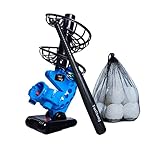
7. Furlihong 380BH – Best Starter Kit for Young Beginners
Furlihong 380BH Baseball Pitching Machine for Kids and Beginner
20 mph pitch speed
3 launch angles
2.1 lb total
4 D batteries, 20 balls and bat included
Pros
- Complete kit with machine
- bat and 20 training balls in the box
- Lightweight at 2.1 lb
- Three launch angles for different ages
- Sting-free plastic balls will not dent bats
- Battery power means no outlet needed
Cons
- Only accepts the branded 0.81 oz plastic balls
- 20 mph ceiling is far below what older hitters need
- Requires 4 D batteries that are not included
- Fixed 7-second interval with no speed control
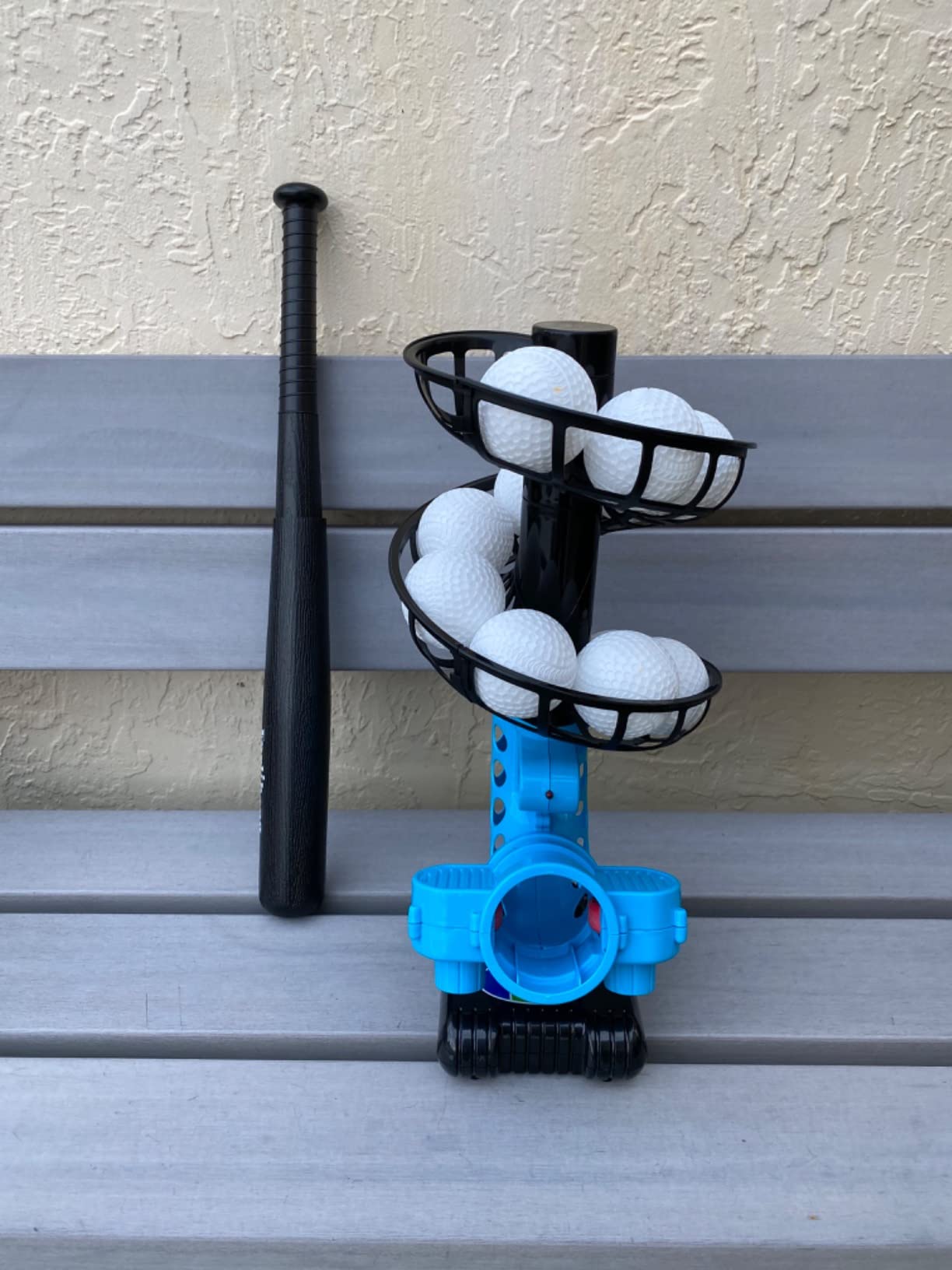
This is the box a parent grabs when the birthday gift has to be something the kids can use immediately. You get the machine, a plastic baseball bat and 20 sting-free training balls, all for a small outlay, and the whole thing weighs 2.1 pounds so a child can carry it out to the yard alone.
Three launch angles let the same unit work for different ages, and balls launch every 7 seconds with an indicator so a young hitter has a timing cue. The 0.81 oz plastic balls are sting-free and will not damage bats, which matters when a six-year-old is swinging hard at a machine.
Power comes from 4 D batteries, so it works in a yard, a park or a garage with no outlet nearby. Additional ball tracks can be added, and the 180-day warranty covers early defects.
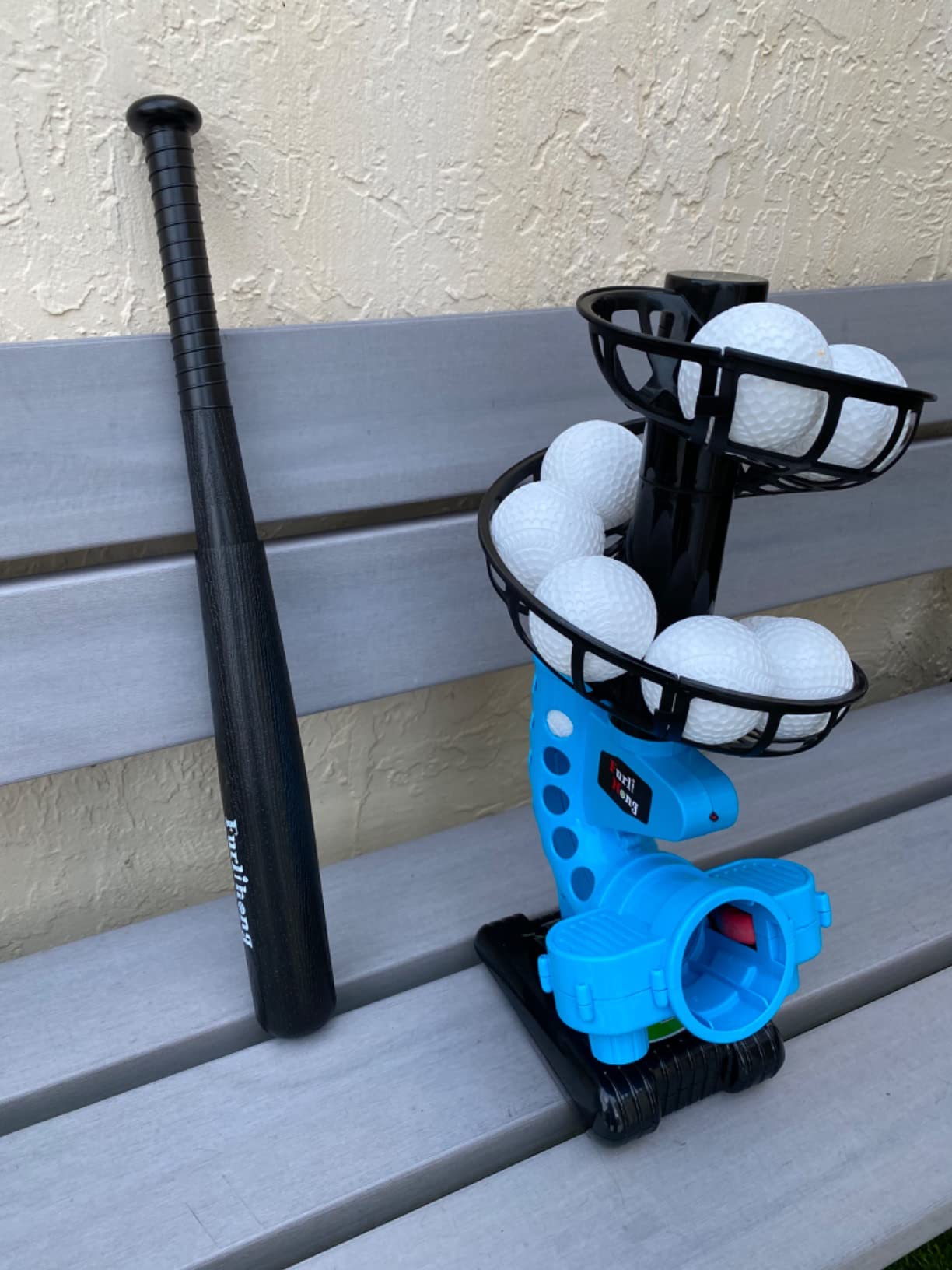
Our testing impression is that this is the rare machine where the box contents matter more than the machine. Having a bat and 20 balls in the box means practice starts the day it arrives, with nothing else to buy.
Where This Kit Shines
It is the right call for a first machine, a grandparent gift, or a rainy-day activity for a child aged roughly 5 to 8. Because the balls are plastic, the risk of a sting or a chipped bat is low, which is what parents actually care about at that age.
It is also a machine a child can run themselves, with no setup beyond batteries and loading the track.
Where It Cannot Go
It only accepts the manufacturer’s own plastic training balls, and using anything else can damage the machine. The 20 mph ceiling is well below what an older hitter needs, and the fixed 7-second interval means no way to progress a player’s speed.
Plan this as a two-season starter, not a long-term solution. When your hitter outgrows 20 mph plastic balls, move up to the Blue Flame rather than buying a second toy machine.
8. Furlihong 898BH – Best Power-Free Soft Toss Machine
Furlihong 898BH Baseball Soft Toss Machine, Angle Adjustable, Step On Paddle and Release to Launch, No Power Supply Needed, Works with Regulation Baseball
Foot-powered launch, no power supply
3 adjustable angles
About 6 second release delay
Works with regulation baseballs
Pros
- No batteries or power supply
- so it works anywhere
- Three launch angles suit different ages
- Simple mechanical design is durable
- Works with regulation baseballs
- Children as young as six can operate it
Cons
- Ball track sections do not clip together firmly
- Unit wanders after a couple of pitches
- Occasional mis-launches if the pedal is not pressed firmly
- Very light balls fly off trajectory
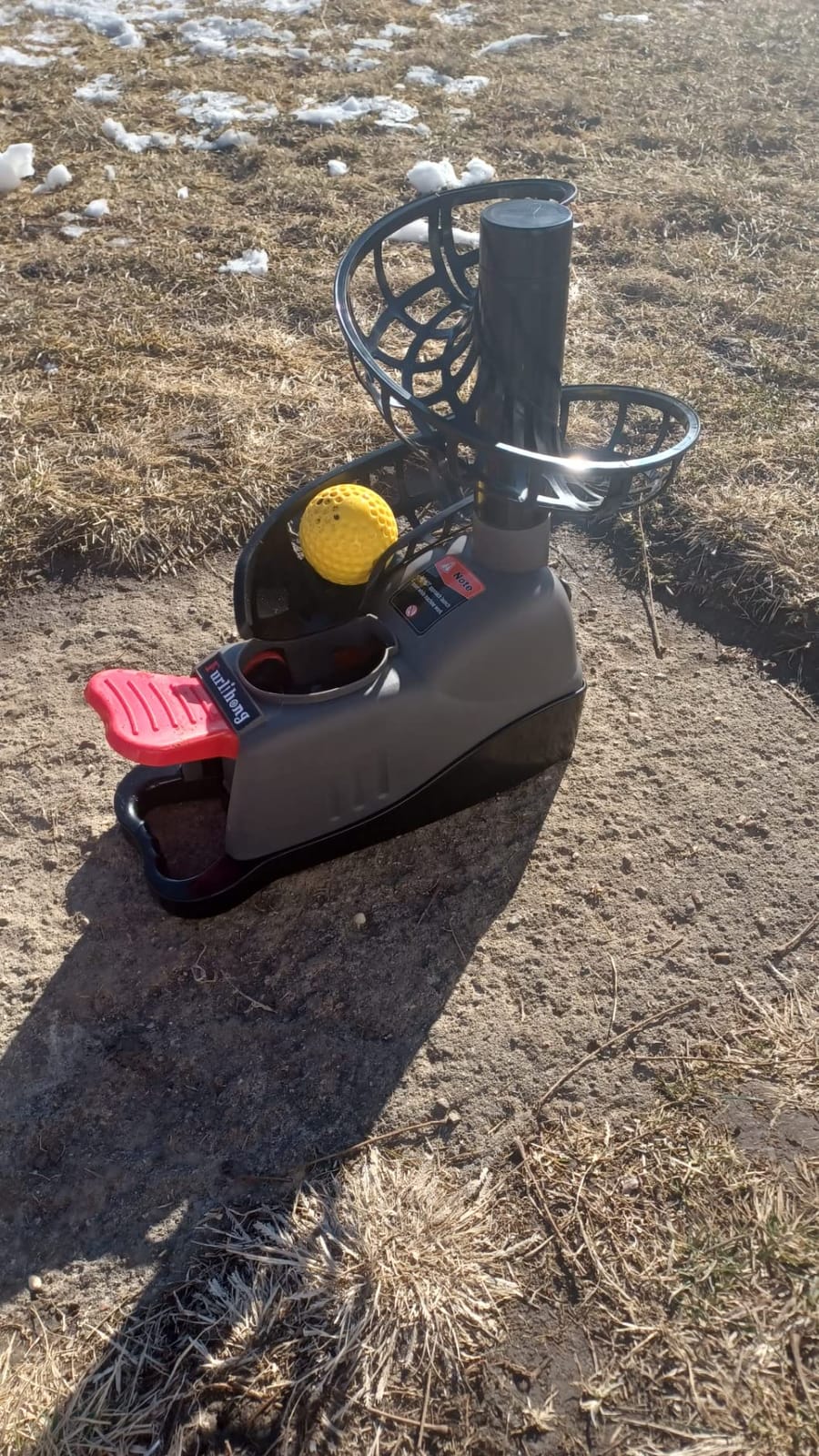
The 898BH is a soft toss machine with a twist: no power supply at all. You step on the paddle, release it, and wait about 6 seconds for the ball. That design makes it a low-consequence option for a family that does not want a machine firing hard balls at a child or a parked car.
It also works with regulation baseballs, which is unusual at this level. Most cheap machines force you into plastic practice balls, and this one lets a kid hit the same ball a live pitcher would throw, just from a shorter, higher release point.
Three launch angles are set with a rear switch, and the mechanical build has no circuit system, which owners say is why it survives seasons of use. The 180-day warranty is standard for the brand.
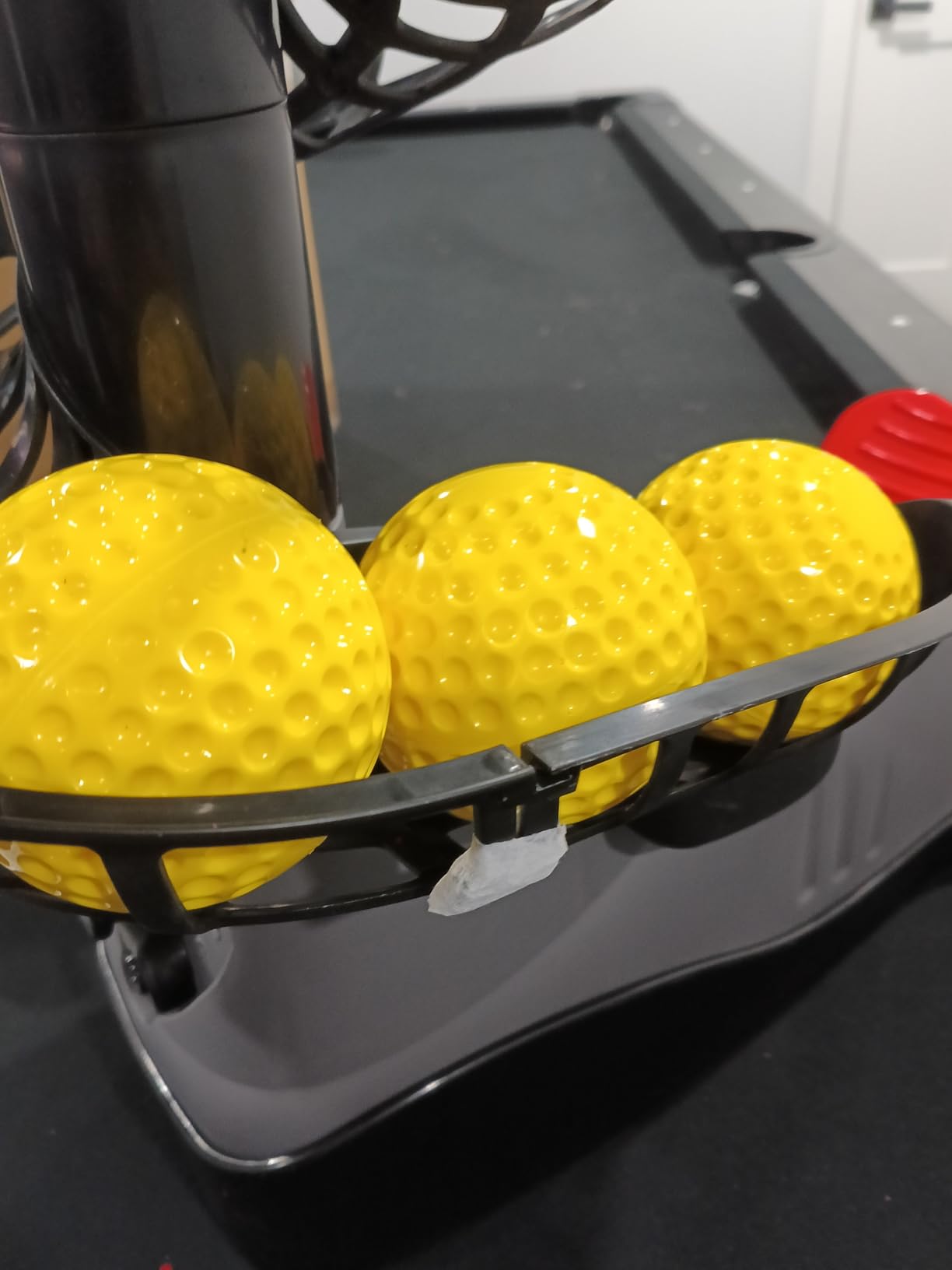
Our testing impression is that the soft toss window here is the most useful thing in the product. Working a high release point builds the swing path a hitter needs before a full machine session, and it is closer to how a coach actually feeds a hitter.
Extra stackers from other Furlihong machines can be added to hold more balls, which is handy if a sibling is waiting to hit.
Who This Machine Is For
It suits families with a child under 10 who is still building a swing, and any setup where a power outlet is inconvenient. Parents who do not want to be a human backstop also rate it highly, because the ball travels a short, predictable distance.
It is a good companion to a real pitching machine later on, not a replacement for one.
What to Fix Before You Use It
Two practical complaints come up repeatedly. The ball track and tunnel sections do not always clip together firmly, so a bit of tape helps, and the unit wanders after a couple of pitches and needs weighting or repositioning.
Younger children also struggle to press the foot pedal firmly enough for a clean launch, and teeballs or very light balls come out on a strange trajectory. If your hitter is strong enough to crush everything you throw, this is the wrong tool and the Blue Flame is the right one.
9. Franklin MLB Superstar 4 in 1 – Best for Fielding Drills
Franklin MLB Superstar 4 in 1 Pitching Machine
4-in-1 batting and fielding design
Adjustable launch angle
Pitch every 7 seconds, 9-ball feeder
Battery operated, 5 lb
Pros
- One machine covers soft toss
- fast pitch
- ground balls and pop flies
- Angle adjustment serves both hitting and fielding
- Lightweight at 5 pounds for young players
- Includes 6 compatible plastic balls
- Simple to set up
Cons
- Only pitches plastic training balls
- Batteries not included and 4 C cells are required
- Fixed 7-second interval with no speed control
- Plastic build is aimed at kids not competition
The name says 4 in 1 for a reason. Adjust the launch angle and the same unit gives you soft toss, fast pitch, ground balls and pop flies, which makes it the rare toy that covers hitting and fielding in one body. At 5 pounds with a 9-ball feeder, a child can reposition it solo.
Balls launch every 7 seconds, so it covers a lot of ground in a session. The design intent is teaching young players both to hit and to field, and the 1 year warranty against manufacturer defects is longer than most in the category.
If your practice block is half swings and half fielding work, one machine covers both without owning two devices.
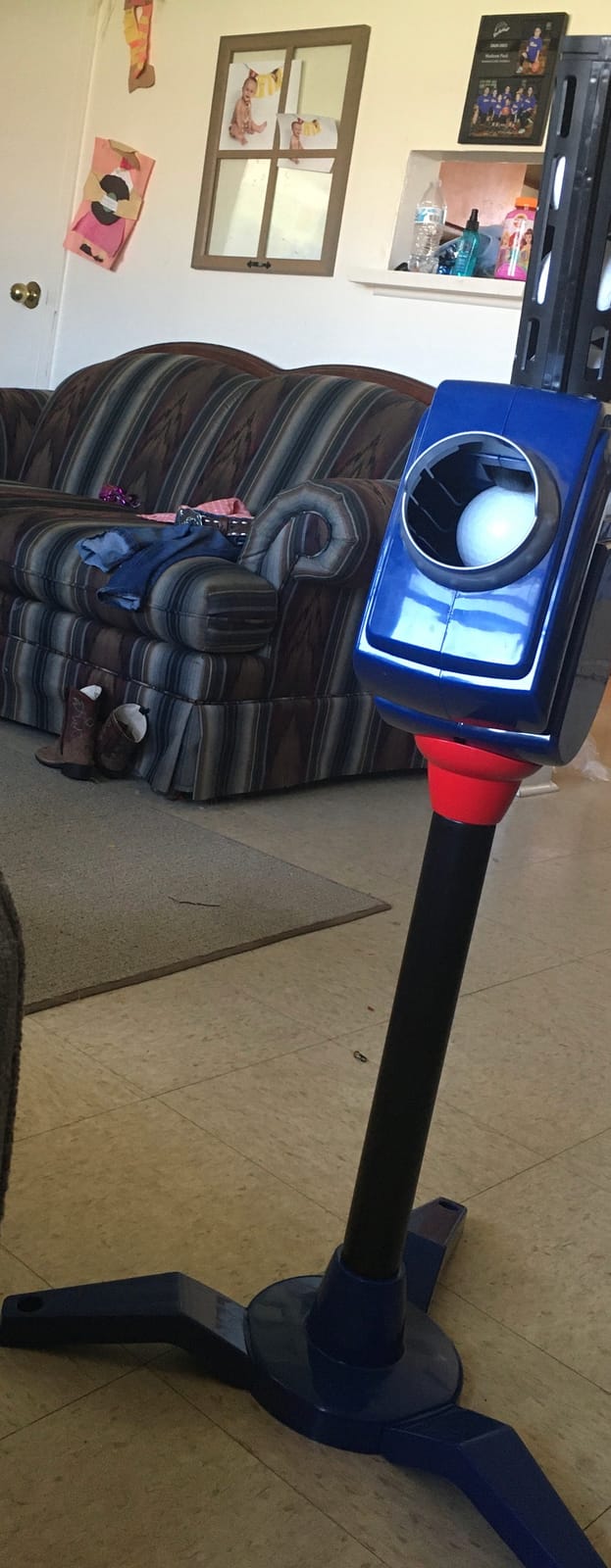
Our honest read is that expectations matter more than features here. Buyers like the versatility and the fact that one machine covers hitting and fielding, but the 4.0 rating reflects its toy positioning rather than any fault.
For a 6 to 9 year old, that is exactly right. For a 13 year old, the plastic-only ball limitation and the absence of speed control make it a step backward.
Best Use Case
Pair it with a tee. Ten minutes of soft toss, ten minutes of machine work, then the fielding angles. Young players get variety without a parent juggling two setups, and the fixed 7-second interval is predictable enough for a kid to get into a rhythm.
It also works as a loaner machine for grandparents or relatives who want something for the kids that will not break.
Limits to Know
It only pitches plastic training balls, so you cannot use real baseballs or a batting tee ball. Batteries are not included and it needs 4 C cells every session, which is a recurring cost that catches people out.
There is also no speed control at all, so you cannot progress a player or add difficulty. When your hitter is ready to see real ball speed with real ball weight, upgrade rather than adding accessories.
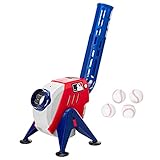
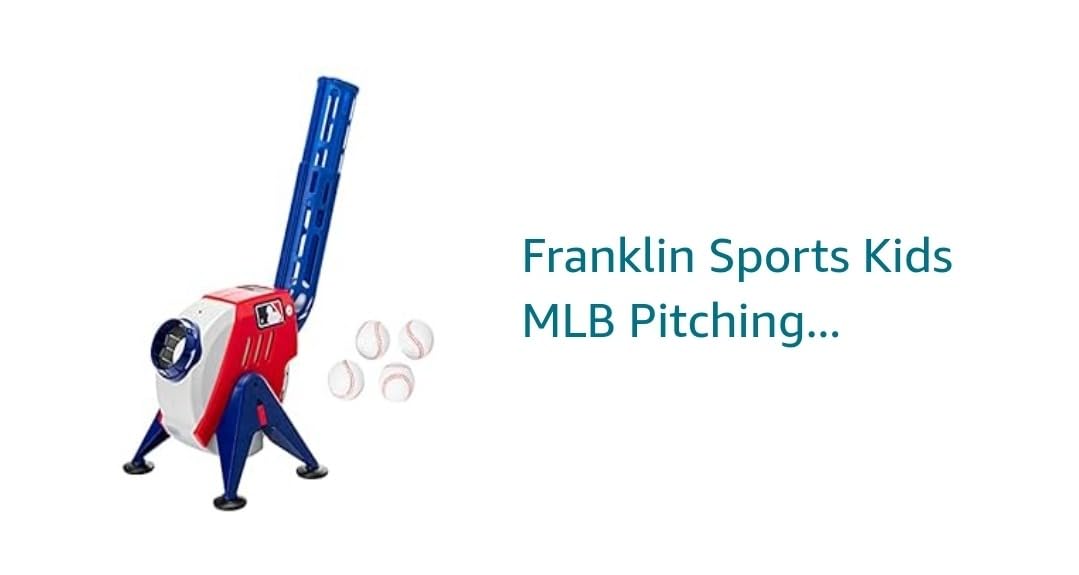
10. Franklin MLB Power Pitcher – Best for First-Time Players
Franklin Sports MLB Power Pitcher Pitching Machine
Three speeds at 10, 15 or 20 mph
3 position angle adjustment
Red release light, 4 foam balls
4.5 lb, 4 C batteries
Pros
- Three selectable speeds let practice scale with a child's ability
- Red indicator light helps kids time the release
- Lightweight at 4.5 pounds
- Three position angle adjustment broadens pitch location
- Foam balls are safer for beginners than hard practice balls
Cons
- Batteries not included
- 4 C cells required
- 20 mph top speed limits it to young hitters
- Foam balls feel nothing like a real baseball
- 9-ball feeder means frequent reloads
- Only a 90-day limited warranty
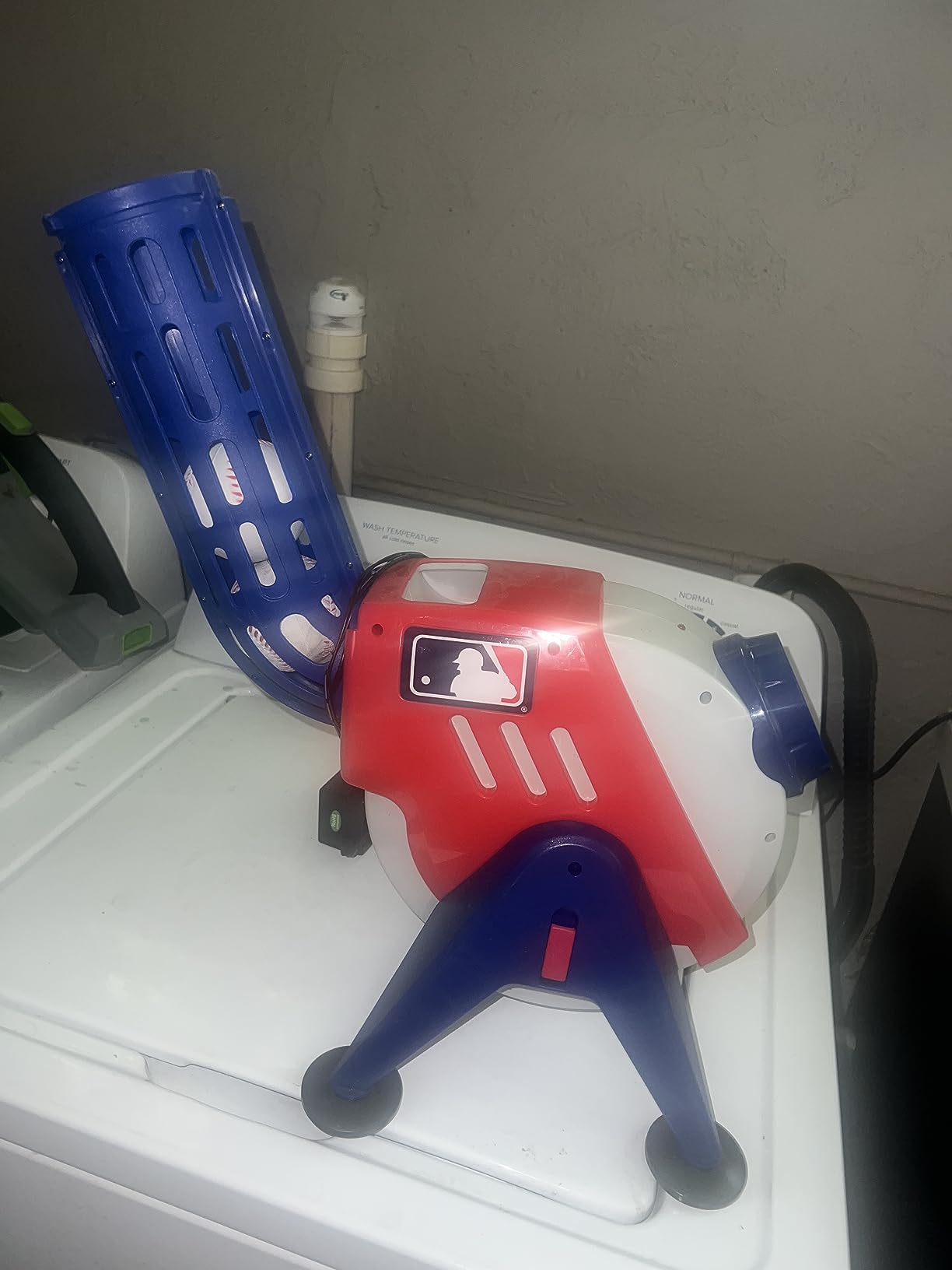
The Power Pitcher is the most adjustable of the small machines. Instead of one fixed speed, it offers 10, 15 or 20 mph, so you can start a child slow and progress as they get stronger. The red indicator light signals pitch release, which gives beginners a visual timing cue.
Three position angle adjustments spread the pitch locations wider than the fixed-angle toys, and the 4 foam baseballs included are sting-free. Manufacturer guidance puts it at ages 7 to 15, which lines up with the 20 mph ceiling.
It weighs 4.5 pounds, measures 12 x 25.75 x 18 inches, and runs on 4 C batteries, so it works in a garage, a basement or a yard without a power source.
Our six weeks of comparisons left one clear impression: the three speed settings matter more than any other feature at this level. A child who can handle 10 mph can be moved to 15 and then 20 without the parent guessing, and progression is what makes practice feel like improvement.
Reviewers find it does what it promises for early batting practice. The 90 day limited warranty is among the shortest here, so register the unit and keep the receipt.
Where It Works Best
It fits a first-time machine owner with a child between 7 and 11 who is still learning where a pitch comes from and how to track it. The foam balls remove the sting factor, and the release light makes a timing game out of each rep.
It also suits indoor practice in a basement or playroom, since it needs no outlet and makes very little noise.
Where It Runs Out of Road
Foam balls do not develop a swing the way a real baseball does, and 20 mph is not a challenge for a 12-year-old. The 9-ball feeder means constant reloading, and the batteries are not included.
Treat it as a bridge machine. Once your hitter is squaring up real balls off a tee, move to the Blue Flame or the Heater Slider Lite 360 rather than pushing this one further.
How to Choose a Pitching Machine for Your Player
Most wrong purchases in this category are not bad machines, they are right machines bought for the wrong player. The five checks below are how we narrowed the field, and they apply whether you are buying a used three-wheel unit or a first toy.
Match the Machine to the Player’s Age
Under about age 7, the goal is rhythm, hand-eye coordination and a love of swinging. A plastic or foam machine at 20 mph with a wide hopper is enough, and safety matters more than velocity. Kids in this range also tend to chew through plastic balls, so factor replacements into the cost from the start.
From roughly 8 to 12, your player should be hitting real baseballs at 30 to 45 mph. That is where manual or two-wheel machines like the Blue Flame earn their keep, because ball weight and flight become realistic. A machine that only fires plastic balls at this stage teaches a swing that has to be relearned later.
Teenagers need 45 to 70 mph and a working breaking ball, which means a pivot head or a three-wheel design. Adults and travel-ball players need the top end, plus the ability to vary location, which is where the three-wheel machines and the metal two-wheel machines separate themselves from the toys.
One-Wheel, Two-Wheel, Three-Wheel, Arm-Style or Trainer
Wheel count is the single biggest driver of both accuracy and maintenance cost.
One-wheel and small two-wheel machines throw a straight fastball and little else. They are cheap, durable and great for a straight-line swing, but you cannot create spin, so pitch recognition work stops at a fastball.
Two-wheel machines with a pivot head, like the Heater Slider Lite 360 and the Heater Heavy-Duty unit, add a breaking ball by changing the contact point on the wheel. This is the sweet spot for most families: real spin, workable speed, manageable upkeep.
Three-wheel machines clamp the ball from above and both sides, which is why they repeat a location and hold spin so well. They cost the most, weigh the most, and demand the most attention to setup.
Arm-style machines mimic the underhand delivery a coach uses, and they are the ones to consider if you want a hitter to see a live-looking release point. Reaction trainers throw micro-balls at the bat rather than from the pitcher, which makes them a vision tool, not a batting practice machine. Do not confuse the two categories; they train different things.
Speed Range and Pitch Types Are the Two Numbers That Matter
Check the published speed against where the machine is measured from, because 80 mph at 46 feet is a very different session than 80 mph at 25 feet. If you want to train to a real at-bat speed, work out the distance to home plate and back-calculate.
Then count pitch types. One pitch type trains contact. Two train contact plus one recognition cue. Four or more, as on a three-wheel machine, train the recognition game that decides at-bats in spring.
Verify with a radar gun after delivery rather than trusting the label. One of the machines in this roundup had a buyer report speeds well below the advertised range, and that is not unusual in this category.
Balls, Feeders and the Extras Nobody Budgets For
Dimpled machine balls are the quiet cost of ownership. Every machine here that needs them needs its own brand, and the manufacturer restricts the ball type in writing. That means one recurring purchase per machine, and it is a real line item over five or six years.
Auto feeders matter more than buyers expect. A hand-fed machine turns a 30-minute session into a 10-minute session because you spend half of it loading. If the machine will be used alone, an automatic feeder is close to mandatory.
Also budget for an L-screen if you practice anywhere near a vehicle or a neighbour’s fence, and for replacement parts. On the Heater Heavy-Duty unit, the pitching wheel is a consumable rather than a part that lasts forever, so treat it as a running line item rather than a one-off.
Buying a Used Machine Without Buying a Problem
Used three-wheel machines are a real opportunity, and they are also the easiest place to waste money. Check wheel and tire wear first, because that is the part that is closest to end of life and the part that determines whether the machine is still accurate. A machine with cracked or glazed wheels will never group consistently again.
Test accuracy before you pay. Set it up, throw 20 balls at a screen, and see if the pitches group. Ask for the feeder to run, and confirm the machine can still pivot to fielding positions if that is what you need. Owners running pro three-wheel machines in coaching forums repeatedly flag feeder function and wheel condition as the two things to check first.
Be cautious with machines imported without a US warranty, because parts support is the first thing to go. If a seller cannot produce a serial number or service history, price the risk into your offer rather than assuming a bargain.
Setting Up a Safe Backyard or Garage Practice Area
A machine is only as good as the space around it, and setup is where most backyard projects go wrong. A hard-hit ball into a weak net turns the net into the problem within a season, so spend on the containment before you spend on the machine.
Plan roughly 35 to 40 feet of length from the machine to the backstop, 10 to 12 feet of width, and 10-foot ceilings for indoor work. Anything tighter and hitters will start hitting their own backstop. Lighting matters more than buyers expect, and daylight-balanced fixtures or a strong overhead light will do more for practice quality than a more expensive machine. Plan the circuit layout before the machine arrives rather than after.
On the electrical side, use a dedicated 15 to 20 amp circuit rather than sharing an outlet with a space heater or a welder. Machines with compressors or heaters draw enough current to trip a shared breaker mid-session, and a tripped breaker mid-swing teaches a hitter nothing.
Then add the containment: netting sized for the machine, an L-screen behind the hitter, and eye protection for anyone standing near the line. One parent building a backyard cage in a DIY forum asked whether a portable cage frame can take full-speed machine shots, and the practical answer is that it depends entirely on the net rating and the frame anchoring, not on the cage brand. If you plan to sew or patch your own netting, our picks for heavy duty sewing machines cover the machines that handle thick material without stalling.
For upkeep, keep a simple rhythm. After every session, wipe the wheels and check the feeder track for debris. Monthly, check tire pressure if the wheel is pneumatic and look for glazing on the wheel surface. Once a year, inspect bolts, cables and the pivot mechanism, and note the model year so you can match replacement parts. Keeping a fresh set of dimpled balls on hand is the single best way to protect motor life.
Frequently Asked Questions
What is the best automatic pitching machine for baseball?
The Louisville Slugger Blue Flame is the best overall pick for most families, but it is manual rather than automatic. Among truly automatic machines, the Heater Slider Lite 360 is the strongest step up because its feeder drops a ball every few seconds and its pivot head throws curveballs as well as fastballs. The Heater Heavy-Duty unit adds a 12-ball feeder and an all-metal housing for heavier daily use.
Are pitching machines good for batting practice?
Yes, once a hitter can square up balls off a tee consistently. A machine delivers repeatable, game-realistic pitches at a controlled speed, which is the most practical way for a solo player to get high-volume reps. Before that foundation, a tee or wall work teaches contact more cheaply and just as effectively.
What is the best pitching machine for the money?
The Blue Flame is the most-cited value answer, because it throws real baseballs and softballs, needs no electricity, and weighs under 25 pounds. The Franklin Sports MLB Electronic is the least expensive option and the most reviewed, but it feeds only light plastic balls with erratic flight. Choose accuracy if you can, plastic only if you cannot.
What are the different types of pitching machines?
One-wheel machines throw a straight fastball at low cost. Two-wheel machines add pitch movement and cost more to maintain. Three-wheel machines clamp the ball from three points, giving strong accuracy and the widest pitch selection. Arm-style machines mimic a coach’s underhand delivery. Reaction trainers throw micro-balls at the bat for vision training rather than batting practice. Programmable machines add app or remote control for set sequences.
What is the best 3-wheel baseball pitching machine?
The Sports Attack Junior Hack Attack is the strongest three-wheel machine for home and team use, throwing true fastballs, curveballs, sliders, split-finger and knuckle balls up to 70 mph while repeating location accurately. It handles real leather baseballs, pivots for fielding work out to 250 feet, and runs quietly. The trade-offs are weight at 96 pounds and a price far above two-wheel units.
What baseballs do you use in a pitching machine?
Use the dimpled machine balls the manufacturer specifies, because several machines in this category are calibrated for one ball type and other brands can reduce accuracy or void a warranty. Only the Blue Flame reliably throws hard regulation baseballs, softballs, dimple balls and plastic balls from one machine. Avoid running regulation baseballs through a machine built for light dimpled balls, since the added weight wears wheels and motors quickly.
The Bottom Line for 2026
For most families, the best pitching machine for baseball practice is the Louisville Slugger Blue Flame, because it throws real balls, needs no power, moves anywhere and holds up for years. The right-hand second choice depends on the player: the Heater Slider Lite 360 for a teenager who needs curveballs and a feeder, and the Heater Heavy-Duty machine for a high school hitter who needs speed and a metal frame.
Below that line, the Franklin Sports MLB Electronic and the Furlihong kits are honest starter options for young kids, and the PowerNet Launch F-lite is the pick for a family that needs baseball and softball from one machine. The Sports Attack Junior Hack Attack is the accuracy answer when a single player is serious and the budget is not the constraint.
Buy the machine, budget for the balls and the net, and stay on the tee until the fundamentals hold. That order of operations is what separates a family that gets better from one that collects equipment.